An @COLLEENCHESEBRO INTERVIEW WITH @SARAHMALLERY1

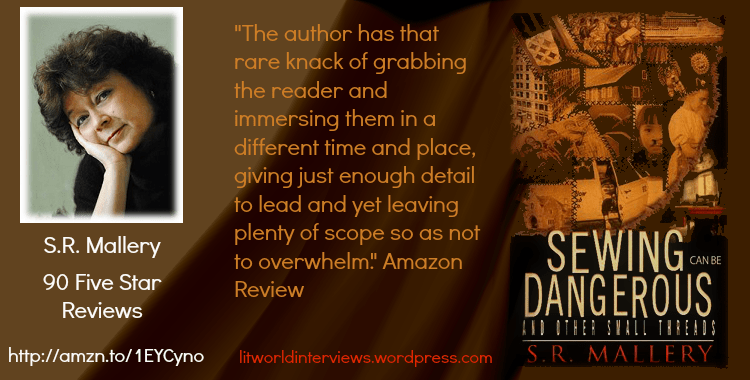
I am excited to introduce you to author, Sarah (S. R.) Mallery who shared with me that she has worn various hats in her life. Sarah also shares that she was, “First, a classical/pop singer/composer, she moved on to the professional world of production art and calligraphy.Next came a long career as an award-winning quilt artist/teacher and an ESL/Reading instructor. Her short stories have been published in descant 2008, Snowy Egret, Transcendent Visions, The Storyteller, and Down in the Dirt.”

Author S. R. Mallery

I actually met Sarah on Twitter. I was immediately intrigued because she was such an engaging personality, something that you don’t always find on Twitter. In no time at all, I was reading her novel, “Sewing Can Be Dangerous and Other Small Threads.” You can read my review here, and below is the synopsis for this excellent book:

These eleven long short stories range from drug trafficking using Guatemalan hand-woven wallets to an Antebellum U.S. slave using codes in her quilts as a message system to freedom; from an ex-journalist and her Hopi Indian maid solving a cold case together involving Katchina spirits to a couple hiding Christian passports in a comforter in Nazi Germany; from a wedding quilt curse dating back to the Salem Witchcraft Trials to a mystery involving a young seamstress in the infamous Triangle Shirtwaist Factory fire; from a 1980’s Romeo and Juliet romance between a rising Wall Street financial ‘star’ and an eclectic fiber artist to a Haight-Asbury love affair between a professor and a beautiful macramé artist gone horribly askew, just to name a few.

What was really amazing was that Sarah likes to do interviews! So here you have it. My interview with Sarah (S. R.) Mallery:

Colleen: Sarah, tell me something about yourself. Where do you live? Are you a full-time writer?

I live in Southern California, where the weather is basically so much tamer than the rest of the U.S. and Europe I have survivor guilt! And no, I would say I am only a two-thirds of the time writer. One-third of my time is spent teaching English to people from other countries and I have learned over the years that it is that balance of being inside my head––both creatively and promotion-wise––and helping others is what works best for me.

Colleen: What inspired you to write Sewing Can Be Dangerous and Other Small Threads? Have you written other books?

When my father told me about the infamous Triangle Shirtwaist Factory fire of 1911, I had already been a quilt designer/teacher for over twenty years. So, in doing my research on that horrific event, I was particularly drawn to those hapless immigrant seamstresses who, in spite of their overworked hours and low pay, were often the only ones in their families that could find work in the U.S. I also enjoyed thinking about the sewing aspect, surrounded as I was by so many quilts and fabrics in my studio. I therefore decided to continue writing short stories, connected only by one element of sewing/craft. That actually helped focus me on future stories. In other words, no matter what time period I was reading about, that context kept me asking questions like how would sewing/crafting ‘fit’ into a story that takes place in this time frame? Who would be the likely characters?

Yes, I’ve written two other books: TALES TO COUNT ON (http://amzn.to/1x8QqyD) and UNEXPECTED GIFTS (Currently set to be re-released in late June 2015).

Colleen: What message do you want your readers to get from SEWING CAN BE DANGEROUS?

By interweaving a ‘thread’ of sewing/crafts throughout each of my stories, I wanted to emphasize how in life as well as history, the ‘little things’ are what loom large. In other words, these quilts, necklaces, crafts, etc. stay with us no matter what events revolve around them.

That idea extends to when I do research for my writing. I am always fascinated by some small fact that most people might pass over but for me, pops out from the page. Soon, that fact starts to percolate in my brain until it becomes a major plot device and/or character development.

Colleen: Who is your favorite author and explain what really inspires you about their work.

Although there are several authors I admire, I would have to choose Harper Lee, who taught me that being simple yet lyrical, presenting appealing characters and touching subjects, and ‘showing not telling’ is more powerful than the most flowery, magnificent prose which can after a while, for me at least, go in one ear and out the other.

Colleen: What was the hardest part about writing this particular book?

I would say perhaps looking for a ‘sewing element’ in my research process that I could authentically use in a story. Originally, there were a couple more stories, but I decided to scrap them because their sewing component seemed too manufactured.

Colleen: Do you have any works in progress you will tell us about?

Yes. I am currently working on an historical fiction western and enjoying not only that time period, but also the colorful lingo that was used. Here’s the synopsis:

The
Dolan Girls by S. R. Mallery has it all. Set in Nebraska during the 1800s, whorehouse madams, ladies of the night, a schoolmarm, a Pinkerton detective, a Shakespeare-quoting old coot, brutal outlaws, and a horse-wrangler fill out the cast of characters. Add to the mix are colorful descriptions of an 1856 land rush, Buffalo Bill and his Wild West Show, Annie Oakley, bank/train robberies, small town local politics, and of course, romance. It’s not only a taste of America’s past, it’s also about people overcoming insurmountable odds.

Thank you, Sarah, for spending some time with us and sharing about your book, “Sewing Can be Dangerous & Other Small Threads.” I look forward to reading your other books too!

***

Here is An Excerpt from Sewing Can Be Dangerous & Other Small Threads

From “A Drunkard’s Path”

“…Are you kidding me?” Deborah exploded. “My life is falling apart! C’mon, curses don’t really happen, do they? I mean, what can I do? You tell me now!” She segued into a screech.

“Come over to my place tomorrow and I’ll try to relate it all to you, I promise…”

….”Do you know anything about the Salem Witchcraft trials?” The older woman leaned in toward her niece, as if casting a spell herself.

“No, not much, why?”

“You remember Martha Stinson from my quilt group? Well after the wedding, she showed me a journal written by a relative of hers and frankly, I am very concerned about you. It seems one of the accused witches from the original Salem trials might have actually had a connection with a real witch, an ancestor of Martha’s…”

* * * *

Inside the packed meetinghouse, dust particles from mud-caked boots floated throughout the air, rendering it dense, murky. That year, April had been an unkind month to Salem Village. Rain-drenched meadows produced a sludge that clung to the edges of women’s dresses, creating odors so foul that in such tight quarters, it became difficult to breathe. But people weren’t concerned with such matters on this day. They had gathered for a higher purpose: the Devil was in Salem, and they wished him thwarted at all costs. Even the constant threat of Indian attacks and surviving harsh winters paled in comparison to what was happening now, in that room, swelling with apprehension.

Crammed into high-walled pews, dark wooden benches, or simply shoved up against walls, spectators filled every conceivable space in the meetinghouse. Donning black hats, cloaks, and breeches, the men angled forward, their eyes boring holes into the five men sitting up front, yet it was the women who carried the greatest burden that day; their hooded coats and muffs covering their recently unkempt hair and unwashed fingernails, couldn’t disguise the uncertainty they felt about their community’s loyalty to them and how it would all end.

Sitting at the head of the counsel table, amongst other magistrates in the newly appointed Court of Oyer and Terminer, John Hathorne and Jonathan Corwin quietly conferred with each other before beginning their first round of questioning. Arrogant, self-important, the black-robed magistrates assumed their positions on the political totem pole, and having been brought to Salem for such a specific purpose, they dared not disappoint. They were on a mission to deliver souls. Hathorne, displaying the greatest exhibition of self-aggrandizement, seemed the most severe. With no real legal experience, and having only glanced at Sir Mathew Hale’s Trial of Witches, and Joseph Granvill’s Collection of Sundry Trials in England, Ireland the week before, he nonetheless believed he was more than competent to interrogate the accused.

At the front of the room facing the magistrates, sat all the accusers, the “afflicted” girls: Abigail Williams, her cousin Betty Parris, Ann Putnam, Sarah Bibber, Sarah Churchill, Elizabeth Booth, Mercy Lewis, Susanna Sheldon, Jemima Rea, Mary Warren, Mary Walcott and Elizabeth Hubbard. With downcast eyes and folded hands, they appeared demure; inwardly they were experiencing emotions quite different from anything they had ever known. Childhoods stocked with adult repression and fear now served as a springboard to the frenzy of accusations they had created, because on this day, along with their catharsis and even exhilaration, came the most important emotion of all: a sense of empowerment. At last, they were getting adults to listen to them, and it was intoxicating.

John Hathorne commenced with the proceedings. “Bring in the accused, Bridget Bishop….”

Here’s what they’re saying about SEWING CAN BE DANGEROUS And Other Small Threads:

“S. R. Mallery is quite simply a master story-teller.”

“This is a box of bonbons, every story an eye-opening surprise. Eat one and you’ll want to devour the whole box.”

“An exquisitely crafted, impressive portrayal of life’s journey!”

Women, sewing, history, and storytelling. A quilt of wonderful stories.”

“Rich and beautiful stories that will captivate you.”

“These stories will stay with you long after you’ve finished the book…”

“I was amazed by the variety of stories that took place in various locations, and at different historical times.”

Here’s where you can find Sarah:

Website/Blog: http://www.srmallery.com

Twitter: @SarahMallery1

FB: http://facebook.com/pages/SR-Mallery-Sarah-Mallery/356495387768574

Google+:
https://plus.google.com/u/0/107388739382996104658/posts

Goodreads: https://www.goodreads.com/author/show/7067421.S_R_Mallery

Pinterest: (I have some good history boards that are getting a lot of attention—history, vintage clothing, older films) http://www.pinterest.com/sarahmallery1/

Amazon Author page:
http://www.amazon.com/S.-R.-Mallery/e/B00CIUW3W8/ref=ntt_athr_dp_pel_1

Amazon link to SEWING CAN BE DANGEROUS: http://amzn.to/1P8OTyo

Audible.com link for SEWING CAN BE DANGEROUS: http://bit.ly/1uyFUuF

B&N: http://www.barnesandnoble.com/s/sewing-can-be-dangerous-and-other-small-threads?keyword=sewing+can+be+dangerous+and+other+small+threads&store=ebook

Kobo: https://store.kobobooks.com/en-US/ebook/sewing-can-be-dangerous-and-other-small-threads

Skribd: https://www.scribd.com/book/260906999/Sewing-Can-Be-Dangerous-and-Other-Small-Threads

iBooks: https://itunes.apple.com/us/book/sewing-can-be-dangerous-other/id982813512?mt=11

How to Make an eBook Using Calibre

On the subject of selling eBooks from your website, in addition to offering them in PDF format, it’s nice to be able to offer your readers books in the formats of their choice, including Mobi and ePub. Apart from the sales point of view, you might simply want to put a book together for your own pleasure – to send to your friends and family just for fun. The way to do this quickly is with the free Calibre software, so I want to show you how easy it is.

I’ve often mentioned what a great little tool Calibre is for us Indie writers. Together with Amazon’s free Kindle for PC downloadable app, Calibre can be a major help in spotting those typos and grammar gremlins in the editing process. Apart from that though, it’s a library in itself, where you can store any digital books that you like. Like those books you’re sent when you win online Rafflecopter giveaways, or books emailed to you by author friends. It’s useful to have them all in one place so that you don’t lose them in the pile of “stuff” that we scribblers tend to build up on our computers, and commit the sin of forgetting to read something you should.

I won’t go into all the fun stuff you can do with Calibre before we make our little book except to mention one fairly important thing, because the manual is very easy to follow, and the programme is easy to use. The one thing is the ease with which calibre converts book formats if they are DRM free. My preferred reading platform is Mobi, so I generally use Calibre to convert ePub books so I can read them the way I like on my Kindle. Even though I do have an ePub reader, I just don’t like it. But I do know that there are others who go the opposite route. That’s readers for you, so it’s nice to have this option. Simply add and select the book you want to change, and convert it from the input format by selecting your chosen output format.

Once you’ve downloaded and installed your Calibre software, you’re ready to start making your eBook. When you open it, it will look like this – obviously without any books in the library other than the quick start manual, which you should have a quick look at – it’s not long. If you really want to explore all Calibre’s capabilities at a later stage there are loads of tutorials online.

CLICK ON IMAGES TO ENLARGE.

Calibre1

We’re going to make a Mobi book now, but you’ll see that there are quite a few output book formats for you to choose from. Before you begin, you’ll need your book cover file, the same size and quality that you would use to load on to Amazon, as well as your Manuscript file, also formatted the way we did for Amazon, and saved as a HTML file to use here as well.

Calibre Save As

Ready? Click on Add Books in the top left hand corner, browse for your manuscript HTML file and load it up. You’ll see the new title in your library now. On the right of the page you’ll see that the current formats are ZIP – this is fine.

Calibre2

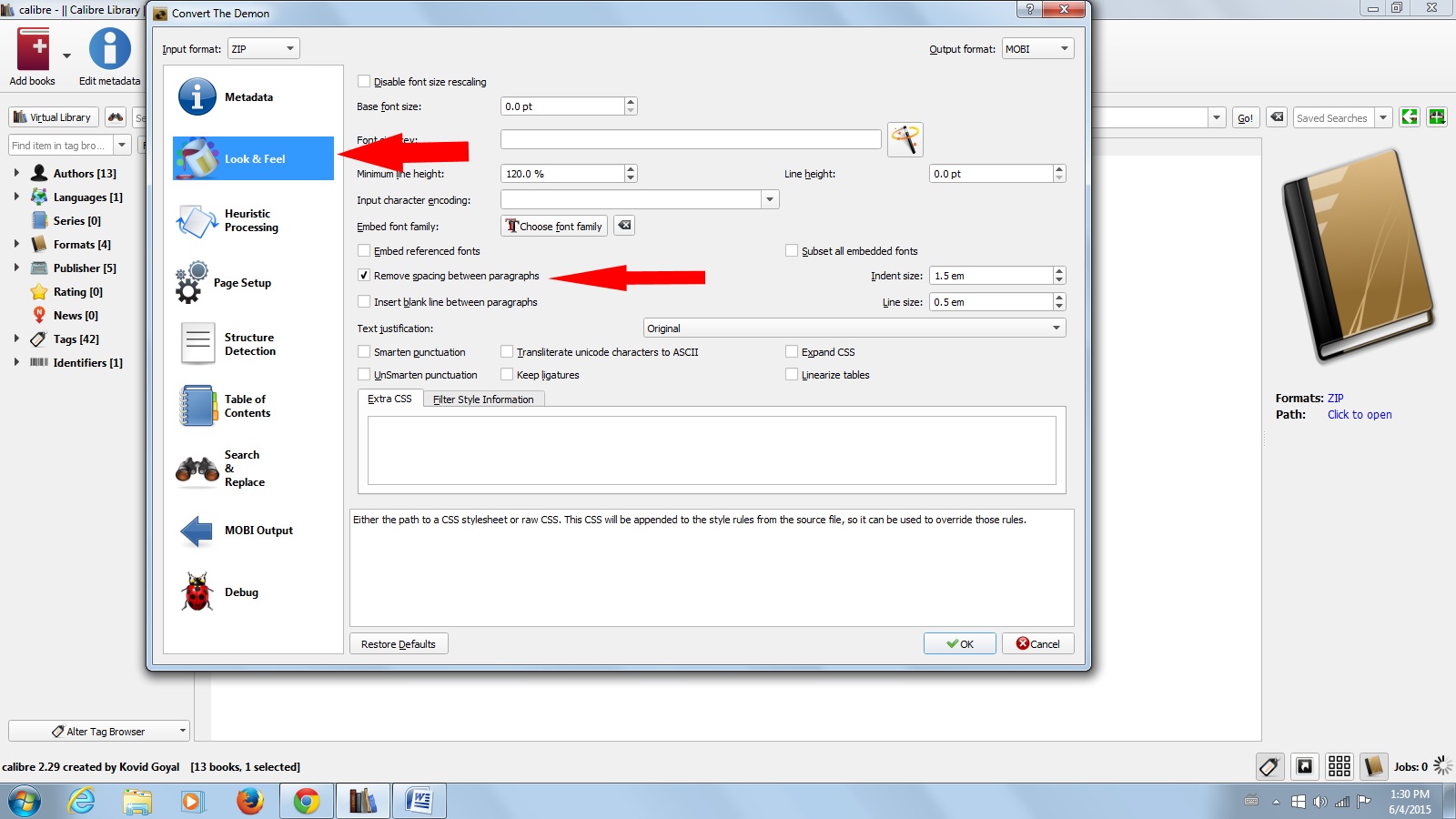
Next click on the third button from the left at the top – Convert Books. Here is where you’ll select your output file in the top right hand corner, and browse for and load your cover, as well as fill in Title and Author on the top right hand side.

Calibre3

Next, click on Look and Feel to the left of the page, and decide whether or not you’d like to remove the space between paragraphs, and check or uncheck as you choose. You can play as much as you like with this, generate and delete as many copies as necessary so you end up with an eBook that you’re happy with. You can check out all the other choices with Page Setup and Table of Contents later – this is generally as far as I go because all of my formatting is already in place in my manuscript.

Calibre4

Click the OK button, and you will see a turning circle in the bottom right hand corner of the page. Shortly thereafter, you will see the Mobi format added to ZIP under your book cover image to the right. Click to open, and there you have it! You can open it on your Kindle for PC, or send it to your Kindle, and you have the Mobi file to email to anyone you like.

Calibre5

Play with the various output formats, and with books with images in them. You can publish loads of perfect eBooks straight from your computer, all by yourself.

An @COLLEENCHESEBRO INTERVIEW WITH @READEANDWRITE

Grab a cup of coffee or tea, and come on in and get comfortable. I am excited to share that I have Amy M. Reade, the author of, “Secrets of Hallstead House,” here with us this morning. First, let me share a bit about Amy so that you can get to know her. Amy reveals:

“I am an author of women’s fiction with strong elements of suspense and setting. A former lawyer, I now write in New Jersey. I have a husband and three kids, as well as two cats and a great Bouvier des Flandres (that’s a dog, for those of you who may be unfamiliar).

When I’m not writing, you will find me in the kitchen or the laundry room, but I much prefer the kitchen. I love to cook and share the things I make. I blog about writing and wine at http://amreade.wordpress.com. My website is http://www.amymreade.com.”

As many of you know, I love looking for free books on Amazon. Not to save money, but instead because many times the author is brand new and undiscovered. I love to read debut novels, and that is exactly how I found Amy Reade, through a free download on BookBub. She volunteered to write a guest post for me a few weeks back and I shared with her that I had just started reading her book. One thing led to another and here you have it, my interview with Amy Reade! Click here to read my book review of, “Secrets of Hallstead House.”

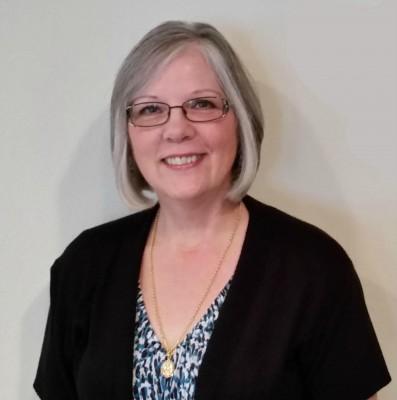
Author, Amy M. Reade

Colleen: Amy, please give us the title and genre of your book and a 30-word or less tagline.

Amy:
Secrets of Hallstead House is women’s fiction with a gothic feel to it.

Tagline: After moving to a private island in upstate New York to provide nursing care for an elderly widow, Macy must uncover secrets from her past before they destroy her future.

Colleen: How did you come up with the title of your book?

Amy: The working title was The Leaning Tree, and my editor and I felt the book needed a spookier feel to it. We discussed several options and decided that Secrets of Hallstead House had just the right amount of mystery.

Colleen: Amy, tell us about your cover art. Who designed it? Why did you go with that particular image/artwork?

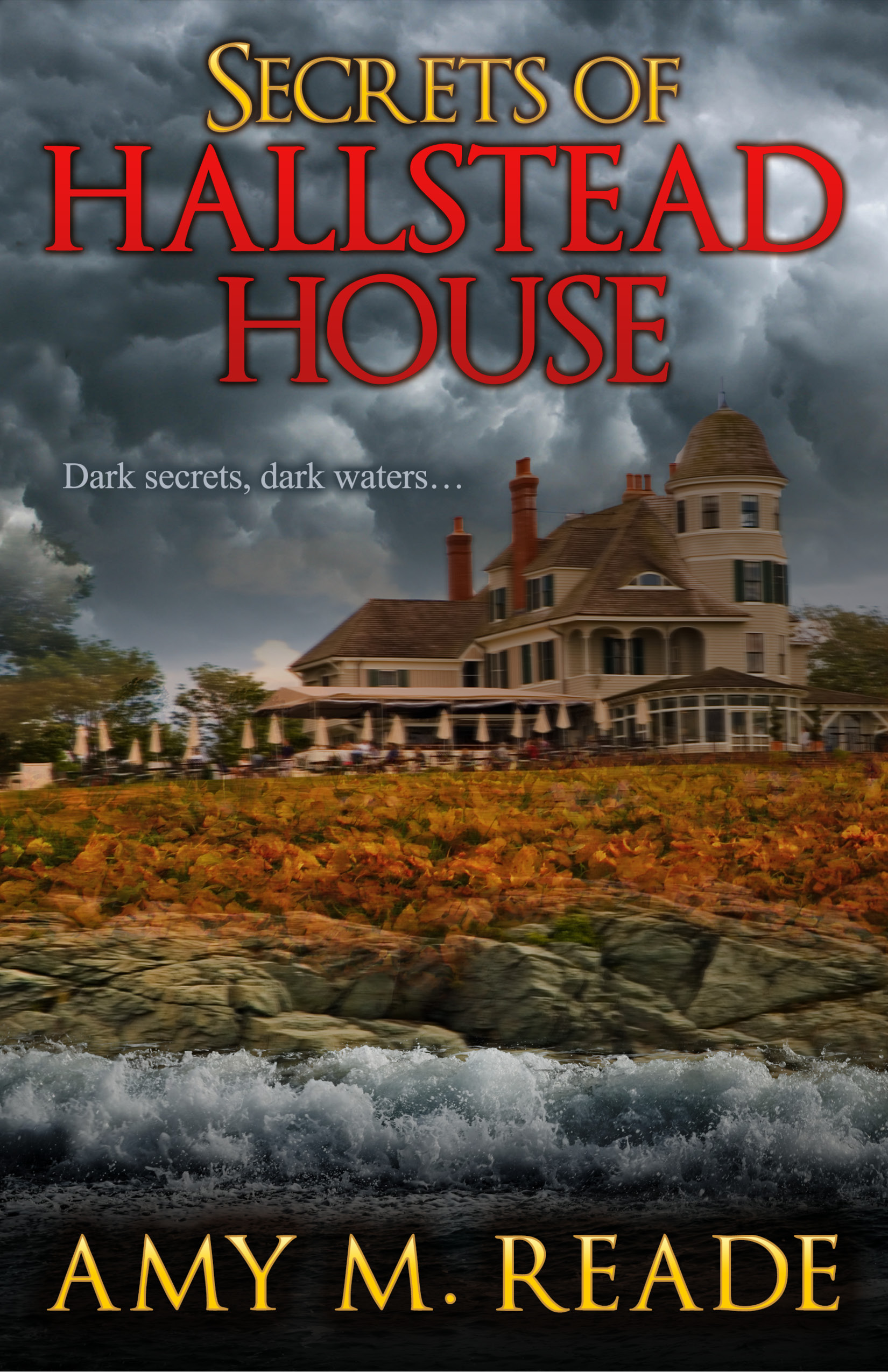
Amy: The cover art came from the Kensington Art Department. I like it because it contains elements of several of the homes in the Thousand Islands. It also has a darkness to it, and the churning water looks just like the Saint Lawrence River on a stormy day.

Colleen: So, what else have you written?

Amy:
The Ghosts of Peppernell Manor, which is also women’s fiction in a gothic style, was released in April, 2015. It is the story of Carleigh Warner, a restoration specialist who moves from Chicago to South Carolina when she is hired to restore an antebellum manor house, the family home of an old friend. The family disagrees over the future of the property and Carleigh is quickly swept into the tensions, which escalate to violence that threatens Carleigh and her young daughter.

I am also in the edits stage of my third novel, which is in the same genre, this time set on the Island of Hawaii (sometimes called the Big Island). Kailani, a sous chef, leaves Washington, D.C., to return to the Big Island, where she grew up. She lands a job working as a personal chef and is soon called on to deal with more than the job description called for, with a family in desperate turmoil and an unexpected and unwanted visitor from her past. Before long the secrets and the tensions in the home begin to build and Kailani must find the courage to stay and follow her heart.

In addition, I blog most Tuesdays at
http://amreade.wordpress.com.

Colleen: Where can we buy or see your books?

Amy: Readers can find both my books on amazon.com, barnesandnoble.com, books.google.com, kensingtonbooks.com, amazon.co.uk, amazon.ca, and kobobooks.com.

Colleen: Please give us an insight into your main character. What does she do that is so special?

Amy: Macy Stoddard, the main character in Secrets of Hallstead House, is quite young when the story begins. She has suffered a personal tragedy that leads her to seek employment away from New York City. She has her own demons to face as she tries to help her patient come to grips with the deaths of her husband and daughter.

Colleen: What are you working on at the minute?

Amy: I’m plotting out a new series right now, and I’m working on the research for that.

Amy, thank you so much for letting us into the workings of your books. I always feel like I get to know an author better after learning more about the motivations behind their work. It has been a pleasure getting to know you.

Don’t forget, I love a good book! Oh yeah, guess what?

Amy loves to connect with readers!

Website: http://www.amymreade.com

Blog: http://amreade.wordpress.com

Facebook: http://www.facebook.com/amreadeauthor

#Interview-in-translation by @OlganNM7 With Mario Escobar @EscobarGolderos ‘The Circle’

the-circle-mario-escobar

Hi all:

For the last few weeks I’ve brought you some writers whose main work is in Spanish but who have had some of their novels translated to English. I thought it would be interesting to get a different perspective on the business of writing, and it would be an opportunity to meet across the borders of language.

Today  I bring you a writer whom I’ve also met in a variety of social media platforms and when I got to check his writing, I was impressed by his background and the variety and number of publications, some more directly related to his studies and profession but others not so much.

And without further ado:

Mario Escobar

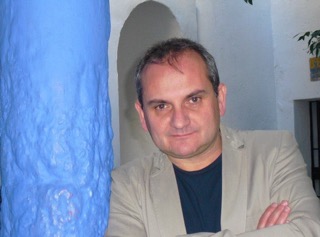
Author Mario Escobar

Mini biography

Mario Escobar Golderos (Madrid, Spain) has a degree in History, with an advanced studies diploma in Modern History. He has written numerous books and articles about the Inquisition, the Protestant Reformation, and religious sects. He is the executive director of an NGO and directs the magazine Nueva historia para el debate, in addition to being a contributing columnist in various publications. Passionate about history and its mysteries, Escobar has delved into the depths of church history, the different sectarian groups that have struggled therein, and the discovery and colonization of the Americas. He specializes in the lives of unorthodox Spaniards and Americans. Books:

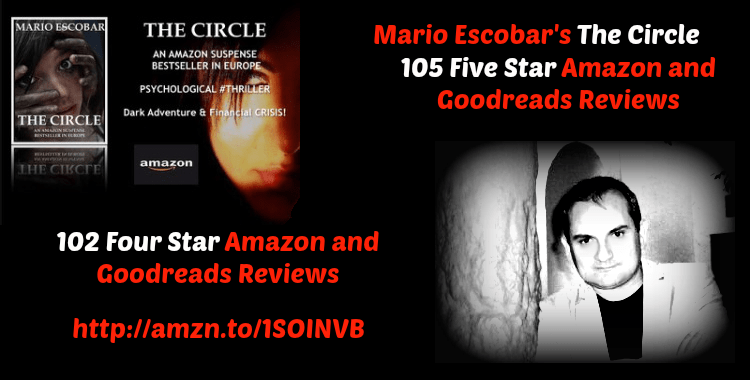
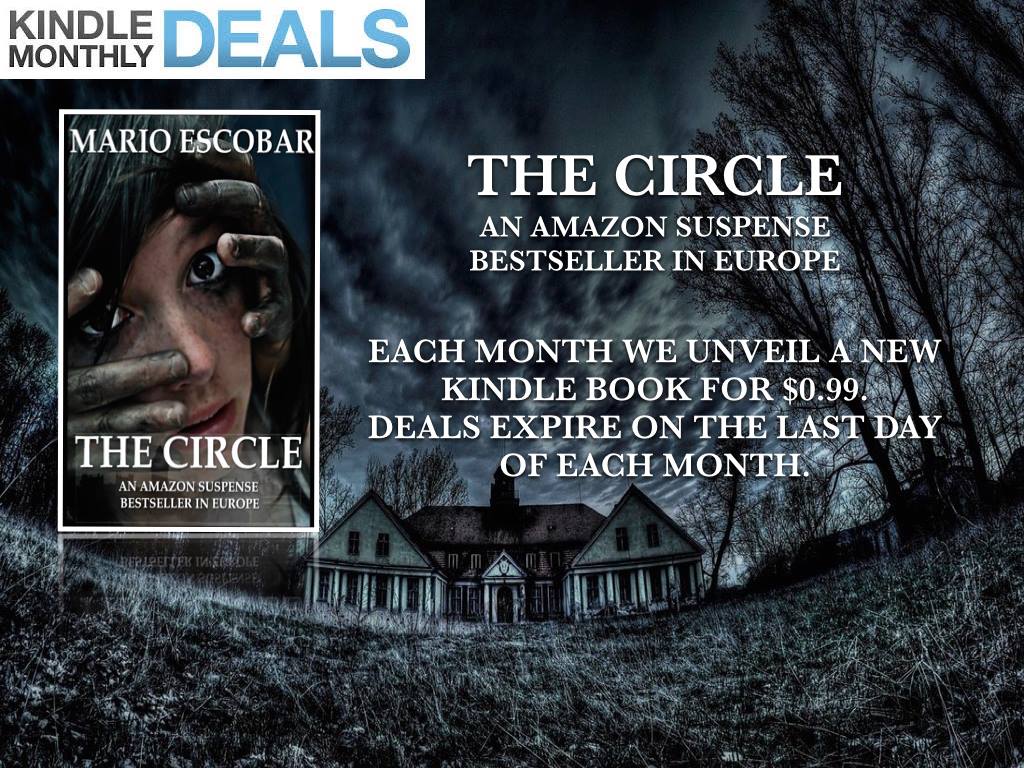
The Circle an Amazon Bestseller Europe in the category of suspense.

When and how did you start writing?

The truth is that I’ve always enjoyed writing. When I was a child I started writing plays for my school and writing fairy tales to submit to competitions. When I was a teenager I carried on writing. For me, becoming a writer was a dream, but I never thought I would manage.

Describe your experience as an independent writer.

The truth is that I consider myself a mixed writer (or hybrid as others call them), as I still publish some of my books with publishing companies such as HarperCollins, Stella Maris or Edelvives. Publishing independently has allowed me to have more control over the process and more economic stability.

What’s the moment that has had more significance for you (up to date) of your career as a writer:

When two of my readers told me they had become writers after reading my books. Such is the magic of writing and books.

What made you think about getting your books translated?

I’ve always liked to play hard and bet big. I prefer to take risks and make mistakes than never try. I found a great translator, my book in English is better than the Spanish version, and I thought I should give it a try.

So far things have been going well, although it is a bit soon to know what the overall result will be.

What was the process like, when trying to find a translator?

The most difficult think is looking for and finding a good translator. We shouldn’t forget that it is a big investment. To look for a good translator is not cheap. I’ve found one of the best ones. And then you must have a lot of faith in your book.

In my case, the same person had translated one of my books ‘Francisco’ (Francis, his book about the new Pope) for the publishing company Harper Collins, and I was so happy with the results that I offered her to translate what would become The Circle.

Could you tell us what your books mean to you?

My books are a gift I love to give to my readers. I enjoy them whilst I’m writing them, but what I wish for the most is that the readers will enjoy them too. Especially those who are away from their family, country or community; I hope my books will keep them company in the hard journey of life.

Any advice for your fellow writers (especially new writers)?

That you have to do a good job, believe in yourself and not pull any punches. The most important thing is to never give up, to be constant and persevere and to keep improving little by little.

Here are a few links so you can find out even more about Mario.

Amazon:

http://www.amazon.com/Mario-Escobar/e/B002IU5K82/

Goodreads:

https://www.goodreads.com/author/show/5609032.Mario_Escobar

Website:

www.marioescobar.es

And now, his book:

The Circle by Mario Escobar. Translation by Gretchen Abernathy

The Circle

From Amazon’s Top 100 Books sold in the USA, France, Germany, United Kingdom, Canada, Australia, Mexico and Spain.
(Full Book)
Soon to be adapted for the big screen.
A debut psychological thriller that will forever change the way you look at other people’s lives.

“After the hit saga Misión Verne and The Cloud, Mario Escobar sweeps us up in a riveting adventure set against the backdrop of the financial crisis, the dark nooks and crannies of power, and the city of London.”

Comments from readers on Amazon:
“This is an entertaining read, a really interesting story full of intrigue. When I got to the ‘To Be Continued’ spot, I was on the edge of my seat waiting for the second part… Good thing it’s ready now so I can keep reading.”
Claudine Bernardes

“This one grabs you from the very beginning. It’s enjoyable and light but captivating. It’s an easy read, and you learn history as you go. I highly recommend it. It really draws you in.”
Dancas

“It’s got a dynamic, well-constructed plot. I totally recommend it. It’s so current day. It’s a quick read, and you don’t feel the time going by. It draws you in right away.”
Rrivas

“One breathless night to save his family and discover the mystery locked inside his patient”

The plot of the novel The Circle:
Famous psychiatrist Solomon Lewin has left his humanitarian work in India to serve as the chief psychiatrist at the Center for Psychological Illnesses located in London’s Square Mile financial district. Though well paid, the job is monotonous, and Solomon is also going through a rough patch in his marriage with Margaret. He begins scrutinizing the more mysterious cases of the center’s long-term residents hoping to find something worth his time. When he comes across the chart of Maryam Batool, a young broker from London who has lived in the center for seven years, his life will change forever.
Maryam Batool is an orphan from Pakistan who became one of the most promising female employees of the financial institution General Society, but in the summer of 2007, at the start of the financial crisis, the young broker loses her mind and tries to kill herself. Since then she has been stuck, able only to draw circles yet unable to understand their meaning.
A snowstorm looms over the city at the start of the Christmas holidays. Before Christmas Eve dinner, Solomon receives an urgent call from the center to come at once: Maryam has attacked a nurse and seems to be awakening from her long stupor.
Solomon heads downtown in the snow, clueless that this will be the most difficult night of his life. The psychiatrist does not trust his patient, the police are after them, and his family seems to be in danger. The only way to protect himself and those he loves is to discover what “The Circle” is and why everyone seems to want his patient dead. It’s a surprise ending and a mystery you won’t believe.

What is hiding in the City of London? Who is behind the biggest business center in the world? What is the truth behind “The Circle”? Can Solomon save his family?

El círculo

Here Mario replies to a few questions about the book:

What did writing The Circle mean for you?
It was a delightful surprise. It was my first suspense novel. I’d already written several intrigue novels, and I thought suspense would be even more exciting.  In suspense, the readers suffer almost as much as the characters themselves. The Circle has all the marks of a detective story. The reader doesn’t know the truth until right at the end.
Why did you set the book in London’s Square Mile? 
Tax havens are one protagonist in our current worldwide financial crisis. London is the world’s largest financial center, and it holds a lot of secrets, just like the protagonist of my novel.
What should the reader expect from this new book? 
An avalanche of suspense. A major dose of intrigue and action but also the inner workings of a family struggling to fit in with their surroundings. A marriage that’s not working. Disdain for boring daily life that, after all, turns out to be the most important thing we’ve got. The personal demons of a world that has no idea where it’s headed. Solomon faces countless moral dilemmas, like judging people too quickly, recognizing he can’t defeat evil by himself, and understanding that Evil with a capital “E” has a name and a face.
Why does it take place in the middle of a snowstorm right on Christmas Eve?
The storm is another protagonist in the plot. In some ways it’s a symbol of the internal turmoil of the characters. This is not a novel of good guys vs. bad guys. It reflects the complexity of being human, our contradictions and how we face them. The Circle has reached tens of thousands of readers from Germany to Australia, Latin America to Spain, because, at our core, we’ve all got the same fears and hopes. We’re all part of this big family called Earth.

Here a video for ‘The Circle’


Here one of the reviews:

5Maryam’s case was more than just a challenge. It was a bright spot in a dull, gray city job…..

ByRichard and LizTOP 1000 REVIEWERon April 30, 2015

Format: Kindle EditionVerified Purchase

….Little did Solomon know what he was getting into!

It was the summer of 2007 in London. Maryam Batool, a Muslim orphan, was a very successful stockbroker. All she cared about was money. Upon turning on the TV she heard that three American banks had declared bankruptcy.

Fast forward a few years to the London Center for Psychological Illnesses, located in the Square Mile where we meet Solomon Lewin, the new chief psychiatrist of the center. Having spent ten years in Calcutta, him and his family just moved back five weeks ago. He is not expecting much excitement in the job, having the opinion that the wealthy prove boring. Most of his clients are white males aged 35-45, leading arrogant and almost insufferable empty lives.

In his attempt to free up some beds just five days before Christmas, his eyes catch a report on a patient who has been there the longest. Who is this patient? Maryam Batool! She was committed in August 2007 after several suicide attempts. She no longer communicates except to say one single phrase, “The Circle”. John the previous, now retired, chief psych tells Solomon to leave Maryam alone as there is no solution but Solomon is intrigued.

Frustrated with his home life and rambunctious kids even though he still loves his wife, Margaret, he decides to work from home on Christmas Eve. Totally surprised when he gets a call in the early evening from the center saying that Maryam has attempted suicide again! Apparently there was a visitor claiming to be her sister? This is the second visitor in a week! Returning to the center Solomon starts getting suspicious when the receptionist is not at her desk nor does there appear to be anyone else around. Why won’t the light switch on? What is going on? This is followed by a phone call from his house from someone claiming to be from Scotland Yard’s Fraud Squad?

Hopefully this is enough to whet your appetite. The above is truly only the beginning in this fast paced thriller. It gets a LOT more interesting and dangerous as Solomon tries to figure out the truth of who is telling the truth and who is lying. What does Maryam know/have that she cannot remember? Does she have both Post Traumatic Stress Disorder and Post Traumatic Amnesia?

VERY clever story. All I can say about the ending is “Oh my goodness!” I will say if you like books with happy endings then don’t read this one! It is a well-written story and just the right length for the time involved. It keeps you gripped and not wanting to put the book down.

Language – mild
Sexual content – none
Violence – plenty!

I was given a complimentary Kindle copy of this book in exchange for an honest review. That’s what’s above! Thanks, Liz

And Mario informed me that there is a special offer on The Circle available now

The Circle, special promo

Link:

http://www.amazon.com/Circle-Full-book-Psychological-Thriller-ebook/dp/B00RBTRE8O/

http://www.amazon.co.uk/Circle-Full-book-Psychological-Thriller-ebook/dp/B00RBTRE8O/

In case any of you speak Spanish, I leave you a link to a fascinating podcast where Blanca Miosi, another one of my guests, interviewed Mario Escobar. I leave you both the link and the interview direct. It’s a very interesting series where every week there’s a new author, so if you’re confident with your Spanish, it’s a great way to meet new people.

https://www.spreaker.com/user/emotionalhealth1/la-hora-amazonica-2


https://www.spreaker.com/embed/player/standard?episode_id=6066027&autoplay=false

Thanks so much to Mario Escobar for this great interview, thanks to all of you for reading, and you know, like, share, comment, and CLICK!

Olga Núñez Miret

Olga_Núñez_Miret_author.jpg


@OlgaNM7

http://OlgaNM.wordpress.com

http://www.OlgaNM.com

BOOK REVIEW BY @COLLEENCHESEBRO OF “SECRETS OF HALLSTEAD HOUSE” @READEANDWRITE

Title: Secrets of Hallstead House

Author: Amy M. Reade

ISBN 10:  1601833008

ISBN 13: 978-1601833006

Published: Kensington Trade (July 1, 2014)

Pages: 224

Blog: amreade

Author webpage: amymreade.com

Genre: Romantic Suspense, Family Drama, Woman’s Fiction

Secrets Of Hallstead House (eBook)

Nurse, Macy Stoddard is desperately looking for a new beginning. Loss has become her sole existence after the deaths of both of her parents. To make matters worse, her fiancé deserts her just when she needs him the most. Now she finds herself totally alone in the world. To turn the corner of tragic life events, Macy decides to take a position on a remote island in upstate New York where Alexandria Hallstead, the elderly mistress of Hallstead House needs the care of a qualified nurse.

Immediately, Macy is enamored with the natural beauty of the island and the uniqueness of the old house. She enjoys caring for Alex Hallstead and the elderly woman values her friendship on the remote island. Not long after Macy’s arrival it becomes apparent that the rest of the family and servants do not want her there. A mystery drifts about Hallstead House encircling Macy, drawing her into the delicate web of family intrigue. Shrouded threats from the housekeeper and other family members begin to escalate into random acts of unexplained violence.

Macy turns to Pete McHale, Hallstead House resident handyman and boat captain, who becomes her ally in solving the mystery that permeates the island. What Macy didn’t bargain for was falling in love, or discovering the deep, dark family secrets that threaten to engulf her forever.

Author, Amy Reade

The descriptions of the Thousand Islands in upstate New York on the Saint Lawrence River were absolutely glorious. I thought Amy Reade’s words painted vivid images of the sea and the haunting beauty of the islands and the river near Hallstead House. She depicts in her writing, grand homes that dotted these islands with rich tales of the occupant’s failures and achievements. To me, this added story telling augmented a realistic twist to the unraveling events in the story.

The Secrets of Hallstead House is Amy Reade’s debut novel. This book is an enjoyable and comfortable read, much like the gothic suspense novels by Victoria Holt I read as a young woman. For me, Macy’s journey about finding herself and solving the mystery was satisfying and all I needed within the confines of the story.

So come on! Grab a cup of tea, settle in your favorite chair, and visit Hallstead House. Oh, and by the way, don’t underestimate the nature of the mystery that lurks within these pages. I never figured out the end of the story beforehand and was pleasantly surprised at the end!

Edited: Previously stated as free until June 5, 2015. The free download offer has ended.

RATINGS
Realistic Characterization: 4/5
Made Me Think: 3/5
Overall enjoyment: 4/5
Readability: 4/5
Recommended: 4/5
Overall Rating: 4

Buy it at: Amazon
Format & Pricing:
Paperback: $15.99 US
Kindle: $.00 US “FREE”

Goodreads


@ColleenChesebro

www.SilverThreading.com

Can You Give Away Free Digital Copies of your eBook When Enrolled in KDP Select? @JoRobinson176

No actually, as it turns out. Only via Amazon, and almost never via email attachment. The road to getting most things right as an Indie publisher is a steep learning curve. Knowledge is unlikely to magically appear if you can’t even imagine what questions to ask, and haven’t much of a clue what knowledge is required anyway. Most of us learn from mistakes, both large and small, along the way, and what with the continually changing and growing world of self-publishing, we really are learning all the time.

Having up to now had some of my books published for sale on Apple and Smashwords and all the rest, I wasn’t concerned about Amazon KDP Select rules as they didn’t apply. Now though, after MONTHS of working really hard to get them off Smashwords supplier sites, I’m being as careful as possible not to break any of them. I’ve decided that for this year at least, my current books will be published exclusively with Amazon and CreateSpace. With CreateSpace extended distribution my paper books are still sold by Barnes & Noble, and with the perks of KDP Select, I’m very happy with the status quo.

One rule that many of us might not have known before, is that with KDP Select you can only distribute your eBooks through Amazon. You can send copies to “professional reviewers”, but not to anyone else. This appears to include not being allowed to send out digital books as prizes in competitions. You can only distribute free books via Select’s five free book promotion days every three months. Any eBooks distributed BEFORE you sign up for KDP Select are alright, so don’t panic if you did that while not signed up for Select. You can send your paper books to anyone you like though as prizes – you’ve bought and paid for them after all.

You are not allowed to gift any eBook in exchange for a review, and if you do ever review a gifted eBook, make very sure to add a disclaimer to your review on Amazon. You are not allowed to swop reviews. I do review the books of some authors who have already reviewed some of my books, but only when I’ve bought the book, read it, and honestly liked it. I think you’re safe doing this if you don’t do it often, and are also reviewing the books of mostly unknown to you authors, but certainly don’t make review swopping part of your Indie trip, or you could find your book booted out, and your reviews taken down. If you write books on grammar, writing a scathing review of another author’s book about grammar might be taken as breaking Amazon’s rule of reviewing the books in your own field. All in all, with reviews, authors should definitely tread lightly – and certainly read Amazon’s policy on them so as to be safe, rather than sorry.

In fact, reading Amazon’s terms before we all zoomed off to publish would probably have saved some of us intrepid Indies a bruised knee or two. I’ve figured out that the two US dollars extra I pay for any eBook I buy from Amazon is for the privilege of having an account there as a non-US citizen, and this is fine with me, because it is a privilege. Buying eBooks from Amazon is a lot simpler (and mostly cheaper even with the surcharge) than buying them around here. I could never figure out why my royalty payments were different for my novels when they had the same prices though, until I got stuck into that old fine print. Turns out that your royalty at the higher rate is X minus relevant VAT minus cost per megabyte book file size. Authors pay for the delivery of their books every time a reader buys them. It’s only cents per MB, but it is a good thing to know when you’re planning on publishing a book chock full of images. One of the biggest lessons I’ve learned along the Indie path, is to always read the fine print, and the best advice I could ever give to a new self-publishing author just starting out on this road, would definitely be to figure out the rules first. Happy scribbling fellow Indies.

owl-with-tablet-hi

Nargis-Through My Summers by Sourabh Mukherjee #Free through May 29th.

Sourabh has put his short story for free on Amazon right now for a short period of time. What’s better than free and quick, right?

“Author Sourabh Mukherjee’s “Nargis – Through My Summers” is a love story that goes beyond a conventional ‘happily ever after’ ending and offers realistic views of the variety of emotions one goes through when love comes calling. The story deals with human emotions that readers will relate to. Many of us have found love when we least expected to, nurtured unprofessed love in our hearts for years, and have struggled to cope with lost love.
A slice of life in the true sense, the book takes us on a soulful journey as we relive loves lost or found or nurtured unprofessed in the deepest recesses of our hearts.
‘I had two things which not many had—an impossible dream that made every tomorrow worth waiting for, and a pain that not everyone was blessed with.'”~From the Book Description on Amazon

Click Here to go to the book on Amazon

sourabh-free

A @ColleenChesebro Interview with Children’s Author Deanie Humphrys-Dunne @hollyssis


I have the best news! I would like to introduce you all to Deanie Humphrys Dunne, author of five children’s books: “Tails of Sweetbrier,” “Charlie the Horse,” “Charlene the Star,” “Charlene the Star and Hattie’s Heroes,” and “Charlene the Star and Bentley Bulldog.”

The Tails of Sweetbrier has won several awards.
It was the winner of the Silver Medal in the Feathered Quill Book Awards (2014) and was selected as a finalist for the CLIPPA book awards.

The other books written by Deanie are entertaining children’s tales told from the animals’ points of view. All of these books are filled with valuable life lessons. They are beautifully illustrated by her sister, Holly Humphrys-Bajaj.

When Deanie isn’t writing, she loves spending time with her family and their dog, Elliott. She enjoys watching equestrian competitions and figure skating shows.

Author, Deanie Humphrys Dunne, photograph – courtesy of Bob Moseder

Colleen: So Deanie, tell me something about yourself. Where do you live? Are you a full-time writer?

Yes, I am a full-time writer, along with being a Mom and wife. We live in Connecticut.

Colleen: What inspired you to write children’s books?  Have you written other books?

My career as an author began rather unexpectedly. I had been anticipating employment as a medical coding specialist, but no one was interested in hiring me without experience. Silly, isn’t it?

One day I had a strong intuition to write a story about growing up on our family farm called Sweetbrier. Remembering my Dad’s advice to consider the worst thing that could happen when I was worried about a new venture, I figured if the story wasn’t published, I wouldn’t likely pass away.

Consequently, I wrote my first book, the award-winning “Tails of
Sweetbrier.” This story involves overcoming obstacles to realize your dreams, against the odds. It’s an autobiography of the journey I took with my Dad after he made a decision that changed my life. This book proves all things are possible if you persevere.

My other books, “Charlie the Horse,” “Charlene the Star,” “Charlene the Star and Hattie’s Heroes,” and “Charlene the
Star and Bentley Bulldog,” are fictional tales told by the animal characters. They’re all beautifully illustrated by my sister, Holly Humphrys-Bajaj. She is an incredible talent. She creates adorable illustrations, as well as book covers for our books. Nothing would be the same without her talents! All of my books are available on Kindle.

Find on Amazon

You can find a free chapter here. After you read it, make sure and tell Deanie what you think on her blog!

Find on Amazon

Find on Amazon

Find on Amazon

Find on Amazon

Colleen: What messages do you want your young readers to get from your writing?

My books are all filled with subtle life lessons that I hope will inspire and entertain children. For example, Charlie the Horse learns he must work hard and set goals if he wants to become a famous racehorse. Charlene the Star is a beautiful red horse who has different skills than anyone in her family. She proves it is okay to be an individual. She also shows it’s important to work hard to develop your natural talents.

Charlene the Star and Hattie’s Heroes is a humorous story about a group of animals who look for an exciting new career. They start their own business to help their friends overcome training problems. It highlights friendship and teamwork. Finally, my new book, Charlene the Star and Bentley
Bulldog, addresses bullying. It also shows you can change if you realize the need to do so. Readers learn about the animals’ comical thoughts and actions in these stories.

Colleen: Who is your favorite author and explain what really inspires you about their work.

If I’m reading romance novels, I like Danielle Steel because she is not predictable, and her books are always engaging, in my view. I have many children’s authors, whom I admire.

Janice Spina, Sarah Mazor, Yael Rosenberg, and Kathleen Andrews Davis are a few of my favorites. Their books are always entertaining and educational. They also highlight good character.

Colleen: Where do you get the ideas for your books from? What inspires you the most in your life?

Sometimes I get them from life experiences, as in Tails of Sweetbrier. But I would say most often, I decide what kind of theme I want and then craft a story around that.

Deanie Humphrys Dunne ancestral home – “Sweetbrier.” Photographer Unknown.

I would say my family is responsible for encouraging me. My parents used to tell me I should write books. Of course, I thought the idea was ridiculous. But once I started, it was fun. My sister, Holly, and my husband, Francis, always encourage me and give me new ideas when I need them, as do our sons.

***

I would like to thank Deanie for letting us get to know more about her and for sharing the information about these delightful books she writes for children. If you have young children or grandchildren you will enjoy reading these books together. The artwork is fabulous and the colors are inviting to kids.

Did you enjoy meeting Deanie? If so, here are some other places you can find her:

The Authors Show.com (contains an audio and video of another interview with Deanie)

deanieblog

Children’s Books with Life Lessons.com

Dhdunneblogspot.com

Facebook

Twitter


@ColleenChesebro

SilverThreading.com

We are what we eat…

We are what we eat…

A Diary of Writing Wisdom (and other nonsense)

#THREE

We are what we eat…

038-001

The Latin proverb simulac hoc, ergo propter hoc, which may be translated, “everything is the product of its environment,” is the basis for this writing theory.

According to this idea authors are like rivers. Rivers do not create water; they receive it from springs and streams. In the same way authors receive their ideas from the streams of thought that are flowing in the corner of the world in which they live. A middle-class Eastern author will receive middle-class Eastern ideas. A working-class Western author will receive working-class Western ideas.

To say it another way, authors “are what they eat.” This idea applies to minds as well as to bodies. It assumes that, just as my body is the product of red curry or pulled-pork BBQ (depending on my background), so also my mind is the product of French ideas or American ideas, liberal ideas or conservative ideas (depending on my background).

Growing authors, however, will realize this about themselves and seek out ways to “alternate” what they eat (every once in a while).

As a step toward becoming more aware of the kind of writer you now are. As a step toward becoming the kind of writer you someday wish to be—take time to consider not only how what you eat may be contributing to your writing, but how what you only eat may also be limiting your writing.

Variety adds spice . . . to writing life.

The Proof is in the Reading. by Guest Author @wendyproof

The Proof is in the Reading

If I do my job properly, I am invisible.

Very few of us finish reading a novel and say, “That book was beautifully proofread.” And who would want to? A story should transport us, take us out of our everyday lives, excite or move us in some way. We don’t want the misspelling of a character’s name or a missing full stop to jolt us out of the story. OK, maybe that can be forgiven when we’re being swept along by an entertaining tale, but repeated typos and inconsistencies can undermine our trust in the author’s ability to spin a good yarn.

When I’m proofreading, I’m always thinking about the link between the author’s words and the reader’s mind. I like to believe that I play a tiny part in ensuring that the story travels cleanly from one to the other. I often find myself asking two questions: “What is this author trying to say?” and “Will the reader understand it?” Using these questions as my focus I spend hours choosing when to intervene and when to step away. It often feels like I’m walking a tightrope.

I’d like to demonstrate some elements of this high-wire act, and share with you the types of decisions I make when I’m proofreading fiction. This post inevitably touches on the differences between proofreading and editing, and I’ll say categorically, up-front, no doubt about it, I’m in the troupe that firmly pitches its circus tent in a fuzzy grey area. However, as a general rule, when proofreading I tend to only correct proofreading errors and make suggestions or ask questions about editing issues.

So, let’s get down to details with one example of a descriptive passage and a couple of examples of dialogue.

Dirk has escaped from his kidnappers and the author is describing how he’s now lost in the desert:

The son beat down like a demon, dragging his very soul from his aching limbs. Dirk couldn’t take any more of this dessert. It filled him with a stomach-churning dread. He could be stuck hear for ever in these dessert sands that stretched for ever. The harsh, cruel, unrelenting terrain played tricks on his tired mind and his weak body.

Having corrected “son” to “sun” and “dessert” to “desert” and “hear” to “here”, there really isn’t anything else I should go ahead and amend as a proofreader. I would probably add a note to suggest avoiding the repetition of “for ever”, but however much I might want to cut down on the number of adjectives describing the terrain or think that the word “battered” would work heaps better than “weak”, I have to rein myself in because it’s not my job to put my stamp on an author’s work.

Let’s move forward to the moment Dirk is being helicoptered out from the “harsh, cruel, unrelenting terrain” of the desert. The dialogue runs:

“How long have you been out there?” The medic enquired.

“Dunno,” said Dirk, “L-lost track of t-time,” he coughed.

“Take a sip of this,” the medic offered a bottle of water.

I’d make the following corrections:

Line 1: Change “The medic” to “the medic”.

Line 2: Alter the comma to a full stop after “Dirk”.

Line 3: Amend the comma to a full stop after “this” and “the medic” to “The medic”.

Basically I’m ensuring that speech tags and action tags are punctuated correctly. I have a dilemma deciding what to do with the second line. Strictly speaking “he coughed” is action rather than speech and so the comma after “time” should be a full stop and the “h” of “he” should be amended to upper case. However, the hyphens suggest to me that Dirk is coughing as he’s speaking (probably he’s suffering from all the sand that got down his throat after an undisclosed number of days in the desert), so I’d probably leave this, even though the grammar police are probably beating a path to my door as I type.

Dialogue can be an excellent way to efficiently drive a story forward, but often when a book has been through a few drafts I’ve found some authors have lost track, and included details in both the dialogue and the narrative, which results in unnecessary repetition. We now find Dirk being interviewed by the police after his kidnap ordeal. He’s been asked to provide a description of the kidnapper whose afternoon nap allowed him to escape:

“Tall guy, six-two or six-three maybe, well-built, massive shoulders, like a rugby player, black hair, longish, clean-shaven, broken nose.”

“What about accent? Anything unusual about his voice?” asked the policeman.

“English, probably London. Deep voice,” replied Dirk, remembering how the kidnapper tried to intimidate him with his height, his deep voice and rugby-playing physique, but that he whimpered like a baby in his sleep.

Here I would guess that the author initially put the detail in the speech, then in a later draft decided to do this via Dirk’s memory, but forgot to remove the detail from the description. It’s not a proofreading error, but I’d query whether the repetition was on purpose or not.

Which leads me on to another question I often ask: “Has the author done this on purpose or not?” The most exciting writing breaks the rules, and I need to be alert to the occasions when an author breaks the rules on purpose. A very simple example of this is when an author drops in short phrases rather than full sentences to inject pace and drama. It’s usually pretty clear that the author knows perfectly well how to write a conventional sentence, but has chosen a few choppy phrases to create an effect.

I don’t sit there wielding my red pen correcting novels as if I’m a teacher (although I was a teacher long, long ago), nor is it my job to criticise an author’s work or to show off. I’m fully aware that the author of Dirk’s adventure knows how to spell “sun”, “desert” and “here”. They are typos, not a reflection of the author’s intelligence or ability to write. I don’t approach my job in a judgemental way.

I do need to tune in and judge how formal or informal the author’s style is and in turn respect the author’s voice. So if an author regularly uses the comma splice or doesn’t punctuate “that” and “which” in the way that I was taught at school, as long as the meaning is clear I won’t change the text. And as long as the use of commas works for a sentence I won’t get bogged down in gradable, qualitative, classifying or coordinate adjectives. Essentially, if the author is getting the message across I try my hardest not to interfere.

A little aside, in case you are interested in the comma splice and the punctuation of “that” and “which”. Here’s a basic outline:

  • The comma splice, also known as the run-on sentence, occurs when you use a comma to join two unrelated main clauses. For example, “I enjoy proofreading novels, I spend all day playing with words.” Strictly speaking the comma should be replaced by a semicolon or colon, or the two clauses linked by a conjunction. I have to admit to a guilty fondness for the rhythm of comma splices.
  • “That” is used without a preceding comma to introduce text that is integral to the sentence, whereas “which” is preceded by a comma when the text is not integral to the sentence, which makes sense really.

If you’re interested in reading more about those gradable, qualitative, classifying and coordinate adjectives I suggest you set aside an hour, pour yourself a strong cup of tea or a stiff drink and read section 4.3.4 of The Oxford Style Manual (UK) and 6.33 of The Chicago Manual of Style (US).

There are rules, and many of them are there to help the author’s words convey his or her intended meaning, but equally many of those rules are made to be broken if the author knows what he or she is doing. A huge part of my job is to judge when to impose those rules and when to keep shtum.

Having raised my head above the parapet with this post, I’m now going to wrap myself in my invisibility cloak and return to working on other people’s words.

wendy_janes_author.jpgWendy Janes is a successful freelance proofreader for a range of large and small publishers and has been for over a decade. She has a Bachelor of Education degree from Goldsmiths College (London University) and a Chapterhouse qualification in proofreading and copy editing. Her own work can be found in two anthologies; A Kind of Mad Courage and Romantic Heroes , the non-fiction memoir of her grandfather The One and Sixpenny Englishman, and her full length literary fiction novel What Jennifer Knows. For her services, go to her site http://wendyproof.co.uk/testimonials/ and make certain to connect with her on Twitter, . (She in no way proofread this bio.)

I want to thank Ms. Janes for giving us an inside look into the world of a proofreader. I must say I like her method, and the length of times she takes. Give me a person that says they will turn around a book in a couple or three days, and I will give you someone I worry about.~Ronovan

Enter your email address to subscribe to this blog and receive notifications of new posts by email.

© Copyright-All rights reserved by litworldinterviews.wordpress.com 2015

#Interviews-in-Translation. Today Jonás Cobos (@JonasCobos).

Hi all:

As you know, I’ve been introducing you to some authors who write in Spanish but whose work has become so popular that is now being translated to English and other languages. Today, I bring you somebody who loves adventures. Jonás Cobos. I’ve found his replies very inspiring and they highlight the wonders a books can achieve.

Author Jonás Cobos
Author Jonás Cobos

Biography:

Jonas Cobos (1967) was born in the Balearic Islands, Spain, grew up in Minorca. At 12 years old he discovered a book by Agatha Christie, and that turned him into a bookworm. In 2010 he studied Creative Writing with the writer Holly Lisle. In 2012 he published “Susurros en la Oscuridad” (Whispers in the Darkness) that quickly became a best seller in the terror genre in Amazon Spain. He is one of the first Spanish authors to write in the Steampunk genre. And his book LA CARACOLA DE NEPTUNO (KRAKEN, Steampunk) has become a best seller in that genre. Now his book has been translated to English and Italian.

What got you into writing?

I started writing when I was twelve years old, with the intention of creating new adventures for Hercules Poirot and Captain Hastings, the characters created by Agatha Christie that made me discover the world of books and writing. These were followed by the works of Poe, Verne and H.G. Wells.

Tell us about your experience as an indie writer:

I started to seriously consider the possibility of becoming an independent writer about five years ago. Following the death of my mother I understood that if I wanted to get into writing and become a writer I couldn’t postpone it any longer, or I would never do it.

If you had to choose a single moment from your experience as a writer, which one would it be?

During a chat with a reader who worked as a support teacher for children aged 11 and 12, she told me that she used my book ‘Kraken’ to help them read out loud. When I was their same age I also had the same problem and with the help of a teacher I practiced my reading. That was how I first discovered Agatha Christie’s novels. I think that has been my greatest satisfaction, knowing that one of my books is helping children with the same problem I had.

What made you think about getting your book translated?

Kraken (the previous title in Spanish was La Caracola de Neptuno, Neptune’s Conch Shell) falls within the genre of Steampunk and that genre is much more appreciated and followed in the Anglo-Saxon world than in the Spanish speaking market, so it seemed logical that it would be my first book translated to English.

Tell us something about your book:

Kraken is an adventure story in the purest Jules Verne and steampunk style. It takes place in an alternative Victorian era where historical events are different from our reality. The Spanish Armada was never defeated and the Spanish Empire spreads across both sides of the Atlantic Ocean. In the novel there are conspiracies, secret societies and submarine travels in search for lost civilizations.

Any advice for your fellow writers (in particular for new writers)?

It’s very important to take care of the final result. An eye-catching cover, a good description, and, especially regarding translations, it’s necessary to be very careful. I think it’s very important that afterwards the text is checked by native readers who can offer an opinion on the final result.

Links:

Author page:

http://www.amazon.co.uk/Jonas-Cobos/e/B009BTWC9I/

The Kraken (Chapters 1&2)   viewbook.at/B00PT1EQAK

The Kraken (Chapters 3&4)  viewBook.at/B00R3LS47U

The Kraken (Chapters 5&6)  Coming Soon

And to give you an idea of what readers think, an opinion of Kraken (Chapter 1 and 2).

Steampunk with a Spanish Twist 25 de diciembre de 2014

Por Ralph E. Vaughan – Published in Amazon.com

This book, originally published in the author’s native Spanish but now available in English, immerses the reader in a steampunk themed alternate history where the Spanish Armada was much more successful than it was in our timeline, and also raises the possibility that our timeline owes its existence to the interference of time saboteurs. Where other authors give us the trappings of steampunk without real substance, Jonas Cobos infuses his world thoroughly with the substance and spirit of the genre, 110% full of steampunk ideas and motivations. And he did something few other writers have done…made steampunk goggles actually functional tools rather than mere fashion statements.

The story follows the exploits of a Spanish secret service agent as he trails a group trying to change the past and destroy the timeline of his own world. Although the book sets up for a larger continuing story, the reader is treated to two self-contained episodes that are fun and satisfying in themselves, as well as an ending that raises expectations for more adventures to come while not leaving the reader dangling.

I am looking forward to reading more by this talented and imaginative writer, and in following the continuing adventures of this secret agent as he wends his way through a milieu that has an interesting non-Anglo twist.

Thanks so much to Jonás for being our guest today, thanks to all of you for reading, and please feel free to share, like, comment and click to learn more things about the author and his books.

Olga Núñez Miret

@OlgaNM7

http://OlgaNM.wordpress.com

http://www.OlgaNM.com

How to be an Agent’s ‘Dream Client’

A great one to check out. By Chuck Sambuchino.

LauraDrake's avatarWriters In The Storm Blog

By Chuck Sambuchino

medium_2581582826How does a literary agent define their “ideal client”? The question is extremely important because it’s one that factors into an agent’s mindset before and after they sign you.

If an agent has read your complete novel or book proposal and wants to sign you, the next step is almost always to arrange a telephone call where the two of you get to know one another. You ask the questions you want to ask about her and her style; she does the same regarding you and your style. During the phone conversation, the agent is trying to gauge whether you’re compatible enough with her to be signed as a new author in her stable. She’s already sizing up whether you can be a good, long-term client, or close to it.

Then after you sign with the agent, the two of you begin a long process of working…

View original post 992 more words

A @COLLEENCHESEBRO INTERVIEW WITH AUTHOR ANDREW JOYCE @HUCKFINN76

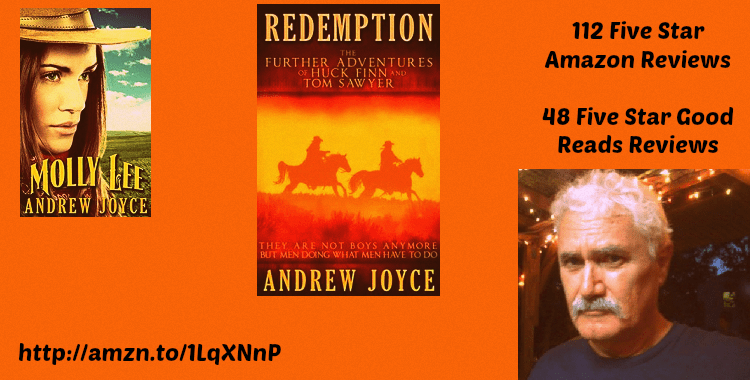
You are never going to believe this! I managed to get an interview with author, Andrew Joyce about his two novels and the characters he chose called, “Redemption” and “Molly Lee.”

Andrew Joyce lives on a boat in Fort Lauderdale, Florida with his dog Danny. “MOLLY LEE” is a follow-up novel to the best-selling “REDEMPTION: The Further Adventures of Huck Finn and Tom Sawyer.”


Here is the description of “Redemption,” from Amazon:

“Three men come together in the town of Redemption Colorado, each for his own purpose. Huck Finn is a famous lawman not afraid to use his gun to protect the weak. He has come to right a terrible wrong. After his wife’s death, Tom Sawyer does not want to live anymore; he has come to die. The third man, the Laramie Kid, a killer Huck and Tom befriended years earlier has come to kill a man. For these three men Death is a constant companion. For these three men it is their last chance for redemption.”

Here is the description of “Molly Lee,” from Amazon:

“Molly is about to set off on the quest of a lifetime . . . of two lifetimes. 

It’s 1861 and the Civil War has just started. Molly is an eighteen-year-old girl living on her family’s farm in Virginia when two deserters from the Southern Cause enter her life. One of them—a twenty-four-year-old Huck Finn—ends up saving her virtue, if not her life.

Molly is so enamored with Huck, she wants to run away with him. But Huck has other plans and is gone the next morning before she awakens. Thus starts a sequence of events that leads Molly into adventure after adventure; most of them not so nice.

We follow the travails of Molly Lee, starting when she is eighteen and ending when she is fifty-six. Even then Life has one more surprise in store for her.”

Click here to read my book review of “Molly Lee.”

Colleen: Andrew, what are the advantages and disadvantages of writing sequels to classics? How did you decide what the adult Tom and Huck would be like?

Andrew: In this case there was no disadvantage. I picked two beloved characters—the advantage was the same—everyone loves Tom and Huck.

This will probably not be believed, but I felt Sam Clemens standing behind me as I wrote this yarn. He wanted to write a sequel to Huck and Tom and I think he started to do so. However, he never finished it. Perhaps he used me as his instrument to get it off his chest, so to speak. In answer to your question, I don’t know how I decided to make Huck and Tom gunslingers in the Old West. The book wrote itself. But if you repeat that, I’ll deny it. After all, I’m the genius here!

Colleen: What is the single biggest challenge of creating the settings in your novels?

Andrew: I always write my settings from places I’ve been and experienced firsthand. So, that does not present a challenge for me. I don’t know about other writers, but I start a novel knowing the first sentence and the last paragraph. Then all I have to do is come up with 100,000 words to fill the space in between. That is the easiest part. I let my characters take me where they want to go. I may have something in mind for them, but when we get there, they may take me in a whole different direction in which I am more than happy to follow.

Colleen: O.K. Andrew, who would you most like to sit next to on an airplane?

Andrew: I don’t fly anymore. But if I did, I’d prefer an empty seat. If I couldn’t get that, then I reckon Jesus would do. I’m sure he would have some good stories.

Colleen: Who would play you in the movie?

Andrew: Depending on the day, either Matthew McConaughey or Jabba the Hut.

Colleen: What is the one thing you can’t live without?

Andrew: Oxygen.

Colleen: What’s the best writing advice you’ve ever heard?

Andrew: It’s not the best advice I’ve ever heard . . . it’s the best I’ve ever given. READ, READ, READ, and then READ some more. Read every book you can get your hands on. Read Steinbeck . . . “The Grapes of Wrath” and “Tortilla Flat.”

“The afternoon came down as imperceptibly as age comes to a happy man. A little gold entered into the sunlight. The bay became bluer and dimpled with shore-wind ripples. Those lonely fishermen who believe that the fish bite at high tide left their rocks and their places were taken by others, who were convinced that the fish bite at low tide.”— John Steinbeck, Tortilla Flat

That is some damn good writing. And when you read stuff like that you can’t help but become a better writer.

Colleen: What are you working on right now?

Andrew: Making a big, tall drink that is 90% vodka.

Thank you for this fabulous interview, Andrew. It was great learning about your novels and getting to know you better. I really enjoyed knowing your inspiration came from Mark Twain himself.

If you love historical fiction based in the American old west, you will love Andrew’s books!

Find Andrew on his blog: andrewjoyce.wordpress.com

In addition, you can find Andrew on:

Goodreads

Facebook

Twitter 

Colleen_Silver_Threading


@ColleenChesebro

SilverThreading.com

Should you Sell eBooks from your Website? @JoRobinson176

Many web owners sell books directly, and sometimes exclusively from their sites, collecting one hundred percent of the price via PayPal. If you publish with Amazon KDP Select, this is obviously not allowed – in fact, if your book is with Select, you are only allowed to distribute the digital books through them, and only the selling of your paper books after ordering them from your POD supplier is considered kosher.

If you’re not with KDP Select you can sell them anywhere you like, so the website option then becomes viable, and a very good idea too. As an independent publisher you get to try a variety of avenues for selling and marketing your books. We all know about Smashwords and all the other sites where you can make your books available to buy. It’s quick work to load them up there – although – not such quick work to get them taken down by the way. I unpublished two of mine from Smashwords months ago, and I’m still trying to get Barnes & Noble to remove them from their site so I can enrol them in Select again.

So there are all these options open to you for spreading your books far and wide, but do consider having one or two for sale directly from you. I’m in the process of getting a couple ready for this very thing. Many of us use WordPress.com. Me, because the thought of hosting my own website terrifies me, but moving to WordPress.org in the future will be necessary because of Google visibility.

You can’t install a PayPal button and sell your books from WordPress.com, although that needn’t be a hindrance. Why not set up your own website with a link to it in your sidebar? Setting one up is only a little work to begin with, and then occasional updates after that. A nicely designed static website is a great thing to have to use for all your future promotions, sales, new releases, and a great way to showcase yourself and all of your books.

A couple of free website hosts are Weebly, and my favourite, Wix. It shouldn’t take you more than a day to get it looking nice and professional. One little tip though – take your time picking your theme and theme fonts, because once you publish and go live you can’t change those. It’s up to you how much you use your website. You have the option of a blog to go with it, which you can use weekly, bi-weekly (or not at all), and share links to pages from there to all your social networking sites regularly, so it needn’t be something that stagnates. Wix has a lot of really lovely, and easy to use features, and setting up your PayPal button is the work of minutes.

Once you’ve got your book written, proofed, and beautifully formatted, convert it to an eBook format (or a selection of formats, such as PDF, Mobi, and ePub) using free downloadable software such as Calibre. Calibre is a great tool for Indie authors to have, with many useful functions other than book conversion – which is a whole lot more words, and best kept for another day. The important thing is how easy it is to use, with step by step instructions, your books will be ready to sell very quickly. Obviously these books will not be protected from customers emailing copies to their friends, but the same applies to every eBook you ever send as a prize or review copy, so that is a thought – the ever present and growing piracy. The customers who do buy it from your website are unlikely to be buddies with each other though, so you probably won’t lose any sales if they do send it on to their grannies and so on, and pirates prefer not to spend a dime at all mostly.

Whether you write something specifically to sell yourself, or experiment with a book you’ve already written that may not be doing so well, it is always an option for the Indie writer. Some authors are making a lot of money this way, especially those in the health and recipe book sector, so if there is a book lurking in you that would help or add value to readers enough for them to buy straight away, rather than taking the time to look for it online, go for it! I personally can vouch for the quick finger of the impulse buyer, and I can’t think of one bought this way so far that I regret buying, and the more you are spread around, the more visible you will be – always a good thing.

11970983281171911309SteveLambert_Library_Book_Cart.svg.hi

#Free Ivory Dawn by @PSBartlett #Pirates #Women Help hit #1.

Help PS Bartlett and me out. Go to Amazon and get this FREE short story today.

BOOK REVIEW BY @COLLEENCHESEBRO OF “MOLLY LEE” by ANDREW JOYCE @HUCKFINN76


Title: Molly Lee

Author: Andrew Joyce

ISBN: 1511402989

ISBN 13: 9781511402989

ASIN:  B00VEEJ97G

Published:  March 26th 2015 by Createspace Independent Publishing Platform

Pages: 428

Author website: Andrew Joyce

Genre: Western Fiction

*A copy of this book was provided by the author in exchange for an honest review, which follows.

The first time 18 year old Molly Lee meets “Lieutenant” Huck Finn and “Captain” Tom Sawyer it is 1861. The Civil War has just begun to rear its ugly head. Little does Molly know that this chance encounter with the two soldiers will change her life forever.

When a Yankee soldier attempts to commandeer Molly’s virtue and cause harm to her family, 24 year old Huck Finn comes to their rescue. Molly falls head over heels in love with the dashing Huck. She begs to be allowed to follow him when he leaves her family farm.

Huck strongly advises her not to come with him because, “He considers himself an honorable man, and honorable men don’t accept the hospitality of another man, and then ride off with the man’s daughter.”

Molly begs, and begs, finally wearing Huck down long enough to say that she can accompany him the next morning. When Molly awakens that fateful day, on July 23, 1861, it is to the realization that the two men have left without her. Not to have her love denied, Molly saddles a horse and sets forth on a trip of a lifetime to find the man she loves.

The adventures of Molly Lee take her from Virginia all the way to the Montana Territory. Spanning her life from 18 years to 56 years, this is her story. From whore houses to school rooms, Indians to cattle drives, Molly Lee pulls you into the saddle of the life adventures of a woman searching for the man she loves.

Author: Andrew Joyce

I loved the way Andrew Joyce portrayed Molly. She is a strong, independent woman, not afraid to say what she thinks. When Molly loses a lover in a catastrophic fire, I thought she had reached the end of her rope. Instead, she finds the courage to go on with her life, always searching for the elusive man of her dreams, Huck Finn.

The drive and ambition to find Huck Finn take Molly through many challenges and heartaches. To me, her ability to live by her own wits and survive, reminded me of the heroes from the old fashioned Western books I read as a young woman myself, written by Louis L’Amour.

Joyce writes in an easy, smooth, flowing manner. I especially enjoyed the portrayal of the cowboys and the cattle drive, as I experienced some of the same practices still in use today when I worked for a Montana cattle ranch some years ago. A few times, I know I felt the rush of the wind, and tasted the dust in my mouth, the descriptions were so perfect.

It should be noted that this book is a sequel to “Redemption,” also written by Joyce. However, not having read the first book, I felt this book stood alone in its own rights as an excellent read.

I enjoyed this rough ride through American western history, as seen through the eyes of a woman. Molly’s unique perspectives on life give credence to the belief that if you want something bad enough and keep working towards it, you will eventually get it. Oh, and there are whispers… Joyce is writing another book called, “Huck and Molly!” I can’t wait to read it!

RATINGS
Realistic Characterization: 4/5
Made Me Think: 3/5
Overall enjoyment: 4/5
Readability: 5/5
Recommended: 4/5
Overall Rating: 4.5

Buy it at: Amazon


Format & Pricing
Paperback: $16.99 US
Kindle: $3.99 US

Goodreads

(And guess who Colleen interviews this coming Friday here on LitWorldInterviews? You only get one guess.~Ronovan. No, not me, I just put my name so you knew I was the one typing this. I just had to jump in and mention the interview with that person you are supposed to be guessing.)


@ColleenChesebro

www.SilverThreading.com

An @COLLEENCHESEBRO BOOK REVIEW OF “Trails in the Sand,” by @PC ZICK

Trails in the Sand

Title: Trails in the Sand

Author: P. C. Zick

ISBN: 1481255797 (ISBN13: 9781481255790)

ASIN:  B00ANVD6DE

Published:  January 10th 2013 by Createspace

Pages: 410

Genre: Contemporary Fiction, Women’s Fiction, Family Drama

Author Website: pczick.com

Do you like to travel? Then jump aboard, because “Trails in the Sand,” immediately propelled me into the Deep South to the state of Florida where mangrove swamps and the Gulf of Mexico beckoned and lured me into their mystique. Grab a fan, it might get hot!

The story begins with a mysterious death in 1956. It is that one single event which brings to the forefront long buried family secrets with roots deep in the sands of time, and laid to rest in the true southern tradition. These secrets reveal a pivotal connection to past and future events.

Caroline is the protagonist, an environmental journalist who left home as a young woman to pursue her dream of writing. Caroline’s sister focuses on betrayal with the love of Caroline’s life, Simon. The sister manages to marry Simon, instead of Caroline, who vows to never return because of her broken heart.

Years later after Caroline’s sister dies, Caroline and Simon are reunited in their friendship and love for each other. They marry, and revel in their new found happiness. Their lives are finally complete.

To complicate matters, Simon’s adopted daughter is resentful of her Aunt Caroline marrying her father. This leads to family strife and disagreements. However, nothing is as it seems in this tale of family intrigue. Those family secrets haunt the family and eventually lead them on a journey to discover the truth and to find acceptance from the past.

Throughout the family struggles that ensue, Caroline the journalist, is embroiled in the reporting of the BP oil spill in the Gulf. Her skill in writing about environmental disasters shows firsthand the death and destruction that was forced upon the wildlife in the Gulf area. At immediate risk are the endangered sea turtles whose existence is paramount to the survival of the species.


Author: P. C. Zick

I absolutely enjoyed how the author was able to weave current events into the story. The Deepwater Horizon Oil Spill, and the events surrounding the Massey Mine accident were integral parts to the telling of this story.

The survival of the sea turtles is a vital issue where I live in Pensacola, Florida. The rich descriptions and explanations of their plight renewed my interest in environment concerns along the Gulf Coast. Our own Gulf Islands National Seashore offer volunteer opportunities that I now wish to explore since my awareness of the issues that affect native wildlife.

The family struggle that was at the central heart of the book endeared me to the characters. I was able to identify with the crippling family treachery and how it almost destroyed them all. Beyond that, I found that I wanted these characters to succeed and heal from the toll the deception had on all of them.

I found that I could not put this book down. I wanted to keep reading until I reached the last page. I was woven into a web of deceit and scheming from the portrayal of the characters. I found it hard to pull away, I was so drawn in. It seemed as if the characters haunted me from afar. I literally read this book in about three nights.

“Trails in the Sand,” is part of P. C. Zick’s “Florida Series,” which includes the following books: “Tortoise Stew,” and “Native Lands.” I read all three books at the same time, and this was my absolute favorite.

RATINGS
Realistic Characterization: 5/5
Made Me Think: 4/5
Overall enjoyment: 4/5
Readability: 4/5
Recommended: 4/5
Overall Rating: 4.5

Format & Pricing

Buy it at: Amazon
Paperback: $11.22 US
Kindle: $.99 US

Goodreads


@ColleenChesebro

www.SilverThreading.com


#Interviews-in-translation. Today @EnriqueLaso and ‘The Blue Crimes’

Hi all:

I promised I’d bring you another interview with an author who’s well known for his books in Spanish. Although to tell you the truth, our guest today, Enrique Laso, is well-known everywhere, as he’ll explain himself. He’s a very driven author and when I met him I was sure he’d be a fascinating subject for an interview. I also asked him to talk to us about his most recent novel available in English. So here he is.

Author Enrique Laso
Author Enrique Laso

Mini biography

I was born in Badajoz in 1972.

I have lived in Badajoz, Murcia, Valencia, Barcelona and Madrid. Thanks to my profession and to an eagerness to travel that has been a part of me since my childhood I have had the chance to visit more than thirty countries in the five continents.

After a break of 10 years, having won several awards as a teenager and having published three books then, in 2005 I resumed my literary career. That year I published a novella ‘Desde el Infierno’ (From Hell), adapted for the cinema in 2014 by Luís Endera, I wrote some special collaborations sporadically for newspapers and several magazines, and I created my first blog (http://www.owachy.com/).

At the moment I’m busy with several projects, of which the most important are the novels, Cataclismo, The Tesla Mystery and Heaven of Happiness. My latest novels have been published under several pseudonyms, the majority unknown to the big public. The only one I’ve revealed to this date, and therefore I don’t mind mentioning, is Henry Osal, whose writing is focused on self-help manuals and personal development.

My most successful novel, El Rumor de los Muertos (The Rumour of the Dead), with more than 130000 digital copies sold, is available in paperback in all big bookshops since the autumn of 2014, published by MR (Planeta). It has been recommended by writers such as Juan Gómez Jurado, Bruno Nievas or Blanca Miosi (yes, our guest last week!).

I have sold, to this date, more than 300000 books, many of them available in Spanish, English, French, Italian and Portuguese (I’ve been translated to 12 languages, including the books written under pseudonym), I’ve won a large number of literary contests and I’ve published over fifty newspaper articles.

How and when did you start writing?

When I was eight years old. I was an avid reader, and a slightly introverted boy. I wrote a novella called ROCA (Rock) about a young lad who wasn’t able to communicate and ended up becoming a rock. It was a way of expressing myself and communicating my feelings better.

Describe briefly your experience as an independent writer.

Fantastic. The truth is that although I’ve published with four different publishing companies, I carry on publishing independently. I have received many offers to sign long-term writing contracts, but I think I’m better off free. Nowadays an author has many more possibilities and more strength when it comes to negotiating.

What’s the moment you remember more fondly (so far) of your experience as a writer?

There are many. But I think the day when I found myself number 1 in Amazon.com for the first time it was the most emotive, because of what it meant (and, in truth, from that moment on my life changed for the better).

What made you decide to get your work translated?

Amazon encouraged me, and also many of my readers from the USA did the same. They thought my novels would be very successful in other languages and they weren’t wrong. I’ve been N.1 in several categories in Amazon, iTunes, Google Books, and Barnes and Noble, in English, French, Italian, German and Greek!

Tell us something about your book

THE BLUE CRIMES is a thriller, police procedural story, full of intrigue. From its inception I thought about the American market, and in just a month I’ve sold hundreds of copies and it has received 7 reviews (all very positive), among them one by one of the TOP-100 reviewers. Set in the ‘deep America’ it tells the story of the investigation of the murders of two girls, who are found near a lakeside by a promising agent of the Unit of Behavioural Analysis of the FBI. It has been compared with successful TV series such as CSI, Criminal Minds, Twin Peaks or True Detective, and that’s fantastic.

Andy advice for your fellow writers (and especially for new writers)

They are very typical, but the truth is that they work.

-To trust in themselves

-To persist, persist, persist

-To never stop reading and learning

-To accept the help and advice of professionals

-To not dismiss marketing or think it is not part of the job.

Don’t forget to check his blog (see link above) and here I leave you his Amazon page:

http://www.amazon.com/Enrique-Laso/e/B004KCULSA/


The Blue Crimes by Enrique Laso

The Blue Crimes

A SUPERB CRIME NOVEL. GRIPPING FROM START TO FINISH.

‘And so proceeds Enrique’s THE BLUE CRIMES and the manner in which he places Ethan Bush and team in the resolution of crime is tense, suspenseful, and at all times involving. This is quality mystery writing by a voice new to most of us – a welcome addition to the thriller genre’

Grady Harp, TOP-100 Reviewer/ Hall of Fame/ Vine Voice

_________________________________________________________
Two bodies found in a lagoon.
A promising FBI special agent.
A crime that occurred almost twenty years ago.
A convoluted mystery novel that grabs you.

_________________________________________________________
If you enjoyed novels like ‘The Silence of the Lambs‘ or TV series as ‘Twin Peaks‘ or ‘True Detective‘… this is the story that you have been waiting for.
_________________________________________________________
FROM CHAPTER I
By the time they called me, a whole week had passed since the second body had been discovered. This was a setback as much of the evidence would have disappeared by now and I’d have to work with what little evidence the local police, unaccustomed to these types of crimes, would have been able to collect. Luckily I had been allocated a competent enough CSI unit and as we flew from Washington to Kansas City International Airport, we imagined, quite rightly as it turned out, that the crime scene will have been spoiled by dozens of well-meaning but clumsy Deputies.
Liz, who I already knew professionally from the only case that I’d worked on up to then, handed me a folder containing photos; the cyanotic bodies of two naked girls, abandoned in a lagoon, like the unimportant remnants of a quiet morning picnic. I was staring into the open eyes of one of the young girls, who could not have been more than twenty years old, when I was struck by her plea: “You must find who did this to me.”

Link to the novel: 

http://www.amazon.com/THE-BLUE-CRIMES-Enrique-Laso-ebook/dp/B00UQV3BYA 

http://www.amazon.co.uk/THE-BLUE-CRIMES-Enrique-Laso-ebook/dp/B00UQV3BYA


Enrique has also left me with one of the reviews, to give you some idea of the opinions about it.

`You must find who did this to me.’, March 28, 2015

By

Grady Harp

Verified Purchase(What’s this?)

This review is from: THE BLUE CRIMES (Kindle Edition)

Enrique Laso was born in Badajoz, the capital of the Province of Badajoz in the autonomous community of Extremadura, Spain, situated close to the Portuguese border, on the left bank of the river Guadiana, in 1972. Although professionally he has always been linked to the world of marketing and communication, literature is his true passion. He began writing in his teens and in 1994 won the Murcia youth national prize for his poetry collection ‘Lost children’. In 2005 he published the short novel ‘from hell’, adapted to film in 2014. He has published several novels under pseudonyms, the only one revealed by the author is Henry Osal who has signed several self-help manuals. ‘The sound of the dead’ is the novel with which he has had more success. It has sold more than 250,000 books and has been translated into 12 languages. He has won numerous literary competitions throughout his extensive literary career. For personal reasons, he did not write for almost ten years, until in 2005, when he revived his passion, and since then he has dedicated himself to writing whole-heartedly.

Enrique knows his way around mystery thrillers and of interest this Spanish author has placed his current story in the heartland of the American Midwest. He opens his story with a rather gruesome setting: `By the time they called me, a whole week had passed since the second body had been discovered. This was a setback as much of the evidence would have disappeared by now and I’d have to work with what little evidence the local police, unaccustomed to these types of crimes, would have been able to collect. Luckily I had been allocated a competent enough CSI unit and as we flew from Washington to Kansas City International Airport, we imagined, quite rightly as it turned out, that the crime scene will have been spoiled by dozens of well-meaning but clumsy Deputies. Liz, who I already knew professionally from the only case that I’d worked on up to then, handed me a folder containing photos; the cyanotic bodies of two naked girls, abandoned in a lagoon, like the unimportant remnants of a quiet morning picnic. I was staring into the open eyes of one of the young girls, who could not have been more than twenty years old, when I was struck by her plea: “You must find who did this to me.” Horrified, I turned the photos over and looked out the window of the small Gulfstream III; we were already over the state of Illinois.’

We meet Ethan Bush, and FBI agent, haunted by the fear that his initial success with the FBI may not be reproducible and that he may be destined to fail. But he is assigned a cold case – in addition to the two cyanotic girls mentioned earlier, there is Sharon Nichols who was not exactly killed yesterday. Her lifeless body appeared in the same place as the other two unfortunates, but in 1998, that is … almost 17 years ago. It was a case that went unsolved and was eventually shelved, like many others. This is the reason we needed you. We fear that we are facing a serial murderer who has returned to the area … Who can tell how many victims he might have claimed during the last nearly twenty years!’

And so proceeds Enrique’s THE BLUE CRIMES and the manner in which he places Ethan Bush and team in the resolution of crime is tense, suspenseful, and at all times involving. This is quality mystery writing by a voice new to most of us – a welcome addition to the thriller genre. Grady Harp, March 15


Thanks to Enrique for agreeing to come and be interviewed, thanks to all of you for reading, and you know what to do, like, share, comment and CLICK!


So Just What Does Make A Good Book Good? by @RobertHughes05

I’m guessing everyone will have an answer to this question, but what do you think makes a good book good?  After all, we have all started reading a book which we never finish, usually because we don’t particularly like the story, but what is it that makes us read a book right to its end?

As writers and authors we could all put a list together and, I’m pretty sure, we’d all have lists where many of the answers would match up.   Without a doubt answers such as the cover, the opening paragraph, the way it is written, and the genre would appear, but if I were to ask you to choose just one answer, what would it be?

Eighteen months ago I would have given you a completely different answer to that I am going to give you today, because eighteen months ago I was hardly writing anything apart from the occasional greetings card, shopping list, or message. Back then I would most definitely have given my answer as the genre of the book, because just about every book that was Science Fiction and included time-travel would, in my opinion, be good.  Then, just over twelve months ago, I began writing my own short stories and, over time, my answer has changed.

Simply by putting pen to paper, or fingers to keyboard, and writing short stories, I now find myself not considering some books good unless they have cliffhangers at the end of some of the chapters.  The cliffhanger spurs me to read on.  I’ll look at the clock and it may be well beyond midnight and I have an upcoming early appointment in the morning, but if I’ve just finished reading a chapter and there’s a cliffhanger involved, then I’ll read on.

I also like to come away from a book or short story where the author has given me the choice to decide for myself what may have really happened.  Some authors have a wonderful way of letting the reader decide for themselves and I have always been interested with the answers given back by the readers.  They are often very varied with maybe a few crossing paths.  As authors and writers we all have incredible imaginations and most of us will come up with some wonderful imaginative answers, but I wonder how many of us would come up with exactly the same answer?

Hugh Roberts


@RobertHughes05 (https://twitter.com/RobertHughes05)

Hugh Roberts Google+ (https://plus.google.com/108647661887874692677/posts)

hughsviewsandnews.com (http://hughsviewsandnews.com/about/)

Enter your email address to subscribe to this blog and receive notifications of new posts by email.

2015 © Copyright-All rights reserved by litworldinterviews.wordpress.com

Silence Can Be Golden by @JERoyle

Do you have adjective-itis?

A Diary of Writing Wisdom (and other nonsense)

#TWO

 Silence Can Be Golden

Gettysburg, PA ,

Most literary criticism is concerned with what authors write.  The idea of strategically using silence in your writing, by contrast, is concerned not so much with what authors write as it is with what they do not write.

When it comes to writing a book, here are a couple of questions every author should consider:  Is it sometimes better to leave things a little open ended?  Or should you absolutely, every single time, try your best to describe every tiny detail your vivid imagination can divulge?  Do you leave room for your reader’s imagination to have a life of it’s own?  Or are you, perhaps, limiting the imagination of your reader by over doing it?  Do you have adjective-itis?

 “The dog did nothing in the nighttime.”

“That was the curious thing,” remarked Sherlock Holmes.

The main weakness about this idea that silence can be golden, of course, is that it fails to take into account the way books are actually written—with adjectives.  But when is enough enough?  That’s the real question to consider.

Below is a six word story I recently entered in a contest:

The dawn.  The pilgrimage.  The dust.

What comes to mind when you think of the dawn?  Awakening?  A new day?  Who woke-up?  A teenager?  A married couple?   Whoever/whatever it was inspired a pilgrimage.  What kind of pilgrimage?  Spiritual?  Adventuresome?  Why dust?  You get the idea.

So the next time you want to include more because you feel a strong urge to tell your readers more about how Smith furrowed his brow and glared with genuine distrust at his shimmering spoonful of crimson colored magic tonic—NyQuil—force yourself to leave out the extra things you think you should include.

There will be plenty of opportunity in your book for you to write more—but sometimes less is the golden rule you should follow.

Jason Royle

Judas Hero Misunderstood


© Copyright-All rights reserved by litworldinterviews.wordpress.com 2015