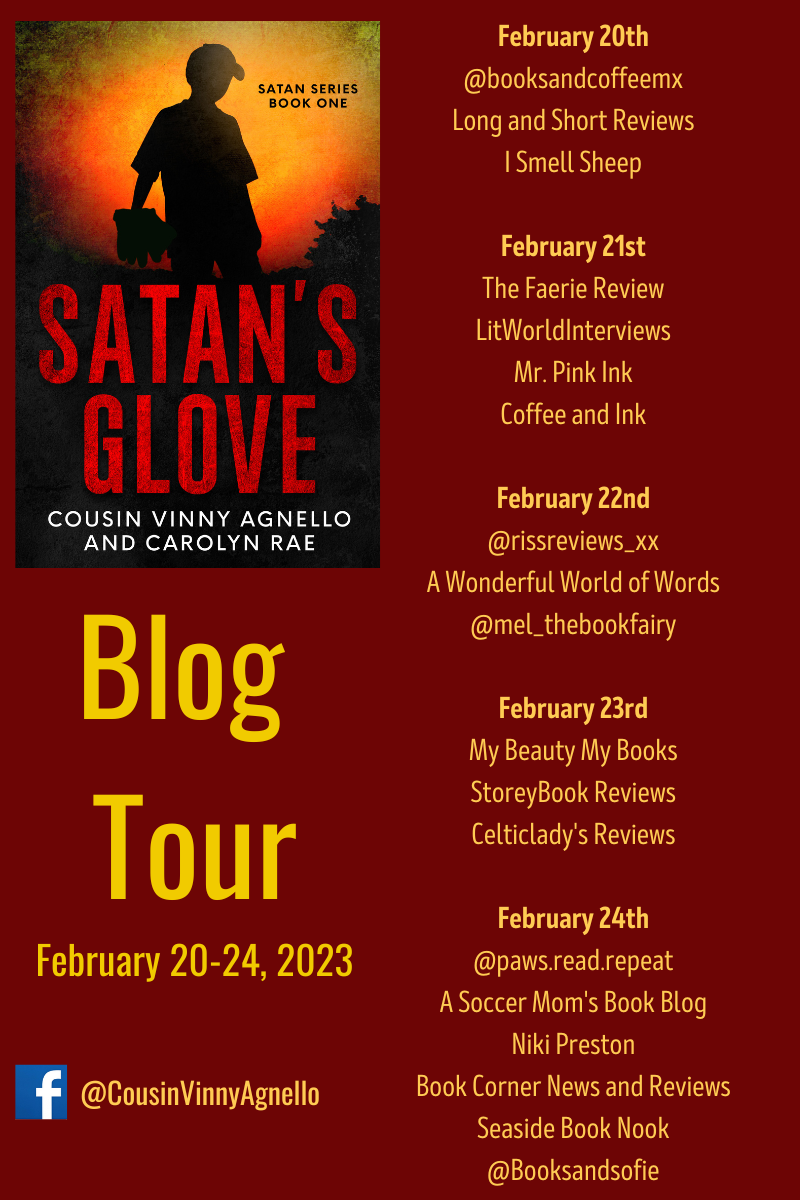
17 Questions with Cousin Vinny Agnello author of Satan’s Glove.

In 1991 Eddie Romano, an undersized, unconfident kid, finds an antique baseball glove while on a treasure hunt of the ruins of the old Comiskey Park in Chicago.

Instantly that glove becomes his obsession. While sleeping at night he’s transported to a dreary, decrepit ballpark where he learns the game of baseball from Billy, a skillful young ballplayer, who seems to be under the control of a dark, sinister figure who calls himself, “The Manager.”

Miraculously, Eddie becomes a better ballplayer and is rewarded for anti-social behavior by having his skills improve. As his bad attitude causes him to lose more and more friends on his team, he starts receiving phone calls from legendary baseball players Babe Ruth and Lou Gehrig who attempt to steer his behavior in the complete opposite direction.

Unbeknownst to Eddie, two factions of “angels” are waging a war for his soul. What is the price of glory? Eddie will soon find out.

Satan's Glove by Louis Anthony "Cousin Vinny" Agnello
Satan’s Glove by Louis Anthony “Cousin Vinny” Agnello

What makes your book different from others in this genre?

If receiving a message from a godly being from another dimension doesn’t interest you (when you’re not insane and have no drug or alcohol problems) then you’re probably dead or might as well be.

How did you come up with this idea for your book? 

The most incredible night of my life was spent watching a “mental movie” of this great tale. Although I did not drink, smoke, use drugs, or have any kind of mental illness, I received a telepathic message from a visitor in my room. This visitor shouldn’t have existed according to the laws of physics but I can attest that he was there and he informed me that I had a job to do and I better pay attention to all the details since it was a message for the world. The “mental movie” he presented to me was the most fascinating, heartwarming adventure that I would ever be part of. When this movie ended my heart was pounding and my forehead was sweating and I screamed out, “It’s beautiful! It’s perfect!” I knew if I went to sleep (what I planned to do), I would blow the greatest opportunity of my life because I would certainly forget the details. So, instead I stayed up and jotted down every detail that I could remember of this wondrous story and I am so glad I did, and so will you be, when you read it.

How did you do research for your book? 

Since it is a period piece I had to look up the style of uniform worn by the dream coach “BILLY GREEN”. In order to do this, I had to find a famous ballplayer from that era for the Chicago White Sox and observe the uniform he wore to incorporate it into the novel. Also, I had to research the Chicago White Sox minor league system before 1952 and to my amazement their triple A team played in Hollywood, California. They were called the Stars and were owned by William Frawley from the “I LOVE LUCY SHOW”.  For BILLY GREEN to play on that team really made my work easy.

Which was the hardest character to write? The easiest?

Obviously, the BILLY GREEN character was the most difficult character to write for because he was so dated. The EDDIE ROMANO character (the kid who finds Billy’s cursed glove) was the easiest because I knew very well that time period.

If you could put yourself as a character in your book, who would you be?

I’ve been BILLY GREEN (the dream coach in the novel) who’s been 90 feet from reaching his goal. I’ve been on third base most of my life but I just can’t seem to score that winning run. It’s the most frustrating thing ever, to be so close to reaching your goal but so far away. I’m BILLY GREEN as a writer and just like him, at this juncture I’d probably make a deal with the devil to get to the Major leagues of book writing as he made a deal with the devil to play in the Major leagues of baseball.

In your book you state ____. Why is that?

That there’s hope. There’s always hope! I believe as long as you have breath in your lungs, you can change the road you’re on. I have. SATAN’S GLOVE is one of the great “anti-suicide” books you’ll ever read. If you want to end it all after reading SATAN’S GLOVE then you must’ve missed the message.

What advice would you give budding writers?

Don’t pursue it unless you totally believe in what you’re selling. If I was selling a murder mystery, detective novel, or something run of the mill, you wouldn’t be seeing my work being promoted. This book is my “Mona Lisa”, I will never write a more original or fascinating novel and I’ve lived a fascinating life. The late great BEN BOVA (science fiction writer with over 130 published novels and 6 HUGO AWARDS for best editor in the world) told me after signing a literary agreement with me, that SATAN’S GLOVE was the most fascinating novel he’d read in years. Maybe that’s why I believe in this novel.

How long have you been writing?

Since 1987. I used to write screenplays but was pushed to write a novel by people in the industry because many books become movies. You’ll notice that my work reads like a movie and that’s because I went to the best acting school in the country, “THE LEE STRASBERG THEATER INSTITUTE, NYC”. Everything is visual to me. And yes, I’ve appeared in some movies and soap operas (Nothing to write home over). I really began writing my novel seriously in 1991 until 1993 and then I decided to finally finish something as I’ve dedicated my spare time to writing from 2011 to the present.

What is a favorite compliment you have received on your writing?

When the late great BEN BOVA at 84 years old, decided to sign me to a literary agreement and promote my book. I was the last writer Mr. BOVA signed (It had been 10 years since BEN BOVA had signed a writer). I was honored to say the least and for him to tell me that “SATAN’S GLOVE” was the most fascinating novel he’d read in years really put me on cloud 9!

How are you similar to or different from your lead character?

Since EDDIE ROMANO is the lead character and is a victim of evil beings, I’m really not much like him except for his humanity and his realization that following the “golden rule” was his best bet. I try to walk the high ground in life. I’ve been blessed and even if SATAN’S GLOVE does not become a New York Times Bestseller as BEN BOVA predicted, I’ll live with it. The general public is finicky and if somehow they miss this exceptional book, then I’ll accept it. As the old adage goes, “You can lead the horse to water but you can’t make him drink.”

What is one piece of advice you would give to an aspiring author?

Find something interesting to write about and make sure you know what you’re writing about.

Which authors inspired you to write?

My father, Louis A Agnello Sr. had his own column in the Chemical Engineering News. He wanted to write the great American novel but he ran out of time here and I wrote SATAN’S GLOVE for him.

Do you write every day?

BEN BOVA said I should but life tries its best to steal you away from what you should be doing.

What is your writing schedule?

Whenever my editor Carolyn Rae emails me her take on my chapters.

In today’s tech savvy world, most writers use a computer or laptop. Have you ever written parts of your book on paper?

Sure. Back in 1991-1993. It was a major problem scanning those pages into the present computer format.

What is something that made you laugh recently?

My wife does impersonations and speaks for the pets we own. She’s really good at creating voices and has unfortunately missed her calling.

What is your next project?

The rewrite of the sequel. I need it to read like SATAN’S GLOVE.

Amazon link: https://amzn.to/3Xa19FS

About the Author

Louis Anthony "Cousin Vinny" Agnello
Louis Anthony “Cousin Vinny” Agnello

LOUIS ANTHONY AGNELLO Wherever controversy is found it’s likely you’ll find “Cousin Vinny” in the thick of it.
On the evening of August 22, 2008, Mr. Agnello was accosted by two gunmen and shot twice in the leg in Sleepy Hollow, New York. The motive for that shooting was never determined. As of this date, no one has been arrested.
Agnello recovered from the shooting and currently resides in Monticello, Georgia. This is the final evolution of a story that he received in a dream-like state back in 1991. “Cousin Vinny” believes that his colorful past gives him greater insight into the plights of the people we meet in our daily lives. He truly hopes you enjoy this adventure.
Visit Cousin Vinny on Facebook.

Cousin Vinny Agnello blog tour

© 2014-2023- Ronovan Hester Copyright reserved. The author asserts his moral and legal rights over this work.

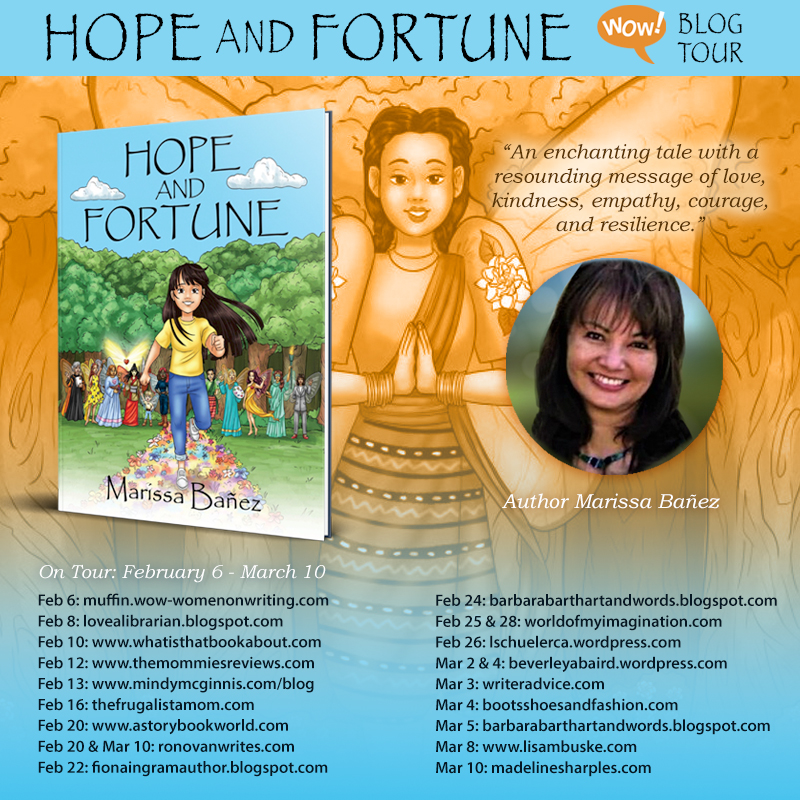
10 Questions with Marissa Bañez, author of Hope and Fortune.

A child who loses her way seeks help from 12 multi-cultural and multi-generational fairies, who give her practical life advice to get on the right track.

Trying to possess its beauty, Esperanza chases after a butterfly, which inevitably leaves her behind, lost and scared. Then, she meets 12 Fortune Fairies. Among them is the Fortune Fairy of Beauty, who talks about the beautiful butterfly that flew away and comforts Esperanza by saying: “Beauty is not what you see with your eyes but with your heart.” The other Fortune Fairies likewise give Esperanza words to live by to discover her true path.

Hope and Fortune is a children’s book with positive and frank messages about empowerment and self-discovery, designed to stay with a child well beyond childhood.


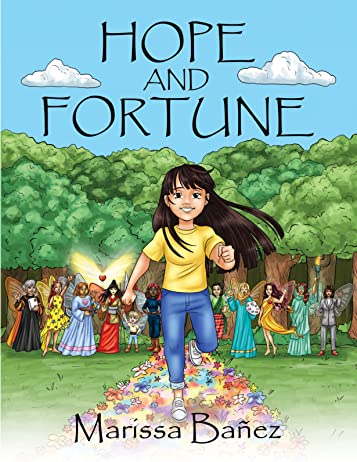
Hope and Fortune by Marissa Bañez cover.


 The 10 Questions

1. What would be your one sentence elevator pitch of what your book is about?

Hope and Fortune is a beautifully illustrated children’s book featuring
multicultural, multiracial, multigender and multigenerational fairies of various shapes
and sizes who give practical life advice to a lost little girl and get her on the right path.

2. What book/author/movie/tv show/song might a potential reader compare your
book to in order to get an idea of its feel and why ?

The honest answer is I don’t know. I didn’t take inspiration for my book from any
other book, author, movie or song . . . at least not consciously.
Plus, my book is a relatively short children’s book that most likely would be read
at bedtime, which should be a quiet time without the need for music or other distraction
in the background. I’d want the child to focus on the story and appreciate the beautiful
illustrations without thinking about how it compares to other books, movies or shows.
That all said, in coming up with the Fortune Fairy of Beauty, I was inspired by a
Star Trek, The Next Generation episode in which certain aliens evolved from their
corporeal states into beings of pure energy. I didn’t feel comfortable depicting the
concept of beauty through physical attributes of a human because beauty is a
subjective ideal. So, I illustrated beauty as a life force radiating light and positive energy
from a heart to correlate with what the fairy says: “Beauty is not what you see with eyes
but with your heart.”

3. Why did you choose this topic for your book?

When my daughter was little, I wrote original children’s stories and created
puppet shows from the stories.
One of the stories from those days is the precursor to Hope and Fortune called
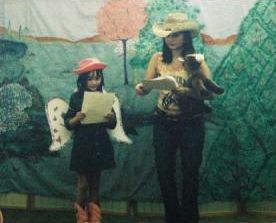
The Lost Foal. For my daughter’s 7 th birthday, I wanted to put on a show for her and her
friends at her party. She wanted a story about cowgirls, fairies, and her little stuffed
horse. I came up with a story entitled, The Lost Foal. In The Lost Foal, the stuffed
horse was the one that got lost in the forest and encountered “cowgirl fairies” played by
my daughter and her guests, each of whom wore fairy wings and pink cowboy hats and
gave the horse life advice to get it back on the right track.

Hope and Fortune by Marissa Banez.      

Fast forward 16 years later to the pandemic and lockdown in 2020. I felt bad for
my daughter, her peers and those younger, all of whom faced unprecedented
uncertainties in life. Many of them were really lost. I then took The Lost Foal,
modernized it with a diverse cast of characters, and created a message that I hope will
resonate not only with the very young but also with those less so who may feel
rudderless and lost – in however way you want to define and contextualize those terms
– at some point in their lives.

4. What led to your choosing the setting for your book?

I always imagined – rightly or wrongly – that fairies lived in wooded areas, so I
created the world called the Fabled Fairy Forest.
I think more important than the overall setting for the book is how I depicted each
character’s setting within the forest. In writing and illustrating Hope and Fortune, I
learned that numbers, colors, and animals represent or symbolize certain ideals and
principles that dovetail nicely with what I wanted to say in the book. I then incorporated
a lot of that symbolism to make the story as multifaceted as possible. I explain all this in
greater detail in a document I created called the “Backstory of and Guide to Hope and
Fortune,” a copy of which I’m attaching for your background information. Another
blogger in this tour will be writing more about the symbolism that I used in the book.

5. How did you come up with the title of your book and what is its significance?

I finalized this book during the pandemic when everything was so bleak and
dreary. I wanted to put something out in the universe that was uplifting and conveyed
positivity.
Esperanza is my daughter’s middle name, and she is my muse for all my stories.
The protagonist in the book is named after her. Esperanza is also the Spanish word for
“hope.”

I also wanted to pay homage to my late mom, who along with my dad brought my 9 siblings and me to this country from the mountain province of the Philippines with
literally nothing more than the hope that we would all have a better life here. She is
depicted as the Fortune Fairy of Hope.
As for the “Fortune” part of the title, when I wrote the book, I wanted a nice
alliteration with the word “fairy” that has an optimistic feeling. My fairies were
dispensing life advice intended to bring good fortune to Esperanza in her path in life.
Hence, the Fortune Fairies came to life.

6. How has your own experience influenced your writing?

If you’re asking how my life experience/career influenced how I write, writing is
my favorite part of the job as a lawyer. Being a lawyer has made me confident in my
general writing and editing skills.
Children’s illustrated books usually have a limit of 1000-1500 words. It’s often a
challenge to get complex messages and concepts across with that limitation. But, as a
litigator, it’s my job to tell a client’s story in a concise and relatable way. From that
perspective, my experience as a lawyer positively influenced the way that I wrote about
the various principles or ideals discussed by the Fortune Fairies.
If, on the other hand, you’re asking how my general life experience influenced
what I write, I’ve found that as a mom, talking to one’s own kids about certain things can
be very difficult to start, much less sustain. As one reviewer has pointed out, this book
is “a great discussion aid” on topics that deal with self-esteem, self-discovery and self-
acceptance.
I’m also a very “visual” person, with some artistic leanings. I believe that artistic
expressions are simply different forms of storytelling. So, as more fully describe in the
attached backstory and guide, I intentionally curated the illustrations in Hope and
Fortune to supplement the fewer-than-1000 words I used to create a multi-faceted story.

7. What will connect the reader to the story?
The story had universal appeal. For example, in December, I did a reading of
Hope and Fortune at a local library in New York City. After I read the book, a 7-year-old
boy took a copy of the book to read to himself. He then followed me around until he had
my full attention to tell me how much he loved the book and that now he wants to write a
book someday too. Even though the book is about a little girl with a Spanish name and
fairies, the story still resonated with a little Asian boy – which is more than I could’ve
hoped for. How wonderful to be able to touch the hearts and minds of young children
with just a few words and illustrations.

And not only the young. Many grown-ups have told me they wish they had this
book when they were growing up. Also, several early readers have stated in their
reviews that this book should be read by adults as well as kids.
In addition to the story itself, the illustrations add another path through which the
reader could connect to the book. Many people have expressed their gratitude to me
personally for creating such a diverse cast of characters because they could see
themselves and their children represented in the book. When I say “representation,” I’m
not just talking about non-White people. Two incidents brought this home to me
recently.
The first incident involved an early reader of the book who has a little boy to
whom she read the book. She then wrote that the little boy “loves” the book, partly
because the Fortune Fairy of Innocence and Wonder looks like him – a beautiful blond,
blue-eyed boy. That’s precisely the type of reaction and narrative I wanted to create
with the Fortune Fairy of Innocence and Wonder.
Unfortunately, the second incident is far from uplifting but nonetheless
demonstrates the obvious need for diverse representation in children’s books. This is
what happened when I advertised my reading of Hope and Fortune at a local library on
a public page on Facebook:

Hope and Fortune Book Signing image.


Hope and Fortune artwork.Hope and Fortune comment image

She deliberately chose to ignore my conciliatory tone and further challenged:
“that doesn’t look like a white fairy.” What is a white fairy supposed to look like?!? Her
combativeness and willful refusal to acknowledge that non-White characters can – and
should – exist in children’s books is exactly why representation matters. In Hope and
Fortune, both Whites and non-Whites are represented. Everyone is exposed to the idea

that people that may look different from us may have something valid to say and
contribute for the betterment of humanity.

8. Did you have difficulty deciding your book was ready to publish?

Not really. I lived with the concept since my daughter was young and it just took
a little tweaking before I submitted it for publication.

9. What genre(s) and reader ages would your work fit best?

Children’s illustrated books, ages 5-10, although as I’ve said, I’ve often been told
that adults should read the book and learn from it as well. Sub-genres include diversity,
multiculturalism, self-esteem and self-reliance, social themes of values and virtues, fairy
tales.

10. What’s your next project idea?

I’m currently putting the finishing touches to my second book, Hues and Harmony
– How the Rainbow Butterfly Got Her Colors. It’s about multiraciality, empowerment,
self-acceptance and belonging as told through the life and adventures of a singing
caterpillar. I use common shapes, primary colors, and basic chemistry concepts to
convey my message.
Like Hope and Fortune, Hues and Harmony is a re-write of story and puppet
show from my daughter’s childhood entitled The Singing Rainbow Butterfly. At that
time, I created the puppet caterpillar in the story out of round silver pot scrubbers held
together by a wire, string, and popsicle sticks, not to mention a prayer. I think I still have
that caterpillar somewhere and intend to use it when I do public readings for Hues and
Harmony.
Esperanza and the Fortune Fairies from Hope and Fortune make a cameo – yet
important – appearance in Hues and Harmony, but it’s not a sequel.
I am using the same illustrator, and the dialogue/songs are also in rhyme so it will
have the same look, feel, and sound as Hope and Fortune. I’m happy with how Hope
and Fortune turned out and I want Hues and Harmony, as well as any other subsequent
books, to have the same quality.
Hues and Harmony is scheduled for official release on July 20, 2023.


You may find Hope and Fortune by Marissa Bañez at just about every online outlet including:


Marissa Bañez author of Hope and Fortune
Marissa Bañez

About the Author

A first-generation immigrant to the U.S. from the Philippines, Marissa Bañez is a graduate of Princeton University and a lawyer licensed to practice in New York, California and New Jersey. She has published legal articles for the prestigious New York Law Journal and the American Bar Association, but her true passion for writing lies in her children’s stories. She currently lives in New York City with her husband and daughter. Her childhood was filled with many original stories and puppet shows made up entirely by her mom. In her free time, Marissa likes to travel, design and make clothes, cook, binge-watch Star Trek shows and Korean dramas, and occasionally strum a guitar.

She is currently working on her second book, Hues and Harmony (How the Singing Rainbow Butterfly Got Her
Colors), a story about mixed or multiracial children, self-discovery, and respect for others as told through the
life and adventures of a caterpillar. It is scheduled for publication on July 20, 2023.

Visit Marissa’s webpage: https://www.marissabanez.com/

You can find her online:

Facebook: https://www.facebook.com/marissa.banez.7/
LinkedIn: https://www.linkedin.com/in/marissa-banez/


© 2014-2023- Ronovan Hester Copyright reserved. The author asserts his moral and legal rights over this work.

12 Questions with MHR Geer, author of ASSUMED.

When her friend Sandy asks for help, Anne Wilson leaves her small, lonely life in Miami for the picturesque island of Saint Martin. But as soon as she arrives, Sandy is murdered, and her death exposes lies: an alias, a secret past, stolen money. Suspected of murder and trapped on the island, Anne is shocked when a cryptic message arrives:

Find the money. Take it and run.

She follows Sandy’s trail of obscure clues, desperate for proof of her innocence and must decide if she can trust the two men who offer help-the dark, mysterious Brit or the American with a wide grin and a pickup truck. When memories resurface-dark truths she’d rather leave buried and forgotten, her past becomes intertwined with her present.

Her only way forward is to face her own secrets.


Assumed by MHR Geer.  A romance, financial, murder thriller.
Assumed by MHR Geer.

Which was the hardest character to write?
Anne. Have you ever disliked someone the first time you met them, but then as you got to know them you realized they were just shy and perhaps quite sad? That’s how it felt to write Anne. I
didn’t approve of her choices, but chapter after chapter she showed such strength, and I
warmed to her.

Your book is set in Saint Martin, an island in the Caribbean. Have you ever been there?
Yes. (sigh) Such a beautiful place. I want to go back.

Do you have another profession besides writing?
I’m a bookkeeper by day. It’s the opposite of creative writing.

How long have you been writing?
I’ve always journaled, but I began writing novels about nine years ago – which is about the time
my first marriage fell apart. Huh, I never made that connection before. Whew. That’s a
breakthrough of sorts, isn’t it?

What is your next project?
Book 2: Accused. Anne’s story continues! It will be released in 2023.

What is a favorite compliment you have received on your writing?
The feedback has been overwhelmingly positive. But the one comment that stands out is when
an Amazon reviewer said that Anne (my main character) was so REAL. That was amazing to
hear.

How are you similar to or different from your lead character?
We are very different, but we do have a couple things in common. She works in accounting like I
do, and we’ve both suffered significant loss – the kind of loss that you never really recover from.
Writing her character was so interesting because she dealt with her loss so differently than I did.

Favorite travel spot?
Kansas City. Such a friendly place. It always inspires creativity. I love the Nelson-Atkins
museum and City Market on the weekends. Also, there’s a place in Westport Plaza that makes
the best Matcha ever. Don’t get me started on the barbeque…yum.

Any hobbies?
So many hobbies. Knitting mostly, but I enjoy loads of crafts, jewelry and macrame. I want to try
pottery, but my yarn takes up too much space. I simply don’t have room in my life for clay. Yet.

What TV series are you currently binge watching?
A while ago, season 1 of Silent Witness popped up as a recommendation on my BritBox. It
should have come with a disclaimer like “Don’t watch this unless you’re prepared to commit
several months to it.” Sheeshers. I just finished Season 25. I don’t regret a thing. Well. Maybe I
regret some of the popcorn.

Tell us about your longest friendship.
Marie. We met in college because our boyfriends were roommates, and we both instantly had a
“you’re my person” moment. I live in California, and she lives on the East Coast, so we meet
annually in random cities in the middle of the country to hang out. She’s still my person after all
this time.

What is the strangest way you've become friends with someone?
One of my friendships started during the darkest period in my life. We were at a youth football
practice that my ex-husband was coaching. I can’t even remember why, but I had to move my
chair, and someone I barely knew carried it for me. That’s it. She carried my chair. It was a tiny
thing, but the gesture meant the world to me. And we’ve been close friends ever since.


MHR Geer, author of Assumed.
MHR Geer.

Author Bio:

MHR Geer was born in California but grew up in the Midwest. She attended the University of California, Santa Barbara to study Physics. After school, she moved to Ventura, CA and started a small bookkeeping business. She lives with her two sons and her unicorn husband (because he's a magical creature).

Website: http://www.mhrgeer.com
Facebook: https://www.facebook.com/profile.php?id=100086993291413
Instagram: https://www.instagram.com/mhrgeerauthor

© 2014-2023- Ronovan Hester Copyright reserved. The author asserts his moral and legal rights over this work.

16 Questions with Tammy Euliano, author of Misfire.

Kadence, a new type of implanted defibrillator, misfires in a patient visiting University Hospital
for a routine medical procedure—causing the heart rhythm problem it’s meant to correct. Dr.
Kate Downey, an experienced anesthesiologist, resuscitates the patient, but she grows
concerned for a loved one who recently received the same device—her beloved Great-Aunt Irm.

When a second device misfires, Kate turns to Nikki Yarborough, her friend and Aunt Irm’s
cardiologist. Though Nikki helps protect Kate’s aunt, she is prevented from alerting other
patients by the corporate greed of her department chairman. As the inventor of the device and
part owner of MDI, the company he formed to commercialize it, he claims that the device
misfires are due to a soon-to-be-corrected software bug. Kate learns his claim is false.

The misfires continue as Christian O’Donnell, a friend and lawyer, comes to town to facilitate the
sale of MDI. Kate and Nikki are drawn into a race to find the source of the malfunctions, but
threats to Nikki and a mysterious murder complicate their progress. Are the seemingly random
shocks misfires, or are they attacks?

A jaw-dropping twist causes her to rethink everything she once thought she knew, but Kate will
stop at nothing to protect her aunt and the other patients whose life-saving devices could turn
on them at any moment..

Misfire cover image for book by Tammy Eullano
Misfire by Tammy Eliano

How did you do research for your book?
I’m fortunate to be a professor at an academic medical center and therefore have access to the
medical professionals to ask questions and gain ideas. Also, I co-developed some medical
devices over the years and have been through the patenting and licensure process so it was fun
to include some first-hand knowledge, and to pick the brains of other scientists with whom we’ve
crossed paths.

Where do you get inspiration for your stories?
My inspiration comes from life experiences—working in academic medicine, talking with people
in technology and healthcare industries, and reading both fiction and non-fiction, and of course
the news (preferably science news, not all the other stuff).

What advice would you give budding writers?
Find a supportive group of other early career writers, read, take classes that provide
professional feedback, attend a writers’ conference if at all possible, develop thick skin, write
what you love, consider writing some short fiction for an earlier win.

Your book is set in north central Florida. Have you ever been there?
It’s where I’ve lived since undergrad. Though not Gainesville by name, and certainly not the
University of Florida, the book is set in the area, including Paynes Prairie where we’ve gone on
long walks, and Jacksonville, which we visit on occasion. It’s a great place to live and raise a
family, with springs and beaches nearby and (often) excellent collegiate sports to cheer for.

Do you have another profession besides writing?
I’m a physician, an academic anesthesiologist specializing in obstetrics. For 20+ years I’ve
taught, performed research, and cared for patients at the University of Florida’s hospital system.
I’ve now backed down to 60% so I can focus on writing…it’s never enough!

What is your next project?
Besides finishing up the third in the Kate Downey series, I’m working on a stand-alone that links
the Salem Witch Trials to a modern medical mystery. It’s based on a short story I published a
few years ago and I’m having fun plotting it out.

What is the last great book you’ve read?

In non-fiction, 4000 Weeks: Time Management for Mortals by Oliver Burkeman. In fiction,
Desert Star by Michael Connelly. I’m currently reading A World of Curiosities by Louise Penny,
my favorite series!

How are you similar to or different from your lead character?
We started out quite alike as far as careers go, but she lacks my idyllic backstory with a
charmed childhood and parents and husband very much alive. She’s also way cooler than I am!

In one sentence, what was the road to publishing like?
For the first in the series it was long, full of rejections, self-doubt, learning, and more rejections,
and finally extremely rewarding! Misfire was the second in a two-book deal, so far more straight-
forward.

Which authors inspired you to write?
Harlan Coben, Louise Penny

Favorite travel spot?
I love the mountains (said the Florida girl), especially hiking and downhill skiing. We’ve been so
blessed with incredible travel opportunities to all the major national parks in the US, Costa Rica,
the Galapagos, Europe, even New Zealand. Probably my favorite would be hiking in Wengen,
Switzerland.

Favorite dessert?
Hmmm, my husband’s home-made fruit crumbles with ice cream. Cookies and cream ice cream
with my dad. Who am I kidding – most ice cream with most anyone.

If you were stuck on a deserted island, which 3 books would you want with you?
(1) the entire Louise Penny Gamache series squished into one book cover, (2) an encyclopedia,
(3) The famous double book: “How to Make a Boat out of Sand, Salt Water and Coconuts” and
“The Joy of Cooking Without Actually Cooking”

Any hobbies? or Name a quirky thing you like to do.
My husband and I met playing flag football in college, taking turns at quarterback due to the
rules for co-ed sports. Now we still enjoy sports, but also seeking active experiences while
traveling – via ferrata, canyoning, rappelling down waterfalls, etc. We also follow the Gator
football team, though they’re trying our patience lately.

If there is one thing you want readers to remember about you, what would it be?
That I’m a physician-turned-author who highly recommends reassessing your path and
goalposts at regular intervals. It’s not quitting, it’s pivoting to something better/different/more
suited to you today.

What is the oldest item of clothing you own?
Intramural sports championship t-shirts from undergrad. We were the geeky honors dorm kids
who crushed everyone else by planning ahead with football plays printed out using the earliest
version of drafting software…oh, and not being drunk at game time.


Author photo of Tammy Euliano. <Misfire.
Tammy Euliano, author of Misfire.

Author Bio:

Tammy Euliano writes medical thrillers. She’s inspired by her day job as a physician, researcher and medical educator. She is a tenured professor at the University of Florida, where she’s been honored with numerous teaching awards, nearly 100,000 views of her YouTube teaching videos, and was featured in a calendar of women inventors (copies available wherever you buy your out-of-date calendars).
When she’s not writing or at the hospital, she enjoys traveling with her family, playing sports,
cheering on the Gators, and entertaining her two wonderful dogs.

amazon logoWebsite: http://www.teuliano.com
Facebook: https://www.facebook.com/teuliano
Twitter: https://twitter.com/teuliano
Instagram: https://www.instagram.com/teuliano/

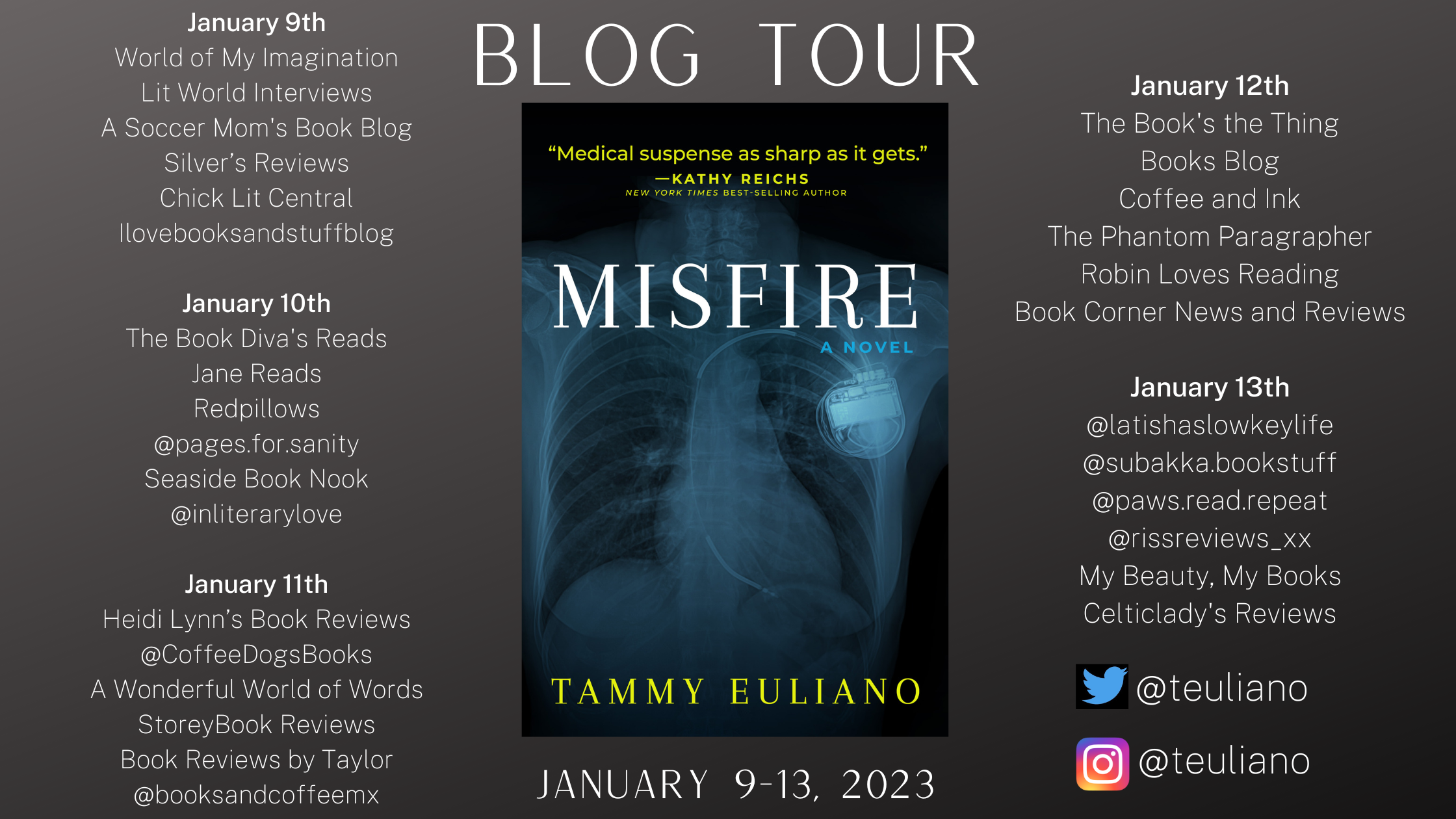
Book Tour sites for Tammy Euliano and Misfire.
Blog Tour Sites for Misfire by Tammy Euliano.

© 2014-2023- Ronovan Hester Copyright reserved. The author asserts his moral and legal rights over this work.

7 Questions with Michael Kaufman, author of The Last Resort (A Jen Lu Mystery).

Margaret Atwood meets Raymond Chandler meets Greta Thunberg: Jen Lu is back on the case when the death of a lawyer sparks an even more intriguing mystery in Michael Kaufman’s second book in the thrilling series.

It’s March 2034, six months after D.C. police detective Jen Lu and Chandler, her sentient bio-computer and wannabe tough guy implanted in her brain, cracked the mystery of Eden. The climate crisis is hitting harder than ever: a mega-hurricane has devastated the eco-system and waves of refugees pour into Washington, D.C.

Environmental lawyer and media darling Patty Garcia dies in a bizarre accident on a golf course. Of the seven billion people on the planet, only Jen thinks she was murdered. After all, Garcia just won a court case for massive climate change reparations to be paid out by oil, gas, and coal companies. Jen is warned off, but she and Chandler start digging. Signs point to Garcia’s abusive ex, a former oil giant, but soon Jen turns up more suspects who have an even greater motive for committing murder

Soon Jen is in the crosshairs of those who will ensure the truth never comes to light, no matter the cost. She has to move quickly before she becomes next on the killer’s list.

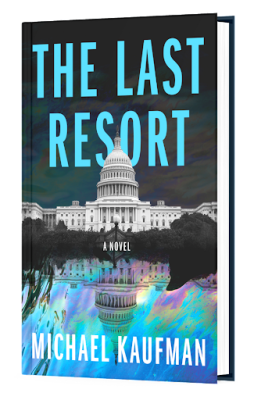
The Last Resort by Michael Kaufman. A technothriller and dystopian fiction Jen Lu mystery.
The Last Resort by Michael Kaufman.

“[An] outstanding series launch…Exceptional worldbuilding is complemented by sympathetic characters and suspenseful plot twists. Kaufman is a writer to watch.” — Publishers Weekly, starred review

This is the second book in your Jen Lu series. How soon after finishing the first book did you know you wanted to continue Jen’s story?

The minute I read the first reviews. I knew I’d taken a risk writing a mystery that bent genres and that delved into political themes, but only when I started hearing from readers did I realize how much my approach — page-turning, serious themes yet fun to read — was something I wanted to continue doing.

You have decades of experience working with the United Nations, NGOs and various government officials and educators. How have you used this expertise to write about some complex topics like climate change and the intricacies of the oil and gas industry?

I’ve worked directly with presidents and prime ministers. I could answer that this has given me insights into the workings of political power. But here’s my real answer: We all need stories. Not only to entertain but to make sense of our lives. Right now, there is no more important issue than the quickly emerging climate crisis and the utter culpability of the oil, gas and coal industries in destroying our future.

“The Last Resort” has a secondary theme of men’s violence against women. How does this fit into the story?

It’s a critical theme in itself. Across the country and around the world, there is a rash of violence against women: in our homes, at work, at places of learning and on the streets. Engaging men as allies with women to end this violence has been my life’s work.

“An engrossing thriller set in a fascinatingly plausible near future, ‘The Last Exit’ centres on a human-AI partnership that’s as believable as it’s moving.” — Emma Donoghue, New York Times bestselling author of “Room”

There are a variety of politically charged themes throughout the book. What would you say to people who are looking for a fiction book that “isn’t political”?

First of all, “The Last Resort,” is entertainment. It’s fun; it’s exciting. My goal isn’t to educate — I leave that to my nonfiction books. At the same time, every moment of our lives is shaped by political realities, and that is nowhere more true than with the climate crisis. I believe that some of the most powerful stories ever written weave in the political and social realities of the day. Imagine if Tolstoy had left out the war part; his great novel would have read like a Netflix costume drama.

Speaking of politics, there are a lot of tough themes the book touches on, but the series’s tone overall is ultimately one of hope (surrounded with humor). Why did you choose to go this route?

The last thing readers need is another grim dystopia. I believe strongly in the human capacity to change, not simply at the individual level but our ability to imagine and then to create a better world. Faced with the existential realities of the climate crisis, we need that vision of hope and change more than ever. Shouldn’t fiction that digs into the tough issues we face today and in years ahead bring us up rather than bring us down?

What do you hope readers gain from the book?

Gain? I hope they gain some absolutely entertaining moments. I hope they can’t put it down. But I also hope it allows them to imagine a future that is certainly full of challenges but also possibilities for positive change.

Is there another Jen Lu book in the works? Are you working on any other projects?

Yes, there will be a sequel. I’m also at work on a traditional thriller as well as a literary novel and a screenplay. Plus, of course, I continue my advisory role with various U.N. agencies, governments, NGOs and companies. That said, I can’t wait to hang out again with Jen Lu and Chandler, her computer implant and wannabe tough guy.

“ ‘The Last Exit’ hits hard. Fast action — a melding of the mental and physical — keeps this smart futuristic thriller racing, and its contemporary implications keep the reader thinking.” —Thomas Perry, bestselling author of “A Small Town”

Michael Kaufman, author of the Jen Lu Mystery Series.Author Bio:

MICHAEL KAUFMAN has worked for decades engaging men to support women’s rights and positively transform the lives of men. He is the co-founder of the White Ribbon Campaign, the largest effort in the world of men working to end violence against women. He volunteers as a senior fellow at Promundo (Washington, D.C.) and has worked in 50 countries with the United Nations, governments, NGOs and educators. He advised the French government in 2019 as a member of its G7 Gender Equality Advisory Council.

He is the author of numerous nonfiction and fiction works, and was awarded the Canadian Jewish Book Award for Fiction. His most recent nonfiction book is “The Time Has Come.” He’s also written “Why Men Must Join the Gender Equality Revolution” (2019) and his first Jen Lu novel“The Last Exit.” His books and articles have been translated into 14 languages. Born in Cleveland, Ohio, having lived in Durham, North Carolina, and now living in Toronto, Canada, he is married and has a daughter and a son. For more information, please visit michaelkaufman.com.

Website: https://twitter.com/KaufmanWrites

© 2014-2023- Ronovan Hester Copyright reserved. The author asserts his moral and legal rights over this work.

LitWorld’s 10 Questions with M. Laszlo, author of The Phantom Glare of Day.

 
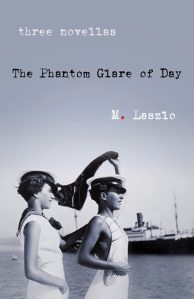
The Phantom Glare of Day book cover.LitWorld’s 10 Questions
with
M. Laszlo

What would be your one sentence elevator pitch of what your book is about?
In this trio of novellas, three game young ladies enter into dangerous liaisons that test each one’s limits and force them to confront the most heartrending issues facing society in the early twentieth century. The Phantom Glare of Day is a compelling interrogation of who gets to decide what is right and what is wrong.

[The novellas are set during the height of WWI and post-WWI Europe.]

What book/author/movie/TV show/song might a potential reader compare your book to in order to get an idea of its feel and why?
The Phantom Glare of Day might best be described as traditional, twentieth-century melodrama suffused with the following: Goth youth culture, the film Nosferatu, lots of Germanic brooding, the poetry and symbolism of Nietzsche, and a ravishingly beautiful figure-skating ballet just for good measure.

Why did you choose this topic for your book?
This topic chose me. These novellas arise from a deeply held obsession with grasping the essential ethical issues that face society. By writing the book, it is my hope that the novellas may challenge readers to think about and to come to terms with those same heartrending questions.

What led to your choosing the setting for your book? In part your mention of steampunk as used in your book.
Having traveled to London, Paris, and Prague, and having kept travel diaries for those beautiful cities, there was no way to avoid my setting stories in those remarkable places. Interestingly, though, my impressions of Prague were always informed by the genre of steampunk. What I mean by that is that Prague is the city with which I’ve always associated the science-fiction play Rossum’s Universal Robots. Because of this, Prague inspired me to write about steampunk/primitive robotic technologies—as such, these peculiar technologies and themes and obsessions appear in that tale. With regard to Weimar, that’s the most peculiar question for me because I’ve never been there. Still, the history of das Bauhaus has always fascinated me—and because of this, there was no way to avoid the temptation to set a tale there.

How did you come up with the title of your book?
The Phantom Glare of Day comes from a line in “Butterflies”—a WW-era Siegfried Sassoon poem. The title seemed perfect to me because various world religions have always associated butterflies with the immortality of the soul. For me, that metaphysical idea resonates because these three novellas amount to a new kind of metaphysical storytelling.

How has your world traveling impressed itself on your writing?
Nothing has impressed my writing more than my travels to London, where I became fascinated by British colloquialism and phraseology. Nothing else makes British characters come to life more than giving them authentic voices as they engage one another in dialogue. In short, dialogue has to be real. Characters must talk the way people really talk. This comes down to the fact it is the vernacular that makes characters and their stories seem genuine. My travel diaries provided me with all kinds of descriptions of various places, of course; nevertheless, my travel diaries were most important to me in that they included many, many lists of those remarkable terms that only the Brits use.

What will connect the reader to the story?
These novellas tell of how people struggle with issues that anyone can find relatable: school bullying, abortion, euthanasia, political extremism, and homophobia. As such, any reader should be able to connect with the characters. At the same time, the narrator’s voice remains solemn and philosophical; moreover, the writing is suffused in objective correlative—symbols intended to resonate with the reader’s unconscious mind. If the reader really gives my work a chance, the reader can and will connect.
Remember, though, when you read The Phantom Glare of Day, you’ll quickly see that it’s like nothing you’ve ever read before. Perhaps that’s why the work is fated to get so many mixed reviews. This work is weird and revolutionary in its style.

Did you have difficulty deciding your book was ready to publish?
Yes and no. Leonardo Da Vinci said it best: “Art is never finished, only abandoned.”

What genre(s) and reader ages would your work fit best?
As for genre, there are different possibilities: coming of age, urban fantasy, historical fiction, metaphysical fiction, melodrama, and perhaps even magical realism. In truth, the work is trans-genre. Also, who cares what the genre is? It’s literature. And it’s meant for anyone mature enough to embrace the idea of freethinking and/or open-mindedness and/or freedom for the sake of freedom.

What’s your next project idea?
My next project promises to be a complete mind-scramble. In the coming book, it is my intention to take the reader on a journey alongside a figure who resolves the riddle of the universe—and in the final movement of the tale, the character will in fact explain the riddle of the universe. For that matter, too, the answer provided will be accurate. And that is my pledge.

Biography of M. Laszlo

M. Laszlo Author Photo M. Laszlo is the pseudonym of a reclusive author living in Bath, Ohio. According to rumor, he based the pen name on the name of the Paul Henreid character in Casablanca, Victor Laszlo.

He has lived and worked in New York City, East Jerusalem, and several other cities around the world. While living in the Middle East, he worked for Harvard University’s Semitic Museum. He holds a bachelor’s degree in English from Hiram College in Hiram, Ohio and an M.F.A. in poetry from Sarah Lawrence College in Bronxville, New York.

His next work is forthcoming from SparkPress in 2024. There are whispers that the work purports to be a genuine attempt at positing an explanation for the riddle of the universe and is based on journals and idea books made while completing his M.F.A at Sarah Lawrence College.

The Phantom Glare of Day is available at Amazon.

© 2014-2022- Ronovan Hester Copyright reserved. The author asserts his moral and legal rights over this work.

16 Questions with Kurt Hansen, author of Daughters of Teutobod.

Daughters of Teutobod is a story of love triumphing over hate, of persistence in the face of domination, and of the strength of women in the face of adversity.

Gudrun is the stolen wife of Teutobod, the leader of the Teutons in Gaul in 102 BCE. Her story culminates in a historic battle with the Roman army.

Susanna is a German American farm wife in Pennsylvania whose husband, Karl, has strong affinity for the Nazi party in Germany. Susanna’s story revolves around raising her three daughters and one son as World War II unfolds.

Finally, Gretel is the infant child of Susanna, now seventy-nine years old and a professor of women’s studies, a US senator and Nobel laureate for her World Women’s Initiative. She is heading to France to represent the United States at the seventy-fifth anniversary of the liberation of southern France, at the commemoration site where her older brother, who was killed in action nearby, is buried. The site is very near the location where the Romans defeated the Teutons.


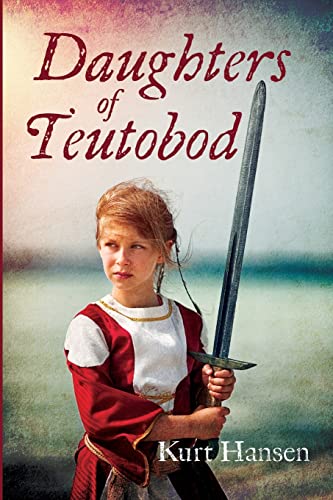
Daughters of Teutobod Front Cover

How did you do research for your book?
Online searches for everything about the Teutons to pre-war Pennsylvania and the earliest training of American Rangers, Northern Ireland, Scotland, and modern-day sites in Paris and Southern France.

Which was the hardest character to write? The easiest?
Hardest? Ada.
Easiest? Gretel.

How long have you been writing?
After heart disease forced early retirement, I began attending the Iowa Summer Writer’s Festival in 2014. I began writing poetry, but soon began writing novels.

What is your next project?
A book entitled Chameleon, about a man in treatment for Borderline personality disorder.

What genre do you write and why?
I write character driven stories and historical fiction because those are what interest me.

What is the last great book you’ve read?
Chances Are by Richard Russo

If your book were made into a movie, who would star in the leading roles?
The only one I’ve had an instant intuition for is the elder Gretel, who would surely be portrayed nicely by Meryl Streep.

If your book were made into a movie, what songs would be on the soundtrack?
Not sure, but during closing credits, I could suggest Respect by Aretha Franklin.

What were the biggest rewards and challenges with writing your book?
Greatest reward is the coming together of the various story elements. Greatest challenge is slogging through the research and persisting through the dialogues.

In one sentence, what was the road to publishing like?
It was painful and frustrating.

Which authors inspired you to write?
Philip Roth, Harper Lee, Richard Russo, Flannery O’Connor, Charles Dickens, Michael Crighton, Dan Brown, Kurt Vonnegut, Amy Hassinger
&nbsp;

Fun stuff:
Favorite travel spot?
Toledo, Spain.

Favorite dessert?
Sour cream raisin pie.

If you were stuck on a deserted island, which 3 books would you want with you?
To Kill a Mockingbird, A Tale of Two Cities, and the Bible.

Any hobbies? or Name a quirky thing you like to do.
I collect rock-n-roll memorabilia. Signed record albums and photos and so forth.

What is your theme song?
“You’ve Got a Friend” by James Taylor

Kurt Hansen HeadshotAuthor Bio:

Kurt Hansen is from Racine, Wisconsin, and has lived in Kansas, Texas, and Iowa. He has
experience in mental health and family systems as well as in parish ministry and administration.
He holds degrees in psychology, social work and divinity. Kurt now lives in Dubuque, Iowa with
his wife of 44 years, Dr. Susan Hansen, a professor emerita of international business. Kurt is
the author of Gathered (2019). Daughters of Teutobod is his second novel.

Website: https://www.authorkurthansen.com/
Facebook: https://www.facebook.com/revkurthansen
Amazon: Kurt Hansen Author Page
Goodreads:  Kurt Hansen

Kurt Hansen blog tour Image

© 2014-2022- Ronovan Hester Copyright reserved. The author asserts his moral and legal rights over this work.

14 Questions with Reenita M Hora, author of Operation Mom.

Ila, a Mumbai-based teenager, is going nuts with Veena, her controlling, single mother who prevents her from stalking her pop idol, Ali Zafar. Veena wants her daughter to date real guys in the lead-up to finding a husband. But Ila decides  that the only way to get her mom off her back is by finding her a boyfriend instead. With the help of her best friend Deepali, her crush Dev and her mother’s best friend Maleeka, they will come up with a plan to make it happen by setting up a profile in dating apps.


Operation Mom cover image

This interview has to start off with this question. In your book you make a reference to George Michael, how did you come up with this idea?

In my book, I make reference to George Michael of Wham, the famous English pop singer who I was desperately in love with in my teen years. And I know that I speak for just about every woman who grew up in the 80s!  The George Michael anecdote is taken directly  from my life – I stalked him in my teen years, and in mind you in those days there was no such thing as social media, cell phone – smart or dumb or the internet. So the fact that I traveled from Mumbai to London one summer and tracked him down is a real life example of investigative research that I take great pride in!

I guess here is the story – a year or two before I wrote the book, I was chatting with my brother’s friend at a party and somehow, we got talking about the whole George Michael episode. The guy listened with rapt amazement as I gave him the details of how I stalked the pop star through his cat. He said to me ‘That would make a great chick flick, you know!’

I was intrigued but know nothing about film so decided to turn it into YA chick-lit instead!

There are many books out there about the life of women in India, Mumbai in this case….What makes yours different?

Oh my goodness, do you like to laugh? If so then Operation Mom will hit your funny bone. I think that many of us Indians take ourselves too seriously and cliched as it sounds, laughter really is medicine for your mind-body. The BBC has done huge amounts of research on how it helps the aging process, supports fitness and keeps couples together. But this book is not simply about LOL moments, it’s about LOL moments in the Bombay context — it offers a real window into the trials and tribulations of the feisty Punjai woman in Bombay.

And then there is that whole element of predictability and safety in India. You don’t find stories where the daughter is setting the mother up – usually it happens the other way around. You don’t find stories which expose you to a variety of ethnic situations strewn around Mumbai – all ripe for comedic interpretation. That’s what I wanted to do. As a Mumbaikar…or a Bombay-ite, I feel like I have many affinities – to the Punjabi way of life, to the Parsi community, to places like Swati Snacks and Worli Seaface…these all found their way into my book.

How did you do research for your book?

Having grown up in Mumbai, the research was easy. I knew the places I wanted to set the story in. I knew what they were about and the kind of crazy character chaos that I would find in those locations.  Of course, this being a YA book, me now being a full-fledged adult (at least in size if not maturity levels), I knew I had to be up with the ‘method of madness’ of the current Mumbai young adult. So I had huge amounts of fun talking to my school going nephew and his friends to learning the lingo, compare the mindset from my time to theirs and quickly adapt to the change. Then of course I had fun taking long bus rides through town and hanging out at places like Swati Snacks and Kalaghoda Cafe (locations referred to in the story) to people watch and eavesdrop on conversations.  Research is really one of the most fun parts of creating a story.

In your book you seem to look at relationships between flawed characters….why is that?

In my book I talk about relationships among flawed characters because isn’t this who we are and what makes us tick? I capture the sometimes-difficult relationship between mother and daughter, friend and friend, husband and wife, and boy and girl. My exploration is that of coming of age in a world filled with imperfect people. I aim to be both humorous and heartfelt, and from beginning to end, I resist any attempt to apply makeup to innocence, or hide the stubbornness or intelligence of my characters.

If you could put yourself as a character in your book, who would you be?

Another hard one. While in many ways I myself identify with the plight of Ila and her mom, Veena, it’s hard not to fall in love with the wild and wacky Aunty Maleeka or Deepali. They are the very antithesis of the classic Punjabi woman and in many ways they are who Veena and Ila live vicariously through. Truth is, I think we all need a bit of Aunty Maleeka or Deepali in our lives!

Which was the hardest character to write? The easiest?

Oof, this is hard to say. Ila and Veena (mother and daughter) are essentially the same woman in two different generational bodies. So when I look at the zany women in my own household, Yours Truly in particular, it isn’t hard to come up with traits and quirks that easily define these main characters. As to the hardest character again…there has been.

How are you similar to or different from your lead character?

Like I alluded to earlier, in many ways I identify with the plight of Ila and her mom, Veena. Both of these characters are essentially the same woman in two different bodies. When I look at them, I see aspects of my teenage self and my adult self. My traits ring through in both — obsessiveness, zest for life, indomitable free spirit, my insecurities….oh yes!

What is something you had to cut from your book that you wish you could have kept?

I am not sure about the book but there is plenty I have to cut from the screenplay…like the whole flamenco dance class scene.

What is a favorite compliment you have received on your writing?

Readers tell me that they can totally identify with my characters even if they are from a different culture. This makes me happy  😊

Also Chanticleer Reviews said: “This book will have you laughing out loud. It will keep you reading into the night to see what life has in store for these lovable characters who leap off the page and capture your heart and your imagination. Reenita Malhotra Hora’s novel, Operation Mom: My Plan to Get My Mom a Life and a Man, is a highly recommended and delightful five-star read.”

This made me happy too 😊

Which authors inspired you to write?

Oh goodness! So many!

As a child – Enid Blyton. Not the choice of children’s author for anyone who has been a child since I became an adult!

As a child and an adult – Lewis Carrol, Gerald Durrell, Eric Segal

As an adult – David Sedaris, Nora Ephron, Andrew Ross Sorkin.Walter Isaacson, and of course the inimitable JK Rowling.

If you could go back in time, where would you go?

1980s. Bombay to relive my teens and London to see George Michael 😊

What song is currently playing on a loop in your head?

Duran Duran’s – Wild Boys.  I just saw them in concert, that’s why.

Who was your childhood celebrity crush?

George Michael of course!!!!

What is your next project?

Oof, which one?! As far as books and stories go, I would say Shadow Realm – Part 1 & 2 of the Arya Chronicles series.  This is a YA fantasy fiction story. Part 1 is already out as an audio series which you can check out here: www.thearyachronicles.com/podcast. We are currently in production for Season 2 which will launch in Spring 2023.  The print book version of Shadow Realm will be next as far as books go, followed hopefully soon thereafter by a graphic novel.

I also have a historical fiction novel in the works – Playtime at the Bagh and Ace of Blades, the “Succession-like” memoirs of my later father, RK.Malhotra, the dynamic creator of India’s home-grown shaving products industry.

Operation Mom: My Plan to Get My Mom a Life… and a Man is available at


Reenita M. Hora Author PhotoAuthor Bio:

Reenita Malhotra Hora is a founder, executive-level content, operations & marketing leader, and prolific writer. With multiple years of experience in media, entertainment, communications, tech/innovation and wellness industries in the USA and Asia, she grows organizations, ranging from early stage startups through mid-size businesses, through storytelling, creative marketing and business strategy.

Reenita has written seven books – five non fiction and two fiction. She is the writer, anchor and executive producer of Shadow Realm and True Fiction Project podcasts and founder of the Chapter by episode fiction app. She has contributed to The Hindu, South China Morning Post, Wall Street Journal, New York Times, CNN, Asian Investor, Times of India, National Geographic Kids, Cartoon Network Asia, Disney, and more.

Website: http://www.reenita.com
Facebook: https://www.facebook.com/ReenitaMalhotraHora
Instagram: https://www.instagram.com/reenita_storyteller/
Twitter: https://twitter.com/reenymal 

Reenita Malhotra blog tour dates and sites.

© 2014-2022- Ronovan Hester Copyright reserved. The author asserts his moral and legal rights over this work.

11 Questions with Edna Dratch-Parker & Jeri Solomon of Guide To Smart Wedding Planning.

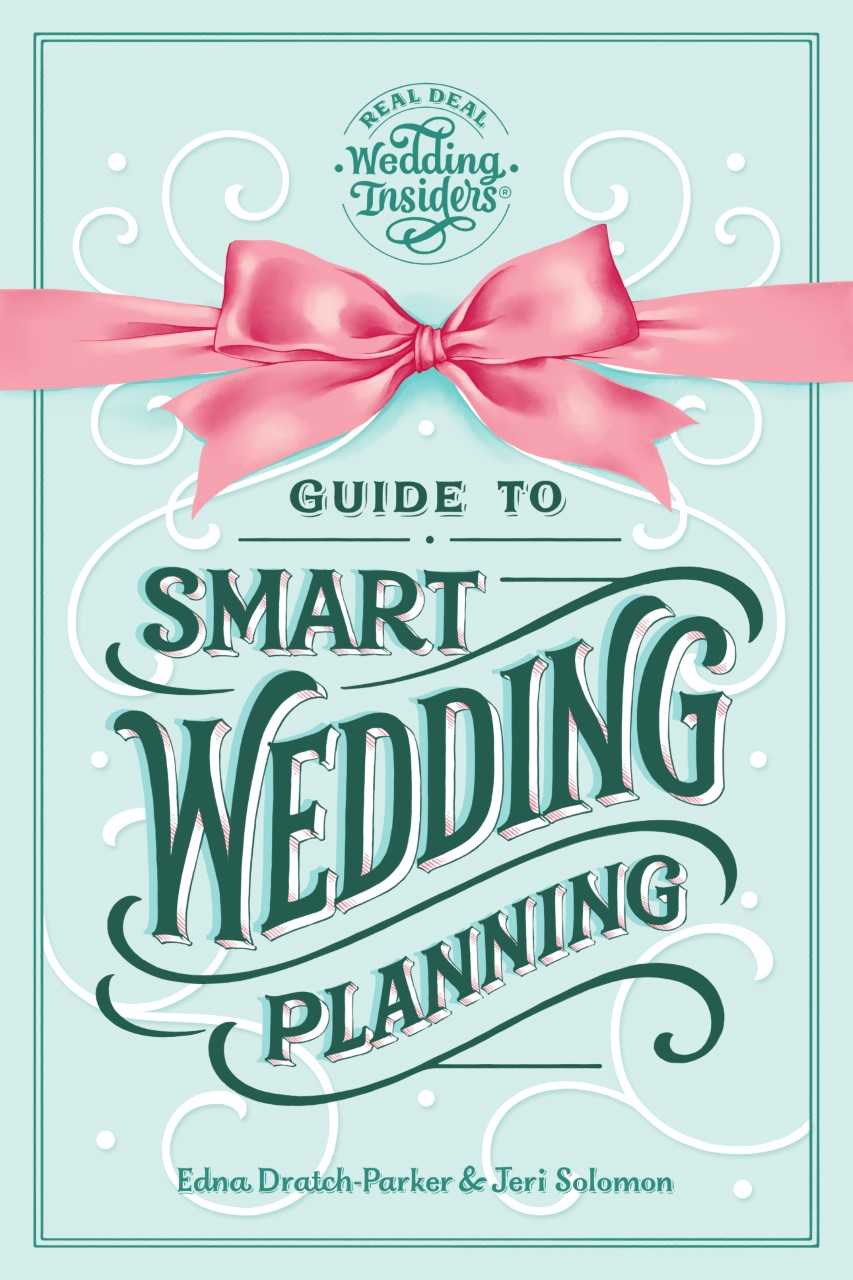
Smart Wedding Guide Planning Book Cover.

GUIDE TO SMART WEDDING PLANNING 

Edna Dratch-Parker & Jeri Solomon

On writing:

How did you do research for your book?
Being in the business of weddings for years, our work was our research! We also interviewed our clients to ask them what information they wished they had known at the start of their planning journey.

Do you have another profession besides writing?
Yes! Edna is a wedding planner, designer and brander. Jeri is a floral designer. We have decades of experience in the world of weddings. We’ve collaborated on many events and even won some national awards.

What is your next project?
Currently we’re working on a companion workbook for Guide to Smart Wedding Planning. We also have other planning tools in the pipeline so stay tuned!

What were the biggest rewards and challenges with writing your book?
The challenges- writing while also running a business full time. The biggest reward is holding the book in our hands and having people tell us that the information made a difference in their wedding planning experience.

In one sentence, what was the road to publishing like?
The road was steep and winding!

What is one piece of advice you would give to an aspiring author?
Just keep at it. No matter how long it takes


Fun stuff:

Favorite dessert?
Anything chocolate

Any hobbies?
Jeri is a certified yoga teacher. Edna likes to go on motorcycle rides with her husband. We are both cat lovers.

If there is one thing you want readers to remember about you, what would it be?
The Real Deal Wedding Insiders® are your go-to source for wedding planning info!

What is something you’ve learned about yourself during the pandemic?
In March of 2020 we were getting ready to publish our book and then the world shut down. We had no idea what the future would bring so we paused. We did make some edits to the book post pandemic about the wedding planning process, but our general advice did not change. We’re very happy about that because that means our advice stands the test of time!

Tell us about your longest friendship.
Our friendship! It is not the “longest” but the reason why we wrote this book. We first met at a networking event in Boston. Then we did a few weddings together and started to learn that we had so many things in common. For example we grew up in neighboring towns, we each have 2 sisters, our fathers were physicians, we’re married to men named Jim.  But then we discovered some unique connections; Jeri’s older sister was born in France while her father served in the Air Force and Edna was ALSO born in France while her father served in the Army. Then one day, Jeri was helping her aunt Eleanor plan her anniversary party. They were in a common area in her retirement home, discussing how to set up the space. There was a woman eyeing them from a corner. After a little while she approached Jeri and Eleanor and asked “are you planning a party?” Eleanor explained that Jeri was in the “wedding business” and was helping her. To which the woman responded “Really! My niece is a wedding planner!” Of course her niece was Edna! Jeri immediately texted Edna to tell her that “Aunt Mary says Hi.” At that point, we knew for sure that we were more like family than friends.

Author Bio:Edna and Jeri Profile Photo

With a combined 30 years and hundreds of weddings produced, Edna Dratch-Parker, founder,
and creative director of EFD Creative—Event Planning &amp; Design, and Jeri Solomon, owner of
Jeri Solomon Floral Design, bring their depth of knowledge and real-life experiences to help
couples avoid common mistakes, reduce stress, and truly enjoy the wedding planning process.


Website:  https://www.realdealweddinginsiders.com/
Facebook:
@RealDealWeddingInsiders
@EFDCreative
@jerifloraldesign

Instagram:
@weddinginsiders
@efd_creative
@jerifloral

TIKTOK: @RealDealWeddingInsiders

Twitter:
@RDWedInsiders
@EFD_Creative
@JeriFloral


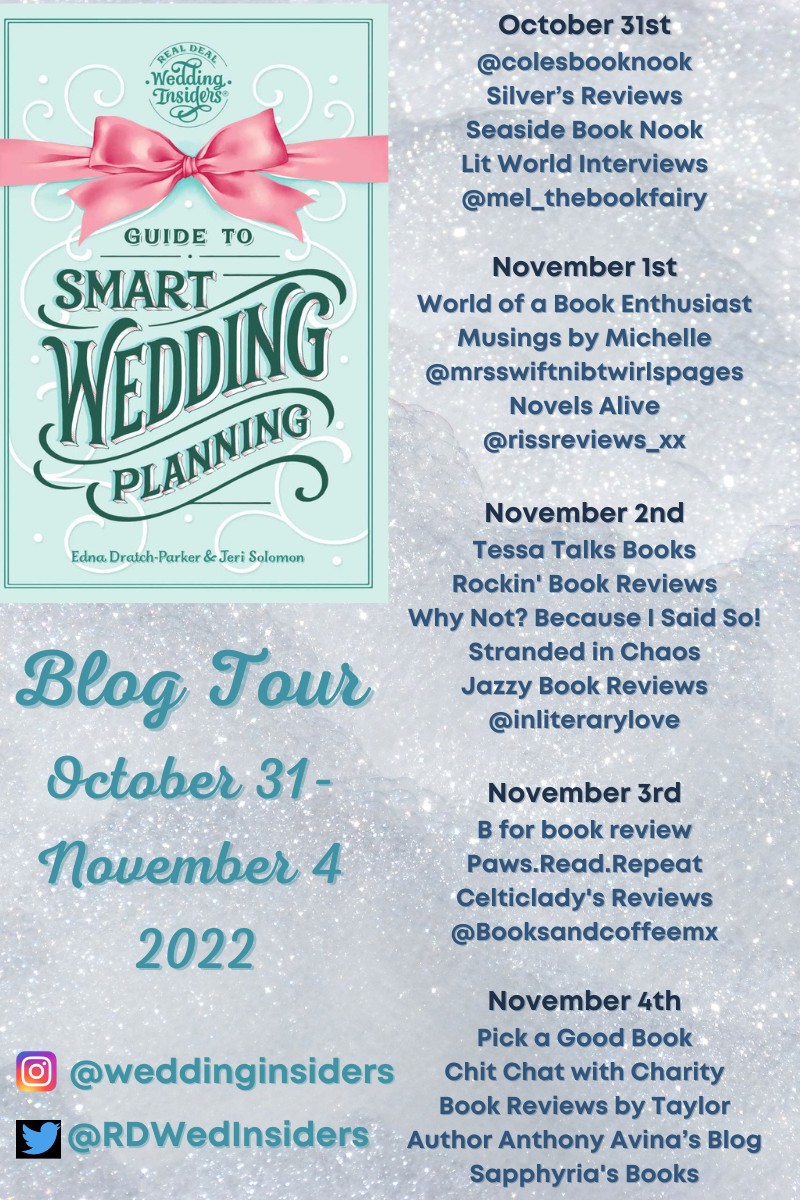
Jeri Solomon blog tour Image with All site addresses.

© 2014-2022- Ronovan Hester Copyright reserved. The author asserts his moral and legal rights over this work.

12 Questions with L.M. Rapp, author of Dreadful Beauty.

A girl undergoing a terrifying transformation goes on an epic quest to find a refuge from her
ruthless father.

Nymphosis, a disease that turns Humans into Chimeras, is ravaging the land of Gashom. The
More-Than-Pure, determined to protect themselves, have seized power and enacted
segregationist laws.

The daughter of a high dignitary, young Neria learns she is afflicted by the very disease her
father is determined to eradicate. Forced to surrender her privileges, she must flee her home in
the capital and traverse the strange wilds to seek refuge with her fellow kind.

Will she have the courage to fight oppression to emancipate the Chimeras from the yoke of the
More-Than-Pure?

Dreadful Beauty cover

Book available in both English and French.

12 Questions with L.M. Rapp

Which was the hardest character to write? The easiest?

None of the characters were easy to write about, but certainly the most difficult was the tyrannical father. I read three different books about serial killers before I began to understand the reasoning of a psychopath.

In your book, you describe the gargoyles’ people. What made you use elements of Gothic architecture for creating these characters?

During a visit to Notre Dame de Paris, I was able to admire the sculptures of gargoyles that adorn its facade. Their mere presence evoked a fabulous universe and served as great inspiration in my novel.

Where do you get inspiration for your stories?

The ideas seem to me to be floating around, in books, events, and encounters, and that it is enough to sit for long hours in front of a computer screen and concentrate on arranging them in a new way.

There are many books out there about chimeras. What makes yours different?

The story follows a family and a people through a tone that is both intimate and epic, which is rather unusual in this kind of literature. The plot captures the struggles of humanity through a fantasy lens, making it both digestible and thought-provoking.

If you could put yourself as a character in your book, who would you be?

I think I would like to be Matar, the Pedler. I envy his freedom and independence, despite the difficulties he faces in his life.

Do you have another profession besides writing?

I have had other professions in the past, but writing has become my main focus at the moment. I still practice and teach aikido, which actually turns out to be really useful when I write combat scenes.

What is your next project?

I will soon publish a thriller about a woman who decides, after a divorce, to take over her parents’ farm: a return to nature that does not go as planned. I also just started writing a science fiction book.

What genre do you write and why?

I choose the story first. The genre follows. I don’t force myself to create series. I think that having fun while writing increases the chances that the reader will have fun too.

How are you similar to or different from your lead character?

It’s a difficult question. I’m too close to her to tell. The similarity would be that she doesn’t give up easily. That being said, I find her more stubborn than I am.

Which authors inspired you to write?

Tolkien, Barbara Pym, Kazuo Ishiguro, Camus, Albert Cohen, Proust, Baudelaire and many others.

What’s the most courageous thing you’ve ever done?

I hesitate between leaving France, my birth country, or having three children.

Who was your childhood celebrity crush?

When they were first released, Star Wars and Indiana Jones were some sort of revelation. And Harrison Ford was the handsome cool hero in both of them.


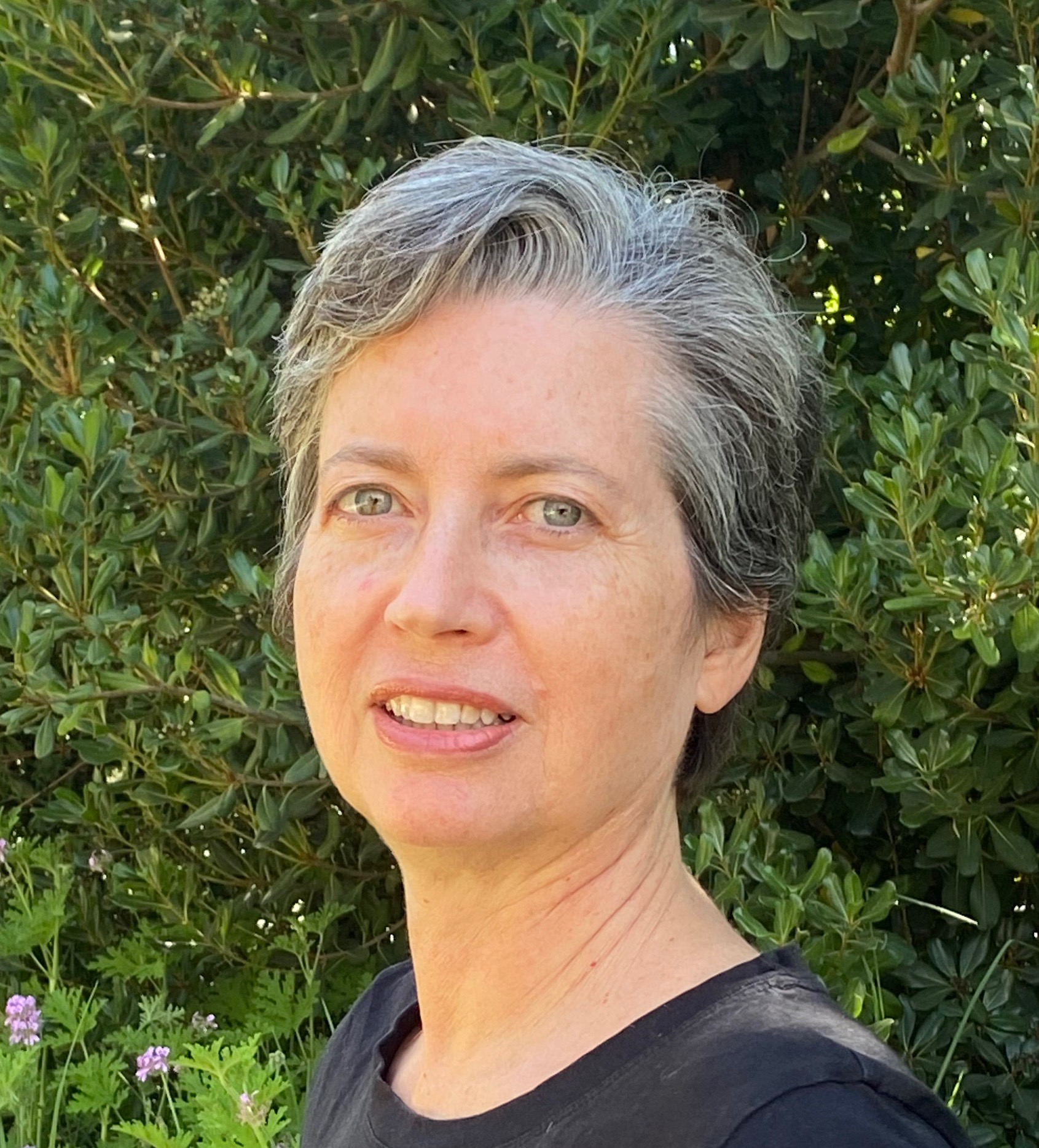
L.M. Rapp Author PhotoAuthor Bio:

L.M. Rapp has lived in different countries and practiced several professions: dentist, web
developer, artist, aikido teacher, farmer. Eager to learn and discover, she uses her experiences
to enrich her stories. She has also written a thriller, Of Flesh and Tears.


Follow L. M. Rapp at/on

Website: https://www.lmrap.com/
Facebook: https://www.facebook.com/L.M.Rapp
Instagram: https://www.instagram.com/l.m.rapp/
Twitter: https://twitter.com/LMRappAuthor

Amazon: https://amzn.to/3JrBPFS
Goodreads: https://www.goodreads.com/book/show/60560084-dreadful-beauty

Visit these other sites for more information about L. M. Rapp and Dreadful Beauty.

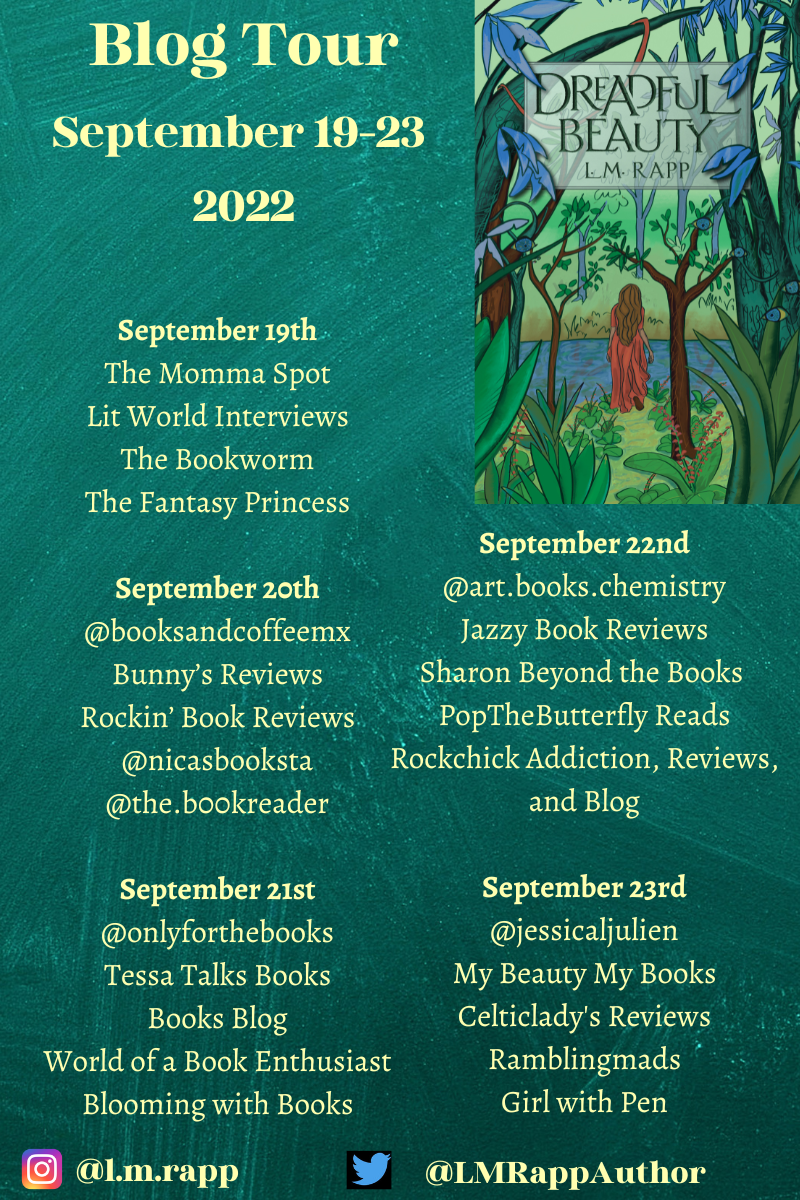
L.M. Rapp Blog Tour list image.

© 2014-2022- Ronovan Hester Copyright reserved. The author asserts his moral and legal rights over this work.

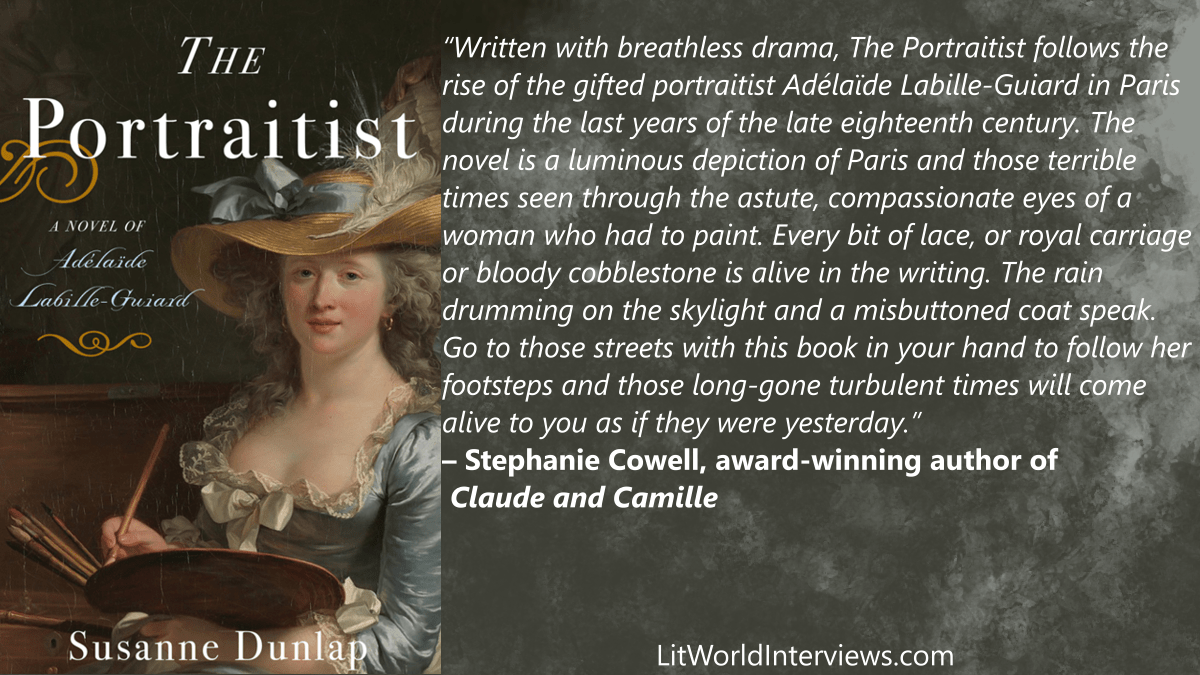
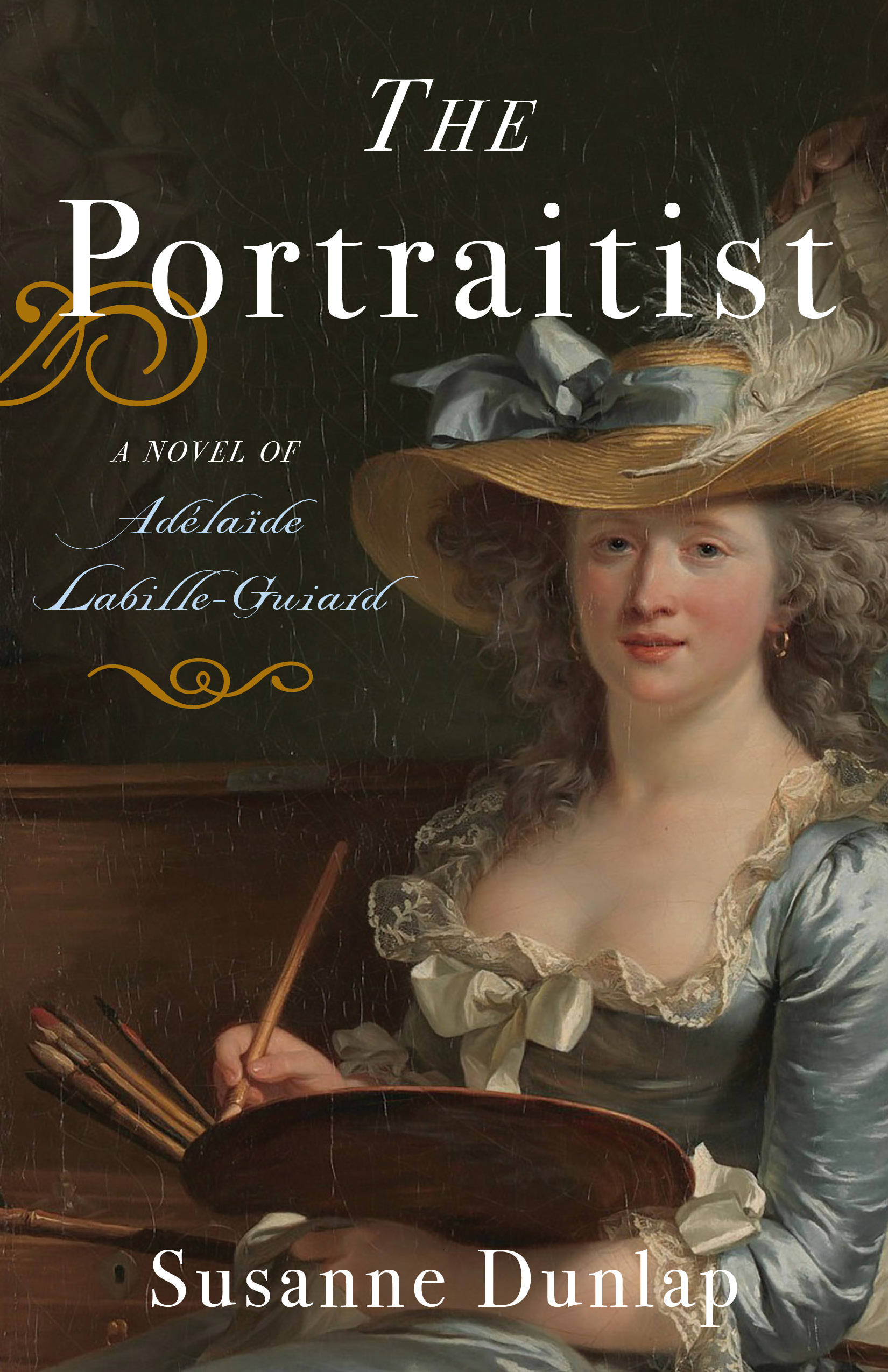
An excerpt from The Portraitist by Susanne Dunlap.

A special excerpt from The portraitist (Available Tuesday, august 30) by Susanne Dunlap.

Click here for Susanne’s interview.

The PortraitistParis, August 1774

Whenever sleep eluded her, Adélaïde would gaze out the window of the third-floor apartment she shared with her husband and think about colors. She’d stare hardly blinking for hours, noticing all the subtle variations of hue that, to a skilled eye, gave the sky as much movement and character as a living creature. Even as a child, she had understood that nothing was fixed, that light changed whatever it touched. Take the human face: Skin was not one color, but many, and never exactly the same from one moment to the next. She knew, for instance, that if Nicolas ever discovered what she was going to do that day, his face would take on one of the shades of thundercloud that had become more and more familiar to her as they drifted apart, and then she would be obliged to cajole him back to a placid pale pink.

He lay in the bed next to her, sprawled on his back, snoring open-mouthed and dripping saliva on his pillow. With a snort, he rolled away from her, and Adélaïde eased herself out from between the sheets, nudged her toes into her slippers, and stood.

“You’re up early,” Nicolas said, making her jump.

She pulled on her dressing gown as she walked into what served as kitchen and dining area. “I’ll wrap up some bread and cheese for you.”

Nicolas threw off the covers and shook himself from shoulders to toes before whisking his night shirt over his head and dressing for his job as secretary to the clergy. Adélaïde handed him the parcel of food as he strode by on his way out. He turned before leaving and stared at her. “You’ve stopped even making an effort to be attractive. You could at least put your hair up.” He let the door slam behind him and thumped down the stairs.

He’s right, Adélaïde thought. But she didn’t have time to worry about that now. As soon as she heard the heavy outer door of the building open and close, she hurried down to the courtyard, filled a basin of water from the fountain, and brought it up to the apartment so she could bathe. When she was finished, she put on her one good ensemble—the one she wore to church on Sundays with bodice and sleeves that had been trimmed with Mechlin lace in her father’s boutique. Her plan was to leave and come back without anyone noticing before Nicolas returned for dinner.

After waiting for two women who lived below her to finish their conversation in the stairwell, Adélaïde tiptoed out of the house and took a circuitous route to the Rue Neuve Saint-Merri and the Hôtel Jabach so no one might guess where she was going. She passed as swiftly as she could along the crowded thoroughfares with their boutiques and market stalls selling everything from leather goods to live chickens, picking her way around piles of dung and flattening herself against buildings as carriages clattered by. Such strange turns her life had taken, she thought. If she had waited—as her father begged her—until someone more worthy asked for her hand, she might have been the lady she’d just seen pressing a scented handkerchief to her nose as she flew past in a handsome calèche. But at the age of eighteen, her mother dead the year before and all seven of her siblings buried, Adélaïde had been desperate to get away from home, to leave the memories behind and start a new life. Enter the dashing Nicolas Guiard, who courted her passionately and made her feel wanted. Then, she couldn’t believe her good fortune. Now, she realized she’d made a terrible mistake.

It was only ten o’clock when she arrived at the iron gates that opened into the courtyard of the Hôtel Jabach. She stood for several seconds and stared, taking in everything, fixing the image of this moment in her memory. She, Adélaïde Labille-Guiard, was about to enter the first exhibition where she would not just be a spectator but a bona-fide, participating artist. Two of her pictures hung in one of the galleries within, her entries in the annual salon of the Académie de Saint-Luc—not the Académie Royale, but nearly as prestigious. Her teachers—François-Élie Vincent and Maurice-Quentin de la Tour—had put her up for membership years ago, before she married, and she would be one of only two women exhibiting that year. It was a bold step, a leap in fact, beyond the trite watercolor miniatures she sold in Monsieur Gallimard’s shop to make a little pocket money. Those were not art.

As she passed through the gates and crossed the courtyard to the entrance, sweat ran down her back under the layers of stays and bodice and petticoats, pooled at her waist, and trickled down her legs into the tops of her wool stockings. She took the printed catalogue the concierge handed her at the door and started fanning herself with it before she even opened it.

The murmur of polite commentary echoed around her. Smartly dressed men and women sauntered in twos and threes, facing the walls and pausing occasionally to admire what caught their eye, then turning to examine the portrait busts and figures that dotted the middle of the floor on pedestals at regular intervals. From her earliest childhood, Adélaïde had been to many exhibitions like this one, in rooms that had been stripped of some of their furnishings and given over to the contemplation of art. She wanted to savor it all and take her time to feast her eyes on everything, to give herself a chance to appreciate the honor of having her own work displayed alongside that of more established artists.

It was in the second of the main galleries that Adélaïde first noticed a small group comprising a slight, dapper man, an older woman who could still be called attractive, and two young ladies of startling beauty. One of them had a face of such exquisite proportions that Adélaïde wished she’d brought a sketch pad and a pencil so she could take her likeness then and there. The other one, although not quite as pretty, exuded sensuality and was clearly aware of the power she had over men in general and the gentleman in their party in particular. She cast her eyes down, her long lashes fluttering against cheeks rosy with what might have been embarrassment if they hadn’t been carefully painted with vermilion stain. That was when Adélaïde overheard the gentleman say, “No, I insist. Your allegories are perfection, Mademoiselle.”

Adélaïde froze. Her allegories? That lady had pictures hanging in the exhibition? The only other female member of the Saint-Luc she knew of was the elderly Mademoiselle Navarre, a pastellist and miniaturist who painted still lifes, not allegories. This lady, whoever she was, must have been elected very recently. No others were on the roster of exhibitors the last time Adélaïde had seen it. She held her breath, willing herself to blend into the crowd, standing sideways to the group and pretending to examine a rather voluptuous rendition of Leda and the Swan. Her ears tingled as she strained to hear the rest of the conversation despite the ebb and flow of casual comments as visitors moved through the gallery.

Click here for Susanne’s interview.

Susanne_Dunlap_social_media_image2

Book Description

Paris, 1774. After her separation from her abusive husband, Adélaïde Labille-Guiard is at last free to pursue her dream of becoming the premier woman portraitist in Paris. Free, that is, until she discovers at her first public exhibition that another woman artist is poised to claim that role — and she has more training and better connections in the tightly controlled art world.

To have a chance of competing, Adélaïde must first improve her skills in oil painting. But her love affair with her young teacher gives rise to suspicions that he touches up her work, and her decision to make much-needed money by executing erotic pastels threatens to create as many problems as it solves.

As her rival gains lucrative portrait commissions and an appointment as portraitist to Queen Marie Antoinette, Adélaïde continues to struggle, until at last she earns a royal appointment of her own, and, in 1789, receives a massive commission from a member of the royal family.

But the timing couldn’t be worse. Adélaïde’s world is turned upside down by political chaos and revolution. With danger around every corner of her beloved Paris, she must find a way to survive and adjust to the new order, starting all over again to carve out a life and a career—and stay alive in the process.

The Portraitist is based on the true story of one woman artist’s fight to take her rightful place in a man’s world — and the decisions she makes that lead her ultimately to the kind of fulfillment she never expected.

Susanne_Dunlap_social_media_Review image


Susanne Dunlap author photo.

Author Bio:

Susanne is the author of twelve works of historical fiction for adults and teens, as well as an Author Accelerator Certified Book Coach. Her love of historical fiction arose partly from her studies in music history at Yale University (PhD, 1999), partly from her lifelong interest in women in the arts as a pianist and non-profit performing arts executive. Her novel The Paris Affair won first place in its category in the CIBA Dante Rossetti awards for Young Adult Fiction. The Musician’s Daughter was a Junior Library Guild Selection and a Bank Street Children’s Book of the Year, and was nominated for the Utah Book Award and the Missouri Gateway Reader’s Prize. In the Shadow of the Lamp was an Eliot Rosewater Indiana High School Book Award nominee. Susanne earned her BA and an MA (musicology) from Smith College, and lives in Biddeford, ME, with her little dog Betty.

Website: https://susanne-dunlap.com

Click and Pre-Order  The Portraitist on Amazon.

Visit Amazon for Susanne’s Books:

Follow Susanne on social media:

Facebook: @SusanneDunlapAuthor

Twitter: @susanne_dunlap

Instagram: @susanne_dunlap

LinkedIn: @susannedunlap

Pinterest: @susanne_dunlap

© 2014-2022- Ronovan Hester Copyright reserved. The author asserts his moral and legal rights over this work.

9 Questions with Susanne Dunlap, author of The Portraitist.

“Impeccably researched, rich with period detail, Dunlap brings to life the little-known true story of Adelaide Labille-Guiard, who fought her husband and society to make a name for herself as a painter to the royal family, the very apex of success. A stunning story of determination, talent, and reversals of fortune. As a lifelong Elisabeth Vigée Le Brun fan, I am now questioning my allegiances!”

-Lauren Willig

Bestselling Author of THE SUMMER COUNTRY

The Portraitist9 Questions with Susanne Dunlap

What inspired you to write about Adélaïde Labille-Guiard?

I’ve always been interested in women in the arts, and the eighteenth century has a special place in my heart (my dissertation was about eighteenth-century opera). Also, Adélaïde’s self-portrait with her two students that hangs in the Metropolitan Museum of Art in NY is a huge favorite of mine. But originally, when I first conceived of the book, I thought of her in relation to her rival, Vigée Le Brun. Through research I began to know her in her own right, and to appreciate how different her life must have been from her rival’s, how much more stood in her way. I also love the difference in her painting style from Le Brun’s. It feels much more real, more present, less beautiful in a good way.

Why focus on Adélaïde instead of Élisabeth Vigée Le Brun?

Originally I thought I would write about Vigée Le Brun. But I love an underdog, and after discovering that they literally followed each other’s footsteps—but Le Brun doesn’t even mention her rival’s name in her three-volume memoir—I was intrigued.

Of course art plays an important role in this book. Are you an artist as well as a musician and writer?

Alas, I am no artist! I took a drawing class in college, but… no. I love art and have always gone to museums, and have done a lot of reading about art history and artists. As research for this book, I did read an 18th-century treatise on oil painting. However, as André Vincent says to Adélaïde before he starts to teach her, there’s a great deal of difference between reading a treatise and actually making art.

While the story is based on a true story, there are some characters that you’ve created. Which of the characters are real?

Most of the characters are, in fact, historical. The ones I’ve created are Adélaïde’s first student (the rest of the named students are historical), her father’s lover, and a few very minor, walk-on characters. However, I took major liberties with the characters of her father and her estranged husband to the point where I might as well have invented them, partly because there was very little available information about them. In those cases, the story comes first.

Did Adélaïde really do a portrait of Robespierre and get a huge commission from the Comte de Provence just as the revolution was starting?

Yep. All true. All the paintings mentioned in the book existed at one time or still exist. The two mentioned in this question are among those that were probably destroyed during the Revolution.

Did Adélaïde really sell erotic pastels?

Alas, no. At least, I could find no evidence of such a thing. However, erotic drawings were a lucrative trade in 18th-century Paris, and my cash-strapped heroine could easily have decided to capitalize on her talents in this way.

What were some of the struggles of women in 18th Century Paris faced, primarily those Adélaïde Labille-Guiard would have dealt with being a female artist?

The struggles had to do with lack of access for women to the infrastructure of success. Institutionalized misogyny, so to speak. Women couldn’t belong to guilds, and were only admitted to some academies in very restricted numbers. They also couldn’t attend classes at the Louvre, except with Briard, who was allowed to teach women. All the life drawing classes were closed to them of course, and even the best women artists couldn’t get the perks given to the men, namely free housing and studio space in the Louvre. That was something Adelaide fought for, and was finally awarded in 1795, after the Revolution, but before Napoleon’s time. Royal patronage was one of the few avenues in which they could compete, and both Adelaide and her rival benefited from that.

How important is Adélaïde Labille-Guiard to the art landscape of 18th Century Paris and perhaps beyond?

I think that because she was such an influential teacher as well as an artist, she probably had an impact on many young artists that we don’t even really know about, since she was pretty much ignored as a painter throughout the 19th century. But when she died, she was Madame Vincent, her identity completely bound up with her position as a married woman. I also think that by digging into these lesser-known women artists, we learn a lot more about the norm rather than the exceptions. Her work is beautiful, beyond a doubt, but so few examples survived her that it’s hard to accurately gauge her compared to other artists.

With the arts being such central influences in your literary work, what are some other works you’ve published that readers will enjoy?

This is the first time I’ve written about a female artist. I’m a music historian, so I’ve featured women musicians more often. My historical mystery series that takes place mostly in 18th-century Vienna features a young violinist whose godfather is Haydn. Those books are THE MUSICIAN’S DAUGHTER, THE MOZART CONSPIRACY, and THE PARIS AFFAIR. My first two novels also featured women musicians: ÉMILIE’S VOICE and LISZT’S KISS.


Susanne Dunlap author photo.Author Bio:

Susanne is the author of twelve works of historical fiction for adults and teens, as well as an Author Accelerator Certified Book Coach. Her love of historical fiction arose partly from her studies in music history at Yale University (PhD, 1999), partly from her lifelong interest in women in the arts as a pianist and non-profit performing arts executive. Her novel The Paris Affair won first place in its category in the CIBA Dante Rossetti awards for Young Adult Fiction. The Musician’s Daughter was a Junior Library Guild Selection and a Bank Street Children’s Book of the Year, and was nominated for the Utah Book Award and the Missouri Gateway Reader’s Prize. In the Shadow of the Lamp was an Eliot Rosewater Indiana High School Book Award nominee. Susanne earned her BA and an MA (musicology) from Smith College, and lives in Biddeford, ME, with her little dog Betty.

Website: https://susanne-dunlap.com

Click and Pre-Order  The Portraitist on Amazon.

Visit Amazon for Susanne’s Books:

Follow Susanne on social media:

Facebook: @SusanneDunlapAuthor

Twitter: @susanne_dunlap

Instagram: @susanne_dunlap

LinkedIn: @susannedunlap

Pinterest: @susanne_dunlap

© 2014-2022- Ronovan Hester Copyright reserved. The author asserts his moral and legal rights over this work.

15 Questions with Juiced author, Ted Mulcahey

An invention that can save the planet?
Somehow, someway the O’Malleys have found themselves in the thick of things once again. On peaceful, bucolic Whidbey Island, they become entangled in a corporate plot to stifle a paradigm-shattering discovery, one that promises to upend conventional thinking, topple markets, and create an entirely new industry.
Kevin and Jenne, along with scientists from the Pacific Northwest National Laboratory, find themselves pitted against a band of bumbling criminals who will stop at nothing to get what they want—including arson and murder.
It’s another rollicking adventure for the retired interior designers ably assisted by their favorite detective, the FBI, and Emma, their ever-vigilant German Shepherd Dog.

Juiced book Cover

Juiced by Ted Mulcahey

What makes your books different from other cozy mysteries out there?
The locales and perhaps the sarcastic sense of humor from the principal characters.

Do you have another profession besides writing?
Nope.

How long have you been writing?
Off and on since my high school newspaper.

How did you come up with the ideas for your books?
The idea for Juiced began when I came across an interesting article on vanadium battery technology.

For Little Dirt, it was more of a desire to highlight the many beautiful areas of the Pacific Northwest.

With your book set in the Puget Sound area, have you ever been there?
I live there.

How did you do research for your book?
For Juiced I found a number of articles discussing the projects (including their battery research) at the Pacific Northwest National Laboratory.

For Little Dirt I spent many hours researching harmful drug culture as well as the geography of the Puget Sound waters.

For both, my many years in business were immensely helpful.

If you could put yourself as a character in your book, who would you be?
There’s a good deal of Kevin O’Malley in me, but he’s likely an improved version.

Which was the hardest character to write? The easiest?
The easiest, of course, are the O’Malleys. The mercenary corporate characters are fun to write but often difficult. Emma, our GSD is the dearest.

If your book were made into a movie, who would star in the leading roles?
Paul Rudd and Sandra Bullock.

If your book were made into a movie, what songs would be on the soundtrack?
“Ripple” by the Grateful Dead

What is your next project?
The O’Malleys find themselves enmeshed in nastiness among folks in the Walla Walla wine country.

What is a favorite compliment you have received on your writing?
“I really had fun reading it”, is always my favorite.

What’s the funniest thing that ever happened to you? The scariest? The strangest?
Brushed my teeth with glue instead of toothpaste as a kid. (I think that’s the answer for all three questions)

Who was your childhood celebrity crush?
Barbra Feldon, agent 99

If there is one thing you want readers to remember about you, what would it be?
I tried to lighten their day.

Mulcahey PhotoAuthor Bio:

Ted Mulcahey has lived throughout the US, the past 35 years in the Pacific Northwest. He’s an Army vet, sales and marketing VP, entrepreneur, business owner, avid reader, one of nine children, former caddie, and lover of dogs and golf. The last twenty-five years were spent in partnership with his wife Patte, as the owners of a highly respected and published hospitality interior design firm in the Seattle Area. They’re now living on Whidbey Island and enjoying its rural bliss.

Ted writes about things he’s seen and places he’s been. He tries to incorporate personality traits of people he’s known into his fictional characters, although none of them exist in reality. Many of the locations are real but the names have been changed.

Website: http://tedmulcahey.com

Visit Amazon for Ted’s Books:

LITTLE DIRT ROAD: https://amzn.to/3P0aVq

JUICED: https://amzn.to/3RBsE9Q

See Reviews for LITTLE DIRT ROAD  and JUICED! at Goodreads: https://www.goodreads.com/book/show/60282401-little-dirt-road?from_search=true&from_srp=true&qid=3F5ErlwX8h&rank=1

JUICED:
https://www.goodreads.com/book/show/60839464-juiced?ac=1&from_search=true&qid=1g0MCjNXuI&rank=1

Ted Mulcahey blog tour Image© 2014-2022- Ronovan Hester Copyright reserved. The author asserts his moral and legal rights over this work.

AUTHOR INTERVIEW WITH: SHERYL J. BIZE-BOUTTE TALKS ABOUT HER FIRST NOVEL:BETRAYAL ON THE BAYOU

AUTHOR INTERVIEW  WITH:

SHERYL J. BIZE-BOUTTE

TALKS ABOUT HER FIRST NOVEL: BETRAYAL ON THE BAYOU

I want to welcome author Sheryl J. Bize-Boutte who has graciously agreed to a FOUR question interview. And I have to say this is one of the best and most timely answers to questions I’ve experienced.

SHERYL J. BIZE-BOUTTESheryl is a Pushcart Prize nominee and an Oakland, California-based multidisciplinary writer. Her autobiographical and fictional short story collections, along with her lyrical and stunning poetry have been described as “rich in vivid imagery,” “incredible,” and “great contributions to literature.” She is also a popular literary reader, presenter, storyteller, curator, and emcee for local events. Her first novel, “Betrayal on the Bayou,” was published in June 2020.

As a Southern white man, born in Florida, but raised in Mississippi, then living my entire adult life in Georgia, I am looking forward to reading Shery’s book Betrayal on the Bayou. Her descriptions in the following give one a different way of looking at the issue of “…the killing abuses of power, racism, incest, sexism, classism…”

R: Thank you for this interview, Sheryl.

S: Thank you, Ronovan, for inviting me.

R: Let’s get right into it. What was your research/inspiration for the Betrayal on the Bayou?

S: Well, Betrayal on the Bayou is a work of historical fiction, so my research was a combination of known family history heavily sprinkled with factual events from the time period I chose, along with more than a bit of my ever-active imagination. My inspiration came from my desire to tell pieces of my family history while trying to capture, even if infinitesimally, the relentlessness of racism and colorism and how it affected the everyday lives of people depicted in the book and how that is still the case today. After a recent coffee meeting with a White female writing club president, and her fervent use of the false equivalency of her blonde hair to indicate her deep understanding of segregation and bias, writing Betrayal on the Bayou, became even more urgent for me. In the book, I use strong, graphically described examples to depict the scourge and impacts of separation, colorism and racism.

R: How can today’s readers take lessons from the book and use them for today?

S: First of all, I do believe that reading promotes empathy and understanding and that those two things can lead to the promotion and hopefully implementation of change and correction of ill treatment and marginalization of Black people and people of color. It is important that people of today realize this is not a new phenomenon. That it did not just crop up when George Floyd was murdered, and more White people decided to pay some attention to it. People need to know how baked-in these beliefs are; how much work was put into separation in every facet of life; and, how there have always been Black people who lived in very different ways. We are not a monolithic people, and we all suffer some deep form of discrimination on a daily basis even to this day. I also tackle the impacts and outcomes of gender bias, economics, and other areas of everyday living in the early 1850’ s ripe for betrayal in a closed society where almost anything can happen, and let readers know that many things they may think are new, are not.

R: What else would you like readers to know about Betrayal on the Bayou?

S: That it is not the usual historical fiction fare with the characters one may look for from the 1800’s Southern U.S. Oh, they are there of course, because they are fundamental to the place and time, but they are not the center of the story. Readers will be intrigued while trying to determine what is fact and what is fiction within a dystopian yet very possibly real, isolated town. I want readers to know that the setting and the people are unusual, that the things that happen are stark and substantive, and that betrayals as well as the inhumanity and humanity will stay on your mind long after you have read the epilogue.

R: I encourBetrayal on the Bayou coverage everyone to read Betrayal on the Bayou. I found it to be… It is available at Amazon, and other vendors. For a full list of the booksellers and their links for Betrayal on the Bayou, visit Goodreads. For more information on Sheryl and her writing, please go to www.sheryljbize-boutte.com. Thank you so much, Sheryl.

S: Thank you Ronovan, it has been my pleasure.


Be sure to get your copy of  Sheryl’s book Betrayal on the Bayou on Amazon.

And be certain to check out her selection of work on her Author Page.

amazon logo

www.sjbb-talkinginclass.blogspot.com

© 2020 Ronovan Hester Copyright reserved. The author asserts his moral and legal rights over this work.

Into the world of #art – #interview with Drema Drudge, author of “Victorine”

Drema Drudge’s deep interest in art led her back to college and it brought her debut historical novel, Victorine, soon to be released on March 17, 2020.

In this interview, Drema provides insights into the life of a female artist in 19th century Paris.

To begin, who is Victorine? 

Victorine Meurent was Édouard  Manet’s self-professed favorite model. In all she sat for about 11 paintings for him. She also posed for artists Alfred Stevens, Edgar Degas, and more.

She came from a poor family, and not much is known about her beyond that she was born in 1844 and died in 1927. She lived with a woman named Marie DuFour for around the last twenty years of her life, presumably as her partner.

Indeed, she did go to art school. Her work was accepted by the Paris Salon on multiple occasions.

Much that history “remembers” of her is lies: that she supposedly died a young, financially ruined alcoholic prostitute. None of that is true. The few things we do know about her show that to be untrue.

An encounter with Olympia painted by Édouard Manet inspired you to write this book. Tell us a bit about this journey to finally writing Victorine

I was primed before encountering Olympia to see the story in paintings by a previous literature class I had taken called The Painted Word. I wrote a short story of Olga Meerson (who modeled for Henri Matisse) which was published by the Louisville Review. Then when I took yet another literature class with the same professor, he put up a slide of Olympia and I sensed that the painting, that is, the model in it, had more to say. I wanted to know what. A novel was born.

Do you paint? Do you have an education in art? 

I do paint a little, but a very little. I am finally allowing myself to learn a bit of technique. Previous to that I didn’t want to learn; I wanted to feel free to play and dabble without judging myself the way I judge my writing.

The only “formal” education I have in art is visiting art museums and reading about it. I get “hungry” for art if I’ve been away from the real deal for too long. But I’ve often wished I had an art history masters. I might get one, eventually.

What was it about Victorine Meurent that caught your fancy and kept your interest until you completed the book (and possibly beyond)? 

In my research on Olga Meerson, I discovered that Olga was a painter, and yet here all anyone remembered her for was her modeling. Imagine my surprise when I discovered that yet another painting was calling to me, and the model in it, Victorine,  was also a forgotten painter. I had to write about her.

The more I researched her, the more I realized there wasn’t much to go on. I couldn’t see how anyone could weave a tale with so little thread, and yet, as a novelist, I had that very thread at hand. If not me, who?

Can I presume that you undertook significant research to write Victorine? How much? Where did it take you? 

My research took me to Paris, first and foremost, its streets, museums, and cemeteries, I tried to imagine Victorine in the City of Lights.

But much of my research was necessarily completed via books, from following in the footsteps of those who had attempted to study her before. There was much rumor, little fact available. I knew that by the records of those who had attempted to find her before.

How long did this book take from the first encounter of Olympia to its publication? What challenges did you encounter? 

I encountered Victorine as Olympia in 2011, and my novel is just now being published in 2020. The first rough draft only took six months to write, but then it underwent some revisions, which slowed it down. When I found an agent, she shopped it for quite a while. In 2019 I was informed that it was finally going to be published, and I was more than ready.

What is the sociopolitical context of this story? Is it critical to this story you tell?

Oh my, yes. Women, and particularly poor woman, of the mid 1800’s in Paris weren’t considered much. And to aspire to be a painter in those circumstances? Almost impossible to achieve. That’s why I quickly realized Meurent must have had an indominable spirit, to have achieved what she did.

Then there was the birth of Impressionism and Modernism hand in hand. Both of these movements fought against the art establishment of their day. Enter Victorine as a stand-in for the art critics as Manet found his voice as a painter (and, most say, the Father of Modernism) as well. I wanted to explore the overlooked influence a model has on a work. As muse, yes, but the additions she makes that the artist cannot exclude, try as (in this case he) might.

How would you describe the relationship between Manet and Victorine Meurent? What attracted her to him, and vice versa? What was she to him, and vice versa?

Many believe they were lovers. I do not. I think they respected one another, eventually, professionally, although their artistic differences are thought to be what drove them apart in the end.

Meurent decided Manet was being too risky while seeking the approval of the Salon.  He refused to stay the expected course but also refused to totally embrace himself. He wouldn’t give up his need for acceptance, which he didn’t receive until just before he died and, of course, after. Meurent literally couldn’t afford to follow her fancy, painting more traditionally than Manet so she could sell her art.

As to what attracted him to her, she dared tell him the truth about his art. Other than the critics, no one dared. Manet was not a man who could handle criticism, and yet art cannot grow without it. I believe Meurent, as his model, managed to be that bridge for him: she was socially beneath him enough that he could disregard her criticism if he liked, and yet the honest artist part of him was able to embrace it. Or that’s my story. I have no way of knowing if that was true.

Meurent and Manet were fond of one another, essential to one another in ways they couldn’t articulate to themselves or others, I believe. You don’t have to see someone every day or every year to know how important you are to their purpose on the planet. I believe they were just that crucial to one another. It wasn’t love. It was something else, something I spent a large part of the novel trying to define.

What is, in your view, Meurent’s inner life?

Meurent’s narrative is a bit performative, so I’m not surprised by the question, and yet if she had been more inner directed aloud, the novel would have been in danger of tilting toward the maudlin. Neither she nor I wanted that!

She lived her inner life on the canvas and in her musings as she painted or was painted. Her life was a work of art, first by others, then by herself.

It wasn’t as if she hid her desires or her vulnerability from the reader. By pointing some things out, she was admitting, gingerly, what she wanted and needed. The main goal of the story, and her goal as narrator, was to bring herself back to history as a painter. It was to show that art can serve as lover.

She could receive and understand art and humanity with a generosity and intelligence that few have.

More than that, I think she’d prefer to keep to herself.

What degree of artistic license did you take with Victorine and the events in the book? 

I did what the book required. I strove to tell the truth, although often the factual truth wasn’t available, so I had to fabricate pieces of the story from the bits I had at hand.

You have chosen to begin the book with Manet and Meurent’s first meeting in 1862, and have tied her to Manet throughout the book until her acceptance into the Salon de Paris. Why? And why this period? 

I quickly realized in my research that Manet played an extremely important part in Meurent’s life. I first conceived her story not as a novel, but more as a series of linked stories (that being the trend at the time) with each story centering on a painting. Since Manet was the artist whose paintings of her were most known, that seemed the place to begin.

One of the many themes in this novel is breaking away from Bloom’s anxiety of influence; that is, learning who you are versus your mentors. Her formation as an artist sprang directly from being able to detach herself from Manet’s studio.

As I read Victorine, it seems Meurent is explaining herself or justifying her actions and motives in relation to Manet and on occasions, Alfred Stevens, instead of the reader (like myself) gaining access to her independent inner world of what drives her. Was there a particular reason for this? 

I don’t know that it was conscious on my part, but it makes sense. Meurent was the object of the male gaze from a child on, with first her father painting her. Part of her cycle of growth was breaking away from being the object. It was a process; she protected herself from them and from us as readers as she went along. I’ll allow it.

It was fascinating to see the maturing process of Victorine, young muse and aspiring artist, to Meurent, accomplished and confident.  I enjoy the triangulation of relationships. Did you decide to do this? Why? 

In some cases I was very aware of the triangulation, such as between her, Manet, and Berthe Morisot, and in other places, not as much. I supposed I am innately aware of the delicious tension inherent in triangulation.

If Meurent is unfair to anyone in the novel, if she has a blind spot, it’s that she underestimates Suzanne Manet. That’s her (professional) jealousy talking. Suzanne’s retribution is my way of showing the reader the truth.

If there is one thing you want the reader to take away from the book, what would it be?

My goal, first and foremost, is to return Victorine Meurent and her contributions to art herstory. If the reader thinks of Victorine not as just a nude on a canvas, but as a living, growing human being who did, in reality, go to art school and make contributions even to the prestigious Paris Salon, I will have done my job. If she lingers with the reader, that’s a bonus for which I surely hope.

Are you working on a new writing project now? And if so, what is it and does it involve art as well?

All of my books are likely to contain art, though I have a loosely connected concept for them: I want to eventually write about all of the arts. Next up, music. I juxtapose the worlds of country music and…Virginia Woolf!

How fascinating! I will be looking out for its release.  Finally, where and when can readers get their hands on Victorine

Victorine’s release is scheduled for March 17, 2020. It’s available for preorder on Amazon and Barnes & Noble. Once out, it will also be available on the Fleur-de-Lis website.

~ FlorenceT

@FTThum
MeaningsAndMusings

© 2020 LitWorldInterviews

 

#Bookreview and #mini-interview ‘what if I got down on my knees’ by Tony Rauch. For readers who enjoy short-stories, love language and the unusual.

what if I got down on my knees by Tony Rauch

Sorry I haven’t been around much recently, but today I bring you a review and the author, Tony Rauch, has also agreed to answer a few questions, so we have a double feature, a review and a mini-interview.

Title:   what if I got down on my knees
Author:   Tony Rauch
ISBN:  098293355X

ISBN13:  978-0982933558
ASIN:  B00YNR6HBM
Published:  Whistling Shade Press; 1 edition (May 31, 2015)
Pages:  189
Genre:  Literary Fiction/Short stories

Description:

what if i got down on my knees? presents romantic misadventures and entanglements of absurd, whimsical, existential longing, featuring discovery, secrets, identity, escape, strange happenings, endurance, regret, and hope. The stories are little postcards from the lonely regions of the human heart.

These tales of wonder are about people trying to find meaning and a place in an indifferent world, and their discoveries, revelations, secrets, failures, struggles, connections, and odd encounters along the way—

—two unemployed men steal dogs and run them through buildings around town.
—a man goes on what turns into the worst date in recorded history.
—you are asked to baby-sit for a neighbor, only to find a giant baby waiting for you.
—a man comes home to find his entire yard and home paved over by a long lost rival.
—a clerk at a used record store finds a man has passed away on one of the couches.
—some young adults go into the basement to get sad, in order to impress girls.
—a stranger extracts a baby from a man waiting for the bus.

With themes of longing, fragility, uncertainty, impermanence, regret, the mysteries hidden in everyday life, discovery, ennui, loneliness, irresponsible behavior, confusion, change, identity, and absurd situations, Tony Rauch is a worthy successor to the artistry and absurdism of Donald Barthelme and Steve Martin.

 Body of review:

I received a copy of this novel from the author and I voluntarily review it for Lit World Interviews.

Short stories are an acquired taste. We might think a short read is perfect because we are always rushing and don’t have a lot of time, but sometimes we might feel disappointed when the story ends and we’ve invested time and, in the best of cases, emotions only to have to get to know some new characters after a few pages. Of course, not all short stories are born equal. And this collection of short stories by Tony Rauch proves the point.

Some of the short stories in this collection are whimsical (surreal) and might leave you scratching your head (or looking up to the sky searching for… No spoilers) , some are vignettes illustrating the lives of people who might appear content with their lives at a superficial level, but whose thoughts and worries run deeper than it seems, many are about lonely people wondering about others and trying to connect (in some occasions with hilarious consequences), some are about pretending to be something or somebody else, about growing up, about growing old, about moving on or remembering the past…

The quality of the writing is superb, and the first person narratives cleverly capture the speech and rhythms of the characters, who sometimes are talking to others, sometimes conducting an internal monologue with themselves, or even writing a story. From young kids trying to impress their friends to old men dying, from people contemplating a new relationship to others letting go, these few pages run the whole gamut of experiences and emotions.

To give you some examples:

His skin appeared two sizes too tight for his body, stiff and washed out, like he’d gotten it secondhand, or found it in an alley late at night.

His suit is mythical—straight, lean, long, pure, giving, musical, thoughtful, caring, dynamic, cosmopolitan, unselfish, strong, industrious, and nostalgic for his mother, her peanut butter cookies, and snowy Christmas mornings.

“And what would someone do with a dream of mine? Where would you keep it?”

“I’d stretch it out to create a sail, and then use it to float off to who knows where,” I advise.

 Some of the stories are nostalgic and melancholy, but there are great comedic moments, ranging from slapstick to joyful turns of phrase (and oh, a so very satisfying revenge story).  Another example I highlighted:

Eventually, he turned up in over 3000 cans of a popular brand of tuna. A horrible fate to be sure, and amplified by the fact that the guy was notoriously reputed to detest tuna.

I won’t tell you which stories I liked the most as I’d find it difficult. I checked the reviews, and on reading the comments when the reviewers mentioned a story or another I’d agree with them. So… Just go and read them and enjoy their variety.

 What the book is about: Many things: growing up, life, dreams, realities, loneliness, relationships, friendship, revenge, writing…

 Book Highlights: The quality of the writing and the very distinct characters and voices. The whimsical sense of humour.

 Challenges of the book: Sometimes with the electronic version I wasn’t clear when I had moved from one story to another. The titles of the individual stories and the different parts weren’t always easy to tell apart.

Although the book is not long, I think it is best taken slowly and savouring the quality of the writing, rather than rushing to get to the end of the story. It is not a book to be read in a hurry.

 What do you get from it: Beautiful writing, stories that make you think and a few laughs.

 What I would have changed if anything: As I mentioned perhaps change the size of the titles or the formatting (in the digital version) to make the divisions clearer.

 Who Would I recommend this book to?: To readers who enjoy language and a mood more than heavily plotted stories (although there are some great ones too). And to writers who are considering writing short stories, or just keen on exploring the many ways characterization works.

Ratings:
Realistic Characterization: 4.5/5
Made Me Think: 4/5
Overall enjoyment: 4.5/5
Readability: 4/5
Recommended: 5/5
Overall Rating: 4.5/5
 

Buy it at:  
Format & Pricing:
Paperback:  $12 

Kindle: $3.22 

Author Tony Rauch
Author Tony Rauch

And now, I asked a few questions to the author:

People have less and less time these days and short forms of writing are becoming more and more popular. From flash-fiction to microfiction and even stories told in Tweets, it’s all about brevity. Of course, the short story has a long tradition, but what is for you a short story? And what makes it (so far) your preferred choice when writing? –

For me a short story is anything that conveys a feeling, or an event, or that sets up an event that may then spring forward. It does not have to have a beginning or an ending. I like story starters, that is a written piece that poses a situation or premise, and then you have to imagine various outcomes. But the premise is so interesting it creates that zing in your brain and gets you thinking. That to me is a good story: anything that kick-starts that zing in your imagination and gets you thinking on a different track or about various possibilities.

I prefer the short form because I don’t need a lot of useless background info that longer work sometimes gets bogged down in. I don’t have a lot of free time, so the short form is good for getting ideas down. I have a lot of different ideas, so the short form works well in sorting them into more organized paradigms.

Tony Rauch in action

Who are your favourite writers, in general, and writers of short stories (if they aren’t the same ones)? Why? What have you learned from them? –

Favorite authors, influences: Anyone interesting, imaginative, and concise. Anyone who makes you think.

Mostly I like short stories as they get to the point quickly. The books that really inspired me are mostly imaginative story collections because they were exciting and new and you never knew what was going to happen next in them. Also, they were brief, which made them memorable and easily digestible.

I like strange or absurd adventures that are well crafted and have a meaning to them, and sci fi as it offers ideas. Reading these types of writers is like taking mini adventures that I could not experience otherwise in the limitations of my actual life –

Older writers:

Donald Barthelme, J.D. Salinger, Richard Brautigan, Kurt Vonnegut, Jr., Charles Bukowski, Leonard Michaels (murderers), Mark Twain, James Thurber, Antoine de Saint Exupery (the little prince), Dr. Seuss (cool illustrations), Roald Dahl, Steve Martin (cruel shoes), W.P. Kinsella (the alligator report), Jim Heynen (the man who kept cigars in his cap), Don Delillo.

Contemporary writers:

Barry Yourgrau, Mark Leyner, Adrienne Clasky (from the floodlands), Lydia Davis (Samuel Johnson is indignant), Etgar Keret, Stacey Richter, George Singleton, James Tate (Return to the city of white donkeys), Thom Jones, Italo Calvino, Stephen-Paul Martin, Will Self, Denis Johnson (Jesus’ son), David Gilbert (I shot the hairdresser), David Sedaris, Paul Di Filippo, D. Harlan Wilson, Andersen Prunty.

Science fiction from the 40s, 50s, and 60s:

Rod Serling, L. Sprague De Camp, Ray Bradbury, Phillip K. Dick, Aurthur C. Clarke, Isaac Asimov, Charles Beaumont, Ursula K. Le Guin, Douglas Adams (an 80’s writer), etc.

Author Tony Rauch trying to grab the intangible

Many writers read this blog. I subscribe to the advice that one should read in order to improve one’s writing. I know it will be a difficult choice, but any stories in particular that have had an impact on you or have increased your understanding of the form? 

Yes, many – see the list of authors above. One thing I look for is that buzz or zing when they convey a feeling or present something I hadn’t ever seen before. For example, I like that F. Scott Fitzgerald story “Winter dreams” because in it the character changes, or his feelings for someone changes. I like that arc, that sense of change the character goes through in a story. That story presents a loss, and the character’s feelings about that change and loss.

Do you have a blog/website? If so what is it?

Yes, it is:  https://trauch.wordpress.com/

You can find book information and story samples on that bad boy of rock and roll.

If you know of any good publishers looking for arty story collections, please let them know about me. I’m always looking for good publishers. A lot of places don’t publish single author story collections.

Thank you for your time.

Thanks very much to Tony Rauch for his book and for answering my questions, thanks to you  for reading, and don’t forget to like, share, comment, and CLICK!

Olga Núñez Miret

@OlgaNM7

http://www.authortranslatorolga.com


Spotlight on Indie Author @AngelaKaysBooks. The Murder of Manny Grimes.

Today’s Spotlight Author is our very own Angela Kay! A new Indie Author as well as one of our busiest book reviewers here at LWI.
angela-kay
1. How did you come up with the idea for your novel the Murder of Manny Grimes?
I started writing it during my final semester of college. I was taking a writing course where we were to write the first thirty pages of a novel. I didn’t really have an inspiration strike…I just started writing and the plot seemed to unfold. My professor and students alike 8-the-murder-of-manny-grimes-coverloved the beginning of the story. Because of my passion of writing, I continued the first draft with the hopes of getting it published one day.

2. For aspiring writers out there, tell us how long it took you from idea to publishing your novel? Tell us about the process of how it all came about.

It took me seven years to perfect it. I finished the first draft in a year. I was excited because it was the first full length novel I finished. For the most part, I’d only written short stories. After that, I began to edit my book, and it was a major headache. I must have changed the direction of the story three or four times. I took a lot of breaks from it…more than I should have. Finally, by the many rocks God tossed my way, I finished my final draft. And just as I finished, I came across an awesome editor who didn’t mind fixing a few kinks. I played around with the idea of submitting my completed novel to a bunch of agents, but the truth is, it’s a dog eat dog world out there. I didn’t have patience for a bunch of no’s. Even when I was ready to send it off, I was hard on myself about whether it’s good or not. After considering my options, I went the route of starting as an Indie author. My publisher is a long time friend of a friend, so I trusted him. After I got my beloved books in my hands, I knew I did the right thing.

3. What kind of research did you do for the novel?

The setting used to take place in New York, but someone a long time ago told me it sounds as though it’s in Augusta, Ga (where I currently reside). That got me a bit worried because the setting relies a lot on the aftermath of a bad snowstorm. I mean, it is the south, where we hardly see one flake. I went online to see whether it was possible (although I knew it’d be okay since it’s fiction and anything was possible). I was glad to find that in 1973 we were hit with sixteen inches of snow. Although it was a long time, it satisfied me. The other researching I did was try and get the investigation as close to real as possible. I spoke to several police officers, primarily lieutenants, since  my main character is a lieutenant. They were kind enough to answer any and all questions.

4. When I read a book I sometimes like to have a visual of characters. What actors would play your main characters in a movie?

Lt. Jim DeLong: Michael Fassbender. He’s a little older than DeLong, but I think he’d be good for it.
Russ Calhoun: Possibly Dean Winters
5. What are you working on now?
I’m currently editing the sequel to “Manny Grimes,” and plan to release it in a few months. I also have an FBI thriller ready to be edited and another book I’ve almost completed. I’m only doing suspense now, however, I’m starting to dabble with a bit of romance–I already have an idea for a saga.

6. I know you edit the work of other authors, how can people contact you for your services?

7. What do you think is the one thing that drives your main character to do what he does?
Lieutenant Jim DeLong is passion-driven. I think when he gets something in his mind, he can’t seem to let it go. It’s also somewhat of a release while he’s dealing with personal issues outside of work.

8. If you could’ve written any other book than your own, what would it be and why?
Probably “Pride and Prejudice.” I love that book so much. It’s in a complete different era and I get swept away in the character’s lives.

mark-and-krystinaIs there a way people can get an autographed copy of your book?

Sure! They can email me for more information at angelakaysbooks@gmail.com. I sell signed copies of my book for $14 even. That includes shipping and handling. You can check out my book by clicking on these links: Amazon and Barnes and Noble.

Like me on Facebook: Angela Kay’s Books

To learn how to receive a FREE PDF copy of The Murder of Manny Grimes, click HERE!

Interview With K.T. Munson @ktmunson

I had the pleasure of interviewing author K.T. Munson. The first book of hers I read was Zendar: A Tale of Blood and Sand, which I loved. I also have her latest, Unfathomable Chance, in my hands. Thank you, K.T., for allowing me to interview you!

What do you like to read in your free time?

I actually like to review indie authors and small press houses books in my free time…the little free time I have. I’ve had some real gems come across my kindle and they inspire me to work harder and become a better author. Plus I get to help out fellow indie authors, so that is always a bonus.

What did you find most useful in learning to write?  What was least useful or most destructive?

This is a tough question for me because I never really paid attention to anyone and just sort of did my own thing. So instead I’ll take some creative liberties here. The most helpful thing I can think of is when my mother showed me that we have an ancestor who is a published poet. I told my mum I was going to be published one day too. Her encouragement and support has always gotten me through the rough patches. She is my #1 fan and I’ll continue writing and publishing if she is the only one who reads it. The most destructive thing was relying on technology. I lost chapters and chapters of a book in college. It broke my spirit to write for a long time because I felt like I lost a part of me when my USB stick died. Don’t rely on technology; always have backups of all your work!

Aside from writing, what are your hobbies?

I like to paint, make jewelry, and grow plants. I honestly have a ton of hobbies some of which never took, like knitting. I like to keep myself busy year round since I live in Alaska with everything from camping to hunting on top of the inside hobbies. Don’t even get me started on TV, movies, video games, and D&D.

Do you have a ritual you use while writing? (During commercials, certain music, etc)

I have to edit my books from printed copies. Everything else I just go with what I feel like. The moment my book writing becomes structured and rigid the moment it stops being fun.

What is your writing space like?

Anywhere I like. Honestly I take my books with me and work on them when I’m flying for work, sitting at home on my computer, or typing ideas into my phone. My work space is wherever I am but most of it is in my computer room. It is an old pine desk my parents bought when I was 5. The darn thing is falling apart but I just can’t bring myself to replace it. Under it is the group of my works, all broken into little accordion folders that contain editing, beta reader notes, original concept notes, and even sketches.

Do you have any pets? Can you tell us a funny story about them?

I have two cats: Emma and Lizzie. They are both named for Jane Austen characters (Emma Woodhouse and Elizabeth Bennet). Emma is more my cat than Lizzie. As to a funny story I have tons, but my favorite is when I brought Emma home from her first vet visit, and she of course howled the entire way over and misbehaved the entire time (constantly trying to slink away) but honestly she got a thermometer shoved up her butt so I could sympathize with her distress. When I brought her home and parked in the garage I let her out of the cat carrier so that she could wander back into the house. Instead she hides under the car and wails because she doesn’t recognize the garage as home. I can’t get her out of there and after trying to push her out with broom, I abandon her and go and stand in the hallway and wait. Twenty minutes of constant wailing and she finally walked into the hallway. She immediately recognizes it as home and stops. She gives a look that says ‘You’re a jerk and I’m not an idiot’ and proceeds to go upstairs and eat some food. Needless to say I don’t let her out in the garage anymore.

What is your work schedule like when you’re writing?

I try to edit or write every day. I constantly have at least 2 books I’m working on at the same time. Usually a main book and what I like to call my relief books, which is usually a romance of some sort.

Where do you get your ideas for your books?

Everywhere. Cliché I know but seriously, everywhere. Usually the main concept comes to me in a dream. I’m a lucid dreamer most times and I get some doozies that are like living books or movies in my head which I remember 90% of when I wake up. 1001 Islands was Chapter 1 and Unfathomable Chance was Chapter 4. Sometimes it is a single image I am working towards or a concept. For North & South it was both, the image of a girl alone in the desert wandering towards certain dangers and the idea that every decision we make affects another person, like the butterfly effect.

What do you hate most about the writing process?

*Groan* Editing. I don’t mind rewriting but editing is killer. Thank goodness for editors.

What do you think makes a good story?

Originality with a color of the familiar. I like to bring whole new worlds alive and I think creating a world that people lose themselves in is a good story. Right up there with characters that are relatable or believable.

As a child, what did you want to do when you grew up?

Gosh everything. Lawyer, doctor, inventor, and an accountant to name a few. Little did I know that I could do all those things…in my books. I have researched the strangest things, let me tell you.

What is your favorite book that you didn’t write?

The entire A Song of Ice and Fire series.

#Interview with author @ProfKellyOliver.

Kelly Oliver ImageToday’s interview is with the author of a book I reviewed not long ago called WOLF. I won’t say too much about it as she discusses it a bit in the interview, and you can read the review by clicking here. Now on to the interview.

You are very eclectic in your writings over the years. What lead you to writing fiction?

Since I discovered writing, I’ve relied on it to give my life meaning. I live to write.

As a philosopher, in my nonfiction, I write about ethics and ways to make the world a better place.

But, with fiction, I realized I could create a world. I could create a world and then live in it for a few months or years. I could create a world where women and girls come out on top.

How did Jessica James, a cowgirl, come to life? I understand the philosopher part, but I’m trying to get the cowgirl part.

Usually, it’s the other way around.  Folks get the cowgirl part, but scratch their heads at the philosophy part.

Some of Jessica’s story is based on my own experience, a working-class girl who grew up in Montana, Idaho and Washington, going to the big city for the first time to study philosophy, a mongrel amongst pedigreed Ivy Leaguers.

But, there’s a kind of funny story about how I came up with “cowgirl philosophy.” A few years ago, there was a move in the philosophy department to create a “Vanderbilt brand” so everyone would associate the Vanderbilt philosophy department with a special type graduate. I imagined taking a hot iron and branding our students as we handed them their diplomas. I got a bunch of the women philosophers together and joked that our brand should be cowgirl philosophy. One of my students made a logo for us with a really cute blonde long-haired Scottish cow that said “cowgirl philosophy.”  I still have that cowgirl philosophy sticker on my office door.

You have two stories running simultaneously in WOLF, how WOLF cover imagedifficult was it to keep things straight as you went along? By the way, you did a great job. I never got confused, even once.

Jessica James and Dmitry Durchenko are very different. In some ways, the brooding Russian janitor is more of a philosopher than the party-girl philosophy graduate student. So, it was easy to keep their stories straight. The harder part was bringing them together organically. I wanted the stories to become more intertwined as the novel progresses, so they’re intimately connected by the end of the book.

When I was sending out various drafts of the novel to get feedback from other writers, some loved Jessica and others loved Dmitry. At one point, when the Dmitry lovers were ahead in the polls, I had started and ended the novel with his perspective. But, in the end, I realized that the ongoing story is really Jessica’s, so I started and ended the novel with her. It just never felt quite right to start with Dmitry, even though he is an important, and hopefully compelling, character. And, I’m sure we haven’t seen the last of him!

How much of Jessica’s adventures pulled from actual events you’re aware of?

As I said, some of Jessica’s adventures are based on my own experience in graduate school.  But I plead the fifth on what parts.  I like how you asked about events that I’m “aware of”…maybe not being aware could get me off the hook for some of the more incriminating parts of the story. Jessica’s not the only one who drank too much whisky in graduate school.

You have Russian characters in your book, some are very important to the entire storyline. How did you go about getting the language just right? It was a very smooth transition from English to Russian. I thought it seemed very natural and not intruding at all when I was reading.

Thanks. I did a lot research on Russian sayings, culture, food, and drink, and, of course, the Russian mafia. And, I had a native Russian speaker check my use of Russian words and phrases. It was important to make it authentic.

Just before I started writing WOLF there was a huge FBI sting involving Russian mafia in New York that took in over 30 people on charges of illegal gambling, money laundering, and extortion. Some of my characters are inspired by people pinched in that operation, including a beautiful woman running a high stakes poker game for Hollywood movie stars, and the playboy son of a billionaire art dealer. I also learned that the Russian mafia is alive and well, not only in Russia, but in the U.S.. You don’t want to mess with those guys, so I don’t dare say more about my real-life mafia role models.

You discuss the date rape culture that is so prevalent on college campuses. I’m not sure how much goes on at Vanderbilt but I know cases happen where I’m from. So many even go unreported. What made you think of including that in your book? Did you do any particular research into it with victims? I mean you don’t go too much into details but there are some instances where research seems evident.

As I was writing WOLF, a high profile Vanderbilt rape case was making national headlines. It involved a woman who may have been drugged by something slipped into her blue cocktail, taken back to a dorm room, and then gang raped by a group of football players, instigated by her boyfriend. Because she was unconscious, she didn’t know she’d been raped until the police showed her video recordings the perpetrators had taken “for fun” and sent off to their friends. This case was so stunning, so mind-boggling, and so egregious, I couldn’t imagine what it must be like to find out something like that about yourself from a video.

That lead me to write my latest nonfiction book, HUNTING GIRLS: SEXUAL VIOLENCE FROM THE HUNGER GAMES TO CAMPUS RAPE. I was writing that book at the same time as WOLF. It was important to include the issue of party rape in the novel since it has become an epidemic on campus.

You did a great job of hiding in plain sight who the killer of the titular character was. Which is always the way with a great mystery. There were so many possibilities that when it was finally revealed, there was a bit of surprise, unless you were really following all closely. Writing a mystery, do you worry about revealing too much? How do you balance the hidden and the revealed?

Thanks. Yeah, it was a bit like Jessica who had the evidence proving the identity of the killer all along in the bottom of her backpack. The killer is there all the way through, and signs point to him, too. But, he’s not your usual sort of killer.

I was actually surprised to find out from some of my friends and COYOTE book imagereaders who they suspected. I was floored that lots of them suspected Jessica’s love interest, since I never intended him to be a suspect.  So, that was cool.

In my second Jessica James Mystery, COYOTE (out in August), the mystery is not so much who are the killers, but what happened in a highway accident eleven years ago that binds all of the main characters together in mysterious ways.

How important are beta readers or test readers for a book like yours? Do you have a target reader who reads your book and you ask, “How soon do you figure things out?”

I have an amazing developmental editor, Lisa Walsh, who reads everything and gives me very detailed feedback. I also have a trusted group of friends whose opinions I trust, and if they tell me something’s gotta go, it’s gone.

A lot of my friends are actually professional literary critics, so they are a tough crowd!

What’s been the reaction of your peers who’ve read the book? Are any of them worried they are the model for WOLF?

Hmmmm….given the continued headlines about sexual harassment by male professors, I don’t think there is too much danger of finding that needle in this haystack.

So far, all of my academic friends who’ve read WOLF tell me they love it!  Of course, they get the inside jokes.

How does Tennessee differ from having been a native of Washington State? I’ve been in the South my entire life so all I know is the laid back life.

As I mentioned, I grew up in the Northwest. I go back as often as I can. I miss the mountains. So, I usually spend part of the summer in Idaho near my folks, who live in Sandpoint. And, every winter, I make an x-country ski trip with my brother and sister-in-law to Glacier Park, Montana. Actually, my second novel, COYOTE, is set in Glacier Park. I love it there, especially in the winter when the park is deserted.

To me, the West is dusty brown, with wispy clouds racing across a Robin’s egg blue sky. It’s that sunburnt blister on my nose when I was a teenager dancing til dark at the street dance on the fourth of July. It’s huckleberry milkshakes and stopping in your tracks for a giant moose.

The South is sticky green, with thunderheads sending me into my moldy basement looking for flashlight batteries. It’s soggy turnip greens, deep fried pies, and painting chigger bites with nail polish. It’s the thickening of my waistline, my corneas, and my resume. And, now it’s home.

Get Books by Kelly Oliver @:

amazon logo with link

Connect with Kelly Oliver @:

facebook logo with linktwitter logoAuthor Site Image with Link


Save

Interview with J.R Lindermuth

814vhaqu0hl-_ux250_1

J. R. Lindermuth is the author of 15 novels, including six in the Sticks Hetrick mystery series set in a fictional rural community near Harrisburg PA. A retired newspaper editor/writer, he is now librarian of his county’s historical society where he assists patrons with research and genealogy. He has published stories and articles in a variety of magazines, both print and on line. He is a member of International Thriller Writers and is a past vice president of the Short Mystery Fiction Society.

You can find J.R Lindermuth at the following social media sites:

To purchase J.R Lindermuth’s books, please visit his Amazon author page: 

1.  You were born in a coal mining town in Pennsylvania.  Was it the norm that most men in the town worked as miners?

Mining was the dominant industry when I was born, though my father, grandfather and other relatives worked on the railroad. Silk mill factories, which employed many men and women earlier, was in its decline.

2.  What has happened to coal mining in Pennsylvania now?  Are the mines closing down these days like they are in the UK?

The big mines here and in other counties have closed down. There are still a few small operations but the majority fell victim to environmental concerns, the expense of getting coal at deeper levels and lack of demand due to competition with alternate fuel sources–oil, gas and other.

3.  What’s the most interesting story you’ve ever covered in your previous work as a newspaper reporter?

That covers a lot of time; 40 years on the job, not counting additional in the military. Three that particularly stick in the memory would have to be covering a conference on the DMZ in Korea; the Dr. Jay C. Smith murder trial and the resettlement of refugees after the Vietnam war.

Readers may find this of interest–Dr. Smith was a high school principal who was sentenced to death for the 1979 murder of Susan Reinhert and her two children. His conviction was later overturned, but a co-conspirator William Bradfield died in prison.

4.  How has modern reporting changed from your time as a newspaperman?

I began with manual typewriters, switched to electric, then went through various computer phases. All digital cameras now; no more darkrooms. Change continues. It seems to me many, not all, but many reporters now rely more on technology than getting out of the office to interview and observe activities. There’s far too much personalizing of copy, too. A news article should convey just the facts, not opinion. Opinion is meant for the editorial page.

5.  Do you miss the buzz of working to a deadline now that you are retired?

I still often work to the deadline. My own fault. I’m a born procrastinator (according to my daughter) and sometimes need a push to get started on an assignment or duty.

6.  You serve as librarian of a historical society where you assist patrons with research and genealogy.  Have you delved into your own ancestry?

Oh, yes. A paternal aunt and I had started tracing family history when I was still in high school. I’ve now documented my paternal line back to the 1600s. So far I’ve only got my mother’s (Sears) back to ca 1790. Despite my German surname, my DNA results revealed my ethnicity to be 74 percent Great Britain.

7.  Tell us a little bit about your Sticks Hetrick Crime Series, and about your main protagonist.  What is your new book about?

Hetrick is a retired police chief and now a county detective who keeps getting involved in crime-solving. The protagonist in this latest book is one of Hetrick’s protégés, Officer Flora Vastine.

When Jan Kepler, a school teacher, birder and niece of a fellow officer, is murdered Flora finds herself thrust into an examination of the other woman’s life. Despite other suspects, the behaviour of another classmate rouses Flora’s suspicion. Her probing opens personal wounds as she examines the cost of obsessive love and tracks down the killer.

8.  The Darkness, your 15th novel and the 7th in the Sticks Hetrick Crime Series, will be published on September 13th.  How do you promote a new book launch?

There are no book stores near me. Normally I would have a release day at the local library. But I’ve been under treatment for cancer since January (doing much better now) and not supposed to drive because of the medications I’m on, which pretty much restricts me to online promotions–hitting FB, Twitter and the other hot spots, seeking interviews like this, reviews and, possibly some paid advertising.

9.  If I asked you to write exactly seven words to describe your new book, what would you write?

Intriguing plot, skilled characterization, twists and romance.

10.  Do you send your manuscripts off to literary agents, or do you prefer to remain self-published?

After getting the normal hundreds of rejections from the BIG publishers, I got smart and started submitting to smaller publishers who are more attentive to their writers. I’ve only self-published one novel. I don’t currently have an agent.

11.  How long does it take you to write a novel?

That depends. Some are fully formulated in the mind and the writing goes very quickly. Others, counting germination, research, actual writing, can take years.

12.  Do you write only in the thriller genre?

No. I’ve written non-fiction on various subjects that interest me and fiction in the mystery/suspense, historical, Western and romance genres.

13.  Who is your favourite author?

That’s like asking which of my children is the favourite. I read widely, both fiction and non-fiction, and constantly find new writers to admire. Some of my favourites in the mystery genre would include James Lee Burke, Ruth Rendell, Harlan Coben, Ian Rankin, John Harvey, Elmore Leonard, Charles Willeford and Val McDermid.

14.  One of your hobbies is ‘listening to good music’.  What type of music or bands do you consider good?

My personal favourites are classical, blues and folk music. But I have catholic tastes and will try anything to see how it jars my senses.

15.  You have travelled extensively.  Where in the world would you like to travel to now if you had the opportunity?

The UK would be a priority, Mexico or the Caribbean close seconds.

16.  Where is the best place on earth?

The place where you feel full-filled and happy.

17.  Is your glass half full or half empty?

Half full.

18.  If you could save one possession in a fire, what would it be?

Most possessions can be replaced. Since I live alone I’d have to say family photos.

19.  Do you prefer to be alone, or to be around people?

I enjoy solitude, but I also like being with family and friends. Not in crowds, though. Abhor crowds.

20.  You are a  past vice president of the Short Mystery Fiction Society.  What were your duties?

As vice president I worked with the president and other officers to develop policies and helped coordinate our prestigious Derringer awards program and filled in for the president when she wasn’t available.  Through a process of judging, Derringer awards (named for the popular pocket pistol) have been annually presented since 1998 to authors in four length categories, from flash fiction up to novelette. The purpose the society is to promote and support short form mystery fiction and provide a forum for short story writers.


Thanks John, for answering my questions today.