Twitter for the Indie Author by @JoRobinson176

For those of you scribblers just joining Twitter for the very first time, there are a couple of tips and tools to know about that will make your tweeting life a little more fun. First the basics. Once you’ve signed up with Twitter and replaced that old egg with your author photo, it’s time to start socialising. You can only see the tweets of people who you follow, and likewise, only people who follow you will see your tweets. The way to get followers when you’re new to Twitter is to start following others. Search for people to follow by name or by putting things like writer, author, photographer, gardener, or any other thing that you are interested in, and follow away. I don’t follow many Twitter sites that don’t follow me back, but that is up to you. As a newbie this is important though, because when you are finally following two thousand people, you can’t follow any more until your follower count matches that, which generally means a lot of time spent trying to unfollow quite a lot of people.

This is where the Crowdfire app comes in useful. Log on to it every few days and see who you are following that is not also following you, and unfollow them easily from there. If you’re a busy Indie working on promoting your books, unless you really are interested in certain accounts regardless like Nigella or J K Rowling, there is no point in clogging up your timeline with tweets from people who aren’t interested in yours. Also sign up for Hootesuite to easily see what’s been happening all on one page. Check out popular hashtags to add to your tweets such as the #amwriting or #amreading ones. Check out the trending hashtags on any given day to see if you have anything to add to the conversations.

You’re not obligated to follow back everyone who follows you. I do follow back mostly unless a new follower is obviously a bot. These are often spottable by their continuous stream of generic tweets with no retweets in between. Also if someone has tens of thousands of followers and is only following a few themselves, it’s a fair bet that they will unfollow you once you’ve followed them. If anyone retweets your tweet it’s good Twitter etiquette to head on over to their profile and see if there’s anything you can retweet for them to return the favour. Retweet others anyway, and soon you’ll have a fine flock of Twitter friends ready to retweet for you when you have book news or any other important thing to share.

Go to Tinyurl to shorten any links that you want to tweet to twenty six characters. One hundred and forty isn’t a lot to work with when you have a lot to say. Another way of getting more than a hundred and forty per tweet is to create them as images using Canva or Picmonkey or any design software that you might have available. You can also shorten your links with Hootesuite if you plan on using that.

Make sure that when anyone tweets any posts from your blog site that your Twitter name gets included when they do, so that you know when anyone is sharing your work, and then you can return that favour too. You can also make certain quotes or sentences within your posts tweetable by using the Click To Tweet app. All of these apps are free so there’s no reason to have to struggle with Twitter.

Finally, to include an actual tweet in your WordPress blog, all you have to do is find the tweet you want to share on your blog. Click on the date, which will take you the tweet itself.

1tweetdate

Copy and paste the tweet’s URL on its own line wherever you want it to appear in your post and have a look on Preview to see what it will look like, and then publish.

1tweeturl

Easy peasy.

1tweetinwp

LitWorldInterviews One Year Anniversary.

Lit World Interviews

It’s been one year since I opened the doors of LitWorldInterviews. An idea that was to be for me to share the few and random interviews I did of my Indie Author friends and those I happened upon who needed them has turned into something a bit more.

That was in part due to meeting Jo Robinson who I instantly saw as a person sharing my interest in Indie Authors and their support. Once she agreed to join things snowballed.

60+ Interviews, around 100 Book Reviews (and those are just the ones we published) and 10 Team Members later, here we are.

I am hoping we have helped some authors, created a good reputation as a quality site for tips for Indie Authors about Self-Publishing, and are known for being a place the author can trust to put their work in the best light (if it deserves it). We sometimes run across a book that doesn’t quite work, but those books we don’t publish a review of. We would rather give the author our opinion and let them decide. An opinion is an opinion after all. How many movies have you loved the critics hated?

To all of you have trusted us, I say thank you. To those I have let down due to my health not allowing me to read books, do interviews all because I’ve forgotten (pesky concussion/amnesia thing), my apologies.

I stated recently a desire to add Book Reviewers. I reiterate that at this time. Mature in thinking, passionate in heart, and professional in manner about the written word is what I am looking for.

Email me at ronovanwrites(at)gmail(dot)com with your interest, your site if you have one (I’m just mentioning one, you don’t have to have one at all, not a big deal), and background. Include your genre preferences.

Do you have a book available for us to review? Click the Book Review Submissions tab below the header photo or click here to go there. Some of our Team have forms on their own blogs to fill out but if you fill the one out here it will reach that Reviewer.

 2015 © Copyright-All rights reserved by litworldinterviews.wordpress.com

Welcome #New LWI #Book #Reviewer @SierraJBoone

It’s time to welcome our newest member to the LitWorldInterviews Team and Family. Sierra Boone!

Sierra Boone Book ReviewsUnlike the rest of the team, who I met online, Sierra and I actually know each other personally. A former student in the school system I worked in, until I had an in-home accident and suffered a concussion and severe complications, she’s now a friend, in college student for some time now, a genius since birth, and lover of all things literature probably since someone began reading to her or she tasted her first book cover in the crib, as in baby crib, not celebrity homes.

LitWorldInterviews has become something I never expected. People actually request we review their books and we needed help. Me being the one who created the site and recruited everyone else, am the one recruiting now. Sierra is the beginning of that process. I am wanting more.

It dawned on me what better way to serve a great deal of the authors out there than to introduce a young Book Reviewer who loves;

  • YA
  • SciFi
  • Fantasy
  • Poetry
  • Oh, and of course she loves the Classics.

Why is Sierra my first to ask to join in this new round of recruitment to expand our services and take us to a new level? I know who she is and what she is. I know she is the young woman I saw immersing herself in those acting roles on the stage. She was the one people knew had it when it came to the classes. She took the hard courses, not the easy outs to keep a good Grade Point Average. She attained that GPA with the hard courses.

Why is she here and the first I asked? Because I respect and admire her. She works for everything she has as a student. (And I saw her update her status on facebook and thought, hey why not Sierra.)

When I asked her and we discussed it a bit she said it was funny how in school when I covered a class she was in, we had conversations and some of those were about books. I guess I was setting her up then before I even knew what WordPress was. She is mature beyond her years with an appreciation for the Classics in all aspects, not just literature, but movies, acting, everything.

To request a Review from Sierra click here to go to her Author page here on the LWI site and fill out the form. For other team members go to their Author pages (In the black box on the left of the site and in white text.) and either follow to their sites for forms or fill out the Book Review Submissions form here.

As I said, I am still looking for Book Reviewers. Why? My health is not the best. I can’t keep up with what I have now, and I hate saying no to people. Rather than damage the reputation of this site the Team has worked so hard to build, I decided to bite the bullet and ask for help. If you know me, you know I can’t stand asking for help. I feel as though it is a burden I am putting on others. But the authors, the Indie Authors, come first, not my pride. If you have read the book reviews here, you know what I am looking for in maturity and professionalism. Email me at ronovanwrites @ gmail.com if you know me and are interested or you have someone you know very well and can vouch for.

Share this post however you are able to, in order to spread the word about this great new Book Reviewer.

 2015 © Copyright-All rights reserved by litworldinterviews.wordpress.com

Call for Submissions, plus and Interview with the Editors of Rivet from @TrishHopkinson

Something I thought I would share I ran across. Hope you enjoy.

From the blog of Trish Hopkinson. Also on facebook.

Trish Hopkinson

Unknown's avatarTrish Hopkinson

The Review Review recently posted an interview with Seth Amos, Katelyn Delvaux, Michelle Lee, and Maw Shein Win—Editors of Rivet: The Journal of Writing That Risks.

If you like this post, please share with your writerly friends and/or follow my blog or like my Facebook page.

Rivet

Other than reading the journal itself, reading editor interviews is a great way to understand what types of work they like to accept. Read the full interview here:

Approaching the Ordinary in Extraordinary Ways: Four Editors on Seeking Writing That Risks

Rivet: The Journal of Writing That Risks is based in San Francisco and is moving into its fourth issue.  Rivet wants poetry, fiction, and non-fiction that is mindful of craft, but is experimental in spirit.  Rivet looks for work that questions genre boundaries, blurs convention, and approaches ordinary subjects in extraordinary ways.”

DEADLINE: Submissions are always open.

For more info on submitting, read…

View original post 9 more words

Warning: These 5 Points Will Help You Create Awesome Female Villains @sacha_black

Sacha Black is a UK friend who seems to have more time in a day than I have in a week. In other words, the woman needs to relax. But if she did we might not have this article to share with you today. Check it out.

Sacha Black's avatarSacha Black

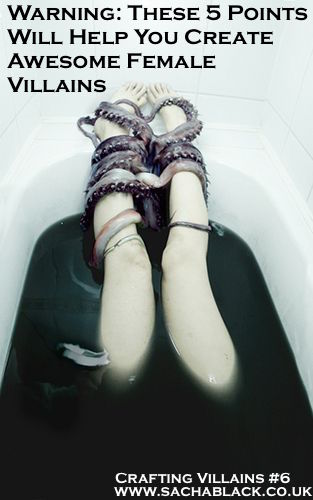
Warning: These 5 Points Will Help You Create Awesome Female Villains

What is it about women that just isn’t scary? Perhaps it is that women represent motherhood and mothers are loving and caring. Or maybe it is because we are (generally) smaller framed and not as physically strong as (most) men and therefore don’t epitomize the brutality of villainy.

View original post 913 more words

James Patterson Teaches Writing course.

Want to learn from one of the best?

James Patterson is teaching a course on everything he’s learned. With 19 consecutive #1 NYT Best Sellers he just might know a few things.

Cost? $99 for 22 Video Lessons

Checkout everything included at the link below. This is his first time ever sharing his secrets like this.

Masterclass: James Patterson Teaches Writing.


Do you need help with Twitter? Try #TweetJukebox. And come and share some Tweets!

Hi all:

Today I’m sharing a post that I published in my own blog last week. Sorry to those of you who might have read it already, but people seemed quite interested, so I thought I’d share it with you too.
I know we’ve all been told we should use social media to promote ourselves, our businesses, blogs, books, painting, whatever we do. And I know we all have our preferences, or sites that we understand better, or we find more useful, or that don’t give us a headache.

I must confess I quite liked Twitter to begin with, when I joined a few months before I published my first book. I would follow people I found interesting, read their Tweets, and be excited if somebody decided to follow me. I read about the subject, I tweeted quotations, ideas, suggestions, retweeted interesting things…

I’ve met many interesting people through Twitter, especially many authors, and we tend to share content and RT. Then I had problems with hackers, suspensions and got tired of it.

I’ve tried a variety of things to manage Twitter. I still use Hootsuite, as it allows me to see several streams at the same time, but although I tried the paid version that allows to upload big lists of Tweets, I didn’t find it flexible or varied enough, and it still required me to upload a new list every day, and that is not always possible.

I’ve tried automated follows, but that risks following porn sites, some of those fake sites that only promote sales of followers, and eggs (some eggs might be genuine people who don’t know or care about having a picture, but some, many, are fake accounts). Although when the followers start rolling in (when you have a certain number of followers it seems to work by inertia and people follow you no matter what) it’s difficult to keep up and I suspect I’ll have to go back to one of the automated systems soon.

Following people who follow you takes time (if you check who they are and share some of their content). And then there’s the social aspect of it. Interacting with people, etc., that’s the interesting bit, but some days we might not be able to dedicate it as long as we’d like. Yes, it all takes time.

Unfollow the unfollowers… I usually do a run with Tweepi every so often (you’re not limited in the numbers you can unfollow).

But then, what about advertising and sharing interesting content that will make other people follow and spread your message?

That’s where Tweet Jukebox might be of interest to you.

Tweet Jukebox
Tweet Jukebox

I discovered it through one of the author groups (actually, a Twitter group where we share our Tweets). Thanks Regina Puckett!

http://www.tweetjukebox.com/

This is Tim Fargo‘s baby. The idea is that you can have several boxes, that send Tweets you have pre-programmed before, and they send them out randomly. You can adjust the days of the week and the intervals for each one of these boxes. But once they are on (you can use CVS or txt only document to upload tweets, although I haven’t been very lucky with that, or you can insert individual Tweets, and pictures too), if you turn that box on, they keep going day in and day out. So you can try, there are a couple of boxes pre-set, one with quotations and one with pictures, that allow you to see how it works.

You can sign in just using Twitter,and if you have any problems, you can contact them and they kindly reply very quickly.

Ah, yes, it is FREE. It’s still in beta stage and the likelihood is that there will be a paid version, but he’s very insistent that it will not affect the free settings.

There are also a number of videos sharing the process and how it works. I share a few here, but if you decide to give it a go, you can watch them all:
What is Tweet Jukebox


Why use Tweet Jukebox?

Best Practices for Tweet Jukebox by Tim Fargo

And now, I have a few boxes going (oh, there is a limit to the number although I hadn’t realised, but when I queried that I was granted more boxes so…), including one where I’m sharing other people’s contents, books, blogposts, whatever I find interesting. So, I’m happy to add more Tweets to this box. Who knows? It might help! So, if you have any favourite Tweets you’d like me to add to my repertoire, please, do add them here in the comments or send them to me. And if other people want to share them too, why not? Let’s share!

Thanks to Regina for pointing it out, to Tim Fargo for the creation, and thanks to all of you for reading. And you know, like, share, watch, CLICK and leave your Tweets!


Olga Núñez Miret

@OlgaNM7

http://OlgaNM.wordpress.com

http://www.OlgaNM.com


Why Free Ebooks Don’t Sell.

Why does Free not sell?

That’s a question I have seen a few times around the author blogs. Having recently, okay, not too recently signed up for BookBub.com I have been getting a lot of Free Ebooks. But then again I’ve passed on a lot as well—a whole lot. I subscribe to a broad range of genres, from kids to adults, from romance to even horror.

Why do I pass on getting a Free book?

  • First thing is the cover just doesn’t work for me. Yep, the visual hits me first.
  • But, I can move past that if the title works. But then the Title doesn’t work.
  • Then the blurb doesn’t work.
  • Then there is the pen name of the author. The name chosen doesn’t work because it’s an obvious cheese attempt to grab attention. It grabs attention but for the wrong reasons.

I think we all want to believe we can do it all ourselves and for free. Perhaps you are a great book cover artist, creative book blurb writer, and you already have a great name for an author. But for the rest of us I think we need to come to terms that if we want to stand out from the crowd and catch an eye we need to be willing to either put in the effort to really learn how to do everything professionally, which does mean some money and a lot of time, thus meaning a longer time to get that book out there, or we pay professionals to do things for us.

Really, it all depends on what our idea of success is.

  • Do we want to be a million-seller?
  • Do we want to sell enough to do okay living?
  • Do we want to simply have people read and enjoy our work?
  • Do we want the sense of accomplishment that we wrote a book?

If you want to test out what you’ve done, you could put a selection of book covers on your site, without author names and titles, and see which ones work. Use books already out there and mix yours in. That doesn’t mean to actually use their book cover as your own if people like it better. Then do book titles. Then go for book blurbs. Test out what people like. Look at Amazon and see what those top selling people, that aren’t perhaps big names, doing. Big names can almost put out a blank cover with their name on it and people will buy it knowing what to expect inside. Test, test, test.

Much Respect

Ronovan

Enter your email address to subscribe to this blog and receive notifications of new posts by email.

© Copyright-All rights reserved by litworldinterviews.wordpress.com 2015

Amazon Book Reviewing Policy.

Not long ago I wrote an article called something like Amazon Book Reviewing is Dead. That isn’t actually true. The content was based on information garnered from other posts and from parts of the Amazon Reviewing policy. The posts were based on some fact and some personal experiences of the authors of those posts with the process. Each experience may be different.

As a result of that post there were several comments leading me to decide to remove the post and do more research. So read on and you will find links to the actual Amazon Review Policies, which are actually pretty reasonable. And please, don’t link back to this article if you are going to use it as a way of saying I am claiming Amazon Book Reviewing is Dead or trying to scare people away from it. This article sis about giving everyone the correct information from Amazon.

If you are an Author, check out Jo Robinson’s article Amazon’s Logical TOC and Author Review Rules.

Make sure to visit the policies for yourself, just so you know what is what. They even have links on the pages to how to write a helpful review.

What did I find?

Amazon allows reviews of free products as long as you clearly note in the review that you received the product free for a review. Or if you received it as a present, note as such. It doesn’t say that last one in their policies but FULL DISCLOSURE would imply you should simply disclose how you received the item. Below you will find links to various pages on Amazon about their policies.

Here is a link to the FAQ page of the Customer Review Guidelines.

It does not mention specifics about not being able to review free copies of books, but as noted in a comment on the aforementioned article, if you do receive a free Kindle copy through Amazon you do get the Verified Purchase distinction. That is not mentioned on the page but I do know this from personal experience.

But in order for your Reviews not to be removed you must have made a true purchase of some type on Amazon.

Here is what Amazon says about Verified Purchase.

If a review isn’t marked Amazon Verified Purchase, it doesn’t mean that the reviewer has no experience with the product – just that we couldn’t verify it had been purchased at Amazon.

When you write a new review for an item purchased through Amazon, your review will automatically be marked as an Amazon Verified Purchase.

Customer Review Creation Guidelines can be found on Amazon here.

Here is the Help for General Review Creations Guidelines.

Full disclosure: If you received a free product in exchange for your review, please clearly and conspicuously disclose that that you received the product free of charge. Reviews from the Amazon Vine™ program are already labeled, so additional disclosure is not necessary.

Help and Customer ServiceAbout Customer Reviews gives reiteration of policies of what is not allowed in a dedicated view. In other words, separate from the longer list of information.

Much Respect

Ronovan

Enter your email address to subscribe to this blog and receive notifications of new posts by email.

© Copyright-All rights reserved by litworldinterviews.wordpress.com 2015

Amazon Book Review is Dead Post Update.

Due to information from several commenters, I have decided until I have been able to dig deeper into this subject the post has been removed. I had gone on information from several other posts I had read and then read the policy myself and they all lined up, but with other authors providing additional information, I felt it irresponsible of me to leave the post up while there was the remotest doubt in my mind.

Many of the points brought up in comments were thoughts I had but was swayed by belief in the arguments of those who protested. Both, in truth, may be correct, depending on the situations.

The information I found supported the opinion but now I am finding myself, through the information provided by those of great trust sending me to dig deeper.

This is not the type of article one expects from me. A great failing in my career of providing information to the Author community.

Please do not confuse any other information from LWI with the content of that article. Until I have conducted enough research to put my mind at ease the article will remain in the trash of my blog.

I will provide an update once I have finished continued research.

My apologies for any confusion this has caused.


Much Respect

Ronovan

Fact in Fiction. by Guest Author @wendyproof

A well-researched novel is a joy to read. I love it when an author seamlessly weaves his or her research into a story. An excellent example of this is Susan Louineau’s The Chapel in the Woods. I enjoyed this book so much, I felt compelled to write a review: https://www.goodreads.com/review/show/576806766

However, too many facts can get in the way. The research overpowers the fiction. I had to stop reading one political thriller because the author wanted to tell me everything he knew about the workings of the British Parliament from its inception to the present day. I was so lost in the detail that I couldn’t locate the beginning of the actual story.

Equally, a lack of research can also get in the way of telling a good story. If the facts are wrong it undermines the fiction.

These facts include things like the spelling and punctuation of the names of well-known companies, products and people. When proofreading novels I regularly have to remove an extraneous apostrophe from a popular coffee chain, and equally regularly add one to a popular burger chain.

I need the internet to do my job efficiently. Without checking online I wouldn’t know how many ff’s and whether it’s ei or ie for Michelle Pfeiffer.

I often wonder what the internet bods who monitor everyone’s online life must think about me. Driven by the proclivities of the fiction I’ve been proofreading in the last few months, I have recently found myself looking up French fashion designers of the 1950s, automatic pistols and yoga positions. I fondly hope they think I’m a well-dressed, dead-eyed assassin, who can balance on one leg for an hour.

As well as confirming spellings of the names of Renaissance artists, towns in Madagascar and the odd rare cheese, I sometimes carry out more extensive fact-checking and research online. Not to the level and expertise of an editor, but when proofreading I double-check dates and historical references if they strike me as incorrect. It gives me great joy to spot an anachronism or two. Allow me a little fun:

Debbie put the phone down and dashed to her diary. Turning to 10 January 1983, she wrote: “First date with G!!!!” Finally, finally, the man of her dreams had asked her out. Admittedly watching Pulp Fiction at the local cinema wouldn’t have been her first choice, she would have preferred a romantic meal at the new Italian restaurant in the high street, but a date was a date. And it was with Gary!

Not the ideal first-date movie, I’ll grant you, but that’s not the biggest problem for our young couple. They should be more concerned that that particular film won’t be out for more than a decade.

Living so close to London, I love proofreading books set in the capital. They give me an excuse to double-check all sorts of snippets about its history and geography. The London Underground is my favourite obsession – the three maps on my dining room walls can attest to that.

This is why I was thrilled when a few years ago, author Larry Brill asked me and my husband (an even bigger London buff than I am) to help him with some research for his satire on modern media, set in 1760s London. He’d written the story, but wanted some advice on the authenticity of the dialogue and the accuracy of the depiction of London geography.

Part of the humour of this story is generated by the juxtaposition of modern phrases alongside authentic eighteenth-century London language. However, the reader needs to feel secure that the author is in control and is using modern idiom on purpose, rather than in error. As soon as a reader starts to wonder whether a particular word would really have been used at that time, the suspension of disbelief is broken.

We looked for words that might jolt the reader out of eighteenth-century London and undermine the whole wonderful conceit. We debated long and hard about the use of words such as “moniker” and “conniption” (nineteenth century) “doozy” and “ginormous” (twentieth century).

As well as spending a lot of his time in London pubs, the lead character also wanders the streets of London. So we spent many a happy hour poring over old maps to check that his walks along Fleet Street and The Strand would indeed take him to his intended destinations.

We also double-checked the dates for the construction of the now-familiar bridges across the Thames. We were surprised to learn that there weren’t many options for walking over the Thames in 1760s London: only London and Westminster Bridges existed at that time. We suggested to the author that he remove or amend references to Blackfriars, which didn’t open to the public until 1769, and Waterloo Bridge, which wasn’t ready until 1817.

I would hesitate to put myself forward as a professional researcher, but it was heaps of fun and I hope we played a tiny part in helping the author ensure that the reader fully enjoys the reading experience.

In case this has whetted your appetite for this gem of a book, here’s a link to The Patterer by Larry Brill: https://www.goodreads.com/book/show/18587008-the-patterer?from_search=true

To sum up…

An untrue “fact” or a historical “blooper”, while delighting the sort of person who loves to spot howlers, can spoil the flow for the majority of readers who want to be entertained as well as educated.

Too many facts, however brilliantly researched, can take a good story and turn it into a textbook, or worse – a dreary showing off of the author’s knowledge. A little learning goes a long way.

The internet and the reference library are the author’s/editor’s/proofreader’s friend. Authors/editors/proofreaders, do you have any websites or books you use when you research that you’d like to share?

wendy_janes_author.jpgWendy Janes is a successful freelance proofreader for a range of large and small publishers and has been for over a decade. She has a Bachelor of Education degree from Goldsmiths College (London University) and a Chapterhouse qualification in proofreading and copy editing. Her own work can be found in two anthologies; A Kind of Mad Courage and Romantic Heroes , the non-fiction memoir of her grandfather The One and Sixpenny Englishman, and her full length literary fiction novel What Jennifer Knows. For her services, go to her site http://wendyproof.co.uk/testimonials/ and make certain to connect with her on Twitter, . (She in no way proofread this bio.)


Enter your email address to subscribe to this blog and receive notifications of new posts by email.

© Copyright-All rights reserved by litworldinterviews.wordpress.com 2015

We are what we eat…

We are what we eat…

A Diary of Writing Wisdom (and other nonsense)

#THREE

We are what we eat…

038-001

The Latin proverb simulac hoc, ergo propter hoc, which may be translated, “everything is the product of its environment,” is the basis for this writing theory.

According to this idea authors are like rivers. Rivers do not create water; they receive it from springs and streams. In the same way authors receive their ideas from the streams of thought that are flowing in the corner of the world in which they live. A middle-class Eastern author will receive middle-class Eastern ideas. A working-class Western author will receive working-class Western ideas.

To say it another way, authors “are what they eat.” This idea applies to minds as well as to bodies. It assumes that, just as my body is the product of red curry or pulled-pork BBQ (depending on my background), so also my mind is the product of French ideas or American ideas, liberal ideas or conservative ideas (depending on my background).

Growing authors, however, will realize this about themselves and seek out ways to “alternate” what they eat (every once in a while).

As a step toward becoming more aware of the kind of writer you now are. As a step toward becoming the kind of writer you someday wish to be—take time to consider not only how what you eat may be contributing to your writing, but how what you only eat may also be limiting your writing.

Variety adds spice . . . to writing life.

The Proof is in the Reading. by Guest Author @wendyproof

The Proof is in the Reading

If I do my job properly, I am invisible.

Very few of us finish reading a novel and say, “That book was beautifully proofread.” And who would want to? A story should transport us, take us out of our everyday lives, excite or move us in some way. We don’t want the misspelling of a character’s name or a missing full stop to jolt us out of the story. OK, maybe that can be forgiven when we’re being swept along by an entertaining tale, but repeated typos and inconsistencies can undermine our trust in the author’s ability to spin a good yarn.

When I’m proofreading, I’m always thinking about the link between the author’s words and the reader’s mind. I like to believe that I play a tiny part in ensuring that the story travels cleanly from one to the other. I often find myself asking two questions: “What is this author trying to say?” and “Will the reader understand it?” Using these questions as my focus I spend hours choosing when to intervene and when to step away. It often feels like I’m walking a tightrope.

I’d like to demonstrate some elements of this high-wire act, and share with you the types of decisions I make when I’m proofreading fiction. This post inevitably touches on the differences between proofreading and editing, and I’ll say categorically, up-front, no doubt about it, I’m in the troupe that firmly pitches its circus tent in a fuzzy grey area. However, as a general rule, when proofreading I tend to only correct proofreading errors and make suggestions or ask questions about editing issues.

So, let’s get down to details with one example of a descriptive passage and a couple of examples of dialogue.

Dirk has escaped from his kidnappers and the author is describing how he’s now lost in the desert:

The son beat down like a demon, dragging his very soul from his aching limbs. Dirk couldn’t take any more of this dessert. It filled him with a stomach-churning dread. He could be stuck hear for ever in these dessert sands that stretched for ever. The harsh, cruel, unrelenting terrain played tricks on his tired mind and his weak body.

Having corrected “son” to “sun” and “dessert” to “desert” and “hear” to “here”, there really isn’t anything else I should go ahead and amend as a proofreader. I would probably add a note to suggest avoiding the repetition of “for ever”, but however much I might want to cut down on the number of adjectives describing the terrain or think that the word “battered” would work heaps better than “weak”, I have to rein myself in because it’s not my job to put my stamp on an author’s work.

Let’s move forward to the moment Dirk is being helicoptered out from the “harsh, cruel, unrelenting terrain” of the desert. The dialogue runs:

“How long have you been out there?” The medic enquired.

“Dunno,” said Dirk, “L-lost track of t-time,” he coughed.

“Take a sip of this,” the medic offered a bottle of water.

I’d make the following corrections:

Line 1: Change “The medic” to “the medic”.

Line 2: Alter the comma to a full stop after “Dirk”.

Line 3: Amend the comma to a full stop after “this” and “the medic” to “The medic”.

Basically I’m ensuring that speech tags and action tags are punctuated correctly. I have a dilemma deciding what to do with the second line. Strictly speaking “he coughed” is action rather than speech and so the comma after “time” should be a full stop and the “h” of “he” should be amended to upper case. However, the hyphens suggest to me that Dirk is coughing as he’s speaking (probably he’s suffering from all the sand that got down his throat after an undisclosed number of days in the desert), so I’d probably leave this, even though the grammar police are probably beating a path to my door as I type.

Dialogue can be an excellent way to efficiently drive a story forward, but often when a book has been through a few drafts I’ve found some authors have lost track, and included details in both the dialogue and the narrative, which results in unnecessary repetition. We now find Dirk being interviewed by the police after his kidnap ordeal. He’s been asked to provide a description of the kidnapper whose afternoon nap allowed him to escape:

“Tall guy, six-two or six-three maybe, well-built, massive shoulders, like a rugby player, black hair, longish, clean-shaven, broken nose.”

“What about accent? Anything unusual about his voice?” asked the policeman.

“English, probably London. Deep voice,” replied Dirk, remembering how the kidnapper tried to intimidate him with his height, his deep voice and rugby-playing physique, but that he whimpered like a baby in his sleep.

Here I would guess that the author initially put the detail in the speech, then in a later draft decided to do this via Dirk’s memory, but forgot to remove the detail from the description. It’s not a proofreading error, but I’d query whether the repetition was on purpose or not.

Which leads me on to another question I often ask: “Has the author done this on purpose or not?” The most exciting writing breaks the rules, and I need to be alert to the occasions when an author breaks the rules on purpose. A very simple example of this is when an author drops in short phrases rather than full sentences to inject pace and drama. It’s usually pretty clear that the author knows perfectly well how to write a conventional sentence, but has chosen a few choppy phrases to create an effect.

I don’t sit there wielding my red pen correcting novels as if I’m a teacher (although I was a teacher long, long ago), nor is it my job to criticise an author’s work or to show off. I’m fully aware that the author of Dirk’s adventure knows how to spell “sun”, “desert” and “here”. They are typos, not a reflection of the author’s intelligence or ability to write. I don’t approach my job in a judgemental way.

I do need to tune in and judge how formal or informal the author’s style is and in turn respect the author’s voice. So if an author regularly uses the comma splice or doesn’t punctuate “that” and “which” in the way that I was taught at school, as long as the meaning is clear I won’t change the text. And as long as the use of commas works for a sentence I won’t get bogged down in gradable, qualitative, classifying or coordinate adjectives. Essentially, if the author is getting the message across I try my hardest not to interfere.

A little aside, in case you are interested in the comma splice and the punctuation of “that” and “which”. Here’s a basic outline:

  • The comma splice, also known as the run-on sentence, occurs when you use a comma to join two unrelated main clauses. For example, “I enjoy proofreading novels, I spend all day playing with words.” Strictly speaking the comma should be replaced by a semicolon or colon, or the two clauses linked by a conjunction. I have to admit to a guilty fondness for the rhythm of comma splices.
  • “That” is used without a preceding comma to introduce text that is integral to the sentence, whereas “which” is preceded by a comma when the text is not integral to the sentence, which makes sense really.

If you’re interested in reading more about those gradable, qualitative, classifying and coordinate adjectives I suggest you set aside an hour, pour yourself a strong cup of tea or a stiff drink and read section 4.3.4 of The Oxford Style Manual (UK) and 6.33 of The Chicago Manual of Style (US).

There are rules, and many of them are there to help the author’s words convey his or her intended meaning, but equally many of those rules are made to be broken if the author knows what he or she is doing. A huge part of my job is to judge when to impose those rules and when to keep shtum.

Having raised my head above the parapet with this post, I’m now going to wrap myself in my invisibility cloak and return to working on other people’s words.

wendy_janes_author.jpgWendy Janes is a successful freelance proofreader for a range of large and small publishers and has been for over a decade. She has a Bachelor of Education degree from Goldsmiths College (London University) and a Chapterhouse qualification in proofreading and copy editing. Her own work can be found in two anthologies; A Kind of Mad Courage and Romantic Heroes , the non-fiction memoir of her grandfather The One and Sixpenny Englishman, and her full length literary fiction novel What Jennifer Knows. For her services, go to her site http://wendyproof.co.uk/testimonials/ and make certain to connect with her on Twitter, . (She in no way proofread this bio.)

I want to thank Ms. Janes for giving us an inside look into the world of a proofreader. I must say I like her method, and the length of times she takes. Give me a person that says they will turn around a book in a couple or three days, and I will give you someone I worry about.~Ronovan

Enter your email address to subscribe to this blog and receive notifications of new posts by email.

© Copyright-All rights reserved by litworldinterviews.wordpress.com 2015

Neil Gaiman with Michael Chabon speaking about Terry Prachett.

I watched this in the early hours of this morning as I have difficulty sleeping and the beginning has Neil Gaiman speaking about his friendship with Terry Prachett and there really is no other person you would want to speak about you. This was the day of or the day after Terry Pratchett’s passing. The interview and speaking engagement had been scheduled and Neil went through with it. He is interviewed by his friend Michael Chabon, whose home he was married in.

Enjoy.


Authors, be what authors need to be.

You’ll find hundreds of sites with advice about book promotion. We even have that advice here on Lit World Interviews. But what do you not find?

Ever heard of an actor named Haley Joel Osment? He saw dead people and was Murphy Brown’s and Forrest Gump’s. He was in a movie where Kevin Spacey played his teacher and had his Osment’s class come up with an idea to change the world. Osment took it seriously and went for it.

Ideas for publicity come from some strange places. I’ve tried here on LWI to get a ball rolling with no luck. It’s almost like having to write a query letter and getting the hook just right. Or making certain your first paragraph of the greatest novel ever written you spent ten years working on will pull in the reader and make them buy your book.

The hook, the bait, the paragraph wasn’t good enough, I suppose.

Big publishing companies have tons of authors. How much time do you think they put in for publicity for each author? Can you image how large a publicity department they would need? A great many of those authors end up doing their own publicity. They have as much clue as the average person when they start. And that book that took ten long years of love and sweat and divorce and celibacy to write ends up going nowhere.

Why? Because all those sites out there don’t tell you something. Don’t provide you something.

Do book blog tours. Have people review your book. Get online presence. Do this, do that. Great advice. Where do you start? How? How do you find these people?

Indie Authors, most Authors are broke, or closet to living check to check. We don’t even have the publicity person of a publishing house telling us we need to do something.

Authors Supporting Authors is what I call a Pay it Forward entity. The idea is hundreds of authors and author supporters end up involved. We become the publishing company publicity machine. How much does it take to click something, or post a prepared post by an author, or even at times read a free book given for a review?

But there is more to it than that. With authors actively being involved we can do things. We can build up lists of blogs with themes that are best for certain types of books. List what sites to go to for types of publicity ranging from free to OMOhNo-I-Ain’t-Paying-That. We can rate services. Put out warnings of scams.

A centralized hub for authors to go to and find what they need without the headache of having to search the internet for it all. Let’s put it all in one place.

I started the site last week. But I am not going to be the only one doing anything. You are as well. You will be providing the information more so than I will. You find something, comment about it. There will be threads to do things like that. You want to be an Author on the site? Email me at ronovanwrites@gmail.com. It doesn’t mean you will be given author access but you probably will if I know you or one of my friends does. Why the hesitancy? I have to trust because this is important.

I would like to have people who keep an eye on each type of promotional piece to make sure things are being found, comments are being taken care of and people requesting help with promotions are not overlooked.

That’s right. The most important part of ASA is you the author tells the community what you need and the idea is the community responds and helps with the idea of Paying it Forward. We all need help. Indie Authors and Authors in total are one of the largest companies out there. We need to start acting like it and doing something about it. There is room for all of us to have success.

By having one place to go to, we can organize and not conflict with each other if possible.

Will it take time to grow this? Only as much time as it takes each of you to get involved. Will it be perfect to begin with? No. But as soon as possible we will have something great in place we can ALL use. That includes me.

https://authorssupportingauthors.wordpress.com/

There’s the link. Click it. Follow. I’ll create a Suggestion Box Page where you can leave suggestions for promotion ideas, publicity, page ideas for the site.

There will be a Newsletter created.

Didn’t click the link yet?

Then click the image and get to work.


AuthorsSupportingAuthors

Let’s connect.

https://twitter.com/RonovanWrites

https://www.facebook.com/pages/Ronovan-Writes/630347477034132

https://plus.google.com/u/0/+RonovanWrites/about

ronovan-profile-bw


Enter your email address to subscribe to this blog and receive notifications of new posts by email.

© Copyright-All rights reserved by litworldinterviews.wordpress.com 2015


What Does a Proofreader Actually Do With Your Book? by Guest Author @wendyproof

You’re considering sending the manuscript of your novel to a proofreader.

Her website is error free – that’s a good start.

She has a number of testimonials – so that’s reassuring.

You agree rates and dates, and she confirms it will take her ten to fourteen working days to return your book. You picture that happy day when, hey presto, typos will have been eliminated, inconsistencies expunged. Although you have confidence in her skills, what you’d really like to ask is: “What do you actually do with my book during those fourteen days?” You don’t want to sound like you don’t trust her, but…

So, this is a post for anyone who has ever wanted to know what a proofreader actually does with a manuscript but was afraid to ask. Of course this is only how I work, but from chatting with colleagues we all do pretty much the same, with a few slightly different incantations and flicks of the wand.

Welcome to my dining room where the magic takes place.

Day 1: As soon as an author sends me the Word document, I open the attachment on my PC to ensure that it is the author’s novel and not the email intended for Great Aunt Pam. I download and save that copy, and confirm receipt with the author.

Onscreen I look for formatting issues. I turn on “backward P” for this. Better known as the paragraph mark icon in the home menu, it allows you to view the invisible parts of a document. I look for things such as:

  • chapters set at the start of a page using carriage returns
  • unusual fonts/mix of fonts
  • mix of straight and curly (smart) quotes
  • double spaces after punctuation and between words
  • extra space before new paragraphs
  • incorrect/inconsistent use of hyphens, en and em dashes.

Over a cup of tea (and maybe a few biscuits), I email the author to clarify what I’m going to do (if anything) with these issues. I also encourage the author to allow me to make these particular changes with Word’s track changes facility turned off, otherwise the manuscript will be littered with red-lining and it will be very difficult for the author to see the detailed proofreading corrections.

So the first amendments I usually make are to simply delete multiple carriage returns and insert page breaks at the start of chapters, and alter the document to a single font (unless the story requires multiple fonts). The other agreed changes will be carried out later. I save this version of the original document with the novel’s title followed by the words “print version”.

Printing can take ages, so I usually do a bit of knitting or a crossword to keep me occupied or catch up with the Twittersphere or Facebook-land while my trusty printer does its stuff.

Day 2 to Day 4: Now the real fun starts. I proofread the printed manuscript while seated at the dining-room table, marking up any obvious errors using proofreading symbols in red pen, circling in pencil any words that may be wrong or inconsistent, and noting in pencil any factual errors or queries. I also write a list of characters as I come across them. We don’t want Edwin starting off as Elmira’s brother-in-law and ending up as her uncle – unless there have been some family shenanigans, of course. I try not to stop and research or double-check anything during this proofread because I’m aiming to pick up obvious errors and to get a good feel for the book. This results in a manuscript that is littered with my pencil scribbles.

Day 5 to Day 10: I like to let a novel rest for a day or two, and then I proofread the same hard copy again. I usually pick up a few more errors (yes, I will have missed some on the first reading) and work through my extensive pencil scribbles. I check spelling and hyphenation of words, grammar and style issues against one or more of the following reference books: the Concise Oxford English Dictionary, The Oxford Manual of Style (UK) (which, I confess, I need to update to the New Oxford Style Manual) and The Chicago Manual of Style (US). While I rely on my eyes – and a good pair of prescription lenses – to find inconsistencies, I also carry out double-checks and various searches using Word’s “find and replace” facility as back-up as well.

I write up a document with additional notes for the author. This consists of spelling, grammar and style points, including items such as:

  • a list of words I’ve amended for consistency
  • setting of numbers (eg, all numbers up to ten in words, numerals 11 onwards)
  • setting of correspondence (eg, indented) and emails (eg, in quote marks).

During this proofread I spend a lot of time dithering, trying to decide whether to intervene or not (a subject for another blog post, I think). At this point I also do my research and fact-checking (ah, another blog post beckons). This involves a lot of traipsing back and forth between dining-room table and PC – my exercise for the day.

Day 10 to Day 12: My next step is to transfer all the amendments from the hard copy to the document on my PC with track changes (TC) turned on. Then, I’ll turn track changes off and input the other amendments I agreed earlier with the author, such as:

  • amending straight to curly (smart) quotes
  • replacing double spaces with single spaces after punctuation and between words
  • deleting that pesky extra space before new paragraphs
  • replacing spaced hyphens with spaced en dashes (UK) or unspaced em dashes (US).

I’ve repeated this list because I think these types of things scream amateur if left in even the most beautiful prose. Again, Word’s “find and replace” facility is useful for some of these operations.

I name this document with the book’s title followed by “TC showing”. I put any specific questions for the author in a series of comment boxes on the document, and other general comments are added to my additional notes.

I generate a copy of the TC showing document, accept the changes, and call this document by the book’s title followed by “TC accepted”.

Day 13 to Day 14: I then compare the TC showing and the TC accepted documents side by side. This ensures that I haven’t introduced any errors with my corrections. I will admit – just between you and me – that I sometimes find a couple of last-minute boo-boos at this point, which I correct with thumping heart and dread fear that I’m not perfect. Any changes I make to the TC showing document means that I must generate another TC accepted document, which I save over the existing TC accepted document.

I send both documents, along with the additional notes, to the author. I like to send a TC accepted document so the author can see the book without all the red-lining. Both documents will display the comment boxes, which the author can deal with and delete one by one.

I encourage my authors to get back in touch with me if anything is unclear or if they have questions about the proofread. I hope this post has answered some of your questions and if it’s raised some more please get in touch via this blog or via the email address on my website.

wendy_janes_author.jpgWendy Janes is a successful freelance proofreader for a range of large and small publishers and has been for over a decade. She has a Bachelor of Education degree from Goldsmiths College (London University) and a Chapterhouse qualification in proofreading and copy editing. Her own work can be found in two anthologies; A Kind of Mad Courage and Romantic Heroes , the non-fiction memoir of her grandfather The One and Sixpenny Englishman, and her full length literary fiction novel What Jennifer Knows. For her services, go to her site http://wendyproof.co.uk/testimonials/ and make certain to connect with her on Twitter, . (She in no way proofread this bio.)

I want to thank Ms. Janes for giving us an inside look into the world of a proofreader. I must say I like her method, and the length of times she takes. Give me a person that says they will turn around a book in a couple or three days, and I will give you someone I worry about.~Ronovan

Enter your email address to subscribe to this blog and receive notifications of new posts by email.

© Copyright-All rights reserved by litworldinterviews.wordpress.com 2015

A Diary of Writing Wisdom (and other nonsense) by new LWI Team Member @JERoyle

#1

Newer Doesn’t Always Mean Better

In all areas of life—and reading and writing is no exception—there is a psychological pressure to accept the current edition/the newest “thing-a-ma-jig” as the superior.

The argument of “newer-is-better” assumes that a modern idea should be preferred to an ancient one simply because it is modern. This way of thinking has a long history, going back at least to the Athenians of the Apostle Paul’s day who “liked to spend all their time telling and hearing the latest new thing” (Acts 17:21).

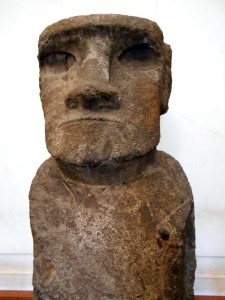
Jason Royle Photo at History Museum in DC.
Jason Royle Photo from History Museum in DC.

The pressure to keep up-to-date is stronger now than it has ever been. The results of this pressure can be seen all around us. Take the clothing industry for example. The stores today do not sell “clothes” (they do, I know, in a sense, but stick with me and let me make my point). No, they sell “fashions.” Back when they sold clothes, the fabric was durable and designed to last for years. But fashions change from year to year and from season to season.

One resource I find myself still using on a regular basis is John Bartlett’s book Bartlett’s Familiar Quotations, first published in 1855. All of the quotes in the book you can probably find online somewhere, but what you won’t find is the underlined, smudged, musty smelling pages of my old friend. There is something beautiful about something old. Timeworn with dignity (as the saying goes; actually I’m not certain that is really an old saying, but it sounds good).

All the old books on our shelves speak to us: “Look how useful I have been,” they say. When it comes to literature, they don’t call them “classics” for nothing! They’re classic because the information contained within them has stood the test of time.

I imagine every author will come face to face with the harsh reality that “newer doesn’t always mean better” at some point in their life. Especially after the years have gone by and one day we hand to one of our grandchildren the book we wrote way back in 2010, and hope they take the time to read it and not simply put it on the shelf to collect dust. And why would they do something like that to one of grandma and grandpa’s books they wrote? Well… it’s not new anymore.      


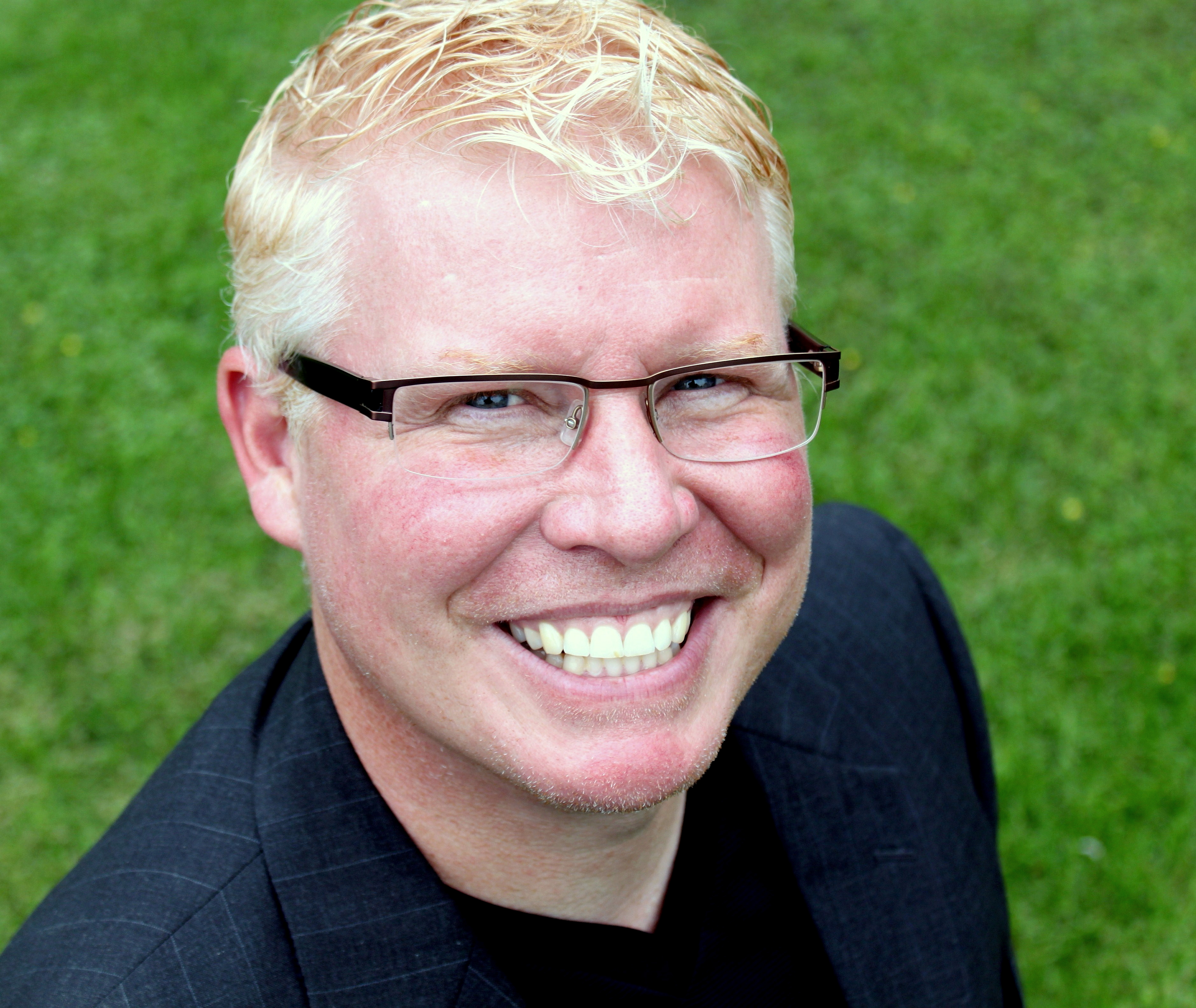
Judas Hero MisunderstoodJason serves as the pastor of St. Paul’s UCC in Schaefferstown, PA. He is a graduate of Sewanee: University of the South School of Theology with a Doctorate in Ministry and Johnson University with a Master’s in Theology. He and his wife, Heather, have two children (Katelyn and Nate) and one loyal but lazy dog (Rudy). You can find his book, Judas: Hero Misunderstood on Amazon. Connect with Jason on his site, http://www.jasonroyle.net/ and on Twitter at .

Enter your email address to subscribe to this blog and receive notifications of new posts by email.

© Copyright-All rights reserved by litworldinteriews.wordpress.com 2015


New Site: AuthorsSupportingAuthors.

AuthorsSupportingAuthors

It occurred to me that Indie Authors need to work together. We all need support in Book Launches and knowledge. Even finding critique groups, beta-readers. You name it we need it. For a dedicate site for that I created https://authorssupportingauthors.wordpress.com/.

The site will be for authors to go to and join and help each other. The idea is to even coordinate book launches so members of the site do not compete with each other on the same dates.

The first need for Book Launch support is there now. Go check it out.

The site is new and will be undergoing cosmetic changes, but we need a place to support each other. We’re writers. We are accustomed to change.

ronovan-profile-bw

https://www.facebook.com/pages/Ronovan-Writes/630347477034132

https://plus.google.com/u/0/+RonovanWrites/about

Enter your email address to subscribe to this blog and receive notifications of new posts by email.

© Copyright-All rights reserved by litworldinterviews.wordpress.com 2015


Paid book promotions and other ideas to sell your book. The feedback.

Hi all:

As you’ll remember a few weeks ago I shared a post I’d originally posted on my personal blog asking other authors and readers their opinions and suggestion about paid promos and what might or might not work. I also promised to collate the replies and bring them back.

So, here it is. Sorry to those of you who might have already read it in my blog. I leave you the link too as the replies might be of interest. And  I intend to keep updating if I get any further replies. Ah, and don’t miss the links to other people’s posts on the subject.

Thanks!

Here is the link:

https://olganm.wordpress.com/2015/03/31/paid-ads-and-promos-for-books-the-feedback-thanks/

And the post:
Hi all:

As you’ll remember, a few weeks ago I asked for your thoughts and feedback on paid ads and other kinds of promotions to try and sell your books. I promised to come back with a post trying to summarise the comments. As I shared the post in other places, I also got comments in Twitter, Facebook, etc. Thanks all for the comments, and although, of course, the numbers and the differences between people’s circumstances and books mean this is in no way scientific, I thought I’d collect common themes and mention some of the points that seemed to come through for me.

By the way, just in case you don’t remember or want to read the original post again, it is here.

Woman's shoe

Promoting your giveaways, special promos:

As I had read before, most people seem to think that Bookbub is a good option, although difficult to get in, expensive and not everybody seemed to make the money back (remember it’s for giveaways or promos, so it might be that sales follow as a result of it at a later date but…). Now it seems that big publishing companies are using it, so it might get more competitive. You need a good number of positive reviews, and the prices vary according to genre (more for more popular genres).

Here is a comment by a writer (thanks Carol Balawyder) about content in Bookbub:

I went on BookBub’s site and these are some of the writers I found: Jo Nesbo, John Irving, Sophie Kinsella, Dan Brown…I would be like a little league baseball player asking to go up to bat in the major leagues.


Quite a few people mentioned Ereader News Today that is more economical. For some it seemed to work better than for others.

Exploring new sites that are appearing all the time was also suggested. Of course the reach of those might be limited but a combination of many (if you have the time) might be worth considering. I’ve had good comments about The Fussy Librarian.

If you are offering free downloads, check as there are many places that suggest places that list those for free. I have tried a few but I don’t do free giveaways any more, and as I tried many, it’s impossible to know what worked and what not. In any case, some sites have very specific requirements and you need to submit plenty in advance for a chance, so planning is a must.

Word of mouth:

Big cheers for word of mouth. Personal contact, book clubs, etc… If you’re completely unknown and don’t have a lot of following, getting to that stage where you’re in the mouth of people can be quite difficult I guess, but yes, this is the best. And it costs nothing (or possibly some free books if you offer them for review). Of course, getting to the point where enough people have read and recommended is the crux of the matter.

Some people get postcards with information about their books printed; try local venues (libraries, book fairs, markets, local press, radio, independent bookshops if you’re that lucky). And of course, use your friends and connections…

Blog tours:

This got quite interesting replies. I had comments about specific blog tour companies (both good and bad, but as they aren’t my personal experience I won’t mention those), people talking about things not going according to plan (people not posting, things being missed), others who organise their own.

Alina, who has worked in PR for many years and writes herself (she also organises blog tours, but despite her personal involvement in the topic, I thought her reply deserved to be quoted, as it covers many aspects other people brought up) told me this:

Blog tours are not advertising. They are closer to PR actually. Do they help? They do get your name out there. They get a bulk of promo posts and reviews for your book soon after it’s published. They also bring it back into people’s mind later on when you are promoting a second book, for example. And yes, if your book is promoted by some really well known book bloggers, that has an impact. So much so that some authors do exclusive cover reveals for example, where they go with only one blog.

Tours can be a bit hit and miss though, and sometimes it has to do with more than who organizes it and what contacts they have. Some genres are more eye catching than others, for example. All in all, I’ve never heard of an author (and I don’t mean just those I’ve worked with) say they reaped no benefits from tours.

As a reader, I have actually read quite a few books because they got great reviews from book bloggers I knew. I know who has similar tastes and whenever they recommend a book, I tend to check it out.

On the other hand I have read some comments from authors who did not feel a blog tour had done anything for them.

Amazon ads:

I’ve been reading recently quite a few posts about this. So far the conclusions as to the new PPC (pay per click) ads aren’t that encouraging. You need to pay a lot per click to make sure enough people see them to buy (as we all know the conversion rate is quite low, although depending on how you choose your add it might not be quite as low) and then it does not seem to be recouped. Of course, with regards to the effect on branding… It’s probably too early to call and it requires much more experimentation, but like most things, the more people get into them and use them, the more difficult it will be to make an impact. (Check out Nicholas Rossis’s blog as he’s been sharing a few posts on the subject).

Chris McMullen has also shared quite a few posts on the mechanics and how to assess your campaign with Amazon. I share one of them here, but check the whole series if you’re seriously considering it. Ah, don’t forget that to use this your books have to be in KDP Select, so if you’re thinking of publishing elsewhere, this won’t be an option.

https://chrismcmullen.wordpress.com/2015/01/30/how-to-assess-your-ad-campaign-at-kindle-direct-publishing/

Of course, Amazon advertises many other things and there are other ways to go about getting an ad campaign there, but I think most of our budgets would not reach there…

Ads in other sites (Facebook, Goodreads,…)

I haven’t come across much positive feedback on ads in Facebook. Early on they seemed to be difficult to target. Now some people think it might work for the brand but it does not seem to translate on sales (it might be worthwhile if you’re organising something that requires a certain number of likes, etc…).

Some authors have done fairly well accruing reviews through Goodreads either advertising or giveaways, although number of previous books and a strong following/readership seems to be imperative.

Reviews

Everybody thinks reviews are important, but nobody seems to know exactly how. Some people have got good results from offering ARC (advance reading copies) of their books in groups in Goodreads or to bloggers, others say the bigger blogs with many readers are saturated and it might be months before they get round to your book, if at all. Approaching people directly seems to take time and not everybody thinks the results justify the time spent. (All resources are equally important though. It might be that we don’t have the money to pay for advertising, but of course, time we spend trying to advertise our books, with more or less success also has a value, and we need to weigh that up too. We know life is short but we don’t know how short it might be. Sorry for the philosophising.)

No, no, no paid advertisements

There were quite a few people who said there are far too many other options (social media, friends, other authors, developing relationships, words of mouth…) and publishing can already be quite an expensive business, so no, they haven’t tried and wouldn’t. And there are also those who have tried and consider it a waste of money.

And the readers?

Some said that they have bought books based on Amazon recommendations or ads, also on ads seen in periodicals or magazines.

People still look at covers but some are checking out blogs and discovering new books and authors through them.


Suggestions for further reading:

Sorry, I could not help the title of this section. I’ve mentioned some bloggers to visit if you want to check further, but also one of the bloggers who visited my original post suggested two interviews she’d published that dealt with some of these issues and I thought I’d share:

https://roughseasinthemed.wordpress.com/2014/09/11/confessions-from-an-american-in-london/

https://roughseasinthemed.wordpress.com/2015/01/17/views-and-reviews/

I’m sure there will be more feedback to come and I’ll keep you updated. In the meantime:

Thanks all for the comments, for reading, and you know, like, share, comment, and CLICK!

The Novel: Doing the Research by @DanMcNeil888

When I first got the notion to put a book idea that had germinated in my head for close to twenty years on paper, I had no idea what was in store for me. Literally…not a clue.

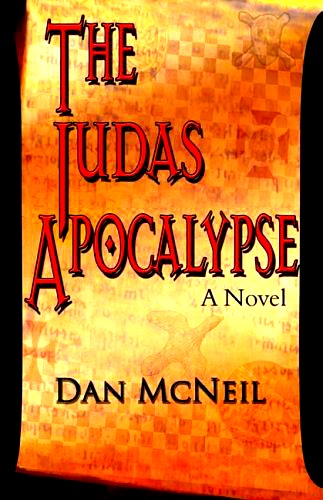
The-Judas-Apocalypse-cover-DMThe Judas Apocalypse was born out of an immense love for history and adventure. It gnawed at me for years. I always thought it was a really cool and original premise and it was my kind of book. I wanted to put in everything I loved about an adventure novel – an ancient secret, a long lost treasure, action and tons of twists. After vacillating for a few years, I finally decided I would give writing it a shot.

Penning a novel…how hard could it be, right? Although I had never done anything at all like it before, I did recall banging off a three page short story for a creative writing class I took when I was about 15. Got an A for it. So yeah, I figured I could do this. Piece of cake.

So I sat down at the computer and started to write the first chapter. It played out in my head like a movie. I could see the little girl, the crowd, the agonizing trek to the Hill of Skulls, the inevitable end that marked the beginning of the story. Not a problem – let’s do this!

I had the first chapter done in about an hour. Then I was faced with the next chapter and I realized to my horror, to continue this tale and hopefully turn it into a gripping and page turning historical voyage that would ultimately take place over a two thousand year span, I would have to do some research. Some real, serious historical and (yikes!) theological research.

Suddenly it was like I was back in high school. Any idea how I felt about high school? Does anyone ever really enjoy his or her experience there? I know some people do but I sure didn’t. And just like in high school, I knew the research was going to be a pretty massive undertaking. But I knew in order to make the story believable, I needed the historical accuracy. It was the only way to make the story really come alive.

Thank God things had changed somewhat since those days. No more scouring the library for four, five hundred page tomes that would have sunk me faster than Quintus Arrius’ trireme in Ben Hur (see – I had to research that.) I now had the power of the internet before me. Information was at the tips of my fingers.

A ton of information, that is…and a lot of garbage too. Man oh man, what to use? What to ignore? Wading through it all was going to take a while. Oh, and by “a while” I mean about four years. Honestly, if I knew beforehand it would take me four years to research this beast, I would have gone back to writing mildly pleasant pop songs again.

What I did to tame this beast was to work out the basic plot in my head, then on paper. Seems obvious, right? Originally, I thought I would just start writing and see where it would lead me. But it became very apparent early on it would be absolutely necessary to at least plot out the basics because I would need to limit my searches to what was germane to the story. It is soooo easy to get lost on the ‘net. One minute I’m looking up the interior of a German U Boat from 1944 (an important plot point in the middle of the book – I needed to describe it as precisely as possible) and the next minute I’m hitting a link taking me to an article about, of all things, the Montgolfier brothers and their hot air balloons. I’m not kidding – then that particular link lead me to a Monty Python sketch called “The Golden Age of Ballooning” and then before I realized it, I was on a Monty Python YouTube page that lost me a full day’s writing.

The internet is a valuable resource, no doubt, but there sure are a lot of historical inaccuracies on it as well. Because my novel was a work of fiction (with historical elements) however, the inaccuracies were not such a huge issue for me. In fact, many times, the inaccuracies would spark an idea that proved to be, for the most part, useful or at the very least, interesting. The trick was to recognize the areas where accuracy was mandatory. That was key. There were times when the publisher and I went back and forth over a particular historical point, if incorrect, could tumble the precarious house of historical cards I had set up. What it came down to in the end was, certain events, certain locations, and even some historically real characters (for example, Otto Rahn, the famous Holy Grail archeologist makes an appearance) needed to be as factually accurate as possible. That meant finding numerous sources that bore out the information. If I found at least three, I felt I was in the ballpark. The online world also provided links to encyclopedia topics and relevant magazine articles of immeasurable help. Again, as long as I could find at least three agreeable sources, I went for it.

But historical detail only goes so far. The Judas Apocalypse and my second book, Can’t Buy Me Love (a Cant-Buy-Me-Love-cover-DMlittle shameless self promotion and plug!) are historical fiction after all. The accuracy goes to fostering the believability of the plot, but you can’t get mired down in all the archival veracity. Too much detail and the adventure can fall flat; not enough and it’s not believable. It’s a carefully mixed cocktail of detail and drama I hope keeps readers turning the pages and drunk with excitement.

Although it took literally years to research The Judas Apocalypse (Can’t Buy Me Love, by the way, took much less time as it was a quite a different book and, by now, I had a better idea what I was doing ), I must say the experience did soften my view of the process. It’s a tough slog, but well worth it in the end.

Maybe, by the time I’m ready for book number three, I’ll get my nose to that historical grindstone. If, that is, I can stay away from the Monty Python videos…

Can't buy me love The Judas ApocalypseDan McNeil is a Canadian author with two novels so far to his fame; The Judas Apocalypse and Can’t Buy Me Love. Both available on Amazon by clicking here to go to his Amazon Author Page. To find out more of the man visit his website, http://www.danmcneil.ca/ and follow him on Twitter @DanMcNeil888. Also read his Author Interview here on LWI by clicking here.