Rather than revisiting a familiar story as history, The Last Adam by Ron Echols treats prophecy as something active and unfolding. The story centers on individuals who find themselves drawn into a conflict that begins quietly and grows steadily more urgent.
Mary Levitt’s unexpected pregnancy draws attention she cannot escape—violent encounters, prophetic visions, and forces she cannot name begin to surround her. What seems impossible soon reveals intentional design.
At the same time, Joseph Riesman becomes involved in powerful political and financial structures tied to long-buried movements. Beneath public ambition lies something far older and far more dangerous than any human agenda.
The intervention of the archangel Raphael confirms that Mary’s child stands at the center of a war involving angels, fallen angels, and human collaborators who fear what this life represents. As betrayal deepens and manipulation escalates, Mary and Joseph must navigate spiritual warfare operating through both supernatural and worldly means.
Q&A
What sets your book apart from others in your genre?
The Last Adam doesn’t treat faith as an abstract. It treats it as a lived, psychological struggle. Most supernatural thrillers either lean heavily into spectacle or into theology. This story lives in the tension between doubt and belief, power and responsibility, heaven and human consequence. The divine is present but never comfortable. Angels don’t arrive to reassure; they arrive to disrupt. The story asks what faith costs when it stops being symbolic and becomes real.
What’s your favorite compliment you’ve received as a writer?
A reader told me they forgot they were reading a faith-adjacent story and just tore through it as a thriller. They said, “I came for the supernatural angle and stayed because I couldn’t stop turning pages.” That’s exactly what I hoped for.
Why did you choose this setting/topic?
I wanted to place an ancient, world-altering story inside a modern America. We live in a time of deep skepticism, fractured authority, and spiritual exhaustion. That felt like the most honest place to ask what would actually happen if something undeniably divine showed up again, not in a church, but in a society that doesn’t believe in that anymore.
Which author(s) most inspired you?
Frank Peretti for showing me that faith-based stories could carry real tension and darkness. C.S. Lewis for his moral clarity and spiritual imagination. And Stephen King for his understanding of fear, character, and how the supernatural feels when it collides with ordinary lives.
Which 3 books would you bring to a desert island?
The Bible, because it’s not just one book, it’s an entire library, and I’d never stop finding something new in it. The Count of Monte Cristo, because if I’m stranded, I want a story I can live inside for a long time. And a desert survival manual, because faith and literature are important, but I’d still like to get off the island.
RON ECHOLS is an ordained minister of the Gospel, an award-winning business executive, and a four-time Telly Award–winning producer. With The Last Adam: Resurrection Day, he makes his debut as a novelist, bringing a cinematic sensibility and spiritual depth to contemporary Christian fiction. A storyteller at heart, Echols blends suspense, gritty realism, and biblical prophecy to create modern retellings that explore enduring themes of faith, power, sacrifice, and redemption. Drawing from his background in ministry, media, and leadership, his writing places ancient truths into present-day settings where spiritual warfare unfolds alongside deeply human struggles. He lives in Texas, where he balances business ownership, community service, family, and writing stories designed to engage the imagination while stirring the soul. Visit Ron at his websiteand on TikTok.
Four women, each with a secret. None will return from the North Country unchanged.
North Country takes place in the year 2372, a time when Earth is recovering from floods, fires, pandemics, and war. Amidst this post-apocalyptic world, the pirate nation of Bosch is thriving—but not without its complications. The focus is on four fierce women who must navigate their way through both external dangers and their own personal demons.
Master Commander Kat Wallace, haunted by a past filled with violence, takes on a dangerous mission to the North Country in search of peace.
Carisa Morton, struggling with her failing body and independence slipping away, embarks on one last adventure before it’s too late.
Sergeant Flossie Porter hides a hidden family fortune and a deep infatuation with her commanding officer, putting everything on the line for the chance to be by her side.
Master Sergeant Diamond Miata, driven by ambition and beauty, will stop at nothing to advance her own agenda—even if it means testing her loyalty in the process.
As they trek through the barren land, each woman faces betrayal, desire, and the harsh truths of their own hearts. North Country is an exploration of strength, vulnerability, and the bonds that form between women in even the toughest circumstances.
There are many books out there about adventure. What makes yours different?
The characters. Kat Wallace is an amazing character, she is a strong woman to be sure, but she is also a bit of a mess. She screws up, makes mistakes and fails. Then she picks herself up and tries again. Her inner voice resonates with readers who find her relatable. And she’s also a pirate, and who doesn’t love pirates?
What genre do you write and why?
This is a great question, because it should be an easy answer, but for me it is not. I really had no idea the genre until my editor for my debut novel said, “Sarah, it’s set in the future–it’s science fiction.” I tried to convince him that perhaps it was historical fiction that just hadn’t happened yet, but he was having none of my shenanigans. Then I found the Women’s Fiction Writers Association and read that women’s fiction is characterized by the emotional journey of the main character. “Aha, I must write women’s fiction then!” Which I do, sorta. Honestly, it was not until North Country was published that I found a descriptor that could encompass all the aspects of my stories. I write feminist speculative fiction.
How did you do research for your book?
It depends on the book! For my series, I took up boxing to understand the nuances of fights; I took shooting lessons, and I learned (via computer simulation) how to fly a plane. For my YA book, Unfurling the Sails, I learned how to sail. For North Country, I explored Norse mythology as well as the Inuit culture in Greenland. I connected with two dear people that deal with MS on a daily basis to get their perspective. And I kept a daylight calendar up to refer to so I’d know if my characters would be functioning in the dark.
Which was the hardest character to write? The easiest?
I think Diamond was the most difficult character to write, because I knew her the least. In fact, she got a heavy re-write that expanded and deepened her character after I had reached the “all done” stage. It made her far more complex and far more interesting. Kat certainly is the easiest to write because I know her so intimately after seven books.
If your book were made into a movie, what songs would be on the soundtrack?
“Girl from the North Country” by Bob Dylan
“It’s Not Over Yet” by King & Country
“Mean” and “Mine” by Taylor Swift
“Real Friends” by Camila Cabello
“All Your Lies” by Dean Lewis
“Cold Rain and Snow” Grateful Dead
There are three New Earth projects simmering currently: another Kat Wallace adventure, a second YA Grey Shima adventure, and a second middle grade adventure featuring the boys, Kik & Mac.
Do you have another profession besides writing?
For thirty years I worked as a nurse-midwife in all the venues. I also spent time as a middle and high school teacher, both in the US and overseas.
Who is the author you most admire in your genre?
So many: Butler, LeGuin, L’Engle, Heinlein, Asimov, Bradbury, Taylor, Weir, Jemisin, Mandel. My father loved science fiction, so he introduced me to so many of the foundational authors in science fiction, and I think they stayed with me. My mother was feminist before feminist was a thing. So it is no surprise I became a feminist speculative fiction author.
What song is currently playing on a loop in your head?
“Take Me to Church” by Hozier
What is the oldest item of clothing you own?
The Dead Fish skirt that was my mother’s when she was young. Lord knows I can’t fit into anymore, but I have it!
Tell us about your longest friendship.
While I have friends from high school I have reconnected with, I am pretty sure that distinction goes to my husband of almost forty-three years (known each other for 45). We met my freshman year of college and have been together ever since. He has been my best friend through all the highs and lows of life, and I can’t imagine a better partner.
Name a quirky thing you like to do.
I really, really like to hit the heavy bag. There’s something about it that is just the right combination of exercise and therapy.
Sarah Branson, an award-winning author, writes thrilling tales of action, adventure, and heart, often featuring strong female leads in sci-fi and dystopian settings. After nearly thirty years as a midwife, Sarah has channeled her experiences into stories about the strength of women in extraordinary circumstances. She believes that badass women will inherit the Earth—and that Earth will be better for it.
Step into a vast universe teeming with life, romance, heroism, and treachery as experienced and seen through the eyes of Gayle Zimmon. ‘Zim’, a young woman successful in war but naive to the machinations of the greater universe, returns from combat to confront genetically engineered humans and discover that she was sent to war not to win but to die.
While fighting the Aldrakin, Zim learns of a prophecy foretelling that the “Starflower,” her military call sign, will bloom “in the dark of the darkest night” but never know peace. Not one to accept ancient prophecy, after securing victory, she hopes to rekindle her romance with Mac and return to the peaceful life they left on the frontier.
But she is a major player in a galaxy-spanning intrigue she barely understands. Forces alien and cybernetic hold the stakes and align on both sides. Between dodging assassins, hostile planets, deadly robots, mystical aliens, and ancient relics, she must decide whether to continue running from her prophesied destiny-or try to live up to it.
Science Fiction has unlimited possibilities for imagination and metaphor. It taps imagination well beyond other genres. It also challenges the writer to create realistic, unknown worlds.
There are many sci fi books out there. What makes yours different?
To my mind, SF is about dreaming the impossible dream. If we do that, nothing is beyond us. Much SF today is simplistic, pessimistic, and dystopian, i.e., unworthy of creative minds seeking to fly.
Which authors inspired you to write?
The old SF masters from H.G. Well to Arthur C. Clarke to Larry Niven, Phillip K. Dick, and Frank Herbert
How did you do research for your book?
I feel I’ve been researching my book all my life: wide experiences, meeting characters, reading everything, making contacts to touch base with, e.g., scientists and engineers, SF&F writers, medical techs, officers and enlisted from all the military services.
Which was the hardest character to write? The easiest?
My main character Zim was the hardest. I know and love her very much, so testing and hurting her brought me to tears a few times.
The easiest was probably Abramyan, the character I love to hate.
How are you similar to or different from your lead character?
My lead character manifests many of my daughter’s confrontational traits, my wife too, which may be why I instantly loved her. We are all in sync.
If you could put yourself as a character in your book, who would you be?
Probably Roland ‘Mac’ Mackenzie—loyal, intelligent, fearless, humble, Zim’s love from childhood.
In your book you make a reference to The Prophecy. How did you come up with this idea?
The Prophecy is central to the plot, as it was in DUNE, but here it is a much more personal and threatening experience. I have a feeling we all live prophetic lives and, like Zim, may wish to escape them.
If your book were made into a movie, what songs would be on the soundtrack?
A lot of Irish instrumentals match the mood. I listen to them when I write. Think the movie Last of the Mohicans with Daniel Day-Lewis.
In one sentence, what was the road to publishing like?
Agents want something completely original just like what they last read and with a well-established market, i.e., no risks. Originality may be a hard sell.
Where do you write?
I have a writing loft and a wide-screen station beside a picture window overlooking the Rockfish Valley. Away from my station, I may take notes but do no serious writing.
In today’s tech savvy world, most writers use a computer or laptop. Have you ever written parts of your book on paper?
I understand that pen-and-paper writing draws differently on the mind than typing on a computer. That seems to be the case with me. If I’m having a problem with a scene or character, switching to my paper tablet takes care of the problem. Usually in seconds.
What is your next project?
I promised my readers a trilogy and am almost finished with the second book, Agent of Blue Star. Beyond that, I have two first-draft novels on hold: The Looalee and Facing Nabua.
What is the last great book you’ve read?
I read a lot of nonfiction to help understand human and inhuman societies as well as technology. In SF, Edward Lerner’s book InterstellarNet Enigma had a fascinating premise about human development. A very creative, SF thriller.
I am a husband, father, storyteller, and a Christian. I’m also a writer, an intelligence analyst, and a contrarian. My wife and I live with two large dogs in a mountain chalet in Virginia’s Blue Ridge Mountains.
I hold a BA and an MA in History from George Mason and George Washington University, respectively. In 40+ years with the CIA, I worked at every level from watch office and tactical operations to sensor development and informing national policy. Re-missioned from intelligence, I’m inclined to write science fiction.
I began storytelling at scout and church camp in my youth, recounting ghost stories or local lore around the campfire. These days, my restive characters want to tell their own stories. We often quarrel. When my wife sides with them, you know who wins.
The world as we know it is built upon choices. If different choices had been made in the past, we might be living in an entirely different world. What if the so-called Lost Colony of settlers in North Carolina were in fact not lost at all but instead merged happily with the Native American tribes to create a new people and unique society?
Sixteen-year-old Charli is living in a pandemic-ravaged 2020 America when she stumbles upon the parallel world of the Q’ehazi. Drawn to these peaceful people, whose constant joy and optimism provides a stark contrast to the suffering and violence in her own life, Charli wants nothing more than to stay with them forever-but first, she must learn to attain a state of grace.
Can she forgive her mother’s abusive boyfriend? Can she learn empathy for her mother? In The World Beyond the Redbud Tree, Charli’s inward and outward struggles will lead her to a discovery she wasn’t even looking for: the beauty of her own world.
The World Beyond the Redbud Tree
You have only a few seconds to tell someone what your book is about, in two sentences tell them what your book is about? In other words, what would you say to interest them about The World Beyond the Redbud Tree?
OK, my elevator pitch: The novel is a utopian fantasy about a parallel universe in which different and more positive choices have been made.
“The World Beyond the Redbud Tree” is a gripping, coming-of-age narrative set in a pandemic-ravaged America, in which Charli, the sixteen-year-old protagonist, stumbles upon a parallel world where people co-exist peacefully, providing a stark contrast to her own troubled existence. The Q’ehazi society, with its emphasis on joy and optimism, serves as an uplifting contrast to the struggles faced by Charli in her own reality. Charli’s journey is not only an external exploration of this parallel world but also an internal quest for forgiveness and empathy. The narrative skillfully weaves together Charli’s personal struggles with larger societal issues, making the story both intimate and universal. The themes of forgiveness, empathy, and the pursuit of grace are handled with nuance and depth.
There are sensitive, but widely occurring, subjects you approach in the story. What led you to doing a book about those subjects?
I am a therapist and I help clients all the time who are dealing with these issues. These sensitive topics are based on the truth of my experiences and those of my clients, and they help to point up the contrast between our world and the mythical Q’ehazi world.
Forgiveness is a big part of The World Beyond the Redbud Tree. That’s a difficult thing to do in many situations, especially for a teen. For Charli, facing the prospect of forgiving Sean is something that would seem impossible. Failure is so easy to achieve in such a situation. Why choose this aspect of one’s character as a key theme of the story?
It’s not something that’s very often written about. In our culture, “revenge” is much more often the norm, and yet we discover that violence just leads to more violence. I wanted to show that a different choice was possible. Charli is young but she has an emotional maturity way beyond her years, and she is open to learning a different way of being. She doesn’t necessarily attain it in this book, but her journey towards wisdom and grace takes place over the course of the three books that make up the trilogy.
Where is the setting or settings for The World Beyond the Redbud Tree and is there a specific reason for its selection?
The setting is where I live, which is Weaverville, NC. I chose that area because it inspired me. We have a redbud tree on our property and I love the way it changes colors four times during the season (pink, red, green, yellow). I discovered later that it is one of the seven “sacred woods” of the Cherokee people. (See also below)
Early American history and the Cherokee people influenced your book, what research did you do to help with your book?
Ironically, I didn’t do much research before writing the book, as it’s a fantasy, other than reading books about the Lost Colony and finding out about the real history from that era. However, I visited the Cherokee Oconoluftee village in Cherokee NC a few months after writing my book, and was amazed and delighted to discover that many of the themes and ideas I had written about as being part of the Q’ehazi culture were in fact mirrored in the Cherokee culture.
The name you chose for the parallel world of Q’ehazi, I’ve found a similar word and the definition fits the world you’ve created, but how did you come up with it?
I literally made it up. I didn’t want it to be a real word in another language. So I flung together a few letters and my friend suggested the apostrophe.
If you had to be one character in The World Beyond the Redbud Tree, who would you choose and why?
I actually wrote the character of Maudina (Sovereign Aurora’s sister) for me to play, should there ever be a movie made! I resonate with her youthful spirit and her creativity.
What will connect the reader to the story and make them want to keep reading?
A variety of things. I would hope they would be intrigued by the unique and imaginative parallel world; some people have called the book a “page turner” because they want to find out what happens to Charli, as she’s a very sympathetic and multi-faceted protagonist; many people have described the book as “thought-provoking” because it’s not just a story but also a message about our world and how to make it better.
What’s the biggest difference between living in California and now in North Carolina?
Interesting question. I’m originally from England and I loved all the trees in NC, it’s like being in England before all the trees were cut down, many hundreds of years ago now. I enjoy both states, and they are very different. It’s also important to mention that I moved from Los Angeles to the tiny little rural town of Weaverville, and that experience contributes to the difference also. The people here are gentler and the pace is a lot slower. There isn’t so much diversity here, either in people or activities. I feel more connected to nature here, because we live on an acre of land. However, in LA I lived near the beach and I enjoyed that too. So there’s good things about both places.
What’s your next project idea?
Book Two in the series, called “The World of the Q’ehazi” (working title). I have just finished the first draft, will be refining it and hope to publish it later this year.
Find The World Beyond the Redbud Tree at several outlets includingAmazon.
Madison C. Brightwell
Author Bio:
Madison C. Brightwell is an author and a licensed MFT with a doctorate in psychology. She has been working as a therapist for fifteen years, before which she worked as a professional actress and in film and TV development. She has written four other novels and three self-help books in the field of psychology. Since moving to Asheville, North Carolina, from her native Britain, Madison has become inspired by the history of this land, originally inhabited by the Cherokee. She draws on many of her experiences helping clients with trauma, addiction, and chronic pain.
They say “you are what you read.” Can your reading habits change the world?
Surrender by Lee Schneider
Novels are an ideal delivery system for ideas that shake things up. Upton Sinclair’s The Jungle, published in 1906, took the meatpacking industry to task for its treatment of workers. The novel, and the movement that grew around it, spurred on the public lobby for government regulation of meatpacking, including passage of the Meat Inspection Act and the Pure Food and Drug Act. George Orwell’s 1984, published in 1949, is quoted often today as we grapple with the power of centralized government and the ways we can deploy technology as an instrument of control. Margaret Atwood’s The Handmaid’s Tale, published in 1985, depicts a timely fight many people are in now about reproductive freedoms. Ursula K. Le Guin’s The Left Hand of Darkness, published in 1969, opened up readers to gender fluidity, a topic that has become politicized now.
If we consider political or world-shaking novels like Norman Mailer’s Armies of the Night, (1968) or Philip Roth’s Portnoy’s Complaint, (1969) Toni Morrison’s Beloved (1987), or non-fiction, like Rachel Carson’s Silent Spring, which warned in 1962 of the ecological disaster we face now, our list of books that have the potential to change the world will get long. I don’t have that much room on my night table!
But if we limit our reading list to speculative science fiction only, books like 1984, The Handmaid’s Tale, The Left Hand of Darkness and the like, we will read stories that have a way of telling us more about the present than about the future they depict. I’d call speculative science fiction writing an exaggeration of the present, a way to see the present through the lens of the future.
Pick up a copy of Isaac Asimov’s I, Robot stories, published in 1950, and you might find the prose a little stiff and some ideas dated, but you’ll not be able to ignore that these stories have become the instruction book for how we might respond to robots who are gaining on us in intelligence and even consciousness. Programmers who make chatbots today have to consider the ideas and predicaments and moral problems brought up by Asimov. 1984 is a must-read today to frame what is going on now with the surveillance capitalism imposed on us by Meta and Google. 1984 is a vital read to understand digital censorship of public libraries by public officials and other advocates. The facial recognition technology used by police departments sounds like something Orwell imagined. But it is here today.
It’s useful to look back to the science fiction novels of the past to understand the present, and novels published today will provide the interpretation we need of tomorrow. The Three-Body Problem, with its notion of an alien invasion in the works for 400 years, or The New Wilderness, with its story about how we might find our place in nature from now on, may be the books we turn to for an explanation soon, when we wonder what in the world happened to civilization or how our world has changed so much in so short a time.
Now, you may say to yourself, people may read all these books, but they really change things? Are any minds really changed? They can be, if we are thinking about culture change.
Heather White, author of One Green Thing, has an example for us. She writes that if each one of us does one small thing to address climate change, it will eventually result in a culture change around climate. It seems like a tall order for a thought to do all that, but if held by enough people, it can change the world. After all, if hashtags like #blacklivesmatter or #metoo can focus social action, why not a novel?
Lee Schneider
About the Author:
Lee Schneider is a novelist and non-fiction writer. His most recent book is Surrender, a speculative science fiction story set in 2050 with a climate change theme. It’s available on Amazon, Apple Books, bookshop.org, and Barnes & Noble. His website is https://futurex.studio.
Title: Blue Flame: Book Two of the Daemon Collecting Series
Author: Alison Levy
Print Length: 415
Publisher: SparkPress
Publication Date: October 11, 2022
Language: English
Formats: eBook and Paperback (At various outlets including Amazon and B&N.)
Genres: Science Fiction, Fantasy
Purchase links below. Audible also available
I received an Advanced Reader Copy of this book for an honest review.
Author Alison Levy creates a universe/world called Nota, that is parallel to our own in which everything here exists there but with a twist of Fantasy and Science Fiction being a reality. It is a bit more layered than that with other dimensions playing havoc with Nota. One very young character tries to protect his mother from an enemy only he can see. Another tries to reclaim his life, while another character desires to learn about a culture from another dimension. All this occurs while trying to solve Daemon glitches that threaten the Nota universe/dimension.
CHARACTER
The main characters are varied and unique to each other. No two share the same role or personality, which carries over into their speech. I like this trait in writing characters because the reader can tell who is speaking or thinking at times without being given the individual’s name. Particular favorites for some will likely be the ARCANAN (another dimension but human) Daemon CollectorRACHELWILDER, pronounced RAH-kel. Rachel is blunt with her words and doesn’t fully get newly realized gatekeeper NOTAN (Think our Earth, but a bit different.) LEDA MORELY’s fascination with Arcanan culture. Leda works in a museum and has language skills. Rachel is teaching Leda how to be a gatekeeper, who is responsible for notifying Arcana if a deadly defective CHAOS DAEMON breaches the gate from his prison dimension. Other favorites would be BACH, a seer of sorts who can see the future of people around him as long as he is not too entangled with them. Bach is trying to put his life back together after a rough time and begins taking care of a dog, which is almost like therapy for him. NAJI is a young boy trying to protect his mother from a DJINN that only he can see. Then there is AZRAQ, a Djinn who was enslaved thousands of years ago.
WORLD-BUILDING ALISON LEVY has created a world with many layers to explore and of which I look forward to learning more. At one point in the story, Rachel Wilde attempts to explain the reality of how the various dimensions work and the number there are. Very well done. As for the Nota dimension, you get good sensory descriptions, at times, and good emotional responses. There are supporting characters that contribute to expanding the world and explain why some of the main characters are the way they are.
THEMES Good v Evil
Redemption
Courage and Perseverance
Revenge
Worldview Sharing – The comparison of dimensional cultures and the inclusion of cultures and religions we know into the explanation of how certain characters and elements came to be in the story are well done. The sharing of the differences in what is important in the Arcanan dimension compared to the Notan makes for quite an insightful and thought-provoking read but all in a Fantasy and a vague Science Fiction way.
DISLIKES
I think there could’ve been more physical descriptions of some of the main characters early in the story, although in a way without those descriptions, the reader can put in place what they see and later on in the story might be surprised, or not, to the reality.
The Djinni gave quick chapters dedicated to their thoughts but at first, you don’t know which is which or even that there are two different characters… at least I didn’t pick on it early. The left side is one and the right side is another. Once knowing this, it is easier to make sense of it. The creation of small pocket dimensions, such as the one where Rachel’s temporary home while a Daemon Collector is in, could be explained better.
LIKES
The main characters are excellent, likeable, and relatable. Some of the supporting characters are good, but of course you aren’t supposed to like them all.
The overall concept of the story and world are well done.
The weaving of our worldviews, beliefs, and cultures into the story as a way for Notan’s to comprehend and cope with what’s happening to them was a good idea.
CONCLUSION Blue Flame is a good read that makes me want to read the first book and look forward to what happens in the next . It has more going on than you realize, with those goings-on being connected in ways you don’t see coming. You become invested in the futures of the characters.
RATING SYSTEM 3=Good and meets what I hope a book should be. A success. 4=Better than expected, didn’t put it down, enjoyable. Would easily recommend to others. THIS IS A GREAT RATING FROM ME. 5=Knocks me out. Would read it over and over again. RARE FROM ME.
A 3.8 of 5 STAR RATING based on…
Realistic Characters/Character Development based on genre: 4
World Building: 3.5
Believability based on genre and intent: 4
Flow/Readability/Clarity: 3.5
Overall Enjoyment: 4
About the author
Alison Levy lives in Greensboro, North Carolina with her husband, son, and a variety of pets. When she is not writing or doing mom things, she crochets, gardens, walks her collies, and works on home improvement projects.
Her books feature female characters who are strong but flawed, making them more relatable. They stay rooted in everyday life while world-building in their fictional cultures. Intolerance of differences has become widespread in recent years. Gatekeeper encourages readers to look beyond what they consider normal and see through foreign eyes, a message that I hope will appeal to many in today’s climate.
Our mission is to create a family-centered clientele where our authors will grow their audience and be satisfied with the outcome of their product.
We prefer CLEAN stories to publish that represent Christian values. This means stories that do not intentionally set out to create a hostile profile of any religion, ethnic group, or gender. We publish real-world stories which include real-world problems pulled from the headlines of today as well as fantasy, horror, and other genres. If you have a manuscript that fits these criteria, please submit.
What do we mean by CLEAN? CLEAN to us means no explicit or pervasive profanity or sexual situations or language present in the words of MS. The MS of course may infer there has been intimate activity off-screen if the story calls for it.
We understand real-world situations may dictate material that is borderline to staying within our preferences but meets the majority of our criteria. Please submit and we will give your story consideration. If we do accept your manuscript on the basis of your submission but then discover material in the body of the MS is much more beyond our understanding of the initial submission, we reserve the right to null and void any contracts and agreements.
WE PUBLISH:
Christian & Sweet Romance
Christian Non-Fiction
Contemporary Romance
Fantasy
Horror
Mysteries/Suspense/Thriller
Paranormal
Poetry
Psychological Thriller
Science Fiction
Young Adult
Publishing Submissions
Send the first five chapters of your manuscript to [stainedglasspublishing @ gmail .com] along with a short cover letter. In the letter, be sure to include a full synopsis, and let us know if it is a simultaneous submission and whether or not the manuscript is complete.
Give us 3 business days to get back to you. If you have not heard from us by then, please send us another e-mail. We respond to ALL submissions.
(Email address was broken up by litworledinterviews.com to hinder any phishing of email accounts.)
Stained Glass Publishing offers other services in addition to publishing, such as Editing, Formatting, and Pimping (Marketing) assistance.
Genre/s: Urban Superhero Fiction (With a lot of mystery.)
Price: Kindle ($5.99) Paperback ($12.99)
In Elle Boca’s latest stand-alone book An American Weeia in Paris , the fourth entry in her The Weeia Marshals series, I was treated to a tale of mystery, suspense, surprise, intrigue, friendship, science fiction and urban fantasy all rolled into one so smoothly that I didn’t realize all of that until I started writing this review. There are at least five subplots going and all are clear, and I still didn’t think about there being that many until now. An American Weeia in Paris is simply put, a great read I got caught up in and read in one day. I could not put it down.
The Story
Marshal Danielle ‘Danni’ Metreaux, now the acting Head of the Paris branch of the Weeia Marshals, is tasked with the job of watching over a Texas Weeia Elder and his family. The book starts at the Eiffel Tower where the group is having dinner in one of the famed Eiffel Tower restaurants when a terrorist attack occurs. That’s when the mysteries begin. While I watch some suspenseful and thrilling moments in the tower above, a Weeia takes action against the terrorist on the ground, with the scene captured on social media threatening to reveal the existence of Weeia to Humans, who are not aware they have a gifted race living among them. Who is this good Samaritan the media dubs MGV? But that’s not the only mystery. Stalkers? Mystery Weeia? And there is a life changing shock I never saw coming.
My Thoughts
I am enjoying seeing the continued development of the main protagonist in the series, Marshal Danni Metreaux. She is no longer the unsure, self-conscious girl, who grew up on her aunt and uncles farm. Now she is comfortable enough in her position as acting head of the Paris branch of Marshals, to face off against elitist members of the Marshals. She traverses the streets of Paris, both the good and bad more and more like a native, which is a wonder considering the maze that is Paris. Her personal skills with others improves to a surprising degree, but she’s still the same plain speaking Danni.
There is more of Danni’s oldest friends from her Marshals Academy in Portland, Maine, with tech gifted Ernie Satuan and best friend Marla than in the recent books. Both have surprises in store for her. And then there is Danni’s friend Ceri…the Poodle, a match that could only be made in Paris.
I learn about Paris through Danni’s adventures as Elle Boca gives life to Paris by giving us Danni’s thoughts as she negotiates through the streets of Paris, following the street names and historic landmarks she sees. Bits of history only the Parisians know is shared. For this former History teacher and Historical Fiction author, through the words of Elle and the eyes of Danni, I can see vividly what it must have been like centuries ago and learn how the early intentional forward progress of Parisian society was formed. This is not done in a scholarly or boring fashion.
The supporting cast and fringe figures are well developed and as the series moves from one book to the next, I know the feelings each one brings to Danni. Plus, I remember the characters, as opposed to looking back to previous books to find out who they are. Great job!
Elle Boca has created a world where Weeia and Humans can co-exist, with the help of Marshal Danni Metreaux and her friends. Weeia, who Humans don’t know exist, are people gifted with abilities and can cloak or mask themselves to the eyes of others, make people ‘like’ you or seem charming, or even teleport across an entire continent and ocean with a friend in tow. Some might say Weeia have superpowers, but don’t think costumes, superhero names, or robot armor. Think more like Charles Xavier, who appears as normal as anyone else but just happens to have an incredible ability he uses when among Humans only when necessary.
What I liked about this book:
I enjoyed the overall easy flow of the book, making reading enjoyable.
There is a good balance of surprises with new characters and moments with recurring cast members that keep the protagonist grounded and happy.
I really liked the parts with the Poodle, Ceri, though simple for the most part, they showed some emotional development in Danni.
I think the handling of the supporting cast is well done, especially how they fit into the everyday life of Danni.
There are things/words used in the Weeia world that I had no problem with understanding. The author does well with her choices when it comes to language. Anyone can read this book and the previous three in the series with relative ease.
What I liked a little less bout this book:
There are a few scenes and a minor subplot that I stumbled over a bit and took me out of the story, but I can see how the author would have thought it helped show consistency in how a certain element in the Weeia world view her.
Staying with the scenes above, the editing during those particular areas broke up the flow.
What book/author would I compare this book to:
I liken this book to a less dark urban fantasy than say a Jim Butcher Dresden Files offering. I love Jim Butcher, but his books can be a tad intense at times. With Elle Boca’s The Weeia Marshals series does have the occasional dark moment, and twisted character, they are used in just the right amounts, so as not to desensitize the reader to dark themes, then you are truly disturbed by the rare moments and thus concerned for those involved.
You could also say with the secretive nature of the Weeia in the series, that J. K. Rowling’s Harry Potter shares some similarities, but not in the YA manner or in that magic sort of way. This series can be read by most any age.
Recommend:
I recommend this book to those who love Urban Fantasy, Mystery, Adventure, and a bit of Travel. And of course those who love learning more about Paris than you might have known was out there. For those expecting a superhero book in the vein of the Avengers or Watchmen, that’s not happening.
This is a 4.25 Stars Review.
Character Development
5
World Building
4
Editing
4.25
Believability
4
Enjoyment
4.5
Clarity
4
Flow
4
4.25
Purchase An American Weeia in Paris at one of the options below, or check your favorite book choice:
When we first met Danni in Gypsies, Tramps and Weeia, she was in training at the Marshall Academy. Now she’s graduated and has been spending the last seven months in Paris on her first assignment. Her boss doesn’t like that she’s been assigned to work under him. She’s been living in a rodent-infested apartment until she’s given the opportunity to upgrade. And her first encounter with a new recruit, Sebastien, leaves much to be desired if you ask her.
While training Sebastien, they come across a case where an affluent couple’s necklace and painting were stolen. During their interview with the couple, Danni and Sebastien find that they have a detached attitude toward the theft. Once the items are mysteriously returned, the couple still seems to not care about the whys or whos their possessions were taken.
Aside from all that, Danni reconnects with a former interest and falls head first. He’s what most every girl wants to bring home to Mom and Dad: a bad boy.
I have to say I enjoy the first book in the Weeia Marshals series, Gypsies, Tramps and Weeia, the most. But that’s not to say I didn’t enjoy this one. I did. Weeia on My Mind kept me turning the pages even when I needed to put it aside. I loved the action, the mystery, and romance was a big part of the story as well.
Danni is a character to adore. She’s snarky, witty and fun. She knows her stuff and despite what others think of her, she’s out to prove any haters in her life that she knows her job and that she can do it well. Of course, she has a lot of trouble doing so, but luckily, after an awkward first meet with her new trainee, she found a fellow Weeia who actually doesn’t treat her like she’s weed to destroy.
Weeia on My Mind has just about everything you’d want in a story. Romance, action, intrigue, betrayal…you name it, and it’s there. It has a much darker tone than in the previous book but any fan of urban fantasy is bound to enjoy.
In my opinion, there is no need to read the books in order. But I say if you want to pick up a copy of Elle Boca’s novel, start with Gypsies, Tramps and Weeia, the first in the series. You’ll get to know Danni a little and by the time you read Weeia on My Mind, it’ll be like having a cup of coffee with a friend.
Elle is the author of the Weeia urban fantasy series about superhumans. The Unelmoija series is set in Miami. In the Garden of Weeia, a novella, is set in Portland, Maine, and her newest Marshals Series is set in Paris, France. Growing up the only child of a monkey mother and a rabbit father she learned to keep herself entertained and spend time reading.
Wow! This was an amazing read. It’s hard to write up a brief summary of what this book is about because there was so much going on. It opens with bodies falling, bullets flying and it doesn’t stop there. I’ve read a lot of science fiction novels and I have to say this is one of my favorites. So much blood was shed during the course of this book as the world of Frihet rebelled against Earth. Earth’s only chance for victory is the alien ship Spearhead, run by Joniskyredread, a Sklalen, who we refer to simply as Jon, and his human friend, Bryant Johnson.
There are a lot of characters throughout this book and they all seem to pop out from the pages. There are obvious evil ones, good ones and the ones we don’t know whether or not we can trust. No matter which side they’re on, the characters are to be remembered. In reference to Jon, though, I sometimes had a hard time keeping in mind that he was an alien. We’re reminded of his gray skin now and again; however, being referred to as Jon throughout most of the book just made him seem human.
The writing was tight and well done. I almost heard the war going on within the safety of my own home. My biggest issue was the POV. I noticed it especially toward the ending that we’re in one character’s POV and suddenly we know what the other is thinking or feeling. I don’t think it happened too often earlier on but it’s possible I overlooked it because I was too engrossed in the tale. It’s also possible it was meant to be that way in order to help the speedy pace. Either way, I prefer to focus on one person’s mind. Additionally, what really gnawed at me were the use of characters’ thoughts. I like it when authors italicize the thinking so it’s kept separate from the narration. This author didn’t do that. There were a lot of times when it’s a lone sentence in a paragraph, making it first person. After that one sentence, the narration would continue a new paragraph in its usual third person, until a short paragraph later, it’s back with a lone sentence in the first. It just struck me as awkward. But still, I rate this book as amazing. I feel any science fiction fan or any war lovers would enjoy this book. It’s a thrill ride you need to buckle up for.
Overall Rate: 5 out of 5 stars
Biography
Born in 1959 and getting older by the hour, Neil Davies writes Horror and Science Fiction. When not writing books, he likes to write and record music with his son, as The 1850 Project, and paint. His favourite authors are, in no particular order, Richard Laymon, Steve Gerlach, Arthur C Clarke, Frank Herbert, H Rider Haggard, Guy N Smith, H G Wells, Bram Stoker, Dennis Wheatley, Connie Willis, Edgar Rice Burroughs, Graham Masterton, Sax Rohmer… with more being added all the time. His favourite musicians include Nightwish, Nils Lofgren, Kansas, Led Zeppelin, Prince, Cat Stevens, Jimi Hendrix, My Chemical Romance, King Crimson, Yes, Spock’s Beard, Gentle Giant and lots more. In art he admires the cover work of Chris Foss and Bruce Pennington, and maintains a healthy dislike of modern and abstract art. He’s still writing and refuses to stop however much people ask him to. Expect more published works soon.
Genres: Dark Fantasy, Young Adult, Science Fiction
The Gate Guardian’s Daughter is the prequel to KT Munson’s upcoming dark fantasy series, which will be released in July 2017. With only 28 pages, it’s a very quick read. I happily read it in one sitting during a break at work. OK, so I was a little late getting off work. I enjoyed the story that much.
Elizabeth is only ten years old, aching to become a normal child. But she can’t be normal when her adoptive father, Matheal, is insisting she remain nearby. The reason being is that Elizabeth is special. Matheal knows that one day her true nature will be unleashed.
This is yet another story I’ve enjoyed reading by KT Munson. It’s to the point but does well in giving us the general background of Elizabeth and her family, while providing us with just enough surprise to make us want more. It was a very well-written intro to The Gate series, and I, for one, can’t wait until the first one is released.
K.T. Munson is a freelance author. First published at 5 years old in the young writers conference, she has pursued writing ever since. She maintains a blog creatingworldswithwords.wordpress.com that is about writing and her novels. She was born and raised in the last frontier, the great state of Alaska.
After his parents are murdered by the Ministry Breakers, Oren flees New Arcadia to the dangerous Miralaja desert, leaving behind his once comfortable life and his best friend, Clementine. With his mentor, Khalil, he begins to learn the truth of his path and unfolds the devious plans of the Ministry. Meanwhile, Clementine has to survive on her own by thievery. When she performs her latest job infiltrating the Ministry Defense building, she barely manages to escape. Soon, she catches up with Oren and Khalil and together, they embark on an epic journey of survival and unraveling ancient mysteries.
I enjoyed Recreance. For the most part, it was fast paced. The only time I felt it sluggish was when it would jump without warning to the past. Sometimes I had to reread it for me to say, “Oh, we’re not in the present anymore, I understand what’s happening now.” It was meant to bring more debt to the characters and their lives but I found myself skimming over some parts because I wanted more of the here and now.
The skipping between the past and the present was my main issue with the story. Other than that, I loved the plot line and the world building. The characters were easy to get to know, especially Khalil and Clementine. I loved Khalil so much. He had great humor and I felt he breathed life into the story. The chemistry between him and his apprentice, Oren, was great. Clementine was smart and very resilient. Again, she had amazing chemistry with Oren, which says a lot about his character. So, I guess in truth, there is no way to choose a favorite character.
Recreance is a great start to the series, a magnificent way to introducing the characters and the evil ways of the Ministry. It held my interest, especially as I neared the end of the novel because it was hard to put down. I wanted more and I wanted it right away. Very well done.
Overall Rate: 4 out of 5 stars
Biography
I was born in British Columbia, Canada, but spent most of my youth on the beaches of Maui. Throughout my life, I’ve been fortunate enough to explore my passions. I’ve had harrowing experiences as a helicopter pilot, drying cherries in the desert mountains of Washington state. I’ve toured with a band down the eastern seaboard in a $2,000 van, surviving on Arby’s fixins, and selling CDs for gas money. I’ve built websites and designed logos for businesses all over North America. Of everything I’ve tried, writing fantasy is by far the most exciting and fulfilling.
My whole life I have been fascinated by stories. Especially the kind of stories that transport you into incredible worlds where the impossible becomes real; where epic battles between good and evil rage across the centuries. This sense of escape and wonderment are what I hope to embody within my own work.
Rebirth is the first of a three-part science fiction series entitled The Praegressus Project. Eighteen-year-old Chris and his mother were both taken in the dead-of-night. Soon, Chris awakens in a cell. Confused and frightened, he has no knowledge of where his mother is–only that she’s accused of treason and children must pay for their parents’ crimes. Chris must join forces with others just like him in the fight for survival against a group of doctors who are experimenting with science in order to enhance the human race.
The premise of the story kept my interest from start to finish. It held at a steady pace with a couple of action scenes here and there. Most of the setting takes place solely in the cells, so there wasn’t a lot of world building; however, that didn’t drag the plot. Unlike most science fiction stories, Rebirth wasn’t about building a world, but about character development. It’s hard not to like the characters, particularly Liz, the young woman Chris first meets after he awakens in his own cell. Chris, on the other hand, took awhile for me to like. But I believe out of the small group, Chris was the one who grew the most–and maybe that’s what author Aaron Hodges had in mind, although I can’t vouch for sure.
I believe Rebirth would fit just about any type of readers. There’s just about everything one could want: science, fantasy, friendship, love, power, and survival. It’s clean of bad language and no sex scenes. There is a bit of violence, though, but it’s not heavy, so no gore. It only shows how evil these experimenters are. They treat their captors as if they’re lab rats.
There were some errors here and there, but I’m quickly learning not to count against it…especially since the errors were few. After all, we are all human, and shouldn’t be expected to be perfect! Even the greatest has misprints at times. I don’t know if Aaron Hodges edited his own work or not, but as a professional editor myself, I’ve learned that it’s not easy editing one’s own work.
Rebirth was well-written, tight and a story I couldn’t wait to finish just to find out what happens. Aaron Hodges is definitely on the fast track to becoming an excellent science fiction novelist. I can’t wait to read more from him. Highly recommended.
Overall Rating: 5 out of 5 stars
Biography
Aaron Hodges was born in 1989 in the small town of Whakatane, New Zealand. He studied for five years at the University of Auckland, completing a Bachelor’s of Science in Biology and Geography, and a Masters of Environmental Engineering. After working as an environmental consultant for two years, he grew tired of office work and decided to quit his job and see the world. Two years later, his travels have taken him through South East Asia, Canada, the USA, Mexico, Central America, and South America. Today, his adventures continue…
Although I’ve read novels based on aliens, and I wouldn’t turn down a chance to read books about aliens, it’s not technically my type of thing. I tend to be very picky with the alien genre. Spirit Raiders is about such: alien abductions, the threat to humanity, advanced technology, and first contact…pretty much everything a die-hard science fiction fan would enjoy.
The plot was complex, very slow moving, filled with a lot of technical things I had trouble grasping…mostly because I’m not very technical-inclined. While much of it was science fiction, the reality of some of the technological terms was very well-researched to make the fiction appear realistic. Sometimes, I had to re-read the information to grasp what it was saying…remember, I’m not much of a technical person, so at times, the information didn’t do enough explaining for me. Other times, however, I was overloaded with information and caught myself skimming a tad.
With a little bit more editing, the writing could have become tighter and stronger, earning a higher rating. I like to be shown what’s happening during the scenes, rather than being told. It helps me visualize better, even if I’m reading about things I just don’t understand.
If you’re one that loves aliens and you can understand a bunch of technical mumbo jumbo, then I recommend you taking the time to read this book. Don’t be put off by the slow-moving parts. It took me a few chapters to really get into the story. Once I did and continued reading, I was pleased to find that it ended with a well-built, action-packed climax
Savio is a resident of Mumbai, India, who grew up on everything sci-fi. Science Fiction has its own charm of unravelling mysteries, boldly going where no man has gone before [yeah I know it is from Star-trek :)] and to seek and find explanations for the unexplained. This is more or less what excites a true sci-fi enthusiast.
Savio is one of the enthusiasts too and he is presenting his own version here. Mystery surrounds us in many ways and it is mammoth in proportion to what we know. No one knows what lies beneath the ocean; no one knows what lies beyond our solar system; no one knows how vast the universe is; no one knows if any other extra-terrestrial form exists, but still the pursuit of knowing the unknown will continue unabated and will continue to excite us. This excitement is what Savio attempts to bring out in his books.
Savio is blessed with a supportive family and has a day job in India. Writing is his passion and he also writes for many blogging sites. When not writing and not working, which, of course, happens a lot of time, Savio likes to while-away and watch sci-fi movies.
The Symorians are an alien race whose home planet is inside the core of the sun. Four Symorians: Lenyx, Tryst, Kazi, and Milliken embark on a mission to save their people from extinction. It doesn’t take long before their vessel crash-lands on the planet Earth. Afterward, their troubles are just beginning. The Symorians get off on the wrong foot with the humans after accidentally killing one. Then they attempt to bridge an alliance between Symoria and Earth, but after another incident occurs, our alien friends have to fight for their survival.
I loved this story. It was the perfect blend of mystery, action, and sci-fi. The characters were believable, the plot line engrossing and every turn I took, there was a new twist, many of which put me on the edge of my seat. I couldn’t get enough and once I’ve finished reading, I wished I’d taken my time. People of the Sun would definitely be one of the few books I wouldn’t mind re-reading.
Let’s get off topic for one brief second. For Star Trek fans (like myself), you know how viewers say the undertone meanings of the episodes mirror real life? For example, in the episode, “Let That Be Your Last Battlefield,” there are two separate alien races, one has white on the left side and black on the right side, while the other race has the same colors vice versa. They’re killing each other even though they are exactly the same. They’re judgmental. Now, back to People of the Sun, Jason Parent does the same thing. He cleverly shines the light on mankind’s weaknesses. Humans tend to judge others by the color of their skins, by the mistakes we’ve made, by the class we were raised from, etc. Reading this story makes you think about what you do, what you say and how you react to certain circumstances.
People of the Sun isn’t just a science fiction novel. It’s not just a horror book. It’s also filled with plenty of action, adventure, and thought-provoking situations. It’s a very well-written novel, deserving of praise. In my opinion, I think just about anyone would enjoy this book. With the exception of Star Trek, I’m not a major fan of aliens. But I love the Symorians!
In his head, Jason Parent lives in many places, but in the real world, he calls New England his home. The region offers an abundance of settings for his writing and many wonderful places in which to write them. He currently resides in Southeastern Massachusetts with his cuddly corgi named Calypso.
In a prior life, Jason spent most of his time in front of a judge . . . as a civil litigator. When he finally tired of Latin phrases no one knew how to pronounce and explaining to people that real lawsuits are not started, tried and finalized within the 60-minute timeframe they see on TV (it’s harassing the witness; no one throws vicious woodland creatures at them), he traded in his cheap suits for flip flops and designer stubble. The flops got repossessed the next day, and he’s back in the legal field . . . sorta. But that’s another story.
When he’s not working, Jason likes to kayak, catch a movie, travel any place that will let him enter, and play just about any sport (except that ball tied to the pole thing where you basically just whack the ball until it twists in a knot or takes somebody’s head off – he misses the appeal). And read and write, of course. He does that too sometimes.
It’s very rare that I would be tempted to give any book more than a five-star rating. If I did do that, then Cory Barclay’s Devil in the Countryside would be one of the few. It’s 1588, and a killer is terrorizing the German countryside. It’s rumored to be the legendary Werewolf of Bedburg. Investigator Heinrich Franz is assigned to find the killer, seeking help wherever he can get it. A priest attempts to keep the peace amongst the townspeople, while he attempts to fight against the temptation of a young woman that could destroy his most basic beliefs. They find themselves wrapped in mysteries, steering through the political and religious landscape of the 16th century.
Devil in the Countryside was an extremely tightly written novel, keeping me on my toes the entire time I was reading. I did not want to put it down. The characters were three-dimensional and realistic…very memorable. In my minds-eye, the book played like a movie. I felt as though I was watching the scenes unfold so much, that at times, I had to remind myself that I was in the 21st century. I felt it was that good.
You’ll not only want to find out who—or what—is piling corpse after corpse, you’ll want to find out what secret these characters are withholding from everyone else. You’ll want to find out if they can force temptation out of their minds. You’ll want to find out everything you can about this book.
The story is action-packed from the second it begins until the ending, leaving the reader on the edge of their seat. There were times when the dialogue didn’t seem up to par with the time; however, that didn’t even matter. The scenes were painted beautifully. For readers that enjoy historical fiction, werewolf hunts, and murder, I recommend giving Devil in the Countryside a try. It’s a must-read!
As far back as he can remember, Cory Barclay has always loved the “big picture” questions. How much knowledge did humanity lose when the Library of Alexandria was burned down? Why has the concept of Heaven remained intact, in one form or another, throughout most of human history and how has it impacted life on Earth?
And even before that, when he first began writing stories in grade school, he’s been fascinated with histories and mysteries. Whether Norse mythology, the Dark Ages, or the conquests of great leaders, Cory’s been that kid who wants to know what’s shaped our world and write about it. Especially the great unsolved mysteries.
So Devil in the Countryside was a natural for him.
Born and raised in San Diego, he graduated from University of California, Santa Cruz, where he studied Creative Writing and Modern Literary Studies. He’s also a songwriter and guitarist, and – no surprise – many of his songs explore the same topics he writes about – the great mysteries of our crazy world.
Devil in the Countryside is his second novel and he’s hard at work on its sequel.
The Buried Few is the debut novel by M.J. Lau, and I found it quite enjoyable. The pace was steady, storyline intriguing and the overall prose well-written. It’s set in a near-future society where the idea of privacy is extinct. Technology is now more advanced. The government knows where you are, what route you take to get home, and they oversee every child born for the rest of their lives. When Daniel Allingham finds a live baby buried, he takes the infant to the hospital (although it’s not a maternity hospital) with hopes of doing a good thing and washing his hands clean. Nonetheless, he soon finds himself struggling against the right thing and becoming entwined with a persistent government agent.
It took about three chapters for me to really get into the book. It starts off with the prologue some times in the distant past, then in chapter one, jumps to the present time. As we’re being introduced to the main characters, it hops from the present to the near past. The only way we know whether we’re in the present or the past is by the situation or the characters in the scenes. This made it a tad confusing to me; however, once I got a handle on the author’s writing style (and it didn’t take long at all), it was easy reading.
The only thing that would take me away from reading was the amount of adverbs in the story. There just seemed to be so many, it annoyed me. It doesn’t bother a lot of readers; however, it had become somewhat of a pet peeve of mine. About half of the adverbs in the prose could have been used in a way to show, rather than tell, all the more.
The characters were enjoyable and easy to love, particularly the main one, Daniel. I found that they all had “chemistry” through their interactions and dialogue. There were plenty going on to build up the drama and keep the story moving forward. I couldn’t wait to find out what would happen next. While The Buried Few is a standalone story, it’s left open for a sequel. I’ve seen reviews on Amazon mention they could see it made into a movie: I have to say, I agree. As a bonus, I have to add, I love the cover.
Overall Rating: 4 out of 5 stars
Biography
M. J. Lau is an English teacher by day, writer by night… or rather, a teacher day and night, and a writer any spare moment in between. He is the author of The Buried Few, a near-future fiction novel that is equally influenced by dystopian classics, fatherhood, and Wired Magazine.
He is currently working on a fantasy novel, tentatively anticipated to release in the spring of 2018.
Title: As Wings Unfurl Author: Arthur M. Doweyko ISBN13: 978-1940215778 ASIN: B01HY589FG Published: 19th July 2016 Pages: 234 Genre: Science-Fiction & Fantasy (I’ve found it classed under Alien Invasion and Military, Space Marine)
Description:
“… captures the reader’s attention with kick-butt action in a video game storytelling format.” ~ Publishers Weekly
“Apple Bogdanski, a disabled Vietnam veteran, worked in a secondhand books store. When a private detective takes incriminating photos of shape-shifting aliens in the act of transformation and sends the negatives to the owner of the bookstore hidden in a book among a shipment of books, Apple is caught between two groups of aliens-one of which studies mankind’s development and the other who wants to terminate mankind and claim the Earth for their own purposes. Apple has a helper, Angela, who appears just in time to save his life and make him appear to be a hero. Angela has a beef with the bad guys and she and Apple unite with a few good guys to take on the bad guys.
As Wings Unfurl is an entertaining science fiction novel based on the premise that an alien race planted the seed of the human race of Earth millennia ago and now watches quietly as we evolve. Apple is a fairly well developed protagonist who just wants to be left alone to deal with the hand life has dealt him on his terms. Angela is a member of the alien oversight group dedicated to observation. Strangely attracted to Apple, she must deal with a conflict between her duties, her sense of right and wrong, and her feelings. Dane, as the bad alien, has a single side; the discrediting and destruction of the human race for her own purposes. Yowl and Shilog are Tibetans who are caught up in the war between factions and who provide a notable twist to the ending. Both are far out of the world that they know, but both adapt amazingly fast to the developed world.
This book is entertaining reading for readers who love science fiction “what if” scenarios and readers who love action adventures in any form.” ~ Midwest Book Review
Applegate Bogdanski returns from Vietnam with a missing leg, a Purple Heart, and an addiction to morphine. He stumbles through each day, looking forward to nothing and hoping it will arrive soon. When he attempts to thwart a crime, he is knocked unconscious and wakes up to discover that people are once again calling him a hero, though he feels undeserving of the praise.
Apple returns to work and meets Angela, a mysterious woman who claims to be his guardian. Immediately, he feels a connection to her, which morphs into an attraction. But he soon discovers that Angela is much more than she seems.
Apple and Angela are swept up in a conspiracy that stretches through time and space. Together, they must fight to save everything they hold dear from an alien race bent on destroying humanity.
Body of review:
I thank the author who contacted me thanks to Lit World Interviews for offering me an ARC copy of his novel that I freely chose to review.
I am not a big reader of science-fiction (perhaps because I don’t seem to have much patience these days for lengthy descriptions and world building and I’m more interested in books that focus on complex characters) so I was doubtful when the author suggested I review it, but the angel plot and the peculiarities of the story won me over. There are many things I enjoyed in this book but I’m not sure that it was the book for me.
As I’ve included the description and it is quite detailed (I was worried about how I could write about the book without revealing any spoilers but, many of the things I was worried about are already included in the description) I won’t go into the ins and outs of the story. The novel starts as a thriller, set in 1975. A private detective has taken a compromising photo and that puts him in harm’s way. Apple, the main character, seems to be in the wrong place at the wrong time, although later events make us question this and wonder if perhaps what happens was preordained. One of the interesting points in the novel, for me, was that the main character was a Vietnam War veteran, amputee (he lost a leg) and now addicted to Morphine. He also experiences symptoms of PTSD. Although his vivid dreams and flashbacks slowly offer us some background information, and the whole adventure gives him a new perspective on life and a love interest, I found it difficult to fully connect with the character. It was perhaps due to the fast action and the changes in setting and point of view that make it difficult to fully settle one’s attention on the main protagonists. One of the premises of the story is that Angela, the mysterious character who is his ersatz guardian angel, has known him all his life. She is oddly familiar to him, and she decides to give up her privileges and her life mission because of him, but as Angela’s interest in him precedes the story, there is no true development of a relationship and readers don’t necessarily understand why they are attracted to each other from the start.
The story, written in the third person, is told mostly from Apple’s point of view but there are also two other characters, from Tibet, Shilog, a farmer, and Yowl, what most of us would think of as a Yeti, but that we later learn is a member of a native Earth species. In my opinion, these two characters are more fully realised, as we don’t have any previous knowledge or any expectations of who they are, and they work well as a new pair of eyes (two pairs of eyes) for the readers, as they start their adventure truly clueless as to what is going on, and the situation is as baffling to them as it is to us. They are also warm and genuinely amusing and they offer much welcome comic relief. They are less bogged down by conventions and less worried about their own selves.
I enjoyed also the background story and the underlying reasoning behind the presence of the “angels” (aliens) in the world. It does allow for interesting debates as to what makes us human and what our role on Earth is. How this all fits in with traditional religions and beliefs is well thought out and it works as a plot element. It definitely had me thinking.
I said before that one of the problems I had with some fantasy and science-fiction is my lack of patience with world building and detailed descriptions. In this case, though, other than some descriptions about the Tibetan forest and mountains, I missed having a greater sense of location. The characters moved a lot from one place to the next and, even if you were paying attention, sometimes it was difficult to follow where exactly the action was taking place (especially because some of the episodes depended heavily on secret passages, doors, locked rooms…) and I had to go back a few times to check, in case I had missed some change of location inadvertently. (This might not be a problem for people who are used to reading more frantically paced action stories.) I guess there are two possible reading modes I’d recommend for this story; either pay very close attention or go with the flow and enjoy the ride.
I really enjoyed the baddie. Dane is awesome. I don’t mind the bad characters that are victims of their circumstances or really conflicted about what they do, but every so often I like a convinced baddie, who takes no prisoners and goes all the way. She is not without justification either, and later we learn something that puts a different spin on her behaviour (I didn’t find it necessary but it does fit in with the overall story arc). The irony of her character and how she uses human institutions and religions to subvert the given order is one of my favourite plot points and she is another source of humour, although darker in this case.
All in all, this is a book for readers who enjoy science-fiction that asks big questions, with religious undertones, lots of action and not too worried about the psychological makeup of the main characters. Ah, and if you love stories about Bigfoot or the Yeti, you’ll love this one.
What the book is about: On the surface, aliens, angels, and a battle of good and evil. At heart it deals with metaphysical issues (like the best science-fiction does) and questions of identity, and where humanity comes from.
Book Highlights: The whole premise of the story, and the two Tibetan characters, Shilog and Yowl, that are a true joy. And Dane, the baddie.
Challenges of the book: There are many quick changes of location and different points of view that might disorient readers. The story is set in the 1970s but there are a couple of anachronisms. There are some beautiful passages about Tibet and Shilog observes everything he sees with new eyes, but there is a paucity of description otherwise, even when discussing major plot points (the devices used to travel or the locations of their scape).
What do you get from it: A challenge to preconceived notions and an interesting story with plenty of action. I also really liked the baddie, Dane. There’s more to her than meets the eye.
What I would have changed if anything: Perhaps I would have tried to build up more the main characters, as for me, Apple comes across as quite disjointed and as if readers should know the type (perhaps so, but who is he?). We slowly learn a few things about him but the frantic pace of the action does not give readers much chance to delve on that. It is easier to empathise with Yowl and Shilog, perhaps because we feel as lost as they are. A stronger sense of place and time might also help.
Who Would I recommend this book to?: People who enjoy plot over character, and who like science-fiction that makes you think. Also lovers of action and Yetis.
Ratings: Realistic Characterization: 3/5 Made Me Think: 4/5 Overall enjoyment: 3.5/5 Readability: 4/5 Recommended: 4/5 Overall Rating: 3.5/5
Buy it at: Format & Pricing: Paperback: $12.99 Kindle: $6.09
Thanks so much for reading and don’t forget to like, share, comment and CLICK!
Title: Pale Highway Author: Nicholas Conley ISBN13: 978-1940215532 ASIN: B016ALW8PW Published: 20th October 2015 Pages: 319 Genre: Science-Fiction and Fantasy, Alzheimer’s Disease, Metaphysical & Visionary
Description:
Best Science Fiction & Fantasy Novel – Predators & Editors Readers Poll 2015
“Steeped in suspense, Conley’s novel delves into the darker recesses of the medical establishment. Gabriel is a sympathetic character, and the reader is pulled into his private struggles.” – Publishers Weekly
“Pale Highway brings his struggles for survival along with his fierce desire to hold off his symptoms long enough to save everyone around him to brilliant, beautiful life.” – Examiner.com
Gabriel Schist is spending his remaining years at Bright New Day, a nursing home. He once won the Nobel Prize for inventing a vaccine for AIDS. But now, he has Alzheimer’s, and his mind is slowly slipping away.
When one of the residents comes down with a horrific virus, Gabriel realizes that he is the only one who can find a cure. Encouraged by Victor, an odd stranger, he convinces the administrator to allow him to study the virus. Soon, reality begins to shift, and Gabriel’s hallucinations interfere with his work.
As the death count mounts, Gabriel is in a race against the clock and his own mind. Can he find a cure before his brain deteriorates past the point of no return?
Body of review:
Thanks to the author who offered me an ARC copy of his novel that I freely chose to review.
When the author approached me about this novel, I didn’t know what to say. I don’t read a lot of science-fiction (although I’ve really enjoyed some of the sci-fi I’ve read. I think my main problem, and the same goes for fantasy, is that I don’t have much patience for world-building and descriptions) but he explained that although it was classed as science-fiction, and indeed it purports a world that is very similar to ours but with some differences (mostly, the protagonist of the novel, Gabriel Schist, years back discovered the HIV-vaccine but , rather than simply creating a vaccine against that illness, his vaccine reprograms the immune system of the person that receives it and protects them against many other illnesses), it was a bit different to most science-fiction. He told me, as mentioned in his biography, that he had worked in nursing homes and the novel was also about Alzheimer’s disease. I read the description of the novel and was intrigued. And yes, I agree with him, his novel is not a standard science-fiction novel, although it’s true that some of the best sci-fi looks at what makes us human and explores metaphysical issues.
The protagonist of the novel, Gabriel, a famous scientist who won the Nobel Prize for his discovery, is in his early seventies and suffers from Alzheimer’s, fairly early stages, but noticeable enough. He is trying to hold on to his identity, testing his memory and using tricks to orientate himself and hold onto reality, but it is not without difficulties. The book wonderfully describes the residents of the nursing home, some of their peculiar behaviours, but also the persons behind the behaviours. The novel goes back and forth in time, as does the memory of the character, from 2018 to the 1950s, when Gabriel was a weird young boy (he seems to have presented some traits suggestive of autistic spectrum disorder, likely Asperger’s) already determined to solve the problem of future infectious diseases, and also covering the years when he met his wife, the dissolution of his marriage, his great discovery and how he eventually connected and got to know his daughter. All this is interspersed with what is happening now (well, in the very near future) at the nursing home, as Gabriel never goes out. Suddenly, some of the residents start getting ill, and the virus (if that’s what it is) puzzles everybody as it acts as no known illness. Gabriel starts to have strange experiences that he’s not sure if they are hallucinations or real (the readers are free to make up their own minds about this, although if one chooses to go with a rational explanation, there are enough clues within the story to suggest how his mind might have come up with such weird events) and becomes convinced that he’s the only one who can fight this terrible illness. His is a desperate race, not only against the illness itself but also against Alzheimer’s and the progressive degeneration of his mind.
The novel is written in the third person, although always from Gabriel’s point of view, giving the readers a great insight into the processes and difficulties of a mind coming undone, of the strength of memories of the past, sometimes more vivid than the present, and the style is fluid, with some beautifully descriptive passages, and some very vivid moments, particularly Gabriel’s memories, filled with emotion. Gabriel is a scientist and a keen observer, even in his current state, and that serves the novel well.
The characters are realistically drawn and it’s impossible not to care for them. Gabriel is confused and unclear at times, he hesitates and his self-confidence is marred by his illness and by previous experiences. He feels guilty for letting people down in the past, for his use of alcohol (initially to try and fit in with social expectations, as he was too different and too intelligent for most people, but later he got to like it and used it as a coping strategy but also as something he enjoyed), for allowing his wife to leave, for not being there for his daughter … He also feels guilty because he’s always said that human beings are predictable and not interesting enough and he hasn’t loved or cared for many of them. But his experiences through the novel put him to the test more than once and he discovers that it’s never too late to learn more about yourself. The author, who evidently has first-hand knowledge, depicts well the changes in humour, the confusion, the fear, the loneliness, the disorientation, and also the tenacity and the spirit of the elderly residents, including those moments when their personalities shine through the illness. The character of Melanie, Gabriel’s daughter, and her difficulty coming to terms with the illness of her father (all the harder because of his once brilliant mind), reflects well the difficulties of the families, with their guilty feelings for not visiting more often or for not being able to do more and their difficulty accepting the new circumstances (although not everybody is the same, of course).
The running of the facility, Bright New Day, also rings true. Understaffed, with routines to suit staff rather than residents, and with a mix of staff, some very caring and professional and others not so much. The novel is not an indictment of nursing homes, and other than one of the staff members, everybody works hard and is caring, but it does reflect the difficulties of running such facilities within a limited budget and trying to care for residents as individuals.
The plot is intriguing and the issue of if and how Gabriel might manage to defeat the virus is a page turner, although there are some very quirky aspects of the story that some readers might find challenging (not the scientific part as such. Although I’m a doctor I don’t think readers without medical knowledge will have difficulty with the general concepts behind Gabriel’s discovery. It is a fascinating idea). The story requires some suspension of disbelief although it is also possible to read some of the clues offered through the fragments of Gabriel’s memories as proof that a less fanciful interpretation of events is also possible. That is up to each reader.
I have to confess to feeling very moved by the story and being teary-eyed a couple of times but don’t worry, there are fun moments too and it is not a sad story but a life-affirming one. The ending, whatever interpretation we choose to go with is joyful and positive and might be meaningful to many readers.
This is not an easy novel to categorise in any genre. I think most people who are interested in Alzheimer’s will enjoy it, and people who like books on medical subjects, as long as they have a well-developed imagination. I recommend it also to people interested in memory, identity and in the big questions, and to those looking for a positive and inspiring read.
What the book is about: Many things. Being different and not fitting in, Alzheimer’s disease and care of the elderly, identity, the immune system, what makes us human, memory, family…
Book Highlights: I’m a doctor, although not a researcher, but the part about Gabriel’s research does not require hard science or lots of knowledge to be understood. It’s the concept what makes it work and the beauty of it. I particularly enjoyed the depiction of residents at the nursing home, with their quirks and their individual personalities that feel very real. And the positive message. It is a life-affirming book.
Challenges of the book: As mentioned above I don’t think the science part is too complicated as it is the general concept what is important to the story. Some of the weirder aspects of the book (the slugs, it’s not much of a spoiler as it is commented upon in quite a few of the reviews) might be a barrier for some readers, although each individual can interpret it at will. It might be difficult to read for people with relatives suffering from Alzheimer’s, although it is written with care and affection.
What do you get from it: A good insight into what Alzheimer’s might be like for sufferers: the confusion, the loneliness, the fear, and also the moments of joy and how important memories and little things can be. It’s an inspiring book with a very positive message.
What I would have changed if anything: As I mentioned, some of the quirkier aspects might be hard on some readers, but I wouldn’t change anything.
Who Would I recommend this book to?: People interested in Alzheimer’s and elderly health care with a capacity for wonder and inspiration. Also, those interested in a book with medical subjects, although they must have some imagination.
Ratings: Realistic Characterization: This one is a bit difficult in this book. Let’s say the characters who are residents and staff in the nursing home (and Melanie, Gabriel’s daughter) 4.5/5. The others… 3/5 Made Me Think: 4.5/5 Overall enjoyment: 4.5/5 Readability: 4/5 Recommended: 5/5
Overall Rating: 5/5
Buy it at: Format & Pricing: Paperback: $10.99 Kindle: $4.81
Thanks for reading and remember to like, share, comment and click!
Events: Prime Ministers During the Alien Era is a mock history text during the period of Roswell crash landing until the “current” space war. The text focuses on politics and personality conflicts, both fiction and non-fiction.
First, let me start off by saying, with the exception of Star Trek, I’m not big on anything alien—that’s not to say I never read or watch alien-type things because after all, I have written reviews on such topics. That said, I found this mock history text quite amusing. It held a slow but steady pace as a real textbook would go. It’s not long at all (just over a hundred pages), so I finished in less than two hours.
The prose held my interest, however, it read more as a cross between a long narrative and a student history paper. As a textbook would have, it held footnotes, which made me want to go back and read what it referred to in the prose.
At the end of the book, Murphy explains which parts of his prose were fiction and which were nonfiction. This was a good way for us to know how he weaved the truths and fiction into an intriguing read.
There were misspells (not a lot, so I’m not dwelling on the issue. Even the greatest of authors have misprints). The quotation marks weren’t very consistent. Sometimes it had a single quotation mark (which would make sense seeing as it is a British text) and others were doubled.
If you’re wanting to read a fast-paced story about aliens, then this won’t be for you. However, if you like aliens, science fiction, and historical texts, then I recommend this. It’s a fun, light read as to what might happen should we ever have to deal with aliens!
Since Amazon and Goodreads only offer whole stars, I’m bumping this story to 4 stars, though my actual rating is 3.5.

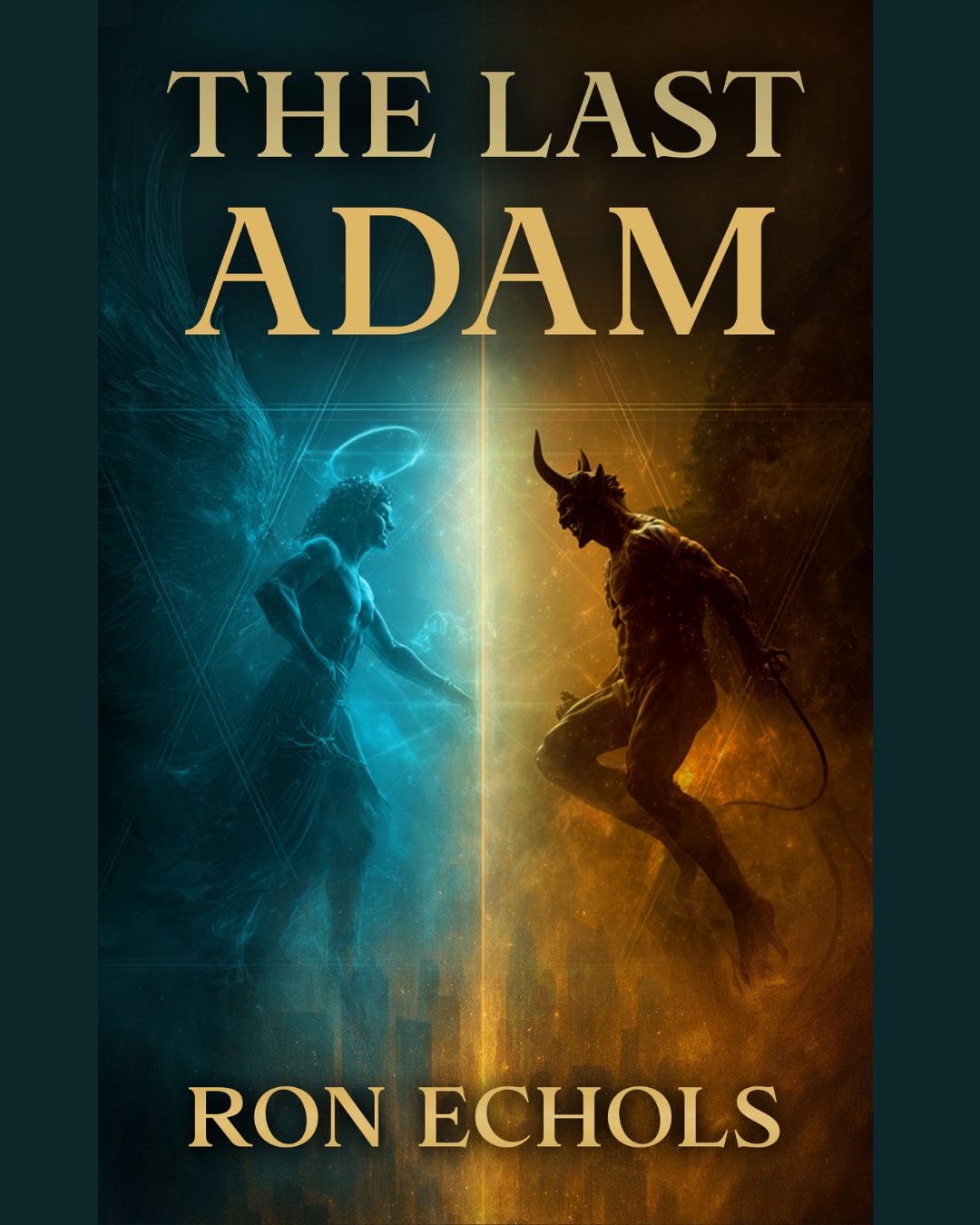



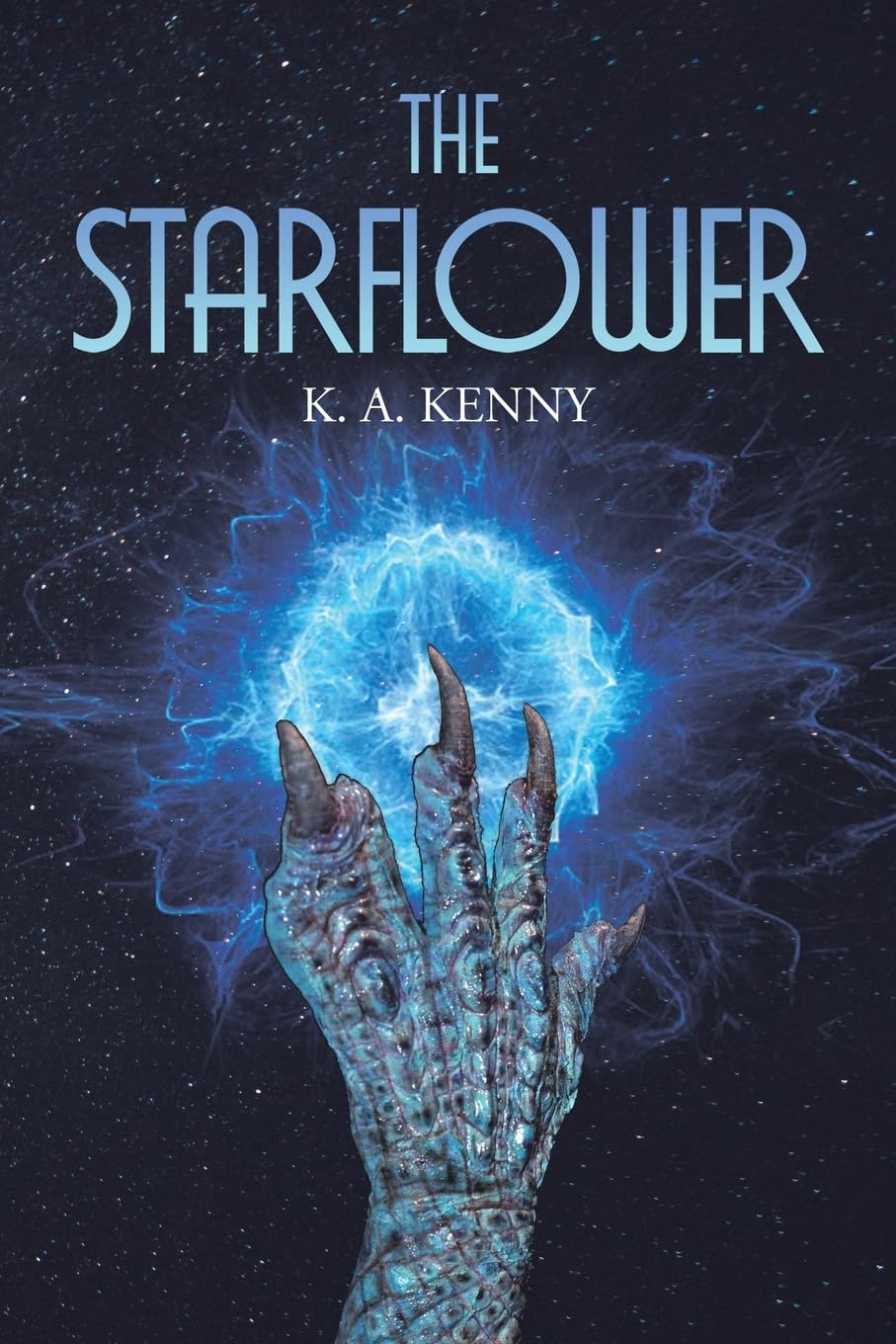

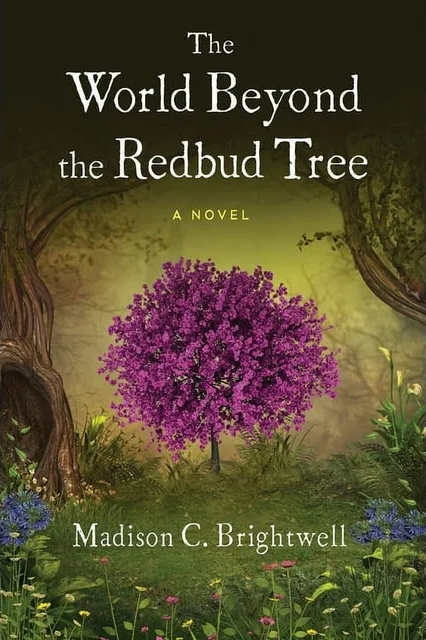


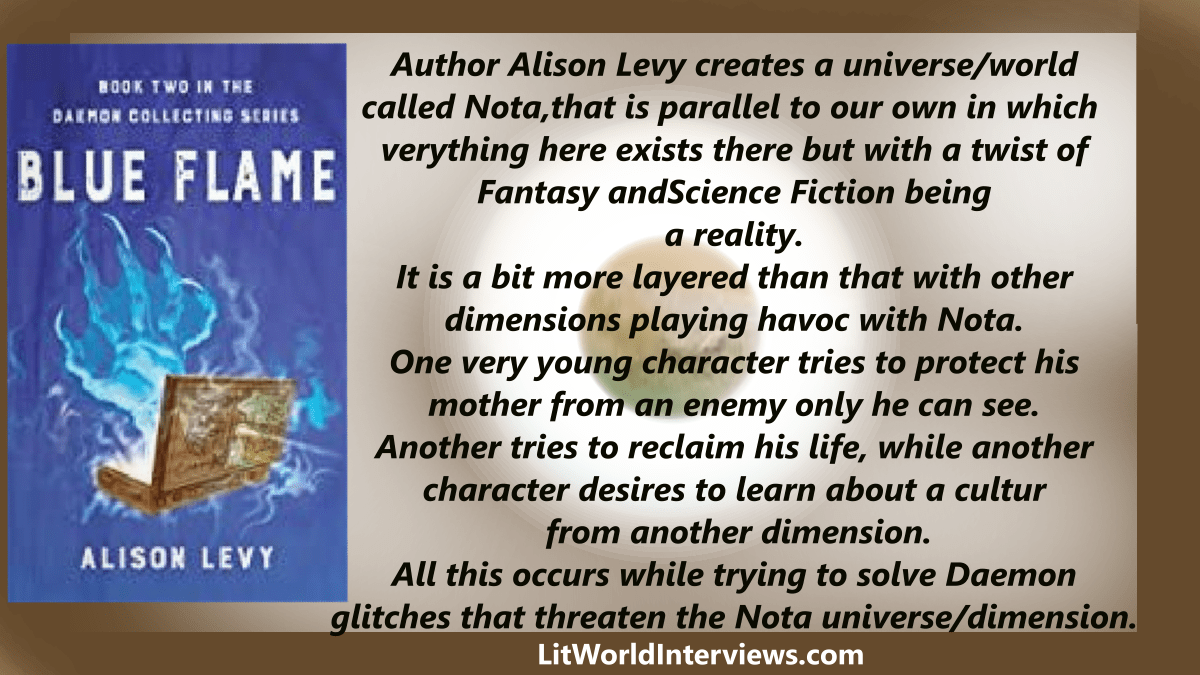





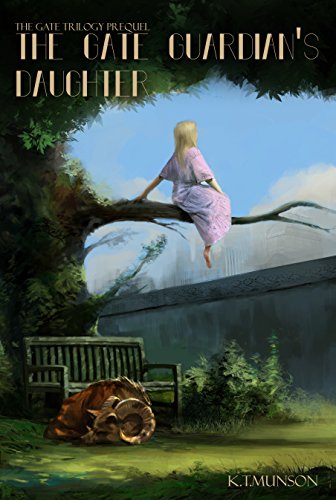

 ok 1)
ok 1)

![People of the Sun by [Parent, Jason]](https://images-na.ssl-images-amazon.com/images/I/51DyoR5tHSL._SY346_.jpg)
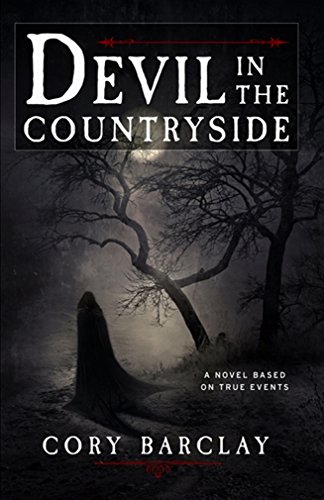
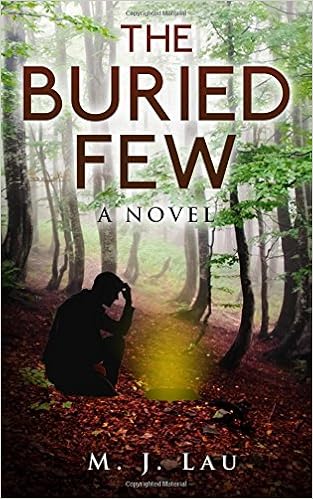
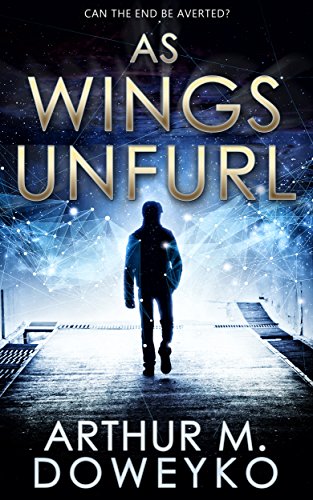
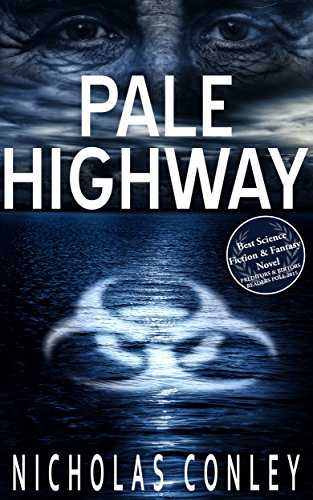

 Lit World Interviews