If you remember I promised last week I’d bring you the review of a book, and here it is:
The Astonishing Return of Norah Wells by Victoria Macgregor
Title: The Astonishing Return of Norah Wells Author: Victoria Macgregor ASIN: B010QBV1LY Published: 14th January 2016 Pages: 426 Genre: Family life/Women’s Fiction
Body of review:
The Astonishing Return of Norah Wells by Virginia Macgregor. The Queen of Unconventional Extended Families
Thanks to Net Galley and to the publishers for providing me a copy of this novel in exchange for an honest review.
I read Virginia Macgregor’s first novel What Milo Saw a few months back and loved it. I loved the warmth of it, the wonderful characters, the sense of community, the quirky story, and the wonderful boy at the centre of it, Milo. When I published the review in my blog, it was very well received, and in fact one of my followers not only loved the novel too, but discovered a personal connection to the author. Of course I could not resist getting this book when I saw it in Net Galley.
And boy, am I pleased I got it. I’ve loved it possibly even more than the first one. Willa, the little girl who is the heart and soul of this story, is wonderful. She is not as prescient as Milo was, but she is all heart. She loves animals, Louie, the dog, the foxes only she seems to see (she’s obsessed with Roald Dahl’s Fantastic Mr Fox and the movie of the same title), her parents (although she later discovers that Mummy Fay is not her real mother), her sister Ella, the twin ladies who live opposite, with their Chihuahuas, and everybody else. Her birthday is coming up and she knows Mrs Fox is due to have baby foxes and she’s excited. What nobody is prepared for is the return of Norah, her biological mother who up and went six years ago, and the maelstrom this causes. Norah’s best friend, Fay, and her complete opposite, stepped in when she left and took care of her family, becoming the mother (although Ella always resented her and started a campaign to find her mother, believing she’d been abducted). Norah’s return upsets the new family the ones left behind had created in her absence, and the secrets and lies threaten to break the hearts of all involved.
The novel made me think of an author I’ve read a few books by, Hans Hirschi, who wears with pride the accolade one of his reviewers gave him of ‘the queen of unconventional happy endings’. After reading this novel, I feel Virginia Macgregor deserves to be known as the queen of unconventional extended families. This novel is more insular than the previous one, and although the outside world intrudes (sometimes very forcefully) into the story, this is mostly incidental, and the action takes place around the family, and those adopted into it, like the neighbours, Ella’s Twitter followers, Fay, the members of the family Norah unveils, Sai (Ella’s boyfriend) and his wonderful mother. Willa wants everybody to be happy and live in the same house, and eventually, tolerance, understanding and love spreads to all who come into contact with her and her family.
Macgregor writes beautifully, perfectly capturing the thoughts and voices (the story is told in third person but from the point of view of the different characters) of younger and older characters, and even the dog (that Willa feels a particular connection to). [Although Louie is completely different, the use of the pet as one of the consciousness and narrators of the story reminded me of another great novel,Atonement, Tennessee by Teagan Geneviene, where Lilith, the cat, observes and sees things the rest of the characters don’t.] We might agree or not with the actions and reactions of the people in the novel, but they all feel real, and we come to care deeply for all of them. The plot deals with themes such as abandonment, family relationships, prejudice, creativity, spirituality, cancer, grief and death, subjectively and sensitively. Yes, I did cry at times and laughed at times. And I thoroughly enjoyed it.
If the roof of the house is in need of repair throughout the novel and storms keep threatening the house (illustrating in a very plastic and visual way the emotions of those living inside) the ending is heart-warming and hopeful.
This is a novel that will pull at your heartstrings and will make you fall in love with stories and reading. Although it’s very early in the year, I suspect this will remain one of my favourite novels of 2016. Go and read it!
Ah and if you want to check my review for Virginia Macgregor’s previous book What Milo Saw you can do that,here.
Ratings: Realistic Characterization: 4.5/5 Made Me Think: 4.5/5 Overall enjoyment: 5/5 Readability: 5/5 Recommended: 5/5 Overall Rating: 5/5
Title: Darkness Rising Author: Brian Moreland ASIN: B00Y05TVUG Published: September 1st 2015 Pages: 113 Genre: Horror
Description
It’s all fun and games until…
Marty Weaver, an emotionally scarred poet, has been bullied his entire life. When he drives out to the lake to tell an old friend that he’s fallen in love with a girl named Jennifer, Marty encounters three sadistic killers who have some twisted games in store for him. But Marty has dark secrets of his own buried deep inside him. And tonight, when all the pain from the past is triggered, when those secrets are revealed, blood will flow and hell will rise.
Darkness Rising by Brian Moreland. Horror, poetry and redemption
I was given a free copy of this novel in exchange for an honest review.
I have read several books by Brian Moreland and loved them all.
Darkness Rising is the story of Marty, a young man with a difficult past (his father is a serial killer who killed his mother and six young women and he had to grow up suffering bullying and abuse), who has found in poetry a way to communicate his feelings and to quieten down the darkness inside. He has big plans, goals, and is in love with a young girl, Jennifer, whom he’s been teaching poetry. Unfortunately, a gang of two young men and young woman have chosen his favourite spot next to a lake to make snuff movies and dispose of the bodies, and he’s spotted there with terrible consequences. What happens next is only the beginning of the horror for Marty and what he becomes.
The story, like the previous novels written by Moreland I had read, is written with a great sense of suspense, and very visually. One can imagine the movie that could be made from the book (although sometimes it’s best not too, like when describing the artwork Marty’s father creates). This novel is more than a horror story, and it includes beautiful passages about art, the effects of creativity, first love, and redemption. Despite the extreme violence (and even the descriptions of the evil beings are lyrical and vividly accomplished) this is a coming of age and a young adult story, and an inspirational one too. Perhaps the moral of the story would not be to everybody’s taste, but the message is ultimately positive. Marty talks about going through purgatory and… he might have a point.
I like my horror stories to end up in a horrifying manner, but couldn’t help and root for Marty, who goes a long way and works hard to be the best he can and to prove that one can fight against fate and blood.
This is not a conventional horror story but I’d recommend it to people who like beautifully written dark fiction, stories about the nature of creativity and art, and do not fear treading where others wouldn’t dare.
Although I bring you a book review, because the circumstances are a bit special (I’ve translated the book to English and therefore these are my impressions of the book in Spanish, rather than a rigorous review of the book in English) I decided not to follow the usual format, because I’m somewhat involved in the process. But I wanted to bring you the book, because we’ve had the writer as a guest before, and because I’m very excited about this project. I also leave you some information about where to contact me if you’re interested in translating your work to Spanish.
But first:
Shiny Bones by Enrique Laso. Translation Olga Núñez Miret
Shiny Bones by Enrique Laso. Translation Olga Núñez Miret
A NEW ETHAN BUSH NOVEL
The FBI Behavioral Analysis Unit special agent Ethan Bush must investigate a serial killer in Nebraska… A GRIPPING HEART-STOPPING THRILLER The monster lives in each one of us. We are beasts that have learned, over the centuries, to control ourselves, to restrain our basic instincts and live peacefully in society. We are, after all, fully domesticated and well-trained beasts.
Only on rare occasions, the wild animal that hides deep in our entrails goes on a rampage, giving rise to an insane nightmare… If you enjoyed novels like ‘The Silence of the Lambs’ or TV series as ‘Criminal Minds’ or ‘True Detective’… this is the story that you have been waiting for. FROM THE NOVEL:
The county police had cordoned off the zone less than an hour after the boys’ find. A pathologist established that the remains were human, although a large part of the skeleton was missing. In fact, what was missing was what would have been most helpful in the task of identifying the body: the cranium.
“Do you have any clues as to how long have those bones been here?” the sheriff asked, perplexed. His head was full of the terror that he knew would grab hold of his entire community just a few hours later.
“Not long. And one of the boys has told us that he comes for walks in this area often and they weren’t here a few days ago.”
“But this stiff croaked some years ago, don’t you think?” asked the sheriff, pointing at what looked like a tibia. Never in his life had he seen such a thing, and it perturbed him.
The pathologist looked at the grayish sky, where clouds were growing and thickening threatening to release a good downpour. But that storm would only be a child’s game in comparison with what was hanging over the county where he lived.
“I don’t know,” he replied, laconic.
“What do you mean, you don’t know?” asked the sheriff, who felt he’d got a completely senseless answer. These were the remains of a skeleton; therefore one didn’t need to be an eminence in medicine to deduct that the guy, no matter who the hell he or she was, would have stopped breathing a very long time ago.
“These bones have been thoroughly cleaned. They have been manipulated. Without studying them in detail, right now I can’t tell you if the owner died yesterday or over ten years ago.”
THE BLUE CRIMES review on Amazon: ‘And so proceeds Enrique’s THE BLUE CRIMES and the manner in which he places Ethan Bush and team in the resolution of crime is tense, suspenseful, and at all times involving. This is quality mystery writing by a voice new to most of us – a welcome addition to the thriller genre’ Grady Harp, TOP-100 Reviewer/ Hall of Fame/ Vine Voice
Shiny Bones by Enrique Laso. The second Ethan Bush novel. Translation Olga Núñez Miret. You don’t need to be weird to solve the case, but it helps.
As I had mentioned when I read the first novel in this series, thrillers that purport to follow the investigation of complex crimes usually have two fundamental elements that go almost hand in hand: the crimes and the investigation (which allow the readers to put their wits to the test), and the investigators, individuals or teams, and less often, the criminals.
It is true that if the crimes are highly intriguing or very strange the book might be interesting even when those doing the investigating aren’t gripping individuals. On the other hand, there are times when the personality and the adventures of those doing the detecting are more interesting than the crimes themselves (as is the case in many ‘cozy mysteries’ like many of Agatha Christie’s novels). The best novels of the genre manage to achieve a balance between the two.
Shiny Bones has a bit of everything. The case is extremely convoluted and twisted, clearly the work of a complex and traumatised mind (and no, I’m not taking about the writer), but that doesn’t mean it’s easy to solve, quite the opposite.
And we also have Ethan Bush, an FBI psychologist who comes back, as arrogant, intelligent and annoying as before (in The Blue Crimes). The mature Etan Bush of years later offers us his comments and reflections, not only about the case (where he keeps many things quiet, of course), but also about his own actions, therefore acting as an ersatz reader (or perhaps more accurately, author).
This time Ethan doesn’t have his team at his disposal (that in fact is not “his” team, as his boss keeps reminding him throughout the novel), and he’s obliged to work with the Nebraska State Patrol, the local force, and has to try and reach a compromise with them, although that doesn’t mean he doesn’t try to use all the tricks in the book to get his own way. His intelligence, his skill manipulating people, and even his feelings are put to the test in this case that’s a big challenge for him.
To those of you who enjoy solving the cases whilst you read the novel, I’m afraid I have to tell you that, although you’ll have many suspects, you won’t be able to guess who did it. Even with that it will make you think and question many things.
Personally I am eager to go back to Kansas to discover who murdered Sharon Nichols, a case that’s central to The Blue Crimes but never solved, and I’m waiting anxiously the arrival of Las libélulas azules (The blue dragonflies).
As I mention above I’m happy to disclose that I’ve translated the novel. The book has also undergone professional editing/proof-reading. Due to this circumstance I haven’t shared this review in selling channels, although the original is a review of the Spanish novel, rather than of my own efforts in translation.
Just in case you’d like to know more, I interviewed Enrique for Lit World Interviews, here and I reviewed his first novel in the series The Blue Crimes, here.
Ah, if you think you’d like to know more about getting you books translated, in this page I talk about it (I talk about other things too but, keep reading…). And if you want to see examples of books I’ve translated, you can check here.
Thanks very much to Enrique for this opportunity, thanks to you all for reading, and remember it’s good to like, comment, share, and feel free to click too.
It is such sweet anticipation knowing a book by Irvin Yalom awaits me.
Title: Creatures of A Day and Other Tales of Psychotherapy Author: Irvin D Yalom Publishers: Piatkus (5 March 2015) Format: Paperback ISBN-10: 0349407428 ISBN-13: 9780349407425 Website: http://www.yalom.com/index.html Pages: 224 Genre: Literary Non-Fiction; Psychology
What’s it about?
Once again, Irvin D Yalom does not disappoint. On the contrary he proves (not that he needed to J) yet again his mastery in conveying the complexity of the human psyche into short stories designed to engage the imagination and to teach. For those who do not know, Yalom is an eminent existential psychotherapist and author. He is Professor Emeritus of Psychiatry at Standford University who is cautious of the perils of diagnosis and pathology, rather preferring to delve into human psyche. At the age of 82 (when the book was written), Yalom’s curiosity and ‘work’ on himself lies with the reality of impending death.
In ‘Creatures of a Day’, Yalom explores through ten tales (of real cases) the existential theme of ‘death’ or ‘existential death’, and how we, no matter our age, experience and respond when confronted with our own mortality. There is no formula, no correct answer – just a deep appreciation for the complexities that is the human psyche. Yalom’s humility and candour shine in the short stories. Though a master therapist, Yalom does not shy away from owning his missteps in therapy sessions, nor his judgment, non-engagement and not-knowing. What is important, as he highlights in ‘Creatures of a Day’, is the therapeutic relationship between him and his clients, one that is authentic, honest and transparent. He demonstrates the transformative power of this healing relationship.
If there is one ‘flaw’ it is that ‘Creatures of a Day’ through Yalom’s exquisite storytelling makes the psychotherapeutic process seemed a ‘natural’ process and can be attempted with ease. Here is the paradox – the therapeutic process is hard work and difficult for the client and the therapist; it is never simple.
As Yalom states,
“The patients in these stories deal with anxiety about death, about the loss of loved ones and the ultimate loss of oneself, about how to live a meaningful life, about coping with aging and diminished possibilities, about choice, about fundamental isolation.”
Yet this book provides such an uplifting, hopeful perspective to our humanness and our capacity for growth.
Would I recommend it?
So would I recommend this book? A resounding ‘yes’.
And the book’s audience?
I will quote Yalom. “I write for those of you who have a keen interest in the human psyche and personal growth, for the many readers who will identify with the ageless existential crises … and for the individuals who contemplate entering therapy or are already in the midst of it.”
Savour the book not just its entertaining tales but take time to explore the nuanced interactions between Yalom and his patients.
Ratings:
Realistic Characterization: 4.5/5
Made Me Think: 4.5/5
Overall enjoyment: 5/5
Readability: 5/5
Recommended: 5/5
Overall Rating: 5/5
Title: Graveyards of the Banks – I did it for the money: Seven Seasons of Midnights at the Most Successful Bank in the Universe Author: Nyla Nox ASIN: B00U7HRVNK Published: March 2015 Pages: 176 Genre: Business and Money/Banks and Banking. Contemporary Fiction/ Women’s Fiction
Description:
One woman’s toxic workplace hell.
Nyla Nox stumbles into a world of corporate bullying and shame at the world’s most successful institution. You won’t believe what goes on there…
The graphics center of the Most Successful Bank in the Universe (a real bank, but not its real name!), where Nyla ends up, is a graveyard of broken dreams where artists, psychologists, historians, philosophers and even teachers end up ‘doing it for the money’ while the bankers, who treat them like scum, are being brutally groomed to become the leaders of tomorrow.
What do you really know about life inside the Big Banks?
Did you know that, right now as you read this, a hidden tribe of jobless humanities graduates is working deep inside those secret and powerful institutions? Do you have any idea how toxic these workplaces are? And how badly most of the workers in the banks (who are not bankers themselves) are treated? Do you know why they are treated like this?
‘Graveyards of the Banks’ tells the truth about life in the Banks, about life as a single woman in London, about saying farewell to broken dreams and surviving (just!) a hair raising sequence of corporate attacks on your dignity, your self-esteem and even on your physical health, night after night, just to make rent.
Life is never dull at the Most Successful Bank in the Universe. The night shift is a battle field of bullies and bitches, emotions go wild at 4AM, and Nyla has to fight for survival every single minute.
Do you realize that the corporate bullying and shaming is not an accident? Nyla stumbles into that world, the Bank’s playground and training ground for Survival of the Fittest. The top bankers talk about it as their ‘killing ground’.
Nyla Nox was interviewed about her life in the Banks by the London Guardian and has written about her book and her experience in many well known international magazines. Her story seems to be an inconvenient truth, too extreme to believe. But her truth has been confirmed, again and again, by the Big Banks themselves, through their own announcements.
Read for yourself how the toxic banking system rots our hearts and minds, and our society. And as Nyla’s story shows, you don’t need to be a banker to be directly affected.
Whoever you are, the Banks are deciding your life for you.
“..Quite a few interviewees have described investment banks as abusive environments. But they seem to consider this an outcome, not an act of design. Nyla Nox thinks it’s deliberate. [Her story] struck me as perhaps extreme, but reading her experiences perhaps she did see the beast in the eye.”
Joris Luyendijk, The Guardian.
“ Wow. This was an amazing, moving book. … You know how a show like The Office perfectly captured everyone you work with in an office setting? This book does that with the financial world, while at the same time making you feel like you’re walking through this financial hell with Dante.”
Aaron Hoos, Financial Fiction Reviews
“… Graveyards of the Banks is somewhat reminiscent of Kafka’s ‘The Castle’ The Castle, in its descriptions of labyrinthine hierarchy and bureaucracy. … reminiscent in some ways of fascism, a brand of fascism without swastikas and SS uniforms. Nyla Nox also compares bank work conditions to Mordor, the land of evil in Tolkien’s ‘The Lord of the Rings’.”
‘Dear Kitty’ social justice blog.
My review:
I am reviewing this book as part of the Lit World Interviews review team and was offered a free copy in exchange for an honest review.
Nyla, the protagonist of this novel-cum-memoir (the author is also called Nyla and in the description of the book she explains the narration is born of her personal experience working for a bank, which although it remains nameless, it’s ‘the Most Successful Bank in the Universe’) works for the department preparing the publications that seemingly are the only visible output the bank produces. These always show predictions of growth for their clients, although as she discovers, such predictions are based on no real data. It’s a con but it must look good.
We only know the basics about the protagonist, who is an anthropology graduate and after years of trying to make a living out of her vocation is close to destitution (in fact at the beginning of the novel, when she’s going to undertake the selection test to get the job that will occupy the rest of the book, she only has £3 in her pocket). We know she lives in a bedsit, but nothing about her personal life, family or relationships. She talks about her love of studying, books, Philosophy, and the first person narration puts the reader inside her head, and we suffer with her the claustrophobia, the harassment, the bullying, and the minor joys (very minimal) she experiences. It does not make for easy reading, let me tell you.
Nyla is very insightful, both about the world and society around her (and she offers great anthropological, sociological and political insights, including how this bank’s behaviour towards his employees is only different in style rather to historical fascist regimes, even if they prefer to see it as social Darwinism) and about herself. She observes others, she tries to study ways of surviving (she’s doing it for the money, she keeps telling herself, to try and get to ‘a better place’), and she knows she is no better than others. Her comments about becoming the witch bitch reminded me of an article I read years back by Barbara Creed about Alien and what she called ‘the monstrous feminine’. Oh yes, she can be scary, but she’s strong.
There are lighter moments, like her songs dedicated to the sweets machine (and although she doesn’t name them, we know them) but these get swallowed up by the soul-destroying routine of working at the bank.
The bank (and the author’s descriptions of the place and the situation brought to my mind not only Kafka and Orwell but also the movie Brazil) is next door to an old graveyard where the protagonist spends some of her waiting time and this London graveyard is the perfect backdrop to the action and a mirror image of the institution, only the graveyard doesn’t pretend to be something it isn’t (and seems more welcoming). Like the air conditioning system, filled with nobody knows what, and a nest of corruption and sickness, the whole empire seems to be a bomb ticking. Like Nyla, who fantasises about being sacked, but worries about how she’d manage, we want to see the place collapse but don’t want Nyla to go under. The ending of this first book in the series is a cliffhanger for what might come when Monsters Arise.
This is a fascinating book, a very subjective experience for the reader, but not a novel with a plot full of action. We get to know the inside of the character’s mind but not her life. I don’t think it’s a book for everybody but it’s a scary look into a world some might have suspected existed, but not quite like this. If you want to know more about investment banking from a totally unique perspective, and you dare, go for it.
Ratings: Realistic Characterization: 4/5 Made Me Think: 5/5 Overall enjoyment: 4.5/5 Readability: 4/5 Recommended: 4/5 Overall Rating: 4.5/5
Buy it at: Format & Pricing: Kindle: $3.05
I thought I’d share some ‘pearls’ from the book:
‘After all, the Bank was supposed to know things nobody else did and could penetrate the darkness of economic confusion as well as predict the future. I have no idea how much our clients knew about our processing methods but in reality they were part of a ‘one size fits all’ production line.’
‘After all my time at the Bank, reading so many of their Books, I am at a complete loss to understand why the clients kept coming back, and kept paying our exorbitant fees for a service (‘copy and mutilate’) that was insultingly incompetent and had been discredited time after time. The only explanation I can come up with is that they must have been true believers in the natural leadership of high finance, and as such impervious to experience. ‘
‘After all, we were not one of those inept public service bureaucracies where the staff got sick leave and pensions.’
Genres: YA Fiction, Paranormal, Mystery, and Suspense
*The author provided me with a copy of the book in exchange for an honest review which follows*
Have you Seen a Will O’ the Wisp?
Eerie green phosphorescent lights have been seen hovering over Bergamot Holler in Virginia since the beginning of time. What are these lights and why are they there? Speculation is that the lights are just swamp gasses floating harmlessly in the stillness of an autumn evening, even though their appearance has foretold many stories about fairies, ghosts, and witches.
That is until Patty Hall, a not-so-average 15-year-old, witnesses the Will O’ the Wisp first hand in the mid-1970’s during a routine hike in the woods near her house while star gazing one night. Patty witnesses one of the mysterious orbs as it forces its way inside the body of an unsuspecting male college student. Terrified, she flees back to the safety of her home, afraid to share what she has seen for fear her mother will have her committed.
The next day, when Patty’s Uncle turns up dead, the college student is arrested for his murder. Accompanied by her Mother and Step-Father at the jail, Patty sees the murderer who appears to be sick as he spews up copious amounts of liquid from his lungs. The boy has murder in his eyes as he lunges for Patty through the bars of his jail cell yelling, “You’re next!” (Pg. 37).
The Mystery Deepens
In preparation for her Uncle’s funeral Patty helps her mother clean out his house. It is during this process that Patty finds extensive research on the Will O’ the Wisp her uncle had been working on for years. Horrified by what she finds Patty realizes that her family has been targeted for generations by the Will O’ the Wisp.
On top of all this, Patty has her own disabilities to contend with. She is not popular in high school and must wear leg braces to correct a congenital deformity. Tensions with her mother are at an all-time high, and her two best friends are growing away from her. For Patty, life has taken a chilling turn.
With every ounce of courage, she can summon, Patty embarks on a supernatural journey to find the answers she needs to save her own life, and those of her friends, and family.
Recommendation:
I was gripped with tension as I read “The Will O’ the Wisp,” staying up late into the night because I could not put the book down. The next day, I found myself wondering about all the possibilities that Patty had before her in trying to solve the mystery that was stalking and killing her family members. You could say, I was hooked by the story and the characters, even though the book was targeted for a young adult genre.
S. Boyack realistically spins this coming of age tale of a 15-year-old girl with the chilling supernatural happenings in a small town in Virginia, all the while, blending historical elements that draw you further into the mystery. Boyack is clever, though. He reveals the story writing almost as if he were the young girl himself seeing through her eyes. Patty becomes a character who is totally loveable and believable, teenage angst and all.
My hope was to read this story during Halloween. That did not happen, although I was pleasantly surprised at how the story did not need a holiday to reinforce the enigmatic vibes of the story line. This was one of the best young adult novels I have read. If you are looking for something unusual to read bury your head into “The Will O’ the Wisp.” If you dare!
My Rating:
Character Believability: 5 Flow and Pace: 4 Reader Engagement: 5 Reader Enrichment: 4 Reader Enjoyment: 5 Overall Rate:4.5 out of 5 stars
About C. S. Boyack
I was born in a town called Elko, Nevada. I like to tell everyone I was born in a small town in the 1940s. I’m not quite that old, but Elko has always been a little behind the times. This gives me a unique perspective of earlier times and other ways of getting by. Some of this bleeds through into my fiction.
I moved to Idaho right after the turn of the century, and never looked back. My writing career was born here, with access to other writers and critique groups I jumped in with both feet.
I like to write about things that have something unusual. My works are in the realm of science fiction, paranormal, and fantasy. The goal is to entertain you for a few hours. I hope you enjoy the ride.
Make certain to connect with C. S. Boyack through his Twitter @virgilante
“You might at times want to hit Liam over the head with something, like his accordion, but then, he is a man, it’s love, and he’s young, so what else would you expect? And that is one thing that makes this book real and allows the reader to connect with it. No one is perfect in the book. “
“He’s been referred to as the new Dan on the block of historical fiction conspiracy theories. I don’t agree. Dan McNeil handles his subject with a better hand than Brown ever has. Yeah, sure, you want to knock him across the room at times but who doesn’t want to read something that gets them on an emotional level at times? If you want a fluff read, skip this review. McNeil isn’t about fluff.”
“Nothing is perfect. Sex isn’t perfect like a scripted movie. Things happen, and man, I am still dying over the what I call ‘on fire’ part of the book.”
“You’ll learn where the answer to how we handle the issue of Santa with our kids begins. A great deal of what you find in Jesus vs. Santa you can use in everyday life with not only your children, but yourself as well.”
“The style he chose to use is contemporary in the use of language and symbolism in order for anyone today to relate and connect to the story. Unlike many other takes that are similar to what Royle has done you don’t get a preachy style. At the very end, after the story is all done and over with, you receive a look at passages from the Bible to show you what may or may not bring credence to what Royle has written.”
“Isabella George is not your typical spy. For one she’s a female spy in WWII sneaking in to German occupied France. Yes, there were female spies but not the norm in literature of this type. And for another thing, she’s a wizard. Her mission in this first book of the Gray Tower Trilogy is to find and bring home the wizard creating a chemical weapon for the Nazis. But would it be a book worth a Trilogy if it were that simple?”
“Levant Mirage takes snapshots from the headlines of the past few years to build a character and combines it with frighteningly realistic possibilities to give a story you pray never happens.”
“Levant Mirage takes snapshots from the headlines of the past few years to build a character and combines it with frighteningly realistic possibilities to give a story you pray never happens.”
“The stories are of love and tragedy and more. I felt while reading the stories I was reading not about people in a book, or about love between two people and what befalls them but the love of a people for their homeland and their culture and the tragedies they faced throughout the ages. Yes, it hit me where it hurt, or it felt. Got me in the heart. “
“Welcome to my haiku perspective on life. It is easy to enjoy this book because haiku flows, which means it can be experienced effortlessly. Perhaps reading this book will open up some creative energy within you and if so, you will share your haiku as well. Those who live to express themselves with words, craft a world using the alphabet, are giving life to imagination and thought.”
Title: Numero Zero Author: Umberto Eco ISBN: 0544635086
ISBN13: 978-0544635081 Published: 3rd November 2015 Pages: 208 Genre: Satire, Thriller and Suspense/Conspiracy/Politics
Numero Zero by Umberto Eco. Satire, conspiracy, politics, media… although not sure it’s a novel.
Thanks to Net Galley and to Vintage Digital for offering me a free copy of this book in exchange for an honest review.
I’ve read some of the reviews by a number of readers who have followed Eco’s literary career. All seem to agree that this book cannot compare to some of the other novels he’s written, although some like it nonetheless, whilst others are disparaging of it.
For me, Umberto Eco is a writer who’s always been on my bucket list but never quite made it (or perhaps I read The Name of the Rose translated to Spanish many years back, but as I don’t remember it, I’ll assume I didn’t). When I saw this opportunity I decided not to miss it.
I’m not sure what I was expecting, but Numero Zero is quite different from anything I had imagined.
The beginning of the book is very intriguing, and it presents a writer/translator (Colonna) who swiftly explains his current situation. He is convinced that somebody has entered his house and he is in fear for his life.
Following this introduction to the main character, Colonna goes back to describe how he got there. The background to his current situation is what forms most of the novel, and we only return to the original point very late in the book (when there are only a few pages left).
Colonna describes himself as a loser and he has accepted a very strange job: to record the memoirs of a man who is setting up a newspaper, Domani. Only the newspaper will never get published, and the whole project is a way of manipulating contacts, allies and enemies by a third interested party.
There are descriptions of the reporters, a motley crew, fairly quirky, but none particularly talented or known. The ones we get to know more about are Bragaddocio, who’s always investigating some conspiracy or other (eventually coming to the conclusion that it is all part of a single huge conspiracy, involving Mussolini, the Vatican, the CIA, European governments…), and the only woman, Maia, who has a very special personality, but seems the only one with some sense of ethics and morals. By a strange process of osmosis, Colonna and Maia end up in a relationship, the one bright and hopeful spot of the whole novel, however weird the coupling seems.
Rather than well-developed characters and situations, Numero Zero seems an exercise in exposing current society (although the story is set in 1992), the press, media, politics… and their lack of substance. Also the lack of interest in serious stories by the population at large, and our collective poor memory. As a satire I enjoyed it enormously, and although most of the characters experience no change (we don’t get too attached to them either, as they seem to be mostly just two-dimensional beings representing a single point of view), I thought Maia becomes more realistic, cynical and enlightened by the end of the book. And I found Colonna’s final reflection about Italy hilarious. (No offence to Italy. I think all the countries are going the same way if not there already. I’m Spanish and I definitely had to nod).
I agree with many of the comments, which note that the disquisitions and tirades of Bragaddocio are relentless, but they reflect a paranoid character (and perhaps, although he accuses Maia of being autistic, there is more than a bit of obsessiveness in his personality); the comments about the newspaper, how to write articles, and the press I found illuminating (yes, and funny), and overall I enjoyed the book, although as I said, it’s not my idea of a novel.
So I find myself in a similar situation to when I reviewed Satin Island. I enjoyed it (not as much as Satin Island, but it made me laugh more than once), but it is a novel that’s perhaps not a novel, with not very well developed characters, and an anecdote at its heart rather than a plot. There you are. You decide if you want to read it or not. Ah, and it’s short.
Ratings: Realistic Characterization: 3.5/5 Made Me Think: 5/5 Overall enjoyment: 4/5 Readability: 3.5/5 Recommended: 4/5 Overall Rating: 4/5
In Jesus vs. Santa: Christmas Misunderstood, Jason Royle tackles THE big question of Christmas; Is Santa evil? Okay, maybe he doesn’t quite put it that way, but you know a lot of Christians have issues with Santa.
After reading, enjoying, and reviewing Judas: Hero Misunderstood(clickHEREfor the review of that one), and then bringing Jason onboard LWI as our Christian and Inspirational book reviewer, there was no doubt I was going to read this new one.
One thing about both Jason and I, we are Christians. We are by choice, living it Christians. That means even though Jason works here, he gets an honest review from me. He expects one as well. If his book was so bad I couldn’t finish it, I would do like I do with other books like that, I send an email explaining things instead of putting it out there to the world my opinion that it was bad. The fact there is a review here should give you an idea if I liked the book or not.
In Jesus vs. Santa: Christmas Misunderstood, Royle takes you through the history of Christmas, from the real Saint Nicholas to the daddy of Thor, in a brief and painless way. (I was a History teacher, so I know about painful history lessons.) You’ll learn where the answer to how we handle the issue of Santa with our kids begins. A great deal of what you find in Jesus vs. Santa you can use in everyday life with not only your children, but yourself as well.
As a minister and a father, Jason has to balance the question we all face as parents each Christmas with even more pressure than the rest of us. You might think he’s going to go full force in one direction on this subject, but read. If the answer is as clear as that, why would I read it and review it? If the answer is as simple as No More Santa, I would not waste my novel writing time reading the book and then even more of that time writing a review.
As an ordained Deacon, former Youth Minister, and Sunday School Director, I feel the pains Jason goes through in a family moment he shares. My son is 11 now, and the question of Santa is a big thing at the moment. He’s not asking, but you can see how realization is setting in. Fortunately, I’ve done some of the things Jason mentions in his book, so my hope is things transition well.
If you are about to enter the Santa zone with your kids, are in the middle of it, or coming to the end of it, read this book to find out how to handle things in a way that keeps your kids on the right path of Jesus not only at Christmas, but year around.
5 out of 5 Stars
Bet it at Amazon by clicking HERE NOW for Kindle/Paperback for $2.99/$5.99.
ABOUT JASON E. ROYLE
“Writing, for Jason, is a way to express the ongoing story of theology. With every book or article, he hopes readers get a sense of the complexity of God and the necessity of faith. Captivated by the spiritual component of life, Jason loves to read everything from the Greek classics to the Sunday comics. While serving as pastor of a congregation near Memphis, TN, Jason wrote a weekly column in a local newspaper called Sermon in a Nutshell and has had devotions published in The Secret Place, among others.”
Click the image to follow the latest from Jason on Twitter!
I received a preview copy of this book from the author for an honest review. Here it is.
CIA Agent Sean McGee is normally a laid-back guy. Even on a mission, he takes things in stride and does his job. His latest mission is to set up cameras in the compound of a drug lord in Guatemala. It sounds simple. Then El Jefe, the drug lord of all drug lords in Guatemala, decides to kidnap Sean’s wife, Sport, to use against him. Sean changes his plans.
Read that paragraph and you miss the real story of El Tiburon.
Thriller-YES
CIA Agents-YES
Covert Marines-YES
Drug Lords and Double Agents-Check Check
One thing you also get is the inclusion of fleshed out roles for women as integral parts of the story, the mission, and more, not a plot device for the macho man to rescue.
Why do I make a point about women?
In many books, the writer throws a woman into a role that the reader can tell was written for a male, and the name was changed for some reason. The writer doesn’t do anything to make the character a woman except for that name change. Schussman goes through the process of creating parts and roles for each woman involved. Believe me; women are essential to the success or failure of McGee’s mission. (Writers, it’s not that difficult to write women. Even I can do it. If I can, anyone can.)
A thriller needs to have three qualities to make me happy.
Relationships
With any book I enjoy, it must have relationships. In a thriller, the action serves as the setting to relationships, and that is what H. Schussman does with El Tiburon.
This book isn’t about taking down a drug lord, it’s not even about taking down the king of the drug business of the Americas, El Tiburon, The Shark himself. This book is about not messing with family, friends, and loved ones.
Not only is their Sean’s wife Sport being put in danger, but his partner Gary develops feelings for a change. Dr. Janet McGee, Sport, ends up caring for a people group that no one else seems to bother with, ignores, or doesn’t even know exists.
Realism/Research
Two of my favorite authors are John Gardner and Clive Cussler: the first for his realistic handling of the spy genre of James Bond, Herbie Kruger, and Secret Generations, and the second for his research and attention to details. With El Tiburon all three of those aspects come together.
Learning
Schussman also does the third thing I enjoy in a book; she teaches or reveals something that I didn’t know about before in a culture or society. She’s definitely done her homework for this novel. There were certain parts I went to the search engines and did my own searching. She hadn’t made things up.
Recommendation
Given time I’ll read this book again. As I started to read I had a difficult time getting into the book. The prologue and the first few paragraphs of the first chapter are only a couple of pages long, so when you begin reading, keep reading. But once past those couple of pages and reading where the main characters begin I started enjoying things in a big way. The prologue does give some information that’s useful and maybe gives a sense of immediacy to the book, and the beginning of the first chapter lets you know about one of the characters involved.
RATING
Character Believability: 3.5 Flow and Pace: 4.5 Reader Engagement: 4 Reader Enrichment: 4.5 Reader Enjoyment: 4 Overall Rate:4.1
Author:H. Schussman Title:El Tiburon File Size: 618 KB Print Length: 315 pages Simultaneous Device Usage: Unlimited Publisher: Vinspire Publishing (Dec. 31, 2015) Publication Date: December 31, 2015 Sold by: Amazon Digital Services, Inc. Language: English ASIN: B018ZVID8Q Text-to-Speech: Enabled Format: Kindle Price:PRE ORDER $3.99 Lending: Enabled
ABOUT H. SCHUSSMAN
I am a writer living in Northern California. My husband and I travel about 8 weeks a year, and during that time I try to hunt down an internet cafe to tell my story. Usually twice a week . . . depends on where I am. I also am a physical therapist specializing in brain disorders and brain injuries . . . challenging! Anyway, I like to write, so if you like to read (and comment if you like) this is the blog for you. Check out my new espionage, full size novel titled ‘Counterpart’ available at http://www.smashwords.com. My newest novel, El Tiburon is now being published with Vinspire Publishing. It should be available next year sometime.
*The author provided me with a copy of the book in exchange for an honest review which follows*
Introducing – Stella May
In 1916, Stella May is born as the great-granddaughter of a former slave, also named Stella May. The original Stella May changed her family’s surname to May upon gaining her freedom. Stella is born of mixed ancestry which for all appearances gives her light skin, blond hair, and hazel eyes.
An amazing beauty, Stella is teased by her black classmates because they don’t believe she is black enough. She looks white and even sounds white. In comparison, her white classmates ridicule her since she is too poor to fit in with proper white society. Stella May is caught in the proverbial catch 22. She is too light to be black and too poor to be white.
Stella May’s mother, Judith was born of mixed ancestry also, which gave her the same light skin, hair, and eyes. Judith always thought of herself as a black woman when she married Stella’s father who was also black. By 1928, Stella’s father ran off in fear of being lynched for being married to a white woman. In those days, society made it clear that the races should not co-mingle.
Who is Sidney McNair?
However, even without her father around, Stella was raised with a family of aunts (from her mother’s side) who took an active part in her life. Eventually, because of the difficulties with Stella fitting in at school, her mother sent her to a private school. Stella’s uncles on her father’s side said, “…They were breaking the law – that a Negro had no business in a white school.” Aunt Sara felt different, because, after all, she said, “Stella is half white.”
By the time the Great Depression eases, Stella and her family move to segregated Chicago, where life is not much better. Aunt Sara, a school teacher, struggles to wait for the school district to pay her. Sara has made the step into white society by dating an affluent doctor and encourages Stella to do the same. After a discussion with Aunt Sara, Stella decides to pass for white. Sidney McNair is born and enters a white society where she had the freedom to go where she chooses and to buy whatever she likes. Stella has crossed the colored line.
Many years later, Sidney is forced to come to grips with the decisions she made long ago. How those decisions affect her life, and the lives of her children and grandchildren, take the reader on a roller-coaster ride into the world of race and ethnicity in America today.
Recommendation:
Since I had not read the first book in the Stella series, I was pleasantly surprised at how easy it was to pick up the threads of Stella’s story. Although the characters are fictional, I was drawn to them (especially Stella) because I have granddaughters of mixed ancestry and I wanted to understand the challenges they face as young women each day.
Maybe, because I felt such a personal connection, Stella’s story touched me even more deeply than I thought it would. I had no idea how difficult life was for Stella and her family, all because of the color of their skin. This was an emotional read for me.
Even more revealing, is how relevant Stella’s story is in America today. I wonder how many people, faced with the same dilemma’s that Stella dealt with, would be able to reconcile their feelings about their own ethnicity.
So, I asked my granddaughters who have black, white, and Thai ancestry. Both girls are beautiful and exotic. They have dark hair, and skin, while one granddaughter has brown eyes, the other has hazel eyes. You know what they told me? They said they were American! Somehow, I knew Stella would have approved.
Beyond the Colored Line is a story about an American family dealing with the issues of race and color in a time when those issues were considered to be conditions characterized with hardship and suffering. Stella’s story helped me to discover connections with my own family I never had before. You see, even in my own family, nothing is ever just black and white.
My Rating:
Character Believability: 5 Flow and Pace: 4 Reader Engagement: 5 Reader Enrichment: 5 Reader Enjoyment: 5 Overall Rate: 5 out of 5
Author, Yecheilyah Ysrayl:
Born in 1987 on the south side of Chicago, Yecheilyah Ysrayl (“EC”) is an author and Spoken Word Artist.
Yecheilyah started writing short stories and poetry at the age of twelve. She attended Harper High School (International Language Career Academy) Robert Morris College (Computer Basics / Administration), Chicago State University (Professional and Technical Writing), and Everest College (Medical Assistance / Phlebotomy).
As an artist, Yecheilyah Ysrayl is an incorporation of spiritual critique, honesty and an authentic analysis of African American identity. She seeks to create work that promotes healthy research and investigation into the cultural identity, laws, customs and traditions of the African American for self-revolution and advancement. Furthermore, “EC” seeks to advance the promotion of truth and identity by way of Spoken Word.
“EC” currently lives in Shreveport, LA with her husband where she writes full time.
To watch a trailer for the book click the link below.
Make certain to connect with Yecheilyah through her Twitter @ahouseofpoetry
I want to begin by saying, I need to stop passing these great books on to Jason and read them myself! I believe this so much so I went and bought the author’s award winning Christmas novella as soon as I read this review.–Ronovan
To be honest, I am typically not a Christian romance reader. ButA Dream for Love by Lisa Belcastro took me by surprise. This is my first book by Belcastro and I enjoyed her wholesome approach. To some extent, at first, the story seemed like it was going to be highly predictable, but it wasn’t; it had just the right amount of “I wonder what is going to happen next” in the air to keep me guessing and reading. An attractive story-line, foreshadowing, subtle humor, and good grammatical flow are several of the qualities which kept my attention.
Even though it is a story of relationships and romance, I still found myself taking out my pencil and underlining several thought provoking statements here and there. In chapter ten, for example, I underlined the quote “God doesn’t leave us in one place.”
In short, if you are in the mood for an emotional love story with a Godly message, then this book is for you. Fate will bring your dreams to life in A Dream for Love.
Get the book by clicking the book title or click HERE for her Amazon Author Page for all her selections. Including her award winning creations. Visit http://lisabelcastro.com/ and follow Lisa on Twitter@VineyardRomance
ABOUT LISA BELCASTRO
Lisa Belcastro lives with her family on Martha’s Vineyard, the ideal setting for her novels with the ocean, sandy beaches, rolling hills, and ancient cliffs. Lisa has published five books to date, with her Christmas novella, A Christmas: A Novella (Winds of Change) released November 17, 2015 has already won the SELAH Award for Best Novella. Lisa’s debut novel, Shenandoah Nights, won the Christian Small Publishers Association’s Romance Book of the Year in 2014, and also won the RWA New England Chapter’s Reader’s Choice Award in 2014.
She loves time with her family and friends, running, gardening, outdoor activities, cooking, chocolate, reading, traveling, a healthy dose of adventure, and her cat, Ben, who keeps her company while she creates fictional lives for the numerous characters living inside her head.
Lisa runs as an ambassador for TEAM 413 (www.team413.org), and has completed a marathon (26.2 miles) in all fifty states.
Writing, for Jason Royle, is a way to express the ongoing story of theology. With every book or article, he hopes readers get a sense of the complexity of God and the necessity of faith. Captivated by the spiritual component of life, Jason loves to read everything from the Greek classics to the Sunday comics. Amazon Author Page. @jeroyle
American Sara Whately came to England with a single goal: recover a long-lost family treasure. Her father had long ago renounced his title and abandoned his country, but desperate financial straits call for desperate measures. Gaining access won’t be easy. The jewels are hidden on an estate Sara’s grandfather lost long go in an unlucky turn of the cards. And then there’s the vexing, villainous, valiant Viscount Reath…
A jewel of a woman…
Sinclair Stratton, Lord Reath has always gotten everything he wants—money, privilege, and women. But after ten years in India, he’s returned to England, ready to make amends for his youthful follies. He plans to return his ill-gotten estate to its rightful owner but the man is impossible to find. And despite still being one of the most sought after rake’s in town, the bold American beauty he keeps encountering seems to be immune to his charms and dashing good looks.
While Sara has promised to not just search for her grandfather’s jewels, but make an attempt at fitting into society, it might just be that Viscount Reath is the treasure she actually needs.
Review:
Meredith Bond has created a meeting of strength, sass, sweetness, and smarts that somehow combine into a female lead that captures the reader almost immediately. When paired with an aristocratic male lead that is the epitome of reformed, stubborn, and chivalrous and friends that are well rounded and fun, readers can’t help but enjoy the play between characters.
While the story is easy to read and sweet, I found that the feel of the story was just perfect when combined with the plotline. Sarah reminds me of my own friends and the Viscount…I wish I had one of him! Honestly, when I started reading this book I was afraid it would be another book in which the romance took center stage while rest of the promised story took a back seat. However, that was not the case at all! I got a full plotline with sweet bits of caring thrown in like adding marshmallows to hot chocolate to round out the flavor.
While I did enjoy this book immensely, there were a few things that brought the rating down for me. First, there are several areas in which words began to feel a little repetitive. When the same words are repeated too closely to each other, reader eyes tend to skip lines unintentionally and I noticed myself doing that at least seven times. The words are great words but repetition becomes boring for the brain.
Secondly, there are a very few typos and phrase repeats (i.e. he did he did not…) that caused my reading to stutter momentarily.
Lastly, the final three chapters seemed a little rushed to me. The story suddenly moved more quickly, rolled up nicely, and suddenly came to a halt with a pretty little bow wrapped around it. I do love the way the book ended; however, I felt that a few extra pages might have added to my overall enjoyment of the ending.
Ratings:
Character Believability: 4
Flow and Pace: 4
Reader Engagement: 4
Reader Enrichment: 3
Reader Enjoyment: 4.5
Overall Rating: (3.9) 4 out of 5 Stars
If you enjoy sassy characters, snappy actions, and great dialogue along with your romance novel, I highly suggest that you check this book out!
*I received this book in return for an honest review. All opinions stated here are my own.*
To learn more about Meredith Bond, connect with her on social media, or purchase her books, please go to:
This review is a bit special but I wanted to share it with you precisely for that reason. I reviewed an early version of this book that was offered through Net Galley before its publication and I was later contacted by the publishers’ (Blue Moon Publishers) PR Department who asked me if I’d read and review the revised version. I decided to share both reviews with you because I felt I had learned from the experience, both as a reader and as a writer.
Early ARC version review.
Nirvana by J.R. Stewart. Virtual reality, bees, grief and politics
Thanks to the publishers (Blue Moon Publishers) and to Net Galley for the gift of an advance copy of this book. I have read that it is undergoing major revisions, so it might be that some of the issues mentioned are no longer there if you get the final edition.
Nirvana, despite the name, is a dystopian Young Adult novel. It is set in a future where bees have disappeared and nature as we know it has gone; there are a few places left where people live (the novel takes place in Canada, around Toronto, although there are hints throughout the book that the situation might be slightly different in other places), and the Hexagon (yes, I know) controls “security” (read intrudes in everybody’s privacy, destroys all books and keeps a tight hold on everybody’s activities, words and imagination). Larissa, a young woman whose husband (a very talented scientist) disappeared during a mysterious mission six months ago is not ready to accept his death and refuses to let go.
The novel mostly focuses on Larissa, although the third person point of view sometimes shares the thoughts of other characters, like the Corporal, Serge (a childhood friend of Larissa’s), the psychologist…but not consistently and sometimes it seems to hide things, and we also get letters, documents, etc. The time-line can be somewhat challenging at times as Larissa can flicker between memories (how she met Andrew, her husband, their time at university, some of her musical gigs, her childhood memories including some very dark ones) and things that are happening at the time of the action of the novel, when she is being pressurised by the authorities to sign a document acknowledging that Andrew is death. Although this is how our mind works, sometimes it’s not easy to tell the difference until you get to the next change in perspective. Perhaps a different type of letter or a break would make it easier. I also found the fact that many characters have similar names (all beginning with K, I’m not sure why) made me go back and forth to make sure.
The description of Larissa’s psychological state and emotions is accurate for somebody suffering from a grief reaction (even if in her case she has no real proof that her husband is dead). She feels guilty, angry, sad, confused and doubts constantly about what to do. Her family circumstances were already complicated and she does not know if her sister is alive or not and it’s not difficult to understand that she’d be reluctant to let go of the one bit of family she had left. We might lack outside perspective on her and know little about her previous personality so it’s difficult to get a full picture of the character but this will probably build over time.
I am not an expert in science-fiction but I know world-building can be one of the main strengths of these novels. After reading the author’s biography I understand why the parts that deal with virtual reality (the Bubble, that is where the crème of society live, in a fake world of their choosing, and Nirvana, that is the low-key version that workers might access, but in small doses) are very strong and mind-boggling, even scarily so. By contrast, the descriptions of the rest of the world are very succinct and only much later, when the point of view returns to some of the characters in positions of authority, we get to know a bit more about the world order, but this is more tell than show (although that is one of the difficulties with the genre, maintaining the balance between trying to make the story come alive whilst at the same time leaving something to the readers’ imagination).
The idea behind the politics of that world reminded me of 1984 (the level of intrusion into people’s lives is greater than even insiders realise), and the conspiracy theorists will “enjoy” the implications of some of the things uncovered and suggested towards the end of the novel. They throw an even darker light on the authorities and put into question loyalties and certainties. The comments about the interests behind big funding for scientific research and how those dictate the direction human progress takes made me pause and gave me cause for concern. (Having studied Medicine this is a thing we’re always aware of).
I found the brief discussions on physics and even music theory fascinating, but might not be to everybody’s taste, especially younger readers interested mainly in the characters.
I found the overall story engaging, although the surprise at the end was hinted at and most readers are likely to have guessed it by then, but it is a good twist and it leaves room for much more to come.
This is perhaps a novel that does not fit in comfortably within the YA category, but I think it’s a series worth keeping an eye on, as there are interesting plot lines, characters with plenty of hidden agendas and room for development, and a whole world (or worlds) that we’ve only glimpsed. And virtual reality as you haven’t seen it yet. Ah, and don’t forget to read the writer’s biography. It will make you very uneasy…
Published version
Nirvana by J. R. Stewart. Revised version and revised review. Still about bees, and virtual reality, less grief and politics.
Thanks to the publishers (Blue Moon Publishers) and Net Galley for providing me with a new copy of the revised version of the novel.
Let me explain why I’m reviewing this novel for the second time. Nirvanawas gifted to reviewers in Net Galley and it garnered many reviews. I was one of the people who downloaded it and reviewed it over the late summer and published a review, aware that the book would not be published officially until later. The site offers you a chance to be kept informed or contacted by publishers with news about the authors and I said I’d be interested. I had a member of the PR department for the publishing company contact me and ask me if I’d be interest in reading the revised version. I was curious and they obliged and sent me the book.
It took me a while to get around to it but when I did I was surprised by how much it had changed. Rather than a revision it was a full rewrite. The story is about a dystopian future where the bees have died, and with them most of the plants and animals. The ‘Hexagon’ controls everybody’s lives, food and entertainment have become big businesses, and virtual reality is the only way people can experience life as it was, but this is also monitored, and very expensive. The really rich can live in a virtual reality paradise, called The Bubble, and there are several in different countries (although the story is set in Canada, near Toronto). Nirvana is the virtual reality system where the protagonist (Larissa Kenders) works and it has been created in its majority by her live-in boyfriend Andrew. Andrew disappears and the authorities tell Kenders he is dead. But he keeps appearing to her whilst she is in Nirvana, and although initially she thinks he is just a virtual reality creation, soon she realises that’s not the case. The rest of the book becomes her attempt at following the clues he gives her to retrieve something hidden but very important to the future of humanity whilst trying to remain alive. It’s difficult to know who she can trust and there are traps and conspiracies everywhere.
The novel now fits more neatly within the YA/NA dystopian genre. The story is told only from the point of view of the protagonist, Larissa Kenders, and in the first person present. It is told chronologically, and that avoids some of the confusion of the previous version. It also allows for a closer identification with the main character, and the reader gets to know more about her, about her activism and how her music was always socially conscious (even if she later realises things weren’t as she thought and she might have been playing into the hands of the big corporations). She is younger than in the previous book, although I wasn’t clear of the timeframe, as she’s supposed to be still 17, bus she has been engaged in campaigns in the past, is a famous singer, and has known Andrew, studied at university and visited many places with him before the Earth became practically a desert. It’s true though, that it falls with the genre’s convention that young protagonists seem to have lived several normal lives by the time we get to meet them.
It is easier to empathise with Kenders in this version and we also get to see more of her relationship with Andrew before he disappears. There are bad characters clearly delineated, some heroic ones (more so because doubts were cast upon them), and a more optimistic outlook. It ends with a big hook and the chase starts again, as it should in a series.
Sadly I missed what I had noted in my first review as perhaps not fitting in the genre. I liked the disquisitions about physics and musical theory that have not disappeared, and there is much less emphasis on the politics and funding of research (it is mentioned, but in passing). Perhaps the author will write, at some point, the book that according to her biographical note she had thought of writing, looking at the truth hidden behind the virtual reality industry and research. I’ll be waiting.
In summary, this is solid YA book, with romance, angst, chases, mystery, a strong, talented and intelligent female character, and an interesting world with a strong ecological theme and a warning. Look after the bees and the Earth before all you have left is just a holographic image and your memories.
Ratings: Realistic Characterization: 3.5/5 Made Me Think: 4.5/5 Overall enjoyment: 4.5/5 Readability: 4/5 Recommended: 4/5 Overall Rating: 4/5
Thanks to Net Galley and Blue Moon Publishers for the two versions of the novel, thanks to you for reading and feel free to like, share, comment and CLICK
Thanks to Net Galley and to Jonathan Cape for providing me a copy of the book in exchange for an honest review.
Honestly? I enjoyed the book. On the other hand, would I recommend it? Well, it depends.
The book is narrated in the first person by U., an anthropologist working for a global corporation, which at the beginning of the book has secured a project that will change everything. We never quite know what this project is, and it seems nobody else knows either. U.’s contribution to the project is celebrated, although he has no idea what that contribution might have been. His job also consists of creating a report. A report about everything. He’s at liberty to choose how to do it. But how would you go about it?
U. chats constantly about things that might appear unconnected, but his job —in so far as he knows what it is— seems to be to find connections. He talks about Lévi-Strauss and his thoughts about anthropology and tribes, he collects random data (about oil-spills, parachuting accidents, airports and places…), he goes to conferences and gives lectures he seems totally unprepared for, but his search for meaning is thwarted, and it’s difficult to know if it’s the world’s fault or his own. Perhaps, as he mentions, Lévi-Strauss was right, and eventually it all becomes reduced to either new tribes that get absorbed into the everyday and stop being weird, or tribes that are so weird they are completely meaningless and cannot be processed using our current methodology.
The book reminded me of many things, although I didn’t consciously try to find similarities or connections. Perhaps it’s a side effect of reading it. It did remind me of reading literary theory, in particular the French Theorists (Roland Barthes, Jacques Derrida), and how much I liked them (although I was in a minority position in the American Literature class, I must admit). There are moments when the absurdity of everything made me think of works like Terry Gillian’s Brazil or some of Kafka’s or Orwell’s books (minus the pathos.) There were moments breathtakingly beautiful and poetic, usually found in something mundane. (Wonderful examples are the descriptions of the videos one of his colleagues’ shoots and later watches on a loop. But other things too: traffic, people skateboarding, dreams, even the Ferry to Staten Island…). And even moments where it seemed as if he’d found an explanation, a brilliant who-done-it that later comes to nothing, much as happens with his thoughts of rebelling and disturbing the set order. Flashes of genius in a pan.
Recently I read a very long book, stylistically interesting, trying to be about everything and for me too full of itself and failing. This is a book that possibly is about everything. Or about nothing (the difference might be only one of degree), and thankfully doesn’t take itself too seriously.
My opinion. Yes, I really loved this book. With regards to recommending it… Well, it has no plot, not much on the character side of things, it’s clever, it’s beautifully written, and it might make you think, although probably not reach many (if any) conclusions. So there you are. If with all that you want to read it, I hope you enjoy it. And if not, that’s all right too.
By the way, the book is nominated for the Man Booker Prize.
I checked over my notes and it seems I’ve highlighted a variety of things, but not sure any of them are very exemplary.
‘Me? Call me U.’ (wink to Melville, whom I love.)
In describing how his boss, Peyman, talks about the company:
‘If I had, he’d say, to sum up, in a word, what we (the Company, that is) essentially do, I’d choose not consultancy or design or urban planning, but fiction.’
‘Key to immortality: text messaging.’ At this point in the story, a friend of his had died, and he explains that he’d received a text message from his friend’s phone, sent by his estranged wife, to let him know he’d died. His friend had commented how one of the things that bothered him about dying (he was quite ill with cancer and knew his end was near) was that he wouldn’t be able to tell anybody about it. He felt mortified by the fact that when the most important thing that could ever happen to him, finally happened, he wouldn’t be able to tell anybody. U reflects that if one has a system to automatically send messages on one’s name, forever, (Tweets, blog posts, SMS, social media updates) that would be the equivalent of immortality…
Ratings: Realistic Characterization: 3/5 Made Me Think: 5/5 Overall enjoyment: 5/5 Readability: 4/5 Recommended: 4/4 Overall Rating: 4.5/5
As always with any Book Review, these are one person’s opinions. That includes the great, the good, and the bad. This book was provided by the author for an honest review.
A Pulitzer Prize winning photojournalist stuck in a vacation lake town without her man? Combine that with a deadline to leave town for an assignment and murder threats against her family and what do you get?
Close Up on Murder by Linda Townsdin is the second in her Spirit Lake MysterySeries with her main character Britt Johansson, a magnet for trouble. She doesn’t go looking for it, it finds her, then she finds it back. Townsdin takes the cozy mystery genre feel of Lilian Jackson Braun and kicks it up to the next level with a touch of realism and a bit of 21st Century whacked out criminal elements. I do think I noticed a homage to Lilian Jackson Braun and her mythical Moose County in a restaurant of importance. I won’t tell you what it is so you can look for it.
For those of you who are fans of Jackson Braun, you will get the same development and connection with Townsdin’s characters but with a higher energy and more sense of urgency. There are dozens of writers out there trying to achieve this and Townsdin has done it.
Don’t get me wrong, the town of Spirit Lake is NOT Pickaxe City. Townsdin has created an edgier world reflecting the reality of today, influenced, I imagine, from her time spent as a writer and editor for a criminal justice consortium. Not only do you get a mystery of who murdered a gentle and kindly old neighbor, much beloved in the town, but you get the continued challenge of cat and mouse being played by the brutal murderer.
Britt Johansson is only the main character of the cast. But much like any series the supporting cast adds a lot. Her brother Little, yes he is little, and his restaurant business and life partner Lars, are the reality check and family Britt needs to keep her grounded and always coming back from her assignments in war and famine.
Sheriff Wilcox is the local law who spends all of his time and resources to protect Britt, her family, and the town while trying to keep the photojournalist from getting herself in hot water or worse.
The rest of the supporting cast is varied and needed to flesh out a close knit community. But Britt’s many supporting cast member is Ben Winter, a Forest Ranger along the US and Canadian border who spends most of his time hunting down and stopping anything from people attempting to make their way into the country to human trafficking. His work and Britt’s don’t combine for a traditional or easy relationship.
You will fly through this book. Not because of an ease of read so much as a need to read. You will want to know the who, what, and why. Will you be surprised? I don’t know. Linda Townsdin does a great job of giving you what you need to get the answers. Are they the obvious or is she being sneaky? You would think sneaky or I wouldn’t ask, right?
Recommendations
I would recommend this book to those who like that cozy mystery hometown community feel but want a dose of reality in the mystery itself taken from the headlines at times. How much do I recommend this book? I have to get the first one now.
Character Believability: 4.5 Flow and Pace: 4.5 Reader Engagement: 4.5 Reader Enrichment: 4 Reader Enjoyment: 4.5 Overall Rate:4.4 Author: Linda Townsdin Title: Close Up on Murder Print Length: 262 pages Publication Date: June 1, 2015 Sold by: Amazon Digital Services, Inc. Language: English ASIN: B00YQ3UIKE Formats: Kindle/Paperback Price: $2.99/$12.52 Genres: Mystery, Thriller, Suspense
ABOUT THE AUTHOR
Linda Townsdin writes mysteries, short stories and poetic fiction. Published in 2014, Focused on Murder is the first book in her Spirit Lake Mystery series, inspired by her wonderful childhood in Northern Minnesota. Close Up on Murder is the second in the series. She lives in California with her husband. For much more information visit lindatownsdin.com. and follow her on Twitter@ltownsdin.
The Secret Chord by Geraldine Brooks. A fascinating King David, warts and all.
Thanks to Net Galley and to Little Brown Books UK for offering me a free copy of The Secret Chord in exchange for an honest review.
I’ve always thought that the Bible, the Old Testament in particular, is full of fantastic stories, and there are very few plots you won’t find there. Fratricide: check. Murder: check. Incest: check. Adultery: check. Epic disasters: check. Wars: check. Love: check. Magic and miracles: check. Battle of Good versus Evil: check. Prophecy: check. No matter what your beliefs are, as storytelling goes, it’s in a class of its own.
David’s story is a very good example of it. As the author observes in her comments, he is one of the first characters whose story we follow from beginning to end. It has all the elements a fiction writer could wish for: rag to riches, the weak confronting and winning the battle with the mighty, unjustly accused and outlawed makes a comeback and becomes King. He’s also elected by God. A great fighter and leader but a deeply flawed character. He has great joys, but through his own behaviour, brings tragedy and disaster to his family. Like the best heroes, he is also an antihero.
Brooks chooses a narrator, Nathan, the prophet, to tell David’s story. It all starts as Nathan’s attempt to distract the King, who is upset because he has been asked to remain in the palace after a near miss during a battle. Nathan suggests that buildings and palaces won’t make him live in the memory of people, but telling his true story will (a beautiful justification of the power of storytelling). David decides that Nathan should hear the story from others, not himself, and he does not hesitate in sending him to talk to those who might not have that much good to say about the King, including his mother, his brother, and his first wife. Although we go back and forth in time, through the different versions and witnesses, the action starts at a pivotal time in David’s story as he’s about to commit a series of crimes that will be severely punished.
I loved the book. I hadn’t read anything by the author before, but now I will. She writes beautifully, giving voice to the different characters and bringing them to life. The reader experiences Nathan’s visions, is a privileged observer at King David’s court, and although we know (the same as Nathan) what will happen, it is impossible to not get emotionally involved, and worry and suffer with them. Descriptions of David’s playing and singing, dancing to the glory of God are full of wonder and magic. The book pulls no punches either, and descriptions of some of the brutal acts are also vividly rendered.
For me, the book is the story of an extraordinary man, who did many wrong things, but also many great things, and who loved God and his people, even if sometimes he loved himself a bit too much. He is a warrior, an artist, a statesman, a father, a husband, and a faithful servant of God (most of the time). He acknowledges his wrongdoing and does not shy away from his responsibilities. He’s a human being.
Nathan is also a very interesting figure, at times unable to talk despite what he knows, only a passive observer of the tragedy to unfold. But that’s his role, and despite everything, he is loved and cherished by David and later by Solomon. And he is a great stand-in for the reader, knowing but silenced, frustrated and disgusted at times by the King’s actions, but also at times in awe and moved by him.
I couldn’t help but read some of the comments about the book and it seems that most of the people who’ve taken issue with the book, do not like the suggestion of a relationship between David and Jonathan, Saul’s son (and brother of his first wife). It is strange that in a story with murder, incest, rape, pillage and more, the one thing people find upsetting is the suggestion that David might have had a homosexual relationship. It proves that we all bring our own mind-set to our reading experience.
I am not an expert in Bible studies or that particular historical period so I can’t comment on how accurate the book might be in its detail, but for me it brought to life the times, the people and the events.
I finished the book with a greater appreciation for the figure of David (and particularly thankful that the author decided to end the book at that particular point, and on that note) and a wish to read more of Brooks’s books. If you have an open mind, love lyrical writing and are intrigued by the times and the people of that historical period, this is a unique book.
Ratings: Realistic Characterization: 4/5 Made Me Think: 5/5 Overall enjoyment: 5/5 Readability: 4/5 Recommended: 5/5 Overall Rating: 5/5
Thanks so much to Net Galley, Little Brown Books and Geraldine Brooks, thanks to all of you for reading, and remember to like, share, comment, CLICK, and if you read any books, please review!
He’s been referred to as the new Dan on the block of historical fiction conspiracy theories. I don’t agree. Dan McNeil handles his subject with a better hand than Brown ever has. Yeah, sure, you want to knock him across the room at times but who doesn’t want to read something that gets them on an emotional level at times? If you want a fluff read, skip this review. McNeil isn’t about fluff.
Dan McNeil? You know, I normally have a few ideas to start off with for a review. The problem today is—McNeil throws numerous things into The Judas Apocalypse that are intriguing and varied. And they appeal to me on a DNA level. That meaning he has inclusions which spark my interests.
McNeil gives us a story that spans two thousand years, not year by year or hanging out in that distant past for so long you want to skip pages, and that story threatens to devastate a world, a way of life, and rewrite history. And he does so by piecing together historical facts with bits of legends and myths that are most familiar and some not so to the average layman. He brings some new twists to the saying “everything old is new again”.
I’ll tell you this, I know the legends, the history, and the names of the real people mentioned in The Judas Apocalypse. And McNeil gets them right AND he brings some to life in a most interesting way. Why do I know these things? I was a world history expert and teacher with special courses in Nazi and European History under my belt. I taught delinquents to the point they blew the national average in World History testing away.
History is still a major love of my life. This is why one day, not so long ago, I chose to pick up this book and begin reading for pleasure, yes, a Book Reviewer was going to read for pleasure with no intent on reviewing. But my motto is “Read a Book, Write a Review”.
Then I got either interested or ticked off because McNeil was writing about the same characters I used in a YA book I had written a few years ago. (It’s still in one of the draft stages on my computer.)
Dr. Gerhard Denninger, a Jewish Archaeologist in Nazi Germany is spending his years in of all places the Ahnenerbe, the Heritage Bureau of the Third Reich, headed by Heinrich Himmler himself. This is the department that searches for religious relics in the hopes their power will bring victory to the Third Reich.
He comes in contact with a fellow member of the Bureau, one Otto Rahn and off we go on the adventure of a life time. Denninger’s love of the legend of the Cathars and their missing treasure has consumed his life and now he finds himself doing whatever it takes to find it. This includes lying, cheating, and risking death at the hands of the Nazi regime as he makes his way closer and closer to his dream come true. At times his encounters are humorous, deadly, and explosive.
But what happens when he stumbles across four US Army soldiers, who make modern day Reality Shows look like the cast of My Three Sons, wandering France in search of their unit? It gets even stranger and more nerve racking.
McNeil unites four soldiers that represent a broad range of US culture and forces them to be a close knit unit to survive.
Who is good?
Who is bad?
Who is nuts?
Who can be trusted?
Honestly, the answers may not be as clear as you think, not even to Dr. Denninger who gets a ringside seat to the soap opera that occurs as they all continue on the hunt for the Cathar Treasure.
This is one well researched piece of fiction and you don’t feel like you’re reading a research article like you do in some novels who get lost and forget they are writing a story to entertain. There are times when you completely lose yourself in Dan McNeil’s world. You see and hear things. You feel remorse at times, even surprisingly for characters you can’t stand. McNeil makes you have emotions and thoughts, or perhaps maybe I should say he has you examine things about yourself at times that may make you wonder.
Dan McNeil makes mention at the beginning about the religious content of The Judas Apocalypse. For those on either side of the hill about their faith, this book need not worry you. Read as it was intended, a good, fun time to let your imagination flow from a man who obviously has some obsession with history and loves to piece together the pieces from different puzzles to make a new picture. I personally was able to read it with no problems and knew enough and felt enough about what I believe to enjoy the story.
Personally, I believe a book that gives one pause at times is a good book. I like to have a think as a result of something I have read rather than have my time and thoughts filled with something I won’t get anything out of. Dan McNeil’s The Judas Apocalypse is a book that will make you think. And at times some of you will shout at him. Don’t worry, he won’t hear you, and if he did, he would laugh and applaud, for that’s what he was hoping for, I’m sure.
Dan Brown? Indiana Jones? Neither. This is a unique story with characters not fitting nicely into anyone else’s pigeon hole. Similarities of feel? Maybe, just so you have that frame of reference where this might genre might fall, and find yourself comfortable in, but the story is its own story.
RECOMMENDATION
I recommend this book for lovers of history, WWII fiction, and some of those archaeological adventure stories.
Character Believability: 4 Flow and Pace: 4 Reader Engagement: 4 Reader Enrichment: 4.5 Reader Enjoyment: 4.5 Overall Rate:4.2
Dan McNeil is a born, raised and currently residing Canadian and proud to say so. After a song-writing partnership brought some fame and continued own into a music career, Dan spent many years behind the scenes of television as a camera operator learning the art of storytelling, whether it be good or bad. He became senior editor of the station and often composed the music for many of the local productions. Then it happened.
His first book, “The Judas Apocalypse” was published in 2008. He fully enjoyed the experience and decided to write another. His latest offering is “Can’t Buy Me Love,” a light hearted romp about a heist during the Beatle’s first visit to the United States in 1964, to be released in the summer of 2012. He currently is fending off his friends and fans constant clamoring for more. As if there isn’t more in the works.
ALWAYS SHARE LITWORLDINTERVIEWS.COM BOOK REVIEWS AND ARTICLES!
Ronovan Hester is an author, with his debut historical adventure novel Amber Wake: Gabriel Falling due out in December of 2015. He shares his life as an amnesiac and Chronic Pain sufferer through his blog RonovanWrites.WordPress.com. His love of poetry, authors and community through his online world has lead to a growing Weekly Haiku Challenge and the creation of a site dedicated to book reviews, interviews and author resources known as LitWorldInterviews.com.
You might remember that a while back I shared an interview with Spanish author Enrique Laso (check here) where we talked, among other things, about his novel The Blue Crimes. Today I wanted to share with you my review, and let you know that I’ll be translating the second novel in the series, so I’ll keep you posted. And if any of you are interested in translations to Spanish, feel free to get in touch with me. And now, the review.
The Blue Crimes by Enrique Laso
Title: The Blue Crimes Author: Enrique Laso ASIN: B00UQV3BYA Published: 21st March 2015 Pages: 308 Genre: Mystery, Thrillers and Suspense, Police Procedurals
The Blue Crimes by Enrique Laso. An intriguing case and an even more intriguing investigator.
The Blue Crimes is the first book in Enrique Laso’s collection of Ethan Bush Thrillers. Ethan Bush is a young FBI agent, one of the most promising, top of his Psychology class at Stanford and self-assured, or so he seems. He arrives to Jefferson County fresh from solving a serial murder case in Detroit and expectations are running high.
The story is told in first person from the point of view of Bush, and that is one of the most interesting aspects of the novel. If the actual procedural investigation, the process of solving the murders of two young girls that are very similar in details to a murder committed 17 years ago is gripping (and I particularly enjoyed the setting in small town America, with the prejudices and the difficulty understanding and fitting into the mentality of the place that it brings to the big city investigators), I found the insight into Ethan Bush’s mind even more interesting. Why?
Well, he is an intelligent man. He knows it and he’s reminded of that by quite a few of the characters he comes into contact with (sometimes in great contrast with some of the witnesses they come across). His intelligence does not always help him, though. Characters who are far less intelligent than him (the sheriff, local investigators, even his mother…) contribute greatly to the success of his mission. He acknowledges and admires the morality of some people (Jim Worth, a solid character that would make his perfect side-kick and foil, and I hope we’ll come across him again in the series), but he’s not squeaky-clean and has no qualms crossing the line of the ethically correct when he thinks it’s necessary to solve a case (not strictly for his own benefit). He has weaknesses that include his irresistible attraction to Vera, one of the witnesses, but also a suspect. He is somewhat obsessive in his methodology and has to be in control of everything, to the point of preferring keeping handwritten notebooks (in Moleskin, that become his trademark) as he does not like to be dependent on technology that could let him down. And during the book, he becomes as obsessed with running as he is with everything else, to the point of putting off the questioning of suspects to not disturb his running schedule. Running means more to him than the simple exercise, but we only become aware of this later on. (By the way, I am aware that the author is a runner himself and he has written non-fiction books about it so this would add to the interest for those who are keen runners.) Despite Ethan’s constant analysing everything and thinking non-stop (to the point of getting severe headaches although they could well be psychosomatic), he is not the most self-aware of characters, and keeps missing clues and hiding stuff because of his own unresolved issues. But those issues are what make him fascinating.
Ethan Bush is not the most likeable hero and has many flaws, and that is a plus for me. He is a man searching for explanations, about the case and about himself. And he never gives up. He’ll go as far as he has to, whatever that might cost him.
I’m not sure how challenging you’ll find the book if you’re one of these people whose main enjoyment is working out who the guilty party is (I did guess who it was early on, but I kept wondering if I was right) but if you enjoy complex characters, a solid story and interesting dynamics, I think this series could keep us guessing for a long time.
Ratings: Realistic Characterization: 4/5 Made Me Think: 4/5 Overall enjoyment: 4.5/5 Readability: 5/5 Recommended: 4.5/5 Overall Rating: 4.5/5
The Mysterious Death of Miss Austen by Lindsay Ashford
Title: The Mysterious Death of Miss Austen Author: Lindsay Ashford ISBN13: 978-0753190227 ASIN: B007BTHCIQ Published: October 2011 Pages: 336
Genre: Historical fiction. Mystery, thriller and suspense
Description:
When Jane Austen dies at the age of just 41, Anne, governess to her brother, Edward Austen, is devastated and begins to suspect that someone might have wanted her out of the way. Now, 20 years on, she hopes that medical science might have progressed sufficiently to assess the one piece of evidence she has – a tainted lock of Jane’s hair. Natural causes or murder? Even 20 years down the line, Anne is determined to get to the bottom of the mysterious death of the acclaimed Miss Austen. A compelling speculative fictional account of the circumstances surrounding Jane Austen’s mysterious death from established crime writer Lindsay Ashford, based on her own and relatives correspondence.
Review:
Thanks to Honno Welsh Women’s Press for sending me a paperback copy of this novel in exchange for an honest review.
I do like Jane Austen’s novels. Some more than others (Pride and Prejudice is my favourite at the moment, although there are some that I can’t even remember if and when I read them, so this could change), but I am not an expert on the subject or her number one fan. Still, when I was offered a copy of this book, I was intrigued. I had written a post about Jane Austen for my series of guest classical authors and it proved one of the most popular in my blog, and I remembered from checking her biography that she’d died quite young after a somewhat unclear illness. So a book exploring her death, and backed up with research into the archives at Chawton House, in other libraries, and also by careful perusal of some of her best known biographies was intriguing. (I’m also a doctor, but not in internal Medicine, and no Dr House either).
The book is narrated in the first person by Miss Anne Sharp, a governess who goes to work for one of Jane’s brothers, Edward, and his wife, Elizabeth, at Godmersham. Her personal circumstances are difficult, and not that different from those of Jane herself, a single woman, educated but of no independent means. In Miss Sharp’s case, she does not have a family to rely on and she considers herself lucky obtaining a position with a wealthy family, even if her standing is unclear (she is neither a servant to share the world of downstairs, nor a member of the family who can participate in all their social gatherings). She meets Jane when she visits and they are kindred spirits, well-read and less interested in fashion and finding a husband than in cultivating their minds and observing the world and the society around them. They soon become friends, and correspond and see each other often over the years, despite changes in circumstances, until Jane’s death.
The novel mixes well-researched data with some flights of fancy (the intricacies and complexities of the Austen’s family relationships are rendered much more interesting by suggestions of illicit affairs involving several family members, which then become one of the backbones of the hypothesis that Jane was poisoned with arsenic, providing a possible motivation). I’ve read reviews stating that if this novel had been published within 50 years of Jane’s death it could have been considered slander. This is probably true (I won’t go into detail, as I don’t want to give the plot away) but hardly the point. Yes, there are suppositions that would be virtually impossible to prove, but they help move the story along and serve to highlight the nature of the society of the time.
I liked the portrayal of Jane, indirect as it is and from the point of view of a fairly unreliable narrator. She is presented as a bright, humorous and fiercely intelligent woman, devout of her family but fully aware of their shortcomings. She is a keen observer of human nature and a good amateur psychologist, producing wonderful portraits of the people and the types they come across. There isn’t much detail about the process of getting her novels into publication, other than what the narrator conjectures, as she is no longer in the Austen’s circle at that point.
In the novel, Anne Sharp has feelings for Jane that go beyond friendship, but she never reveals them to Jane, and three is no suggestion that Jane reciprocates her feelings. One of the keys to the novel is the narrator. Although I thought the observational part of the novel was well achieved (I’m not an expert on the literature of the period, though, but I felt there was enough detail without getting to the point of overburdening the story), I was not so sure about how rounded Miss Sharp’s character was. She can be self-restrained one minute (in her relationship with Jane) and then throw all caution to the wind and risk her position with no solid basis for her accusations. And some of the theories she works with and then rejects felt a bit forced (yes, I had worked out who the guilty party was going to be well before she gets there). I didn’t dislike her, but wasn’t fully convinced either.
I enjoyed the book. The story moves along at good pace and it made me want to read more about Jane Austen’s life, and, especially, revisit some of her novels. As a murder mystery of the period, it is perhaps closer to a cosy mystery than to a police procedural (for evident reasons), with the beauty that the background and the period are well researched and fascinating in their own right. I would recommend it to readers in general, particularly to people who enjoy or are curious about Austen’s work, although I suspect that to real scholars of the subject it might appear too little and too fanciful. But if you want a good read, go for it.
What the book is about: The possibility that Jane Austen might not have died of natural causes. The story is told from the point of view of one of Jane’s friends who pieces together what she believes was the reasons and the guilty party to Jane’s murder. And not only hers…
Book Highlights: The inside information about Jane Austen and her family (although I don’t think there’s evidence of some of the fancier aspects of the story, but see above). It makes us want to go away and read more.
Challenges of the book: Our level of engagement with the narrator.
What do you get from it: A renewed interest in Jane Austen and her historical period.
Ratings: Realistic Characterization: 4/5 Made Me Think: 3.5/5 Overall enjoyment: 4.5/5 Readability: 4.5/5 Recommended: 4.4/5 Overall Rating: 4/5
Buy it at: Format & Pricing: Paperback: $29.99 (Cheaper copies available on the site) Kindle: $ 3.05
Thanks to Honno for sending me a copy of the book and to Lindsay Ashford for this fascinating novel, thanks to all of you for reading, and if you’ve enjoyed it, like, share, comment and CLICK!


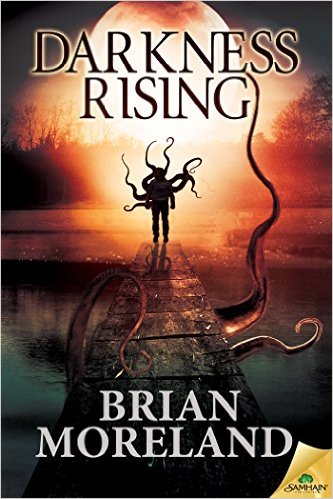










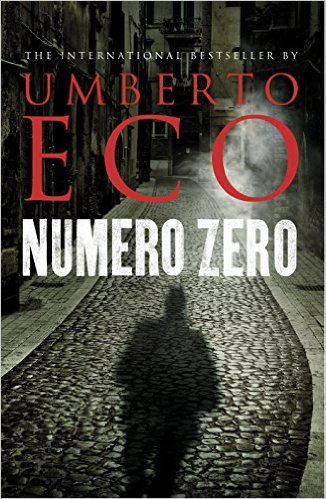


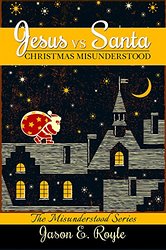


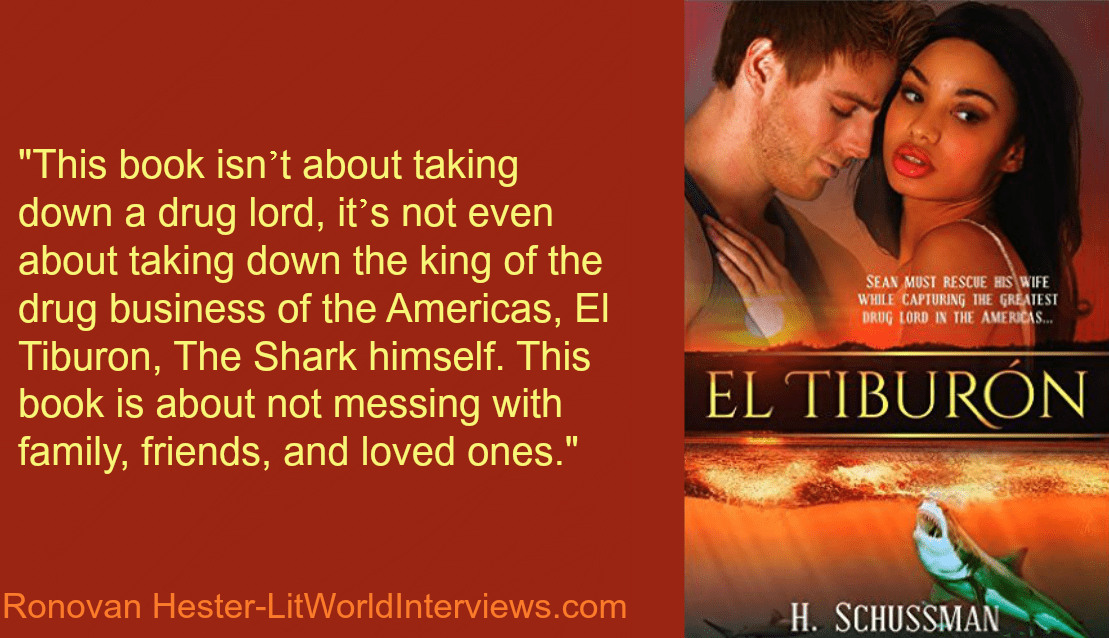
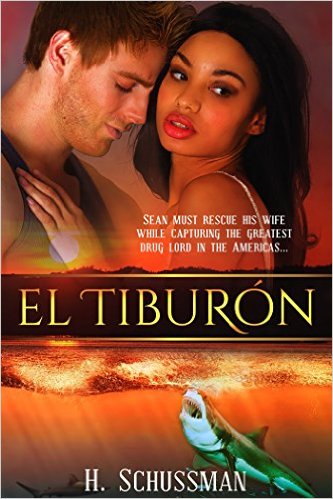





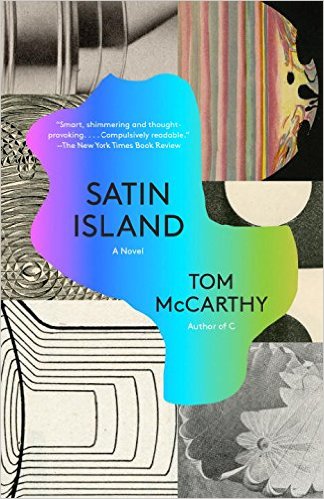





 Lit World Interviews