I am a language teacher, writer, bookworm, and collaborator at Sants 3 Ràdio (a local radio station in Barcelona, where I returned in 2018), who lived in the UK for 25 years and worked for many years as a forensic psychiatrist there. I also have a Ph.D. in American Literature and an MSc in Criminology. I started publishing my stories, in English and Spanish, in 2012 and now have over twenty books available in a variety of genres, a blog (in English and Spanish), and translate books for other authors (English-Spanish and vice versa). In 2020 obtained the CELTA certificate as a language teacher, and offer Spanish and English classes. Writers and readers both in English and Spanish are my friends, colleagues, and allies, and after living in the UK for over twenty-five years, have returned home, to Barcelona, Spain, searching for inspiration for my stories. I also love owls and try to keep fit following fitness YouTube videos.
Do feel free to connect with me. Here are:
My website/blog:
http://OlgaNM.wordpress.com
ISBN13: 978-0857534705 ASIN: B019CGXV08 Published: August 11th 2016 Pages: 348 Genre: YA, Survival, Action & Adventure
Description:
Sean Harker is good at two things: stealing cars and fighting. One earns him money, the other earns him respect from the gang that he calls family.
A police chase through the city streets is just another rite of passage for Sean . . . as is getting nicked. But a brutal event behind bars convinces him to take charge, and turn his life around.
Now he must put his street skills to the ultimate test: as a soldier in the British Army. And the battlefield is London, where innocent people are being targeted by a new and terrifying enemy.
Undercover, under threat – only Sean Harker can save the streets from all-out war.
Body of review:
Thanks to Net Galley and to Penguin Random House UK Children’s for providing with a free copy of this book in exchange for an honest review.
This is the first novel I’ve read by Andy McNab and I was intrigued by his foray into young adult writing and particularly by the main character. Sean Harker is a young boy (sixteen at the beginning of the novel) who loves cars and speed, whose life has been quite difficult, with no male role figure, a mother who has struggled through difficult and often violent relationships and he find his identity and his sense of self through his belonging to a gang. He ends up in prison and is given the opportunity to join the army and make good. Although at first it sounds to him as if he’d be betraying his friends, when one of those comes to a bad end, he rethinks his priorities. But not everything is plain sailing and old acquaintances and new temptations come his way.
The story is set in the UK (and it uses its location, and particularly London at the end, in a very effective and spectacular way), told in the third person, from the point of view of the young protagonist, Sean, who is street wise but not always good at fully appraising his circumstances or seeing the whole picture. He has his heart in the right place (he feels for his friends, is loyal and wants to protect his mother, and dislikes the racist and sexist comments of some of the other members of his unit) but he can be manipulated and influenced by those more experienced than him. Although the story does not go into psychological depths regarding Sean’s personality and thoughts, and it does not dwell in detail on his past, there is enough to make him sympathetic, and his reactions, doubts, mistakes and fears are all too recognisable and real. He is the small guy everybody tries to take advantage of, who doesn’t know whom he can trust, but he eventually finds his way.
There is plenty of action, including violence (and traumatic and sad events) and use of swearwords (although this is not extreme considering the genre), and the novel deals with difficult subjects throughout, including: suicide, extreme maiming and death of a teammate by bombing, terrorism, ultra-right politics, gang warfare, domestic violence, imprisonment… The pace is fast, fluid, and there’s not let down of tension and intrigue. It is a true page-turner, and although at times it seems about to go on a dangerous direction, it pulls it all together beautifully at the end. The protagonist is put to the test emotionally, physically and psychologically and although his reasons might be good (or so he thinks) he makes many mistakes. Thankfully he is given a second chance and he proves himself worthy of it.
At the end of the book the author identifies himself with the main character and explains that his life circumstances were quite similar to those of Sean Harker and how he was also given a chance and now he spends part of his time going to schools to spread the word. The character and McNab’s own story made me think of many young men I’d met in prison (when I worked as a forensic psychiatrist) whose lives and circumstances were not that different to those of the character depicted in this novel. I just hope they all have the chance, the opportunity and the will to make good too.
Street Soldier is a great read for young adults (and adults) who like action, a well-plotted book, full of tension and emotions. It also delivers a positive and wholesome message and I can see it turned into a successful TV series or an action film. I’m sure this won’t be the last of Andy McNab’s books I’ll read.
Ratings: Realistic Characterization: 3.5/5 Made Me Think: 4.5/5 Overall enjoyment: 5/5 Readability: 5/5 Recommended: 4.5/5 Overall Rating: 5/5
Buy it at: Format & Pricing: Paperback: $7.78 Kindle: $ 14.09
Hi all:
I’ve had a bit of a crazy week and when I was thinking about this post it occurred to me that sometimes it’s not always about new stuff (the wheel was invented quite a while back) but about sharing something one has come across that seems to cover a fair amount of ground, both things that we might know and have tried already and others that we haven’t.
Thanks to Unsplash for another colourful image
This article by Derek Murphy is one of those. 29 New Ways to Sell More Books Right Now (check here) goes through a variety of options, from following authors you like in Twitter, to setting up local events with other authors, from having the first book in a series perma-free to giving away book by famous authors in your genre to attract more followers.
Go and visit, follow Derek’s blog and see if any of his suggestions resonate with you. The beauty is that they are very different, and go from things that require little time investment to those that might attract those of us who prefer a challenge.
I hope you find them useful.
Thanks to Derek Murphy for his blogpost, thanks to you for reading, and if you’ve enjoyed it, like, share, comment and CLICK!
I’ve been promising you for a while that I’d be back with some more interviews to writers who had had their books translated to English. But summer can be a very busy season, not only in the writing department but also with school holidays, personal things, etc, so there has been some understandable delay.
Finally today I bring you Mo de la Fuente. My confession… I was the one to translate her book. I have appended my review at the end, although this is my review of the novel in Spanish (I don’t comment on the quality of the translation. Mo has been kind enough to tell me that she has enjoyed the English version too, and I recommend the story wholeheartedly).
Mo told me she couldn’t find any pictures she liked of herself (although I can tell you I like all her pictures), so….
The Quiet Island by Mo de la Fuente. Translated by Olga Núñez Miret
When and how did you start writing?
I had always written short stories because I didn’t have the patience required for a novel. When I got the idea for my first book Ojalá Paula (Hopefully, Paula) I realised that it was time to sit down quietly in front of the computer and dedicate to the story a bit longer than just a few hours.
Describe briefly your experience as an independent author:
I imagine that my story is that of most independent writers. After sending my manuscript to many publishing companies and having it rejected, Amazon seemed to be a good way to share what I do. The main problem I’ve had is promoting the novel, because sometimes one has to make hard choices between carrying on writing or dedicating one’s time to marketing and selling the books. The advantage: the freedom to write what you want within the deadline you choose for yourself. Zero pressure.
The moment that I remember with the most affection (until now) in all my experience as a writer is the first positive review of my book and, of course, the many hours I spend writing.
Favourite genre:
I don’t have a favourite genre. I’m a compulsive and eclectic reader. I read almost everything.
What made you decide to translate your work? And what process did you follow to find a translator?
I decided to translate the novel because my sales were increasing day by day in the United Kingdom. When it was time to choose a translator I chose Olga Núñez Miret because she had the characteristics I was looking for: a writer in her own right and one who lived in the United Kingdom.
Tell us a little bit about your novel.
The Quiet Island is a police procedural story with a very singular backdrop, a magnificent island close to Alicante, and I think the profile of the protagonists is pretty unique too. The public have particularly liked the character of Mónica Esteller, sub inspector in the case, with a troubled past that is slowly uncovered throughout the novel.
Any advice for fellow writers (especially new writers).
I don’t think I’m the best person to give any advice other than to enjoy writing and to keep your feet firmly on the ground at the moment of publishing. What I mean is: it’s difficult to live of your writing. It’s likely that one’s favourite book struggles to find any readers but, what does it matter? Apart from any success of sales, a true writer will never be able to stop writing, so, let’s enjoy it!
And here, the description of the novel and my own review:
As dawn breaks, the usual calm of a tiny quiet Mediterranean island is shattered by the news. A teenage girl has gone missing. Inspector Villanueva, temporarily transferred to the island, and sub-inspector Esteller must fight against the elements, the lack of resources, and their own demons to solve the mystery of what happened in a place where nothing ever does.
My review. An island, a Mystery and Unforgettable Characters.
I don’t read exclusively a single genre, although I freely admit that I like thrillers and I read quite a few of them. In part because they are like a puzzle we try to solve thanks to the clues the text gives us, in part because I like to see how the writer manages to bring something new to the genre. And for me, no matter what type of story I’m reading, finding interesting characters I can connect with it’s the most important thing.
This novel takes place in the in the small island of Tabarca, in the Mediterranean, off the shore of Alicante. As several of the reviews of the book note, reading the novel makes one want to visit it, because of the wonderful descriptions of the peace and quiet, the thought of a place with no cars, without pollution, and calm. In such a small place, where everybody knows everybody else (apart from the tourists, of course) and where nothing ever happens, a girl’s disappearance is an event that upsets everyone. And when Clara turns up dead, things only take a turn for the worse. The combination of the place and the setting with the investigators: Hernán, an inspector sent there god knows why, Mónica, who had been sub-inspector in Barcelona but decided to quit due to personal reasons, and Raúl, the only one not hiding from something and who is totally happy there, works beautifully.
The investigation is hindered by circumstances (even with the arrival of the inspector, there are only three police officers in the island, there’s no lab, and now way of following correct protocol) and the lack of resources (an excellent commentary on the budget cuts Spain is suffering) and little by little we discover more details about the island’s inhabitants and about the members of the police. I really enjoyed the ending (that I won’t talk about in detail as I don’t want to spoil the surprise) and it rounds up a novel that although short is long enough to intrigue and touch us.
I found Mónica’s personal story, closely related to the case, fascinating, and it would make a great novel (or more than one) on its own. Apart from the details, for me the author manages to portray complex psychological aspects and the reactions of the characters in a very accurate manner, by using several points of view, that help the reader get under the skin of the characters, sharing in their emotions and their life experiences. For me, Mónica, María (the victim’s mother) and the island of Tabarca stand out in the narration and I’m sure I won’t forget them in a hurry.
I recommend this book to readers who love mystery novels that go beyond the usual, psychological thrillers and extraordinary settings.
Thanks so much to Mo for the interview and for her novel, thanks to you all for reading, and remember, like, share, comment and CLICK!
As some of you might know, apart of contributing to this blog and having my own blog, where I share reviews and other things, I’m also part of another group of reviewers, Rosie’s Book Review Team and one of the other members of the group, Terry Tyler, has had a fabulous idea to encourage people to post reviews. Below is the post! (And don’t forget to check both blogs, especially if you are interested in new books and enjoy reading reviews. And if you’re an author, you can also submit your book to Rosie’s site, here). And if you’re bloggers, don’t forget to spread the word and the love.
The idea is that, from August 1st, everyone who reads this uses their Amazon account to post just one review on one book that they’ve read (but feel free to carry on if you get in the swing!). You don’t even have to have read it recently, it can be any book you’ve read, any time. The book does not have to have been purchased from Amazon, though if it is you get the ‘Verified Purchase’ tag on it; however, if you download all your books via Kindle Unlimited, as many do these days, they don’t show the VP tag, anyway.
Remember, this isn’t the Times Literary Supplement, it’s Amazon, where ordinary people go to choose their next £1.99 Kindle book. No one expects you to write a thousand word, in-depth critique; I don’t know about you, but I’m more likely to read one short paragraph or a couple of lines saying what an average reader thought of a book, than a long-winded essay about the pros and cons of the various literary techniques used. Yes, those are welcome too (!), but no more so than a few words saying “I loved this book, I was up reading it until 3am”, or “I loved Jim and Vivien and the dialogue was so realistic”, or whatever!
Why should you write a review?
They help book buyers make decisions. Don’t you read the reviews on Trip Advisor before deciding on a hotel, or any site from which you might buy an item for practical use? Book reviews are no different.
If the book is by a self-published author, or published by an independent press, the writers have to do all their promotion and marketing themselves ~ reviews from the reading public is their one free helping hand.
The amount of reviews on Amazon helps a book’s visibility (allegedly). If you love a writer’s work and want others to do so, too, this is the best possible way of making this happen.
It’s your good deed for the day, and will only take five minutes!
Off we go, then! A few more pointers:
If you need any help with writing your review, do click on Rosie’s post, above.
A review can be as short as one word. The shortest one I have is just two 🙂
You don’t have to put your name to the review, as your Amazon ‘handle’ can be anything you like.
No writer expects all their reviews to be 5* and say the book is the best thing ever written; there is a star rating guide on Rosie’s post.
Would you like to tell the Twittersphere about your review? If so, tweet the link to it with the hashtag #AugustReviews ~ and thank you! I will do one blog post a week featuring these links: The #AugustReviews Hall of Fame (thank you, Barb!).
If you have a blog and would like to spread the word about #AugustReviews, please feel free to copy and paste this blog post, provide the link to it, re-blog it, or whatever ~ many thanks, and I hope you will join in to make this idea a success 🙂
Thanks for reading and please, share, like, comment, CLICK and REVIEW! Ah, and remember, share your Amazon review (as we want to make sure people know you don’t need to be a blogger or share your reviews in a blog to write a review!)
Recently I’ve read some great posts about reviews: how to get them, how to avoid things that annoy reviewers, and even posts recommending free books on the subject. You might have read them all, but just in case you haven’t, I thought I’d post them here.
How to Get Good Reviews by Theo Rogers (remember to check the price!)
The first one that came to my attention was a post by Nicholas Rossi, where he mentioned a free book (this one) that was still free when I wrote this post but do make sure that’s still the case, and also some updates on other interesting sounding books on similar topics. You can check Nicholas Rossi’s post here. Do follow his blog if you haven’t as he shares a wealth of knowledge and is a great writer.
That post resulted in a comment by Beetley Pete, a great blogger and a top reviewer in Amazon (do check his blog especially if you like dogs, photographs and pretty good writing too. See here, for instance ), where he provided a review on the said book. He made such great points that Nicholas created a post sharing that comment. Check here.
This morning I read a post with the title Top 7 Book Reviewers Complaints in the blog Indies Unlimited. I’ll share the list but you can (and should) read the full post, and contribute to the discussion, here.
According to the post these are the seven top complaints by reviewers:
“…he woke up and it was all a dream.” Done to death and back as a zombie too.
“She could see the insanity creeping into his eyes.” Not the best way to justify a character doing out of character things. (I’m a psychiatrist and this is a particular bugbear of mine.)
“He asked…” “…she answered.” I’m sure there are full volumes on dialogue tags but…
Lack of Dialog (Can result in a lot of telling and not showing)
Too Much Dialog (This is a bit of a personal taste, but it depends on the type of book. The writer of the post likes dialog and so do I)
Too Much Description. Might depend on the genre but…
Too Much Background. Like before
And Others
Don’t forget to check the full article and comment here.
If after all that, or perhaps after doing more reading on it, you still want to approach reviewers, I got a link to The Book Reviewer Yellow Pages here. Good luck! (I have no personal experience of that page but do let us know if you do).
PS: After publishing this post I just read a post by Rosie Amber about writing reviews, the reasons some people don’t and suggestions as to how to go about it, so I had to share it. Check here(and do follow her blog too for great reviews and also for a great way to get reviews if you’re an author).
Thanks all for reading, don’t forget to visit the blogs and follow the bloggers and good luck finding reviewers. And readers remember that reviews are a great way to share your love of books and to support writers!
You might remember that last week I wrote a post asking the above question and listed a few reasons why authors might consider translating their books. (In case you missed it, here it is. As I translate from English to Spanish and vice versa I had prepared a talk about the subject and it occurred to me that I could sample some points of it here). I found the discussion that followed the post interesting, and Teagan Geneviene (I recommend her blog if you love great stories and recipes, check it here) reminded me of a story I had told her about some of my experiences when using Fiberead to get my book translated for the Chinese market. And I thought you might find it interesting. I surely did.
It brought to mind how I had started originally the presentation about translations…
Here it is:
What does the word ‘translation’ bring to your mind?
In my case, it always makes me think of a scene in Sofia Coppola’s Lost in Translation. Bill Murray plays an actor filming a spirits’ advert in Japan (I think it was brandy) and the director is giving him instructions. As he doesn’t understand Japanese, there is an interpreter. The director talks for several minutes, gesticulating, quite intensely. He eventually stops talking and the interpreter just tells him that he wants him to say the lines looking at the camera. ‘Is that all he said?’ Yes, we’re never quite sure. (By the way, you can watch the scene that goes on, here:
Of course, that’s interpreting (rendering live and orally a conversation, conference, speech…) whilst translation implies a written piece of work, but there are connections.
It also makes me think of the risks of mistranslating texts. In the case of the Bible mistranslating a Hebrew word and instead of rendering it as ‘beam of light’ it ended up becoming ‘horn’ and we have poor Moses depicted with horns (and not only in Michelangelo’s famous sculpture, that judging by the small size of the horns, makes me think that he wasn’t that convinced about the translation). Oh yes, if you’ve used Google Translate (that seems to be improving, to be fair) you know all about that.
And now, I wanted to tell you a bit about my experiences with Fiberead, that is a website that offers you to get your books translated for the Chinese market. If they are interested, you give them the rights to the translation for a number of years, and you spilt the earning with them and with the translating. Yes, team…
What happens is that a team leader or manager decides that your book is worth translating, and then they set about getting a team of translators to translate the book. I’m not sure how the division of work is made, but I know you get notifications when evidently translators provide a sample translation and the team leader decides if it’s good enough. Once they think they have a big enough team, they start the process. The beauty of it is that they contact you with questions if they have them. In general in my case it’s been mostly the team managers but sometimes also other members of the team.
I realised when they started to ask me about my YA novella Twin Evils?, asking me if Lucifer and Satan were the same, and asking for the meaning of references to angels playing harps or being dressed in white, that of course, although the novella is not religious, such content would not be understood in a mostly non-Christian country. And although I tried to send them links to images of angels playing the harp, I am also aware that some links to websites might not work there. We might assume that certain things are common knowledge, but the world is huge and people’ s beliefs and lifestyles very different to ours.
Some of the other questions showed extreme literalness. It might be to do with the language, but when I tried to explain that I prefered to allow the readers to make up their minds as to why characters might say or do certain things (whatever I thought the reason was) they wanted a full explanation. I suspect ambiguity is not a well-received quality.
I had some interesting and curious exchanges too, like a policeman who told me he was translating one of my thrillers (so far, although not published yet as they’re still in production, they are working on both of my Escaping Psychiatry stories and have also translated Family, Lust and Cameras, so they seem intrigued by my thrillers) and really enjoying it, and I had the manager for the translation of one of my books asking me for help understanding a couple of pages she was trying to translate for a different project.
Ah, and to give them their due, they caught a mistake that neither I, nor quite a few readers and editors of both my Spanish and my English book had seen, so, kudos to them.
Here I leave you the cover of the other one of my books available so far (and that although it hasn’t been out very long, it seems to be doing much better than Twin Evils? and for sure much better in the Chinese version than in Spanish and English).
Family, Lust and Cameras by Olga Núñez Miret version for the Chinese market
Thanks very much for reading, and if you’ve found it interesting, please, like, share, comment, and CLICK!
As some of you may know, apart from blogging here and in my own blog , I am a writer and I translate books from English to Spanish and from Spanish to English. A few months back and as part of a book fair I was asked to talk about translations and I prepared a few notes. Although the full speech is a bit lengthy for a single post, I thought that in preparation for further interviews with author translating their books (and by the way, any authors who’ve had their books translated to Spanish, I’d be more than happy to share them in my blog after the summer. Just get in touch) I thought I’d share some of the thoughts I had on possible reasons to get one’s books translated.
Why would anybody want to have their books translated?
We all know how big a competition we face to try and sell books. Making it available to a wider audience is always a great idea. In the case of Spanish, it has 518 million speakers across the world, 427 as a native language. It is also one of the six official languages of the United Nations. It is also used as an official language by the European Union, the Organization of American States, and the Union of South American Nations, and by many other international organizations.
These new markets are also less crowded. Although the offer in Spanish is increasing, the number of e-books available in Spanish is much smaller than that in English. And of course there are retailers that will be more interested in Spanish books.
The same as is the case in English, there are blogs, Facebook pages, reviewers, reporters, critics, writers and readers looking for books in Spanish. I can say that with regards to other writers, I’ve found it easier to get in contact with writers who are best-selling authors, even across the whole of Amazon, in the Spanish language, than it is getting to know the big sellers in English. (Of course, some markets like Amazon Spain or Mexico are smaller, but still…)
One never knows when chance of pure luck might strike. I know a Spanish writer called Enrique Laso, whose books have been translated to many languages and who told me that although he has no idea why, his books translated to Greek have been great hits there. It’s impossible to know what might strike a chord with readers in a particular market.
I’ve read many posts by writers talking about how exciting it is to see your first book published and, in the case of paperback, have it in your hands. Well, I must confess seeing one of my books translated to Chinese made me feel equally excited. (Although you won’t be able to buy it in Amazon.Chn is also available in Amazon.com…) And I had to share it here.
Twin Evils? Chinese cover. Of course it’s also available in English and in Spanish as ‘Gemela Maldad’
I know of authors who are working on the idea of publishing their books in bilingual editions and indeed they might provide a good option for marketing as an aid to language learning.
Thanks to you all for reading, and if you’ve enjoyed the post, I might share some more bits of the full original, and please, share, like, comment and CLICK!
I read a comment in a blog where somebody noted they were not sure how to programme a post and I decided to take that chance to do a video on the subject.
Here it is (and if you have any requests for other videos, and I can be of help, please let me know).
Thanks very much for reading (or watching in this case) and if you know anybody who might be interested, please, like, share, comment and click.
Title: The Fireman Author: Joe Hill ISBN13: 978-0062200648 ASIN: B016P01YCQ Published: May 17th 2016 Pages: 768 Genre: Contemporary Fiction/ Science-Fiction/ Action-Adventure
Sorry for being a bit scarce on the posts, but we’ve had some health problems in the family and although hopefully things are better, I’m still trying to catch up with everything. But I’ve managed to do a bit of reading and I thought I’d try and share some of those with you all.
Today’s novel is by an author I’m keeping watch for. I’ve mentioned before that I love horror (although I don’t read it all that often these days) and I’m a big fan of Stephen King. Well, if you haven’t met him yet, let me introduce you to the latest book by one of his sons, Joe Hill.
First, the description:
From the award-winning, New York Times bestselling author of NOS4A2 and Heart-Shaped Boxcomes a chilling novel about a worldwide pandemic of spontaneous combustion that threatens to reduce civilization to ashes and a band of improbable heroes who battle to save it, led by one powerful and enigmatic man known as the Fireman.
The fireman is coming. Stay cool.
No one knows exactly when it began or where it originated. A terrifying new plague is spreading like wildfire across the country, striking cities one by one: Boston, Detroit, Seattle. The doctors call it Draco Incendia Trychophyton. To everyone else it’s Dragonscale, a highly contagious, deadly spore that marks its hosts with beautiful black and gold marks across their bodies—before causing them to burst into flames. Millions are infected; blazes erupt everywhere. There is no antidote. No one is safe.
Harper Grayson, a compassionate, dedicated nurse as pragmatic as Mary Poppins, treated hundreds of infected patients before her hospital burned to the ground. Now she’s discovered the telltale gold-flecked marks on her skin. When the outbreak first began, she and her husband, Jakob, had made a pact: they would take matters into their own hands if they became infected. To Jakob’s dismay, Harper wants to live—at least until the fetus she is carrying comes to term. At the hospital, she witnessed infected mothers give birth to healthy babies and believes hers will be fine too. . . if she can live long enough to deliver the child.
Convinced that his do-gooding wife has made him sick, Jakob becomes unhinged, and eventually abandons her as their placid New England community collapses in terror. The chaos gives rise to ruthless Cremation Squads—armed, self-appointed posses roaming the streets and woods to exterminate those who they believe carry the spore. But Harper isn’t as alone as she fears: a mysterious and compelling stranger she briefly met at the hospital, a man in a dirty yellow fire fighter’s jacket, carrying a hooked iron bar, straddles the abyss between insanity and death. Known as The Fireman, he strolls the ruins of New Hampshire, a madman afflicted with Dragonscale who has learned to control the fire within himself, using it as a shield to protect the hunted . . . and as a weapon to avenge the wronged.
In the desperate season to come, as the world burns out of control, Harper must learn the Fireman’s secrets before her life—and that of her unborn child—goes up in smoke.
Now, my review.
Thanks to Orion Publishing Group Gollancz and to Net Galley for providing me a free copy of this book in exchange for an unbiased review.
I have read three books by Joe Hill before, enjoyed them and I was excited when I saw his new novel on offer at Net Galley. In short, the book offers a post-apocalyptic vision of a world decimated by a fungus with a lyrical name, Draco incendia trychophyton (or Dragonscale for friends), that turns human beings into torches, and the adventures of a particular group of sufferers.
Joe Hill thanks both J. K. Rowling and his father, Stephen King, for the inspiration, and indeed that’s quite evident throughout the book, together with many references to a variety of pop-culture items: songs from musicals, songs from pop and rock groups (yes, there’s a fair amount of singing), hymns, foodstuffs, cars, TV cult series and books, many books. Those will, no doubt, enhance the reading experience of people in the know, although should not affect the understanding or enjoyment of the story for those who might not be fully conversant with all of them.
The story is told (mostly, apart from a few brief chapters) in third person from the point of view of Harper, a school nurse who volunteers to work in a hospital treating those affected when the school she worked at closes doors due to the spread of the infection and its terrible effects (the fungus makes people ignite, and with them, the things and beings around them. And it can set off a chain reaction of burners too). Unfortunately, she becomes infected and shortly after discovers that she’s pregnant. She also discovers that her perfect marriage to Jakob is anything but, and she ends up taking refuge at an old campsite where a group of affected individuals have discovered a way to control the illness. They welcome her into their congregation/community and although she finds it difficult to fit in at first, she becomes a member of the group, joining in the Bright (you need to read it to know what this means, but let’s say it’s a way of sharing and communicating that the younger generation refers to as social networking) and comes to love many of the residents. She also discovers things about herself she didn’t know, and of course, she meets the Fireman, John, and Englishman who seems to have learnt to control the Dragonscale much better than anybody else, and goes around driving an old fire truck and dressed in a fireman’s uniform. In a nod to Ray Bradbury, this Fireman controls fire and sets things alight, rather than putting fires out. He is a larger than life character, although we discover later in the books that he’s all too human.
As is the case in all crises, they seem to bring both the best and the worst in people, and if the point of view we follow puts readers in a sympathetic frame of mind towards Dragonscale sufferers, we gradually see that things are not black and white and not all is harmony. The congregation seems happy and a haven for people infected at first (indeed for a while it’s a case of those infected —at least the members of the group— appearing to be more humane and morally right than healthy individuals), but over time we discover that whilst the fungus seems to enjoy people’s connectedness and happy emotions, there are risks involved in channelling such power and following blindly what ends up looking scarily like a cult. There are thefts, accusations and resentments, and when two prisoners are rescued, terrible things happen and ugly behaviours rear their heads. There are many secrets, and although we might have our suspicions, by being inside of Harper’s head we only have access to her opinions and thoughts. She is curious and finds out some interesting first-hand information that helps us understand the illness (I loved some of the theories behind its spread, however fanciful they were), but she is also a human being with feelings and emotions. She doesn’t always make rational decisions and she is often wrong. And she wrongfoots us.
The characters are distinct and unique, the good, the bad, and the truly human. I liked and cared for Harper, who is a pretty special individual who comes into her own as the book advances and who indeed is one of the people who grow. She matures and becomes a hero. If her husband tells her he had expected her to be his inspiration, she finds a real family and a calling during her adventures. The Fireman is a fantastic character and I enjoyed the mystery around him at first, and also getting to know more of his circumstances. Many of the secondary characters are also memorable. Nick, the deaf boy who steals everybody’s heart; Allie, his sister, a totally believable teenager who deserves a book of her own; fantastic Renée with her love for books and her courage…
The books is beautifully written, the descriptions not overbearing but vivid and lyrical at times, the story moves along at good rhythm, with chapters that are more contemplative and share information (like the diary Harper reads), and others packed with intrigue, action and a healthy dose of fright. I thoroughly enjoyed it, although I did not find it truly scary (but that’s not necessarily a recommendation for general readers, as I love horror and don’t scare easy). With regards to its genre, I’ve read a few post-apocalyptic stories but I’m not a real buff. To give you some idea based on my previous reading, I’d say that Station Eleven by Emily St. John Mandel is more contemplative, challenging, philosophical, and made me think more. The Dead Lands by Dylan Morgan (that is more sci-fi) is scarier and grittier but more interested in action and weaponry.
I had a look at the reviews and comments about the book to see if I could shed light or at least my own opinion on the matter. I saw that many people compared it negatively to King’s The Stand, but although I love Stephen King’s books, I have not read all of them and that one has escaped me so far, so I can’t comment on that (although the reviews made me want to read it. The Fireman is much shorter, though). So if you’ve read The Stand and loved it you might want to read the comments first. Of course, you might want to make your own mind up.
Some others didn’t find Harper’s romantic relationship (I’m trying not to reveal any spoilers here) realistic and they think it seems very sudden and as if come out of nowhere. On that subject I agree that there does not seem to be a big build-up or many hints as to the interest between the two, but there are some subtle indications that they are matching souls, and it’s true that at times of emotional turmoil when life might come to an end at any minute one might hold on to the little moments of joy (that without taking into account the interesting effects of the Dragonscale). The novel would have worked without the relationship, but for me it rounds it up.
I enjoyed it as a great yarn, with strong characters easy to root for (and others easy to hate) and great quality writing. I’m not sure it will beat all other post-apocalyptic stories for those who love the genre, but it’s a good read. I look forward to Joe Hill’s next book.
Author Joe Hill
I mention in the review that I’ve read three of his books. These was before I started publishing my own books and I didn’t write detailed reviews, although I wholeheartedly recommend Heart-Shaped Box and 20th Century Ghosts (if you love ghosts and short-stories, some of them are masterpieces). I also read Horns that is a very quirky book (I prefer the other two but this one is perhaps more mainstream. I haven’t watched the movie with Daniel Radcliffe and can’t comment on how good or bad it is).
Biography:
He’s written many more things and some of his stories appear in collections, so you might want to check his Amazon page where I got this from:
The author of the critically acclaimed Heart-Shaped Box and 20th Century Ghosts, Joe Hill is a two-time winner of the Bram Stoker Award, and a past recipient of the Ray Bradbury Fellowship. His stories have appeared in a variety of journals and Year’s Best collections. He calls New England home.
By the way, when I checked his Twitter account it seems he’s in England with the Fireman, so you might want to keep an eye open for him.
Ratings:
Realistic Characterization: 4/5 Made Me Think: 4/5 Overall enjoyment: 4.5/5 Readability: 4.5/5 Recommended: 4/5 Overall Rating: 4.5/5
Today I bring you a new(ish) book, the last one (so far) in John Dolan‘s Time, Blood and Karma series. I had read the other three books in the series, a shorter story related to it, and a collaboration between the author and Fiona Quinn (Chaos Is Come Again. See review here) and I was eager to read this one. When I reviewed the third novel in the series A Poison Tree in my own blog, I took the chance to share the previous reviews again too, so you can read it here. As I say in the review, it’s important that one reads all the books so don’t hesitate to read the review and the books. But without further ado, here is the review.
Running on Emptiness by John Dolan
Running on Emptiness (Time, Blood and Karma, Book 4) by John Dolan Revenge, death, family and an endings of sorts
“Today, there will be a reckoning.”
It is the summer of 2006. In Thailand, the army makes preparations to overthrow the elected government of Thaksin Shinawatra.
Against this backdrop of political turmoil, destinies are shaped as events ensnare a corrupt Police Chief and his dying wife, two warring drug lords, an embittered widow, and a vengeful gangster.
While dreams and obsessions play out on the streets of Bangkok, private detective David Braddock finds himself mired in guilt. The ghosts of his past misdeeds are coming home, and they are bringing devastation in their wake.
‘Running on Emptiness’ is the fourth volume in the ‘Time, Blood and Karma’ series.
The ‘Time, Blood and Karma’ series will appeal to lovers of the following book categories: mystery, thriller, crime, Thailand fiction, private investigators, British detectives, and amateur sleuths.
And here, my review:
I received a copy of this book in exchange for an honest review.
I’ve read all the novels in the Time, Blood and Karma series by John Dolan and have enjoyed them enormously. I read many genres, but I am quite partial to mystery/thrillers. And these ones have a very special protagonist, David Braddock, and amateur detective (or rather a not professionally recognised and trained detective, but he is pretty good and gets paid for his efforts) and again a non-professional therapist, a British man but who lives in Thailand, an amateur philosopher who regularly visits an old Buddhist monk (his best friend), who has interesting an complex relationships with many women and a past full of ghosts.
Whilst the third book in the series, A Poison Tree explored and explained David’s back history and his life in the UK, Running on Emptiness continues with the adventures of Hungry Ghosts where we, the readers, were privy to some information that left us hanging and waiting for disaster to strike. We have a gangster determined to avenge his brother’s death (the only meaningful thing he has left to do in life), a dying woman who before ending her life in her own terms (remaining in charge of her meaning) reveals a dangerous secret, another woman who after losing her job realises she’s been living a lie and tries and find meaning by coming clean, an old man who, disappointed by his children, decides to revisit a shady past he thought he’d left behind to do the right thing. Each chapter is told from a different point of view, and that includes the characters whom we might think of as the good guys (but nobody is blameless, honest and truthful in this novel, at least none of the characters whose points of view we follow), but also the gangsters, corrupt policemen and killers. The action takes place in England (we start with a wedding and we end with a funeral) and Thailand, we have political unrest, and there is also a murder case to solve with magic trickery thrown in, where Braddock (and Dolan) follow on Agatha Christie’s footsteps and pull off a brilliant piece of sleight-of-hand engineering.
The story is told at a good pace, the writing is impeccable and lyrical at times (particularly on the parts from David Braddock’s point of view. He is witty and forever quotable), I must confess I cheered at a point towards the end (but I’ll keep my lips sealed as I don’t want to spoil it for anybody), and in the end, although there are some questions and unresolved issues, I felt we’d reached the end of an era. The complex and alternative life Braddock had built for himself, in an attempt at escaping reality, comes crushing down around him, taking no prisoners. By the end, although Braddock might not know everything, he’s lost a lot and learned a fair deal about himself, about the people he cares about, about his friends, and about life itself.
I recommend this book to lovers of thrillers and mystery stories with great main characters, those who have a penchant for philosophy and reflections on the nature of life, particularly if you’re intrigued by Thailand, and in general those who love good and memorable writing. But, do read the whole series in the right order, because the sum of its parts is much greater than the individual novels. Congratulations to John Dolan on his epic series. I won’t forget Time, Blood and Karma any time soon. And I’ll be waiting eagerly for more of novels, in the same or other series.
Ratings: Realistic Characterization: 4.5/5 Made Me Think: 4.5/5 Overall enjoyment: 5/5 Readability: 4/5 Recommended: 5/5 Overall Rating: 5/5
Buy it at: Format & Pricing: Paperback: $13.49 Kindle: $ 3.99
Let Me Tell You About a Man I Knew by Susan Fletcher
REVIEWS FOR LITERARY WORLD REVIEWS
Title: Let Me Tell You About A Man I Knew Author: Susan Fletcher ISBN13: 978-0349007618 ASIN: B010PDPCBI Published: 2nd June 2016 Pages: 272 Genre: Historical Fiction
Description:
Just notice that the book will be released later in the week, on Thursday the 2nd June 2016.
Provence, May 1889. The hospital of Saint-Paul-de Mausole is home to the mentally ill. An old monastery, it sits at the foot of Les Alpilles mountains amongst wheat fields, herbs and olive groves. For years, the fragile have come here and lived quietly, found rest behind the shutters and high, sun-baked walls.
Tales of the new arrival – his savagery, his paintings, his copper-red hair – are quick to find the warden’s wife. From her small white cottage, Jeanne Trabuc watches him – how he sets his easel amongst the trees, the irises and the fields of wheat, and paints in the heat of the day.
Jeanne knows the rules; she knows not to approach the patients at Saint-Paul. But this man – paint-smelling, dirty, troubled and intense – is, she thinks, worth talking to. So ignoring her husband’s wishes, the dangers and despite the word mad, Jeanne climbs over the hospital wall. She will find that the painter will change all their lives.
Let Me Tell You About A Man I Knew is a beautiful novel about the repercussions of longing, of loneliness and of passion for life. But it’s also about love – and how it alters over time.
Body of review:
A beautiful, contemplative and touching novel that brings Provence and Van Gogh’s paintings to life.
Thanks to Virago and to Net Galley for providing me with a free copy of this novel in exchange for an unbiased review.
There are historical (and artistic in this case) figures that set imaginations alight. When I read the description of the book I liked the premise. Rather than being a straight biography of Vincent Van Gogh this novel is built around one episode of Van Gogh’s life, his stay at Saint-Paul-de Mausole, an old-monastery converted into a home for the mentally ill. The story, a third person narrative, is not told from the point of view of the painter, but of Jeanne Trabuc, the wife of the warden, Major Charles Trabuc. She’s the mother of three boys and two girls, but her surviving sons (the girls died at birth) are now grown-ups and have left the family home. Her husband is busy most of the day trying to run the hospital that’s slowly decaying, and her life has become routine and tedious. There have been no new patients for years and she is intrigued by the painter since she first hears about him.
The novel isn’t full of action. Jeanne observes the world around her, and from her thoughts we know she’s always been curious and a woman whose life has spread outside of the boundaries of her everyday life thanks to her imagination. The arrival of the painter brings back memories of her childhood and her dreams of exploring and doing things that others might view as inappropriate or daring. She ignores her husband’s rules and the small town’s gossips and conventions in order to get to know this man. In the process, she learns not only about herself, but she also gains a new understanding of her husband and their marriage.
The Van Gogh we meet in this novel is a man consumed by his art, fond of his brother, seriously ill, but hopeful, at that point, that his illness will improve and he’ll be cured. He is eager to record not the important people and the pieces considered of historical or architectonic interest, but the landscape, the flowers, a moth, olive trees, and everyday people. He finds value and beauty in all things. He only offers Jeanne brief snippets of his life before. The odd mention of flat landscapes in Holland, streets in Arles, a woman he loved, and the incident that brought him there. He paints; he suffers several bouts of his illness and eventually leaves to be closer to his brother and his new-born nephew and under the care of a new doctor. He dies shortly after leaving the monastery of a self-inflicted wound.
The descriptions of the landscape, the seasons, the hospital, and the interactions between the characters are beautiful and poetical. You feel the heat, smell the lavender and the paint, caress the stones and the silk of the yellow dress, listen to the cicadas, and above all, understand this woman’s feelings and experience her emotions. Although I’ve never visited Saint-Paul-de Mausole, now a museum, I felt as if I had, and it is clear that the author is very familiar with the place and has lived and breathed the environment she describes.
I loved the lyrical writing, the feeling of being immersed both in the place and inside Jeanne’s brain and even her body. The characters are consistent, believable and complex human beings. My only doubt was how well Jeanne’s subjectivity, as described on the page, fits in with the background provided. She is a woman who left school at a young age and spent most of the time in the company of a servant with limited social graces and of her father. Her only other contact with the outside world was with the clients of her father’s shop and the people she might meet in her lone walks. She has little formal education (Van Gogh tells her off for leaving school at such a young age, as it was her own choice) although knows how to read and write. But the story, as mentioned before, is not written or told by her in the first person and the author is, in a manner similar to Van Gogh, highlighting that poetry, inspiration and beauty can grow and be found anywhere.
Fletcher acknowledges in a note that she did plenty of research on the subject and tried to be accurate with regards to Van Gogh’s illness and his work whilst at the monastery, but although Jeanne Trabuc and her husband existed (as do their portraits by Van Gogh), the rest of details about their lives are part of her creative (and indeed poetic) license.
Although this is not a book for lovers of action and plot, it is not a difficult or slow read. This is a beautiful, contemplative and touching novel, and a pleasure to read and savour.
Ratings: Realistic Characterization: 4/5 Made Me Think: 4.5/5 Overall enjoyment: 5/5 Readability: 4.5/5 Recommended: 5/5 Overall Rating: 5/5
Buy it at: Format & Pricing: Paperback: $ 19.84 Kindle: $ 11.51
I’ve had a sudden change of schedule and I’ll be travelling and dealing with a number of issues, although I hope I’ll be able to share some posts still. But, if you don’t see me around as often, don’t worry.
In April I attended my first book fair, and this week I finally managed to share some bits of my experience at my blog, and as people seemed to find it interesting, I thought I’d share it with you too. By the way, at the end I mention I’m on the radio, but due to this change in schedule this won’t be the case for some time, although I’m hoping to talk about books in my radio program and will come back to ask for help with that when I’m back to normal.
I hope you enjoy and thanks for your patience.
Here is the post:
I know I’ve been talking about my first book fair in LLandeilo for a while. As usual, on checking my pictures of the day I’ve discovered they’re rubbish, but hey, I’ll share a few so you can see (or guess) how it was.
The good news is that the fair will carry on. There is one booked for Christmas time and there will be another one next April. Check Christoph Fischer’s post about it for more information, here. Oh!, and check his other posts about it as you’re there. We’ve even made the papers!
I discovered my banner was the smallest one. Oh well, not good at blowing my own trumpet. Thanks to my friend Lourdes for the design!
My own reflections about the fair (not sure this is advice or tips, but…)
You might want to take reinforcements with you. It’s always handy to have somebody man (or woman, of course) the fort for you (there are so many people to talk to and books to check! And at LLandeilo there were interesting workshops and talks but I couldn’t go to any of them). Fellow writers kept an eye on the stall, but it’s not the same…
Take supplies of drinks and whatever else you might need. There was catering on site, but I’m not a tea, herbal tea or coffee drinker, and there was no cola to be had there… No caffeine for me! (Of course, if you’ve followed the advice on number one, you can either go and leave the troops covering the stall or send them out for victuals).
I took sweets that seemed to attract people, especially children. Yes, I’d recommend it. I wouldn’t say it helped with the sales, but it got some smiles. Ah, and at the end I shared them with the writers (and the staff working at the hall) when we were putting things away, and after a long day they were very welcome.
Take comfortable shoes. You’ll be standing up most of the time. (The author next to me who was pregnant worried me no end, although she was very enthusiastic).
Pace yourself. I worried that I might have lost my voice before the end of the day (yes, I talk too much). It was a close call (sorry, no luck!)
Put your glasses on when you’re taking pictures!
It’s difficult to find time to network with everything else going on, but it was great to meet the rest of the writers there, Hugh Roberts whom I knew from blogging and hopefully will meet again at the Blogger’s Bash. I did collect information from everybody (I hope!) as I’m planning on featuring writers and books in my radio show.
Of course have change and chat to people. In my case, as I publish in different genres, I never knew well what to open with (pitching 5 different books is not easy). But I tried.
I took some extra stuff to give away (cupcakes book, notebooks…) I didn’t have much chance to give anything away, but of course, the Cupcake recipe book that I had bought for £1 got much more attention than my own books. (When I tried the local market once, the Christmas decorations I got for the table had more success than me. Perhaps I should sell something else).
A few more photos:
The cake
I was looking forward to catching up with Judith Barrow although we were both very busy!Christoph Fischer announcing the winners of the children’s story writing competitions
Oh, and I’ve mentioned my Radio programme! Yes, I’ll tell you more about it, but now I have a regular (sort of) programme at Penistone FM, on Thursdays from 1 to 3 pm (UK time). I hope to talk about books and with a bit of luck bring in quotes and information about indie writers (although I don’t have much time to talk). Here is the link to listening online.
I’m on the radio!
Thanks to all for reading, visit Christoph and Hugh’s blogs and don’t forget to like, share, comment, and CLICK!
ISBN13: 978-0718026820 ASIN: B010R7HOR2 Published: Thomas Nelson 3rd May 2016 Pages: 416 Genre: Christian Books, Religious and Inspirational, Literary
Description:
“IN A LIFE FULL OF LIES, HE FINALLY SETTLED FOR THE TRUTH.”
No one in Mattingly ever believed Bobby Barnes would live to see old age. Drink would either rot Bobby from the inside out or dull his senses just enough to send his truck off the mountain on one of his nightly rides. Although Bobby believes such an end possible—and even likely—it doesn’t stop him from taking his twin sons Matthew and Mark into the mountains one Saturday night. A sharp curve, blinding headlights, metal on metal, his sons’ screams. Bobby’s final thought as he sinks into blackness is a curious one—There will be stars.
Yet it is not death that greets him beyond the veil. Instead, he returns to the day he has just lived and finds he is not alone in this strange new world. Six others are trapped with him.
Bobby soon discovers that this supposed place of peace is actually a place of secrets and hidden dangers. Along with three others, he seeks to escape, even as the world around him begins to crumble. The escape will lead some to greater life, others to endless death . . . and Bobby Barnes to understand the deepest nature of love.
Body of review:
Have you ever thought what being dead would be like? If you have you might want to read this book.
Thanks to NetGalley and to Thomas Nelson for providing me with a free copy of this book in exchange for an honest review.
I understand this book is part of the author’s Mattingly series although is the first book I read by this author. In my opinion this book can be read as a stand-alone and be enjoyed without any knowledge of the rest of the series.
I hesitated when I saw this book recommended in Net Galley as I realised the publisher is considered a publisher of Christian books, and although that is not a problem for me per se, I don’t usually read books within that category and it’s not one of the things I look for in my reading. But the description of the book, and the fact that the author has been compared to great American Southern writers, convinced me to give it a go.
With regards to the plot… I had an accident in January this year. I thankfully was fine (the car not so much) but I had a strange thought afterwards. What if I had actually died at the accident and what I went back to and I thought was real life wasn’t such but just the afterlife that just happened to look exactly the same as my previous life? It might have been the shock, but I kept thinking about that for a while. When I read the description of the book, I realised that what I thought at the time is somewhat similar to what the main character, Bobby, experiences. He has what appears to be a car crash at the beginning of the novel but wakes up the next morning with no clear memory of what had happened. Strangely enough he realises he can tell what’s going to happen next, as if he’d already lived that day. Eventually he is told that he’s dead and he becomes a member of an ersatz family of dead people who are caught up on what they call the Turn, whereby they keep again and again repeating the same day, as if they were Bill Murray in Groundhog Day, but with far fewer laughs.
The book is told in the third person but from different points of view, although the main one is Bobby’s. The assemble of different characters (and old widow who becomes the mother of the group, a preacher who’s lost her faith, a battered wife, a young boy who’s lost his alcoholic mother, an old teacher who only believes in science, and a young man with more brawn than brains) have very different views on what this place is. For some, it’s heaven, for others is hell, and others try to find a scientific explanation for it, it’s either a bend in the river of life, or a mirror. They all have secrets and unresolved issues and the author is very good at creating complex characters that are anything but clichéd. They are all flawed and that’s what makes them human.
We might have our suspicions about what is really going on and I very much suspect this book will mean different things to different people. It is a book about redemption, and about second chances (or even multiple chances) and about how we might not be able to choose our circumstances, but we can choose how we react to them and we can try to be the best version of ourselves possible.
If I already said that the book can be interpreted and read in many different ways (in another review somebody mentioned Groundhog Day meets The Twilight Zone, and yes, that’s true), the ending can also be open to many interpretations. I won’t go into detail but I think whatever the faith, or lack of it, of the reader, that should not impede the enjoyment of the novel.
For me this book falls into the category of literary fiction, and as such it might not be to everybody’s taste. It is beautifully written, with nice cadence and rhythm to the words, but it isn’t a page turner or a quick read. It is contemplative and it has its own pace (like the river mentioned by one of the characters). The novel delves into psychological, moral and transcendental questions and the characters are not immediately likeable or recognisable (perhaps with the exception of the young boy), but if you are intrigued by such themes and are prepared to go exploring, you might discover a pretty special book.
Ratings: Realistic Characterization: 4.5/5 Made Me Think: 5/5 Overall enjoyment: 4.5/5 Readability: 4/5 Recommended: 4/5 Overall Rating: 5/5
Buy it at: Format & Pricing: Paperback: $11.11 Kindle: $10.27
The Only Thing Worse Than Me Is You by Lily Anderson
Title: The Only Thing Worse Than Me Is You Author: Lily Anderson ISBN13: 978-1250079091 ASIN: B017HNAHXW Published: Due out on 17th May 2016 Pages: 352
Genre: Young adult/ social and family issues/friendship (I’m not sure about the category used but…)
Description:
Trixie Watson has two very important goals for senior year: to finally save enough to buy the set of Doctor Who figurines at the local comic books store, and to place third in her class and knock Ben West–and his horrendous new mustache that he spent all summer growing—down to number four.
Trixie will do anything to get her name ranked over Ben’s, including give up sleep and comic books—well, maybe not comic books—but definitely sleep. After all, the war of Watson v. West is as vicious as the Doctor v. Daleks and Browncoats v. Alliance combined, and it goes all the way back to the infamous monkey bars incident in the first grade. Over a decade later, it’s time to declare a champion once and for all.
The war is Trixie’s for the winning, until her best friend starts dating Ben’s best friend and the two are unceremoniously dumped together and told to play nice. Finding common ground is odious and tooth-pullingly-painful, but Trixie and Ben’s cautious truce slowly transforms into a fandom-based tentative friendship. When Trixie’s best friend gets expelled for cheating and Trixie cries foul play, however, they have to choose who to believe and which side they’re on—and they might not pick the same side.
Stephanie Perkins meets 10 Things I hate About You in The Only Thing Worse than Me Is You, a fresh, romantic debut from author Lily Anderson inspired by Much Ado About Nothing.
Body of review:
Much Ado About Nothing’ for YA in a school for gifted kids. A quick-fire delight.
Thanks to Net Galley and to St. Martin’s Griffin for providing me a free ARC copy of this book in exchange for an unbiased review.
When I read this book was a modern take of Shakespeare’s Much Ado About Nothing for young adults I could not resist. It’s one of my favourite Shakespeare’s comedies and it’s had pretty good adaptations to screen. I am very partial to Ten Things I Hate About You and I hoped this would be as good if not better.
Told in the first person, this novel’s narrator is Trixie (Beatrix, of course), who is a fiercely intelligent and feisty shrew. She’s a geek, loves comic books, TV series (Dr Who among them), and attends a school for gifted youngsters, that is a fascinating ecosystem, with its own rules, its fights for top position and ranking, and it’s aristocracy (all based on merit, intelligence and hard work). Her two friends, Harper and Meg, are also very clever but very different to her in their unique ways (Harper, who is kind to a fault, lost her mother years back and her family life is fairly empty despite the money, and Meg’s psychologist parents seem to track any behaviours that might fit in some theory or other, and she is always trying to classify friends and actions around her as if they took place in a lab). Of course, there would be no school without boys, and Trixie has a long-term enmity with Benedict (Ben), who shares many of her hobbies and dislikes but who can’t open his mouth without aggravating her. Everybody but the two people involved know the pair are a perfect match, but making them see it proves a hard task. Students start getting suspended and they don’t realise at first that behind exams, essays, tests, balls and functions, there is somebody messing up with pupils’ results with dramatic consequences.
The characters are as clever as is to be expected from the school they attend, and at their age, they know everything. Their references to both pop culture and Culture with capital letters are flawless, witty and make for a great read. The dialogue is fast, clever, and funny (I must confess to laughing out loud quite a few times), and appropriate to the age of the characters. Although they are clever, they are also young, naïve, and at times very innocent and that makes them plausible teenagers. They are friends of their friends, they confront serious moral issues (for their age) and they are articulate, wholesome but sometimes mean.
I remember talking about a young adult book to a reader who told me he couldn’t remember having met girls as clever as the ones in the book. Well, I did, and although perhaps the interests might vary depending on the person and the era of our school years, I appreciate a young adult book where the young protagonists are clever, study, and care for each other. And are very funny too.
I thoroughly recommend this book to anybody who likes high-school young adult novels (I have no doubts adults will like it too), and I’m sure people who enjoy Shakespeare and pop culture references will have a field day. And I look forward to more books by the writer.
What the book is about: High school, studies, friendships, young love and a wonderful Shakespeare adaption for young adults.
Book Highlights: The geeky and pop culture references, the wit of the characters, a book about young people where they actually study, and wonderful and clever dialogue.
Challenges of the book: I think not many readers will get all the references, either high-brow or pop cultural ones, but I don’t think that will diminish the enjoyment of the story.
What do you get from it: A fun version of a Shakespeare comedy, where young people are intelligent, funny and friends of their friends.
What I would have changed if anything: I’m not sure of the category it’s included in, but other than that…
Who Would I recommend this book to?: I don’t think it’s necessary to be a fan of YA books to enjoy this novel. If you like the film ‘Ten Things I Hate About You’, I’d definitely recommend it. It made me laugh out loud and I can’t say that of many books.
Ratings: Realistic Characterization: 4/5 Made Me Think: 4/5 Overall enjoyment: 5/5 Readability: 4.5/5 Recommended: 5/5 Overall Rating: 5/5
Buy it at: Format & Pricing: Hard Cover: $10.79 Kindle: $9.99
Desolation (The Demon Road Trilogy Book 2) by Derek Landy
Title: Desolation (The Demon Road Trilogy Book 2) Author: Derek Landy
ISBN13: 978-0008156985 ASIN: Published: Harper Collins Children’s Books (7th April 2016) Pages: 484 Genre: Teen and Young Adult, horror, adventure, fantasy
Description: THE EPIC NEW THRILLER CONTINUES.
Book two in the mind-blowing new supernatural thriller from bestselling author DEREK LANDY, creator of international sensation Skulduggery Pleasant.
Reeling from their bloody encounter in New York City at the end of Demon Road, Amber and Milo flee north. On their trail are the Hounds of Hell – five demonic bikers who will stop at nothing to drag their quarries back to their unholy master.
Amber and Milo’s only hope lies within Desolation Hill – a small town with a big secret; a town with a darkness to it, where evil seeps through the very floorboards. Until, on one night every year, it spills over onto the streets and all hell breaks loose.
And that night is coming…
Body of review:
More fascinating characters, a tiny bit of romance, and Alaska, but less of a road trip.
Thanks to Harper Collins Children’s Books and to Net Galley for offering me a free copy of the novel in exchange for an unbiased review.
I read Demon Road recently, loved it and was keen to know what happened next. The first novel was a ride, a succession of adventures along the demon road and there were many stories that I felt would have made great books in their own right.
The second book in the series is about Desolation Hill in Alaska, the only place where Amber and Milo think they might be safe from the hounds of hell that are after them. The novel is less of a road trip (they get there fairly quickly even if finding the actual place seems difficult, we later get to know why) and more of a novel about a town that hides many secrets and is much darker than it might appear at first sight. Amber is still trying to grow up and get to grips with the fact that she’s a demon through no fault of her own, and she still has her parents trying to find her (and now, instead of eating her they want to take her back to the Shining Demon). We still see things from her point of view. But there are many changes.
The story is not only different in the setting, but also in the way it is told. There are other character’s points of view that come into play. I particularly like Virgil, and elderly man who used to star in a TV programme in the seventies (where he was the hero, an avenger type with mask and all), who is later joined by Javier, the actor who used to play his old archenemy. Their interaction is funny, but also poignant and touching at times. There are also a group of fairly young people (and a dog) who hunt demons and evil in its many forms. They jokingly refer at times to Scooby-Doo, and with the dog (Two) and their van there is a certain similarity, although not in the details. We also see the story from their perspective at times and we get the sense that there are many stories (that like Kelly’s tattoos might deserve more screen, or page, time) behind them and ahead of them. The Demon Road throws interesting people together, for sure.
Amber becomes stronger, more determined, and comes up with daring plans and decisions that don’t always bring the expected results (hardly ever). But she’s still vulnerable and her self-esteem when she’s in human form is poor. It is refreshing to see that at least one person she meets thinks she is cooler in human form and does not find her attractive as a demon. Her relationship with Kelly hints at the possibility of a romance but as we well know the path of true love is never a smooth one.
I thought the alternative points of views helped show Amber under a different perspective, more ambiguous, and helped ground the story. On the other hand, I missed the road trip part of it. There are plenty of interesting characters, some from the town and some outsiders, and there is plenty of action. To be truthful, when the festival arrives (I won’t explain what it consists of but yes, I’m happy I’ve never been to one) the action speeds up to such a level that sometimes I found it difficult to keep up. More than a page turner it becomes a hurricane.
The novel ends in a big twist that seems to throw the action in a completely different direction and makes us question once again what kind of person/demon Amber will turn out to be in the end. I definitely want to know.
I would advise anybody considering reading this book to start by reading Demon Road. Although the action might be understood if read alone, and there are clues along the way, some of the nuances and the backstory greatly enhance the overall effect (and some props, like the key used at times are a legacy from previous adventures).
There are things I like better in this book, and things I like better in the first, but I get the sense that the series has been conceived as a whole and it will all fit in together nicely (or nastily, considering the genre) by the end. We shall see. I’ll be waiting for the third one (and it seems it’s only a few months to go).
I would recommend this book to people who enjoy paranormal and horror adventures with plenty of action and characters that are morally ambiguous.
Ratings: Realistic Characterization: 3.5/5 Made Me Think: 4/5 Overall enjoyment: 4.5/5 Readability: 4.5/5 Recommended: 4.5/5 Overall Rating: 4.5/5
Do Not Wash Hands in Plates. A hilarious memoir of a trip to Asia with friends
REVIEWS FOR LITERARY WORLD REVIEWS
Title: Do Not Wash Hands In Plates: Elephant frenzy, parathas, temples, palaces, monkeys…and the kindness of Indian strangers Author: Barb Taub (Author), Jayalakshmi Ayyer (Photographer), Janine Smith (Photographer)
ISBN13: 978-1523772551 ASIN: B01A34USEA Published: January 1st 2016 Pages: 83 Genre: Non-fiction, Travel: Asia, India, Humor and entertainment
Description:
Once upon the Land Before Time (or at least before mobile phones), my two best friends and I decided to leave the US from separate locations and meet up in Europe. To everyone’s shock, Janine, Jaya and I pulled it off—mostly because we went to Luxembourg, a country so small the odds in favor of chance street encounters were almost 100%, but also because Jaya was carrying the BS, a blue suitcase so enormous it took up approximately a third of the country’s square footage and was visible on satellite images. We couldn’t possibly miss.
It took over thirty-five years before—in a combination of optimism and failing memories— we recklessly decided to repeat this feat. Hey, we reasoned, now we’ve got smartphones, better credit ratings, wheeled suitcases, medical insurance, and the ability to drink legally. Just to make it more interesting, this time we chose to meet in India, where the odds against the three of us actually linking up were approximately a bazillion to bupkis.
Despite blizzards, canceled flights, de-icing delays, and an adjacent passenger who had made unfortunate food choices resulting in alarming gastrointestinal events, I arrived in India. The theory was that I would fly in from my home in Scotland, Janine would come from Washington DC, and Jaya would meet up with us at the airport. Nobody who knows any of us thought for a second that this could really occur.
Actual conversation at Passport Control, Mumbai:
Janine: “Well no, I don’t have my friend’s address or phone number. But she’s going to pick me up at the airport. She lives in Gujarat. That’s in India.”
Passport Control: [SO not impressed]
I arrived before Janine. As far as I could tell, the Ahmedabad Airport was staffed by the entire Indian army, each soldier carrying a honking huge gun. I grabbed my suitcase and exited baggage control into India. Noise. Chaos. People, dogs, honking horns, more people. More soldiers. More guns. Dozens of sincere men who called me “Sister” and suggested they could take me anywhere on the planet I might want to go.
No Janine. No Jaya. And, apparently, no way to get back into the airport. After several failed attempts at international texts, I realized I could (at heart-stopping expense) send email to Jaya, who soon confirmed that she was on her way and that it was 3:00AM so I should go back inside. Except there were signs everywhere saying you couldn’t go back in.
“No problem.” Jaya explained that rules in India were more like guidelines. “People in India are very kind. Just ask.”
I’ve been living in the UK where rules are inviolate and graven in stone, so I didn’t believe a word of it. But the soldier at the door listened to my plea and waved his AK-Humongo to usher me back inside. There I found Janine attempting to send email or text. I reminded her neither option was likely for two technologically-challenged, jet-lagged, middle-aged ladies in a foreign country at 3:00AM.
In the end, we wandered over to the door and to our mutual amazement found Jaya waiting for us along with her husband, a hired driver, and a van. Apparently lightning does strike again, because just like thirty-five years earlier, the three of us actually managed to meet up in another continent.
This is the story of three women eating our way across India in search of adventure, elephants, temples, palaces, western toilets, monkeys, the perfect paratha…and the kindness of Indian strangers.
Body of review:
I was given a free copy of this book in exchange for an unbiased review.
I must confess I’m partial to stories of female friends. We don’t choose our family, but we choose our friends (or are chosen by them) and however different we might appear to be, there’s a synergy that takes place when good friends get together, that makes the time spent apart melt away, and the clock turn back.
In this travelogue, the author recounts the memoir of her trip to India with her two friends, Janine and Jaya, revisiting an experience they shared thirty five years before. Only, this time they’d gone one better, and rather than meeting in Europe, they decided to visit their friend Jaya at home, in India. Obama learnt about this and decided India must be worth a visit too, and at the beginning of their trip, the three friends have to do some interesting manoeuvres to avoid getting caught in the maelstrom the visit has caused. But there are some pluses too (Taj Mahal has never been cleaner).
Barb Taub’s voice is funny, fresh, witty (I love IPS as an Indian travelling guidance system, but I’ll let you discover it by yourself), and she does not take herself, or the experience, too seriously. The reader goes along for the ride and feels one more of the party.
There are no lengthy descriptions or heavy facts enumerated. The book is mostly a collection of impressions, discreet episodes, funny anecdotes, vibrant encounters with people (yes, and some elephants), and food. Lots of food.
It isn’t a book to be read to find advice on how to travel to India (the author’s experience is unique, and the product of very specific circumstances), although if we are to extract any recommendations from her adventures, it would be that it’s handy to travel with friends that know their way around pills and medication. And that if you manage to keep an open mind and forget about rigid schedules you’ll have a hell of a time.
If I had to find any buts with the book, yes, it’s short. Very short, although that perhaps contributes to the feeling of dynamism and effervescence of the reading experience. The author explains the difficulties with including pictures in an e-book and offers a link to have access to the pictures in better quality (and to videos and images not in the book) although in an ideal world readers might like to organise themselves to have access to the pictures as they read the book. (Or perhaps consider a paper copy, although as I haven’t seen one, I can’t comment on it). The other thing I missed was the opportunity of getting to know more about her friends (well, and her!). As I said before, books about female friends are my weakness, and not having read the author’s previous adventures I missed a bit more background.
A great little book for anybody who likes funny anecdotes, comments about food (beware of reading this book if you’re hungry, you might eat it!), hilarious adventures and a great narrator. I hope the three friends start a business organising trips soon!
Ratings: Realistic Characterization: NA Made Me Think: 3.5/5 Overall enjoyment: 4.5/5 Readability: 5/5 Recommended: 5/5 Overall Rating: 4.5/5
Buy it at: Format & Pricing: Paperback: $16.08 Kindle: $0.99
I haven’t been using it very long, so I’m learning as I go along, but I thought you might find it interesting. You can sign with Twitter, Facebook…. (the usual suspects). Once you’ve signed, the site gives you the opportunity to promote (boost they call it) one of your Tweets, Tumblr posts or one of your videos in You Tube or Vine (or the four of them). You’ll have to connect your accounts in those platforms, if you have them, but then if you choose to boost a Tweet, for instance, the site brings up your Twitter feed and you can choose one of them. How it works is, you boost one of your posts (you have to tag it according to theme) and then they’ll suggest posts that you can share based on your interests, that you can record (you can edit those if you aren’t offered much choice. The wider you cast the net, the most posts you’ll be offered to retweet, reblog or feature, in the case of videso). The more posts you share for others (and you will be given a list and you can decide to share each one or not) the more others will share yours. The site tells what reach your content has achieved.
I’ve so far only tried the free option, that is limited in the reach you can achieve (although it seems to grow with time) and number of posts you can boost, but there are paid options that offer you a bigger reach and also options to boost several posts. (The free option only allows to boost a post in each platform at a time and they normally last for a certain length of time, that varies, longer for videos and shorter for others. If you connect your e-mail they’ll tell you when the campaign has finished, but it’s worth keeping an eye on it, just in case, as it doesn’t always happen. I’ve also noticed that there’s the option of terminating a boost before it’s run the time allocated).
If you enjoy the content of some of the people in particular, you can follow them there and their content then will come up automatically when you’re looking for things to share.
If you want to check their own video explaining how it works, here it is:
Although I haven’t been using it long, it seems like an interesting option to reach different people and to meet new bloggers, You Tubers and Tweeps. And as one can choose what subjects to boost, it also can be used to discover new content, that you either write about (therefore reaching people already interested in it) or you want to research.
Go on, give it a go!
Thanks for reading and you know what to do, share, comment, like…
Demon Road (The Demon Road Trilogy, Book 1) by Derek Landy
REVIEWS FOR LITERARY WORLD REVIEWS
Title: Demon Road (The Demon Road Trilogy, Book 1) Author: Derek Landy ISBN13: 978-0008156923 ASIN: B00UF812T0 Published: January 1st 2016 Harper Collins Pages: 512 Genre: Teen and YA Horror, Science Fiction and Fantasy, Adventure
Description:
The epic new thriller begins.
The creator of the number one best-selling Skulduggery Pleasant series returns with the story of a girl on the run from everything she loves…and the monsters that await her.
For anyone who ever thought their parents were monster…Amber Lamont is a normal 16-year-old. Smart but insecure, she spends most of her time online, where she can avoid her beautiful, aloof parents and their weird friends.
But when a shocking encounter reveals a horrifying secret, Amber is forced to go on the run. Killer cars, vampires, undead serial killers and red skinned, horned demons – Amber hurtles from one threat to the next, revealing the terror woven into the very fabric of her life. As her parents close in behind her, Amber’s only chance rests with her fellow travellers, who are not at all what they appear to be….
Witty, action-packed and heart stoppingly thrilling, Demon Road will take you on an epic road trip across the supernatural landscape of America.
Body of review:
A road trip, a quest and a coming of age story to hell and back
Thanks to Net Galley and to Harper Collins Children’s Books for offering me a free copy of the novel in exchange for an unbiased review.
Demon Road is a coming of age novel of sorts. Amber, the protagonist, is sixteen and discovers that her parents, whom she’s always known weren’t exactly ordinary, are demons and so are their friends, and now she’s started turning too. Worse still, they’re determined to eat her to comply with the terms of a deal they made with the Shining Demon in exchange for power (not that they are particularly sorry about that). With the help of one of her parent’s friends, who’s decided the demonic lifestyle is no longer for her, Amber sets off on a journey to try and save herself by making her own deal. She travels in a car that’s not quite what it seems, with Milo, a bodyguard/chauffer that isn’t what he seems either. The novel follows them in their journey through the different stages of their trip, investigating the many clues, trying to find the one individual who might hold the secret to solving her problem.
Demon Road is also a road trip. The protagonist and her team (Milo and Glen, another character who’s also made a rather stupid deal and has ended up lumbered with a death mark) travel through the Demon Road of the title, a supernatural route linking strange beings, places and happenings, where everybody knows more than they say and people are never who they seem to be. The adventures Amber and her friends/associates (the relationships are open to interpretation) get into are fascinating and varied, going from towns haunted by supernatural serial killers, others with vampires gone out of control, a witch in love in the depths of a forest, winged creatures in New York, and lots of hiding and fighting. Any of the adventures they get involved in would make a great story in its own right and they ensure the plot keeps moving along at a good pace and never gets boring.
Demon Road is a quest. Amber makes a deal which results in her having to look for the only person who’s ever managed to trick the Shining Demon. Every stage of her quest brings her in contact with people, both human and supernatural beings, which have an impact on her and how she sees the world. She also has to come to terms with her new self and not all she learns is positive. As a hero (or heroine) she’s flawed. She can be compassionate and human, and the next minute act on impulse and hurt somebody. She can be quite clever at times and make stupid mistakes at others. She’s easy to anger and lacking in self-confidence but she can be magnificent. She’s not an immediately likeable character although her sense of humour and her capacity for self-reflection make her interesting. Like in all quests, the main character’s search becomes a search for her true self.
Because of all these things, and although the overall pace of the book is reasonably fast, it can feel uneven. It is composed of a number of set pieces interconnected by the trip resulting in a fair amount of telling rather than showing, as they always come upon places or events that have to be explained and grasped, and things slow down at that point and then accelerate when the action comes. Some of those episodes feel more rushed than others (for me the episode with the witch didn’t seem to quite fit in with the time allocated to it, and the bonding between the women and Amber seemed too fast, considering the amount of time they were together. On the other hand I loved the idea and the concept of that story) as if the clock counting down Amber’s time to complete her mission would speed up and slow down. Although it’s true that time is relative and the story is told from a subjective perspective…
The book is written in the third person although it follows Amber’s character and we get her insights and point of view. The writing is dynamic and easy and despite its length, the novel is a quick read.
We have very little information about most of the characters, although that’s in keeping with Amber’s point of view, and it helps us share her feelings, emotions, confusion and attempts at making sense of what’s going on. Milo and his relationship with his car is very intriguing and, at least for me, one of the big successes of the novel. We get some hints of his story but I get the feeling there’s much more to come. Glen might be a divisive one that some readers might love and others hate. I found him at times annoying but at others endearing. Although there are some characters that don’t seem to have any redeeming qualities, most of them are grey rather than black or white, and I thought that added to the complexity of the book and gave it a touch of realism.
There isn’t a love story (at least not so far) and although that might put some readers of the genre off, I didn’t mind so much. The ending is both an ending and it sets off the stage for the next chapter in the story.
In sum this is a novel that packs a lot of stories into a single book, with characters that are interesting if not immediately likeable, and although not perfect, it’s a great read. I’m looking forward to the next book.
Ratings: Realistic Characterization: 4/ 5 Made Me Think: 3.5/5 Overall enjoyment: 4.5/5 Readability: 4 /5 Recommended: 4.5/5 Overall Rating: 4.5/5
Title: Tales from the Garden Author: Sally Cronin ASIN: B0180Q6CKM Published: 14th November 2015 Pages: 126 Genre: Fantasy/fairy-tales
Tales from the Garden by Sally Cronin
Description:
Tales from the Garden reveals the secrets that are hidden beneath hedges and trees. You will discover what really happens at night as you sleep unaware in your bed. Stone statues and those hidden worlds within the earth are about to share their stories. The guardians who have kept the sanctuary safe for over fifty years will allow you to peek behind the scenes of this magical place. They will take you on a journey through time and expand your horizons as they transport you to the land of fairies, butterflies and lost souls who have found a home here.
Fairy Stories for children of all ages from five to ninety-five that will change the way you look at your garden forever.
Body of review:
I received a free copy of this book in exchange for an unbiased review.
I follow Sally Cronin’s Smorgasboard blog and know she writes on a variety of themes, from the non-fictional: nutritional and health advice, features and reviews about books and writing, advice on marketing and blogging, and also fictional writing. After reading some of the stories she had shared on-line I had to read this book. And the description is correct. These are fairy tales for children of all ages. The characters are the stone sculptures in the garden and their adventures contain in equal parts warmth, pathos, magic and fantasy. We have animals escaping from hunting dogs, impossible love stories between humans and fairies, orchestras made up of the most varied characters, and a wonderful dedication to her mother and her gardens. You will go through a variety of emotions and always feel better and more positive by the end of each story. The book will leave you smiling and that’s something that cannot be said of many books these days.
The writing is fluid, perfectly suited to the theme and you get the sense that you’ve been taken into the confidence of the characters and have become an honorary inhabitant of this wonderful garden. The pictures —all from the author and her family’s gardens— that illustrate the book help make the reader feel even more at home.
Recommended to any readers who need a bit of magic and wonder in their lives.
Ratings: Realistic Characterization: 3/5 Made Me Think: 3.5/5 Overall enjoyment: 5/5 Readability: 5/5 Recommended: 5/5 Overall Rating: 5/5 Buy it at: Format & Pricing: Kindle: $ 7.54
The author also sells her books on her own site. Check it here
The Challenge. The Dragon’s Dove Chronicles by Kim Headlee
Title: The Challenge Author: Kim Iveson Headlee ISBN13: 978-1518615481 ASIN: B00ZGROCUQ Published: October 2015 Pages: 38 Genre: Historical Fantasy/Fantasy
Description:
The gauntlet is thrown. One must die. Refusal is not an option.
Arthur the high king of Breatein has fallen captive of a longtime enemy, the Saxon warrior-princess, Camilla, who lusts to avenge the death of her betrothed at Gyan’s hands and will stop at nothing, even the black arts, to achieve her goal. Because Gyan and Arthur have grown estranged, she fears that Arthur may side with Camilla and make her his new queen.
Now Gyan must face all her demons – public as well as private.
Body of review:
The Challenge is part of Kim Headlee’s The Dragon’s Dove Chronicles and although it is the first story of the series I’ve read, that does not impede its enjoyment. It is a short story set in the world of the Arthurian legends and although it mixes fantasy elements (not that there are no fantasy elements in the story we’re all familiar with) it does refer back to older stories and traditions. Considering its length, the story packs an incredible amount of detail, not only of the action and fight itself (with vivid descriptions of weapons and gear), but also of the relationships of the queen, Gyan, with her men, of her feelings about her people and her kingdom, and also of her mental state at the time. She confronts a rival with supernatural strength, but more important than that she also has to fight her doubts about her relationship with the King. And although I’m not going to give you any spoilers, I can tell you that the ending won’t disappoint.
If you fancy a short read, full of action, with a good mix of historical detail and fantasy, and a superb strong female lead, I strongly recommend it.
What the book is about: A challenge and the fight of the queen against her rival, now a witch, to keep her kingdom and the man she loves, King Arthur.
Book Highlights: Good descriptions of both fights and also of the motivations of the characters, particularly considering the length of the story.
Challenges of the book: Some of the expressions and words that are adapted from old languages in the British Isles.
What do you get from it: A good short break and a read that can be savoured no matter how short a time you have. Also a good introduction to the series.
What I would have changed if anything: I’ve noticed some readers complained about the names of objects (like the sword) and characters although I think they are part of the authentic touches of the story. Perhaps a short guide identifying characters and objects with the corresponding names we’re already used to in Arthurian legend would make it easier for readers. As I haven’t read the longer books it’s possible that it’s already available elsewhere.
Who Would I recommend this book to?: People with only a short time to read but kin on getting into the action quickly and having an introduction to the series.
Ratings: Realistic Characterization: 3/5 Made Me Think: 3.5/5 Overall enjoyment: 5/5 Readability: 4.5/5 Recommended: 4.5/5 Overall Rating: 5/5

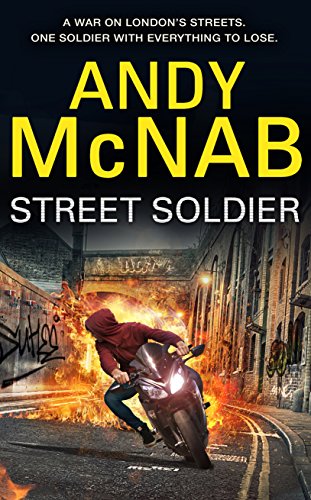

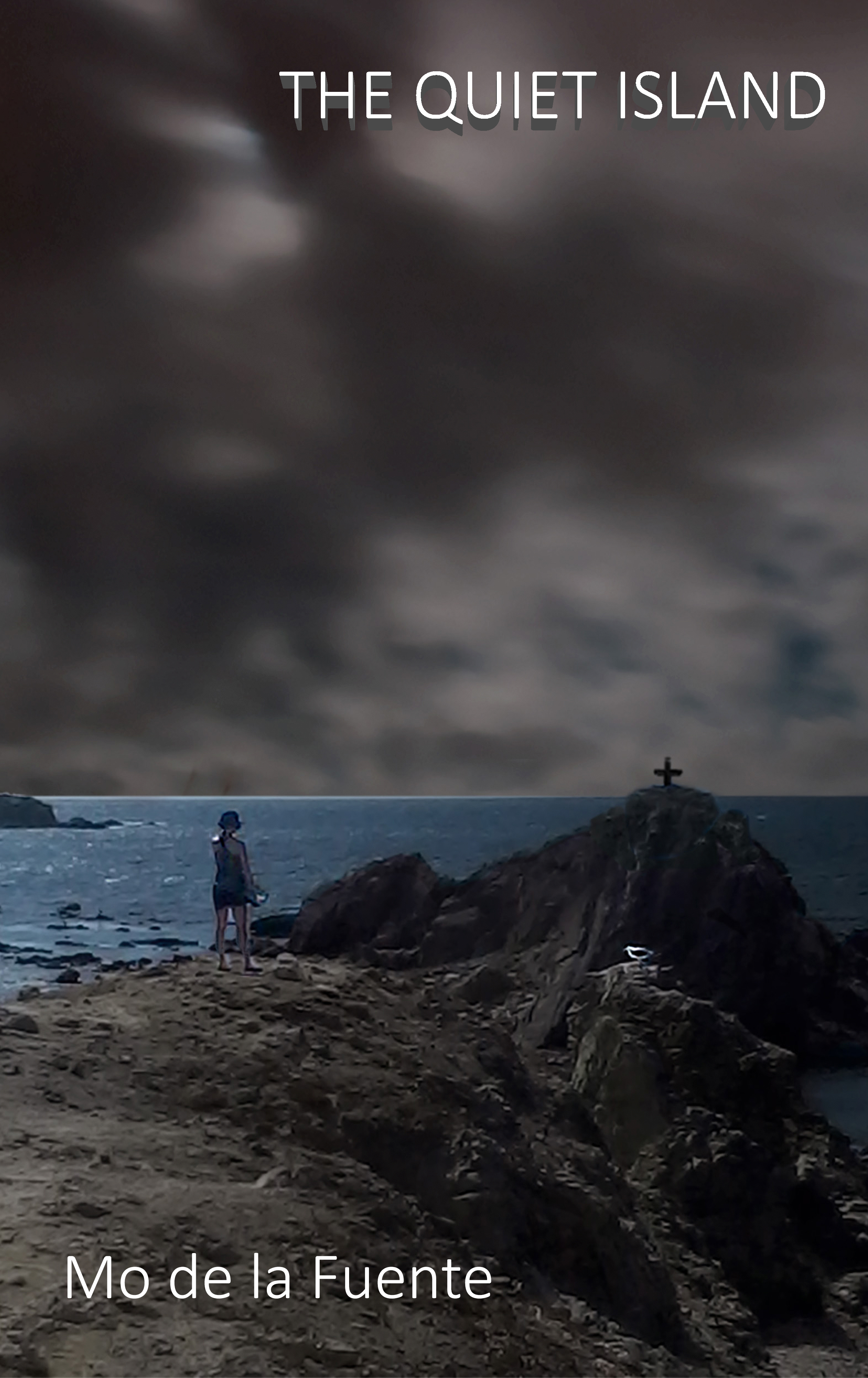



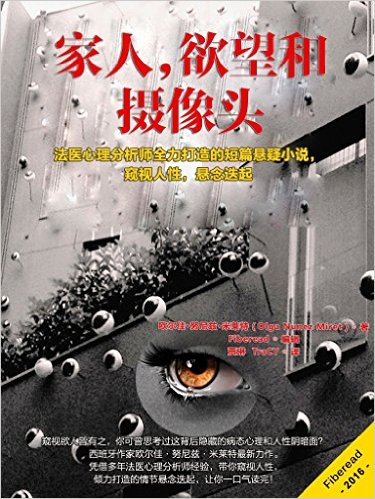
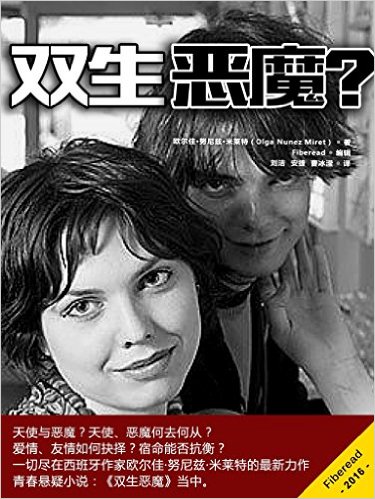






 Lit World Interviews