In Jesus vs. Santa: Christmas Misunderstood, Jason Royle tackles THE big question of Christmas; Is Santa evil? Okay, maybe he doesn’t quite put it that way, but you know a lot of Christians have issues with Santa.
After reading, enjoying, and reviewing Judas: Hero Misunderstood(clickHEREfor the review of that one), and then bringing Jason onboard LWI as our Christian and Inspirational book reviewer, there was no doubt I was going to read this new one.
One thing about both Jason and I, we are Christians. We are by choice, living it Christians. That means even though Jason works here, he gets an honest review from me. He expects one as well. If his book was so bad I couldn’t finish it, I would do like I do with other books like that, I send an email explaining things instead of putting it out there to the world my opinion that it was bad. The fact there is a review here should give you an idea if I liked the book or not.
In Jesus vs. Santa: Christmas Misunderstood, Royle takes you through the history of Christmas, from the real Saint Nicholas to the daddy of Thor, in a brief and painless way. (I was a History teacher, so I know about painful history lessons.) You’ll learn where the answer to how we handle the issue of Santa with our kids begins. A great deal of what you find in Jesus vs. Santa you can use in everyday life with not only your children, but yourself as well.
As a minister and a father, Jason has to balance the question we all face as parents each Christmas with even more pressure than the rest of us. You might think he’s going to go full force in one direction on this subject, but read. If the answer is as clear as that, why would I read it and review it? If the answer is as simple as No More Santa, I would not waste my novel writing time reading the book and then even more of that time writing a review.
As an ordained Deacon, former Youth Minister, and Sunday School Director, I feel the pains Jason goes through in a family moment he shares. My son is 11 now, and the question of Santa is a big thing at the moment. He’s not asking, but you can see how realization is setting in. Fortunately, I’ve done some of the things Jason mentions in his book, so my hope is things transition well.
If you are about to enter the Santa zone with your kids, are in the middle of it, or coming to the end of it, read this book to find out how to handle things in a way that keeps your kids on the right path of Jesus not only at Christmas, but year around.
5 out of 5 Stars
Bet it at Amazon by clicking HERE NOW for Kindle/Paperback for $2.99/$5.99.
ABOUT JASON E. ROYLE
“Writing, for Jason, is a way to express the ongoing story of theology. With every book or article, he hopes readers get a sense of the complexity of God and the necessity of faith. Captivated by the spiritual component of life, Jason loves to read everything from the Greek classics to the Sunday comics. While serving as pastor of a congregation near Memphis, TN, Jason wrote a weekly column in a local newspaper called Sermon in a Nutshell and has had devotions published in The Secret Place, among others.”
Click the image to follow the latest from Jason on Twitter!
I received a preview copy of this book from the author for an honest review. Here it is.
CIA Agent Sean McGee is normally a laid-back guy. Even on a mission, he takes things in stride and does his job. His latest mission is to set up cameras in the compound of a drug lord in Guatemala. It sounds simple. Then El Jefe, the drug lord of all drug lords in Guatemala, decides to kidnap Sean’s wife, Sport, to use against him. Sean changes his plans.
Read that paragraph and you miss the real story of El Tiburon.
Thriller-YES
CIA Agents-YES
Covert Marines-YES
Drug Lords and Double Agents-Check Check
One thing you also get is the inclusion of fleshed out roles for women as integral parts of the story, the mission, and more, not a plot device for the macho man to rescue.
Why do I make a point about women?
In many books, the writer throws a woman into a role that the reader can tell was written for a male, and the name was changed for some reason. The writer doesn’t do anything to make the character a woman except for that name change. Schussman goes through the process of creating parts and roles for each woman involved. Believe me; women are essential to the success or failure of McGee’s mission. (Writers, it’s not that difficult to write women. Even I can do it. If I can, anyone can.)
A thriller needs to have three qualities to make me happy.
Relationships
With any book I enjoy, it must have relationships. In a thriller, the action serves as the setting to relationships, and that is what H. Schussman does with El Tiburon.
This book isn’t about taking down a drug lord, it’s not even about taking down the king of the drug business of the Americas, El Tiburon, The Shark himself. This book is about not messing with family, friends, and loved ones.
Not only is their Sean’s wife Sport being put in danger, but his partner Gary develops feelings for a change. Dr. Janet McGee, Sport, ends up caring for a people group that no one else seems to bother with, ignores, or doesn’t even know exists.
Realism/Research
Two of my favorite authors are John Gardner and Clive Cussler: the first for his realistic handling of the spy genre of James Bond, Herbie Kruger, and Secret Generations, and the second for his research and attention to details. With El Tiburon all three of those aspects come together.
Learning
Schussman also does the third thing I enjoy in a book; she teaches or reveals something that I didn’t know about before in a culture or society. She’s definitely done her homework for this novel. There were certain parts I went to the search engines and did my own searching. She hadn’t made things up.
Recommendation
Given time I’ll read this book again. As I started to read I had a difficult time getting into the book. The prologue and the first few paragraphs of the first chapter are only a couple of pages long, so when you begin reading, keep reading. But once past those couple of pages and reading where the main characters begin I started enjoying things in a big way. The prologue does give some information that’s useful and maybe gives a sense of immediacy to the book, and the beginning of the first chapter lets you know about one of the characters involved.
RATING
Character Believability: 3.5 Flow and Pace: 4.5 Reader Engagement: 4 Reader Enrichment: 4.5 Reader Enjoyment: 4 Overall Rate:4.1
Author:H. Schussman Title:El Tiburon File Size: 618 KB Print Length: 315 pages Simultaneous Device Usage: Unlimited Publisher: Vinspire Publishing (Dec. 31, 2015) Publication Date: December 31, 2015 Sold by: Amazon Digital Services, Inc. Language: English ASIN: B018ZVID8Q Text-to-Speech: Enabled Format: Kindle Price:PRE ORDER $3.99 Lending: Enabled
ABOUT H. SCHUSSMAN
I am a writer living in Northern California. My husband and I travel about 8 weeks a year, and during that time I try to hunt down an internet cafe to tell my story. Usually twice a week . . . depends on where I am. I also am a physical therapist specializing in brain disorders and brain injuries . . . challenging! Anyway, I like to write, so if you like to read (and comment if you like) this is the blog for you. Check out my new espionage, full size novel titled ‘Counterpart’ available at http://www.smashwords.com. My newest novel, El Tiburon is now being published with Vinspire Publishing. It should be available next year sometime.
How would you like a chance at a signed copy of the first FULL-LENGTH Blake MacKay Spy Thriller by Thom Tate?
“A coup is brewing inside the last dictatorship in Europe. Belarusian Prime Minister, Oleg Shorets is devising the ultimate assassination, using a devastating new weapon to fake a terrorist attack and kill the Belarusian President, Vladimir Solonovich. With plans to blame it on Al Qaeda, the more collateral damage, the better. Thousands will die.
Meanwhile, when the CIA discovers that weapons used to kill two U.S. border guards are from a former Cuban general turned gun dealer, Hector Vasquez, they decide to send their most lethal weapon, covert operative Blake MacKay to take him out.
Blake uses his charms on the general’s daughter, Adriana, to get close to complete his mission. After being discovered, he makes a daring escape with more questions than answers. Blake uncovers a deeper plot involving an Al Qaeda weapons dealer, a corrupt European prime minister, and a traitor inside his own organization.
After a disastrous raid on an Al Qaeda safe house, Blake finds the key to start unraveling the mystery. It forces him back to Cuba where only one person can help him decipher what he’s discovered; the daughter of the man he recently murdered.
Take a ride with Blake from Cuba, to Afghanistan, Belarus and Eastern Europe in this non-stop action thriller.”
Click HERE to visit Thom Tate’s Facebook Page-Covert World by Thom Tate for all the updates, contests, and surprises that may be associated with this and other book releases.
The BIG announcement is:
Spear Garden is being released Friday, December 18 on Amazon. And the first 15 who purchase the book and write a review on Amazon, get a FREE copy, signed and sent to them. That way you have the signed copy, and can give the other copy to a friend and share the work of Thom Tate.
AND
If you visit his facebook page you get a discount code from his update dated 12/17/15 that’s good through the end of the year for 15% off!!!
Visit his facebook page to get all the details HERE.
*The author provided me with a copy of the book in exchange for an honest review which follows*
Introducing – Stella May
In 1916, Stella May is born as the great-granddaughter of a former slave, also named Stella May. The original Stella May changed her family’s surname to May upon gaining her freedom. Stella is born of mixed ancestry which for all appearances gives her light skin, blond hair, and hazel eyes.
An amazing beauty, Stella is teased by her black classmates because they don’t believe she is black enough. She looks white and even sounds white. In comparison, her white classmates ridicule her since she is too poor to fit in with proper white society. Stella May is caught in the proverbial catch 22. She is too light to be black and too poor to be white.
Stella May’s mother, Judith was born of mixed ancestry also, which gave her the same light skin, hair, and eyes. Judith always thought of herself as a black woman when she married Stella’s father who was also black. By 1928, Stella’s father ran off in fear of being lynched for being married to a white woman. In those days, society made it clear that the races should not co-mingle.
Who is Sidney McNair?
However, even without her father around, Stella was raised with a family of aunts (from her mother’s side) who took an active part in her life. Eventually, because of the difficulties with Stella fitting in at school, her mother sent her to a private school. Stella’s uncles on her father’s side said, “…They were breaking the law – that a Negro had no business in a white school.” Aunt Sara felt different, because, after all, she said, “Stella is half white.”
By the time the Great Depression eases, Stella and her family move to segregated Chicago, where life is not much better. Aunt Sara, a school teacher, struggles to wait for the school district to pay her. Sara has made the step into white society by dating an affluent doctor and encourages Stella to do the same. After a discussion with Aunt Sara, Stella decides to pass for white. Sidney McNair is born and enters a white society where she had the freedom to go where she chooses and to buy whatever she likes. Stella has crossed the colored line.
Many years later, Sidney is forced to come to grips with the decisions she made long ago. How those decisions affect her life, and the lives of her children and grandchildren, take the reader on a roller-coaster ride into the world of race and ethnicity in America today.
Recommendation:
Since I had not read the first book in the Stella series, I was pleasantly surprised at how easy it was to pick up the threads of Stella’s story. Although the characters are fictional, I was drawn to them (especially Stella) because I have granddaughters of mixed ancestry and I wanted to understand the challenges they face as young women each day.
Maybe, because I felt such a personal connection, Stella’s story touched me even more deeply than I thought it would. I had no idea how difficult life was for Stella and her family, all because of the color of their skin. This was an emotional read for me.
Even more revealing, is how relevant Stella’s story is in America today. I wonder how many people, faced with the same dilemma’s that Stella dealt with, would be able to reconcile their feelings about their own ethnicity.
So, I asked my granddaughters who have black, white, and Thai ancestry. Both girls are beautiful and exotic. They have dark hair, and skin, while one granddaughter has brown eyes, the other has hazel eyes. You know what they told me? They said they were American! Somehow, I knew Stella would have approved.
Beyond the Colored Line is a story about an American family dealing with the issues of race and color in a time when those issues were considered to be conditions characterized with hardship and suffering. Stella’s story helped me to discover connections with my own family I never had before. You see, even in my own family, nothing is ever just black and white.
My Rating:
Character Believability: 5 Flow and Pace: 4 Reader Engagement: 5 Reader Enrichment: 5 Reader Enjoyment: 5 Overall Rate: 5 out of 5
Author, Yecheilyah Ysrayl:
Born in 1987 on the south side of Chicago, Yecheilyah Ysrayl (“EC”) is an author and Spoken Word Artist.
Yecheilyah started writing short stories and poetry at the age of twelve. She attended Harper High School (International Language Career Academy) Robert Morris College (Computer Basics / Administration), Chicago State University (Professional and Technical Writing), and Everest College (Medical Assistance / Phlebotomy).
As an artist, Yecheilyah Ysrayl is an incorporation of spiritual critique, honesty and an authentic analysis of African American identity. She seeks to create work that promotes healthy research and investigation into the cultural identity, laws, customs and traditions of the African American for self-revolution and advancement. Furthermore, “EC” seeks to advance the promotion of truth and identity by way of Spoken Word.
“EC” currently lives in Shreveport, LA with her husband where she writes full time.
To watch a trailer for the book click the link below.
Make certain to connect with Yecheilyah through her Twitter @ahouseofpoetry
I want to begin by saying, I need to stop passing these great books on to Jason and read them myself! I believe this so much so I went and bought the author’s award winning Christmas novella as soon as I read this review.–Ronovan
To be honest, I am typically not a Christian romance reader. ButA Dream for Love by Lisa Belcastro took me by surprise. This is my first book by Belcastro and I enjoyed her wholesome approach. To some extent, at first, the story seemed like it was going to be highly predictable, but it wasn’t; it had just the right amount of “I wonder what is going to happen next” in the air to keep me guessing and reading. An attractive story-line, foreshadowing, subtle humor, and good grammatical flow are several of the qualities which kept my attention.
Even though it is a story of relationships and romance, I still found myself taking out my pencil and underlining several thought provoking statements here and there. In chapter ten, for example, I underlined the quote “God doesn’t leave us in one place.”
In short, if you are in the mood for an emotional love story with a Godly message, then this book is for you. Fate will bring your dreams to life in A Dream for Love.
Get the book by clicking the book title or click HERE for her Amazon Author Page for all her selections. Including her award winning creations. Visit http://lisabelcastro.com/ and follow Lisa on Twitter@VineyardRomance
ABOUT LISA BELCASTRO
Lisa Belcastro lives with her family on Martha’s Vineyard, the ideal setting for her novels with the ocean, sandy beaches, rolling hills, and ancient cliffs. Lisa has published five books to date, with her Christmas novella, A Christmas: A Novella (Winds of Change) released November 17, 2015 has already won the SELAH Award for Best Novella. Lisa’s debut novel, Shenandoah Nights, won the Christian Small Publishers Association’s Romance Book of the Year in 2014, and also won the RWA New England Chapter’s Reader’s Choice Award in 2014.
She loves time with her family and friends, running, gardening, outdoor activities, cooking, chocolate, reading, traveling, a healthy dose of adventure, and her cat, Ben, who keeps her company while she creates fictional lives for the numerous characters living inside her head.
Lisa runs as an ambassador for TEAM 413 (www.team413.org), and has completed a marathon (26.2 miles) in all fifty states.
Writing, for Jason Royle, is a way to express the ongoing story of theology. With every book or article, he hopes readers get a sense of the complexity of God and the necessity of faith. Captivated by the spiritual component of life, Jason loves to read everything from the Greek classics to the Sunday comics. Amazon Author Page. @jeroyle
As always with any Book Review, these are one person’s opinions. That includes the great, the good, and the bad. This book was provided by the author for an honest review.
A Pulitzer Prize winning photojournalist stuck in a vacation lake town without her man? Combine that with a deadline to leave town for an assignment and murder threats against her family and what do you get?
Close Up on Murder by Linda Townsdin is the second in her Spirit Lake MysterySeries with her main character Britt Johansson, a magnet for trouble. She doesn’t go looking for it, it finds her, then she finds it back. Townsdin takes the cozy mystery genre feel of Lilian Jackson Braun and kicks it up to the next level with a touch of realism and a bit of 21st Century whacked out criminal elements. I do think I noticed a homage to Lilian Jackson Braun and her mythical Moose County in a restaurant of importance. I won’t tell you what it is so you can look for it.
For those of you who are fans of Jackson Braun, you will get the same development and connection with Townsdin’s characters but with a higher energy and more sense of urgency. There are dozens of writers out there trying to achieve this and Townsdin has done it.
Don’t get me wrong, the town of Spirit Lake is NOT Pickaxe City. Townsdin has created an edgier world reflecting the reality of today, influenced, I imagine, from her time spent as a writer and editor for a criminal justice consortium. Not only do you get a mystery of who murdered a gentle and kindly old neighbor, much beloved in the town, but you get the continued challenge of cat and mouse being played by the brutal murderer.
Britt Johansson is only the main character of the cast. But much like any series the supporting cast adds a lot. Her brother Little, yes he is little, and his restaurant business and life partner Lars, are the reality check and family Britt needs to keep her grounded and always coming back from her assignments in war and famine.
Sheriff Wilcox is the local law who spends all of his time and resources to protect Britt, her family, and the town while trying to keep the photojournalist from getting herself in hot water or worse.
The rest of the supporting cast is varied and needed to flesh out a close knit community. But Britt’s many supporting cast member is Ben Winter, a Forest Ranger along the US and Canadian border who spends most of his time hunting down and stopping anything from people attempting to make their way into the country to human trafficking. His work and Britt’s don’t combine for a traditional or easy relationship.
You will fly through this book. Not because of an ease of read so much as a need to read. You will want to know the who, what, and why. Will you be surprised? I don’t know. Linda Townsdin does a great job of giving you what you need to get the answers. Are they the obvious or is she being sneaky? You would think sneaky or I wouldn’t ask, right?
Recommendations
I would recommend this book to those who like that cozy mystery hometown community feel but want a dose of reality in the mystery itself taken from the headlines at times. How much do I recommend this book? I have to get the first one now.
Character Believability: 4.5 Flow and Pace: 4.5 Reader Engagement: 4.5 Reader Enrichment: 4 Reader Enjoyment: 4.5 Overall Rate:4.4 Author: Linda Townsdin Title: Close Up on Murder Print Length: 262 pages Publication Date: June 1, 2015 Sold by: Amazon Digital Services, Inc. Language: English ASIN: B00YQ3UIKE Formats: Kindle/Paperback Price: $2.99/$12.52 Genres: Mystery, Thriller, Suspense
ABOUT THE AUTHOR
Linda Townsdin writes mysteries, short stories and poetic fiction. Published in 2014, Focused on Murder is the first book in her Spirit Lake Mystery series, inspired by her wonderful childhood in Northern Minnesota. Close Up on Murder is the second in the series. She lives in California with her husband. For much more information visit lindatownsdin.com. and follow her on Twitter@ltownsdin.
You’re unlikely to find gainful employment as a secretary if you can’t type. Any job of work that you want to do obviously requires some study and knowledge of what you’re going to be doing. Likewise if you’re self-employed, while you can call yourself anything at all, if you really want to do what you do as well as you can, you’d be wise to arm yourself with knowledge of your field, and also knowledge of the tools that you use to do your work. For scribblers one of your most important tools is your word processing software. If you’re an Indie publisher just knowing the very basics is not really good enough, unless you can afford to outsource formatting and all the rest. It’s a good idea to study up on what your word processor can and can’t do because either way knowledge can never be a bad thing, and it’s much more satisfying to know that you’re the captain of your own ship and unlikely to land up on the rocks.
In today’s world you can learn anything you like online. Just like being successful at school it depends how much work you’re prepared to put into it. There’s a lot of incorrect information online as well, so going in, the first thing to do is to check out the source of information. If you want to know more about Microsoft Word 2007, which is what I use and is the preferred software to use for publishing on Amazon, then head straight to the source. There is all you need to know about this software available from Microsoft themselves, as well as from respected and established gurus with visible and impressive credentials online for you to find, study, take piles of notes about, and become the ninja master of your main writing and publishing tool. Likewise for Scrivener, Mac, or any other system you use.
Two of the main problems that Indie authors have are typos and the final formatting of their books either to publish as eBooks on Amazon or paper books with CreateSpace. Typos will always weasel their way in – the little sods, but some of them can be avoided by knowing your way around your software, and using the tools available to you. Word is a powerful system with loads of functions that many scribblers don’t know about. The fact that the biggest piece of advice for formatting eBooks is not to use manual paragraph indents or tabs tells us that many Indies are using their word processing software as good old fashioned typewriters. We need to step up and stop flailing around doing that. I’m learning something new all the time, so I can indeed confirm to all of you that it really is never too late to teach an old dog new tricks. It’s up to you whether or not you’re prepared to put the time in. Setting aside a few hours to watch or read tutorials isn’t going to hurt. It could feel tedious, or it could feel exciting – depends on your mindset going in, but you’re absolutely going to come out on the other side with more knowledge and confidence in doing the job you’ve chosen to do.
It’s worth taking some time to explore the power of whichever writing software that you have. For instance, in Word 2007, pop up to the Microsoft Icon in the top left corner and click on Word Options. There should be something similar in any software you use, so if it’s not immediately obvious, Google will be your friend here.
Next click on Proofing.
Now just have a squiz at the various automatic proofing options to choose from. For instance, Ignore Words That Contain Numbers comes automatically checked. As writers, why on Earth would we want to do that? Uncheck that puppy straight away.
You’re not going to break anything by slowly going through your options here, and it will empower you as you scribble away. It’s comforting to know what you’re doing – even just a bit. Also take the time to explore all the tabs above. Watch tutorials if you don’t know what they all mean. It really is worth taking the time to get to know as much as you can about this particular tool of your trade. Use what’s available to you rather than floundering. Do you use the Find and Replace features up in the top right hand corner there? Another incredibly helpful tool in our quest to rid our works of typos and grammar gremlins particular to ourselves. Did you know that you can view two documents at the same time? Open up two documents, and then click on View Side By Side, and Bob’s your uncle – no need for endless click overs when reference material is needed.
Finally, the most common cause of pain in the writerly posterior when publishing on CreateSpace is getting the page numbering right. The very simple answer is getting rid of unseen formatting, particularly the Link To Previous commands within the header and footers before the start of the first chapter.
Simple as that. A tiny bit of formatting knowledge that will make your Indie road a lot less painful. Take the time fellow scribblers, to learn about the tools of your trade. Just as doctors, plumbers, and even telemarketers take the time to learn about theirs. If this is your career of choice, arm yourself with the knowledge you need to do it as well as you can.
This one doesn’t come up for free ever! Get it now. I got mine.
HETTA COFFEY IS A SASSY TEXAN WITH A SNAZZY YACHT, AND SHE’S NOT AFRAID TO USE IT! Just Add Water, winner of the National EPPIE Award for BEST MYSTERY.
When it comes to writing, don’t be too shortsighted.
A Diary of Writing Wisdom (and other nonsense)
#FOUR
The Need for Farsightedness
Human beings are naturally shortsighted. The current opinions are the ones we see in front of us, the ones that are discussed in current magazines and on social media. It is natural to concentrate on current trends and hot topics. But there are two disadvantages in doing so. One is that we fail to learn from the past; the other is that we fail to look to the future.
Interestingly, these two forms of shortsightedness are connected, for one of the clearest lessons we learn from the past is that the “normal” of one generation is out-of-date in the next. In theory this is not hard to accept. At one time or another we have all read books/excerpts from articles written many centuries ago and smiled at the quaintness of the ideas and the language contained therein; and we realize that our own generation would be unique were it not for the fact that it will appear equally quaint in years to come.
I wonder, for instance, what our descendants will think of the Zombie Apocalypse theory or of stem-cell research. It is difficult for us to see it as future generations are likely to see it. Robert Burns once prayed for the gift to see ourselves as others see us. It would be an even greater gift to see ourselves as people in the 23rd Century will see us.
When it comes to writing, don’t be too shortsighted. Learn from your past. Don’t just let it lay dormant. Incorporate what you’ve learned from the past into your script of today. Believe it or not, this looking-back approach can help writer’s generate even greater power to look ahead. It can help writer’s ignore the temptation to write only about current trends and hot topics. It can even help writers become less shortsighted and more farsighted—nearby distractions become blurry while the ability to see distant goals and objectives become more and more clear.
Brian Wu’s approach to teaching children about the immune system in his book, Fort Applegate & The Battle of Wounded Knee, was informative and effective. As Wu states in his opening “tips” section, one of the primary goals in the writing of this book is for it to be used as a means of getting children interested in their immune system, and as a teaching tool. I found this to be true.
Wu is certainly well qualified for the field in which he is writing about. He holds a PhD in integrative biology and disease and is an MD Candidate. But don’t let all of that education intimidate you. Brian’s storytelling is very child friendly.
My eight year old daughter read the book. Afterward she asked me, “Dad, do I have T-Cells and B-Cells like that boy in the story?” A great example of the author’s intent; get children more interested in talking about their health, and get parents more involved in educating their children about their bodies.
Though the book is not very long, Brian does a fine job in touching upon the highlights of the immune system. And he does it by introducing you to Nolan, a young explorer who cuts his knee on a rock. With a little imagination, Nolan takes us to the front lines of the battle going-on inside his body. As the white blood cells attempt to rescue him, it is just the beginning of the attack of the Bacteria Gang.
Editor’s Note: After reading Jason’s review, I wish I had taken this one instead of offering it to him and his family.-RH
ABOUT BRIAN WU
Brian Wu graduated with a Bachelor’s Science Degree in Physiology and Neurobiology. Currently, he holds a PhD and is an MD Candidate (KSOM, USC) in integrative biology and disease. He is also an experienced writer and editor for a large number of prestigious web pages. Brian values the ability of all ages to learn from the power of stories. His mission is to write about health conditions, educational topics, and life situations in an entertaining way in order to help children understand their own health conditions and daily circumstances.
Writing, for Jason Royle, is a way to express the ongoing story of theology. With every book or article, he hopes readers get a sense of the complexity of God and the necessity of faith. Captivated by the spiritual component of life, Jason loves to read everything from the Greek classics to the Sunday comics. Amazon Author Page. @@jeroyle
Everyone welcome our newest Team Member here at LitWordInterviews.com.
ELIZABETH S. TYREE
Some of you may know Beth fromHere there Be Dragons, her blog where she currently shares her own writing and book reviews.
Colleen, you all know the Silver One, led me to Beth after reading her reviews and thought she would make a great addition to the team. After reading some of her reviews, noting her unique voice and her professionalism, I immediately emailed her. And here we are. And I’ve already thrown some reviews her way that were waiting in line.
We get a lot more books than we are able to handle as fast as I like, but the authors have been patient, understanding the great demand for Book Reviewers. And demand good book reviewers who are fair and professional is even greater. That is something I hope LitWorldInterviews has a reputation for.
ABOUT BETH: In addition to her blog link above you can visit herGravatar pagefor her other sites to follow, including facebook.
Bio: “I am a mother, an author, a musician, a crafter, a teacher and a seer of dragons! This blog will be focused on sharing my experiences and, hopefully, helping you through book reviews, short articles on family and home life, crafting, and writing, and the occasional off topic ramble just for funsies. Feel free to comment, ask questions, and lurk! Welcome to the Whimsical World of ESTyree!”
When asked her favorite quote she responded with;
“Ronovan Rocks!”
No, sorry, I had to do that. When you’re the one writing these things you have to throw some self promotion in where you can.
I am hard pressed to choose a favorite quote but one of my favorites is “Everyone wants some magical solution for their problem ad everyone refuses to believe in magic.” The Mad Hatter.
BETH’S GENRE INTERESTS
My main genre interests are ficiton, fantasy, fairy tale/folk tale/mythology retellings, teaching, picture books, children’s books, middle grade books, young adult books, mysteries, etc.
I am honestly up for reading just about anything. My typical genres are children’s, middle grade, and young adult because I write my own books in those areas and like to keep up with what is popular at the moment. However, I have no problem reading and reviewing the gamut of items.
BETH’S HOBBIES
My hobbies include writing, blogging, reading, adding to my TBR list, playing the flute, crocheting, obsessively watching Netflix or movies while I color (Adult coloring books are AMAZING), and playing with my daughter (who I’m teaching to love the finer things in life, like superheros, comics, and 80s cartoons!). *Side Note* Halloween is my favorite holiday, I love semi-creepy things, and I believe that fairy tales exist somewhere and that’s why we can write them in so many forms and still have them feel relevant today.
BETH’S BACKGROUND
I have a teaching degree and certificate for 1st-8th grades with a strong background in English, Literature, Music, and Learning Types. I like to partake in continuing education so I’m starting to also have a strong background in Brain Based Learning, Sciences, Autism, and Jewelry Making.
I’m very excited to have Beth as part of the team. I am constantly on the lookout for an original voice and professionalism to help stay up with our demand here, and this time Colleen came through for me AND for you, the author, with Elizabeth Tyree.
I look forward to a long association with Beth and many reviews AND interviews from her. Follow her blog(s) and she will have her own page here you can submit a request to soon you can get to through our About page, that is if you don’t want to use the regular Book Review Request form.
*All requests for signed copies of Beth’s bio photograph must be made to her directly. Our site cannot handle that amount of traffic at this time.
I have the privilege of interviewing author, Anne Goodwin about her debut novel ‘Sugar and Snails’, of which I did a review here on LitWorldInterviews.
To cut a long story short, Anne thought it would be good idea for someone who is associated with psychology to review her book, and I couldn’t be happier to do so. Of course, after reading ‘Sugar and Snails’, I do have a few questions for Anne.
So here goes:
An interview with ‘Sugar and Snails’ author, Anne Goodwin
Anne, what an incredibly thought-provoking book. I guess readers will want to know how you come to conceive the idea/theme for ‘Sugar and Snails’?
Thank you, Florence. I’m not totally sure where the idea came from – I think these things can lurk in our subconscious for quite some time – but there seem to have been three strands, which I have written about in more detail elsewhere: taking almost half a lifetime to figure out my own difficult adolescence; an awareness that many competent professionals have hidden vulnerabilities; and the discovery, part way through a long overseas trip, that an administrative error had led to my travelling on a passport that had registered me as male.
Find out about Anne’s difficult adolescence here. Look here for Anne’s take on the vulnerabilities we harbour. And finally, Anne registered as a male? Look here for what she means.
Your bio states you worked as a clinical psychologist in the UK for some 25 years. What was your area of practice or expertise as a clinical psychologist? When and how did you come to study psychology? And with mathematics?
I specialised in working with adults with severe and enduring mental health problems, often psychosis (Diana’s methodology for researching adolescent decision-making actually comes from a study of psychosis). Many of those I worked with were in residential care, which sparked my interest in organisational dynamics, so I did some additional training in psychoanalytic approaches to organisational consultancy.
I went to university straight from school at eighteen without a clear sense of what I wanted to study. In Britain, you’re expected to specialise early on, but I hadn’t had much guidance. I began studying languages but, being rather shy, I struggled with the spoken side, but eventually found the right place for me in the combination of psychology and mathematics. I liked the fact that in the former “the answer” is always provisional, while in mathematics, if you follow the logical process, you get to the correct solution. I loved reviving these subjects for ‘Sugar and Snails’, making Diana a psychologist and her best friend, Venus, a mathematician.
While maths is conceptual, it is easy to assume there is ‘the’ answer. Perhaps that is where its similarities lay with psychology – we must remember the factors and variables involved in the psychological makeup of a person. It is indeed fascinating to compare the different approaches Venus and Diana have to problem solving, to life in general.
How has your work experience assisted in writing ‘Sugar and Snails’?
As a basic level, it gave me an insight into Diana’s job as well as her, somewhat disastrous, experience of the health service. Yet, when I first answered this question in a Q&A, I didn’t fully appreciate quite how much my professional background has helped. But, having returned to this question after the one on research (below), I realise that the capacity to empathise with lives very different to one’s own is second nature to anyone who has worked therapeutically, as it is to the experienced writer of fiction. Although I was nervous that insiders might doubt my character’s authenticity, my work experience gave me the confidence to give it a go.
I can appreciate this. You certainly haven’t inundated the book with psychological profiling of each of the characters. And to think I wasn’t the first to ask this of you? 🙂 Here is Anne’s interview with Carys Bray on Blogger.
Next, how much research did you have to do for ‘Sugar and Snails’? What did you research?
I probably didn’t do half as much as I ought to have done! There’s a “secret” page on my website that lists my main background reading on attachment, gender and adolescence, although some of this I would have read anyway. I had to check out some legal and medical detail regarding Diana’s situation, but mostly I proceeded on the basis of imagination and intuition. Then I was lucky to have experts-by-experience among my prepublication readers who I hope would have flagged had I got anything drastically wrong.
Are the locations in the book real places, and if so, which are familiar to you and why?
The contemporary strand is set in the city of Newcastle, where I went to university and lived for twenty years; I might have used poetic licence, but the backdrop to Diana’s adult life is very real. The small town where she grew up was imagined, but the country walk she recalls taking with her father is one I’ve trod frequently.
Check out Anne’s interview with Geoff le Pard regarding the country walk.
And why Egypt? Do I sense a certain personal ‘love affair’ with Egypt?
My research suggested Diana could have gone to Casablanca but, never having been there, I crossed my fingers and used a setting in another part of North Africa. While I enjoyed revisiting my memories of a month-long visit twenty years before, many of the Cairean scenes were cut from the final version, so I’m pleased my affection for the place still comes through.
Find out here the scenes of Cairo which were cut from the book A photograph Anne shares.
I am intrigued by the nature of Diana’s relationship with Geraldine which isn’t exactly explained. Is it intentional? If not, what is it?
Mmm, I’m intrigued by your being intrigued, although another reviewer did comment she didn’t quite “get” it. I think their early childhood relationship is quite intense, assuch friendshipsoften are, with Geraldine initially the more “knowing” of the two, using the relationship to explore her own sexual and gender identity. When, at secondary school, she becomes more conscious of social norms, she distances herself from the “oddball”, but still enjoys having power over another child who’ll do anything for her. When they meet again as adults, Geraldine has moved on in a way that Diana hasn’t. I find that quite poignant.
It is indeed poignant, especially when I see how Geraldine is now leading a ‘normal’ internal life while Diana’s somewhat stuck. Yet the book also highlights to me how the world would see them in such a different light.
When did you begin writing ‘Sugar and Snails’? Describe the writing journey from beginning to getting it published – as well as getting the book to us, the readers.
I started it in 2008, filled with confidence aftercompleting a long-distance walk, but it took many drafts to get it right, partly because I didn’t realise what acomplex task I’d set myself, followed bytwo years to find and sign with a publisher(and, yes, I’m still waiting for a couple of agents who enthusiastically asked for the full manuscript to get back to me). So seven years from inception to publication, which felt inordinately long when I was in the thick of it, less so now I’m through to the other side.
When did you get the writing bug? Describe the circumstances which led you to first put pen to paper as a writer?
Now this is an example to follow – at least one day a week 🙂
I note the contribution from book sales to Gendered Intelligence. What is your relationship with this organisation? Why do you support Gendered Intelligence?
As a social enterprise, Inspired Quill is committed to improving community well-being. Although a new venture, theirpledge to give ten percent of profits from book salesto selected charities is part of that.Gendered Intelligence is the perfect fit for Sugar and Snails because Diana would have been saved a lot of grief had she been able to draw on the kind of support they offer young people who are gender variant today.
What message, if any, would you wish ‘Sugar and Snails’ to convey regarding the important issues of gender and sexuality?
Be open todiverse ways of beinghuman in yourself and others; I truly believe it will make the world a better place. But I think fear of difference is also part of being human and acknowledging our discomfort can be a step towards transforming it into empathy rather than hate. Fiction can help with this process by offering a safe space in which to be curious about difference.
Let’s end on a lighter note. Describe your writing spot and how it came about.
My writing space has extended over the years and I now have the luxury of not just an entire desk to myself, buta room I’m only intermittently obliged to share with my husband. We have a rather large house and I dread to think of what I’ll do with all my books if we ever downsize.
What is your beverage of choice when writing? You may be as specific as you wish.
Because I use voice-activated software, I need to drink a lot to protect my throat. I tend to drinka variety of herbal teas throughout the day, often just a sprig of sage, lemon balm, mint, fennel or rosemary from the garden doused in boiling water. I also like very weak lapsang souchong with a slice of lime. You must be thirsty yourself after all these questions. Could I offer you a cup?
Most certainly. I drink green tea for its clear crisp flavour. It’s a psychological trigger for me to relax, usually at the end of the day. I need a strong coffee to wake me up in the morning.
Thank you, Anne for your time and sharing your writing with us. I have thoroughtly enjoyed reading ‘Sugar and Snails’ . Wishing you the best in your writing endeavours, and a positive outcome as you wait to hear from publishers.
*******************************
My review of Anne’s book ‘Sugar and Snails’ is here.
Who do you get when you combine 129 Five Star Ratings and 83 Four Star Ratings on Amazon and GoodReads? An author I met about a year ago and did a somewhat stock interview with that I’ve thankfully gotten away from.
I was newish to the arena of interviews and she was generous to say yes. The worst part was, I hadn’t had an opportunity to read her work. But now? It’s a year later, I’ve read and reviewed her latest. And here we are again with another, what I believe better interview. And I like to call us friends. Just don’t tell her that. I don’t want to get the raised eyebrow of “Say What?” from her.
You may have read my review of her book, Violet Chain, the book we’re discussing today. I don’t think the review does the book as much justice as I might have wished for it to. The characters have great layers to them and are not one dimensional, even the supporting cast. She just writes a great annoy character that bugged me. I hope she doesn’t read that line. Now let’s talk to J. Kahele. Author and More.
Let’s start off with why did you write Violet Chain?
Believe it or not I was throwing titles around in my head and come up with this one, then decided to create a story.
After catching her fiancé cheating on her the night of their engagement party, Violet Townsend, a woman people hold in high regards in all aspects of her life, goes through a transformation of character. What do you think brings out that seemingly sudden change the way it does that finds her in the arms of the books leading man?
It is out of the norm for a woman like Violet to delve into a one night stand, but as with every women, when hurt badly by a person they love, she needed an escape from the pain and hers was Chain.
The leading man, Chain Alexander, is sucked in to this wild ride of Violet’s road to recovery. Being a man myself, thank you very much, I would like to say a few things. I’ve read the reviews. Some love him, some don’t get him. Personally I think you nailed the emotional aspects of a character caught up in this situation perfectly. How do you come to write a male character role like that? What do you draw from to give him just the right male reactions? Psychic, or great observer?
Chain was not at all the character I had in my mind for original lead. I wanted more of an alpha male type, but with Violet’s character, there was no way an alpha male would have fit well, so I guess you could say that Chain kind of was a creation from the story itself.
Some people are going to buy this book for the sex, and romance angle. If people are narrow in their thinking and stick to that, I personally believe they are missing a lot of what you’re telling. Would you tell us about the psychological aspects of both the lead characters that make them just like anyone else once you take them out of their palaces and ivory towers, metaphorically speaking of course, and how they deal with love in a damaged arena? I believe readers connect with them in a great way.
I wanted real characters that everyone could identify with, the good, the bad and so I took a lot of extra time concentrating on that. I believe Violet and Chain both have very real emotions and turmoil’s and imperfections that make them very relatable.
Crazy as it may seem, I see a lot of . . . well crazy people in this book. Not so much crazy but people with quirks and foibles. You have a good supporting cast. Speaking to those quirks and the like, do you have a leaning toward or fascination with things like OCD and personality/mental issues that seems to come through in your writing?
Haha. My husband says I’m very OCD about certain things and I believe everyone has their little quirks, don’t you?
I am not falling into the trap of answering what my foibles are. Feel like I’m being cross examined here.
I have to say that you write a great annoying character in the part of Harrison, the cheating fiancé. And honestly even in the best friends of each of the leads in their certain quirks at times which doesn’t make you not like them, but as for Harrison, how much do you use your own personal experience or that of friends when being inspired to create a character like that, not so much the cheating part but his personality and actions through the remainder of the book?
Harrison was probably the easiest character to write, yes I did use personal dislikes I had for men, when writing him.
You did great, I wanted to throw him into a wall or out a door a few times, well every time. That’s how well you made me not like him.
As I was reading Violet Chain I noticed the organic style of writing. You touched on this subject when talking about CHain Alexander earlier. By organic I mean things didn’t always go where you planned. To me that often means the story, the characters themselves, have taken over the mind of the writer and begun to tell the story. Is that how you write, you start out writing, or does it take over at some point and if so, when do you give the characters their head and let them run?
I have never had control of the characters, once I have created them, they tend to go in a direction that I don’t always like and believe it or not I try to fight it, but I think when creating characters true to life, we lose control and that isn’t so bad.
I’ve read where a lot of people are hoping for a sequel. Is that the plan?
Yes. The sequel will be out in November.
You’re quite prolific in your writing and never seem to tie yourself down to one thing. What are you working on now that your fans will be excited to hear about? Because I know from the reviews that you do have fans, not just readers.
I am currently working on the final sequel of the Mine Series and a new series that I’m not revealing yet.
A question I’ve begun to ask my authors is this, what is your favorite line from the book? I think by sharing that you somewhat give us a peek into who J. Kahele is.
I wouldn’t say there is a favorite line in the book, but I do have a favorite part. It is when Chain and Violet are saying goodbye at the restaurant and Chain is begging to see her again and she kind of leaves him hanging. I love that part a lot.
And a final question. What motivates you to put words to your thoughts and begin a book? Writers have ideas, but what is your process of deciding “This is it!”?
When the thoughts follow you everywhere you go and you can’t shake them, until you write them down on paper.
Ronovan is an author, and blogger who shares his life as an amnesiac and Chronic Pain sufferer though his blog RonovanWrites.WordPress.com. His love of poetry, authors and community through his online world has lead to a growing Weekly Haiku Challenge and the creation of LitWorldInterviews.WordPress.com, a site dedicated to book reviews, interviews and author resources. For those serious about book reviewing and interested in reviewing for the LWI site, email me at ronovanwrites (at) gmail (dot) com to begin a dialogue. It may not work out but then again it might.
As promised, today I bring you an interview. If you remember, I brought you Lola Mariné’s book, Havana Jazz Club when it was in pre-order and being shared in Net Galley for early reviews. Now that it has been published, it’s a great chance to have a chat with the author. First, a little information about her:
Author Lola Mariné
Lola Mariné is a writer and has a degree in Psychology.
She has taken part in four anthologies of short-stories: Tiempo de Recreo (2008), Dejad que os cuenta algo (2009), Atmósferas (2009) in aid of the Foundation Vicente Ferrer, and Tardes del Laberinto (2011).
Nunca fuimos a Katmandú (We Never Went to Katmandú), her first novel, was published by Viceversa in 2010. Two years later, the author published the e-book herself in Amazon and it became one of the bestselling books in Amazon Spain in 2012.
Gatos por los tejados (Cats on the roof), a book of short stories on varied subjects, was published in 2012 through Amazon.
Habana Jazz Club (Havana Jazz Club) , her second novel, was published in Amazon in 2013 and has been recently translated by AmazonCrossing to English and German.
In 2014 Parnass Publishers launched her book on travel Nepal, cerca de las estrellas (Nepal, close to the stars), also translated to English.
And in 2015 she published a children’s book called Aburrilandia, el país sin libros (Boredomland, the country with no books). She has also recently entered the second Amazon contest for independent books written in Spanish with a thriller El caparazón de la tortuga (The tortoiseshell) that is one of the five finalists. The winner will be announced on the 15th of October.
She is hard at work on a new novel and teaches courses on Creative Writing.
She is the creator of a cultural blog: http://gatosporlostejados.blogspot.com, and has a prominent and active presence in social networking sites like Facebook and Twitter.
And now, the interview:
When did you start writing?
I started writing when I was eight years old, more or less. Before that I would always tell stories out loud that I would invent them as I went along according to the requests of my listeners: love stories, horror, adventures… My audience used to be my friends and the other girls in the same class in school. The nuns (it was a religious school) would always ask me to tell stories to keep the class under control and quiet when we were doing sewing, crafts and those kinds of things.
I wrote my first novel when I was 12.
How have you found your experience as an independent writer?
The truth is that my first novel, Nunca fuimos a Katmandú, was first published in paper through a traditional publishing company (Viceversa). Luckily I hadn’t sold them the digital rights, and a year after its publication I decided to upload it to Amazon. It became a bestseller and it was one of the books that sold more copies in Spain in 2012. That encouraged me to carry on writing and publishing books and up to now I’ve already published seven. The last one, El caparazón de la tortuga, is a finalist in the 2015 Contest for Independent Writers in Spanish organised by Amazon.
Is there a moment you remember with special affection from your experience as a writer?
Without a doubt when I saw my first novel, Nunca fuimos a Katmandú, published. The day when it reached the bookshops we celebrated it with cava, and afterwards we went to visit the biggest bookshops in Barcelona to enjoy seeing it among the new books in the shelves and take pictures. It was one of the happiest days of my life: a dream come true.
There have also been wonderful moments in my interaction with readers: letters, comments, messages that moved me, where they explained to me their thoughts after reading the novel, their feelings and they also told me they admired my work. Writing is a lonely and uncertain job and obtaining that feedback from the readers is the best reward.
What’s your favourite genre (both as a reader and as a writer)?
I like to write the types of books I enjoy reading: basically stories about women, actual, real, what is called Women’s Fiction. Although in fact, among the seven books I’ve read there have appeared other genres; I have written a travel book (also translated to English), a children’s book and even an erotic novel, and now my last novel is a psychological thriller.
What made you decide to translate your book? And how did you find a translator?
Well, in my case it wasn’t my own decision but Amazon’s. They offered (as a publishing company) to translate Habana Jazz Club to English and German. And with that I also reply to your second question: they found me and they took care of everything.
Tell us something about your book
Havana Jazz Club by Lola Mariné
Habana Jazz Club (Havana Jazz Club, in English) is a love story, but it’s not a romantic novel. Love is force that drive the protagonist throughout her life, but it’s not only romantic love, it’s also the love she feels for her family, for her parents, her son, and her friends, and even for somebody who cannot return her love in the same way. It’s a story of fighting against the odds and courage and a little homage to the great Billie Holliday, whose name is shared by the protagonist.
Any advice for your peer writers (especially for new writers)?
The best advice I can give them is that they should be self-critical and humble. A lot has been said about the ego of the writers and probably there’s some truth in that. We all believe we have written the great work of art the world had been waiting for. But there are many and very good writers. If a publishing company (or several) rejects you, it isn’t because they know nothing about literature or they don’t like you; probably your work isn’t as good as it should be. Carry on working and never give up.
I’ve had the pleasure of reading Havana Jazz Club and I leave you my review:
Love doesn’t conquer everything but art is a great consolation
The novel Havana Jazz Club by Lola Mariné narrates the adventures of Billie, a Cuban girl, daughter of a woman who adores jazz and decides to call her Billie as an homage to Billie Holiday, despite everybody telling her that ‘it’s a boy’s name’. Billie inherits her mother’s love for music, particularly jazz music, and luckily for her, that love never disappoints her. Unfortunately, the rest…
I’ve never been to Cuba and I only know about it what I’ve read in books or watched in movies. I wouldn’t dare to comment on how realistic or not the description of Billie’s life before leaving Cuba is, but her home life is endearing and loving and shows us a close and happy family. Although we all know mothers’ are always right, unfortunately Billie ignores her mother’s advice and her mistrust, and marries a boy, who isn’t only handsome but also knows it, Orlando. Billie leaves Cuba and a big chunk of her heart there, and follows her husband, and things don’t work well for them. Billie’s story once they arrive in Spain becomes one of domestic violence and exploitation. And things only go from bad to worse, to the point when she ends up living in the streets of Barcelona, where she is rescued by her guardian angel, Armando. And when things start to look up, the men in her life continue making her miserable. And I won’t tell you anything else because you must read the novel.
Lola Mariné has written a masterful melodrama. There are irredeemable baddies, goodies as sweet as sugar, terrible suffering, and talent and music, plenty of music. There were moments when I couldn’t help reading ahead convinced of what would happen, and that it would be bad, but the same as when we’re dragged by a fast current, I couldn’t do anything else but let myself go and see if I came up, unscathed, at the other side. And despite her trials and tribulations, and the disasters that pepper her journey, or perhaps because of them, the protagonist makes her dreams come true (in a small-scale but…), and creates a family made up of people who love her because she is who she is, and not because she’s been born here or there, or because it is their duty.
The part I enjoyed the most (and I loved it all) was when towards the end, the author, first through Gerardo and later through Billie herself, reflects upon the nature of creativity, about what the really important things in life are, and the tranquillity of feeling happy and comfortable in one’s own skin, without pretending or having to worry about appearances. I hope we can all reach such a state at some point in our lives.
If you enjoy novels with a heart, with unforgettable protagonists, and the stories about self-improvement and personal achievement, I wholeheartedly recommend it to you.
Thanks so much to Lola Mariné for bringing us her novel and answering our questions. Thanks to all for you for reading, and remember to like, share, comment and CLICK!
Author:J. Kahele Title:Violet Chain File Size: 1552 KB Print Length: 243 pages Simultaneous Device Usage: Unlimited Publication Date: July 17, 2015 Sold by: Amazon Digital Services, Inc. Language: English ASIN: B011WHGT9K Text-to-Speech: Enabled Word Wise: Enabled Lending: Enabled Formats:Kindle Price: $3.99 Genres: Romance, Contemporary Fiction
As always with any Book Review, these are one person’s opinions. That includes the great, the good, and the bad.
Violet Chain is a story of two people on roads to recovery. One to recover her self-worth and identity, and the other his life as a man and not a character he plays in the playboy world he’s created.
I received this book to form questions for an upcoming interview and not to do a book review. And truthfully I wasn’t intending to do one. But one of the mottos I’ve put forth is “Read a book, write a review.” And with that in mind I could not keep from writing a review.
Violet Chain falls into the genre of Romance. Throw in some sex and you’ve got what you might think of as your typical fare these days. For me, I look underneath the surface of a story to the characters center, what’s driving them. I am not setting centric as much a I am emotional and thinking centric when I read a book.
The book starts off with Violet Townsend, the leading lady of the book, walking in on her fiancé in a sexual situation with another woman at their engagement party. For Violet, the world flips upside down and her journey begins to define herself as Violet Townsend and not the girlfriend of someone. She’s alone. She’s hurting in a deep way. This guy has messed her up emotionally and mentally. She doesn’t want a man.
Not even 48 hours passes and she meets Chain Alexander, millionaire playboy builder of malls across North America. Self-made man who likes to be in control and doesn’t know how to live any other way. That is until the night he meets his best friend’s fiance’s best friend, Violet. The two forces meet and almost everyone tries to stop the inevitable from happening.
While one person attempts to become emotionally detached, the other finds himself feeling emotions he’s never experienced before. And he can’t do a blessed thing about it. From one night stands to one woman dreams.
The characters are believable on the level in which they are played. They stay true to who and what they are as the story goes along and as the characters grow in their emotional lives. Kahele does a great job of character building and giving them layers of personality. The supporting cast is great. Some are humorous at times, some annoying, and some you think were written about people you know. And none of them are perfect. In other words, we get real, albeit on a big rich people scale.
But the rich are people to and they get just as screwed up in life as the rest of us and have to deal with it. That’s what the author Kahele has recognized. People are the same no matter what, take a relationship and just put it in a setting you want to. We can all connect with characters that are authentic on the base emotional levels.
I believe there were only a very few areas of concern with the book and that was the speed of change in Violet’s character, her apparent personality that is pointed to throughout the book differs greatly from this new Violet that we see. I kind of see how it works being that there is an emotionally stressful situation that perhaps cracks her a bit or flips a switch during certain moments. That part doesn’t really take away from the story as it progresses, but it gave me pause for a moment so I am mentioning it. This was perhaps the only big issue of character believability for me.
The part of Harrison, the cheating fiancé, was a bit repetitive to me in his scenes and annoyed me to no end. Now this annoyance was intentional I am sure. You are not supposed to like the guy.
The final area is the ending. Now there is a sequel coming in November, so the ending isn’t as final and shocking with that in mind. The new Violet isn’t liked by everyone in the book, unlike the old Violet.
My favorite take away from Violet Chain is Chain Alexander. That could just be the guy in me. Kahele describes certain situations and emotions from a man’s perspective perfectly. I could actually feel what Chain was going through. The writing was urgent at times when it needed to be to convey what Chain was feeling.
I guess that is really the great thing about the book, the pacing of the sentence structure and word usage. Kahele does a great job of switching between the soft and touching to the hard and edgy to carry you along where she wants you to go. She divides the chapters up between first person in the first half of the chapter being Violet and the second half being Chain. I have to say I like this better than the full chapters that are done much the same way. These are smaller bites and don’t take you away from the either character’s perspective for too long.
When J. Kahele gave me the book, she warned me about the sex in it being edgy. She knows of my sensibilities. All I can say to that is, lady, you don’t know me as well as you think. The sex scenes are well done without being over the top and unbelievable and graphic. Some of the situations are awesome. Oh that balcony. Mm, mm, mm.
Recommendations
For the most part this is a safe book for most adults. Nothing too extreme. The ending disturbed me a bit. I’ve taken about a week to think about it and been able to decide that with a sequel coming, I can handle it. I might ask to read the next one to see what happens. A lot of Kahele’s fans trust her and have no problems with it so far, so I’m going to trust her as well to handle it as well as she did the rest of the book.
Character Believability: 4 Flow and Pace: 4 Reader Engagement: 4 Reader Enrichment: 3 Reader Enjoyment: 3 Overall Rate:3.6
The Rating– First off, a 4 out of 5 from me is a great book. The score is lower than I expected, but I think the reason is the ending for me personally, and just little factors that took away from my own overall enjoyment. The book was well written, great layers to it. Don’t let a 3.6 keep you from the book. I am a tough reviewer.
About the Author
“I am a proud mother of three daughters who are my absolute complete existence. I write to relieve the scattered thoughts that stream through my mind, constantly. My biggest downfall is that I am a huge procrastinator, which makes my life at times hectic!”
Ronovan is an author, and blogger who shares his life as an amnesiac and Chronic Pain sufferer though his blog RonovanWrites.WordPress.com. His love of poetry, authors and community through his online world has lead to a growing Weekly Haiku Challenge and the creation of LitWorldInterviews.WordPress.com, a site dedicated to book reviews, interviews and author resources. For those serious about book reviewing and interested in reviewing for the LWI site, email me at ronovanwrites (at) gmail (dot) com to begin a dialogue. It may not work out but then again it might.
I’ve been catching on some of the books I had pending, and as I’ve finally got around to reading one by our fantastic Jo Robinson, I had to share. Here it is:
Echoes of Narcissus in the Gardens of Delight by Jo Robinson
Title: Echoes of Narcissus in the Gardens of Delight
Author: Jo Robinson
ASIN: B00RBRYMD6
Published: 21st December 2014
Pages: 230
Genre: Spirituality, Personal development, genre fiction
Donna, the protagonist of this novel, has been married for over thirty years to Marco, a horrible man who has made her believe she’s unstable and unworthy of anybody’s love or attention. Their daughter, Shelley, was packed to boarding school and has avoided the family home ever since. Donna has managed to survive thanks to a huge garden (partly the land of an old farmhouse) and her renewed interest in Horticulture. Researching heritage tomatoes she stumbles upon information that makes her believe perhaps her disastrous and unhappy marriage (at least for her. Her husband seems to get all he needs from the relationship and other relationships) is not her fault. And her husband’s behaviour might not be unique either. She discovers malignant narcissistic personality disorder.
Jo Robinson creates a unique set of characters and a beautifully nuanced novel of sensations and feelings out of a story that might sound familiar (I think many people who read the novel will perceive similarities between the couple in the book and some people they know, if not in the detail, at least in the essence). Despite that familiarity, the immediacy of the story (although it is told in the third person, we see everything that happens from Donna’s point of view, live her anxieties, panic, feel her frustrations, and finally, her hopes and achievements), the elements of surprise (Donna keeps some cards under her sleeve), the sympathetic and likeable characters (except for Marco), and the overall optimism of a book that shows the positive effects of creativity (gardening in this instance) and friendship make it highly recommended.
The pace of the book changes from slow and meditative at the beginning (when, like the character, we live inside of her head, in fear of what might happen if we dare to tread outside of Donna’s house and insular life) to fast-paced and full of adventures, danger and varied characters at the end. The novel flows well and we engage and root for the main character. The ending is satisfying and the novel is a pleasurable read.
Although this is a work of fiction, it reminded me of Alice Walker’s In Search of Our Mothers’ Gardens in its love for alternative ways of finding one’s calling and life-affirming creativity.
Having read the author’s blog and now one of her novels, I can’t wait to read more of her writing. I expect more fascinating topics and engrossing stories.
As a side note, I’m a psychiatrist, and narcissistic personality disorder is one of the well-described personality disorders in several psychiatric classifications. Most psychiatrists would distinguish between mental disorders and mental illnesses. Personality disorders manifest themselves as a series of traits of an individual’s personality (as such they appear from a young age, and continue to manifest themselves, in most cases, throughout the person’s life). They are considered disorders when they have a negative impact on the life of either the person, others who relate to them or often both, and in most cases are extreme manifestations of characteristics that a lot of people might share. Among other personality disorders are: borderline personality disorder, paranoid, obsessive, depressive, anxious, antisocial…Mental illnesses are mental disorders too, although those appear at a certain point in life and like other illnesses can last for a period of time and get better (with treatment in most cases, although some mental illnesses run a chronic course and it’s more difficult to be specific as to when they are “cured”. It is usually possible to recall a time before the illness became manifest). People suffering from personality disorders might present with short-lived pseudo-psychotic symptoms (delusions or hallucinations), although in the case of Marco there doesn’t seem to be any evidence of that (or at least Donna does not describe delusions or hallucinations). It is likely though that if we scored Marco using the PCL-R (Psychopathy Checklist-Revised) he would score above the cut-off point for psychopathy, although this is not a specific psychiatric diagnosis.
Ratings: Realistic Characterization: 4/5 Made Me Think: 5/5 Overall enjoyment: 4.5/5 Readability: 5/5 Recommended: 5/5 Overall Rating: 5/5
Buy it at: Amazon Format & Pricing: Paperback: $8.99
Unless you’ve been hiding under a CPU and working on your own book, then you know how much I’ve enjoyed a book called Dancing to an Irish Reel by Award Winning author Claire Fullerton. But I made a mistake with that book review. And I want to correct that up front. I wrote the review too soon after reading the book and failed to give time for reflection and full comprehension to take place. I didn’t take it all in and examine all the nuances hidden within the story. Every day since then I’ve been working on some aspect of the Claire Fullerton Experience. Yes, I call time spent working with an author an Experience like that because it does not normally end with a review and/or an interview. There is a lot more going on in the background than anyone other than one of my authors knows.
During the Experience I realized just how much Claire put in her book and how much she put in to her book. The more I think about it, the more I love the book. I don’t normally dwell very long after a review and interview, I always have the next to go to and I have since. But this would had a truth about it, a realness that one connects with and it stays with you. But before I get too carried away, unless I’m already too late, let’s get to my discussion with Claire Fullerton, Award Winning author and #1 GoodReads Irish Romance.
Claire, for a book that finds itself at times falling into the category of Romance, I have to say I was surprised by what I found with keeping that genre in mind. Did you set out to write a Romance? Was that your goal?
I’m so glad you asked this question, Ronovan. Actually, “Dancing to an Irish Reel” is literary fiction, which is a genre that means true to life. It’s a story about those near misses people experience on the road to a love that endures. I can’t think of anyone I know who hasn’t been in this situation before; where all the variables of attraction are in play, while two people are coming to know each other, yet for one reason or another, they can’t seem to get it together. But there is always such hope, and I think new love is typically replete with uncertainty. There is excitement and high hopes, yet on the flip side there is unpredictability and attendant fears. Extending oneself in new love can be risky and can leave one feeling vulnerable. It’s my belief that most people experience uncertainty and doubt when in the throes of new love, it’s just a question of to what degree they’re going to admit it! This is what “Dancing to an Irish Reel” is about. This is also why this book does not fall into the romance genre, but it does explore the subject.
Actually when I was thinking about this interview and the book I thought of real life with those moments of almost romance, or more relationship to tell the truth.
I think so as well. This is why I gave the reader Hailey’s thoughts throughout this book. I’m fascinated by the way people will say and do things in order to project a certain appearance, while thinking something completely at variance with their words and actions. I wanted the reader to know Hailey’s personality as she made her way in rural Ireland; that she saw things from an American frame of reference for much of this book, yet as the story progresses, that frame of reference was changed as she came to understand the Irish culture. I think this is what people do in life: they tend to resist what is new because their mind is already made up, but if one allows themselves to be influenced, there is much to learn!
Click Image for Amazon
The role of Hailey Crossan is a strong woman who knows who she is and what she wants. Where did those characteristics come from, as far as a model for her?
I love your use of the word role! I, too, see this book as a movie! You’ve just made my day! But seriously, and to your astute point, I know more women like Hailey Crossan than otherwise. When I consider all the close girlfriends, with whom I was lucky enough to grow up in Memphis, I realize they are all nobody’s fool. My mother was the same way. The women in my life have always been self-confident and self-reliant. They have a savvy, keen eye with regard to sizing people up. And the thing I’ve found with many of my friends is they rarely let on. They prefer to keep things close to the vest, so you have to know them for a while before you realize how aware they really are. This is how I wanted to write the character of Hailey. It was necessary that she was self- sufficient and sure of herself in order to move to another country without fear. She had to be able to hold her own in her new environment because she was a fish-out-of-water, so to speak.
I think your description of close to the vest fits Hailey well, now that I think about her. Cautious is another word that comes to mind. Recently I became a fan of a young man named Hozier, an Irish blues singer/musician/songwriter of about 26. I couldn’t help but picture him during my reading of Dancing to an Irish Reel. Did you have any images in mind, anyone in particular when you were writing Liam Hennessey?
Generally yes, but no one specifically. But I’ll use Hozier to make a point because the look of him is a good example; it is common in Ireland. There are many with dark hair and fair skin. And having lived in Ireland myself, I found the men to be subtle and beautiful, almost with a graceful, feminine quality. And those artistically attuned are the sensitive sort. This is what I had in mind when I created Liam Hennessey.
Oh, and one other thing before we move on, why that name, why Dancing to an Irish Reel?
Spiddal Pier Shore Galway Bay, Ireland
In Irish traditional music, a reel is a tune that is circular; it goes back and forth and in and out in its execution, and to the listener it may seem unstable, but it is not. A reel has a plan! The title “Dancing to an Irish Reel” is meant to evoke this concept. It refers to the push and pull of the story and the search for stability. Hailey’s navigation of Ireland as an outsider and her sometimes off, sometimes on relationship with Liam Hennessey left her in the position of having to artfully manage a shifting tide, so to speak. She had to learn the ways of the Irish culture in order to live there inconspicuously, and the unpredictability of Liam Hennessey’s actions left her constantly searching for solid ground!
I’ve seen your handling of Ireland compared to that of one of Ireland’s most famous and beloved authors the late Maeve Binchy. When you see comparisons like that what comes to mind?
With regard to Maeve Binchy, because she was Irish, she handled Irish nuances effortlessly, as a matter of course. They were not unusual to her at all, but she reveled in their specific, unique quality. With regard to Ireland, she was in it as well as of it, yet able to stand back and observe the islands peculiarity in a way that celebrated its facets. I sought to do exactly this in “Dancing to an Irish Reel” because I carry a love and appreciation for the land and its culture. I find the Irish people earthy and authentic, unpretentious and in possession of a good perspective with regard to what is important in life. They place importance on quality of life and seem to me to accept life on life’s terms, as opposed to trying to manipulate their way through it.
When you were writing the book, was it an organic experience or did you have a specific outline in mind first? And whichever way, is that the same way you wrote A Portal in Time, your previous release?
Spanish Arch Galway, Ireland
For both books, I had a point to make, as in something to say. I started with a premise as a statement then set about getting there via a story that unfolded. As for an outline, my process is very loose. I leave room for the story to tell itself, which is something best exemplified as I write dialogue. I never know ahead of time what the dialogue will be, yet I aim for information to be revealed. We learn about characters through what they say and what other characters say about them. In both books, I was mindful of the spirit of intention and had a loose outline of what was going to happen with regard to turning points. I simply held a firm impression of who the characters were to make the events in both books plausible.
Reading your book and the description of A Portal in Time, I get the feeling of your enjoyment of writing about past lives, mystical and spiritual elements. Is this something that comes natural to you, I mean as in the aspects of writing?
Click Image for Amazon
My introspection must be showing! In truth, I’m not completely decisive on the subject of past lives one way or the other, but I do love the mystery. Perhaps the idea of past lives shares a blurred line with genetic memory, who’s to say? If you consider the idea of genetic memory, what it basically proposes is that we carry the impressions and experiences of our forebears because they are past down to us through genetics like imprints. This explains inherited talents and proclivities in an understandable way. And if you look at, say, the Druids, they didn’t believe so much in past lives as they did in the transmigration of the soul, meaning we are souls gathering wisdom in this business of living on earth, but it takes many incarnations to accumulate something with staying power. We can’t just get it all in one lifetime, if the aim is enlightenment, i.e, perfection. And because it is an ongoing endeavor, the idea is we return to this earthly plane repeatedly, where we try on different hats. I think there is confusion over the idea of past-lives because it places importance on the experience of the human as opposed to the experience of the soul as it seeks alignment with the divine, however you choose to define the divine. But this subject is important, and it’s enough for me to be mindful of the question. I think Sting touched upon something beautiful when he proclaimed we are spirits in the material world, and I know he wasn’t the first to posit this, but he did make a proclamation that brought it to the public fore.
Everyone that’s read my review of your book knows I loved it, and that I suggested a sequel. We’ve talked about it and it hadn’t come to you as an idea until then. But you set it up so well with the tarot card reading of Hailey. Do you think maybe some of those outside forces were guiding your story during certain parts? Maybe they want you to take another trip to Ireland.
Actually, I have been back to Ireland since I wrote “Dancing to an Irish Reel,” and I plan on going again! As for going back to Ireland in a sequel, I never thought along those lines because “Dancing to an Irish Reel” is a self-contained story with a point to it, which is to say we make our choices in life and from them our lives are set on a consequential course. As of this interview, I am not ruling a sequel out. I’ll let Hailey decide.
Now let’s get something a little more personal. We have a lot in common. Southern. Music business. Location of living for a time. How does your time in the South influence your writing, and is that part of your heritage something that you think might have drawn you to Ireland?
Ireland and the American South share something in common, but do keep in mind that much of the American South was settled by the Scotch-Irish, so perhaps it is something inherent in the area. Both areas spawn terrific communicators in possession of the gift of the entertaining story. It is a cultural way of being in the world, and therefore something passed down to each generation. In both the South and Ireland, I’ve found extremely colorful characters, completely unabashed in personality. As for the South influencing my writing, all I can say is that I write as I think, from the internal monologue I have in my head as well as how I see the world. The South has clearly influenced this as an environment because it is my frame of reference.
What’s the most satisfying thing that has happened to you so far while you’ve been an author?
The writer’s life style. I write daily for one reason or another. It has transpired that with two books in the world and the dynamic that promotion brings therefore, that I am always writing something, and this is due to the affiliations my books have given me. Take for instance the Irish online community “The Wild Geese.” They’re a group of the most erudite, Ireland loving writers I’ve ever come across, all with the desire to communicate and share their love of the island. I contribute to this community regularly by writing pieces that appear as blog posts, but what they really are is a way to celebrate the business of what it means to be Irish! So there is that gift, but I have also spent the last two years writing my third novel, which has been a joyous process. Then, of course, I contribute to magazines. It seems I’m always writing something and sharing it, which to me is simply the high art of communication for its own sake. All this is my idea of fulfilling days with a purpose. Can’t get more satisfying than this!
Do you have a favorite line in Dancing to an Irish Reel?
Yes, it is this: “There’s a feel about Galway that you can wear around your shoulders like a cloak.” It is very true.
Thank you, Ronovan. This has been big fun! Thank you for supporting writers through your exceptional blog.
About Claire
Claire Fullerton grew up in Memphis, TN and now lives in Malibu, CA. She is the author of literary fiction, “Dancing to an Irish Reel,” which is set in Connemara, Ireland, where she once lived. She is also the author of “A Portal in Time”: A paranormal mystery that unfolds in two time periods set on California’s hauntingly beautiful Monterey Peninsula, in a little village called Carmel-by-the-Sea. Both of Claire’s novels are published by Vinspire Publishing. Claire is a three- time award winning essayist, a former newspaper columnist, a contributor to magazines including Celtic Life International and Southern Writers Magazine. She is a five-time contributor to the “Chicken Soup for the Soul” book series and can be found on Goodreads as well as the website under her name. Currently, Claire is writing her third novel, which is a Southern family saga based on her award winning essay in the 2013 San Francisco Writer’s Conference.
As you know I’ve been sharing interviews with writers who usually publish their books in Spanish but who have now had one or several or their novels translated to English. Today I have as a guest Armando Rodera one of the authors who first discovered the possibilities of self-publishing his work, and who has lived through many changes in publishing. But I’ll let him tell us all about it.
Author Armando Rodera
I was born in Madrid in 1972, and I became a voracious reader from a very young age. I studied Telecommunications and IT, and worked for a decade in the technological sector until I decided to go into literature.
Pioneer of digital publishing in Spain, I landed in Amazon in 2011. Since then and in the last four years, I’ve become the published author of El color de la maldad (Color of Evil), a bestseller police-thriller that was my first publication, La rebeldía del alma (The Rebellion of the Soul), an intimate thriller that has been global number 1 in Amazon Spain, Juego de Identidades (Game of Identities), novel of action and adventures, and Caos absoluto (Absolute Chaos), a dystopian police thriller. I also have a non-fiction work, La llave del éxito (The Key to Success). I’ve published all these titles independently in Amazon.
My first traditionally published work was El enigma de los vencidos (The enigma of the defeated), a mystery novel with a historical background that was published by Ediciones B in 2012. In 2014 Thomas & Mercer published the English version of El color de la maldad, which has been very successful in the USA, UK and Canada.
I’m also editorial reader, manager of content and freelance consultor in projects of marketing online and new technologies applied to the publishing sector.
When and how did you start writing?
I’ve been writing since I was a small child, either handwritten letters or short tales. When I was 11 or 12 I won a writing competition at school. After that, once at college, I dared to write some nonsense that was soon forgotten. It wasn’t until the end of 2003, a period with numerous changes in my life, not only personal, but also with regards to my family and my profession, that I decided to take the plunge and I started on my first novel, El enigma de los vencidos. An inflection point that was also greatly influenced by my reading the fantastic La sombra del viento (The Shadow of the Wind), by Carlos Ruiz Zafón. I told myself that someday I also wanted to write a great work and if I could ever managed to make one of my possible future readers feel even a tenth of what I had felt when reading that novel I’d be more than satisfied.
Describe your experience as an independent writer.
I wrote my first two novels between 2004 and 2007. After that I went through all the stages that any new writer has tried in order to get his works published: submit to book awards, send the manuscripts to agencies and publishing companies, etc. I even had a contract signed with a company that self-published books in paper, but finally that was rescinded for a variety of reasons. Finally I gave up trying to follow the usual routes of the sector and decided to publish in Amazon in July 2011, when a lot of people didn’t even know of the existence of the KDP platform for authors.
In a few months my life changed completely. El color de la maldadvery soon became a bestseller in America and El enigma de los vencidos did the same in the Brand-new Kindle store in Spain. That novel was then taken up by Ediciones B, but I continued to publish on my own, and I even manage to reach the global number one in Amazon.es with La rebeldía del alma and many successes with my other works.
Then came the launching in the Anglo-Saxon market of Color of Evil and that was the fulfilment of another dream of any writer. Digital technology and Amazon Kindle Store have allowed me to reach dozens of thousands of readers all over the world and this is something that I could never have imagined when I started writing my first book.
What has been the best moment of your career as a writer so far?
At the beginning of 2012, Ediciones B and B de Books pushed for a new model, and trusted authors that were practically unknown to the great public, but who had been successful with their digital novels. That group of authors that I was a part of appeared in several national newspapers and magazines in Spain (El País, El Mundo, El Periódico de Cataluña, Tiempo, Interviú, etc) and we had great media repercusion.
Shortly after that, our novels were presented in an incomparable setting, the Feria del Libro de Madrid (The Book Fair of Madrid), in the well-known Parque del Retiro (Retiro Park) of Madrid. In my case I was lucky enough to be signing books for two days at that Book Fair, some memorable afternoons I’ll remember forever. Also, the book was distributed throughout the whole of Spain and some American countries with a great reception. Of course, it’s a wonderful feeling to find your own novel on the new books exhibits in the bookshops. I’ll always have a wonderful memory of that experience and I hope to repeat it again in the near future.
What’s your favourite genre (both as reader and as writer).
When I was a young child I fell in love with the novels of Alexandre Dumas and Jules Verne, adventures that have marked me forever. After that, already at high school, I became familiar with the works of Stephen King, who has become one of my favourite authors. Among the writers of detective stories I can’t forget Conan Doyle and his wonderful Sherlock Holmes. And much later I lost myself in Daniel Sempere’s stories, and his Cementerio de los libros olvidados (Cemetery of Forgotten Books), a crucial moment in deciding to dedicate myself to writing.
In general I enjoy thrillers, detective and police stories, adventures, intrigue and also historical novels or even horror novels. I’m an avid reader and I devour between 60 and 80 books per year. I love to read. I can mention many names: John Grisham, F. Forsyth, Ken Follet, Preston & Child, S. King, David Baldacci or Dean Koontz, among others. And of course, Spanish authors as popular as: Pérez Reverte, Almudena Grandes or Matilde Asensi, although in the last few years I’ve had the pleasure of personally meeting and enjoying the books of a new batch of Spanish writers creating new works today, in paper as well as in digital formats, that perhaps aren’t quite as well known to the big public.
That as a reader. As a writer I also tend to write in the same genres. Definitely, action and intrigue novels, thrillers, if we want to define them that way, but always with something else: drama, mystery, police procedural elements, some romance, a historical or suspenseful background. I like to fuse genres.
What made you decide to translate your work? And how did you find a translator?
My novels have been very well received in the States from the moment I started on my digital adventure, and that was why I wanted to reach the Anglo-Saxon market. I studied the possibility of getting one of my books translated independently, but the costs were prohibitive for me or the quality of the work offered for me to sample did not convince me, and I parked the project for a while.
Then I heard about the possibility of sending a proposal to Amazon Publishing, the editorial arm of Amazon. That’s what I did with my novel El color de la maldad, and to my surprise, in less than two months they decided to send me a contract for the book. They got it translated and published it in 2014 under Thomas & Mercer’s company, the publisher of the group specialising in thrillers and mystery novels.
Color of Evil has been number 1 for several weeks in the Police procedural category in the Canada Kindle Store, and also Top 20 in the category of International thrillers in the United Kingdom. It was also a prominent thriller in that category in Amazon.com, staying in the podium of ‘Mystery and International Crimes’ for several weeks.
Tell us something about your book
Color of Evil by Armando Rodera. Transl. Simon Bruni
The genesis of this novel came in the spring of 2007, when after visiting as an occasional tourist several rural areas in our country; I had the inspiration that they could be the perfect opening point for an unconventional police procedural novel. From then on I began to build up a plot that became more and more similar to the Anglo-Saxon thriller, becoming somewhat detached from the usual canons of the classical noir Spanish crime novel.
What I found more difficult to create was the character of Jason, the psychopath around whom the whole plot revolves. He was the most complex of all the protagonists, due to the complexity of his psyche. I wanted to narrate what the psychopath felt and thought from his own point of view, and it was hard work, and that was why I also explained his childhood and adolescence, the main triggers, but not the only ones that lead him to become a blood-thirsty assassin.
When I started writing I knew the novel would revolve around a serial killer that leaves a trail of crimes throughout the whole of the Spanish geography, but I didn’t have his leitmotif. I had in mind the film Seven or Harris’s novels with Doctor Hannibal Lecter as protagonist, but I had no idea which path the novel would lead me into until I started writing. Later I found a solution that might surprise readers quite a lot.
In the first draft I didn’t name the assassin and the narration became quite complicated at times, especially during his interactions with other characters. I wanted to give him a name he chose himself, Jason, although we don’t get to know the real one until the end, to help with the plot building and to embody on someone concrete the brutality of those criminal acts.
I would never have imagined the reception my novel got, especially in America. “El color de la maldad” was published on Amazon.com in July 2011 and for over three years it has been the best-selling police procedural in Spanish in the American continent, becoming a longseller in América. The reviews and comments about this novel, in both sides of the Atlantic, have been almost unanimous throughout its trajectory, something I’m very proud of. The icing on the cake was a joint reading organised on the net, where 16 blogs agreed to write very positive reviews about this book.
Any advice for your colleague writers (especially new writers)
I don’t feel qualified to give advice; I’m still fighting and learning every day. But to any new writer I would tell him or her that this is a long-distance race, that one must fight for the things one believes in, but also make sacrifices. Read and write every day, learn from those who know more than us and try and improve every day. And above all, to have a polished and as perfect as possible manuscript if they want to publish it through Amazon, with the right formatting and an attractive cover. After that one can do as much promotion as one likes but the readers have the final word and if they don’t like a work, it will all be in vain. We are all different and so are our challenges, but we have the right to fight for our dreams.
Thanks so much to Armando Rodera for his interview and for sharing his book with us, thanks to all of you for reading, and you know what to do, like, share, comment and CLICK!
Before I get to the money talk, I’ve updated the post on Creating NCX Table of Contents because in Amazon’s acceptable eBook files to upload, they now say that only MOBI files generated using their own software will be accepted. This is just as easy to do now – easier in fact, so I’ve changed the instructions, and will change the screenshots as quickly as I can.
Yesterday saw Amazon announce that the Kindle Scout programme will be available to writers worldwide and not only in the US. This means that anyone can now submit a previously unpublished novel for voting on by readers for a chance at a $1 500 advance and a fifty percent royalty rate, with a five year publishing contract and Amazon advertising. With readers voting rather than trying to storm the mostly unread traditional slush piles, this is a great way for Indies to spread their publishing wings.
Now to the cash problem. Only authors in the United States and certain other countries are eligible for royalty payments by electronic funds transfer. This means that those not eligible get their royalties in the form of paper cheques every time they have one hundred dollars in their Amazon accounts. Bank charges on cashing these are high, and they take ages to clear. Rather than getting paid that way, why not get yourself a Payoneer account instead? It’s very easy to do.
Go to the Payoneer site and register. They then post you a pay as you go credit card. Once you get this card in the mail, you activate it online following their step by step instructions. You will be issued with your own US cheque account details. Next, you click on the button to request that you be allowed to receive payments in the US. Payoneer will request that you upload your identification. Load up a PDF copy of your passport or identity document, and after a short wait you’ll be approved.
Log on to your Amazon account and select EFT as the method for you to receive your royalties. Fill in the exact details that you have for your US account and click save. Within a few days you’ll start getting emails from Amazon letting you know that payment has been made, and Payoneer email you too when the funds arrive.
To draw your cash just use the card at any ATM in your country, or use it the same as you would any other credit card online or in stores – as long as you have money in it that is. Payoneer charges are just under thirty dollars a year, although once your balance reaches a hundred dollars they gift you with twenty five dollars, so your first year comes cheap. The cash withdrawal fee is three dollars, but these charges are still way below what the bank will take converting the paper cheque.
Any other US companies that pay by EFT can pay you this way too. So if you sell art or anything else online in America your earnings are easy and convenient to get to like this.
It’s easy to get daunted by the vast quantities of books published on Amazon every day, and also by some successful author’s suggestions that you shouldn’t be trying to charge for your books if your work has not been approved by legitimate traditional gatekeepers. Why bother putting in all the hard work of writing books if they’re just going to be buried by the millions, or trashed by the literati?
Why you should definitely bother is because of what self-publishing is. People who buy books from Amazon are fully aware that the vast majority of them are by Indie authors, and they’re going to be pretty sure that they want any given book before they pay for it. Not every book you write is going to be great. I never figured out what the point was to Stephen King’s The Girl Who Loved Tom Gordon, so writing every book that you write that everyone will love is not something that even the greats can do.
The rules are that anyone can publish on Amazon and nobody has the right to try and prevent you from doing just that. Obviously we’re not going to purposely publish a book that is going to get trashed, because when we write books we’re doing it to make for pleasurable reading. If we do slip up and readers hate what we’ve written we can unpublish that book and try harder to get it right next time.
Before the advent of self-publishing, I would say that I absolutely loved about twenty percent of the traditionally published books that I bought. Some I liked. Some were just so-so, and some I disliked so much I never finished reading them. I paid for all of those books, but I never once thought I was entitled to a refund. If they’d been totally full of typos and illegible I would have though, so that’s not what I’m talking about here. I’m talking about the actual stories.
Of the Indie books I’ve bought I’ve actually loved more than twenty percent and liked most of them. Only a small percentage have been typo riddled or illegible. Indies try harder to perfect their end product, and should not be discouraged by negative talk from any author, no matter how popular their own books are. Fair is fair, and every single writer fresh out of the gates is just as entitled to their own publishing journey.
Don’t let this sort of thing put you off Indie scribblers, and don’t feel that you have to submit your book for years and receive a hundred rejection slips before you share your tales with the world. Produce the best book that you can, and let your readers decide. This is a great time to be a self-published writer, and everyone has to start somewhere. Keep your eye on the prize, and write on. Never let the naysayers steal your mojo.


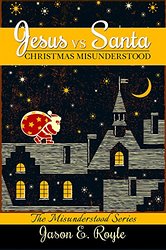 Saint Nicholas to the daddy of Thor, in a brief and painless way. (I was a History teacher, so I know about painful history lessons.) You’ll learn where the answer to how we handle the issue of Santa with our kids begins. A great deal of what you find in Jesus vs. Santa you can use in everyday life with not only your children, but yourself as well.
 “Writing, for Jason, is a way to express the ongoing story of theology. With every book or article, he hopes readers get a sense of the complexity of God and the necessity of faith. Captivated by the spiritual component of life, Jason loves to read everything from the Greek classics to the Sunday comics. While serving as pastor of a congregation near Memphis, TN, Jason wrote a weekly column in a local newspaper called Sermon in a Nutshell and has had devotions published in The Secret Place, among others.”
 Click the image to follow the latest from Jason on Twitter!
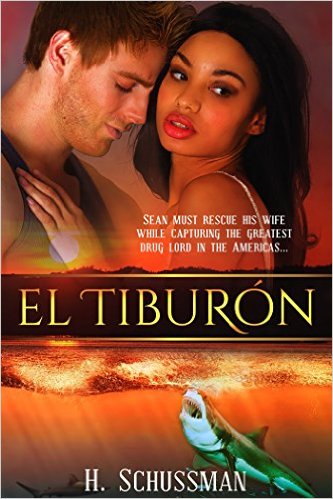

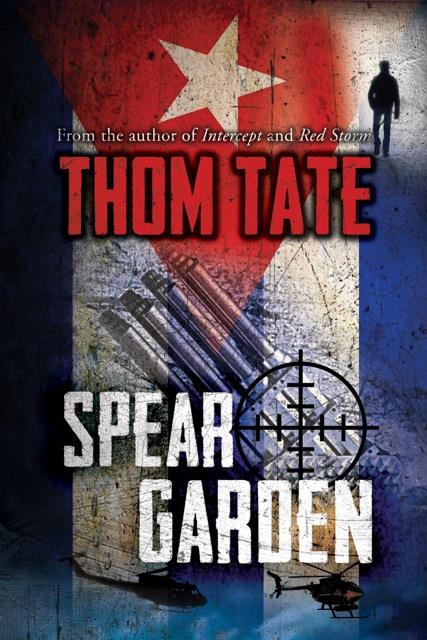






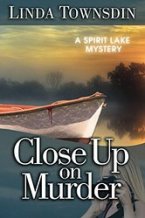








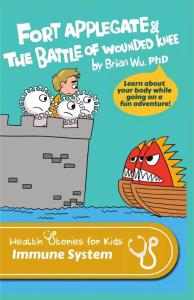
 Brian Wu graduated with a Bachelor’s Science Degree in Physiology and Neurobiology. Currently, he holds a PhD and is an MD Candidate (KSOM, USC) in integrative biology and disease. He is also an experienced writer and editor for a large number of prestigious web pages. Brian values the ability of all ages to learn from the power of stories. His mission is to write about health conditions, educational topics, and life situations in an entertaining way in order to help children understand their own health conditions and daily circumstances.
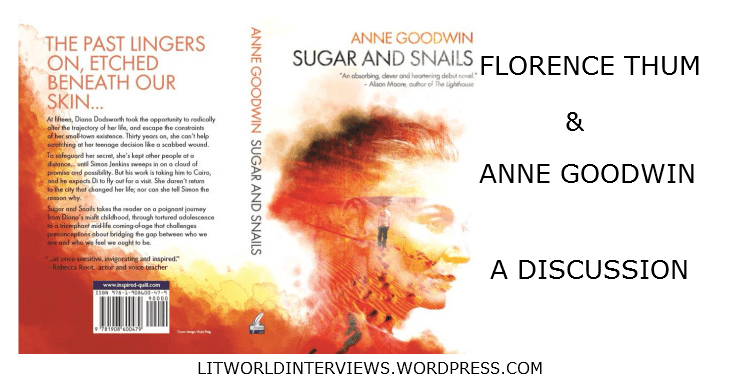


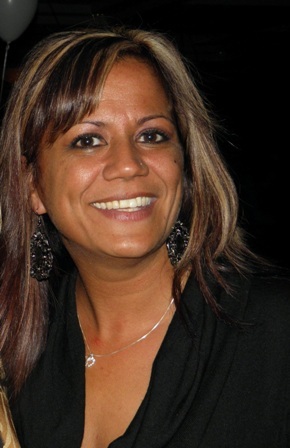

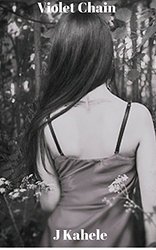


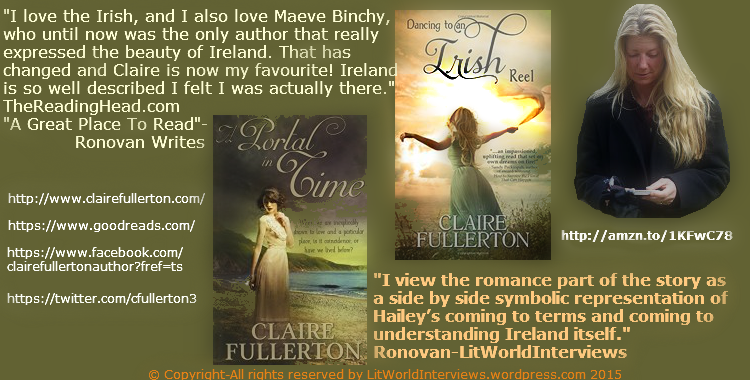


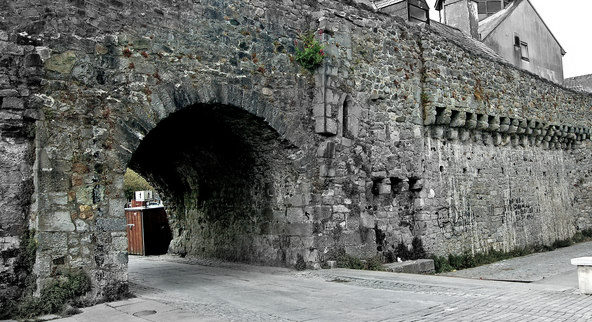


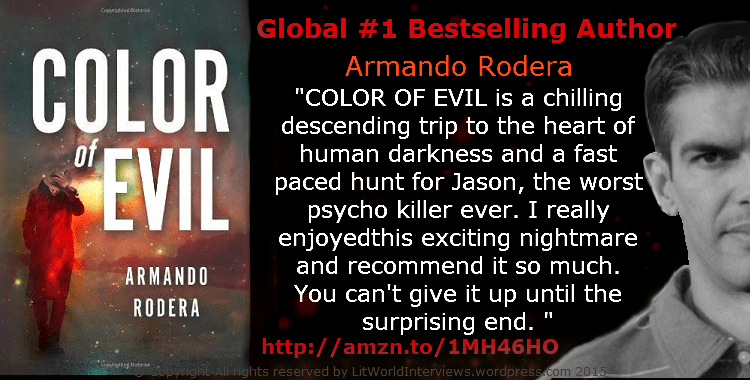


 Lit World Interviews