The Nine Best Manuscript Publishers in 2014 from Authors Publish

ronovan's_inbox.png

Yes, I got mail. And no, it wasn’t fan mail. I don’t actually get any of that these days. Ever since they did away with the Scottish American version of Menudo my mail has been a bit skimpy of the fan sort.

But I do have something pretty good for all you author types, Scottish American or not.

Authors Publish is a site you can go to and subscribe to for FREE. Don’t you just love how I cap that word? Just click here to go there. But you might want to know why to bother. Well each week they review a publisher and give you all the details. They try to help us find the good ones. Well since it’s the end of the year, guess what kind of list they came out with?

You guessed right if you said . . .

The Nine Best Manuscript Publishers in 2014

That link up there will take you to the list and you can check things out, including their reviews. And guess what? “All of these publishers are open to pitch or manuscript submissions from authors without an agent or previous publishing experience.

Now remember this is just of the ones they reviewed for the year, not of every single publisher out there. Just keep that in mind. But good luck. You never know when one might fit you.


Ron_LWI


@RonovanWrites

RonovanWrites.WordPress.Com

RonovanWrites on Facebook

RonovanWrites on Google+


Enter your email address to subscribe to this blog and receive notifications of new posts by email.

© Copyright-All rights reserved by litworldinterviews.wordpress.com 2014

Five of My Articles I Recommend from this year.

There are a few articles that I’ve put out since LWI was created that I want to share with those of you that might be new to the site. Since it’s the end of the year I thought I would list them here so if one looked interesting then you could go and check it out.

five articles to read

The Author Interview: How, Why, What, Who?

Find out what I see an Author should think of when entering into an interview. This also lets you know what I am looking for from an Author when I interview.

Get Book Sales with your Book Description.

This one didn’t get a lot of views but it should have. One thing Authors need to know is that when a potential buyer is looking for a book, the description is the third thing they see. You need the title and book cover as the first two and then the description to actually MAKE the sale. This is for fiction and Non-Fiction.

How to Write a Book Review.

This is one of the more popular articles I came up with. Everyone that reviews books has a method, or should. This is one way. Ultimately, be honest and informative to the reader and the author. Just don’t tell the story to the reader.

Basics for Linking up with Readers.

This is a strange one perhaps but useful. It has made it impossible for me to get in touch with Authors I want to interview. Now I go through a lot to try to find a way to contact an author, more so than let’s say an agent might who happens upon someone as they are just looking around. And a reader will not try as hard as I do to find you either.

Author Presence: Your Brand Name.

You are a brand name whether you like it or not. What other things can be Brand Names for you? Why should you bother? Go read.


Ronovan

Ron_LWI


Enter your email address to subscribe to this blog and receive notifications of new posts by email.

© Copyright-All rights reserved by litworldinterviews.wordpress.com 2014

Three #Gifts I would buy with #Christmas Money.

If I had money to spend as an author what would I do?

First I would make sure I was looking at the right bank account.

Then one thing I would spend money on is a . . .

Book Cover Artist

Sure, I think I could actually make my own book cover. I’m pretty creative, have a good eye. But a really chris_graham_shadow_people_2_cover_art.jpggreat book cover takes time. That time is time I could be using writing or promoting my books or someone else’s books. I can give a book cover artist my basic idea and they will perform their magic and tweak until everything is just right. Of course I have the book cover artist for you.  Even if I had a lot of money, I wouldn’t spend it carelessly. CHRIS GRAHAM has great rates on book covers and I KNOW he works with an author to get the cover just right.  Not a stock cover but a one of a kind cover. How do I know this? He’s done covers for our very own Jo Robinson. Check his rates here.Can’t afford a Book Cover artist, even at Chris’ prices, check out Jo’s article on how to create your own book covers here.


Proofreader

Next, I’m a History guy. I used to teach and now I write. History, not English. That means I need help in wendy_janes_author.jpgproofing and editing. There is nothing worse than writing a great book and having it rejected because your grammar, punctuation and all of that just plain out stinks. Yeah, stinks. Give in and accept it. We all need help and I don’t care who you are. Fresh eyes are always better than your own. You will read a paragraph 100 times and read what it is supposed to say. I will read it once and find two words missing that when just annoy a publisher or agent because they expect you to put forth your best and most professional work. So who do I have for you? WENDY JANES, author and everything else I’ve mentioned. She has good rates from others I have heard but not so low you worry. Remember, you get what you pay for and I TRUST Wendy. Click here to get her rates. And she has testimonials here including those from highly reviewed books.


The first two people I know. I’ve interviewed them and they are great people. I trust them. Now here comes someone I haven’t met but hope to soon.

Editor

Yes, you need an editor. that person that will tell you like it is. They might make you cry as they point norma-buddenout that your favorite line in the book just doesn’t work and serves no purpose. Yeah, I’ve been there. I interviewed an author recently, read the unedited version of that person’s book and then part of the edited version. We all need editors. Just saying. A great one is the one that edited the book I read. Her name is NORMA BUDDEN. She’s also an author. I think it always helps for an Editor to be an Author as well. They get us. They understand how difficult it is for us. And they want it to be a success just as bad as we do. You can find Norma by clicking here.


Well those are the three things I would spend money on at the moment. Sure there are other things out there as well, but for now these are three things I would want to begin my career on the right foot.


Much Respect

Ronovan

Enter your email address to subscribe to this blog and receive notifications of new posts by email.

© Copyright-All rights reserved by litworldinterviews.wordpress.com 2014

My Guest Post on @JensPenDen It’s all about being #Free

Author Jenna Willett did an amazing Guest Post for us about what She Learned from Chuck Sambuchino. It was only fair I did a Gust Post on JensPenDen.

Five Free Author Gifts For Christmas

five free downloads

That’s right. I searched and found FIVE downloads you can get for Free as of the writing of the article, yesterday, on JensPenDen, ranging from how to write a query letter to marketing your book. Go check out my Guest Post and download away by clicking here. They are FREE after all.

Much Respect

Ronovan

Enter your email address to subscribe to this blog and receive notifications of new posts by email.

© Copyright-All rights reserved by litworldinterviews.wordpress.com 2014

Agent @DanBalow Seeking Clients from @ChuckSambuchino

ronovan's_inbox.png

Agent is Seeking

Heather Alexander

From Chuck Sambuchino

About Dan: Dan is a 30-year veteran of the Christian publishing industry. He was former director of marketing for Tyndale House Publishers. Beginning in 1995, he led the publisher’s marketing team for the successful Jerry Jenkins-Tim LaHaye Left Behind series, becoming director of business development for the series (which has sold more than 60 million copies to date). In 2002, he added the role of director of international publishing until leaving Tyndale in 2006. After stints as publisher for two audio book companies and some publisher consulting, Dan joined the Steve Laube agency in 2013. His publishing background is the business side rather than editorial, best for authors who need help navigating the shifting sands of publishing. A graduate of Wheaton College, he lives with his wife Carol, in Wheaton, Illinois. Together they have four grown children and one grandchild. Follow him on Twitter at @danbalow or through the agency blog at www.stevelaube.com where he posts every Tuesday.  To find out what she’s seeking and how to submit click here to see the rest of Chuck Sambuchino’s article.


Enter your email address to subscribe to this blog and receive notifications of new posts by email.

© Copyright-All rights reserved by litworldinterviews.wordpress.com 2014

Agent @HeatherAlexand Seeking Clients from @ChuckSambuchino

ronovan's_inbox.png

Agent is Seeking

Heather Alexander

From Chuck Sambuchino

About Heather: Heather came into publishing through editorial at Dial, working with such authors as Jenny Martin, Vin Vogel, Scott McCormick, and Jeanne Ryan. After six years at Penguin, she was asked a very interesting question: had she ever considered becoming an agent? Many discussions later, she accepted a position at Pippin Properties, where she is building her roster of authors and illustrators, including A. N. Kang, Darren Farrell, and Jennifer Goldfinger. Follow her on Twitter: @HeatherAlexand.  To find out what she’s seeking and how to submit click here to see the rest of Chuck Sambuchino’s article.


Enter your email address to subscribe to this blog and receive notifications of new posts by email.

© Copyright-All rights reserved by litworldinterviews.wordpress.com 2014

How to Get Published: Five Tips No One Ever Told You by @MLaSarre

How to Get Published: Five Tips No One Ever Told You

Every year, thousands upon thousands of books are submitted to agents and publishers by writers who would give their eye teeth to call themselves authors. Every year, by some reports, less than 0.03 percent of all submitted manuscripts are selected for publication. That’s about three out of every 10,000
manuscripts. Of those lucky books to find publishers, big brick-and-mortar stores like Barnes and Noble only stock 1 out of every 10, relinquishing the rest to fight for readers in on-line markets.

In 2014, I conceptualized and wrote my first novel; I submitted it to agents and publishers with what I thought was a fairly targeted, concerted approach; I had my fair share of “thanks, but no thanks,” and then, the right publisher and I found one another. By October of that same year, my novel was published and in the hands of readers and, a month later, I learned my book was selected to be stocked on the shelves of brick-and-mortar giant Barnes and Noble. It has been a whirlwind year. My synopsis of the whirlwind here is not to brag. Not at all. In fact, my book is undoubtedly a statistical miracle. And I know that.

So, how does a first-time writer become a published author with a traditional publisher all in the same
year? Well, my friend Ronovan asked me to break down my experience into some lessons learned. His
question was basically, what advice do I have for aspiring authors given my experience? As I thought
about the answer, I recognized the brilliance in the question. You see, I don’t have traditional advice for
you. What I have to share here is the stuff no one tells you, the advice that worked for me and that I
found through trial and error, and the advice I’d never read anywhere else.

I promise not to duplicate anything you’ve read on any other blog or website offering tips for getting
published. I wouldn’t do that to you. I also don’t promise that following my advice will work for you,
unfortunately. But it will give you food for thought and it will set you apart from the sea of millions
attempting to get published every year.

Without further ado…

1. Trust Your Gut, Give Your Book the Care it Deserves:
I nearly fell into the trap of thinking, “It’s my first book, I don’t expect a lot in terms of publishing. I’ll take the first bite I get from a publisher no matter what the terms, or I’ll self-publish if I get antsy and tired of waiting 3-4 months for a publisher to reply.” The thing is, when you’re feeling like a newbie as an author, it’s easy to pacify your angst by setting low expectations for your book. And sure enough, I had a publisher bite on my book lure 24 hours after I submitted my query, and I read the fine print and had a sinking feeling in my gut that this publisher was a shark and would barely leave me any scraps. Not only that, this publisher wanted me to sign over all rights and opinions to my book’s cover design. I entertained the offer for a few days, letting myself get comfortable “settling” for something that was publishing, but not terms I liked. A small voice jolted me out of my “newbie” thinking; it was the voice of my main character, Jasper Penzey. He said, “Aren’t I worth more to you than someone who doesn’t care about my story, someone who doesn’t care about the cover art that will grace the front of my book?” Jasper was right. As a character, he meant more to me than a second-rate publisher who didn’t care about an awesome cover; he meant more to me than opting to self-publish rather than wait out the traditional publishing game. So, I declined the publisher and hunkered down for the long haul, ready to play the long game. What is the value of your book to you? Ask yourself this question and give your book the time, patience and care it deserves while you look for just the right publisher. Good things take time.

2. Believe In Your Book
An all-time, most-favorited tweet of mine (@MLaSarre): “1st requirement for a query letter: believe in your book. If you don’t, no one else will either. The rest is just semantics.” There are a million on-line resources instructing us on how to write a winning query letter. Read them to get the semantics, formatting and structure right. But then, red line your query letter an infinite number of times until it captures your heart, until it convinces a reader of how passionately you feel about your book. If you don’t believe in your story, if you don’t believe deeply that the world needs to read your book (be sure to answer the “why” of that in your query!), there will be no feeling conveyed in your query letter. Nothing about your query will stand out to any publisher or agent reading it. Infuse your query letter with the passion you feel for your story; add a generous dousing of positive energy and complete belief in your book to the words you write. The reader – an agent or publisher – will feel the difference.

3. Be Honest, Require Honesty
Sharing our pre-pubbed work is an exercise in nerve-wracking, jittery, edge-of-our-seats angst. It’s hard to share our work with others. What if they don’t like it? What if they say we really aren’t as good a writer as we think we are? What if they blow the lid off of our entire set of dreams and aspirations to be a great author? Stop. Tell those thoughts to go stand in the corner and stay there. Your pre-publication time is the best time to collect the feedback of beta readers. Before you submit to publishers, collect a handful of readers you know will be honest with you (your mother will not be honest – she thinks everything you do is awesome). Find readers who represent the audience you hope your book will attract. Ask the hard question: “Tell me what you like about my book and then also, tell me what I can improve on.” Swallow your pride and fear, collect those responses, use them to develop an even better manuscript, and use some of the positives in your query letters, like I did. From a query letter: “Beta readers concur, this is a ‘Dan Brown’ thriller for kids!” Even better, ask the opinion of someone in the publishing industry. Here’s a Fiverr gig I’ve used that has incredible value:  https://www.fiverr.com/kbickford . The seller is a publisher, the owner of a publishing company. She will review your manuscript with the eyes of a publisher and give you feedback. This is astoundingly valuable feedback. Asking for and accepting feedback is hard. You must do it. You must do the hard thing. You do not want a publisher to be the first person to ever have read your manuscript.

4. Manage Expectations
Finding a publisher is going to take a lot of your time. Like, it’s nearly a full-time job for awhile. Don’t expect that it will be easy and don’t get frustrated. Keep the goal in view. I bought the current year’s version of the Writer’s Market, the exhaustive list of publishers open for business that year. Here’s what I worked on every day, for at least two months:

  • Highlight every publisher who will accept manuscript queries, who publishes in a genre that relates to your work (if you don’t have an agent, exclude those publishers who only accept submissions via agents). The book is as big as the Bible. All that highlighting of fine print will keep you busy for at least two days.
  • Make a spreadsheet of every publisher you highlighted. Include their name, genre, contact information, and why they stuck out to you as a good fit.
  • Open the website of every publisher on that list and differentiate them using a spreadsheet column according to whether they accept submissions via email or only via snail mail. I was low-budget in my publishing search so I thought it prudent to contact the “email accepted” list first (FREE!), knowing I’d contact the snail mail publishers later if it came to that (despite the added expense of printing and shipping and gas to get to the post office).
  • Every single day, tackle 4-5 publishers on that list. Follow their submissions requirements to the letter and be sure to customize each query according to what the publisher has already printed that makes you think your book is a good fit for them. No form letters. No generic letters.

I worked my list every day, for months. I kept notes of who I’d queried, who’d I heard back from, who I was still waiting to hear from and how long the publisher expected to take in returning a reply. I didn’t give up and I tenaciously tackled that dreaded list daily, all the time thinking, “How cool is this? Somewhere on this list is my publisher! I just have to find them!”

5. Be Grateful
I sent a query letter to a publisher I felt was so in sync with me as an author, a company that had ties to my life in more than one way, who valued the same aspects of good books as I did. I felt so positive about this publisher, that they were just the right one for me. And then they rejected me. I was crushed! I had envisioned a different outcome so clearly that my heart literally broke when I got the rejection letter. In fact, I stopped querying altogether after that. For weeks I stomped around and was furious at this publisher; I even waited for days thinking I’d receive another message from them saying, “On second thought…we actually really love your book!”  It never came. And then, in another area of my life, I received a strong reminder that we must,  must, must be grateful for all things, including the good and the bad. My first thought was  how ugly my thoughts had been about this publisher. Sometimes, not being grateful stalls our  success forward, literally keeping doors in front of us shut tight. I broke a cardinal rule of writing  then. I emailed that publisher back (you aren’t supposed to reply to rejection letters, or so I’ve  heard). I wrote back and said quite simply, “I just wanted to express my gratitude for the time  you took to review my submission. I wish your publishing house all the best and every success.”
And I meant it! The next day, my publisher and I found one another, quite accidentally. And the rest is history.

I’ll end this blog by saying I hope you have every success in your writing career. I hope you will take the
time to be patient, to keep your heart wide open as you nurse your manuscript into the book format you
can finally share with the world. I hope you will be open to critique from beta readers and allow yourself
to humbly revise your manuscript as many times as needed for it to become what others will enjoy reading (remember, writing books is not just for your enjoyment and self-expression, it’s for others to enjoy reading!). And most of all, I hope you will make being grateful a part of your daily existence, so that the doors of the path you are meant to walk will stay wide open for you. Lastly, if I can be of any assistance as a cheerleader, beta reader, or helper in any way through the publishing journey, I hope
you’ll reach out to me.

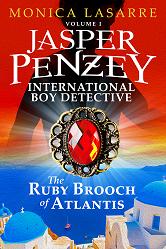
Monica_LaSarre_Author.jpgAbout the Author: Monica LaSarre is a ghostwriter and the author of Jasper Penzey: International BoyJasper Penzey Book 1
Detective, an 8-book mystery/detective chapter book series for 8-12 year olds. Read more about her on
her website, www.monicalasarre.com. She can be reached via email at monicalasarre@gmail.com.
Amazon Link: Jasper Penzey International Boy Detective: The Ruby Brooch of Atlantis.

Top 10 Things I learned from @ChuckSambuchino by @JensPenDen

When I told Chuck Sambuchino a story about the Colorado Writing Workshop shared with by my Guest Author today, his answer was for her to “Always body check first and ask questions second.”

My First Writing Conference – Top 10 Things I Learned

Guest Author Jenna Willett

On November 15th, I attended the Colorado Writing Workshop in Denver with presenter and instructor Chuck Sambuchino. To say I learned a lot would be an understatement. In fact, I learned so much, there’s no possible way for me to tell you everything. So, I’m going to do a Top 10 list!

Jen's Top TenBefore I get started, here’s a list of the sessions I attended during the conference. I’ll admit, I got more out of some than others, but each one taught me something, and that’s what I’d hoped for.

  • “Your Publishing Options Today.”
  • “Everything You Need to Know About Agents, Queries & Pitching.”
  • “Writers’ Got Talent: A Chapter One Critique-Fest.”
  • “How to Market Yourself and Your Books: Author Platform & Social Media Explained.”
  • “How to Get Published: 10 Professional Writing Practices That You Need to Know NOW to Find Success as a Writer.”

So, without further ado, here we go!

1: Be Bold, Brave, and Outgoing!

One of the main reasons I attended the Colorado Writing Workshop was to meet and befriend local writers. I only know a few here in Denver, so I figured it’d be a great opportunity to make new connections. So, I printed up some business cards, gave myself a social pep talk, and marched into the conference room, ready to mix and mingle…

I stepped into the room and my heart dropped. Sitting before me was a group of fidgeting, throat clearing, eye darting writers. Silent writers.

Oh. Dear. God.

Up until that moment, I’d forgotten one important fact: most writers are introverts.

With knots in my stomach, I sat down and fiddled with my notebook for a solid ten minutes before I mustered up the nerve and turned to the woman across the aisle from me. I slapped on a smile, stuck out my hand, and introduced myself…Ironically, she was from Rhode Island and didn’t fit into my “meet local writers” plan, but whatever. She was super sweet and I was proud of myself for being brave and approaching someone, rather than waiting for someone to approach me.

Later, as the group broke for lunch, another woman walked up and said, “I love your bag. I keep staring at it.” After I thanked her and cracked a joke (yes, I use humor as a self-defense mechanism), I swallowed my pride and anxiety and asked her if I could tag along with her to lunch. “Of course!” she said. “A few of us are going out.” And, before I knew it, I was sitting in a restaurant befriending a handful of writers.

Mission accomplished!

So, if you ever attend a conference, try going into it with a brave, bold, and outgoing attitude. Don’t wait for people to approach you. Be willing to approach them and put yourself out there.

2: Content Is King

Chuck Sambuchino spent the entire workshop discussing a writer’s publishing options, as well as the various strategies for success. Yet, at the end of the day, he made this important point:

“So much is out of your control.”

No matter how “right” you do things, there’s still a hundred things that could go “wrong”. That’s why you need to remember: Content is king! You should always strive to write the best story you can. Focus on content. Take your time. Think and be considerate. Because, bottom line: good, solid stories are more likely to lead you “right” rather than “wrong”.

3: Your First Page Matters! 

Hands down, my favorite session of the day was “Writers’ Got Talent: A Chapter One Critique-Fest.”

Basically, attendees were invited to anonymously submit the first page of the their manuscript to be critiqued by a panel of literary agents. At random, Chuck Sambuchino chose an entry from the submission pile and read it out loud. The literary agents–AKA, “judges”–read along with him. The moment they lost interest, they raised their hand. If two of the four judges’ hands went up, Chuck would stop reading.

Think of it like the TV show, America’s Got Talent. Too many buzzes and you’re out!

It. Was. So. Scary!

First there was the waiting to see if my page got randomly chosen. Then there was the hearing of it read aloud. And then there was the praying to God none of the agents raised their hands…My heart was pounding so hard!

To my relief, not a single hand went up. In fact, one of the agent’s grinned and nodded at one point.

To be honest, I had a gut feeling my page would make it all the way through without getting “buzzed”. Not because I’m arrogant, but because mine was one of the last ones chosen, and by that point, I’d heard enough to know what rubbed an agent the wrong way. Those things included:

  • Info Dumping. By far, this was the biggest first page no-no. If there was an extensive section describing the world, character, situation, etc., all of the agents’ hands shot up. Then they’d make comments like these:

“Get into the story faster!”

“Trust the reader. They’re smart.”

“Organically weave your information in.”

“Questions are good.”

“Less information is always better. More can be added.”

  • Avoid using dreams. If a character wakes up from a dream on the first page, it’s an instant deal breaker for many agents.
  • Show, don’t tell. Every time a first page told a story, the agents “buzzed them off the stage”. So work hard to show your story, rather than tell it.
  • Characters describing themselves. Don’t say, “I stared at my reflection in the mirror. My blonde hair was matted in blood.” Seriously, who thinks to themselves “my blonde hair”? It’s unnatural and lazy, and agents don’t like it.
  • Stiff dialogue. Too often, despite an interesting story, an agent’s hand went up because the dialogue was stiff and forced. So take care to develop yours and make it as real as possible. Personally, I recommend reading your work out loud. Or, better yet, have someone else read it. You’ll be amazed how easily you catch weak spots.

The bottom line is your first page is vital. It’s what hooks both an agent and a reader and keeps them reading. So be sure to start your story off with a bang! Not a stiff, unnatural, info-filled whimper.

4: Avoid Prologues

To prologue or not to prologue, that always seems to be the question. Well, according to the agents at the conference, there’s no question about it. Writers should avoid using them. In their eyes, prologues are passive tools and weak attempts to hook a reader. “Why not hook a reader in chapter one?”

One of the agents put it the best way I’ve ever heard: “Personally, I don’t mind prologues. But over 50 percent of the agents out there do, so why risk it? Play it safe and leave it out.”

I don’t know about you, but 50% is way too high. I’ll avoid the gamble and jump straight into chapter one.

5: Don’t Put All of Your Eggs In One Basket

You write a book and get an agent. Sweet! Unfortunately, it doesn’t get the attention you and your agent had hoped for. Now what? You got it: Pitch a list of new ideas to your agent and write another book. Agents want career clients, not one hit wonders.

So, don’t charge into the publishing industry with the mentality, “I just need one great idea.” Charge into it with, “I need a lot of great ideas.” And then be willing to let go of those ideas that aren’t working and use the ones that do.

6: Read Your Genre

During the “Writers’ Got Talent: A Chapter One Critique-Fest”, literary agent, Sara Megibow, lectured us about the necessity of reading the genre you write for. In a forceful, “Come with me if you want to live” kind of voice (haha, kidding), she said, “These are the three things you must do…

1: Read debut authors from your genre that have been…

2: published in the past two to three years from a…

3: major publishing house.”

If you want to know what’s hot and what’s selling, stick to these rules. And if you ever refer to an older book in your query letter (ex: The Hobbit), an agent will laugh and toss your story aside. They’re looking for writers who are keeping current on the latest trends and staying ahead of the game, not those living in the past.

On a related note, another agent chimed in and said it’s very attractive to see comparative book titles in a query letter. It not only helps them visualize what your story is about, but it proves you know your genre.

7: “Confusion is like cholesterol. There’s good and bad.”

This was one of my favorite quotes by Chuck Sambuchino during the conference. It’s such a great metaphor! Confusion in a story is like cholesterol. You don’t want to have the bad kind that causes your readers to scratch their heads, lose focus, and get bored. You want the kind that makes them wrinkle their brow, ask questions, and eagerly turn the page to get answers.

This idea ties into what the agents said earlier about info dumping. “Questions are good”. So, don’t be afraid to add some confusion to your story. Just make sure it’s the good kind.

8: Be Specific In Your Query and Pitch

Be specific. Be specific. Be specific!

Chuck Sambuchino drilled that into our heads during the “Everything You Need to Know About Agents, Queries & Pitching.” session. He said the number one problem he finds when critiquing query letters is vagueness. All too often, people will say things like, “Sally had to overcome many obstacles”. But what are those obstacles? Be. Specific! 

Example:
“Billy Jenkins quit his job today”

What job? Lawyer? Plumber? And who’s Billy Jenkins? Old man? Boy?

Try writing it like this instead:

“After 17-year old, Billy Jenkins, made his 1,000th Big Mac, he threw special sauce in the air, flipped off his boss, and walked out the front door.”

So, when you sit down to write your query letter, or get ready for a live pitch with an agent, remember: Don’t be vague. Be specific!

9: Don’t Believe Everything You Hear

Yes, I know. Obvious! But, it’s true. So many of us read articles, blogs, and tweets about the publishing world, and we tend to swallow every word of them–hook, line, and sinker. Because, hey, if an industry professional said it, then it must be true.

False.

Although 90-95% of the information we read from agents and publishers is golden, there’s always that small percentage that isn’t. Certain agents have certain quirks that go against the grain. They’ll promote an idea that the rest don’t believe in.

For example, during one of his workshops, Chuck Sambuchino had an agent say something to the group that completely contradicted what he and everyone else in publishing taught. Later, when he asked them about it, the agent said, “Well, my agency does it that way, so I tell writers that’s how they should do it too.”

So, play it safe and read multiple resources. Don’t rely on only a couple. And be sure to cross reference your facts to ensure the information you’re using is what the majority of agents and publishers expect.

10: “You have to give up what you like to pursue what you love.”

AKA, put down the remote control!

Yep, that’s Chuck Sambuchino’s “secret to getting published”. And, if you think about it, it makes complete sense. Nobody ever said writing a book and getting published would be easy. It takes a lot of work, a lot of dedication, and a lot–a lot–of passion. If you want to achieve your dream, then you need to cut out those distractions you enjoy so much.

So, there you go! As you can see, I really did learn a lot at the Colorado Writing Workshop. More than I could ever list.

Actually here’s a bonus point I’d like to add:

11: Attend a Writing Conference! 

Okay, I know conferences can be on the pricey side, but if you look around, I’m sure you can find one that’s affordable. The one I attended was only a day long, and it was local, so it was on the cheaper side. Plus, if you have someone like Chuck Sambuchino instructing you, I promise every penny will be worth it. I highly recommend you check out his schedule to see if he’s coming to teach in your area!

So, how about you? Have you ever attended a writing conference? If so, what were some of your biggest takeaways? Would you recommend others to attend one? I’d love to hear your thoughts!

If you have any specific questions about the sessions I listed above, feel free to contact me! I’m happy to answer what I can 🙂


So you probably wonder where the body checking came in I mentioned at the top of Jenna’s article. Chuck recognized Jenna. “Hey, I know you,” he said. And then an older lady barged in and got between him and Jenna. I told Chuck about and that I had told Jenna to body check her next time. That means slam her out of the way. You saw Chuck’s response.



Author Jenna Willett PhotoJenna Willett is an Author, blogger and friend of JensPenDen.WordPress.com. If you haven’t visited her Den before you need to. She finds some of the most helpful articles for writers and does weekly posts that are encouraging for all of us in this mind agonizing business at times.  @JensPenDen


Enter your email address to subscribe to this blog and receive notifications of new posts by email.

© Copyright-All rights reserved by litworldinterviews.wordpress.com 2014

 

My First Writing Conference – Top 10 Things I Learned

Author Jenna Willet attended the Colorado Writing Workshop we mentioned here on Lit World Interviews. The presenter and instructor was Chuck Sambuchino that I’ve mentioned here numerous times. Jenna amazingly took the time to give the Top 10 Things She Learned at the conference. A MUST READ.

jenspenden's avatarJen's Pen Den

On November 15th, I attended the Colorado Writing Workshop in Denver with presenter and instructor Chuck Sambuchino. To say I learned a lot would be an understatement. In fact, I learned so much, there’s no possible way for me to tell you everything. So, I’m going to do a Top 10 list!

top-10-schools

 Before I get started, here’s a list of the sessions I attended during the conference. I’ll admit, I got more out of some than others, but each one taught me something, and that’s what I’d hoped for.

  • “Your Publishing Options Today.”
  • “Everything You Need to Know About Agents, Queries & Pitching.”
  • “Writers’ Got Talent: A Chapter One Critique-Fest.”
  • “How to Market Yourself and Your Books: Author Platform & Social Media Explained.”
  • “How to Get Published: 10 Professional Writing Practices That You Need to Know NOW to Find Success as a Writer.”

So, without further ado, here we go!

1: Be…

View original post 1,926 more words

An agent to Query: Melissa Edwards from @chucksambuchino

ronovan's_inbox.pngFrom @chucksambuchino

Writer’s Digest: Guide to Literary Agents

An agent to Query: Melissa Edwards

From Chuck’s mail:

About Melissa: Melissa is a graduate of Washington University in St. Louis and Vanderbilt Law School. She is a member in good standing of the New York State bar. While Melissa began her career as a commercial litigation attorney, she always maintained aspirations to work in publishing. At present, Melissa handles foreign rights for Aaron Priest and is actively reading to develop her own list. For the the rest of Chuck’s article, What Melissa’s seeking and How to submit to Melissa click here.

The Aaron M. Priest Literary Agency.

Ronovan

Enter your email address to subscribe to this blog and receive notifications of new posts by email.

© Copyright-All rights reserved by litworldinterviews.wordpress.com 2014

An agent to Query: Abby Saul @BookySaul from @chucksambuchino

ronovan's_inbox.pngFrom @chucksambuchino

Writer’s Digest: Guide to Literary Agents

An agent to Query: Abby Saul @BookySaul

From Chuck’s mail:

About Abby: Abby joined Browne & Miller Literary Associates in 2013 after spending five years on the production and digital publishing side of the industry, first at John Wiley & Sons and then at Sourcebooks. She is a magna cum laude graduate of Wellesley College. A zealous reader who loves her iPad and recognizes that ebooks are the future, she still can’t resist the lure of a print book. Abby’s personal library of beloved titles runs the gamut from literary newbies and classics, to cozy mysteries, to sappy women’s fiction, to dark and twisted thrillers. For the the rest of Chuck’s article, What Abby’s seeking and How to submit to Abby click here.

Ronovan

Enter your email address to subscribe to this blog and receive notifications of new posts by email.

© Copyright-All rights reserved by litworldinterviews.wordpress.com 2014
The Author Interview: How, Why, What, Who?

I love to interview authors, publishers, illustrators, cover artists, proof readers, agents, editors. I think you get the picture. If they are involved with the book business then I want to talk to them. I’ve learned a lot as an author along the way and I’m taking notes as I go. I’m not here today to talk about those notes I’ve taken. All the interviews are there to read and I’ll likely compile a few things at some point, knowing me, and share them with you.

Today I want to discuss what Authors should do with an interview, and also how they should interview.

the_author_interview.jpgI’ve done research about how to interview. In other words, what questions should I ask. Well, I actually came up with my own questions after getting a feel for what was going on. I won’t get into my technique because it’s my technique. It’s not that I think it’s a great technique about what I do or how I do, but it’s mine and it’s changing as I write this.

Remember the purpose of the Interview

  • Profile Snap Shot Questions-Maybe 5 things about you.
  • Book Promotion such as Book Blog Tour-Let’s say, 10 questions mostly about your book.
  • Interview about you and your work-No real limit, minimum or maximum. But this is one that is more to give the reader a good impression of who you are personality wise and good detail about your work. This is the one that is to make them connect with you, become your friend, and become your book buying fan.

As I get into details here, just know these are my opinions. I have been thinking of these details for some time though so they are not just quickly put together for an article.

Each type of Interview will determine how you, the Author, might answer. The shorter the interview the more precise your answers and the longer the interview, the more conversational you want to sound. Looking at the number of questions I noted above for each type of interview you can almost see the urgency to be efficient in your use of words without straying off topic.

At the moment I do the Long Form Interview because I enjoy them, and I want every Author that wants an interview to have a good interview of length to turn to when an agent or publisher asks about publicity. And the long form is the type of interview I will discuss today.

For authors I have already interviewed I will be asking some follow up questions in the future for some short form blurb type posts to continue their presence here on LWI and to have one more item out there for their name to show up in when agents or publishers search for them.

What is your goal in a long form interview?

This really depends on the questions you are asked, what you have agreed to. My interviews are all encompassing.

My first piece of advice is-Read through all of the questions before you start answering, if this is an interview where you are sent the questions, such as the way I do it. I would like to do interviews differently in the future so they are more organic, but in truth, the email interview keeps things focused.

Reasons for reading all the questions first

  • You don’t want to include information one place that you will be including elsewhere. Yes, repetition is fine, but save yourself the headache of repeating yourself, and your interviewer from having to edit down for space limitations. LWI is my site. So I have no set limits, but the longer your interview the greater the possibility of losing the reader, especially with repetition.
  • You will get an idea of how the interview is set up and the flow of it and that might help you get into the mood of the interview.
  • This gives you time to think about the questions instead of that feel of needing to jump right in. For those interviewing with me there is no deadline. When I get the answers I then put them on the calendar for the next open date unless the Author has some date that is beneficial to them.

 What is my purpose as an interviewer when giving you certain questions?

  1. To discuss your book that has just been released or is about to be released.
  2. Note previous work
  3. Note the book you are working on for the next release
  4. Show your personality
  5. Show your professionalism
  6. Promote you

Those are not in any particular order. If they were, number 6 would be number 1. And know this when you hand over your answers to me I am going to take them and try to make you look like the most interesting person possible. Know that an interviewer edits. I don’t change words unless it is a grammar thing. And no, I don’t leave the wrong spelling in there and note it for the world to see. I even have someone on staff I can turn to that edits for me to make sure that we both look good. Of course I have to ask her to do it. But then she reads the interview anyway and I get these chat messages saying “Oh Ronovan, did you really mean to spell that word like that?”  “Oh Ronovan, are you really a grammatical idiot?” And yes, yes I am. I think proof readers and editors should be assured of jobs security.

In order to engage a reader I like to create a conversation.

But there have been times that it’s been impossible because I wasn’t given enough to use, so I simply put the questions and answers in an article and put it out there. However, there are some authors who give me what I need and help themselves. If you ask me for an interview, just know that the more you give me the better your interview will turn out. I don’t mean a book, but not one sentence answers either.

 When I send out my questions and the information email I suggest what one should do.

  • Answer the questions like you would in a conversation.
  • Have some fun.
  • Show your personality.
  • Be yourself.

For those who give me that I can create a nice interview. Again, I am not going to go into detail about what I do. If you read the interviews here on LWI you can see which ones really work. All give good answers. Don’t get me wrong. They all answer the questions with the right answers, it’s just that some loosen up and just put it out there honest and like they were talking to their best friend.

It might be that people are worried what they see will make them look bad or someone will use what they say against them. I guess you do need to watch out for that. I personally don’t do that. You can ask any Author I’ve interviewed and they will tell you I am as honest and trustworthy as you get and I’ll make you look as good as I can. Sometimes people will give an answer that I know just doesn’t sound right. I know it’s going to come across wrong. I’ll send an email asking for perhaps another take on it or I will just leave it out. My job is to make YOU look good. Regardless of if I approached you or You approached me for the interview, once we both say yes then my job is to promote you. If I do a hatchet job on you then why would anyone else want to interview with me?

How do you know what an interviewer wants?

Check out their other interviews. See what their style is. You don’t have to say yes if someone asks you.

Who to Interview With

I feel a bit odd answering this one, as I am an interviewer but in truth I am an author first. Check interviews, talk to authors they have interviewed if you have concerns. Most interviewers should be fine. But before saying yes check things out. Unless it is with me, just say yes.

How to get an Interview

You might be asked or you can ask someone who interviews. Some might have how to approach them on their site. I rarely get approached for interviews and to be honest it gets a bit exhausting searching down and approaching authors. But my goal is to help whomever I can, so the search goes on.

 What to do with the interview?

  1. Link to it on your own site
  2. Include it in any publicity packet you send to potential agents or other publicity opportunities
  3. Share it in Social Media. Let me tell you this. Don’t Tweet it to death. Use it once a day at the most and that should be around 12:30 New York Time. And have other things going on in between the Tweets. Also change up how you Tweet it with different wording. Why? People will start skipping over things that look like it and might miss a new Interview, a new book, or a sale you have running
  4. Use excerpts from the review. Meaning use quotes from the interview in some promotional way

Finally and Most Importantly

Come back to the person that interviewed you! If you were happy with them and they were happy with you, there is a promotional relationship there waiting to happen. I personally want to keep the people I’ve interviewed as friends. Currently I’ve interviewed 29 people that have appeared here on Lit World Interviews. At some point I intend to take time off from writing on LWI and check up on them, seeing what they are doing and checking all their sites for any new promotions. Although I encourage authors to let me know when any new promotion is going on, I know I will be forgotten. But I don’t forget, well I actually have Retrograde amnesia and Short Term Memory problems due to a concussion but hey, it just makes note taking that much more important.


Until next time, I hope this helps,

Ronovan

Ron_LWI


Enter your email address to subscribe to this blog and receive notifications of new posts by email.

© Copyright-All rights reserved by litworldinterviews.wordpress.com 2014
A Place for Submissions @anaiahpress #Authors #Christian

place_to_submit.pngFrom the Anaiah Press website.

About Anaiah Press

Anaiah Press is a Christian digital-first publishing house dedicated to presenting quality faith-based fiction and nonfiction books to the public. Our goal is to provide our authors with the close-knit, hands-on experience of working with a small press, while making sure they don’t have to sacrifice quality editing, cover art, and marketing.

Authors who sign with Anaiah Press can expect:

  • Release in digital format first, with a business-savvy plan to facilitate a timely move into audio and print/POD for full-length works.
  • A senior-level editor assigned to provide quality editing and to guide you every step of the way throughout the publication process
  • A publicist and a marketing/publicity plan specific to your book, and inclusive of advertising (i.e. blog tours, print/media advertising, review sites, etc.)
  • High-quality covers expertly designed specifically for your book
  • Royalties in the amount of 40% on net for digital format and 9-12% net on all other formats.
  • Subrights personnel who work to sell key subsidiary rights for our entire catalogue

Staff Wish Lists

Imprints

Submission Guidelines

The Anaiah Press Blog here on WordPress


Enter your email address to subscribe to this blog and receive notifications of new posts by email.

© Copyright-All rights reserved by litworldinterviews.wordpress.com 2014

Want to be a book tour host? Need a book tour host?

Do you want to host an author’s book launch/tour?

Do you need someone to host your book launch/tour?

LitWorldInterviews wants to help you out.

We are providing a page where we will list your needs as an author

and

Your willingness to be a host.

What’s a host?

A host posts something for the author on their blog/site. For example: I will be a host on my personal blog RonovanWrites.WordPress.com for my friend and fellow LWI team member Jo Robinson. She will send me something to copy and paste into my post editor and an image and very likely a date for it to be published. It’s that simple. I help a friend and author out, I get an easy blog post for the day and possibly more people visiting my site but don’t tell Jo that that’s what I’m doing. Okay, so I’m not really doing it for those last two reasons . . . maybe.


Click here to go to the page to fill out the simple form. Directions are included. Or if you are not a link clicker then check out the page in the menu at the top titled ‘need a book tour host/want to be a host?’.

Be A Host

We want LWI to become a useful place for authors to turn to and a place for readers to get involved in a fun way in the careers of authors. Trust me, I did it and then created this site. Now I review, interview, and beta read and some other things I never thought I would do. And it’s a BLAST!


Much Respect

Ronovan

Ron_LWI


Enter your email address to subscribe to this blog and receive notifications of new posts by email.

© Copyright-All rights reserved by litworldinterviews.wordpress.com 2014

Best selling e-publishers with some print accepting #submissions @evernightpub

ronovan's_inbox.png


Romance and Erotica best selling e-publishers with some print accepting submissions. They do have sub genres so don’t let the Erotica scare off some of you.

EverNight Publishing

Romance*Erotica Romance*Urban Fantasy


Enter your email address to subscribe to this blog and receive notifications of new posts by email.

© Copyright-All rights reserved by litworldinterviews.wordpress.com 2014


New Agents @kimberlybrower & @RebeccaLScherer to Query from @ChuckSambuchino

ronovan's_inbox.png

From Guide to Literary Agents with @ChuckSambuchino: 2 New Agents To Query

Kimberly Brower of Rebecca Friedman Literary Agency

Kimberly is seeking: Kimberly is interested in both commercial and literary fiction, with an emphasis in women’s fiction, contemporary romance, mysteries/thrillers, new adult and young adult, as well as certain areas of non-fiction, including business, diet and fitness.”

@kimberlybrower


Rebecca Scherer of Jane Rotrosen Agency

She is seeking: women’s fiction, mystery, suspense/thriller, romance, upmarket fiction at the cross between commercial and literary”

@RebeccaLScherer

For more information about how to submit click the names to go to Chuck’s site.


Enter your email address to subscribe to this blog and receive notifications of new posts by email.

© Copyright-All rights reserved by litworldinterviews.wordpress.com 2014


How I Got My Agent @vleighwrites hosted by @ChuckSambuchino

ronovan's_inbox.png


does a blog with Writer’s Digest called A Guide To Literary Agents and one of his features is How I Got My Agent and today’s is . If you see this color, it is a link put in by LWI.


“How I Got My Agent” is a recurring feature on the Guide to Literary Agents Blog, with this installment featuring Vicki Leigh, author of CATCH ME WHEN I FALL. These columns are great ways for you to learn how to find a literary agent. Some tales are of long roads and many setbacks, while others are of good luck and quick signings. If you have a literary agent and would be interested in writing a short guest column for this GLA blog, e-mail me at literaryagent@fwmedia.com and we’ll talk specifics.

My road to finding my agent is a bit different than most, an exciting journey that took me to cloud nine with a terrible bout of whiplash. I took a route that many might not recommend, a risky one that could’ve had catastrophic consequences. But let’s start at the beginning.

ONCE UPON A TIME

In January 2013, the idea sparked for my upcoming Young Adult debut, CATCH ME WHEN I FALL. I’d shelved one story by this point, having received multiple rejections for what I now realize was a horrible manuscript, and was anxious to begin something new. As someone who suffered from vicious nightmares, writing from the point of view of a character who protects the living from them was both exciting and therapeutic. For seven months, I poured my heart and soul into my book, and after multiple rounds of revising via the help of my fantastic critique partners, I sent out my first queries.

Read the rest of the story at WritersDigest.com by clicking here.


Enter your email address to subscribe to this blog and receive notifications of new posts by email.

© Copyright-All rights reserved by litworldinterviews.wordpress.com 2014

Win a $250 Professional Headshot Session from @thewritelife #Authors

Win a $250 value Professional Headshot Session at thewritelife.com.

Click below.

http://thewritelife.com/giveaways/headshot/?lucky=126

Author Presence: Setting your #Blog Header Photo

Author Presence: Installing your Header Photo on Your Blog

The last time here you installed your Blog Theme and your About,me Widget. Now we are going to do that thing people think is so cool. We are going to install the Header Photo.

What you need to know:

Size: Header 990 width x 180 height pixels

File Type: jpg or png (yes jpeg and jpg are the same)

If your image is larger than this you will end up cropping it, which means cutting down to the appropriate size. In some Themes you can move the crop area around to get what you want, in some you can’t move it. Also in some the suggested size does not have to be followed but I don’t recommend that your Header Photo be so large it takes up your entire landing page screen.

What should your Header Photo be?

Some choose to include their image with a quote from some famous author. Or perhaps just the quote. If you have books already, you can include them. Some people simply put a nice image of something they like, or something that they feel represents them or captures their personality. As with everything else remember the word, professional. This does not mean professional quality necessarily, but professional in nature and content.

For my example blog I am going to use a peaceful image for now.

We are once more headed to the ‘Dashboard’ of our Blog.

Once in the Dashboard, since we are changing some type of appearance of the theme/blog, we are going to to go:

Appearance

Then Customize

You will not be taken to a very, shall I say ‘funky’ looking page that is nothing like what we have see so far. On the page you see the landing page of your Blog as it appears now. At the bottom you can click the three different little screen options to see how your blog looks in the different types of devices it will be viewed on.

To the right you will find the areas to be used today:

  • Custom Design-This usually requires a premium, meaning paid upgraded packages.
  • Colors
  • Header
  • Front
  • Widgets
  • Site Title

The first thing to do is go to Header. I think that is a bit obvious since we are dealing with the Header Photo. I say this to simply show you the obviousness of what we are doing and how easy it is to actually figure things out on your own if you wish.  One piece of advice. Take note of what Theme you are using, by this I mean write it down. You will be tempted to try other Themes for fun and end up deciding you liked your first Theme and will ultimately have no idea what that Theme is after looking at 20 or so different ones. (Yes, I have been there and done that.)

For Coraline after I clicked on Header I have some built in images I may use. Instead I will click Add new image.

In the middle of your screen you will see Select Files. Click it.

I loaded a photo my son helped me take. I was lying on the ground and he blew bubbles above me. Thus my Header Photo is of one of those bubbles.

Bubbles 1 - Copy


You now see what your page looks like in the ‘funky page’ window.

If you don’t like it, just try again.

The image is going to be very short in height. For example if you look at the image of the bubbles the only bubble i was able to include was the large one in the middle. That’s fine with me, but just keep that in mind when you are coming up with your images. yes you can, with Coraline, expand the height but it will take away from your landing page visibility. I like to have at least my first post heading and some content showing.

If you are, and once you are happy let’s go ahead and look at the Front option here while we are in the Customize ‘funky page’.

You can either have a Static, meaning the same thing every time someone visits page, or a Your latest posts landing page. This really is up to you. I use the ‘Your latest posts option’. But some of you might wish to have the Static page be for advertising your latest book with their then been being able to click the Blog button on the Menu around your Header Photo . . . the normal location.

I don’t do anything with the Widgets here. And we will discuss them another day.

Site Title includes what your Site is called, regardless of your URL address. And it also include your Tagline. Remember the Tagline can be what you are the author of or just some one line thing like your motto. For now I am leaving mine blank.

You will also see a box to check or uncheck. Display Header Text. On my Ronovan Writes site since my Header Photo includes Ronovan Writes I don’t display the text. But for this blog I will keep it for now.

Now click Save at the bottom right. Then click the X in the bottom right.

You should now be back at your Dashboard. To see how everything looks in full screen, click your Site Title in the Top Left corner.

The next time we will connect our blog to the About.me account. And possibly connect it to Twitter as well.

You may be wondering when will it be time to post something, write a blog post/article. I am of the mind to have the connections to everything set first and then I can devote my time to writing. Sure there will be times you will connect other Social Media to your site along the way, but we’re going to make this right from the beginning.

Here are dimensions to keep in mind for the Coraline images.

  • Header 990 x 180 px
  • Content area 500 px wide (Depends on if you have two sidebars. Otherwise you will need to adjust. If too wide your sidebars will then be shifted down below or disappear all together.)
  • Footers 220 px wide
  • Feature widget 450 px wide
  • Primary widget area 220 px wide
  • Secondary widget area 180 px wide

Much Respect

Ronovan

Enter your email address to subscribe to this blog and receive notifications of new posts by email.

© Copyright-All rights reserved by litworldinterviews.wordpress.com 2014


Author Presence: Putting your Blog Theme in Place.

Author Presence: Putting your Theme in Place.

Last time we met it was choosing your Theme for your blog. Let’s say you looked at the links I gave you and you picked one out. I’m going with the Coraline Theme for my example Blog. One of the things we might do today is install the About.me Widget, so go ahead and log into your About.me account in another Tab or Window. This isn’t a must today but I am going to cover it.

You are going to actually pick your blog and activate it on your blog today and chose the layout. All very simple.

  • Log into your WordPress.com Blog.
  • Click My Sites
  • Click The Gear on the top right of the image of your blog
  • Click Go to Admin Dashboard

Now you will see a long list of words on the left side. If you take a moment you will be able to do some common sense figuring out of things. For now, since we are going to actually pick out your Theme and apply it to your blog, we are going to change the Appearance of your Blog.

So guess which of those words we are going to click on?

Yep-Appearance.

Technically you don’t have to click on it, but instead just place the cursor over it and it will show your options, but either way works.

Click Themes

Now you are going to want to Search for your Theme.

On the Right side click Free. Now there is normally a Search field here, if not, you can do the search function on your computer, or simply scroll down until you find your Theme. I am going to choose Coraline.

Once I find it, I will place my cursor over it and click Activate.

I click the x at this point because I don’t want to Customize, which means things like Add a Header Photo.

Right now I want to choose the layout. Each Theme has at least one layout. If it has more than one option, then you will see under Appearance something called Theme Options.

For Coraline click Theme Options.

I’m not worried about that Color Scheme yet that is at the top of the screen. What I want is to take a look at the Default Layout. I can’t tell you which one to go with for certain here as you will want to pick your own flavor.

  • But I am going to choose the one that says Sidebar-Content. That means my Sidebar will be on the left and my Content, that is my posts/articles will be on the right.
  • Then I click Save Options.

Now you want to see what it looks like, right?

Look at the top left of your screen and you will see the name of your Blog. Mine says Ronovan Author. Click it. Now if you are in Coraline you will see some things already in your Sidebar. Don’t worry, you will be putting your own things in there but what’s in there at the moment is just fine.

Now you have a choice to make. You can do one of about four things right now:

  • Put a Header Photo in
  • Put your About.me Widget in
  • Write a post
  • Or really if you have had enough for the day, just stop. This post will be here tomorrow as well as the next day.

I think most people go straight for that Header Photo. Yes, that image is important, but I say let’s go with the About.me Widget. After all that time we worked on them, and even put possibly two images in there already, let’s put them to use. You are your image. Period.

Again we are back at the Dashboard and under the Appearance toward the bottom, right where we just left from. In fact you could click the back arrow on your browser to get there.

Once there you want to click on Widget that appears after you click on Appearance or hover over it with your cursor.

The About.me Widget is the easiest to find. Why? Because they are alphabetical. Yes, it’s the first one you come to. In the Coraline Theme on the right side I have Seven Widget Areas. I am only concerned with the Primary Widget Area right now.

  • Click on the About.me Widget.
  • Primary Widget Area is already selected so all you have to do is click Add Widget.

Under your Primary Widget Area on the Right your About.me Widget has appeared with a lot of information in it.

  • The ‘Your about.me URL’ is what you are looking at right now. Notice most of it is already filled out.
  • I know mine is Ronovan. So I just need to type that in. So log in to your About.me account and see what name shows up. Really it might say Home, but click on your name in the top right and edit and the name should appear in the URL.
  • Put that name in and click Save. Now let’s go see what it looks like.

Now all of that stuff that was there before is gone. Your image is there along with your bio and your Social Media Apps Buttons. Think about all you’ve done with this one Widget.

Not all of that information has to be shown. Back in that Widget area you can always go in and uncheck the boxes you don’t want to appear. If you keep your Bio up on your About.me Widget then you might not need the About page at the top of your Header Photo. The About page is one of the most popular spots on my personal Blog. Why do I not show my Bio from my About.me account? Because it takes up a lot of Sidebar space I use for other things. But if you are a minimalist in that regards do what you like. I am just going to show you what is possible.

Well that’s all for today.

See y’all next time.


Much Respect

Ronovan

Ron_LWI


Enter your email address to subscribe to this blog and receive notifications of new posts by email.

© Copyright-All rights reserved by litworldinterviews.wordpress.com 2014