It’s just a word but… by @FTThum

words

Words…I love them.  So my nerdy self downloaded the Dictionary.com app on my smartphone, and subscribed to ‘Word of the Day’.

I get a word sent to me every day… some are quite interesting but not so worthwhile remembering, while others make my list of Use-able Words.

As part of the ‘notification’ there usually is a short list of things, or a short article about the history or origin of certain words.  Again, interesting to a nerd like me and a time-killer.

Nevertheless, I am going to share this with you – ‘7 Words with Real Character‘.  Let’s see how long it will take for you to use all of them in your writing 🙂

Another list of 7 – ‘7 Chinese Loanwords to Expand Your Vocabulary‘.  How many have you used?  Know any other ones you wish to share?

Finally, a list about heart – ‘8 Expression with Heart‘.  Know any other ones?  Share them in the Comments section below.

That’s it, something light from me. Enjoy!

– FlorenceT


@FTThum

MeaningsAndMusings

How I learned to Kill My Darlings.

You’ve heard the expression in writing that you may come to a point where you must “kill your darlings.” Some will even say kill every last one of the son of a—oops. I was channeling someone else for a moment. Some darlings are okay to keep, but some should be killed. But how to know which and who came up with the idea of the da—yeah, channeling again.

There once was a man named Q, who didn’t know what to do, then one day, decided to say, all your darlings do slay.

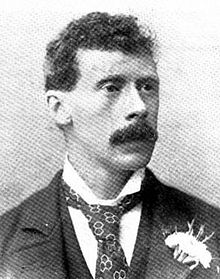
In 1912 Arthur Quiller-Couch became a professor at Cambridge. In his first series of lectures he coined a phrase, or at least it is our earliest noted use of said phrase and in the portion of that lecture it went like this:

Arthur Quiller-Couch“[If] you here require a practical rule of me, I will present you with this: ‘Whenever you feel an impulse to perpetrate a piece of exceptionally fine writing, obey it—whole-heartedly—and delete it before sending your manuscript to press. Murder your darlings.”~Arthur Quiller-Couch from On the Art of Writing Lectures delivered in the University of Cambridge 1913-1914.-Page 146


If this be much too much for some to grasp and too ancient I shall refer you to a more god like being in the eyes of us mere mortallaic scribes.Stephen King

“Kill your darlings, kill your darlings, even when it breaks your egocentric little scribbler’s heart, kill your darlings.” ~Stephen King from his On Writing: A Memoir of the Craft.

Perhaps even that is a little too old school for some. How about this?

Neil Gaiman“I absolutely believe in taking out things that make the story better if they aren’t there. Just as I believe in writing scenes you didn’t want to write, when you’re doing the second draft, because it makes the story work better if they are there.

Other than that, I think you’re God when you write, and you get to make the universe the way you want it. If you’ve written something really good, why would you get rid of it? Normally the bits that I really like are the bits that my readers really like too.”~Neil Gaiman , his Tumblr,com page March 18, 2012 (This link will open in this page.)

kill the darlingsIf you are still with me then you are wondering what my advice is on how to kill your darlings. What one piece of advice can I give that you may not have heard before?

Write and draft and draft until you loath, you despise, you literally wish to KILL your novel. The darlings will then leap from the page and sacrifice themselves. Until this point your darlings are in disguise.

I speak from experience. Recently I’ve been working on draft after draft of a book I began back in 2012 or earlier. 300 pages of words, non-stop for days on end have been my life. I know all of you reading can feel me on this one. I am now in stage 25 of writer draft coma and am hooked up to an IV of coffee—I only started drinking coffee a few weeks ago. I think there may be a correlation, and yes that’s how bad it’s been. No, not the story, but how dedicated I am to getting this one exactly how I want it.

In stage 25 it happened. I. Killed. A. Darling. Then. Another. I began to read and see the saccharine everywhere. Those cheesy bits of one-liners in the interior monologue of the narrator that is supposed to be cool because he represents ME! I had reached hatred level. The more I read, the more it became obvious that I, the narrator would NOT say these things. No one in their right mind would read these words and say, “Oh yes, I’ve thought those very same things myself.”

Some of you are saying at this time, “I will never loath my novel.” By loathing your novel I am in effect stating you are loathing the process of continuously laboring over the need to draft and draft. Your mind will eventually have mercy on you.

But how can you do this? I realized somethings.

One is as I said before there are things people just don’t say. They draw attention to the writing. They pull me out of the story, even my own story.

Then I determined things I had in the story were things people skipped. You know those passages in a book you will likely skip as you go along. You get to certain parts and you want to know this, not that. “That” is a darling. “This” is what you need. I found a way to get out of the way of the story. I want my stories read. Is my story the same story without “That”? If the answer is yes, then son long to “That”. Yes, I know I am using quotation marks too often but I am doing it for emphasis.

Going through my novel again I have made great cuts and slashes. Phrasing is improving left and right, pace has improved, the voices of the characters are becoming more distinct. It has taken a long time to get to this point and a lot of pain, in the literal sense. I would not change a moment of it. What I discovered is something that will help me for the remainder of my writing career.

Will this be the piece of advice that helps you get to that goal you have? I don’t know, but every tip is worth at least reading about. I’ve found I gain something each time, or I lose brain cells from the sheer duh duh duh of the person who thought they should be giving advice. Yes, go ahead and say it as you finish reading this about me. All together now. DUH DUH DUH.

But one last bit of advice. Make certain to save that previous draft. When it comes time for your Beta-Readers to read, you may find you need to Frankenstein some Darlings.

@RonovanWrites


Enter your email address to subscribe to this blog and receive notifications of new posts by email.

© Copyright-All rights reserved by litworldinterviews.wordpress.com 2015

March 18th at 8 pm ET/5 pm PT to talk #audiobook #marketing #TalkingACX Twitter Chat @K8Tilton @ACX_com

Authors have a lot to juggle, from writing to publishing and everything in between. So how do you find the time to market your audiobooks?k8combined

ACX is teaming up with author assistant Kate Tilton this Wednesday, March 18th at 8 pm ET/5 pm PT to talk audiobook marketing and other ways an assistant can help your career. Join us for a #TalkingACX Twitter Chat to get tips and advice for fitting marketing into your busy schedule.

How can you participate? It’s easy!

  1. Follow @ACX_com and @K8Tilton on Twitter.
  2. Join us on Wednesday, March 18th just before 8 pm ET/5 pm PT on Twitter, or follow along on Twubs.
  3. Bring your questions and comments, and tweet them at us using the hashtag #TalkingACX.

We look forward to chatting with you on Wednesday!

The ACX Team


Remember to Reblog, Tweet, share this however you can. Free, good advice is hard to find.


Authors, Wake Up and Get to Work!

wake-up

Before you authors run away because I’m talking about a marketing idea today. Don’t. You blew that one off with another author’s post recently and missed out on a very good, very easy opportunity. We write about things like book covers and formatting and you eat it up but anything that ventures in to the area of the dreaded world of promotion you run like conservative and a tree hugger festival.

I have eleven years experience in marketing. My interest in helping promote authors is not one that is some half wit idea without some thought given. I’ve done articles about authors needing social media presence for a reason. Articles about getting your book description right on Amazon have come up, with little attention by readers.

“Why does my great book about blah blah blah not sell?” Because your book description says a boy and his dog set off on an adventure across the country. That it, nothing else.

Back to marketing. How do you get people to buy your books? Advertising? No.

There are two ways; Word of Mouth and Word of Your Mouth

Word of Mouth

This is how most books get around. People to friends. Those friends could be face to face friends (f-f) or online community friends (OCF). Regardless of which, they are among people that know each other and are liable to listen. Send me an Amazon email with that list of books and I am more than likely not going to bother.

Word of Your Mouth

And here is why I’m writing this today. Jo Robinson wrote a great article How to Create Downloadable Links to Give Away Books from your Newsletter Sign Up  In it she discusses exactly what the title says. But there is something she mentions that might be missed. And it was missed by a lot of people because for some reason this article didn’t get the massive response a Jo Robinson article normally does. Why? I won’t repeat why but as authors we want to write our books and that’s it.

Those times are long gone unless you write about wizards and have a nice bit of plastic surgery done. Or you have so many books out there that they do your leg work for you. But even then you have to play the game. Indie Authors MUST do it. House Published authors NEED to do it and are encouraged to do it by their publishing house.

What did Jo say in her article? A lot. But the one piece that I am talking about is as an author you MUST build up an email list. An email list is made up of people who have shown interest in something you were giving enough to give you their email address, which is a big deal these days. Start now before you even know you are going to write a book. Come up with some idea for a Newsletter and have those people sign up. 1000 people sign up and then get word of your book. Let’s say 10% buy your book. 100 people buy it. of that say 50% tell their f-f or OCF.

It keeps going and going. Your one email newsletter or email blast about your book is now spreading for you by word of mouth. Just think. Oprah speaks and people buy. Books never heard of may be mentioned by her and are then a best seller in days.

Read Jo’s article about how to set up a newsletter email system. It’s worth the time.

Ron_LWI


@RonovanWrites
on GoodReads
on Google+
on Facebook

Enter your email address to subscribe to this blog and receive notifications of new posts by email.

© Copyright-All rights reserved by litworldinterviews.wordpress.com 2015

How I Found a New Publisher after Losing One by Guest Author @ShanAshleeT23

I asked today’s Guest Author to fill in my Friday spot because she’s done something I think is pretty amazing. Published at 16, contract, then all gone, and then here we are. LitWorldInterviews has the reputation as the Indie Authors place but I also think there is an Indie Author attitude. Today’s guest has that to me. I suggested a number of topics but one idea kept seeping in, even into other ideas. Welcome, Author Shannon A. Thompson.

four2

The holidays are usually a very happy time for me as a writer. Extra time to write and watch the snow at the same time? Sign me up. I am a lover of snow…which is probably why my first novel, November Snow, revolves around the fluffy stuff. But the winter of 2014 wasn’t filled with smiles and snow and writing adventures. It was wet with rain, and it seemed quite suiting to wake up with tear-worthy news in my mailbox.

My publisher of two years had closed the doors.

As every writer knows, the publishing world is a chaotic one. It isn’t easy to get published, and it doesn’t get easier just because you’ve been published once (or even a dozen times) before. This realization becomes damning when you realize the main piece of advice in the market is to keep publishing new (and quality) work, constantly and quickly. But my situation had frozen one month before my fifth novel was set for release. I was stuck.

11pubIt’s rather redundant to explain my devastation, but it was there, nevertheless. I wasn’t sure what I would do. I couldn’t clear my mind. Should I self-publish everything I previously published? Should I try to find a new publisher? Should I just give everything away for free? Should I just stop for a while?

Previously in my career, I allowed seven years to pass between my first novel and my second novel. This was because I have made that “I am going to stop for a while” decision before, and while I think it was a necessary lesson for me, I knew I couldn’t do that this time around. Not again. But that was all I knew for certain. Everything else was a looming cloud of “What now?”

To my surprise (and ultimate delight), my dedicated readers were the ones who took over. My fans and supporters and fellow writers who have guest blogged on my website, www.ShannonAThompson.com, came to the rescue. They knew and understood my pain and frustration and confusion and heartbreak, and they showed me their outpouring love by commenting, sharing, and messaging me. I spent days and weeks just talking to them, listening to them, and absorbing their thoughts and ideas about where I should go and what I should do. So many were willing to help me self-publish and so many were willing to accept me into their publishing houses.

It was overwhelming, but it also touched a rare place in my writing soul – a place where I have given up before and a place where I know I won’t give up again. How could I give up my publishing path? Even when it went dark and I could not see, my readers lit it up to a brightness I have never experienced before. I couldn’t give up. I had to move forward, and I had many paths to writerconsider, but I knew I had to ultimately take one.
It’s difficult to explain how one path overcame the others because I don’t believe one “overcame” another – I think I was guided to the final destination by the love of my readers. In this case, a very helpful and fellow writer, JK from House Kelley, suggested Clean Teen Publishing, and he even took time to explain why he loved them so much. Clean Teen Publishing stuck out like a beacon from the beginning, mainly because I was already familiar with the publishing house as well as many of their authors, books, and the blogs that reviewed their work. That familiarity brought warmth to that lit-up path, and I decided to try it out by submitting.

With readers helping me, I signed a contract with Clean Teen Publishing in one month, and my paranormal romance, The Timely Death Trilogy, is re-releasing with new covers and interiors this summer and fall. We announced our deal recently. (http://shannonathompson.com/2015/02/11/ww-a-new-publisher/)

The group at Clean Teen already feels like a family to me, and I know they feel that way because their dedication, warmth, and acceptance of all authors reminds me of a group I will always keep dear to my writing heart: my readers.

My readers were the ones who saved my career – and they also saved me – and for that, I am eternally grateful. May every author and reader find a group they can refer to as family, as friends, as fellow bibliophiles. Our words are endless when we all support one another in sharing them.

~SAT


Links:
Website: http://shannonathompson.com
FB: https://www.facebook.com/AuthorShannonAThompson
Twitter: https://twitter.com/ShanAshleeT23


Bio:

I’m a 23-year-old author, avid reader, and a habitual chatterbox. In 2007, I was 16 when my first novel, November Snow, was published, and a lot has happened since then. My work has appeared ipic1n numerous poetry collections and anthologies, and my first installment of The Timely Death Trilogy became Goodreads’ Book of the Month. I am currently represented by Clean Teen Publishing, and Minutes Before Sunset releases on July 28, 2015. Writing is what I do, and I love it more and more every day.

As a novelist, poet, and blogger, I spend my free time writing and sharing ideas with my black cat, Bogart, named after my favorite actor, Humphrey Bogart. Between writing and befriending cats, I graduated from the University of Kansas with a bachelor’s degree in English with an emphasis on creative writing, and I travel whenever the road calls.

I am also an editor and social media marketer, and you can read more about my services by clicking the link. You can also reach me at shannonathompson@aol.com. I’ll be drinking a coffee when I read your message.

Talk to you soon!


Enter your email address to subscribe to this blog and receive notifications of new posts by email.

© Copyright-All rights reserved by litworldinterviews.wordpress.com 2015

Are you stuck with your visuals? Check ‘Canva’ by @OlgaNM7

Hi all:

I usually bring you reviews and random things, but a post by our own Jo Robinson about back covers got me thinking about images and how little skill  I have at manipulating them. I’ve tried a number of programmes but find that other than the very basics, if I try to do anything a bit fancier my mind boggles and the results are less than stellar.

One day visiting a post (I think, it was a while back), I came across ‘Canva’. I wrote a post about it in my own blog and I thought that although I’m sure most people manage better than me, some might be interested in checking an option that requires very little training.

Here it goes. I’m transcribing from my original post:

I’m not an image person at all, and I decided to try and keep it simple. Thankfully, through another post I discovered something called Canva. You’ve probably already heard about it, but just in case…

Canva offers you the option of using their templates to create all kinds of things, from covers for CDs, cards, invitations, Twitter, Pinterest or Facebook posts (so you don’t need to worry about the different sizes of images required), banners, blog posts…

A little bit of everything

Like this one I prepared earlier.

You can change colours, letter sizes and types, upload and use your own images, crop, use filters, etc. They have a fair amount of free resources and quite a large amount of paying ones (it’s $1 per image or paying template or element). Then whatever you make you can download as image or PDF. And it also saves it there.

And the best thing about it is that it offers you a variety of design tutorials where you can learn how to use the different features. And those are short and practical (it gives you 5 or 6 exercises to do that take only a few minutes and you have the option of watching a very brief video if you don’t know how to do it).

Having tried a few of the programmes for manipulating images and being quite clumsy with images, I find this one easy to move around. Do give it a go. I used it to create the slides that I put together in the video (that and images Lourdes Vidal, the designer and I had considered for the cover of the book).

And talking about images, I had promised you to share a few more of the images my friend Christelle took in Florence, as both her camera and her skills are much better than mine.

So here….

Fabulous ceiling
Fabulous ceiling
I had promised the gentlemen a Venus. This is Titian's
I had promised the gentlemen a Venus. This is Titian’s
Street sculpture installation near Ponte Vecchio
This one I think is so good...
This one I think is so good…

Thanks to you all for reading, to Canva for being, to my friend Christelle for her pictures and…

Thanks Canva!
Thanks Canva!

As another example, I leave you a video I created using exclusively images I put together using Canva. It’s very simple and silly, but…

Olga Núñez Miret

Olga_Núñez_Miret_author.jpg


@OlgaNM7

Olga’s WebSite

Enter your email address to subscribe to this blog and receive notifications of new posts by email.

© Copyright-All rights reserved by litworldinterviews.wordpress.com 2015

Finds-The 10 REAL Reasons Your Book Was Rejected: A Big 5 Editor Tells All by @RuthHarrisBooks

The 10 REAL Reasons Your Book Was Rejected: A Big 5 Editor Tells All

by Ruth Harris

I’m an Amazon #1 and million-copy NYT bestselling author published by Random House, Simon & Schuster and St. Martin’s. I was also an editor for over 20 years. I worked at Macmillan, Dell and Bantam and for a small but thriving independent paperback house, now defunct—not because of me. 🙂 I was also the Publisher of Kensington.

I’ve been the rejector and the rejectee which means rejection is a subject I know a bit about. So let me cut rejection down to size.

Manuscripts get rejected; not writers.

It’s business and (most of the time) it’s not personal.

The reasons for rejection start with the basics, i.e. the ms. sucks. Author can’t format/spell/doesn’t know grammar or punctuation. S/he is clueless about narrative, characterization, plotting, pacing, and can’t write dialogue. S/he has apparently never heard of paragraphing and writes endlessly long, meandering, incoherent sentences that ramble on like poison ivy. You cannot believe the grotesqueries I encountered during my days in the slush pile. 
Click to Read the Rest of the Original Article at Anne R. Allen’s Blog with Ruth Harris selected by Writer’s Digest as 101 Best Websites for Writers. I got Ruth Harris book at Amazon for Free through a link in the article. So go NOW, read, learn, and get FREE!
Thank you goes out to Author D.G. Kaye for tweeting this article. Her site is dgkayewriter.com

Enter your email address to subscribe to this blog and receive notifications of new posts by email.

© Copyright-All rights reserved by litworldinterviews.wordpress.com 2015

 

The Author’s Role in Representation @NatachaGuyot

Guest Author

Natacha Guyot

natacha guyot authorAuthor of the

Newly Releasednatacha guyot


The Author’s Role in Representation

Diversity in representation has been something important to me for many years. My interest has only deepened as I grew up and became more aware of cultural diversity and how representation matters.

When younger, I first realized unbalances in representation in regard to female characters and how some stereotypes hurt female characters in books or especially on screen. I more easily identified with female characters than male ones, but their ethnicity was never an issue for me. One of my strongest role models while growing up was the comic book character Yoko Tsuno, a Japanese engineer. I also recall how one of my all time favorite characters in Star Wars is Lando Calrissian.

Diversity in stories, in gender, age, ethnicity, species (I have loved Science Fiction and Fantasy since I was little) and background matters to me. This is why I easily am drawn to female character study in my research as an independent scholar. Science Fiction isn’t perfect, but it still has given us some interesting female characters over time. Yet, there is still much to work on to improve representation.

I also began to ask myself questions about representation through my roleplaying experience, which has been my major fiction writing since 2008. I explore different aspects of writing in this universe in my blog series ‘A Galaxy of Possibilites: Discussing Character Writing, Diversity, Star Wars and Fandom’.

It made me consider how I pick my ‘image claim’ to give a face to the characters I write. While I only write human or near human types of characters, I decided to look at my list of characters. Out of thirty three characters, I use persons of color for eight of them. Yet fifteen of my characters aren’t humans, or only partially. So the question of diversity arises from different points of view. As for gender, I only write four male characters! Even in my original fiction, I only recently felt comfortable enough to have a larger number of male characters. I also have an intersex character to make their apparition in my Clairvoyance series in the years to come.

While the question of diversity is something on my mind on a conscious level, my characters generally come up in an organic manner, including when it comes to their looks. When I have a solid concept of character but am unsure of their ethnicity, I try to avoid using a white image claim. I had some of my roleplay characters switch from a latina actress to a white one, just as I had a character switching from a white actress to a black model. In the end, I go with what fits the character best.

When I returned to original fiction in 2014, I realized that while I had a generic idea of the Fantasy universe I was to write a series of short stories in, most of my characters were very open in terms of diversity and how they could look like and who they might love. I like discovering more about my characters as I build their story.

I can’t say that I create the character before the story or the opposite. It is a mix of both. Depending on the mood, the story and the character, the creative process can change a lot.

In my contemporary Fantasy universe Clairvoyance, several species coexist: Fae, Shifters, Weres, Anomalies, humans with supernatural abilities and regular humans. With many supernatural beings having extreme longevity, if not immortality for some, it brought some challenges. While most of the action, at least in the first volume, is between the USA and the UK, several characters come from other places, some going back as far as Stone Age Africa.

After years spent roleplaying, I attach an existing (famous) face to all my characters. I have tried to match the faces to the origins and background as much as possible, when it was an important part of who the character was. And even if I leave interpretation open to the reader in the way I write, I know in my head, that my imaginary cast look the part. Not only does it feed my inspiration, but it also makes me feel more responsible towards the credibility of said characters.

As writers, how do you approach diversity and its multiple forms? Is it something that naturally comes to you? Do you have certain guidelines to ensure that your gallery of characters is diverse enough?


Great post from Natacha! Now don’t wait. Go NOW and get A Galaxy of Possibilities: Representation and Storytelling in Star Wars. This isn’t a fanboy thing. This is a highly educated person with years of research spent doing this the right way. And she had no idea I was going to advertise her book because I’ve had this guest post for a while now. So go get the book by clicking here! I did.

Much Respect

Ronovan

Enter your email address to subscribe to this blog and receive notifications of new posts by email.

© Copyright-All rights reserved by litworldinterviews.wordpress.com 2015
Protection by @JoRobinson176

Imagine your eighty thousand word novel disappearing before you publish it – never to be seen again. Obviously you know what your story is about, but there’s no way you could ever get it down just the way you had it after months or years of scribbling, tweaking, and editing. Imagine also all of those bits and pieces on your computer – plotlines for future tales – research – links – bookmarks – pictures – covers – lots of other important things – also disappearing. Or how about some crazy hacker fellow getting into all your online sites and wreaking havoc, stealing your stuff, and breaking all the windows. Scary thought, but all of these things have happened many, many times.

Spending money on protecting these things is even more important than spending money on editing or cover art to begin with. *Ducks to avoid missiles thrown by editors and cover designers* Seriously – your manuscripts and cover ideas need to be kept safe in the first place. Only if you really, really can’t afford it should you rely totally on free protection against these things. There are some really good free options to be fair, but they all come with limitations, so I think that paying for these silent warriors on your computer to automatically look after it behind the scenes is money well spent. If it is too expensive definitely use the free versions – they’re much better than not having anything at all, and you’re a lot less likely to be infiltrated with them on. Don’t only rely on one either. Go for a good anti-malware and a good antivirus at the very least.

Firstly, if you just consider the cost of your computer itself, even if you have nothing to hide or not a lot to lose, it’s still imperative to protect it from hackers. Those odd people enjoy nothing more than crashing total stranger’s hard drives just for the jollies, and never mind all the valuable things scribblers have lurking around in the depths of their machines- although most of us probably don’t have much to swipe from our author earnings accounts. So I recommend that if you can afford it, pay for the best. I don’t actually know what the very best is – only what works for me.

Trying to follow a blogger back the other day, my MalwareBytes shot up twenty (yes TWENTY – I’m a counter) blocked malware messages in very quick succession. Of course I headed out of there at a rate of knots (apologies for not following back dude). There’s a lot of malware popping up all over the place these days – for instance Huffington post ads, and there’s a particularly scary looking one around and about these days that won’t let you close any tabs – in this case RESTART or SHUT DOWN. DO NOT click on any exes to get rid of the pop up if it looks dodgy – just head straight down and either shut down or reboot – much safer.

Personally I think the more the merrier. I pay for all my protection, and use the premium packages of Malwarebytes, Bitdefender Antivirus, Zemana AntiLogger, and a couple of others just for the hell of it whose names I won’t share just in case there’s a crazed hacker out there with a burning desire to get his sweaty paws on my latest pics of lizards. Maybe this is overkill, but I have had a computer totally destroyed by malware before, and lost so much that I cried. Some of these services have free options, and these are good, but you have to update and scan regularly yourself (every day), whereas the premium versions are automatic, with pop ups when they find or block something nasty so you can head off to where they’re quarantined and zap the sods permanently.

Other than hackers and malware or viruses, there is the possibility of your computer crashing due to malfunction. It’s important to have external backups of your work, or anything that is important to you. For this, you can choose to go the easy route by simply emailing attached WIP documents or images to yourself, and storing in a folder on gmail (or any other email provider). Again – maybe email sites are vulnerable to hackers, so some sort of external hard drive or a small collection of USB’s would do the trick better. There’s also Dropbox and other cloud storing services. Personally I’m a little neurotic about storing my manuscripts on them, but a lot of people swear by them. Stay safe scribblers.

Jo Robinson


narc12349n1t-2
Click For Jo Robinson’s Latest Book

Jo Robinson


@JoRobinson176

africolonialstories.wordpress.com


Enter your email address to subscribe to this blog and receive notifications of new posts by email.

© Copyright-All rights reserved by litworldinterviews.wordpress.com 2015
 

#Authors #Marketing Yourself and Your Work Part ONE

From the blog of our friend Christ Graham, the Story Reading Ape. It’s a series there are links within this first one that takes you to the next one. Go check it out!

Chris The Story Reading Ape's avatarChris The Story Reading Ape's Blog

writer_398245

Cartoon from Toonpool.com

The following is an extract from a talk delivered at the Calgary Public Library in Feb. 2011.

Part 1

Before I begin, please watch this video:

 .

I’ve named these two characters Wannabe Author (WA) and Real Author(RA).

How many of you have ever said any of the things Wannabe Author says in this video? Come on, be honest. Okay, then, how many of you have heard other writers say any of these things? And, like Real Author, haven’t you just wanted to put them and everyone else out of their misery by ignoring whatever they say? Obviously, Wannabe Author is the least promotable kind of author. First of all, Wannabe is never likely to be published, so will be of little worry to the publishing industry anyway. WA is not listening to an experienced author, knows nothing about the publishing business, and thinks the path to…

View original post 914 more words

Hyphens & En Dashes & Em Dashes Oh My.

hyphens dashes

Let’s talk hyphens, en dashes, and em dashes.

Are you using them the correct way? Are you using the correct lengths? You are probably wondering about that second question, and we will get to it in a moment. But first let’s talk about what each one is and does. Much of what you will see is based on the AMA and CMA information. In other words, these aren’t ideas I pulled out of the air. You’ve been taught differently, then you’ve been taught differently.

Let’s take them by length order.

First to join us is the hyphen.

What does it look like?

Where do you find it? You’ll find it between the 0 and the = keys.

How do you use it?

First of all there are several names for the uses of the hyphen. I’m not going to bother filling your time with names that may not even be real or standards. I am going to give examples. Isn’t that what we want when we go looking for this information?

  • Sometimes you will use the hyphen when words are linked together to describe something. They are linked together because they are essentially one descriptive trait.
    • She is a twenty-nine-year-old college student.
    • My mother-in-law made dinner tonight.
    • The novel is forty-two chapters long.
    • A quarter is one-fourth of a whole.
    • She lives in a split-level house.
  • I think we all know about the hyphen between numbers, such as forty-one. I know, I know, we aren’t supposed to spell forty-one out but I do in my writing, and in truth you will see a lot of advice saying to do so. But writing numbers is a whole different article. For me it’s a style preference. I visually like the numbers spelled out.
  • And of course there is the hyphenated last name. Abigail Smith-Wesson.


Now we have the En Dash.

What does it look like?

Where do we find the En Dash? Today we are going to use the lap top. Because I use the laptop.

But first we’re going to talk about the uses of the En Dash.

How do you use it?

  • You use the En Dash for noting ranges. 1–100 is an example of a range. Also a range of time such as June–August is summer vacation for schools in the USA.
  • You might even see a sentence that has – in it. I know you are scratching your head. What you are seeing is an En Dash with a space on either side. Some people use that as an Em Dash.


Last and definitely not least is the Em Dash.

What does it look like?

Where do you find it on the keyboard? Good question. And no, don’t hit the hyphen a few times.

How do you use it?

  • Think of the Em Dash as an interrupter. Interrupter is my word for it here. And I mean that in a couple of different ways.
    • The most common we see in novel writing is when dialogue is interrupted. “You are a no good piece of fu—” “What were you going to say, young man?”
    • But you can also use it to insert a different thought in the middle of a sentence. I ramble a lot—I do so in my brain—and I type like I think. As long as my writing works—I don’t care what I use.
    • Some people use the Em Dash in the place of commas, colons, parenthesis, and semicolons when they want to give whatever it is that extra bit of attention. That being said: don’t over use it. If you use it all throughout your novel then it just becomes another period to the eye and ear.

One thing to keep in mind about En Dashes and Em Dashes is, be consistent. As someone reads your novel, and let’s be a positive thinker here and say novels, you are training them to know what you mean. If you use an – to be an—in one chapter then do it in the next chapter and perhaps the next book as well. I am hoping you got what I did there.

How do the three look?

– Hyphen

– En Dash

— Em Dash


The reason they are called En Dash and Em Dash are because how much space they take up.

N

M


How do they look with a word?

the-

the–

the—


On my laptop when I look at what I am about to tell you there is a key combination or Shortcut key to use that includes the Num key. That’s the Number Lock key. I’m not certain about all of you, but I don’t have a number pad on my laptop. And the Function to actually create a number pad doesn’t work with the key combination to create the dashes I need. So what do I do? I create a new Shortcut key. It’s pretty simple to do even though the instructions below look long. I am very detailed when I give instructions. I see no reason to skip steps. Some of these steps are going to seem like, as I like to say ‘Duh’, steps to you but there is no reason not to include them.


Where do you find the En Dash and the Em Dash?

I’m not sure what kind of laptop you use. But if you use Windows then this should work. What you do is:

  1. Open Word on your laptop.
  2. Click the Insert tab along the top of the screen.
  3. Look for the Symbols It’s at the far right on my bar at the top.
  4. Click Symbols.
  5. More than likely it will say ‘more symbols’.
  6. Click ‘more symbols’.
  7. You will have a pop up box appear with two tabs.
  8. Click the Special Characters
  9. You’ll see the En Dash and the Em Dash with the Shortcut key combination to get each symbol. The hyphen is what we have on the keyboards already. The En Dash is a little longer, and the Em Dash is longer than that. Now you will see there is a Shortcut key combination to use but on mine it says to use the Num My laptop doesn’t have a Num key and doing the Function that does the Number Lock doesn’t make the Dashes work. So continue on below.
  10. Select En Dash
  11. Click Shortcut Key at the bottom
  12. On the next pop up box called Customize Keyboard you will see a field where your cursor is most likely already waiting for you. That field is called Press new shortcut key.
  13. For the En Dash I chose Ctrl and the hyphen. It will look like Ctrl+- in the Shortcut key list. Then click Assign. You could use Ctrl and N.
  14. For the Em Dash I chose Ctrl, Alt hyphen. It will look like Alt+Ctrl+- in the Shortcut key list. Then click Assign. You could use Ctrl and M.

After all of that I want to show you something.

The—

The—

Looks the same, right? Not the same. The first was created by hitting the hyphen twice and then hitting enter. The second was created using my shortcut keys for the Em Dash.

If you made it this far you are probably wondering why all the bother. Using the correct punctuation is never going to hurt you. Not using it can. You don’t know what pet peeve will set off that person assigned to reading your submission has. If you can get something right, then why not get it right? There is more to this subject than what I have here. But this is a place to start. I wanted to plant the seed of getting it right and then you can grow your understanding from there, and possibly even grow mine by sharing in the comments. Other people will read this and you will help them.


Ron_LWI


@RonovanWrites

RonovanWrites.WordPress.Com

RonovanWrites on Facebook

GoodReads

followmeonbloglovin


Enter your email address to subscribe to this blog and receive notifications of new posts by email.

© Copyright-All rights reserved by litworldinterviews.wordpress.com 2015

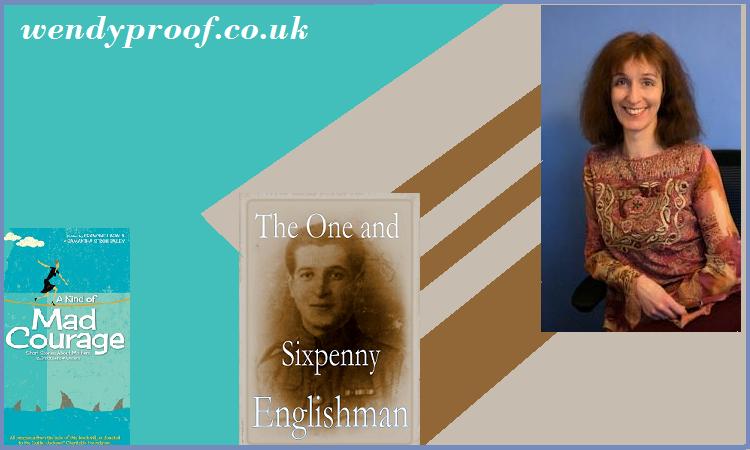
Co-Writing With My Best Friend by Guest Author Wendy Janes @wendyproof

I’d like to share my experience of co-writing. Partly because it’s a funny story, and partly because I hope you’ll find it interesting to find out how we did it. It might even encourage you and a friend to have a go yourselves.

A few years ago my friend and I were sitting in her conservatory chatting about whether men or women could write better love letters, and via a little too much sharing, we bemoaned the fact that any books we’d read with good sex scenes had weak stories, or if the story was good, it glossed over the sex. So we decided to write an erotic romance with great characters that people would care about, an intriguing plot, and sex scenes that would excite our avid readers.

Now, bearing in mind neither of us had written a full-length novel before, one of us was a school governor and a grandmother, and the other enjoyed craft fairs and knitting, we didn’t seem likely candidates for writing erotic fiction.

I don’t want to get into the Fifty Shades debate, but I would like to say that we had finished writing our book before we’d heard of that publishing phenomenon.

So how did two middle-aged women from South London set about co-writing their novel?

Initially my writing partner (let’s call her Pandora) went out to buy lots and lots of stationery.

We met once a week to brainstorm characters, and pretty soon we had created four women who became real people to us. Authors need to know their characters inside out, but because we were co-writing we had to share out loud everything that we knew about them. Such as Hazel’s hairstyle, what Sonia ate for breakfast, the first song Paula bought and Jacqui’s worst memory from childhood. Within weeks the four women were joined by five men. We adored drop-dead gorgeous Billy, we also adored the vile Richard, but only because we were astonished that we could create such a creep.

During this time we also bandied around oodles of ideas for plots. Our notebooks were filling up fast, but we’d not written a word of the story yet.

We plotted Chapter One (which of course never made it to the final draft) and separately wrote our own versions of it. The idea was that we’d give each other feedback on what we liked and what we didn’t and somehow magically turn them into one sparkling opening chapter. That didn’t work. Mine was too full of emotion, more like a Mills and Boon romance and Pandora’s was too spare, more like a thriller. This was not looking good, and so far we’d not written a single sex scene.

Plan B. Pandora would write Chapter One and I’d write Chapter Two and we’d edit each other’s chapters. Plan B wasn’t wholly successful either. While we both agreed that we could write a darn erotic sex scene, I have to admit I took Pandora’s edits a little too personally and things were rather cool between us for a day or two.

Plan C. Pandora was lightning quick at generating ideas, and I was better at taking her ideas and developing them. Same with the writing. So for the next few months we met once a week to plot a chapter together. Then Pandora would take an hour to write the chapter, email it to me and I’d take six hours, often more, to develop it and send it back to her. We agreed there’d be no further revision until we reached the end of this first draft.

Then came the best bit. We read each chapter of Draft 1 out loud and talked through the revisions together. It was amazing how in tune we were with the characters and the plot, often voicing the ideas that were still in the other person’s head. I will gracefully admit that Pandora came up with the best ideas, including the plot twist that had us dancing round her conservatory with glee. What also became apparent at this point was that the four women who at the outset we’d thought were nothing like us, had traits of each of us. Pandora’s vibrancy and love of life shone through in gorgeous Paula. My insecurities were writ large in naïve Sonia!

We then sent the book to friends (male and female) who gave feedback – thank goodness I didn’t crumble in the face of criticism any more – and in the light of that feedback we revised again, and again, and again. By this point we couldn’t remember who had originally written what or whose idea was whose. We were having such fun we could have tinkered with our book for ever, but we also wanted to publish it. Eventually (!) we came up with a title and published our book under a pen name. We were proud of what we’d written, but our children (Pandora’s four and my three) begged us not to use our real names.

The book didn’t take the world by storm as we’d genuinely, honestly (naively) thought it would, but we had a wonderful laughter-filled two years writing it, and we’re still best friends. The whole experience introduced me to the world of self-publishing and helped me find my own writing voice. I reckon that’s a happy ending.

wendy_janes_author.jpg

wendyproof.co.uk

Wendy Janes GoodReads

WendyProof on Facebook

Wendy on Amazon

Wendy on Amazon UK

Wendy on Linkedin

Wendy on Google+

Enter your email address to subscribe to this blog and receive notifications of new posts by email.

© Copyright-All rights reserved by litworldinterviews.wordpress.com 2015

LWI Who we are and what we do.

Who are we here at Lit World Interviews with Ronovan Writes and what are we about?

First let me explain the ‘with Ronovan Writes’ part. When I started the site it was just little old me. Thus, I put my name with the site name. I suggested later as the site grew about thoughts of my removing that part but was told “No”. Those I spoke with liked the way it sounded, thought it gave the site something different, especially since the Author Interview is such a central part of what the site is about, and well, they said it was my site and my name should be there. I don’t rock the boat. And in truth, the with Ronovan Writes part is rarely ever mentioned.

Now on with what it’s all about.

Now that the doors have been opened for a time, the what we are about has become clearer even to myself. My original idea was to have a place to share my Author Interviews, to give the Author a place to turn to for another opportunity of having their name out there on the internet for readers and Literary industry people to find. Yes, I wanted LWI to be a part of the Author marketing and web presence.

I also wanted to share my tips on creating a web presence as well as blogging for authors and writing. Having my own personal blog that does quite well and a writing career that is picking up caught up with me. Enter Author and Self-Publishing expert Jo Robinson. I interviewed Jo and practically begged her to join LWI as a Feature writer.

I realized her Feature writing and finger on the pulse of what interests the Writer could not be matched by me nor anyone else. Her advice in her articles have been helpful to everyone that has read them, including myself. She. Nails. It. Every. Time. Honestly her Feature writing has made me focus on mine more. Yes, there is a competitive thing there of my wanting to write just as well as Jo does or at least just as helpfully as she does.

Then Book Review requests came in and I could not find time, even in my 3-4 hour sleep days to keep up with everything. Enter the rest of the team; Author PS Bartlett and Author and Therapist Olga Núñez Miret, Attorney, Therapist, and College Professor Florence Thum and the indispensable Book Reviewers Colleen Chesebro and Hugh Roberts.

Now enter the newest member Author Monica LaSarre as Book Reviewer and Feature Writer, who will be bringing a look into the younger reader market and world that I have very much been wanting. I have been looking for Interviews in this area for quite some time, and Monica was a great discovery. I loved her book and loved writing an Author Interview with her.

Looking at the LWI Team, I can honestly say this is a classy group of people who are professional and share a love of the printed word.

I am still amazed it is all happening.

That’s a little of who we are with a touch of what we do. Now having the site running for a time I can give a realistic account of,

What we do.

Author Promotion.

  • Author Interviews with Ronovan Writes – The reason LWI began in the first place. This is the one area that I enjoy the most and takes more time behind the scenes than people would ever know. If you ask an author I’ve interviewed if the final product looks like what it started out with, most of them will say no way. And it’s not just Authors that are interviewed. This site is called Lit World Interviews for a reason. Are you a Book Cover Artist, a Proofreader, a Publisher or even an Agent?
  • Social Media Promotion – This takes on the form of tweets of various kinds as different kinds bring different results, and promotion in various other outlets.
  • Book Reviewing by Ronovan Writes – This goes along with the Author Interview. For a better interview, having read the work to be discussed helps. Yes, that means a copy should be provided to me in some form, usually electronically. The Review is as honest as they come. I may love interviewing the Author, I may rave about the author’s personality and even a great deal about their abilities, but that does not mean I will rave about the book. My rating is based on certain factors and whatever that number is, is what the Rating is. I may really enjoy the story of the book, but there are things that take away from an enjoyable read and a well put together book. However, I never put out a completely negative review. If it is below a 3 I feel as though unless the Author specifically asks me to publish it, I won’t do it. And yes, Authors have asked me to publish a Review regardless of the score.
  • Continued Promotion – As long as I am emailed what’s going on in an Interviewees career, such as a new release or a special book promotion offer, a post is put out and shared around for everyone that we know to have an opportunity to see and take advantage of.
  • And More – The more is all those things that come along for each person such as creating certain images to be used, connecting them with people for Book Blog Tours, and in a few cases connecting them with blog radio interviews. And More.

Feature Articles.

  • Writing.
  • Self-Publishing.
  • Book Promotion.
  • Editing.
  • Book Cover Creation.
  • Character Development.
  • Author Services-Noted in the Right Hand Side Bar.
  • And More.

Book Reviews.

  • Every Genre is covered
  • I can only speak for myself in this regard but if I do a Review then I attempt to not only publish it here on the LWI site but also on the various sales platforms such as Amazon, Barnes&Noble and even GoodReads. I even created a Smashwords account to put Reviews there.
  • Again only speaking for me-I share the Reviews not only on Twitter but through various other outlets and reading groups. This process has recently grown. I will also from time to time share links to my Amazon Review on Twitter.

Overall my hope is that an Author feels as though they have been treated with respect and professionally through everything we do here at LWI. I do get a little crazy during some of my Author Interview formatting to create a good time, and my email exchanges sometimes are just as crazy. Each Author is someone I instantly call a friend. Don’t we all want to make sure we do the best we can for our friends?

Looking back through this article I can see that it doesn’t capture close to what the LWI Team does as a whole for an Author. Most of the pieces are there but there is more to it than what you see. Through each person involved our reach to potential readers numbers in the many thousands and that does not include when our articles are then picked up by other sites. We here at LWI have great friends in the Author Community that help promote and help assist Authors just as we do. I am aware of it and have begun to focus even more on the quality of my output to hopefully get others to want to share with their readers.

Thank you for lasting through the long winded words of Ronovan Writes. I am greatly honored that even one of you show up and read anything I have to share. I take it for granted you want to read what others here say. Seriously, they are that good.

Much Respect,

Ronovan Writes


lit world interviews

Enter your email address to subscribe to this blog and receive notifications of new posts by email.

© Copyright-All rights reserved by litworldinterviews.wordpress.com 2015


Patience and Integrity-The Secret to Success

Author Integrity. This week on Lit World Interviews seems to be all about that. Whether you are an Indie or Traditionalist Author there are things we all should be doing. These days there really is only one difference between the two types of Authors and that’s who puts out your books. Some say the Publisher will do a lot more for you so you don’t have to, but that’s not always the case and it costs you.

Don’t get me wrong, I am not against signing with a Publisher. I want to sign with one someday. But I do know that to be successful you need to be all in your own business and not simply sit back and let everyone else be all up in it.

This week you’ve seen a relatively new way of editing from Author PS Bartlett with her article Text to Speech: Editing Through Listening, Proofreading problems from Author and Proofreader Wendy Janes with Most Mortals Need a Proofreader. And rounding out with Author Jo Robinson our resident Self-Publishing guru and her article Authenticity and Honesty as an Indie Author.

I feel each article is linked in that each points to creating something and representing something that is professionally done. Integrity is the word that finally came to mind after reading Jo’s article. Through every draft you write, every proofreading, and every promotional idea you happen to come up with or is created for you, keep integrity in mind.

There are Authors out there that are popular and have great sales numbers. I don’t read them because I don’t trust them and their integrity is non existent in my eyes. That’s right, I look at an author and their product just like I do a person such as an actress. I am asked “Don’t you think she is so hot?” 9 times out of 10 the person they are talking about has the personality of a cross between Bill O’Reilly and Rosie O’Donnell. It doesn’t matter if you have all the physical characteristics of ‘hot’, if your personality is repulsive then you are repulsive as well.

If I look at your books and your promotions and see a lack of professional polish then I begin to think you simply rushed through a writing of it and threw it out there, and you are promoting it with fake gloss to trick people into buying what could have been a great story if you had just had the patience to go through as many drafts, proofreadings, and edits as was necessary to get that best work possible.

patience-integrity

Patience and Integrity in the world of the Author go hand in hand. Don’t rush the love of your life out into the world of Amazon or wherever you publish. Let that love mature and grow and go shopping to look its best. This is a coming out party and it only gets one shot at it.


Ron_LWI


@RonovanWrites
RonovanWrites.WordPress.Com
RonovanWrites on Facebook
GoodReads
followmeonbloglovin

Enter your email address to subscribe to this blog and receive notifications of new posts by email.

© Copyright-All rights reserved by litworldinterviews.wordpress.com 2015


Most Mortals Need a Proofreader by Guest Author Wendy Janes @wendyproof

Why can’t you successfully proofread your own work?

It’s very simple – you read what you expect to see.

When you read other people’s work it’s fresh and new. Any errors seem to leap from the page, as the following examples demonstrate:

“Perdita was so angry she felt like throwing the laptop out of the the attic window.”

“Mark was fifty-five minutes younger that Spencer. An injustice than irritated him no end.”

The errors in the above sentences look so obvious. However, when you’ve been working on your book for months, maybe longer, and you’ve re-worked, revised, edited, tweaked, fallen in and out of love with it more times than you can remember, it’s almost impossible to gain the professional distance that is required to proofread it effectively. This is no reflection on your skills as a writer.

I’d like to share my own (humbling) experience. You see, I’d been telling people for years that it was unwise to proofread their own work, but to be honest I didn’t believe it would be true for me. I’d been proofreading for over a decade, I knew what to look for. So when I co-wrote an erotic romance with a friend a few years ago (that’s another humbling story) and we sent the book to our proofreader, I was confident that she wouldn’t find anything to correct.

Let’s pause, while you chuckle, because you know what’s coming.

When the proof copy was returned to us, I was MORTIFIED.

Yes, it deserves capital letters.

Characters who were as dear to me as my own family had their names spelled inconsistently, missing quote marks made a nonsense of dialogue, and there were typos galore.

Nothing like first-hand experience to teach you (ie me) a lesson!

And now, to make me feel a bit better and to entertain you, I’d like to share a few of my favourite bloopers of recent years (I’ve used artistic licence to ensure that no author can be identified):

“Maddy checked that her trouser suit was free of creases before she walked into the interview room. She shook hands with the CEO and felt the waist band of her skirt tighten alarmingly as she took the seat he offered.”

“A warrior through and through, Mardor fought on, the blood dripping from his severed arm. Around him, his soldiers spilled their blood for the victory that was destined to be theirs. Mardor gripped his sword with both hands and brought it down…”

“Maria shook the last painkiller from the bottle and swallowed the table with a gulp of water.”

“Discretion is the better part of velour.”

“This was the last pubic lecture he’d ever give. His nerves were too bad to ever consider doing anything so embarrassing ever again.”

I hope you enjoyed those bloopers as much as I did.

I’d like to add a practical coda to this post:

If you want to self-publish, but you can’t afford a proofreader I encourage you either to save up or to consider some old-fashioned bartering. For example, swapping proofreads with another author, or offering your website design skills to a proofreader. Or you could try a micro-version of the approach used by an innovative publisher called Booktrope, where you offer a proofreader a share of the income from your book.


wendy_janes_author.jpg

wendyproof.co.uk

Wendy Janes GoodReads

WendyProof on Facebook

Wendy on Amazon

Wendy on Amazon UK

Wendy on Linkedin

Wendy on Google+

Enter your email address to subscribe to this blog and receive notifications of new posts by email.

© Copyright-All rights reserved by litworldinterviews.wordpress.com 2015
State of the LWI Address.

Hello LWI Friends,

First of all I want to thank every single one of you for helping LWI get off to such a great start. I think if people saw the Numbers and heard the Buzz about our site they would be surprised. I know I am. That’s only because I was not expecting to have a team of such great people working on the site with me.

In order of their officially joining the team:
Author Jo Robinson
Author PS Bartlett
Florence Thum
Author Dr. Olga Núñez Miret
Colleen Chesebro
Hugh Roberts

Now I wanted tell all of those who have;

  • Provided me with books for reading and reviewing
  • Sent answers to interview questions
  • Have agreed to interviews

That I am happily working on all of them and have not forgotten. I know it may seem at times as though an interview or review is long in coming but it does come. Interview response has been tremendous. In fact there may be a week filled with Interviews coming up.

For those who haven’t taken advantage of our services here at LWI please check out our About page. If you need a book review, email me and I will connect you with the appropriate Reviewer. At least that’s the normal way we like it done.

If you want an interview, again email me and just know it may be time before an interview is published. I now like to receive a book, even if in PDF form to read and be able to give a true interview instead of a simple list of questions. That means Interviews take longer but will be better and serve you better. Not only do you receive an Interview but you receive a Review on the LWI site as well as Amazon, GoodReads and any other site you have the book available and I am aware of it. After my current round of interviews I have now there will be one interview per week so there can be a focus on promoting an author.

There may be times more than one Interview is published in a week if there is a special week going on such as Valentines and perhaps I want to have a week of Romance Writers.

Our goal here at LWI this year is to have Quality, not Quantity. We want to grow in a healthy way to serve the Literary Community without a focus on how many subscribers to the site we have, how many comments or how many Likes of an article. My purpose from the beginning when I created LitWorldInterviews was to give the author, Indie Author, Traditional Author, New Author, and Veteran Author alike a place to come to for a piece of promotion they could use for their career.

I want that piece of promotion to be the best it can be along with the top notch features that are put out to help learn about the publishing world.

Quality and Supporting Authors at Every Step.

That’s our mission.

Much Respect,
Ronovan

Ron_LWI


Enter your email address to subscribe to this blog and receive notifications of new posts by email.

© Copyright-All rights reserved by litworldinterviews.wordpress.com 2015

Is My Novel Ready for Proofreading? by Guest Author Wendy Janes @wendyproof

Is My Novel Ready for Proofreading?

I love my job as a freelance proofreader, but sometimes authors make it very difficult for me to do my job effectively.

However brilliant your writing, however delicious your story, if there are too many errors and inconsistencies, you are asking too much of your proofreader to spot everything.

Here are a few examples of things that should have been removed by the author/developmental editor/copy editor prior to proofreading. Just in case you’re wondering, they are all products of my fevered imagination:

  • A tear-jerking family saga opens with Davina playing with her five-year-old brother, Oliver, on the sprawling lawns of their darling papa’s country estate. When our feisty heroine rescues sweet young Oliver from his evil kidnappers two years later, he is ten years old. The hapless Oliver dies in a fire soon after his rescue, and (miraculously) reappears at Davina’s sumptuous wedding to Henrico a decade later.
  • In the opening scene of a delightful chick lit novella, independent career girl Polly totters off to meet hunky Blake wearing a pair of Jimmy Chew’s. She jumps off a Central Line tube train at Sloane Square. (Tricky in those dubious heels and even more tricky because Sloane Square isn’t on the Central Line.)
  • In a sci-fi/fantasy, the leader of the Heliopians may well fight with grit and determination throughout the thrilling spat with the Lunopians, but his name changes from Garvord to Gurvord and back again in the space of ten pages.

I have to be honest and say that it gives me great joy to catch these types of errors, but when a novel is littered with them it makes finding the typos, which are the bread and butter of proofreading, all the more difficult. Not only that but if your proofreader is charging you by the hour, you are in effect bumping up the cost.

While it is the proofreader’s role to spot and correct errors and inconsistencies, there are number of things you can do to avoid your manuscript being inundated with them:

  1. Choose whether you’re using US or UK (or insert your choice here) spelling and punctuation. If you’re going for a hybrid, then be clear about your choices.
  2. Punctuate speech correctly.
  3. Check that spelling and hyphenation are consistent.
  4. Use hyphens, en dashes and em dashes correctly, and delete double spaces between words and after punctuation.
  5. Look for over-used words such as “that”, “just” (my own pet over-used word), “only”, “really”, “very” etc. Actually this isn’t something that every proofreader will automatically look for, but eliminating over-used words will improve your writing no end.

If a proofreader has been searching through a whole novel for “ise” endings in order to turn them into “ize” endings, he or she may miss all the unfortunate slips in the following: “Davina realized he loved Henrico wit all here hat.” If a proofreader needs to correct every single comma and full stop in order to punctuate speech correctly, there’s a good chance he or she could skip over that missing open quote at the start of Garvord’s battle cry.

I can’t say this enough, so I’ll repeat myself. However good your proofreader is, he or she won’t be able to pick up every single error if there are too many of them. It’s a bit like looking for a letter on a messy desk. You can’t see it for all the other pieces of paper, chocolate bar wrappers, pens, pencils, coffee cups and cake crumbs. If you sweep away the crumbs, put the cups in the kitchen and the wrappers in the bin, there’s a better chance of finding the letter.

You may be thinking, what on earth is a proofreader left to do if I make all these corrections before I send my manuscript off? The truth is that most mortals, even if they do all of the above, still need to have their book proofread by a professional. My next guest post will be about why it’s so difficult to proofread your own work, and will include some of my favourite bloopers (all made anonymous to spare authors’ blushes).

wendy_janes_author.jpg

wendyproof.co.uk

Wendy Janes GoodReads

WendyProof on Facebook

Wendy on Amazon

Wendy on Amazon UK

Wendy on Linkedin

Wendy on Google+

Enter your email address to subscribe to this blog and receive notifications of new posts by email.

© Copyright-All rights reserved by litworldinterviews.wordpress.com 2015
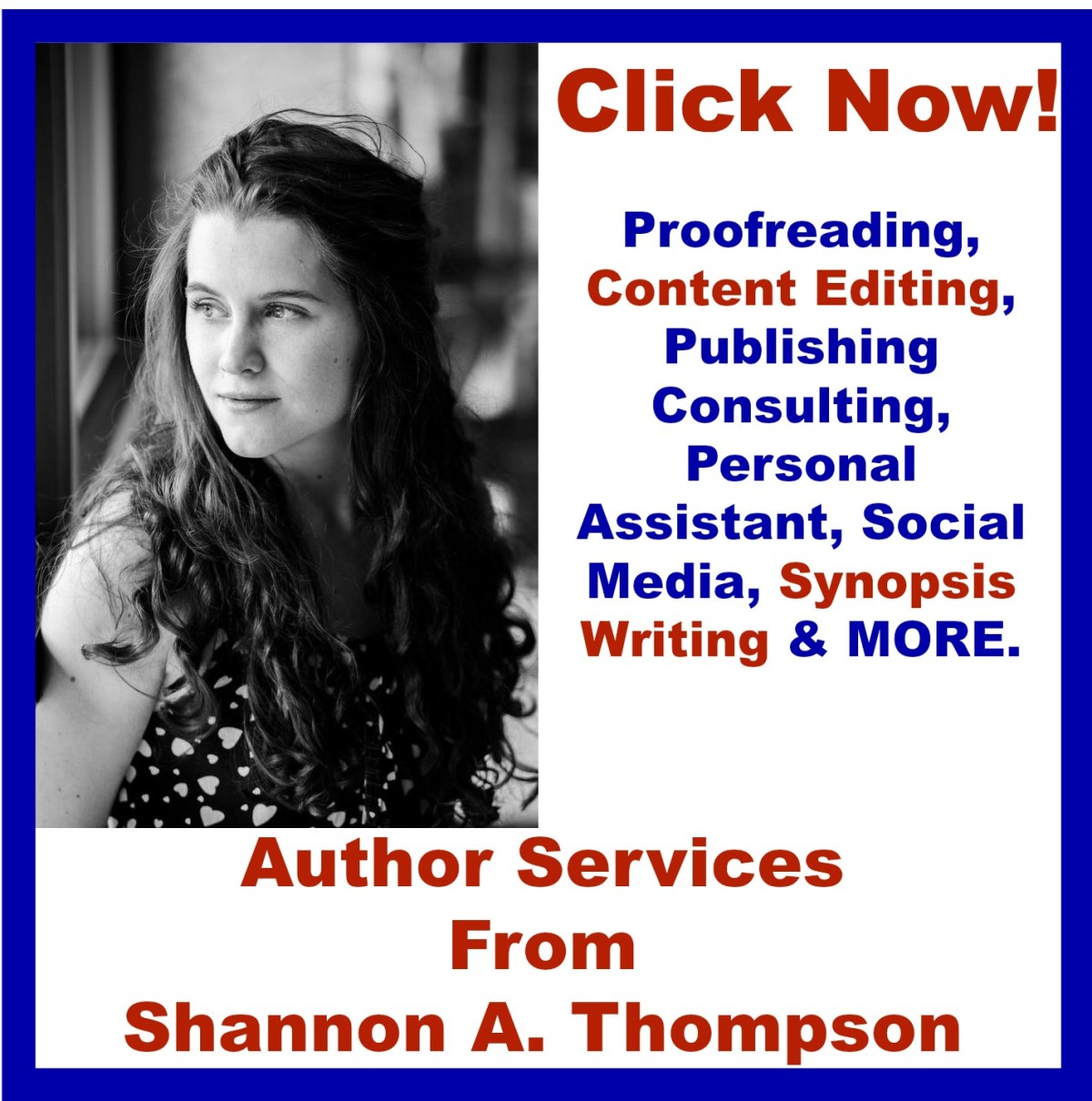
Get services from an expert. Shannon A. Thompson Author Services. @ShanAshleeT23

Shannon A. Thompson, yes the lady I’ve interviewed. The lady who has been published and worked in publishing has HER SERVICES AVAILABLE TO YOU! What kind? More than the image below states. Click the pic and check her site out.

shannon a thompson author services

@ShanAshleeT23

REBLOG and Share on Twitter, Facebook & Everywhere you Social Media. 🙂

(I bet she would proof that and edit it like mad.)

Write what you LOVE.

Write what you know is perhaps the most over used and overrated piece of advice ever given to writers. I am sure Mary Shelly knew a great deal about creating a monster from body parts and electricity. She had heard various legends and histories and tales in her travels but when it came to creating what some refer to as the very first science fiction story, she didn’t know.

What then should be the advice? Write what you love. You may twist and turn it but at the base level it is what you love and if you write what you love you will finish what you love and do your best job while doing so.

I’m not the only one that has this idea. Or course I’m not. English author Anne Perry, of the Thomas Pitt and William Monk series, in the Forward to Donald Maass’ Writing the Breakout Novel wrote:

Sometimes I am asked, “Is it true you should write what you know about?” I say, “No, write what you care about. If you don’t care, you’ll find out. But if you don’t care, why should anyone else?”

Considering her success I think I will take her advice and feel comfortable that I believe the same thing.

I recently interviewed John W. Howell author of My Girl. His novel includes a great deal about boats, the terminology and the actual mechanical parts of a boat. This is what John had to say when I asked what he had learned about himself during the writing of the thriller My Girl:

“The first thing I learned was I could, in fact, finish a book that was readable. Up to this point my efforts were not what I would describe as stellar. The second was I could write about a subject that I knew little about. People who don’t know me think I have been around boats. I really had to research all aspects of the book since none of the hardware and software related items were in my experience profile.”

Considering the great reviews John has received, I think he did some great research. From my own personal writing I’ve written just about every genre you can think of and for every age. It’s taken me almost 20 years to realize what it is I want to write, what I love. As soon as I did, I also found my writer’s voice.

When you find what you love, you will also find that voice. The two go hand in hand it there is something natural about it. Yes, you will need to do a lot of polishing but your flow of storytelling will come to you as if it had been there your entire life just waiting for you to ask for it. One of my new found loves is Romance. Not the normal bodice ripper type that I believe one lady author friend of mine referred to them as, but more character driven. And now I am combing a love of history with adventure and romance in a new book I am co-authoring.

Once I found that love things started happening. I’m not saying that always happens but I will tell you this, it definitely makes writing more enjoyable. And I am a lot more willing and able to revise and edit and revise and edit something I love than something I just could barely complete the first draft of to begin with.

If what you are doing is writing in a genre just because that’s what sells, well that’s up to you. I go where the enjoyment takes me. One year it might be Middle Grades stories about little girls and talking bears and the next it might be about a doctor dragging himself across North Africa. You just never know and that’s part of what makes writing such a great life to be in.

What loves do you write about? And yes, I know what you love may be what you know about.

write what you love


Ron_LWI


@RonovanWrites

RonovanWrites.WordPress.Com

RonovanWrites on Facebook

GoodReads

followmeonbloglovin


Enter your email address to subscribe to this blog and receive notifications of new posts by email.

© Copyright-All rights reserved by litworldinterviews.wordpress.com 2015

Self-Pub but want an agent? Tips from @ChuckSambuchino

web finds banner

You are self-published.

You now want to go traditional.

You’ve heard agents won’t take self-pub.

What do you do?

Ask Chuck Sambuchino.

“Many writers who’ve self-published a book for one reason or another get to a point where they want the book to be taken to the next level and see a widespread, traditional release. This is the point where they may contact a literary agent for representation. So with that in mind, I want to help explain some of the necessary basics about how to pitch a self-published book to an agent.” @ChuckSambuchino

For the full article click here.


Ron_LWI


@RonovanWrites

RonovanWrites on Facebook

followmeonbloglovin


Enter your email address to subscribe to this blog and receive notifications of new posts by email.

© Copyright-All rights reserved by litworldinterviews.wordpress.com 2015