Make some noise with a Thunderclap. For me and @PSBartlett

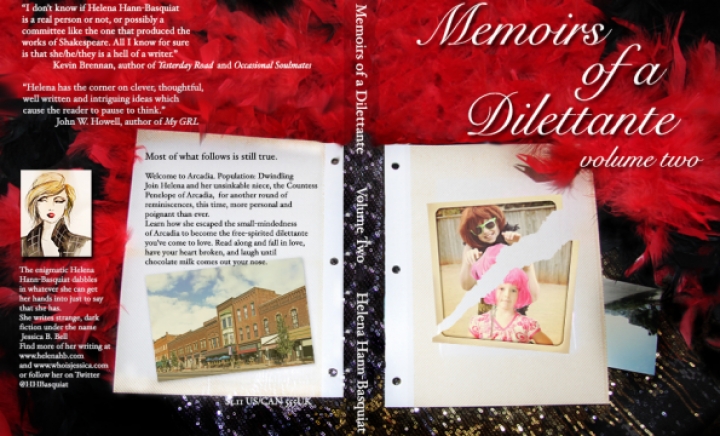
LWI’s very own needs some support as she ventures into Indie Author territory. Her prequel is set to come out and she needs your help, and so do I. She and I are co-authoring a book related to the one coming out. Pre-order it. Thunderclap it. Help it hit #1 so I can see my first novel can get to your hands. I am so excited. I’m using this one as a test of how the new site AuthorsSupportingAuthors strategy works. What better guinea pig than one of LWI’s own, right?

Ronovan's avatarronovanwrites

Want to help Author PS Bartlett make some noise?

So you know who my upcoming novel that will be released is co-authored with?

Go the link below and click to help on the social media sites you want to help on. That’s all there is to it. You don’t do anything. On the day of the message to go out, it does it for you. No responsibility on you. Just click and forget it.

https://www.thunderclap.it/projects/24769-hoist-the-colors-mates

While you are at it also go and pre-order. Trust me on this one, you get a peak at what might be coming from me.

Is that a teaser? You betcha’!

By helping PS Bartlett today you are helping my co-authored book to be published in the maybe not to distant future.

http://www.amazon.com/Demons-Pearls-Razors-Adventures-Book-ebook/dp/B00VQQPOKS/ref=sr_1_1?s=books&ie=UTF8&qid=1428500252&sr=1-1&keywords=ps+bartlett

P.S. Bartlett Demons and Pearls Cover

View original post

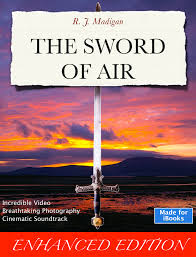
Book review by @FTThum – Sword of Air by RJ Madigan

sword-of-air-florence-thum-review

I rarely say ‘no’ to new experiences in books, which was why I was keen to read this book.

Sword of AirTitle:               Sword of Air
Author:          RJ Madigan
Website:          http://swordofair.net/author/swordofair/
Facebook:      https://www.facebook.com/pages/The-Sword-of-Air/855233981196248
Genre:           Young Adult – Fantasy
Available for purchase:       iTunes (USD $3.99)

What’s it about?

This is a YA fantasy about Niamh, a young woman discovering the power she possesses, and her destiny and quest to save her world from the Raven Queen.

Who is the Raven Queen? What is Niamh’s true quest? A question which only Niamh herself can determine.

And as she fights for her life being hunted by the Fomor army controlled by the Raven Queen, Niamh is caught between 2 men – Lorcan, Crown Prince of the Fae who is rebellious and arrogant; and Rauri, her childhood friend, a talented tracker and hunter; and a fighter. Who will betray her? Who will stand by her side?

I’ll begin with the format of this book. This is a “multi-touch iBook”. As denoted by the ‘i’, it is available on iTunes and to be read on iPad and Apple computers only. The ‘multi-touch’ means it’s more than an ebook – there are some pretty cool interactive stuff within the book. Yes, interactive.

It’s FX in a book – so when images within the book are tapped – they expand or audio plays or 3-D rotations up close and personal or video/movie plays. This is my first multi-touch interactive book and it’s awesome. That is until the novelty wears off. Both my adolescent children had a look, and one of whom read parts of the book. They were intrigued by the effects but not for long.

The interactive parts can be considered an enhancement to book illustrations, but different. Utilising the same part of the brain, looking at book illustrations and reading the written words are complementary. However, reading then watching a movie, listening to sounds require a re-focusing on the written words. This irritates me at times.

Ultimately, I bought this book for the story. And for me, the interactive touches distract from the reading flow and can take the focus away from the novel.

Now onto the storyline – it is intriguing and engaging. The characters are attractive though some lack depth. Certainly, the relationship between Rauri and Niamh can be better developed.

Madigan’s writing is simple and lacking in complexity of structures at times. Simply put, it is more tell than show. Please do not be discouraged. Once I accept the simplicity of the writing, I am captivated by the story which unfolds. The plot is gripping, and has much potential beyond this book.  Madigan has painted a vivid picture of this fantasy world of an altered medievil Ireland – that of the forest of Nadur and the Fae world.

There is good pacing in the plot. One thing did strike me – it is not quite believable that Maev, the Raven Queen, would believe in Niamh’s almost immediate capitulation – unless she believes Niamh is acquiescing for her friends and/or Maev’s frenzied mind wants her to believe so…? Perhaps this is Madigan keeping the reader in suspense for the next book in the series.

The ending seems a little protracted although it does provide a credible twist and a fantastic lead-on to the next book.

Recommendation:

I recommend this book on 2 bases – it is worthwhile for writers to experience this new format, the interactive iBook; and the story is indeed captivating. It is suitable for young adult readers, especially those who have found reading to be a ‘novelty’ and need some motivation to persevere.

Do read Madigan’s post on the thrill and challenges of publishing an iBook.  Such worthwhile information about publishing through iBook Author.

Ratings:

Realistic Characterization:   3.5/5
Made Me Think:                     3/5
Overall enjoyment:                3.5/5
Readability:                             4.5/5
Recommended:                      3.5/5
Overall Rating:                  3.5


Happy reading!
– FlorenceT

@FTThum
MeaningsAndMusings

Florence 2

Hear the author of Order of Seven @beth_teliho with @MandiCLBT

Hear the Author of Order of Seven herself, Beth Teliho. She reads a passage from her newest book. And the sense of humor she has? LOVE IT!

Okay, I am now a fan! This video did it for me! Excellent idea.


Mandi's avatarCellulite Looks Better Tan

It’s not every day that something happens for the FIRST TIME EVER on my blog, but today is different.

We all know Beth, the blogger,  from Writer B is Me. We know Beth Teliho the author of The Order of Seven (which is live today), but only one of us (it’s me) knows Beth in real life.

Since I can’t give her to you, I’m giving you the next best thing. My treat for you today is as close to that as I can get.

We had a conversation. It took lots of convincing. When I said to her, “Beth, the magic happens outside of your comfort zone,” she finally agreed.

For the first time, you get to hear her and see her, and she’s reading an excerpt from her book. To you.

You’re welcome.

Listen, ingest the words. Like little blue pills, they will affect you.

View original post 417 more words

I Love Anger the truth by @isaacdrowe The interview.

i-love-anger-header

RW: Where did the Isaac you describe in I Love Anger, that grew to love anger come from, that younger version of you, that world?

ISAAC: In the introduction and angry roots I describe how anger began to grow in my life from a youth to an adult. Living in a world of no hope and no light can be difficult to function in. It is not a world I would want anyone to experience.

RW: Though you went through a lot, and I mean a lot, growing up, you’ve obviously chosen to take your life in a different direction. The book obviously pulls from your experiences, I mean this is your story, but you also have experience in Anger Management. Would you tell our readers something about that?

ISAAC: I wanted this book to be a personal and clinical approach towards anger. I wanted the reader to understand through my pain so they could see the trials and triumphs through me. If I gave them anything less than that, I would probably rob them of a true self help experience. I didn’t want them to feel alone, in the book we walk through anger management together.

RW: Excellent, so you have the true story and life experiences COMBINED with the training to truly put it all together for us to share. Were you encouraged to share this story with others because of that combination? I mean only YOU could tell this story and the way to where you are now.

ISAAC: At first the book was for me, I began writing down my thoughts and to help me see what was inside me. It was therapy for me. As I continued to write I felt like this could help others so I turned it into a book. I wanted to give a real life, no joke approach but also give a clinical side for balance.

RW: I have to say, the story of you growing up, I can connect to some of it. My situation wasn’t quite like that but there were moments and a lot of my family members had lives kind of like that. One died in prison. Looking at his prison picture I could see the anger in him. What would you say to my relative, if he were alive and it was the day before he stole that last time that got him caught, what would you tell him that was in I Love Anger that could help him find his way out?

ISAAC: I would ask him “What’s up? Why are you really angry? There is a reason behind this behavior. This ain’t you! Keep telling yourself you good and that you straight but you and I both know that it’s something deeper than that! This lifestyle only ends up two places, dead or in prison wishing you was dead. But hear this from me! it’s not worth it! You are worth more than this! Its okay to feel how you feel right now, but how you react versus respond to how you feel kinfolk will destroy you. This is real talk, know that I care about you! Hear me, I Love YOU! If you think your mom, dad or nobody loves you, know that I love you unconditionally right where you are! I’m here with you, if you want to change, it can start right now! The choice is yours! It’s all on you!”

RW: You know, you nailed a few things there that I think would’ve helped. One thing our readers should know is, this book ain’t sugar coated to make everyone feel all warm and fuzzy about the end. You tell it like it was as you go along. What kept you focused on being certain your story was as it should be and not a motivational speaker book?

ISAAC: The reader needs something authentic and something they can relate to.

RW: Was there a moment where you were in a place of not going to finish this book, it’s too much, and I just want to forget all of this that’s happened?

ISAAC: Yes, I stopped for weeks but I got more and more insight for the book and at that point I knew that I had to complete it for my readers, it was much bigger than me.

RW: Where are you in your head these days and your heart?

ISAAC: My Faith in God, Family and Ministry.

RW: I knew that answer before I asked. It was a set up. You’re living it. Do you have a particular story of where your book has touched someone, helped them, where they’ve written to you or even come up to you and just shared what your words have helped them with?

ISAAC: I have had someone come up to me and tell me that if they went through what I went through they probably wouldn’t be alive. I realized at that moment, I am a survivor and I want people to turn their pain into purpose like I did.

RW: I like that. You keep getting out of what you’ve given to others. I see you do book signings and things of that nature in the Austin area and parts of Texas, are you open for speaking engagements, perhaps through Skype if anyone reading would be interested in your services? I mention Skype because I am sure it might be difficult to travel to Canada and back before work calls to find out where you are.

ISAAC: Yes I do book signings in my region and I am always open to speaking engagements because knowledge is power, if you know better you have an opportunity to do better. Yes, I currently provide online coaching and mentorship through Skype.

RW: How about for any other sites out there who would like to have you perhaps do a guest article for them, are you open to that and if so how would they go about contacting them? I mean your subject covers the world. There is no boundary that anger doesn’t cross and no person it doesn’t touch.

ISAAC: Yes, inquire at iloveangerbook@gmail.com

RW: Is there a way our readers could order a signed copy of I Love Anger? I know how what I will call bookies love real paper and like to have that personal touch if they can. Yes, if people who love food can be called foodies, I can call people who love books bookies.

ISAAC: Yes, inquire at iloveangerbook@gmail.com

RW: Okay, we’ve been serious. Now let’s go into the areas I like to go to in order to find out about who you are. What ice cold drink do you like with your meal? And for that matter, tell us what your favorite meal is, and your wife is watching, so the Queen will know.

ISAAC: Strawberry Lemonade, Ugali (African dish) white corn meal, greens and chicken.

I looked up Ugali, they call it the Kenyan Running Superfood. If it’s made of cornmeal it’s got to be good.

RW: I think you just described the perfect meal for a man that just got out of the hospital, that being me. You’re a Texan so, Spurs or Rockets, and why not go ahead and choose Cowboys or Texans?

ISAAC: I support all Texas TEAMS but Spurs and Cowboys for sure!

RW: If you could go to one place in the world, where would it be and why? And we’ll say the Queen isn’t looking, but remember she’s going with you.

ISAAC: Africa because I want to connect with my roots and learn from the people.

RW: What book are you reading now?

ISAAC: The Principle of Fatherhood by Myles Munroe

RW: What book OTHER THAN YOUR OWN, would you recommend to people to read?

ISAAC: Making of a Leader by Bishop L.A. Wilkerson, 15 Invaluable Laws of Growth by John Maxwell

RW: I’ve mentioned the Queen several times now; tell us about her highness, the glory of your life.

ISAAC: Read the dedication in my book!

I would tell all of you what the dedication says, but he said go read it, so I think you need to get the book and go read it.

RW: Finally, what’s your favorite word and why?

ISAAC: Authentic. When you know who you are, it resonates. You’re free of anything that’s not what you want or who you want to be . . . original. I don’t want to die not being myself or living a lie.

Isaac RoweGet the Book at Amazon: I even put the full link below.

http://www.amazon.com/I-Love-Anger-Isaac-Rowe/dp/150270062X/ref=sr_1_1?ie=UTF8&qid=1428327774&sr=8-1&keywords=isaac+rowe

To get connect with Isaac, visit his websites at www.iloveanger.com and www.themaninme.org. You can also join him on one of his Twitter accounts or facebook.

Facebook at www.Facebook.com/isaacdrowe

Twitter 


Let’s Connect.

Ron_LWI


https://twitter.com/RonovanWrites

https://www.facebook.com/pages/Ronovan-Writes/630347477034132

https://plus.google.com/u/0/+RonovanWrites/about


Enter your email address to subscribe to this blog and receive notifications of new posts by email.

© Copyright-All rights reserved by litworldinterviews.wordpress.com 2015


Proofreading When the Writing’s Done by @JoRobinson176

One of the biggest things I learned on my Indie trip was that I couldn’t see my own mistakes. I must have proofread my first manuscript dozens and dozens of times, and I was very confident that it was pristine. Then I went on to editing and made some changes to paragraphs, swopped words around, and thought that that was that. I had put many hours into the polishing, and was feeling all warm and fuzzy that I’d done the work well when I hit that publish button. How very, very wrong I was. There were still typos and grammar gremlins in the book after all of that hard graft, primarily in the changes I’d made, and I came down to Earth with a bang in a blaze of shame, realising that that the editing was not at all complete when I thought it was.

I learned that if you write something and proofread it yourself, your brain knows what word is coming next, so it often sees a typo as it should be, even though a typo in another writer’s work will stop you in your tracks, seeing your own isn’t so easy. These days I’m much more careful, and I make sure that eyeballs other than my own go over my stories before they’re published. Typos still can slip through, but luckily with Indie publishing they can be very quickly fixed. There are some tried and tested ways to help yourself when you dive into your first round of proofing.

Firstly, take a break and put the manuscript away for a week or so, or at least a few days if you can’t wait. Do your run of the mill spell check, then choose how you’re going to read it. I generally print it out for the first go around, and mark it up with a gel pen, using a thick ruler under the sentence I’m reading so my eyes can’t be drawn to what comes next. After fixing the errors I’ve found so far I then convert it to a Mobi file using the free Calibre software, and read it through again on my Kindle for PC. I’m always amazed at how many errors I pick up this way. Then after another fix up session I’ll read the word document with the font size increased quite a bit, and then print it out again for another going over. I have heard some writers say that changing the font colour when reading on the computer is jarring enough for them to spot more errors, but I haven’t tried this one out myself yet.

It’s a slow process, and so it should be, as I discovered to my mortification, so now I do the work. For my semi-final going over, I separate the book into chapters and read them in random order. I read a page at a time, and from the bottom up, one sentence at a time. It took me some getting used to, but it really worked for me. I tried reading upside down as one fellow scribbler recommended but that just made me feel a little queasy. Finally I use the Find function in word to search for words I know I always overuse. I check my character’s name spellings the same way, and I then search a couple of commonly mixed up contractions and apostrophes.

Then the manuscript heads off to fresh eyeballs for a brand new going over, and when it comes back I read it again, out loud, before starting on the formatting for publishing. If you can’t afford to pay for a professional proofreader then you could maybe try and swop proofing with another writer. Or maybe exchange it for something else that you’re good at – like cover design if that’s what the other writer prefers, but you definitely need someone other than you to read your book before you publish it. It’s a learning enterprise this Indie journey, and we grow as we go, and help each other along the way. I’ve heard some wonderful things about Grammarly lately. It’s a free online tool that finds so much more than just typos – things like homonyms and other grammar gremlins that hide so well, so I’ll be giving that a try next time round. Hope you all have a wonderful long weekend fellow scribblers.

Grammar Gremlins

Enter your email address to subscribe to this blog and receive notifications of new posts by email.

© Copyright-All rights reserved by litworldinterviews.wordpress.com 2015

Should Indie Authors Self-Censor Their Books?

Indie authors get to publish anything at all. Traditional authors have their work edited – things get taken out. Probably things that could cause offense, as well as typos and grammar gremlins. Should you self-censor your writing because of the possibility of offending someone with a word or deed, and thereby open yourself to a couple of raging negative reviews? No – you never should. I must admit to a lot of hesitation inserting offensive things back when I first started out, but not anymore. I’ll write what I feel is right for the story whether it could offend or not. It’s fiction after all. There are things in all my books that could offend a wide range of readers if they chose to be offended, but I have more than enough respect for most lovers of the written word to realise that they’re generally intelligent and open minded, and that if they know that certain types of writing will offend them, they won’t buy those sorts of books.

Back before the advent of the internet and eBooks, readers didn’t get to rant on public websites and forums about profanity in books, or something that they for whatever personal reason find offensive. Writers are getting antsy, stressed and overly careful of what they write with all the political correctness around these days, but we shouldn’t be. For me personally I’ve read swearwords that turned a mundane sentence into something profound – or hilarious. Books are books, and we generally choose those that we’re fairly confident that we’ll enjoy. Writers aren’t the same as everyone else. They see things differently, with a different kind of clarity and insight I think, and they have the power to use the tools of their trade to convey emotions. That’s what reading’s all about – feeling the emotions turned into words by the author. And when writers do what they have to do and put their words on the page, that’s the end of that, and whether or not people choose to read or approve of those words, at the end of the day the choice of those words belongs only to the author. The words are our choice of the tools we feel are needed to get a reader totally immersed and involved in our tales. Whether they’re politically correct or not – profane or not. Our choice only.

We tell the stories as we want to, and write the words we want to write, but we have no control over how people read our books. I’ve seen a couple of terrible reviews of really good books purely based on small amounts of profanity in them. I’ve used a good few judiciously placed swearwords in most of my books, because they’re what came out as the stories were told. I won’t take them out, and I’m pretty sure that there will be more of them in future books of mine when they’re needed. Obviously we want our books to be read as we wrote them. I’m not suggesting that writers all over the place suddenly start adding profanity to every second sentence – unless they want to. Just that if an F bomb finds its way into a sentence to begin with, the word “darn” or “poot” or whatever is most likely not going to convey the emotion that we want to convey it the first place. Unless you’re ghost writing, only you get to choose the words, and don’t ever let anyone tell you otherwise.

As far as I’m concerned, a word is just a word. How you use it is what can create offense, and scribblers have all it takes to offend when they so choose. A writer has the equipment to turn someone into a soggy puddle if they choose to use their words as swords. There are words, harmless in themselves, that you can stitch together in a sentence that can cause soul cutting offense. And sometimes in a book, that’s exactly what you need to do. As far as I’m concerned the occasional use of a beautifully placed profane bomb is much more harmless than many, many other things in the world today. They’re just words.

There will always be criticism of books for things in them that have offended people, and all people are offended by different things, so this shouldn’t bother us overly much. It goes with the territory. There are readers of every genre under the sun, and they eventually find the authors they love. Nobody loves every book they ever read – if every book was fabulous then trying to stand out from the crowd would be futile anyway. Don’t ever try and change the writer that you are. Write whatever comes out. Whether your natural style is to swear like a trooper or to never use a word stronger than bottom, it’s all allowed, because if you try to change the writer you are, your words will end up stilted and fake. Be exactly who you are. I say cuss all you like if you so choose, and write the way you’re meant to write, and enjoy one of the most powerful gifts of being an Indie writer – the fact that you can. It’s bound to offend someone sooner or later anyway no matter what it is, and spending any of your time worrying about these things is a waste of good writing time.

tEREUy1vSfuSu8LzTop3_IMG_2538
Image Credit: Unsplash

Masters of Time: A Sci-fi & Fantasy Time Travel Anthology Cover Reveal

Hone the untapped powers of your mind to rewind time and save the love of your life.

Step through a painting and explore an eerie past.

Jump into the future with a clone who will usurp his destiny…

July 2015, Time will fall into unlikely hands

Masters of Time: A Sci-fi & Fantasy Time Travel Anthology will be released July 13, 2015. These high-impact short stories are brought to you by USA Today bestselling author Samantha LaFantasie, Amazon bestselling authors Devorah Fox and Alesha Escobar, and the exceptionally talented authors Timothy C. Ward, H.M. Jones, and Alice Marks.

Enter the Giveaway: http://ow.ly/IUVJ7
Meet the Authors: http://bit.ly/18qI4qs
Follow us on Facebook: http://www.facebook.com/mastersanthology

Masters of Time Kindle Cover-1

What’s in a Name? Amazon Author Pages and Nom de Plumes

Authors use nom de plumes for various reasons. Erotica writers for instance, who don’t want their families to find out how they’re earning their crusts. Fictionalised memoirs are also books that sometimes could cause major problems for their authors if the people in their lives that are also in their memoirs find out. Especially if they are painted in an unfavourable light. This can lead to legal action, apart from any other sort of revenge the “injured” party might think to take. Hugely successful authors, like Stephen King who wrote as Richard Bachman, have dipped their toes into these waters for various reasons. Sometimes to see if they would be as successful if readers didn’t know their books had been written by them (I knew with King and Bachman though – before the truth was told), and sometimes simply because they don’t want to anger readers of a certain genre they write in by publishing a totally different genre, thereby possibly incurring accidental purchases of genres that are not enjoyed.

If you write horror, romance, and also children’s books, you can publish them all under your own name, and have them all listed on your Amazon Central Author Page, comfortable that the very different covers and blurbs are sufficient for readers to be aware of the genres. Or you can use three nom de plumes, and still list them all on your one Author Page, preferring that all your writings are kept in the same place. Possibly horror and children’s books don’t belong on the same page though.

Amazon allows you to have three separate Author Pages using nom de plumes on your one Kindle account. Only you will ever know that the books listed on them are yours, unless you choose to market them using your own name and marketing avenues. This means that you still have your current fan base to share the books you publish under your new nom de plume, and you can even add your real name either on the cover or somewhere in the front matter of all your books, as well as list them all on your website. The choice is yours though. Sometimes totally incognito is the way to go, while still being able to sell your wares, in which case open websites, Twitter accounts and so on using your nom de plume. Here’s how you do it.

1. Publish your book as usual, using only your nom de plume as the author, then find it and claim it as yours.

2. When the box opens for you to stake your claim, you’ll see the following:

You are not listed as the author of this book.
Do you see your name below?
Do you have a pen name?
If you write under a different name, let us know.

3. Click on let us know in the final option.

4. When you get a confirmation email from Amazon, simply click to confirm that you are the actual author of the book, and Bob’s your uncle!

You can then easily toggle between your newly linked Author Pages on Author Central from a drop down menu right beside your name, where it helpfully says, Click here to switch pen names. Then zoom off to assume your third alter ego, close the curtains, lock the doors, and write anything at all that takes your fancy. Your privacy is assured.

If you have more than three alter egos, then you need to open a second Author Central account with a different email address, but I’m pretty sure that three should do you very nicely.

Don’t forget to do the same on all the Amazon sites that you sell your books from. Happy flying under the radar scribblers.


2014-07-07 10.38.05

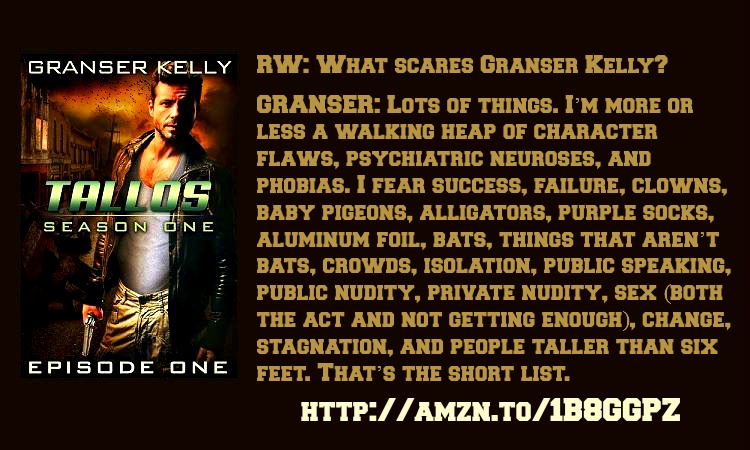
Tallos-Episode One (Season One) Interview with Granser Kelly.

RW: Tallos-Episode One (Season One) has some details very much set in the South here in the United States, is that from personal experience having lived in the area, why that area specifically, or will that give too much away of the future episodes?

GRANSER: I spent quite a bit of time there, actually. I wanted to begin the series in a familiar setting so to give it a sense of authenticity. The story as a whole will span the entire country and possibly other parts of the world. But I felt the southern states would be a good place for me to begin.

RW: What genre would you categorize Tallos?

GRANSER: I consider it Post-Apocalyptic Science Fiction. It’s also categorized in Action/Adventure, but that’s way too broad and vague, in my opinion.

RW: Where did the idea come from?

GRANSER: I was approached through a friend a while back to be part of a collaborative effort based on preset story guidelines. The rules for the world were already in place and all I had to do was come up with the particulars for my installment. It actually reminded me of writing fan fiction (not something I do).

Unfortunately, about the time I had the plot more or less mapped out, I had to withdraw due to other obligations. Later, once life calmed down a bit, I decided to revisit the story. I never did like the original world in which it was set, so I made some adjustments and brainstormed for a week or so. Once I had the basic concept in my head, the rest was easy.            

RW: For a post-apocalyptic story I think this is something that gives a different feel. Not that it’s my particular genre, but I am familiar enough with it to know what’s what. Did you set out to intentionally be different or did the story sort of lead itself in that direction? Were you the director or the guy typing what they characters told you to say?

GRANSER: It wasn’t intentional. Like you, I’m not what one would consider an expert in the Post-Apocalyptic genre. In fact, this is my first go at it. I think that in itself may lend to a more original feel, being that I’m not following any pre-prescribed guidelines.

Regarding my approach – I’m both. I try to be the character at times, but that’s not always practical, or even preferable, when you need to move a story along. You want to develop your cast of characters in a way that is believable, but you can’t allow it to bog you down and slow the progression of the plot.  

RW: Tell us about Jim Tallos? Who is he?

GRANSER: He’s an interesting mix of a selfish asshole and a brave hero. I didn’t want a “super soldier” protagonist with high morals and flawless character who can get out of any situation due to his Rambo-like kickassyness (yes, that’s a word) and MacGyver-like intelligence. But I needed him to be likeable too. I decided to use other characters to help me build his personality and develop him from situation to situation.

I can’t really say who he is exactly, as that is a major plot point.

RW: You somewhat touch on some social issues of today and how they are in the after-math. Again, was that something intentional?

GRANSER: Yes. Absolutely intentional. I loathe bigotry. Whether it’s homophobia, sexism, racism, or any other ism. I don’t intend to beat people over the head with my politics, but I do want to include that particular point in this story. I think that’s evident from the onset.

RW: Are there plans for, how can I put this, spinoffs? You’ve set it up in the first Episode where there could be other storylines pay out.

GRANSER: I haven’t thought about it. When I started Tallos, I decided to model it after a television series format. This is why I’ve divided it into seasons and episodes. Each episode leads into the next, but I try to leave out the cliffhanger aspect one might find in full-length novels. It also allows for episodes which focus on the characters rather than the plot. In other words, I can have a cool idea for an episode which doesn’t necessarily move the plot along very far, yet still fits into the story.  

RW: Reading the book I can tell what Tallos likes to drink to relax but what does Granser Kelly like to drink when facing demons?

GRANSER: Love me some Jack Daniel. Oh, yes I do. My wife hates it – the Jack, not me drinking it – so I rarely run out.

RW: What do you say to people who read books like this with some of the scenes you write and say “Are you completely freakin’ messed up in the head to think of this stuff?”

GRANSER: I’d say they’re right. But who isn’t? The difference is that I’ve learned to express my psychosis in words and use it to tell stories.

RW: One thing I like about the story you’ve created is we have no idea what the problem is. Do you know the end of it all or are you along for the ride as much as we are for the moment?

GRANSER: I know the story to the end – a least to an extent. That is to say I know the main plot points – the major twists and so forth. But I allow for new ideas to take things in different directions. It’s actually one of the advantages to the format I’ve adopted.

RW: What authors influenced you in this particular area of storytelling? I guess it would be horror and some psychological influences.

GRANSER: None really. Post-Apocalyptic Fiction wasn’t a genre in which I had much interest until recently. I’ve always enjoyed Science Fiction, however. Asimov was a favorite as a teen – though his approach is far more optimistic than mine. I also love Frank Herbert, Orson Scott Card, Ray Bradbury, and on the more whimsical side Douglas Adams. This is naturally only a few names on a long list of great writers.TallosGKS1E1

RW: How many seasons can we expect from Tallos?

GRANSER: I’m thinking three for now. But that may change should the need arise. I wouldn’t want to end the story prematurely. And as the story will become increasingly complex as time passes, I’ll need to allow enough space to tie up loose ends without it seeming rushed.

RW: Are any of the people in the story based on any of your friends and if so do they know it?

GRANSER: Not specifically, no. Though like any writer, I draw from my own experience. My characters are a combination of personalities I’ve encountered over the years. Occasionally, I will write someone I know in. But it’s almost always an insularly character with little bearing on the over-all plot.

RW: What scares Granser Kelly?

GRANSER: Lots of things. I’m more or less a walking heap of character flaws, psychiatric neuroses, and phobias. I fear success, failure, clowns, baby pigeons, alligators, purple socks, aluminum foil, bats, things that aren’t bats, crowds, isolation, public speaking, public nudity, private nudity, sex (both the act and not getting enough), change, stagnation, and people taller than six feet. That’s the short list.

RW: How good are you with a gun and if you are good what is your choice?

GRANSER: I love to shoot rifles, handguns…whatever. Sadly, there is nothing safer than what I’m trying to hit.

RW: Tell me you write these things in broad daylight, because if I wrote some of these scenes at night I would have some serious issues sleeping? Not that they were gory or anything. In fact they were much more psychological in nature to me.

GRANSER: I don’t mind it. I had night terrors as a child, so I learned to pull myself back into a semi-conscious state when it gets too bad. Besides, my various phobias don’t differentiate between day and night.

RW: What does your wife think of the mind that produces something like this and does it concern her at times?

GRANSER: Let me explain something about crazy. A person’s crazy is like water inside a big barrel. When they meet, some people choose to just kick it over and spill their crazy all over everything – including the other person. The advantage to this is that there are few surprises down the road. You know what you’re getting into. Of course, if your barrel of crazy is too big you can wash the other person away and be left there alone with nothing but you and your crazy.

The other option is to take a ladle, dip it in the barrel, and show the other person your crazy a little at a time. The upshot is that you might not scare the hell out of a potential mate, and possibly have a miniscule chance of getting them to have sex with you. If you’re lucky, they might mistake your crazy for quirkiness and depth. This turns some people on – especially if they think you’re an artist of some sort. The downside is that should you take it to the next level, that person begins to realize just how much crazy has yet to be discovered. Hopefully by then you would have tricked them into loving you, and forced them to overlook the big barrel of crazy that seems to have no bottom. That’s me and my wife.


And there you have, folks. As far as I know, the very first interview with Granser Kelly. I do encourage you to read the book. I enjoyed the story and the idea a lot. You get a familiar feel about it but originality as well. Comfort with creativity combined. Can’t complain about that, right?

Click http://amzn.to/1B8GGPZ and get it now. Read my Review there and click the it was helpful button for me. That is, if it was helpful.


Much Respect,

Ronovan

Ron_LWI


@RonovanWrites

Enter your email address to subscribe to this blog and receive notifications of new posts by email.

© Copyright-All rights reserved by litworldinterviews.wordpress.com 2015

HOW TO BOOST AUTHOR PROFILES on FACEBOOK in TWO EASY STEPS

Our Simian Friend has some great advice. Check it out y’all.

Chris The Story Reading Ape's avatarChris The Story Reading Ape's Blog

It’s easy.

Pick ONE author each day.

1.  LIKE their Facebook Page or FRIEND them.

2.  INVITE YOUR  friends to also LIKE or FRIEND the authors Facebook Page.

Now THAT’s easy isn’t it?

NOTE: DO NOT SPAM YOUR FRIENDS

One invite per friend per day is enough!

facebook_logo

View original post

#Indie #Author @HHBasquiat needs #Help

book_image

An Indie Author Help Alert!

Helena Hann-Basquiat

Has a pubslush fund going and needs some help with it.

And YOU DO GET SOMETHING for your help.

Click and find out what you get at what level.

https://pubslush.com/project/4519


How to Create Downloadable Links to Give Away Books from your Newsletter Sign Up by @JoRobinson176

Most Indie authors at some point on their journeys will set up a newsletter to send to their readers. This is a great way to connect in a personal way, announce events, giveaways, or new books. You can sign up with Mailchimp for free, and it’s very user friendly. Sending out a newsletter is like having your own mini magazine. You can share anything you like. I write in multiple genres, so mine is easy to come up with content. Even if you only write in one particular genre you can still share your opinions, information you find interesting, as well as personal things about yourself and your interests. And of course – your books. A great way to get readers to subscribe is to offer them a freebie. As an author that’s easy – give them a book. You can either write a short story specifically to give away on your newsletter, or you can give them one of your novels or the first in a series.

Bearing in mind that PDF books make work for pirates easy, be very sure that you’re comfortable with your choice of freebie. For me personally, the first book in my Shadow People series is already widely pirated, so that’s the one available for free download when anyone signs up for my newsletter. If it’s going to be tossed around for free, then I prefer to be the one doing the tossing. It’s not difficult to set up. Here’s how you do it.

First have your completed manuscript ready. Add your completed cover in high definition by using the Insert > Picture function on Word on the first page. Then make sure that you’re easy to find by adding hyperlinks which are clickable from PDF to your other books, website, or any other place that you’d like readers to find you.

1 - Hyperlinks in PDF

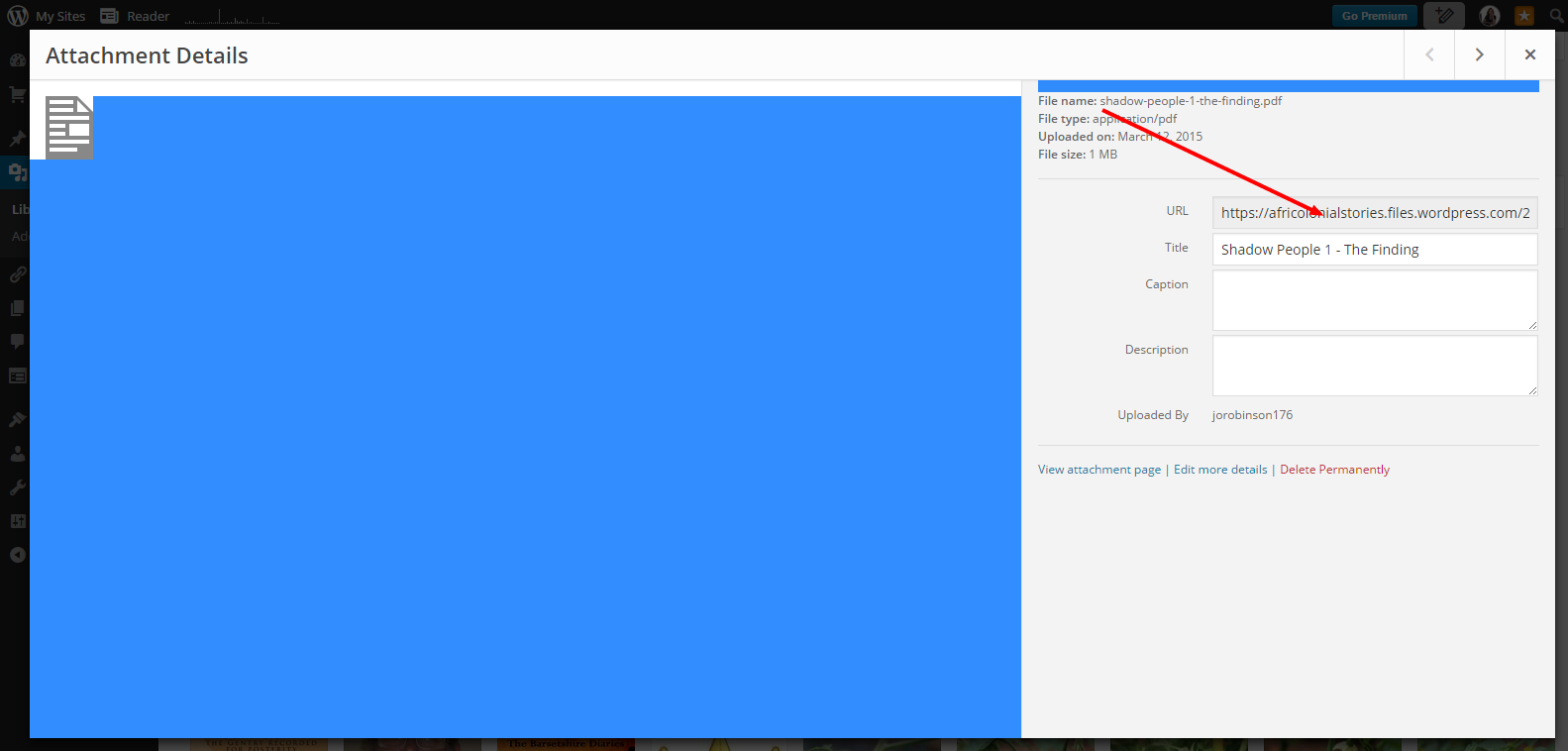
Save As a PDF file. Then head off to your WordPress site, and click Add New from the Media section on your dashboard.

1 - Media

Select your PDF file, and wait for it to load completely. Then hit the edit button and copy the URL address. You can use this address anywhere you like to make your book available for free download.

1 - Select
1 - Upload
1 - Copy Url

Next zoom on over to Mailchimp and add it to your subscription confirmation thank you email. Just type the text that you want to appear above the link – Click Here To Download, for example, then click on the link icon at the top of the page and paste in your book URL. This is what it will look like.

1 - Final Look

Have fun building your newsletter, and don’t forget to add an invitation to subscribe on your blog and website.

Five Great Quotes by Stan “The Man” Lee.

 stan-lee
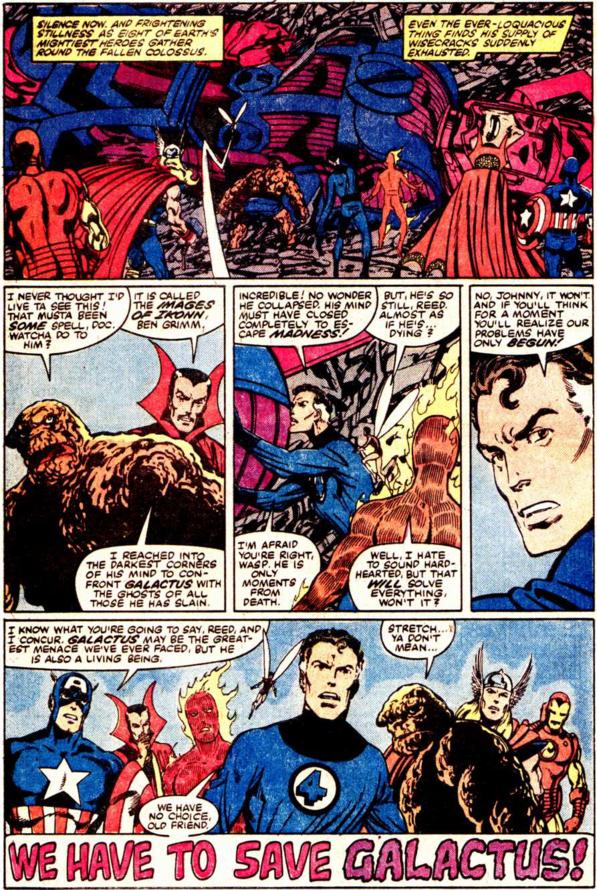
How would you like to write books every month that sold hundreds of thousands every time? Meet Stan Lee. Yes, some of you are turning your noses up at comicbooks. Yes, I spelled it comicbooks because Stan Lee says so. Because of Marvel comics I learned how to read and sound out long words. Amazing to some people. The books weren’t just filled with pow, bang, zip. With scientists on the scene they had to talk like they were scientists and part of Stan’s theory of comicbooks was and is to keep the people real even if they were super powered beings. For a genre to still be going strong and having mega hits every decade in the movies and on TV there must be something to it. Here are Five great quotes from Stan “The Man” Lee.

“Everybody wants to feel that you’re writing to a certain demographic because that’s good business, but I’ve never done that … I tried to write stories that would interest me. I’d say, what would I like to read?… I don’t think you can do your best work if you’re writing for somebody else, because you never know what that somebody else really thinks or wants.

“Some people will say, “Why read a comic book? It stifles the imagination. If you read a novel you imagine what people are like. If you read a comic, it’s showing you.” The only answer I can give is, “You can read a Shakespeare play, but does that mean you wouldn’t want to see it on the stage?”

“Achilles, without his heel, you wouldn’t even know his name today.”

“If you’re writing about a character, if he’s a powerful character, unless you give him vulnerability I don’t think he’ll be as interesting to the reader.”

“I’m very proud of being a hack. It’s why I’ve lived as long as I have, I think.”

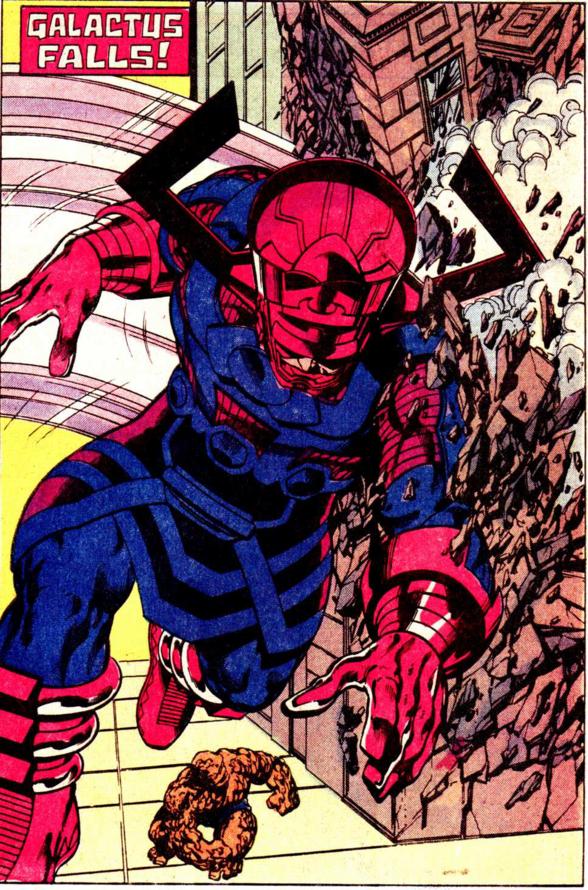
A three page layout from the Fantastic Four.

fantastic-four
ff-2


ff-3


A panel from the X-Men.

x-men


And one of the pivotal moments in comicbooks.

pp-m-mj


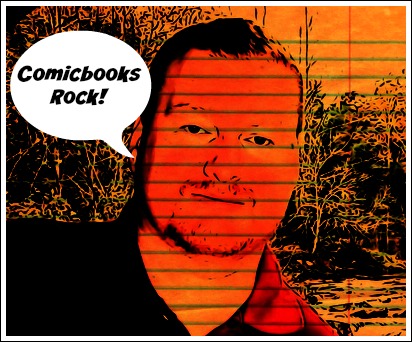
ron-comicbooks-rock


@RonovanWrites


Enter your email address to subscribe to this blog and receive notifications of new posts by email.

© Copyright-All rights reserved by litworldinterviews.wordpress.com 2015


Writers, what do you think and what is your experience of paid promotions for your books? Readers, what do you think of book advertising?

Hi all:

A few weeks ago I published a post in my blog asking for opinions and advice on paid promotions (everything, from blog tours, promos in well-known sites, to click per ads in social media sites, or places like Goodreads and now Amazon). I’m working on my next book (well, a series, but I explain more later) and I’ve never gone down the paid promotion route, but I wanted to give it a thought. Although I’ve read plenty about the subject, it’s not the same as having somebody you know or you have some connection with, sharing their first hand experience of giving you their opinion. I promised that if I got a sizeable amount of replies I’d collect them and produce another post sharing the comments and collective wisdom. The original post can be accessed here. It got quite a few comments, and it is one of the few posts where I got replies in other places I shared (Facebook, Twitter…). I was thinking about starting to compile the results soon and producing the promised post, and it occurred to me that sharing the post here, with so many authors from all walks of life, with completely different experiences, might add a fair amount of information that could be very useful. And, of course, I’d share the resulting post with all of you again.

And don’t worry, I fully understand what works for one person and one book doesn’t work for another, but we all have some “eureka” moments and some “Do’h” moments and they might be of use to somebody else.

Now I reproduce the original post (ah, the angel thing is because the series is called ‘Angelic Business’ and in pursuing ideas for covers I decided to take pictures of angels. So if you have any fantastic pictures on the subjects, or great ideas for covers, I’d be more than grateful. Oh, there are demons too, but not in the pictures, in the books.)


Hi all:

As all of you who read my blog every so often will know, I try to regularly write and publish books. I’ve also mentioned that my next W.I.P. is a series of NA novels Angelic Business. The three novels are now written and I’m in the process of translating them and revising (and let’s not forget the issues of finding covers, descriptions, blurbs…) them. By the way, if closer to the time when the project is ready people are interested in reading the first one of the novels ahead of publication, just let me know and I’ll happily send it to you in exchange for a comment (unless you hate it, then I might have to…not sure what. I’ll ask one of my friends who write horror novels for suggestions).

Angel in Montjuic cemetery, Barcelona

Those of you who are authors I’m sure have read tonnes of advice on having a marketing plan ahead of any publishing, the importance of having an author platform, building your presence in social media and all that blah, blah, blah. For what I see most of us try and follow that advice adapting it to our own abilities and personal style.

Although I’ve done quite a few of the things I’ve read about, there are some I have resisted to and I’m wondering about giving them a try (you know, so I can say I’ve tried it). I haven’t really tried paid advertising (I got my first book listed in a book club site and had an ad for a promo, both very low cost, with no results to speak of, and yes, now I know advertising your first book is unlikely to have much of an effect, but one lives and learns. Also tried a very low cost listing of my audio…not much to tell there either) or blog tours, and I was interested in knowing what you, my author friends who have tried them think of them. I’ve read about analytics and all that, so if you want to give me hard data, it will be welcome, but I’m more interested in personal experiences, gut feelings, and the ins and outs of things that only somebody who has tried can give. (I’m also fully aware that book genre, timing, style, and personal circumstances influence results, probably together with the phase of the moon, the energy of the pyramids and the leprechauns at work on that particular day). I have only participated in blog hops as a host, and I guess there will be differences between those the authors organise themselves, more or less informally, and those organised by a tried and tested company (or perhaps not…what is your experience?).

Another angel in Montjuic

I know some sites like Bookbub are supposed to be the bees-knees, but I’m also aware of the difficulties in getting into it, the amount of reviews required, the price, and the fact that now big publishing companies are also using the service, so there are even fewer chances for the rest of us. But anything, anecdotal evidence, amazing discoveries, bitter disappointments, so-so results, will be welcome.

And I also would like to hear from readers who aren’t writers. How likely are you to buy books based on advertisements on book sites, blog tour posts or any other marketing strategies by authors not known to you? (And the offer about the book is also open to readers, of course).

If I get a “decent” amount of replies, I will collect them and do a follow-up post to share the collective “wisdom”. That’s a deal.

He's lost his wings. I wonder...
She’s lost her wings. I wonder…

And I thought I’d leave you with a bit of the beginning of the third book in my trilogy (Pink, Angel or Demon?), where the main character, Pink, is wondering why everything that’s going on is happening to her:

All this is very well and good (not really, but you know what I mean), but nobody had bothered to answer why me. There was some kind of prophecy (or what passes for it in celestial and demonic circles) and I fitted in. One had to wonder where would prophecies come from in such spheres. (Or at least I did. I’ve been known to think far too much, and obeying De Bono, to think sideways. Look how far it’s got me!) I imagine somebody must fit in (and they were very insistent that I was the only one) but again, why me? No false modesty, but there isn’t anything that special about me. This is not one of these paranormal young adult books where the protagonist discovers that there’s a long history going back to the Middle-Ages of witches and special powers in her family. There’s no fay blood in my line, nobody I know regularly becomes a wolf or a dog or shifts shapes as far as I’m aware. And although the world is full of bloodsuckers, I’ve met no official vampires yet. I’ve never seen a ghost, and I don’t live in a haunted mansion. And although recently demons and angels wander around as if they were in season, to the best of my knowledge there’s no portal to the other world open in Hope Springs.


This one is a beauty

The draft of the first novel in the series Pink Matters is currently available in Wattpad, here. As mentioned in the body of the post, if you fancy getting the ready-to-publish version in a few weeks, just let me know and I’ll send it to you.

Thank you all for reading, and don’t forget to like, share, especially comment, and spread the word. And if you fancy clicking, don’t let me stop you!

I’ve carried on taking pictures of angels and other interesting things in cemeteries, so if you like any of them in particular, let me know. I’m after ideas for the covers!

Not an angel but she's so beautiful
Not an angel but she’s so beautiful

Thanks to all the readers in Lit World Interviews and if you’ve already contributed to the original post, many thanks!

#MentalFloss 43 Words Invented by Authors

ronovans-web-finds

I had to share this one today. Interesting and even entertaining at times.

Just out, Mental Floss: 43 Words Invented by Authors.


Enter your email address to subscribe to this blog and receive notifications of new posts by email.

© Copyright-All rights reserved by litworldinterviews.wordpress.com 2015


Erotica: Sex Sells.

Fixation, fascination, art form, or a bandwagon; what is erotica? With the success of books such as the over exposed Fifty Shades of Grey and its opening weekend box-office take, things are wide open. I mean that in regards to the literary world, not the legs and mouths of men and women around the world.

Minds have begun to open. And through those doors, imaginations are beginning to leave aisles on hands and knees of well lit bookstores, away from family, fantasy, and friendly frolics to the blindfolded, hidden world of the e-reader friendly download sites for taboos, teases, and tongues. Handcuffed to stories of things never imagined, and certainly never admitted to.

The business is booming and thanks to Fifty Shades of Grey every type of writer is dipping their toes into temptation.

Is this a good thing or a bad thing for the literary world? Are we seeing literary minds become open or, as I asked before, are people merely jumping on a sales bandwagon and riding it until it is completely spent?

Call it Romance or Erotica, but call it sales gold. It may have its up quarters of sales and quarters of going down but the key is—sales. If you write it well, you can make a nice living. Readers tend to shackle themselves to a good writer of Erotica and wait in anticipation for a tease of a coming please and an alert to come for their latest release.

Is it the writing quality that gives the reader its fix?

What is it about Erotica that has the world trembling and quivering in the dark with their e-readers and jumping for their energy button or sliding a finger at every sound with fear of discovery in the dark?

It’s the final frontier of human endeavors.

But why the writer boom? Is it the sexual awakening within? According to an article from January of 2014 therichest.com the number one earning genre for writers is Romance/Erotica at $1.44 Billion followed by Crime/Mystery with $728.2 Million.

Who is spending this money? Who are the readers? According to survey commissioned by rwa.org and conducted by Nielsen they are 84% women and the ages of the readers average between 30 and 54 years of age and right here in the good old South is where the people seem to like the Romance the best. Yes, Erotica is in the Romance genre in case some writers have forgotten that part.

Let’s look at some review quotes from Huffington Post reviewer Jesse Kornbluth.

“As a reading experience, Fifty Shades or Grey is a sad joke, puny of plot, padded with conversations that are repeated five or six times and email exchanges that are neither romantic nor witty.”

“As porn tricked up to resemble a novel, there’s no hope for this book — it’s “S&M for Dummies.”

Is it the writing quality that has readers hooked?

“It’s “mommy porn,” racy enough for suburban readers but not hardcore S&M like The Story of O: “Women feel like it’s O.K. to read it… It’s taboo for women to admit that they watch pornography, but for some reason it’s O.K. to admit that they’re reading this book.

You do the web searching for all the sales figures you want but what you will find is sales are generally strong for this sub-genre of Romance (Pun intended? Perhaps.). Why? As I mentioned before, the e-reader, a device that puts every readers desires at their fingertips without leaving their homes and risking embarrassment of anyone knowing their dirty little secrets is the facilitator of this now well endowed guilty pleasure .

According the survey from rwa.org Erotica is just behind contemporary Romance in what is bought and Erotica is also just behind Contemporary in e-reader purchases with 44% compared to 48%.

There will be some that will read this and turn their snobbish lit noses up at the appalling thought of Erotica being looked upon as literature. If you know me, then you know I do not take any subject on a whim. I like to delve in to my subject and thoroughly get to know it as far as what it is like and what makes it satisfying.

Does that make me an erotica reader? No more than any other person. It is not my particular genre, but then I spend almost every waking hour working on my own novels or reading a book for a review or interview. Would I read a good one if given to me for a review if one takes in to consideration who I am and my interest. I think my about page on my personal blog would give people an idea? Yes.

But what it does mean is I recognize some do hold Erotica to be a legitimate form of literature. In truth, there are many books one might call Erotica if not for the story lines and authors of them that make them mainstream. I am sure you can think of many books with sex filled scenes. I see quality Erotica as the Romance genre with a bit more kick to it.

But how do people decide what to read when it comes to their Erotica? The survey says;

  1. The Story
  2. The Author
  3. Price
  4. Reviews

The story is key. It’s not just pumping out hard men and willing women in words. What I see needing to happen is a taking over of the genre. As with all genres before that become a hot thing, there are those who jump on to get their piece before the reader learns there is a difference between good writing and simply words on a page by someone trying to make a buck with a quickie.

Writing is writing and as our profession we should be assuring the highest quality we can. And one person’s Erotica isn’t another person’s. There are various kinds of Erotica.

Those make-a-buck writers, I avoid calling them hacks, or genre whores, are what ruin a genre. There are writers out there doing the good work now. Looking at Amazon’s list of most popular Authors in Erotica, we’ll skip over E. L. James since I believe everyone knows of her and how her series began as a fan fiction thing and went from there, I will mention the numbers 2-4.

Number two is Sylvia Day on that list. Site is sylivaday.com.

Number Three is Jordan Silver from right here on WordPress at jordansilver.net.

Number Four is Ann Charles, site, anncharles.com. Her site is powered by WordPress.

I am not providing details of careers so as not to be seen as endorsing one over another. You can be your own judge. The links are there to their sites and you can easily google names to find more information.

I clicked and read the first page of the inside of a book of each on Amazon, two for one author just to make certain. Normally I would not go to a second book of an author if the first was just that not connecting with me. But, I wanted to see the writing and content. All three are different in their approach to the subject and style of writing. I won’t say which one I would read if I were to read one because that’s not what this is about.

I will say the quality is different with each, and the writing of one is not quite up to what I would expect to find in the top 5 of a list of good writing. I would think some editing and proofreading was needed. And perhaps it was the approach that turned me off. But apparently the approach turns enough on to sell books. Yes, that is the one I tried to read at least two first pages of. There is no way I could read a book by that one author.

I know that I am no top selling author, so if I named names that person could come back to me and say something but you know, sometimes sensationalism and garbage sales, tabloid in paperback and e-book form. And really, I would never trash an author. Even hack authors write. It may not even be they are really hacks, just authors encouraged to write by those who love them and want them happy, but don’t know truth helps a career more than not.

Erotica is nothing new. It’s been around since ancient times and even old Will Shakespeare wrote a touch here and there. I think ultimately if it’s going to be done it needs to be done properly and professionally. Put out quality work and make it a respected genre.

But if it does become a fully accepted or openly accepted genre with accolades left and right will it still hold thrall the masses? Will the final frontier become boring?

I suppose you could look to the fact there is still a market for Star Wars books after all these years. In spire of the horrid trilogy prequel.

Does Erotica have staying power? Does the populace have the appetites to keep it going? Every person comes to a point of awakening and wants to discover and a great majority want to discover in private. Perhaps you will read an Erotica from me some day. But it would need to be the characters telling me that’s what they want. My books go where they will and I don’t get in their way.

Perhaps that’s what we should be looking at as writers. Simply be honest in your writing. What are the characters telling you? Don’t force them in your pre-made box. If they want kink, give them kink. If they want hard driving, heavy breathing, woman satisfying, body aching sex, then satisfy those characters like you’ve never known satisfaction before.

Ron_LWI


@RonovanWrites
on Facebook
onGoogle+
on GoodReads
on LinkedIn

Enter your email address to subscribe to this blog and receive notifications of new posts by email.

© Copyright-All rights reserved by litworldinterviews.wordpress.com 2015


Make the Back Cover of your Paper Book Work for You

What I’m about to suggest to you is something that I’m in the process of updating, and it’s not quite complete with all my books, so don’t yell “Liar, Liar!!” yet. I think it’s a really good idea for your paper books to act as the marketing tools that they should be for your other writing. Self publishing a paper book on Createspace is fairly easy. Writing a book blurb or synopsis, on the other hand, has always seemed harder than writing an actual full length novel to me. On a paperback, what’s on the tail is vital though. I think that it’s just as important as the cover design for a book that you hold in your hands to read. The first thing I do in a bookstore after glancing at the cover is turn it around. I read the author’s biography, eyeball his or her photo, and then on to reading the description. Obviously it’s the blurb that makes me buy or not buy the book, but once I’ve read it and loved it, I’m going to be wanting more, so if it’s a new author to me I head back to the bio and photo.

One of the wonderful things about self-publishing that not a lot of Indie authors take the time to consider, is the very active second hand book market. Once a single copy of your book leaves the presses it’s off on its life journey. Maybe it will be read and kept by the person who buys it, but sooner or later it’s going to go elsewhere. Books last longer than people sometimes, and some travel the globe. A lot of readers will only read paper books. It’s pointless talking percentages here, because even small percentages of millions of eyeballs is still a lot of eyeballs. People who regularly only read paper books are not likely to keep all of the books that they’ve read because they probably would like access to their beds and cupboards. They’ll give them away, swop them, or sell them at second hand book shops, car boot sales, fetes – all sorts of places. I buy lots of books, many of them new, but I’m a force to be reckoned with at the second hand book stall in any fete or event. I have piles of second hand books in my collection. So make your paper book back cover for that market. Readers like me.

The people who buy them won’t have any clue at all about ISBN’s and will most certainly not look for the name of a traditional publisher – most people can’t tell if a paper book is self-published or not unless they’re involved in the Indie world in some way. They’ll just be captivated by the cover, and then sold by the writing on the back. They’ll buy it, take it home and read it, and either say “Oy, what a load of….” or fall in love with your prose and want to read more of your work. As a reader, I assure you that I’ll go out of my way to find more books by writers whose books I’ve found at fetes or in other arbitrary ways, and Kindles are all over the place now – even here in South Africa. So we have to make it count. Look at a couple of traditionally published books on your shelves, and see how they do it.

2015-02-26 13.33.10

It’s obvious that we really should stick to the photo we already use on all our online sites to begin with – this not only gives you power on Google searches, but also makes you recognisable as time goes by. Keep your author pic for at least a couple of years when you first head out the gate before updating to a newer version, and don’t worry about the wrinkles or any other thing you probably wrongly think is gross. Readers aren’t expecting you to look like a Victoria’s Secret model – unless you are a Victoria’s Secret model. So – your usual online photo on the back cover with a short bio – top or bottom doesn’t really matter as long as it’s there. Don’t forget to leave your typed out website http address as well, to make it easier for your new fans to find you when they look for more of your books. Then the very, very best book description you can write. Even if it takes you a day – or two – writing a compelling blurb is more important than writing the book, because without it nobody will ever read it to begin with.

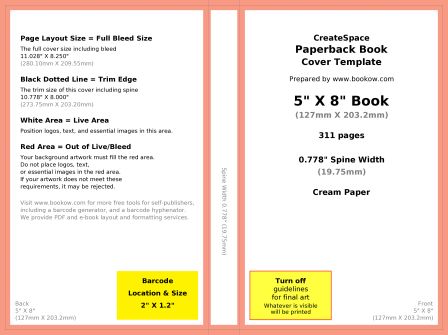
My current book covers have been made using Createspace online cover creator, where you insert your front and your back, and then choose a colour from what’s available for the spine, so they have boring spines. Unless you have a standard colour cover, you’re not likely to get an exact match, which is why I’m redoing mine now as full spreads. Either way you choose to do it, do update your paper book back cover so that you’ll be recognisable, and easy to find, no matter where it ends up. Go to Creatspace and follow calculations for your book, then download your book template. It will look like this.

Template Download

Open it in whichever image editing software that you use, create a new layer, and off you go. Make sure that there isn’t any pink left when you’re finished, while at the same time also being sure not to put any text in the pink layer or the barcode area. In fact to the left of the barcode could be the perfect spot for your gorgeous author photo and tiny bio. I’m not terribly good at finicky calculations, so I’m doing mine as three different layers – the front, back, and spine each getting their own. When you’re done, save as PDF and upload to Createspace.

If Only Interview with Author @NormaBudden

RW – You have three children and two grandchildren in the house. How do you find a place for privacy to write, or perhaps a better question is how do you find the quiet time?

NORMA – My family and I live in a two bedroom house which will, likely, make you wonder how weNorma Budden manage to comfortably have six people sleeping in the house. The answer is that we gave up the living room a few years ago and turned it into an open-area bedroom, which used to be mine. I loved it! Except for the washroom and laundry facilities, everything I needed was in the same room; it felt like I had my own studio apartment.

As the family grew, with the same daily grind at the day job, I needed a space to call my own. I achieved it, for a while, because I moved into the smallest bedroom. When my grandson was born, I gave up a little of that space and allowed him to share my room with me since it was a much quieter environment. We formed an agreement: in the evenings, after unwinding a little when coming home from work, I could write to my heart’s content as long as I found a way to shield his eyes from the light surrounding my desk.

Having a fan set on a low speed helped because it shut out the noise from the kitchen and other areas of the house. If the noise got louder, the speed of the fan went up a notch. Though my grandson no longer shares a room with me, the same fan is still in operation.

I have gotten into having easy listening music playing in the background, sometimes, which helps drown out the sounds in the main part of the house, and helps me relax. One other enhancement has been installing a deadbolt on my bedroom door because sometimes I have to meet a deadline and, no matter how much I enjoy little visits from my kids and grandkids, it removes my focus, depending upon what I’m working on at the time. Does the deadbolt get locked very often? No, but it gives me peace of mind knowing it’s there.

RW – Describe your writer’s place.

NORMA – I write in my bedroom. Instead of hanging clothes in my open-area closet, I set a desk in there instead. To my immediate left is a window through which I see a few houses and can look onto the tundra. During summer, when the kids are playing outside, I can easily write and look through my window to make sure they’re in sight and okay.

In front of me is my 23” all-in-one Dell Inspiron computer which sits about 24 inches away from me as I write. There are photos of the kids and an inspirational quote sitting on my desk to the left of my computer. On the right is my little pen and stationery area which comes in handy more than one might think for a writer who primarily uses the computer.

On the wall behind my computer, to the left, are a couple of wall decorations. To the right is a piece of art made at school by my son the first year he was in school titled, Walk With Me, Anaana – Anaana being the Inuktitut word for Mom.

To the right of my desk is a filing cabinet – which comes in handy, but is rarely used.

RW – How does where you live influence what you write?

NORMA – Despite interest people have shown over the years, one thing I don’t do is write books about living in Arctic Canada. Whether I will, who knows, but my heart is stuck on writing fiction. That being said, I may be able to use the Arctic tundra as settings for fiction novels but, in all honesty, I like to escape the frigid temperatures outside as I can, and writing helps carry me to another place.

Since I began publishing e-books in 2011, I’ve noticed that I pay more attention to detail when traveling. My family and I enjoy extended road trips and, because I can’t find such settings and enjoy such experiences at home, I soak everything in so that my characters can enjoy the same towns, road trips and experiences.

RW – Tell our readers about If Only.

NORMA – I’ve written numerous storylines throughout my writing career but I can’t say any previous title I’ve published resonates within my soul the same way as If Only does. I’m so used to beginning a story with only one scene in my mind, but the scene calls to me. The more I try to ignore it, the louder it calls my name – to the point I just set everything else aside and begin to write.

If Only Norma Budden Book CoverWhen I began writing If Only, I thought of a mother searching for a baby girl she had put up for adoption several years earlier. At the time, I didn’t know that the biological mother was married. I just knew her heart was aching and she needed to find her child, no matter what. At the same time, I wondered how I could introduce a paranormal element into my story – something I’d be comfortable writing, something my fans would be willing to read. At the heart of the matter, I knew I wanted the story to appeal to peoples’ emotions because, of all the subjects people can study and understand, I understand emotions.

Without giving the story away, If Only takes readers on a journey into relationships and the ensuing emotions the characters feel because of the circumstances they find themselves in.

Demi loved David – the father of the daughter she put up for adoption 16-years-ago – but they moved on with their lives. When feeling desperate to find her firstborn child, Demi calls David and tells him the truth of the situation, that he had sired a daughter as a teen, that two detectives were unable to find her.

I don’t think either of them expected the events which followed, how tragedy would strike, how their lives would change forever. David certainly had no expectation that a young lady calling him, “Dad,” would begin appearing to him in the dead of night. Demi didn’t expect David to come to her with stories she couldn’t make herself believe.

In the midst of it all, we have a budding teen romance and four small children struggling with their emotions. All in all, it’s a story that stirs my soul because so many emotional elements of it are felt by people every day.

RW – What themes can the reader expect?

NORMA – Forgiveness brings healing; it is definitely one of the themes that readers should take away after reading, If Only. Of course, true love conquers all would be another. I’m sure there are others but I’d like to leave something for readers to discover on their own because I’ve already learned people interpret the story differently.

RW – Although the characters are works of fiction in If Only you must have pulled influences from various people in your life. Would you be willing to share some of them? I know where the name David Alexander came from and very likely his relationship with children but, as far as personality traits, where did those come from for some of your characters?

NORMA – I hadn’t thought about this until you asked but, in retrospect, I can see the character of Phillip, David’s father, as being a close resemblance to a pastor friend, John Dueck, of Saskatchewan, Canada. I met him when he was stationed in Arviat with his wife several years ago. In many ways the two of them were like parents to me; they would do anything for me and I could confide in them about anything. In the story, David could tell his father anything and his father would never cast judgment. Instead, he would offer sage advice – for David to be cautious in his steps, for example. This is the kind of advice John would have given me in such a situation. He might have his own thoughts and ideals, but he would never force me to bow to his wishes.

As for Demi, in some areas, she is similar to me. We share the same allergic reaction to tobacco smoke. Also, if I wanted to find someone, I would do everything in my power to make sure I found them, exhausting every possible tool at my disposal, if required. Also, Demi throws herself into her work and often feels inadequate as a parent because she has to work so many hours in a given week. I’m the same. I work between 45-50 hours outside of the home. By the time I get home, I’m exhausted. I’d really like to kick my feet up and relax for a while, but I have this quirk about not wanting to eat after eight o’clock so must force myself to keep going so that, when I can sit down, I don’t need to get up again right away.

As for Riley, I imagined a boy similar to my son. He likes to dance and would be a little scared if he was put into a situation that made him uncomfortable. Wanting to hide would be something I could imagine him doing if he encountered the situation Riley did when with his father in PEI.

As for JD Phelps, his character is based upon an author friend, Michael Phelps, who has worn many hats; his retirement as Chief Investigator from a well-known Miami law firm was the last hat he wore before trying his hand at writing. I just had to have him help David find his daughter.

As for the other characters, they wrote themselves, but it doesn’t mean they are any less important. Caitlin and Jocelyn, for example, are two girls I wish I could meet so I might wrap my arms around them, even if they have David and Demi to comfort them. Those two girls tugged at my heartstrings unlike any other “child” character I’ve created.

RW – If Only seems to be a very personal story. I know you are a talented writer but there are elements here that are portrayed almost too perfectly for the imagination. How did the story develop?

NORMA – The story is pure imagination which started with an idea and grew. I wish I could say I had personal experience which enabled me to write the story as I did but, at the time I wrote If Only, I didn’t. It was months after the story was written that the bottom dropped out of my world from losing so many people I cared about. I guess you can say I threw myself into my characters’ lives so that I became each one of them and went with how I thought I might feel.

RW – There are young children in the book and they deal with some very big emotions. How did you go about writing those parts? I mean they are spot on.

NORMA – When I wrote If Only, I was living and breathing the story no matter what I was doing, where I was or whom I was with. It became my life, consuming every ounce of energy I possessed. I didn’t feel comfortable until I was in front of my computer, having settled in to write for the evening.

The issues the young children had to deal with surprised me because I didn’t see them coming. However, I’m a firm believer that, as something is written, so shall it be. I don’t mean that we shouldn’t review and polish a piece of writing; what I mean is that, for me, if a storyline begins to write itself, I have to go along for the ride and see how everything unfolds. As of yet, I’ve never written myself into a corner.

I threw myself into the character of Caitlin looking at her younger sister’s pain. It was as if Caitlin stepped inside of me and told me how she was feeling. As for Jocelyn, I imagined how I might feel if something I did hurt someone else. I know, without a doubt, I’d be blaming myself, no matter what anyone said. It would take time for me to heal completely.

As for Sophie and Riley, I tried imagining how I would feel if my hero let me down; it wasn’t a difficult thing to do, though I hated that they had grown scared of a person they had loved so much. It brought to mind an experience from my childhood, seeing a man I loved in a drunken state. When he called out to me, I was terrified. I remember hiding, not because I was afraid of the man, but because of the way my name sounded that particular time when he said it. Writing If Only, I went with the way I felt at that time in my life and used my feelings as a starting point for writing the scenes.

The emotions were painful to deal with as I wrote the various scenes but, in some peoples’ lives, those emotions and feelings of being afraid are faced on a daily basis – whether it’s because they lost a loved one or have grown afraid of a person who has been assigned to love and protect them.

RW – Again about the children in the book, I personally look at what you did as taking a lot of strength to do. Even as a work of fiction I know it’s difficult to write certain pieces. How did you handle those parts with the children? How did you not curl up and want to hide under a blanket in the bed?

NORMA – Let me tackle the easiest issue first: the fear that developed for Sophie and Riley soon after they went to PEI for vacation. I’ve been to PEI and I stayed at one of the cottages in Hampton mentioned in the story. I had to deal with my garbage the same way my characters did, having everything sorted depending upon what it was made from or whether it was organic waste. I had the same level of excitement as Sophie did, even if I was confused, at first.

The events that followed – their father taking up smoking and beginning to drink – unsettled Sophie and Riley. It was difficult to write those scenes because these two kids didn’t grow up in such an environment. Their mother was allergic to tobacco smoke so that was the first thing to instill fear into their young minds. When their father began drinking, shouting that they didn’t need their mother anymore, I wanted to knock him on his backside then kick him in the ribs a couple of times – which was shocking for me. I rarely want to bring pain to one of my characters but, in that moment, Robert Glenn was lucky I decided to let him live.

When Riley crawled from underneath the bed, my heart broke for this child who had lost a level of innocence he should never have lost, especially at such a young age. Up to the point when they left for their trip to PEI, he had already been trying, in his own way, to get his father’s attention in the way he craved. Yes, it was difficult to write such a scene. In my mind, Riley deserved the kind of father David was to his girls, a father whose world revolved around his children.

With Jocelyn and Caitlin, however, I could easily have curled up in bed and kissed the story goodbye because I didn’t want to deal with the emotions anymore. What good would that have done, though? In my mind, they would’ve been left in limbo. I would have left two little girls hurting when healing might have come their way, so I did the only thing I could do: I continued to write the story while sobbing like a baby sitting at my computer, reaching for tissues as I needed them. With the emotional scars I feared they’d have to deal with for the remainder of their lives, I had to try to come up with some type of happy ending for them. I owed them that much; after all, it was my writing which brought them so much pain so the least I could do was try to repair the damage.

RW – How important is the seat belt rule in your family?

NORMA – I live in Arctic Canada where seat belts are rarely, if ever, used – at least in the areas where I live. There is no law that states we have to use them, but I can’t speak for the remainder of the territory. We don’t have a vehicle to drive, anyway – except an ATV during summer – so it’s a moot point.

Because I am typically the only adult traveling with the kids, in the distant past, sometimes I’ve encountered situations in which it seemed safest to take one of the little ones in the front with me than leave them crying in the back.

For example, my girls and I were traveling in one of the states several years ago when they were young, before my son was born. My girls were not used to trees since we live above the treeline in Arctic Canada. This particular night, it was dark – though not late – and we were surrounded by trees with little traffic on the lonely road we were driving. The hotel room was booked but we still had about an hour or so to drive before we got there. My youngest daughter, a baby at the time, woke to the darkness outside and started crying. I don’t know how long she cried but I was starting to feel overwhelmed. I pulled over quickly, unstrapped my seat belt and turned around in my seat. I took her out of the car seat and put her on my lap closest to the door, strapped the seat belt the best I could over both of us and continued driving. In all honesty, had it not been such a dark, deserted road, or if I had another adult in the vehicle with me, I likely would have stayed pulled over until she drifted back to sleep but, given the circumstances, it felt safest to make the decision I made.

In general, though, from the time I board a plane with my family, the seat belt is fastened. Like David, I will not move a car unless every seat belt is fastened, even if we are driving outside of the country and enter a state where the seat belt law is not in effect.

Imagine my surprise (in 2011) when stopping at a drive-through in Ohio and seeing a baby sitting on a man’s lap in the back seat. I was astonished! A lady at a restaurant later told me that seat belts were not required in Ohio and, as long as a baby is sitting in the back seat, it’s okay.

Well, the truth of the matter is that I don’t feel comfortable driving unless I’m wearing my seat belt. To me, sitting in a moving vehicle without using my seat belt would be similar to a cop going on duty and failing to take his weapon. It just doesn’t make sense.

A side note: driving in the dark is at a minimum over recent years yet, strangely, my children now miss it. Since they are older, I may begin resuming my old habits because I miss driving at night, too.

RW – Your writing, and I am including your previous books, have a great deal about families in them, even if they are families of friends. How much does your own family influence your writing?

NORMA – Off the top of my head, I can’t see a correlation between my family and the subjects I write. However, family is important and, with a larger number of parents working and having less time to spend with their kids, I like to write stories which brings the family unit to the forefront of readers’ minds, even in their down time.

RW – Tell us about a food court at a mall and how important that is to your writing career?

NORMA – I knew the minute I read this question that you did some extensive homework in preparing your interview. I’ve been searching the recesses of my mind to remember where you might have come across something I wrote that led up to this question, but I’m drawing a blank.

To answer your question, though, I started writing poetry when I was a teenager. I was going through a rough situation and needed an outlet for my thoughts. I worked at a Laura Secord location in St. John’s, Newfoundland, at the time. During lunch breaks, I would quickly grab a bite to eat in the food court and then put pen to paper and write.

I wrote poems and songs about my thoughts and feelings. Sometimes I imagined a situation and how I might feel if I was in that situation and wrote about it. Other times, I looked at people – studied them – and wrote poems or songs about what I thought they might be feeling.

At any rate, it was a starting point. Over the years, I went on to write several novels and short stories – some of which I’ve published – and I’m proud to say I have an ever-growing fan base.

RW – About your writing process. If Only was a ‘let my imagination run its course’ book written during November of 2013, perhaps NaNoWriMo. It’s been over a year later. Is that your normal process? Is that your normal length of time from beginning to being published?

NORMA – From the time I finish writing a book to the time it is published depends entirely upon what is going on in my life. I try not to box myself in too much, in terms of announcing deadlines, since I have no way of knowing what will arise on any given day.

Sometimes I intend to work on publishing a title but another story idea comes to mind and I need to start writing immediately. I follow my gut a lot in everything I do so, sometimes, writing projects get put on hold for a while.

To give you an idea of time lines, I published the first book of my Freedom in Love Series, An Affair to Remember, in September of 2011. The second book of the series, When Love Abides, was published three months later. I was on a roll with thoughts for the third book, Soul Confessions, to be written and published soon afterwards. However, life happened. My grandson came along and I started writing shorter stories because I didn’t have as much writing time.

I went on to publish two short stories and two novellas by September, 2012. By that time, life had settled into a routine and I started working on Soul Confessions. It came to an abrupt halt when I felt prompted in my spirit to write, Coming Unglued: A Mother’s Journey into Hell. The story would not let me go so I had no choice but to follow through; it was published in November of 2012.

Just when I thought, again, I’d be able to focus on writing more of my series, my granddaughter came along. I knew I was in trouble where my writing was concerned. What made matters worse was that I had readers wanting to read the third book of the series and had to put them on hold.

That being said, after writing If Only in November of 2013, I knew I would let the story sit for a while. I had to finish writing Soul Confessions and, because there was going to be such a lengthy time between the publication of the second book and the third, I didn’t feel it was right to publish Soul Confessions until the fourth book (Divided Loyalties) was written.

Months passed. Little writing would be done until June, 2014, when I resumed writing and finished Soul Confessions then, without taking a break, started writing Divided Loyalties.

Sunday, July 20, 2014, would see me at David Alexander Vetra’s apartment where I was house-sitting until he got back in town. I decided to cook dinner so he wouldn’t need to fool around with preparing a meal. It was just a quick weekend trip so, while waiting for the next several hours to pass, I took the opportunity to finish writing Divided Loyalties.

At one point in the early afternoon, I was writing a scene and suddenly stopped, then started sobbing like a baby. I noted the time; it’s another quirk of mine. I wanted to stop writing but I felt in my spirit that I had to finish the story, so I got my out-of-the-blue emotions under control and finished it. I was on such a natural high after writing two books in a matter of six weeks that I thought nothing could bring me down.

Just a short while – I’m talking about a couple of hours – after penning the last words of Divided Loyalties, I received news that David was killed in an accident. He was a dear friend of my family and we continue to miss his presence in our lives. I later learned that the time of his death had occurred around the same time I had started sobbing for no apparent reason.

Let me tell you, an emotional high followed by such a devastating low, in such a short span of time, left me feeling absolutely numb. I couldn’t imagine working on publishing a book. I could barely bring myself to think. Thank God I still had a few days of vacation remaining so I could get my head together before returning to work.

Even weeks after, I still couldn’t write. It felt like something had died within me; I feared I’d never feel normal again. Then came Michael Phelps of Miami, Florida – friend of the late David Jannsen and a dear friend of mine – asking if I might consider editing and formatting his two volume book titled, David Janssen: Our Conversations. In retrospect, I believe God took that opportunity to provide a healing balm to my wounded soul.

After I finished with his book, I figured I’d better get Soul Confessions published. Finally, in October, 2014 – three years after the second book of the series was published – the third title was available to my readers. In November, 2014, I took part in another NaNoWriMo challenge and wrote the fifth book of my series, The Promise, which left me free to work on publishing Divided Loyalties.

However, I felt urged within my spirit to publish If Only first, felt the time was right, and here I am promoting this title as much as possible. By the beginning of March, 2015, I will be working on finalizing Divided Loyalties.

RW – I know you are just releasing this book but what are you working on now for your readers to enjoy next?

NORMA – After Divided Loyalties and The Promise are published in 2015, I intend to write another stand-alone book titled, A Lost Mind. In this story, I’ll be writing about a man who had an accident, whose memory was wiped clean, a man who wakes every morning since the accident with no memory of the day before. I intend to build upon his life before the accident and how his life, and the lives of those he loves, has forever changed after the accident. It will be an uplifting story and, amazingly, I already know what the last words will be – but I can’t ruin the surprise so I will keep them to myself. They are written upon my heart and I shall not forget.

RW – Is there a genre that you would like to explore and if so why?

NORMA – Unlike many writers who would like to become known for writing a certain genre, I don’t want to box myself in. I guess I’m much like an actor who doesn’t want to become known for only being able to act in certain types of roles. That being said, there are subjects I won’t write but every subject I write about will have emotional depth.

RW – One of your interests is writing poetry. Would you write a poem to share with our readers that you believe fits If Only?

An Anchor

Happiness lingers all around,

Smiles and laughter everywhere,

Until, one day, the phone did ring,

Bringing news one couldn’t bear.

An anchor comes from a past life,

Calms the stormy, raging sea,

Spreading her arms of love around,

Falls in love, but it can’t be.


Yearning to know what is the truth,

A voice whispers in the night,

One man can hear and he believes.

His mission is to set things right.


Copyright 2015 Norma Budden


RW – You are very prolific in your writing. I also know you do some editing. Where do you find time for it all?

NORMA – I rarely watch television which gives me a lot of time to get extra things done, even though I spend a large portion of each week day outside of the home. Also, writing is as relaxing for me as reading so, sometimes, I choose to write – instead of read – before going to bed. Typically, if I take on an editing project, I don’t write and do very little reading, so it becomes a balancing act. It’s amazing what can be accomplished in two to three hours each night.

RW – You edited Michael Phelps’ books David Janssen-Our Conversations. I’ve read the unedited versions. How does one go about acquiring your services?

NORMA – I haven’t advertised my editorial services, as such. Editing Mike’s book came along because he read some of my e-books and asked me who prepared them for publication. When I told him I passed my book to an editor but did all of the formatting myself, he was impressed and sent his files to me.

Of course, I can’t attach my name to something unless I feel it’s as perfect as it can be so I took on the editing as well as the formatting, setting up the files for publication and so on. I’ve had other assignments, even turned some down, but it is largely dependent on my schedule.

RW – You’re self-published but reading If Only I would think if you wanted to be you would be signed by someone by now. What is the appeal of self-publishing to you? What is your biggest advice to those looking at self-publishing?

NORMA – The biggest appeal of self-publishing is that I get to keep my story how I want it told. I can retain my rights to it and set my own deadlines. I’m a professional in wanting my books released properly the first time they are out the door and, thankfully, there are many tasks involved with self-publishing that I can do myself. Also, in self-publishing, if I was to read one of my books and find a mistake, there would only be myself to blame and I could fix the mistake rather quickly; if I sent my book to a mainstream publisher and saw typos or less than ideal formatting, I’d be upset.

It takes a lot of time preparing a book for publication. I read it over several times to be sure it’s perfect, even after receiving it back from my editor. If I find mistakes, I polish the book and read it again. Yes, it’s a time consuming process and I haven’t even touched on marketing my books. However, I couldn’t imagine sending my book to anyone and having them tell me a scene has to go, especially if I feel that scene is critical to the story.

On the subject of marketing, though, I enjoy interacting with my readers and people who blog about my books. I enjoy forming friendships which would be missing, to a large degree, if I was to go mainstream – and, with mainstream publishing, unless my books were best sellers, they wouldn’t have a long shelf life.

As for advice to those wanting to self-publish, the most important advice I can give you is to be a professional and give yourself time. Don’t publish a work that isn’t edited or formatted properly. Whether your book is in an e-book or printed format, make your book look the same inside as a book you would see in a bookstore. This means your book needs to have front matter. It needs to have a copyright page and it needs to have a title page. Dedication and acknowledgment pages are optional but the other two aren’t.

If you are not inclined to learn how to master the steps of self-publishing and don’t want to take on the marketing aspects of publishing a book, pay a professional to do those things for you. It will be worth it.

RW – How do you define success?

NORMA – I could write a book on how I would define success, and I’m willing to bet it would turn out to be an emotional story.

I’m alive. I’m healthy and my children are healthy. I have a job, clothes on my back, food on my table each day and a roof over my head which isn’t threatened. To me, these are the basics of being successful because, without any of these, one would define true success as attaining all of these.

You’ll notice I didn’t mention money, any more than what one needs to comfortably meet their basic needs each day. A wise man once told me that money is a tool, that it should never be a god. I’ve taken those words to heart and, in the process, I’ve learned that by giving to others, I become richer in spirit. This is success to me.

However, if I could reach a point in my life in which I could devote most of my day to writing and promoting my stories, it would be the ultimate form of success, especially if I can write from an office with a wall of windows overlooking a large body of water.

RW – I have one question I always ask my authors: what is your favorite word and why?

NORMA – I never thought about this, but the first word which comes to mind is forgiveness. It is the only word I know which completely sets a person free. For example, you can love one person and hate another but, unless you release the hatred, the love you feel will never be as full as it can be because hatred will hold you prisoner. It will keep you from living the life you were meant to live.

RW – What is one book, that you were not involved in any way with, that you would recommend for people to read?

NORMA – It’s interesting that I was thinking about this last night before going to sleep. I read a book by Dean Mayes a couple of years ago called, The Hambledown Dream. The story has forever stayed with me, likely because it was so different.

The author had a passing thought which led him to wonder what might happen if a dying man’s soul inhabited the body of another who had led an undesirable life but would walk away from the emergency room, his body unscathed. The Hambledown Dream has overtones of reincarnation, which I’ve never read before nor since, but this story gripped me. The writing was some of the best I’ve ever read and to say the story carried me away would be an understatement.

There are many great books out there and I’ll never get to them all but some of the books I’ve enjoyed most over the past three years can be found at Budden Book Reviews.

www.buddenbookreviews.com


RW – Where can everyone find you online?

NORMA – I have multiple websites but the two I frequent most are Norma’s Books (www.normasbooks.com) and Budden Book Reviews (www.buddenbookreviews.com).

I can also be found at several places but the most popular social networks I frequent are:

Facebook: https://www.facebook.com/authornormabudden

Twitter: https://twitter.com/NormaBudden


Sometimes I’m asked, “Ronovan, how short should my answers be?” when I ask interview questions.If Only Norma Budden Book Cover My answer is always, “As long as they need to be.” Today I could have cut down and edited some of what Norma Budden said, but you know what? Don’t you know who she is now and what drives her? Can you feel how much writing is such an integral part of her life? It’s more than a passion. I have grown to know Norma during the interview process, reading If Only for review and giving her feedback. When she says she is a perfectionist, let me tell you, she means it. She cares about the scenes being just right. I reviewed If Only. I called it the most personal review I’ve ever done. I came close to not reviewing books after doing this one. Not because the book was bad. You’ll need to read the review to see the answer. Buy If Only today. Don’t waste time in thinking, “Oh, I’ll do it later.” No, do it now by clicking here now.


Ron_LWI


@RonovanWrites

Facebook

GoodReads

Google+

Enter your email address to subscribe to this blog and receive notifications of new posts by email.

© Copyright-All rights reserved by litworldinterviews.wordpress.com 2015

New Release Crazy On You by @JanelleKahele & @jduncwriter Five Star #MustRead

New Release from

LWI Author

J. Kahele and her Co-Author James Duncan

Crazy On You

A Romantic Comedy

“Amazing! These two authors did an amazing job by combing their talents to bring a wonderful story. The story was written so unbelievably well the characters fine tuned.”~Five Star Review

“Both styles come together to work in devastating fashion. James writes from the London base, making his character Archie Pope real, cocky, and likeable. Isabella is created from the Italian-American side, and it would be easy to say that Miss Kahele wrote all her lines.”~Five Star Review

“J. Kahele and James Duncan together, wrote this fantastic book!! I would describe it as adventurous, dangerous, funny and romantic. The book is a love story with a twist, with Archie an English gangster, and Isabella the daughter of an Italian Godfather type from New York. Both Archie and Isabella knew nothing else, because they had lived in this lifestyle from a very young age!!!! Both wanted more!! both wanted a way out. This adventure romance takes these two and their families back and forth to and from New York, London, and Hawaii, with a lot of action, gun fighting and hiding out!!!”~Five Star Review

Get it on Amazon TODAY! NOW! Click the title or the picture NOW!!!

j-kahele-james-duncan-crazy-on-you


Author @MichaelPhelps3 talks about David Janssen & more with @YouAreTheExpert OnBlogTalkRadio

Listen to author Michael Phelps talk about his friendship with David Janssen and about his works of fiction based on cases he’s actually been involved in. Mike may write fiction but it’s always the truth. I think that made sense. Click here to listen at your leisure to Tell Me A Story with Annette Rochelle Aben. Yes, the same lady I had my interview with a few weeks ago. Mike actually had things to say.

You can also click the full link below or copy and paste it. Just go and listen!

http://www.blogtalkradio.com/themagichappens/2015/02/20/michael-phelps-on-tell-me-a-story

david janssen author michael phelps

Mike’s LWI interviews begin here. Books are on Amazon here.


Enter your email address to subscribe to this blog and receive notifications of new posts by email.

© Copyright-All rights reserved by litworldinterviews.wordpress.com 2015