I am a language teacher, writer, bookworm, and collaborator at Sants 3 Ràdio (a local radio station in Barcelona, where I returned in 2018), who lived in the UK for 25 years and worked for many years as a forensic psychiatrist there. I also have a Ph.D. in American Literature and an MSc in Criminology. I started publishing my stories, in English and Spanish, in 2012 and now have over twenty books available in a variety of genres, a blog (in English and Spanish), and translate books for other authors (English-Spanish and vice versa). In 2020 obtained the CELTA certificate as a language teacher, and offer Spanish and English classes. Writers and readers both in English and Spanish are my friends, colleagues, and allies, and after living in the UK for over twenty-five years, have returned home, to Barcelona, Spain, searching for inspiration for my stories. I also love owls and try to keep fit following fitness YouTube videos.
Do feel free to connect with me. Here are:
My website/blog:
http://OlgaNM.wordpress.com
Title: The Dolan Girls Author: S. R. Mallery ISBN13: 978-1519695246 ASIN: B018Y063XA Published: 3 December 2015 Pages: 212 Genre: Historical Romance, Victorian, Western
First the description:
Set in Nebraska during the 1800s, whorehouse madams, ladies of the night, a schoolmarm, a Pinkerton detective, a Shakespeare-quoting old coot, brutal outlaws, and a horse-wrangler fill out the cast of characters. Add to the mix are colorful descriptions of an 1856 land rush, Buffalo Bill and his Wild West Show, Annie Oakley, bank/train robberies, small town local politics, and of course, romance. Two, in fact!
Body of review:
I was given a free copy of the novel in exchange for an honest review.
I’ve read two of S. R. Mallery’s books before and I’ve always admired her ease in creating stories emotionally real and characters we care for set in historical eras and around historical events that add dimension and depth to the narration. Most of her stories centre on female protagonists and we experience through them the travails and challenges these women had to face in different times in history, be it because of their class, race, gender, profession or their situation.
Cora and Minnie, the young girls arrived from Ireland with their parents, who plan to get some land in Nebraska but fail, end up alone and living in a brothel after tragedy strikes. Madam Ana treats them like her daughters and the brothel becomes their home and later their business. Cora’s love story is ruined by a terrible event, a baddie with no redeeming qualities (Wes’) rapes her and impregnates her, and she doesn’t trust men again. She focuses her life on the business and her family, and wants to ensure that her daughter will be respected and safe, even against her wishes.
The three Dolan girls, Cora, Minnie and Ellie embody different models of womanhood: Cora worries about society’s views and being respected, and is straight-laced and serious. Minnie is free, unconventional and only worries about doing what’s right and fun, no matter what anybody else might think. Ellie loves education, learning, and is passionate about enlightening the population and not taking no for an answer. Despite their differences, they all have in common their strength, their perseverance, and their determination to live life their own way, no matter what polite society might think.
Annie Oakley, Buffalo Bill and Lola Montez make significant appearances and add to the historical interest but their appearance is not an exercise in hero worshiping. The author blends beautifully historical detail, language and décor without dumping information or appearing to quote from a textbook.
The bandits’ train-raid and later arrival at South Benton, Buffalo Bill’s first show, and the Pinkerton detective agency and their work add a good dose of adventure and make it a page turner even for people who wouldn’t consider reading a standard romantic novel.
The male protagonists are heroic but understanding and not overbearing. Their behaviour seemed to me somewhat idealised but well within the conventions of the genre.
The Dolan Girls shows us that winning the West wasn’t only a man’s endeavour, that not all immigrants were the same (Irish not being welcome with open arms), that gender violence is not new, and that women can be strong together.
In sum, a great read and a must for people who love historical romances. Ah, and don’t worry about the ending. You’ll love it!
What the book is about: A historical romance following a family, the Dolans, who have immigrated to the US from Ireland, in search of a better life. Unfortunately tragedy strikes hard and the two girls, Cora and Minnie, end up living at a brothel that becomes their home and their family. The two sisters, and later Ellie, Cora’s daughter, show enterprise, strength and exemplify how difficult it was to be a woman in the 1800s in the Wild West.
Book Highlights: The relationships between the sisters and later with Ellie, the women’s community, including the Doves, the authentic historical feel without going overboard, a fantastic ending. Historical events and figures (like Annie Oakley and Buffalo Bill) are brought to life in all their human greatness (or smallness).
Challenges of the book: Although there are no explicit sexual scenes, some of the topics, like the rape, might be hard for some readers, as the emotional impact and the anxiety and anguish are vividly rendered.
What do you get from it: A great story of strong women that provides an insight into a historical era, popular but misunderstood and often misrepresented.
What I would have changed if anything: I was not sure the fragments of the story that are quoted again throughout, that seem to reflect internal thoughts or preoccupations of the characters, added much to the story.
Who Would I recommend this book to?: To anybody who likes historical romances, particularly in that era, with great adventures and a terrific ending.
Ratings: Realistic Characterization: 3.5/5 Made Me Think: 4/5 Overall enjoyment: 4.5/5 Readability: 5/5 Recommended: 4.5/5 Overall Rating: 4.5/5
Buy it at: Format & Pricing: Paperback: $ 8.50 Kindle: $ 2.99
Title: When Breath Becomes Air Author: Paul Kalanithi ISBN13: 978-0812988406 ASIN: B0165X8WN2 Published: Vintage Digital Pages: 258 Genre: Non-fiction, Medical Books: neurosurgery, Ailments and diseases: cancer
Description:
#1 NEW YORK TIMES BESTSELLER • For readers of Atul Gawande, Andrew Solomon, and Anne Lamott, a profoundly moving, exquisitely observed memoir by a young neurosurgeon faced with a terminal cancer diagnosis who attempts to answer the question What makes a life worth living?
At the age of thirty-six, on the verge of completing a decade’s worth of training as a neurosurgeon, Paul Kalanithi was diagnosed with stage IV lung cancer. One day he was a doctor treating the dying, and the next he was a patient struggling to live. And just like that, the future he and his wife had imagined evaporated. When Breath Becomes Air chronicles Kalanithi’s transformation from a naïve medical student “possessed,” as he wrote, “by the question of what, given that all organisms die, makes a virtuous and meaningful life” into a neurosurgeon at Stanford working in the brain, the most critical place for human identity, and finally into a patient and new father confronting his own mortality.
What makes life worth living in the face of death? What do you do when the future, no longer a ladder toward your goals in life, flattens out into a perpetual present? What does it mean to have a child, to nurture a new life as another fades away? These are some of the questions Kalanithi wrestles with in this profoundly moving, exquisitely observed memoir.
Paul Kalanithi died in March 2015, while working on this book, yet his words live on as a guide and a gift to us all. “I began to realize that coming face to face with my own mortality, in a sense, had changed nothing and everything,” he wrote. “Seven words from Samuel Beckett began to repeat in my head: ‘I can’t go on. I’ll go on.’” When Breath Becomes Air is an unforgettable, life-affirming reflection on the challenge of facing death and on the relationship between doctor and patient, from a brilliant writer who became both.
Praise for When Breath Becomes Air
“I guarantee that finishing this book and then forgetting about it is simply not an option. . . . Part of this book’s tremendous impact comes from the obvious fact that its author was such a brilliant polymath. And part comes from the way he conveys what happened to him—passionately working and striving, deferring gratification, waiting to live, learning to die—so well. None of it is maudlin. Nothing is exaggerated. As he wrote to a friend: ‘It’s just tragic enough and just imaginable enough.’ And just important enough to be unmissable.”—Janet Maslin, The New York Times
“An emotional investment well worth making: a moving and thoughtful memoir of family, medicine and literature. It is, despite its grim undertone, accidentally inspiring.”—The Washington Post
“Possesses the gravity and wisdom of an ancient Greek tragedy . . . [Kalanithi] delivers his chronicle in austere, beautiful prose. The book brims with insightful reflections on mortality that are especially poignant coming from a trained physician familiar with what lies ahead.”—The Boston Globe
“Devastating and spectacular . . . [Kalanithi] is so likeable, so relatable, and so humble, that you become immersed in his world and forget where it’s all heading.”—USA Today
“It’s [Kalanithi’s] unsentimental approach that makes When Breath Becomes Air so original—and so devastating. . . . Its only fault is that the book, like his life, ends much too early.”—Entertainment Weekly
“[When Breath Becomes Air] split my head open with its beauty.”—Cheryl Strayed
Body of review: As this is a non-fiction book the usual format does not work well but I thought it was well-worth sharing.
Here it is:
When Breath Becomes Air by Paul Kalanithi A singular and professional look at death
Thanks to Net Galley and to Vintage Digital for providing me a copy of this book in exchange for an unbiased review.
I read this book with conflicting emotions. When it came to my attention and saw some of the comments I wondered if I was ready to read it. (My father died 14 months ago of cancer, in his case prostate, with bone metastases, stage IV at the time of diagnosis, after a year of fighting the illness.) In some ways I guess I was challenging myself to see if I’d manage and perhaps hoping that it would give me some answers, although I’m not sure what to. I will try to make this review as objective as possible, but by the nature of the book and its subject this is more difficult than usual (no two people read the same book and that’s the beauty of it, of course).
In my effort to try and make my mind up as to what to say I’ve read a few of the reviews. Some of the negative ones state that the book is little more than a couple of essays, a foreword and an epilogue. That’s a fair comment. We know that Paul Kalanithi died before he finished the book, and we don’t know how much editing went into it, or what else he might have written if his life hadn’t been cut short. The foreword works as an introduction of the book and a sum up of the author’s career and perhaps helps tie up the unfinished nature of it. It is nicely written, although the fact that Abraham Verghese had only met the writer once hints at how professionally packaged the book is. Yes, this is not just another account by a totally anonymous individual fighting cancer.
Other reviewers note that Kalanithi’s circumstances are so unique (well-educated, professional family, bright and driven, studying at the best universities, training in neurosurgery at one of the best hospitals, and also treated in one of the best units with access to all the treatments, surrounded and supported by his family) that perhaps his reflections and his experiences are not applicable to most of the population. I can’t argue with that. I’m not sure we can claim to a universality of experience and say that death or impending death affects everybody the same. There’s no doubt that the end result is the same but the process and the way it is felt is quite different. All lives start and end the same but that does not mean they are the same.
Some reviewers take issue with the decisions the author and his family made, for instance his insistence on going back to work as a neurosurgeon after the diagnosis and whilst he was being treated, wondering how safe that was, and accusing him of selfishness. Sometimes in harrowing circumstances we do what we have to do to keep going and to see another day, although that is no justification to put others at risk. In his case it is clear from the write up that there was a strong plan in place to ensure safety and that he was no operating by himself (we’re talking about neurosurgery, a highly complex field and a team endeavour). Perhaps the way the author focuses on his own efforts and how he managed to overcome the symptoms of the illness to keep working leaves too much of what was going on around him in the shadows, but then, he was writing about his experience and how he saw it at the time. Other readers appear upset at the family’s decision to have a child knowing he wouldn’t be alive to see her grow. That’s a matter of personal opinion and I can’t see how that has any bearing on our thoughts about the quality of the book.
After this long preamble (my review is becoming an essay in its own right), what did I think? I am a doctor (a psychiatrist, and although I remember with fondness my placement in general surgery and I attended in some operations for other specialties, like paediatrics, breast or chest, I can’t claim to any hands-on experience in neuro-surgery) and I identified with early parts of the book when Kalanithi describes medical school, and also his love of literature. I haven’t worked in the US although I’ve read (and we’ve all watched movies and TV series) about the gruelling schedules and training process medical students and trainees face there. There is a great deal of emphasis on his career and not much on his other experiences. Although there are more details about his relationship with his wife later on, we don’t know much about how they met or what they shared, other than their interest in Medicine and plans for their professional future. Some reviewers noted that we don’t get to know the man. I can imagine that to get to the professional peak he had achieved one needs to be focused on one’s career to the detriment of other things, and there are some reflections about that in the book: about delayed gratification, about working hard and putting other parts of our life on hold, for whenever we’ve reached that next goal, that next step. Often that moment never arrives, because we find other goals or other objectives. Living the now and for it is a lesson that not many people learn. I also felt I did not get to know Kalanithi well. He writes compellingly about his work, his efforts to find meaning and to offer meaning to others through his vocation, he mentions religion and how he turned to literature too to try and understand death. There are glimpses of him, mostly towards the end of the book, and truly heart-wrenching moments, like the birth of his daughter. I agree with everybody that his wife’s epilogue is more touching and heart-felt, less analytical and rationalised than the parts he wrote and I felt more connection to her than to her husband. I wish her and her daughter well and I have the feeling she is more than equal to the task of bringing up her girl and carrying on with her career.
This is an interesting book, a book that will make the reader think about his or her own mortality, and it will touch many. It does have a fair amount of medical terminology (I’m a doctor so it’s not easy for me to judge how complex it might be for somebody with no medical knowledge, although I saw some comments about it) and it’s not a touchy-feely open-my-heart type of confession about the final days of somebody. It’s a fairly intellectualised look at matters of life and death, but it ultimately provides no answers. Why that should be a surprise to anybody, I’m not sure. It is not a book on spirituality (although there are some reflections about it) or a moral guide to live your death. If bearing all that in mind you’re still interested, I found it well-worth a read.
Hi all. I’m promoting my translating services (English-Spanish) this month through my blog, and I thought I’d share it here too.
Check Unsplash.com for great photos
Those of you who have been following my blog for a while will know that apart from writing, reviewing books, and talking about books, I also translate book from English to Spanish and from Spanish to English. I started by translating my own books because I wanted to make sure my parents and my friends back home could read them, (although I’m Spanish, from Barcelona, I’ve lived in the UK since 1992) but in the last couple of years I’ve also been translating books by other writers. You can check some of those here.
Due to family matters I haven’t had much chance to promote my services until now. To get things started I’ve decided to offer a special promotion. 50% discount of all translations. It is a time limited offer.
My usual tariff is $40/1000 words but this will be slashed in half. If you’re thinking about translating your book in the near future, you can take advantage of this offer and reserve a spot at this price for a deposit. If you’d like to discuss your project in more detail, you can e-mail me at mmxrynz@hotmail.com
Great NASA pic from Unsplash again
As an author, I know we live for our readers and want to ensure that our books can reach readers wherever they are and in whatever language they read. I won’t lie to you. There are other options to get your books translated, like Babel Cube where you can offer your books for translation for a split royalties’ deal, but you have to give control over the process to Babel Cube and they control the production of the book and the distribution rights for five years. I know quite a few of us are self-published authors and we are used to being in charge, or at least closely supervising, all aspects of our book production, so this might not be an attractive option for all. There are many places where you can find translators, including Fiverrif you’d prefer to be in charge of the process and you have the funds to invest and the time to check and vet. It’s your decision.
As you know, I blog in Spanish and English and I’m happy to share the books I translate with some of the readers and writers groups I belong to and to write a feature about them in my blog. But I’ll happily do that even if you get the translation done elsewhere. You only need to let me know.
Thanks to all for reading this and I’d be specially grateful if you like it, share, and comment. And send me an e-mail if you want to ask me any questions. (Ah, I’m happy to check translations done by others if you want a second opinion or a second pair of eyes).
As you know, here in Lit World Interviews you can find advice for writers, inspiration, interesting resources, book reviews, interviews, offers, recommendations… I know not only the collaborators to the blog, but also the readers and followers have plenty of experience in the world of the written word, be it as authors, readers or both.
I wanted to try to tap into the vast knowledge and also the opinions of the readers here. We’ve talked about marketing on many occasions, although mostly about ways to sell digital books. I’ve been interested in selling directly to the public for quite a while, although I hadn’t managed to get organised until recently. Now I’m booked to attend a couple of book fairs, one in April (check here ) and one in August (checkhere ), in different parts of the UK, and as these are my first, I’ve been wandering about SWAG, those complimentary presents writers give to readers as reminders of their books and brands.
I’ve read some articles on the matter and authors have very different opinions on it. I was wondering, authors, if you had used it, what’s your experience of it? What was more successful for you? What did you find offered you the most value for your money? Are there particular items you recommend or tips you can give? Did you personalise everything? And readers, do you like swag? Are there any items you remember in particular? Are there things you would feel cheated if you didn’t get? Do the items you get influence you in any way? What would you like to see if it was your choice?
I have some ideas but don’t have a lot of money to spend on this and my skills are quite limited with regards to crafty things (I’d love to be able to crochet bookmarks but I don’t have much time) and I have no helpers or team. Any suggestions are welcome.
Thanks very much for reading and for your help. And if you want to share, the more comments, the better. Ah, and if you’re near the locations of the book fairs, do come for a visit!
I thought I’d take a chance to update you on what I’ve been up to recently, apart from reading and blogging.
I have recently published the prequel to my psychological thriller Escaping Psychiatry (by the way, it’s on special offer until the end of the month), and I’ve been sharing it in my blog. It’s now available FREE in most places (if not, please report that you’ve seen a cheaper price). I was trying to write the next story in the series, but this one decided it had to be written first.
Escaping Psychiatry. Beginnings by Olga Núñez Miret
Escaping Psychiatry. Beginnings by Olga Núñez Miret
How far would a writer go for a killer story? This is the question psychiatrist Mary Miller must answer to solve the first mystery/thriller of her career. You can get to know the main characters of this psychological thriller series for FREE and test your own acumen and intuition in this novella about the price of ambition.
Dr Mary Miller is a young psychiatrist suffering a crisis of vocation. Her friend Phil, a criminalist lawyer working in New York, invites her to visit him and consult on the case of a writer accused of a serious assault. His victim had been harassing him and accusing him of stealing his story, which he’d transformed into a best-selling book. The author denies the allegation and claims it was self-defence. When the victim dies, things get complicated. The threshold between truth and fiction becomes blurred and secrets and lies unfold.
Escaping Psychiatry. Beginnings is the prequel to EscapingPsychiatry a volume collecting three stories where Mary and her psychiatric expertise are called to help in a variety of cases, from religious and race affairs, to the murder of a policeman, and in the last case she gets closer than ever to a serial killer.
If you enjoy this novella, don’t forget to check Mary’s further adventures. And there are more to come.
I have also been posting some of my books in ACX to get them converted into audiobooks and Family, Lust and Cameras has now an audiobook version. This is quite a short, and dark revenge thriller, about weird family relationships and voyeurism (you’ll never look at a webcam the same way!) and I’m very pleased with the narrator, LaDawn Black, who brings a completely different interpretation to the story.
Family, Lust and Cameras Audiobook narrated by LaDawn Black
Family, Lust and Cameras by Olga Núñez Miret. Narrated by LaDawn Black
Do you enjoy spying on others? Do you think it’s harmless?
Pat thought she’d left her past behind and started a new life. But one doesn’t get rid of voyeurism, obsessions and family quite that easily. Sometimes one has to adopt drastic measures to survive the harassment of a man, particularly a man like Herman. And this time Pat is determined to win, whatever the price.
In this world where technology dominates our lives, we’re never alone and privacy doesn’t exist, this novella more than a work of fiction is a warning about the dangers that haunt us in our own homes. How far would you be prepared to go to get revenge from somebody intent on controlling your life?
Author and psychiatrist Olga Núñez Miret brings us another story where the character’s motives and the inner-workings of their brains will keep you guessing. Brief, tense and with no flourishes, the story will keep you reading non-stop till the end.
If you’re fans of ‘Psycho’, ‘Peeping Tom’ and ‘Single White Female’ and are fascinated and repelled in equal degree by ‘Big Brother’ this adult story will get you hooked.
What would happen if your life became The rear window? How far would you be prepared to go to get revenge from somebody intent on controlling your life?
The audiobook version, narrated by LaDawn Black brings the action and its disturbing effects, even closer home.
Thanks to Net Galley and to the publishers, Virago, for providing me with a free copy of this book in exchange for an honest review.
This is an extraordinary book. Like most of us, I remember the news of Anders Behring Breivik’s terrible attack that killed seventy seven people in Norway, in what later became clear had been an ultra-conservative terrorist attack. I remember reading accounts written by the survivors and some of the articles trying to provide some sort of explanation, at the time. But when I saw the book I realised I had lost track of what had happened next, and having worked as a forensic psychiatrist for some years I was particularly intrigued.
The book achieves many things. It’s an accurate account of the events of that fateful day (22nd July 2011), or as accurate as it is possible to gather. It also studies the information available to provide background as to the biography and development of Breivik, although it does not purport to provide an explanation or even a hypothesis as to the reasons for his actions, but readers are free to agree or disagree with the various opinions expressed by the experts. Thanks to the interview the writer obtained with Breivik’s mother, we also get background as to the circumstances of his birth and his early childhood. Although the nature of some of the information might be subjective, Seierstad tries to use different sources, like school and child psychologist reports, to ensure that the account is not one-sided. The book also describes, at times in excruciating detail, the changes in Breivik’s thoughts and motivations; his writing of his manifest, and later the execution of his plan. I was worried at times by the amount of detail provided (although I’m aware that there are many sources to find out how to make a bomb, more or less easily available) but I can see how that helps paint a clearer picture of the functioning of Breivik’s mind. And, to me, the most successful achievement of the book is the inclusion of the victims and their families, in some cases in more detail than others (that is down to the cooperation and the feelings of the families involved), but all as individuals. If to Breivik they were only Marxists in the making, to us they are individuals, mostly young people, generous, fun-loving, sporty, karaoke singing, and beautiful.
The breadth and depth of investigation is outstanding, the variety of sources and the seamless interweaving of the different strands of the story, different settings, countries, cultures, political beliefs, is an achievement in its own right. I discovered things I didn’t remember having heard about (like the many mistakes made by the Norwegian police and the national security forces) and at times I felt I was there, a powerless observer, unable to warn or help, and hoping against all hope.
Apart from informing me of many facts I didn’t know, what One of Us achieves, in my opinion, is to touch the heart of the reader and to help keep the memory of those who died that day very much alive. A very touching book that made me feel, if not a part of the tragedy (although yes, I felt that too), that perhaps I, we, could all be part of the solution. Not for the faint-hearted.
As a side-note, as a psychiatrist I could not help but keep pondering about possible diagnoses for Breivik, but without first-hand knowledge I’ll reserve my opinion (he clearly displays traits of Narcissistic Personality Disorder, but the rest is not quite as straight-forward).
One of Us by Åsne Seierstad Hardback cover
Ratings: Realistic Characterization: 5/5 Made Me Think: 5/5 Overall enjoyment: 4.4/5 Readability: 4.5/5 Recommended: 5/5 Overall Rating: 5/5
If you remember I promised last week I’d bring you the review of a book, and here it is:
The Astonishing Return of Norah Wells by Victoria Macgregor
Title: The Astonishing Return of Norah Wells Author: Victoria Macgregor ASIN: B010QBV1LY Published: 14th January 2016 Pages: 426 Genre: Family life/Women’s Fiction
Body of review:
The Astonishing Return of Norah Wells by Virginia Macgregor. The Queen of Unconventional Extended Families
Thanks to Net Galley and to the publishers for providing me a copy of this novel in exchange for an honest review.
I read Virginia Macgregor’s first novel What Milo Saw a few months back and loved it. I loved the warmth of it, the wonderful characters, the sense of community, the quirky story, and the wonderful boy at the centre of it, Milo. When I published the review in my blog, it was very well received, and in fact one of my followers not only loved the novel too, but discovered a personal connection to the author. Of course I could not resist getting this book when I saw it in Net Galley.
And boy, am I pleased I got it. I’ve loved it possibly even more than the first one. Willa, the little girl who is the heart and soul of this story, is wonderful. She is not as prescient as Milo was, but she is all heart. She loves animals, Louie, the dog, the foxes only she seems to see (she’s obsessed with Roald Dahl’s Fantastic Mr Fox and the movie of the same title), her parents (although she later discovers that Mummy Fay is not her real mother), her sister Ella, the twin ladies who live opposite, with their Chihuahuas, and everybody else. Her birthday is coming up and she knows Mrs Fox is due to have baby foxes and she’s excited. What nobody is prepared for is the return of Norah, her biological mother who up and went six years ago, and the maelstrom this causes. Norah’s best friend, Fay, and her complete opposite, stepped in when she left and took care of her family, becoming the mother (although Ella always resented her and started a campaign to find her mother, believing she’d been abducted). Norah’s return upsets the new family the ones left behind had created in her absence, and the secrets and lies threaten to break the hearts of all involved.
The novel made me think of an author I’ve read a few books by, Hans Hirschi, who wears with pride the accolade one of his reviewers gave him of ‘the queen of unconventional happy endings’. After reading this novel, I feel Virginia Macgregor deserves to be known as the queen of unconventional extended families. This novel is more insular than the previous one, and although the outside world intrudes (sometimes very forcefully) into the story, this is mostly incidental, and the action takes place around the family, and those adopted into it, like the neighbours, Ella’s Twitter followers, Fay, the members of the family Norah unveils, Sai (Ella’s boyfriend) and his wonderful mother. Willa wants everybody to be happy and live in the same house, and eventually, tolerance, understanding and love spreads to all who come into contact with her and her family.
Macgregor writes beautifully, perfectly capturing the thoughts and voices (the story is told in third person but from the point of view of the different characters) of younger and older characters, and even the dog (that Willa feels a particular connection to). [Although Louie is completely different, the use of the pet as one of the consciousness and narrators of the story reminded me of another great novel,Atonement, Tennessee by Teagan Geneviene, where Lilith, the cat, observes and sees things the rest of the characters don’t.] We might agree or not with the actions and reactions of the people in the novel, but they all feel real, and we come to care deeply for all of them. The plot deals with themes such as abandonment, family relationships, prejudice, creativity, spirituality, cancer, grief and death, subjectively and sensitively. Yes, I did cry at times and laughed at times. And I thoroughly enjoyed it.
If the roof of the house is in need of repair throughout the novel and storms keep threatening the house (illustrating in a very plastic and visual way the emotions of those living inside) the ending is heart-warming and hopeful.
This is a novel that will pull at your heartstrings and will make you fall in love with stories and reading. Although it’s very early in the year, I suspect this will remain one of my favourite novels of 2016. Go and read it!
Ah and if you want to check my review for Virginia Macgregor’s previous book What Milo Saw you can do that,here.
Ratings: Realistic Characterization: 4.5/5 Made Me Think: 4.5/5 Overall enjoyment: 5/5 Readability: 5/5 Recommended: 5/5 Overall Rating: 5/5
I suspect many of you will have come across this already, but just in case you haven’t, or you want to see exactly how it works, I thought I’d bring it to you.
You know that Amazon offers readers (and window-shoppers) de option of looking inside a book or getting a sample of the book sent to their own reader or computer (wherever they access their Kindle reader, that is a free app). But before, if you wanted to share that with your readers in your blog, or one of your pages, you’d have to include the link, and they’ll be redirected to Amazon from there and then they’ll have to proceed from there.
Now, there’s the option of sharing it directly in your site.
It’s easy, as I show you in this video:
I leave you the link here (by the way, I think it might depend on the theme of the blog, as I’ve tried it in my page and it appears directly there but it doesn’t seem to here):
I usually bring you reviews or articles, but this week I’ve been busy with a special project. Those who follow my personal blog will know that a few months ago I started volunteering at a local radio station, Penistone FM. I’ve got to the point where I’m going to provide my own content for the next programme, tomorrow (26th of January) from 5 to 8 pm (GMT time). You can follow online if you have a chance, here.
I knew I wanted to talk about books, and I thought, being from Barcelona,Spain I could choose some of my favourite books about Barcelona (not necessarily about Barcelona, but where Barcelona plays a big part).
Here are my three favourite. I was going to say in no particular order, but the last one is one of my favourite books of all the books I’ve ever read. From the comments, not everybody is enamoured with the translation, but other people seem to enjoy it. I didn’t dare to review them for you, as I’ve read them either in Spanish or Catalan, and didn’t want to generalise my comments to the translations, that I hadn’t personally checked.
Shadow of the Wind by Carlos Ruíz Zafón
The Shadow of the Wind: by Carlos Ruíz Zafón
A stunning literary thriller in the tradition of Umberto Eco. The discovery of a forgotten book leads to a hunt for an elusive author who may or may not still be alive…
Hidden in the heart of the old city of Barcelona is the ‘cemetery of lost books’, a labyrinthine library of obscure and forgotten titles that have long gone out of print. To this library, a man brings his 10-year-old son Daniel one cold morning in 1945. Daniel is allowed to choose one book from the shelves and pulls out ‘La Sombra del Viento’ by Julian Carax.
But as he grows up, several people seem inordinately interested in his find. Then, one night, as he is wandering the old streets once more, Daniel is approached by a figure who reminds him of a character from La Sombra del Viento, a character who turns out to be the devil. This man is tracking down every last copy of Carax’s work in order to burn them. What begins as a case of literary curiosity turns into a race to find out the truth behind the life and death of Julian Carax and to save those he left behind. A page-turning exploration of obsession in literature and love, and the places that obsession can lead.
‘If you thought the gothic novel died with the 19th century, this will change your mind. In Zafón’s hands, every scene seems to come from an early Orson Wells movie. One gorgeous read.’
A masterful epic of love, war, treason, plague, famine, witchcraft, anti-Semitism and the Inquisition.
14th-century Spain, the medieval city of Barcelona is enjoying a golden age of prosperity. Its humblest inhabitants are building, stone by stone, a magnificent church to overlook their harbour. This is the Cathedral of the Sea: a church to be built for the people by the people.
In its shadow, Arnau, a young serf on the run from his feudal lord, struggles to earn his freedom. After famine, plague and thwarted love, Arnau’s fortunes begin to turn when King Pedro makes him a baron as a reward for his courage in battle. But he is also forced to marry Eleonor, a ward of the King whom he does not love. His newfound status excites jealousy from his friends who plot his downfall with devastating consequences. Arnau’s journey from slave to nobleman is the story of a struggle between good and evil that will turn Church against State and brother against brother …
Barcelona, early 1930s: Natalia, a pretty shop-girl from the working-class quarter of Gracia, is hesitant when a stranger asks her to dance at the fiesta in Diamond Square. But Joe is charming and forceful, and she takes his hand.
They marry and soon have two children; for Natalia it is an awakening, both good and bad. When Joe decides to breed pigeons, the birds delight his son and daughter – and infuriate his wife. Then the Spanish Civil War erupts, and lays waste to the city and to their simple existence. Natalia remains in Barcelona, struggling to feed her family, while Joe goes to fight the fascists, and one by one his beloved birds fly away.
A highly acclaimed classic that has been translated into more twenty-eight languages, In Diamond Square is the moving, vivid and powerful story of a woman caught up in a convulsive period of history.
Thanks so much for reading, and I hope if you’re planning a visit to Barcelona, or even if you’re not, you check these books. And keep reading! (And listen to my programme if you dare!)
Title: Darkness Rising Author: Brian Moreland ASIN: B00Y05TVUG Published: September 1st 2015 Pages: 113 Genre: Horror
Description
It’s all fun and games until…
Marty Weaver, an emotionally scarred poet, has been bullied his entire life. When he drives out to the lake to tell an old friend that he’s fallen in love with a girl named Jennifer, Marty encounters three sadistic killers who have some twisted games in store for him. But Marty has dark secrets of his own buried deep inside him. And tonight, when all the pain from the past is triggered, when those secrets are revealed, blood will flow and hell will rise.
Darkness Rising by Brian Moreland. Horror, poetry and redemption
I was given a free copy of this novel in exchange for an honest review.
I have read several books by Brian Moreland and loved them all.
Darkness Rising is the story of Marty, a young man with a difficult past (his father is a serial killer who killed his mother and six young women and he had to grow up suffering bullying and abuse), who has found in poetry a way to communicate his feelings and to quieten down the darkness inside. He has big plans, goals, and is in love with a young girl, Jennifer, whom he’s been teaching poetry. Unfortunately, a gang of two young men and young woman have chosen his favourite spot next to a lake to make snuff movies and dispose of the bodies, and he’s spotted there with terrible consequences. What happens next is only the beginning of the horror for Marty and what he becomes.
The story, like the previous novels written by Moreland I had read, is written with a great sense of suspense, and very visually. One can imagine the movie that could be made from the book (although sometimes it’s best not too, like when describing the artwork Marty’s father creates). This novel is more than a horror story, and it includes beautiful passages about art, the effects of creativity, first love, and redemption. Despite the extreme violence (and even the descriptions of the evil beings are lyrical and vividly accomplished) this is a coming of age and a young adult story, and an inspirational one too. Perhaps the moral of the story would not be to everybody’s taste, but the message is ultimately positive. Marty talks about going through purgatory and… he might have a point.
I like my horror stories to end up in a horrifying manner, but couldn’t help and root for Marty, who goes a long way and works hard to be the best he can and to prove that one can fight against fate and blood.
This is not a conventional horror story but I’d recommend it to people who like beautifully written dark fiction, stories about the nature of creativity and art, and do not fear treading where others wouldn’t dare.
Although I bring you a book review, because the circumstances are a bit special (I’ve translated the book to English and therefore these are my impressions of the book in Spanish, rather than a rigorous review of the book in English) I decided not to follow the usual format, because I’m somewhat involved in the process. But I wanted to bring you the book, because we’ve had the writer as a guest before, and because I’m very excited about this project. I also leave you some information about where to contact me if you’re interested in translating your work to Spanish.
But first:
Shiny Bones by Enrique Laso. Translation Olga Núñez Miret
Shiny Bones by Enrique Laso. Translation Olga Núñez Miret
A NEW ETHAN BUSH NOVEL
The FBI Behavioral Analysis Unit special agent Ethan Bush must investigate a serial killer in Nebraska… A GRIPPING HEART-STOPPING THRILLER The monster lives in each one of us. We are beasts that have learned, over the centuries, to control ourselves, to restrain our basic instincts and live peacefully in society. We are, after all, fully domesticated and well-trained beasts.
Only on rare occasions, the wild animal that hides deep in our entrails goes on a rampage, giving rise to an insane nightmare… If you enjoyed novels like ‘The Silence of the Lambs’ or TV series as ‘Criminal Minds’ or ‘True Detective’… this is the story that you have been waiting for. FROM THE NOVEL:
The county police had cordoned off the zone less than an hour after the boys’ find. A pathologist established that the remains were human, although a large part of the skeleton was missing. In fact, what was missing was what would have been most helpful in the task of identifying the body: the cranium.
“Do you have any clues as to how long have those bones been here?” the sheriff asked, perplexed. His head was full of the terror that he knew would grab hold of his entire community just a few hours later.
“Not long. And one of the boys has told us that he comes for walks in this area often and they weren’t here a few days ago.”
“But this stiff croaked some years ago, don’t you think?” asked the sheriff, pointing at what looked like a tibia. Never in his life had he seen such a thing, and it perturbed him.
The pathologist looked at the grayish sky, where clouds were growing and thickening threatening to release a good downpour. But that storm would only be a child’s game in comparison with what was hanging over the county where he lived.
“I don’t know,” he replied, laconic.
“What do you mean, you don’t know?” asked the sheriff, who felt he’d got a completely senseless answer. These were the remains of a skeleton; therefore one didn’t need to be an eminence in medicine to deduct that the guy, no matter who the hell he or she was, would have stopped breathing a very long time ago.
“These bones have been thoroughly cleaned. They have been manipulated. Without studying them in detail, right now I can’t tell you if the owner died yesterday or over ten years ago.”
THE BLUE CRIMES review on Amazon: ‘And so proceeds Enrique’s THE BLUE CRIMES and the manner in which he places Ethan Bush and team in the resolution of crime is tense, suspenseful, and at all times involving. This is quality mystery writing by a voice new to most of us – a welcome addition to the thriller genre’ Grady Harp, TOP-100 Reviewer/ Hall of Fame/ Vine Voice
Shiny Bones by Enrique Laso. The second Ethan Bush novel. Translation Olga Núñez Miret. You don’t need to be weird to solve the case, but it helps.
As I had mentioned when I read the first novel in this series, thrillers that purport to follow the investigation of complex crimes usually have two fundamental elements that go almost hand in hand: the crimes and the investigation (which allow the readers to put their wits to the test), and the investigators, individuals or teams, and less often, the criminals.
It is true that if the crimes are highly intriguing or very strange the book might be interesting even when those doing the investigating aren’t gripping individuals. On the other hand, there are times when the personality and the adventures of those doing the detecting are more interesting than the crimes themselves (as is the case in many ‘cozy mysteries’ like many of Agatha Christie’s novels). The best novels of the genre manage to achieve a balance between the two.
Shiny Bones has a bit of everything. The case is extremely convoluted and twisted, clearly the work of a complex and traumatised mind (and no, I’m not taking about the writer), but that doesn’t mean it’s easy to solve, quite the opposite.
And we also have Ethan Bush, an FBI psychologist who comes back, as arrogant, intelligent and annoying as before (in The Blue Crimes). The mature Etan Bush of years later offers us his comments and reflections, not only about the case (where he keeps many things quiet, of course), but also about his own actions, therefore acting as an ersatz reader (or perhaps more accurately, author).
This time Ethan doesn’t have his team at his disposal (that in fact is not “his” team, as his boss keeps reminding him throughout the novel), and he’s obliged to work with the Nebraska State Patrol, the local force, and has to try and reach a compromise with them, although that doesn’t mean he doesn’t try to use all the tricks in the book to get his own way. His intelligence, his skill manipulating people, and even his feelings are put to the test in this case that’s a big challenge for him.
To those of you who enjoy solving the cases whilst you read the novel, I’m afraid I have to tell you that, although you’ll have many suspects, you won’t be able to guess who did it. Even with that it will make you think and question many things.
Personally I am eager to go back to Kansas to discover who murdered Sharon Nichols, a case that’s central to The Blue Crimes but never solved, and I’m waiting anxiously the arrival of Las libélulas azules (The blue dragonflies).
As I mention above I’m happy to disclose that I’ve translated the novel. The book has also undergone professional editing/proof-reading. Due to this circumstance I haven’t shared this review in selling channels, although the original is a review of the Spanish novel, rather than of my own efforts in translation.
Just in case you’d like to know more, I interviewed Enrique for Lit World Interviews, here and I reviewed his first novel in the series The Blue Crimes, here.
Ah, if you think you’d like to know more about getting you books translated, in this page I talk about it (I talk about other things too but, keep reading…). And if you want to see examples of books I’ve translated, you can check here.
Thanks very much to Enrique for this opportunity, thanks to you all for reading, and remember it’s good to like, comment, share, and feel free to click too.
You’ve probably read some posts recommending audiobooks as the next big thing. And you probably know that if you live in the US or the UK you can use ACX to either upload your e-books and sell them (through Audible, Amazon, i-Tunes), or to find a producer/narrator (either by paying or by offering split royalties) and get your book made into an audiobook.
Patrick Jones, an author friend has also been working hard on his novels and audiobooks and he shared a very interesting post about an easy way to try and market your audiobooks. (He shared a post within ACX itself. Here is his link. And as you’ll be in his blog, check his fabulous stories and videos. Patrick and his wife Sandy are great.)
I had a go at it, and it works. But let me explain. If somebody is not an Audible client (it’s a subscription service like Amazon Unlimited, or Oyster… Or quite a few others, but for Audiobooks. By paying around $15 you can get a new audiobook per month, cancel at any time…) they can get a free audiobook by signing for a 30 day free trial. (For the author, is somebody signs on via your book, you get an extra bonus)
The idea with this method is you can get a link to a page that offers your audiobook for free, and once you get the link to that page, you can use it to promote your audiobook.
If you read the above post, you’ll see it seemed to cause some confusion. So this is my easy version.
Get the ASIN for your audiobook. If you’re like me you’ll keep a list with links to all versions of your book, so you’ll probably know where to find the ASIN for your book in Audible.com. But if you don’t, here I show you a screen capture of one of mine, so you can see where to find the ASIN (If you put your title in the search box, remember to click the title once it comes up). You can click in the picture to see it bigger.
Here where the 1 is and the red marker, the ASIN for the audiobook
Note: A word of warning, this method does not work for Audible.co.uk (at least not yet or using the same method).
Title: Graveyards of the Banks – I did it for the money: Seven Seasons of Midnights at the Most Successful Bank in the Universe Author: Nyla Nox ASIN: B00U7HRVNK Published: March 2015 Pages: 176 Genre: Business and Money/Banks and Banking. Contemporary Fiction/ Women’s Fiction
Description:
One woman’s toxic workplace hell.
Nyla Nox stumbles into a world of corporate bullying and shame at the world’s most successful institution. You won’t believe what goes on there…
The graphics center of the Most Successful Bank in the Universe (a real bank, but not its real name!), where Nyla ends up, is a graveyard of broken dreams where artists, psychologists, historians, philosophers and even teachers end up ‘doing it for the money’ while the bankers, who treat them like scum, are being brutally groomed to become the leaders of tomorrow.
What do you really know about life inside the Big Banks?
Did you know that, right now as you read this, a hidden tribe of jobless humanities graduates is working deep inside those secret and powerful institutions? Do you have any idea how toxic these workplaces are? And how badly most of the workers in the banks (who are not bankers themselves) are treated? Do you know why they are treated like this?
‘Graveyards of the Banks’ tells the truth about life in the Banks, about life as a single woman in London, about saying farewell to broken dreams and surviving (just!) a hair raising sequence of corporate attacks on your dignity, your self-esteem and even on your physical health, night after night, just to make rent.
Life is never dull at the Most Successful Bank in the Universe. The night shift is a battle field of bullies and bitches, emotions go wild at 4AM, and Nyla has to fight for survival every single minute.
Do you realize that the corporate bullying and shaming is not an accident? Nyla stumbles into that world, the Bank’s playground and training ground for Survival of the Fittest. The top bankers talk about it as their ‘killing ground’.
Nyla Nox was interviewed about her life in the Banks by the London Guardian and has written about her book and her experience in many well known international magazines. Her story seems to be an inconvenient truth, too extreme to believe. But her truth has been confirmed, again and again, by the Big Banks themselves, through their own announcements.
Read for yourself how the toxic banking system rots our hearts and minds, and our society. And as Nyla’s story shows, you don’t need to be a banker to be directly affected.
Whoever you are, the Banks are deciding your life for you.
“..Quite a few interviewees have described investment banks as abusive environments. But they seem to consider this an outcome, not an act of design. Nyla Nox thinks it’s deliberate. [Her story] struck me as perhaps extreme, but reading her experiences perhaps she did see the beast in the eye.”
Joris Luyendijk, The Guardian.
“ Wow. This was an amazing, moving book. … You know how a show like The Office perfectly captured everyone you work with in an office setting? This book does that with the financial world, while at the same time making you feel like you’re walking through this financial hell with Dante.”
Aaron Hoos, Financial Fiction Reviews
“… Graveyards of the Banks is somewhat reminiscent of Kafka’s ‘The Castle’ The Castle, in its descriptions of labyrinthine hierarchy and bureaucracy. … reminiscent in some ways of fascism, a brand of fascism without swastikas and SS uniforms. Nyla Nox also compares bank work conditions to Mordor, the land of evil in Tolkien’s ‘The Lord of the Rings’.”
‘Dear Kitty’ social justice blog.
My review:
I am reviewing this book as part of the Lit World Interviews review team and was offered a free copy in exchange for an honest review.
Nyla, the protagonist of this novel-cum-memoir (the author is also called Nyla and in the description of the book she explains the narration is born of her personal experience working for a bank, which although it remains nameless, it’s ‘the Most Successful Bank in the Universe’) works for the department preparing the publications that seemingly are the only visible output the bank produces. These always show predictions of growth for their clients, although as she discovers, such predictions are based on no real data. It’s a con but it must look good.
We only know the basics about the protagonist, who is an anthropology graduate and after years of trying to make a living out of her vocation is close to destitution (in fact at the beginning of the novel, when she’s going to undertake the selection test to get the job that will occupy the rest of the book, she only has £3 in her pocket). We know she lives in a bedsit, but nothing about her personal life, family or relationships. She talks about her love of studying, books, Philosophy, and the first person narration puts the reader inside her head, and we suffer with her the claustrophobia, the harassment, the bullying, and the minor joys (very minimal) she experiences. It does not make for easy reading, let me tell you.
Nyla is very insightful, both about the world and society around her (and she offers great anthropological, sociological and political insights, including how this bank’s behaviour towards his employees is only different in style rather to historical fascist regimes, even if they prefer to see it as social Darwinism) and about herself. She observes others, she tries to study ways of surviving (she’s doing it for the money, she keeps telling herself, to try and get to ‘a better place’), and she knows she is no better than others. Her comments about becoming the witch bitch reminded me of an article I read years back by Barbara Creed about Alien and what she called ‘the monstrous feminine’. Oh yes, she can be scary, but she’s strong.
There are lighter moments, like her songs dedicated to the sweets machine (and although she doesn’t name them, we know them) but these get swallowed up by the soul-destroying routine of working at the bank.
The bank (and the author’s descriptions of the place and the situation brought to my mind not only Kafka and Orwell but also the movie Brazil) is next door to an old graveyard where the protagonist spends some of her waiting time and this London graveyard is the perfect backdrop to the action and a mirror image of the institution, only the graveyard doesn’t pretend to be something it isn’t (and seems more welcoming). Like the air conditioning system, filled with nobody knows what, and a nest of corruption and sickness, the whole empire seems to be a bomb ticking. Like Nyla, who fantasises about being sacked, but worries about how she’d manage, we want to see the place collapse but don’t want Nyla to go under. The ending of this first book in the series is a cliffhanger for what might come when Monsters Arise.
This is a fascinating book, a very subjective experience for the reader, but not a novel with a plot full of action. We get to know the inside of the character’s mind but not her life. I don’t think it’s a book for everybody but it’s a scary look into a world some might have suspected existed, but not quite like this. If you want to know more about investment banking from a totally unique perspective, and you dare, go for it.
Ratings: Realistic Characterization: 4/5 Made Me Think: 5/5 Overall enjoyment: 4.5/5 Readability: 4/5 Recommended: 4/5 Overall Rating: 4.5/5
Buy it at: Format & Pricing: Kindle: $3.05
I thought I’d share some ‘pearls’ from the book:
‘After all, the Bank was supposed to know things nobody else did and could penetrate the darkness of economic confusion as well as predict the future. I have no idea how much our clients knew about our processing methods but in reality they were part of a ‘one size fits all’ production line.’
‘After all my time at the Bank, reading so many of their Books, I am at a complete loss to understand why the clients kept coming back, and kept paying our exorbitant fees for a service (‘copy and mutilate’) that was insultingly incompetent and had been discredited time after time. The only explanation I can come up with is that they must have been true believers in the natural leadership of high finance, and as such impervious to experience. ‘
‘After all, we were not one of those inept public service bureaucracies where the staff got sick leave and pensions.’
Title: Numero Zero Author: Umberto Eco ISBN: 0544635086
ISBN13: 978-0544635081 Published: 3rd November 2015 Pages: 208 Genre: Satire, Thriller and Suspense/Conspiracy/Politics
Numero Zero by Umberto Eco. Satire, conspiracy, politics, media… although not sure it’s a novel.
Thanks to Net Galley and to Vintage Digital for offering me a free copy of this book in exchange for an honest review.
I’ve read some of the reviews by a number of readers who have followed Eco’s literary career. All seem to agree that this book cannot compare to some of the other novels he’s written, although some like it nonetheless, whilst others are disparaging of it.
For me, Umberto Eco is a writer who’s always been on my bucket list but never quite made it (or perhaps I read The Name of the Rose translated to Spanish many years back, but as I don’t remember it, I’ll assume I didn’t). When I saw this opportunity I decided not to miss it.
I’m not sure what I was expecting, but Numero Zero is quite different from anything I had imagined.
The beginning of the book is very intriguing, and it presents a writer/translator (Colonna) who swiftly explains his current situation. He is convinced that somebody has entered his house and he is in fear for his life.
Following this introduction to the main character, Colonna goes back to describe how he got there. The background to his current situation is what forms most of the novel, and we only return to the original point very late in the book (when there are only a few pages left).
Colonna describes himself as a loser and he has accepted a very strange job: to record the memoirs of a man who is setting up a newspaper, Domani. Only the newspaper will never get published, and the whole project is a way of manipulating contacts, allies and enemies by a third interested party.
There are descriptions of the reporters, a motley crew, fairly quirky, but none particularly talented or known. The ones we get to know more about are Bragaddocio, who’s always investigating some conspiracy or other (eventually coming to the conclusion that it is all part of a single huge conspiracy, involving Mussolini, the Vatican, the CIA, European governments…), and the only woman, Maia, who has a very special personality, but seems the only one with some sense of ethics and morals. By a strange process of osmosis, Colonna and Maia end up in a relationship, the one bright and hopeful spot of the whole novel, however weird the coupling seems.
Rather than well-developed characters and situations, Numero Zero seems an exercise in exposing current society (although the story is set in 1992), the press, media, politics… and their lack of substance. Also the lack of interest in serious stories by the population at large, and our collective poor memory. As a satire I enjoyed it enormously, and although most of the characters experience no change (we don’t get too attached to them either, as they seem to be mostly just two-dimensional beings representing a single point of view), I thought Maia becomes more realistic, cynical and enlightened by the end of the book. And I found Colonna’s final reflection about Italy hilarious. (No offence to Italy. I think all the countries are going the same way if not there already. I’m Spanish and I definitely had to nod).
I agree with many of the comments, which note that the disquisitions and tirades of Bragaddocio are relentless, but they reflect a paranoid character (and perhaps, although he accuses Maia of being autistic, there is more than a bit of obsessiveness in his personality); the comments about the newspaper, how to write articles, and the press I found illuminating (yes, and funny), and overall I enjoyed the book, although as I said, it’s not my idea of a novel.
So I find myself in a similar situation to when I reviewed Satin Island. I enjoyed it (not as much as Satin Island, but it made me laugh more than once), but it is a novel that’s perhaps not a novel, with not very well developed characters, and an anecdote at its heart rather than a plot. There you are. You decide if you want to read it or not. Ah, and it’s short.
Ratings: Realistic Characterization: 3.5/5 Made Me Think: 5/5 Overall enjoyment: 4/5 Readability: 3.5/5 Recommended: 4/5 Overall Rating: 4/5
I wasn’t sure about sharing this post that I had already shared in my blog, here, but after discussing it with Ronovan, I decided to go ahead. I hope you find it useful, and if you have any queries, please, feel free to leave a comment here or contact me directly. My contact details are at the bottom of the post.
Here is my original post:
Hi all:
Some of you might remember that a few months back I brought you something I had come across in Twitter, called Seebooks (click here for a reminder of the post). I told you at the time that I had been exchanging information with Rosa Sala, the CEO, and I hoped to meet her in person in Barcelona.
Well, we met in September, and since I’ve been trying to give them a hand to bring the product to the UK (and hopefully many other places).
There are working on other products (including museum guides, audios…) and continuously renovating. And happy to hear new ideas.
Let me explain a bit more….
Seebooks look like a postcard and have the book cover at the front, at the back similar information to the back of the book (blurb, author picture if you like, and information about the author) and inside a code and QR for the book to be downloaded in a variety of formats. You can of course sign it or add a personal dedication to it. And, you can add bonus content (another story about the same characters, a video, a bit of audio, deleted chapters, PDFs with extra information… anything). You can send them to reviewers, readers, gift them as part of giveaways and take them with you to book launches or signings (and that way you can offer a less expensive alternative to your paperbacks). (Of course if you know bookshops or gift shops that might be willing to sell them there, they don’t take up a lot of space so… I’m wondering about card shops too.)
And they’ve just in introduced ‘Seebookmarks’ a bookmark that has the cover of the book at the front and a snippet of information about it (the author logo if you want, too), and at the back the QR and code that allows for the 33% of the book to be downloaded. When the readers get to the end of the sample, they get the links to buy it in all the shops where they’re available. You can use them like you’d use a personal card, with the advantage that it contains a gift and can hook the reader! I have talked to the local library where I live and they’re happy to have them there and to send them to the other branches. In Spain Seebook have a deal with the libraries in Barcelona and they‘re distributing Seebookmarks there (and exploring other places too).
Here is a presentation with a bit more detail about Seebookmarks:
Seebook have a virtual shop, and they collect information (about downloads: who, times, where, etc.), produce very detailed reports that they will send to you, and are happy to e-mail people who have already downloaded your books for future campaigns.
After chatting to them and working with them, they produced some Seebooks for me. Let me show them to you:
And Seebookmarks:
As I was saying they are keen on seeing what authors in other places think about it, and have ask me to investigate (they call me their UK representative, but that’s only a big name). What it means is that if you’re interested in the product (check their website here) I can chat to you about it, send you samples, and offer you discounts.
You can leave you comments here, or contact me via e-mail:
And readers, I’m giving away five of my own Seebooks (and I’ll throw bookmarks in too) to five of you, in advance to the official publication of the single volume version of my YA series (due the 15th of December). Just contact me! (I’ll need addresses!)
Thanks so much to Rosa and Seebook for the Seebooks and for this opportunity, thanks to you all for reading, and you know, you can like, share, comment and CLICK!
As you know I try to bring you writers who mainly publish in Spanish and whose works have been translated to English to help you discover their wonderful offerings. Today, I have the pleasure of bringing you Carmen Grau, a writer from Barcelona (like me) who after travelling widely (and she keeps travelling) now lives in Australia. Therefore the interview title is a bit of a misnomer as she has written it in English, but I thought you’d find it fascinating. And it’s a topic fairly different to the fiction I usually bring you. If you have children you’ll find her take on children’s education pretty interesting too.
And here, without further ado, I introduce you to Carmen.
Author Carmen Grau
Biography
Carmen Grau was born and grew up in Barcelona, Spain. She holds a B.A. in English from the University of Barcelona and a B.A. in Liberal Arts from Providence College, R.I. She writes in English, Spanish, and Catalan. She has traveled extensively and lived in different countries like the USA, Singapore, Malaysia, and Australia. In the year 2000 she set out on an unplanned journey around several Southeast Asian countries, and a year later she wrote “Amanecer en el Sudeste Asiático” (Sunrise in Southeast Asia), the number one ebook in all travel categories on Amazon Spain in 2012 and 2013. In 2004, she wrote the novel “Trabajo temporal”. In 2013, she published a second travelogue, “Hacia tierra austral”, which tells her journey on board some of the most legendary trains in the world, from Barcelona, Spain to Perth, Australia. The novel “Nunca dejes de bailar” is her most recent work, published in February 2015. She writes regularly in her blogs: elblogdecarmengrau.blogspot.com, in Spanish, and raisingchildreninfreedom.blogspot.com, in English. Apart from writing and traveling, Carmen has many other passions like cooking, walking, and reading; most of all, spending time with her two unschooled sons, Dave and Alex. She is a child advocate and a firm believer in the right of children to self-education. When not traveling, Carmen and her two sons live in Dunsborough, a small town in the South West of Australia.
When and where did you start writing?
I started writing when I was little. I remember writing my first book when I was eight. I don’t know what happened to it, but I still keep the journals I started when I was ten or eleven. I never stopped, but I did burn some of the later journals so that my siblings would stop wanting to read everything I wrote. I find this very ironic now because they are not interested in reading my books. I don’t mind and we still get along great.
Sunrise in Southeast Asia by Carmen Grau. Trans. Brendan Riley
Tell us about your experience as an independent writer
I published my first book Amanecer en el Sudeste Asiático (now available in English as Sunrise in Southeast Asia) on Amazon in 2012. I wrote it in 2001, right after my seven-month journey around Southeast Asia. I tried to get it published in Spain with no success. In the meantime, I kept travelling and living life. I also got distracted with marriage and kids. One day it dawned on me that the book had been sitting in a drawer for ten years. I only gave it to read to friends who knew about it and asked for it. One day a writer contacted me. She had heard about my book through a common friend and wanted to read it. She liked it and encouraged me to do something about it. So I decided to try again to get it published in the traditional way. I sent it to over thirty literary agents in Spain. Four of them replied and one said they loved it and would be happy to represent me. However, they did not manage to find me a publisher and blamed it on the current economic crisis in Spain. It was then, at the end of 2011, when I decided to self-publish my book using my small second-hand book business name, Dunsborough Books. The book finally came out in April 2012 and started selling on Amazon straight away. Soon it became number one in all travelling categories on Amazon and has remained at the top since its publication. After that, I was encouraged to keep self-publishing and, of course, writing, which I had never stopped doing. Since then, I have been contacted by traditional publishers who are interested in my work, and I might consider trying this other way, but for the moment I am happy as an independent author and publisher.
Do you have a particular moment about your experience as a writer that you remember with particular affection?
I can’t think of one precise moment. I have lots of anecdotes regarding my readers which I cherish. Once a reader found one of my books on a bench. He picked it up, read it, loved it, and wrote to me to let me know all this. Another time, my sister went to Thailand for a month and she met a couple who started telling her about this great book they had just read. It was my book!
Do you have a favourite genre (as a reader and as a writer)
As a reader, I don’t have a favourite genre, but there are genres I wouldn’t read even if they paid me. I read a lot of non-fiction. I love travel books, but also psychology and science books. And I love reading fiction too, mainly literary fiction. As an author, I aspire to write good quality contemporary fiction and also non-fiction about the things that interest me, like education and travelling.
What made you decide to translate your book? And how did you go about it?
The Spanish version of my first book was so successful that I thought I should try to have it translated into English. Besides, all my English speaking friends asked me for it. At the time, I didn’t think I would have the patience or skill to translate it myself, so I looked for a professional translator. Someone recommended me one that turned out to be quite unprofessional. I saw that straight away, so nothing was lost. Then I did some research myself, through Linkedin. I found a translator that seemed very talented and professional and started working with him. It was a great experience and I will be recommending him to a lot of people.
Any advice for other writers?
Have your book read, proofread and revised by as many people as you can, prior to publication. You’ll be surprised at how disparaging your friends’ opinions will be. In the end, though, you decide what changes to make. Write for yourself, you’re the first one who has to like it. If you like it, many other people will like it too, because you’re not that unique. That’s what I do, anyway.
Links to follow Carmen and read more about her book:
Book in paperback (and you can also get the e-version matched for price if you get the paperback)
Thanks so much to Carmen for telling us about her book and her writing, thanks to all of you for reading, and if you’ve enjoyed it, like, share, comment and CLICK!
This review is a bit special but I wanted to share it with you precisely for that reason. I reviewed an early version of this book that was offered through Net Galley before its publication and I was later contacted by the publishers’ (Blue Moon Publishers) PR Department who asked me if I’d read and review the revised version. I decided to share both reviews with you because I felt I had learned from the experience, both as a reader and as a writer.
Early ARC version review.
Nirvana by J.R. Stewart. Virtual reality, bees, grief and politics
Thanks to the publishers (Blue Moon Publishers) and to Net Galley for the gift of an advance copy of this book. I have read that it is undergoing major revisions, so it might be that some of the issues mentioned are no longer there if you get the final edition.
Nirvana, despite the name, is a dystopian Young Adult novel. It is set in a future where bees have disappeared and nature as we know it has gone; there are a few places left where people live (the novel takes place in Canada, around Toronto, although there are hints throughout the book that the situation might be slightly different in other places), and the Hexagon (yes, I know) controls “security” (read intrudes in everybody’s privacy, destroys all books and keeps a tight hold on everybody’s activities, words and imagination). Larissa, a young woman whose husband (a very talented scientist) disappeared during a mysterious mission six months ago is not ready to accept his death and refuses to let go.
The novel mostly focuses on Larissa, although the third person point of view sometimes shares the thoughts of other characters, like the Corporal, Serge (a childhood friend of Larissa’s), the psychologist…but not consistently and sometimes it seems to hide things, and we also get letters, documents, etc. The time-line can be somewhat challenging at times as Larissa can flicker between memories (how she met Andrew, her husband, their time at university, some of her musical gigs, her childhood memories including some very dark ones) and things that are happening at the time of the action of the novel, when she is being pressurised by the authorities to sign a document acknowledging that Andrew is death. Although this is how our mind works, sometimes it’s not easy to tell the difference until you get to the next change in perspective. Perhaps a different type of letter or a break would make it easier. I also found the fact that many characters have similar names (all beginning with K, I’m not sure why) made me go back and forth to make sure.
The description of Larissa’s psychological state and emotions is accurate for somebody suffering from a grief reaction (even if in her case she has no real proof that her husband is dead). She feels guilty, angry, sad, confused and doubts constantly about what to do. Her family circumstances were already complicated and she does not know if her sister is alive or not and it’s not difficult to understand that she’d be reluctant to let go of the one bit of family she had left. We might lack outside perspective on her and know little about her previous personality so it’s difficult to get a full picture of the character but this will probably build over time.
I am not an expert in science-fiction but I know world-building can be one of the main strengths of these novels. After reading the author’s biography I understand why the parts that deal with virtual reality (the Bubble, that is where the crème of society live, in a fake world of their choosing, and Nirvana, that is the low-key version that workers might access, but in small doses) are very strong and mind-boggling, even scarily so. By contrast, the descriptions of the rest of the world are very succinct and only much later, when the point of view returns to some of the characters in positions of authority, we get to know a bit more about the world order, but this is more tell than show (although that is one of the difficulties with the genre, maintaining the balance between trying to make the story come alive whilst at the same time leaving something to the readers’ imagination).
The idea behind the politics of that world reminded me of 1984 (the level of intrusion into people’s lives is greater than even insiders realise), and the conspiracy theorists will “enjoy” the implications of some of the things uncovered and suggested towards the end of the novel. They throw an even darker light on the authorities and put into question loyalties and certainties. The comments about the interests behind big funding for scientific research and how those dictate the direction human progress takes made me pause and gave me cause for concern. (Having studied Medicine this is a thing we’re always aware of).
I found the brief discussions on physics and even music theory fascinating, but might not be to everybody’s taste, especially younger readers interested mainly in the characters.
I found the overall story engaging, although the surprise at the end was hinted at and most readers are likely to have guessed it by then, but it is a good twist and it leaves room for much more to come.
This is perhaps a novel that does not fit in comfortably within the YA category, but I think it’s a series worth keeping an eye on, as there are interesting plot lines, characters with plenty of hidden agendas and room for development, and a whole world (or worlds) that we’ve only glimpsed. And virtual reality as you haven’t seen it yet. Ah, and don’t forget to read the writer’s biography. It will make you very uneasy…
Published version
Nirvana by J. R. Stewart. Revised version and revised review. Still about bees, and virtual reality, less grief and politics.
Thanks to the publishers (Blue Moon Publishers) and Net Galley for providing me with a new copy of the revised version of the novel.
Let me explain why I’m reviewing this novel for the second time. Nirvanawas gifted to reviewers in Net Galley and it garnered many reviews. I was one of the people who downloaded it and reviewed it over the late summer and published a review, aware that the book would not be published officially until later. The site offers you a chance to be kept informed or contacted by publishers with news about the authors and I said I’d be interested. I had a member of the PR department for the publishing company contact me and ask me if I’d be interest in reading the revised version. I was curious and they obliged and sent me the book.
It took me a while to get around to it but when I did I was surprised by how much it had changed. Rather than a revision it was a full rewrite. The story is about a dystopian future where the bees have died, and with them most of the plants and animals. The ‘Hexagon’ controls everybody’s lives, food and entertainment have become big businesses, and virtual reality is the only way people can experience life as it was, but this is also monitored, and very expensive. The really rich can live in a virtual reality paradise, called The Bubble, and there are several in different countries (although the story is set in Canada, near Toronto). Nirvana is the virtual reality system where the protagonist (Larissa Kenders) works and it has been created in its majority by her live-in boyfriend Andrew. Andrew disappears and the authorities tell Kenders he is dead. But he keeps appearing to her whilst she is in Nirvana, and although initially she thinks he is just a virtual reality creation, soon she realises that’s not the case. The rest of the book becomes her attempt at following the clues he gives her to retrieve something hidden but very important to the future of humanity whilst trying to remain alive. It’s difficult to know who she can trust and there are traps and conspiracies everywhere.
The novel now fits more neatly within the YA/NA dystopian genre. The story is told only from the point of view of the protagonist, Larissa Kenders, and in the first person present. It is told chronologically, and that avoids some of the confusion of the previous version. It also allows for a closer identification with the main character, and the reader gets to know more about her, about her activism and how her music was always socially conscious (even if she later realises things weren’t as she thought and she might have been playing into the hands of the big corporations). She is younger than in the previous book, although I wasn’t clear of the timeframe, as she’s supposed to be still 17, bus she has been engaged in campaigns in the past, is a famous singer, and has known Andrew, studied at university and visited many places with him before the Earth became practically a desert. It’s true though, that it falls with the genre’s convention that young protagonists seem to have lived several normal lives by the time we get to meet them.
It is easier to empathise with Kenders in this version and we also get to see more of her relationship with Andrew before he disappears. There are bad characters clearly delineated, some heroic ones (more so because doubts were cast upon them), and a more optimistic outlook. It ends with a big hook and the chase starts again, as it should in a series.
Sadly I missed what I had noted in my first review as perhaps not fitting in the genre. I liked the disquisitions about physics and musical theory that have not disappeared, and there is much less emphasis on the politics and funding of research (it is mentioned, but in passing). Perhaps the author will write, at some point, the book that according to her biographical note she had thought of writing, looking at the truth hidden behind the virtual reality industry and research. I’ll be waiting.
In summary, this is solid YA book, with romance, angst, chases, mystery, a strong, talented and intelligent female character, and an interesting world with a strong ecological theme and a warning. Look after the bees and the Earth before all you have left is just a holographic image and your memories.
Ratings: Realistic Characterization: 3.5/5 Made Me Think: 4.5/5 Overall enjoyment: 4.5/5 Readability: 4/5 Recommended: 4/5 Overall Rating: 4/5
Thanks to Net Galley and Blue Moon Publishers for the two versions of the novel, thanks to you for reading and feel free to like, share, comment and CLICK
Thanks to Net Galley and to Jonathan Cape for providing me a copy of the book in exchange for an honest review.
Honestly? I enjoyed the book. On the other hand, would I recommend it? Well, it depends.
The book is narrated in the first person by U., an anthropologist working for a global corporation, which at the beginning of the book has secured a project that will change everything. We never quite know what this project is, and it seems nobody else knows either. U.’s contribution to the project is celebrated, although he has no idea what that contribution might have been. His job also consists of creating a report. A report about everything. He’s at liberty to choose how to do it. But how would you go about it?
U. chats constantly about things that might appear unconnected, but his job —in so far as he knows what it is— seems to be to find connections. He talks about Lévi-Strauss and his thoughts about anthropology and tribes, he collects random data (about oil-spills, parachuting accidents, airports and places…), he goes to conferences and gives lectures he seems totally unprepared for, but his search for meaning is thwarted, and it’s difficult to know if it’s the world’s fault or his own. Perhaps, as he mentions, Lévi-Strauss was right, and eventually it all becomes reduced to either new tribes that get absorbed into the everyday and stop being weird, or tribes that are so weird they are completely meaningless and cannot be processed using our current methodology.
The book reminded me of many things, although I didn’t consciously try to find similarities or connections. Perhaps it’s a side effect of reading it. It did remind me of reading literary theory, in particular the French Theorists (Roland Barthes, Jacques Derrida), and how much I liked them (although I was in a minority position in the American Literature class, I must admit). There are moments when the absurdity of everything made me think of works like Terry Gillian’s Brazil or some of Kafka’s or Orwell’s books (minus the pathos.) There were moments breathtakingly beautiful and poetic, usually found in something mundane. (Wonderful examples are the descriptions of the videos one of his colleagues’ shoots and later watches on a loop. But other things too: traffic, people skateboarding, dreams, even the Ferry to Staten Island…). And even moments where it seemed as if he’d found an explanation, a brilliant who-done-it that later comes to nothing, much as happens with his thoughts of rebelling and disturbing the set order. Flashes of genius in a pan.
Recently I read a very long book, stylistically interesting, trying to be about everything and for me too full of itself and failing. This is a book that possibly is about everything. Or about nothing (the difference might be only one of degree), and thankfully doesn’t take itself too seriously.
My opinion. Yes, I really loved this book. With regards to recommending it… Well, it has no plot, not much on the character side of things, it’s clever, it’s beautifully written, and it might make you think, although probably not reach many (if any) conclusions. So there you are. If with all that you want to read it, I hope you enjoy it. And if not, that’s all right too.
By the way, the book is nominated for the Man Booker Prize.
I checked over my notes and it seems I’ve highlighted a variety of things, but not sure any of them are very exemplary.
‘Me? Call me U.’ (wink to Melville, whom I love.)
In describing how his boss, Peyman, talks about the company:
‘If I had, he’d say, to sum up, in a word, what we (the Company, that is) essentially do, I’d choose not consultancy or design or urban planning, but fiction.’
‘Key to immortality: text messaging.’ At this point in the story, a friend of his had died, and he explains that he’d received a text message from his friend’s phone, sent by his estranged wife, to let him know he’d died. His friend had commented how one of the things that bothered him about dying (he was quite ill with cancer and knew his end was near) was that he wouldn’t be able to tell anybody about it. He felt mortified by the fact that when the most important thing that could ever happen to him, finally happened, he wouldn’t be able to tell anybody. U reflects that if one has a system to automatically send messages on one’s name, forever, (Tweets, blog posts, SMS, social media updates) that would be the equivalent of immortality…
Ratings: Realistic Characterization: 3/5 Made Me Think: 5/5 Overall enjoyment: 5/5 Readability: 4/5 Recommended: 4/4 Overall Rating: 4.5/5
The Secret Chord by Geraldine Brooks. A fascinating King David, warts and all.
Thanks to Net Galley and to Little Brown Books UK for offering me a free copy of The Secret Chord in exchange for an honest review.
I’ve always thought that the Bible, the Old Testament in particular, is full of fantastic stories, and there are very few plots you won’t find there. Fratricide: check. Murder: check. Incest: check. Adultery: check. Epic disasters: check. Wars: check. Love: check. Magic and miracles: check. Battle of Good versus Evil: check. Prophecy: check. No matter what your beliefs are, as storytelling goes, it’s in a class of its own.
David’s story is a very good example of it. As the author observes in her comments, he is one of the first characters whose story we follow from beginning to end. It has all the elements a fiction writer could wish for: rag to riches, the weak confronting and winning the battle with the mighty, unjustly accused and outlawed makes a comeback and becomes King. He’s also elected by God. A great fighter and leader but a deeply flawed character. He has great joys, but through his own behaviour, brings tragedy and disaster to his family. Like the best heroes, he is also an antihero.
Brooks chooses a narrator, Nathan, the prophet, to tell David’s story. It all starts as Nathan’s attempt to distract the King, who is upset because he has been asked to remain in the palace after a near miss during a battle. Nathan suggests that buildings and palaces won’t make him live in the memory of people, but telling his true story will (a beautiful justification of the power of storytelling). David decides that Nathan should hear the story from others, not himself, and he does not hesitate in sending him to talk to those who might not have that much good to say about the King, including his mother, his brother, and his first wife. Although we go back and forth in time, through the different versions and witnesses, the action starts at a pivotal time in David’s story as he’s about to commit a series of crimes that will be severely punished.
I loved the book. I hadn’t read anything by the author before, but now I will. She writes beautifully, giving voice to the different characters and bringing them to life. The reader experiences Nathan’s visions, is a privileged observer at King David’s court, and although we know (the same as Nathan) what will happen, it is impossible to not get emotionally involved, and worry and suffer with them. Descriptions of David’s playing and singing, dancing to the glory of God are full of wonder and magic. The book pulls no punches either, and descriptions of some of the brutal acts are also vividly rendered.
For me, the book is the story of an extraordinary man, who did many wrong things, but also many great things, and who loved God and his people, even if sometimes he loved himself a bit too much. He is a warrior, an artist, a statesman, a father, a husband, and a faithful servant of God (most of the time). He acknowledges his wrongdoing and does not shy away from his responsibilities. He’s a human being.
Nathan is also a very interesting figure, at times unable to talk despite what he knows, only a passive observer of the tragedy to unfold. But that’s his role, and despite everything, he is loved and cherished by David and later by Solomon. And he is a great stand-in for the reader, knowing but silenced, frustrated and disgusted at times by the King’s actions, but also at times in awe and moved by him.
I couldn’t help but read some of the comments about the book and it seems that most of the people who’ve taken issue with the book, do not like the suggestion of a relationship between David and Jonathan, Saul’s son (and brother of his first wife). It is strange that in a story with murder, incest, rape, pillage and more, the one thing people find upsetting is the suggestion that David might have had a homosexual relationship. It proves that we all bring our own mind-set to our reading experience.
I am not an expert in Bible studies or that particular historical period so I can’t comment on how accurate the book might be in its detail, but for me it brought to life the times, the people and the events.
I finished the book with a greater appreciation for the figure of David (and particularly thankful that the author decided to end the book at that particular point, and on that note) and a wish to read more of Brooks’s books. If you have an open mind, love lyrical writing and are intrigued by the times and the people of that historical period, this is a unique book.
Ratings: Realistic Characterization: 4/5 Made Me Think: 5/5 Overall enjoyment: 5/5 Readability: 4/5 Recommended: 5/5 Overall Rating: 5/5
Thanks so much to Net Galley, Little Brown Books and Geraldine Brooks, thanks to all of you for reading, and remember to like, share, comment, CLICK, and if you read any books, please review!
You might remember that a while back I shared an interview with Spanish author Enrique Laso (check here) where we talked, among other things, about his novel The Blue Crimes. Today I wanted to share with you my review, and let you know that I’ll be translating the second novel in the series, so I’ll keep you posted. And if any of you are interested in translations to Spanish, feel free to get in touch with me. And now, the review.
The Blue Crimes by Enrique Laso
Title: The Blue Crimes Author: Enrique Laso ASIN: B00UQV3BYA Published: 21st March 2015 Pages: 308 Genre: Mystery, Thrillers and Suspense, Police Procedurals
The Blue Crimes by Enrique Laso. An intriguing case and an even more intriguing investigator.
The Blue Crimes is the first book in Enrique Laso’s collection of Ethan Bush Thrillers. Ethan Bush is a young FBI agent, one of the most promising, top of his Psychology class at Stanford and self-assured, or so he seems. He arrives to Jefferson County fresh from solving a serial murder case in Detroit and expectations are running high.
The story is told in first person from the point of view of Bush, and that is one of the most interesting aspects of the novel. If the actual procedural investigation, the process of solving the murders of two young girls that are very similar in details to a murder committed 17 years ago is gripping (and I particularly enjoyed the setting in small town America, with the prejudices and the difficulty understanding and fitting into the mentality of the place that it brings to the big city investigators), I found the insight into Ethan Bush’s mind even more interesting. Why?
Well, he is an intelligent man. He knows it and he’s reminded of that by quite a few of the characters he comes into contact with (sometimes in great contrast with some of the witnesses they come across). His intelligence does not always help him, though. Characters who are far less intelligent than him (the sheriff, local investigators, even his mother…) contribute greatly to the success of his mission. He acknowledges and admires the morality of some people (Jim Worth, a solid character that would make his perfect side-kick and foil, and I hope we’ll come across him again in the series), but he’s not squeaky-clean and has no qualms crossing the line of the ethically correct when he thinks it’s necessary to solve a case (not strictly for his own benefit). He has weaknesses that include his irresistible attraction to Vera, one of the witnesses, but also a suspect. He is somewhat obsessive in his methodology and has to be in control of everything, to the point of preferring keeping handwritten notebooks (in Moleskin, that become his trademark) as he does not like to be dependent on technology that could let him down. And during the book, he becomes as obsessed with running as he is with everything else, to the point of putting off the questioning of suspects to not disturb his running schedule. Running means more to him than the simple exercise, but we only become aware of this later on. (By the way, I am aware that the author is a runner himself and he has written non-fiction books about it so this would add to the interest for those who are keen runners.) Despite Ethan’s constant analysing everything and thinking non-stop (to the point of getting severe headaches although they could well be psychosomatic), he is not the most self-aware of characters, and keeps missing clues and hiding stuff because of his own unresolved issues. But those issues are what make him fascinating.
Ethan Bush is not the most likeable hero and has many flaws, and that is a plus for me. He is a man searching for explanations, about the case and about himself. And he never gives up. He’ll go as far as he has to, whatever that might cost him.
I’m not sure how challenging you’ll find the book if you’re one of these people whose main enjoyment is working out who the guilty party is (I did guess who it was early on, but I kept wondering if I was right) but if you enjoy complex characters, a solid story and interesting dynamics, I think this series could keep us guessing for a long time.
Ratings: Realistic Characterization: 4/5 Made Me Think: 4/5 Overall enjoyment: 4.5/5 Readability: 5/5 Recommended: 4.5/5 Overall Rating: 4.5/5

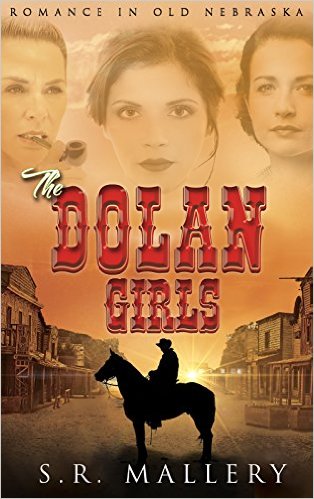
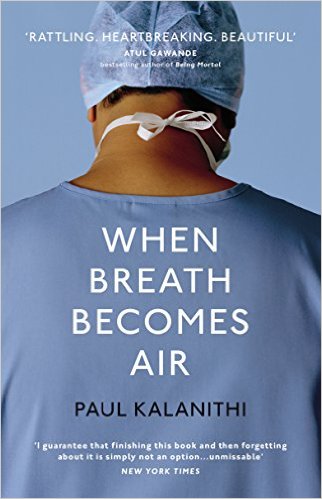


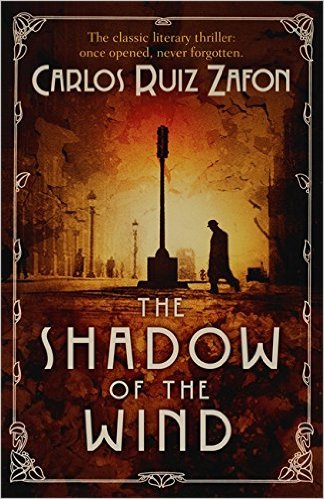
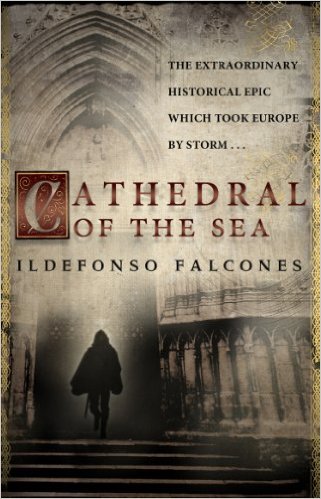
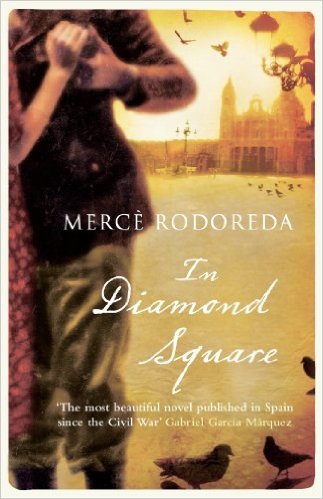
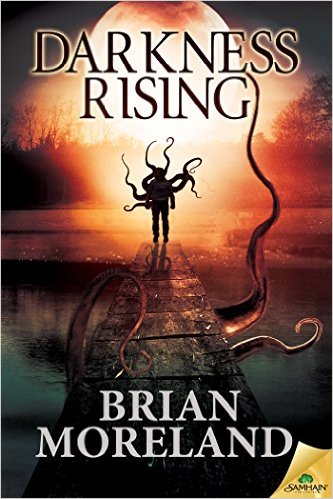


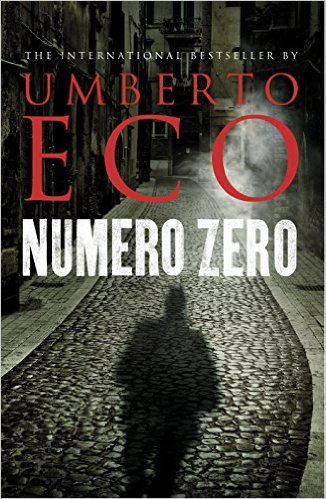


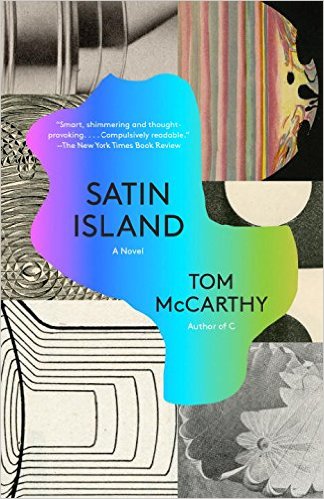


 Lit World Interviews