Hope and Fortune by Marissa Bañez gives a lost little girl an adventure with a message. As Esperanza must continue through the forest she’s become lost in she meets 12 fairies who teach her lessons each of us could take to heart fora better us and a better world.
First, the art in the book is beautiful. Not in an overly artistic manner but one that should appeal to a younger reader but also give a bit of nostalgia to an adult that might be reading the story to a child. I got the feel of watching certain shows with my own son, when he was little. (Not so little any longer.)
The chosen fairies, each with a certain quality for a better person are appropriate and the fairies are inclusive of all types and parts of society we don’t normally see in the vast majority of children’s books.
The rhyming scheme of the text is fun but also educational. Larger words are used at times but once one gets the first word, then they can easily figure out the second rhyme.
I give Hope and Fortune a 4 out of 5 stars.
You may find Hope and Fortuneby Marissa Bañez at just about every online outlet including:
A first-generation immigrant to the U.S. from the Philippines, Marissa Bañez is a graduate of Princeton University and a lawyer licensed to practice in New York, California and New Jersey. She has published legal articles for the prestigious New York Law Journal and the American Bar Association, but her true passion for writing lies in her children’s stories. She currently lives in New York City with her husband and daughter. Her childhood was filled with many original stories and puppet shows made up entirely by her mom. In her free time, Marissa likes to travel, design and make clothes, cook, binge-watch Star Trek shows and Korean dramas, and occasionally strum a guitar.
She is currently working on her second book, Hues and Harmony (How the Singing Rainbow Butterfly Got Her
Colors), a story about mixed or multiracial children, self-discovery, and respect for others as told through the
life and adventures of a caterpillar. It is scheduled for publication on July 20, 2023.
Sylvia Wilson, a bar owner in St. Louis, Missouri, arrives at work to discover the body of an ex-police officer in her locked bar. The police focus on her as their primary suspect, so she decides to launch her own investigation into the dead man and his accomplices. But when the killer sends her clear messages that she and her loved ones are on his radar, she knows it’s just a matter of time before someone ends up dead.
On the Sly! by Wendy Koenig
11 Questions with Wendy Koenig
Where do you get inspiration for your stories?
Most people have great stories in their pasts. I borrow ideas from those and mix them up a bit. Also, the news fills in the blanks pretty well.
There are many mystery books out there. What makes yours different?
My main character is a kick-ass woman with no special education or training. She just doesn’t stop.
How did you do research for your book?
I grew up about an hour from St. Louis, so I just took a trip home. Kicked around the city a bit to let the feel of it flow through me.
If your book were made into a movie, who would star in the leading roles?
I think Karen Gillan would make a great Sylvia. She’s funny, uber smart, and tough as nails.
What were the biggest rewards and challenges with writing your book?
This book was completely different when I first wrote it. When I finished, I just didn’t like it, so I started cutting, rearranging and adding. Love the final edition. It took about a year longer than I like, though.
What advice would you give budding writers?
Don’t stop. Don’t even take a long break. Momentum is hard to pick up again. Write what your heart tells you, but make sure you finish what you start.
What genre do you write and why?
Mystery and some science fiction. I love mysteries, but I grew up on SF.
Which authors inspired you to write?
Lee Child, Robert A Heinlein, Anne McCaffrey, Michael Connelly, Vonda McIntyre, Brandon Sanderson, Kathy Reichs.
What’s the most courageous thing you’ve ever done?
I joined the US Air Force right out of high school.
Who was your childhood celebrity crush?
Neil Diamond. What a voice!!!
What is your next project?
I’m rewriting the next book in the series and scribbling occasional paragraphs for the third. I also have a science fiction book on the go.
You may purchase On The Sly: A Sylvia Wilson Mystery at Amazon.
Wendy Koenig
About the Author
Wendy Koenig is a published author living in New Brunswick, Canada. Her first piece to be printed was a short children’s fiction, Jet’s Stormy Adventure, serialized in The Illinois Horse Network. She attended University of Iowa, honing her craft in their famed summer workshops and writing programs. Since that time, she has published and co-authored numerous books and has won several international awards.
In 1991 Eddie Romano, an undersized, unconfident kid, finds an antique baseball glove while on a treasure hunt of the ruins of the old Comiskey Park in Chicago.
Instantly that glove becomes his obsession. While sleeping at night he’s transported to a dreary, decrepit ballpark where he learns the game of baseball from Billy, a skillful young ballplayer, who seems to be under the control of a dark, sinister figure who calls himself, “The Manager.”
Miraculously, Eddie becomes a better ballplayer and is rewarded for anti-social behavior by having his skills improve. As his bad attitude causes him to lose more and more friends on his team, he starts receiving phone calls from legendary baseball players Babe Ruth and Lou Gehrig who attempt to steer his behavior in the complete opposite direction.
Unbeknownst to Eddie, two factions of “angels” are waging a war for his soul. What is the price of glory? Eddie will soon find out.
Satan’s Glove by Louis Anthony “Cousin Vinny” Agnello
What makes your book different from others in this genre?
If receiving a message from a godly being from another dimension doesn’t interest you (when you’re not insane and have no drug or alcohol problems) then you’re probably dead or might as well be.
How did you come up with this idea for your book?
The most incredible night of my life was spent watching a “mental movie” of this great tale. Although I did not drink, smoke, use drugs, or have any kind of mental illness, I received a telepathic message from a visitor in my room. This visitor shouldn’t have existed according to the laws of physics but I can attest that he was there and he informed me that I had a job to do and I better pay attention to all the details since it was a message for the world. The “mental movie” he presented to me was the most fascinating, heartwarming adventure that I would ever be part of. When this movie ended my heart was pounding and my forehead was sweating and I screamed out, “It’s beautiful! It’s perfect!” I knew if I went to sleep (what I planned to do), I would blow the greatest opportunity of my life because I would certainly forget the details. So, instead I stayed up and jotted down every detail that I could remember of this wondrous story and I am so glad I did, and so will you be, when you read it.
How did you do research for your book?
Since it is a period piece I had to look up the style of uniform worn by the dream coach “BILLY GREEN”. In order to do this, I had to find a famous ballplayer from that era for the Chicago White Sox and observe the uniform he wore to incorporate it into the novel. Also, I had to research the Chicago White Sox minor league system before 1952 and to my amazement their triple A team played in Hollywood, California. They were called the Stars and were owned by William Frawley from the “I LOVE LUCY SHOW”. For BILLY GREEN to play on that team really made my work easy.
Which was the hardest character to write? The easiest?
Obviously, the BILLY GREEN character was the most difficult character to write for because he was so dated. The EDDIE ROMANO character (the kid who finds Billy’s cursed glove) was the easiest because I knew very well that time period.
If you could put yourself as a character in your book, who would you be?
I’ve been BILLY GREEN (the dream coach in the novel) who’s been 90 feet from reaching his goal. I’ve been on third base most of my life but I just can’t seem to score that winning run. It’s the most frustrating thing ever, to be so close to reaching your goal but so far away. I’m BILLY GREEN as a writer and just like him, at this juncture I’d probably make a deal with the devil to get to the Major leagues of book writing as he made a deal with the devil to play in the Major leagues of baseball.
In your book you state ____. Why is that?
That there’s hope. There’s always hope! I believe as long as you have breath in your lungs, you can change the road you’re on. I have. SATAN’S GLOVE is one of the great “anti-suicide” books you’ll ever read. If you want to end it all after reading SATAN’S GLOVE then you must’ve missed the message.
What advice would you give budding writers?
Don’t pursue it unless you totally believe in what you’re selling. If I was selling a murder mystery, detective novel, or something run of the mill, you wouldn’t be seeing my work being promoted. This book is my “Mona Lisa”, I will never write a more original or fascinating novel and I’ve lived a fascinating life. The late great BEN BOVA (science fiction writer with over 130 published novels and 6 HUGO AWARDS for best editor in the world) told me after signing a literary agreement with me, that SATAN’S GLOVE was the most fascinating novel he’d read in years. Maybe that’s why I believe in this novel.
How long have you been writing?
Since 1987. I used to write screenplays but was pushed to write a novel by people in the industry because many books become movies. You’ll notice that my work reads like a movie and that’s because I went to the best acting school in the country, “THE LEE STRASBERG THEATER INSTITUTE, NYC”. Everything is visual to me. And yes, I’ve appeared in some movies and soap operas (Nothing to write home over). I really began writing my novel seriously in 1991 until 1993 and then I decided to finally finish something as I’ve dedicated my spare time to writing from 2011 to the present.
What is a favorite compliment you have received on your writing?
When the late great BEN BOVA at 84 years old, decided to sign me to a literary agreement and promote my book. I was the last writer Mr. BOVA signed (It had been 10 years since BEN BOVA had signed a writer). I was honored to say the least and for him to tell me that “SATAN’S GLOVE” was the most fascinating novel he’d read in years really put me on cloud 9!
How are you similar to or different from your lead character?
Since EDDIE ROMANO is the lead character and is a victim of evil beings, I’m really not much like him except for his humanity and his realization that following the “golden rule” was his best bet. I try to walk the high ground in life. I’ve been blessed and even if SATAN’S GLOVE does not become a New York Times Bestseller as BEN BOVA predicted, I’ll live with it. The general public is finicky and if somehow they miss this exceptional book, then I’ll accept it. As the old adage goes, “You can lead the horse to water but you can’t make him drink.”
What is one piece of advice you would give to an aspiring author?
Find something interesting to write about and make sure you know what you’re writing about.
Which authors inspired you to write?
My father, Louis A Agnello Sr. had his own column in the Chemical Engineering News. He wanted to write the great American novel but he ran out of time here and I wrote SATAN’S GLOVE for him.
Do you write every day?
BEN BOVA said I should but life tries its best to steal you away from what you should be doing.
What is your writing schedule?
Whenever my editor Carolyn Rae emails me her take on my chapters.
In today’s tech savvy world, most writers use a computer or laptop. Have you ever written parts of your book on paper?
Sure. Back in 1991-1993. It was a major problem scanning those pages into the present computer format.
What is something that made you laugh recently?
My wife does impersonations and speaks for the pets we own. She’s really good at creating voices and has unfortunately missed her calling.
What is your next project?
The rewrite of the sequel. I need it to read like SATAN’S GLOVE.
LOUIS ANTHONY AGNELLO Wherever controversy is found it’s likely you’ll find “Cousin Vinny” in the thick of it.
On the evening of August 22, 2008, Mr. Agnello was accosted by two gunmen and shot twice in the leg in Sleepy Hollow, New York. The motive for that shooting was never determined. As of this date, no one has been arrested.
Agnello recovered from the shooting and currently resides in Monticello, Georgia. This is the final evolution of a story that he received in a dream-like state back in 1991. “Cousin Vinny” believes that his colorful past gives him greater insight into the plights of the people we meet in our daily lives. He truly hopes you enjoy this adventure.
Visit Cousin Vinny on Facebook.
A child who loses her way seeks help from 12 multi-cultural and multi-generational fairies, who give her practical life advice to get on the right track.
Trying to possess its beauty, Esperanza chases after a butterfly, which inevitably leaves her behind, lost and scared. Then, she meets 12 Fortune Fairies. Among them is the Fortune Fairy of Beauty, who talks about the beautiful butterfly that flew away and comforts Esperanza by saying: “Beauty is not what you see with your eyes but with your heart.” The other Fortune Fairies likewise give Esperanza words to live by to discover her true path.
Hope and Fortune is a children’s book with positive and frank messages about empowerment and self-discovery, designed to stay with a child well beyond childhood.
Hope and Fortune by Marissa Bañez cover.
The 10 Questions
1. What would be your one sentence elevator pitch of what your book is about?
Hope and Fortune is a beautifully illustrated children’s book featuring
multicultural, multiracial, multigender and multigenerational fairies of various shapes
and sizes who give practical life advice to a lost little girl and get her on the right path.
2. What book/author/movie/tv show/song might a potential reader compare your book to in order to get an idea of its feel and why ?
The honest answer is I don’t know. I didn’t take inspiration for my book from any
other book, author, movie or song . . . at least not consciously.
Plus, my book is a relatively short children’s book that most likely would be read
at bedtime, which should be a quiet time without the need for music or other distraction
in the background. I’d want the child to focus on the story and appreciate the beautiful
illustrations without thinking about how it compares to other books, movies or shows.
That all said, in coming up with the Fortune Fairy of Beauty, I was inspired by a
Star Trek, The Next Generation episode in which certain aliens evolved from their
corporeal states into beings of pure energy. I didn’t feel comfortable depicting the
concept of beauty through physical attributes of a human because beauty is a
subjective ideal. So, I illustrated beauty as a life force radiating light and positive energy
from a heart to correlate with what the fairy says: “Beauty is not what you see with eyes
but with your heart.”
3. Why did you choose this topic for your book?
When my daughter was little, I wrote original children’s stories and created
puppet shows from the stories.
One of the stories from those days is the precursor to Hope and Fortune called
The Lost Foal. For my daughter’s 7 th birthday, I wanted to put on a show for her and her
friends at her party. She wanted a story about cowgirls, fairies, and her little stuffed
horse. I came up with a story entitled, The Lost Foal. In The Lost Foal, the stuffed
horse was the one that got lost in the forest and encountered “cowgirl fairies” played by
my daughter and her guests, each of whom wore fairy wings and pink cowboy hats and
gave the horse life advice to get it back on the right track.
Fast forward 16 years later to the pandemic and lockdown in 2020. I felt bad for
my daughter, her peers and those younger, all of whom faced unprecedented
uncertainties in life. Many of them were really lost. I then took The Lost Foal,
modernized it with a diverse cast of characters, and created a message that I hope will
resonate not only with the very young but also with those less so who may feel
rudderless and lost – in however way you want to define and contextualize those terms
– at some point in their lives.
4. What led to your choosing the setting for your book?
I always imagined – rightly or wrongly – that fairies lived in wooded areas, so I
created the world called the Fabled Fairy Forest.
I think more important than the overall setting for the book is how I depicted each
character’s setting within the forest. In writing and illustrating Hope and Fortune, I
learned that numbers, colors, and animals represent or symbolize certain ideals and
principles that dovetail nicely with what I wanted to say in the book. I then incorporated
a lot of that symbolism to make the story as multifaceted as possible. I explain all this in
greater detail in a document I created called the “Backstory of and Guide to Hope and
Fortune,” a copy of which I’m attaching for your background information. Another
blogger in this tour will be writing more about the symbolism that I used in the book.
5. How did you come up with the title of your book and what is its significance?
I finalized this book during the pandemic when everything was so bleak and
dreary. I wanted to put something out in the universe that was uplifting and conveyed
positivity.
Esperanza is my daughter’s middle name, and she is my muse for all my stories.
The protagonist in the book is named after her. Esperanza is also the Spanish word for
“hope.”
I also wanted to pay homage to my late mom, who along with my dad brought my 9 siblings and me to this country from the mountain province of the Philippines with
literally nothing more than the hope that we would all have a better life here. She is
depicted as the Fortune Fairy of Hope.
As for the “Fortune” part of the title, when I wrote the book, I wanted a nice
alliteration with the word “fairy” that has an optimistic feeling. My fairies were
dispensing life advice intended to bring good fortune to Esperanza in her path in life.
Hence, the Fortune Fairies came to life.
6. How has your own experience influenced your writing?
If you’re asking how my life experience/career influenced how I write, writing is
my favorite part of the job as a lawyer. Being a lawyer has made me confident in my
general writing and editing skills.
Children’s illustrated books usually have a limit of 1000-1500 words. It’s often a
challenge to get complex messages and concepts across with that limitation. But, as a
litigator, it’s my job to tell a client’s story in a concise and relatable way. From that
perspective, my experience as a lawyer positively influenced the way that I wrote about
the various principles or ideals discussed by the Fortune Fairies.
If, on the other hand, you’re asking how my general life experience influenced
what I write, I’ve found that as a mom, talking to one’s own kids about certain things can
be very difficult to start, much less sustain. As one reviewer has pointed out, this book
is “a great discussion aid” on topics that deal with self-esteem, self-discovery and self-
acceptance.
I’m also a very “visual” person, with some artistic leanings. I believe that artistic
expressions are simply different forms of storytelling. So, as more fully describe in the
attached backstory and guide, I intentionally curated the illustrations in Hope and
Fortune to supplement the fewer-than-1000 words I used to create a multi-faceted story.
7. What will connect the reader to the story?
The story had universal appeal. For example, in December, I did a reading of
Hope and Fortune at a local library in New York City. After I read the book, a 7-year-old
boy took a copy of the book to read to himself. He then followed me around until he had
my full attention to tell me how much he loved the book and that now he wants to write a
book someday too. Even though the book is about a little girl with a Spanish name and
fairies, the story still resonated with a little Asian boy – which is more than I could’ve
hoped for. How wonderful to be able to touch the hearts and minds of young children
with just a few words and illustrations.
And not only the young. Many grown-ups have told me they wish they had this
book when they were growing up. Also, several early readers have stated in their
reviews that this book should be read by adults as well as kids.
In addition to the story itself, the illustrations add another path through which the
reader could connect to the book. Many people have expressed their gratitude to me
personally for creating such a diverse cast of characters because they could see
themselves and their children represented in the book. When I say “representation,” I’m
not just talking about non-White people. Two incidents brought this home to me
recently.
The first incident involved an early reader of the book who has a little boy to
whom she read the book. She then wrote that the little boy “loves” the book, partly
because the Fortune Fairy of Innocence and Wonder looks like him – a beautiful blond,
blue-eyed boy. That’s precisely the type of reaction and narrative I wanted to create
with the Fortune Fairy of Innocence and Wonder.
Unfortunately, the second incident is far from uplifting but nonetheless
demonstrates the obvious need for diverse representation in children’s books. This is
what happened when I advertised my reading of Hope and Fortune at a local library on
a public page on Facebook:
She deliberately chose to ignore my conciliatory tone and further challenged:
“that doesn’t look like a white fairy.” What is a white fairy supposed to look like?!? Her
combativeness and willful refusal to acknowledge that non-White characters can – and
should – exist in children’s books is exactly why representation matters. In Hope and
Fortune, both Whites and non-Whites are represented. Everyone is exposed to the idea
that people that may look different from us may have something valid to say and
contribute for the betterment of humanity.
8. Did you have difficulty deciding your book was ready to publish?
Not really. I lived with the concept since my daughter was young and it just took
a little tweaking before I submitted it for publication.
9. What genre(s) and reader ages would your work fit best?
Children’s illustrated books, ages 5-10, although as I’ve said, I’ve often been told
that adults should read the book and learn from it as well. Sub-genres include diversity,
multiculturalism, self-esteem and self-reliance, social themes of values and virtues, fairy
tales.
10. What’s your next project idea?
I’m currently putting the finishing touches to my second book, Hues and Harmony
– How the Rainbow Butterfly Got Her Colors. It’s about multiraciality, empowerment,
self-acceptance and belonging as told through the life and adventures of a singing
caterpillar. I use common shapes, primary colors, and basic chemistry concepts to
convey my message.
Like Hope and Fortune, Hues and Harmony is a re-write of story and puppet
show from my daughter’s childhood entitled The Singing Rainbow Butterfly. At that
time, I created the puppet caterpillar in the story out of round silver pot scrubbers held
together by a wire, string, and popsicle sticks, not to mention a prayer. I think I still have
that caterpillar somewhere and intend to use it when I do public readings for Hues and
Harmony.
Esperanza and the Fortune Fairies from Hope and Fortune make a cameo – yet
important – appearance in Hues and Harmony, but it’s not a sequel.
I am using the same illustrator, and the dialogue/songs are also in rhyme so it will
have the same look, feel, and sound as Hope and Fortune. I’m happy with how Hope
and Fortune turned out and I want Hues and Harmony, as well as any other subsequent
books, to have the same quality.
Hues and Harmony is scheduled for official release on July 20, 2023.
You may find Hope and Fortuneby Marissa Bañez at just about every online outlet including:
A first-generation immigrant to the U.S. from the Philippines, Marissa Bañez is a graduate of Princeton University and a lawyer licensed to practice in New York, California and New Jersey. She has published legal articles for the prestigious New York Law Journal and the American Bar Association, but her true passion for writing lies in her children’s stories. She currently lives in New York City with her husband and daughter. Her childhood was filled with many original stories and puppet shows made up entirely by her mom. In her free time, Marissa likes to travel, design and make clothes, cook, binge-watch Star Trek shows and Korean dramas, and occasionally strum a guitar.
She is currently working on her second book, Hues and Harmony (How the Singing Rainbow Butterfly Got Her
Colors), a story about mixed or multiracial children, self-discovery, and respect for others as told through the
life and adventures of a caterpillar. It is scheduled for publication on July 20, 2023.
When her friend Sandy asks for help, Anne Wilson leaves her small, lonely life in Miami for the picturesque island of Saint Martin. But as soon as she arrives, Sandy is murdered, and her death exposes lies: an alias, a secret past, stolen money. Suspected of murder and trapped on the island, Anne is shocked when a cryptic message arrives:
Find the money. Take it and run.
She follows Sandy’s trail of obscure clues, desperate for proof of her innocence and must decide if she can trust the two men who offer help-the dark, mysterious Brit or the American with a wide grin and a pickup truck. When memories resurface-dark truths she’d rather leave buried and forgotten, her past becomes intertwined with her present.
Her only way forward is to face her own secrets.
Assumed by MHR Geer.
Which was the hardest character to write?
Anne. Have you ever disliked someone the first time you met them, but then as you got to know them you realized they were just shy and perhaps quite sad? That’s how it felt to write Anne. I
didn’t approve of her choices, but chapter after chapter she showed such strength, and I
warmed to her.
Your book is set in Saint Martin, an island in the Caribbean. Have you ever been there?
Yes. (sigh) Such a beautiful place. I want to go back.
Do you have another profession besides writing?
I’m a bookkeeper by day. It’s the opposite of creative writing.
How long have you been writing?
I’ve always journaled, but I began writing novels about nine years ago – which is about the time
my first marriage fell apart. Huh, I never made that connection before. Whew. That’s a
breakthrough of sorts, isn’t it?
What is your next project?
Book 2: Accused. Anne’s story continues! It will be released in 2023.
What is a favorite compliment you have received on your writing?
The feedback has been overwhelmingly positive. But the one comment that stands out is when
an Amazon reviewer said that Anne (my main character) was so REAL. That was amazing to
hear.
How are you similar to or different from your lead character?
We are very different, but we do have a couple things in common. She works in accounting like I
do, and we’ve both suffered significant loss – the kind of loss that you never really recover from.
Writing her character was so interesting because she dealt with her loss so differently than I did.
Favorite travel spot?
Kansas City. Such a friendly place. It always inspires creativity. I love the Nelson-Atkins
museum and City Market on the weekends. Also, there’s a place in Westport Plaza that makes
the best Matcha ever. Don’t get me started on the barbeque…yum.
Any hobbies?
So many hobbies. Knitting mostly, but I enjoy loads of crafts, jewelry and macrame. I want to try
pottery, but my yarn takes up too much space. I simply don’t have room in my life for clay. Yet.
What TV series are you currently binge watching?
A while ago, season 1 of Silent Witness popped up as a recommendation on my BritBox. It
should have come with a disclaimer like “Don’t watch this unless you’re prepared to commit
several months to it.” Sheeshers. I just finished Season 25. I don’t regret a thing. Well. Maybe I
regret some of the popcorn.
Tell us about your longest friendship.
Marie. We met in college because our boyfriends were roommates, and we both instantly had a
“you’re my person” moment. I live in California, and she lives on the East Coast, so we meet
annually in random cities in the middle of the country to hang out. She’s still my person after all
this time.
What is the strangest way you've become friends with someone?
One of my friendships started during the darkest period in my life. We were at a youth football
practice that my ex-husband was coaching. I can’t even remember why, but I had to move my
chair, and someone I barely knew carried it for me. That’s it. She carried my chair. It was a tiny
thing, but the gesture meant the world to me. And we’ve been close friends ever since.
MHR Geer.
Author Bio:
MHR Geer was born in California but grew up in the Midwest. She attended the University of California, Santa Barbara to study Physics. After school, she moved to Ventura, CA and started a small bookkeeping business. She lives with her two sons and her unicorn husband (because he's a magical creature).
Margaret Atwood meets Raymond Chandler meets Greta Thunberg: Jen Lu is back on the case when the death of a lawyer sparks an even more intriguing mystery in Michael Kaufman’s second book in the thrilling series.
It’s March 2034, six months after D.C. police detective Jen Lu and Chandler, her sentient bio-computer and wannabe tough guy implanted in her brain, cracked the mystery of Eden. The climate crisis is hitting harder than ever: a mega-hurricane has devastated the eco-system and waves of refugees pour into Washington, D.C.
Environmental lawyer and media darling Patty Garcia dies in a bizarre accident on a golf course. Of the seven billion people on the planet, only Jen thinks she was murdered. After all, Garcia just won a court case for massive climate change reparations to be paid out by oil, gas, and coal companies. Jen is warned off, but she and Chandler start digging. Signs point to Garcia’s abusive ex, a former oil giant, but soon Jen turns up more suspects who have an even greater motive for committing murder
Soon Jen is in the crosshairs of those who will ensure the truth never comes to light, no matter the cost. She has to move quickly before she becomes next on the killer’s list.
The Last Resort by Michael Kaufman.
“[An] outstanding series launch…Exceptional worldbuilding is complemented by sympathetic characters and suspenseful plot twists. Kaufman is a writer to watch.” — Publishers Weekly, starred review
This is the second book in your Jen Lu series. How soon after finishing the first book did you know you wanted to continue Jen’s story?
The minute I read the first reviews. I knew I’d taken a risk writing a mystery that bent genres and that delved into political themes, but only when I started hearing from readers did I realize how much my approach — page-turning, serious themes yet fun to read — was something I wanted to continue doing.
You have decades of experience working with the United Nations, NGOs and various government officials and educators. How have you used this expertise to write about some complex topics like climate change and the intricacies of the oil and gas industry?
I’ve worked directly with presidents and prime ministers. I could answer that this has given me insights into the workings of political power. But here’s my real answer: We all need stories. Not only to entertain but to make sense of our lives. Right now, there is no more important issue than the quickly emerging climate crisis and the utter culpability of the oil, gas and coal industries in destroying our future.
“The Last Resort” has a secondary theme of men’s violence against women. How does this fit into the story?
It’s a critical theme in itself. Across the country and around the world, there is a rash of violence against women: in our homes, at work, at places of learning and on the streets. Engaging men as allies with women to end this violence has been my life’s work.
“An engrossing thriller set in a fascinatingly plausible near future, ‘The Last Exit’ centres on a human-AI partnership that’s as believable as it’s moving.” — Emma Donoghue, New York Times bestselling author of “Room”
There are a variety of politically charged themes throughout the book. What would you say to people who are looking for a fiction book that “isn’t political”?
First of all, “The Last Resort,” is entertainment. It’s fun; it’s exciting. My goal isn’t to educate — I leave that to my nonfiction books. At the same time, every moment of our lives is shaped by political realities, and that is nowhere more true than with the climate crisis. I believe that some of the most powerful stories ever written weave in the political and social realities of the day. Imagine if Tolstoy had left out the war part; his great novel would have read like a Netflix costume drama.
Speaking of politics, there are a lot of tough themes the book touches on, but the series’s tone overall is ultimately one of hope (surrounded with humor). Why did you choose to go this route?
The last thing readers need is another grim dystopia. I believe strongly in the human capacity to change, not simply at the individual level but our ability to imagine and then to create a better world. Faced with the existential realities of the climate crisis, we need that vision of hope and change more than ever. Shouldn’t fiction that digs into the tough issues we face today and in years ahead bring us up rather than bring us down?
What do you hope readers gain from the book?
Gain? I hope they gain some absolutely entertaining moments. I hope they can’t put it down. But I also hope it allows them to imagine a future that is certainly full of challenges but also possibilities for positive change.
Is there another Jen Lu book in the works? Are you working on any other projects?
Yes, there will be a sequel. I’m also at work on a traditional thriller as well as a literary novel and a screenplay. Plus, of course, I continue my advisory role with various U.N. agencies, governments, NGOs and companies. That said, I can’t wait to hang out again with Jen Lu and Chandler, her computer implant and wannabe tough guy.
“ ‘The Last Exit’ hits hard. Fast action — a melding of the mental and physical — keeps this smart futuristic thriller racing, and its contemporary implications keep the reader thinking.” —Thomas Perry, bestselling author of “A Small Town”
Author Bio:
MICHAEL KAUFMAN has worked for decades engaging men to support women’s rights and positively transform the lives of men. He is the co-founder of the White Ribbon Campaign, the largest effort in the world of men working to end violence against women. He volunteers as a senior fellow at Promundo (Washington, D.C.) and has worked in 50 countries with the United Nations, governments, NGOs and educators. He advised the French government in 2019 as a member of its G7 Gender Equality Advisory Council.
He is the author of numerous nonfiction and fiction works, and was awarded the Canadian Jewish Book Award for Fiction. His most recent nonfiction book is “The Time Has Come.” He’s also written “Why Men Must Join the Gender Equality Revolution” (2019) and his first Jen Lu novel“The Last Exit.” His books and articles have been translated into 14 languages. Born in Cleveland, Ohio, having lived in Durham, North Carolina, and now living in Toronto, Canada, he is married and has a daughter and a son. For more information, please visit michaelkaufman.com.
It has been a while since I last brought you a new interview, but I’ve recently translated a book that I was sure you would be interested in. And its author was kind enough to answer a few questions too.
Here I introduce you to Antonio Flórez Lage.
Author Antonio Flórez Lage
When and how did you start writing?
I am a reader that every so often goes over to the Dark Side and writes. I have read a lot since I was a young child, but I started writing in an organised fashion a few years back. At first, I was writing articles for a magazine but little by little I became more confident; now I have accomplished my dream of publishing a book and on top of that I’ve won an international prize.
I am very happy.
Could you tell me something about your experience as an independent writer?
I am a vet and therefore I was not familiar with the publishing world, but I love to try different things. I’ve learned new skills and I have enjoyed the whole process. Now an important publishing company has made me an offer, but I haven’t accepted it yet. Perhaps I will, in the future, to have a different experience and be able to focus only on writing.
What is your fondest memory (so far) of your experience as a writer?
There are many, I could not pick only one. The joy of managing to make your stories reach other people, of touching your book hot off the press, of seeing it on a bookshop window side by side with the books by your most admired writers, of leaving a special memorial to those with whom you’ve shared some time in your life, of reading a positive review, of being surprised when a writer compliments your style, of seeing how your sales spiral out of control in Amazon, becoming emotional when somebody shares a quote from your book… Knowing that your words will break the space-time continuum to reach where you won’t be able to is something that makes one’s mind boggle.
What are your favourite genres (both as a reader and as a writer)?:
I read everything, I like to change and jump from one genre to another. As a writer, I’ve started by writing a story that includes mystery, action, and adventure (always with a touch of humour), but I’d like to try other genres too.
What made you decide to translate your book?
The story has been very successful in Spanish and has received very good reviews in Spain as well as in many Latin American countries. Once I managed to make the jump to other countries I share a language with, the next step, the next challenge I wanted to take on was to get it translated into English. I am very much looking forward to seeing how it does and to hearing the opinions of the people who read my novel in that language.
Can you tell us something about your book?
The best thing to do is to share the description:
In the outskirts of a tiny Galician fishing village, there is a huge rock that hides a mysterious submarine cave. What happens to those who dare to go diving there? Several events from their childhood drag the protagonist and his peculiar friend back to that eerie place.
They meet again, years later, and set off on a seedy trip around Mexico, full of action and dangers. The unexpected outcome of that journey changes the life of the protagonist forever.
This novel is one of a kind: it offers the readers a special something; a unique quality that means the story does not leave us when we close the book. Some readers are already applying its lessons to their own lives…
Do you have any advice for other writers (especially those at the beginning of their careers)?
I can offer you the same advice I give myself, although I don’t know if it will be useful to others.
Writing is very addictive because it offers very tempting rewards. Because of that, it is dangerous to let yourself get taken over by that Dark Side and give up reading to focus exclusively on writing. However, reading is what can help you the most to learn and to improve, to grow as a person and to find what a Jedi would call ‘the balance of the force’. That is why I have not looked for shortcuts and I carry on reading every time I get a chance, and I enjoy every page to the maximum.
I was curious about quite a few things about the story itself (where the author got the inspiration for his novel from, if the locations, especially the Rock of the title existed or no) but he likes to play his cards close to his chest and told me that he was happy to answer any specific questions readers had if they contacted him directly.
A BEST-SELLING NOVEL IN SPANISH. SPECIAL LAUNCHING OFFER.
RECEIVED WITH CRITICAL ACCLAIM. “Full of humour, sensitivity, action and mystery.” Discover a not-so-touristic Mexico and the bleakest Galicia.
THE REVIEWERS SAY “‘If I jump, I’ll kill myself; if I don’t jump, they’ll kill me.’ With these words, in an eerie landscape full of rocks and black waves that reminded me of Hitchcock, begins the novel The Rock of the Missing. This book keeps moving, from the initial Hitchcockian scene, later becoming a chilling road movie that takes us across a scorched Mexico, full of gunshots, drug dealers and dead bodies, and ending in a permanent return to Galicia, where the whole thing begins… I recommend you read this novel if you wish to enjoy the art Antonio Flórez uses to carve his sentences if you want to join in an adventure full of humour, sensitivity, action and mystery.”Lavadora de textos, Ramón Alemán.
ABOUT THE AUTHOR Antonio Flórez Lage (A Coruña, 1977). A vet, passionate about the sea, travelling, and books, who writes about a world he knows very well.
10% of the profits obtained from the Kindle Book will be donated to ASOCEPA Coeliac Association.
Links:
Facebook page for the book “The Rock of the Missing”:
Thanks very much to Antonio for the interview and to Ronovan and the team for running this site, thanks to all of you for reading and remember to like, share, comment, and CLICK! Oh, and REVIEW!
Today’s Spotlight Author is our very own Angela Kay! A new Indie Author as well as one of our busiest book reviewers here at LWI.
1. How did you come up with the idea for your novel the Murder of Manny Grimes?
I started writing it during my final semester of college. I was taking a writing course where we were to write the first thirty pages of a novel. I didn’t really have an inspiration strike…I just started writing and the plot seemed to unfold. My professor and students alike loved the beginning of the story. Because of my passion of writing, I continued the first draft with the hopes of getting it published one day.
2. For aspiring writers out there, tell us how long it took you from idea to publishing your novel? Tell us about the process of how it all came about.
It took me seven years to perfect it. I finished the first draft in a year. I was excited because it was the first full length novel I finished. For the most part, I’d only written short stories. After that, I began to edit my book, and it was a major headache. I must have changed the direction of the story three or four times. I took a lot of breaks from it…more than I should have. Finally, by the many rocks God tossed my way, I finished my final draft. And just as I finished, I came across an awesome editor who didn’t mind fixing a few kinks. I played around with the idea of submitting my completed novel to a bunch of agents, but the truth is, it’s a dog eat dog world out there. I didn’t have patience for a bunch of no’s. Even when I was ready to send it off, I was hard on myself about whether it’s good or not. After considering my options, I went the route of starting as an Indie author. My publisher is a long time friend of a friend, so I trusted him. After I got my beloved books in my hands, I knew I did the right thing.
3. What kind of research did you do for the novel?
The setting used to take place in New York, but someone a long time ago told me it sounds as though it’s in Augusta, Ga (where I currently reside). That got me a bit worried because the setting relies a lot on the aftermath of a bad snowstorm. I mean, it is the south, where we hardly see one flake. I went online to see whether it was possible (although I knew it’d be okay since it’s fiction and anything was possible). I was glad to find that in 1973 we were hit with sixteen inches of snow. Although it was a long time, it satisfied me. The other researching I did was try and get the investigation as close to real as possible. I spoke to several police officers, primarily lieutenants, since my main character is a lieutenant. They were kind enough to answer any and all questions.
4. When I read a book I sometimes like to have a visual of characters. What actors would play your main characters in a movie?
Lt. Jim DeLong: Michael Fassbender. He’s a little older than DeLong, but I think he’d be good for it.
Russ Calhoun: Possibly Dean Winters
5. What are you working on now?
I’m currently editing the sequel to “Manny Grimes,” and plan to release it in a few months. I also have an FBI thriller ready to be edited and another book I’ve almost completed. I’m only doing suspense now, however, I’m starting to dabble with a bit of romance–I already have an idea for a saga.
6. I know you edit the work of other authors, how can people contact you for your services?
7. What do you think is the one thing that drives your main character to do what he does?
Lieutenant Jim DeLong is passion-driven. I think when he gets something in his mind, he can’t seem to let it go. It’s also somewhat of a release while he’s dealing with personal issues outside of work.
8. If you could’ve written any other book than your own, what would it be and why?
Probably “Pride and Prejudice.” I love that book so much. It’s in a complete different era and I get swept away in the character’s lives.
Is there a way people can get an autographed copy of your book?
Sure! They can email me for more information at angelakaysbooks@gmail.com. I sell signed copies of my book for $14 even. That includes shipping and handling. You can check out my book by clicking on these links: Amazon and Barnes and Noble.
I had the pleasure of interviewing author K.T. Munson. The first book of hers I read was Zendar: A Tale of Blood and Sand, which I loved. I also have her latest, Unfathomable Chance, in my hands. Thank you, K.T., for allowing me to interview you!
What do you like to read in your free time?
I actually like to review indie authors and small press houses books in my free time…the little free time I have. I’ve had some real gems come across my kindle and they inspire me to work harder and become a better author. Plus I get to help out fellow indie authors, so that is always a bonus.
What did you find most useful in learning to write? What was least useful or most destructive?
This is a tough question for me because I never really paid attention to anyone and just sort of did my own thing. So instead I’ll take some creative liberties here. The most helpful thing I can think of is when my mother showed me that we have an ancestor who is a published poet. I told my mum I was going to be published one day too. Her encouragement and support has always gotten me through the rough patches. She is my #1 fan and I’ll continue writing and publishing if she is the only one who reads it. The most destructive thing was relying on technology. I lost chapters and chapters of a book in college. It broke my spirit to write for a long time because I felt like I lost a part of me when my USB stick died. Don’t rely on technology; always have backups of all your work!
Aside from writing, what are your hobbies?
I like to paint, make jewelry, and grow plants. I honestly have a ton of hobbies some of which never took, like knitting. I like to keep myself busy year round since I live in Alaska with everything from camping to hunting on top of the inside hobbies. Don’t even get me started on TV, movies, video games, and D&D.
Do you have a ritual you use while writing? (During commercials, certain music, etc)
I have to edit my books from printed copies. Everything else I just go with what I feel like. The moment my book writing becomes structured and rigid the moment it stops being fun.
What is your writing space like?
Anywhere I like. Honestly I take my books with me and work on them when I’m flying for work, sitting at home on my computer, or typing ideas into my phone. My work space is wherever I am but most of it is in my computer room. It is an old pine desk my parents bought when I was 5. The darn thing is falling apart but I just can’t bring myself to replace it. Under it is the group of my works, all broken into little accordion folders that contain editing, beta reader notes, original concept notes, and even sketches.
Do you have any pets? Can you tell us a funny story about them?
I have two cats: Emma and Lizzie. They are both named for Jane Austen characters (Emma Woodhouse and Elizabeth Bennet). Emma is more my cat than Lizzie. As to a funny story I have tons, but my favorite is when I brought Emma home from her first vet visit, and she of course howled the entire way over and misbehaved the entire time (constantly trying to slink away) but honestly she got a thermometer shoved up her butt so I could sympathize with her distress. When I brought her home and parked in the garage I let her out of the cat carrier so that she could wander back into the house. Instead she hides under the car and wails because she doesn’t recognize the garage as home. I can’t get her out of there and after trying to push her out with broom, I abandon her and go and stand in the hallway and wait. Twenty minutes of constant wailing and she finally walked into the hallway. She immediately recognizes it as home and stops. She gives a look that says ‘You’re a jerk and I’m not an idiot’ and proceeds to go upstairs and eat some food. Needless to say I don’t let her out in the garage anymore.
What is your work schedule like when you’re writing?
I try to edit or write every day. I constantly have at least 2 books I’m working on at the same time. Usually a main book and what I like to call my relief books, which is usually a romance of some sort.
Where do you get your ideas for your books?
Everywhere. Cliché I know but seriously, everywhere. Usually the main concept comes to me in a dream. I’m a lucid dreamer most times and I get some doozies that are like living books or movies in my head which I remember 90% of when I wake up. 1001 Islands was Chapter 1 and Unfathomable Chance was Chapter 4. Sometimes it is a single image I am working towards or a concept. For North & South it was both, the image of a girl alone in the desert wandering towards certain dangers and the idea that every decision we make affects another person, like the butterfly effect.
What do you hate most about the writing process?
*Groan* Editing. I don’t mind rewriting but editing is killer. Thank goodness for editors.
What do you think makes a good story?
Originality with a color of the familiar. I like to bring whole new worlds alive and I think creating a world that people lose themselves in is a good story. Right up there with characters that are relatable or believable.
As a child, what did you want to do when you grew up?
Gosh everything. Lawyer, doctor, inventor, and an accountant to name a few. Little did I know that I could do all those things…in my books. I have researched the strangest things, let me tell you.
Today’s interview is with the author of a book I reviewed not long ago called WOLF. I won’t say too much about it as she discusses it a bit in the interview, and you can read the review by clicking here. Now on to the interview.
You are very eclectic in your writings over the years. What lead you to writing fiction?
Since I discovered writing, I’ve relied on it to give my life meaning. I live to write.
As a philosopher, in my nonfiction, I write about ethics and ways to make the world a better place.
But, with fiction, I realized I could create a world. I could create a world and then live in it for a few months or years. I could create a world where women and girls come out on top.
How did Jessica James, a cowgirl, come to life? I understand the philosopher part, but I’m trying to get the cowgirl part.
Usually, it’s the other way around. Folks get the cowgirl part, but scratch their heads at the philosophy part.
Some of Jessica’s story is based on my own experience, a working-class girl who grew up in Montana, Idaho and Washington, going to the big city for the first time to study philosophy, a mongrel amongst pedigreed Ivy Leaguers.
But, there’s a kind of funny story about how I came up with “cowgirl philosophy.” A few years ago, there was a move in the philosophy department to create a “Vanderbilt brand” so everyone would associate the Vanderbilt philosophy department with a special type graduate. I imagined taking a hot iron and branding our students as we handed them their diplomas. I got a bunch of the women philosophers together and joked that our brand should be cowgirl philosophy. One of my students made a logo for us with a really cute blonde long-haired Scottish cow that said “cowgirl philosophy.” I still have that cowgirl philosophy sticker on my office door.
You have two stories running simultaneously in WOLF, how difficult was it to keep things straight as you went along? By the way, you did a great job. I never got confused, even once.
Jessica James and Dmitry Durchenko are very different. In some ways, the brooding Russian janitor is more of a philosopher than the party-girl philosophy graduate student. So, it was easy to keep their stories straight. The harder part was bringing them together organically. I wanted the stories to become more intertwined as the novel progresses, so they’re intimately connected by the end of the book.
When I was sending out various drafts of the novel to get feedback from other writers, some loved Jessica and others loved Dmitry. At one point, when the Dmitry lovers were ahead in the polls, I had started and ended the novel with his perspective. But, in the end, I realized that the ongoing story is really Jessica’s, so I started and ended the novel with her. It just never felt quite right to start with Dmitry, even though he is an important, and hopefully compelling, character. And, I’m sure we haven’t seen the last of him!
How much of Jessica’s adventures pulled from actual events you’re aware of?
As I said, some of Jessica’s adventures are based on my own experience in graduate school. But I plead the fifth on what parts. I like how you asked about events that I’m “aware of”…maybe not being aware could get me off the hook for some of the more incriminating parts of the story. Jessica’s not the only one who drank too much whisky in graduate school.
You have Russian characters in your book, some are very important to the entire storyline. How did you go about getting the language just right? It was a very smooth transition from English to Russian. I thought it seemed very natural and not intruding at all when I was reading.
Thanks. I did a lot research on Russian sayings, culture, food, and drink, and, of course, the Russian mafia. And, I had a native Russian speaker check my use of Russian words and phrases. It was important to make it authentic.
Just before I started writing WOLF there was a huge FBI sting involving Russian mafia in New York that took in over 30 people on charges of illegal gambling, money laundering, and extortion. Some of my characters are inspired by people pinched in that operation, including a beautiful woman running a high stakes poker game for Hollywood movie stars, and the playboy son of a billionaire art dealer. I also learned that the Russian mafia is alive and well, not only in Russia, but in the U.S.. You don’t want to mess with those guys, so I don’t dare say more about my real-life mafia role models.
You discuss the date rape culture that is so prevalent on college campuses. I’m not sure how much goes on at Vanderbilt but I know cases happen where I’m from. So many even go unreported. What made you think of including that in your book? Did you do any particular research into it with victims? I mean you don’t go too much into details but there are some instances where research seems evident.
As I was writing WOLF, a high profile Vanderbilt rape case was making national headlines. It involved a woman who may have been drugged by something slipped into her blue cocktail, taken back to a dorm room, and then gang raped by a group of football players, instigated by her boyfriend. Because she was unconscious, she didn’t know she’d been raped until the police showed her video recordings the perpetrators had taken “for fun” and sent off to their friends. This case was so stunning, so mind-boggling, and so egregious, I couldn’t imagine what it must be like to find out something like that about yourself from a video.
That lead me to write my latest nonfiction book, HUNTING GIRLS: SEXUAL VIOLENCE FROM THE HUNGER GAMES TO CAMPUS RAPE. I was writing that book at the same time as WOLF. It was important to include the issue of party rape in the novel since it has become an epidemic on campus.
You did a great job of hiding in plain sight who the killer of the titular character was. Which is always the way with a great mystery. There were so many possibilities that when it was finally revealed, there was a bit of surprise, unless you were really following all closely. Writing a mystery, do you worry about revealing too much? How do you balance the hidden and the revealed?
Thanks. Yeah, it was a bit like Jessica who had the evidence proving the identity of the killer all along in the bottom of her backpack. The killer is there all the way through, and signs point to him, too. But, he’s not your usual sort of killer.
I was actually surprised to find out from some of my friends and readers who they suspected. I was floored that lots of them suspected Jessica’s love interest, since I never intended him to be a suspect. So, that was cool.
In my second Jessica James Mystery, COYOTE (out in August), the mystery is not so much who are the killers, but what happened in a highway accident eleven years ago that binds all of the main characters together in mysterious ways.
How important are beta readers or test readers for a book like yours? Do you have a target reader who reads your book and you ask, “How soon do you figure things out?”
I have an amazing developmental editor, Lisa Walsh, who reads everything and gives me very detailed feedback. I also have a trusted group of friends whose opinions I trust, and if they tell me something’s gotta go, it’s gone.
A lot of my friends are actually professional literary critics, so they are a tough crowd!
What’s been the reaction of your peers who’ve read the book? Are any of them worried they are the model for WOLF?
Hmmmm….given the continued headlines about sexual harassment by male professors, I don’t think there is too much danger of finding that needle in this haystack.
So far, all of my academic friends who’ve read WOLF tell me they love it! Of course, they get the inside jokes.
How does Tennessee differ from having been a native of Washington State? I’ve been in the South my entire life so all I know is the laid back life.
As I mentioned, I grew up in the Northwest. I go back as often as I can. I miss the mountains. So, I usually spend part of the summer in Idaho near my folks, who live in Sandpoint. And, every winter, I make an x-country ski trip with my brother and sister-in-law to Glacier Park, Montana. Actually, my second novel, COYOTE, is set in Glacier Park. I love it there, especially in the winter when the park is deserted.
To me, the West is dusty brown, with wispy clouds racing across a Robin’s egg blue sky. It’s that sunburnt blister on my nose when I was a teenager dancing til dark at the street dance on the fourth of July. It’s huckleberry milkshakes and stopping in your tracks for a giant moose.
The South is sticky green, with thunderheads sending me into my moldy basement looking for flashlight batteries. It’s soggy turnip greens, deep fried pies, and painting chigger bites with nail polish. It’s the thickening of my waistline, my corneas, and my resume. And, now it’s home.
I had the honor of interviewing national bestselling author, Steven James. He is known as the “master of storytelling,” and for a very good reason. Ever since I happened upon The Rook, book two of his Patrick Bowers Files, he’s been my favorite author.
I’d like to thank Mr. James from the bottom of my heart for taking his time out of his busy schedule to answer my questions.
1) What did you enjoy most about writing Curse?
In Curse, several new characters are introduced into the series. For me, since I don’t outline my books, it’s always exciting to see who shows up on the page and what they’re like. In this book, maybe my favorite character ended up being a girl who was blind. I consulted with a girl who’d been born blind, asking her what her nightmares are like since she has never seen anything. That journey and what I ended up including in the book was fascinating to me.
2) What do you like to read in your free time?
Even though I like to write thrillers, I tend to read more literary fiction, philosophy, and poetry, as well as books on the craft of writing. I still love suspenseful and scary stories, but lately I’ve tended to watch these in film instead of read them in books.
3) What are your hobbies?
I live near the Appalachian mountains, and so I love to get out to trail run or even play disc golf. Besides eating Cheetos, drinking coffee, and binge-watching on weekends, I like to play basketball with my friends and moonlighting writing poetry that will probably never end up in print.
4) Do you have a ritual you use while writing? (During commercials, certain music, etc)
I almost always write standing up. I tend to listen to trance or EDM. I do best working in long stretches, rather than working at a project here and there throughout the day. Give me ten hours in a row over 5 hours spread out throughout the day and I’ll be happy.
5) What is your writing space like?
My basement.
6) Do you have a favorite book you’ve written?
As far as novels, I think my favorite might be The Rook or Checkmate. I also wrote some inspirational nonfiction books, and I believe my favorite of those is called Story: Recapture the Mystery.
7) Where do you get your inspiration?
From everything. I’m always thinking of ideas, jotting down thoughts of dialogue on scraps of paper, receipts, notebooks. Typically at the end of the day, I have far too many ideas to write the next day, and it sort of keeps cascading like that. I keep thinking someday I’ll catch up, but at this rate, that won’t happen for another two or three hundred years.
Biography
Steven James is a national bestselling novelist whose award-winning, pulse-pounding thrillers continue to gain wide critical acclaim and a growing fan base.
Suspense Magazine, who named Steven’s book THE BISHOP their Book of the Year, says that he “sets the new standard in suspense writing.” Publishers Weekly calls him a “master storyteller at the peak of his game.” And RT Book Reviews promises, “the nail-biting suspense will rivet you.”
Equipped with a unique Master’s Degree in Storytelling, Steven has taught writing and storytelling on four continents over the past two decades, speaking more than two thousand times at events spanning the globe.
Steven’s groundbreaking book on the art of fiction writing, STORY TRUMPS STRUCTURE, won a Storytelling World award. Widely-recognized for his story crafting expertise, he has twice served as a Master CraftFest instructor at ThrillerFest, North America’s premier training event for suspense writers.
Respected by some of the top thriller writers in the world, Steven deftly weaves intense stories of psychological suspense with deep philosophical insights. As critically-acclaimed novelist Ann Tatlock put it, “Steven James gives us a captivating look at the fine line between good and evil in the human heart.”
After consulting with a former undercover FBI agent and doing extensive research on cybercrimes, Steven wrote his latest thriller, EVERY CROOKED PATH—a taut, twist-filled page turner that is available now wherever books are sold.
If you’ve never met environmental criminologist and geospatial investigator Patrick Bowers, EVERY CROOKED PATH is the perfect chance to dive into the series and find out what fans and critics everywhere are raving about.
Today’s guest is author and fitness coach Bridgette L. Collins. No, the book we’re talking about today isn’t about fitness. At least not about physical fitness. No today Bridgette talks about her book The Chip Maker, which I reviewed not too long ago here on LWI.
First of all, tell us about where you’re from and a little about it, what it’s like.
Although I was born and raised in Houston, Texas, I lived in the Dallas, Texas area for nearly 20 years before relocating back to Houston, Texas in 2013. It was important that I mention Dallas because it was during that time in my life I embraced my love for writing and became an author. In response to your question, “What it’s like”? Well, Houston is a BIG city with a lot of diversity and down to earth people. If you visit, check out the great offerings in the museum and theater districts. But, if you come during the summer months, just know you’ll definitely experience our high heat and humidity. Being an avid runner, what I like most is the atmosphere Houston and the surrounding areas have created for outdoors/nature enthusiasts which consists of an array of running, biking, and hiking venues.
You’re a fitness coach, among other things. How did you end up writing a work of fiction?
My first three books (Broken In Plain Sight, Destined to Live Healthier: Mind, Body and Soul, and Imagine Living Healthier: Mind, Body and Soul) are all novel-like self-help books that have educated, encouraged, and empowered many through a collection of stories that peel back the masks of challenges with weight, health, work, marriage, relationships, depression, and lack of self-love. Although I have a background in health and fitness which led me to write fictional stories about the failures and triumphs (inclusive of the whys) related to living healthier: mind, body and spirit, I’ve always wanted to write a different type of fiction inclusive of law and order and conspiracy theories. So, when I was presented with a writing opportunity that would take me outside of my comfort zone, I took on the challenge which resulted in The Chip Maker: Prophecy of the Beast.
There is a lot of End of Times references in The Chip Maker: Prophecy of the Beast. Are you very much up on apologetics and biblical scholarship or did you have someone to go to for just in case help?
The content for the book was inclusive of both my biblical research and the theology background of a former pastor who resides in Dallas, Texas. During my biblical readings when I was unsure about my interpretation of certain scriptures (which included looking up cross-references), I’d email my former pastor who in turn would provide me with biblical insight based in his studies, in particular, as related to end times prophecy. Because of a myriad of opinions, perspectives, and interpretations on end times prophecy, I was careful about what I presented in the book. However, just like any conspiracy theory writer, I wanted to craft a storyline that combined biblical references, current day events, and the future of the world. It’s no secret that the capability to track and monitor humans via an implantable chip is already in existence.
I found it interesting that you started with several scenes in one period of time and then went back to several months prior leading up to those scenes. What made you choose that road to travel with your story as opposed to having everything in chronological order?
There is no particular reason for the road I chose to travel, other than I watch a lot of movies where the story starts with the climax (or ending scenes) then cuts to say “8 months earlier” (or the like). That’s what I wanted to do with this book. I wanted to show the future, then in reverse sequential order reveal to the reader the precise consequences of each action leading up to the climax.
What is your particular interest in End of Times prophecy?
When you consider biblical prophecies and inferences made by pastors, theologians, and churchgoers about the signs of end times and the second coming of the Jesus Christ, it’s pretty captivating, especially since we are possibly living in the generation and witnessing the events that must be fulfilled before the return of Jesus Christ. For the true Christian believer, we must be vigilant about seeking knowledge of the truth, consistently striving to be obedient to and a steadfast doer of God’s Word. A reoccurring message conveyed throughout ‘The Chip Maker’ was to be prepared to say “No”.
Did you base any of your characters on well-known individuals? I can almost see Pastor McFarland. There is one pastor that fits him perfectly that I’m aware of. A lot of us use celebrity like figures as models for our characters. At least on the surface.
No, there are no well-known individuals mimicked in the book. The characters in the book like Pastor McFarland were a figment of my imagination. When you read about pastors whose illegal and/or immoral behaviors have been exposed, you already know there are countless Pastor McFarlands walking around in our midst.
You paint a very realistic picture of what could happen in today’s technologically driven world. Where did you come up with the idea and how did you keep it all straight?
My friend Terry McGee, because of his passion to spread a message about one’s decision to repent, choose, and follow Jesus Christ, wanted to write a screenplay based on the second coming of Jesus Christ. To make a long story short, he sought me out. Well, I don’t have a background in screenplay writing, and neither does he. So I convinced him to consider a book in hopes it would be attractive to a film making company thereby resulting in a movie. As time passed we continued to toil over and over on the direction of book. In late 2013 while getting ready for work one morning, I saw a news story about a lost dog. The dog’s owners were so grateful for his safe return and credited such to a microchip implanted inside of their dog. I started to think about the idea of such with regards to humans. So, I started researching microchips. It didn’t take long for me to discover numerous articles discussing an implantable chip which included many opinions and perspectives along with the citing of legislative bills associated with implantable chips in humans. As my research increased, so did my knowledge (which included current testing of the RFID chip on humans) along with negative connotations associated with government power. So, yes, I allowed my imagination to run wild. I convinced Terry on the direction we needed to take which included a story line touting the RFID chip as today’s modern day mark of the beast. Any why not suggest in the storyline, with consideration of the seemingly never-ending evolution of modern technology, vital elements of a bigger picture. Elements such as a relationship between the implantable microchip, mark of the beast, new world order, the antichrist, and world domination. When you consider biblical scriptures in the Bible and the signs the Bible prophesies before the return of Jesus Christ (as evident of the horrific events occurring present day), I know it was the Holy Spirit guiding me and keeping it all straight.
How long did it take you to write The Chip Maker and then get it published?
Although it’s a relatively short book, I must admit the completion of the book took longer than we expected as the idea and discussions started in 2012. Amid life-changing circumstances over the past four years, our delays also included the fear of what the content of such a book would look like and attract. Once a wholehearted commitment was reached, the fine details were organized and put into place. Within the past eight months, the content of the book was finalized and published.
What’s your one piece of advice to aspiring authors to fulfill their dream of publishing a book?
Number one, start writing. A lot of people don’t get started because of fear. Then, never stop searching for the right words and the right phrases to connect with and entertain your readers. Whenever I’m listening to SiriusXM in my car, or looking at a movie on Lifetime, or engaged in an old episode of Criminal Minds, or a viewing a news story on CNN, I am always jotting down words and phrases I may be able to use a later date in a storyline to add more impact. Most importantly, don’t talk yourself out of taking the next steps such as seeking the services of a professional editor, book cover designer, interior designer, distributor, etc. A lot of people will start the writing process, but never pursue the next steps.
Totally unrelated to the book, what’s the one thing someone with spinal problems and fibromyalgia can do in order to lose weight and get fit?
Without knowledge of the individual’s current physical state (i.e., level of pain, fatigue, and physical movement, etc.), I’ll provide a general response. The initial primary goal is to move more. In doing so, it’s crucial that the individual engage in an aerobic activity that does not pose a risk for undue trauma to the impacted part of the body. Although there may be pain and fatigue present, I’ll take for granted that the individual has the capacity to walk. If there hasn’t been no recent consistent movement (i.e., physical activity), then the key is start with something small and gradually increase the person’s ability to move consistently. Depending on the capacity to walk, an example of something small would include the individual walking (slowly) back and forth, from the beginning to the end of his/her driveway, as many times as he/she can for five minutes each day for two weeks. On the third week, he/she can add a minute and thereafter a minute each week until he/she is up to 30 minutes a day. It’s important not to focus on how long it might take to get to 30 minutes, but to focus on developing consistency with doing the walk activity. I know medication can be a contributing factor to weight gain. So, not knowing the contributing factors related to excess weight (i.e., medication, inactivity, or poor food choices, etc.), I’ll provide another general response. More than likely the need for medication will remain; however, with the implementation of walking and any necessary food consumption modifications, the desire to lose weight and get fit will be recognized beginning with the small change. Remember, walking is the first ‘small change’ step. As walking gets easier and easier, the time to incorporate other physical activities can be explored (i.e., water aerobics, cycling, hot yoga, strength training, etc.). In addition, it’s important to listen to your body and pay attention to causes of flare-ups. And, most importantly, not to do too much too soon… As you prepare for the small change, think about… Getting started. The progression. The consistency.
Today’s guest is Mark Donovan , author of Waterkill, a book I recently reviewed here on LWI as well as Amazon and Goodreads. He currently resides in New Hampshire where he has spent his career working in various high tech engineering and marketing positions. He holds degrees in electrical engineering and business, and is a private pilot.
How much of Waterkill was influenced by the headlines?
The headlines of 2015/2016 did not influence me to write Waterkill. It was, however, the headlines from 2014 that compelled me to finish the book. I began writing Waterkill in November, 2013 and then after writing around 25K words I shelved it in January 2014. I didn’t go back to it for another 10 months and completed the first draft in April of 2015. It was the Ebola outbreak that hit the United States and Europe in late 2014 that caused me to decide to complete Waterkill. It was during this time that I realized how feckless our federal and state governments were in dealing with a major epidemic. This fact, along with the constant and real threat of radical Islamic terrorism, made me realize that I needed to complete Waterkill. I felt compelled to raise public awareness to the vulnerability of a biological terrorist attack, and that our public water supplies are soft targets.
I was able to read your first version of Waterkill and then some of your professionally edited version. You’ve done your work justice by doing so. What brought about your having the book edited?
I had half a dozen close friends and family review my “final” draft version of Waterkill and their editorial comments and reviews were benign and very positive. So, I decided to release the book. The first “official” reviews that came in on Amazon, Barnes & Noble and Goodreads were also very positive. However, as time went on, and the reviews continued to come in, I began to see comments about the book needing some professional editing. So rather than continue to see the book take negative hits, I got proactive and began searching for an editor. After about a week I found a person who had been an editor for the past 25 years and had an impressive resume. I commissioned her immediately to do a Line-Edit and she did a great job, albeit I had a bit of a hard time at first accepting her reduction of the word count by 15%. In the end, after reading her completed work, I had to admit the book was much crisper and to the point. She also gave me a great deal of constructive advice for my next book. One important nugget of advice she gave me was to try to keep one point of view throughout the book. “No head hopping” was her constant reminder to me.
What was researching for the book like? You go into quite a bit of detail as far as geography for certain locations as well as some military weapons.
I’ve spent over 30 years in high tech as an electrical design engineer and product marketing manager. Along the way, I’ve designed or defined radar systems, infrared missile guidance seekers, telecom and datacom equipment and semiconductors, advanced computers that went on the space shuttle, and for the past 7 years, magnetic sensor semiconductors that are used in robotics, automotive and industrial markets. So from this background it was easy for me to write about the surveillance and weapon technology in Waterkill.
From the geographical perspective, I have traveled far and wide throughout the world during my career, including North America, Europe and Asia. In addition, I was able to interview my parents who spent nearly 10 years in Saudi Arabia, including 3 years living near the Yemen border to get the perspective on the culture, geography and people from that area.
What authors do you think have influenced your style of writing?
When I decided to begin writing the “Dave Henson” series I wanted to write books that were akin to Clive Cussler, but instead of an ocean/marine background theme, I chose to focus mine on technology and aviation since I have a passion for both. So, Clive Cussler novels certainly influenced me.
Michael Crichton, Ayn Rand and Wilbur Smith have also influenced my writing style. With Michael Crichton and Ayn Rand it’s the technology and willingness to be politically incorrect with the Zeitgeist of the day that inspires me to write. Both told compelling stories that also had messages that went against the grain of the prevailing political winds. With Wilbur Smith, it’s his human rawness of both good and evil, along with his excellent storytelling, that influence my writing style.
Why a water based bioterrorist threat?
Today when we think of terrorism attacks we normally think of airplane hijackings or bombings and mass murder with semi-automatics. I wanted to make people aware that there are other ways that terrorists can attack, and that it can be fairly sophisticated. Many of the radical Islamic terrorists are well educated people, who have engineering degrees, and I might add provided by the United States College and University systems. Water is our most valuable resource and critical for our survival. It is also a commodity that many of us take for granted and that is also easily accessible to those who want to harm it.
What is your experience with Islam? I ask because there are times you do show a good knowledge during the story. I know because I had several Muslims work for me.
I have worked with many Islamic people over the years due to my high-tech background. Some have been, and are, good friends of mine. This is why I tried to be fair in my book to the Islamic religion, but not hesitating to point out that radical Islamic terrorism is a real problem that must be faced and dealt with. As I also mentioned, I had my parents perspective of them living nearly a decade in Saudi Arabia.
How much of the tech in the book is possible?
Much of it is possible. The work in Nanotechnology, and MEMs technology, has just been astounding over the past decade. Case in point, the drone technology that we have today. Some military drones are as small as a housefly today, and there are companies/research institutions that have demonstrated swarm behavior with these micro-drones. The nano-dust that is mentioned in this book is still for the most part theoretical, however, due to nano-material science I believe we are only a decade away from realizing this concept. Michael Creighton discussed this technology in his book PREY that he released in 2002.
You handle Islam very carefully in Waterkill. Some authors could have made it a one-sided affair but you took the time to show the degrees of the faith. Was this a conscious effort or did the book lead you in that direction?
I made a conscious effort to be fair and not to confuse individuals with twisted minds, for whatever reason, and a population of 1.2B people that practices Islam, most of which is comprised of peaceful people.
There is a quote you use at the end of the book, where did you get that from? (Meaning, did a friend lead you to it, did you stumble on it. Something like that. And I’m talking about the Muhammad quote.)
Through my research on Islam I stumbled upon that phrase/quote and felt it had a great deal of relevant meaning to my story.
What are you working on now?
I am working on a new book with the working title “ROBOGOD”. It is a departure from my “Dave Henson” series and delves into the world of robots and how they will impact our lives both professionally and personally in the not-so-distant future. In my current day job I am heavily involved in the robotic industry, and the stuff that I see coming is exciting from a technologist perspective, but also very frightening from a human and ethicist. The book raises questions on how ready the human race is prepared to work and live with robots that look and act very similar to humans. See an article that I recently had published in RoboticTrends.com on the topic of robots: http://www.roboticstrends.com/article/the_role_of_magnetic_position_sensors_in_robots_and_the_iort
What do you do for fun?
I love to fly, read, hike and be with my family. I am fortunate enough to live on the shores of Lake Winnipesaukee in central New Hampshire where it allows me to do all these things.
What authors do you read?
As previously mentioned my writing has been influenced by reading the works of Clive Cussler, Wilbur Smith, Ayn Rand and Michael Creighton. However, my reading is quite eclectic. For example I love reading Lee Child, Ted Bell, and James Patterson. However, I just finished reading the Great Gatsby from F. Scott Fitzgerald. I remember reading the book in high school, and saw it a couple of weeks ago just before I left for a job trip. So I grabbed it and read it on the plane.
Give us one word to describe your book.
Techno-thriller.
What’s your favorite word and why?
My favorite word is “Do”. I have always been a big proponent of personally doing things rather than just thinking about doing them or watching others do something, e.g. laying on a sofa and watching a sporting event rather than playing the sport yourself. Life is too short to just dream and think, or watch others live life, but never personally do something big yourself.
You are about to enter an interview like you’ve never seen before, so I thought I would give you a heads up that you aren’t reading typos. What you see is how the author truly writes for the book of discussion. And honestly, there isn’t anything wrong with it. I’ve read his book, written this way, and you don’t even notice anything after a few pages.
Meet Al Dixon, who teaches English at The University of Georgia, my alma mater.
Can you explain what nonstandard English is to our readers? Maybe you could use it in your responses if you like.
it basicly means writing however you want, as long as people can understand you. if you wana use capital letters and apostrophes and spell gona “going to,” go for it. but dont act like evrybody else has to do it too. we say we need a writing standard in order to understand eachother, but this is an invented need. standard written english [ or standard rotten, as they call it in the novel ] is much more effectiv at marking people as different based on race, class, and education-level than it is at promoting clarity. this makes sense historicly: in almost all languages and cultures, the development of a written standard coincided with the rise of capitalism.
Okay, give us an example of some things, although you are doing it already.
lets say a student writes “Davids car” or “David car” instead of “David’s car,” or “I seen ” instead of “I saw,” or they use ironic colloquially instead of according to its dictionary definition [ english teachers especialy hate that one. ] why is this wrong? the car belongs to david. seen and saw mean the same thing. ironic can mean suprizing, because thats how people use it now. whats not to understand?
In your opinion, if we can understand English however its written, then why the fuss over the details?
whether we realize it or not, educated people enforce language standards for the same reason the wealthy want to eliminate regulation and taxes to create a supposed “free market”–you workd hard to get on top, and you wana stay there. intrestingly, the people who claim not to be able to read the book or who call it distracting or who want to know why i write like that are english teachers, editors, writers, agents–people whose currency is the written word. other people rarely remark on it at all. if pressd, they say they thought it was fun or they stopt noticing it after awhile. so its kind of like reverse-discrimination for literacy.
to me, the real standard of language comes from the people who speak it. we celebrate variety in speech, in song, in film. why not in literture? can you imagine faulting robert johnson for saying “Me and the devil was walkin side-by-side,” instead of “The devil and I were walking…” or the sex pistols for shouting “I wanna destroy” instead of “I want to…” not only would this be preposterous, it would get in the way of artistic and cultural expression. to me, as an artist, its important to make people question why literture lags behind in this area.
also, i am obsessd with how people talk. not so much what they say as how they say it. the slang, the accents, the rhythm of their speech. sometimes they say probably, other times probly. ‘have to’ and ‘hafta’ are not interchangeable. they mean basicly the same thing, but they are used in difrent contexts. in cases like these, the artificiality of standard language actualy gets in the way of writing.
—–
Reading The Real Pleasure in Life, as far as the language and spelling are concerned were not a problems except when the letter x would normally be used, and that was on one occasion out of the entire book. The only thing that got to me at times was the animation of the text and only then when it came to the speed of some of the changes.
awsom! that means a lot coming from a fellow writer. its hard to get the speed of the animations perfect. i did a lot of testing and found zero consensus: people read in radicly difrent ways and at very difrent speeds. i spose the animations are sposeto fuck with you a little bit anyway, keep you from getting too comfterble. so its obviusly not for evrybody.
—–
How long have you been teaching at UGA?
i started at the university of georgia three years ago, but ive been teaching college english for about 15 years. ive taught at 6 difrent colleges, but UGA has the best students. those kids can write. when i went to school there, theyd let anybody in! not so now.
—–
Is nonstandard English something you promote in the classes you are involved with?
not directly, no. i’ll expand on that in a second. but first i’d like to give props to my students: i learnd more about writing from them than they learnd from me, i think. i useto get angry when they made run-on sentences or wrote your instead of you’re, think they were dumb, judge them, which is what we are traind to do as english teachers. but i came to realize that i like it–the slight deformity in the expected sequence of letters and punctuation produces an intresting reaction in my brain. when i was writing the real pleasure in life, i had to unlearn evrything i learnd about writing, and that allowd me to see what my students already knew: nonstandard isnt stupid, its awsom!
but to your question: in the classroom, i make a distinction between writing for school and personal or creative work. when students are in a college english class, they want access to “professional” language so they can advance in their fields. it is my responsibility to make sure they learn it. but at the beginning of the semester, i let them know that standard written english isn’t “real” or “correct” english, its just the english they need to know in order not to be judged negativly by potential employers and other people in positions of power. as a teacher, i need to show them these standards. but as an artist, i dont have to reinforce them. infact, its important not to.
—–
Another part of your book that stands out beyond the non-standard English is the animated text. Where did the idea of the animated text come from?
before i wrote this novel, i always tried to write the way your supposed to write, using difrent literary models like raymond carver or denis johnson or whoever was in best american short stories that year. when i started writing the real pleasure in life, it wasnt like that at all. i was chaneling something outside of myself, and in order to do it justice, i had to forget all the things i knew about writing fiction. early on, i realized the narrator was writing from a difrent place, and in that place you dont worry about language standards or a literary tone, you can spell a word two difrent ways in the same sentence, you can have fight scenes and power moves and projectile vomiting, you can be as absurd as you want! at some point, it occurd to me that this included making the words jump around the page and knock eachother over. luckily i had nothing better to do with the next five years of my life, and i’m friends with some brilliant programers who were generous with their time.
—–
Where did the idea for The Real Pleasure In Life come from? By that I mean the story itself.
it was a waking dream–it just started coming one summer when i fortunately was not teaching. i wrote all the raw material in 5 weeks–hundreds and hundreds of pages which i used only a fraction of. i wrote constantly, 16 hours a day, sometimes more. i couldnt stop. i didnt think at all, i just put down the stories and the voices that were in my head–my friends, athens, burning man, music, philosophy, literture. one of my favrite lines in all of literture is the last sentence of flannery o’connors story ‘a good man is hard to find’: “Shut up, Bobby Lee,” The Misfit said. “It’s no real pleasure in life.” i always wanted to write a book about that line, as a way of trying to understand it. but evrytime i tried to write it, it came out false. it was only when i was well into writing this novel that i realized i was actualy doing it. on accident. or out of necessity.
—–
Being from Athens myself, the way you describe things is very much dead on. I don’t know the late night scene so much, but I know it goes on and can get wild. I’ve been from one bar to another and then to an apartment more crowded than the bar. How much of the atmosphere of the story is from personal experience and how much from conversations with friends or acquaintances?
almost all of it is true, with only slight exaggerations. all the characters except claire are real people, much of the dialog is taken word-for-word from their mouths. sometimes people think the beginning of the novel, the domestic part which is “realistic,” is based on fact, and the rest of it is my depraved imagination. but the opposit is actualy true. the shit that happens in athens, i couldnt make that up. i hafta make sure my mother understands this before she reads it, because if she thinks all that came from inside my brain, she will be certain she faild as a parent.
—–
What is the meaning of life?
immersing ourselvs in life, the connections we make with eachother and the world. the Misfit was right, its no real pleasure in life. that useto terrify me, but now i see the wisdom in it. only when i learnd to accept this could i move on to the important stuff.
——-
What do you think the reception of the book will be?
i imagine it will mostly be ignored. the kind of people who tend to write reviews or be in charge of magazines orwhatever will be annoyed by it, if they look at it at all. and who can blame them? i’m trying to annoy them! i just hope that it can slowly start to connect with a small group of people who delight in the absurd, in chaos, in the extreme–burning man people, neutral milk hotel fans, people who like south park and would like to read contemporary literture but find most of it too precious or stuffy or intentionally obtuse.
——
How can people get the book?
http://realpleasureinlife.com/ when the book is released, july 15, they can read it online there, or follow the link to download a free copy. we’ll have an iBook for Apple people and an app for evrybody else. you can read it on any device that will run a web browser–phones, laptops, tablets. you dont need any special software, and its totally free. we dont even ask for donations. you cant give us money, even if you want to. its important that the book not get mixd up in commerce because it is not a commercial product.
——-
What are you working on next in regards to books?
i think i am ready to move on from books. over the last few years, ive been learning how to program. 90% of what i write now is code. i wana see what happens when literture escapes the confines of the page or screen and gets out into the world. maybe a haunted house made of your fears, or speech bubbles that come out of your mouth and collide with other peoples words, stories you can steer like a boat, stuff like that. this shuld keep me busy for at least the next decade.
Hello today to Amy Reade, who writes women’s contemporary and gothic fiction. Her books have been compared to authors such as Daphne du Maurier, Phyllis Whitney, and Victoria Holt. Amy’s novels feature vivid descriptions of exotic and fascinating locations, such as the Thousand Islands region of New York State, Charleston, South Carolina, and the Big Island of Hawaii.
1. You grew up in the Thousand Islands region of upstate New York, but moved to southern New Jersey. Which one feels more like home?
I would say they both feel like home. When people ask me where I’m from, I tell them I grew up in northern New York and I now live in New Jersey. We try to take our kids to visit family in New York as often as possible, and when we’re up there we all like to spend time on the St. Lawrence River. I like my kids to have some of the same experiences I had growing up in that area of the country. But that being said, they are growing up in southern New Jersey, which will always be home to them.
2. You are a qualified lawyer. Do you think you will ever go back to the law when your children are grown?
I can’t see myself going back to the practice of law no matter how old my kids are. I love writing too much, and I don’t think I could ever feel that way about the legal field.
3. How long did it take you to acquire your law degree? Were you fixed on becoming a lawyer throughout your teenage years?
I was not fixed on becoming a lawyer when I was a teenager. I really wanted to be a veterinarian. After my first few years in college, though, it became clear that I just didn’t have a passion for science and that veterinary school wasn’t for me. So after I graduated I spent the next three years in law school.
4. When did you first realise that you wanted to write?
When I practiced law I wrote all the time, every day. The ability to write is an essential skill for a lawyer, but much of that writing is dull and uninspiring, at least in my opinion. It was several years after I stopped practicing when I first realized I wanted to write fiction. I attended a three-night writing workshop at a local library and I was hooked from the first class.
5. You’ve set your new series of books (as yet untitled) in Edinburgh. What is it that attracts you to Scotland? Have you ever visited there?
There are so many things I love about Scotland- its history and lore, its legends, its customs, its rugged and majestic beauty, the people, the food, you name it. And I have visited- in fact, just last week I returned from a trip to the Highlands, where I was immersed in some of the most beautiful vistas I’ve ever had the privilege of seeing.
6. Your three standalone books are of the women’s fiction genre with added suspense, just like mine. Do you ever read or write out of this genre, e.g fantasy?
I read outside my genre quite often (especially biographies, cookbooks, and historical), but I must say I almost never write outside the genre. I have written a few essays and I have a book of historical fiction tucked away on my computer, but I’m not ready to work on that just yet.
7. What is your all-time favourite book?
A tough question! I would have to say it’s Pride and Prejudice, although my favorite changes from time to time. I also love anything by Ernest Hemingway, M.C. Beaton, and James Herriot.
8. Have you ever entered your stories into any writing competitions?
I have not. Most competitions I hear about are for short stories, and I am dreadful at writing short stories. Too long-winded, I guess! I recently wrote something to enter in a magazine contest, but I didn’t find out about the contest until the weekend before the submission was due and I just ran out of time to revise my essay.
9. What do you find is the best way of promoting your books?
One of the best ways for me to promote books is to make personal appearances at book signings, etc. Unfortunately, that’s also the most time-consuming and expensive way to promote books. But I love to meet readers and to talk with them, so I like to schedule appearances whenever I can. The other best way, of course, is by word-of-mouth. It’s how many of my readers have been introduced to my books and the reason they’ve reached out to me on social media. I’m very grateful for anyone who passes along the word about my books. 10. How do you find inspiration for your stories?
Inspiration comes from different places. The inspiration for my new release, House of the Hanging Jade, for example, came from a home I toured in Hawaii a few years ago. The inspiration for my first novel, Secrets of Hallstead House, came from the beauty of the place where I grew up.
11. One of your books is entitled ‘The Ghosts of Peppernell Manor’. Have you ever seen a ghost, and so wrote the book from personal experience?
I have never seen a ghost, so I didn’t write that aspect of the book from personal experience. In The Ghosts of Peppernell Manor, only one person, maybe two, can actually see the ghost, so there is some question as to whether she really exists. I wanted to leave that question hanging so readers could answer it for themselves. 12. How do you find time to write with three children, a dog and two cats to look after?
My kids and my husband are all great about leaving me alone when I’m writing. And I try to write as much as I can when the kids are at school, so if they need me for something when they’re home, I can put the work aside and help them with whatever they need. My dog is not demanding at all, so as long as I give her some attention every now and then, she’s perfectly content. And as for the cats, they pretty much ignore me unless they’re hungry. 13. Are any of your children interested in creative writing?
They have quite a bit of writing to do for school, so most of their writing is for assignments at this point. I think the last thing they want to do at the end of a long day is sit down to do more writing. 14. You prefer not to be too far from a river, stream, or the sea. Why is this?
I’m a product of where I grew up, near the St. Lawrence River, the Black River, and Lake Ontario in New York State. And now I live just a stone’s throw from the Atlantic Ocean. The only time I haven’t lived close to water was in law school, and I felt its absence keenly. Water is peaceful, calming, and mesmerizing, no matter what its mood, and I love the sound it makes.
15. You love to cook. What is the most unusual dish you have made?
I don’t know how unusual it is, but I do make a bouillabaisse with different kinds of fish and seafood. I serve it with a homemade rouille and it’s wonderful. I learned to make it in a cookery class in Ireland.
16. I find that most wines spoil the taste of good food due to their overpowering flavour. Do you agree?
When I’m at home I generally do not drink wine with dinner. I prefer water or milk. I like wine with cheese before dinner, and I think it does pair well with cheese. One of my favorite combinations is port and Stilton, but that’s an evening indulgence, not a before-dinner treat.
17. Were you terrified or serene and laid back during your television interview? Were you aware of the questions you were going to be asked?
I felt laid-back, but when I watched the interview I some signs of nervousness I didn’t feel. I knew basically the direction the questions would take, but I didn’t know the questions specifically.
18. Did you find an increase in book sales after the interview?
To be honest, I don’t know. I don’t understand most of the metrics and analytics, as hard as I’ve tried to learn them.
19. The playlists for your books given on your website are eclectic. What is your favourite type of music?
It depends on what I’m doing. If I’m writing, I prefer unfamiliar classical music or instrumental music from the place where my story is set. If I’m cleaning or using the spin bike, it has to be fast-paced. If I’m driving, I actually prefer listening to the BBC.
20. Can you play a musical instrument?
I played both the oboe and the clarinet for years, but it’s been a long time since I played either one. I also play in a handbell choir, but I wouldn’t exactly call myself proficient. And I can play exactly one Christmas carol on the piano.
Thanks Amy for agreeing to be interviewed. If any other authors or publishers reading this would like to be interviewed, then please contact me on my website http://www.stevie-turner-author.co.uk
1. You were born in Syracuse to first generation Italian/American parents. Have you ever been to Italy? Can you speak Italian?
I was fortunate enough to travel to Italy with my parents when I was in high school as part of a school trip. My Italian is limited to what I remember from studying Italian in school and from listening to my grandmother speak when I was a kid. She was from Sicily, however, so her dialect was much different than the formal Italian that I learned. I can read Italian fairly well, but speaking it is not something I’m comfortable with.
2. What feels more like home to you; New York or Florida?
New York will always be home, but when I’m traveling to cold places in the winter time, I’m glad that Florida is my adopted home. I feel like I’m going on vacation every weekend.
3. You write to combat the long hours of travel, hotel stays and homesickness that your job entails. Apart from writing, what do you do for a living?
I am a manager at a very large consulting company and I specialize in the healthcare IT field.
4. Because you travel so much in your job, do you prefer to stay at home in your spare time/holidays?
I do prefer to stay home although we often take trips so that my children can experience travel. We have spent Christmas in New York, Easter in California, and have taken Caribbean cruises.
5. Your first published book ‘Frankly Speaking’ rose to the top of the Amazon charts. Which marketing strategies did you use?
I tried every marketing strategy you can think of. It was a slow rise that culminated with spending considerably on Facebook advertising coupled with interviews and a newspaper article on the book.
6. Were any of the characters in ‘Frankly Speaking’ based on real-life people?
I think that the characters are combinations of people I have known. The main character is slightly autobiographical as he is a transplant from New York to Florida and plays the piano as I do.
7. When ‘Frankly Speaking’ was at the top of the charts, were you contacted by literary agents?
I was not, other than those that wanted me to invest in getting my book published. I didn’t see an upside to this.
8. Which social media do you think is best for promoting books?
My blog has been a successful way to gain some exposure from myself as an author, but Facebook ads have been the most effective.
9. Do you think it’s a good idea to pay for advertising on social media to promote books?
It’s a good idea if you are focused and know what you’re doing. I took a very useful course on Facebook ads that helps me spend minimally for maximum results.
10. What are you working on now?
I just turned in the fourth book in the Frank series to my editor. Beyond that, I’m working on a screenplay for Blood Orange, continuing to write my serial, Road Kill, on my blog and I’m laying out the next Frank book.
11. Which of your books sells the most copies?
It varies, but right now, my latest book, Blood Orange is selling the most.
12. If you could ask advice from one author, who would it be and what would you ask?
If it were an independent author, I would ask how they balance writing, promotion, and other things like blog posting and social media interaction.
13. Your favourite book of all time is Harper Lee’s ‘To Kill a Mockingbird.’ Have you read ‘Go Set a Watchman?’ If so, how does it compare with ‘To Kill a Mockingbird’?
I read it in two days when it came out. It was disappointing on a couple of levels. First, the character of Atticus is portrayed in a different light that contradicted his image in the first book. Second, it wasn’t written well. It appears that it may have been individuals trying to capitalize on Ms. Lee’s writing when she was not in a position to stop them.
14. If you could save one possession in a fire, which one would it be?
Are my family and pets safe? Then it would be the thumb drive with all of my writing and possibly the old 78 RPM recordings of my dad singing a song for my mom.
15. What’s number one on your bucket list?
I would love to take my family on a Mediterranean cruise to Italy, Greece and Spain.
16. Do you have any unusual hobbies?
I am a musician and love to play and arrange music when I have the time.
17. You have two children. Are they showing a creative talent in music or writing?
My older daughter is more of an athlete, but loves to read and write. My younger daughter, who is eight, wants to write books and we have worked together on putting small books together. She also dances and is passionate about baking.
18. How do you see the future for traditional publishing?
Much like the record industry, independent publishing is slowly changing the way traditional publishing works. From my standpoint, being able to take my work directly to the readers and getting immediate feedback would be tough to give up in favor of the traditional mode.
19. What’s your favourite piece of music/song?
This depends on my mood. I think I was born in the wrong decade because I love old standards. One of my favorites is ‘Someone to Watch Over Me’ by George and Ira Gershwin. I also like some modern music. Ed Sheeran is a talented and unpretentious artist. I also like John Legend. I can’t zero in on a specific piece of music, however.
20. Do you like to sing along to songs on the radio?
I was a musician in a band for many years, so I don’t really listen to music on the radio that much. I tend to listen to talk when I’m driving.
———————————————————————————
Thanks Don for your interesting answers. If any author or publisher would also like to be interviewed, please contact me on my website http://www.stevie-turner-author.co.uk
Meet YA Fantasy author Michelle Madow and watch as she reads from ELEMENTALS 1: THE PROPHECY OF SHADOWS. Then get to know her as she poses a fun trivia question. Be sure to leave a comment to enter the giveaway for a signed paperback of the same.
Summary: Witches are real. They’re descendants of the Olympian gods. And now, five witches gifted with elemental powers must fight to stop a war against the Titans.
When Nicole Cassidy moves from sunny Georgia to gloomy New England, the last thing she expects is to learn that her homeroom is a cover for a secret coven of witches. Even more surprisingly… she’s apparently a witch herself. Despite doubts about her newfound abilities, Nicole is welcomed into this ancient circle of witches and is bedazzled by their powers — and, to her dismay, by Blake — the school’s notorious bad-boy.
Girls who get close to Blake wind up hurt. His girlfriend Danielle will do anything to keep them away, even if she must resort to using dark magic. But the chemistry between Blake and Nicole is undeniable, and despite wanting to protect Nicole from Danielle’s wrath, he finds it impossible to keep his distance.
When the Olympian Comet shoots through the sky for the first time in three thousand years, Nicole, Blake, Danielle, and two others in their homeroom are gifted with mysterious elemental powers. But the comet has another effect — it opens the portal to the prison world that has contained the Titans for centuries. After an ancient monster escapes and attacks Nicole and Blake, it’s up to them and the others to follow the clues from a cryptic prophecy so that they can save their town… and possibly the world.
I have the privilege of interviewing author, Anne Goodwin about her debut novel ‘Sugar and Snails’, of which I did a review here on LitWorldInterviews.
To cut a long story short, Anne thought it would be good idea for someone who is associated with psychology to review her book, and I couldn’t be happier to do so. Of course, after reading ‘Sugar and Snails’, I do have a few questions for Anne.
So here goes:
An interview with ‘Sugar and Snails’ author, Anne Goodwin
Anne, what an incredibly thought-provoking book. I guess readers will want to know how you come to conceive the idea/theme for ‘Sugar and Snails’?
Thank you, Florence. I’m not totally sure where the idea came from – I think these things can lurk in our subconscious for quite some time – but there seem to have been three strands, which I have written about in more detail elsewhere: taking almost half a lifetime to figure out my own difficult adolescence; an awareness that many competent professionals have hidden vulnerabilities; and the discovery, part way through a long overseas trip, that an administrative error had led to my travelling on a passport that had registered me as male.
Find out about Anne’s difficult adolescence here. Look here for Anne’s take on the vulnerabilities we harbour. And finally, Anne registered as a male? Look here for what she means.
Your bio states you worked as a clinical psychologist in the UK for some 25 years. What was your area of practice or expertise as a clinical psychologist? When and how did you come to study psychology? And with mathematics?
I specialised in working with adults with severe and enduring mental health problems, often psychosis (Diana’s methodology for researching adolescent decision-making actually comes from a study of psychosis). Many of those I worked with were in residential care, which sparked my interest in organisational dynamics, so I did some additional training in psychoanalytic approaches to organisational consultancy.
I went to university straight from school at eighteen without a clear sense of what I wanted to study. In Britain, you’re expected to specialise early on, but I hadn’t had much guidance. I began studying languages but, being rather shy, I struggled with the spoken side, but eventually found the right place for me in the combination of psychology and mathematics. I liked the fact that in the former “the answer” is always provisional, while in mathematics, if you follow the logical process, you get to the correct solution. I loved reviving these subjects for ‘Sugar and Snails’, making Diana a psychologist and her best friend, Venus, a mathematician.
While maths is conceptual, it is easy to assume there is ‘the’ answer. Perhaps that is where its similarities lay with psychology – we must remember the factors and variables involved in the psychological makeup of a person. It is indeed fascinating to compare the different approaches Venus and Diana have to problem solving, to life in general.
How has your work experience assisted in writing ‘Sugar and Snails’?
As a basic level, it gave me an insight into Diana’s job as well as her, somewhat disastrous, experience of the health service. Yet, when I first answered this question in a Q&A, I didn’t fully appreciate quite how much my professional background has helped. But, having returned to this question after the one on research (below), I realise that the capacity to empathise with lives very different to one’s own is second nature to anyone who has worked therapeutically, as it is to the experienced writer of fiction. Although I was nervous that insiders might doubt my character’s authenticity, my work experience gave me the confidence to give it a go.
I can appreciate this. You certainly haven’t inundated the book with psychological profiling of each of the characters. And to think I wasn’t the first to ask this of you? 🙂 Here is Anne’s interview with Carys Bray on Blogger.
Next, how much research did you have to do for ‘Sugar and Snails’? What did you research?
I probably didn’t do half as much as I ought to have done! There’s a “secret” page on my website that lists my main background reading on attachment, gender and adolescence, although some of this I would have read anyway. I had to check out some legal and medical detail regarding Diana’s situation, but mostly I proceeded on the basis of imagination and intuition. Then I was lucky to have experts-by-experience among my prepublication readers who I hope would have flagged had I got anything drastically wrong.
Are the locations in the book real places, and if so, which are familiar to you and why?
The contemporary strand is set in the city of Newcastle, where I went to university and lived for twenty years; I might have used poetic licence, but the backdrop to Diana’s adult life is very real. The small town where she grew up was imagined, but the country walk she recalls taking with her father is one I’ve trod frequently.
Check out Anne’s interview with Geoff le Pard regarding the country walk.
And why Egypt? Do I sense a certain personal ‘love affair’ with Egypt?
My research suggested Diana could have gone to Casablanca but, never having been there, I crossed my fingers and used a setting in another part of North Africa. While I enjoyed revisiting my memories of a month-long visit twenty years before, many of the Cairean scenes were cut from the final version, so I’m pleased my affection for the place still comes through.
Find out here the scenes of Cairo which were cut from the book A photograph Anne shares.
I am intrigued by the nature of Diana’s relationship with Geraldine which isn’t exactly explained. Is it intentional? If not, what is it?
Mmm, I’m intrigued by your being intrigued, although another reviewer did comment she didn’t quite “get” it. I think their early childhood relationship is quite intense, assuch friendshipsoften are, with Geraldine initially the more “knowing” of the two, using the relationship to explore her own sexual and gender identity. When, at secondary school, she becomes more conscious of social norms, she distances herself from the “oddball”, but still enjoys having power over another child who’ll do anything for her. When they meet again as adults, Geraldine has moved on in a way that Diana hasn’t. I find that quite poignant.
It is indeed poignant, especially when I see how Geraldine is now leading a ‘normal’ internal life while Diana’s somewhat stuck. Yet the book also highlights to me how the world would see them in such a different light.
When did you begin writing ‘Sugar and Snails’? Describe the writing journey from beginning to getting it published – as well as getting the book to us, the readers.
I started it in 2008, filled with confidence aftercompleting a long-distance walk, but it took many drafts to get it right, partly because I didn’t realise what acomplex task I’d set myself, followed bytwo years to find and sign with a publisher(and, yes, I’m still waiting for a couple of agents who enthusiastically asked for the full manuscript to get back to me). So seven years from inception to publication, which felt inordinately long when I was in the thick of it, less so now I’m through to the other side.
When did you get the writing bug? Describe the circumstances which led you to first put pen to paper as a writer?
Now this is an example to follow – at least one day a week 🙂
I note the contribution from book sales to Gendered Intelligence. What is your relationship with this organisation? Why do you support Gendered Intelligence?
As a social enterprise, Inspired Quill is committed to improving community well-being. Although a new venture, theirpledge to give ten percent of profits from book salesto selected charities is part of that.Gendered Intelligence is the perfect fit for Sugar and Snails because Diana would have been saved a lot of grief had she been able to draw on the kind of support they offer young people who are gender variant today.
What message, if any, would you wish ‘Sugar and Snails’ to convey regarding the important issues of gender and sexuality?
Be open todiverse ways of beinghuman in yourself and others; I truly believe it will make the world a better place. But I think fear of difference is also part of being human and acknowledging our discomfort can be a step towards transforming it into empathy rather than hate. Fiction can help with this process by offering a safe space in which to be curious about difference.
Let’s end on a lighter note. Describe your writing spot and how it came about.
My writing space has extended over the years and I now have the luxury of not just an entire desk to myself, buta room I’m only intermittently obliged to share with my husband. We have a rather large house and I dread to think of what I’ll do with all my books if we ever downsize.
What is your beverage of choice when writing? You may be as specific as you wish.
Because I use voice-activated software, I need to drink a lot to protect my throat. I tend to drinka variety of herbal teas throughout the day, often just a sprig of sage, lemon balm, mint, fennel or rosemary from the garden doused in boiling water. I also like very weak lapsang souchong with a slice of lime. You must be thirsty yourself after all these questions. Could I offer you a cup?
Most certainly. I drink green tea for its clear crisp flavour. It’s a psychological trigger for me to relax, usually at the end of the day. I need a strong coffee to wake me up in the morning.
Thank you, Anne for your time and sharing your writing with us. I have thoroughtly enjoyed reading ‘Sugar and Snails’ . Wishing you the best in your writing endeavours, and a positive outcome as you wait to hear from publishers.
*******************************
My review of Anne’s book ‘Sugar and Snails’ is here.
Who do you get when you combine 129 Five Star Ratings and 83 Four Star Ratings on Amazon and GoodReads? An author I met about a year ago and did a somewhat stock interview with that I’ve thankfully gotten away from.
I was newish to the arena of interviews and she was generous to say yes. The worst part was, I hadn’t had an opportunity to read her work. But now? It’s a year later, I’ve read and reviewed her latest. And here we are again with another, what I believe better interview. And I like to call us friends. Just don’t tell her that. I don’t want to get the raised eyebrow of “Say What?” from her.
You may have read my review of her book, Violet Chain, the book we’re discussing today. I don’t think the review does the book as much justice as I might have wished for it to. The characters have great layers to them and are not one dimensional, even the supporting cast. She just writes a great annoy character that bugged me. I hope she doesn’t read that line. Now let’s talk to J. Kahele. Author and More.
Let’s start off with why did you write Violet Chain?
Believe it or not I was throwing titles around in my head and come up with this one, then decided to create a story.
After catching her fiancé cheating on her the night of their engagement party, Violet Townsend, a woman people hold in high regards in all aspects of her life, goes through a transformation of character. What do you think brings out that seemingly sudden change the way it does that finds her in the arms of the books leading man?
It is out of the norm for a woman like Violet to delve into a one night stand, but as with every women, when hurt badly by a person they love, she needed an escape from the pain and hers was Chain.
The leading man, Chain Alexander, is sucked in to this wild ride of Violet’s road to recovery. Being a man myself, thank you very much, I would like to say a few things. I’ve read the reviews. Some love him, some don’t get him. Personally I think you nailed the emotional aspects of a character caught up in this situation perfectly. How do you come to write a male character role like that? What do you draw from to give him just the right male reactions? Psychic, or great observer?
Chain was not at all the character I had in my mind for original lead. I wanted more of an alpha male type, but with Violet’s character, there was no way an alpha male would have fit well, so I guess you could say that Chain kind of was a creation from the story itself.
Some people are going to buy this book for the sex, and romance angle. If people are narrow in their thinking and stick to that, I personally believe they are missing a lot of what you’re telling. Would you tell us about the psychological aspects of both the lead characters that make them just like anyone else once you take them out of their palaces and ivory towers, metaphorically speaking of course, and how they deal with love in a damaged arena? I believe readers connect with them in a great way.
I wanted real characters that everyone could identify with, the good, the bad and so I took a lot of extra time concentrating on that. I believe Violet and Chain both have very real emotions and turmoil’s and imperfections that make them very relatable.
Crazy as it may seem, I see a lot of . . . well crazy people in this book. Not so much crazy but people with quirks and foibles. You have a good supporting cast. Speaking to those quirks and the like, do you have a leaning toward or fascination with things like OCD and personality/mental issues that seems to come through in your writing?
Haha. My husband says I’m very OCD about certain things and I believe everyone has their little quirks, don’t you?
I am not falling into the trap of answering what my foibles are. Feel like I’m being cross examined here.
I have to say that you write a great annoying character in the part of Harrison, the cheating fiancé. And honestly even in the best friends of each of the leads in their certain quirks at times which doesn’t make you not like them, but as for Harrison, how much do you use your own personal experience or that of friends when being inspired to create a character like that, not so much the cheating part but his personality and actions through the remainder of the book?
Harrison was probably the easiest character to write, yes I did use personal dislikes I had for men, when writing him.
You did great, I wanted to throw him into a wall or out a door a few times, well every time. That’s how well you made me not like him.
As I was reading Violet Chain I noticed the organic style of writing. You touched on this subject when talking about CHain Alexander earlier. By organic I mean things didn’t always go where you planned. To me that often means the story, the characters themselves, have taken over the mind of the writer and begun to tell the story. Is that how you write, you start out writing, or does it take over at some point and if so, when do you give the characters their head and let them run?
I have never had control of the characters, once I have created them, they tend to go in a direction that I don’t always like and believe it or not I try to fight it, but I think when creating characters true to life, we lose control and that isn’t so bad.
I’ve read where a lot of people are hoping for a sequel. Is that the plan?
Yes. The sequel will be out in November.
You’re quite prolific in your writing and never seem to tie yourself down to one thing. What are you working on now that your fans will be excited to hear about? Because I know from the reviews that you do have fans, not just readers.
I am currently working on the final sequel of the Mine Series and a new series that I’m not revealing yet.
A question I’ve begun to ask my authors is this, what is your favorite line from the book? I think by sharing that you somewhat give us a peek into who J. Kahele is.
I wouldn’t say there is a favorite line in the book, but I do have a favorite part. It is when Chain and Violet are saying goodbye at the restaurant and Chain is begging to see her again and she kind of leaves him hanging. I love that part a lot.
And a final question. What motivates you to put words to your thoughts and begin a book? Writers have ideas, but what is your process of deciding “This is it!”?
When the thoughts follow you everywhere you go and you can’t shake them, until you write them down on paper.
Ronovan is an author, and blogger who shares his life as an amnesiac and Chronic Pain sufferer though his blog RonovanWrites.WordPress.com. His love of poetry, authors and community through his online world has lead to a growing Weekly Haiku Challenge and the creation of LitWorldInterviews.WordPress.com, a site dedicated to book reviews, interviews and author resources. For those serious about book reviewing and interested in reviewing for the LWI site, email me at ronovanwrites (at) gmail (dot) com to begin a dialogue. It may not work out but then again it might.
As you know I’ve been sharing interviews with writers who usually publish their books in Spanish but who have now had one or several or their novels translated to English. Today I have as a guest Armando Rodera one of the authors who first discovered the possibilities of self-publishing his work, and who has lived through many changes in publishing. But I’ll let him tell us all about it.
Author Armando Rodera
I was born in Madrid in 1972, and I became a voracious reader from a very young age. I studied Telecommunications and IT, and worked for a decade in the technological sector until I decided to go into literature.
Pioneer of digital publishing in Spain, I landed in Amazon in 2011. Since then and in the last four years, I’ve become the published author of El color de la maldad (Color of Evil), a bestseller police-thriller that was my first publication, La rebeldía del alma (The Rebellion of the Soul), an intimate thriller that has been global number 1 in Amazon Spain, Juego de Identidades (Game of Identities), novel of action and adventures, and Caos absoluto (Absolute Chaos), a dystopian police thriller. I also have a non-fiction work, La llave del éxito (The Key to Success). I’ve published all these titles independently in Amazon.
My first traditionally published work was El enigma de los vencidos (The enigma of the defeated), a mystery novel with a historical background that was published by Ediciones B in 2012. In 2014 Thomas & Mercer published the English version of El color de la maldad, which has been very successful in the USA, UK and Canada.
I’m also editorial reader, manager of content and freelance consultor in projects of marketing online and new technologies applied to the publishing sector.
When and how did you start writing?
I’ve been writing since I was a small child, either handwritten letters or short tales. When I was 11 or 12 I won a writing competition at school. After that, once at college, I dared to write some nonsense that was soon forgotten. It wasn’t until the end of 2003, a period with numerous changes in my life, not only personal, but also with regards to my family and my profession, that I decided to take the plunge and I started on my first novel, El enigma de los vencidos. An inflection point that was also greatly influenced by my reading the fantastic La sombra del viento (The Shadow of the Wind), by Carlos Ruiz Zafón. I told myself that someday I also wanted to write a great work and if I could ever managed to make one of my possible future readers feel even a tenth of what I had felt when reading that novel I’d be more than satisfied.
Describe your experience as an independent writer.
I wrote my first two novels between 2004 and 2007. After that I went through all the stages that any new writer has tried in order to get his works published: submit to book awards, send the manuscripts to agencies and publishing companies, etc. I even had a contract signed with a company that self-published books in paper, but finally that was rescinded for a variety of reasons. Finally I gave up trying to follow the usual routes of the sector and decided to publish in Amazon in July 2011, when a lot of people didn’t even know of the existence of the KDP platform for authors.
In a few months my life changed completely. El color de la maldadvery soon became a bestseller in America and El enigma de los vencidos did the same in the Brand-new Kindle store in Spain. That novel was then taken up by Ediciones B, but I continued to publish on my own, and I even manage to reach the global number one in Amazon.es with La rebeldía del alma and many successes with my other works.
Then came the launching in the Anglo-Saxon market of Color of Evil and that was the fulfilment of another dream of any writer. Digital technology and Amazon Kindle Store have allowed me to reach dozens of thousands of readers all over the world and this is something that I could never have imagined when I started writing my first book.
What has been the best moment of your career as a writer so far?
At the beginning of 2012, Ediciones B and B de Books pushed for a new model, and trusted authors that were practically unknown to the great public, but who had been successful with their digital novels. That group of authors that I was a part of appeared in several national newspapers and magazines in Spain (El País, El Mundo, El Periódico de Cataluña, Tiempo, Interviú, etc) and we had great media repercusion.
Shortly after that, our novels were presented in an incomparable setting, the Feria del Libro de Madrid (The Book Fair of Madrid), in the well-known Parque del Retiro (Retiro Park) of Madrid. In my case I was lucky enough to be signing books for two days at that Book Fair, some memorable afternoons I’ll remember forever. Also, the book was distributed throughout the whole of Spain and some American countries with a great reception. Of course, it’s a wonderful feeling to find your own novel on the new books exhibits in the bookshops. I’ll always have a wonderful memory of that experience and I hope to repeat it again in the near future.
What’s your favourite genre (both as reader and as writer).
When I was a young child I fell in love with the novels of Alexandre Dumas and Jules Verne, adventures that have marked me forever. After that, already at high school, I became familiar with the works of Stephen King, who has become one of my favourite authors. Among the writers of detective stories I can’t forget Conan Doyle and his wonderful Sherlock Holmes. And much later I lost myself in Daniel Sempere’s stories, and his Cementerio de los libros olvidados (Cemetery of Forgotten Books), a crucial moment in deciding to dedicate myself to writing.
In general I enjoy thrillers, detective and police stories, adventures, intrigue and also historical novels or even horror novels. I’m an avid reader and I devour between 60 and 80 books per year. I love to read. I can mention many names: John Grisham, F. Forsyth, Ken Follet, Preston & Child, S. King, David Baldacci or Dean Koontz, among others. And of course, Spanish authors as popular as: Pérez Reverte, Almudena Grandes or Matilde Asensi, although in the last few years I’ve had the pleasure of personally meeting and enjoying the books of a new batch of Spanish writers creating new works today, in paper as well as in digital formats, that perhaps aren’t quite as well known to the big public.
That as a reader. As a writer I also tend to write in the same genres. Definitely, action and intrigue novels, thrillers, if we want to define them that way, but always with something else: drama, mystery, police procedural elements, some romance, a historical or suspenseful background. I like to fuse genres.
What made you decide to translate your work? And how did you find a translator?
My novels have been very well received in the States from the moment I started on my digital adventure, and that was why I wanted to reach the Anglo-Saxon market. I studied the possibility of getting one of my books translated independently, but the costs were prohibitive for me or the quality of the work offered for me to sample did not convince me, and I parked the project for a while.
Then I heard about the possibility of sending a proposal to Amazon Publishing, the editorial arm of Amazon. That’s what I did with my novel El color de la maldad, and to my surprise, in less than two months they decided to send me a contract for the book. They got it translated and published it in 2014 under Thomas & Mercer’s company, the publisher of the group specialising in thrillers and mystery novels.
Color of Evil has been number 1 for several weeks in the Police procedural category in the Canada Kindle Store, and also Top 20 in the category of International thrillers in the United Kingdom. It was also a prominent thriller in that category in Amazon.com, staying in the podium of ‘Mystery and International Crimes’ for several weeks.
Tell us something about your book
Color of Evil by Armando Rodera. Transl. Simon Bruni
The genesis of this novel came in the spring of 2007, when after visiting as an occasional tourist several rural areas in our country; I had the inspiration that they could be the perfect opening point for an unconventional police procedural novel. From then on I began to build up a plot that became more and more similar to the Anglo-Saxon thriller, becoming somewhat detached from the usual canons of the classical noir Spanish crime novel.
What I found more difficult to create was the character of Jason, the psychopath around whom the whole plot revolves. He was the most complex of all the protagonists, due to the complexity of his psyche. I wanted to narrate what the psychopath felt and thought from his own point of view, and it was hard work, and that was why I also explained his childhood and adolescence, the main triggers, but not the only ones that lead him to become a blood-thirsty assassin.
When I started writing I knew the novel would revolve around a serial killer that leaves a trail of crimes throughout the whole of the Spanish geography, but I didn’t have his leitmotif. I had in mind the film Seven or Harris’s novels with Doctor Hannibal Lecter as protagonist, but I had no idea which path the novel would lead me into until I started writing. Later I found a solution that might surprise readers quite a lot.
In the first draft I didn’t name the assassin and the narration became quite complicated at times, especially during his interactions with other characters. I wanted to give him a name he chose himself, Jason, although we don’t get to know the real one until the end, to help with the plot building and to embody on someone concrete the brutality of those criminal acts.
I would never have imagined the reception my novel got, especially in America. “El color de la maldad” was published on Amazon.com in July 2011 and for over three years it has been the best-selling police procedural in Spanish in the American continent, becoming a longseller in América. The reviews and comments about this novel, in both sides of the Atlantic, have been almost unanimous throughout its trajectory, something I’m very proud of. The icing on the cake was a joint reading organised on the net, where 16 blogs agreed to write very positive reviews about this book.
Any advice for your colleague writers (especially new writers)
I don’t feel qualified to give advice; I’m still fighting and learning every day. But to any new writer I would tell him or her that this is a long-distance race, that one must fight for the things one believes in, but also make sacrifices. Read and write every day, learn from those who know more than us and try and improve every day. And above all, to have a polished and as perfect as possible manuscript if they want to publish it through Amazon, with the right formatting and an attractive cover. After that one can do as much promotion as one likes but the readers have the final word and if they don’t like a work, it will all be in vain. We are all different and so are our challenges, but we have the right to fight for our dreams.
Thanks so much to Armando Rodera for his interview and for sharing his book with us, thanks to all of you for reading, and you know what to do, like, share, comment and CLICK!

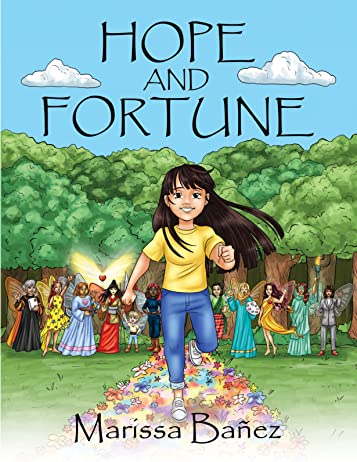

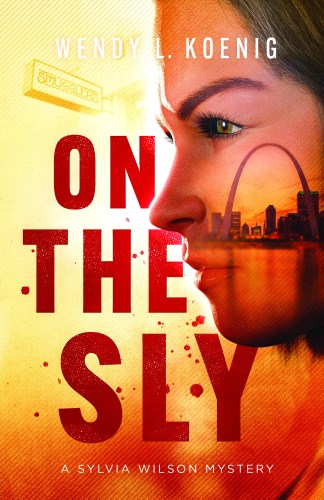


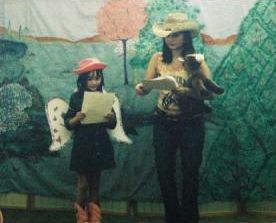


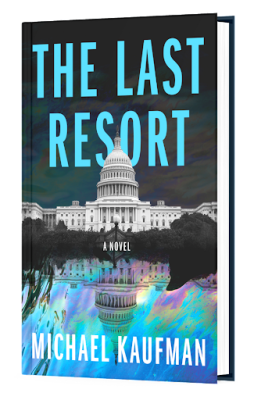
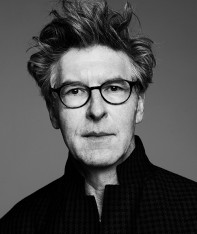


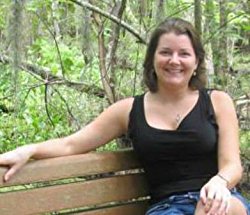
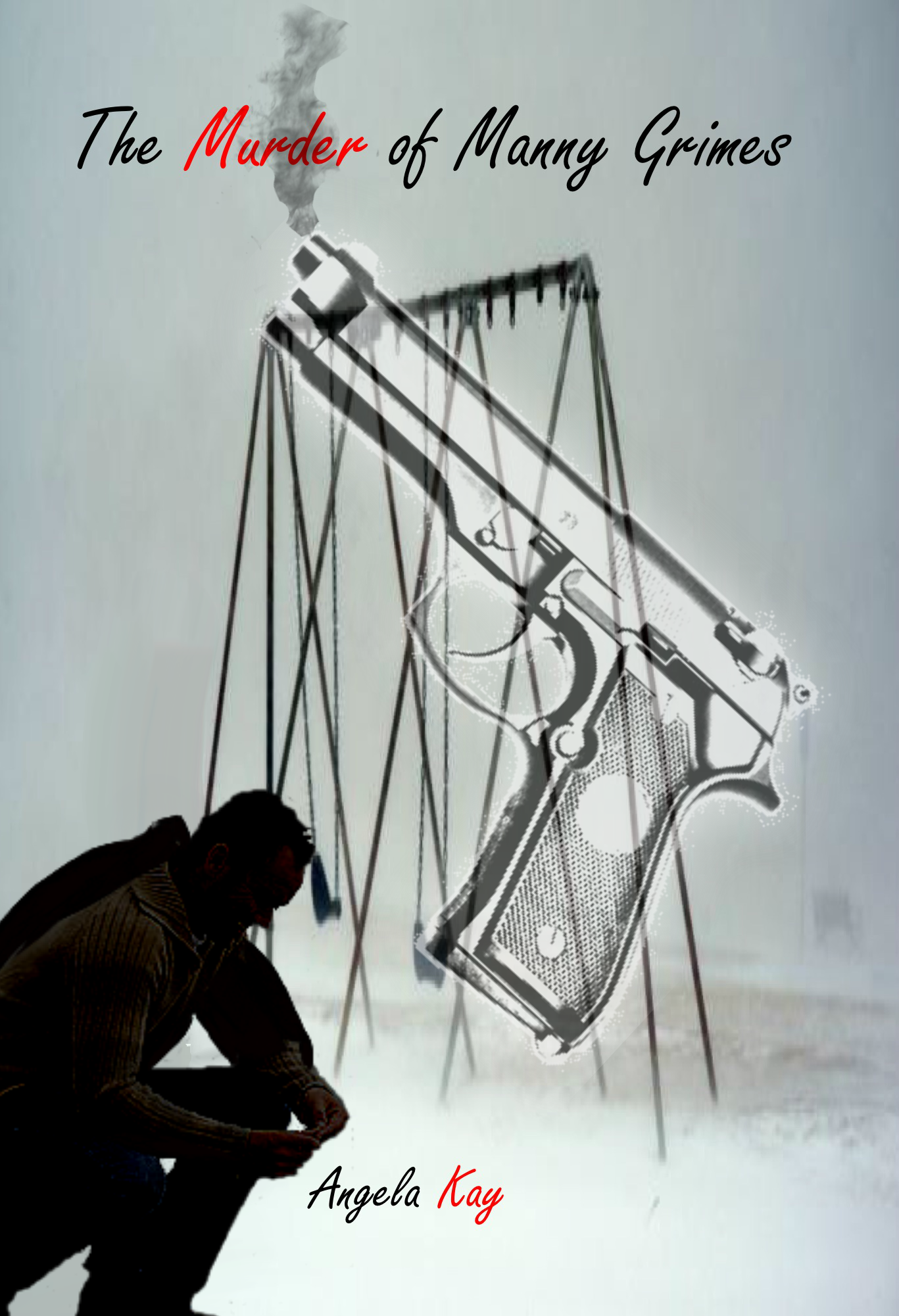


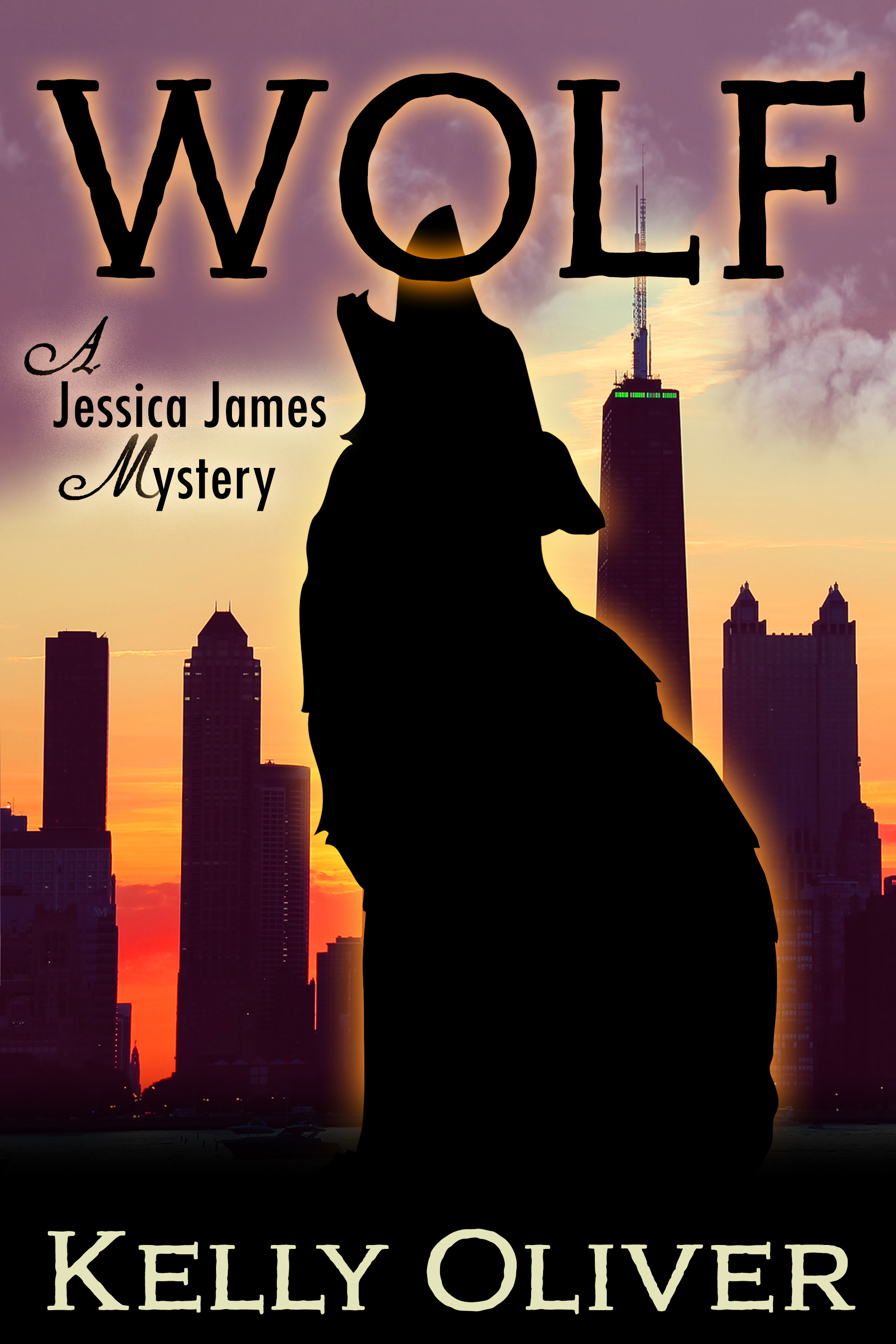



 Biography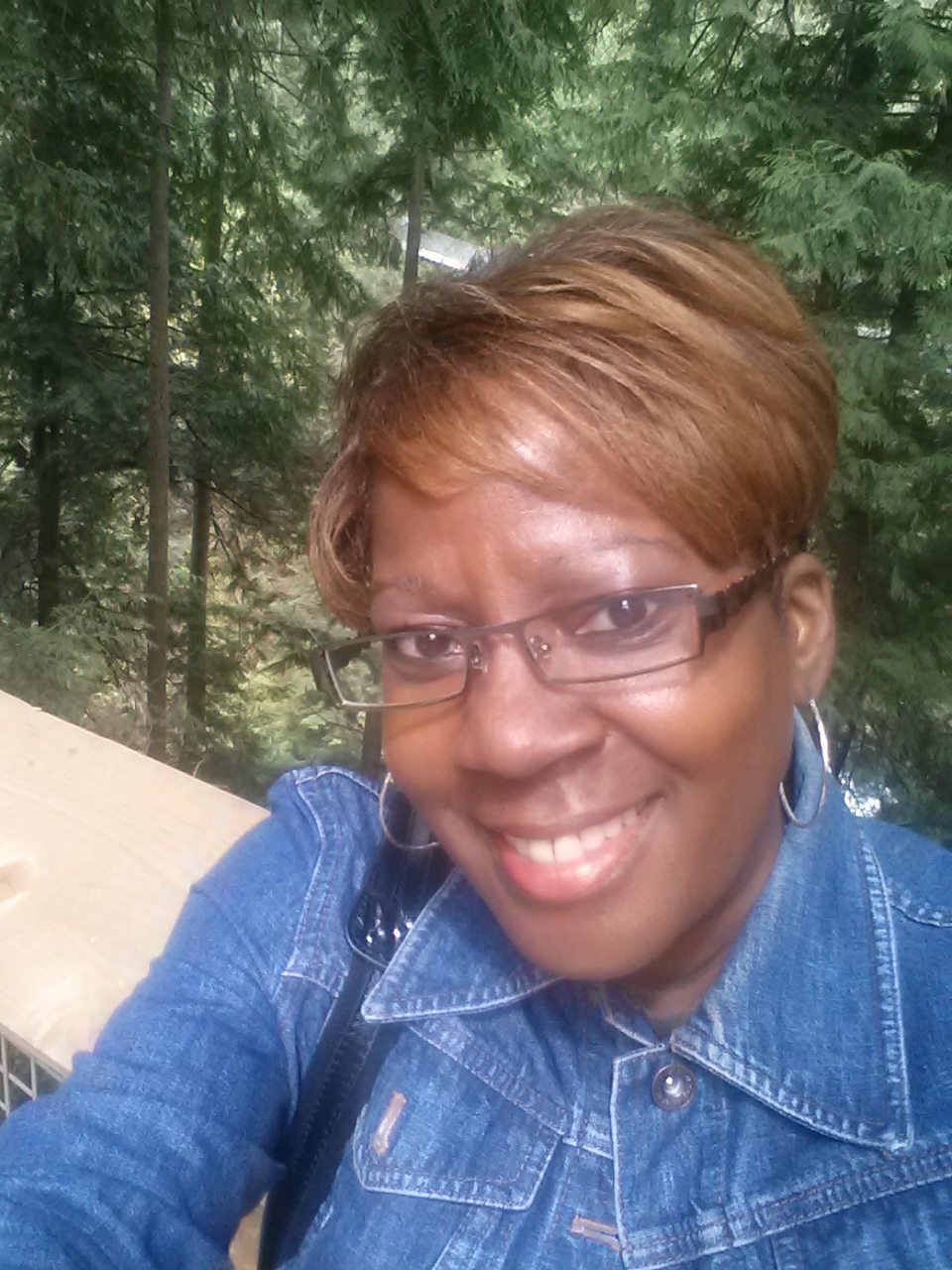
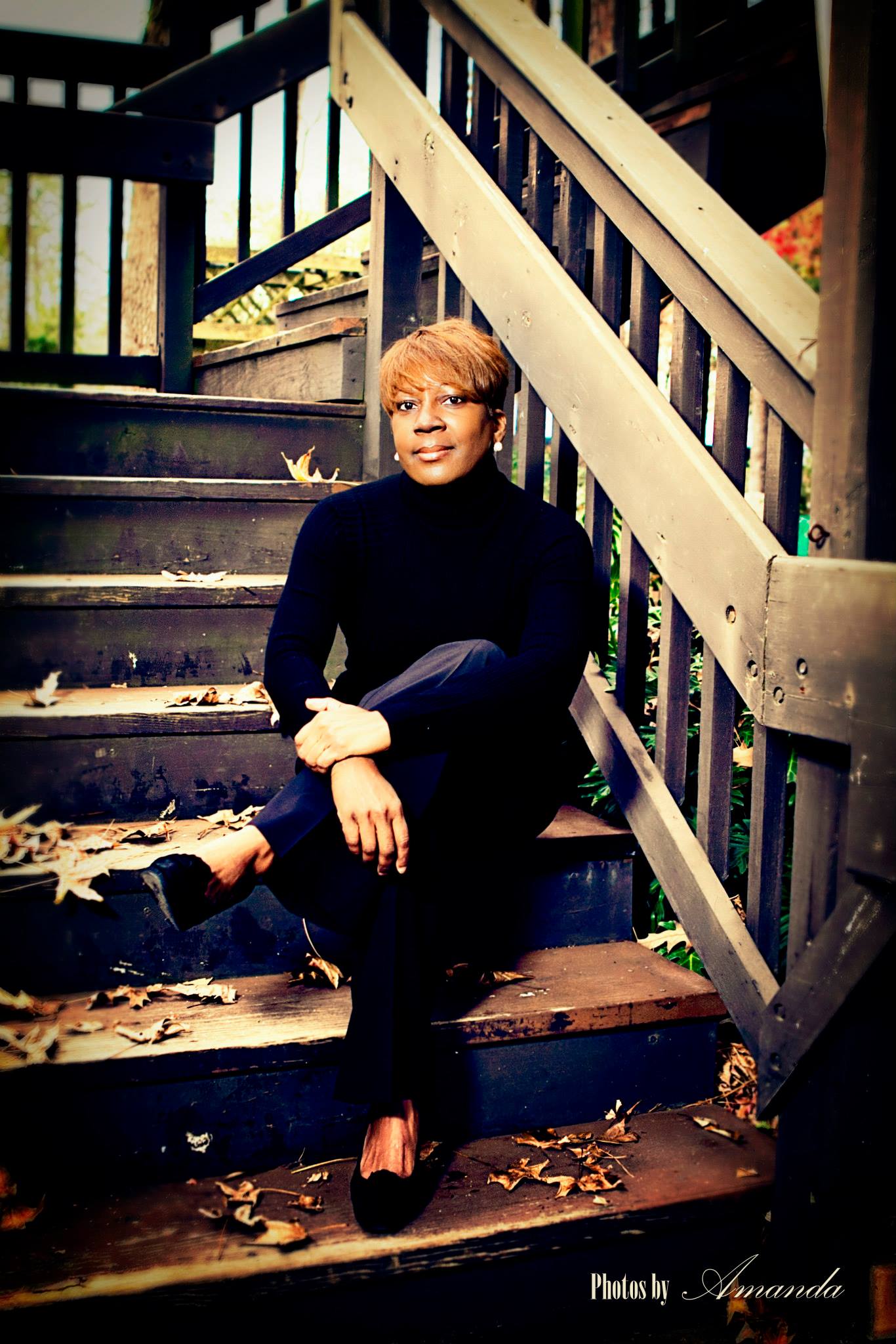


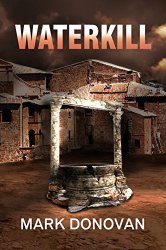

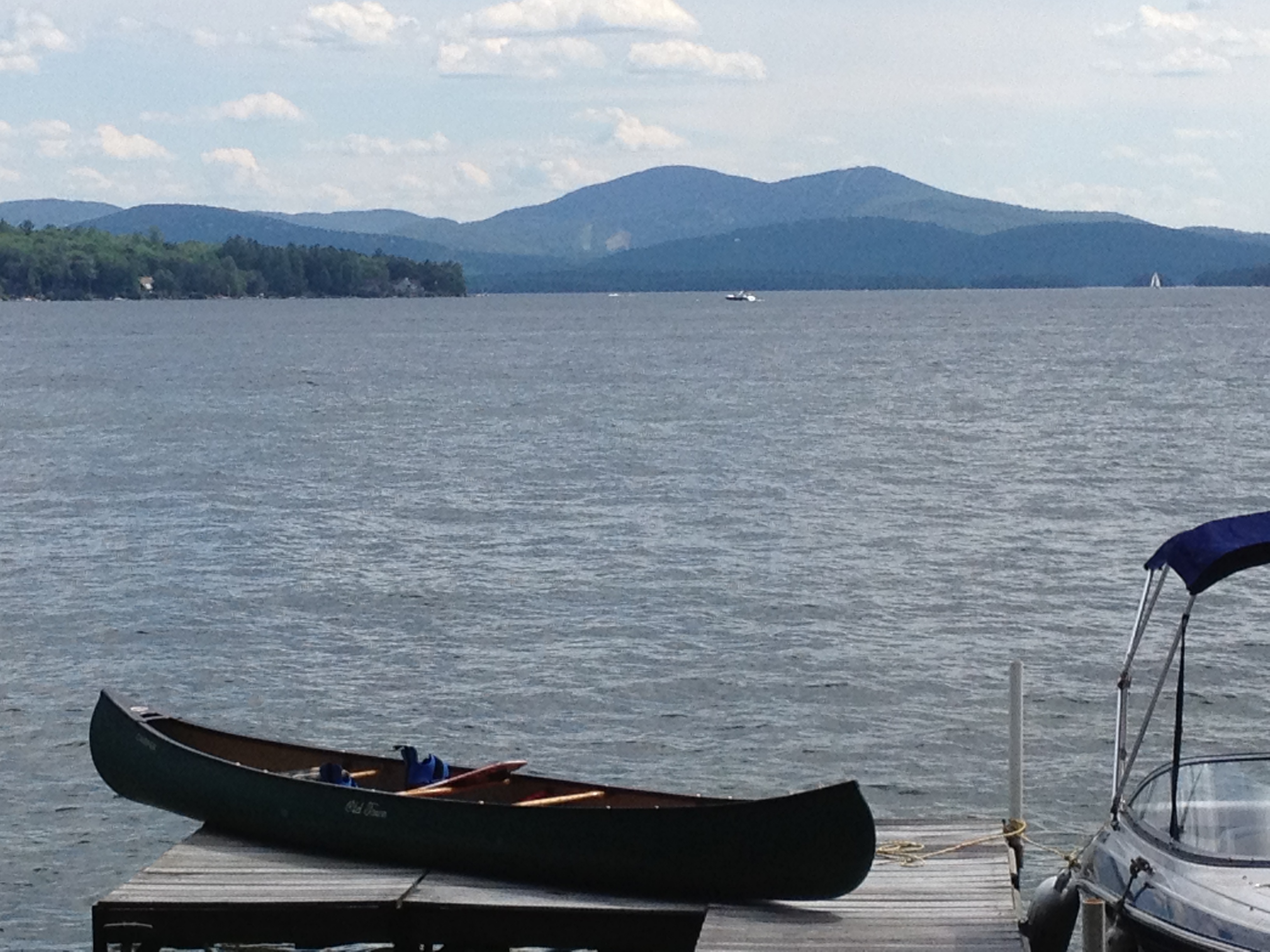












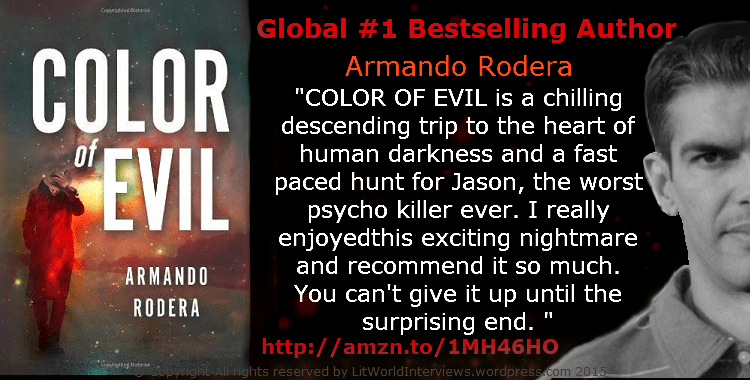
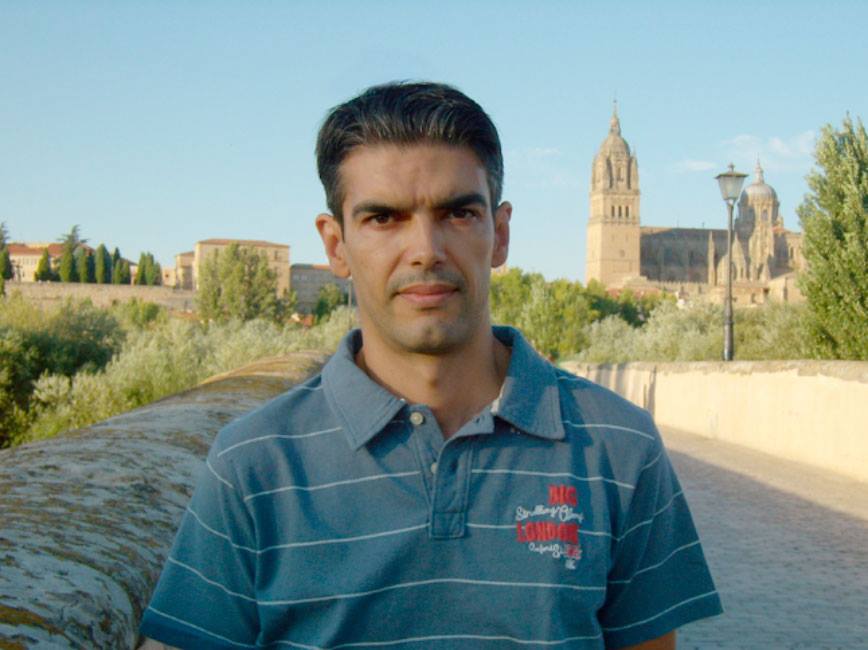

 Lit World Interviews