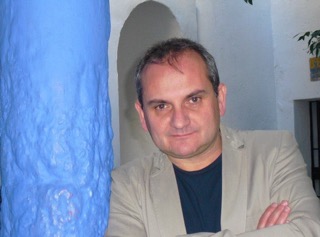
As you know I’ve been bringing you authors who write mostly in Spanish but who’ve been exploring other markets through getting their works translated. They’ve all been special in their own way, and Roberto follows suit, as you’ll see when you read his biography. Here he is, Roberto López-Herrero.
Biography
According to Wikipedia: Roberto López-Herrero (born in Madrid in 1970) is a Spanish writer, screenwriter, actor, director and presenter of TV and radio programs.
He has worked in a variety of programs at national and autonomic level amongst the most important Pecado Original (Original Sin), Saturday Night Live, El Método Gonzo (The Gonzo Method), En Antena (On the air), Un paseo por las nubes (A walk in the clouds) and A 3 Bandas (Three Way) on TV. But the piece of work that has brought him public recognition has been the narration of Ninja Warrior, the mythical Japanese programme. He’s working on the new episodes of the programme.
As an actor he has played in some episodes of TV series such as Maneras de Sobrevivir (Ways to survive) or Saturday Night Live.
On the radio he has worked in Te doy mi palabra (I give you my word, Onda Cero), El Jardín de los Bonsais (The garden of the bonsais. Protagonistas – Punto Radio), La Mirada Cítrica (The citric look. En días como hoy – RNE), and he has collaborated in Queremos Hablar (We want to talk, Punto Radio).
In the nineties, Roberto López-Herrero co-founded Ediciones Cronópolis, a publishing company of role games active between 1993 and 1997. Some of the role games published by Ediciones Cronópolis were created by López Herrero himself, for example Superhéroes Inc.1 o Jurasia.
He is the founder of the humor website El Expecial.
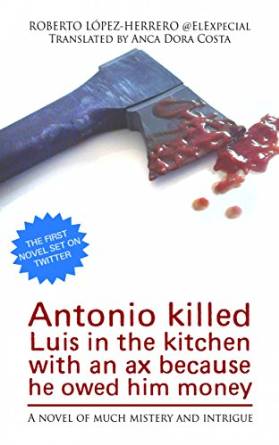
He is the author of two humor novels: “Antonio mató a Luis en la cocina con un hacha porque le debía dinero” (Antonio killed Luís in the kitchen with an axe because he owed him money) and “Una conspiración mundial secuestró a mi perro para que yo no contara todo lo que sabía” (A world conspiracy abducted my dog to stop me from telling everything I knew) and of the noir novel “Normal”, but personally, says Roberto, I’m Rober.
When and how did you start writing?
“I’ve always written, in fact in 1993 I created a micro-publishing company with two friends and we published some adventure books, but it was a pre-technological era and it was impossible for us to make it work.
I wrote my first novel, «Antonio mató a Luis en la cocina con un hacha porque le debía dinero» in 2013. How did I start writing? I imagine it came from reading a lot since I was a child and wanting to tell my own stories.
What could you tell us about your experience as an indie writer:
“It has been a fabulous school. I’ve done and learned to do everything: from formatting to marketing, but it is exhausting.
What’s been the best moment (until now) in your experience as a writer?
“When my wife read my first novel and she encouraged me to publish it. Closely followed by the day when I reached number 1 in Amazon.
What are your favourite genres?
“For entertainment, my favourite genre is science-fiction, in its hardest version, the farthest away from the space opera. For my formative reading I choose a bit of everything, from the classics to the latest books as one can learn from everything.”
What made you decide to translate your novel? And how did you go about getting a translator?
“A friend of mine told me that my third novel, Normal was like a film script and Hollywood should become aware of it. That’s how I discovered babelcube.com and I decided to put my books there. The rest just seemed to happen by itself, interested translators started to appear and today they read me in English, Italian, French…”
Normal by Roberto López Herrero
Tell us something about your book.
“Normal is a police procedural novel where the murderer is absolutely “normal” according to demographics, and the members of the police who are chasing after him are also “normal”, and that makes me think that we don’t really know what being “normal” means.
Any advice for your writer colleagues (especially those starting up)?
Work every day, hard, as if you were working in an office. You must be rigorous with your timetable and at least, produce two thousand words per day. (It isn’t mine, it’s Stephen King’s and I’d say it has served him well.)
I understand that ‘Normal’ should be available in English version shortly, but in the meantime, you can check all his books here:
Personally, I’m fascinated by the title of this one (actually, the dog one too, but this one is a murder in Twitter) so…
Antonio killed Luís in the kitchen…
Antonio killed Luis in the kitchen with an ax because he owed him money by Roberto López-Herrero (Author), Anca Dora Costa (Translator)
Police officer Pepe Gómez little imagined the troubles he’d get involved in when he was assigned the investigation of Luis`s murder. At first it seemed very simple but as the clever researcher enters the curious world of Twitter to investigate, an international conspiracy comes to light.
Psychopaths with multiple personalities, TV presenters addicted to alternative therapies, beautiful and sexy hackers and a lot of different characters are part of this novel`s author`s universe, Roberto López-Herrero, who, to prove his healthy mental state, made his debut with a plot of intrigue and passion, emulating Agatha Christie herself.
Thanks to Roberto López Herrero for being my guest, thank you to all of you for reading, and if you’ve found it interesting, like, share, comment and CLICK!
As you know, recently I’ve been bringing you interviews with some writers who publish mainly in Spanish, but who’ve had some of their books translated to English (and in some cases many other languages) as a way of sharing their journey and their experiences with you. Today I’m very pleased to bring one of the first Spanish authors I came into contact with a few years back. Frank is generous to a fault, always happy to help others, and as you’ll see, modest and very honest about his career and his creative process.
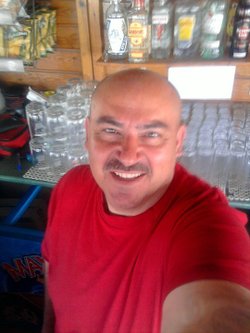
Author Frank Spoiler
Frank Spoiler (real name: Francisco Javier Sánchez Mira) is a poetry writer born in Badajoz, Spain, in 1961. His parents moved to Catalonia in 1973. His father was a bricklayer and his mother a housewife. He started writing in his teens, thanks to one of his brother’s enthusiasm (he’s a great admirer of poet Gustavo Adolfo Bécquer, a romantic poet from Sevilla). He has published ten books so far: “Sucede a diario: micros de terror urbano,” “Puntas de lanza al corazón, poemas directos al alma”, “El Celador de tus Poemas”, “Poesías desde las entrañas,” “Soy un asesino… sin serie,” “Alas rotas, el muchacho que perdió su sonrisa,” “Poemas: Del amor, el dolor y otras pasiones,” “Irrealidades a doble espacio”, Buscando la luz. Poemas al alba, con alma” y “La marca de un iluso de la pluma: antología de relatos”. He has also published a book of fairy tales “Cuentos con sabor a chocolate” (PG) in collaboration with nineteen great writers. All his books have been published in digital and paperback versions. He has also collaborated in a number of anthologies, both of short-stories and poetry. Those include:
Diversidad literaria–
“Inspiraciones nocturnas”.
I concurso de microrrelatos nocturnos
I Concurso de microrrelatos de terror “Microterrores”
Versos desde el corazón I
I Concurso de microrrelatos épicos “Breves heroicidades”
and
I Concurso de microrrelatos solidarios diversidad literaria “Asociación Isekin” En ArtGerust
III Concurso de Terror ArtGerust
With the micros: “Almas inocentes”, “una muñeca rota” y “me nace de dentro”
Poemas. Homenaje a Pablo Neruda
agosto 25, 2014
and with Libros Mablaz
“III antología poética de libros Mablaz”, “POEMAS DE AMOR”
II Premio de Relatos, titulado
“Gritos contra la
violencia de género”
And also in Fans de Bad One “Los hijos de Allan Poe”.
All of them in 2014
How and when did you start writing?
I started writing when I was eleven or twelve, mainly poetry, because I saw my brother write. After writing his poems, he would read them to me, and that made me want to try to imitate him and follow his example. I also started reading the classics, like Gustavo Adolfo Bécquer, Antonio Machado, Juan Ramón Jiménez, among poets, and also fiction writers like Gabriel García Márquez, Jules Verne or John Le Carré (to give some examples).
Could you describe your experience as an independent writer?
It is both a very gratifying and also a very difficult experience. In my case it’s necessary to understand that my difficulty is multiplied by two or perhaps three, as I don’t have much formal education, and the little I’ve learned has been through hard work and spending many hours in front of a computer screen, making mistakes and learning precisely from those mistakes. It’s true though, that the results are excellent. I’m improving and learning a lot.
What’s the moment that you remember more fondly from your experience (up to now) as a writer?
The moment I saw my first book of poems (“Poemas para componer una vida” [Poems to Compose a Life] was its title) published in Amazon and when a few days later I had it in my hands. That fabulous sensation of finally truly believing in yourself as a writer because you have self-published your first book, it’s something you never forget.
What made you decide to have your work translated? And how did you go about finding a translator?
It was a writer friend of mine, Roberto López Herrero, who sent me a message letting me know that through the platform Babelcube.com he had found a translator for his book. He convinced me and I took his advice, I uploaded (following the instructions) some chapters of my novel “Soy un asesino… sin serie”, I added the data they required, the chosen language for the translation and voilà, six months later I got an offer from Rafael (the translator).
Tell us something about your book
Mi novel is the result of my experience as a carer for an elderly lady suffering from Alzheimer, my mother. I looked after her for three years… It was very hard, her heart-wrenching screams and her crying had me disturbed and anguished, although the doctors insisted it was normal, that patients suffering from Alzheimer sometimes might shout and cry, whilst others might laugh or sing. The fact was that I never got over it… (at night I have nightmares and I feel guilty still, thinking that I should have done more to improve her quality of life those last few years, but that’s another story). The desperation (or frustration) was what made me fantasize about an atypical murderer, a killer…that despite killing many cannot be classed as ‘serial’ because he’s such a ‘weirdo’
Andy advice for you fellow writers?
Oh no, no, never. Each person should try and live according to his or her own experience and learn for the successes and mistakes in his own personal way.
And the book:
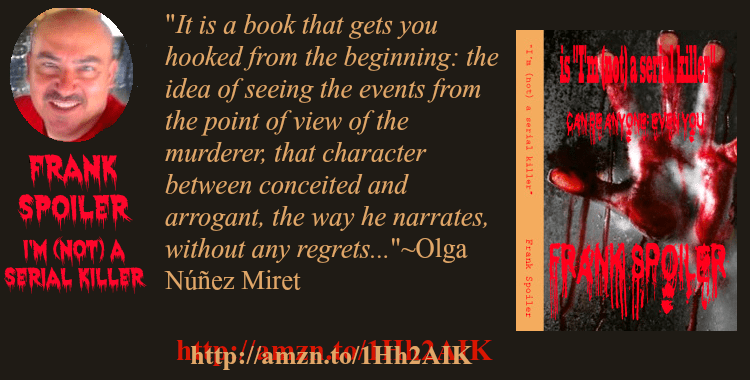
I am (not) a serial killer by Frank Spoiler
I’m (not) a serial killer Frank Spoiler (Author), Rafael E. Martínez (Translator)
A twisted tale of murderous imagination.
Gabriel is a killer, but not the kind you’re familiar with. His story is one of unfathomable cruelty and senseless logic.
The story behind the book, as you’ve read, is fascinating, and Frank shared the book (the Spanish version) in Wattpad, with great success. Gabriel is a great character and the story has a very interesting twist. The book has just been published, so there are no reviews in English yet, but I thought I’d translate one of the five star reviews for you, to give you some idea.
‘I had the pleasure of reading it as it was being created. It is a book that gets you hooked from the beginning: the idea of seeing the events from the point of view of the murderer, that character between conceited and arrogant, the way he narrates, without any regrets, his activities, to the point of causing you revulsion at some points, and the twist at the end, suggesting that the murderer rather than being in control might have been just responding to events that go beyond his imagining…everything makes this a novel that you can’t stop reading once you’ve started, and you’ll read in one go until the end.’
For the last few weeks I’ve brought you some writers whose main work is in Spanish but who have had some of their novels translated to English. I thought it would be interesting to get a different perspective on the business of writing, and it would be an opportunity to meet across the borders of language.
Today I bring you a writer whom I’ve also met in a variety of social media platforms and when I got to check his writing, I was impressed by his background and the variety and number of publications, some more directly related to his studies and profession but others not so much.
And without further ado:
Mario Escobar
Author Mario Escobar
Mini biography
Mario Escobar Golderos (Madrid, Spain) has a degree in History, with an advanced studies diploma in Modern History. He has written numerous books and articles about the Inquisition, the Protestant Reformation, and religious sects. He is the executive director of an NGO and directs the magazine Nueva historia para el debate, in addition to being a contributing columnist in various publications. Passionate about history and its mysteries, Escobar has delved into the depths of church history, the different sectarian groups that have struggled therein, and the discovery and colonization of the Americas. He specializes in the lives of unorthodox Spaniards and Americans. Books:
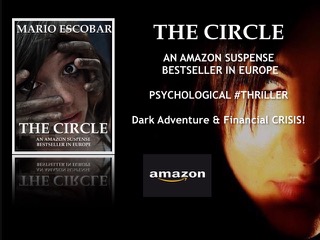
The Circle an Amazon Bestseller Europe in the category of suspense.
When and how did you start writing?
The truth is that I’ve always enjoyed writing. When I was a child I started writing plays for my school and writing fairy tales to submit to competitions. When I was a teenager I carried on writing. For me, becoming a writer was a dream, but I never thought I would manage.
Describe your experience as an independent writer.
The truth is that I consider myself a mixed writer (or hybrid as others call them), as I still publish some of my books with publishing companies such as HarperCollins, Stella Maris or Edelvives. Publishing independently has allowed me to have more control over the process and more economic stability.
What’s the moment that has had more significance for you (up to date) of your career as a writer:
When two of my readers told me they had become writers after reading my books. Such is the magic of writing and books.
What made you think about getting your books translated?
I’ve always liked to play hard and bet big. I prefer to take risks and make mistakes than never try. I found a great translator, my book in English is better than the Spanish version, and I thought I should give it a try.
So far things have been going well, although it is a bit soon to know what the overall result will be.
What was the process like, when trying to find a translator?
The most difficult think is looking for and finding a good translator. We shouldn’t forget that it is a big investment. To look for a good translator is not cheap. I’ve found one of the best ones. And then you must have a lot of faith in your book.
In my case, the same person had translated one of my books ‘Francisco’ (Francis, his book about the new Pope) for the publishing company Harper Collins, and I was so happy with the results that I offered her to translate what would become The Circle.
Could you tell us what your books mean to you?
My books are a gift I love to give to my readers. I enjoy them whilst I’m writing them, but what I wish for the most is that the readers will enjoy them too. Especially those who are away from their family, country or community; I hope my books will keep them company in the hard journey of life.
Any advice for your fellow writers (especially new writers)?
That you have to do a good job, believe in yourself and not pull any punches. The most important thing is to never give up, to be constant and persevere and to keep improving little by little.
Here are a few links so you can find out even more about Mario.
The Circle by Mario Escobar. Translation by Gretchen Abernathy
The Circle
From Amazon’s Top 100 Books sold in the USA, France, Germany, United Kingdom, Canada, Australia, Mexico and Spain.
(Full Book)
Soon to be adapted for the big screen.
A debut psychological thriller that will forever change the way you look at other people’s lives.
“After the hit saga Misión Verne and The Cloud, Mario Escobar sweeps us up in a riveting adventure set against the backdrop of the financial crisis, the dark nooks and crannies of power, and the city of London.”
Comments from readers on Amazon:
“This is an entertaining read, a really interesting story full of intrigue. When I got to the ‘To Be Continued’ spot, I was on the edge of my seat waiting for the second part… Good thing it’s ready now so I can keep reading.”
Claudine Bernardes
“This one grabs you from the very beginning. It’s enjoyable and light but captivating. It’s an easy read, and you learn history as you go. I highly recommend it. It really draws you in.”
Dancas
“It’s got a dynamic, well-constructed plot. I totally recommend it. It’s so current day. It’s a quick read, and you don’t feel the time going by. It draws you in right away.”
Rrivas
“One breathless night to save his family and discover the mystery locked inside his patient”
The plot of the novel The Circle:
Famous psychiatrist Solomon Lewin has left his humanitarian work in India to serve as the chief psychiatrist at the Center for Psychological Illnesses located in London’s Square Mile financial district. Though well paid, the job is monotonous, and Solomon is also going through a rough patch in his marriage with Margaret. He begins scrutinizing the more mysterious cases of the center’s long-term residents hoping to find something worth his time. When he comes across the chart of Maryam Batool, a young broker from London who has lived in the center for seven years, his life will change forever.
Maryam Batool is an orphan from Pakistan who became one of the most promising female employees of the financial institution General Society, but in the summer of 2007, at the start of the financial crisis, the young broker loses her mind and tries to kill herself. Since then she has been stuck, able only to draw circles yet unable to understand their meaning.
A snowstorm looms over the city at the start of the Christmas holidays. Before Christmas Eve dinner, Solomon receives an urgent call from the center to come at once: Maryam has attacked a nurse and seems to be awakening from her long stupor.
Solomon heads downtown in the snow, clueless that this will be the most difficult night of his life. The psychiatrist does not trust his patient, the police are after them, and his family seems to be in danger. The only way to protect himself and those he loves is to discover what “The Circle” is and why everyone seems to want his patient dead. It’s a surprise ending and a mystery you won’t believe.
What is hiding in the City of London? Who is behind the biggest business center in the world? What is the truth behind “The Circle”? Can Solomon save his family?
Here Mario replies to a few questions about the book:
What did writing The Circle mean for you?
It was a delightful surprise. It was my first suspense novel. I’d already written several intrigue novels, and I thought suspense would be even more exciting. In suspense, the readers suffer almost as much as the characters themselves. The Circle has all the marks of a detective story. The reader doesn’t know the truth until right at the end. Why did you set the book in London’s Square Mile?
Tax havens are one protagonist in our current worldwide financial crisis. London is the world’s largest financial center, and it holds a lot of secrets, just like the protagonist of my novel. What should the reader expect from this new book?
An avalanche of suspense. A major dose of intrigue and action but also the inner workings of a family struggling to fit in with their surroundings. A marriage that’s not working. Disdain for boring daily life that, after all, turns out to be the most important thing we’ve got. The personal demons of a world that has no idea where it’s headed. Solomon faces countless moral dilemmas, like judging people too quickly, recognizing he can’t defeat evil by himself, and understanding that Evil with a capital “E” has a name and a face. Why does it take place in the middle of a snowstorm right on Christmas Eve?
The storm is another protagonist in the plot. In some ways it’s a symbol of the internal turmoil of the characters. This is not a novel of good guys vs. bad guys. It reflects the complexity of being human, our contradictions and how we face them. The Circle has reached tens of thousands of readers from Germany to Australia, Latin America to Spain, because, at our core, we’ve all got the same fears and hopes. We’re all part of this big family called Earth.
….Little did Solomon know what he was getting into!
It was the summer of 2007 in London. Maryam Batool, a Muslim orphan, was a very successful stockbroker. All she cared about was money. Upon turning on the TV she heard that three American banks had declared bankruptcy.
Fast forward a few years to the London Center for Psychological Illnesses, located in the Square Mile where we meet Solomon Lewin, the new chief psychiatrist of the center. Having spent ten years in Calcutta, him and his family just moved back five weeks ago. He is not expecting much excitement in the job, having the opinion that the wealthy prove boring. Most of his clients are white males aged 35-45, leading arrogant and almost insufferable empty lives.
In his attempt to free up some beds just five days before Christmas, his eyes catch a report on a patient who has been there the longest. Who is this patient? Maryam Batool! She was committed in August 2007 after several suicide attempts. She no longer communicates except to say one single phrase, “The Circle”. John the previous, now retired, chief psych tells Solomon to leave Maryam alone as there is no solution but Solomon is intrigued.
Frustrated with his home life and rambunctious kids even though he still loves his wife, Margaret, he decides to work from home on Christmas Eve. Totally surprised when he gets a call in the early evening from the center saying that Maryam has attempted suicide again! Apparently there was a visitor claiming to be her sister? This is the second visitor in a week! Returning to the center Solomon starts getting suspicious when the receptionist is not at her desk nor does there appear to be anyone else around. Why won’t the light switch on? What is going on? This is followed by a phone call from his house from someone claiming to be from Scotland Yard’s Fraud Squad?
Hopefully this is enough to whet your appetite. The above is truly only the beginning in this fast paced thriller. It gets a LOT more interesting and dangerous as Solomon tries to figure out the truth of who is telling the truth and who is lying. What does Maryam know/have that she cannot remember? Does she have both Post Traumatic Stress Disorder and Post Traumatic Amnesia?
VERY clever story. All I can say about the ending is “Oh my goodness!” I will say if you like books with happy endings then don’t read this one! It is a well-written story and just the right length for the time involved. It keeps you gripped and not wanting to put the book down.
Language – mild
Sexual content – none
Violence – plenty!
I was given a complimentary Kindle copy of this book in exchange for an honest review. That’s what’s above! Thanks, Liz
And Mario informed me that there is a special offer on The Circle available now
In case any of you speak Spanish, I leave you a link to a fascinating podcast where Blanca Miosi, another one of my guests, interviewed Mario Escobar. I leave you both the link and the interview direct. It’s a very interesting series where every week there’s a new author, so if you’re confident with your Spanish, it’s a great way to meet new people.
As you know, I’ve been introducing you to some authors who write in Spanish but whose work has become so popular that is now being translated to English and other languages. Today, I bring you somebody who loves adventures. Jonás Cobos. I’ve found his replies very inspiring and they highlight the wonders a books can achieve.
Author Jonás Cobos
Biography:
Jonas Cobos (1967) was born in the Balearic Islands, Spain, grew up in Minorca. At 12 years old he discovered a book by Agatha Christie, and that turned him into a bookworm. In 2010 he studied Creative Writing with the writer Holly Lisle. In 2012 he published “Susurros en la Oscuridad” (Whispers in the Darkness) that quickly became a best seller in the terror genre in Amazon Spain. He is one of the first Spanish authors to write in the Steampunk genre. And his book LA CARACOLA DE NEPTUNO (KRAKEN, Steampunk) has become a best seller in that genre. Now his book has been translated to English and Italian.
What got you into writing?
I started writing when I was twelve years old, with the intention of creating new adventures for Hercules Poirot and Captain Hastings, the characters created by Agatha Christie that made me discover the world of books and writing. These were followed by the works of Poe, Verne and H.G. Wells.
Tell us about your experience as an indie writer:
I started to seriously consider the possibility of becoming an independent writer about five years ago. Following the death of my mother I understood that if I wanted to get into writing and become a writer I couldn’t postpone it any longer, or I would never do it.
If you had to choose a single moment from your experience as a writer, which one would it be?
During a chat with a reader who worked as a support teacher for children aged 11 and 12, she told me that she used my book ‘Kraken’ to help them read out loud. When I was their same age I also had the same problem and with the help of a teacher I practiced my reading. That was how I first discovered Agatha Christie’s novels. I think that has been my greatest satisfaction, knowing that one of my books is helping children with the same problem I had.
What made you think about getting your book translated?
Kraken (the previous title in Spanish was La Caracola de Neptuno, Neptune’s Conch Shell) falls within the genre of Steampunk and that genre is much more appreciated and followed in the Anglo-Saxon world than in the Spanish speaking market, so it seemed logical that it would be my first book translated to English.
Tell us something about your book:
Kraken is an adventure story in the purest Jules Verne and steampunk style. It takes place in an alternative Victorian era where historical events are different from our reality. The Spanish Armada was never defeated and the Spanish Empire spreads across both sides of the Atlantic Ocean. In the novel there are conspiracies, secret societies and submarine travels in search for lost civilizations.
Any advice for your fellow writers (in particular for new writers)?
It’s very important to take care of the final result. An eye-catching cover, a good description, and, especially regarding translations, it’s necessary to be very careful. I think it’s very important that afterwards the text is checked by native readers who can offer an opinion on the final result.
And to give you an idea of what readers think, an opinion of Kraken (Chapter 1 and 2).
Steampunk with a Spanish Twist 25 de diciembre de 2014
Por Ralph E. Vaughan – Published in Amazon.com
This book, originally published in the author’s native Spanish but now available in English, immerses the reader in a steampunk themed alternate history where the Spanish Armada was much more successful than it was in our timeline, and also raises the possibility that our timeline owes its existence to the interference of time saboteurs. Where other authors give us the trappings of steampunk without real substance, Jonas Cobos infuses his world thoroughly with the substance and spirit of the genre, 110% full of steampunk ideas and motivations. And he did something few other writers have done…made steampunk goggles actually functional tools rather than mere fashion statements.
The story follows the exploits of a Spanish secret service agent as he trails a group trying to change the past and destroy the timeline of his own world. Although the book sets up for a larger continuing story, the reader is treated to two self-contained episodes that are fun and satisfying in themselves, as well as an ending that raises expectations for more adventures to come while not leaving the reader dangling.
I am looking forward to reading more by this talented and imaginative writer, and in following the continuing adventures of this secret agent as he wends his way through a milieu that has an interesting non-Anglo twist.
Thanks so much to Jonás for being our guest today, thanks to all of you for reading, and please feel free to share, like, comment and click to learn more things about the author and his books.
I promised I’d bring you another interview with an author who’s well known for his books in Spanish. Although to tell you the truth, our guest today, Enrique Laso, is well-known everywhere, as he’ll explain himself. He’s a very driven author and when I met him I was sure he’d be a fascinating subject for an interview. I also asked him to talk to us about his most recent novel available in English. So here he is.
Author Enrique Laso
Mini biography
I was born in Badajoz in 1972.
I have lived in Badajoz, Murcia, Valencia, Barcelona and Madrid. Thanks to my profession and to an eagerness to travel that has been a part of me since my childhood I have had the chance to visit more than thirty countries in the five continents.
After a break of 10 years, having won several awards as a teenager and having published three books then, in 2005 I resumed my literary career. That year I published a novella ‘Desde el Infierno’ (From Hell), adapted for the cinema in 2014 by Luís Endera, I wrote some special collaborations sporadically for newspapers and several magazines, and I created my first blog (http://www.owachy.com/).
At the moment I’m busy with several projects, of which the most important are the novels, Cataclismo, The Tesla Mystery and Heaven of Happiness. My latest novels have been published under several pseudonyms, the majority unknown to the big public. The only one I’ve revealed to this date, and therefore I don’t mind mentioning, is Henry Osal, whose writing is focused on self-help manuals and personal development.
My most successful novel, El Rumor de los Muertos (The Rumour of the Dead), with more than 130000 digital copies sold, is available in paperback in all big bookshops since the autumn of 2014, published by MR (Planeta). It has been recommended by writers such as Juan Gómez Jurado, Bruno Nievas or Blanca Miosi (yes, our guest last week!).
I have sold, to this date, more than 300000 books, many of them available in Spanish, English, French, Italian and Portuguese (I’ve been translated to 12 languages, including the books written under pseudonym), I’ve won a large number of literary contests and I’ve published over fifty newspaper articles.
How and when did you start writing?
When I was eight years old. I was an avid reader, and a slightly introverted boy. I wrote a novella called ROCA (Rock) about a young lad who wasn’t able to communicate and ended up becoming a rock. It was a way of expressing myself and communicating my feelings better.
Describe briefly your experience as an independent writer.
Fantastic. The truth is that although I’ve published with four different publishing companies, I carry on publishing independently. I have received many offers to sign long-term writing contracts, but I think I’m better off free. Nowadays an author has many more possibilities and more strength when it comes to negotiating.
What’s the moment you remember more fondly (so far) of your experience as a writer?
There are many. But I think the day when I found myself number 1 in Amazon.com for the first time it was the most emotive, because of what it meant (and, in truth, from that moment on my life changed for the better).
What made you decide to get your work translated?
Amazon encouraged me, and also many of my readers from the USA did the same. They thought my novels would be very successful in other languages and they weren’t wrong. I’ve been N.1 in several categories in Amazon, iTunes, Google Books, and Barnes and Noble, in English, French, Italian, German and Greek!
Tell us something about your book
THE BLUE CRIMES is a thriller, police procedural story, full of intrigue. From its inception I thought about the American market, and in just a month I’ve sold hundreds of copies and it has received 7 reviews (all very positive), among them one by one of the TOP-100 reviewers. Set in the ‘deep America’ it tells the story of the investigation of the murders of two girls, who are found near a lakeside by a promising agent of the Unit of Behavioural Analysis of the FBI. It has been compared with successful TV series such as CSI, Criminal Minds, Twin Peaks or True Detective, and that’s fantastic.
Andy advice for your fellow writers (and especially for new writers)
They are very typical, but the truth is that they work.
-To trust in themselves
-To persist, persist, persist
-To never stop reading and learning
-To accept the help and advice of professionals
-To not dismiss marketing or think it is not part of the job.
Don’t forget to check his blog (see link above) and here I leave you his Amazon page:
A SUPERB CRIME NOVEL. GRIPPING FROM START TO FINISH.
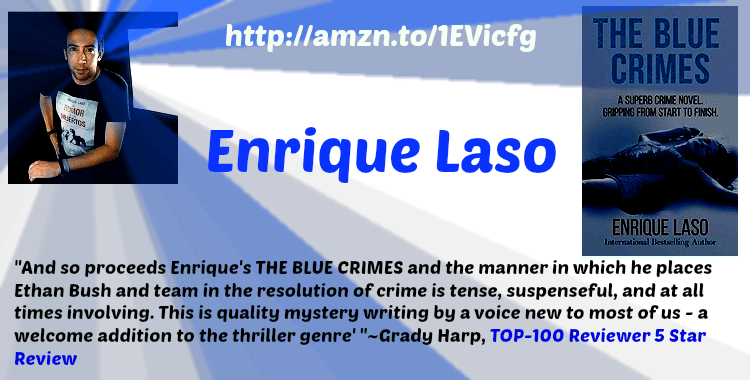
‘And so proceeds Enrique’s THE BLUE CRIMES and the manner in which he places Ethan Bush and team in the resolution of crime is tense, suspenseful, and at all times involving. This is quality mystery writing by a voice new to most of us – a welcome addition to the thriller genre’
Grady Harp, TOP-100 Reviewer/ Hall of Fame/ Vine Voice
_________________________________________________________ Two bodies found in a lagoon.
A promising FBI special agent.
A crime that occurred almost twenty years ago.
A convoluted mystery novel that grabs you.
_________________________________________________________
If you enjoyed novels like ‘The Silence of the Lambs‘ or TV series as ‘Twin Peaks‘ or ‘True Detective‘… this is the story that you have been waiting for.
_________________________________________________________ FROM CHAPTER I By the time they called me, a whole week had passed since the second body had been discovered. This was a setback as much of the evidence would have disappeared by now and I’d have to work with what little evidence the local police, unaccustomed to these types of crimes, would have been able to collect. Luckily I had been allocated a competent enough CSI unit and as we flew from Washington to Kansas City International Airport, we imagined, quite rightly as it turned out, that the crime scene will have been spoiled by dozens of well-meaning but clumsy Deputies.
Liz, who I already knew professionally from the only case that I’d worked on up to then, handed me a folder containing photos; the cyanotic bodies of two naked girls, abandoned in a lagoon, like the unimportant remnants of a quiet morning picnic. I was staring into the open eyes of one of the young girls, who could not have been more than twenty years old, when I was struck by her plea: “You must find who did this to me.”
This review is from:THE BLUE CRIMES (Kindle Edition)
Enrique Laso was born in Badajoz, the capital of the Province of Badajoz in the autonomous community of Extremadura, Spain, situated close to the Portuguese border, on the left bank of the river Guadiana, in 1972. Although professionally he has always been linked to the world of marketing and communication, literature is his true passion. He began writing in his teens and in 1994 won the Murcia youth national prize for his poetry collection ‘Lost children’. In 2005 he published the short novel ‘from hell’, adapted to film in 2014. He has published several novels under pseudonyms, the only one revealed by the author is Henry Osal who has signed several self-help manuals. ‘The sound of the dead’ is the novel with which he has had more success. It has sold more than 250,000 books and has been translated into 12 languages. He has won numerous literary competitions throughout his extensive literary career. For personal reasons, he did not write for almost ten years, until in 2005, when he revived his passion, and since then he has dedicated himself to writing whole-heartedly.
Enrique knows his way around mystery thrillers and of interest this Spanish author has placed his current story in the heartland of the American Midwest. He opens his story with a rather gruesome setting: `By the time they called me, a whole week had passed since the second body had been discovered. This was a setback as much of the evidence would have disappeared by now and I’d have to work with what little evidence the local police, unaccustomed to these types of crimes, would have been able to collect. Luckily I had been allocated a competent enough CSI unit and as we flew from Washington to Kansas City International Airport, we imagined, quite rightly as it turned out, that the crime scene will have been spoiled by dozens of well-meaning but clumsy Deputies. Liz, who I already knew professionally from the only case that I’d worked on up to then, handed me a folder containing photos; the cyanotic bodies of two naked girls, abandoned in a lagoon, like the unimportant remnants of a quiet morning picnic. I was staring into the open eyes of one of the young girls, who could not have been more than twenty years old, when I was struck by her plea: “You must find who did this to me.” Horrified, I turned the photos over and looked out the window of the small Gulfstream III; we were already over the state of Illinois.’
We meet Ethan Bush, and FBI agent, haunted by the fear that his initial success with the FBI may not be reproducible and that he may be destined to fail. But he is assigned a cold case – in addition to the two cyanotic girls mentioned earlier, there is Sharon Nichols who was not exactly killed yesterday. Her lifeless body appeared in the same place as the other two unfortunates, but in 1998, that is … almost 17 years ago. It was a case that went unsolved and was eventually shelved, like many others. This is the reason we needed you. We fear that we are facing a serial murderer who has returned to the area … Who can tell how many victims he might have claimed during the last nearly twenty years!’
And so proceeds Enrique’s THE BLUE CRIMES and the manner in which he places Ethan Bush and team in the resolution of crime is tense, suspenseful, and at all times involving. This is quality mystery writing by a voice new to most of us – a welcome addition to the thriller genre. Grady Harp, March 15
Thanks to Enrique for agreeing to come and be interviewed, thanks to all of you for reading, and you know what to do, like, share, comment and CLICK!
As you’ll remember I promised you last week that I’d bring you interviews with some well-known independent writers I’ve met in groups of writers who first and foremost write in Spanish. As some of them have had books translated to English in recent times, I thought it was a good opportunity for you to get to know not only the writer, but also their work.
Today, I’m very pleased to bring you Blanca Miosi. Although she’ll tell you more about herself, I can tell you that she’s one of the authors that many independent writers see as their mentor, as she has worked hard not only to share her knowledge with others but also to promote her colleagues and help them along in their careers.
Author Blanca Miosi
Mini biography
Born in Lima (Perú) of a Japanese father and Peruvian mother, Blanca Miosi has been living for the last three decades in Venezuela. She is the author of Waldek, the boy who confronted the Nazis a novel based on the life of her husband, a survivor of the Auschwitz and Mauthausen camps. First published in its original Spanish as La Búsqueda (Editorial Roca) the work received international acclaim and won the 2007 Thriller Award. In 2009, Miosi published El Legado (Editorial Viceversa), a family saga based on Erik Hanussen, the notorious Berlin clairvoyant and personal counsel to Adolf Hitler. In 2011, and as an independent author with Amazon.com, Blanca Miosi published La búsqueda, El Legado, Dimitri Galunov, El Manuscrito I. El Secreto; El Manuscrito II El coleccionista and Amanda. Her novels occupy first ranking positions among Amazon’s best sold titles in Spanish. Her next launch : El rastreador.
How and when did you start writing?
I started writing in 2001, suddenly, about an idea that had been going round in my head for several days. I simply sat down and started to write. Since that day I’ve never stopped.
Describe your experience as an independent writer.
It is one of the best experiences in my life, much better than what happened to me when I published with publishing companies. From the moment I made that decision, my life as a writer took on a definite and momentous course. All my books are now published in Amazon, I control my earnings, the sales and can make the changes I choose.
What’s the moment you remember most fondly (until now) of your experience as a writer?
The amount of time my book ‘The Manuscript’ stayed in the first place in the rankings in Amazon.com and Amazon.es. I simply couldn’t believe it. It was the first time one of my books had reached so many people. Then, ‘La búsqueda’ (the Spanish original version of ‘Waldek’) was number one in all categories in Spanish for fourteen months. It will always be an unforgettable time for me.
What made you think about translating your work?
I had always wanted to enter the English market, as I believe my novels have international themes that could be of interest for the general public.
Do you have any advice for your fellow writers (and especially new writers):
My fellow writers are as knowledgeable as I am, as we started down this path together.
To new writers I would tell them not to publish before they have revised and edited the book well. One shouldn’t waste any opportunities, as they might not come around again. A badly written book will rarely have a second chance, even after being edited and reviewed.
Here is Blanca’s Amazon Page, in case you want to check more information:
The book is called ‘Waldek. The Boy Who Defied the Nazis’ and tells the story of Blanca’s husband, Waldek Grodek, who was a concentration camp prisoner as a child and survived to tell the tale.
Waldek, by Blanca Miosi
Description:
Waldek, The Boy who Defied the Nazis (La Búsqueda in Spanish) chronicles the dramatic and heroic story of Waldek Grodek, who experienced first-hand and at a very young age the German occupation of his native Poland. Many decades later, while visiting the UN offices that granted compensation to the survivors of the Nazi concentration camps, Waldek reflects on the events that started when he was made prisoner and taken to Auschwitz and Mauthausen and, in the years following his liberation, subjected him to the whims of European and Latin American totalitarian regimes, international espionage and the Mossad. Waldek Grodek is a memorable character whose unique perspective and amazing life story deserves to be told.
After more than 154 weeks, Waldek, The Boy who Defied the Nazis (La búsqueda) still occupies the top 10 ranking on Amazon Spanish language. A thriller that is well worth reading.
This is a review that I think might give you some idea about the opinions on this book:
“I feel so happy that Blanca Miosi’s first novel translated into English is “Waldek, the boy who defied the Nazis”, published in Spanish with the title La búsqueda (The Search).
I have read several Miosi’s novels. She is a great storyteller, but this one is her MASTERPIECE.
The novel begins with the story of a Polish Catholic child, her husband in real life, which was in the Nazi concentration camps. Anyone could say: Another sad and devastating history of concentration camps! But no, in this novel the story begins just after that. How to survive? What gives meaning to life? It is the search for meaning what defines the story.
“Waldek” is a heartbreaking and intense historical thriller.”
And, just in case, I’ve also read Waldek, and here is my own review:
Waldek by well-known (to the Spanish reading public) author Blanca Miosi is the chronicle (novelised) of a life. It is indeed a novel but based on a first-hand account by Waldek Grodek of his life. The volume I discuss is the translation of the author’s bestseller La búsqueda (The Search).
All lives are extraordinary but some (be by design, by good or bad luck or by fate) are more extraordinary than the great majority. This is one of them. Waldek was born in the wrong place at the wrong time (or maybe not, it depends on your point of view).
Being born in Poland and being a teenager at the time of Hitler’s invasion is not very lucky. His decision to be actively engaged in the resistance (however modest form it could take at such young age) could be seen as the first of many unwise (or at least detrimental to his own well-being) decisions he would take over his life. It lands him in a concentration camp (first Auschwitz and then Mauthausen). He manages to cope with his experience by focusing on survival at all costs and trying not to think too far back or ahead. This portion of the book is fascinating but hard to read, no matter how many books on the subject and personal accounts you have read before. Indeed it’s true that each person’s suffering is different to anybody else’s, and so are the defence mechanisms they use to survive.
I will not go into detail about all the adventures Waldek goes through in his life, but let me say he travels to South America, he sees success but also poverty, he is forced to live in circumstances not of his choosing more than once, but he survives.
One of the qualities of this book as that it succeeds in not turning the protagonist into a hero or a Saint. He remains a human being, who might not fully understand or like what he feels he has to do, who is not always consistent, and who loves and hates at times against his best interests and irrationally. He remains a complex and credible human being, even if not always a likeable one. Personally we might question some of his decisions, his expressed thoughts and ideas, and wonder how many of his sometimes surprising reactions and attachments might relate to his early traumatic experiences, although he never allows himself any excuses and pushes on.
Novels like this one, that take place in recognisable historical times and situation, make us question what would we do. And if we’re honest with ourselves, we might not like the answers we get. Would we be more generous or less? Would we take more risks, or fewer? Would we be as naïve? Would be have pursued justice at all cost (even our own), or decided on forgiveness? Can we truly know?
This being a first-person narration it presents a very specific perspective on the events and we can’t but question how much the narrator tells us and how much he censures. I did feel that there were many things I didn’t know or heard about, and those will keep me thinking, and that’s something I appreciate in a book.
However accurate we might believe all the details are, the story is a page turner, and no matter what our personal feelings for the protagonist might be, we want to know what happens to him and try to solve his puzzle. Blanca Miosi writes fluidly, with enough detail to allow us to create a mental picture of the locations and people, and she is particularly skilled at making us hear Waldek as if he was sitting next to us telling us his story. I understand that the author tried at first to publish the story (of her now dead husband) as a personal account and was told by a publishing company that those did not sell very well and they would only be interested if it were a novel. Several years of hard work resulted in this book. The novel is not only Waldek’s journey through life, but also Blanca Miosi’s search for her literary voice, and it is a success in both accounts. If you dare to go on this journey with Waldek and the author, I’m sure you won’t regret it. See what you discover.
Thanks so much to Blanca for sharing her views and her work with us, thanks to you all for reading, and you know, please, like, share, comment and CLICK!













 Lit World Interviews