Check our the LWI list of Middle Grades Fiction Author Interviews and find a Last Minute Gift or use your Gift Money!

I know that everyone says that we should pay for cover artists and editors, and if we can afford it, I really think that we should. However, that probably makes us hybrid authors – who knows? So, in the spirit of the Absolute Indie, slaving away in a garret with a shortage of funds, we should know how to make a decent cover ourselves. Most people have either an iPhone or an Android these days. These phones take amazing pictures, and have all sorts of features from sepia effects to zoom and macro capabilities. No, no. Come out from under the desk my technophobic scribblers. It’s not that hard, and even pics taken with really old dinosaur phones can be manipulated into really cool covers. Let me show you the basics.
I’m going to be using one of my favourite programmes for this because it’s very easy to use. So if you’re a total newbie at cover creation without any software already installed on your computer, the first step is to download Paint.net – it’s totally free. Once you’ve installed and opened it, you will see this screen.
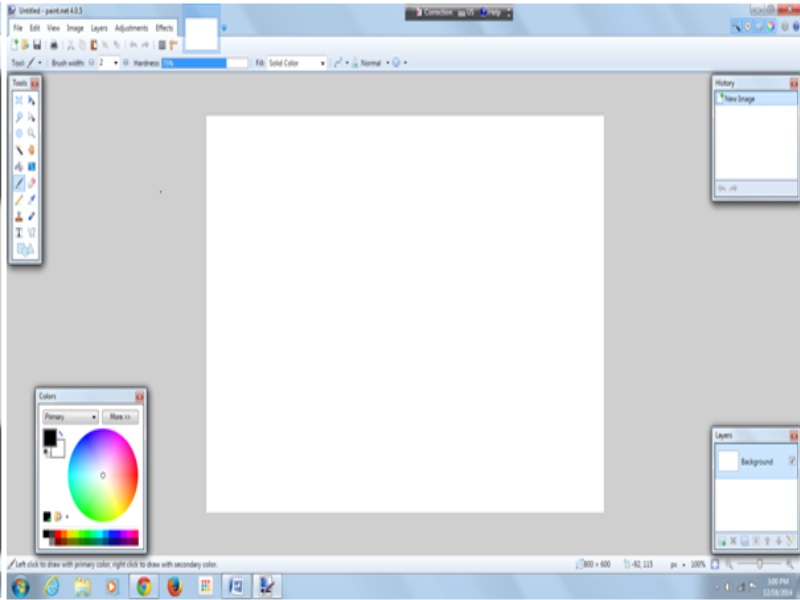
Click on the Layers tab (fifth from the left in the top ribbon). Select Import From File and upload your background image. You can find something in the public domain to use or pay for one from sites like Shutterstock or Dreamstime, but MAKE SURE that it is free to use for commercial purposes. Or you could take your own background photos or scans – I’m using a photo of a piece of fancy paper here.

Now go back to the Layers tab and click Import From File again to start working on your next cover element. I’m using an ancient photo from my computer taken with an ancient cellphone.
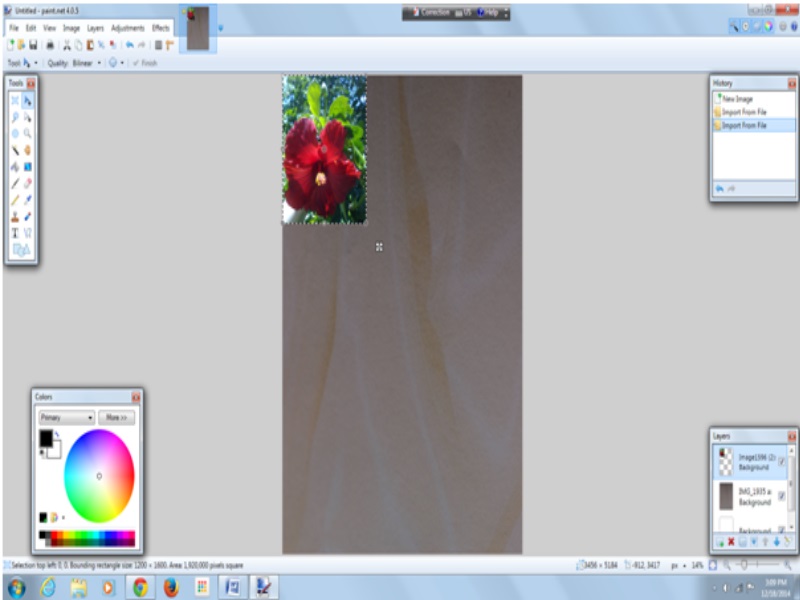
Stretch it out to the size you want it to be, and move it to where you’d like it to grace your cover. Go to your tools box in the top left corner, and select the square in the top left corner of it.
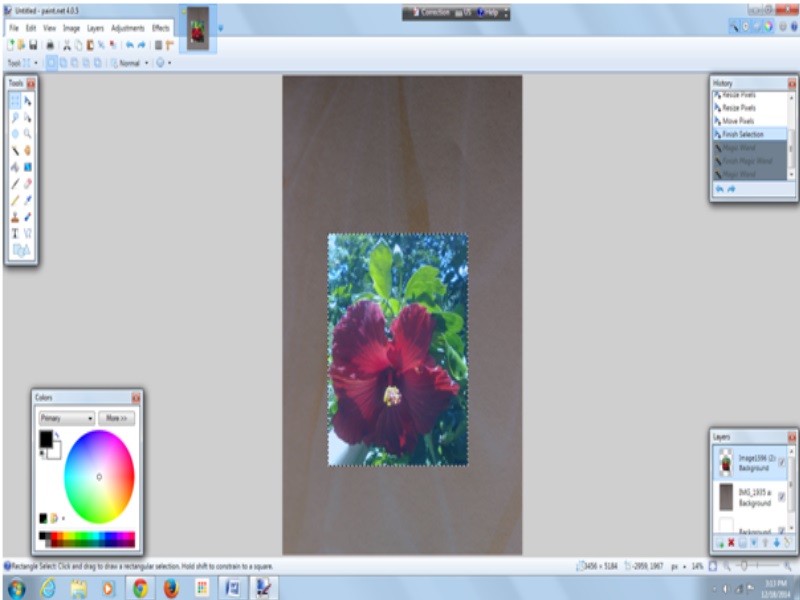
Drag your cursor over parts of the image background that you want to delete, and then hit the scissors icon in the top ribbon. Do this as many times as necessary to remove large patches of unwanted background.

Now select the Eraser in your toolbox (sixth down on the right) and play around with it – use the Brush Width in the ribbon above for thick sections to erase or thin fiddly bits of background. Take your time and use the Undo button (left facing arrow in the top ribbon) to go back as many steps as you like. Go back to your toolbox and select the triangle icon in the top right corner, move the image around or turn it until you’re happy with it.

If you’re happy with your image the way it is then you can begin to add text. Or you can add another layer as before. In the Layers box in the bottom right corner, select the icon on the far right to adjust your current layer’s opacity, which will make it as see through as you like. For now I’m going to pretend that this cover is just awesome, and add some text. First go to your Layers tab, and select Add New Layer. Then select Text in your toolbox. Choose your font and font size, and click on the font colour you want in the Colour box in the bottom left corner. Click on your cover where you want your text to begin and go for it.
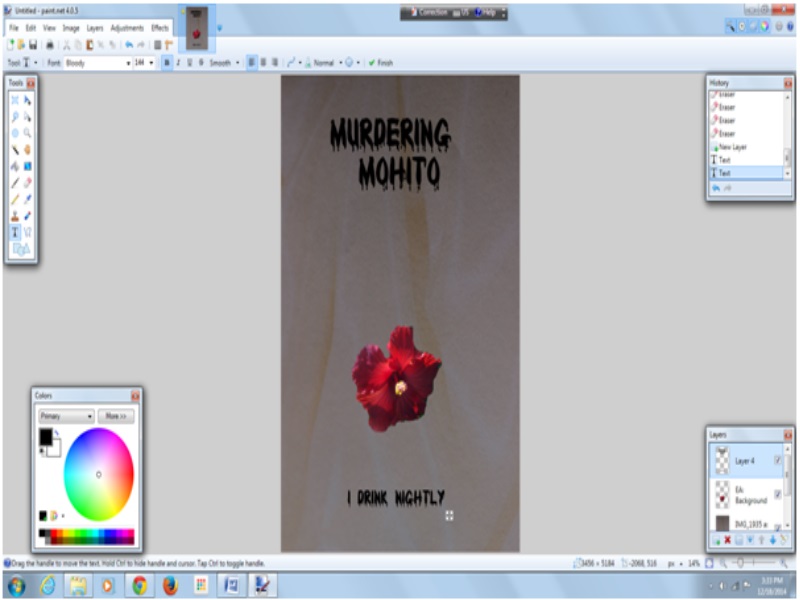
When you’re happy with your cover, click Save As and select Save as Type JPEG (Underneath the image title) and there you have your cover. Check on the requirements of the various online booksellers as far as size requirements are, and go back to Paint.net and resize in a flash.
I’m not even going to pretend that this particular cover could ever be used (it REALLY couldn’t be – in fact it’s a perfect example of the hastily created covers that give Indies a bad name), because a good cover is going to take longer to make than the time it took me to write this post, but I want to share the very basics of making your own cover easily. If you play around with this programme you’ll learn much, much more, so there’s no reason not to make a really attractive cover of your own if you’re short of cash, or simply if you fancy doing it yourself.
Why G+? Well – because GOOGLE. Google owns the internet mostly. I must say that I much prefer G+ to Facebook. I find that there’s much more camaraderie there, and a lot less competition and skirmishes. I have a whole group of friends on G+ who have never signed up for Facebook at all, preferring to stay right where they are. There’s also less stress with G+ Circles than with Facebook Friending. Removing someone from a Google circle comes with none of the shots from the bow associated with Unfriending on Facebook, and it is so much easier to connect with a massive cross section of society on G+.
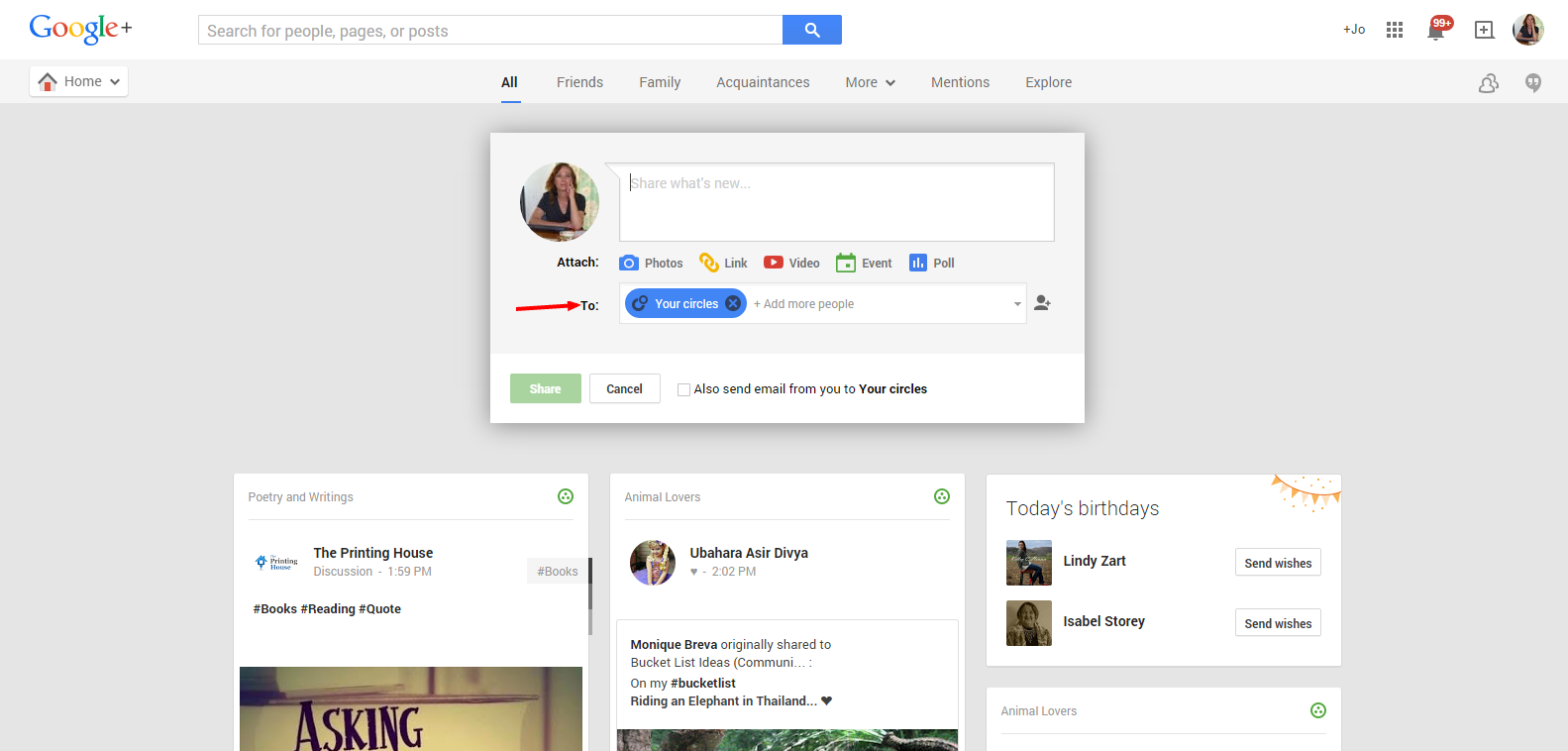
All your followers as well as the public can see your posts if you want them to, compared to Facebook’s changing and mysterious ways of deciding who gets the opportunity to see what you have to share. You have absolute control over who sees what you post on G+. You can share a post as Public, which means that not only do all those who have you in their circles get to see it, but any member of the public can see it too. G+ posts show up in anyone’s Google searches, so the potential for visibility is enormous. Use hashtags for more oomph.
You can share a post with a single individual, and only they will ever see it, or you can specify people to be notified of a post by email simply by adding them next to your Circles choice.
Google Hangouts allows you to have group chats – with or without video, and there are thousands of Google Communities to join, and meet new people. Again, I find the G+ communities a lot less stress than those on Facebook.
Anyone with a Gmail account automatically gets a G+ account, but you can sign up for one Google account that gives you access to all Google products . Once you have your new account, go to the Google+ Help Centre for a basic rundown on the features.
Create your profile, and load your photo and header. Try and use your real name because this makes those little Google search crawlers very happy bunnies, and once you’ve verified your account, you will be nice and easy to find.
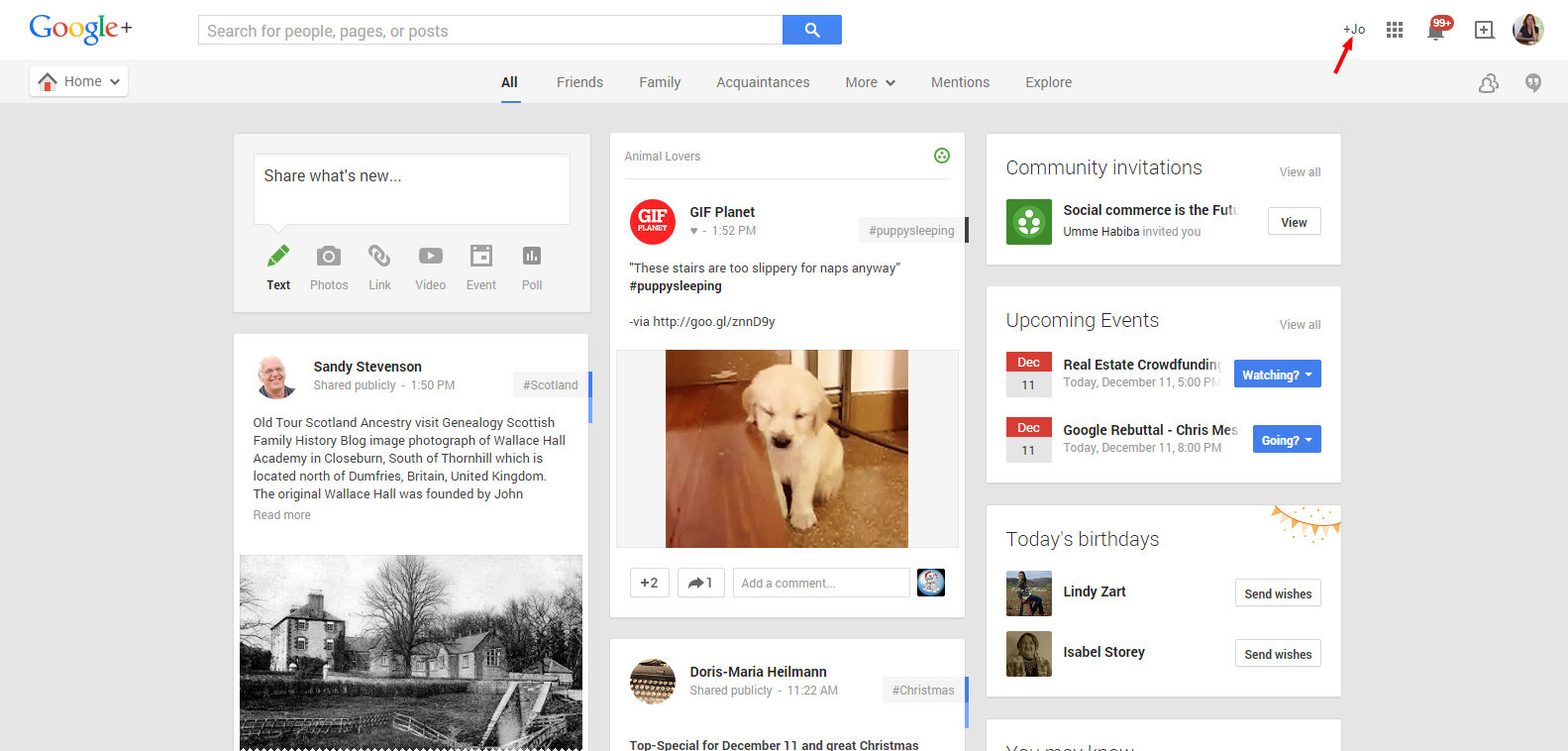
Once you have your account, you can head over to your home page by clicking on your +Name.
Then begin finding friends old and new, and add them to your Circles. Concentrate on making lots of totally new friends to increase your platform, as well as adding those you already know. G+ Circles are nothing like Facebook Friending. You can circle anyone you like and be able to see anything that they share, and they don’t have to circle you back. Apart from the big guys, most of them will though.
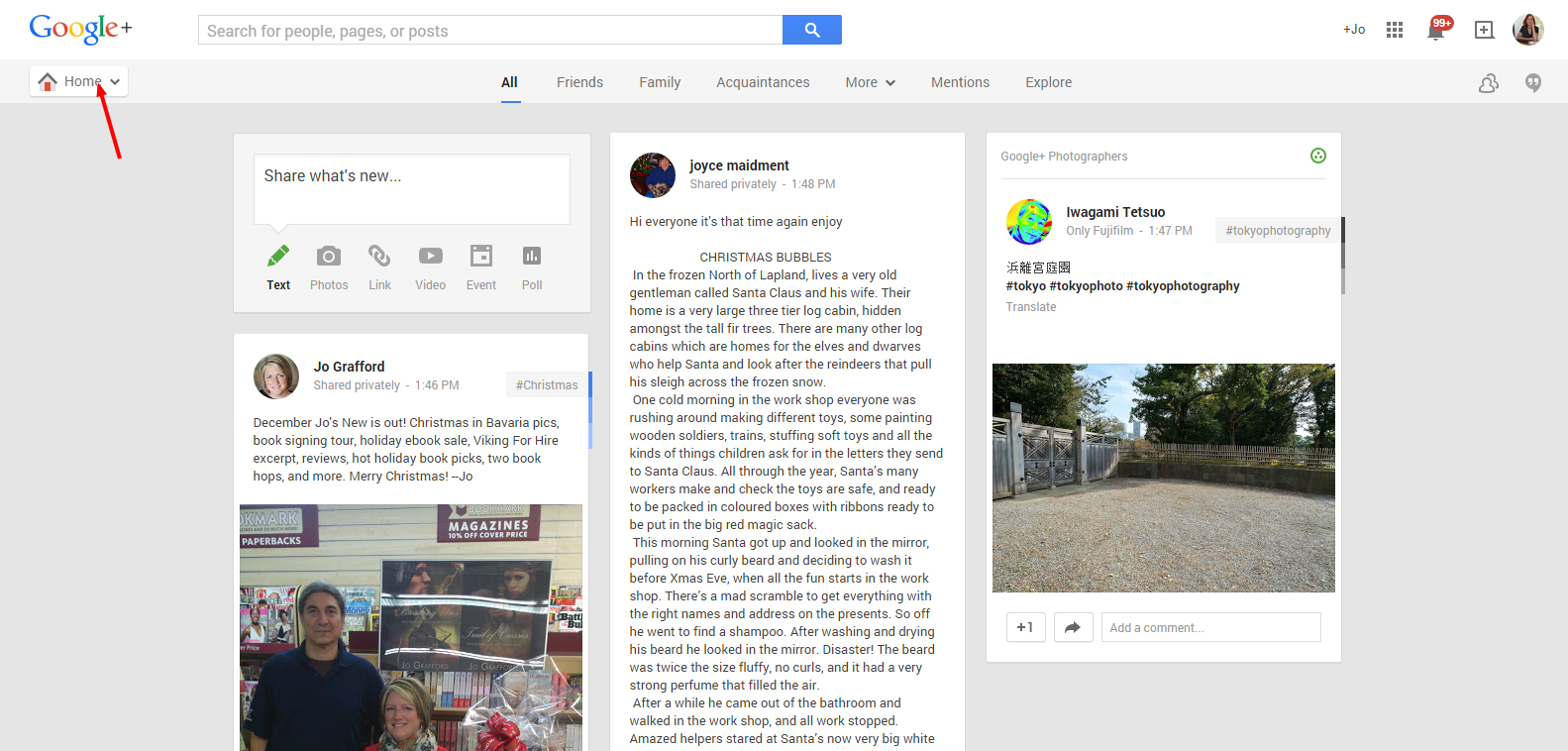
Click on the Home icon to start finding your way around.
If you’re brand new to the site, and feel like you’re all alone in the dark, check out Google+ Recommendations to get you started. Click here to add me to your circles if you like, and I’ll circle you right back. We also have a couple of communities on G+ where you can pop your book and blog links. Readers Meet Authors & Bloggers, Free to Blog, and Sci-Fi, Fantasy, and Horror Lovers. They’re open communities, so anyone can join. Once you’ve figured out how easy it is, start your own communities too. It really is very user friendly, and these communities are much easier to find than Facebook groups.
Check out Communities Recommended for You, and Explore.
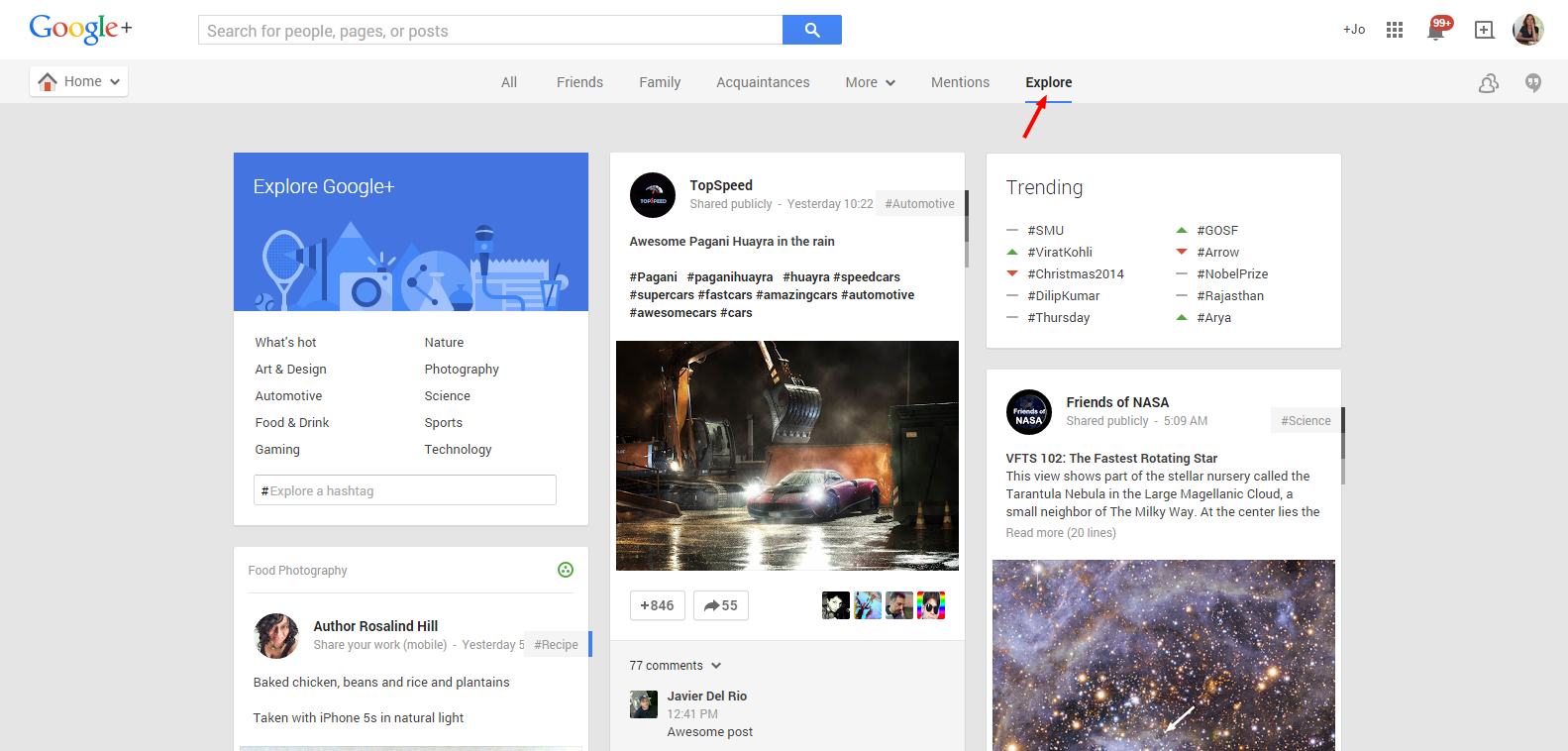
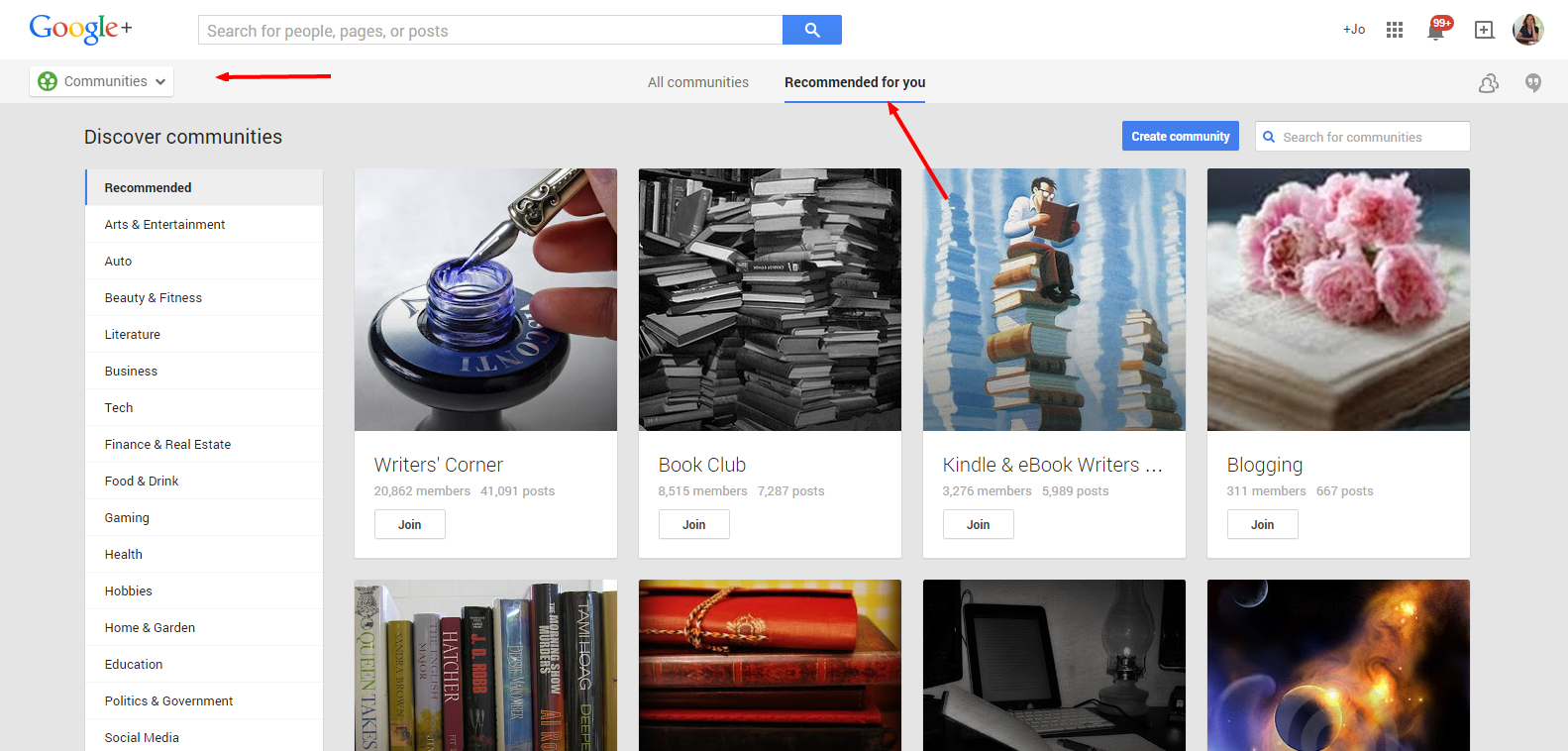
One good thing to remember when sharing, when you comment on any link that you post an email will go out to all your followers. If you just post it, it only hits the stream. If you want someone specific to see it, use the + and then their name, and finally choose from the selection that Google gives you. Have a go and see if you like it. If you’re an Indie, sooner or later you’re going to have to go G+ if you want to find new eyeballs.

Okay guys, Do you want deals and Free stuff that Readers love? Click and go check it out. It’s Black Friday for Readers. yes. Read Tuesday is here!
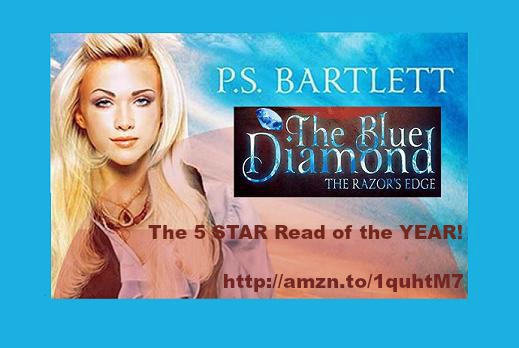
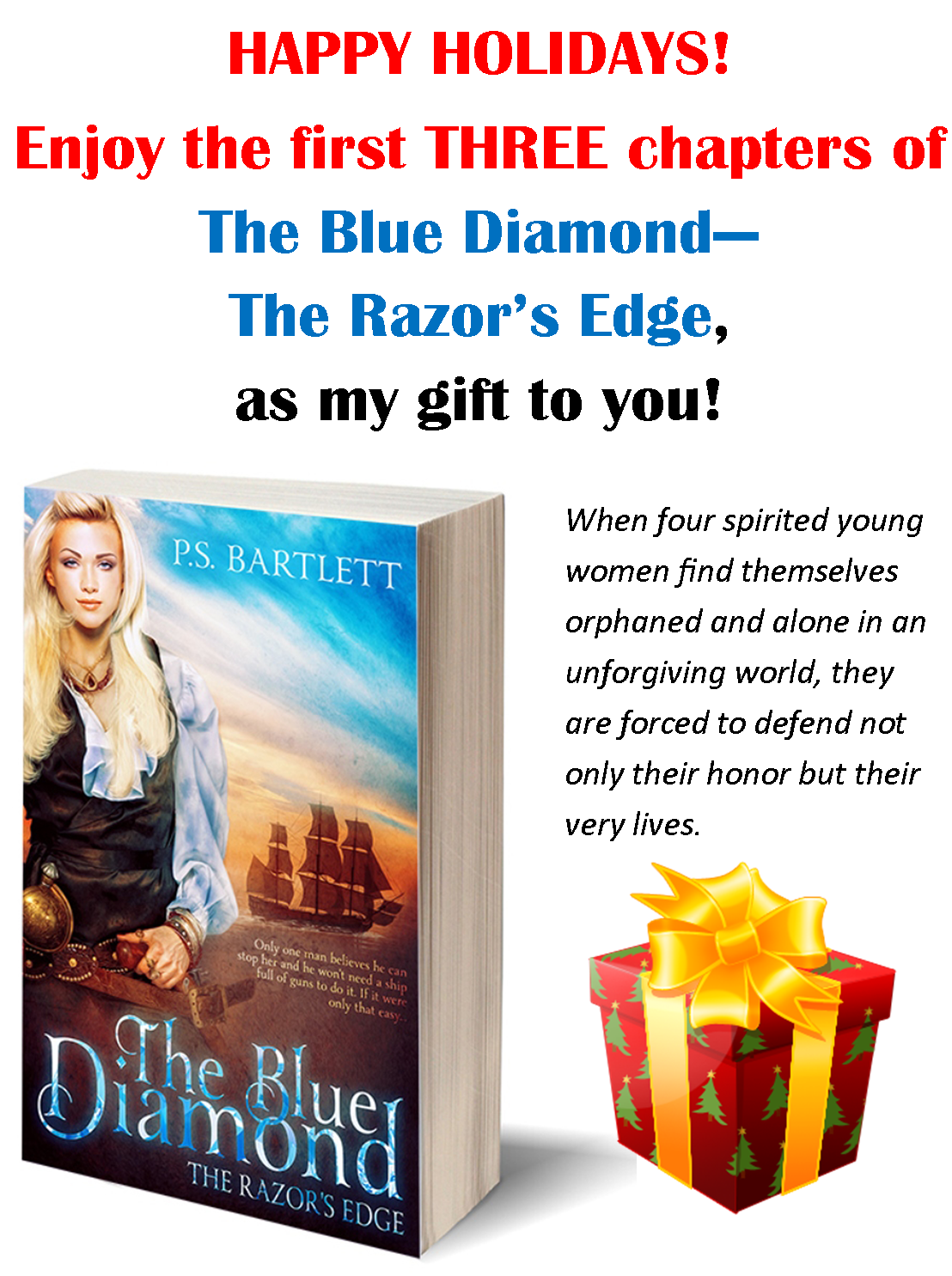
Get Free Chapters of PS Bartlett’s The Blue Diamond: The Razor’s Edge. I’ve read it and it’s a 5 Star read. I’m not the only one to think so. Read those chapters and you’ll be the book.

Unless you’re writing purely for yourself, your aim is to sell your work to readers. Selling is a word that often has Indie authors running for the hills. It shouldn’t though. If you want people to read your books, you’re going to have to have them buy them to begin with. There’s nothing torrid about selling your books. Nothing to be ashamed of. So do it. Sell that stuff. But sell it politely. One of the most powerful tools for Indie authors to find readers is Twitter. Unfortunately some of the really hardcore OY BUY MY BOOK brigade have muddied the waters there a little, with their ad nauseam spamming of their books without ever posting anything else. That doesn’t mean that Twitter won’t help you sell books anymore though. You just have to be patient, post interesting content other than only your own, and behave socially.
I often come across Indie authors around and about, who are incredibly selective as to who they’ll follow on Twitter. Unless you’re J K Rowling you’re not going to be successful if you’re expecting thousands of people to follow you for no other reason than that you wrote a book, without any sort of reciprocation. Theoretically it’s better to give than receive, but not so much in cyberworld these days, and if you want to be noticed at all, you have to give. Whether you’re giving information, having lively chats, or just sharing something beautiful, these things will catch the attention of potential readers much more effectively than only ever sharing things about yourself or your books. The same goes with who you choose to follow or follow back.
If you weren’t selling or planning to sell a book, would you have signed up for Twitter? No? Then insisting on only following back other writers, or even more precisely, other writers who you think are “worthy”, is seriously counterproductive.
Just because you’re a writer doesn’t mean that nothing else interests you. Writing is your job, and what defines you, but everyone has things that they love to do when they’re not doing their work. Gardening, cross stitch, cooking, art, making really cool medieval chainmail out of bottle tops and pink paperclips. The same goes for chefs, university students, secretaries, CEO’s and plumbers. Possibly what they love to do when they’re not working is to read books, even though it would never occur to them to write one. That guy who followed you who has 178 followers, and tweets about how cool his beer belly is, is a potential reader. And when you – author of note – follow him back, he is most chuffed. He notices you. Retweet the photo of his epic beer spill that formed the shape of a perfect frog bottom on his t-shirt, and you could very well have your first fan. A reader who has not ever considered writing a book. How would you feel if J K Rowling followed you back? And then retweeted you. Not quite the same league, but I’m sure you get my drift.
I only follow two people who don’t follow me back, and unless I find any particular account particularly offensive, or obviously a bot, I follow everyone who follows me. I personally enjoy Twitter, but I know that a lot of authors don’t. They see it as a chore, and something that they have to do to sell their work. I recognise them. They’re the ones tweeting only about their own books, and never retweeting anything at all. So when I see their gravatar in my feed, I very seldom even look at what they tweeted because they’ve already shown me what to expect. Then there are the writers who are trying to build their marketing platform before they publish, which is a brilliant idea by the way, but some of them also only ever post about the book they’re writing. These things are boring if they’re all you ever share, and are never going to grab attention in Twitterverse.
As well as following authors and writers, also follow people who tweet about the things you love apart from writing, and interact with them. Look at the profiles of people who follow you, and follow them back. Look at their tweets and retweet them or reply to them. Make friends out there, and as well as finding future readers for your scribbles, you just might start having a little fun while you’re at it. Don’t just send out your book links, because that’s guaranteed to get your posts muted by many. Selling your books this way really can be fun if you choose to make it so.

Click the title or the Book to go to Amazon. Or here is another way, http://amzn.to/1yjWhjT .

Check out Lit World Interviews very on 5 Star Historical Romance Read of the Year Author PS Bartlett as she narrates her journey to her voyage to her most recent novel The Blue Diamond: The Razor’s Edge available at Amazon.
Nope, I wasn’t brave enough to get in front of the camera so I put together a video narration of an article I wrote not too long ago, complete with pictures and flubbed words.
Hey gang, I did the best I could under circumstances I would never bore you with. TRUST ME though…it was a challenge.
So, without further adieu, I give you my very first narrated article…
Tuesday, December 2 Meet
Author
But NOW
GO
Acquire her latest novel
released Nov. 21!
Book Descrption
“A normal walk to work turns into a life-changing moment when a near accident brings Ally Lehar face to face with the rude, hostile Liam Sheldon.
A twist of fate places these two together and sparks fly as Ally is forced to work with Liam when he takes over the reins of Curchet Networking, where Ally is employed.
As time goes on an attraction ensues between the two, and Liam’s want to be with Ally, leaves him conflicted. He feels like his successful career is slipping through his fingers, and insecurities flare up as a relationship from his past gets in the way of his current chance at happiness.
The book is intended for mature audiences only!”
© Copyright-All rights reserved by litworldinterviews.wordpress.com 2014
Whenever I get a huge idea for a new story, I generally stop what I’m doing and open a new document, give it a temporary name, and write down the first couple of sentences and notes. I have lots of these lurking in my WIP folder, but I never allow myself more than ten minutes to create them. Then I leave them alone, to wait until I’ve published what I’m currently writing. I do write more than one book at a time, but I haven’t ever abandoned any of them in favour of starting something brand new, and working on that instead. Many times I get to a place in a book I’m working on when the next thing to happen refuses to reveal itself to me, or I think that the whole story is a lot of rubbish anyway, and getting stuck into something shiny and new would be a much better idea. No matter how much I really, really want to start in on my new idea, I won’t allow myself to do that. Because if I do it once, I’ll do it again, and then maybe another time, and if I’m not careful I could end up with piles of unfinished books and nothing ever ready to be published.
I’ve never heard any famous author say that writing is easy. It isn’t. It’s really hard work. I think that writing is like any other job though, in the way that the more you do it the easier it gets. When you begin an exercise regime you might only manage a ten minute workout, and you have to push yourself through the pain to get fitter. You have the choice of deciding that it’s way too difficult and try something else instead, or to carry on pushing until you reach your goal. If you give up, you’ll be disappointed in yourself, and will never know what you could have achieved. If you choose to keep going, those endorphins are going to give you a happy face every time you complete your workout, especially if it was hard, and eventually you’re going to reap the benefits of all your work with your taut new body, and years added on to your life.
I think that writing’s just the same. When that next sentence just won’t come, you can just drop it and try something new, or you could write on. It’s at these points that I allow myself to write anything, no matter how stupid it sounds, because eventually the tangled threads will unravel, and I’ll see where I need to go. My goal is always the final sentence of the story I’m working on, and then I get to reap the benefits of getting it published. And those writerly endorphins give me a happy face every time I add to my story. There’s always a sense of accomplishment whether it’s one hundred or two thousand words. Not writing anything at all on any day generally brings on anxiety, because I know that the longer I leave it, the harder it will be to get back into. Just like exercise, you have to keep your scribbler muscles in shape. So it doesn’t matter how many new stories you start writing. If you don’t push through on the books you’re writing now, you stand the chance of wasting a whole lot of time, with only a pile of partly written stories to show for it.
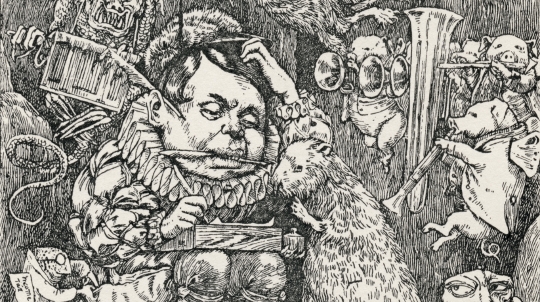
Image Credit: Public Domain Review

I think the names say it all. These are the results of filling out the form on . . .
© Copyright-All rights reserved by litworldinterviews.wordpress.com 2014
by
 @K_A_Castillo
Read the interview here.
Book Description
“It doesn’t matter if it’s right or wrong. All that matters is if you can. If you can do something, what difference does it make?”
Based on a true story, The Convenience of Lies is a novel that keeps readers up past midnight with its story of friendship, mystery, crime, sex, and betrayal. Set in a suburban town, this story is told through the eyes of a high school junior, Mackenzie, who describes her crush on a “bad boy,” Ramon and her relationship with her best friend, Kira. During the course of the story, Mackenzie does her best to attract the affections of Ramon while her friendship with Kira evolves. Eventually, the different characters’ property starts getting vandalized and a mystery develops as Mackenzie and Kira try to get to the bottom of who is behind the vandalism.
Much Respect
Ronovan
2014 © Copyright-All rights reserved by litworldinterviews.wordpress.com
LitWorldInterviews Very Own
ON

There are lots and lots of people who buy and read mainly stand alone short stories. Probably because of the speed of life these days. This came as a big surprise to me when I published my first one. There are short story connoisseurs who follow authors who only publish short, and are considered masters of the art. I thought it was a cop out to be honest – a way of publishing something a lot easier than a novel length book, because I thought that anyone can bang out a short story. There’s an art to creating a good short though, so that’s not entirely true. I’ve always enjoyed reading them and have piles of anthologies and singles on my Kindle, written by authors from debuts to Stephen King. A short story must still be a complete tale, with good flow, plot, structure and ending. In some ways getting a great short written can be more of a challenge than when you have much more space and time when writing fifty thousand words or so.
I have quite a few lurking on my computer waiting for polishing and publishing, and for me personally, because there’s so much less time invested in them than my longer books, I allow myself to play with the way I write them. The story I wrote for the Save the Rhino anthology, Nkoninkoni, inspired me to write a whole lot of short tales of Africa and its legends. Other stories I’ve started with the purpose of trying to write in different styles and genres, and then just follow where they choose to go. Writing a bad short story is going to be less heartbreaking than writing a bad book, although you might just surprise yourself when you’re just going with the flow. Writing shorts is good practice, but it has other advantages too.
I’ve always thought that as an Indie, the best way to get a feel for the process is to publish a short story before that novel you’ve been slaving over for a year or two. If you publish your novel green, there will be all sorts of learning curves that you’ll wish you knew before, and without any ideas about marketing it you could end up really disappointed when it just sits there and nobody buys it. There is no shame in publishing a single short story, as long as you put the same effort into its creation that you would a full length book. You’ll be in excellent company, because most bestselling authors publish them too. And if you enrol it in Amazon’s Kindle Select programme you can use it as a free marketing tool when you publish your big boy.
Doing this will take some of the terror away when you do publish your novel – not all of it – I don’t think that ever goes away no matter how many books you put out there. Make a great cover for it, edit it and make sure it’s nicely formatted. Make it the best little book that you can, and then let it loose. Have a marketing campaign on all of your online sites. Have a couple of free days in the hopes of some nice reviews. Set up your Amazon Author page. Join Twitter if you haven’t already, and see how it works. Even if you don’t have many sales to begin with, you’ll have learned a great deal, and your systems and sites will all be in place and ready for you when the time comes to publish your labour of love.

Submissions request for ‘Dreams and Visions’ Anthology…deadline 30 November 2014. Twelve days remaining to write “up to ten pages double-spaced, and they may be shorter. You may submit multiple pieces that total ten pages if preferred.”
Enjoy!
2014 © Copyright-All rights reserved by litworldinterviews.wordpress.com
2014 © Copyright-All rights reserved by litworldinterviews.wordpress.com
“Why not dream big? One way to cast your anchor into the future while improving your mood for the moment is to plan something exciting, something positive, something that makes you smile. Maybe it’s a vacation, maybe it’s a night out with someone special or maybe it’s just some much-needed “me” time/ Make a plan, set a date–and then bask in the anticipation.”






 Lit World Interviews