For fans of Georgia Hunter’s We Were the Lucky Ones and Anita Abriel’s The Light After the War comes a historical narrative about the lives of Jewish immigrants in the early twentieth century and one woman’s journey through adversity toward personal freedom.
At an early age, Gitel questions the expected roles of women in society and in Judaism. Born in Belorussia and brought to the US in 1911 as a child, she leads a life constrained by her religious Jewish parents. Forbidden from going to college and pushed into finding a husband, she marries Shmuel, an Orthodox Jewish pharmacist whose left-wing politics she admires. They plan to work together in a neighborhood pharmacy in Chicago—but when the Great Depression hits and their bank closes, their hopes are shattered.
In the years that follow, Shmuel’s questionable decisions, his poor health, and his bad luck plague their marriage and leave them constantly in financial distress. Gitel dreams of going back to school to become a teacher once their one daughter reaches high school, but an unexpected pregnancy quashes that aspiration as well. And when, later, a massive stroke leaves Shmuel disabled, Gitel is challenged to combine caring for him, being the breadwinner at a time when women face salary discrimination, and being present for their second daughter.
Offering an illuminating look at Jewish immigrant life in early-1900s America, Gitel’s Freedom is a compelling tale of women’s resourcefulness and resilience in the face of limiting and often oppressive expectations.
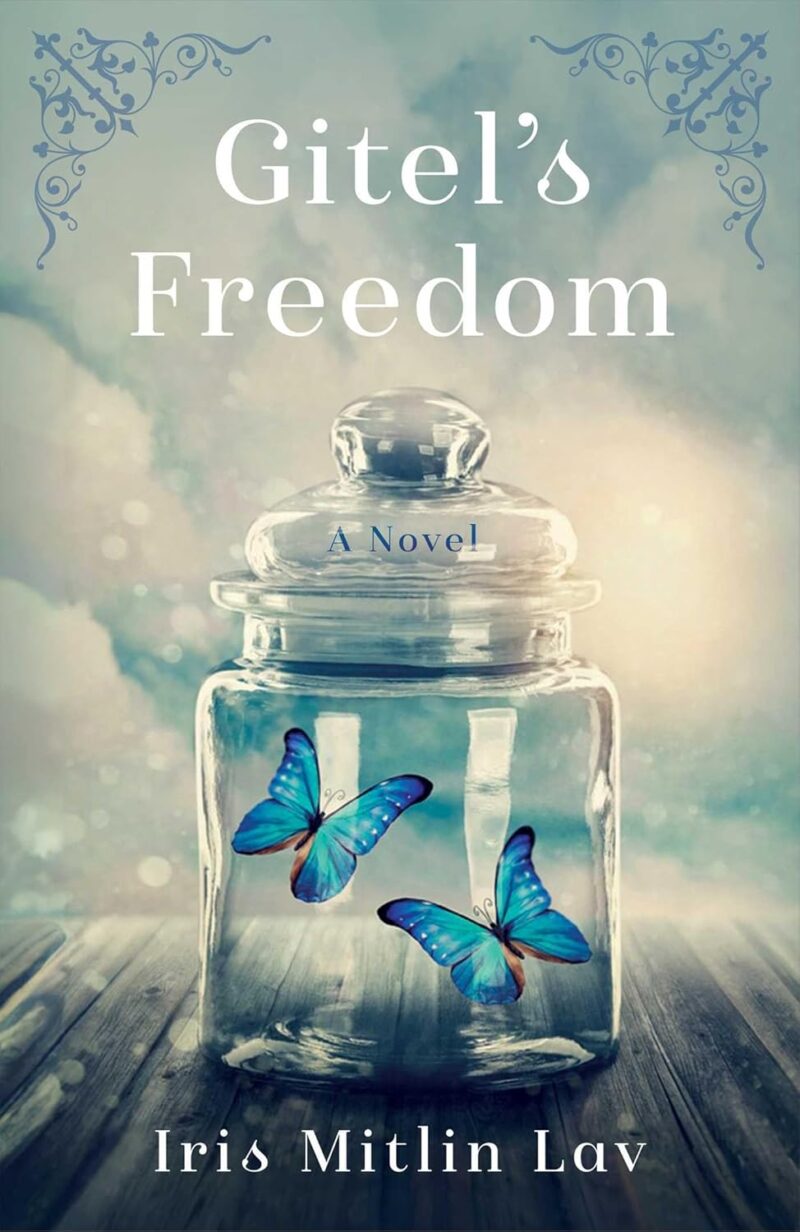
Gitel’s Freedom
THE REVIEW
The change in Rayzel’s life from the moment she leaves Berisov, Belarus to South Bend, Indiana has more of an impact than Rayzel or anyone probably realizes. Not just in her life but also in that of her daughter and granddaughters to come.
What does a mother who doesn’t speak English, and basically refuses to learn to do so, which isolates her from the community around her, do in raising her daughter in a strange land? She keeps Gitel on a short leash, although that, to some extent, seems to be the implied way for observant Jews of the time. The sons have way more freedom than Gitel ever has.
I’ve read some reviews of Gitel’s Freedom that miss many of the book’s points and even misinterpret the meaning of others. This is an unfair treatment of the author and her creation. Believe me, if I didn’t like the book or didn’t believe what I’m saying, I wouldn’t mention it.
Themes throughout the book are shared by Gitel and her daughters in some form: fighting for their educational freedoms, and fighting for their social freedoms. The differences come from their situations and the decades they occur in. They all have obstacles but all know if you want something, you have to figure out how to reach the goal. You keep going. Faye and Ilana, Gitel’s daughters, learn that from their mother, even if they don’t immediately realize it at the time. They all face similar problems but due to their situations growing up, and situations in the moment of the problems, they all deal with them differently.
Gitel and Faye internalize their emotional responses, while Ilana, who was born much later and was partly raised by her sister Faye who was an American girl by this time, tends to express or at least show her displeasure more openly.
You can see the change from how Rayzel was upon arrival in South Bend in 1911 to how Ilana ends up being in Chicago in the 1960s, through the four women of the story.
Ilana ends up becoming that girl of freedom that Gitel wanted to be when she was young, but only through Gitel’s trials and with the aid of Gitel’s first-born American girl, Faye. Faye the Bridge, I’ll call her.
The story is honest in showing that not everyone is perfect, that no one is. Even if raised to accept and be one way, you aren’t always like that inside, even if portraying acceptance on the outside. It shows the realistic impact strife can take on even the most optimistic person. How even Gitel can allow her husband’s thoughts of their situation to seep in, even if it’s only a momentary thought. How strife can change someone, unexpectedly, for the good.
We get to see the honesty of the women’s feelings about their situations. The frustrations are mostly kept internal. But children will be children, and teen girls will be teen girls. And we get to see how each of the generations thinks from their points of view.
I can relate to Gitel in that I’m now my mother’s caregiver. It’s not something I ever expected to be. We aren’t that close but I’m the only child and it’s my responsibility to take care of her, even if that means I’m now an hour away from my own family, who I maybe get to see once a month for about four years now. I get her frustrations, her disappointments, and her wanting freedoms, and a break from the weight of it all. And I can understand her eventual feelings at the end. It’s not awful, as some believe it to be. It’s something that she has slowly seen coming for years, and been dealing with for all of that time.
Other things I really enjoyed about the book are the historical aspects. Very accurate ones. As many of you may know, I have my degree in History Education and have continued researching and reading history over the course of 30+ years. I’ve been doing ancestry research for a few years now. Yankel’s coming to America and the four years it takes to establish a living and earn enough to pay for passage for seven family members is exactly right. You can look at the family stories and the passenger lists of arrivals. My own family arrived in the 1600s and 1700s to America and much the same thing happened. The men came. Established a life. Then sent for the rest of the family.
I enjoyed the history of the lead-up to the first election of FDR, the optimism, the aftermath, the good, and the letdowns. The social justice aspects of the stories of Gitel and her children were a nice addition. Showing the organizations and how they worked in a relatable story form helped easily put them into perspective and into action. The slow progress of race relations leading to integration.
Reading some reviews for the book, I’ve noticed reactions to Gitel and her friend Sophie’s closeness and Gitel’s reactions to the comfort she feels from Sophie. To me, it seems appropriate for the story and puts some aspects of the story in better perspective. It actually, for me, might explain a lot if I want to interpret it one way over another.
The writing style of Gitel’s Freedom is easy to read and isn’t trying to be more than it needs to be. In fact, I think the language and structure starts off simpler and slowly advances along with the family’s time in America and their assimilation and actually being Americans. There is somewhat of an urgency or franticness, I think, to the way Frayzel thinks, less so with Gitel, although even though she doesn’t realize it there is still her mother’s influence on some of her thinking and reactions, and by the time of Faye and Ilana, they’re American girls… for good or bad. It all makes sense.
In all, I think this book is a good read to observe the way the members of a family progress through time from one generation’s place in time and views, to another’s.
IRIS MITLIN LAV grew up in the liberal Hyde Park neighborhood of Chicago, Illinois. She went on to earn an MBA from George Washington University and an AB from the University of Chicago, and to enjoy a long career of public policy analysis and management, with an emphasis on improving policies for low- and moderate-income families. She also taught public finance at Johns Hopkins University and George Mason University, and in 1999 received the Steven D. Gold award for contributions to state and local fiscal policy, an award jointly given by the Association for Public Policy Analysis and Management, the National Conference of State Legislatures, and the National Tax Association. Her first novel, “A Wife in Bangkok,” was published in 2020 by She Writes Press. “Gitel’s Freedom” is her second novel. Lav and her husband now live in Chevy Chase, Maryland, with Mango, their goldendoodle, and grandchildren nearby. Learn more about her life and work at: www.irismitlinlav.com
For fans of Georgia Hunter’s We Were the Lucky Ones and Anita Abriel’s The Light After the War comes a historical narrative about the lives of Jewish immigrants in the early twentieth century and one woman’s journey through adversity toward personal freedom.
At an early age, Gitel questions the expected roles of women in society and in Judaism. Born in Belorussia and brought to the US in 1911 as a child, she leads a life constrained by her religious Jewish parents. Forbidden from going to college and pushed into finding a husband, she marries Shmuel, an Orthodox Jewish pharmacist whose left-wing politics she admires. They plan to work together in a neighborhood pharmacy in Chicago—but when the Great Depression hits and their bank closes, their hopes are shattered.
In the years that follow, Shmuel’s questionable decisions, his poor health, and his bad luck plague their marriage and leave them constantly in financial distress. Gitel dreams of going back to school to become a teacher once their one daughter reaches high school, but an unexpected pregnancy quashes that aspiration as well. And when, later, a massive stroke leaves Shmuel disabled, Gitel is challenged to combine caring for him, being the breadwinner at a time when women face salary discrimination, and being present for their second daughter.
Offering an illuminating look at Jewish immigrant life in early-1900s America, Gitel’s Freedom is a compelling tale of women’s resourcefulness and resilience in the face of limiting and often oppressive expectations.
IRIS MITLIN LAV grew up in the liberal Hyde Park neighborhood of Chicago, Illinois. She went on to earn an MBA from George Washington University and an AB from the University of Chicago, and to enjoy a long career of public policy analysis and management, with an emphasis on improving policies for low- and moderate-income families. She also taught public finance at Johns Hopkins University and George Mason University, and in 1999 received the Steven D. Gold award for contributions to state and local fiscal policy, an award jointly given by the Association for Public Policy Analysis and Management, the National Conference of State Legislatures, and the National Tax Association. Her first novel, “A Wife in Bangkok,” was published in 2020 by She Writes Press.“Gitel’s Freedom” is her second novel. Lav and her husband now live in Chevy Chase, Maryland, with Mango, their goldendoodle, and grandchildren nearby. Learn more about her life and work at:www.irismitlinlav.com
Synopsis:
How well do you really know the people you encounter every day? Award-winning author Robert Steven Goldstein’s gripping psychological thriller “Golda’s Hutch” (March 11, 2025, Deft Heft Books) explores what we hide from the world versus what we reveal, the lengths we’ll go to keep our secrets buried—and the unpredictable steps we take when our innermost lives are threatened.
Craig Schumacher is not your typical executive. With a gentle spirit and a morning ritual that includes serene meditation alongside his cherished rabbit, Golda, Craig values connection over competition. Yet, beneath his calm, polished exterior lies a secret he’s worked hard to keep hidden—one that could change everything.
Enter Byron Dorn—Craig’s employee and chaos incarnate. Crude, impulsive, and driven by envy, Byron is elated when he and his wife stumble upon information that he believes could unravel Craig’s life. But when Byron ropes another couple into his schemes, things become a lot more complicated.
Because Craig isn’t the only one with a secret. And as the stakes rise, everyone will have to decide what they’re willing to sacrifice to get what they want—and when they’re willing to walk away.
Set against the dynamic backdrop of San Francisco, this gripping psychological novel weaves a complex tapestry of deception, envy, desire, politics, and power.
“A scintillating take on marital and workplace dramas with compelling characters and devilish surprises…Goldstein’s precise, elegant prose cleverly takes its time revealing his characters’ secret desires, building suspense for fun to come…when readers are alone with each character’s thoughts, the author serves up something delicious.” —Kirkus Reviews
“All the ways we hide our secrets from each other—and from ourselves—are on display in Robert Steven Goldstein’s latest and extremely entertaining novel, Golda’s Hutch. Moving between America’s cutthroat corporate boardrooms to kink-play in San Francisco’s BDSM world to mysticism as embodied by a titular, yoga-practicing rabbit, this delicate balancing act reveals, layer by layer, a thrilling and thought-provoking exploration of human nature and the boundaries of self-discovery. Goldstein’s prose elegantly entwines psychological tension, dark humor, and an unapologetically raw examination of human desires to create an unforgettable reading experience. For fans of psychological drama and literary fiction, Golda’s Hutch is an intelligent, compelling, and at times humorous narrative that is both thought-provoking and insightful. Highly recommended.” —Madeleine Ivy, author of The Witchhammer
“Set in San Francisco, Golda’s Hutch explores the world of corporate machinations through the eyes of Craig Schumacher—an executive who puts the feelings of his employees over cold calculation and the hard-ass bottom line. Craig is also negotiating the risky shoals of his marriage to Shoshana, a professional dominatrix—while he desperately seeks a way to rechannel his penchant for sexual submission into a more sustainable lifestyle. Featuring a host of unique and well-developed characters, Golda’s Hutch gives the reader an eye-opening peek into a wide range of subjects, from the virtues of daily morning yoga practice and vegetarianism (replete with an impressive array of menu items) to the finer points of mortuary science and, of course, BDSM. A riveting page-turner that goes with white meat, red meat, or no meat at all.”
—Tom Szollosi, screenwriter for Star Trek: Voyager, Three O’Clock High, and The Incredible Hulk; author of the books The Space He Filled and The Last Master Outlaw; and professor of screenwriting at Loyola Marymount University.
Robert is the author of five novels. His first, The Swami Deheftner, about problems that ensue when ancient magic and mysticism manifest in the twenty-first century, developed a small cult following in India. His second novel, Enemy Queen, a sexual comedy of manners set in a North Carolina college town, was a finalist in the category of cross genre fiction for the International Book Awards. Robert’s third novel, Cat’s Whisker, probes the perceived rift between science and spirituality; it was longlisted for the prestigious Chanticleer International 2021 SOMERSET Book Award for Literary and Contemporary Fiction. His fourth novel, Will’s Surreal Period, about the peripatetic machinations of a dysfunctional family, was longlisted for the Chanticleer International 2022 SOMERSET Book Award for Literary and Contemporary Fiction.
Golda’s Hutch is Robert’s fifth novel. He and his wife Sandy live in San Francisco; over their thirty-six years together, they’ve shared their home with an array of dogs, cats, rabbits, turtles, and parrots, each of whom has displayed a unique personality, startling intelligence, and a profound capacity for love. Robert has practiced yoga, meditation, and vegetarianism for over fifty years. Find out more about him at his website.
I have been reading poetry lately, not the Whitman, Cummings or Oliver but of contemporary poets, many of whom shared their creations first on social media before making it to traditional publication.
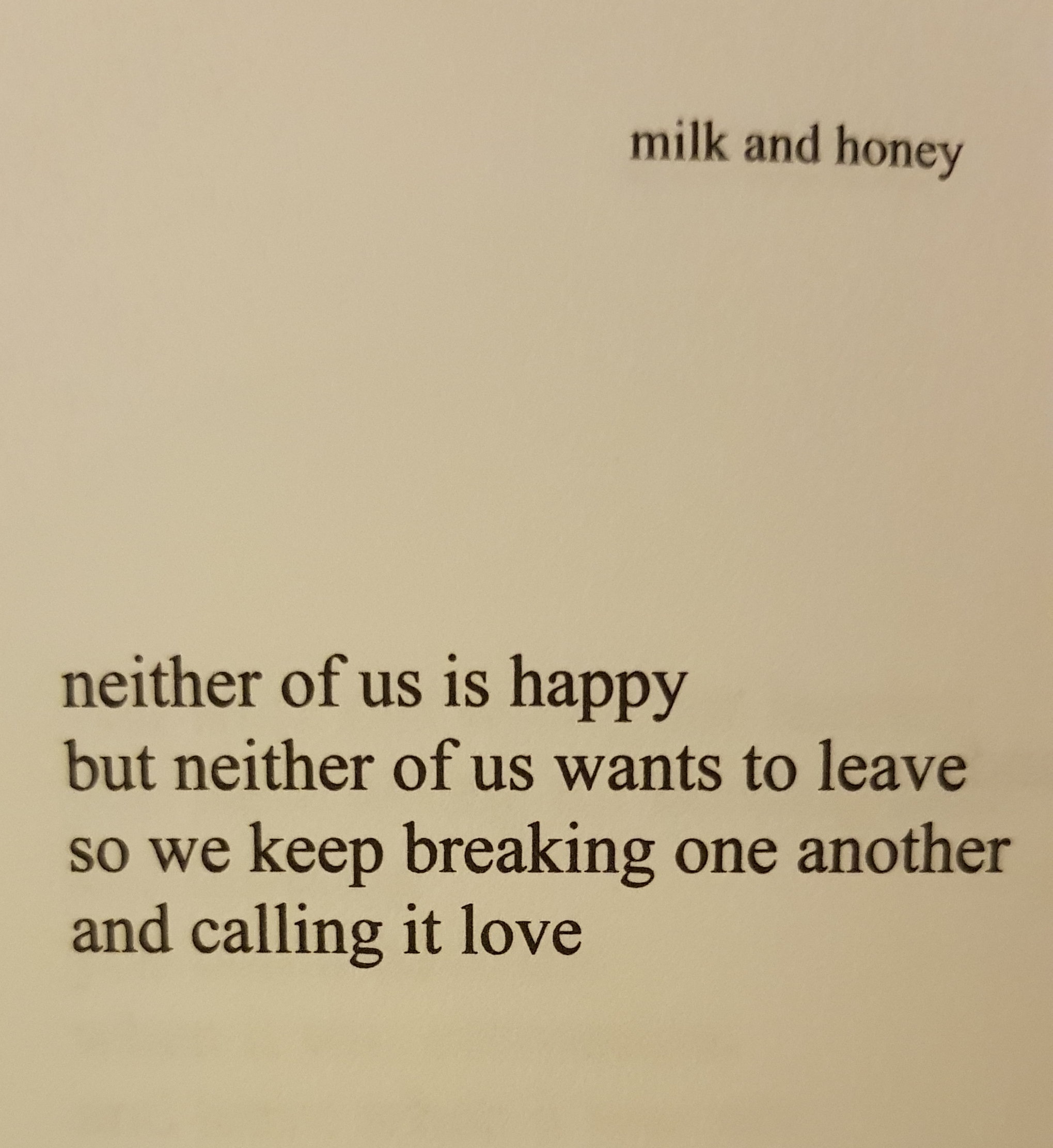
Who hasn’t heard of New York Times bestselling author, Rupi Kaur with Milk and Honey (2014), her debut collection of poetry and prose collection of poems, and the recent The Sun and Her Flowers (2017). Both books address the ebb and flow of life – triumph and loss, joy and hurt, trauma and healing – in essence tracing the universality of the human condition.
Rupi Kaur, Milk and Honey
Then there is the works of Lang Laev, born to Cambodian parents in a refugee camp in Thailand and raised in Sydney. She is the author of 5 collections of poems and prose, the most successful being Lullabies (2014) and Love and Misadventure (2013). Her other collections include Memories (2015), The Universe of Us (2016) with Sea of Strangers due 9 Jan 2018. As you may guessed from the titles of her books, Lang Laev‘s poems traced her journey in family, love and loving again. I thoroughly enjoyed her writing – her quirky sense and approach to everyday happenings.
Lang Laev, Memories
Incidentally, Lang Laev now lives in New Zealand with her partner, Michael Faudet, also a poet. I discovered Michael’s work Bitter Sweet Love (2016) separate from Lang and it was a fascinating realisation that they are partners-in-crime 🙂 Michael Faudet‘s poems and prose are confronting and verge on the sensual and erotic. After all he does have a curated erotic Tumblr. On the personal front, Michael Faudet is a mystery in that while he is everywhere on social media, little is known of this Kiwi poet and artist. His other works include Dirty Pretty Things (2014) and Smoke and Mirrors (2017) which is on my wishlist.
Michael Faudet, Bitter Sweet Love
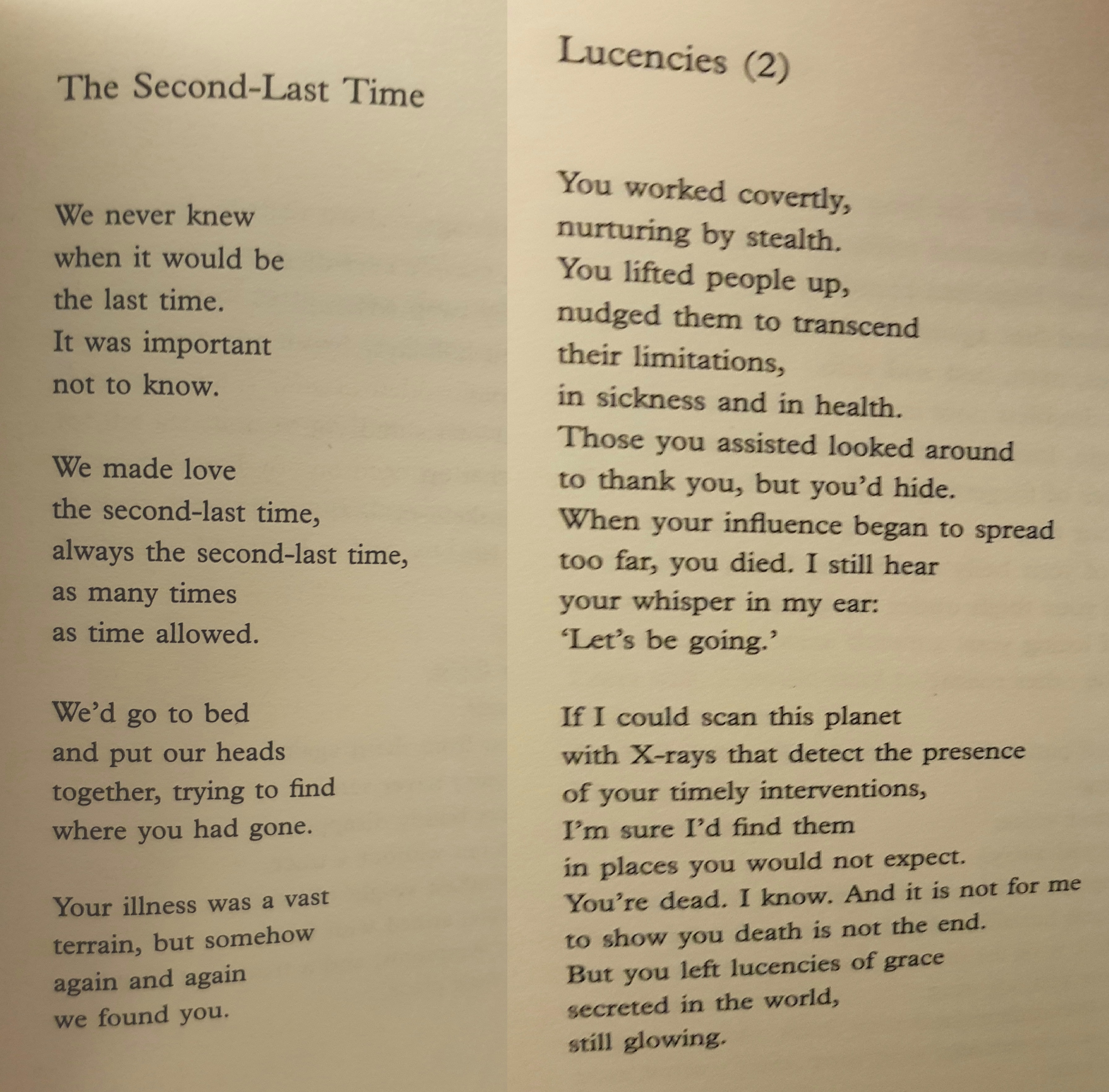
Michel Faber is another poet which I stumbled across in a Sydney book store, his book Undying: A Love Story (2016) that is. Award winning author of 9 other books, this is Michel Faber’s first poem collection written while accompanying his wife through her journey from diagnosis to her passing from cancer. Heart wrenching and entirely beautiful, they chronicle love and despair, anger and sorrow.
Michel Faber, Undying: A Love Story
Finally, an insightful gift Neon Soul (2017) by Alexandra Elle. The author writes with a rebel spirit, her poems speaking of healing and positive affirmations, instead of pain which fueled much of contemporary poems.
Alexandra Elle, Neon Soul
There you are, five poets worth checking out. especially if you are looking for something different and/or accessible.
A book which I earmarked to read for some time. Finally, I did.
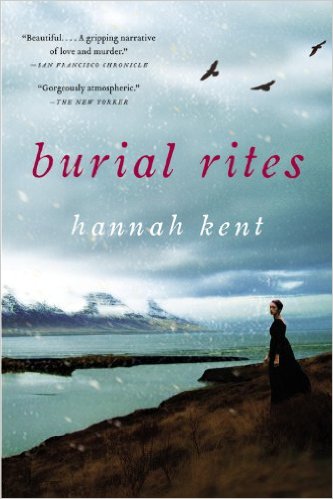
Title: Burial Rites Author: Hannah Kent Publishers: Back Bay Books, April 2014 Format: Kindle, Paperback Pages: 311 Genre: Fiction – Historical, Literary Fiction
What’s it about?
This heartbreaking story of a woman’s life journey in early 19th century Iceland gripped me from page one.
Burial Rites is a fictionalised story of a true event – In 1828, an Icelandic servant named Agnes Magnúsdóttir was convicted of killing her employer and another man, then burning their bodies. Hannah Kent’s take, as she explained, was “to supply a more ambiguous portrayal” of a woman who has been seen as a “witch, stirring up murder”.
There is no happy ending, and it is no surprise. But this book is not about finding out what happens at the end, but a study of Anna Magnúsdóttir’s life leading to her execution.
The Icelandic setting of unrelenting cold and unforgiving rocky terrain, is perfect backdrop to this story of poverty and a woman’s place within it. A young girl growing up without love and care, spurned and betrayed by those she depended on, Anna’s shame is writ large in her name, and by all that followed her survival.
There was no prison in Iceland then. So when Anna was convicted of murder, she is sent to live with District Officer Jon Jonsson; his ailing wife, Margret; and their two daughters to await her execution. A young clergy, Assistant Reverend Thorvardur Jonsson (‘Toti’) is sent to Anna as a spiritual guide to prepare her for the fateful day.
Reverend Toti initially did not understand the story Anna told, listening through his naïve and blinkered view of the world. But he finally did. And as Anna’s story unfolds, I the reader am confronted by questions.
What makes a person culpable for her actions?
What does it mean to undertake voluntary act? Who is responsible?
How much of our stories are constructed by what was told about us?
How much of us is truly seen and understood?
Would I recommend it?
A solid account. An engaging story. Highly recommended.
Ratings: Realistic Characterization: 3.5/5 Made Me Think: 3/5 Overall enjoyment: 4/5 Readability: 4/5 Recommended: 3.5/5 Overall Rating: 3.5/5
Interesting premise, as I read the ‘blurb’ on the back cover. So here goes.
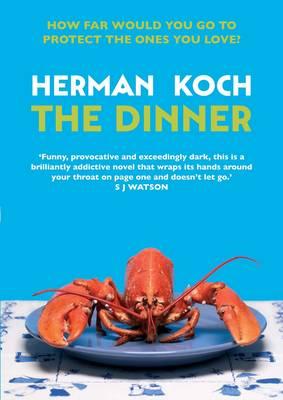
Title: The Dinner Author: Herman Koch Translator: Sam Garrett Publishers: Atlantic Books, UK (August 2012) Format: Kindle, Paperback Pages: 320 Genre: Fiction – Contemporary; Literary Fiction
What’s it about?
‘The Dinner’ is Dutch author, Herman Koch’s 2nd book published in 2009 and translated to English in 2012. It has been adapted for film (US), to be released in 2017 starring Richard Gere and Laura Linney. I for one will be watching it. Why? Because the book is intriguing, and I do want to see if it has been translated well to screen and how the characters are portrayed in the film.
The plot appears simple. Two couples – brothers and their wives – meet at an upmarket restaurant for dinner. There is an issue about their children that must be discussed, but obviously such a difficult topic to speak of that they miserably avoided it through 2 courses and various interruptions.
So what is this “important matter” that must be discussed and resolved?
Internal monologue of Paul Lohman, the protagonist, offers readers insight into the psychological state of a younger sibling, never quite living up to a successful older brother, with a chip on his shoulder and repressed anger. And through his lens, there is the arrogant older brother, Serge, the defiant yet helpless sister-in-law, Babette; and his loving and supportive wife, Claire who is most importantly his ally as against the other couple.
This story ultimately is about what people, and parents, will believe to protect their own psyche and as a defence to love. It provides a slice of the human condition – how we lie to ourselves and what we do when our very existence, as we know it, is threatened.
The story is told in a pace causing annoyance was necessary; the discomfort and unpleasantness evoked in me is testament of how well-written this book is, and portending the reluctance of the characters to name and acknowledge the “important matter” – the almost calm and matter-of-fact manner which belies the undercurrents of tension, fear and malice.
What are their motivations? Or their responsibilities?
Does it matter if the desired outcome is achieved?
How will it end for everyone concerned?
Would I recommend it?
An intriguing book definitely worth spending time on.
Ratings: Realistic Characterization: 4/5 Made Me Think: 3/5 Overall enjoyment: 4/5 Readability: 4/5 Recommended: 3.5/5 Overall Rating:3.5/5
*I voluntarily reviewed an Advanced Reader’s Copy of this book*
“Through no fault of his own, a young man is thrust into a new culture just at the time that culture is undergoing massive changes. It is losing its identity, its lands, and its dignity. He not only adapts, he perseveres and, over time, becomes a leader–and on occasion, the hand of vengeance against those who would destroy his adopted people.
Yellow Hair documents the injustices done to the Sioux Nation from their first treaty with the United States in 1805 through Wounded Knee in 1890. Every death, murder, battle, and outrage written about actually took place. The historical figures that play a role in this fact-based tale of fiction were real people, and the author uses their real names. Yellow Hair is an epic tale of adventure, family, love, and hate that spans most of the 19th century. This is American history.”
Yellow Hair is an action-packed epic saga telling the life story of a man coming to grips with his destiny. From the first page of this book, the reader is thrust inside the life journey of Jacob Ariesen, a young man whose family was looking for a better way of life in California. Leaving Massachusetts behind, and heading west on the Oregon Trail, the Arisen’s meet up with a wagon train headed to California in the mid-1800’s and set out toward gold country.
Most of the travelers were Eastern businesspeople, and they weren’t prepared to face the hardships on the trail. Careless errors of judgment by the pioneers results in the deaths of many family members. The people were greenhorns and had no clear idea what they had gotten themselves into. Throw in a crippling bout of cholera, and you have a clear picture of the tribulations suffered by the brave folks who traveled West looking for a better way of life. In the blink of an eye, Jacob’s entire family is wiped out, and he becomes the sole survivor.
With the dead and dying all around him, Jacob Ariesen becomes infected with cholera, and his days are numbered. Help is at hand, when a prophetic Native American woman, named Suni, finds her destiny with the fair-haired Jacob. Suni nurses him back to health, and she calls him, “Yellow Hair.” With no family of his own, Yellow Hair embraces the Dakota tribe who adopts him. He learns to speak the native languages of the Great Plains Indians and lives his life as a member of the Dakota tribe.
Jacob Ariesen, a.k.a. Yellow Hair takes his place in history framed by the U.S. government’s policy of placing the Dakota Sioux Indian tribes onto reservations after breaking treaty after treaty with the native peoples. The rest of the story belongs to Yellow Hair, told from his point of view.
I felt both sides (Native American and Whites) were portrayed as accurately as history could allow. The difference is in perspective, when you the reader, has the chance to witnesses the historical events through the eyes of a white man who considers himself to be an Indian.
I thought the author, Andrew Joyce, was entirely fair in his depiction of all the events. I never felt one side was glorified over another. The historical facts are woven in between the author’s interpretation of the events making history come alive.
History has a way of repeating itself, and I was quite moved with the parallels between the novel, and real life events unfolding at the Standing Rock Sioux Reservation and the Dakota Access Pipeline. I must admit I shed a few tears at the brutality of humanity on both sides of the spectrum.
I enjoyed this book from start to finish and could not put it down. And, as the author reminds us, “This is history,” which means many of these happenings are hard to swallow from a humanitarian point of view.
This is one of my favorite books from my expanding library of Andrew Joyce novels. If you love historical fiction set in the American West, you will love Yellow Hair.
Character Believability: 5 Flow and Pace: 5 Reader Engagement: 5 Reader Enrichment: 5 Reader Enjoyment: 5 Overall Rate: 5 out of 5 stars
Author, Andrew Joyce
About Andrew Joyce:
Andrew Joyce left high school at seventeen to hitchhike throughout the US, Canada, and Mexico. He wouldn’t return from his journey until decades later when he decided to become a writer. Joyce has written five books, including a two-volume collection of one hundred and forty short stories comprised of his hitching adventures called BEDTIME STORIES FOR GROWN-UPS (as yet unpublished), and his latest novel, YELLOW HAIR. He now lives aboard a boat in Fort Lauderdale, Florida, with his dog, Danny, where he is busy working on his next book, tentatively entitled, MICK REILLY.
I was encouraged to read this book by the local store owner at Tallulah Point Overlook, GA. So glad I did.
Title: The Valley Where They Danced Author: Emory Jones Publishers: Emory Jones LLC (2014) Format: Hardback Website: The Valley Where They Danced Pages: 290 Genre: Literary fiction
What’s it about?
The author, Emory Jones, is a local of this area of Northeast Georgia, USA which is the backdrop of this enchanting tale.
It is the early 20th century, shortly after the end of World War I. Dr Tom Garrison a newly licensed doctor travels from Macon, Georgia to be the local doctor in Clarksville, GA. As he familiarizes himself to the town and its delightful characters, he meets the resourceful Lenore Conley. Even on the first time they meet, they know their destiny is sealed. But a sinister presence lurks. Will it pose a threat? What will become of Tom and Lenore, as their story masterfully told by Emory Jones, closes at Tallulah Gorge, GA.
The tale of the two lovebirds is woven into the tapestry of life and history of the Sautee Nacoochee valleys from the beginning of the hydro electricity dams being built to references to the new motorised vehicle and the aftermath of WWI for those fortunate to return home. And let’s not forget the two legends of the Sautee and Nacoochee. Will Tom and Lenore’s fate follow?
Would I recommend it?
A gripping tale amidst the rich historical context kept me glued to ‘The Valley Where They Danced’. How I wish I had read this book before I visited this part of Georgia.
Ratings: Realistic Characterization: 4/5 Made Me Think: 3/5 Overall enjoyment: 4/5 Readability: 4/5 Recommended: 4/5 Overall Rating:4/5
This is a Christmas gift which took me three months to read (yep, been extremely busy) and another four months to review…
Title: All the Light We Cannot See Author: Anthony Doerr Publishers: Scribner, Simon & Schuster (2014) Format: Hardback Website: www.anthonydoerr.com Pages: 530 Genre: Literary fiction; Thriller
What’s it about?
This is a story of morality – of doing and not doing, of being and non-being – and science set in Germany and France during WWII. It tells of how the two protagonists’ lives intersect in the lead up to the German occupation of France.
I was introduced to Werner a 7-year old German boy gifted in science who lived in an orphanage with his sister, Jutta. Marie-Laure was 6 years, blind and much loved by her father, a locksmith and the keeper of keys at the Muséum National d’Histoire Naturelle. And there in the museum was hidden an accursed gem, which would be the thread running through both Werner and Marie-Laure’s lives.
From 7 to 18 years old where the story ends, Werner knew he had a calling, to repair and build radios. This brought him to the attention of the Nazis and subsequently sent to a school that produced elite cadre for the Third Reich. There, Werner’s friendship with his best friend Frederick was tested repeatedly as he experienced the conflict between his love for science and his love for his friend. Jutta’s voice rang as his conscience until he chose not to listen. Ultimately Werner’s fate was tied to the accursed gem, with which his commanding officer was obsessed.
During these years, Marie-Laure had a happy life deciphering puzzles her father built, and learning about her sightless world through the delightful miniatures her father had constructed. It was because of them that she managed to survive when she was brought to live with her great-uncle’s home in the town of Saint Malo, on the coast of Brittany after escaping Paris when her father was entrusted with the accursed gem. Her great-uncle, Etienne, a former soldier suffering from psychological distress, had been using his radio transmitter for the Resistance.
How do all these lives intersect? I suppose you can see the obvious connection, however there are many more. I will leave you to discover what they are.
For me, the only character that seems to be predominantly two dimensional is von Rumpel, Werner’s commanding officer. The book’s approach to Nazism fell short of the realism that was conveyed throughout other parts of the book. The other secondary characters were fascinating and I almost wished they had their own words for their experiences.
Would I recommend it?
‘All the Light We Cannot See’ is thriller and literary fiction, rolled into one. A delightful book with detailed descriptions of the towns and well-presented characters – Marie-Laure more believable than Werner, nevertheless entirely absorbing.
Ratings: Realistic Characterization: 3.5/5 Made Me Think: 3.5/5 Overall enjoyment: 4/5 Readability: 4/5 Recommended: 4/5 Overall Rating:4/5
Thanks to Net Galley and to Jonathan Cape for providing me a copy of the book in exchange for an honest review.
Honestly? I enjoyed the book. On the other hand, would I recommend it? Well, it depends.
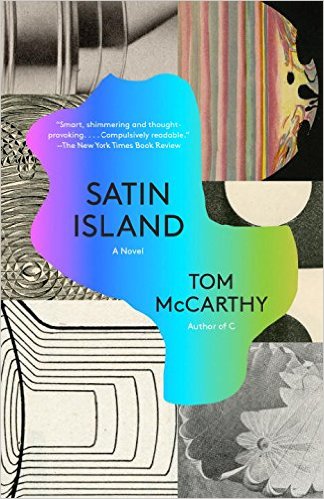
The book is narrated in the first person by U., an anthropologist working for a global corporation, which at the beginning of the book has secured a project that will change everything. We never quite know what this project is, and it seems nobody else knows either. U.’s contribution to the project is celebrated, although he has no idea what that contribution might have been. His job also consists of creating a report. A report about everything. He’s at liberty to choose how to do it. But how would you go about it?
U. chats constantly about things that might appear unconnected, but his job —in so far as he knows what it is— seems to be to find connections. He talks about Lévi-Strauss and his thoughts about anthropology and tribes, he collects random data (about oil-spills, parachuting accidents, airports and places…), he goes to conferences and gives lectures he seems totally unprepared for, but his search for meaning is thwarted, and it’s difficult to know if it’s the world’s fault or his own. Perhaps, as he mentions, Lévi-Strauss was right, and eventually it all becomes reduced to either new tribes that get absorbed into the everyday and stop being weird, or tribes that are so weird they are completely meaningless and cannot be processed using our current methodology.
The book reminded me of many things, although I didn’t consciously try to find similarities or connections. Perhaps it’s a side effect of reading it. It did remind me of reading literary theory, in particular the French Theorists (Roland Barthes, Jacques Derrida), and how much I liked them (although I was in a minority position in the American Literature class, I must admit). There are moments when the absurdity of everything made me think of works like Terry Gillian’s Brazil or some of Kafka’s or Orwell’s books (minus the pathos.) There were moments breathtakingly beautiful and poetic, usually found in something mundane. (Wonderful examples are the descriptions of the videos one of his colleagues’ shoots and later watches on a loop. But other things too: traffic, people skateboarding, dreams, even the Ferry to Staten Island…). And even moments where it seemed as if he’d found an explanation, a brilliant who-done-it that later comes to nothing, much as happens with his thoughts of rebelling and disturbing the set order. Flashes of genius in a pan.
Recently I read a very long book, stylistically interesting, trying to be about everything and for me too full of itself and failing. This is a book that possibly is about everything. Or about nothing (the difference might be only one of degree), and thankfully doesn’t take itself too seriously.
My opinion. Yes, I really loved this book. With regards to recommending it… Well, it has no plot, not much on the character side of things, it’s clever, it’s beautifully written, and it might make you think, although probably not reach many (if any) conclusions. So there you are. If with all that you want to read it, I hope you enjoy it. And if not, that’s all right too.
By the way, the book is nominated for the Man Booker Prize.
I checked over my notes and it seems I’ve highlighted a variety of things, but not sure any of them are very exemplary.
‘Me? Call me U.’ (wink to Melville, whom I love.)
In describing how his boss, Peyman, talks about the company:
‘If I had, he’d say, to sum up, in a word, what we (the Company, that is) essentially do, I’d choose not consultancy or design or urban planning, but fiction.’
‘Key to immortality: text messaging.’ At this point in the story, a friend of his had died, and he explains that he’d received a text message from his friend’s phone, sent by his estranged wife, to let him know he’d died. His friend had commented how one of the things that bothered him about dying (he was quite ill with cancer and knew his end was near) was that he wouldn’t be able to tell anybody about it. He felt mortified by the fact that when the most important thing that could ever happen to him, finally happened, he wouldn’t be able to tell anybody. U reflects that if one has a system to automatically send messages on one’s name, forever, (Tweets, blog posts, SMS, social media updates) that would be the equivalent of immortality…
Ratings: Realistic Characterization: 3/5 Made Me Think: 5/5 Overall enjoyment: 5/5 Readability: 4/5 Recommended: 4/4 Overall Rating: 4.5/5
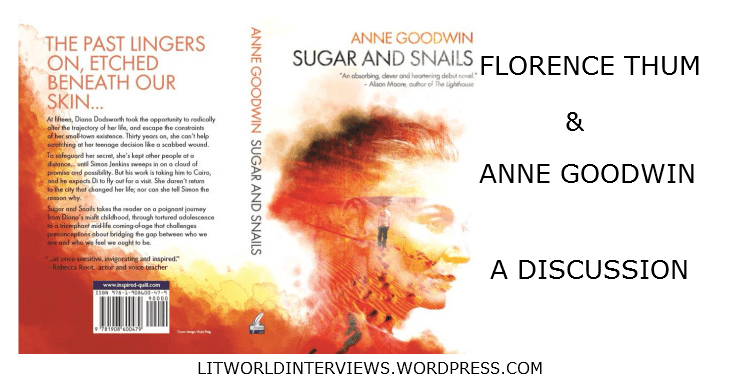
I have the privilege of interviewing author, Anne Goodwin about her debut novel ‘Sugar and Snails’, of which I did a review here on LitWorldInterviews.
To cut a long story short, Anne thought it would be good idea for someone who is associated with psychology to review her book, and I couldn’t be happier to do so. Of course, after reading ‘Sugar and Snails’, I do have a few questions for Anne.
So here goes:
An interview with ‘Sugar and Snails’ author, Anne Goodwin
Anne, what an incredibly thought-provoking book. I guess readers will want to know how you come to conceive the idea/theme for ‘Sugar and Snails’?
Thank you, Florence. I’m not totally sure where the idea came from – I think these things can lurk in our subconscious for quite some time – but there seem to have been three strands, which I have written about in more detail elsewhere: taking almost half a lifetime to figure out my own difficult adolescence; an awareness that many competent professionals have hidden vulnerabilities; and the discovery, part way through a long overseas trip, that an administrative error had led to my travelling on a passport that had registered me as male.
Find out about Anne’s difficult adolescence here. Look here for Anne’s take on the vulnerabilities we harbour. And finally, Anne registered as a male? Look here for what she means.
Your bio states you worked as a clinical psychologist in the UK for some 25 years. What was your area of practice or expertise as a clinical psychologist? When and how did you come to study psychology? And with mathematics?
I specialised in working with adults with severe and enduring mental health problems, often psychosis (Diana’s methodology for researching adolescent decision-making actually comes from a study of psychosis). Many of those I worked with were in residential care, which sparked my interest in organisational dynamics, so I did some additional training in psychoanalytic approaches to organisational consultancy.
I went to university straight from school at eighteen without a clear sense of what I wanted to study. In Britain, you’re expected to specialise early on, but I hadn’t had much guidance. I began studying languages but, being rather shy, I struggled with the spoken side, but eventually found the right place for me in the combination of psychology and mathematics. I liked the fact that in the former “the answer” is always provisional, while in mathematics, if you follow the logical process, you get to the correct solution. I loved reviving these subjects for ‘Sugar and Snails’, making Diana a psychologist and her best friend, Venus, a mathematician.
While maths is conceptual, it is easy to assume there is ‘the’ answer. Perhaps that is where its similarities lay with psychology – we must remember the factors and variables involved in the psychological makeup of a person. It is indeed fascinating to compare the different approaches Venus and Diana have to problem solving, to life in general.
How has your work experience assisted in writing ‘Sugar and Snails’?
As a basic level, it gave me an insight into Diana’s job as well as her, somewhat disastrous, experience of the health service. Yet, when I first answered this question in a Q&A, I didn’t fully appreciate quite how much my professional background has helped. But, having returned to this question after the one on research (below), I realise that the capacity to empathise with lives very different to one’s own is second nature to anyone who has worked therapeutically, as it is to the experienced writer of fiction. Although I was nervous that insiders might doubt my character’s authenticity, my work experience gave me the confidence to give it a go.
I can appreciate this. You certainly haven’t inundated the book with psychological profiling of each of the characters. And to think I wasn’t the first to ask this of you? 🙂 Here is Anne’s interview with Carys Bray on Blogger.
Next, how much research did you have to do for ‘Sugar and Snails’? What did you research?
I probably didn’t do half as much as I ought to have done! There’s a “secret” page on my website that lists my main background reading on attachment, gender and adolescence, although some of this I would have read anyway. I had to check out some legal and medical detail regarding Diana’s situation, but mostly I proceeded on the basis of imagination and intuition. Then I was lucky to have experts-by-experience among my prepublication readers who I hope would have flagged had I got anything drastically wrong.
Are the locations in the book real places, and if so, which are familiar to you and why?
The contemporary strand is set in the city of Newcastle, where I went to university and lived for twenty years; I might have used poetic licence, but the backdrop to Diana’s adult life is very real. The small town where she grew up was imagined, but the country walk she recalls taking with her father is one I’ve trod frequently.
Check out Anne’s interview with Geoff le Pard regarding the country walk.
And why Egypt? Do I sense a certain personal ‘love affair’ with Egypt?
My research suggested Diana could have gone to Casablanca but, never having been there, I crossed my fingers and used a setting in another part of North Africa. While I enjoyed revisiting my memories of a month-long visit twenty years before, many of the Cairean scenes were cut from the final version, so I’m pleased my affection for the place still comes through.
Find out here the scenes of Cairo which were cut from the book A photograph Anne shares.
I am intrigued by the nature of Diana’s relationship with Geraldine which isn’t exactly explained. Is it intentional? If not, what is it?
Mmm, I’m intrigued by your being intrigued, although another reviewer did comment she didn’t quite “get” it. I think their early childhood relationship is quite intense, assuch friendshipsoften are, with Geraldine initially the more “knowing” of the two, using the relationship to explore her own sexual and gender identity. When, at secondary school, she becomes more conscious of social norms, she distances herself from the “oddball”, but still enjoys having power over another child who’ll do anything for her. When they meet again as adults, Geraldine has moved on in a way that Diana hasn’t. I find that quite poignant.
It is indeed poignant, especially when I see how Geraldine is now leading a ‘normal’ internal life while Diana’s somewhat stuck. Yet the book also highlights to me how the world would see them in such a different light.
When did you begin writing ‘Sugar and Snails’? Describe the writing journey from beginning to getting it published – as well as getting the book to us, the readers.
I started it in 2008, filled with confidence aftercompleting a long-distance walk, but it took many drafts to get it right, partly because I didn’t realise what acomplex task I’d set myself, followed bytwo years to find and sign with a publisher(and, yes, I’m still waiting for a couple of agents who enthusiastically asked for the full manuscript to get back to me). So seven years from inception to publication, which felt inordinately long when I was in the thick of it, less so now I’m through to the other side.
When did you get the writing bug? Describe the circumstances which led you to first put pen to paper as a writer?
Now this is an example to follow – at least one day a week 🙂
I note the contribution from book sales to Gendered Intelligence. What is your relationship with this organisation? Why do you support Gendered Intelligence?
As a social enterprise, Inspired Quill is committed to improving community well-being. Although a new venture, theirpledge to give ten percent of profits from book salesto selected charities is part of that.Gendered Intelligence is the perfect fit for Sugar and Snails because Diana would have been saved a lot of grief had she been able to draw on the kind of support they offer young people who are gender variant today.
What message, if any, would you wish ‘Sugar and Snails’ to convey regarding the important issues of gender and sexuality?
Be open todiverse ways of beinghuman in yourself and others; I truly believe it will make the world a better place. But I think fear of difference is also part of being human and acknowledging our discomfort can be a step towards transforming it into empathy rather than hate. Fiction can help with this process by offering a safe space in which to be curious about difference.
Let’s end on a lighter note. Describe your writing spot and how it came about.
My writing space has extended over the years and I now have the luxury of not just an entire desk to myself, buta room I’m only intermittently obliged to share with my husband. We have a rather large house and I dread to think of what I’ll do with all my books if we ever downsize.
What is your beverage of choice when writing? You may be as specific as you wish.
Because I use voice-activated software, I need to drink a lot to protect my throat. I tend to drinka variety of herbal teas throughout the day, often just a sprig of sage, lemon balm, mint, fennel or rosemary from the garden doused in boiling water. I also like very weak lapsang souchong with a slice of lime. You must be thirsty yourself after all these questions. Could I offer you a cup?
Most certainly. I drink green tea for its clear crisp flavour. It’s a psychological trigger for me to relax, usually at the end of the day. I need a strong coffee to wake me up in the morning.
Thank you, Anne for your time and sharing your writing with us. I have thoroughtly enjoyed reading ‘Sugar and Snails’ . Wishing you the best in your writing endeavours, and a positive outcome as you wait to hear from publishers.
*******************************
My review of Anne’s book ‘Sugar and Snails’ is here.
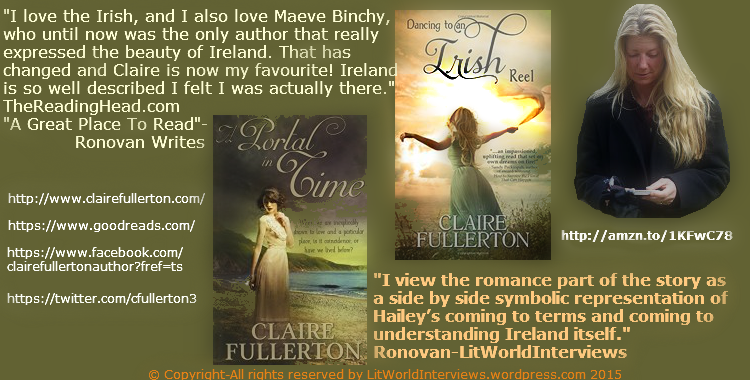
Dancing to an Irish Reel by Claire Fullerton – A book review
Oh to be twenty-something again, but this time with the same intuitive sensibility as Hailey Crossan, the heroine of this fictional story.
That thought crossed my mind many times while reading Claire Fullerton’s novel, Dancing to an Irish Reel. I had the pre-decided notion that I would relate personally to Hailey’s experience being that, like her, I’m an American woman involved with an Irish gentleman. Relate I did, but not where I expected to. Our relationships are as different as our personalities and the same goes for the men in our lives. So I reread the book with no expectation or comparison and it won my heart over.
What I most connected with were the references to western Ireland geography, weather, language, and societal mores — they are impeccable. I could nearly hear the distinct Connemara blas when natives spoke. Ms. Fullerton nailed the vernacular, evidence she had spent time in the setting either researching the book or being inspired to write it. How fortunate for her because the west of Ireland is a spectacular place to be.
Another appealing part of this book for me is the use of genuine locations. One pub in particular made me smile each time it was mentioned. My husband and I celebrated there with friends and family days before our wedding and returned again on the day following our wedding. I’ve eaten, drank, danced, shopped, and wandered in many of the places that are written about. And the places I was less familiar with, I found myself drawn to explore.
The story reads more like a true narrative rather than one of fiction. As Hailey keenly observes the nuances of Irish life, her confusion about her swain, Liam Hennessy, begins to make sense and she gains knowledge about the realities of life with an Irish man whose first loves are music and family. While all this is happening she remains remarkably level-headed and generous with her time and affections for friends, co-workers, and neighbours. In their own unique way, they provide insights that may or may not relieve some of her uncertainty; if not, they at least help to take her mind off the wonders of her heart while also enhancing the storyline.
Hailey and Liam’s relationship is not an uncommon scenario here in Ireland. Bittersweet at times, there’s an innocence and naivety to their love story that had me reading between the lines of their dialogue right up to the end of the book. I’ll admit, the ending was unexpected but not surprising. I could easily see a sequel to this book and would welcome it with open arms.
Would I recommend the book? Absolutely. Who would I recommend it to? Anyone living apart from Ireland who wants to get a sense of its people and intrinsic nature. Anyone who is living in or has visited Ireland and wants a reminder of how unique a culture it is. Readers who are interested in real life relationships, full of complications and void of fairy tale scenarios would also find this story appealing. If you enjoy a really good piece of fictional writing, then Dancing to an Irish Reel is for you.
Melissa Gillan “The Aran Artisan” is an Amercan lady who married her Irishman and moved to Ireland on love and a prayer. She and her husband work the land, raise their children, and do everything the Irish way. Her Blog, “The Aran Artisan“ is a favorite stop for many who love her style of sharing the Irish way of life in an American voice. She was chosen specifically for this review to deem how authentic and how successful Claire Fullerton had made Dancing to an Irish Reel. Living in the area of the setting for the book, she would know.
Unless you’ve been hiding under a CPU and working on your own book, then you know how much I’ve enjoyed a book called Dancing to an Irish Reel by Award Winning author Claire Fullerton. But I made a mistake with that book review. And I want to correct that up front. I wrote the review too soon after reading the book and failed to give time for reflection and full comprehension to take place. I didn’t take it all in and examine all the nuances hidden within the story. Every day since then I’ve been working on some aspect of the Claire Fullerton Experience. Yes, I call time spent working with an author an Experience like that because it does not normally end with a review and/or an interview. There is a lot more going on in the background than anyone other than one of my authors knows.
During the Experience I realized just how much Claire put in her book and how much she put in to her book. The more I think about it, the more I love the book. I don’t normally dwell very long after a review and interview, I always have the next to go to and I have since. But this would had a truth about it, a realness that one connects with and it stays with you. But before I get too carried away, unless I’m already too late, let’s get to my discussion with Claire Fullerton, Award Winning author and #1 GoodReads Irish Romance.
Claire, for a book that finds itself at times falling into the category of Romance, I have to say I was surprised by what I found with keeping that genre in mind. Did you set out to write a Romance? Was that your goal?
I’m so glad you asked this question, Ronovan. Actually, “Dancing to an Irish Reel” is literary fiction, which is a genre that means true to life. It’s a story about those near misses people experience on the road to a love that endures. I can’t think of anyone I know who hasn’t been in this situation before; where all the variables of attraction are in play, while two people are coming to know each other, yet for one reason or another, they can’t seem to get it together. But there is always such hope, and I think new love is typically replete with uncertainty. There is excitement and high hopes, yet on the flip side there is unpredictability and attendant fears. Extending oneself in new love can be risky and can leave one feeling vulnerable. It’s my belief that most people experience uncertainty and doubt when in the throes of new love, it’s just a question of to what degree they’re going to admit it! This is what “Dancing to an Irish Reel” is about. This is also why this book does not fall into the romance genre, but it does explore the subject.
Actually when I was thinking about this interview and the book I thought of real life with those moments of almost romance, or more relationship to tell the truth.
I think so as well. This is why I gave the reader Hailey’s thoughts throughout this book. I’m fascinated by the way people will say and do things in order to project a certain appearance, while thinking something completely at variance with their words and actions. I wanted the reader to know Hailey’s personality as she made her way in rural Ireland; that she saw things from an American frame of reference for much of this book, yet as the story progresses, that frame of reference was changed as she came to understand the Irish culture. I think this is what people do in life: they tend to resist what is new because their mind is already made up, but if one allows themselves to be influenced, there is much to learn!
Click Image for Amazon
The role of Hailey Crossan is a strong woman who knows who she is and what she wants. Where did those characteristics come from, as far as a model for her?
I love your use of the word role! I, too, see this book as a movie! You’ve just made my day! But seriously, and to your astute point, I know more women like Hailey Crossan than otherwise. When I consider all the close girlfriends, with whom I was lucky enough to grow up in Memphis, I realize they are all nobody’s fool. My mother was the same way. The women in my life have always been self-confident and self-reliant. They have a savvy, keen eye with regard to sizing people up. And the thing I’ve found with many of my friends is they rarely let on. They prefer to keep things close to the vest, so you have to know them for a while before you realize how aware they really are. This is how I wanted to write the character of Hailey. It was necessary that she was self- sufficient and sure of herself in order to move to another country without fear. She had to be able to hold her own in her new environment because she was a fish-out-of-water, so to speak.
I think your description of close to the vest fits Hailey well, now that I think about her. Cautious is another word that comes to mind. Recently I became a fan of a young man named Hozier, an Irish blues singer/musician/songwriter of about 26. I couldn’t help but picture him during my reading of Dancing to an Irish Reel. Did you have any images in mind, anyone in particular when you were writing Liam Hennessey?
Generally yes, but no one specifically. But I’ll use Hozier to make a point because the look of him is a good example; it is common in Ireland. There are many with dark hair and fair skin. And having lived in Ireland myself, I found the men to be subtle and beautiful, almost with a graceful, feminine quality. And those artistically attuned are the sensitive sort. This is what I had in mind when I created Liam Hennessey.
Oh, and one other thing before we move on, why that name, why Dancing to an Irish Reel?
Spiddal Pier Shore Galway Bay, Ireland
In Irish traditional music, a reel is a tune that is circular; it goes back and forth and in and out in its execution, and to the listener it may seem unstable, but it is not. A reel has a plan! The title “Dancing to an Irish Reel” is meant to evoke this concept. It refers to the push and pull of the story and the search for stability. Hailey’s navigation of Ireland as an outsider and her sometimes off, sometimes on relationship with Liam Hennessey left her in the position of having to artfully manage a shifting tide, so to speak. She had to learn the ways of the Irish culture in order to live there inconspicuously, and the unpredictability of Liam Hennessey’s actions left her constantly searching for solid ground!
I’ve seen your handling of Ireland compared to that of one of Ireland’s most famous and beloved authors the late Maeve Binchy. When you see comparisons like that what comes to mind?
With regard to Maeve Binchy, because she was Irish, she handled Irish nuances effortlessly, as a matter of course. They were not unusual to her at all, but she reveled in their specific, unique quality. With regard to Ireland, she was in it as well as of it, yet able to stand back and observe the islands peculiarity in a way that celebrated its facets. I sought to do exactly this in “Dancing to an Irish Reel” because I carry a love and appreciation for the land and its culture. I find the Irish people earthy and authentic, unpretentious and in possession of a good perspective with regard to what is important in life. They place importance on quality of life and seem to me to accept life on life’s terms, as opposed to trying to manipulate their way through it.
When you were writing the book, was it an organic experience or did you have a specific outline in mind first? And whichever way, is that the same way you wrote A Portal in Time, your previous release?
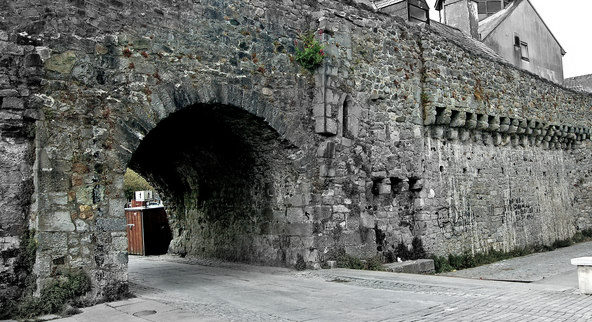
Spanish Arch Galway, Ireland
For both books, I had a point to make, as in something to say. I started with a premise as a statement then set about getting there via a story that unfolded. As for an outline, my process is very loose. I leave room for the story to tell itself, which is something best exemplified as I write dialogue. I never know ahead of time what the dialogue will be, yet I aim for information to be revealed. We learn about characters through what they say and what other characters say about them. In both books, I was mindful of the spirit of intention and had a loose outline of what was going to happen with regard to turning points. I simply held a firm impression of who the characters were to make the events in both books plausible.
Reading your book and the description of A Portal in Time, I get the feeling of your enjoyment of writing about past lives, mystical and spiritual elements. Is this something that comes natural to you, I mean as in the aspects of writing?
Click Image for Amazon
My introspection must be showing! In truth, I’m not completely decisive on the subject of past lives one way or the other, but I do love the mystery. Perhaps the idea of past lives shares a blurred line with genetic memory, who’s to say? If you consider the idea of genetic memory, what it basically proposes is that we carry the impressions and experiences of our forebears because they are past down to us through genetics like imprints. This explains inherited talents and proclivities in an understandable way. And if you look at, say, the Druids, they didn’t believe so much in past lives as they did in the transmigration of the soul, meaning we are souls gathering wisdom in this business of living on earth, but it takes many incarnations to accumulate something with staying power. We can’t just get it all in one lifetime, if the aim is enlightenment, i.e, perfection. And because it is an ongoing endeavor, the idea is we return to this earthly plane repeatedly, where we try on different hats. I think there is confusion over the idea of past-lives because it places importance on the experience of the human as opposed to the experience of the soul as it seeks alignment with the divine, however you choose to define the divine. But this subject is important, and it’s enough for me to be mindful of the question. I think Sting touched upon something beautiful when he proclaimed we are spirits in the material world, and I know he wasn’t the first to posit this, but he did make a proclamation that brought it to the public fore.
Everyone that’s read my review of your book knows I loved it, and that I suggested a sequel. We’ve talked about it and it hadn’t come to you as an idea until then. But you set it up so well with the tarot card reading of Hailey. Do you think maybe some of those outside forces were guiding your story during certain parts? Maybe they want you to take another trip to Ireland.
Actually, I have been back to Ireland since I wrote “Dancing to an Irish Reel,” and I plan on going again! As for going back to Ireland in a sequel, I never thought along those lines because “Dancing to an Irish Reel” is a self-contained story with a point to it, which is to say we make our choices in life and from them our lives are set on a consequential course. As of this interview, I am not ruling a sequel out. I’ll let Hailey decide.
Now let’s get something a little more personal. We have a lot in common. Southern. Music business. Location of living for a time. How does your time in the South influence your writing, and is that part of your heritage something that you think might have drawn you to Ireland?
Ireland and the American South share something in common, but do keep in mind that much of the American South was settled by the Scotch-Irish, so perhaps it is something inherent in the area. Both areas spawn terrific communicators in possession of the gift of the entertaining story. It is a cultural way of being in the world, and therefore something passed down to each generation. In both the South and Ireland, I’ve found extremely colorful characters, completely unabashed in personality. As for the South influencing my writing, all I can say is that I write as I think, from the internal monologue I have in my head as well as how I see the world. The South has clearly influenced this as an environment because it is my frame of reference.
What’s the most satisfying thing that has happened to you so far while you’ve been an author?
The writer’s life style. I write daily for one reason or another. It has transpired that with two books in the world and the dynamic that promotion brings therefore, that I am always writing something, and this is due to the affiliations my books have given me. Take for instance the Irish online community “The Wild Geese.” They’re a group of the most erudite, Ireland loving writers I’ve ever come across, all with the desire to communicate and share their love of the island. I contribute to this community regularly by writing pieces that appear as blog posts, but what they really are is a way to celebrate the business of what it means to be Irish! So there is that gift, but I have also spent the last two years writing my third novel, which has been a joyous process. Then, of course, I contribute to magazines. It seems I’m always writing something and sharing it, which to me is simply the high art of communication for its own sake. All this is my idea of fulfilling days with a purpose. Can’t get more satisfying than this!
Do you have a favorite line in Dancing to an Irish Reel?
Yes, it is this: “There’s a feel about Galway that you can wear around your shoulders like a cloak.” It is very true.
Thank you, Ronovan. This has been big fun! Thank you for supporting writers through your exceptional blog.
About Claire
Claire Fullerton grew up in Memphis, TN and now lives in Malibu, CA. She is the author of literary fiction, “Dancing to an Irish Reel,” which is set in Connemara, Ireland, where she once lived. She is also the author of “A Portal in Time”: A paranormal mystery that unfolds in two time periods set on California’s hauntingly beautiful Monterey Peninsula, in a little village called Carmel-by-the-Sea. Both of Claire’s novels are published by Vinspire Publishing. Claire is a three- time award winning essayist, a former newspaper columnist, a contributor to magazines including Celtic Life International and Southern Writers Magazine. She is a five-time contributor to the “Chicken Soup for the Soul” book series and can be found on Goodreads as well as the website under her name. Currently, Claire is writing her third novel, which is a Southern family saga based on her award winning essay in the 2013 San Francisco Writer’s Conference.
Author: Claire Fullerton Title: Dancing to an Irish Reel File Size: 373 KB Print Length: 237 pages Page Numbers Source ISBN: 0990304256 Simultaneous Device Usage: Unlimited Publisher: Vinspire Publishing (March 6, 2015) Publication Date: March 6, 2015 Sold by: Amazon Digital Services, Inc. Language: English ASIN: B00UCOZJXM Text-to-Speech: Enabled Word Wise: Enabled Lending: Enabled Genres: Romance, Contemporary, Fiction, Literary Fiction Kindle: $1.99 Paperback: $13.99 Audible: $17.95
I received a copy of this book from the author for an honest review. And of course with me, you know that’s what you get. Good or bad. Here we go!
What happens when an L.A. music exec goes on sabbatical to Ireland? Well this is a romance, so I’ll say romance, along with love, music, and most of all confusion—caused by love, language, and longing. You might think a Southern girl who moved to L.A. might be accustomed to culture shock and speaking a different language, but Ireland is an island unto itself.
Dancing to an Irish Reel is about American Hailey meeting real Ireland and new-to-love Liam Hennessey. What you get is a story of Hailey learning about the place she comes to call home and as she learns about it and begins to understand it, she also begins to understand the man she falls for.
I like the character of Hailey. She is not your stereotype romantic leading lady that people like to think of. She is strong, knows what she wants, has common sense, and above all—she doesn’t do the typical damsel in distress routines.
Men, you will like this book. I say that because men need to realize that a great deal of books with Romance in the genre are not exactly what you may think. Movies men seem to like have romance in them and could be labeled as such in genre. So get a clue.
In other words this will hit with all people.
I found this book a bit of a surprise in some ways. Things don’t happen the way you expect, which to me is good. You want to be surprised these days. I do want to say that the character of Liam, well—Fullerton does a great job of explaining the Irish male in several places from different viewpoints. Very interesting, I thought.
You might at times want to hit Liam over the head with something, like his accordion, but then, he is a man, it’s love, and he’s young, so what else would you expect? And that is one thing that makes this book real and allows the reader to connect with it. No one is perfect in the book. Even those thought to be perfect are flawed deeply, and not entirely due to their own doing. And as for the accordion, it’s a loved instrument in Ireland and makes Liam somewhat of a local celebrity.
I loved the description of Ireland, the people, how the language works and the culture itself works in so many different ways. Those parts alone make you think you have read a much larger book because you learn so much. I view the romance part of the story as a side by side symbolic representation of Hailey’s coming to terms and coming to understanding Ireland itself.
How does the book end? Is it a happy ending? That’s something you have to find out for yourself. Does Fullerton leave things open for a sequel? Could there be a trilogy or even a series of Hailey books? Personally, I would like to see more of Hailey in Ireland. How Fullerton uses Hailey to teach us about the real Ireland is something that needs to be revisited.
Recommendations:
I recommend this book to lovers of Ireland, real people, common sense romance, and reality.
Character Believability: 5 Flow and Pace: 5 Reader Engagement: 5 Reader Enrichment: 5 Reader Enjoyment: 4 Overall Rate:4.8
You may be looking at that Reader Enjoyment number and wondering why. There were certain characteristics of Liam that somewhat annoyed me at times. I think maybe it was because I’m American and he’s Irish and as Claire Fullerton explains in the book, those two types of men are different. But Liam is real to the Irish male character. Perhaps being of Scottish background, maybe it’s just me.
Claire Fullerton grew up in Memphis, TN and now lives in Malibu, CA. She is the author of literary fiction, “Dancing to an Irish Reel,” which is set in Connemara, Ireland, where she once lived. She is also the author of “A Portal in Time”: A paranormal mystery that unfolds in two time periods set on California’s hauntingly beautiful Monterey Peninsula, in a little village called Carmel-by-the-Sea. Both of Claire’s novels are published by Vinspire Publishing. Claire is a three- time award winning essayist, a former newspaper columnist, a contributor to magazines including Celtic Life International and Southern Writers Magazine. She is a five-time contributor to the “Chicken Soup for the Soul” book series and can be found on Goodreads as well as the website under her name. Currently, Claire is writing her third novel, which is a Southern family saga based on her award winning essay in the 2013 San Francisco Writer’s Conference.
Ronovan is an author, and blogger who shares his life as an amnesiac and Chronic Pain sufferer though his blog RonovanWrites.WordPress.com. His love of poetry, authors and community through his online world has lead to a growing Weekly Haiku Challenge and the creation of a site dedicated to book reviews, interviews and author resources known as LitWorldInterviews.WordPress.com.