11 Questions with Joanne Howard, author of Sleeping in the Sun.

Synopsis from Amazon

When two visitors arrive to the boarding house in India where an American boy is coming of age during the British Raj, truths unravel, disrupting his life and challenging the family’s sense of home. A unique historical angle ideal for fans of The Poisonwood Bible and The Inheritance of Loss.

In the last years of the British Raj, an American missionary family stays on in Midnapore, India. Though the Hintons enjoy white privileges, they have never been accepted by British society and instead run a boarding house on the outskirts of town where wayward native Indians come to find relief.

Young Gene Hinton can’t get out from under the thumb of his three older brothers, and the only person he can really relate to is Arthur, his family’s Indian servant. But when Uncle Ellis, a high-ranking British judge, suddenly arrives and announces he’ll be staying indefinitely in their humble house, far from his prestigious post in Himalayan foothills, life as Gene knows it is interrupted. While his brothers are excited at the judge’s arrival, he is skeptical as to why this important man is hiding out with them in the backwaters of Bengal.

Also skeptical is Arthur. Then an Indian woman appears on their doorstep—and, after growing close to her, he learns the sinister truth about the judge. Torn between a family that has provided him shelter, work, and purpose his whole life and the escalating outrage of his countrymen, Arthur must decide where his loyalties lie—and the Hintons must decide if they can still call India home.

.

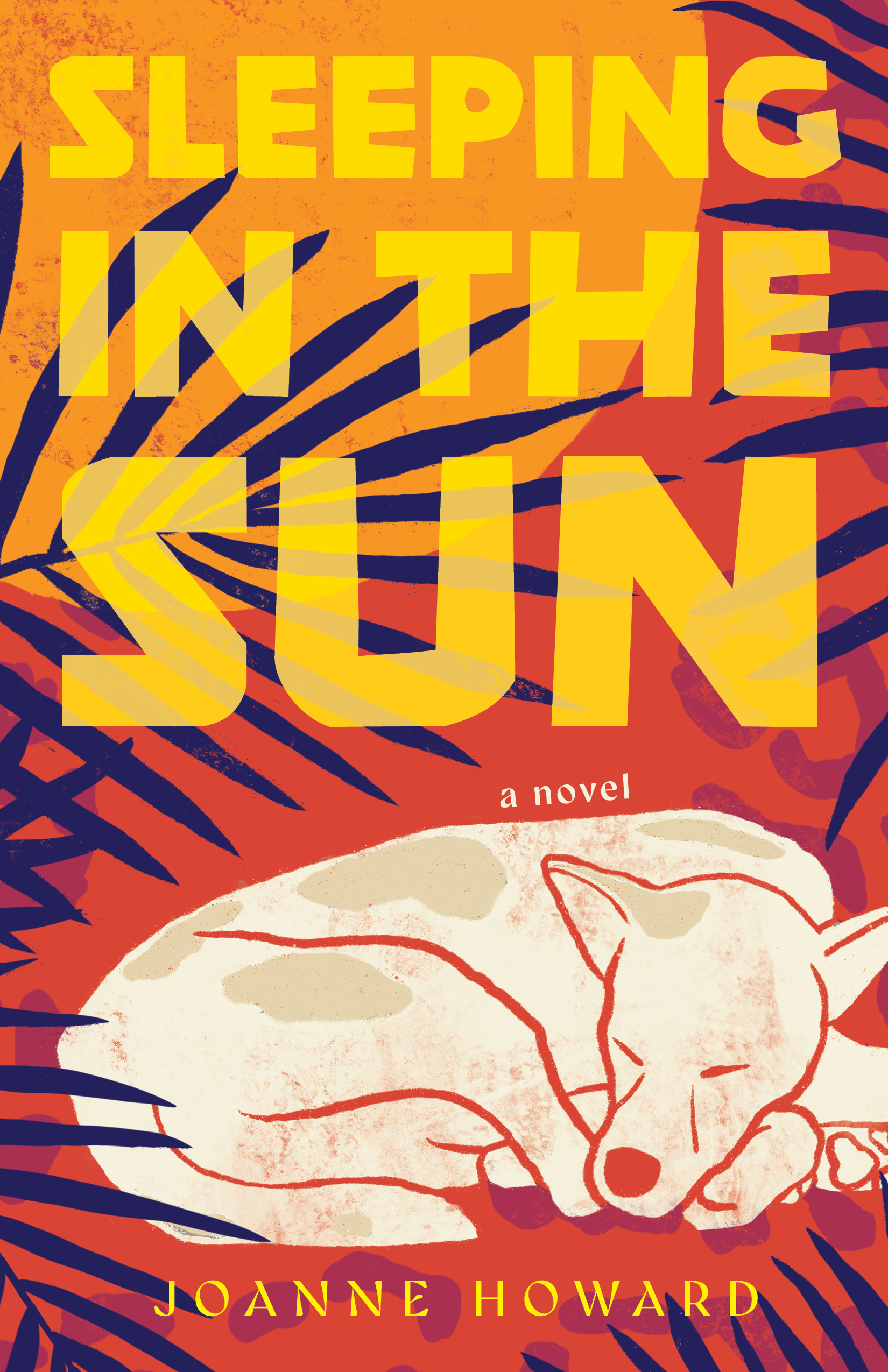
Sleeping in the Sun
Sleeping in the Sun

Sleeping in the Sun is a novel impossible to put down. A cinematic study of imperialism and the scars it has left. An outstanding debut.”—Willy Vlautin, author of The Night Always Comes and The Motel Life

“This is at once a gripping page-turner and book to savor and admire. It will light up your imagination and endure in your mind alongside all the memories from your real life. I was sad to see it end but delighted to welcome this impressive new voice into American literature. Joanne Howard is a writer to watch.”—Valerie Laken, author of Dream House and Separate Kingdoms

You can get Sleeping in the Sun at Amazon.

Imagine you have only a brief minute to tell someone what your book is about. Can you tell us, in two sentences, what your book is about and make us want to read it?

An American boy comes of age in the last years of the British Raj⁠. Little does he know in this turbulent time that his family’s long-standing Indian servant may have ambitions to serve himself for once⁠—for better or worse.

Why did you need to write this story?

I would like to see more historical novels set in non-western countries. I have never seen a novel about Americans in India, so I wanted to explore what a story about that would mean. And of course, I like to think of it as a nice tribute to my grandfather.

Where is the setting for Sleeping in the Sun?

1930s Midnapore, India. Midnapore is a small city outside of Calcutta.

How did the Hinton’s purpose as Christian missionaries determine their place in the white society of British India?

As American missionaries, the Hintons occupy an unusual space in society. They are not well off, as can be seen by their humble living standards, and they aren’t particularly interested in climbing the ranks of British society. The boys are rowdy and rough around the edges, and the house is a bit out of town so they aren’t really included in social circles. The boys also go away to boarding school, which is yet another way they are considered outsiders in Midnapore. The book doesn’t show them interact with many British characters except of course for Judge Ellis, who takes an unusual liking to them.

How do the actual people of India see Christian missionaries in their society and culture during the time of Sleeping in the Sun?

It varied. In my family’s experience, they actually didn’t have much luck converting many people. Often times, if an Indian person converted on their own, they were ostracized by their community. So missionaries had more success if they converted an entire tribe or village. For this reason, my family mainly worked with indigenous tribes. In large urban areas like Calcutta, the attitude toward missionaries and white foreigners in general was less favorable. The Indian people had already pressured the Raj to move their capital out of Calcutta to New Delhi, and that anti-Raj sentiment carried over to missionaries too. However, my family was generally well liked and respected by Indian people in Midnapore, whether they were part of their church or not. Unlike the Hintons who stick to themselves through much of the novel, my family was very involved and did a lot of business with Indian people in the community.

If you were to be one character in your book, who would you choose and why?

I have a soft spot in my heart for Lee, the third Hinton brother. He acts as the voice of reason in the book. He has an easygoing, gentle demeanor and guides Gene as they try to make sense of the events that happen in the novel.

As a former history teacher and historian, I’m always interested in how an author researches to ensure the accuracy of culture and period. What was your process like?

My family is incredible at preserving everything, so I had a lot of firsthand accounts to inform me. My grandfather’s childhood diary, my great grandfather’s autobiography, and stacks of vintage photographs were of huge help, but of course it was up to me to imagine the characters in the way I wanted to and that would best serve the story. But for Arthur’s character, who is an Indian man and therefore outside my own lived experience or personal connection, I just tried to absorb as many works of Indian literature that matched his background and the time period, and two books especially inspired his character: The Autobiography of an Unknown Indian by Nirad C. Chaudhuri and Pather Panchali by Bibhutibhushan Bandyopadhyay. For setting, I traveled to India in 2018 for three weeks. I got to visit the street where my family lived, their mission’s church that is still standing, and other places that appear in the novel like Howrah Station and the Maidan in Calcutta. Lastly, I had a sensitivity reader who checked for blind spots.

What will connect the reader to the story and make them want to keep reading the story?

The multicultural and international aspect of the characters I hope will appeal to a variety of readers. My favorite historical novels are very immersive and escapist, so I hope that I have also brought the time and place to life well enough. I think I have because in fact, one of my early readers really asked me if this novel was based on my own life. I said, “Do you mean did I live in India in the 1930s?” And then lastly, I think that the novel explores the different definitions of identity, belonging, and spirituality. There is no one right way to be, and the novel offers many answers that can appeal to different readers.

What did you learn about yourself by the end of the book?

Early in my MFA program, a professor said that the story will take you where it wants to go. At first I sort of laughed at that idea, because surely as the author I’m in control of everything, right? But I really did experience the story going in different directions than I intended. I would just get this spark of an idea that was totally different than the outline I had so carefully plotted. So I learned that I’m not as in control as I thought.

Many first-time authors of a book have a problem letting their work enter the world for others to read. I know I did. Did you have difficulty deciding your book was ready to publish?

Not really. Although I did work on it for at least 6 years, I think I was always aware of some kind of finish line that I would come to eventually if I just checked off all these things. Every round of editing was correcting for a different fault, whether it was eliminating passive voice or clarifying character movements, so it did always feel like I had a plan. I guess I was very objective in that sense.

What’s your next project idea?

A contemporary novel that’s a bit closer to home.

You can get Sleeping in the Sun at Amazon.
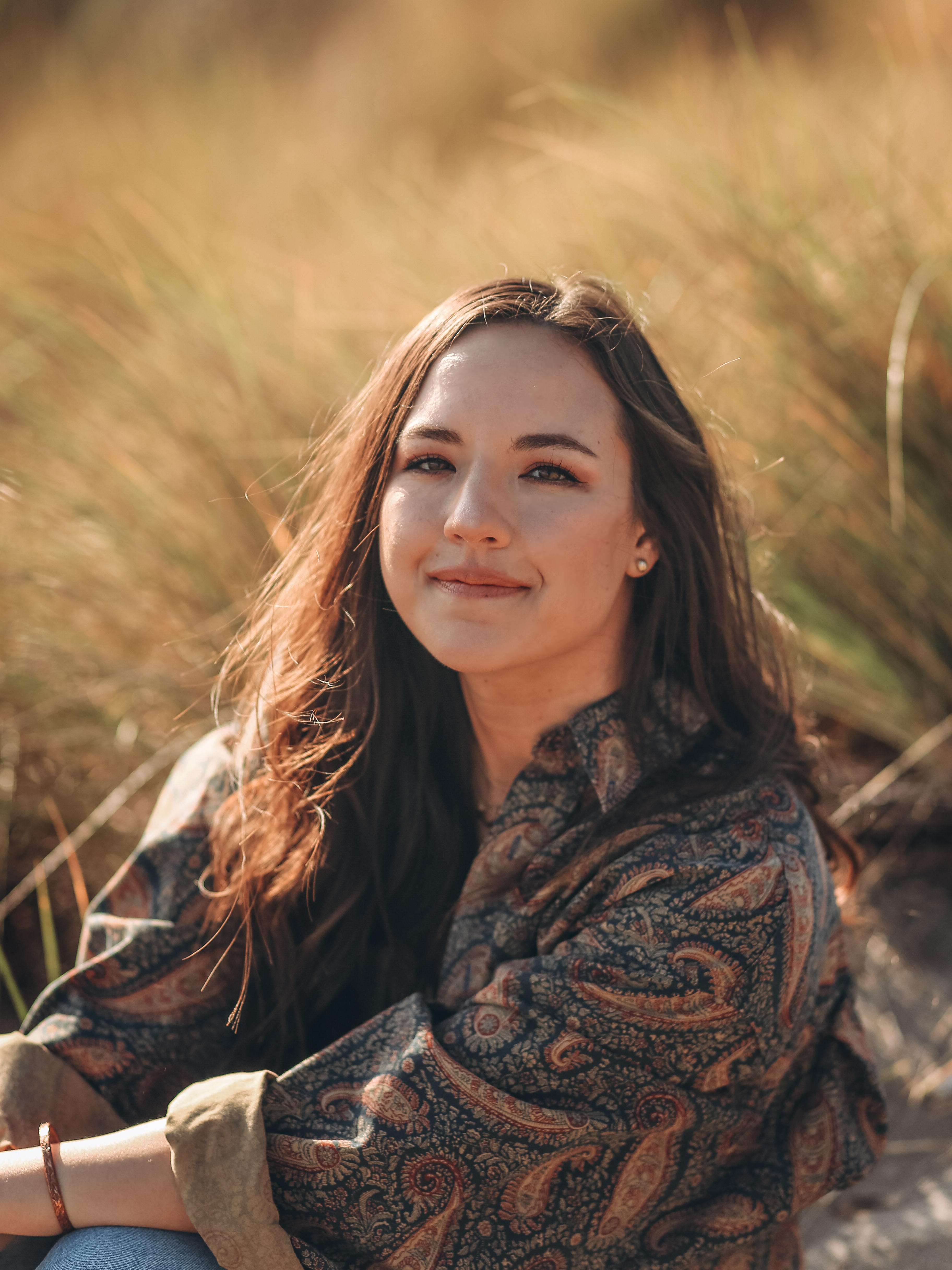
Joanne Howard
Joanne Howard

Author Bio:

Joanne Howard is an Asian American writer from California. She holds an MFA in writing from Pacific University. Her poetry received an honorable mention from Stanford University’s 2019 Paul Kalanithi Writing Award. Her fiction has been published in The Catalyst by UC Santa Barbara, The Metaworker Literary Magazine and the Marin Independent Journal and her nonfiction has been published in Another New Calligraphy and The Santa Barbara Independent. She lives in Santa Rosa, CA. Find out more at her website.

Find out more: https://www.joannehowardwrites.com/

Facebook: @joanne-howard

Instagram: @joannesbooks

© 2014-2024- Ronovan Hester Copyright reserved. The author asserts his moral and legal rights over this work.
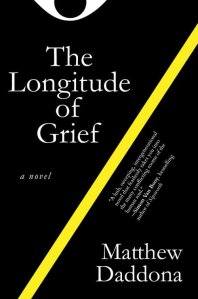
SPOTLIGHT: The Longitude of Grief by Matthew Daddona.

The Longitude of Grief

Henry Manero wants to grow up. But growing up is seldom the same as moving on. In this poetic and at times philosophical coming-of-age novel, Henry must learn to navigate his inherited guilt and trauma alongside several generations of dispirited loners-among them his absent father, suffering mother, three wild cousins, and bumbling stepfather. When Henry befriends an elderly man, Josef, whose sagaciousness presents new possibilities in life, he wonders if he can escape the trappings of his small town, and of his own mind. Will Henry achieve a newfound sense of self with the help of Josef, or is Josef yet another false star in a constellation of malevolent men with which Henry is surrounded?

Combining the lyricism of Justin Torres’ We the Animals with the kaleidoscopic visions of boyhood in David Mitchell’s Black Swan Green, Matthew Daddona’s debut novel The Longitude of Grief is a tender rumination on the familial bonds that entangle and entrance us all.

Praise

“A mesmerizing read. In The Longitude of Grief, Matthew Daddona traces the complex connections among a boy, his family, and his community. This dark coming-of-age tale explores the ebb and flow of intimacies and betrayals in a small town over the course of the years. A debut rich with melancholy beauty and emotional acumen.”
Helen Phillips, author of
The Need

“A multi-generational coming-of-age story beautifully crafted with language and setting that evoke Tom Drury or Barbara Kingsolver’s Demon Copperhead. The poetry pulls us in and the finely drawn array of characters keeps us glued to the page until the very end.”
Bethany Ball, author of The Pessimists

“A lush, sweeping, intergenerational novel that fearlessly takes you into the many conflicting rooms of the human soul.”
Simon Van Booy, bestselling author of Sipsworth

A Bit More

Matthew discusses the differents of Point of View within the book, along with other topics on the WhatIsThatBookAbout.com site. Q&A with Matthew Daddona, The Longitude of Grief

Want something that will help your really get into the mood of the book? Go to LargeHeartedBoy.com for Matthew Daddona’s playlist for his novel “The Longitude of Grief”.

Visit the Floyd Memorial Library Podcast Youtube channel for Episode 64 with Matthew Daddona, Ghostwriter and Author of the novel The Longitude of Grief.

About Matthew Daddona

Matthew Daddona

Matthew Daddona is a writer and editor from New York whose fiction, poetry, and nonfiction have been published in outlets such as The New York Times, Outside, Fast Company, UPROXX, Amtrak’s The National, Guernica, Tin House, Slice Magazine, and Grammy. His debut poetry collection, House of Sound, was published by Trail to Table Press in 2020. Matthew is the recipient of an Academy of American Poets prize for poetry, was a runner-up in The Blue Earth Review’s 2017 flash fiction contest, and was longlisted in River Styx’ 2021 flash fiction contest. His debut novel, The Longitude of Grief, will be published by Wandering Aengus Press in 2024. He has received grants and fellowships from Craigardan (Elizabethtown, NY), NES (Skagaströnd, Iceland) and the Kimmel Harding Nelson Center for the Arts (Nebraska City, NE). He is currently working on his second novel and a collection of short stories. For EVEN MORE visit MatthewDaddon.com/about-Matthew.

© 2014-2024- Ronovan Hester Copyright reserved. The author asserts his moral and legal rights over this work.
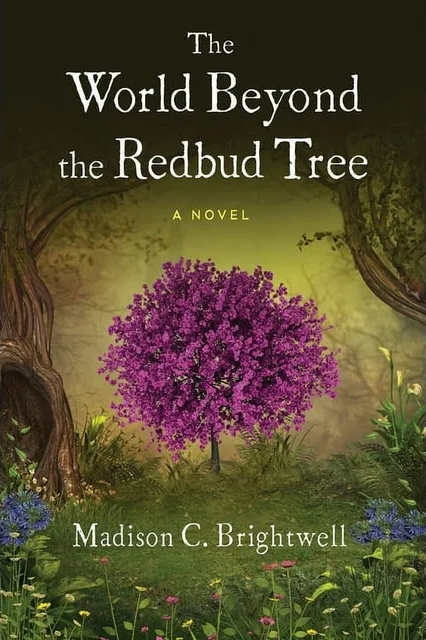
10 Questions with Madison C. Brightwell, author of The World Beyond the Redbud Tree.

The world as we know it is built upon choices. If different choices had been made in the past, we might be living in an entirely different world. What if the so-called Lost Colony of settlers in North Carolina were in fact not lost at all but instead merged happily with the Native American tribes to create a new people and unique society?

Sixteen-year-old Charli is living in a pandemic-ravaged 2020 America when she stumbles upon the parallel world of the Q’ehazi. Drawn to these peaceful people, whose constant joy and optimism provides a stark contrast to the suffering and violence in her own life, Charli wants nothing more than to stay with them forever-but first, she must learn to attain a state of grace.

Can she forgive her mother’s abusive boyfriend? Can she learn empathy for her mother? In The World Beyond the Redbud Tree, Charli’s inward and outward struggles will lead her to a discovery she wasn’t even looking for: the beauty of her own world.

The World Beyond the Redbud Tree

You have only a few seconds to tell someone what your book is about, in two sentences tell them what your book is about? In other words, what would you say to interest them about The World Beyond the Redbud Tree?

OK, my elevator pitch: The novel is a utopian fantasy about a parallel universe in which different and more positive choices have been made.

“The World Beyond the Redbud Tree” is a gripping, coming-of-age narrative set in a pandemic-ravaged America, in which Charli, the sixteen-year-old protagonist, stumbles upon a parallel world where people co-exist peacefully, providing a stark contrast to her own troubled existence. The Q’ehazi society, with its emphasis on joy and optimism, serves as an uplifting contrast to the struggles faced by Charli in her own reality. Charli’s journey is not only an external exploration of this parallel world but also an internal quest for forgiveness and empathy. The narrative skillfully weaves together Charli’s personal struggles with larger societal issues, making the story both intimate and universal. The themes of forgiveness, empathy, and the pursuit of grace are handled with nuance and depth.

There are sensitive, but widely occurring, subjects you approach in the story. What led you to doing a book about those subjects?

I am a therapist and I help clients all the time who are dealing with these issues. These sensitive topics are based on the truth of my experiences and those of my clients, and they help to point up the contrast between our world and the mythical Q’ehazi world.

Forgiveness is a big part of The World Beyond the Redbud Tree. That’s a difficult thing to do in many situations, especially for a teen. For Charli, facing the prospect of forgiving Sean is something that would seem impossible. Failure is so easy to achieve in such a situation. Why choose this aspect of one’s character as a key theme of the story?

It’s not something that’s very often written about. In our culture, “revenge” is much more often the norm, and yet we discover that violence just leads to more violence. I wanted to show that a different choice was possible. Charli is young but she has an emotional maturity way beyond her years, and she is open to learning a different way of being. She doesn’t necessarily attain it in this book, but her journey towards wisdom and grace takes place over the course of the three books that make up the trilogy.

Where is the setting or settings for The World Beyond the Redbud Tree and is there a specific reason for its selection?

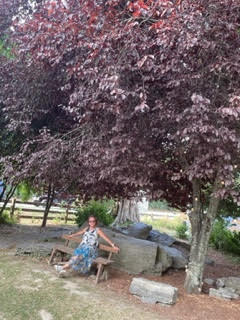
The setting is where I live, which is Weaverville, NC. I chose that area because it inspired me. We have a redbud tree on our property and I love the way it changes colors four times during the season (pink, red, green, yellow). I discovered later that it is one of the seven “sacred woods” of the Cherokee people. (See also below)

Early American history and the Cherokee people influenced your book, what research did you do to help with your book?

Ironically, I didn’t do much research before writing the book, as it’s a fantasy, other than reading books about the Lost Colony and finding out about the real history from that era. However, I visited the Cherokee Oconoluftee village in Cherokee NC a few months after writing my book, and was amazed and delighted to discover that many of the themes and ideas I had written about as being part of the Q’ehazi culture were in fact mirrored in the Cherokee culture.

The name you chose for the parallel world of Q’ehazi, I’ve found a similar word and the definition fits the world you’ve created, but how did you come up with it?

I literally made it up. I didn’t want it to be a real word in another language. So I flung together a few letters and my friend suggested the apostrophe.

If you had to be one character in The World Beyond the Redbud Tree, who would you choose and why?

I actually wrote the character of Maudina (Sovereign Aurora’s sister) for me to play, should there ever be a movie made! I resonate with her youthful spirit and her creativity.

What will connect the reader to the story and make them want to keep reading?

A variety of things. I would hope they would be intrigued by the unique and imaginative parallel world; some people have called the book a “page turner” because they want to find out what happens to Charli, as she’s a very sympathetic and multi-faceted protagonist; many people have described the book as “thought-provoking” because it’s not just a story but also a message about our world and how to make it better.

What’s the biggest difference between living in California and now in North Carolina?

Interesting question. I’m originally from England and I loved all the trees in NC, it’s like being in England before all the trees were cut down, many hundreds of years ago now. I enjoy both states, and they are very different. It’s also important to mention that I moved from Los Angeles to the tiny little rural town of Weaverville, and that experience contributes to the difference also. The people here are gentler and the pace is a lot slower. There isn’t so much diversity here, either in people or activities. I feel more connected to nature here, because we live on an acre of land. However, in LA I lived near the beach and I enjoyed that too. So there’s good things about both places.

What’s your next project idea?

Book Two in the series, called “The World of the Q’ehazi” (working title). I have just finished the first draft, will be refining it and hope to publish it later this year.


Find The World Beyond the Redbud Tree at several outlets including Amazon.


C Madison Brightwell
Madison C. Brightwell

Author Bio:

Madison C. Brightwell is an author and a licensed MFT with a doctorate in psychology. She has been working as a therapist for fifteen years, before which she worked as a professional actress and in film and TV development. She has written four other novels and three self-help books in the field of psychology. Since moving to Asheville, North Carolina, from her native Britain, Madison has become inspired by the history of this land, originally inhabited by the Cherokee. She draws on many of her experiences helping clients with trauma, addiction, and chronic pain.

Website: http://www.madisoncbrightwell.com/

Facebook

Instagram: MadisonBrightwell


© 2014-2024- Ronovan Hester Copyright reserved. The author asserts his moral and legal rights over this work.
LitWorld’s 10 Questions with M. Laszlo, author of The Phantom Glare of Day.

 
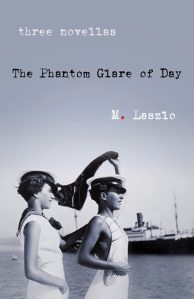
The Phantom Glare of Day book cover.LitWorld’s 10 Questions
with
M. Laszlo

What would be your one sentence elevator pitch of what your book is about?
In this trio of novellas, three game young ladies enter into dangerous liaisons that test each one’s limits and force them to confront the most heartrending issues facing society in the early twentieth century. The Phantom Glare of Day is a compelling interrogation of who gets to decide what is right and what is wrong.

[The novellas are set during the height of WWI and post-WWI Europe.]

What book/author/movie/TV show/song might a potential reader compare your book to in order to get an idea of its feel and why?
The Phantom Glare of Day might best be described as traditional, twentieth-century melodrama suffused with the following: Goth youth culture, the film Nosferatu, lots of Germanic brooding, the poetry and symbolism of Nietzsche, and a ravishingly beautiful figure-skating ballet just for good measure.

Why did you choose this topic for your book?
This topic chose me. These novellas arise from a deeply held obsession with grasping the essential ethical issues that face society. By writing the book, it is my hope that the novellas may challenge readers to think about and to come to terms with those same heartrending questions.

What led to your choosing the setting for your book? In part your mention of steampunk as used in your book.
Having traveled to London, Paris, and Prague, and having kept travel diaries for those beautiful cities, there was no way to avoid my setting stories in those remarkable places. Interestingly, though, my impressions of Prague were always informed by the genre of steampunk. What I mean by that is that Prague is the city with which I’ve always associated the science-fiction play Rossum’s Universal Robots. Because of this, Prague inspired me to write about steampunk/primitive robotic technologies—as such, these peculiar technologies and themes and obsessions appear in that tale. With regard to Weimar, that’s the most peculiar question for me because I’ve never been there. Still, the history of das Bauhaus has always fascinated me—and because of this, there was no way to avoid the temptation to set a tale there.

How did you come up with the title of your book?
The Phantom Glare of Day comes from a line in “Butterflies”—a WW-era Siegfried Sassoon poem. The title seemed perfect to me because various world religions have always associated butterflies with the immortality of the soul. For me, that metaphysical idea resonates because these three novellas amount to a new kind of metaphysical storytelling.

How has your world traveling impressed itself on your writing?
Nothing has impressed my writing more than my travels to London, where I became fascinated by British colloquialism and phraseology. Nothing else makes British characters come to life more than giving them authentic voices as they engage one another in dialogue. In short, dialogue has to be real. Characters must talk the way people really talk. This comes down to the fact it is the vernacular that makes characters and their stories seem genuine. My travel diaries provided me with all kinds of descriptions of various places, of course; nevertheless, my travel diaries were most important to me in that they included many, many lists of those remarkable terms that only the Brits use.

What will connect the reader to the story?
These novellas tell of how people struggle with issues that anyone can find relatable: school bullying, abortion, euthanasia, political extremism, and homophobia. As such, any reader should be able to connect with the characters. At the same time, the narrator’s voice remains solemn and philosophical; moreover, the writing is suffused in objective correlative—symbols intended to resonate with the reader’s unconscious mind. If the reader really gives my work a chance, the reader can and will connect.
Remember, though, when you read The Phantom Glare of Day, you’ll quickly see that it’s like nothing you’ve ever read before. Perhaps that’s why the work is fated to get so many mixed reviews. This work is weird and revolutionary in its style.

Did you have difficulty deciding your book was ready to publish?
Yes and no. Leonardo Da Vinci said it best: “Art is never finished, only abandoned.”

What genre(s) and reader ages would your work fit best?
As for genre, there are different possibilities: coming of age, urban fantasy, historical fiction, metaphysical fiction, melodrama, and perhaps even magical realism. In truth, the work is trans-genre. Also, who cares what the genre is? It’s literature. And it’s meant for anyone mature enough to embrace the idea of freethinking and/or open-mindedness and/or freedom for the sake of freedom.

What’s your next project idea?
My next project promises to be a complete mind-scramble. In the coming book, it is my intention to take the reader on a journey alongside a figure who resolves the riddle of the universe—and in the final movement of the tale, the character will in fact explain the riddle of the universe. For that matter, too, the answer provided will be accurate. And that is my pledge.

Biography of M. Laszlo

M. Laszlo Author Photo M. Laszlo is the pseudonym of a reclusive author living in Bath, Ohio. According to rumor, he based the pen name on the name of the Paul Henreid character in Casablanca, Victor Laszlo.

He has lived and worked in New York City, East Jerusalem, and several other cities around the world. While living in the Middle East, he worked for Harvard University’s Semitic Museum. He holds a bachelor’s degree in English from Hiram College in Hiram, Ohio and an M.F.A. in poetry from Sarah Lawrence College in Bronxville, New York.

His next work is forthcoming from SparkPress in 2024. There are whispers that the work purports to be a genuine attempt at positing an explanation for the riddle of the universe and is based on journals and idea books made while completing his M.F.A at Sarah Lawrence College.

The Phantom Glare of Day is available at Amazon.

© 2014-2022- Ronovan Hester Copyright reserved. The author asserts his moral and legal rights over this work.

A @COLLEENCHESEBRO #BOOK #REVIEW “THE MISTREATMENT OF ZORA LANGSTON” by @REBIRTHOFLISA

Mistreatment of Zora Langston

Title:  The Mistreatment of Zora Langston

Author:  Lisa W. Tetting

Website: https://rebirthoflisa.wordpress.com/

ASIN:  B00URD7AKI

ISBN 13: 9780996142908

Published:  1 edition (March 15, 2015)

Pages:  163 pages

Genre:  Young Adult, Drama, Black Fiction, Coming of Age,

*A copy of this book was provided by the author in exchange for an honest review, which follows.

At the tender age of nine years old, Zora Langston loses the most important person in her life, her father.  This one event, sets off a chain of events that is mind-boggling.  Zora is left with a mother who despises her, a sister who hates her, and a brother who does not even acknowledge her presence.  The death of Zora’s father is further exacerbated when her mother’s boyfriend moves in and takes his place as the head of the household.

Zora struggles to cope with the harsh treatment she receives, as the youngest child in the family.  Naïve as she is, Zora is forced to cope with adult situations that propel her into a new path in her life.  Through all of this, Zora remembers the love and the many lessons from her father, while relying on her faith to help her survive.

Eventually Zora finds the love and understanding she deserves from her Aunt and Uncle, who embrace her into their family.  Haunted by her past, Zora is forced to face old abusers, and new abusers.  Nevertheless, life goes on, and through love and trust Zora is lead to the truth of what it means to be part of a family.

Zora Langston tells this story with all the wisdom a nine-year-old girl can share.  The reader lives through her, and experiences what the child goes through on a daily basis.  I was visually shaken after the confrontation with her mother’s boyfriend.  Zora handles her circumstances with the grace and dignity of a true survivor.  I was drawn into Zora’s world.  I felt her pain and neglect, and her joy and sorrow.  All I wanted to do, was grab this child, hug her, and never let her go!

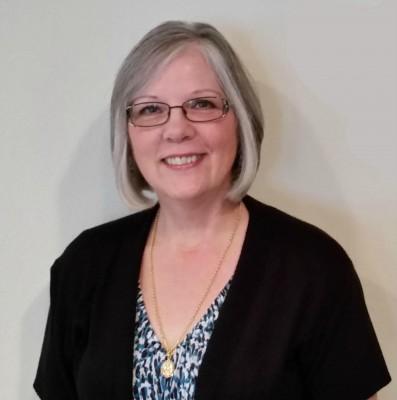
Lisa Tetting

Author, Lisa Tetting

There is sexual abuse and violence portrayed in the book.  However, it is my opinion that the author portrays this abuse realistically through the words of young Zora.  This is Lisa Tetting’s debut novel, and I believe she achieves her goal of showing how prevalent this type of abuse is in our society.

I was moved beyond words at the treatment Zora endured.  However, I found Zora’s courage and motivation to move forward and heal from her wounds, the most important message in the story.  If you love family drama, young adult literature, and stories that give you hope about life, look no further.  Zora Langston will fill your heart.

RATINGS
Realistic Characterization: 5/5
Made Me Think: 5/5
Overall enjoyment: 5/5
Readability: 4/5
Recommended: 4/5
Overall Rating: 4.5

Buy it at: Amazon
Format & Pricing:
Create Space – Paperback: $10.95 US
Kindle: $3.99 US

Goodreads


 Colleen_Silver_Threading


@ColleenChesebro

www.SilverThreading.com