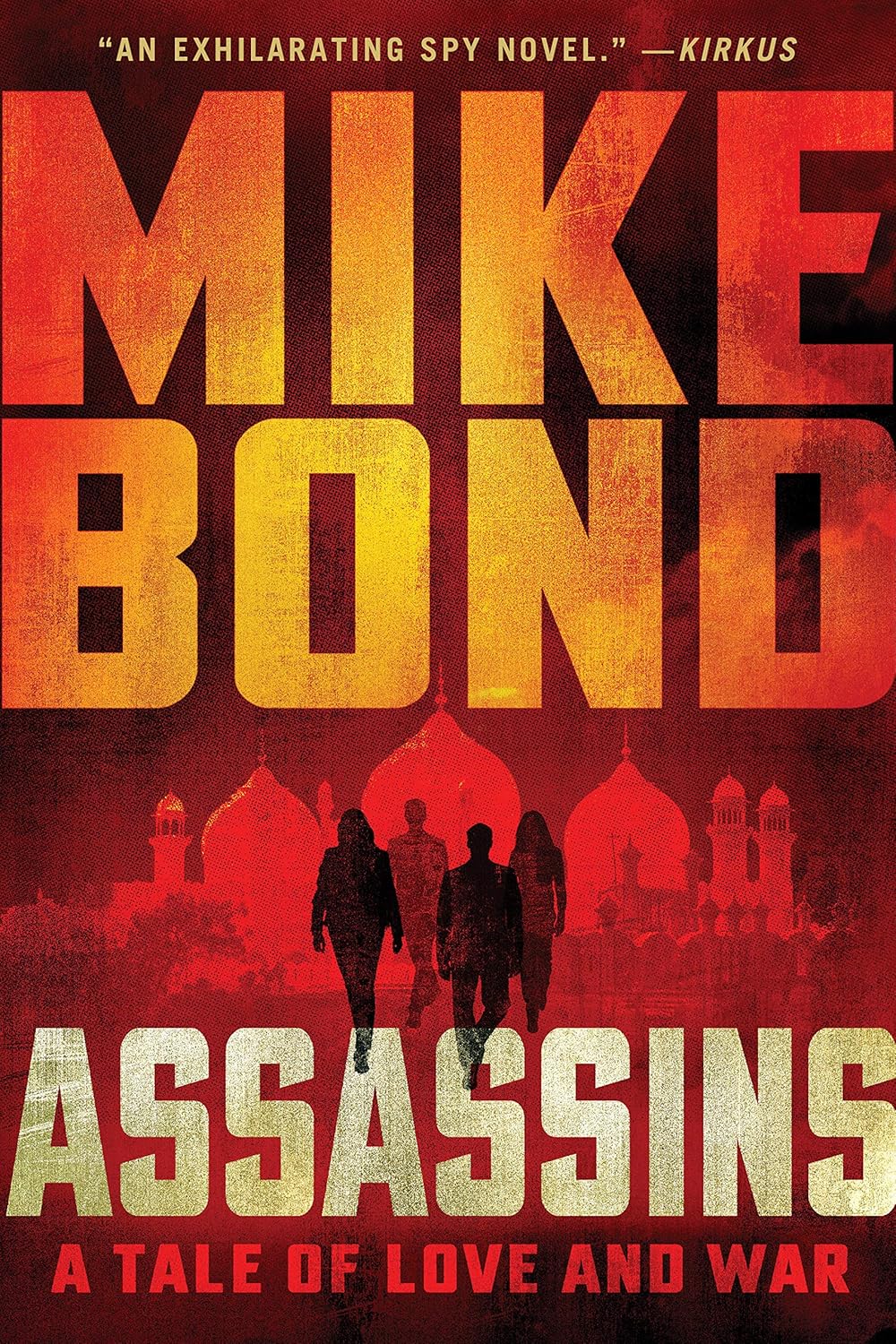
Spanning more than thirty years, Assassins by Mike Bond traces an intelligence career shaped by evolving threats and unfinished consequences. The novel suggests that in covert warfare, no decision ever truly disappears.
Jack’s career as a CIA operative spans decades of covert conflict, where strategies evolve but consequences remain. Early involvement with local communities creates bonds that persist as political priorities shift and global threats emerge.
As intelligence operations intersect with terrorism and retaliation, Jack is drawn back into conflicts shaped by decisions made years earlier. Relationships, responsibility, and regret accumulate as each mission builds on the last. Assassins delivers a sweeping portrait of covert war, where no choice disappears and no one escapes unchanged.
Q&A
How did you research your book?
I don’t research my books, but write from my own memory of events.
Where do you get your ideas?
From my own past experiences, or from issues that concern me, like the danger of nuclear war. Or wars I have been in and I wish to expose how they happened, and who is responsible for all the deaths, sorrow, and destruction.
What helps you overcome writer’s block?
Never had it. Too many things to write about.
What’s your favorite compliment you’ve received as a writer?
Among many other critical praises, when BBC called me “The master of the existentialist thriller.”
Do you write every day? What’s your schedule?
I write when I want to.
Which author(s) most inspired you?
Hemingway – the greatest American writer of the 20th century. And Tolstoy, Gogol, Zola, Aristotle, Cicero, and many others.
What’s your go-to comfort food?
For writing — Gin or vodka.
If you could time-travel, where would you go?
Somewhere in our Paleolithic past, or among the Cheyenne or Sioux before the coming of Europeans.
What 3 books would you bring to a desert island?
If I were on a desert island I would be happy there and wouldn’t bother with books.
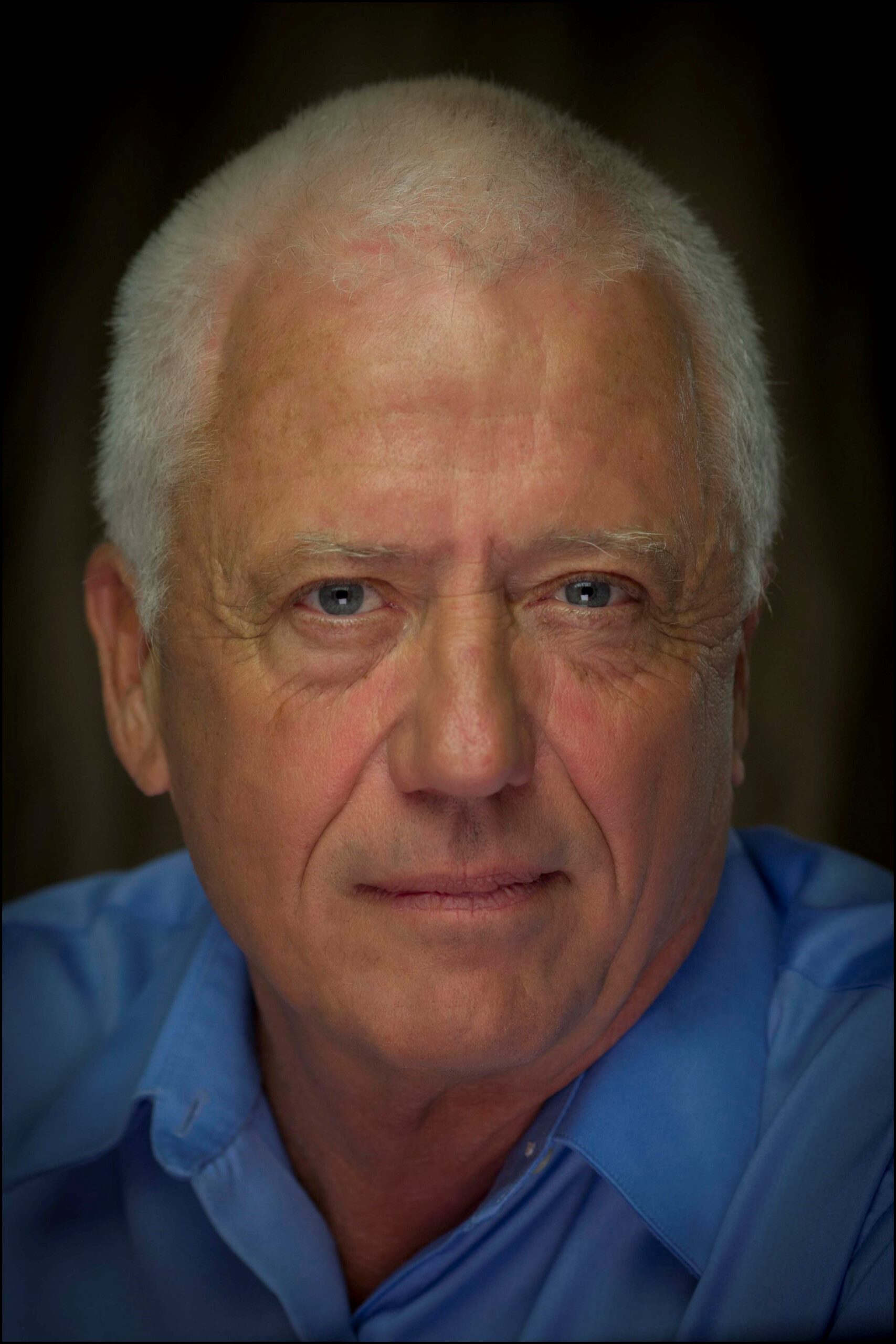
MIKE BOND is the author of nearly a dozen bestselling novels and an ecologist, war and human rights journalist, award-winning poet, and international energy expert. His work spans more than thirty countries across seven continents, often drawn from firsthand experiences in remote, dangerous, and war-torn regions. His novels are praised worldwide for their intricate plots, vivid settings, and explosive pacing. His reporting has covered wars, revolutions, terrorism, and major environmental crises. Learn more at his website.
“I want to present Cleopatra to the World,” Lady Stanhope sighed and reached for her purse. Two very young and inexperienced detectives, Flinders Petrie and Thomas Pettigrew, were unexpectedly presented with the case of a lifetime. Flinders and Pettigrew, recent graduates of Oxford and rivals of Sherlock Holmes and John Watson, suddenly find themselves confronted with the task of finding Cleopatra’s tomb. The tomb’s location, as they quickly discovered, was protected by the adherents of an ancient cult. Their quest leads them to Cairo and Alexandria. They meet a mysterious woman, who is possibly the descendant of Cleopatra. Their story weaves between the ‘City of the Dead’ in Cairo and the ‘Mound of Shards’ in Alexandria. They discover that becoming a detective is more difficult than they imagined as students. Set against the background of the River War in the Sudan and written by an expert in archeology and Middle East history, readers will find this story a worthy successor to the Conan Doyle legacy. “Find me Cleopatra, and I will pay for all this….”
What would be your one sentence elevator pitch of what your book is about to get someone to want to read it?
Two quirky young detectives are hired to find Cleopatra’s tomb, they grow up quick, but almost get killed during the chase.
Why choose the detective fiction genre for your book?
I read the Adventure of the Speckled Band as a kid. It scared the wits out of me. Ever since, I’ve wanted to write a detective story.
What research did you do to ensure you were historically accurate in setting, language and the like?
For the Middle East, no problem, I taught Middle Eastern politics for 25 years, and lived in Cairo for a year studying at the American University. (I also wrote a couple of books on Middle East politics). For everything else: Wikipedia, online publications, academic theses, and Bing AI (AI is really neat, if you know what to ask).
I know for my own book it was a real process to get things just right. Coming up with character names is more difficult than people might think, how did you go about picking yours?
They are from historical characters: Flinders Petrie is the nephew of Sir Flinders Petrie, the great archeologist. Thomas Pettigrew is the grandson of Thomas Pettigrew, the British anatomist and mummy exhibitor. E A Walis Budge is himself. Lady Hestor is herself. Lord Cromer is himself. Inji was second in command of ‘Social Affairs’ in Cairo, and a very scary lady, indeed. (The first description of Inji is exactly the person I met in Cairo). Other names are from lists of Greek and Egyptian baby names.
How has your world traveling impressed itself on your writing?
Traveling supplied the background ambience. Owen Lattimore, the China expert, once wrote something to this effect: “If you haven’t been there and don’t know that there are tapeworm segments in the bottom of outhouses, you’re not an expert.” He was right. I lived on the economy in Cairo for a year and had to learn Arabic. I saw a lot of stuff a tourist would not see. My daughter is an amateur archeologist who worked on the digs at Pompeii, so I had an bona fide archeological source.
What will connect the reader to the story and make them keep reading to the end?
There are multiple levels, I think. Obviously, there is the Sherlock Holmes nostalgia. But beyond that, the story of a couple of self-entitled kids being forced to grow up in a hostile world is the same theme that you have in the US today: A lot of readers are experiencing the same trauma. And, of course, there is the lost love theme which is a pretty universal experience.
Probably everybody can relate to Flinders and Petrie, they are a very likeable and funny pair: reviewers seem to like them.
Did you have difficulty deciding your book was ready to publish?
I hadn’t a clue. I ran the manuscript by several literary agents who weren’t interested and then shipped it off to the same hybrid I used for the Student. A mistake. I have revised it to take out the clinkers and add material since I now have the advantage of hindsight.
What age(s) of reader do you think would enjoy The Cleopatra Caper?
I wrote another book and the developmental editor said that I write for eleven year olds. Maybe so. I like to think that I write for anyone who has the imagination to be scared by the Speckled Band.
What’s your next project idea?
The Stolen Goddess will be out in April. Flinders and Petrie meet TE Lawrence and Gertrude Bell. It’s set in Istanbul at the end of the Ottoman Empire. I have tried to portray the old empire in all its complexity. It has some truly villainous villains: the Veiled One is the Phantom of the Opera on steroids, and the Bulbul (the bulbul, “nightingale,” was the official executioner in the Ottoman Empire) is modeled after Charles Mansion (I represented one of the Manson family in a parole hearing). The theme is that of the arc of life, unlike Holmes and other fictional detectives, Flinders and Petrie age.
The Bones of the Apostle will probably be out later this year. This is a darker work set in 1915, the time of the Armenian genocide. (My late wife’s grandmother survived the death march). I’m still revising; I’m not sure I can do it justice. I have invented a new character, Gazelda Jones, who is as quirky as the detectives and adds a love theme. She will be around to the end of the series.
There are other detective fiction novels set in times past, why should a reader choose The Cleopatra Caper?
It’s a detective story with all the fast action of the genre, but it’s also a story about growing up, about lost innocence, and about lost love. In a way it’s a ghost story, because the heroes are haunted by their experiences. Their character development is central: These guys are driven by wanderlust, by guilt, and by the loneliness of their newly chosen profession. I suppose you could say that it’s part Conan Doyle, part Lawrence Durrell, part Henry James, and a smidgen of the “Thin Man.”
John Amos holds a PhD and a JD. He has taught at university level for 25 years. His academic publications include several books and multiple articles. His fiction works include The Student (2022), The Cleopatra Caper (2023), and The Case of the Stolen Goddess (2024). He has lived in the Middle East, most notably in Egypt, Lebanon, Libya, and Turkey. He currently practices Law.
Wow! This was an amazing read. It’s hard to write up a brief summary of what this book is about because there was so much going on. It opens with bodies falling, bullets flying and it doesn’t stop there. I’ve read a lot of science fiction novels and I have to say this is one of my favorites. So much blood was shed during the course of this book as the world of Frihet rebelled against Earth. Earth’s only chance for victory is the alien ship Spearhead, run by Joniskyredread, a Sklalen, who we refer to simply as Jon, and his human friend, Bryant Johnson.
There are a lot of characters throughout this book and they all seem to pop out from the pages. There are obvious evil ones, good ones and the ones we don’t know whether or not we can trust. No matter which side they’re on, the characters are to be remembered. In reference to Jon, though, I sometimes had a hard time keeping in mind that he was an alien. We’re reminded of his gray skin now and again; however, being referred to as Jon throughout most of the book just made him seem human.
The writing was tight and well done. I almost heard the war going on within the safety of my own home. My biggest issue was the POV. I noticed it especially toward the ending that we’re in one character’s POV and suddenly we know what the other is thinking or feeling. I don’t think it happened too often earlier on but it’s possible I overlooked it because I was too engrossed in the tale. It’s also possible it was meant to be that way in order to help the speedy pace. Either way, I prefer to focus on one person’s mind. Additionally, what really gnawed at me were the use of characters’ thoughts. I like it when authors italicize the thinking so it’s kept separate from the narration. This author didn’t do that. There were a lot of times when it’s a lone sentence in a paragraph, making it first person. After that one sentence, the narration would continue a new paragraph in its usual third person, until a short paragraph later, it’s back with a lone sentence in the first. It just struck me as awkward. But still, I rate this book as amazing. I feel any science fiction fan or any war lovers would enjoy this book. It’s a thrill ride you need to buckle up for.
Overall Rate: 5 out of 5 stars
Biography
Born in 1959 and getting older by the hour, Neil Davies writes Horror and Science Fiction. When not writing books, he likes to write and record music with his son, as The 1850 Project, and paint. His favourite authors are, in no particular order, Richard Laymon, Steve Gerlach, Arthur C Clarke, Frank Herbert, H Rider Haggard, Guy N Smith, H G Wells, Bram Stoker, Dennis Wheatley, Connie Willis, Edgar Rice Burroughs, Graham Masterton, Sax Rohmer… with more being added all the time. His favourite musicians include Nightwish, Nils Lofgren, Kansas, Led Zeppelin, Prince, Cat Stevens, Jimi Hendrix, My Chemical Romance, King Crimson, Yes, Spock’s Beard, Gentle Giant and lots more. In art he admires the cover work of Chris Foss and Bruce Pennington, and maintains a healthy dislike of modern and abstract art. He’s still writing and refuses to stop however much people ask him to. Expect more published works soon.




 Lit World Interviews