
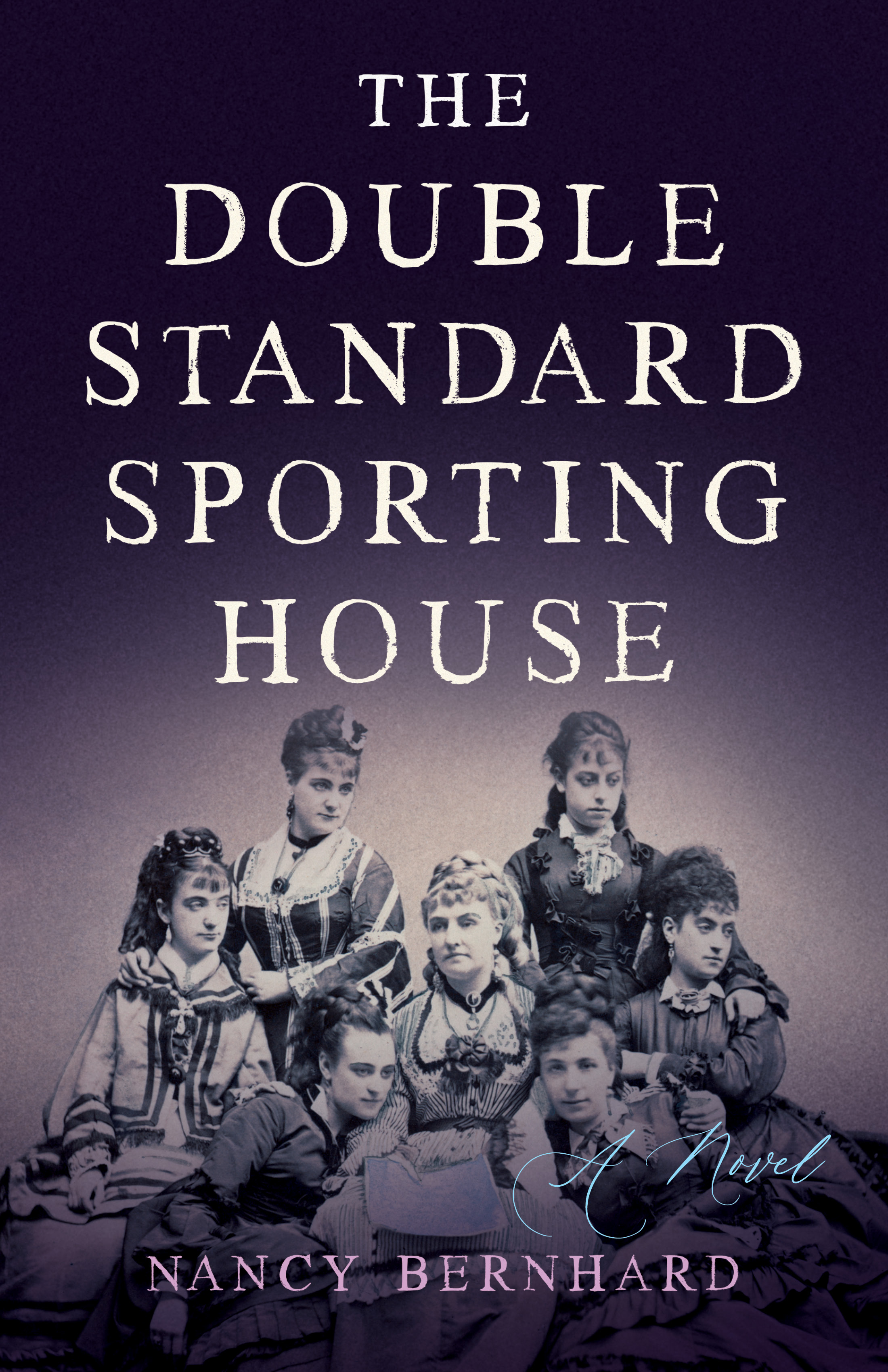
An Interview with Nancy Bernhard, author of The Double Standard Sporting House.


The Double Standard Sporting House cover
The Double Standard Sporting House

Book Description

A high-class brothel that entertains New York’s most powerful men, the Double Standard Sporting House funds a free clinic for women. When the Tammany Hall criminal syndicate takes over the city in 1868 and starts kidnapping girls, the house’s owner Nell “Doc” Hastings cannot stay quiet—especially after sixteen-year-old Vivie arrives at the clinic bruised and bleeding.

Resolving to seek justice for Vivie and girls like her, Doc builds an unlikely alliance with religious reformers, a rare honest ward cop, and an alluring newspaper publisher she can’t seem to keep away from. Even with their help, Doc will have to use her sharpest tools—secrets, guile, and a surgical blade—to prevent a dark turn in the sex trade.

Full of intrigue, friendship, and love, this timely story of a heroine erased from history by the sexual double standard reminds us that women help and heal one another, even when shameless criminals come to power.

Interview

As a former history teacher and historical fiction writer, I always like to find out how a historical fiction/nonfiction author gets from an idea to the actual book. With that, my first question is, what inspired you to write The Double Standard Sporting House?

My delightful, flamboyant grandmother once told me that her Aunt Beadie was a madam. It was a total fabrication, but before I sorted that out, I wondered how a smart middle-class girl with a large, supportive family could end up in prostitution. The answers are: rape and seduction.

I began to imagine a smart girl, skilled in medicine, finding herself in the demimonde, and making the best of the options left to her. She builds an elite brothel to finance her free clinic. When it’s threatened by predatory men, she has a strong community to help her fight back.

How did you go about researching your subject?

About six months into the 2020 lockdown facing a Massachusetts winter at home, I dug into research. I spent about a year reading on the history of prostitution, the Tammany Hall political syndicate, and 19th century medicine.

Your main character is Nell “Doc” Hastings. How and why did she become your protagonist?

Doc is excluded from the practice of medicine because she’s a woman, and then punished for having greater skill than mediocre men. Exclusion followed by insult is a fair summary of being a woman in the 19th century, and sometimes now. Doc embodies traditional feminine strengths in caregiving, compassion, and community.

What in your background helps you in writing a historical fiction book?

I have a doctorate in American history, and have been reading and researching for decades.

A brothel would obviously bring about certain health concerns for women, especially during the 1800s. How did you come to link Nell’s brothel to her funding a free clinic for women? Also, what was the health care system like for women in the lower-income parts of society?

Cast out of ‘respectable’ society as damaged goods, Doc finds surprising freedom and autonomy in the demimonde. Prostitution was far more widespread in the 19th century than in the 21st. In 1868 New York when women had very few ways to earn money, 30%  did sex work at some point in their lives, compared to 1-2% now. The only industry controlled by women, prostitution was also just about the only way for single women to accrue real wealth. Reduced to their sexual and reproductive functions, these women made the best of it. Owning the house allows Doc to run her clinic as she likes, serving the most vulnerable women without men telling her what to do. Ironically, she would have provided far better healthcare to prostitutes than respectable women received from fancy doctors.

Medicine in the 19th century was just beginning to professionalize. There were plenty of quacks with medical degrees, and plenty of skilled healers who’d never been to school. Women’s particular needs were little studied or prioritized, of course. Poor women would have had difficulty accessing care, and most likely would have seen midwives or traditional healers, especially in the country. Charity hospitals and free clinics served poor women in the cities, but often refused care to women they deemed morally undeserving.

How does society today resemble the time period and events in The Double Standard Sporting House?

Gangs of heedlessly corrupt, powerful men still prey on and abuse girls and women all the time, and cover it up, as we see in the news every day. Conservatives are torching women’s reproductive freedom, and endangering our health and our lives. They shame us for carrying the burden of childbearing, and punish us for demanding full agency and autonomy. Women have more rights now than they did 150 years ago, but fewer rights than we did a few years ago.

1 in 4 women in the US has been raped, and 50% have suffered active harassment. Misogyny is different but arguably as strong as it was in 1868.

It seems to me that historically, the achievement of power through corruption, or maybe even through honest methods, comes at the expense of women, at least historically. What are your thoughts?

Indeed. We live in a patriarchal society set up for the benefit of half the population, and our culture represents only half the experience of humanity, yet male dominance is so pervasive we often can’t see it. The hierarchical, competitive, acquisitive, individualistic drives associated with masculinity are anti-democratic, and are killing our planet. It leads men to treat women as less-than-human vessels for reproduction, and to demean and de-value everything associated with femininity, like empathy and compassion. Feminism does not seek to replace patriarchy with female domination, it seeks to promote democracy, equality, and an orientation to the common good.

Finally, why should people read The Double Standard Sporting House?

It’s a good story, one that may help readers to see prostitution, and women’s historical exclusion from most opportunities, in a new light.

Pre-order on Amazon:  https://www.amazon.com/Double-Standard-Sporting-House-Novel/

Nancy Bernhard author photo
Nancy Bernhard

Nancy Bernhard is a journalism historian and yoga teacher, fascinated by how survivors of sexual and political violence heal through storytelling and movement. Having earned a BA in religion at Dartmouth, a PhD in American History at the University of Pennsylvania, and taught at Harvard, Bernhard turned her indignation over the sexual double standard into an absorbing tale rooted in the 19th century history of Tammany Hall. She was born in Brooklyn, and lives with
her family in Somerville, Massachusetts. https://www.nancybernhard.com/
 

© 2025- Ronovan Hester Copyright reserved. The author asserts his moral and legal rights over this work.

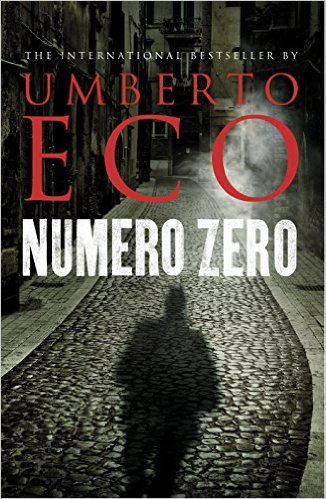
#BookReview ‘Numero Zero’ by Umberto Eco. Satire, conspiracy, politics, media… although not sure it’s a novel.

Numero Zero by Umberto Eco. Kindle Cover

Title:   Numero Zero
Author:   Umberto Eco
ISBN:   0544635086

ISBN13:  978-0544635081
Published:  3rd November 2015
Pages:  208
Genre:  
Satire, Thriller and Suspense/Conspiracy/Politics

Numero Zero by Umberto Eco. Satire, conspiracy, politics, media… although not sure it’s a novel.

Thanks to Net Galley and to Vintage Digital for offering me a free copy of this book in exchange for an honest review.

I’ve read some of the reviews by a number of readers who have followed Eco’s literary career. All seem to agree that this book cannot compare to some of the other novels he’s written, although some like it nonetheless, whilst others are disparaging of it.

For me, Umberto Eco is a writer who’s always been on my bucket list but never quite made it (or perhaps I read The Name of the Rose translated to Spanish many years back, but as I don’t remember it, I’ll assume I didn’t). When I saw this opportunity I decided not to miss it.

I’m not sure what I was expecting, but Numero Zero is quite different from anything I had imagined.

The beginning of the book is very intriguing, and it presents a writer/translator (Colonna) who swiftly explains his current situation. He is convinced that somebody has entered his house and he is in fear for his life.

Following this introduction to the main character, Colonna goes back to describe how he got there. The background to his current situation is what forms most of the novel, and we only return to the original point very late in the book (when there are only a few pages left).

Colonna describes himself as a loser and he has accepted a very strange job: to record the memoirs of a man who is setting up a newspaper, Domani. Only the newspaper will never get published, and the whole project is a way of manipulating contacts, allies and enemies by a third interested party.

There are descriptions of the reporters, a motley crew, fairly quirky, but none particularly talented or known. The ones we get to know more about are Bragaddocio, who’s always investigating some conspiracy or other (eventually coming to the conclusion that it is all part of a single huge conspiracy, involving Mussolini, the Vatican, the CIA, European governments…), and the only woman, Maia, who has a very special personality, but seems the only one with some sense of ethics and morals. By a strange process of osmosis, Colonna and Maia end up in a relationship, the one bright and hopeful spot of the whole novel, however weird the coupling seems.

Rather than well-developed characters and situations, Numero Zero seems an exercise in exposing current society (although the story is set in 1992), the press, media, politics… and their lack of substance. Also the lack of interest in serious stories by the population at large, and our collective poor memory.  As a satire I enjoyed it enormously, and although most of the characters experience no change (we don’t get too attached to them either, as they seem to be mostly just two-dimensional beings representing a single point of view), I thought Maia becomes more realistic, cynical and enlightened by the end of the book. And I found Colonna’s final reflection about Italy hilarious. (No offence to Italy. I think all the countries are going the same way if not there already. I’m Spanish and I definitely had to nod).

I agree with many of the comments, which note that the disquisitions and tirades of Bragaddocio are relentless, but they reflect a paranoid character (and perhaps, although he accuses Maia of being autistic, there is more than a bit of obsessiveness in his personality); the comments about the newspaper, how to write articles, and the press I found illuminating (yes, and funny), and overall I enjoyed the book, although as I said, it’s not my idea of a novel.

So I find myself in a similar situation to when I reviewed Satin Island. I enjoyed it (not as much as Satin Island, but it made me laugh more than once), but it is a novel that’s perhaps not a novel, with not very well developed characters, and an anecdote at its heart rather than a plot. There you are. You decide if you want to read it or not. Ah, and it’s short.

Ratings:
Realistic Characterization: 3.5/5
Made Me Think: 5/5
Overall enjoyment: 4/5
Readability: 3.5/5
Recommended: 4/5
Overall Rating: 4/5

Numero Zero Hardback Cover (I like this one!)


Buy it at:  
Format & Pricing:
Paperback:  $ 14.95 http://www.amazon.com/Numero-Zero-Umberto-Eco/dp/0544811836/

Hardback: $19.14 http://www.amazon.com/Numero-Zero-Umberto-Eco/dp/0544635086/

Kindle: $15.13 http://www.amazon.com/Numero-Zero-Umberto-Eco-ebook/dp/B0110ONP24/

Audio:  $ 17.72 http://www.amazon.com/Numero-Zero/dp/B016QTSTCY/

  Thanks for reading, and remember to like, share, comment, and CLICK if you fancy it!

Olga Núñez Miret

@OlgaNM7

http://OlgaNM.wordpress.com

http://www.OlgaNM.com

#BookReview Nirvana by J.R. Stewart (Blue Moon Publishers ‏@BlueMoonPbh) Two versions and two reviews

Nirvana by J. R. Stewart

Title:   Nirvana
Author:   J.R. Stewart
ISBN:  0993639763

ISBN13:  978-0993639760
ASIN:  B014LLM1XW
Published:  10th November 2015
Pages:  201
Genre:  YA/Science-Fiction/Dystopian/Romance

This review is a bit special but I wanted to share it with you precisely for that reason. I reviewed an early version of this book that was offered through Net Galley before its publication and I was later contacted by the publishers’ (Blue Moon Publishers) PR Department who asked me if I’d read and review the revised version. I decided to share both reviews with you because I felt I had learned from the experience, both as a reader and as a writer.

  • Early ARC version review.

Nirvana by J.R. Stewart. Virtual reality, bees, grief and politics

Thanks to the publishers (Blue Moon Publishers) and to Net Galley for the gift of an advance copy of this book. I have read that it is undergoing major revisions, so it might be that some of the issues mentioned are no longer there if you get the final edition.

Nirvana, despite the name, is a dystopian Young Adult novel. It is set in a future where bees have disappeared and nature as we know it has gone; there are a few places left where people live (the novel takes place in Canada, around Toronto, although there are hints throughout the book that the situation might be slightly different in other places), and the Hexagon (yes, I know) controls “security” (read intrudes in everybody’s privacy, destroys all books and keeps a tight hold on everybody’s activities, words and imagination). Larissa, a young woman whose husband (a very talented scientist) disappeared during a mysterious mission six months ago is not ready to accept his death and refuses to let go.

The novel mostly focuses on Larissa, although the third person point of view sometimes shares the thoughts of other characters, like the Corporal, Serge (a childhood friend of Larissa’s), the psychologist…but not consistently and sometimes it seems to hide things, and we also get letters, documents, etc. The time-line can be somewhat challenging at times as Larissa can flicker between memories (how she met Andrew, her husband, their time at university, some of her musical gigs, her childhood memories including some very dark ones) and things that are happening at the time of the action of the novel, when she is being pressurised by the authorities to sign a document acknowledging that Andrew is death. Although this is how our mind works, sometimes it’s not easy to tell the difference until you get to the next change in perspective. Perhaps a different type of letter or a break would make it easier. I also found the fact that many characters have similar names (all beginning with K, I’m not sure why) made me go back and forth to make sure.

The description of Larissa’s psychological state and emotions is accurate for somebody suffering from a grief reaction (even if in her case she has no real proof that her husband is dead). She feels guilty, angry, sad, confused and doubts constantly about what to do. Her family circumstances were already complicated and she does not know if her sister is alive or not and it’s not difficult to understand that she’d be reluctant to let go of the one bit of family she had left. We might lack outside perspective on her and know little about her previous personality so it’s difficult to get a full picture of the character but this will probably build over time.

I am not an expert in science-fiction but I know world-building can be one of the main strengths of these novels. After reading the author’s biography I understand why the parts that deal with virtual reality (the Bubble, that is where the crème of society live, in a fake world of their choosing, and Nirvana, that is the low-key version that workers might access, but in small doses) are very strong and mind-boggling, even scarily so. By contrast, the descriptions of the rest of the world are very succinct and only much later, when the point of view returns to some of the characters in positions of authority, we get to know a bit more about the world order, but this is more tell than show (although that is one of the difficulties with the genre, maintaining the balance between trying to make the story come alive whilst at the same time leaving something to the readers’ imagination).

The idea behind the politics of that world reminded me of 1984 (the level of intrusion into people’s lives is greater than even insiders realise), and the conspiracy theorists will “enjoy” the implications of some of the things uncovered and suggested towards the end of the novel. They throw an even darker light on the authorities and put into question loyalties and certainties. The comments about the interests behind big funding for scientific research and how those dictate the direction human progress takes made me pause and gave me cause for concern. (Having studied Medicine this is a thing we’re always aware of).

I found the brief discussions on physics and even music theory fascinating, but might not be to everybody’s taste, especially younger readers interested mainly in the characters.

I found the overall story engaging, although the surprise at the end was hinted at and most readers are likely to have guessed it by then, but it is a good twist and it leaves room for much more to come.

This is perhaps a novel that does not fit in comfortably within the YA category, but I think it’s a series worth keeping an eye on, as there are interesting plot lines, characters with plenty of hidden agendas and room for development, and a whole world (or worlds) that we’ve only glimpsed. And virtual reality as you haven’t seen it yet. Ah, and don’t forget to read the writer’s biography. It will make you very uneasy…

  • Published version

Nirvana by J. R. Stewart. Revised version and revised review. Still about bees, and virtual reality, less grief and politics.

Thanks to the publishers (Blue Moon Publishers) and Net Galley for providing me with a new copy of the revised version of the novel.

Let me explain why I’m reviewing this novel for the second time. Nirvana was gifted to reviewers in Net Galley and it garnered many reviews. I was one of the people who downloaded it and reviewed it over the late summer and published a review, aware that the book would not be published officially until later. The site offers you a chance to be kept informed or contacted by publishers with news about the authors and I said I’d be interested. I had a member of the PR department for the publishing company contact me and ask me if I’d be interest in reading the revised version. I was curious and they obliged and sent me the book.

It took me a while to get around to it but when I did I was surprised by how much it had changed. Rather than a revision it was a full rewrite. The story is about a dystopian future where the bees have died, and with them most of the plants and animals. The ‘Hexagon’ controls everybody’s lives, food and entertainment have become big businesses, and virtual reality is the only way people can experience life as it was, but this is also monitored, and very expensive. The really rich can live in a virtual reality paradise, called The Bubble, and there are several in different countries (although the story is set in Canada, near Toronto). Nirvana is the virtual reality system where the protagonist (Larissa Kenders) works and it has been created in its majority by her live-in boyfriend Andrew. Andrew disappears and the authorities tell Kenders he is dead. But he keeps appearing to her whilst she is in Nirvana, and although initially she thinks he is just a virtual reality creation, soon she realises that’s not the case. The rest of the book becomes her attempt at following the clues he gives her to retrieve something hidden but very important to the future of humanity whilst trying to remain alive. It’s difficult to know who she can trust and there are traps and conspiracies everywhere.

The novel now fits more neatly within the YA/NA dystopian genre. The story is told only from the point of view of the protagonist, Larissa Kenders, and in the first person present. It is told chronologically, and that avoids some of the confusion of the previous version. It also allows for a closer identification with the main character, and the reader gets to know more about her, about her activism and how her music was always socially conscious (even if she later realises things weren’t as she thought and she might have been playing into the hands of the big corporations). She is younger than in the previous book, although I wasn’t clear of the timeframe, as she’s supposed to be still 17, bus she has been engaged in campaigns in the past, is a famous singer, and has known Andrew, studied at university and visited many places with him before the Earth became practically a desert. It’s true though, that it falls with the genre’s convention that young protagonists seem to have lived several normal lives by the time we get to meet them.

It is easier to empathise with Kenders in this version and we also get to see more of her relationship with Andrew before he disappears. There are bad characters clearly delineated, some heroic ones (more so because doubts were cast upon them), and a more optimistic outlook. It ends with a big hook and the chase starts again, as it should in a series.

Sadly I missed what I had noted in my first review as perhaps not fitting in the genre. I liked the disquisitions about physics and musical theory that have not disappeared, and there is much less emphasis on the politics and funding of research (it is mentioned, but in passing). Perhaps the author will write, at some point, the book that according to her biographical note she had thought of writing, looking at the truth hidden behind the virtual reality industry and research. I’ll be waiting.

In summary, this is solid YA book, with romance, angst, chases, mystery, a strong, talented and intelligent female character, and an interesting world with a strong ecological theme and a warning. Look after the bees and the Earth before all you have left is just a holographic image and your memories.


Ratings:
Realistic Characterization: 3.5/5
Made Me Think: 4.5/5
Overall enjoyment: 4.5/5
Readability: 4/5
Recommended: 4/5
Overall Rating: 4/5
 

Buy it at:  
Format & Pricing:
Paperback:  $12.99 http://www.amazon.com/Nirvana-J-R-Stewart/dp/0993639763/
Kindle: $3.98  http://www.amazon.com/Nirvana-Book-1-J-R-Stewart-ebook/dp/B014LLM1XW/


 Olga Núñez Miret

@OlgaNM7

http://OlgaNM.wordpress.com

http://www.OlgaNM.com

Thanks to Net Galley and Blue Moon Publishers for the two versions of the novel, thanks to you for reading and feel free to like, share, comment and CLICK