
8 Questions with SK Bennett, author of Marco the Great and the History of Numberville.

Marco did okay in math. He could follow the complex blueprints provided to him, navigate the steps, and arrive at the answers that earned him a shiny grade near the front of the alphabet. That is, until middle school. As new and confusing letters started creeping into every question, Marco developed a problem. When a new figure ‘pops’ into his life, he is introduced to a fantastical world where numbers rule, where they live together in villages, engage in duels, build stadiums and cheer for their favorite team as players are flung through the air. Marco’s imagination runs wild as he develops new powers and hungers for more.

But everything is not as it seems. Join Marco, his annoying little sister Maggie, and his best friends Oliver and Liam (a math whiz and a conspiracy nut), as they discover this magical world is more real than they ever could have dreamt. And find out… Will Marco master the Numberfolk before the Numberfolk, very literally, master him?

Marco the Great and the History of Numberville is the first installment in a fantastical adventure series that will have readers learning math and enjoying every minute of it. In addition, the text includes over 300 practice problems and solutions as well as access to an entire digital world allowing students to dive directly into Marco’s world with 40+ games to level-up their learning.

Marco the Great
Marco the Great

See the tour–wide giveaway at the end.

How did you come up with the idea for Marco the Great? 

I have always been an avid reader and a lover of stories. When my daughters were young, we  would read The Magic Treehouse series and I was so impressed with how well my kids could  pick up on facts from fiction much better than they could with standard textbooks. The idea to  create a similar mathematical fantasy world rattled around in my brain for years. It wasn’t until  my daughter hit 6th grade and was really struggling that gave me the push I needed to help  her. I was substituting a class and the way I happened to explain solving equations had a fun  and creepy vibe to it. At that moment I finally knew what the story would be. I started writing  and honestly haven’t stopped since! As a bonus, my daughter no longer ‘hates’ math, she has  this wonderful excitement when she talks about it, she is so proud and confident, and she went  from being behind to being a leader in her honors course. This alone was well worth it, and I so  hope that Marco the Great can have a similar impact on students across the world.  

How did you do research for Marco the Great

The math was the easy part. I feel like I have been researching not only the content but the  best way to present it to students for my entire personal life and professional career. Every one  of the 100+ math textbooks I own, every experience as an educator, and every ‘aha’ moment  contributed to the scope, sequence, and presentation of the topics.  

I, in some way, researched everything else that went into Marco the Great. Sometimes this was  a deep dive into Google or the books I have at home, but often it was just throwing myself into  the experience. In one scene, Marco and Mr. Pikake do math in the snow. My kids and I  physically did this. I wanted everything to be just right and believable. For instance, I needed  to know how it sounds when you are shivering and trying to speak the character’s words. So we  played it out! We even wrote out all the equations with a stick and took pictures of them to aid  me as I wrote the scene. 

Marco the Great has unique page numbers, how did you come up with this idea? 

One goal of the book was to help students see that numbers are everywhere. There are  numbers we see and don’t ever really think about, and there are others we don’t see that are  governing the natural world like friction or gravity. The page numbers were a great place to  highlight this. By making them different mathematical equations and expressions, my goal was  to show that no matter how difficult the math might look, it’s just a number. 

Every book has page numbers that serve as a way to reference and communicate information. They are something we often ignore. In Marco the Great you can’t miss the strange mix of  letters and numbers taking over the bottom of each page and they differ depending on the  chapter and the concept we are talking about. This provided both a fun and novel way for  students to check their understanding and an opportunity to normalize complicated notation  and make it more approachable. It had the added benefit of highlighting the unseen numbers  we take for granted.  

What makes your book different from what’s out there? 

One of the reasons I finally took the terrifying leap to publish was because there wasn’t  anything on the market. I am certainly a bibliophile and I searched and searched and came up  empty. There are books that are math adjacent, but I found these never dug deep enough into  the actual concepts. Books that did dig deep were textbooks or technical writing that were  hard to read and felt like I had to first translate them into English and then try to understand  what they were attempting to explain. Marco the Great presents rigorous mathematics in a way  that is fun to read and much easier to comprehend. It uses the power of storytelling to provide  a fresh perspective that I believe is so needed in today’s classrooms. 

Do you have another profession besides writing? 

My technical profession is educator and instructional designer. I have spent years designing  and developing courses and curricular material which made the transition to writing a bit  easier. A huge part of my educational philosophy is that learning should be fun. Most of my  days are spent coding math games. I think that learning through play is the absolute best way  to master new concepts.  

The norm is for instructional designers to stay out of the classroom. I always felt this was a huge  mistake. How can I design a strong and engaging curriculum if I am so removed from the  students using it? So, throughout the years I have always kept one foot in the classroom. Not  only does this bring me so much joy, energy, and purpose, it helps me to continue to  understand the demographics I am designing for and what is important to them.  

What is your next project? 

I am very excited for the next book in the Marco the Great series: Marco the Great and the  Mystery of Phaseville. It focuses on Algebra concepts such as functions and graphing. I am in  love with the story and can’t wait to get everything just right.  

What are the biggest rewards and challenges with writing Marco the Great

The biggest reward is helping students to not fear numbers; to see their importance, and to  feel more confident in learning and doing mathematics. There is so much talk about how math  is useless, we don’t use what we learn in our daily lives. But I see it differently, I see math  everywhere I look. Learning math is the process of making sense of the world around us,  optimization, logic, engineering, it’s everything. If I can help a student to see, understand, and  appreciate math, it is all worth it.  

As a mom, how do you balance your time? 

My kids inspire me. I watch how my teenagers respond to situations, funny things they say, and  all of that goes into the story in some way. They help me a lot. I’ll read a passage and watch  their reaction. When they smile or can’t help but let out a chuckle it tells me ‘that’s a good  line’.  

My husband is also a huge help. We both work from home and homeschool. We split things  up. The kids rotate coming out into my office (my son is here with me now working on his own  math homework) and then back inside. Everything is a balancing act, and I am sure I fail at it.  But that’s okay. I try to do better every day and am so thankful for all the time I get with my  kids.


Marco the Great and the History of Numberville is a MathBait publication. The first installment in the series covers standards from 6th & 7th grade Prealgebra. The exact topics can be found at www.mathbait.com/marco-the-great.

Marco the Great has a 4th-6th grade reading level and was written for a middle school audience. However, it is a great option for younger students as well, either independently or read aloud. Throughout his journey, Marco encounters bullying which may be uncomfortable for younger readers. Parents may skip the related passages (pages 22, 60, and 112), if desired, for the given audience

Find Marco the Great an the History of Numberville at Amazon.

We are doing a tour–wide giveaway of a signed copy of the book and a MathBait T-shirt. SK has THREE sets available for US and/or Canada winners.

Just click below.

http://www.rafflecopter.com/rafl/display/463009dc9/

SK Bennett
SK Bennett

Author Bio:

SK Bennett is an award-winning educator, instructional designer, mathematician, and homeschool mom of five. She spent years designing courses for top companies and institutions before deciding it was time to embrace her belief that learning should be fun and math should never be all about memorization and rote procedures. Inspired by her favorite stories, she set out to create Marco’s world – where learning is an adventure and math is never ever boring.


Website: https://www.mathbait.com/

Facebook: https://www.facebook.com/mathbait

Amazon: https://bit.ly/3RhtSZz 

Goodreads: https://www.goodreads.com/book/show/135699300-marco-the-great-and-the-history-of-numberville


SK Bennett blog tour


© 2014-2023- Ronovan Hester Copyright reserved. The author asserts his moral and legal rights over this work.
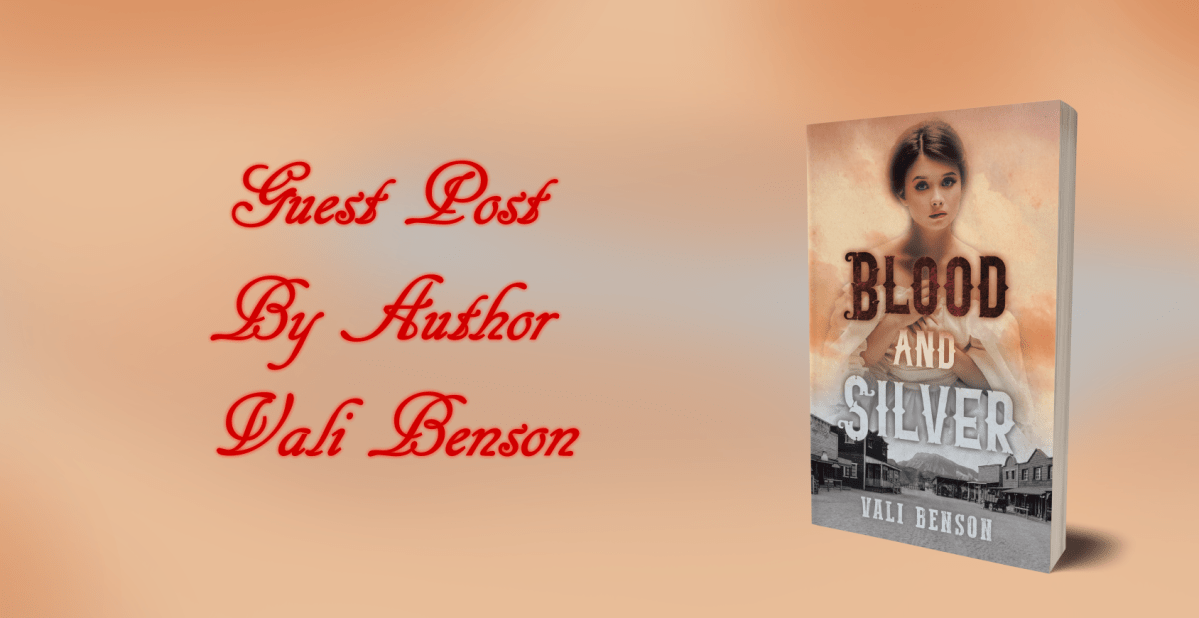
Guest Post by Author Vali Benson

How Blood and Silver Came to Be
Guest Post by Author
Vali Benson

Vali Benson imageMy name is Vali Benson and I am a published author. That still feels funny to say. Sometimes I still don’t believe it, but I just published my first novel.  It has been a work in progress for over fifty years. Ever since I can remember, I have had a book in my hand. As a lifelong reader, I often thought, “I could do better than that”. So I decided to do something about it. People have asked me to explain the writing process but I can’t. I don’t think there is a right way or wrong way to write a book. As Doris Lessing once stated that “There are no laws for the novel. There never have been, nor can there ever be”. But I do know what works for me.

The first step is to come up with an idea. It must be something that interests you, or that you feel strongly about. No point in picking a subject that you know nothing about. You would have to do far too much research and it still would not sound like you know your subject.

Once when I had severe writer’s block, a great teacher told me, “Write about what’s in your own backyard.”  Before I forget, my advice regarding writer’s block is: don’t take it personally. Anyway, I took my teacher’s advice and turned in an award-winning essay. That was the inspiration in writing my book; a young adult historical fiction novel called Blood and Silver. The story takes place in Tombstone, Arizona. For thirty years, I have lived in Tucson, Arizona. Tombstone is only forty-five minutes down the road, practically in my backyard.

I have been to Tombstone countless times. People are fascinated with Tombstone (not so much after they visit!). Tombstone is not like other “Wild West” tourist towns, like Deadwood or Dodge City. Tombstone has only two blocks of “downtown”. People walk on the original boardwalk (with some repairs) along the main thoroughfare, Allen Street, which was, until recently, a dirt road.

The population of Tombstone today sits at about thirteen hundred. On the weekends, many of the residents dress up in western garb – as cowboys, sheriffs, frontier gamblers, proper matrons and saloon girls. At first glance, it seems as though this may be a retirement community designated for extras of John Ford films.

However, Tombstone does have one enduring claim to fame – the shoot out at the O.K. Corral.  It is called “the most famous thirty seconds in the history of the American west”. The legendary incident is a gunfight that occurred in 1881. The shoot out involved Doc Holiday, Wyatt Earp and two Earp brothers against a gang of outlaws called the Cowboys. Three men were killed, all of them Cowboys. The Earps and Doc Holiday were already famous in the old west.  The gunfight made them infamous.

The real reason people remember Tombstone is because of its enduring place in pop culture due to the twenty or so movies made about the fight. People show up from far and wide and pay a $10 admission fee to look at a dusty, dirty lot behind a run-down barn. At the actual site, people look at mannequins standing where their real-life versions stood during that fateful afternoon 139 years ago.

Once I knew the reality of Tombstone today, I wondered how it could have become so famous. I knew about the silver mines, of course, but I had no idea how massive the output was.  The profits were mind-boggling.   Millionaires were made overnight.  The silver created civilization where there was none.  At the end of 1877, one hundred inhabitants had found their way to the mines of Tombstone.  In 1884, it was a bustling city of fourteen thousand residents. The term “boomtown” was never so appropriate.

Tombstone was the largest city between St. Louis and San Francisco in 1884, with over 150 businesses, including 100 saloons, and a thriving red-light district. Apparently this arid little tourist trap, only forty-five miles from my hometown, was more important than I thought!  This information began to spin my inquisitive wheels.  I began to wonder what it would have been like to live in this obscure place in 1880. The first step was complete; I had a premise that sparked my interest.  Now, it was time for the part of the writing process that gives life to the story, research.

It is all about the research. One needs to look in unusual places, not just the top three Google hits. I love sourcing museums, libraries, newspaper archives, and even historical homes. Don’t rely on your computer only. Everyone can get that information. Not only is it not original, it is not interesting. One tip that I would like to emphasize to a burgeoning writer of historical fiction is to seek out the primary sources whenever possible. If you can work from the original source, it falls on you to interpret the story. This allows you to not have to depend on someone else’s version of the truth.

As I began to delve deeper into the true story of Tombstone, I also uncovered unexpected angles. The most prominent of which was the effect of the Chinese population. The result of this research led me to a real person whom I could never had made up, a woman named “China Mary”. This woman lived in Tombstone from 1879 – 1906 and essentially ran the town. In addition to operating a gambling hall behind her general store, she was also the preeminent broker for opium, laudanum and Chinese prostitutes. After I discovered the real-life splendor of China Mary, I made her one of my central characters and twisted my fictional story around her actual exploits. None of that could have been possible without an extensive research period.

As a writer of historical fiction, historical accuracy is the most important component of the piece to me. It is even more pivotal than the narrative. I cannot tell you how many times I have quit reading a book that claims to be factual because the information and events are incorrect. It really annoys me! It is also important to realize that research is never-ending because you can’t ever learn everything there is to know. At some point, you just have to make up your mind that you have enough to craft the story you want to write. Then start writing!  I begin writing using my research as a reference and don’t worry if I have a fully formed concept. I believe in the Jodi Picoult approach, “You can always edit a bad page. You can’t edit a blank page”.

Many writers believe in outlines as a method of organizing and categorizing their research. Outlines don’t work for me. I tend to be too specific.  I end up writing the whole story in my outline.  What works best for me is to simply write.  Just start, and see where it takes you.  I flesh out the characters first and I let them take me where they want to go.  I often go back and change them, but that’s the beauty of writing.  You can do whatever you want with your people, just be sure you wind it up so that it makes sense.

This is why research is so important, because if I can understand the times in which my characters live, I will shape their circumstances and attitudes into the narrative.

As far as my writing habits are concerned, I don’t have many. I just do it. I know that many professional writers say the best method is to treat writing like a regular job with set start and stop times. I’ve tried this and it never feels right. For one thing, when I get on a creative roll, it is nearly impossible for me to stop. Conversely, I cannot force an idea. When I don’t feel like it’s happening, I walk away.   I commit a lot of time thinking about my characters.   When inspiration strikes, I will sit down with my glass of sweet iced tea and see how my characters handle the new twist. I know that strong coffee is the traditional nectar of the working writer, but I need my sweet tea. The sweeter the better I say!

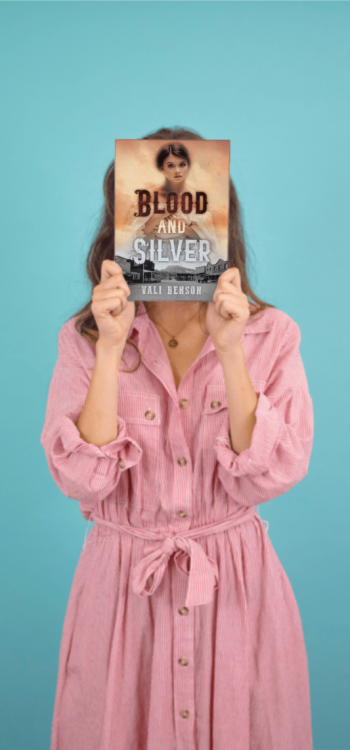
When your story is finished, it is time for my least favorite part of the writing process, editing. Editing is obviously extremely importanBlood and Silver by Vali Benson cover image.t but I find it terribly frustrating. Aside from the occasional grammatical error, most of my editing is about subtracting rather than addition. I choose to refer to my editing time as a tightening up period. This is when I can really focus on making my narrative flow the way that I want and make sure the story is always kept in perspective; the story that I want to tell. When is your story finished? It is finished when you think it is.  Before you begin, you will know where you will end up.  If you don’t, don’t start.  You need to have an idea where you are going.  Trust your characters to get you there.

With Blood and Silver, I put my characters through a lot and felt I told the story that I wanted to tell.   After all, I need them to rest up for the sequel.
valibenson.com
amazon logobarnes & noble logoamazon logo


Indigo Logokobo logosmashwords logo


© 2020 Ronovan Hester Copyright reserved. The author asserts his moral and legal rights over this work.

#Bookreview Do Not Wash Hands in Plates by Barb Taub (@barbtaub) #Indiatravel A fun trip with friends, elephants, food and more food.

Do Not Wash Hands in Plates. A hilarious memoir of a trip to Asia with friends

REVIEWS FOR LITERARY WORLD REVIEWS

Title:   Do Not Wash Hands In Plates: Elephant frenzy, parathas, temples, palaces, monkeys…and the kindness of Indian strangers
Author:   Barb Taub  (Author), Jayalakshmi Ayyer (Photographer), Janine Smith (Photographer)

ISBN13:  978-1523772551
ASIN:  B01A34USEA
Published:  January 1st 2016
Pages:  83
Genre:  Non-fiction, Travel: Asia, India, Humor and entertainment

Description:

Once upon the Land Before Time (or at least before mobile phones), my two best friends and I decided to leave the US from separate locations and meet up in Europe. To everyone’s shock, Janine, Jaya and I pulled it off—mostly because we went to Luxembourg, a country so small the odds in favor of chance street encounters were almost 100%, but also because Jaya was carrying the BS, a blue suitcase so enormous it took up approximately a third of the country’s square footage and was visible on satellite images. We couldn’t possibly miss.

It took over thirty-five years before—in a combination of optimism and failing memories— we recklessly decided to repeat this feat. Hey, we reasoned, now we’ve got smartphones, better credit ratings, wheeled suitcases, medical insurance, and the ability to drink legally. Just to make it more interesting, this time we chose to meet in India, where the odds against the three of us actually linking up were approximately a bazillion to bupkis.

Despite blizzards, canceled flights, de-icing delays, and an adjacent passenger who had made unfortunate food choices resulting in alarming gastrointestinal events, I arrived in India. The theory was that I would fly in from my home in Scotland, Janine would come from Washington DC, and Jaya would meet up with us at the airport. Nobody who knows any of us thought for a second that this could really occur.

Actual conversation at Passport Control, Mumbai:
Janine: “Well no, I don’t have my friend’s address or phone number. But she’s going to pick me up at the airport. She lives in Gujarat. That’s in India.”
Passport Control: [SO not impressed]

I arrived before Janine. As far as I could tell, the Ahmedabad Airport was staffed by the entire Indian army, each soldier carrying a honking huge gun. I grabbed my suitcase and exited baggage control into India. Noise. Chaos. People, dogs, honking horns, more people. More soldiers. More guns. Dozens of sincere men who called me “Sister” and suggested they could take me anywhere on the planet I might want to go.

No Janine. No Jaya. And, apparently, no way to get back into the airport. After several failed attempts at international texts, I realized I could (at heart-stopping expense) send email to Jaya, who soon confirmed that she was on her way and that it was 3:00AM so I should go back inside. Except there were signs everywhere saying you couldn’t go back in.
“No problem.” Jaya explained that rules in India were more like guidelines. “People in India are very kind. Just ask.”

I’ve been living in the UK where rules are inviolate and graven in stone, so I didn’t believe a word of it. But the soldier at the door listened to my plea and waved his AK-Humongo to usher me back inside. There I found Janine attempting to send email or text. I reminded her neither option was likely for two technologically-challenged, jet-lagged, middle-aged ladies in a foreign country at 3:00AM.

In the end, we wandered over to the door and to our mutual amazement found Jaya waiting for us along with her husband, a hired driver, and a van. Apparently lightning does strike again, because just like thirty-five years earlier, the three of us actually managed to meet up in another continent.

This is the story of three women eating our way across India in search of adventure, elephants, temples, palaces, western toilets, monkeys, the perfect paratha…and the kindness of Indian strangers. 

Body of review:

I was given a free copy of this book in exchange for an unbiased review.

I must confess I’m partial to stories of female friends. We don’t choose our family, but we choose our friends (or are chosen by them) and however different we might appear to be, there’s a synergy that takes place when good friends get together, that makes the time spent apart melt away, and the clock turn back.

In this travelogue, the author recounts the memoir of her trip to India with her two friends, Janine and Jaya, revisiting an experience they shared thirty five years before. Only, this time they’d gone one better, and rather than meeting in Europe, they decided to visit their friend Jaya at home, in India. Obama learnt about this and decided India must be worth a visit too, and at the beginning of their trip, the three friends have to do some interesting manoeuvres to avoid getting caught in the maelstrom the visit has caused. But there are some pluses too (Taj Mahal has never been cleaner).

Barb Taub’s voice is funny, fresh, witty (I love IPS as an Indian travelling guidance system, but I’ll let you discover it by yourself), and she does not take herself, or the experience, too seriously. The reader goes along for the ride and feels one more of the party.

There are no lengthy descriptions or heavy facts enumerated. The book is mostly a collection of impressions, discreet episodes, funny anecdotes, vibrant encounters with people (yes, and some elephants), and food. Lots of food.

It isn’t a book to be read to find advice on how to travel to India (the author’s experience is unique, and the product of very specific circumstances), although if we are to extract any recommendations from her adventures, it would be that it’s handy to travel with friends that know their way around pills and medication. And that if you manage to keep an open mind and forget about rigid schedules you’ll have a hell of a time.

If I had to find any buts with the book, yes, it’s short. Very short, although that perhaps contributes to the feeling of dynamism and effervescence of the reading experience. The author explains the difficulties with including pictures in an e-book and offers a link to have access to the pictures in better quality (and to videos and images not in the book) although in an ideal world readers might like to organise themselves to have access to the pictures as they read the book. (Or perhaps consider a paper copy, although as I haven’t seen one, I can’t comment on it). The other thing I missed was the opportunity of getting to know more about her friends (well, and her!). As I said before, books about female friends are my weakness, and not having read the author’s previous adventures I missed a bit more background.

A great little book for anybody who likes funny anecdotes, comments about food (beware of reading this book if you’re hungry, you might eat it!), hilarious adventures and a great narrator. I hope the three friends start a business organising trips soon!

Ratings:
Realistic Characterization: NA
Made Me Think: 3.5/5
Overall enjoyment: 4.5/5
Readability: 5/5
Recommended: 5/5
Overall Rating: 4.5/5
 

Buy it at:  
Format & Pricing:
Paperback:  $16.08
Kindle: $0.99

@OlgaNM7

http://www.authortranslatorolga.com

http://www.OlgaNM.com