What happens when the cameras stop rolling and the war is over? The Bridge offers a gripping answer in a story that spans both battlefields and the quieter struggles that follow.
The Bridge
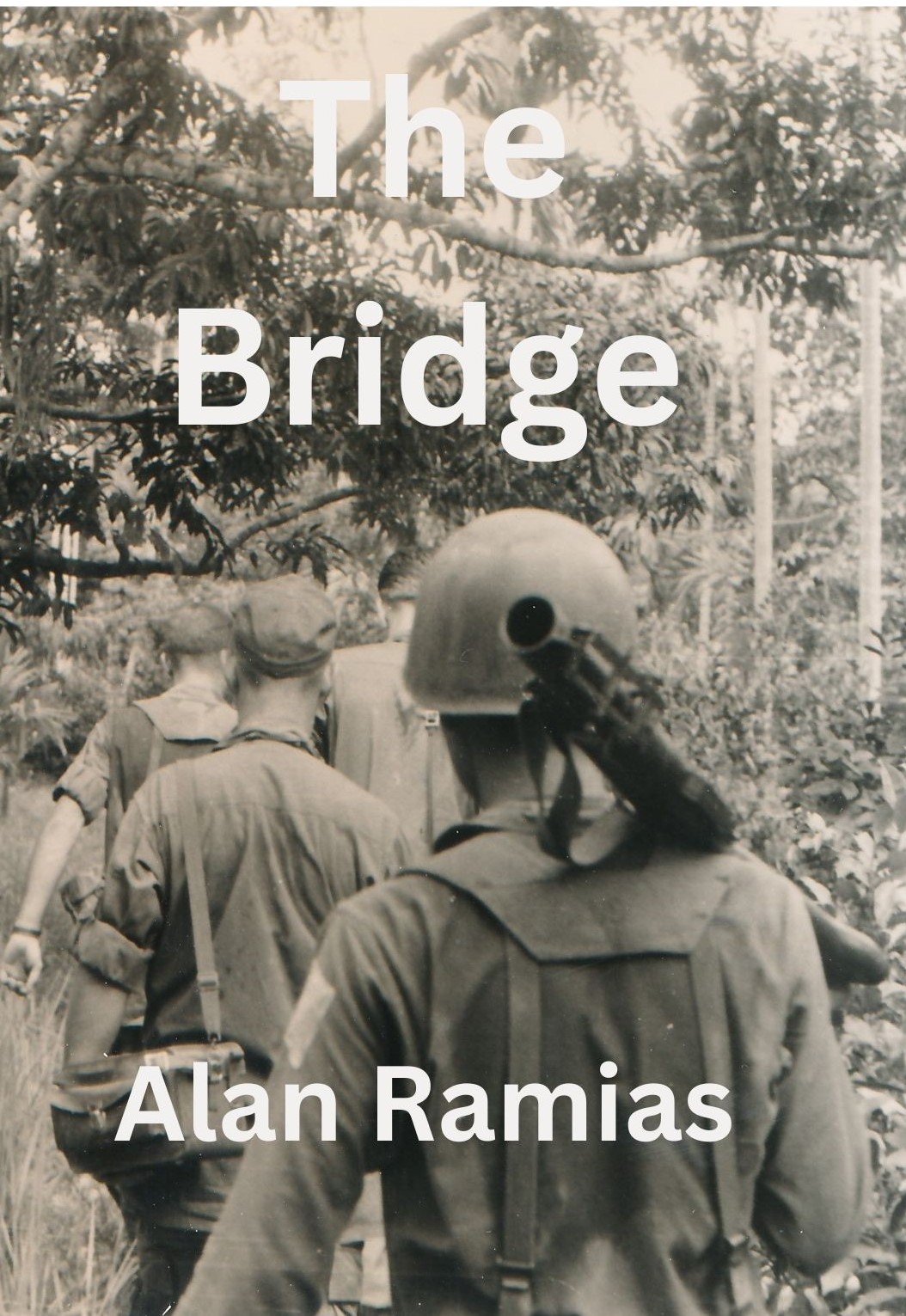
The Bridge by Alan Ramias
Synopsis:
A War That Won’t Let Go. A Memory That Can’t Be Buried. A Story That Refuses to Fade.
Moving between the intense conflict of Vietnam’s Mekong Delta and the hushed halls of a Chicago film studio, Alan Ramias’s The Bridge explores not just the war itself, but the lasting psychological scars it leaves behind. Through a powerful mix of fiction, poetry, and documentary realism, Ramias paints a portrait of soldiers returning home only to face a different kind of battle—one fought with silence, guilt, and the need to make sense of loss. The novel’s characters are as deeply scarred as the landscapes they inhabit, and their stories echo with the complexities of survival, memory, and the truths that refuse to fade.
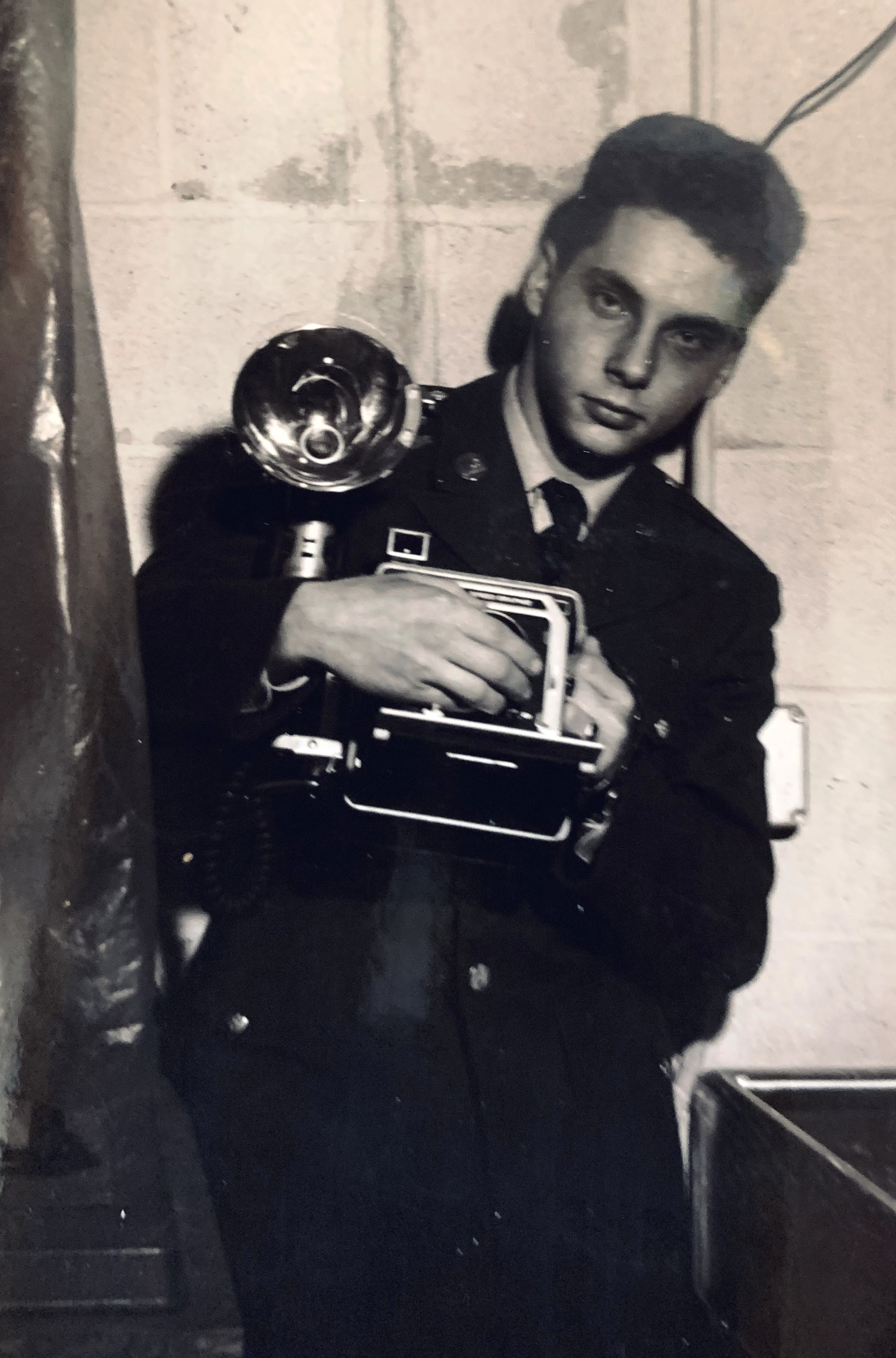
Alan Ramias brings a rare depth of perspective to his fiction, shaped by his time as an Army reporter in Vietnam and his later work consulting with global corporations on performance and strategy. His decades of experience navigating complex systems and human resilience inform the layered storytelling of The Bridge, a novel that blends personal history with a profound understanding of the psychological aftermath of war.
Henry Manero wants to grow up. But growing up is seldom the same as moving on. In this poetic and at times philosophical coming-of-age novel, Henry must learn to navigate his inherited guilt and trauma alongside several generations of dispirited loners-among them his absent father, suffering mother, three wild cousins, and bumbling stepfather. When Henry befriends an elderly man, Josef, whose sagaciousness presents new possibilities in life, he wonders if he can escape the trappings of his small town, and of his own mind. Will Henry achieve a newfound sense of self with the help of Josef, or is Josef yet another false star in a constellation of malevolent men with which Henry is surrounded?
Combining the lyricism of Justin Torres’ We the Animals with the kaleidoscopic visions of boyhood in David Mitchell’s Black Swan Green, Matthew Daddona’s debut novel The Longitude of Grief is a tender rumination on the familial bonds that entangle and entrance us all.
Praise
“A mesmerizing read. In The Longitude of Grief, Matthew Daddona traces the complex connections among a boy, his family, and his community. This dark coming-of-age tale explores the ebb and flow of intimacies and betrayals in a small town over the course of the years. A debut rich with melancholy beauty and emotional acumen.”
–Helen Phillips, author of The Need
“A multi-generational coming-of-age story beautifully crafted with language and setting that evoke Tom Drury or Barbara Kingsolver’s Demon Copperhead. The poetry pulls us in and the finely drawn array of characters keeps us glued to the page until the very end.”
—Bethany Ball, author of The Pessimists
“A lush, sweeping, intergenerational novel that fearlessly takes you into the many conflicting rooms of the human soul.”
—Simon Van Booy, bestselling author of Sipsworth
Want something that will help your really get into the mood of the book? Go to LargeHeartedBoy.com for Matthew Daddona’s playlist for his novel “The Longitude of Grief”.
Matthew Daddona is a writer and editor from New York whose fiction, poetry, and nonfiction have been published in outlets such as The New York Times, Outside, Fast Company, UPROXX, Amtrak’s The National, Guernica, Tin House, Slice Magazine, and Grammy. His debut poetry collection, House of Sound, was published by Trail to Table Press in 2020. Matthew is the recipient of an Academy of American Poets prize for poetry, was a runner-up in The Blue Earth Review’s 2017 flash fiction contest, and was longlisted in River Styx’ 2021 flash fiction contest. His debut novel, The Longitude of Grief, will be published by Wandering Aengus Press in 2024. He has received grants and fellowships from Craigardan (Elizabethtown, NY), NES (Skagaströnd, Iceland) and the Kimmel Harding Nelson Center for the Arts (Nebraska City, NE). He is currently working on his second novel and a collection of short stories. For EVEN MORE visit MatthewDaddon.com/about-Matthew.
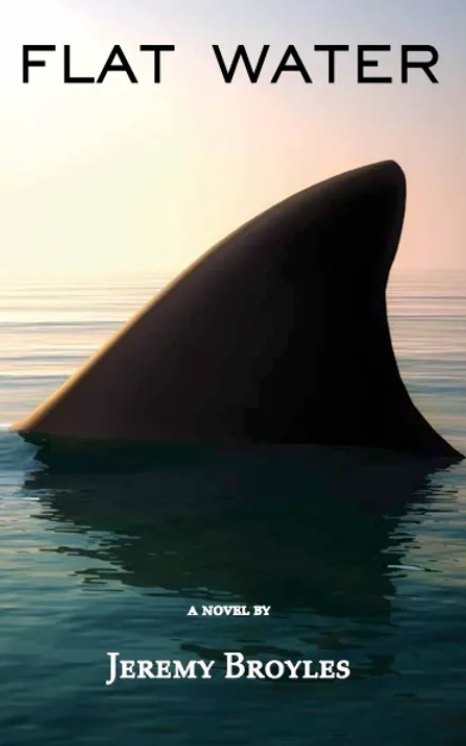
Flat Water is the story of a man who has run about as far away as possible from what he fears the most, home. When Monty Marinnis was a teen, he lost the hero of his world, his big brother Max to a shark attack while the two were surfing. Now, as an adult and married, he must find the determination to return to his family and hometown to face that loss head-on, or else never grow up in the most important ways.
In Flat Water, author Jeremy Broyles first takes the reader on a ride from Nebraska, to the Pacific Ocean, about as far away from an ocean as you can get and still be in the United States. Along the way, as Broyles takes you closer to Monty Marinnis’ hometown on the California coast, he also brings you closer, not just in the distance but in memory, to the true reason Monty left in the first place.
Once back with his mother and sister, he discovers he’s not the only one who lost his brother that day. Max touched the lives of many people. But is Monty open enough to be sympathetic or does he decide it’s all about him?
Monty has kept the truth bottled up for years, even from his wife, Charlotte. She knows the basics but not the whole story. No one does. Not his mother. Not his little sister, Maggie. Maybe even he doesn’t know.
As the story progresses Monty recalls moments with his brother. We get to see Max through a little brother’s eyes while at the same time we as the reader can interpret those same moments from our perspective, be it our own life experiences that could be similar, or simply the view of an older age.
We get to meet other people who experienced the loss of Max Marinnis in different ways than as a little brother. We see how they responded and what they did with their lives. Did they run? Did they move on? Did they merely survive?
One thing about the story is it doesn’t always head where you think it will or even where you think it should, at least not according to what we’ve come to expect from a book or movie. But life does what life does and, if we’re lucky, we end up where we need to be to solve the problems we’ve refused to face. For some, like Monty, it’s a painful place, in more ways than one. But maybe that pain will be what helps him or could be what makes it worse.
Readers will end up with many opinions of what happens by the end of the book but it’s always good to take a step back and look at it not just through our own eyes and thoughts about what happens, but through the eyes of the characters, which is how a story is told in the first place. We need to get out of our way to see how another person copes with a situation. We’re all different and some cope in great ways, some cope by screwing up, and some cope just by living. And this book is about that, coping and facing reality. And perhaps some recovering as well. At least all of that is my interpretation.
You can find Flat Water at Amazon by clickinghere.
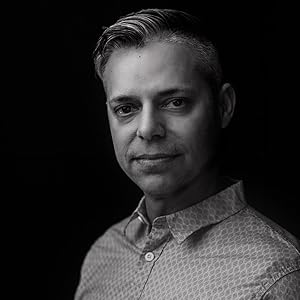
Jeremy BroylesAbout the author
ABOUT THE AUTHOR
Jeremy Broyles is an Arizona native, originally from the Cottonwood-Jerome-Sedona high desert. He earned his B.A. from Doane College, now University, his M.A. from Northern Arizona University, and his MFA in fiction from Wichita State University. He is a professor with nearly twenty years of experience teaching in higher education, and he currently serves as the creative writing program director at Mesa Community College where he has taught since 2017. His stories have appeared in The MacGuffin, Santa Clara Review, Rock and a Hard Place Magazine, Pigeon Review, Pembroke Magazine, Red Rock Review, BULL, Suburbia Journal, and Reckon Review amongst many others. His novella, What Becomes of Ours, was published in 2014 by ELJ Publications. His novel Flat Water–the story of siblings, surfing, and sharks and what happens when those things come together both in and out of the water–was released by Mint Hill Books, an imprint of Main Street Rag Press, in 2023. He is an aging rider of bicycles, a talentless surfer of waves, and a happily mediocre player of guitars.
Maggie has always accepted life’s constraints: that is, until she witnesses a breathtaking moment of liberation as a butterfly breaks free from a spider’s web. And this small, defiant act sparks a fire within her soul.
That’s a dangerous thing for a field slave in 1850 Missouri.
As her daughter ascends to the coveted position of personal maid to the Mistress, Maggie’s family is thrust into the intricate dynamics of power and privilege within the House.
But in the shadows, a chance encounter between Maggie’s sons and Preacher, a burly, escaped slave, sets the stage for a risky alliance.
Meanwhile, Lucy, the Master’s lonely daughter, hungers for the warmth and kindness that Maggie effortlessly exudes. The boundaries that separate them are as rigid as the times they live in, but the desire for connection and understanding defies the odds.
Maggie, recognizing an opportunity for freedom, finds herself entwined in a perilous dance between liberation and the relentless pull of her current station.
Will she follow in the path of the butterfly?
The Honey Tree
What would be your one sentence elevator pitch of what your book is about to get someone to want to read it?
This is the story of Maggie, a slave who excels at picking cotton, and Lucy, a nine year old whose mother believes she can’t excel at anything.
Why do you think Maggie was so persistent in wanting you to tell her story?
Honestly, I still don’t know.
She haunted me for years – years. I’d jot a few things down, toss them away. I kept telling myself it wasn’t a story for me to tell. The ideas would fade – only to come back stronger.
One full moon I dreamt – vividly – of that wild night on the Mississippi River. The next morning I wrote in earnest.
The Honey Tree is different from your ventures into fiction. What is your background to be able to write Maggie’s story? What research did you need to do?
There was a bit of a familiar echo from a few characters to some elders I remember as a child. And if you read Wake of the Sadico, you might see a connection. But I had a ton of research to do.
I disliked research before the internet. Spending hours in libraries trying to learn what 15th century seafaring was truly like is incredibly time consuming – and when you get home you always realize you missed some key details.
Now at least you can Google online, or use it to seek knowledgeable folk. Even then, as I’m doing my early morning writing, I’ll suddenly realize I have no idea if they drank tea or coffee in Missouri. What will connect the reader to the story and make them keep reading to the end? I see stories as carnival rides. The events are the track laid down and the characters are the vehicles you ride in. You have to believe in the characters – like them. You need to feel their drive, their desires, their goals.
You must want to take that journey beside them.
Did you have difficulty deciding your book was ready to publish? I always have trouble letting go. There’s another tweak here, a bit more polishing there.
These stories grow into friends, and it’s hard releasing them. Once they venture out into the world, they take on their own life. You can only watch from the side-line.
What age(s) of reader do you think would enjoy The Honey Tree?
I’ve had friends give it to twelve year olds, who loved it. I suppose it depends on the parent’s perspective.
What’s your next project idea?
I seem to have stumbled across a dead girl in the Arizona desert who wants to talk to her mother.
What led you to leave the sunshine of Arizona to the not-so-much sunshine of Plymouth, England?
My darling spouse is British, and had lived with me in the U.S. for thirty-six years. It was simply my turn to live abroad.
It’s a wonderful adventure.
What do you miss about the U.S.?
Mexican food, large parking lots, and central air. When we bought our place in the UK, I discovered that “A.C.” on this side of the Atlantic stands for an “Airing Cupboard.”
Finally, there are other historical fiction novels with similar subject matter, why should a reader choose The Honey Tree?
To me, this is not another story about slavery. It’s about people who wanted something better for themselves, their families. A man who fought and lost and gave up, then fell in love and fought all the more. About a woman struck by the idea that freedom might be possible after a lifetime of believing otherwise. A woman risking more and more for her children, and then someone else’s child.
In a nutshell, it is about that spiritual leap of faith – and Lucy’s literal leap of faith.
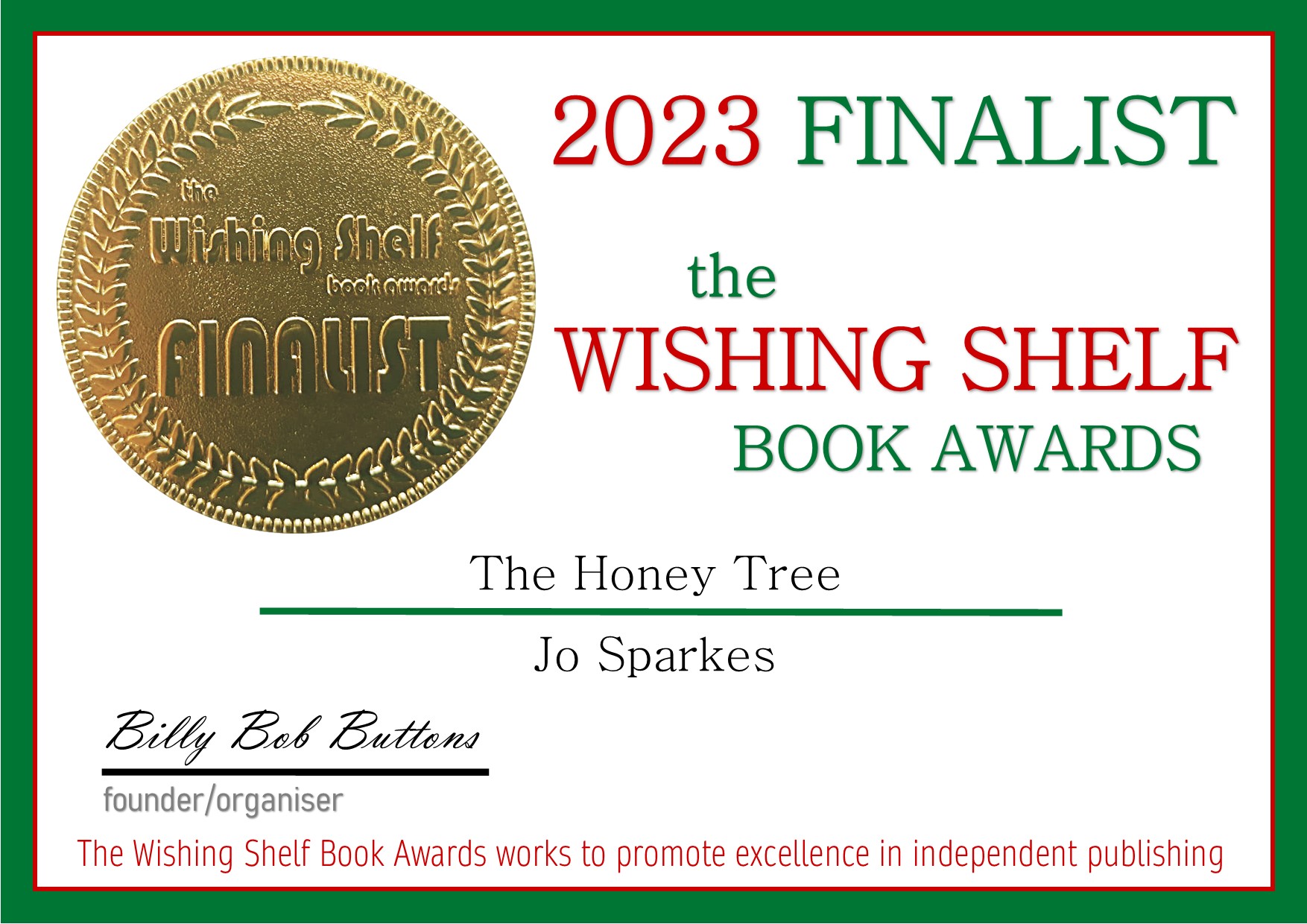
Find The Honey Tree at several outlets includingAmazon.
Visit Jo’sbooks2read.com/HoneyTree site for all of the vendors (12 in all) you can purchase The Honey Tree from.
Jo Sparkes
Jo Sparkes
From television shows to football articles, Jo Sparkes can’t put the pen down. She’s interviewed Emmit Smith and Anquan Boldin (as Arizona Cardinals), taught screenwriting at the Film School at SCC, and went on camera to make “Stepping Above Criticism”.
An award winning writer, she’s recently moved to Plymouth, England – and learning to speak the language.
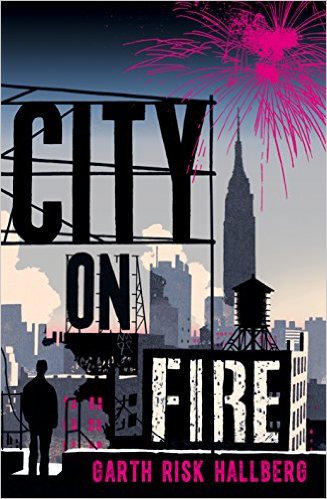
Title: City on Fire Author: Garth Risk Hallberg ISBN: 0385353774
ASIN: B0104WXPR8 Published: E-book version due on 22nd October, although available in paperback Pages: 944 Genre: Contemporary Fiction, urban
Body of review:
City on Fire by Garth Risk Hallberg. How Long Was My Novel.
Thanks to the publishers (Vintage/Penguin Random House) and to Net Galley for offering me a complimentary copy in exchange for a review.
I must confess to feeling curious after reading about all the attention the novel was getting and the advance praise. Although I read a variety of authors and genres, I studied American Literature and have an affinity for it and an interest in new American writers, so I was intrigued. But, I didn’t investigate the matter further and didn’t quite realise how long this novel was.
Don’t get me wrong, I’ve read, and loved, many long novels (I love Moby Dick, although it is not quite this long, but I’ve also read War and Peace, several of Jonathan Franzen’s novels, and have never felt the length). And I’m sure I’ll read many more. Although perhaps since I’ve been dedicating more time to reviewing and reading about writing, I’ve become more impatient.
City on Fire is 944 pages long. There are many stories, all entangled into one (sort of), told from different characters’ point of view (using the third person), with some interludes that include (fictitious) documentation, like the article on Fireworkers (experts on firework or pyrotechnics) written by Richard, a reporter and writer, or the Fanzines that Sam (a young girl, fan of Punk music) writes. The novel doesn’t follow a chronological order either, and you have episodes set before New Year’s Eve, when one of the central plot events takes place —the shooting of a young girl (Sam)—, some set after, and some set many years later, with flashbacks to years before, in seemingly no particular order, although not difficult to follow (but somewhat exhausting if one is reading for long periods of time. And I wonder if it could be confusing if people read the book in short chunks). The book, set in New York, in the Seventies, refers also to a number of issues, like the financial crisis, the musical movements of the time, riots, the big blackout, art, and all those worlds are illustrated by characters from different genres, social classes, walks of life, ethnicities, sexuality and origins. Ambitious is an adjective that has been used to describe this novel, and there’s no denying that. There are cops with physical ailments nearing retirement, artist, musicians, youngsters exploring and discovering themselves, rich and unhappy families, conspiracies and financial entanglements, an anarchist group setting up fires and bombs, adultery, love, a shooting, drugs, alcohol, writing, radio… And always New York.
The author has a beautiful turn of phrase, and you can’t but admire some of his sentences, although they can have the effect of throwing you out of the story. I kept thinking of the indictment for writers, ‘Kill your darlings’, don’t let those pieces that seem like beautiful paintings decorating the book just hang there. Remove anything that has nothing to do with the story or does not contribute to its progress. But perhaps the story is not the aim of this novel. I wasn’t so sure about the characters, either. Most of them were interesting, but perhaps there was something generic about them, and despite the length of the book I didn’t get the sense that I really knew a lot of them (not the same time is dedicated to the inner thoughts of all the characters, and some of the secondary characters that are potentially interesting, like Amory, are not given a voice), and the ones I felt I knew were familiar types. The rhythm is leisurely and although at times it seems about to pick up the pace (during the blackout), the changes in time-frame and point of view slow it down again. I was somewhat puzzled at finding the interludes about the fireworks more engrossing than some parts of the novel (although I’ve always loved fireworks, but it could be the journalistic style).
Having read some of the comments, I have to agree that much of what contributes to the vastness of the novel does not necessarily add to the experience of the reader or the story (at least for me). City on Fire is a huge canvas, with some very beautiful splashes and sublime moments, but perhaps the sum does not live up to the promise of the parts. I felt it aspired to be like one of the fireworks it describes, that have several layers and fuses, and go up, and down, and then back up again, before exploding in a wonder of colours and shapes. For me it didn’t manage, but it’s impressive nonetheless.
City on Fire by Garth Risk Hallberg Paperback
Ratings: Realistic Characterization: 3.5/5 Made Me Think: 4/5 Overall enjoyment: 3.5/5 Readability: 3/5 Recommended: 3/5 Overall Rating: 3.5/5
Buy it at: Amazon Format & Pricing: Paperback: $13.40
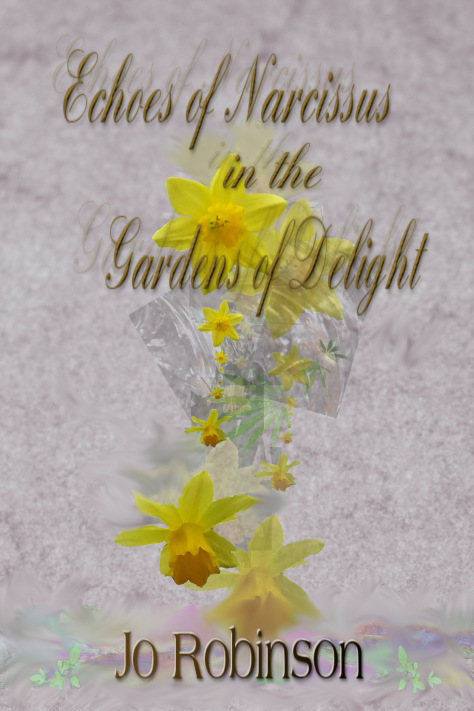
Donna thought there was something wrong with her. That she was suffering from a mental illness that has caused her husband to despise her, distance himself from her, and cheat on her. She blames herself for the desolate, miserable thing that is her marriage and her life. Then she comes across a book that will change everything for her, and reading it, she discovers that there’s nothing wrong with her mind at all, but that there is something very wrong with her husband instead. Marco, she realises, is a malignant narcissist. A text book case. He has a real and documented mental disorder, and that he’s been controlling, manipulating, and abusing her for decades. The sudden full knowledge of all that he’s purposely done to her enrages her. Not sure how to leave after thirty years of what she finally knows has been intentional mental and emotional abuse from him, and believing that she has nowhere to turn, being so physically isolated, she bides her time.
Then she meets and befriends a group of unusual people who share her passion for gardening, and so begins her journey to escape. She joins her new friends in their project to assist elderly people in old age homes care for their small gardens, as well as secretly supplying those suffering from painful and terminal illnesses with medicinal herb and plant remedies, including illegal plants such as cannabis. As weeks go by, she delves into her memories, relearns what it is to be respected, liked, and loved again, and slowly she formulates a plan to safely leave her dangerous husband. But unbeknownst to Donna, Marco is in serious trouble, and has desperate plans of his own, and absolutely no regard for her safety.
** This is a work of fiction, but malignant narcissists really do exist, and it is a recognised mental illness. Unfortunately, many people never realise that they are involved with a narcissist, because their actions are so demonically bad as to be unimaginable and unbelievable, and so they spend their lives in misery, depression, fear, and isolation. If only by the accidental reading of a fictional story, I hope that this book will help even one person, unknowingly suffering narcissistic abuse, to realise that they don’t have to, and that it’s never too late to start over, be happy, be fulfilled, to love and care for yourself, and be truly loved and respected by others.
Jo Robinson very recently returned to her homeland, South Africa, after having lived in rural Zimbabwe for eighteen years. Her obsessive affection for the African continent, most humans, and all creatures feathered and furred are what inspire her writing. She is the author of African Me & Satellite TV, the science-fiction/fantasy series Shadow People, and a couple of short stories, which will be free to download from Amazon from 26 to 30 December,Fly Birdie and The Visitation.
To win eBook copies of Shadow People and African Me & Satellite TV, send Jo a message from THIS page.







 Lit World Interviews