
Synopsis
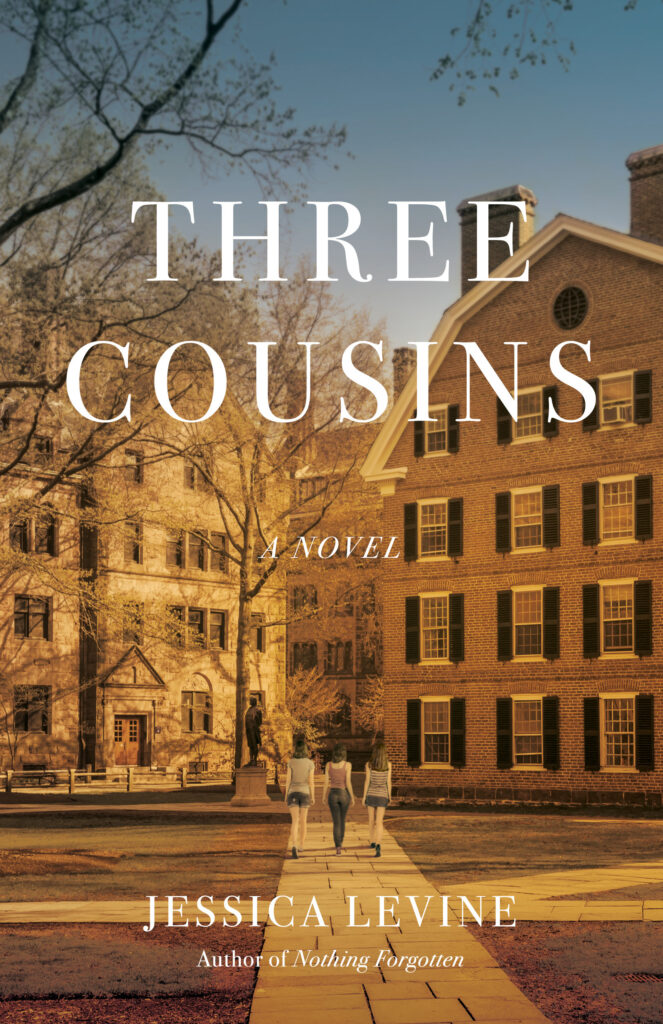
Set during the excitement and tumult of the second wave of feminism and the sexual revolution, this coming-of-age novel about female friendship in the 1970s will appeal to fans of Kristin Hannah’s Firefly Lane.
It’s 1976, the second wave of feminism is in full swing, and three cousins share an apartment at Yale. Two are seniors; the third is starting graduate school. Each is seeking her own path in both love and work—but all three women, not quite knowing how to use the new freedoms available to them, alternate between supporting and undermining each other in their efforts.
Julia, the most conventional of the three, wants the security of her monogamous relationship with Ben but is attracted to other men. Anna plans on traveling the world to escape her boyfriend and alcoholic mother. Robin, who is bisexual, has various partners as she dreams of open relationships. All fall under the spell of a charismatic musician, Michael, who is too wounded to be available. By the end of a year of experiments and necessary mistakes, the cousins will make crucial decisions that will determine the course of the rest of their lives.
This prequel to Levine’s first two critically acclaimed novels, The Geometry of Love and Nothing Forgotten, dramatizes the struggles that women have faced and continue to face while entering adulthood in a world not quite ready to accept them as equals.
Why did you choose the second wave of the women’s movement as the backdrop for Three Cousins?
The choice was dictated by the narrative structure of my series. Three Cousins is the prequel to two other novels I’ve written, The Geometry of Love and Nothing Forgotten, and takes place in the characters’ college years, which were also mine. I did my B.A. at Wellesley College in the mid 1970s when being in a women’s college meant being saturated with feminism. As I recreated that period (albeit I moved the action to Yale), I remembered how my thinking and my relationships were impacted by the emerging feminist voices of the time.
As I was reading I noticed that each cousin had a different type of relationship with her parents, with the mothers being somewhat the glaring ones. How important were they to the development of how the cousins end up as they are?
The three mothers form a foil for the protagonists. As a hinge generation between the social conservatism of their Jewish immigrant mothers and their more liberated daughters, the three mothers have had their share of frustrations and limitations. One of the book’s themes is the way in which daughters must liberate themselves from their mothers in order for their generation to progress beyond the previous. The moms also provide comic relief. They have hilarious responses to the vicissitudes of being female.
As important as the mothers are, I also saw the differences of the fathers and how they handled situations. What importance do you think they had in the cousins’ development? I am particularly thinking of Anna’s father.
The fathers are indeed important. Julia’s dad is generally present and supportive whereas Robin’s is absent. Anna’s father could be called irresponsible and disappointing: he clearly loves his daughter, but he chooses not to defend her against her alcoholic mother. Of course, it’s common in dysfunctional families that one parent is abusive and the other looks away.
How did you keep yourself honest about the ups and downs of the feminist movement while some authors like to show only the, I guess, positive impacts on the women involved? I wanted to point out some specific moments of honesty but that would be revealing too much. I was thinking of Robin and Julia for the most part.
The feminist movement extended hopes and ideals that were not always easy to enact. For example, Julia would like to be independent and successful, yet she also craves the security of a conventional monogamous relationship; she consequently loses some of her drive and self-direction when she settles down with her boyfriend. As for Robin, who is bisexual, she dreams of polyamory, but isn’t prepared for the internal and relational conflicts that accompany that lifestyle. And having ideals doesn’t protect you from the misogyny of parents or male friends and professors.
Readers of women’s fiction, especially those of a historical era, always like to ask the same question… How much did you pull from your own experiences, in this case with your cousins?
I was influenced by my mother’s side of the family: my mom and her sister grew up in Brooklyn next door to their two cousins. Three of them remained close throughout their lives; the fourth moved to Italy to be independent. Then, growing up, I myself had close relationships with my cousins. But if the family structure in Three Cousins was inspired by mine, the actual characters are amalgams of many people, including friends I had in college. And on a certain level they are also archetypes of different attitudes young people have as they come of age. Julia is Prudence, Anna is Adventure, and Robin is Experimentation.
With different ways of navigating the women’s movement, today as well, do you think it strengthens or weakens familial bonds between women?
Short of doing a sociological study, I’m not sure I can answer that. But I do think that women’s issues are generally more out in the open than they were in the 1970s. The movement is now more inclusive and intersectional, which in turn may make it easier for women in a family to discuss harsh experiences like sexual and domestic abuse, discrimination in the workplace, homophobia, and racism. And conversation leads to mutual support and strengthened relationships.
You mentioned two other books in the series about the cousins. Can you tell us a little about them and any future plans?
The overall plan is to create five novels that follow these three cousins over the span of their lifetimes. Three Cousins catches all three in college. The Geometry of Love centers on Julia in her 30s, then her 40s; it’s a love triangle story and a tale about artists and muses. Nothing Forgotten follows Anna’s adventures in Italy in her 20s then fast forwards to her 50s. The next novel will focus on Robin. She is the wildest of the three, polyamorous and a spiritual seeker, so I’ll have fun with it. A fifth and last novel will bring all three cousins back together in their 60s or later.
Are you a full time writer or do you have another way to nourish the body and soul?
I balance writing with my hypnotherapy practice. For relaxation and exercise, I hike and do nature photography, which I took up at the beginning of the pandemic. Mostly I take pictures of birds, documenting wildlife in the San Francisco Bay Area. You can see my photography on Instagram @jlcreativearts
How has being a hypnotherapist influenced your writing?
Hypnotherapy is a creative process: In hypnosis we use the visual imagination constantly. I have had a lot of practice visualizing memories, fantasies, and scenes. It is also a training in accessing and using the gifts of the subconscious. My creativity has certainly been enhanced by my profession. Additionally, I’ve had the privilege of being inspired and enriched by my clients’ struggles and resilience. Being human isn’t easy.
Who are the authors that have influenced you most?
The list is very long, but here are a few, all of them classics. American: Henry James and Edith Wharton (subjects of my Ph.D. dissertation and book, Delicate Pursuit: Discretion in Henry James and Edith Wharton). French: Stendhal, Flaubert, and Marcel Proust. British: Virginia Woolf, Lawrence Durrell, and E.M. Forster. Russian: Chekhov and Turgenev.
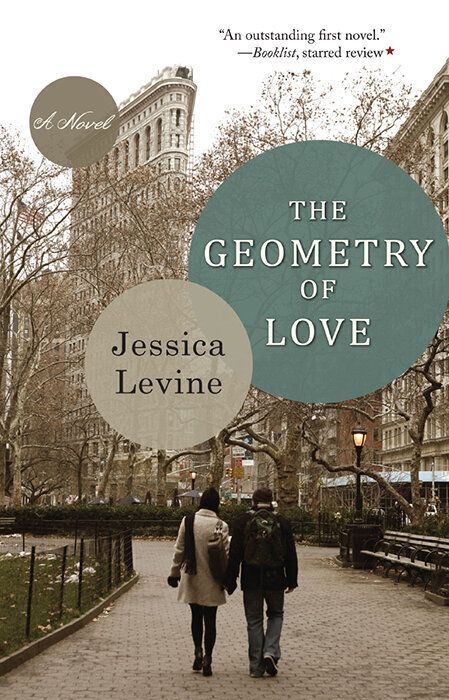
Julia’s story.2015 Top Ten Women’s Fiction Title — American Library Association’s Booklist
“Spanning 1987 to 2004, the novel’s scope and sweeping character arcs will appeal to fans of Meg Wolitzer’s The Interestings . . . Julia’s emotions, insecurities, and pleasures are laid bare and recall Isadora Wing in Erica Jong’s Fear of Flying . . . An outstanding first novel.”
— Booklist, starred review
“Jessica Levine has crafted a lyrical and realistic examination of the complications and exhilarations of romantic entanglements. . . . Julia is a compelling and relatable protagonist. “
— Foreword Reviews
Nothing Forgotten
Anna’s story.
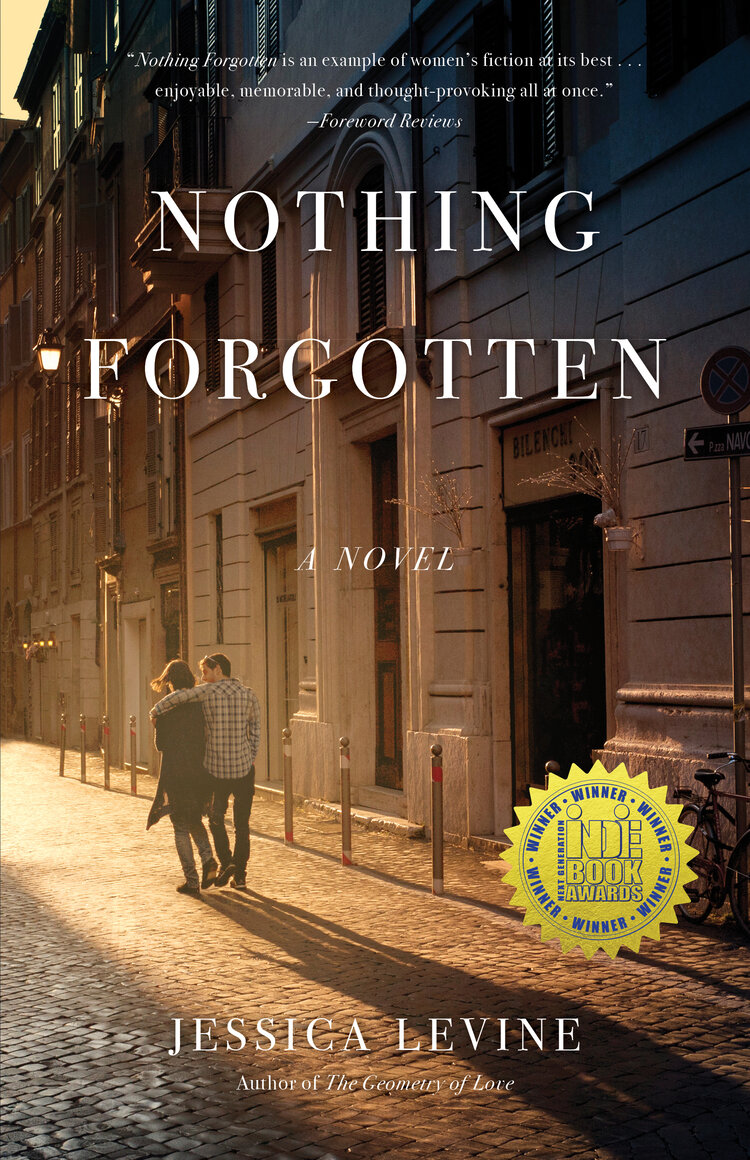
A Booklist top-10 women’s fiction pick for 2019
Winner Next Generation Indie Book Award (Second Novel)
Finalist Next Generation Indie Book Award (General Fiction)
First Place, Northern California Publishers Association (General Fiction)
Merit, CIPA EVVY Book Award, (Women’s Fiction)
“A vivid travelogue . . . reminded me of the Italian television series . . . that proved compulsively engrossing, ‘The Best of My Youth,’ . . . delicious insights into Italian life.”
— San Francisco Chronicle
“Fans of Emma Straub, Anne Tyler, and Liane Moriarty will adore Levine’s treatment of domestic drama . . . . Immersing the reader in Roman decadence and San Francisco’s modernity, Nothing Forgotten is an intricately layered, deeply heartfelt, and bittersweet novel.”
— Booklist, Starred Review
“. . . an example of women’s fiction at its best. Its exploration of history, memory, family, and the particular struggles of women looking for experiences and love is enjoyable, memorable, and thought-provoking all at once.”
— Foreword Reviews
“A richly detailed story of passion and failure, deception and honesty, with anticipation and nostalgia. It is about making hard choices and living with those decisions, and the twisted ties that hold a family together.”
— Story Circle Book Review
About Jessica:
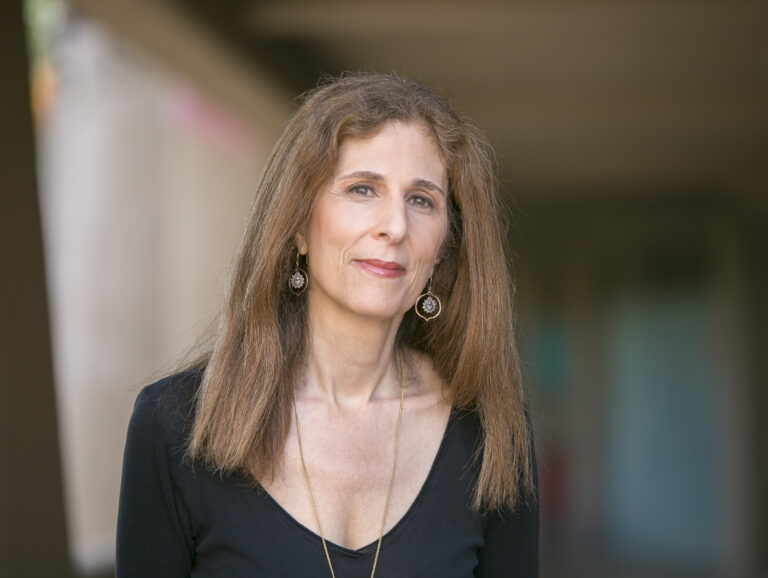
Jessica holds a B.A. from Wellesley College, an M.A. from Teachers College, Columbia University, and a Ph.D. in English Literature from the University of California at Berkeley, where she was a Mellon Fellow. After receiving her Ph.D., she decided not to pursue an academic teaching career, but to become a hypnotherapist. She trained at HTI (Hypnotherapy Training Institute) and has been practicing for 20 years. Jessica also has had a rich and varied experience teaching creative writing, composition, and literature in universities, high school, adult education, and the private sector. In 2014-15, Jessica held workshops on writing the novel at the American Library in Paris. Previously, she taught at the University of Toronto, New York University, and the University of California at Berkeley. She is the author not only of novels but also of a literary history, Delicate Pursuit: Discretion in Henry James and Edith Wharton. Visit her at her website.
Follow Jessica Levine on social media
Facebook: JessicaLevineWriter | Instagram: @jlcreativearts
© 2014- Ronovan Hester Copyright reserved. The author asserts his moral and legal rights over this work.





 Lit World Interviews