Stevie Turner interviews author J.W Goodwin

I hope you enjoy my interview of another Creativia author, YA Fantasy/Paranormal writer J.W Goodwin.

J.W Goodwin

Link to J.W Goodwin’s Amazon author page:  http://bookShow.me/B01AKXEOP8

1.  How old were you when you had the urge to become a writer?

I think I was 13-14 years old when I started with fanfiction, bad fanfiction to boot. The only reason I can remember is because of what grade I was in at the time. Thank goodness I’ve gotten better since then.

2.  It’s taken you 10 years to finish your debut novel.  What gave you the inspiration for the story?

It’s going to sound corny but it was due to a dream I had. I was lost in a forest until I was attacked by monster brown bugs. I was saved by an elf in green, who looks very much like the male protagonist in my debut novel By The Light of a Darkened Forest. He hid me from the monsters and went out to take care of them, telling me to stay hidden and that he would come back. I woke up before he could but he did manage by giving me a brilliant idea for a story.

 3.  Is any or part of the story autobiographical?

No. Though the main female protagonist Evelyn has some of my characteristics, none of events mimic my life.

4.  Your novel is a paranormal fantasy adventure for young adults.  Have you ever had a paranormal experience?

It would be awesome if I could say yes but unfortunately no. Unless of course having very imaginative dreams counts. The feelings I get from my grandparents’ farm brought the story to life. It feels so different there compared to other places I’ve been. Magical is a good word for it.

5.  Do you find that writing your debut novel has helped with your slight dyslexia?

Definitely. I’m more confident with my writing than even the spoken word. As the saying goes, practice makes perfect, and the years I’ve spent practicing have helped immensely.

6.  Were your schoolteachers sympathetic regarding your dyslexia?

Not really. I don’t think it was in my student file so I doubt they knew. It always took me longer to read through books but I’d get it done eventually. If I could get away with not reading the material I would. It saved me time to do other things, like writing the reports and essays they wanted. Also the reason I believe I have/had dyslexia is because I would be pulled from classes grades 1-3 to learn the differences between letters and directions. It didn’t change until I was in high school, something clicked then and it became easier.

7.  Why did you change from a French school to an English language school?

Verbs. That is the only reason why I changed schools. The French language has so many verbs and so many different variations of said verbs with special rules that I couldn’t wrap my head around them. I could get away with speaking in slang but writing was a different story. Without writing I couldn’t get decent grades not matter how hard I tried. So my parents switched me.

8.  Do you think in French or English? Which one is your first language?

I think in English since it’s easier and I’m much better at it, though sometimes if I don’t remember a word I usually know the French one. Pencil sharpener was one I got hung up on way too often, I’m lucky I live in a bilingual community or else trying to ask for one would be a task in itself.

For my first language I’m not sure. I learned both at the same time though my first words were French.

9.  Have you written other stories or poetry?

I have lots of poetry though none of it is published. I like to write them to express a mood or an idea or they just come to me. For stories I have so many beginnings but no ends. This is the first one I finished and it was all thanks to a good friend who was reading them as I was writing. If it wasn’t for her this one wouldn’t get finished either.

10. What in your experience is the best book you’ve ever read?

That’s a loaded question. Honestly it keeps changing with each book I read. It started with The Three Investigators series by Robert Arthur Jr. then progressed to Harry Potter by J.K. Rowling, now it’s a tie between Graceling by Kristin Cashore and The Darkest Part of the Forest by Holly Black. As I grow older I get to read more novels and with that new flavors to taste. So it’s really hard to say what the best book is.

11. Which social media do you think helps the most in building up an author platform?

I can’t really answer since I’m still trying to figure it all out. Being so shy it’s hard for me to put myself out there. Doing this interview is going way beyond my comfort zone. One thing that’s helping my confidence is finding an author group with supportive peers like I’ve found with Creativia. I feel bad that I barely post on there but it’s so stressing to even think about it let alone what I’m going to say. Having a group where you can ask the more tenured authors for advice (I think, I haven’t yet because, again, I’m too shy to) would help and if you’ve found the right group they will help you grow.

 12. Living in Northern Ontario, do you prefer the cold winters or the boiling summers?

I like the transition periods best where you don’t have to wear 10 pounds of clothes because it’s so cold or want to tear your skin off because it’s so hot. So I guess you can call it the few weeks of spring and fall. If I had to choose between the two though it would be the winters. I have a saying that you can always put more clothes on to stay warm but you can only take off so much to get cool.

13. My fascination is with the Mennonite lifestyle when I found out about them on a visit to the area around Kincardine on a Canadian holiday in 2013.  Does the slower pace of their lifestyle with its lack of modern amenities appeal to you?

Definitely! Though I’d miss my computer since it makes writing so much easier for me. It’s a reason why I moved back to my hometown from the city. Much slower pace and so much quieter. Gives a person time to think. Also you’d spend more time talking with people face to face, and I don’t mean facetime on the phone, which is very important. Today it looks like what happened to people in Disney’s Wall-E is happening now. Makes me sad really.

14. What is it about forests that you find fascinating?

It’s the feeling I get from them. It’s so quiet and peaceful but if those trees could talk they could go on forever. Whenever I’m with nature there’s something magical that comes over me. It’s perfectly imperfect within the canopy. Everything has its place in the mismatch of things. It’s hard to describe but it’s one place that’s left untouched by people. You never know what you can find in there.

15. Do you think that playing video games is a good pastime for teenagers?

Depending on the video games yes. One’s that are just for going around and killing stuff, what they call hack n’ slash, no. If it includes a story, puzzles/tactics and even morals then I do think it’s good. My favorites to play are ones with a story, my favorite of those by far is The Legend of Zelda series. It does have to be balanced with other things though, like exploring outside or having a hobby off screen.

16.  Are you adept at orienteering using only a map and compass?

I know how to use them but that’s about it. When I go out I usually go with my dad. He’s the expert. If we go off on foot he can find our way back. On my own I’d get too nervous and stick close to an obvious trail.

17.  Have you ever been lost in a forest?

No. Though I love exploring I always make sure I know where I am. If I get disoriented I retrace my steps until I can remember. Going on drives with my dad, however, is a different story. Though he says we’re not lost I’ve had moments where I’ve doubted him. He finds a way out though.

18. Who is your favourite band?

Another loaded question. I’ve got so many. If it was based on concerts I’ve attended and grew up with then it would be Rush. For newer music I love Daughtry for the sound but I can say that about Gowan’s older music and some others. I just love music in general.

19. What is your most prized possession?

Though it’s a bit embarrassing I have to say it’s my Barney. I’ve had him since I was 2-3 years old and he’s been with me everywhere. I’m very protective of him and don’t let many touch him. To this day he still fights off nightmares and keeps me company though he has more friends than he used to. There’s a group of dogs and wolves he hangs out with now, even a polar bear that I got at the Cochrane polar bear habitat. They all have their own stories, the stuffed animals that I’ve gotten attached to, so what normal people think about Barney is not how mine is.

20.  Which one thing would you like with you on a desert island?

A sailboat filled with supplies so I can get back home? I bet that’s not what you’re getting at though. If not then a pencil and a pencil sharpener with sketchbook if a set counts. I’d spend my days drawing and writing for a vacation. I guess I’m lucky that my favorite things to do can be brought with my anywhere. I thank God for that. If not I’d be quite the miserable person as there would be no outlet for a very overactive imagination.

Thanks J.W for your answers.  Rush is also one of my favourite bands!

To find out more about J.W, please click on the links below:

Stevie Turner interviews author Sahara Foley

Sahara


It was Sahara’s enthusiastic support of Creativia publishing that eventually made me send off my latest novel to them, which I’m pleased to say was accepted.  Sahara is an author who is part of Creativia’s Street Team, and tirelessly supports other authors’ work.  Today I’m pleased to be able to promote Sahara’s novels by way of this 20 question interview.

You can find out more about Sahara’s books by checking out her Amazon author page (link is below).

http://www.amazon.com/Sahara-Foley/e/B00J9ST32U/ref=sr_ntt_srch_lnk_1?qid=1458670356&sr=1-1

1.  Did you have to make many changes to your husband’s short stories after his death to get them ready for publication?

Most of the short stories, no.  I did have to rewrite them for showing instead of telling, make sure they were in the right cause & effect sequence.  The actual books have taken a lot more rewriting.

2.  Did you or your husband ever send  the stories to any literary agents?

Yes, back in the late 1980’s Bob sent his books to quite a few publishers.  At that time, I didn’t realize they still needed a lot of work.  Now, I do.  Bob was one of those writers that didn’t believe in changing anything in his stories.  They were perfect the way they were.

3.  Where did you find the inspiration for ‘The Secret of Excalibur’?

Since these are Bob’s stories, I have no idea where they came from. The original title was Arthur Merlin, but Miika wanted a catchier title, so I changed it.  I could swear Bob was glaring holes in me at the time.  Since then, he’s learned to live with all the changes I make to his stories.  He doesn’t have a choice.  LOL.

4.  Did you carry out all your research for the book beforehand, or did you research as you went along?

I’m not sure what type of research Bob did, but I have done research for The Secret of Excalibur.  St George was not the knight that threw Excalibur into the lake, but I wanted to keep the story the way Bob wrote it.

5.  Which social media has helped you the most regarding building up your author platform?

Without a doubt Twitter, then Facebook.

6.  Why did you choose Creativia Publishers?

I always knew I wanted to put The Secret of Excalibur with a publisher.  I ran across them on Twitter and joined them as part of their Street Team.  I became friends with a few of the authors, loved when they told me about them, so I signed up.  Where else can you find a publisher that pays for your promotions?  Or you only have to give a 90-day notice to get your rights back?  None that I’m aware of.

7.  The Secret of Excalibur earned an Amazon #1 bestseller badge in the Arthurian category. Were you contacted by literary agents or publishers whilst the book was at #1?

No, it was already under Creativia Publishing.  I wouldn’t have reached #1 without them.

8.  What are you working on at the moment?

The second book in the Excalibur saga: The Revenge of Excalibur.  That one is with beta readers now.  While it’s going through those trials, I’ve started on the third one: Karrin: Warrior Child.  This one is much darker, and takes place decades later.

9.  Are you a full-time writer, or do you have a day job?

I work 10 hour days with an Insurance Company in the Agent Sales Support Department. I’m also a licensed agent and make commissions from sales.

10. If you could ask a famous writer one question, what would you ask and to whom?

That’s a tough one.  I love a variety of genres and writers.  I could ask the same question from 3 or 4 famous writers and get totally different answers.  I’ve studied enough books since I started my writing process that I think I’ve covered any answers they would give.  My biggest shortcoming is marketing and how to connect with readers.  That would be my question.

11. In your opinion, what’s the best resource for authors who are looking for readers?

Haven’t found it yet.  I use Twitter, and I do generate sales from there.

12. Where in the world do you call home?

Omaha NE

13.  Will you be travelling anywhere this year for a holiday?

I have plans with my family to visit the Wisconsin Dells.  I’ve never been there.

14. Do you have a favourite song?

OMG.  Too many to name.  Whatever comes on Pandora.

15. Do you prefer the city or country life?

Country.  I used to have a small farm (3 acres) where we had chickens, ducks, geese, and other critters.  I loved it, but the Missouri River decided to reclaim it for several months and I had to move back into the city.  Bob died shortly after that.

16. Are you vegetarian?

Heavens, NO!  I love my meat.

17. Are you an introvert or an extrovert?

Introvert.  My whole life.

18. Which one thing would you save in a fire?

All the outlines of Bob’s stories that I haven’t touched yet.

19. What’s number one on your bucket list?

To win the Readers’ Favorite Award for one of my books.

20. Could you survive alone for 6 months on a desert island?

Yes.  Wouldn’t want to, but I could.  I’d lose some weight and get back into shape.

————————————————————————————————–

Here are some more social media links for Sahara Foley and her books:

The Secret of Excalibur: 

EBOOK  http://amzn.to/1w8UMSe

PAPERBACK  http://amzn.to/1wwyXfw

B&N   http://bit.ly/1WMU3Un

AUDIO: http://amzn.to/1Lpt2R7


We Journey No More:

EBOOK  http://amzn.to/1IP3r3O

PAPERBACK  http://amzn.to/1V2hMOD

B&N  http://bit.ly/1JdNEuq

AUDIO:  http://amzn.to/1nXJ5On


It Lives in the Basement: 

http://amzn.to/1xbEwTe


Facebook: https://www.facebook.com/booksbysaharafoley

Twitter: https://twitter.com/SaharaFoley

Blog: http://saharafoley.com/

Google+: https://plus.google.com/u/0/+SaharaFoley

Pinterest: https://www.pinterest.com/saharafoley/

Riffle: https://read.rifflebooks.com/profiles/151923

Goodreads: https://www.goodreads.com/author/show/8029282.Sahara_Foley

Mailing List: http://eepurl.com/5wPlj


Stevie Turner interviews author Don Massenzio

Don Massenzio photo

You will often find Don Massenzio’s helpful tips for Indie authors/publishers on many of his  WordPress blogs, which you can discover here:

www.donmassenzio.com

Today Don was kind enough to answer 20 of my questions, which I will share with you below:

You can find Don Massenzio’s books on Amazon by clicking on this worldwide link: http://bookShow.me/B00JJVN0UI

1.  You were born in Syracuse to first generation Italian/American parents.  Have you ever been to Italy? Can you speak Italian?

I was fortunate enough to travel to Italy with my parents when I was in high school as part of a school trip. My Italian is limited to what I remember from studying Italian in school and from listening to my grandmother speak when I was a kid. She was from Sicily, however, so her dialect was much different than the formal Italian that I learned. I can read Italian fairly well, but speaking it is not something I’m comfortable with.

2.  What feels more like home to you; New York or Florida?

New York will always be home, but when I’m traveling to cold places in the winter time, I’m glad that Florida is my adopted home. I feel like I’m going on vacation every weekend.

3.  You write to combat the long hours of travel, hotel stays and homesickness that your job entails.  Apart from writing, what do you do for a living?

I am a manager at a very large consulting company and I specialize in the healthcare IT field.

4.  Because you travel so much in your job, do you prefer to stay at home in your spare time/holidays?

I do prefer to stay home although we often take trips so that my children can experience travel. We have spent Christmas in New York, Easter in California, and have taken Caribbean cruises.

5.  Your first published book ‘Frankly Speaking’ rose to the top of the Amazon charts.  Which marketing strategies did you use?

I tried every marketing strategy you can think of. It was a slow rise that culminated with spending considerably on Facebook advertising coupled with interviews and a newspaper article on the book.

6.  Were any of the characters in ‘Frankly Speaking’ based on real-life people?

I think that the characters are combinations of people I have known. The main character is slightly autobiographical as he is a transplant from New York to Florida and plays the piano as I do.

7.  When ‘Frankly Speaking’ was at the top of the charts, were you contacted by literary agents?

I was not, other than those that wanted me to invest in getting my book published. I didn’t see an upside to this.

8.  Which social media do you think is best for promoting books?

My blog has been a successful way to gain some exposure from myself as an author, but Facebook ads have been the most effective.

9.  Do you think it’s a good idea to pay for advertising on social media to promote books?

It’s a good idea if you are focused and know what you’re doing. I took a very useful course on Facebook ads that helps me spend minimally for maximum results.

10.  What are you working on now?

I just turned in the fourth book in the Frank series to my editor. Beyond that, I’m working on a screenplay for Blood Orange, continuing to write my serial, Road Kill, on my blog and I’m laying out the next Frank book.

11.  Which of your books sells the most copies?

It varies, but right now, my latest book, Blood Orange is selling the most.

12.  If you could ask advice from one author, who would it be and what would you ask?

If it were an independent author, I would ask how they balance writing, promotion, and other things like blog posting and social media interaction.

13.  Your favourite book of all time is Harper Lee’s ‘To Kill a Mockingbird.’  Have you read ‘Go Set a Watchman?’  If so, how does it compare with ‘To Kill a Mockingbird’?

I read it in two days when it came out. It was disappointing on a couple of levels. First, the character of Atticus is portrayed in a different light that contradicted his image in the first book. Second, it wasn’t written well. It appears that it may have been individuals trying to capitalize on Ms. Lee’s writing when she was not in a position to stop them.

14.  If you could save one possession in a fire, which one would it be?

Are my family and pets safe? Then it would be the thumb drive with all of my writing and possibly the old 78 RPM recordings of my dad singing a song for my mom.

15.  What’s number one on your bucket list?

I would love to take my family on a Mediterranean cruise to Italy, Greece and Spain.

16.  Do you have any unusual hobbies?

I am a musician and love to play and arrange music when I have the time.

17.  You have two children.  Are they showing a creative talent in music or writing?  

My older daughter is more of an athlete, but loves to read and write. My younger daughter, who is eight, wants to write books and we have worked together on putting small books together. She also dances and is passionate about baking.

18.  How do you see the future for traditional publishing?

Much like the record industry, independent publishing is slowly changing the way traditional publishing works. From my standpoint, being able to take my work directly to the readers and getting immediate feedback would be tough to give up in favor of the traditional mode.

 19.  What’s your favourite piece of music/song?

This depends on my mood. I think I was born in the wrong decade because I love old standards. One of my favorites is ‘Someone to Watch Over Me’ by George and Ira Gershwin. I also like some modern music. Ed Sheeran is a talented and unpretentious artist. I also like John Legend. I can’t zero in on a specific piece of music, however.

20.  Do you like to sing along to songs on the radio?

I was a musician in a band for many years, so I don’t really listen to music on the radio that much. I tend to listen to talk when I’m driving.

———————————————————————————

Thanks Don for your interesting answers.  If any author or publisher would also like to be interviewed, please contact me on my website http://www.stevie-turner-author.co.uk

Ghosts of Mateguas – New Paranormal Fiction by Linda Watkins

Linda Watkins' Book.pngLinda Watkins
The body of a young girl, found floating in the icy waters of Scarborough Marsh…
Six men, over a span of thirty-five years, disappear without a trace…
A harbinger of evil, so ancient it defies memory, surfaces on the rocky shores of Mateguas…Journey, with Karen and her family, back to the mythos, passion, and magic, and join her as she seeks to finally lay to rest the … GHOSTS OF MATEGUAS.

GHOSTS OF MATEGUAS is the third full-length novel in highly acclaimed, award-winning, MATEGUAS ISLAND SERIES by Linda Watkins. The novel will be published in eBook format on March 15, 2016. The print version will follow, most likely in April.  GHOSTS is on pre-order at Amazon, Nook, Kobo, and iBooks

***************
Excerpt from READERS FAVORITE 5-Star editorial review:

“Those who love stories with some touch of mystery will not be disappointed with this one. The story, for sure, will grip readers at different levels. First off, Watkins writes with moving simplicity, a kind of prose that tantalizes and is difficult to put down, because it rings with an eloquence that is akin to the spell of the ghosts sauntering along the rocky shores of Mateguas. It can be difficult to believe a story told about humans and ghosts, but when that story is told by Watkins, it becomes as convincing as it is real.

The setting is perfect for a tale that involves the herald of evil: the rocky shores, the eternity of the sea, the marshes… The story is fast paced; the suspense is so skillfully built into the story to have the reader turning the pages, and the characters are solid enough that any reader will care about what happens to them. One would say that Ghosts of Mateguas comes with a spell that makes the book impossible to put down. Beautifully written by a writer of a rare caliber.” ~ Romuald Dzemo for READERS FAVORITE

****************
Excerpt from GHOSTS OF MATEGUAS:

THE AMTRAK DOWNEASTER PULLED noisily into the Portland terminal. Bill grabbed his overnighter and briefcase and followed the stream of passengers hurriedly exiting the train. The sun was bright and he had to squint due to its reflection off his glasses. He had a bitch of a headache.

Grimacing, he walked rapidly toward the parking lot.

“BILL! OVER HERE!”

He stopped and turned, surprised to hear someone calling his name.

Susan stood in front of the entrance to the train terminal, waving as she yelled to him.

“What are you doing here?” he asked as he approached her. “You know I have my car. I don’t need a ride.”

Susan frowned. “Nice greeting. I think you can do better than that, can’t you?”

Despite his headache, Bill managed a laugh. “Okay,” he said, wrapping his arm around her waist and giving her a lingering kiss. “That better?”

“Yes, it is,” she laughed. “Much. Now let’s get a cup of coffee. I don’t have a lot of time and I want to let you know what’s been happening.”

Reluctantly, Bill followed her into the terminal. He didn’t want to be with her now. All he wanted was to get home, take a pill, and lie down. But Susan was a force and he knew it would be better to accede to her demands than to fight.

Once inside, he purchased coffee from one of the many vending machines that lined the back wall. The place was now almost deserted and they sat down on one of the benches to talk.

“They bit!” she exclaimed. “They’re going to look for the bodies on Puffin. And, I’ve enlisted the support of the Anthro Department at State for grad students to help.”

“You mean the police will be going to Puffin? That’s good news, I guess. Why the students, though?”

“Yes, the police and forensics. And, the kids from State – they’ve been on archeological digs and know how to sift through debris and dirt for artifacts. A rep from the Coroner’s Office will be coming along, too.”

Bill sipped his coffee, thinking. “Do you really expect they’re going to find anything? I mean, it’s a long shot.”

Susan smiled. “I’ve got a hunch on this one and my hunches are usually right. Yes, I think they’re going to find one, if not all, of the six missing men.” She glanced down at her watch. “I’ve got to get going. I’m on the air in an hour, but I just had to tell you the good news.”

She reached over and squeezed his hand, then stood and started for the door. Halfway across the room, she stopped and looked back over her shoulder. “Oh, Christ, I almost forgot. Saturday. Keep Saturday clear.”

“Why?”

Susan grinned. “That’s when it’s happening. That’s when we’re going to Puffin Island!”

She blew him a kiss, turned, and hurried out the door to the parking lot.

Bill sat immobile for a moment staring after her as three words screamed across his consciousness, “Saturday … Puffin Island.”

Without warning, black shadows crept into the corners of his vision and the quiet terminal was abruptly filled with the vicious sound of the winter wind raging relentlessly across the ocean.

The words “Puffin Island” echoed repeatedly, bouncing off the walls and slamming into his mind over and over again. But nothing could blot out the never-ending, icy howling of the wind that threatened swallow his soul alive.

His hands were shaking violently with imagined cold, causing the hot coffee to spill over the front of his pants. The steaming liquid burned, but he was not aware of it. The shadows clouding his vision were growing larger and he feared they would soon erase all that he was or once had been, leaving his mind and his soul lifeless, devoid of all humanity.

And only one word triumphed over the roar of the bitter and relentless wind: survive.

************
Buy Links:

Nook, http://www.barnesandnoble.com/w/ghosts-of-mateguas-linda-watkins/1123373406?ean=2940157740245

Kobo, https://store.kobobooks.com/en-us/ebook/ghosts-of-mateguas

iBooks, http://itunes.apple.com/us/book/isbn9781944815011

******
About the author:

Linda Watkins currently resides in Western Michigan and, in another life, was a Senior Clinical Financial Analyst at Stanford University School of Medicine. She was born on the east coast, but grew up in a suburb of Detroit. Upon graduation from college (Carnegie Mellon, ’70), she moved to the San Francisco Bay Area where she lived and worked for thirty years. Taking early retirement, she moved briefly to Oregon then to an unconnected island off the coast of Maine (Chebeague Island, ME).  She lived on Chebeague for seven years and it was there that she wrote her award-winning debut novel, MATEGUAS ISLAND.

Today, Linda lives with her three aging rescue dogs (Splatter, Spudley and Jasper) and is at work on the third novel in the series, GHOSTS OF MATEGUAS (to be published in early 2016). Serious about dog welfare and rescue, all net proceeds from sales of THE MATEGUAS ISLAND SERIES are donated to Linda’s charitable trust, the Raison d’Etre Fund for Dogs, Dedicated to Rescue and Research.

Understanding Depression – Stevie Turner’s interview with fellow blogger Clive.

I’ve got to know Clive recently as both of us write blogs for Haddon Musings’ Senior Salon here on WordPress.  Clive kindly agreed to share his experience of depression by answering 20 of my questions, and hopefully his answers might help readers in a similar situation.  You can find out more about Clive by following his blog https://cliveblogs.wordpress.com/about/ or checking out Haddon Musings’ Senior Salon http://haddonmusings.com/2016/02/10/senior-salon10/

Clive

1.  Did you have a happy childhood?

Yes. My parents weren’t rich, but both worked hard to give my sister and me as much as they could. I used to enjoy reading and playing games, outdoor sports and indoor board games. With much less than today in the way of distractions – only 2, then 3 TV channels, no computer games – we made our own entertainment and were encouraged to talk and discuss things. Above all, we felt loved.

2.  Did you enjoy your schooldays?

Yes, again. I went to a small village primary school, which was a lot of fun. I guess I was lucky in that the academic side came easily to me which always meant that I enjoyed lessons. And we had the use of the local playing field beside the school too, so lunchtimes and sports were great! Moving on to grammar school was good for me, although I admit to being nervous about the change: I was born two weeks after the cut-off date for secondary admission and was allowed to start just before my 11th birthday, rather than wait a whole year. I felt that the other boys would look down on me at first, as some kind of oddity, but I quickly got over that and really enjoyed it. Good friends, some – but not all! – good teachers, and an environment which suited me. But as it was a single sex school I did feel at a disadvantage in chatting up girls when the time came! Fortunately, I got over that quickly too!

3.  Do you tend to suffer from low self-esteem?

This is a really difficult one. It’s complicated, as they say! I don’t lack for self-confidence, and believe in my abilities. But I do feel that I haven’t left much of a mark on the world in my 62 years to date. I don’t feel worthless or undeserving of people’s friendship, but I do think of myself as somehow being less ‘valuable’ than some others.

4.  Are you an extrovert or an introvert?

Definitely an introvert. I’m very comfortable with my own company, and can be quite shy meeting new people, particularly in a group setting where I’m the new one. I’ve always felt happier being part of a team and, although at one time in my career I was managing a team of 15 staff covering 6 different roles I think I make a good second in command! That’s not to say that I shy away from putting myself forward if I have to, but if I’m honest with myself I probably try not to get into that situation in the first place. However, having said all that, I have become very used to going out on my own since I was divorced 8 years ago: I really enjoy concerts and live sport and always chat quite happily with the new people I meet there.

5.  Do you have a network of close friends that you can call on for support?

I’ve never been that good at holding on to friendships beyond the context in which they were made. I have one close friend from schooldays, plus a couple of others that I still exchange Christmas cards and news with. But I’m no longer in contact with anyone from my university days – either university! I made a conscious decision not to make that mistake again when I retired, and we have kept together the ‘gang of four’ who used to lunch together, even though none of us still works for that employer. We now meet roughly monthly for lunch and an activity, like a museum, an exhibition or an art gallery, and there is regular telephone contact too. I feel that I can and do rely on this group for support nowadays and, if the depression returned I know I could depend on them. They know me well and look out for me.

But if the question had been asked about my long spell off work with depression, that answer would have been ‘no.’ I took a long time to admit to myself that I was ill, and then shut myself away from people I knew. In fact, I had more contact about it with people on Twitter than I did with people I knew: I guess it was easier to relate to others that way than to try to explain it to people face to face. Mental health issues are stigmatised and I did that to myself.

6.  Was work-related stress a major factor in your depression?

I don’t think it was, but I have difficulty explaining what the triggers might have been. I had a 3-month spell off work with ‘stress’ in 2006/7, but my marriage was falling apart at the time and this seemed the obvious reason for that. But the second, much longer and more severe spell, 9+ months in 2011/2, started at a time when I was under less stress at work than I can ever remember being at any time. My stressful job had been restructured out of existence in 2009 and I’d had 2 years working on projects, being used as a troubleshooting resource on work that needed to be done but which no one had the time to take on. I was happy in this, I was on my third such project and it was going well, so I really can’t see how that could have brought on my depression. But I can’t think of anything else that would have caused it, either. I think I could more realistically have expected it to happen in 2008 after the divorce and my mother’s death, but three years later seems like a very long-delayed reaction!

7.  What do you think caused your panic attacks on your return to work after a long absence of sick leave?

I had several minor feelings of panic after I returned to work in July 2012, but there was no obvious cause for these: I think it was just an underlying nervousness about ‘being out in the world’ again. The major panic attack came one morning about three weeks after I went back, in early August. I live at the end of the Central Line on the London Underground which, at that time, was ‘enjoying’ heavier than normal traffic as it was the main line for the Olympic Stadium. That morning, a system failure meant that we had no trains and were not even allowed into the station. I spent about an hour waiting in what became a fairly large, impatient throng, comprised both of commuters like me trying to get to work and people eager to get to the Olympics. Gradually, as space was limited, people starting pressing forward and I suddenly felt totally incapable of coping with the crowd.

I managed to extricate myself and made the short walk home faster than I usually do. I had an appointment with my counsellor booked for the next day and told him about this, and my nervousness at being in a crowd. He encouraged me to develop a coping strategy based on recognising my own space and protecting it from ‘invasion,’ a form of avoidance, really. Sometimes this could be easier said than done but it served me well: I managed to attend the Olympics Football Final in a capacity crowd at Wembley Stadium about 10 days later without any problem, until I reached the huge crowd waiting to get into the station after the game. I spoke to a policeman and on his advice made my way to a different station, which had none of the same crowds. I think I may not have managed the larger crowd though! I’m lucky, but I’ve never had a feeling like that since, even on a crowded train – and if you’ve ever travelled on the Central Line in rush hour you’ll know what that can be like!

8.  Did you think you would ever be cured during the ‘black dog’ days of your worst depressive episode?

No. At those times there seemed no end to it. There were no positive thoughts anywhere in my brain, and all I could do was to try to wait for the darkness to lift and hope that I didn’t cause anyone any hurt or upset by my behaviour. I had a couple of fallouts and learned that the best way to cope was to shut myself away until I was capable of interacting with people again. But these only felt like a brief respite: being ‘cured’ just didn’t seem like a possibility.

I don’t think you can ever be ‘cured’ of depression anyway. If it is in one’s make up to suffer from it, or any other mental illness, it could recur at any time. I don’t think of myself as cured nowadays, rather that I am in some kind of remission which will hopefully be permanent.

9.  Do you remember your worst ever day, or in general does the brain tend to try and forget?

To be honest the only day I can really remember is the one on which I finally admitted to myself that something was wrong, and made the call to my GP to seek help. I had a number of really bad days – including a few after I went back to work – but never had any suicidal thoughts. I’m probably too much of a coward to have tried that anyway, even if I had had them. Otherwise, the days just seemed to merge into a long period of horribleness, during which I felt incapable of doing anything. I had no ability to concentrate, e.g. to read or watch a TV programme. Somehow, I just existed.

10.  What advice did you receive from your counsellor, and did you find it helpful?

Initially, this is where the system failed me. I was referred for the local counselling service almost as soon as I was diagnosed with depression but, despite several reminders from my GP and, later, from me, I was never accepted into a programme. The service was provided by a voluntary organisation and from what I could gather they weren’t able to provide enough capacity to meet demand.

I got lucky later though. I worked for the NHS – perhaps ironically for an organisation providing mental health services – and one of the conditions of my return to work was to agree a programme with the Occupational Health Service. This included a referral to the in-house counselling service, and I was allocated a six session course of Cognitive Behavioural Therapy (CBT), which actually became seven sessions. The focus of this was geared towards helping me understand how I thought about myself, how I could see what had happened to me and to develop a way of coping with everyday life and with any times when I might feel low again. It started with him getting me to put some notes together for our sessions, answering some questions he had set to give me a focus. These took the form of a ‘homework,’ which I had to start before our first session. I have managed to find the template he gave me, which was this:

“HOMEWORK:

  • I MUST…[X10]
  • I SHOULD …[X10]
  • I AM A GOOD PERSON WHEN…[X10]
  • I AM A BAD PERSON WHEN… [X10]
  • I GET ANXIOUS WHEN…[X5]
  • PEOPLE THINK I’M …[X5]
  • MY FATHER THINKS I’M…[X5]
  • THE WORST THING THAT COULD HAPPEN TO ME IS…[X2]
  • THE FUTURE IS…[X5]
  • OTHER PEOPLE ARE …[X5]


Thoughts about SELF, EX-WIFE, FUTURE, RELATIOSNHIPS

What are your UNACKNOWLEDGED NEEDS?”

Clearly, he was getting me to look into myself in ways that I had never done before, as a way of drawing out anything which I needed to work on to improve my outlook and approach on life. I don’t know if I still have the originals, but initially these were just handwritten notes, and then he got me to turn these into longer narratives. I imagine that I do have these somewhere, as I’m an habitual hoarder, but the fact that I haven’t felt the need to find them and refer to them for so long is, to me, a good sign. One of the longer pieces that I have never shared with anyone other than him was a ‘letter to my ex-wife’ which I remember was blisteringly honest and which I would never actually say to her! Underlying all of this was his helping me to build confidence in my ability to cope, and to be able to self-assess as I had never done before. Above all, his advice was to try to take a step outside myself and to take as objective a view as possible of what I was feeling and doing, to be able to think my way through any problems or issues. He also encouraged me to be honest with myself about my feelings, and moods, and to relate back to what I had written as a means of recognising any subsequent recurrence of my illness.

He described my writing as ‘inspirational’ and suggested I used it to start a blog, which I did. My first post was just over a year after my depression had been diagnosed. At that time, I was quite active on Twitter and that helped me to build a potential audience for my first attempts at blogging, but I still got a much greater and more positive reaction than I could either have hoped for or expected. Above all, I felt valued in that sharing my experience was helping others, and was amazed how many people shared similar experiences as a result. This is what my counsellor had been telling me, and this was his way of showing me that he was right! It helped me not just to get this response but also in that committing my thoughts into blog posts was a form of catharsis, it somehow took me out of myself and helped me better to understand what I had gone through. This was, I think, the most valuable benefit from the counselling process.

11.  Were you encouraged to join a support group?

One of the possible reasons for my not receiving any counselling from the initial referral was that I had agreed with my GP that a group situation wouldn’t work for me – I would probably withdraw into my shell and not contribute. Group treatment was more readily available but we felt that this just wouldn’t be right for me. This must have been on my record somewhere, as Occupational Health told me that they would seek to provide me with individual, one on one support.

Nowadays I’m much more comfortable talking about mental health, both in general and from my own experience. If I was ever in that situation again I feel that a support group might be helpful for me now.

12.  Do you have to continue on a low maintenance dose of anti-depressants for the rest of your life?

No. I continued with medication for just over four years, with a gradual reduction of the dosage to the point where it was planned that I would run out of tablets and have two weeks free of them before my next GP appointment. As I was coping well we agreed that I should come off them. That was just over two months ago and I haven’t felt any need of them since then. But I am being trusted to recognise any return of the signs that led to my original diagnosis and to seek help if I do.

13.  Did you find exercise beneficial on your ‘black dog’ days?

On the worst black dog days nothing could have been further from my mind than exercise! I just wanted to retreat into myself and hope that the world would leave me to myself. I have some exercise equipment at home but prefer to get my exercise from walking and taking in fresh air – at these times that wasn’t a possibility and I don’t ever recall thinking that step or weight exercises would help me feel better. I am well aware of the importance of good physical health towards good mental health, but my brain wasn’t capable of making that connection on those days.

14.  Are you able to daydream and to take your mind off to a better place?

Maybe it’s because I’ve always thought that I don’t have much of an imagination but I don’t really daydream, either now or when my illness was at its worst. I have thoughts about what I want to do with the rest of my life which I guess some would describe as daydreams: to me, though, they are hopes and outline plans!

15.  Do you still suffer from panic attacks today?

Not in crowds any more (see above). I do sometimes get a bit more worried than I should about being somewhere on time, but these aren’t really panics as such, more an extension of my tendencies to worry and to not wanting to let people down.

16.  What advice would you give to anyone suffering from depression?

Try to be honest with yourself and seek help. The hardest part is to make that initial judgement on yourself and to do something about it, but if you don’t things may never improve.

Talk to friends and/or family, it can make such a difference if you know that others are aware of how you feel and can be there for you. If friends give up on you question how valuable they are as friends, maybe you don’t really need them in your life. Consider if you would be there for them if things were reversed: if you would, but they aren’t prepared to support you, drop them. It will make things worse for you if you waste time and energy worrying about why they are treating you the way they do.

Don’t make the same mistake that I did and shut yourself away from other people, or shut them out. People can help, and you need them.

Don’t be afraid of it but try not to fight it: try to work round it and through it. If you treat it like a battle you’ll exhaust yourself.

Try to do something – anything – to occupy your mind. If you can rebuild your ability to concentrate on activities, however trivial, it will help you take your mind off yourself.

If you are prescribed medicine, take it! I know that it doesn’t work for everyone and you will hear people say disparaging things about dependence on anti-depressants. But depression is a form of chemical imbalance in the brain and the meds help to adjust that. If you feel uncomfortable about taking them, or if you think they are giving you side effects, talk this through with your doctor. Don’t decide on your own just to stop taking them, as this can do more harm than good.

Never, ever give up hope.

17.  Are you enjoying your retirement?

Yes, very much. I don’t think we can ever underestimate the value of being able to decide how to use our own time, to choose what to do and when, and more importantly what not to do. The big advantage for me is that I now lead a lifestyle almost entirely devoid of stress, which for me is the ultimate benefit that retirement can offer. It gives me hope for my future.

18.  What’s your proudest achievement?

As I’ve said earlier, I’m not sure that I have really achieved all that much in my life so far. I think the things that make me proudest are actually people: my two wonderful daughters, for whose development into well rounded, intelligent, caring adults I must take at least a share of the credit. And for one specific achievement, managing to stand up in front of 150 people and give the father’s speech at my older daughter’s wedding, just three months after I went back to work, is right up there! And in full penguin suit too!

19.  What is your favourite hobby?

I have several, and can’t really choose a favourite. I like going to watch live sport, especially football (I’m a season ticket holder at Leyton Orient) but also tennis, and I’m getting my first taste of live athletics later this year. I also like live music, particularly what would be termed folk or Americana. I listen to a lot of music at home, too. I’m fond of my gadgets, and have a collection of computers and tablets, as well as an Xbox. I also enjoy writing, and am trying, unsuccessfully so far, to widen my scope beyond just my blog. I don’t read as much as I’d like to, either. And I’m taking the first faltering steps towards learning to play a musical instrument, something I’ve always wanted to do since the chance at school passed me by. I was hopeless at the recorder and was written off as a result, so I’d like to prove them wrong!

20.  Nowadays, is your glass half empty or half full?

The glass is always full: what isn’t occupied by liquid is air. Sorry, that’s the pedantic Virgo in me! I’m definitely an optimist, both in terms of how I see life and how I always want to believe the best of people, even if the evidence suggests otherwise. Having come through a long period of depression, and having felt worse than I can ever have imagined possible, I tend to see the best in everything now. However, destroy that viewpoint or let me down and I can be very unforgiving!

——————————————————————————

Thanks Clive for your very candid answers.  I am also publishing this interview in the ‘Understanding’ section on my website http://www.stevie-turner-author.co.uk where I interview people who have been through significant life events and wish to help others by describing their experiences.  If there are any readers who have undergone a significant life event, would like to be interviewed and contribute to the book ‘Understanding…’ that I will eventually publish, please feel free to contact me on my website.


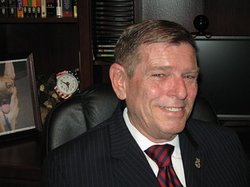
Stevie Turner interviews million-seller author Michael Phelps

Michael Phelps

Today I’m interviewing Michael Phelps, a man who has had a variety of interesting careers, but lately has concentrated on writing.  One of his books ‘David Janssen – My Fugitive’, co-written with the actor’s first wife Ellie in 2009, has sold two million copies.  In 2014 Michael’s two books of conversations between himself and David Janssen were also published.  You can check out Michael’s books by clicking here: http://www.MichaelPhelpsNovels.com (Michael can sign any books personally which are bought via his website).

Michael can also be found on Facebook: https://www.facebook.com/michael.phelps.copnovelist?fref=ts

And on Amazon:  http://www.amazon.com/Michael-Phelps/e/B001KHHL2M/

1.  Why did you enlist in the Air Force (Military Police Combat
Defense Force) aged only 16, and for how many years did you serve?

Both of my older brothers served in the USAF during the Korean Conflict.   My eldest brother Jack, came home from the Air Force and started several  businesses, and for the next three years, I was “forced into labor”  (kidding).  I enlisted in the USAF in March, six months prior to my  17th. Birthday.  I had been in ROTC in High School & told my mother I  was going to “ROTC camp” so she would sign the Parental Consent form.   By  the time my Mom figured it out, I had  completed Basic Training.   As for Jack – I owe all my successes in life to HIM!  My failures are  all my own. LOL

2.  Apart from serving in the Air Force and working in the law
firm, you have also been a law enforcement officer, a security officer for a hotel chain, and a co-trustee for a multi-million dollar trust fund. Which job have you enjoyed the most?

One thing I learned from my brother Jack, something he told me  repeatedly – “Find a job you LOVE and you will never work another day  in your life.”  I have enjoyed every job I have ever held, law enforcement is a tough job, but very rewarding in that you actually help  people in difficult situations.

3.  How did you meet the late actor David Janssen?

I met David & Ellie Janssen while working a private party in the Bel Air  mansion of the late Conrad Hilton.  Our friendship developed two weeks  later when he called and invited me to join him for drinks.

4.  Did you meet other actors through your association with Mr
Janssen, and if so, are you still friends with them now?

I met Raymond Burr & Rock Hudson at a dinner party in Dave & Ellie’s  home.  He also introduced me to: Lucille Ball & her husband Gary Morton,  Singer/Songwriter Carol Connors, Actress Rosemary Forsyth, Martin Milner  and Charles Bronson.    I am good friends with Carol Connors & “e-mail” friends with Rosemary Forsyth.

5.  You have published 2 books of conversations you had with David Janssen. Did you find that you had a lot in common with David Janssen as you got to know him?

I think Dave and I were both shy and reserved. I joined him in drinking  a lot of scotch (been there-done that – have not drank alcohol for the  last several years – but do so only socially).  He and I both  appreciated beautiful women.

6.  Which marketing strategies did you employ to be able to sell 2 million copies of the book you wrote with Ellie Janssen ‘David Janssen –My Fugitive’, or do you have an agent?

All marketing for “DAVID JANSSEN-MY FUGITIVE” was handled by the  original publisher, Lifetime Books, Inc.  I have no knowledge of  their marketing strategy.  Ellie & I were both busy with other  projects (individually).  We made a short book tour and that was the  extent of our involvement in marketing the book.

7.  Do you think it’s better to live life to the full and die in middle-age before the effects of ageing take over as David Janssen did, or live to 100 and see your grandchildren and great-grandchildren grow up?                                               

Well, that is an interesting question.  I am 72 now, and I have lived  a full life.  In regards to someone dying in “middle age”, I think of  David Janssen – and aside from the shock of his passing, I felt he was  “cheated”, I do not think he was able to enjoy the fruits of his labor  and his tremendous success in his profession.

8.  Speaking generally from the male viewpoint, do you think
that men cope less well than women when it comes to dealing with stress?

Yes, I actually do.  The stress a man experiences seems to be more  related to work related pressures and financial pressures.  I think  God provided women a better psyche for handling stress – being a  mother and raising children must be more stressful than any man could  handle.

9.  Your detective novels in the Mike Walsh series are based on real-life crimes you encountered while working as Chief Investigator for a law firm.  Which was the most bizarre case you ever investigated?

My current work-in-progress is entitled “INSANE JUSTICE”.  It involves  a double homicide in Miami Beach in 1993.  It was the most bizarre case I  ever encountered in that it revolved around a homosexual love- triangle,  drugs, etc.  Our firm had been court-appointed to defend the perpetrator.  He was guilty, yet we mounted a solid defense and his first trial ended with a “hung jury”.  His second trial, he was convicted of much lesser charges. We kept our promise to him, we kept him out of the Electric Chair.

10.  The second book in the series ‘Jockey’s Justice’ deals with the murder of a highly respected horse racing jockey.  Is a murder in the racing world unusual, or did you discover a dark underworld in your investigations?

Murder in the world of horse racing is rare, but not unheard of.  There  is a lot of money involved.  We did uncover one other murder (unsolved)  and a lot of corruption, race fixing, etc.

11.  The third book in the series Insane Justice is not yet published.  Could you give us a brief outline please?

A young Cuban immigrant became involved with a young man from Kansas in  a homosexual relationship.  Nine months into their relationship, he  discovered his “lover” with another young man.  He shot & killed both.  My investigation proved the deceased “boyfriend” had been “using” the  defendant, taking him for all he had and then “discarding” him. It was  a very unusual case.

12.  What’s next in the pipeline after Insane Justice is published?

There are about three other memorable cases I worked on for the law  firm.  After that, I may resort to investigating and writing novels  about high profile cases in the Miami and/or New York City area.

13.  If you had to pick just one, would you prefer to live in
New York or Miami?

I relocated to Miami 42 years ago after 15 years living in  Manhattan.  I usually make 3-4 trips to NYC during a year.  I  think when my book sales allow me the luxury, I will move back  to NYC and get used to the harsh winters I had escaped.

14.  Were you in New York at the time of 9/11?  If so, how near were you to the Twin Towers?

I was checking out of my hotel, waiting for the parking valet to bring  my car.  It was taking a long time, I entered the lobby, and there was  a crowd around the television.  I saw the second plane hit the Tower. I  went outside and saw the white smoke billowing up, and coming north (I  was at West 49th. St. & Tenth Ave.).  It reached all the way to about  34th. Street.  Immediately after, I learned from the TV News that all  Tunnels and Bridges had been closed.  I ended up spending the next 3  days in the City before I could leave for my return trip to Miami.  I  also found I could not drive south past 34th. Street to get a closer view of the carnage.

15.  Which is your favourite genre for reading?

American History, true crime.

16.  Can you play a musical instrument?

NO – want to learn piano though – if I can make the time. (LOL)

17.  Did you go to the Woodstock music festival in August 1969?

No, friends did – from what I was told, glad I did not. (LOL)

18.  What do you think is the most important thing that is
needed in order to be able to live a happy life?

Love what you do and treat all others as you wish to be treated –  respect each individuals right to their own religious beliefs and treat  all living creatures with kindness, compassion & love.

19.  Where will you be spending your holidays this year?

I spend holidays at home in Miami Shores, Florida.

20.  Do you or did you practise any of the martial arts?

In the USAF, we underwent “Combative Judo” training.  We joked  because it was called”Operation Tough Tiger”.

————————————————————————————

My thanks go to Michael Phelps for agreeing to answer my 20 questions.  If any other authors or publishers are interested in being interviewed, please contact me via my website http://www.stevie-turner-author.co.uk with some information about yourself in order for me to formulate the questions.

Stevie Turner interviews author, promoter and publisher Susan Toy

I am pleased to be able to share another of my 20 question interviews, this time with author, promoter and publisher Susan Toy.  Susan, apart from writing novels and publishing them through imprints IslandCatEditions and IslandShorts, also goes out of her way to promote self-published authors and their works on her ”Reading Recommendations’ blog.  This time it’s Susan who is being promoted, so sit back with a cup of coffee and find out more about her……..

Susan Toy photo

  1.  I have been on holiday to the beautiful Beaches district of Toronto, where you were born. If you had to choose just one, would you prefer to live in The Beaches, in Calgary where you have also lived for many years, or in Bequia in the Caribbean where you have a house?

Our family cottage north of Toronto was also a very important “home” during my life. So, along with The Beach (we always referred to the area in the singular), Calgary and Bequia, I identify with these places. While I’ve thought of living, or have tried to live, in all four places again, I haven’t been successful, so I now split my time between the Caribbean and Canada. Your question had me returning to a blog post I wrote in 2013 titled, “Home and a sense of belonging” (https://islandeditions.wordpress.com/2016/01/11/from-the-vaults-home-and-a-sense-of-belonging-april-19-2013 ), because I have been again wondering exactly where it is I do belong in this world. What I have discovered is that each of these main places where I’ve lived during my life have been used extensively as settings in my writing. And that they are all situated next to bodies of water/ranges of mountains that allow me a “view”, so to speak, that leads to introspection – not a bad way for an author to pass the time.

And, just to add more locations to the mix, last summer we bought a mobile home that permanently sits in a campground that’s close to Lake Huron (another large body of water …). To me, the campground is just like spending summers at the cottage, all over again! So, not really going home, but close enough to my memories of that home.

2.  Do you thrive on extreme temperatures? Do you tend to spend Canadian winters in Bequia, and Caribbean summers in Canada?

I’ve always been a summer person. I was born on the first day of summer, my parents bought a cottage north of Toronto the year I was born, and I spent every summer there until I was 17, when I began working summer jobs in Toronto. I never enjoyed winter sports, but have always been a great swimmer. So it’s not so much the extreme temperatures I thrive on as the ability to pursue summer activities year-round.

  1. If you were the only person left stranded on Bequia, how would you spend your day?

Pretty much as I spend every day now – sitting on my verandah, drinking coffee, writing, and reading. But the island would be gratifyingly quiet!

  1. You have based your travelogue/mystery novel ‘Island in the Clouds’ around the Caribbean island of Bequia. Is Bequia really the paradise on earth that I imagine it to be?

As my main character Geoff quips, “Paradise isn’t all it’s cracked up to be.” I personally believe that no place on earth can ever be considered “Paradise” and yet anywhere we are can be a kind of paradise, if we think of it that way for ourselves. It’s truly all in our minds.

  1. What are you writing at the moment?

I’m trying to finish rewriting the second novel in the “Bequia Perspectives Series” titled One Woman’s Island. More about the island but involving different characters than were in the first novel, and therefore a different perspective of life in this place.

  1. In 2008/2009 you won first place in writing contests for ‘Hockey Night on Bellefair Avenue’ and ’50 Ways to Lose Your Liver’. Can we find these stories in print?

Both stories have been published in two issues of the White Wall Review, a literary journal produced by Ryerson University (http://whitewallreview.blog.ryerson.ca/) that spotlights writing by their students and instructors. I may own the only extant copies of those particular issues, however. I did post PDFs of both stories in a blog post I wrote in 2012. https://islandeditions.wordpress.com/2012/12/09/calling-all-readers-my-gift-to-you/

  1. Which social media do you find the most useful for promoting your novels and short stories?

Facebook followed by Twitter. Although promoting my own writing is not really why I use any social media. They’re both my go-to sites for promoting other authors, writing and reading in general, for news and for sharing whatever I post on all my blogs. For promoting my own publications, I prefer to use Goodreads.

  1. What is your preferred genre for reading?

Fiction – usually international authors and foreign-language in translation, both novels and short fiction.

  1. You created the writing contest Coffee Shop Author in 2011. Have you any plans in the pipeline for any other writing contests?

I have discussed the possibility of resurrecting the contest with one of the previous Coffee Shop Authors winners, because we both really enjoyed the whole premise behind the contest, which was to bring writers and their writing out into a public space so people could see that we really do work at our craft. But we need to figure out a way to finance the contest first … It would take a chunk of money to get that up-and-running.

  1. Do you think entering any fee-paying writing contest within their budget is good experience for a self-published author?

Yes, as long as they keep in mind that it’s the writing and entering part that count more than actually winning a writing contest. Contests impose a deadline and discipline, and they’re excellent practise, as well.

Plus there are many, many free-to-enter contests that offer the same kind of benefits as above.

  1. Which is the best writing contest for a self-published author to enter?

I’m not really in tune with the contests that are out there any longer, so I won’t be much help on this one. There are a couple of sites I subscribe to that offer listings of contest opportunities: [places for writers] (http://www.placesforwriters.com/ – and they also list calls for submissions) and Aerogramme Writers’ Studio (http://www.aerogrammestudio.com/). I entered the 3-Day Novel Contest (http://www.3daynovel.com/) 4 times and didn’t win, but came away with three novellas and the beginning of a collection of short stories. That contest was like a kick-in-the-seat-of the-pants to write a novel within the 3-day time limit. Well worth the cost of admission, I thought, as I managed to actually get a huge chunk of writing completed in a very short time.

  1. You own Alberta’s newest publishing company, IslandCatEditions. Does the company promote Canadian authors primarily?

IslandCatEditions was something I created to publish my own first novel – to give myself, as a self-published author, some credibility. I had never intended to publish other authors under that imprint. IslandShorts (https://islandeditions.wordpress.com/islandshorts/), however, is an ePublishing-only imprint I developed to showcase longform short stories and novellas. So far, I have only published short stories written by Michael Fay and my own novella, but we do have plans to publish more. And I am considering publishing work by other authors. My intent though is to publish writing I think is particularly good, no matter where the author may hail from.

  1. You promote authors and books on your blog ‘Reading Recommendations’ (https://readingrecommendations.wordpress.com/ )  Do you find it takes up quite a lot of your time, or have you managed to balance the amount of time you spend networking and writing?

Yes, a lot of time … and then, as if that wasn’t enough, I created another associated blog, reading recommendations reviewed (https://readingrecommendationsreviewed.wordpress.com/ ), which offers reviews (not written by me!) of books written by authors I’ve promoted on Reading Recommendations.

But I find that what I get out of both these blogs, in the reciprocal promotion of me, the blogs and my own writing, far outweighs all time spent putting the blogs together. I’ve discovered many, many great authors – from around the world! – I’ve had the great pleasure to read and promote, and quite a number have subsequently become good friends.

  1. Do you have any advice on how authors can find new readers?

Funny you should ask, because I’ve recently refocused my main blog (https://islandeditions.wordpress.com/2016/01/03/a-new-focus-for-a-new-year/ )  and will be primarily writing about promotion and finding new readers. Here’s one of the blog posts I wrote previously on the subject.  https://islandeditions.wordpress.com/2015/09/11/looking-for-readers-in-all-the-right-places/ And you can count on there being more to come in the future.

In a nutshell, though, the best way to find readers for your own writing is to PROMOTE OTHER AUTHORS!! I’m not kidding.

  1. You represented authors directly through your company Alberta Books Canada. Are you still representing writers? If not, why did you stop?

No. I folded Alberta Books Canada when I moved out of Calgary and back to Bequia in late 2012. While I wasn’t charging much money to promote authors then, I found that many thought they couldn’t afford even that small amount. A few very loyal friends always appreciated the value in what I offered, but they were very few, in the scheme of things, and not enough to sustain the business. So I now promote authors on Reading Recommendations for free with the proviso that they in turn promote me, my blogs, and the other authors I promote. Sadly, even now, few of those authors actually reciprocate.

It’s ironic that authors believe all promotion should result in sales of their books, which then not only provide them with a return of that money they spent on the initial promotion, but also a profit. I have had a heck of a time convincing authors to think in the exact opposite way. Yes, you have to spend money to make money, and if you don’t do any promotion at all, you will never sell any copies. If you think in terms of your overall promotion costing you X-$$$s, and build that cost into the production expenses of your book (editing, design, formatting, etc.), you will already have taken into consideration the costs upfront – when you set the price for your book. (This is what traditional publishers do, folks!) And this way, you only take on paid promotion for which you have already allocated funds, so you won’t be crying poverty, because you haven’t yet sold any books.

We’re ALL poor! And we would all love to sell oodles of books and be able to make money from our writing. So don’t tell me you can’t afford to pay for promotion. Start looking for free promotion, if that’s the case, but don’t complain about poor sales being the reason you can’t pay for promotion. You have to be willing to do the real work (or pay someone else to do that work) of promoting and trust that those sales will eventually come, but not be guaranteed that they will. (Stepping down from the soap box now …)

  1. How was your trip to the Fernie Writers’ Conference in 2009 a life-changing experience?

I met the right people at the exact time I was planning on making changes in my life, and in the job I’d been doing, and found a sympathetic ear with whom I was able to share my dreams and ideas. Shortly after that, I quit my (paid) job, began Alberta Books Canada, and developed the contest, Coffee Shop Author.

  1. How did taking part in writing courses help you to improve your own novel writing?

I’m not sure that the courses helped me that much (other than to teach me that workshopping classes were not for me), but the writing community that was created, and the established authors who both taught and gave lectures during the conference were a great boost to my writing overall. It was that sense of belonging, and of being taken seriously by our peers, that was so empowering, and that led to an improvement of my writing.

  1. You are also an accomplished amateur cook. Do you try and plan something different to cook every single day?

I like variety and seldom cook the same recipe more than once, unless it’s really outstanding. I’ve taught myself to cook recipes from many different cultures, but am best at East Indian, Italian, and Mexican, plus baking breads and desserts. (Dennis cooks Asian, primarily Chinese and sushi, and is very good with BBQing and smoking foods.) I have a lot of cookbooks and really do enjoy looking for new recipes.

  1. Which is the most unusual ingredient you have ever used in your cooking?

Whale meat. And I will leave it at that.

  1. Are you superstitious?

I have to say I am not superstitious. I do believe in fate and that things happen the way they do in our lives because they were meant to work that way. But we’ve been owned by several black cats and my mother always thought of “13” as being her lucky number, so I guess I didn’t have a “superstitious” kind of upbringing at all.

——————————————————————————————————–

You can find Susan on the following social media:

Facebook: https://www.facebook.com/susanmtoy  and also at https://www.facebook.com/Island-in-the-Clouds-135848643200688/?

Twitter:  https://twitter.com/SusanMToy

Goodreads:  https://www.goodreads.com/author/show/1316805.Susan_M_Toy?from_search=true&search_version=service

My thanks go to Susan for the interview.  If there are any other authors or publishers out there who would like to answer 20 of my questions, please get in touch via my website http://www.stevie-turner-author.co.uk and leave me some information about yourself.

Look out for my next interview later in the week with author Michael Phelps.


Stevie Turner interviews @RonovanWrites

I am pleased to feature an interview with Ronovan Writes, who has kindly invited me here to submit articles for LitWorldInterviews.  I am a self-published author, who enjoys interviewing other authors and people connected with writing.

Ronovan

As well as being an author with a debut novel Amber Wake: Gabriel Falling, coming out in February 2016, Ronovan also provides invaluable resources for Indie authors here on  LitWorldInterviews.com

I also admire Ronovan because, like me,  he is trying to turn a health issue into something positive.

1.  You tell me that you were born of migrant fruit pickers.  How old were you before your parents settled in one place?  Where do you call home now?

As best as I can tell, it was about the time of Kindergarten. I recall taking naps on those floor nap mats each day and swinging in swings to dangerous heights, at least they were high in my mind. Today people would see that as neglect by playground attendants. I somehow survived until recent years somewhat unscathed.

Now I live in a University town near Atlanta, GA.

2.  What did you learn from such a diverse group of students at the ‘Alternative School’ when you taught them History?

All people are the same if given a chance. A number of students were there because the court system forced them to be there. Some teachers treated them as though they couldn’t be trusted. I told the entire class from the beginning that I didn’t care what they did before coming in the door, as long as they treated me good, I didn’t have a problem with them. It worked out fine. I never had a problem with any of them.

3.  You say you were too honest to sell life insurance.  What was so bad about the job that you stopped doing it?

There were a number of reasons. Even though I was a top seller I was having to work hard and doing it the honest way, which there is no problem with that. The problem came when my health started taking over. I didn’t know it at the time but I had for a number of years been showing signs of Fibromyalgia and multiple herniated discs throughout my spine, including my neck. The pain of driving hundreds of miles a day, during the worst economy we’ve had in decades, combined with seeing how so many previous agents had cheated some of these people, finally became too much.

4.  Do you still teach, or are you a full-time writer now?

I’m a full-time writer now. Two years ago I fell in my home from a migraine. I became dizzy and as I fell my head hit three to four times before I hit the floor. There have been problems from that since. I don’t look at it with regret, I am taking the time I have and probably shouldn’t have and turning it into something positive.

5.  You are fortunate in being able to write about any subject.  What is your debut novel about?  How long did it take you to write it?

Amber Wake: Gabriel Falling is a Historical Adventure based around 1706.  The main character is Gabriel Wallace, a Captain in the Royal Navy who is court-martialed on charges brought mostly out of scorn by the friends of a dead Admiral. Wallace discovers other goings on about the Admiral and his friends and sets out to correct the wrongs against himself and others by taking his previous ship and crew and becoming a pirate of sorts. I say of sorts because his actions are more a war against the ships belonging to a list of men.

Amber Wake

Wallace is a character that is very important in the future lives of two of the main characters in the Ivory Shepard Pirate Tales series by PS Bartlett.

The story is written more about the character of a person than so much about what people might think of as the chauvinistic swashbuckler adventure, sex romp. That’s not my style. The main character has some historical bases in real people, and actions you see are believable. And Wallace is not a woman chaser. He has a mission and he has the men who have volunteered to stick with him to make sure are taken care of.

I probably wrote the initial draft and then second draft in maybe six weeks or less. I have a lot of time and when I’m worked up about a project I tend to become a bit obsessed. Then PS Bartlett took over and put her touches to it, mostly in giving it the language fitting her series. Language such as pirate speak and the like, as well as certain verbiage I am prone not to use but may be likely in certain settings. Amber Wake: Gabriel Falling isn’t the usual pirate adventure with profanity flying left and right, though. The main characters are educated and accustomed to speaking in certain circles and use certain words when situations bring them forth. She also used her experience through the writing of several books to make certain things flow well. We then would go back and forth with the drafts from that point to catch what each other missed. It’s amazing what eyes miss in the middle of things.

Here’s a link to the first chapter of Amber Wake: Gabriel Falling on Ronovan’s new author site: http://ronovanhester.com/2015/12/28/my-debut-novel-amber-wakes-gabriel-falling-it-all-begins-here-chapter-one/

6.  Do you prefer to write novels, short stories, or blogs?

I prefer to write novels. Researching to develop a world and characters is something I enjoy a great deal. Writing short stories on various blogs helped me discover the voice and even certain genre I like or for which I have an affinity.

7.  What is the most difficult genre for you to write in?

I’m not a horror writer. I can do it, and have, but it’s not my thing. Nor is anything that involves the harming of women or children.

8.  Which genre do you prefer to read?  Who is your favourite author?

It’s difficult to narrow it down to one. I’ve found I don’t enjoy fantasy and science fiction as much as I once did. Contemporary Literature and also Historical Fiction based from the 1950s back to perhaps the late 1800s are things I like at the moment. I enjoy the style of Clive Cussler for his research and detail, John Gardner for his realism and historical writing in the Secret Generations and Herbie Kruger books, and recently a new author named Claire Fullerton has me hooked on Contemporary Literature with her Dancing to an Irish Reel.

9.  You founded Lit  World Interviews https://litworldinterviews.com/ to help promote authors and provide advice about writing and publishing etc.  Do you prefer to interview authors of your own choosing, or are you happy to interview any author who contacts the site?

There is a bit of selection process. For those who have something prepared I’m happy to publish it. For interviews I conduct myself I prefer to read the book of the author first and then conduct an interview, if I like the book. I don’t like every book I read and I don’t publish a review of those without permission of the author first. In fact, I include on the submission form a question about reviews that would be below a 3. I have no desire to hurt a career with my opinion. Opinions can be subject to so many influences. One may be having a bad week and the book, normally a great read, ends up being a low score. If the review is good, then I normally suggest an interview.

10.  Have you ever sought out any alternative therapies for your fibromyalgia?

I haven’t sought any as of yet, although I do look at my nutrition to see what different foods do to the body. I was diagnosed with Fibro two years ago, so right now my doctor is attempting to get things in hand so I can perhaps do other things that will help.

11.  How did you ‘lose part of your world in a mind-jarring way’ in 2013?

In the aforementioned fall in my home, I ended up with a Grade 3 Concussion. That’s the type of concussion you hear about quarterbacks in NFL Football in the USA suffering from, and soldiers who are too close to explosions. As a result of the concussion I ended up with retrograde amnesia. Pretty much any person I knew prior to the fall, other than my son, I lost memory of. I had to learn to write again; I would even switch hands in the middle of a sentence and write just as well with either. I was writing because I lost the ability to speak for over a month.

The amnesia is still there but I am able to find my way to anywhere I need to go, although I don’t drive any longer. But I’m better than a GPS if it’s someplace I’ve already been. I also have the learned, education things, other than math. My math skills all but disappeared.

12.  How do you cope with not being able to sleep properly?  Are you permanently tired?

Yes, I’m pretty much always tired. What I do is get myself involved in whatever I am doing and ignore the tired factor. That is unless it’s the Chronic Fatigue thing kicking in. But everything combined makes writing not bad, although the memory thing can be a problem at times. It’s a pain to write ten chapters and one morning wake up and not remember any of it. Then I have to read it all over again, and my notes, and try to pick up from there. Normally it’s if I sleep too long that I have the memory issue, too long meaning more than four hours at a time. And if it’s a deep sleep, even four hours could be too much.

13.  Like you, I also like to sit in the shade and listen to the birds.  We have a robin that comes into our garden every day and sits on the same branch.  Do you ever think about whether the souls of deceased loved ones can be reincarnated, possibly returning to us in animal or bird form?

No. I’m not a believer of reincarnation. I don’t make fun of others who do though. Everyone has a right to believe as they wish, as long as it doesn’t encroach on or harm others. When I sit and enjoy nature, I think of the beauty of it all and how so many people fly past and miss it. I try to teach my son to enjoy those one of a kind moments like a sunrise that has those pinks and orange colors that will never be like any other sunrise.

14.  You are a true Southern Gentleman.  Health willing, I would like to visit New Orleans in 2017 for the Mardi Gras.  Have you any advice for me if I do go there?

Go with someone, go everywhere with that someone, and don’t get into a state in which you lose your head about you. You’ll have a great time as long as you do the buddy system and stay to the main areas during the night events.

15.  You state that you love to learn about other places and their customs.  If money and time were no object, where in the world would you like to visit?

I’ve come to enjoy the idea of visiting the Orient lately. I have a book idea and it would be nice to go through all the countries, visit the ancient locations, experience the food, and hear how the people speak.

16.  How do you celebrate New Year’s Eve in the South?

There are the usual fireworks shows around, and staying up till midnight. There’s no alcohol in the house, so it’s sparkling grape juice at most. Sometimes with the way the weather is here, there might be a barbeque/cookout. As I’m writing this, it’s in the 70s, and it’s almost New Year’s Eve. There are also moments we are all wondering if the tornado will bypass us this time or go right through out town.

17.  What is your favourite piece of music?

Anything from Sgt. Pepper by the Beatles is a hit with me. I enjoy them so much I even taught a lesson about the Paul is Dead idea.

18.  What do you think the world will be like for future generations?

Things won’t change as much as people think. We have past theories of the future to look at and realize how slow things do change. It’s becoming scarier though. There is too much political correctness and not enough people doing things to fix the world right now for the world’s own good. And I believe the world is losing its sense of humor where a joke can’t be told without offending someone.

19.  Can you tap dance or do the cha-cha?

Nooooo. Well I don’t think so. I can get my groove on to amuse my son. Being a teen in the 80s you don’t have any shame when it comes to dancing, and you realize everything is dancing.

20.  Which three possessions would you rush to save in a fire?

Other than human lives: 1) My Laptop with all my work on it, 2) My Captain America #100, and 3) The Archaeological Study Bible my youth group gave me as a gift when I handed the reins over to the new Youth Pastor I helped select.

Thank you Ronovan, for agreeing to answer my 20 questions.  Below you can find links to Ronovan’s new author site and other social media.  If any authors or publishers reading this would also like to be interviewed, please contact me on my website http://www.stevie-turner-author.co.uk with some information about yourself, just as Ronovan did.

——————————————————————————————————
Brand New Author Site: http://ronovanhester.com/
Blog: https://ronovanwrites.wordpress.com/
Twitter: https://twitter.com/RonovanWrites
Facebook: https://www.facebook.com/Ronovan-Writes-630347477034132/
Goodreads: https://www.goodreads.com/user/show/20596002-ronovan-hester
Google+: https://plus.google.com/u/0/+RonovanWrites