50 Shades – Storm in a Teacup a Woman’s Thoughts by @FTThum

50 shades of grey

I asked Florence to write a piece about 50 Shades of Grey since she had both read the books and seen the movie. With her therapist and lawyer/professor background I thought it would an interesting and intelligent experience for us all. Did it turn out as I expected? Read and find out. If you dare.~Ronovan

Fifty Shades of Grey (’50 Shades’) – trilogy and movie – have caused quite a storm in the media. Its critics have labelled it anti-feminist, for glorifying abuse and violence, for normalising domestic violence, and the list goes on.

In the wake of socio-political discourses rippling through social and news media, I (and eleven gal pals) went to see it on the second day after it was released.

50ShadesofGreyCoverArt

The story in a nut shell

A little about the trilogy and the movie for those who have not read or watched it. The trilogy is largely written in the first person – the voice of Anastasia Steele, the female protagonist, who is a twenty-something senior at university in the first book to a journalist in later books. Anastasia meets Christian Grey who is in his late twenties and a billionaire entrepreneur. There is a sexual spark in their first meeting which led to her being ‘pursued’ by the guy in question. What then transpires is open to interpretation (I will get to this shortly).

The movie follows the book closely, with a few inconsequential differences. As in the books, the plot is thin revolving around Christian’s past returning to haunt him and a typical separation and reunion of lovers. There are few heights to attain, except sexually J. This trilogy could have been contained in one book if the explicit sex scenes were removed, but then it would not be Fifty Shades, now would it?

The plot is simplistic – addressing the tension between the influences of the past on the present, and whether present lust and love can assure a future together; the conflict between what each of the protagonists consider right and wrong, normal and abnormal, pain and pleasure. Oft times, the boundaries are blurred, hence the grey metaphor. By the way, Christian describes himself as “50 shades of fucked up”.

Yes, it is a romance/fairytale, with a significant difference – a male protagonist with BDSM proclivities. Like any other romance, Christian Grey is ‘wooing’ Anastasia, except here, that means she is to ‘submit’ to him.

As a reader, I found the prose in the book lacking. Somehow I suspect EL James did not proffer the trilogy as a literary masterpiece. Then again, millions (around the 100 million mark internationally at last look) have bought this book. Why? Because most readers, I am led to believe, are focused on the emotional relationship instead of the sexual one between Christian and Anastasia. I found the trilogy an easy read, an enjoyable romp, and from these perspectives, entertaining.

The same goes for the movie. I did not go expecting the sensuality and mystery of Kubrick’s Eyes Wide Shut, neither was I expecting the arthouse production of ‘The Lover’, ‘Belle de Jour’ or ‘Sex and Lucia’. Fifty Shades is modern erotic romance/fairytale, pure and simple, with a screenplay very much in line with the first book in the trilogy. The actors are a surprise – Dakota Johnson’s portrayal of Anastasia is accurate though a little grittier. Jamie Dornan’s depiction of Christian – brooding, dark and with enough mystery to invite exploration – is attractive enough.

Overall, if I must, I will give this movie a 2 out of 5. And I guess if your child is sufficiently curious to want to see this movie, then perhaps it is time to begin those difficult and exciting conversations. It is unlikely to be suitable for those under the age of 16.

Now we come to the crux of this post – the controversy surrounding issues of abuse/violence.

Another interpretation

But first, AN interpretation of the storyline.

I see a man traumatized by his past, who exerts controls to feel safe and secure. I see a young woman naïve in the ways of love, sex and relationships who fell in love with a man who is perhaps too complex for her. He wants her on his terms (the much referred to contract to be specific) and takes steps to ensure she understands the terms, urging her to research and also explaining what and how. She in her innocence believes she could be what he wants, who could satisfy him, and that love can surpass every obstacle. There are emotional conflicts and moral tensions.

What I have said so far does not justify the potential harmful effects this relationship could have on Anastasia. Not at all. Yes, Christian could be a predator. Yes, Anastasia could be a victim. And yes, the relationship could be fatal.

‘The Storm’

50 Shades doing

What bothers me about the Storm are these:

  • As I read the many articles urging women, particularly young women, not to go see the movie because they would be drawn into romanticising abuse/violence, expecting violence to be ‘normal’, I feel disempowered. I feel angry.
  • As I read of pronouncements of the negative impacts of Christian’s behaviour, and his all-powerful and manipulative personality presented as a given, and against whom women have no defence and so must hide, I feel fear then infuriation.

Once again I, a woman, am being told to do this but not that, be this or else. Once again I, a woman, is considered incapable of caring for myself, to make decisions that are right for me. Once again I, a woman, need to be protected from my own actions.

And because I am potential prey, potential victim, then I must behave as one – disempowered and in fear.

In the name of protection, and dare I say it, paternalism is alive and well. Oh, just to clarify, I am not referring to men or male persons, but rather paternalism.

So not much exhortation of the behaviour of men in this respect. Much less empathy for a man in Christian’s situation. Yet lots have been said of what women (we are all Anastasia it would seem) should or should not do.

Take for example the movie ‘The Hangover’. I find it offensive in its portrayal of what is acceptable men behaviour, it normalizes binge drinking, drug taking, ‘lad’ behaviour and despite some criticisms (it is crass and has a rather thin plot line), the majority opinion falls onto the side of ‘boys will be boys’. Any calls for men not to watch this movie? Somehow the underlying message may be that men have and can make choices, or that it is fine for men to behave so. Regardless, it is just a hilariously funny comedy. Well, 50 Shades is a romance story with a twist. It does not agree with our consensus reality of (i) damsel in distress being rescued by the knight in shining armour or the all-powerful woman who fully knows her heart and mind; and (ii) ‘normal’ sexual expressions for a woman.

Heaven forbid that a woman desires sensuality. Is it shocking that a woman might choose to explore? To entertain the possibility of engaging in something beyond vanilla sex? To have emotional conflicts or doubts about a sexual relationship?  It is perhaps more palatable to explain this ‘aberrant’ behaviour from a place of victim than choice.

Here is a twenty-something young university graduate with a major in English Lit but somehow she cannot be responsible say, for her alcohol consumption vis-à-vis this man? Ok, that is not the point, maybe it is. We have at times in our lives been naïve, we have battled our emotions, our rational thoughts, our lust; and we have made decisions that are not for our well-being.

I am not perfect. It is alright to not-know, to grapple with my emotions, my desires, my rational mind. Yes, if Anastasia was my daughter, my protective instinct would have me say ‘stay away’ yet somehow, I suspect in the seduction of passion, my words may fall on deaf ears.

To demonize Christian as THE predator and to portray Anastasia as THE prey/victim do not allow space for the grey-ness that is life. Most importantly it suggests in this instance a given immovable power of men over women.

punishment

Another approach

I am a mother of a young daughter. I know to prohibit would most likely have the effect of arousing her curiosity. To prohibit imposes my values, my views on her. Most importantly, it disempowers her.

The books and the movie show the conflict Anastasia is confronted with, of having to decide ‘will she’ or ‘won’t she’. Ultimately what matters more is the process and what ‘tools’ she has to make this rather significant decision.

So, I will teach my daughter the difference between love and lust, romance and real life, sensuality and violence. I will teach her that to understand a man (or anyone) and the reasons for his flaws does not mean we have to accept them, that for everything we do sexually merely for the sake of sex, we lose something precious within ourselves. I will teach her to listen and trust her instincts.

I will guide my daughter as she discovers love does not require self-sacrifice or compromising her self-worth, her pride; love does not demand mindless giving in. I will journey with her in her life which will have conflicts and tensions she needs navigate, difficult decisions she will have to make.

And all these I will also teach my son – respect for self and others, self-love and compassion.

My daughter I trust could hold to this – to resist the decisions and consequences that make her small. To quote a wise woman, that which would cause her ‘to bonsai herself’ – small and bound. No pun intended here.

Perhaps the storm is a storm in a teacup, if we could speak another story, another narrative that unites rather than judges and separates.

My final words

As a professional woman of a certain age and a feminist who has read the trilogy and watched the movie, I will say that I enjoyed them all, for what they are.

This need not be just a story of BDSM and abuse/violence and a woman who fell prey to the ‘evil’ man, a victim. I will privilege a different narrative. It is a story of both protagonists’ journey of manoeuvring through the confusing states of being human – our desires, our wants, what’s good for us, what’s not, what do we value, what we are willing to compromise – and the outcome.

Ah, the outcome is like a fairytale. And like watching any fairytale, I leave with a smile and return to my real world.

I AM capable of distinguishing which is which.


– FlorenceT

Florence 2

@FTThum

MeaningsAndMusings.WordPress.Com

Enter your email address to subscribe to this blog and receive notifications of new posts by email.

© Copyright-All rights reserved by ronovanwrites.wordpress.com 2015

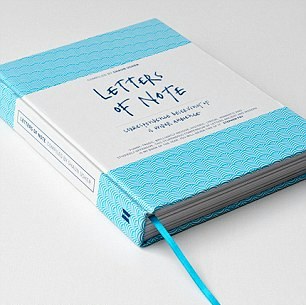
#BookWorm @FTThum Review of Letters of Note by @LettersOfNote

February 2015, and I am here (finally!) to share a book which I bought myself for Christmas 2014 – a little self-love J. Yes, it has been a busy January but better late than never because I am compelled.

Title:               Letters of Note: Correspondence Deserving of a Wider Audience
Compiled:      Shaun Usher
Publisher:       Canongate Books Ltd & Unbound (24 October 2013)
Website:         http://www.lettersofnote.com/ & www.shaunusher.com
ISBN-13:        9781782112235
ISBN-10:        1782112235
Pages: Hardback, 384 pages
Genre: Literary Non-Fiction, Anthology

What’s it about?

This is an anthology of letters from the 17th century to present day written by a myriad of personalities including the likes of Zelda Fitzgerald, Albert Einstein, Mick Jagger and Roald Dahl.

These letters compiled by Shaun Usher were selected from a vast number of online contributions (see website above) consisting of different types of letters ranging from humorous to angry, sentimental to dispassionate letters, and in different contexts. They provide deeper insights to the events of history and the people we thought we knew so much of.

This is a book filled with beautiful words, expressions, styles; and worth having a copy if only for posterity.

To quote the website’s blurb about the book:

Letters of Note is a collection of 125 of the world’s most entertaining, inspiring and unusual letters.

 From Virginia Woolf’s heart-breaking suicide letter, to Queen Elizabeth II’s recipe for drop scones sent to President Eisenhower; from the first recorded use of the expression ‘OMG’ in a letter to Winston Churchill, to Gandhi’s appeal for calm to Hitler; and from Iggy Pop’s beautiful letter of advice to a troubled young fan, to Leonardo da Vinci’s remarkable job application letter, Letters of Note is a celebration of the power of written correspondence which captures the humour, seriousness, sadness and brilliance that make up all of our lives.

And it is indeed the case.

And here’s an excerpt from a letter from Rebecca West to HG Wells. To understand the context, the book provides the background story. In this instance, HG Wells invited Rebecca West to dinner in response to her scathing review of his book, ‘Marriage’ in 1912. They met and fell in love, and went on to have an affair which lasted 11 years. This letter was West’ response when HG Wells’ attempted to break out their relationship about a year into the affair.

I don’t understand why you wanted me three months ago and don’ wan me now…Of course, you’re quite right. I haven’t anything to give you. You have only a passion for excitement and for comfort. You don’t want any more excitement and I do not give people comfort….

I always knew that you would hurt me to death some day, but I hoped to choose the time and place…I can’t conceive of a person who runs about lighting bonfires and yet nourishes a dislike of flame: that seems silly to me.

… I know you will derive immense satisfaction from thinking of me as an unbalanced young female who flopped about in your drawing room in an unnecessary heart-attack.

…But I hate you when you try to cheapen the things I did honestly and cleanly…You once found my willingness to love you a beautiful and courageous thing. I still think it was. Your spinsterishness makes you feel that a woman desperately and hopelessly in love with a man is an indecent spectacle and a reversal of the natural order of things. But you should have been too fine to feel like that.

I wish you have loved me. I wish you liked me.

Now doesn’t that give a certain insight to this relationship and perhaps to HG Wells, the man? Doesn’t it cause your imagination to take flight?

As an  aside, this book began as a blog (see website above) by Shaun Usher, wanting to share what he considered to be correspondence deserving a wider audience.  The book compilation was published by Unbound, a crowd-sourced publisher, and Canongate.

Recommendation:

If you enjoy or love the written word, then you can’t miss this book. It is a book you can flip open, even if you have only 5 minutes to spare, and find yourself moved by the sentiments. You will be inspired to find within yourself that expression of your soul.

Long live the art of letter-writing.

LWI Rating:

Realistic Characterization: N/A
Made Me Think: 4/5
Overall enjoyment: 4/5
Readability: 5/5
Recommended: 4.5/5
Overall Rating: 4/5

Buy it at:

Amazon Hardback $28.09 USD
  Kindle $9.80 USD
Bookdepository Hardback €28.07 Euro
Booktopia Hardback $41.75 AUD


Florence 2


@ftthum

MeaningsAndMusings,WordPress.Com

Enter your email address to subscribe to this blog and receive notifications of new posts by email.

© Copyright-All rights reserved by litworldinterviews.wordpress.com 2015

#BookReview @FTThum – Straight Jacket by Adrian Deans

This book was published in 2013, I read it at the end of that year…and re-read it recently.

It deserves a review. Why? Read on.

straight jacket

Title:             Straight Jacket
Author:          Adrian Deans
Publisher:     High Horse Books (7 August 2013)
ISBN-10:        0646906259
ISBN-13:        9780646906256
Website:        http://www.adriandeans.com/
Pages:           Paperback, 278 pages
Facebook:       https://www.facebook.com/StraightJacket242
Genre:            Fiction – Crime


What’s it about?

“If God is too indifferent, or too non-existent to take care of His creation, then clearly it’s up to Me.”

This is Morgen Tanjenz, a lawyer with a God complex, or maybe Devil complex… or simply misunderstood? As he intervenes in the lives of those around him, his life intersects with Detective Sergeant Peter ‘Blacksnake’ Fowler who has problems of his own not least the woman he loves is having an affair. With a serial killer on the loose, Fowler is under intense pressure, and the pressure valve is sure to explode when taunted by the likes of Morgen?

This is an edgy crime novel set in Sydney – dark and interspersed with moments of humour. The protagonist and other characters are quirky and believable, a twist from the usual crime novel characterisations.  And what’s with the cicada on the book cover…and the reference throughout to these insects prominent in the Sydney-scape in summer?

Deans once again has enthralled his readers with his dark sense of humour and unusual perspectives. A book for those willing to explore difference and open to the less than beautiful side of life – its sexual overtones and drugs usage. Morgen is not a lovable character, I don’t think, but captivating.  I want to be on his side. Compelling read as I begin to invest in Morgen’s life – curious to know what happens to him, not wanting anything negative to occur to him. Persuasive writing.

Definitely a worthwhile book to read, especially if you enjoy intense dark crime novels with drama and humour.

LWI Rating:
Realistic Characterization: 4/5
Made Me Think: 4/5
Overall enjoyment: 3.5/5
Readability: 3.5/5
Recommended: 3.5/5
Overall Rating: 4/5

Buy it at:

Amazon Kindle USD 5.27
Bookdepository Paperback Not available at present
Booktopia Paperback AUD 21.25
eBook AUD 4.50


Florence 2– FlorenceT

@FTThum

MeaningsAndMusings.WordPress.com


Enter your email address to subscribe to this blog and receive notifications of new posts by email.

© Copyright-All rights reserved by litworldinterviews.wordpress.com 2015

#BookReview @FTThum – All Souls Trilogy by Deborah Harkness @DebHarkness

The ‘All Souls Trilogy’ by Deborah Harkness consists of:


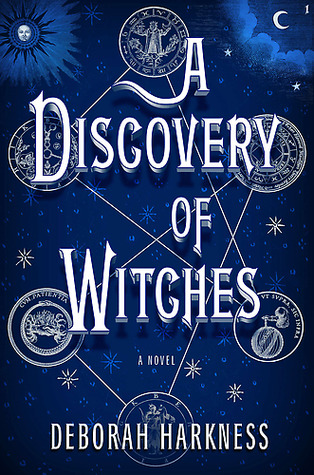
discovery of witchesTitle:               A Discovery of Witches (Book 1)
ISBN 10:        0670022411
ISBN 13:        9780670022410
Publisher:       Penguin USA
Publication date: 8 February 2011
Pages:             592 pages

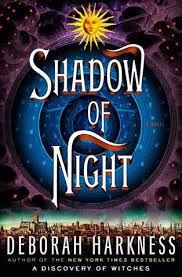
shadow of night


Title:               Shadow of Night (Book 2)
ISBN 10:        0670023485
ISBN 13:        9780670023486
Publisher:       Penguin USA
Publication date: 10 July 2012
Pages:             592 pages

book of life


Title:               The Book of Life (Book 3)
ISBN 10:        0670025593
ISBN 13:        9780670025596
Publisher:       Vikings Books
Publication date: 15 July 2014
Pages:             561 pages


Genre:            Fiction – Fantasy
Website:        http://deborahharkness.com/all-souls-trilogy/
Twitter:         @DebHarkness
Facebook:     https://www.facebook.com/AuthorDeborahHarkness 


What’s it about?

The All Souls Trilogy centres on two protagonists, Diana Bishop, a witch yet to come to her full power, and Matthew Clairmont, a vampire determined to find the origin of species. It is set in our world with one distinction – daemons, vampires and witches dwell here too, hiding their essential nature, and unbeknownst to humans, have been co-existing with us since forever. If you are associating this with the ‘Twilight’ series, don’t. It is not. To suggest it is a thinking person’s ‘Twilight’ would do the Trilogy a great disservice. It is so much more.

Deborah Harkness is a professor of history and teaches European history and the history of science at the University of Southern California. Her vast scholarly knowledge is evident within the pages of these 3 books. The science is so intricately woven and the history exact. Of course there is literary or artistic license but then the reader will know where they lie.

Harkness’ depiction of the creatures and each character in this compelling tale is flawless. It is so believable that I can almost see demons, vampires, and witches living in this world of ours.

All Souls Trilogy is a story of acceptance and denial, of collaboration and division, of love and loss, of trust and betrayal, of family and enemies, and ultimately it is a story of acknowledging and being true to oneself.

Now, to each book in the Trilogy:

Discovery of Witches (Book 1)

I picked this book up in the local library. I was bored and thought to try something new – I am not usually a Fantasy book reader. I was hooked from Page 1 and finished the book in no time.

This first book touches the heart. It begins with Diana, an American and Yale historian over in Oxford researching at the Bodleian Library whereupon she attracts from the archives an alchemical manuscript of Elias Ashmole with missing pages of great significance. Diana is also a woman in denial of her genetic heritage, for she is a witch of potential great powers.

Then there is Matthew, an Oxford biochemist, whom Diana encounters in the Bodleian Library. A vampire fully aware of his power and on the search for that elusive manuscript. A man of apparent strength and intelligence is so attractive (okay, I was drooling :-)).

Bound by a common purpose, Diana and Matthew begin their journey of discovery of their history and their future.

Harkness has created multi-dimensional characters – of Diana and Matthew, and their family and friends – which makes me so curious to meet them, to want to know their depth, and Harkness did not disappoint as I delve. Each of Diana and Matthew’s strength and vulnerability are endearing. Their relationship of love resplendent with complex emotions yet so honest. This book is a page-turner and a surprise at every turn.

Rating: 4.5/5

Shadow of Night (Book 2)

This book begins with Diana and Matthew arriving in 16th century London, using Diana’s time-walking ability. Elizabethan England is a place which Matthew is familiar. So it continues, Diana and Matthew’s search for the manuscript with stunning revelations about the manuscript, and of Matthew’s and Diana’s history.

Of the three books, this book is especially captivating for lovers of history and science. Based primarily in Tudor London, we meet the likes of Queen Elizabeth, Kit Marlowe (a daemon playwright in Harkness’ world), Thomas Harriot (a daemon astronomer) and Sir Walter Raleigh (a human confidante to the Queen).

The progress of Diana and Matthew’s relationship creates new intrigue, as they cross the great divide prohibited by the Covenant, an agreement between the 3 species, daemon, vampire and witch, which have governed the way of being for centuries. The book canvasses the notion of what intimacy can be and how it can be demonstrated through these two different-natured creatures.

It just gets better and better, as Harkness explores the meaning of loyalty and trust, and tests the limits of love. Diana accepts the possibility of her immense power and takes steps to own it. Matthew’s vulnerability is exposed, his strength a mask behind which he has hidden for centuries from all that he has been and done.

Rating: 4/5

The Book of Life (Book 3)

The Book of Life was published some 2 years after Shadow of Night. It was too long a wait for me :-).

Diana and Matthew return to 21st century France, the location of Matthew’s ancestral home. Their fiery relationship continues to be challenged as Matthew wrestles with his past and attempts to build his future, with great implications. Matthew’s journey has tested his resolve, his sense of self.  Will he learn the ultimate lesson – to trust himself and others who love him? That love is not destructive but constructive, and all powerful?

Diane fully in control of her magic and confronting the Congregation is an imagery to behold. As she takes charge, it is clear she has travelled a long way from her mind to her heart, both in her relationship with Matthew and her past.

Harkness continues to weave a story of enchantment, heartbreak, and resilience into her amazing alternative world. Reading the third book of this Trilogy, it is clear the magic of Harkness’ writing is how she manages to insinuate the supernatural creatures and substantiates normalcy in the daemon-vampire-witch-human world.

So the array of creatures is now bound by a common purpose to retrieve the manuscript and the secret to survival of the species. This final book of the All Soul’s Trilogy captures the imagination, speeding to a climatic end which comes full circle…”It began with a discovery of witches…”

Rating: 4.5/5


Recommendation:

Need I say more than, this Trilogy is a must-read?

If you don’t enjoy historical or fantasy fiction, step off and read something different…

And for Fantasy enthusiast, this Trilogy delivers on so many levels.


LWI Rating:
Realistic Characterization: 4.5/5
Made Me Think: 4/5
Overall enjoyment: 5/5
Readability: 4.5/5
Recommended: 5/5
Overall Rating: 4.5/5

Buy it at:

Amazon Hardback  
  Paperback  
  Kindle  
Bookdepository Hardback
  Paperback
Booktopia Hardback
  Paperback


Florence 2


– FlorenceT

@FTThum

MeaningsAndMusings.WordPress.com

Enter your email address to subscribe to this blog and receive notifications of new posts by email.

© Copyright-All rights reserved by litworldinterviews.wordpress.com 2015

#books #boOKs & more #BOOKS Recommendations from @FTThum

If you are in doubt as to which books (I am using plural as I presume one won’t be enough! 🙂 ) to read over the holiday season, here are some suggestions from some creative and innovative people who were presenters on the TED stage.

I have only read 5 of the many on that list, I’d better get cracking… If you wish, listen to the TED Talks of these talented people.  They seem interesting and might just inspire… I for one plan to catch up on my viewing… thus speaketh the nerd 🙂


OR you can browse these Lists for ‘recommendations’:

If you are into poetry or plain curious, the anthology for the 2013 Montreal International Poetry Prize Longlist is available for free download. So enjoy!

Then again, I find I spend far too much time browsing Lists, sigh!  Of course, there is the road less travelled 😉 .

Follow your heart, your intuition and have a wonderful reading experience!


Florence 2


@FTThum

Enter your email address to subscribe to this blog and receive notifications of new posts by email.

© Copyright-All rights reserved by litworldinterviews.wordpress.com 2014


#BookReview @FTThum – The Children Act by Ian McEwan

I had to read this book. Why? Because

  • I am a lawyer and am fascinated first by the title then its subject matter
  • I enjoy Ian McEwan’s writing
  • I am intrigued by the female protagonist, Fiona, a judge and a woman of a certain age

And the book delivered more than I had expected.

ian mcewan the children act review banner
Title:               The Children Act
Author:          Ian McEwan
Publisher:       Jonathan Cape, Random House, London ( September 2, 2014)
ISBN-10:        0224101994
ISBN-13:        978-0224101998
Website:         http://www.ianmcewan.com/bib/books/childrenact.html
Pages:             Hardback, 213 pages
Genre:           Fiction

What’s it about?

Fiona Maye is a leading High Court judge, presiding over cases in the family court. She is renowned for her fierce intelligence, exactitude and sensitivity. But her professional success belies private sorrow and domestic strife. There is the lingering regret of her childlessness, and now, her marriage of thirty years is in crisis.

At the same time, she is called on to try an urgent case: for religious reasons, a beautiful seventeen-year-old boy, Adam, is refusing the medical treatment that could save his life, and his devout parents share his wishes. Time is running out. Should the secular court overrule sincerely held faith? In the course of reaching a decision Fiona visits Adam in hospital – an encounter which stirs long-buried feelings in her and powerful new emotions in the boy. Her judgment has momentous consequences for them both.”

First, the title “The Children Act” refers to a piece of legislation in the UK which, in general, seeks to regulate local authorities and governmental entities in dealing with intervention in the interests of children.

Second, the protagonist, Fiona, is a female High Court judge, approaching the end of her sixth decade of life and potentially of her near 30 year old marriage.

Third, the child concerned, Adam, is an almost, but not yet, 18 year old male born and bred within the faith of Jehovah Witness.

In this relatively short book, Ian McEwan has woven a tale filled with conflicts and dilemmas.

“…Didn’t you once tell me that couples in long marriages aspire to the condition of siblings? We’ve arrived, Fiona. I’ve become your brother. It’s cosy and sweet and I love you, but before I drop dead, I want one big passionate affair.”

With this statement, Fiona’s marriage fractures. And soon after, she is confronted with the legal case involving Adam.

As Fiona struggles with the emotional upheaval, she is disturbed by the potential cliché of her marriage breakdown – that she, a highly intelligent woman with immense self-control, is nevertheless just a woman and susceptible to thoughts and actions, reminiscent of the parody of a woman ‘rejected’. The irony is the readers’ attention is also brought to the clichéd of Fiona’s life as a successful female judge – the cold, analytical, always busy, cultured and sophisticated childless woman. While this accomplished woman is reasonable and wise, she is also plagued by loneliness and shame. McEwan handles these conflicts with a deft hand, inviting much contemplation.

With the internal conflict of rediscovering a ‘new’ identity, Fiona is confronted with questions which cause me to lay the book down and ponder and wonder. This, for me, is the hallmark of a good book.

Who has the right to determine the life of an almost adult? The child’s parents, the religious elders, the medical profession, the law, a judge…the almost adult himself?

Is it ultimately about rights?

What is ‘evident’ truth? Is anything ever ‘evident’?

Is there such a thing as ‘destiny’ or ‘fate’? Can an act, such as Fiona’s decision, change the course of a life? Or does her later action reinforce the inevitability of destiny?

What is faith? What does it mean to the faith-ful? Who has the right to ‘remove’ someone’s faith, the meaning to a life? What is the consequence when no substitute is found for this faith?

Without faith, how open and beautiful and terrifying the world must have seemed to him…. she offered nothing in religion’s place, no protection, even though the Act was clear, her paramount consideration was his welfare… Welfare, well-being, was social.”

McEwan’s narrative is riveting, by the ability to convey so much with so few words. In essence, McEwan did not arrive at a triumph of science or the humanist perspective. Rather, the book highlights the fragility of human life, and how careful we must be to interfere with another’s well-ordered life.

A must-read, in my book :-).


Recommendation:
LWI Rating:
Realistic Characterization: 4/5
Made Me Think: 4/5
Overall enjoyment: 4.5/5
Readability: 4.5/5
Recommended: 4.5/5
Overall Rating: 4.5/5
Buy it at:

Amazon Hardback USD 15.00
  Paperback USD 11.77
  Kindle USD 10.99
Bookdepository Hardback Euro 14.62
  Paperback Euro –
Booktopia Hardback AUD 20.95
  Paperback AUD –


– FlorenceT

Florence 2


@FTThum


Enter your email address to subscribe to this blog and receive notifications of new posts by email.

© Copyright-All rights reserved by litworldinterviews.wordpress.com 2014

Six Illustrated books – a slight distraction by @FTThum

Needing a little distraction?

Well, here’s a little secret – I love books 🙂 – all sorts of books and I don’t just mean genres.  I revel in their different sizes, the textures of the cover and the paper, the fonts used… such a sensual experience.

So here are five of my illustrated books selected from my bookcase.  Enjoy!


  1. how-to-live-foreverThompson, C (1998) ‘How to live forever

Colin is the illustrator and writer of this thought provoking book about immortality and ethics. Don’t be misled by its attractive cover – it is not just a ‘children’s book’. Colin has the ability to create mystery within these pages of his book.


Look at the intricacies of the illustrations!

how to live forever 2


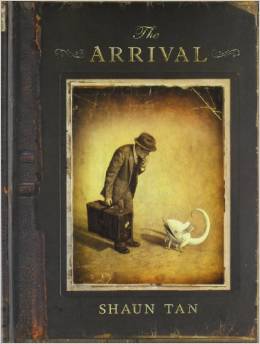
  1. the arrivalTan, S (2007) ‘The Arrival

This is a graphic novel with no words about the experience of an immigrant. The reader is invited to immerse herself in the richness of Shaun’s illustration, with ‘vintage’ colours, and to make meaning of a man’s search for a new home for his family in a new land.


His illustrations illuminate – so compelling.

Arrival 2


  1. The Art BookPhaidon Press (1994) ‘The Art Book

Winner of the Illustrated Book of the Year award in 1994, this book is a collection of renowned paintings over centuries with explanatory notes about the works of art and their creators, such as Basquait, Giacometti, Van Gogh, Da Vinci, Mondrian, Monet, Turner and Warhol.


To quote the editor at Phaidon Press, “[G]reat art can exciting, inspiring and thought provoking, but it can also be confusing…The key to ‘The Art Book’s’ success is its simplicity. It’s an easy way into that world that is exciting and inspiring, and it’s a door that’s open to everyone.”  For those interested, have a wander on Phaidon’s site.


  1. where the wild things areSendak, M (1963) “Where the Wild Things Are

This classic children’s book is illustrated by the author Maurice Sendak, and captures of the creativity of being a child.  An oldie but a goodie 🙂


Whimsical and adventurous illustration, the book draws our attention to a boy’s mischief and his  dealing with the consequences of his actions in a creative way – through his fantasy.

wild things 2


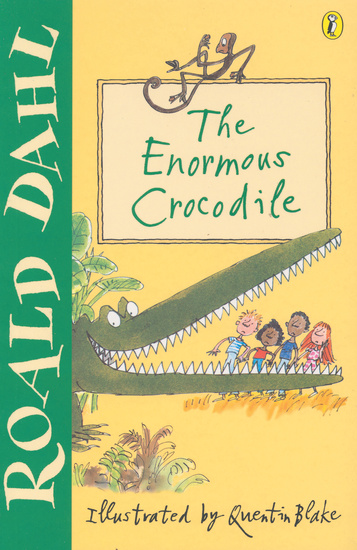
  1. enormous crocDahl, R (1978) “The Enormous Crocodile

This book was first published in 1978.  The illustration is by Quentin Blake, who formed a long collaboration with Roald Dahl. The illustration is quirky, light, whimsical and most suitable for the story.

I had fun reading this with my children when they were little.


  1. dreamworksZahed, R (2014) “The Art of Dreamworks Animation

A most recent hardcover book celebrating the Dreamworks team and their artistry in animationThis book is not classified as an illustrated book, but hey, I’m a rebel 🙂 It  contains many samples of Dreamworks’ animation from movies such as Shrek, How to Train Your Dragon, Madagascar and Puss in Boots.

A book worth having just to browse the magnificent images.


Well, I hope you explored the links I put in for each of the books.

I am interested to know what your favourite illustrated book is, or one which has a special place in your heart for some special reason…   I am always looking to add to my collection 🙂

Till next time
– FlorenceT

Florence 2


@FTThum


Enter your email address to subscribe to this blog and receive notifications of new posts by email.

© Copyright-All rights reserved by litworldinterviews.wordpress.com 2014

Submissions Requested for Anthology

Submissions request for ‘Dreams and Visions’ Anthology…deadline 30 November 2014. Twelve days remaining to write “up to ten pages double-spaced, and they may be shorter. You may submit multiple pieces that total ten pages if preferred.”
Enjoy!

Book Review by @FTThum – Empress Dowager Cixi by Jung Chang

I am fascinated with strong female characters, real-life or fictitious. So it is no wonder this book caught my attention when it was first published in 2013. Unfortunately with time constraints, it wasn’t until the paperback was released that it found its way into my home. Cixi Title:               Empress Dowager Cixi: the Concubine who Launched Modern China Author:          Jung Chang Publisher:     Vintage Books, London (3 July 2014) ISBN-10:        0099532395 ISBN-13:        9780099532392 Website:         http://www.jungchang.net/ Pages:              Paperback, 528 pages Genre:             Literary Non-Fiction – History    What’s it about? Empress Dowager Cixi was never ‘crowned’ empress. But she was the de facto ruler of China from 1861 to 1908. At the age of 16, Cixi was ‘honoured’ for being selected to be a concubine to the Emperor Xianfeng. At the death of the Emperor, she (then 25 years old) with the official Empress Zhen, “sat behind the throne” of the successor, Cixi’s son, Tongzhi who was then 5 years of age. From that position, literally behind a yellow silk screen, Cixi ruled China. Whilst she has been credited for her efforts bringing China into the modern age, Cixi’s private life remains very much just that – private, partly contributed by the loss of her personal archives during her reign. In contrast, the public life of this formidable woman was subject to a lot conjecture and criticism for she had dared to thwart the traditions of the patriarchal system and perhaps misogynistic culture of the times. And in comparison to the likes of say, Elizabeth I or Josephine Bonarparte or Cleopatra, Cixi’s life has received relatively little attention, and largely demonised. In similar style to her previous bestseller, Wild Swans (1991), Jung Chang has presented the life of Cixi in a matter-of-fact and impassive manner. It would seem there is a concerted effort to be impartial both in language and the events of that era. In this sense, the book allows the readers to come to their own conclusions as to the morality and values of that Chinese era, and in particular, of Cixi, and the different political parties of the time. Factually, there was enough to provide a political context to Cixi’s rule while not inundating the readers with details. In saying this, the simplification of the rich and complex events belie the political and cultural obstacles Cixi must have had to navigate. Note this was a woman who was not ‘educated’ as compared to her male counterparts. Jung’s depiction of Cixi gives a hint of the chameleon – a public persona and a deeply private person, a traditional woman with modern perspectives. It would have been a treat if Jung had canvassed in greater depth the psychological and emotional landscape of this clever woman. I wonder what it was like to live in that era, being within the Imperial Court, and being responsible for China and its progress. A small detail stood out for me – Cixi collaborated/worked closely with Empress Zhen to make the changes required. While astute, decisive, incisive and at times uncompromising, she it would seem did not perceive ‘female competition’. Quite capable of ruthlessness to achieve her ends, Cixi nevertheless sought first to collaborate. Her political astuteness, in maneuvering  for powers besetting China, is rather incredible. She was courageous enough to fight and/or retreat. The book highlights the ingenuity, and political and strategic savviness, of Cixi in wrestling and maintaining power for 47 years. As Charles Denby (an American minister to Beijing during her mid-reign) stated:

At that time, she was universally esteemed by foreigners, and revered by her own people, and was regarded as being one of the greatest characters in history…Under her rule for a quarter of a century China made immense progress.”

This book is worth a read, for it gave great insight to the comings and goings of the intrigue within the Chinese Imperial Court, and the strength and vision of one woman to bring China into the modern age.   Recommendation: LWI Rating:      Realistic Characterization: 4/5      Made Me Think: 3/5      Overall enjoyment: 3.5/5      Readability: 4/5      Recommended: 3/5 Overall Rating: 3.5/5   Buy it at:

Amazon Hardback USD 21.60
  Paperback USD 13.61
  Kindle USD 9.67
Bookdepository Hardback Euro 19.98
  Paperback Euro 10.63
Booktopia Hardback AUD 40.75
  Paperback AUD 23.25

Book Review By: Florence Florence 2      

Enter your email address to subscribe to this blog and receive notifications of new posts by email.

© Copyright-All rights reserved by litworldinterviews.wordpress.com 2014

Living NaNoWriMo and the writer’s life

Surviving Living NaNoWriMo


Writing


I am thrilled and excited, vicariously, that is, by NaNoWriMo. Time does not permit my participation and thus prompted my thinking of time and what the participants of NaNoRiMo will be going through, which led to this post.

This is what I figure, this is a month of creating, not just the novel you are writing, but habits which will inform your writing life. So why not start as if you intend to continue.

 1        Fuel up

Let’s begin with an obvious and necessary element. Remember to eat and eat healthy. I know from personal experience, the excitement of jumping into a project first thing in the morning and before I know it, it’s way past lunch time, starving, grumpy (yep, that’s me) and less than productive.

So, take time to eat – it provides fuel to the creative mind of yours.


2          Rest

Have enough sleep. Not catnap (though if you need to, go for it) but solid sleep by which I mean sleep when your body requires it in uninterrupted blocks of at least 4 hours.

Optimal sleep patterns improves consolidation and organization of information. When we sleep, our amazing brain works to ‘cement’ the links and correlation of bits of information, which means for us writers, after a good night’s sleep, the way ahead becomes clearer, and it increases our capacity to re-interpret information to reach novel, non-obvious conclusions. And that my friends, is creativity.

Sleep helps us to handle stress better. Seems most appropriate for NaNoWriMo, does it not ?  🙂


3          Breathe

When you hit the metaphoric brick wall, or even when ideas and/or sentences are not forming as you please/wish, when you feel that frustration forming…stop. You probably know being agitated is not conducive to writing. Hitting your head against the wall can only give you a sore head… so do something else to get around that brick wall.

Stop and breathe.

I practice mindfulness. It is not so much meditation but rather a habit. It is a simple exercise but to master it requires practice.

Begin with this:- stay where you are, notice you are breathing, and focus your attention to it. Lengthen each breath … and feel the breath as you inhale and exhale.  Yes, the plot is still bugging you, the characters don’t seem right… well, let those thoughts go by and pay no attention to them, but instead on your breath for 5-10 minutes. Once you feel calm and centred, you are ready to resume.


4           Move

When you feel you are running out of steam, and you will no doubt during this period, move. Get up and stretch your legs. And while you are at it, don’t be a ‘walking worry’ or ‘stomping stress’. Alright, I stomp around when I am stressed, so I catch myself and re-set my system, often. Anyway, when away from the writing, go admire the flowers in your garden, frolic with the cats, cook a delicious meal savouring the aromas…do them mindfully that is, with attention. Don’t be distracted by the writing you’ve put aside intentionally.

I do mindful espresso making and drinking…there is something meditative about it. Perhaps I should clarify, I use a manual espresso machine and I love the manual process… it engages my 5 senses. Bliss! Not sure about the movement part except I do walk around my home with the cup of espresso, surveying my domain :-).

Any movement, large or small, re-energises.


5          Socialise

For this month while it may seem counter-intuitive given you have to write 50,000 words, it is probably more important that you take time to engage with your community.

Connect with your fellow writers, within or away from NaNoWriMo. By all means talk about what you are doing, discuss your frustration or your ideas… Writers have always had communities. When we hang around each other, we get inspired, we feel a sense of solidarity and identity…it is in communities that ideas are generated and shaped.

Creativity takes shape in a social context, focused socialisation sparks creativity.

So, remember to spend time with your writing friends.


LIVE this month of NaNoWriMo as a writer would, don’t just survive :-).

Enjoy, revel and flourish!


Wishing you well
– Florence


© 2014 Copyright reserved. The author asserts her moral and legal rights over this work.

Get INSPIRED by Authors who Know.


Stuck for ideas? Words not flowing? Need a break? Or some good old inspiration?

What better inspiration than a series of talks about the process of writing and what it means to write.

Here is the link to a TED playlist of 10 talks from authors like Isabel Allende and Melissa Gilbert, speaking about

  • creativity, passion, and the process of writing,
  • the power of language and narrative in writing,
  • the importance of contemplation and reflection to a writer’s life,
  • the bane of every writer’s life (at one point or another) – fear and doubt, and how to channel them,
  • the inextricable link between art and living, and the creative life.

Hope you find them inspirational, or at the least, entertaining.

Enjoy!

– Florence


Enter your email address to subscribe to this blog and receive notifications of new posts by email.

Book review by @FTThum – The Examined Life by Stephen Grosz

I had read this book when it was first published in 2013. The second print was released in January 2014.  It is a book to share, a book that will change your perspectives which is why I have chosen to review it for my first post in LitWorldInterviews.

Though trained in therapy, this review is written not from the perspective of a therapist but rather that of a reader who happens to be a therapist.

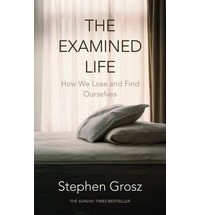
Title:               The Examined Life: How We Lose and Find OurselvesThe Examined Life
Author:          Stephen Grosz
Publisher:     Chatto & Windus (3 Jan 2013)
ISBN-10:        070118535X
ISBN-13:        978-0701185350
Website:         http://www.stephengrosz.com/usa//
Pages: Hardback, 240 pages
Genre: Literary Non-Fiction – Psychology

What’s it about?

The Examined Life is a collection of essays based on Stephen Grosz’ case histories of his work as a psychoanalyst. In Grosz’ words, it is a book about ‘change and loss’.

Grosz’ art in story-telling is apparent. The human-ness of each client, and the interaction between he and his clients cannot help but make the reader realise all of us share common experiences such as pain and  suffering in our living, and we are creative and versatile of ways to protect ourselves by whichever means possible.

In telling these stories, Grosz manages to enlighten the reader to the hidden meanings of his clients’ lives. There are the ‘facts’ obvious to all, and then his narratives which distil the motivations leading to a depth of understanding of the human psyche.

The reader is also acutely aware the therapy process occurs within the confines of a therapist’s room, and the accounts told by the clients are rarely verified or corroborated.  As a therapist, I am aware therapeutic ‘conversations’ are about honouring the client’s perspectives, not seeking ‘universal truths’. So the reader is left with stories of people as seen through the eyes of a highly experienced psychoanalyst and poignant narratives which prompt the reader to reflect on humanity.  Take for example, the young man diagnosed as HIV positive who had spent some 3 years of his therapy sessions with Grosz mostly sleeping because it is there that he felt safe and thus could rest. That was a place of healing. Now reconsider the judgment we have of the benefits or the necessity or the efficacy of those sessions.

This book is inspirational, thought provoking and highly entertaining.  Most importantly, by the absence of technical jargon, it is accessible to all and not just those interested in or within the field of psychology.

The essays illuminate and clarify the process of psychoanalysis – the conversations in therapy and the skills of listening, talking and being present with clients – without advocating for this specific technique or method.

I recommend this most certainly to readers curious about the complexities of human mind and behaviour.

Perhaps Grosz said it best:

        “The philosopher Simone Weil describes how two prisoners in adjoining cells learn, over a very long period of time, to talk to each other by tapping on the wall. ‘The wall is the thing which separates them, but it is also their mean o communication,’ she writes. ‘Every separation is a link.’

        This book is about that wall. It’s about our desire to talk, to understand and be understood. It’s also about listening to each other, not just the words but the gaps in between. … It’s something that is a part of our everyday lives – we tap, we listen.”

Enjoy!
LWI Rating:

Realistic Characterization: N/A
Made Me Think: 3/5
Overall enjoyment: 4/5
Readability: 5/5
Recommended: 4/5
Overall Rating: 4/5

Buy it at:

Amazon Hardback $19.05 USD
  Paperback $12.30 USD
  Kindle $9.06 USD
Bookdepository Hardback €17.50 Euro
  Paperback €9.82 Euro
Booktopia Hardback $31.50 AUD
  Paperback $16.50 AUD