An Interview with Nancy Bernhard, author of The Double Standard Sporting House.


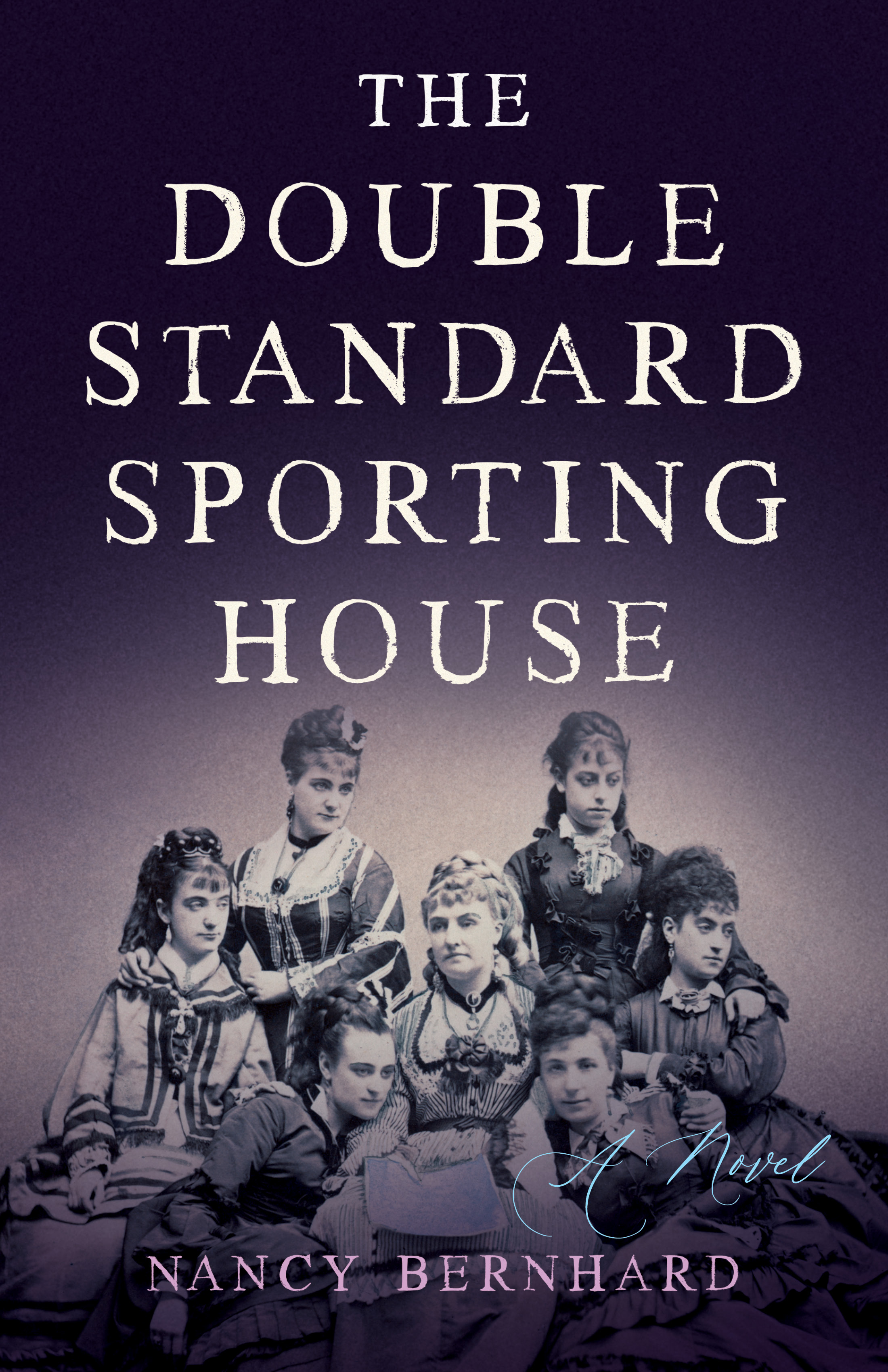
The Double Standard Sporting House cover
The Double Standard Sporting House

Book Description

A high-class brothel that entertains New York’s most powerful men, the Double Standard Sporting House funds a free clinic for women. When the Tammany Hall criminal syndicate takes over the city in 1868 and starts kidnapping girls, the house’s owner Nell “Doc” Hastings cannot stay quiet—especially after sixteen-year-old Vivie arrives at the clinic bruised and bleeding.

Resolving to seek justice for Vivie and girls like her, Doc builds an unlikely alliance with religious reformers, a rare honest ward cop, and an alluring newspaper publisher she can’t seem to keep away from. Even with their help, Doc will have to use her sharpest tools—secrets, guile, and a surgical blade—to prevent a dark turn in the sex trade.

Full of intrigue, friendship, and love, this timely story of a heroine erased from history by the sexual double standard reminds us that women help and heal one another, even when shameless criminals come to power.

Interview

As a former history teacher and historical fiction writer, I always like to find out how a historical fiction/nonfiction author gets from an idea to the actual book. With that, my first question is, what inspired you to write The Double Standard Sporting House?

My delightful, flamboyant grandmother once told me that her Aunt Beadie was a madam. It was a total fabrication, but before I sorted that out, I wondered how a smart middle-class girl with a large, supportive family could end up in prostitution. The answers are: rape and seduction.

I began to imagine a smart girl, skilled in medicine, finding herself in the demimonde, and making the best of the options left to her. She builds an elite brothel to finance her free clinic. When it’s threatened by predatory men, she has a strong community to help her fight back.

How did you go about researching your subject?

About six months into the 2020 lockdown facing a Massachusetts winter at home, I dug into research. I spent about a year reading on the history of prostitution, the Tammany Hall political syndicate, and 19th century medicine.

Your main character is Nell “Doc” Hastings. How and why did she become your protagonist?

Doc is excluded from the practice of medicine because she’s a woman, and then punished for having greater skill than mediocre men. Exclusion followed by insult is a fair summary of being a woman in the 19th century, and sometimes now. Doc embodies traditional feminine strengths in caregiving, compassion, and community.

What in your background helps you in writing a historical fiction book?

I have a doctorate in American history, and have been reading and researching for decades.

A brothel would obviously bring about certain health concerns for women, especially during the 1800s. How did you come to link Nell’s brothel to her funding a free clinic for women? Also, what was the health care system like for women in the lower-income parts of society?

Cast out of ‘respectable’ society as damaged goods, Doc finds surprising freedom and autonomy in the demimonde. Prostitution was far more widespread in the 19th century than in the 21st. In 1868 New York when women had very few ways to earn money, 30%  did sex work at some point in their lives, compared to 1-2% now. The only industry controlled by women, prostitution was also just about the only way for single women to accrue real wealth. Reduced to their sexual and reproductive functions, these women made the best of it. Owning the house allows Doc to run her clinic as she likes, serving the most vulnerable women without men telling her what to do. Ironically, she would have provided far better healthcare to prostitutes than respectable women received from fancy doctors.

Medicine in the 19th century was just beginning to professionalize. There were plenty of quacks with medical degrees, and plenty of skilled healers who’d never been to school. Women’s particular needs were little studied or prioritized, of course. Poor women would have had difficulty accessing care, and most likely would have seen midwives or traditional healers, especially in the country. Charity hospitals and free clinics served poor women in the cities, but often refused care to women they deemed morally undeserving.

How does society today resemble the time period and events in The Double Standard Sporting House?

Gangs of heedlessly corrupt, powerful men still prey on and abuse girls and women all the time, and cover it up, as we see in the news every day. Conservatives are torching women’s reproductive freedom, and endangering our health and our lives. They shame us for carrying the burden of childbearing, and punish us for demanding full agency and autonomy. Women have more rights now than they did 150 years ago, but fewer rights than we did a few years ago.

1 in 4 women in the US has been raped, and 50% have suffered active harassment. Misogyny is different but arguably as strong as it was in 1868.

It seems to me that historically, the achievement of power through corruption, or maybe even through honest methods, comes at the expense of women, at least historically. What are your thoughts?

Indeed. We live in a patriarchal society set up for the benefit of half the population, and our culture represents only half the experience of humanity, yet male dominance is so pervasive we often can’t see it. The hierarchical, competitive, acquisitive, individualistic drives associated with masculinity are anti-democratic, and are killing our planet. It leads men to treat women as less-than-human vessels for reproduction, and to demean and de-value everything associated with femininity, like empathy and compassion. Feminism does not seek to replace patriarchy with female domination, it seeks to promote democracy, equality, and an orientation to the common good.

Finally, why should people read The Double Standard Sporting House?

It’s a good story, one that may help readers to see prostitution, and women’s historical exclusion from most opportunities, in a new light.

Pre-order on Amazon:  https://www.amazon.com/Double-Standard-Sporting-House-Novel/

Nancy Bernhard author photo
Nancy Bernhard

Nancy Bernhard is a journalism historian and yoga teacher, fascinated by how survivors of sexual and political violence heal through storytelling and movement. Having earned a BA in religion at Dartmouth, a PhD in American History at the University of Pennsylvania, and taught at Harvard, Bernhard turned her indignation over the sexual double standard into an absorbing tale rooted in the 19th century history of Tammany Hall. She was born in Brooklyn, and lives with
her family in Somerville, Massachusetts. https://www.nancybernhard.com/
 

© 2025- Ronovan Hester Copyright reserved. The author asserts his moral and legal rights over this work.

8 Questions with Hope Gibbs, author of Where the Grass Grows Blue.

Penny Crenshaw’s divorce and her husband’s swift remarriage to a much younger woman have been hot topics around Atlanta’s social circles. After a year of enduring the cruel gossip, Penny leaps from the frying pan into the fire by heading back to Kentucky to settle her grandmother’s estate.Reluctantly, Penny travels to her hometown of Camden, knowing she will be stirring up all the ghosts from her turbulent childhood. But not all her problems stem from a dysfunctional family. One of Penny’s greatest sources of pain lives just down the street: Bradley Hitchens, her childhood best friend, the keeper of her darkest secrets, and the boy who shattered her heart.As Penny struggles with sorting through her grandmother’s house and her own memories, a colorful group of friends drifts back into her life, reminding her of the unique warmth, fellowship, and romance that only the Bluegrass state can provide. Now that fate has forced Penny back, she must either let go of the scars of her past or risk losing a second chance at love..

Where the Grass Grows Blue front cover
Where the Grass Grows Blue by Hope Gibbs

Enter to win  a signed book, hydrangea notebook, hydrangea bag tags, packets of Kettle Corn, and bookmarks! (U.S. only)

Where do you get inspiration for your stories?

I want to bring the charm of the South to a wider community of readers. It’s my goal to immerse them in the culture, food, and characters, so I look around my surroundings or dig back to my upbringing to find inspiration

Your book is set in Kentucky. Have you ever been there?

I was born and raised in the Bluegrass State. I still consider it home, though I’ve been gone for decades.

How did you do research for your book?

Where the Grass Grows Blue is set in Kentucky, where I was born and raised, so I was comfortable with most topics—food, dialogue, and setting. But I did write in flashbacks and had to study pop culture during those decades so as tonot get the year wrong. I also had to do some serious research into genetic diseases, as they are a plot point for my protagonist.

What is your next project?

I’m almost finished with my second book, Ashes to Ashes. It’s an upmarket fiction book, set in the South, of course, that focuses on a tight-knit group of women whose world is rocked after the unexpected death of their dear friend, Ellen, under mysterious circumstances. But before they can even process their grief, they stumble across a web of secrets and lies, unraveling Ellen’s perfect life—the one she tried so hard to project to the outside world. Now they must rely on each other to find out who the real Ellen Foster was while grappling with the idea that they never really knew her at all.

What genre do you write in?

Women’s fiction and contemporary romance. But my third book will be historical fiction because it’s set in the early 1970s. I don’t want to be boxed into one genre.

What is the last great book you’ve read?

On Gin Lane by Brooke Lea Foster. I can’t tell you how much I loved that book.

Which authors inspired you to write?

Elin Hilderbrand. She’s the reason I started writing in the first place. I adore her. I even traveled to Nantucket last fall with a group of girlfriends to have the Elin “experience.” It was an absolute blast, plus I met her! On my website, you can find a blog post I wrote about that trip.

Do you have another profession besides writing?

I was a stay-at-home mother of five for twenty-five years. A few years ago, I started re-evaluating my life. At that point, it hit me. My children would soon be leaving for college. So I started “journaling” on a laptop. That lasted about a week before I noticed I wasn’t writing aboutmyfeelings or goals—I was creating a character.Now that my children are grown, I’m writing full-time. But that’s only one part of my “writing life.” I’m also a tour guide for Bookish Road Trip, an upbeat community of book lovers, authors, and bibliophiles. You can find them on Facebook, Instagram, andon their website. I’m in charge of the Author Take the Wheel program.


Find Where the Grass Grows Blue at Amazon.

Enter to win  a signed book, hydrangea notebook, hydrangea bag tags, packets of Kettle Corn, and bookmarks! (U.S. only)


Hope Gibbs author Photo.
Hope Gibbs author of Where the Grass Grows Blue

Author Bio:

Hope Gibbs grew up in rural Scottsville, Kentucky. As the daughter of an English teacher, she was raised to value the importance of good storytelling from an early age. Today, she’s an avid reader of women’s fiction. Drawn to multi-generational family sagas, relationship issues, and the complexities of being a woman, she translates those themes into her own writing. Hope lives in Tennessee with her husband and her persnickety Shih Tzu, Harley. She is also the mother of five. In her downtime, she loves playing tennis, poring over old church cookbooks, singing karaoke, curling up on her favorite chair with a book, and playing board games. Hope has a B.A. from Western Kentucky University and is a member of the Women’s Fiction Writers Association.

Website: https://www.authorhopegibbs.com

Facebook: https://www.facebook.com/hopegibbsauthor/

Twitter: https://twitter.com/HopeGibbstuib

Instagram: https://www.instagram.com/authorhopegibbs/

Amazon: http://amzn.to/3MJraZi

Goodreads: https://www.goodreads.com/book/show/63259909-where-the-grass-grows-blue

Hope Gibbs Blog Tour image with sites and dates.
Hope Gibbs Blog Tour sites and dates.


© 2014-2023- Ronovan Hester Copyright reserved. The author asserts his moral and legal rights over this work.

12 Questions with Marcia Peck, author of Water Music.

The bridge at Sagamore was closed when we got there that summer of 1956. We had to cross the canal at Buzzards Bay over the only other roadway that tethered Cape Cod to the mainland.

Thus twelve-year-old Lily Grainger, while safe from ‘communists and the Pope,’ finds her family suddenly adrift. That was the summer the Andrea Doria sank, pilot whales stranded, and Lily’s father built a house he couldn’t afford. Target practice on a nearby decommissioned Liberty Ship echoed not only the rancor in her parents’ marriage, a rancor stoked by Lily’s competitive uncle, but also Lily’s troubles with her sister, her cousins, and especially with her mother. In her increasingly desperate efforts to salvage her parents’ marriage, Lily discovers betrayals beyond her understanding as well as the small ways in which people try to rescue each other. She draws on her music lessons and her love of Cape Cod—from Sagamore and Monomoy to Nauset Spit and the Wellfleet Dunes, seeking safe passage from the limited world of her salt marsh to the larger, open ocean.

Water Music Cover
Water Music by Marcia Peck 12 QUESTIONS WITH Marcia peck

Enter to win a signed copy of Water Music! (U.S. only)

There are many books out there about complicated family dynamics…What makes yours different?  

The difficulties Lily’s family grapple with are not only grounded in their own history, but are very much echoed in the landscape they inhabit. They are nourished by the bounty of the sea and salt air, but also threatened by storms and a changeable, often indifferent landscape.

Your book is set in Cape Cod. Have you ever been there?

My family spent our summers on Cape Cod all through my childhood and adolescence, and I’ve felt spiritually bonded to that remarkable bit of land and sea all my life.

In your book you make a reference to the sinking of the Andrea Doria….how did you come up with this idea? What made you write a book about…? 

The sinking of that brand new, sleek ocean liner has always fascinated me. And when I learned that the Ile de France turned around, 40 miles out to sea to come to the princess ship’s aid and saved countless lives, I saw a parallel between the young ocean liner (Lily) and the older, reliable Ile de France (the steady mother Lily longed to have.)

Which was the hardest character to write? The easiest?  

Hardest character to write was Lily’s mother. To understand her, I had to place myself in the shoes of a talented, smart, isolated mother of two daughters in the 1950’s who longed to find meaning in her role.

Easiest was Uncle George, the blow-hard.

How long have you been writing?  

Forty-ish years.  I loved reading to my daughter when she was little. In fact I began reading to her almost from the day she was born. (And kept it up until she cut me off!) I began to journal when she was born, and before I knew it, I was trying to write short stories.

In one sentence, what was the road to publishing like? 

Fraught with signs of hope, rejection, learning new skills, a huge time drain, and

finally…euphoria.

Do you have another profession besides writing?  

I’m a cellist with a symphony orchestra. For me, that has been a perfect combination. In WATER MUSIC I kept thinking about the little motifs that recur in Wagner or Rachmaninoff, those little echoes that invisibly tie a work together.

Is there a specific ritualistic thing you do during your writing time?

I try to empty my head. I meditate (with an app) for ten or twenty minutes before I begin to write.

If you were stuck on a deserted island, which 3 books would you want with you? 

Hmmm… The God of Small Things by Arundhati Roy, A Gentleman in Moscow by Amor Towles, and Archie and Mehitabel by Don Marquis

What TV series are you currently binge watching? 

Paris Murders, Modern Love

Any hobbies? or Name a quirky thing you like to do.

I consider myself a mycophile (mushroom hunter). But have gotten awfully rusty, so these days I confine myself to a couple of the choicest (and easiest to identify).

What’s the most courageous thing you’ve ever done?

Two things: Climb the Grand Teton and perform an unaccompanied Bach Suite

Find Water Music at Amazon.

Enter to win a signed copy of Water Music! (U.S. only)


Marcia Peck author of Water Music
Marcia Peck

Author Bio:

Marcia Peck’s writing has received a variety of awards, including New Millenium Writings (First prize for “Memento Mori”) and Lake Superior Writers’ Conference (First Prize for “Pride and Humility”). Her articles have appeared in Musical America, Strad Magazine, Strings Magazine, Senza Sordino, and the op-ed pages of the Minneapolis StarTribune.  Marcia’s fiction has appeared in Chautauqua Journal, New Millenium Writings, Gemini Magazine, and Glimmer Train, among others.

Growing up in New Jersey with parents who were both musicians, Marcia set out to be the best cellist she could be. She spent two years studying in Germany in the Master Class of the renowned Italian cellist, Antonio Janigro. Since then she has spent her musical career with the Minnesota Orchestra, where she met and married the handsome fourth horn player.

Marcia has always been a cat person. But she has learned to love dogs—even the naughty ones, maybe especially the naughty ones.

Website: https://www.marciapeck.com/

Facebook: https://tinyurl.com/marciapeckFB

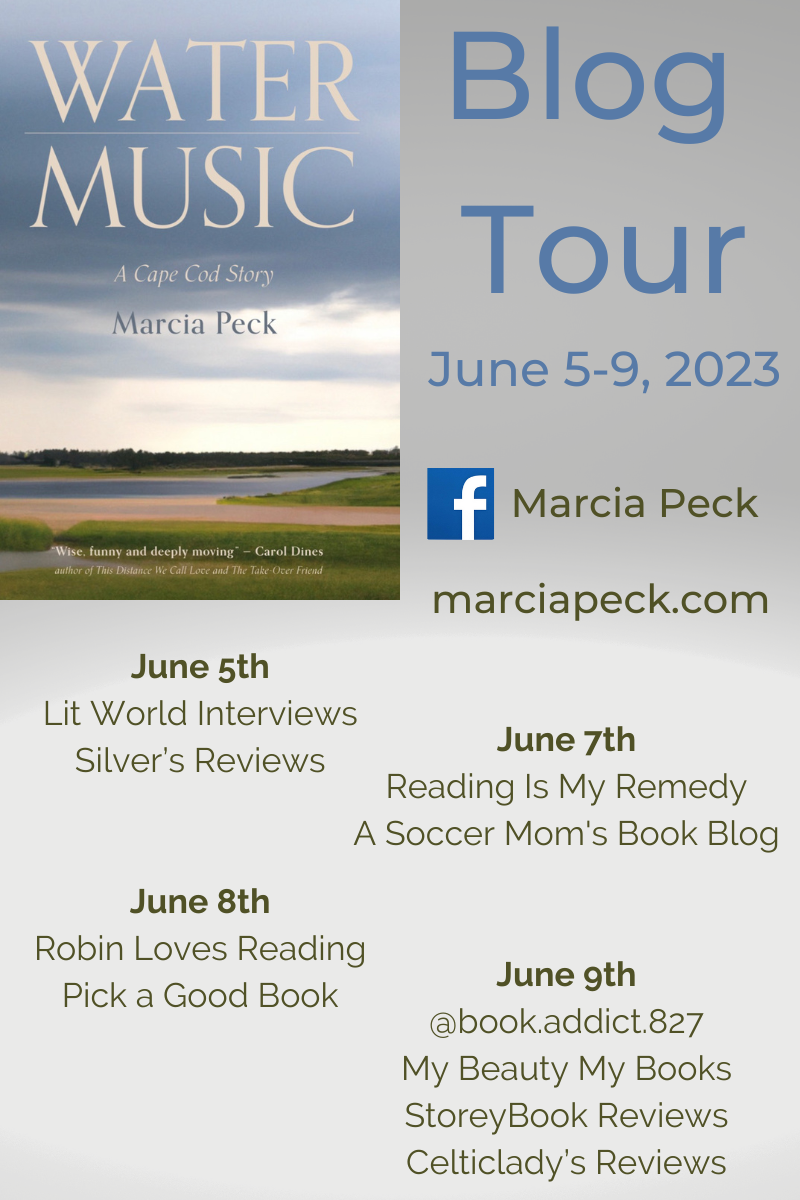
Marcia Peck blog tour Listing
Marcia Peck Blog Tour Listing

© 2014-2023- Ronovan Hester Copyright reserved. The author asserts his moral and legal rights over this work.