
Elizabeth Tilton, a devout housewife, shares liberal ideals with her journalist husband, Theodore, and her pastor, Reverend Henry Ward Beecher, both influential reformers of the Reconstruction era. She is torn between admiration for her husband’s stand on women’s rights and resentment of his dominating ways. When Theodore justifies his extramarital affairs in terms of the “free love” doctrine that marriage should not restrict other genuine loves, she finds the courage to express her feelings for Reverend Beecher. The three partners in this triangle struggle with love, desire, jealousy, fear of public exposure, and legal battles. Once passion for her pastor undermines the moral certainties of her generation, Elizabeth enters uncharted territory. Telling the truth may cost her everything. Can a woman accustomed to following the lead of men find her own path and define her own truth?

You can pre-order Unruly Human Hearts at Amazon. (January 28, 2025)
What drew you to become a professor of history?
My parents moved from New York to Hawaii when I was a teenager and I was fascinated with the multicultural society of the 50th state, including people of Hawaiian ancestry, descendants of white missionaries as well as people whose ancestors came from China or Japan to name only a few. When I entered the University of Hawaii, I was already very interested in Asian cultures, and the study of history seemed to be an ideal avenue to gaining an understanding of cultures so different from my own. I applied for an East-West Center scholarship for graduate work, which covered a year of research in India.
How did you end up teaching at the University of Puerto Rico?
My husband, who is an economist, was offered a job at the University of Puerto Rico. I had finished my course work at the University of Hawaii, but I was just starting to write my dissertation on the nationalist movement in India. After finishing my PhD, the Social Sciences Department at the University of Puerto Rico invited me to teach courses on Asia. Eventually I was offered a position as an Assistant Professor in the History Department.
Tell us more about your career as a historian and your work to highlight women’s struggles in both the United States and India.
At the University of Puerto Rico where I taught courses on both Asia and the United States with an emphasis on social history, it was a challenge to become fluent in Spanish and to interpret not only Asian culture but also American culture to my students. Although my dissertation was on the nationalist movement, my later research centered on the women’s movement in India. After receiving a Smithsonian Institute grant for research in India, I was able to complete my book on the struggle for women’s social and political rights in northeastern India titled The Women’s Movement and Colonial Politics in Bengal, 1921-1936. In addition to many academic articles on social themes in Indian history, I published a study of the impact of the gospel of love on the position of women in the United States as seen in the case of Elizabeth Tilton. I also wrote short stories exploring social conflicts set in India, the United States and Puerto Rico, mostly written from the perspectives of women and girls.
How did the views expressed by students in a graduate seminar you taught on the social history of the United States influence your decision to explore the Beecher-Tilton scandal more deeply?
At first my students didn’t seem interested in the famous 1875 trial, but once I mentioned the scandal had similarities to Bill Clinton’s impeachment for the alleged cover-up of sexual intimacies with Monica Lewinsky, they began to participate actively in the discussion. A young man pointed out that both the president and the reverend survived the scandal. Yeah, said a young woman but what about Monica and Elizabeth? My student’s suggestion that Elizabeth may have fared worse than her male lover inspired me to delve deeper into the social context of the scandal. As I immersed myself in the sources to understand the challenges Elizabeth faced because of gender inequality, I found that my own multicultural experiences, during the many years spent in Hawaii and Puerto Rico as well as the year doing research in India, were very helpful, enabling me to imagine how Elizabeth felt in an epoch with values very different from the present day.
What was the research process like to bring Elizabeth Tilton’s side of the story to life? I know that during the civil trial that she wasn’t allowed to speak, being that she was viewed as the damaged property of her husband in the case.
Many of the historical studies of the Beecher-Tilton scandal picture Elizabeth as a weak personality, a woman who gave in to both her husband and her lover and couldn’t keep her story straight. As I read more about the Victorian code of conduct for women, I felt that this version of her character was simplistic if not misogynistic. I attempted to come to grips with the challenges Elizabeth faced because of gender inequality in an article I wrote for a history journal, but I finally decided that the best way to do her justice would be to write a novel telling the story of the scandal from her perspective. Although Elizabeth was not called to the stand during the 1875 trial, there are three important primary sources that reveal her point of view: her personal letters, which her husband published in the press without her permission, her testimony at the church investigation, and the testimony of those who spoke of her at the trial. Once I decided to write a novel, I had to immerse myself once again in the historical sources. This second time, I was concentrating not only on understanding the social issues, but also submerging myself in the feelings and thoughts of Elizabeth and her two lovers, imagining scenes in which the main characters interacted.
Unruly Human Hearts is a work of fiction but based on a true story. How much of what we find in the book can be considered fact, or as fact as can be, considering the era and limited sources of coverage of events?
The novel covers the period from 1866, when Elizabeth, then in her early thirties, first developed romantic feelings for Henry until her death in 1897. There are many primary sources for the period from 1866 through the trial of 1875, including personal letters, trial records, and the press. The events and the people whose actions and personalities are revealed in these records function as the framework for my novel. However, the sources do not consistently tell the same story. The public testimony of the protagonists often provides conflicting narrations of what happened in what order, as well as conflicting interpretation of the motivations of those involved. Historians who have written books involving the Beecher-Tilton scandal also have different interpretations. As a writer of historical fiction, I had to make judgment calls. Elizabeth’s life after the 1875 trial, covered briefly in the final pages of the novel, was more difficult to envision. Although several historical sources are available, including obituaries and her letter of confession published in 1878, writing about her final years required greater creative effort.
Free love is somewhat of a key factor of the Beecher-Tilton scandal, a scandal perhaps in part because of Victoria Woodhull’s being the one to put it to print making it of greater public knowledge. Can you perhaps give our readers a little idea of what “free love” means in the context of the book and the movement at the time?
The basic idea of free love in the Reconstruction era was the freedom to choose whom to love and to express true love in a sexual relationship outside of marriage. Those who espoused free love believed that government should not interfere in matters of the heart, because the question of who loves whom cannot be legislated. Some feminist leaders supported free love because they believed that marriage and divorce laws unfavorable to women often imprisoned them in injurious abusive relationships. The radical feminist, Victoria Woodhull, denounced the hypocrisy of male leaders (including Reverend Beecher) who indulge in sexual affairs while publicly advocating conventional morality. Most supporters of free love in the nineteenth century did not advocate promiscuity; they couched their beliefs in terms of individual freedom to express true love. The concept of free love was similar in some respects to the concept of open marriage in the latter half of the twentieth century in which one’s spouse was viewed as the primary partner, but married couples were free to express love for others. Elizabeth viewed her husband, Theodore, as her primary partner, and Reverend Beecher as another love that enriched her life and deepened her love for her husband.
Each of the characters in the triangle’s relationship to free love comes from a different angle. We have the first prominent preacher in America, a newspaper editor and abolitionist, and an American suffragist. How did each reconcile the doctrine of free love with their religious beliefs and perhaps positions in society?
Reverend Beecher’s experiences as a young child, when his father instilled in him the fear of being a sinner predestined to go to hell, encouraged him to advocate replacing the Calvinist doctrine of retribution with the gospel of love. The gospel of love inspired him to preach against slavery and in favor of guiding children through love not corporal punishment. Henry’s sermons comparing God’s love with the tender care of a mother inspired Elizabeth and helped her see the feminine role as crucial not only within the family but also in building a better society. Her motivation to join the suffrage movement was the belief that women would vote to help those in need. Although the gospel of love and the concept of free love had separate origins, Henry and Elizabeth saw a connection between the two. True love of one human being for another could not be sinful. Whereas Elizabeth and Henry emphasized Love as the guiding spiritual and ethical principle, for Theodore, it was Truth. Conventional moral teachings restricting love outside of marriage led to lies and concealment that poisoned personal relations. Theodore believed that non-interference of the government in personal love lives was a necessary social reform, and thus advocated free love as well as suffrage for women and former slaves.
Elizabeth was involved in the suffrage movement, as was her husband, what did the scandal do for/to the movement?
The women’s suffrage movement was going through a difficult period in the eighteen seventies. Many suffragists had hoped that that the fifteenth amendment would include voting rights for women and former slaves, but the amendment only awarded suffrage to freedmen. The movement had to regroup and form new alliances. Initially Susan B. Anthony and Elizabeth Cady Stanton, both of whom were friends of Theodore and Elizabeth, were enthused when Victoria Woodhull, a charming and charismatic young woman of working-class origins, brought new energy into the suffrage movement. However, they later realized that her advocacy of radical social issues, including free love, was alienating supporters. Victoria had a key role in the exposure of the Beecher-Tilton scandal. She denounced Beecher as an ardent supporter of free love who concealed his true beliefs so as not to endanger his career and social position. Public fascination with the role played by prominent men with progressive views on women’s rights in the Beecher-Tilton scandal, was fodder for conservatives who painted the campaign for women’s suffrage as a movement associated with dangerous radicals whose aim was to destroy the social order.
Any good book based on historical facts can and should teach you something that has some relevance to current times. How is Unruly Human Hearts relevant today?
The story of Elizabeth is relevant to concerns about individual freedom and social ethics in modern times. The emergence of creeds of sexual liberation and open marriage in the second half of the twentieth century raised questions about whether free love is liberating for women. Many women were economically dependent on men, which made it difficult for them to insist that men grant their partners the same sexual freedom that they claimed for themselves. The MeToo movement that emerged in the early twenty-first century points to the problems implicit in a sexual relationship in which one partner enjoys the advantage of power and position. Elizabeth insisted that her tie with Reverend Beecher was based on true love, but her husband saw it as a pastor taking advantage of a deeply loyal member of his flock. On the other hand, Theodore was oblivious of the power dynamic in his marriage to Elizabeth. He justified his own extramarital affairs as a legitimate expression of free love but applied the double standard to his wife. If our society continues to make progress toward gender equality, we can hope that women involved in open marriages or polyamorous relationships do not undergo the same heartbreak that Elizabeth experienced.
What is your next project about?
I am reworking a historical novel set in New York in the roaring twenties, a period in which women enjoyed new freedom to pursue romance as well as a career of their own. The heroine, a young aspiring poet, suffers violent mood swings, which make it difficult for her to comprehend the new limits of acceptable behavior for women. Aggressive psychiatric treatments compound her problems. The transition from adolescence to adulthood appears to be a maze to the young protagonist who must make her way through a looking glass world in her struggle to achieve autonomy and commitment.
You can pre-order Unruly Human Hearts at Amazon. (January 28, 2025)
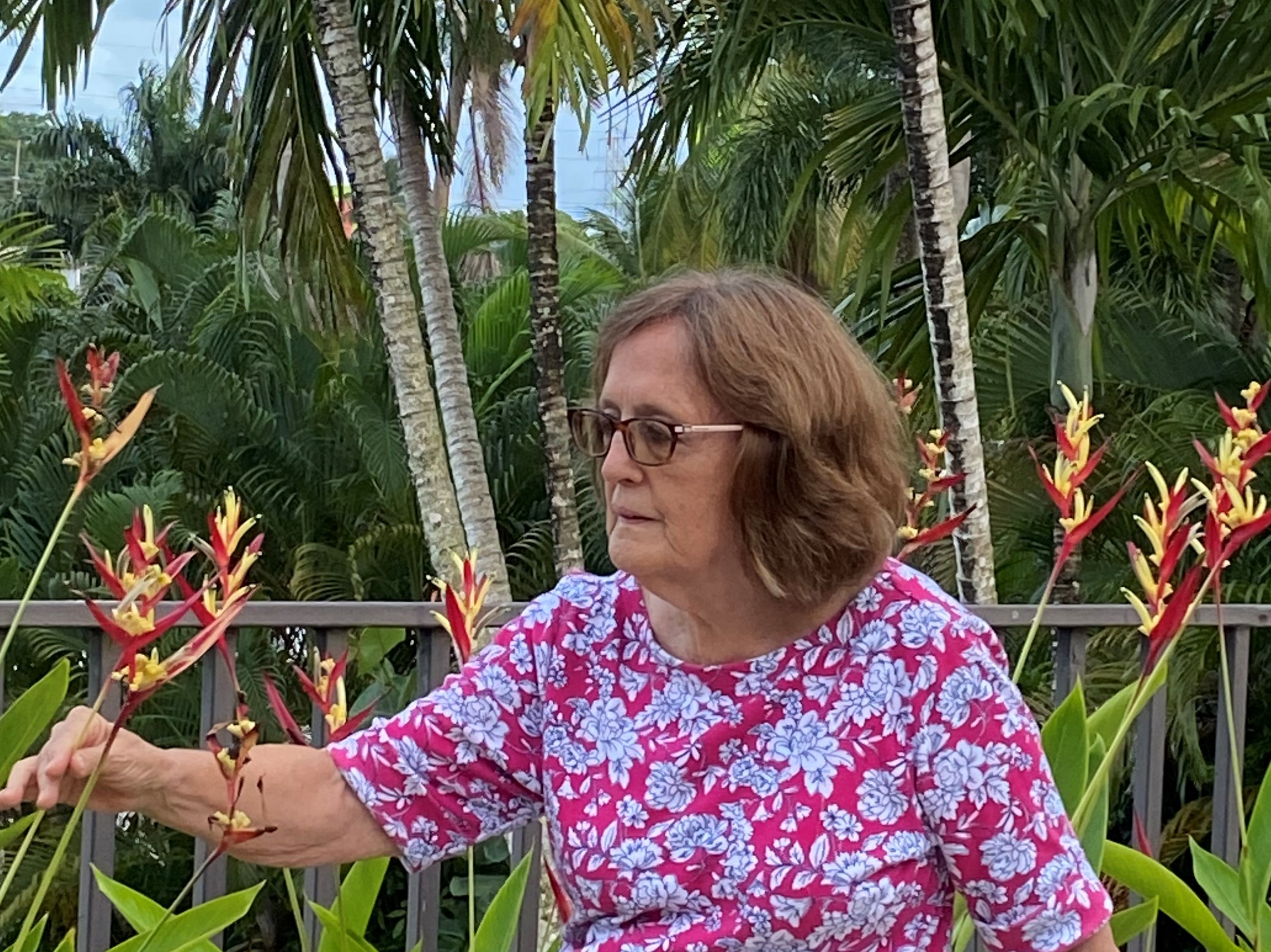
Author Bio:
Barbara Southard grew up in New York, earned a PhD from the University of Hawaii, and served as professor in the History Department of the University of Puerto Rico. In addition to academic publications on women’s history, she is the author of The Pinch of the Crab, a short story collection set in Puerto Rico, exploring social conflicts of island life, mostly from the perspective of women and girls. In her debut novel Unruly Human Hearts, Barbara once again explores social conflict from the point of view of the woman involved in a different place and epoch. She has also been active in raising funds for the Shonali Choudhury Fund of the Community Foundation of Puerto Rico, helping local community organizations working to protect women from domestic violence.
Find out more: https://www.barbarasouthard.com/
Facebook: https://www.facebook.com/BarbaraSouthardAuthor
Instagram: @barbara.southard45
© 2025- Ronovan Hester Copyright reserved. The author asserts his moral and legal rights over this work.



 Lit World Interviews