
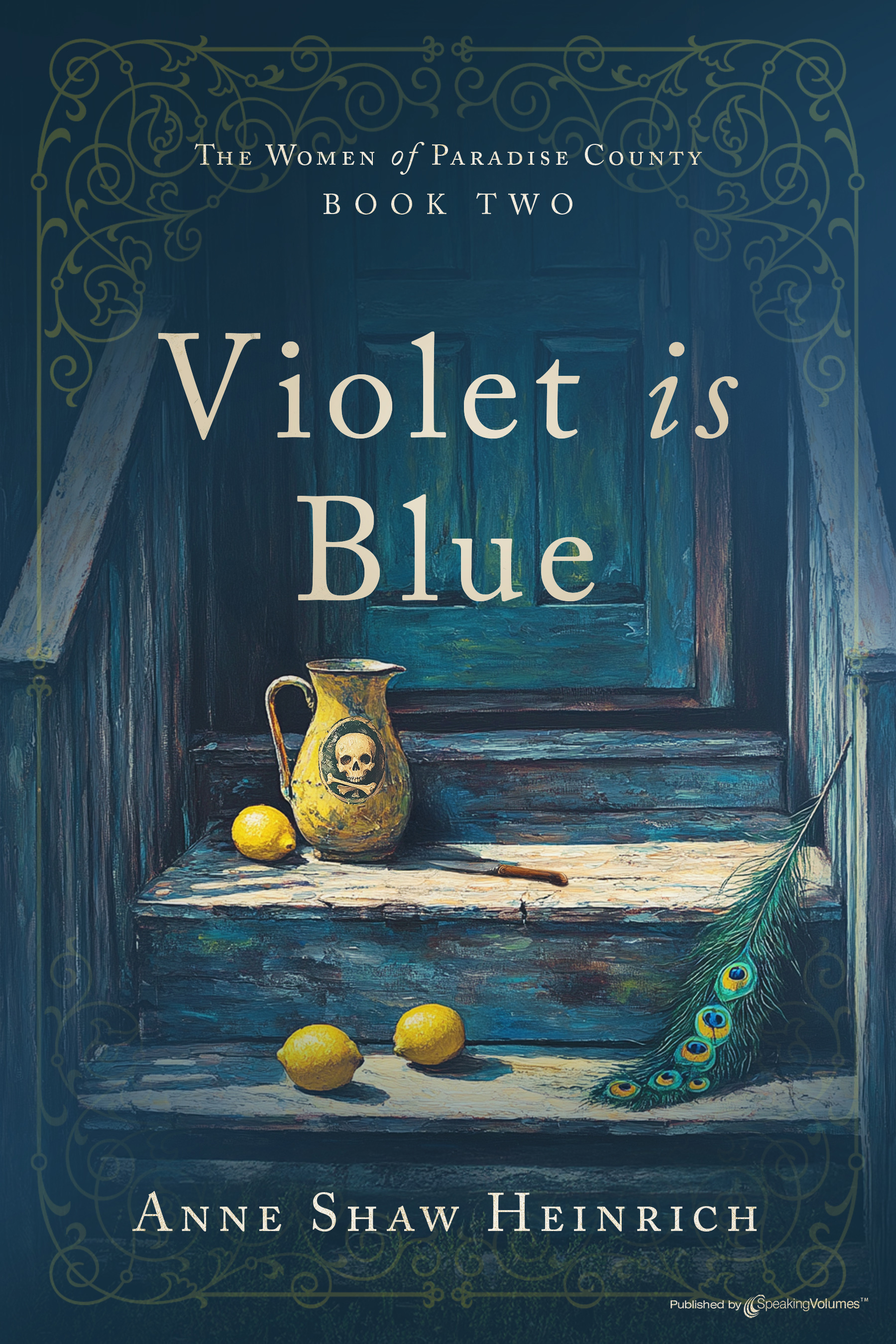
Violet Sellers is blue, and for good reason. She’s repressing a shocking secret she won’t tell anyone, especially her comfortably middle-class parents. When she makes a new friend in school, Jules Marks, who lives on the “other side of the tracks” with his five little sisters, she is introduced to a dark world of self-abuse. As Violet learns about Jules and his shifty mother, Lee, she retreats further into her shell. Her parents, Gloria and Skip, are horrified and do their best to find out what happened to their adolescent daughter while bending over backward to keep the whole town from knowing their business. Jules has an aunt and uncle who know his desperate story, and they finally get a chance to free him and his sisters from a loveless world of poverty. Meanwhile, a spinster named Margaret Burns watches and waits. She knows all about redemption and she’s got a master plan up her sleeve. Margaret and most of the quirky characters in Violet is Blue eventually learn to dance between the worlds of the “haves” and the “have nots” in ways none of them ever anticipated.Welcome to Book 2 in The Women of Paradise County Series.
You mentioned on the Women Living Well After 50 podcast (I watched it on youtube) that teachers were important in your journey to being a writer. How did they encourage you? Do you want to include their names?
I have had some incredible teachers throughout my lifetime, but the two who set me on my writing path are: Jane Reed and Connie Moore. I had them both when I was in high school in my hometown, Cuba, Missouri. I was a good student, but I didn’t have that one thing that I felt good at. I wasn’t athletic, or particularly talented at music, or much of anything. These two incredible women, although they had very different teaching styles, helped me recognize that storytelling was my jam. There were good stories already written that were there to appreciate in more thoughtful ways, but there were just as many out there for me to do their telling. It felt magical, and I’ll never forget feeling like I had something I could sink my teeth into and feel excited about it. I dedicated my first book, God Bless the Child, to the two of them and established the Reed Moore Scholarship in 2024 in honor of them. The first scholarship was awarded this spring, and I’m honestly as excited about this as I am the book series!
It took 18 years for you to bring your first book, God Bless the Child, to the world. When did you begin Violet is Blue, the second book in the trilogy of standalone books? What was the process like?
Much like God Bless the Child, I’d had a good chunk of Violet is Blue scratched out already. What I had not done, was share it with my editor, David Tabatsky. The truth of the matter is that when I reached out to David again after all those years, I wanted him to read Violet is Blue, which was in short story form, and a few other pieces I’d been working on. David was happy to read these, but it goes further. I really do have to give him the credit for recognizing that these two short stories had the potential to be adapted into full novels, and that they could work as a series with God Bless the Child. It had never crossed my mind, but once we started diving into it, I was re-energized. I’d always dreamed of getting one book published, but the universe had something bigger in mind! I’m grateful that David urged me to give God Bless the Child another look and to reconsider it as the foundation of something bigger. I’m knee-deep in writing House of Teeth, the third book in the series. That’s how The Women of Paradise County Series was hatched. It’s been thrilling, and I’m so thankful for his vision and belief in me.
You’ve said that minor characters from the first book, God Bless the Child, get a little more time in your new book, can you tell our readers who they might be?
Absolutely! Reverend James Pullman and his parents, Richard and Ruth Pullman, are essential to the story arc in Violet Is Blue. No spoilers, but let’s just say that James has unfinished business that needs serious tending in Book 2. We learn a whole lot more about Richard’s role in enabling his son’s behavior. Readers also discover more about Ruth’s backstory, especially her complicated relationship with her big sister, Gloria. The impacts of James’ unbridled misdeeds are as deep and wide as the berth others around him have given him.
Having read your post on girtalkhq.com about the main characters of Violet is Blue, although there doesn’t appear to be necessarily overt examples of what the average person might consider mental illness, there are obvious cases of damage that has been done. Are the mental hardships of your characters a conscious effort by you in Violet is Blue, or, since you don’t outline a story, as you’ve mentioned in other interviews, you just let it happen?
The characters throughout all the books in The Women of Paradise County series are working through a wide range of quite natural responses to traumas they’ve endured. Some of these are very specific events, but just as many are rooted in circumstances that take their toll: poverty, mental illness in families, and living in sustained periods of uncertainty and frequent upheaval. Even though these are fictional characters, their responses are quite natural. In Violet is Blue, this is manifested in ways big and small, including how the main character Violet Sellers and her newfound friend, Jules Marks seek relief through self-harm. People come to new spaces and situations carrying varying levels of resilience and coping. Exploring this has always fascinated me. I just let things happen like I think they might in real life.
Your characters have such specific parts to play in your stories, have you ever run into a situation where the character refuses to let you take her in the direction you planned for her to go? If so, what did you do? I ask because I’ve had that happen when I intended for a character to be a positive favorite in the story, but for some reason she just didn’t want to be that, so I didn’t fight her and let her go her own way.
Goodness, yes! There are certain characters that I love very much, and it would be so easy to let them stay protected by allowing them to be one dimensional. This is lazy writing. Characters deserve to be interesting, and readers can handle complexity. One of my favorite characters in Violet is Blue is a waitress named Clarice Downs. I love this woman so much, but she’s also prominent in the next book in the series, House of Teeth. I’m in the middle of writing this as we speak, and Clarice makes some choices that tarnish her halo. I must let her do what she’s going to do. She can be a saint and a sinner, and as her creator, I have to let her explore both parts of herself. It makes these characters more believable.
How did your first book, and life experiences during the time of its journey to being published, lead to your writing Violet is Blue?
When I initially finished God Bless the Child, I did a fair amount of pitching to agents. That’s a humbling process, but just part of the deal unless you’re famous. I think it’s important to keep your rejection letters to remind you of the struggle. It’s a rite of passage that most of us must power through. During that time, I did get a request from a potential agent for the whole manuscript. Excited, I sent it right along and waited for feedback. She called back to say she loved the book, but she wanted me to remove the main character, Mary Kline. She thought this character and her circumstances were just too cliché. I just couldn’t see a way to move forward and decided not to proceed. It was heartbreaking, but I knew the book couldn’t stand up without Mary. I felt sorry for myself for a while, put the manuscript aside, and started writing something else. That something else was the beginning of Violet is Blue. The initial creation is always my favorite, most satisfying part of the process. Life kept getting in the way, too. It took nearly 20 years to get these stories back into the light, and in a connected way, but I wouldn’t change how things unfolded.
Who was the easiest character to write? The most difficult?
Mary Kline, the primary character in God Bless the Child, was by far the easiest to write. She literally came to life with a pencil and a stack of yellow legal pads in a café while I waited for my youngest daughter to do preschool a few times a week. I can’t explain how Mary emerged from my brain onto the page, but I’ll always have a soft place in my heart for this character. The most difficult character to write in the whole series is a young woman named Pearl. She’s essential to the story, but we only hear about her through the voices of other characters. She does not have a voice in the story, and that’s intentional on my part because in real life and during the time this story is set, a young woman like Pearl would not have much of a voice at all. Readers must learn about her through the lenses of others.
Diet Coke or Coke Zero?
Diet Coke! Without a doubt, I will always choose this nectar of the gods over any other non-alcoholic beverage.
If you could have dinner with one author, living or dead, who would it be and what would you ask them and what would you have for dessert?
At this moment in time, I would want dinner with William Shakespeare. I would probe deeply about the longstanding authorship question. Mr. Shakespeare, did you really write these plays? I’d need all the details and documents, and we could do this over a cream puff sprinkled with powdered sugar. Lots of it!
Pre-order Violet is Blue on Amazon here.
About Anne
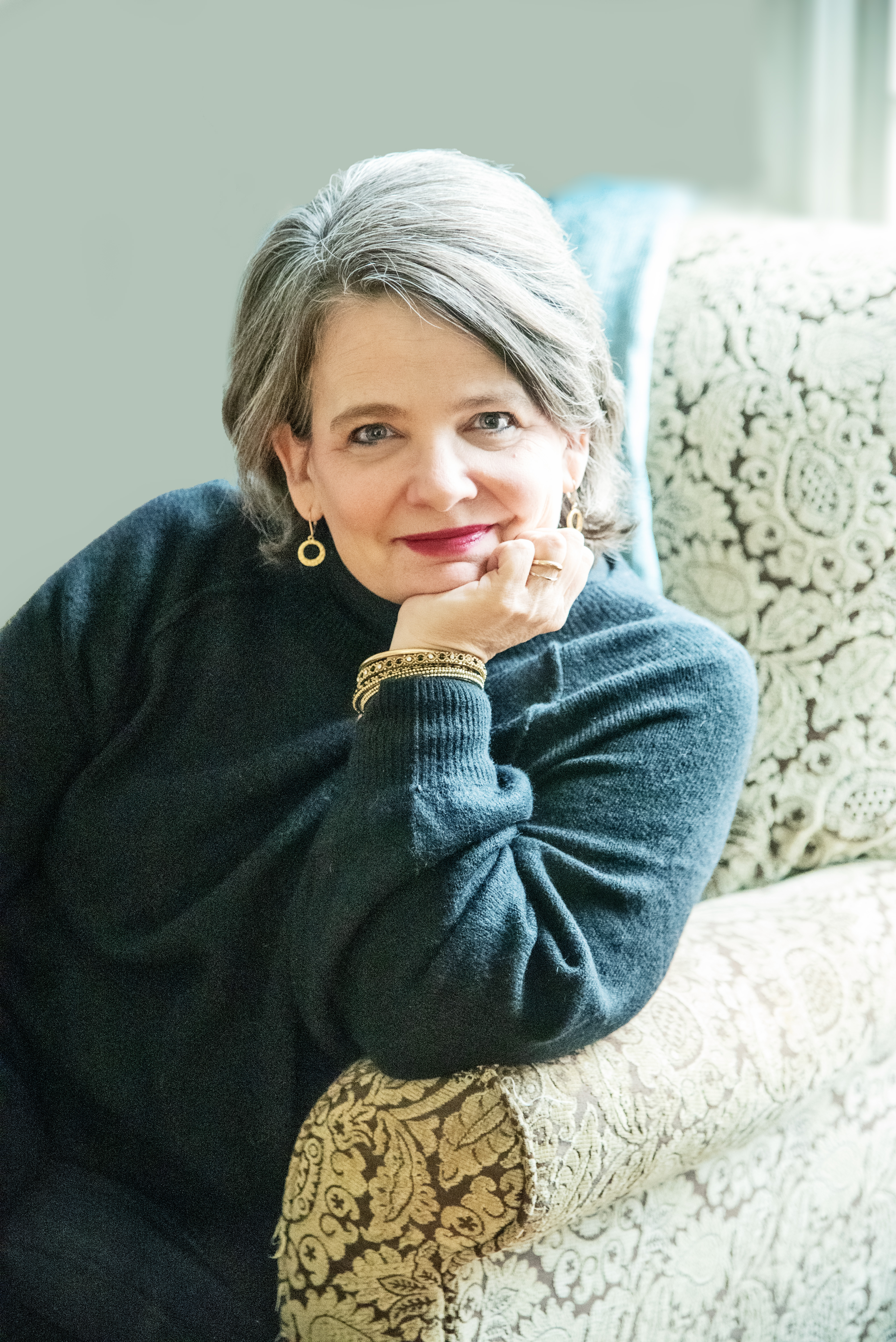
Since she first fell in love with writing in high school, Anne Shaw Heinrich has been a journalist, columnist, blogger and communications professional. Her first article appeared in Rockford Magazine in 1987. She’s interviewed and written features on Beverly Sills, Judy Collins, Gene Siskel, and Debbie Reynolds.Anne’s writing has been featured in The New York Times bestseller The Right Words at the Right Time, Volume 2: Your Turn (Atria) and Chicken Soup for the Soul’s The Cancer Book: 101 Stories of Courage, Support and Love.Her debut novel, God Bless the Child, is the first in a three-book series. She and her husband are parents to three adult children. Anne is passionate about her family, mental health advocacy and the intrepid power of storytelling.
Website: https://www.anneshawheinrich.com/
Instagram: https://www.instagram.com/anne_shaw_heinrich/
Bluesky: https://bsky.app/profile/anneshawheinrich.bsky.social
© 2025- Ronovan Hester Copyright reserved. The author asserts his moral and legal rights over this work.
 Lit World Interviews