
SYNOPSIS:
For fans of Georgia Hunter’s We Were the Lucky Ones and Anita Abriel’s The Light After the War comes a historical narrative about the lives of Jewish immigrants in the early twentieth century and one woman’s journey through adversity toward personal freedom.
At an early age, Gitel questions the expected roles of women in society and in Judaism. Born in Belorussia and brought to the US in 1911 as a child, she leads a life constrained by her religious Jewish parents. Forbidden from going to college and pushed into finding a husband, she marries Shmuel, an Orthodox Jewish pharmacist whose left-wing politics she admires. They plan to work together in a neighborhood pharmacy in Chicago—but when the Great Depression hits and their bank closes, their hopes are shattered.
In the years that follow, Shmuel’s questionable decisions, his poor health, and his bad luck plague their marriage and leave them constantly in financial distress. Gitel dreams of going back to school to become a teacher once their one daughter reaches high school, but an unexpected pregnancy quashes that aspiration as well. And when, later, a massive stroke leaves Shmuel disabled, Gitel is challenged to combine caring for him, being the breadwinner at a time when women face salary discrimination, and being present for their second daughter.
Offering an illuminating look at Jewish immigrant life in early-1900s America, Gitel’s Freedom is a compelling tale of women’s resourcefulness and resilience in the face of limiting and often oppressive expectations.

The change in Rayzel’s life from the moment she leaves Berisov, Belarus to South Bend, Indiana has more of an impact than Rayzel or anyone probably realizes. Not just in her life but also in that of her daughter and granddaughters to come.
What does a mother who doesn’t speak English, and basically refuses to learn to do so, which isolates her from the community around her, do in raising her daughter in a strange land? She keeps Gitel on a short leash, although that, to some extent, seems to be the implied way for observant Jews of the time. The sons have way more freedom than Gitel ever has.
I’ve read some reviews of Gitel’s Freedom that miss many of the book’s points and even misinterpret the meaning of others. This is an unfair treatment of the author and her creation. Believe me, if I didn’t like the book or didn’t believe what I’m saying, I wouldn’t mention it.
Themes throughout the book are shared by Gitel and her daughters in some form: fighting for their educational freedoms, and fighting for their social freedoms. The differences come from their situations and the decades they occur in. They all have obstacles but all know if you want something, you have to figure out how to reach the goal. You keep going. Faye and Ilana, Gitel’s daughters, learn that from their mother, even if they don’t immediately realize it at the time. They all face similar problems but due to their situations growing up, and situations in the moment of the problems, they all deal with them differently.
Gitel and Faye internalize their emotional responses, while Ilana, who was born much later and was partly raised by her sister Faye who was an American girl by this time, tends to express or at least show her displeasure more openly.
You can see the change from how Rayzel was upon arrival in South Bend in 1911 to how Ilana ends up being in Chicago in the 1960s, through the four women of the story.
Ilana ends up becoming that girl of freedom that Gitel wanted to be when she was young, but only through Gitel’s trials and with the aid of Gitel’s first-born American girl, Faye. Faye the Bridge, I’ll call her.
The story is honest in showing that not everyone is perfect, that no one is. Even if raised to accept and be one way, you aren’t always like that inside, even if portraying acceptance on the outside. It shows the realistic impact strife can take on even the most optimistic person. How even Gitel can allow her husband’s thoughts of their situation to seep in, even if it’s only a momentary thought. How strife can change someone, unexpectedly, for the good.
We get to see the honesty of the women’s feelings about their situations. The frustrations are mostly kept internal. But children will be children, and teen girls will be teen girls. And we get to see how each of the generations thinks from their points of view.
I can relate to Gitel in that I’m now my mother’s caregiver. It’s not something I ever expected to be. We aren’t that close but I’m the only child and it’s my responsibility to take care of her, even if that means I’m now an hour away from my own family, who I maybe get to see once a month for about four years now. I get her frustrations, her disappointments, and her wanting freedoms, and a break from the weight of it all. And I can understand her eventual feelings at the end. It’s not awful, as some believe it to be. It’s something that she has slowly seen coming for years, and been dealing with for all of that time.
Other things I really enjoyed about the book are the historical aspects. Very accurate ones. As many of you may know, I have my degree in History Education and have continued researching and reading history over the course of 30+ years. I’ve been doing ancestry research for a few years now. Yankel’s coming to America and the four years it takes to establish a living and earn enough to pay for passage for seven family members is exactly right. You can look at the family stories and the passenger lists of arrivals. My own family arrived in the 1600s and 1700s to America and much the same thing happened. The men came. Established a life. Then sent for the rest of the family.
I enjoyed the history of the lead-up to the first election of FDR, the optimism, the aftermath, the good, and the letdowns. The social justice aspects of the stories of Gitel and her children were a nice addition. Showing the organizations and how they worked in a relatable story form helped easily put them into perspective and into action. The slow progress of race relations leading to integration.
Reading some reviews for the book, I’ve noticed reactions to Gitel and her friend Sophie’s closeness and Gitel’s reactions to the comfort she feels from Sophie. To me, it seems appropriate for the story and puts some aspects of the story in better perspective. It actually, for me, might explain a lot if I want to interpret it one way over another.
The writing style of Gitel’s Freedom is easy to read and isn’t trying to be more than it needs to be. In fact, I think the language and structure starts off simpler and slowly advances along with the family’s time in America and their assimilation and actually being Americans. There is somewhat of an urgency or franticness, I think, to the way Frayzel thinks, less so with Gitel, although even though she doesn’t realize it there is still her mother’s influence on some of her thinking and reactions, and by the time of Faye and Ilana, they’re American girls… for good or bad. It all makes sense.
In all, I think this book is a good read to observe the way the members of a family progress through time from one generation’s place in time and views, to another’s.
Find Gitel’s Freedom at Amazon, Apple Books, Barnes&Noble, and Bookshop.org.
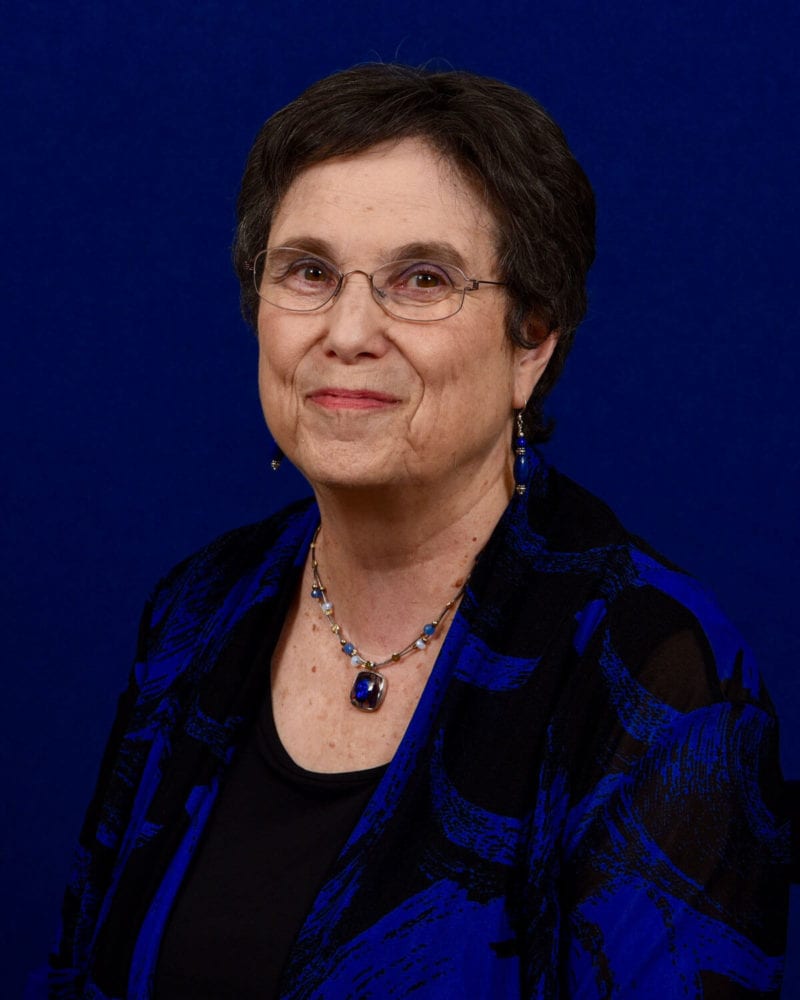
IRIS MITLIN LAV grew up in the liberal Hyde Park neighborhood of Chicago, Illinois. She went on to earn an MBA from George Washington University and an AB from the University of Chicago, and to enjoy a long career of public policy analysis and management, with an emphasis on improving policies for low- and moderate-income families. She also taught public finance at Johns Hopkins University and George Mason University, and in 1999 received the Steven D. Gold award for contributions to state and local fiscal policy, an award jointly given by the Association for Public Policy Analysis and Management, the National Conference of State Legislatures, and the National Tax Association. Her first novel, “A Wife in Bangkok,” was published in 2020 by She Writes Press. “Gitel’s Freedom” is her second novel. Lav and her husband now live in Chevy Chase, Maryland, with Mango, their goldendoodle, and grandchildren nearby. Learn more about her life and work at: www.irismitlinlav.com
© 2014- Ronovan Hester Copyright reserved. The author asserts his moral and legal rights over this work.
 Lit World Interviews