
Rachel Jackson’s idyllic life takes a dramatic turn when she discovers a woman’s scarf in her politician husband’s computer bag. But in an election year, seeking answers to questions of infidelity is not an option. When her mother gives her a family heirloom, a travel trunk owned by an ancestor, she finds a distraction. As she immerses herself in its contents, she discovers a woman whose life is vastly different from her own. Or is it? Determined to dispel the notion that her ancestor Marit was insane, Rachel sets out to unveil her unknown story. In the interwoven narratives of these two women, who are bound by blood and a shared struggle, The Blue Trunk is a poignant exploration of identity, love, and unwavering strength.

Get The Blue Trunk at Amazon.
Imagine you have only a brief minute to tell someone what your book is about. Can you tell us, in two sentences, what your book is about and make us want to read it?
“The Blue Trunk” follows the lives of two resilient women, separated by a century but connected by blood, as they each navigate abandonment and betrayal. This novel takes readers on a poignant exploration of identity, family drama, and love as a privileged politician’s wife uncovers what happened to her supposedly insane great-great aunt.
Why did you need to write this story?
My mother was in possession of a blue travel trunk that had been used by my great-great aunt when she immigrated from Norway to Eau Claire, Wisconsin. Marit’s name was written in perfect calligraphy on the trunk. I always loved the name so when my daughter was born, I mentioned to my mother that I planned to name her “Marit.” My mother responded with horror: “No, you can’t do that. She was insane.” While I should have been dissuaded, the insanity label only increased my interest in this woman. Years later, I joined a genealogy website to research her, but couldn’t find any information (but for her birth in Norway). It was odd because I found quite a bit of information on my great-great grandmother who had immigrated with her. I also had an autograph book Marit signed in 1889 in Blair, WI, so I knew she did indeed arrive in Wisconsin.
I then decided to research insane asylums to see if I could find any records of her. Again, I hit a dead end. I discovered while asylum populations were counted in the census, individual patients weren’t necessarily identified. In fact, I couldn’t find any archival records of the asylum I expect she would have been in residence. I also was unable to find a death certificate for her.
Then I discovered the asylum cemetery in my hometown. I spent my first 18 years living in that town and never knew of the existence of the Old Orchard Cemetery, aka the Cemetery of the unknown. The cemetery is now nestled in the middle of a subdivision, a plaque greets anyone who visits: “This cemetery is the final place for residents of the former Eau Claire County Asylum, County Home and County Poor Farm. . . As you walk among these unassuming gravestones, you will see that some only have names, no birth or death dates, and some are unknown. Many of the older gravestones memorialize persons who spent their entire adult lives in the county asylum.”
Unable to find my great-great aunt’s name, I sadly concluded that she likely spent her entire life in the asylum and is probably buried in an unknown grave.
It was then that I knew I had to write a book to reclaim Marit’s life.
With “The Blue Trunk” being so personal, were there ever moments of hesitation in what to and what not to share?
Interestingly, I didn’t hesitate when I was writing it. I guess that was because only a few trusted people in my writing group were reading my work. But as I finished and realized I was going to actually put this out into the world, I did face moments of fear (translate–terror).
I’m not certain, since this is only my first novel, but it seems to me that all writing, fiction and otherwise, is personal. Writers have a personal slant on what they are writing just as readers have a personal spin on what they read. A lot of Rachel’s story is personal to me and writing that was both healing and hard.
In some ways, I threw my ancestors under the bus for what they did to their sister, but that is what was done in those times (unfortunately). I was too young, obviously, to know Marit’s siblings, but I knew her nieces and nephews and they were a pretentious lot, filled with a desire to impress others. I expect the existence of a troubled family member (whatever her trouble might have been) was simply not acceptable. I’ve read a bit about generational trauma and I hope that writing a book about some of the things that might have been done to Marit will help stop that cycle.
What will connect the reader to the story and make them want to keep reading it?
My goal was to have some kind of tension/suspense in each chapter. I hope that the reader becomes engaged in the story as it unfolds dramatically.
I also hope they connect with the characters. Marit and Rachel are, I think, interesting in their own right and face challenges many women (and perhaps men) can relate to. Marit’s struggles keep us hanging in there cheering for her to finally find some peace. Rachel’s dilemma is one many current day women can understand–being torn between personal identity and commitments to partner and family.
There are other characters in the book I grew to love: Blake, James, Rose, and a minor character Aiden. All of them are human and each one has some quirks that make them even more human and relatable.
I’ve read that Blake became a different character than you intended. How was it letting the character dictate where he wanted to go and what he wanted to be?
I just loved what happened to Blake. I’m not entirely sure how it happened, but at some point I knew I didn’t want him to be a stereotypic toxic male. His life situation was complicated as well and he was, to a certain extent, a victim of that. I was joyful (can’t think of a better word) when I realized how I could approach him and write about his coming to terms with his identity. I loved writing the sometimes sweet interactions between him and Rachel and how she later begins to open up to a different Blake than she had previously known.
With gender identity being at the forefront of many societal issues, what steps did you take to represent the characters in the book in authentic ways?
I play a bit with gender identity throughout the book, but I identify as she/her which has been consistent my entire life. However, I am a member of the LGBTQ+ community, and I have known some of the struggles.
I thought long and hard about whether or not writing a trans character was wise. I didn’t want to appropriate someone else’s story. I ultimately decided to err on the side of taking the risk because I believe strongly that misunderstandings are prevalent when it comes to gender identity. Without spoiling anything, I’ll say that I wanted people to like, perhaps love, my character before they find that they are trans. I wanted to create some cognitive dissonance in readers so that they might be more open to revisiting preconceived notions.
In terms of research, I did some interviews to ensure that my details were accurate. I also spoke with an expert on the marginalization of less represented groups. I interviewed a trans couple who remained married after one partner transitioned. I am hopeful that I handled the issue sensitively and accurately.
Did you have difficulty deciding your book was ready to publish?
Yes, is it done yet? I’m actually a bit terrified to pick it up again because I know I’ll start re-writing it as I read.
Ultimately, the editor told me it was done. It’s good to have an outsider impose boundaries on a project.
What was your go-to escape when you needed to be reenergized during the writing process for “The Blue Trunk”?
Walk my dog. Swim laps. Bake cookies. Be in nature. All clear the clutter so I can tap into my creative self again.
What has writing “The Blue Trunk” done for you on a personal level?
I still have a bit of imposter syndrome hanging in the background. When people are impressed that I wrote a novel, I’m like “ya, well,” even though I do know it is an accomplishment.
As I mentioned before, writing Rachel’s story was healing for me. I lost my sister when I was six and never had a chance to completely resolve the issue with my mother as Rachel is able to do with Rose. The scene on the hike in Sedona was very healing for me as I wished I could have had that conversation with my mother.
I now know I can write a novel and that is exciting. I was not a good creative writer when I started, but I’ve improved (thanks to a lot of help from my writing colleagues and my teacher at the Loft Literary Center in Minneapolis).
I also discovered I love, love, love writing fiction. Crafting the story, creating characters, putting words on paper. I love all of it. I’m even starting to love editing!
Most of all, I am happy to have reclaimed Marit’s life. It is mostly fiction, of course, but those who read my book will now know that a century ago there was a woman named Marit Sletmo.
What is your next project idea?
I have two ideas.
I plan to write about my aunt who was in the Women’s Air Corp during WWII. The WACs were amazing women and their story needs to be told.
I also want to write about Molly Brown, socialite, philanthropist, feminist, politician. She spent her adult life in Colorado, where I live, and so I am close to the many adventures she had here. She frequented the Stanley Hotel in Estes Park (The Shining), so I may have to read more Steven King and experiment with some psychological suspense.
I’ll write both. I’m just not sure which one will be first.
Get The Blue Trunk at Amazon.
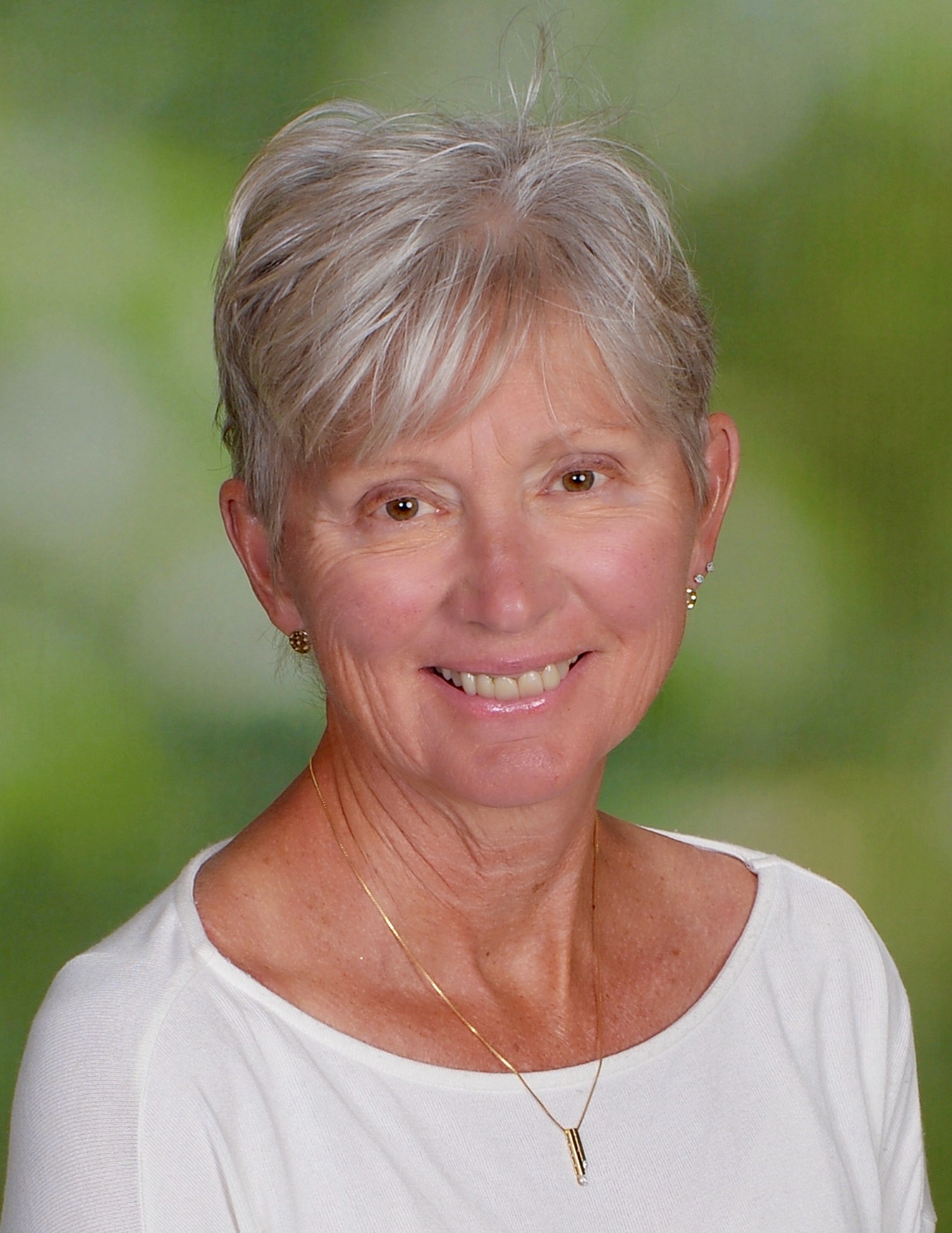
Author Bio:
© 2014-2024- Ronovan Hester Copyright reserved. The author asserts his moral and legal rights over this work.
 Lit World Interviews