
Frank and Naomi Wolff were happily married in 1908. She was a Kansas farmgirl; he was a railroad engineer. She was excited to embark upon her role as wife and mother with a hardworking man, and in their early years together they made a life in thriving Ogden, Utah. Despite Frank’s almost-constant absence for his job riding the rails, which left pretty Naomi to raise their children virtually alone, their romantic relationship begat fourteen offspring in eighteen years. Like other lower-middle-class women, Naomi’s life was consumed with caring for her brood, who became helpers as soon as they could fold a diaper—and who, by and by, were required to attend the school of hard knocks as much as public schools. Affection and struggle endured within the family, crowded into a humble house. Despite the respite of occasional family train trips across the plains, the marriage ultimately faced exceptional challenges, just before the Depression era began.
Based on a true story, A Wolff in the Family is a riveting saga of prejudice, passion, and revenge, perfect for fans of Kristin Hannah’s The Four Winds. What mysterious scandals led a father to abandon the youngest of his children—and for the elder siblings to keep their shame secret for eighty years?
“A Wolff in the Family is immediately immersive, and readers will be drawn into the hardships and small joys of the Wolff family. Falk-Allen’s vivid prose and realistic characters tell an intriguing story about social norms, gender roles, and ultimately, love. Fast and absorbing, it will keep you up long into the night.”—Michelle Cox, author of The Fallen Woman’s Daughter and the Inspector Howard series

Get A Wolff in the Family at Amazon.
You have only a few moments to tell someone what your book is about, in two sentences tell them what your book is about and make them want to read it?
This is a historical novel of passion, prejudice, revenge and forgiveness, based on actual scandals in my mother’s family of origin, taking place in western states in the early 1900’s.
Why did you need to write this story?
When I heard the few basic facts of the story from an aunt, my jaw dropped. I thought later in that week, this is a story that has to be told, and over several years I researched the story and the time in which it happened, and eventually began fleshing it out with conjectured scenes and conversations.
With A Wolff in the Family being so personal, were there ever moments of hesitation in what to and what not to share?
To some extent, yes, I had to pause and think how I wanted to portray some of my aunts and uncles, and how my cousins might view my interpretation of their parents. I left out some things that are controversial, partly because one aunt told me they happened to my grandmother and a cousin told me they actually happened to one of my aunts! I knew that this was a hot button issue, with some relatives insisting it couldn’t even be true, and it wasn’t germane to the essence of the story I wanted to tell. I also decided not to use the family’s real surname, but I did use many actual first names and some that were similar, so that I wouldn’t confuse myself. This was a huge family so there are a lot of names to keep straight (never fear; there’s a list of characters and what family position they have in the front of the book). There is also another family that was involved, and I changed their last name so that if any of that family reads the book, they will not feel threatened by what they might consider slander. It’s not, of course, partly because I know some of what I’ve said is factual, but also because I made up so much of it—nearly all the scenarios and conversations—so that it truly is fiction.
What will connect the reader to the story and make them want to keep reading the story?
I hope that they will sympathize with the difficulties women faced in their domestic and married lives in the early twentieth century; that they will be fond of some of the characters and want to know what transpires with them, and that they will not be expecting some of what happens and even be shocked at some people’s actions, and read on to find out how it all resolves! Additionally, I think knowing the novel is based on a true story will have readers want to follow the characters throughout the saga of about thirty years of experiences and challenges.
I’ve done and still do research into my own family ancestry and I know such research brings with it some surprises. What good surprises have you come across? (One example from my own research is that my 7th great-grandfather donated the land that Princeton and its first buildings were built on.)
Related to A Wolff in the Family, I learned that one of my aunts was somewhat of a hero to her siblings; I spoke with her about circumstances in her family of origin when she was in her 90’s and near the end of her life, and she didn’t mention the very defiant and heroic thing she did. On my dad’s side, one of my great-great-great grandfathers started a military academy in Kentucky. Although this wasn’t something I necessarily felt “puffed up” about, the fact that he had done something so prominent made it easy to find information about his/my family and what happened in their lives before and after this event. I also learned that although he was in the Confederacy in the Civil War, his sister’s husband financed the Union side! And the family still kept in touch although were on two sides of the Mason-Dixon line, both geographically and philosophically. Then, the southerners moved back to the north after the War, and they aided the slaves they formerly had held by assisting them in procuring and owning their own homes. That salved the wound of knowing my dad’s ancestors held slaves a little bit, that my ancestors did get the deeds to property set up for the former slaves, so that there could not be disputed titles. So that was good news amidst regrettable and shameful knowledge.
How long did it take to complete A Wolff in the Family? (I ask because I know when writing and researching for historical fiction and you want it to be as period accurate as possible you can fall into rabbit holes for hours learning about things that will never end up in the book.)
Ha ha! Oh yes, that is so true about researching. Gosh, I started doing the family research in the early 2000’s, but I had two other books I wanted to write, so I put off the historical research and things like census records and the details of what life was like in Utah, Wyoming, Missouri, Kansas and Oklahoma from 1918 through the 1940’s until about 2022. Then I delved into it full force and finished the very last final, copy edited, proofread (both of those processes several times over!) in July of 2024. So I suppose you could say it took me two and a half years to actually write it, including the detailed research. I do not write every single day, however. I have a life, and I’m a polio survivor, so I have to take care of myself and avoid fatigue as much as I can.
Did you have difficulty deciding your book was ready to publish?
Interesting question. I think most authors would work on each book until they die and have never published it if they could be supported while doing so. I’m kind of kidding, but there are always things you wish you’d added or taken out.
I found an old letter yesterday that an aunt wrote to me in 2007 which had some details in it I could have used, and I had an “oh darn” moment. But those things would have led the story in a different direction… and I’m not sure her memory was accurate any longer when she was ninety. I was also motivated by my age: I’m seventy-six, and I wanted this book to be out in the world well before I was eighty. Deadlines, promotion and marketing are not the easy part of writing a book, and can sometimes be stressful (even though much of that can also be fun), and I didn’t want to be worrying about deadlines at eighty!
By the time I got through perhaps the tenth or twelfth read-through and proofread, I accepted that it was as good as it was gonna get, and I am 99% satisfied with it! I’m sure when I am reading through it again, I’ll have those “shoulda” thoughts. It’s like a child, it will never be perfect, but it’s your best effort at guiding, and you love her for what she is. Art is allowed to have a flaw here and there; it’s created by humans. All that said, I think it’s a very good story and that it reads well. Some people have been blown away by it and I find that people who’ve read it sometimes come back to me with questions about the characters in real life. That’s one of the signs of a good book!
What has the family reaction been to your book? (Whenever I write something and I use elements of the family in it, which we all kind of do if we want to make our characters authentic, I do wonder what will happen when/if they read it.)
I can’t answer that yet! None of them have read it! And you can bet I’m a little nervous about that.
My husband has read it and he thinks it’s terrific, but it’s not about his family, of course. One of my cousins’ wives has ordered it and I know she’s anticipating getting the skinny on his father’s family, except that she does know it is just based on a true story and full of my conjecture.
My cousin had told me that he didn’t know much at all about this story when I told him the basics. He said he’d only been told that his dad didn’t like to talk about it and felt critical of his mother.
Some of the siblings sided with their father, and some with their mother. They both made controversial choices which affected the whole family! My mother kept all of it a secret and hadn’t told either myself or my sister about any of the scandals before she died. I always say she should have worked for the CIA.
So we’ll see. I may get some praise, and I may get some blowback.
What advice would you give to someone wanting to convert family history to fiction?
I found it to be easier to have a structure and set up a chronological outline based on what I knew were facts, and then fill in what I thought could have happened to substantiate the outcomes. Some people like to just start writing and see where their imagination takes them. It depends upon whether you have a lot of facts, as I did (and whether you choose to use them, since you’re writing fiction, after all) or whether you just have a snippet of a story that inspires you to create something bigger out of it.
When I was working on this book, I would ask myself, “Why would she have done this? What would she have been likely to say when he did that? What would it look like to others when this character made this choice?” As a woman, I know how I’d feel if my husband behaved the way I know my grandfather did. So I drew on my own emotional experience to some degree. I may have idealized “Naomi,” but I felt that if she had lived fifty years later, her choices would have been more acceptable to society, and conversely, my grandfather’s choices would have been considered terrible if not even illegal two generations later.
There is one vignette where my mother tied a flannel around her head to try to flatten a bump on her nose. That really happened. She had told me that a friend came by to walk to school with her, which was serendipitous, because she couldn’t get the flannel off her head! I imagined all that would have happened, including her siblings making fun of her; it was a clear image in my mind, like a movie. So if a writer can imagine how something could possibly have happened and see it as if it were happening on a screen in front of them, I think they can write up a family history piece in a creative way which turns it into fiction.
I feel that in my case, the facts were so stunning that I didn’t have to over-dramatize to make it a riveting story.
Oh, I think it’s also very important that you set things up in a way that the reader will be as surprised, inspired or motivated as you were when you heard the story. That can mean starting slow and developing the characters as I did, or using a teaser early on to make people wonder what’s going to happen. I started in the middle of the story with the first chapter, when my grandfather had just taken his youngest children to an orphanage. Then in the next chapter I tell the reader we’re going back eleven years to explain why this happened, with subsequent chapters following a straight chronology. There are lots of ways to set up a story so that you’re leading the reader toward the surprise, the humor, the inspiring point you want to make or whatever is the bundle of juiciness at the center of your story.
What is your next project idea?
After the dust settles with launching this book and I get through the whirlwind of the holidays, I want to write a series of short stories about my father’s ancestors, starting with when the four Allen brothers left Ireland in 1793 to sail to the US and start a new life here, up in Maryland. I’ve been to the home they owned, in southeastern Ireland, for two hundred years (some of the family stayed there until the early 1900’s) so I have some visual background for this story, plus I know they grew flax and that people came from around the countryside to use their mill. So that’s enough to get started. I know that this sounds suspiciously like a book, but I’m telling myself that writing a series of short stories will be less ambitious than a book! It will also be challenging to make a complete story in a shorter length, so I look forward to learning to do that.
Get A Wolff in the Family at Amazon.

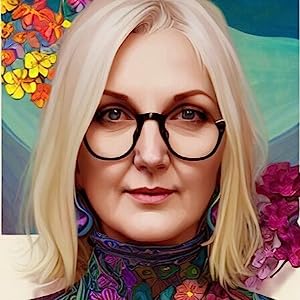
Author Bio:
© 2014-2024- Ronovan Hester Copyright reserved. The author asserts his moral and legal rights over this work.



 Lit World Interviews