10 Questions with Francine Falk-Allen, author of A Wolff in the Family.

Frank and Naomi Wolff were happily married in 1908. She was a Kansas farmgirl; he was a railroad engineer. She was excited to embark upon her role as wife and mother with a hardworking man, and in their early years together they made a life in thriving Ogden, Utah. Despite Frank’s almost-constant absence for his job riding the rails, which left pretty Naomi to raise their children virtually alone, their romantic relationship begat fourteen offspring in eighteen years. Like other lower-middle-class women, Naomi’s life was consumed with caring for her brood, who became helpers as soon as they could fold a diaper—and who, by and by, were required to attend the school of hard knocks as much as public schools. Affection and struggle endured within the family, crowded into a humble house. Despite the respite of occasional family train trips across the plains, the marriage ultimately faced exceptional challenges, just before the Depression era began.

Based on a true story, A Wolff in the Family is a riveting saga of prejudice, passion, and revenge, perfect for fans of Kristin Hannah’s The Four Winds. What mysterious scandals led a father to abandon the youngest of his children—and for the elder siblings to keep their shame secret for eighty years?

“A Wolff in the Family is immediately immersive, and readers will be drawn into the hardships and small joys of the Wolff family. Falk-Allen’s vivid prose and realistic characters tell an intriguing story about social norms, gender roles, and ultimately, love. Fast and absorbing, it will keep you up long into the night.”—Michelle Cox, author of The Fallen Woman’s Daughter and the Inspector Howard series

A WOLFF IN THE FAMILY
A Wolff in the Family

Get A Wolff in the Family at Amazon.

You have only a few moments to tell someone what your book is about, in two sentences tell them what your book is about and make them want to read it?

This is a historical novel of passion, prejudice, revenge and forgiveness, based on actual scandals in my mother’s family of origin, taking place in western states in the early 1900’s.

Why did you need to write this story?

When I heard the few basic facts of the story from an aunt, my jaw dropped. I thought later in that week, this is a story that has to be told, and over several years I researched the story and the time in which it happened, and eventually began fleshing it out with conjectured scenes and conversations.

With A Wolff in the Family being so personal, were there ever moments of hesitation in what to and what not to share?

To some extent, yes, I had to pause and think how I wanted to portray some of my aunts and uncles, and how my cousins might view my interpretation of their parents. I left out some things that are controversial, partly because one aunt told me they happened to my grandmother and a cousin told me they actually happened to one of my aunts! I knew that this was a hot button issue, with some relatives insisting it couldn’t even be true, and it wasn’t germane to the essence of the story I wanted to tell. I also decided not to use the family’s real surname, but I did use many actual first names and some that were similar, so that I wouldn’t confuse myself. This was a huge family so there are a lot of names to keep straight (never fear; there’s a list of characters and what family position they have in the front of the book). There is also another family that was involved, and I changed their last name so that if any of that family reads the book, they will not feel threatened by what they might consider slander. It’s not, of course, partly because I know some of what I’ve said is factual, but also because I made up so much of it—nearly all the scenarios and conversations—so that it truly is fiction.

What will connect the reader to the story and make them want to keep reading the story?

I hope that they will sympathize with the difficulties women faced in their domestic and married lives in the early twentieth century; that they will be fond of some of the characters and want to know what transpires with them, and that they will not be expecting some of what happens and even be shocked at some people’s actions, and read on to find out how it all resolves! Additionally, I think knowing the novel is based on a true story will have readers want to follow the characters throughout the saga of about thirty years of experiences and challenges.

I’ve done and still do research into my own family ancestry and I know such research brings with it some surprises. What good surprises have you come across? (One example from my own research is that my 7th great-grandfather donated the land that Princeton and its first buildings were built on.)

Related to A Wolff in the Family, I learned that one of my aunts was somewhat of a hero to her siblings; I spoke with her about circumstances in her family of origin when she was in her 90’s and near the end of her life, and she didn’t mention the very defiant and heroic thing she did. On my dad’s side, one of my great-great-great grandfathers started a military academy in Kentucky. Although this wasn’t something I necessarily felt “puffed up” about, the fact that he had done something so prominent made it easy to find information about his/my family and what happened in their lives before and after this event. I also learned that although he was in the Confederacy in the Civil War, his sister’s husband financed the Union side! And the family still kept in touch although were on two sides of the Mason-Dixon line, both geographically and philosophically. Then, the southerners moved back to the north after the War, and they aided the slaves they formerly had held by assisting them in procuring and owning their own homes. That salved the wound of knowing my dad’s ancestors held slaves a little bit, that my ancestors did get the deeds to property set up for the former slaves, so that there could not be disputed titles. So that was good news amidst regrettable and shameful knowledge.

How long did it take to complete A Wolff in the Family? (I ask because I know when writing and researching for historical fiction and you want it to be as period accurate as possible you can fall into rabbit holes for hours learning about things that will never end up in the book.)

Ha ha! Oh yes, that is so true about researching. Gosh, I started doing the family research in the early 2000’s, but I had two other books I wanted to write, so I put off the historical research and things like census records and the details of what life was like in Utah, Wyoming, Missouri, Kansas and Oklahoma from 1918 through the 1940’s until about 2022. Then I delved into it full force and finished the very last final, copy edited, proofread (both of those processes several times over!) in July of 2024. So I suppose you could say it took me two and a half years to actually write it, including the detailed research. I do not write every single day, however. I have a life, and I’m a polio survivor, so I have to take care of myself and avoid fatigue as much as I can.

Did you have difficulty deciding your book was ready to publish?

Interesting question. I think most authors would work on each book until they die and have never published it if they could be supported while doing so. I’m kind of kidding, but there are always things you wish you’d added or taken out.

I found an old letter yesterday that an aunt wrote to me in 2007 which had some details in it I could have used, and I had an “oh darn” moment. But those things would have led the story in a different direction… and I’m not sure her memory was accurate any longer when she was ninety. I was also motivated by my age: I’m seventy-six, and I wanted this book to be out in the world well before I was eighty. Deadlines, promotion and marketing are not the easy part of writing a book, and can sometimes be stressful (even though much of that can also be fun), and I didn’t want to be worrying about deadlines at eighty!

By the time I got through perhaps the tenth or twelfth read-through and proofread, I accepted that it was as good as it was gonna get, and I am 99% satisfied with it! I’m sure when I am reading through it again, I’ll have those “shoulda” thoughts. It’s like a child, it will never be perfect, but it’s your best effort at guiding, and you love her for what she is. Art is allowed to have a flaw here and there; it’s created by humans. All that said, I think it’s a very good story and that it reads well. Some people have been blown away by it and I find that people who’ve read it sometimes come back to me with questions about the characters in real life. That’s one of the signs of a good book!

What has the family reaction been to your book? (Whenever I write something and I use elements of the family in it, which we all kind of do if we want to make our characters authentic, I do wonder what will happen when/if they read it.)

I can’t answer that yet! None of them have read it! And you can bet I’m a little nervous about that.

My husband has read it and he thinks it’s terrific, but it’s not about his family, of course. One of my cousins’ wives has ordered it and I know she’s anticipating getting the skinny on his father’s family, except that she does know it is just based on a true story and full of my conjecture.

My cousin had told me that he didn’t know much at all about this story when I told him the basics. He said he’d only been told that his dad didn’t like to talk about it and felt critical of his mother.

Some of the siblings sided with their father, and some with their mother. They both made controversial choices which affected the whole family! My mother kept all of it a secret and hadn’t told either myself or my sister about any of the scandals before she died. I always say she should have worked for the CIA.

So we’ll see. I may get some praise, and I may get some blowback.

What advice would you give to someone wanting to convert family history to fiction?

I found it to be easier to have a structure and set up a chronological outline based on what I knew were facts, and then fill in what I thought could have happened to substantiate the outcomes. Some people like to just start writing and see where their imagination takes them. It depends upon whether you have a lot of facts, as I did (and whether you choose to use them, since you’re writing fiction, after all) or whether you just have a snippet of a story that inspires you to create something bigger out of it.

When I was working on this book, I would ask myself, “Why would she have done this? What would she have been likely to say when he did that? What would it look like to others when this character made this choice?” As a woman, I know how I’d feel if my husband behaved the way I know my grandfather did. So I drew on my own emotional experience to some degree. I may have idealized “Naomi,” but I felt that if she had lived fifty years later, her choices would have been more acceptable to society, and conversely, my grandfather’s choices would have been considered terrible if not even illegal two generations later.

There is one vignette where my mother tied a flannel around her head to try to flatten a bump on her nose. That really happened. She had told me that a friend came by to walk to school with her, which was serendipitous, because she couldn’t get the flannel off her head! I imagined all that would have happened, including her siblings making fun of her; it was a clear image in my mind, like a movie. So if a writer can imagine how something could possibly have happened and see it as if it were happening on a screen in front of them, I think they can write up a family history piece in a creative way which turns it into fiction.

I feel that in my case, the facts were so stunning that I didn’t have to over-dramatize to make it a riveting story.

Oh, I think it’s also very important that you set things up in a way that the reader will be as surprised, inspired or motivated as you were when you heard the story. That can mean starting slow and developing the characters as I did, or using a teaser early on to make people wonder what’s going to happen. I started in the middle of the story with the first chapter, when my grandfather had just taken his youngest children to an orphanage. Then in the next chapter I tell the reader we’re going back eleven years to explain why this happened, with subsequent chapters following a straight chronology. There are lots of ways to set up a story so that you’re leading the reader toward the surprise, the humor, the inspiring point you want to make or whatever is the bundle of juiciness at the center of your story.

What is your next project idea?

After the dust settles with launching this book and I get through the whirlwind of the holidays, I want to write a series of short stories about my father’s ancestors, starting with when the four Allen brothers left Ireland in 1793 to sail to the US and start a new life here, up in Maryland. I’ve been to the home they owned, in southeastern Ireland, for two hundred years (some of the family stayed there until the early 1900’s) so I have some visual background for this story, plus I know they grew flax and that people came from around the countryside to use their mill. So that’s enough to get started. I know that this sounds suspiciously like a book, but I’m telling myself that writing a series of short stories will be less ambitious than a book! It will also be challenging to make a complete story in a shorter length, so I look forward to learning to do that.

Get A Wolff in the Family at Amazon.

Francine Falk Allen
Francine Falk-Allen

Author Bio:

FRANCINE FALK-ALLEN: was born in Los Angeles and has lived nearly all of her life in northern California. She had polio in 1951, and has lived her life as a disabled person making an effort to be a “normie.”

Falk-Allen was originally an art major and later completed her BA in Managerial Accounting, running her own business for over thirty years. She has always sought creative outlets, such as painting, singing, and writing. She began doing extensive family genealogy research in 1999, and has traced both her maternal and paternal ancestors back to the 1600s.

Her first book, “Not a Poster Child: Living Well with a Disability,” won gold and silver awards and was on several best books lists in 2018 and 2019, including Kirkus Reviews’ Best Books of 2018, PopSugar and BuzzFeed, and was nominated to 25 Women Making a Difference in 2019 by Conversations Magazine.

Her second book, “No Spring Chicken: Stories and Advice from a Wild Handicapper,” received a Kirkus star, given to “books of exceptional merit” by Kirkus Reviews, and was named to Kirkus Reviews’ Best Books of August 2021. “No Spring Chicken” was also a finalist in Foreword Reviews’ Indie Awards in 2021.

Her third book, “A Wolff in the Family” is a riveting early twentieth century saga set in the western United States and based on scandalous family history.

Francine spends a significant amount of time managing the effects of post-polio. She facilitates a polio survivors’ group as well as a writing group, and volunteers on her town’s Americans with Disabilities Act Accessibility Committee. She loves the outdoors, swimming, gardening, movies, well-written literature, being with friends and sharing British tea and a little champagne now and then. She resides in San Rafael, California, with her husband. Learn more at: https://francinefalk-allen.com

Facebook: https://www.facebook.com/FrancineFalkAllenAuthor


© 2014-2024- Ronovan Hester Copyright reserved. The author asserts his moral and legal rights over this work.

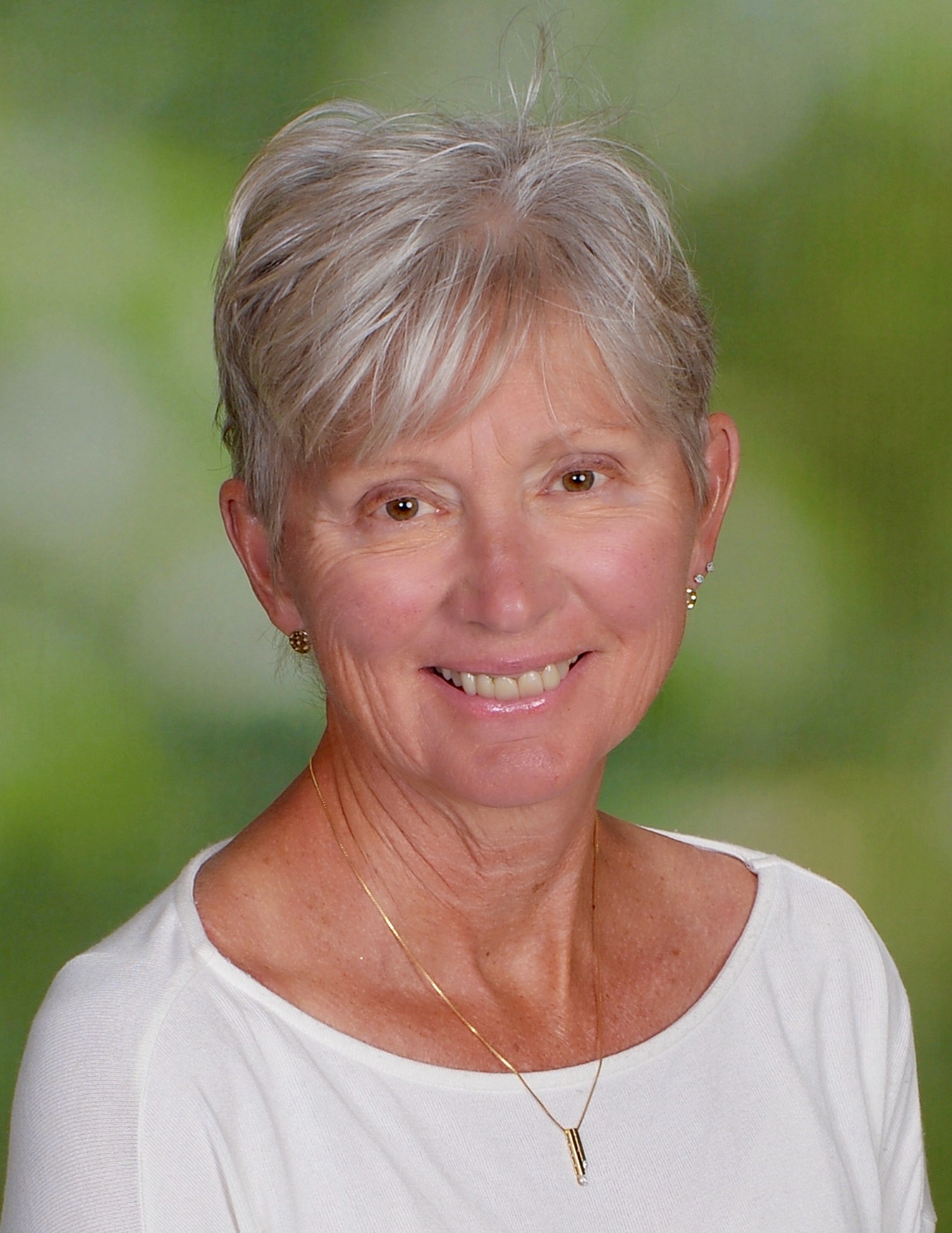
10 Questions with Ann Lowry, author of The Blue Trunk.

Rachel Jackson’s idyllic life takes a dramatic turn when she discovers a woman’s scarf in her politician husband’s computer bag. But in an election year, seeking answers to questions of infidelity is not an option. When her mother gives her a family heirloom, a travel trunk owned by an ancestor, she finds a distraction. As she immerses herself in its contents, she discovers a woman whose life is vastly different from her own. Or is it? Determined to dispel the notion that her ancestor Marit was insane, Rachel sets out to unveil her unknown story. In the interwoven narratives of these two women, who are bound by blood and a shared struggle, The Blue Trunk is a poignant exploration of identity, love, and unwavering strength.

The Blue Trunk
The Blue Trunk

Get The Blue Trunk at Amazon.

Imagine you have only a brief minute to tell someone what your book is about. Can you tell us, in two sentences, what your book is about and make us want to read it?

“The Blue Trunk” follows the lives of two resilient women, separated by a century but connected by blood, as they each navigate abandonment and betrayal. This novel takes readers on a poignant exploration of identity, family drama, and love as a privileged politician’s wife uncovers what happened to her supposedly insane great-great aunt.

Why did you need to write this story?

My mother was in possession of a blue travel trunk that had been used by my great-great aunt when she immigrated from Norway to Eau Claire, Wisconsin. Marit’s name was written in perfect calligraphy on the trunk. I always loved the name so when my daughter was born, I mentioned to my mother that I planned to name her “Marit.” My mother responded with horror: “No, you can’t do that. She was insane.” While I should have been dissuaded, the insanity label only increased my interest in this woman. Years later, I joined a genealogy website to research her, but couldn’t find any information (but for her birth in Norway). It was odd because I found quite a bit of information on my great-great grandmother who had immigrated with her. I also had an autograph book Marit signed in 1889 in Blair, WI, so I knew she did indeed arrive in Wisconsin.

I then decided to research insane asylums to see if I could find any records of her. Again, I hit a dead end. I discovered while asylum populations were counted in the census, individual patients weren’t necessarily identified. In fact, I couldn’t find any archival records of the asylum I expect she would have been in residence. I also was unable to find a death certificate for her.

Then I discovered the asylum cemetery in my hometown. I spent my first 18 years living in that town and never knew of the existence of the Old Orchard Cemetery, aka the Cemetery of the unknown. The cemetery is now nestled in the middle of a subdivision, a plaque greets anyone who visits: “This cemetery is the final place for residents of the former Eau Claire County Asylum, County Home and County Poor Farm. . . As you walk among these unassuming gravestones, you will see that some only have names, no birth or death dates, and some are unknown. Many of the older gravestones memorialize persons who spent their entire adult lives in the county asylum.”

Unable to find my great-great aunt’s name, I sadly concluded that she likely spent her entire life in the asylum and is probably buried in an unknown grave.

It was then that I knew I had to write a book to reclaim Marit’s life.

With “The Blue Trunk” being so personal, were there ever moments of hesitation in what to and what not to share?

Interestingly, I didn’t hesitate when I was writing it. I guess that was because only a few trusted people in my writing group were reading my work. But as I finished and realized I was going to actually put this out into the world, I did face moments of fear (translate–terror).

I’m not certain, since this is only my first novel, but it seems to me that all writing, fiction and otherwise, is personal. Writers have a personal slant on what they are writing just as readers have a personal spin on what they read. A lot of Rachel’s story is personal to me and writing that was both healing and hard.

In some ways, I threw my ancestors under the bus for what they did to their sister, but that is what was done in those times (unfortunately). I was too young, obviously, to know Marit’s siblings, but I knew her nieces and nephews and they were a pretentious lot, filled with a desire to impress others. I expect the existence of a troubled family member (whatever her trouble might have been) was simply not acceptable. I’ve read a bit about generational trauma and I hope that writing a book about some of the things that might have been done to Marit will help stop that cycle.

What will connect the reader to the story and make them want to keep reading it?

My goal was to have some kind of tension/suspense in each chapter. I hope that the reader becomes engaged in the story as it unfolds dramatically.

I also hope they connect with the characters. Marit and Rachel are, I think, interesting in their own right and face challenges many women (and perhaps men) can relate to. Marit’s struggles keep us hanging in there cheering for her to finally find some peace. Rachel’s dilemma is one many current day women can understand–being torn between personal identity and commitments to partner and family.

There are other characters in the book I grew to love: Blake, James, Rose, and a minor character Aiden. All of them are human and each one has some quirks that make them even more human and relatable.

I’ve read that Blake became a different character than you intended. How was it letting the character dictate where he wanted to go and what he wanted to be?

I just loved what happened to Blake. I’m not entirely sure how it happened, but at some point I knew I didn’t want him to be a stereotypic toxic male. His life situation was complicated as well and he was, to a certain extent, a victim of that. I was joyful (can’t think of a better word) when I realized how I could approach him and write about his coming to terms with his identity. I loved writing the sometimes sweet interactions between him and Rachel and how she later begins to open up to a different Blake than she had previously known.

With gender identity being at the forefront of many societal issues, what steps did you take to represent the characters in the book in authentic ways?

I play a bit with gender identity throughout the book, but I identify as she/her which has been consistent my entire life. However, I am a member of the LGBTQ+ community, and I have known some of the struggles.

I thought long and hard about whether or not writing a trans character was wise. I didn’t want to appropriate someone else’s story. I ultimately decided to err on the side of taking the risk because I believe strongly that misunderstandings are prevalent when it comes to gender identity. Without spoiling anything, I’ll say that I wanted people to like, perhaps love, my character before they find that they are trans. I wanted to create some cognitive dissonance in readers so that they might be more open to revisiting preconceived notions.

In terms of research, I did some interviews to ensure that my details were accurate. I also spoke with an expert on the marginalization of less represented groups. I interviewed a trans couple who remained married after one partner transitioned. I am hopeful that I handled the issue sensitively and accurately.

Did you have difficulty deciding your book was ready to publish?

Yes, is it done yet? I’m actually a bit terrified to pick it up again because I know I’ll start re-writing it as I read.

Ultimately, the editor told me it was done. It’s good to have an outsider impose boundaries on a project.

What was your go-to escape when you needed to be reenergized during the writing process for “The Blue Trunk”?

Walk my dog. Swim laps. Bake cookies. Be in nature. All clear the clutter so I can tap into my creative self again.

What has writing “The Blue Trunk” done for you on a personal level?

I still have a bit of imposter syndrome hanging in the background. When people are impressed that I wrote a novel, I’m like “ya, well,” even though I do know it is an accomplishment.

As I mentioned before, writing Rachel’s story was healing for me. I lost my sister when I was six and never had a chance to completely resolve the issue with my mother as Rachel is able to do with Rose. The scene on the hike in Sedona was very healing for me as I wished I could have had that conversation with my mother.

I now know I can write a novel and that is exciting. I was not a good creative writer when I started, but I’ve improved (thanks to a lot of help from my writing colleagues and my teacher at the Loft Literary Center in Minneapolis).

I also discovered I love, love, love writing fiction. Crafting the story, creating characters, putting words on paper. I love all of it. I’m even starting to love editing!

Most of all, I am happy to have reclaimed Marit’s life. It is mostly fiction, of course, but those who read my book will now know that a century ago there was a woman named Marit Sletmo.

What is your next project idea?

I have two ideas.

I plan to write about my aunt who was in the Women’s Air Corp during WWII. The WACs were amazing women and their story needs to be told.

I also want to write about Molly Brown, socialite, philanthropist, feminist, politician. She spent her adult life in Colorado, where I live, and so I am close to the many adventures she had here. She frequented the Stanley Hotel in Estes Park (The Shining), so I may have to read more Steven King and experiment with some psychological suspense.

I’ll write both. I’m just not sure which one will be first.

Get The Blue Trunk at Amazon.

Ann Lowry
Ann Lowry

Author Bio:

Ann E. Lowry’s journey into the realm of storytelling was foretold by a Sedona psychic in 2001. That prophecy became a reality two decades later when Ann discovered a family heirloom, a travel trunk from Norway, which sparked the genesis of her debut novel, “The Blue Trunk.

A writer her entire life, Ann holds a Ph.D. in Communication from the University of Minnesota.  Her career has been dedicated to teaching and helping others navigate communication and resolve conflicts. Ann is fascinated by the dynamics of relationships, discord, and the intricacies of the human condition.  Ann successfully completed the Loft Literary Center’s Novel Writing Intensive course in 2022.

Alongside her passion for fiction, she has contributed to academic journals, penned thought-provoking opinion pieces, crafted engaging content for online platforms, and provided insights on the federal management of disasters.

When Ann isn’t immersed in the world of writing, she finds solace in the pool or the lake. She cherishes playful moments with her rescue-turned-therapy dog, Loki, and also enjoys reading, golfing, and indulging in the art of cookie and bread baking. Fly fishing is her newest hobby. Most of all, she savors precious time with her family.

Ann and her spouse, Karen, and fur child, Loki, live in Timnath, Colorado, where they enjoy the beauty of nature daily. Learn more about Ann at: www.annlowry.com

Goodreads: https://www.goodreads.com/book/show/215804380-the-blue-trunk?ac=1&from_search=true&qid=yUJM1W1Zlz&rank=2

© 2014-2024- Ronovan Hester Copyright reserved. The author asserts his moral and legal rights over this work.
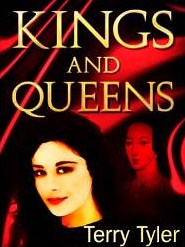
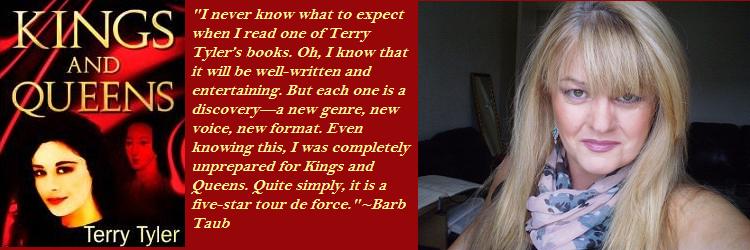
1 Man, 6 Woman. Kings and Queens @TerryTyler4 Q&A

kings_and_queens“Even if you are not a fan of English history and know nothing of the metaphors and references the author has slyly inserted into the story, this book will draw you in as contemporary fiction, demonstrating that the human foibles are ageless and that a historical family drama can repeat itself.

This is a great read, and I’m looking forward to a sequel featuring the Lanchester children, especially the son Harry wanted so much he was willing to marry again and again to get: the spoiled and entitled Jasper.

Kings and Queens is rich in the sins and peccadillos of the wealthy and entitled, those that captivate readers across the board. Bravo to Terry Tyler for giving us such a sumptuous read with a grand historical twist.”~Rosie Amber ofRosieAmber.WordPress.com

“This novel promises to be uniquely different in its concept and delivery. And actually, that promise is fulfilled…in spades.  The storyline and characters very artfully parallel the life and times of Henry VIII in a modern day setting. 

Handsome and charming, Harry Lanchester makes his first appearance as a sixteen year old wannabe rock star and his story is told initially from the viewpoint of Harry’s best friend, Will. Thereafter we see Harry through the eyes of each of his wives in turn, combined with short chapters from Will, who acts almost as an impartial onlooker and supporter. Even when he disagrees with Harry and suspects him of a terrible act, Will feels unwilling and, possibly, unable to confront his friend. “~Cathy of Between the Lines Book Blog


I’m not going to say a whole lot about today’s guest as the answers will tell you more than I ever could. Full of personality and energy just from the words alone must make for a novel length full of my guests thoughts an amazingly good time. Meet . . .

Terry Tyler

OLYMPUS DIGITAL CAMERA@TerryTyler4 


RW: Where are you from?

TERRY: I live in the north east of England, but come from the Midlands/East Anglia.

RW: I so love the British. And no, before anyone ask I do not have a contract with the Queen to promote her favorite authors. Although it is possible Terry is on the night stand of a certain young main with hair colored similar to mine. Now that we have that out of the way, what allows us to call you an Author instead of someone throwing wrods about?

TERRY: I seem to remember that I used to write stories when I was a child. I wrote a load of astrology based short stories in my 20s. I bet they were dreadful, I’m glad I haven’t still got them! I wrote 9 or 10 novels in the 1990s, then nothing much for about 10 years, until I wrote You Wish in 2010. Happily, that coincided with the rise in popularity of the Amazon Kindle.

RW: What genre does your book Kings and Queens fall into?

TERRY: I suppose contemporary family drama, crossed with romantic suspense, with appeal to the readers of Tudor historical fiction, too.

RW: Okay with that bit of mix and cross over tell us a little about the book and the main characters.

TERRY: I was watching The Tudors on Netflix and suddenly thought “hang on, this is a marvellous story”; it’s always been one that interests me, anyway. I began to think how I could translate it into the present….

The story of property developer Harry Lanchester is told through the eyes of the six women with whom he becomes involved (only five of them become his wives). Their chapters are separated by the man’s eye view, that of Harry’s lifelong best friend, Will Brandon. The story spans the years 1971 – 2007.

Each of the six wives is so different, with all sorts of experiences; many of the people who’ve read the book have named their favourites. The most popular one is Hannah Cleveley, my modern day Anne of Cleves. Then there’s fiery Annette (Anne Boleyn), former lap dancer Keira (Catherine Howard) and dutiful Kate (Catherine Parr)… as far as Harry himself is concerned, most people have found him arrogant and selfish, but not without endearing qualities.

RW: Based on that answer and my obviously amazing Historian mind I think I know the answer, but why Kings and Queens?

TERRY: All my book titles (except for You Wish) are named after Aerosmith songs, for no reason other than that they’re my favourite band and it amuses me to do so. I wouldn’t have chosen any of them if they weren’t totally appropriate, but so far the perfect one has always been there, waiting for me! Kings and Queens is a modern day re-telling of the story of Henry VIII and his six wives; although my novel is one about the king of a property developing company, it’s still very apt.

RW: What age group is your basic target group?

TERRY: Probably 18 – 65!!!! I’d say 25-55.

**Normally I don’t include this answer but I just love how Terry answered it.**

RW: Who would play your main character(s) in a movie?

TERRY: Australian actor Chris Hemsworth would make the perfect Harry. Maybe Evangeline Lily for Annette. I haven’t really thought about it – I am not one of those writers who has book-into-film fantasies; though now you come to mention it…. hmmm…!

936full-chris-hemsworthEvie-Elle-magazine-evangeline-lilly-11023053-363-500


RW: What message do you think your book delivers to the reader?

TERRY: I don’t know. Maybe “don’t cheat on your spouse or you might end up dead”???

RW: Describe your book in one word.

TERRY: Compulsive!

RW: What did you learn about yourself from writing this book?

TERRY: That I like writing more than I like doing virtually anything. Yes, I even worked on it on Christmas Day.

Visit the following to Purchase Terry’s Kings and Queens

Half price from Nov 21-26

Amazon UK

Amazon.com

Connect with Terry

@TerryTyler4 

Goodreads: Terry Tyler

Terry Tyler Blog

Terry’s Blog on UK Arts Directory:


RW: Who are your favorite authors?

TERRY: (Deep breath… ) Douglas Kennedy, John Boyne, Deborah Moggach, Kate Atkinson, Emily Barr, Dorothy Parker, Susan Howatch, Elizabeth Jane Howard, Norah Lofts, Jack Kerouac, Phillipa Gregory, Jackie Collins, Bill Bryson, P J O’Rourke, Evelyn Waugh…. I’ll stop now!

RW: What is your favorite beverage to drink, any kind?

TERRY: Can I be really boring and say coffee? It’s the only one I can’t imagine a day without, so I suppose it must be my favourite! Has to be the real stuff, preferably freshly ground, and very strong.

RW: What is your escape from writing when you are at that about to explode point?

TERRY: I don’t ever get to a point like that. I love writing, always. I stop and do something else because I’m tired, or need some exercise, or because that bathroom won’t clean itself, not because it makes me want to explode. I never feel the need to escape from it. If I did, I wouldn’t do it.

RW: Why do you write in the genre that you do?

TERRY: I don’t choose a genre, I just write the story I want to write. I work out what genre it is when it comes to publishing and marketing it. That’s probably the wrong way to go about it, but never mind. They’re all roughly the same non-specific genre, anyway.

RW: What other books do you have to share with us and can you tell us a little about them?

TERRY: I’ve published 9 books on Amazon – 7 full length novels, I novella and a collection of short stories. They’re all contemporary drama/romantic suspense, though some are lighter than others. For instance, Nobody’s Fault is a fairly heavy family drama, whereas Dream On and Full Circle incorporate rock fiction and are quite funny. Essentially, though, I write about real life relationships (not just romance).

RW: Do you currently have representation? If so who, and if not describe what qualities you would like in an agent and what you would bring to the relationship. Also how did you come to get signed.

TERRY: No, I don’t have representation. I made a decision not to seek it anymore; I hadn’t sent my work to an agent since You Wish, but thought I would try again with Kings and Queens. The first agent I sent it to asked for the full MS as soon as she’d read the synopsis and sample chapters, but wrote back with suggestions for change that it would have made it a different book. I’m not closed to the idea of having an agent, and am open to ideas for improvement, but not so much that a book is no longer the one I want it to be.

RW: What are you working on right now?

TERRY: The sequel to Kings and Queens, LAST CHILD, is almost ready to go to the proofreader….

RW: What book are you reading at this time?

TERRY: I am about to finish Sheer Fear by Geoff West, after which I will read The Gilded Lily by Deborah Swift.

RW: What is your biggest tip for someone to getting published?

TERRY: If it’s your first time, don’t publish yourself or send to an agent/publisher without having a few people read it first, preferably ones who will tell you, honestly, if you have any talent for writing.

RW: If you could have written any book that exists, other than your own, what would it be and why?

TERRY: The complete works of Shakespeare. I’d never have to worry about paying the phone bill again! That’s kind of a joke, by the way. I don’t know. Possibly The Beach by Alex Garland, Cashelmara by Susan Howatch, or Norah Lofts’ The House At Old Vine trilogy – oh, I can’t make up my mind!

RW: What is your favorite word?

TERRY: Haven’t really got one. I quite like ersatz and zeitgeist. I like words with zeds in them.

Many thanks for inviting me onto your site, Ron, and I hope this has been of some interest to your readers.

You now know why Terry was a guest today. Didn’t you have fun? I mean seriously, I never thought some of those answers were coming my way, and I actually laughed at times and smiled the entire way through. I want to thank Terry for giving in to my begging and agreeing to the interview. Now if she will please lift the restraining order, I will promise not to step foot in England again. Follow her everywhere, purchase her book, and always remember . . .

Read a Book, Write a Review.


Much Respect

Ronovan

Enter your email address to subscribe to this blog and receive notifications of new posts by email.

© Copyright-All rights reserved by litworldinterviews.wordpress.com 2014


Kings and Queens @TerryTyler4 Q&A

kings_and_queens“Even if you are not a fan of English history and know nothing of the metaphors and references the author has slyly inserted into the story, this book will draw you in as contemporary fiction, demonstrating that the human foibles are ageless and that a historical family drama can repeat itself.

This is a great read, and I’m looking forward to a sequel featuring the Lanchester children, especially the son Harry wanted so much he was willing to marry again and again to get: the spoiled and entitled Jasper.

Kings and Queens is rich in the sins and peccadillos of the wealthy and entitled, those that captivate readers across the board. Bravo to Terry Tyler for giving us such a sumptuous read with a grand historical twist.”~Rosie Amber ofRosieAmber.WordPress.com

“This novel promises to be uniquely different in its concept and delivery. And actually, that promise is fulfilled…in spades.  The storyline and characters very artfully parallel the life and times of Henry VIII in a modern day setting. 

Handsome and charming, Harry Lanchester makes his first appearance as a sixteen year old wannabe rock star and his story is told initially from the viewpoint of Harry’s best friend, Will. Thereafter we see Harry through the eyes of each of his wives in turn, combined with short chapters from Will, who acts almost as an impartial onlooker and supporter. Even when he disagrees with Harry and suspects him of a terrible act, Will feels unwilling and, possibly, unable to confront his friend. “~Cathy of Between the Lines Book Blog


I’m not going to say a whole lot about today’s guest as the answers will tell you more than I ever could. Full of personality and energy just from the words alone must make for a novel length full of my guests thoughts an amazingly good time. Meet . . .

Terry Tyler

OLYMPUS DIGITAL CAMERA@TerryTyler4 


RW: Where are you from?

TERRY: I live in the north east of England, but come from the Midlands/East Anglia.

RW: I so love the British. And no, before anyone ask I do not have a contract with the Queen to promote her favorite authors. Although it is possible Terry is on the night stand of a certain young main with hair colored similar to mine. Now that we have that out of the way, what allows us to call you an Author instead of someone throwing wrods about?

TERRY: I seem to remember that I used to write stories when I was a child. I wrote a load of astrology based short stories in my 20s. I bet they were dreadful, I’m glad I haven’t still got them! I wrote 9 or 10 novels in the 1990s, then nothing much for about 10 years, until I wrote You Wish in 2010. Happily, that coincided with the rise in popularity of the Amazon Kindle.

RW: What genre does your book Kings and Queens fall into?

TERRY: I suppose contemporary family drama, crossed with romantic suspense, with appeal to the readers of Tudor historical fiction, too.

RW: Okay with that bit of mix and cross over tell us a little about the book and the main characters.

TERRY: I was watching The Tudors on Netflix and suddenly thought “hang on, this is a marvellous story”; it’s always been one that interests me, anyway. I began to think how I could translate it into the present….

The story of property developer Harry Lanchester is told through the eyes of the six women with whom he becomes involved (only five of them become his wives). Their chapters are separated by the man’s eye view, that of Harry’s lifelong best friend, Will Brandon. The story spans the years 1971 – 2007.

Each of the six wives is so different, with all sorts of experiences; many of the people who’ve read the book have named their favourites. The most popular one is Hannah Cleveley, my modern day Anne of Cleves. Then there’s fiery Annette (Anne Boleyn), former lap dancer Keira (Catherine Howard) and dutiful Kate (Catherine Parr)… as far as Harry himself is concerned, most people have found him arrogant and selfish, but not without endearing qualities.

RW: Based on that answer and my obviously amazing Historian mind I think I know the answer, but why Kings and Queens?

TERRY: All my book titles (except for You Wish) are named after Aerosmith songs, for no reason other than that they’re my favourite band and it amuses me to do so. I wouldn’t have chosen any of them if they weren’t totally appropriate, but so far the perfect one has always been there, waiting for me! Kings and Queens is a modern day re-telling of the story of Henry VIII and his six wives; although my novel is one about the king of a property developing company, it’s still very apt.

RW: What age group is your basic target group?

TERRY: Probably 18 – 65!!!! I’d say 25-55.

**Normally I don’t include this answer but I just love how Terry answered it.**

RW: Who would play your main character(s) in a movie?

TERRY: Australian actor Chris Hemsworth would make the perfect Harry. Maybe Evangeline Lily for Annette. I haven’t really thought about it – I am not one of those writers who has book-into-film fantasies; though now you come to mention it…. hmmm…!

936full-chris-hemsworthEvie-Elle-magazine-evangeline-lilly-11023053-363-500


RW: What message do you think your book delivers to the reader?

TERRY: I don’t know. Maybe “don’t cheat on your spouse or you might end up dead”???

RW: Describe your book in one word.

TERRY: Compulsive!

RW: What did you learn about yourself from writing this book?

TERRY: That I like writing more than I like doing virtually anything. Yes, I even worked on it on Christmas Day.

Visit the following to Purchase Terry’s Kings and Queens

Half price from Nov 21-26

Amazon UK

Amazon.com

Connect with Terry

@TerryTyler4 

Goodreads: Terry Tyler

Terry Tyler Blog

Terry’s Blog on UK Arts Directory:


RW: Who are your favorite authors?

TERRY: (Deep breath… ) Douglas Kennedy, John Boyne, Deborah Moggach, Kate Atkinson, Emily Barr, Dorothy Parker, Susan Howatch, Elizabeth Jane Howard, Norah Lofts, Jack Kerouac, Phillipa Gregory, Jackie Collins, Bill Bryson, P J O’Rourke, Evelyn Waugh…. I’ll stop now!

RW: What is your favorite beverage to drink, any kind?

TERRY: Can I be really boring and say coffee? It’s the only one I can’t imagine a day without, so I suppose it must be my favourite! Has to be the real stuff, preferably freshly ground, and very strong.

RW: What is your escape from writing when you are at that about to explode point?

TERRY: I don’t ever get to a point like that. I love writing, always. I stop and do something else because I’m tired, or need some exercise, or because that bathroom won’t clean itself, not because it makes me want to explode. I never feel the need to escape from it. If I did, I wouldn’t do it.

RW: Why do you write in the genre that you do?

TERRY: I don’t choose a genre, I just write the story I want to write. I work out what genre it is when it comes to publishing and marketing it. That’s probably the wrong way to go about it, but never mind. They’re all roughly the same non-specific genre, anyway.

RW: What other books do you have to share with us and can you tell us a little about them?

TERRY: I’ve published 9 books on Amazon – 7 full length novels, I novella and a collection of short stories. They’re all contemporary drama/romantic suspense, though some are lighter than others. For instance, Nobody’s Fault is a fairly heavy family drama, whereas Dream On and Full Circle incorporate rock fiction and are quite funny. Essentially, though, I write about real life relationships (not just romance).

RW: Do you currently have representation? If so who, and if not describe what qualities you would like in an agent and what you would bring to the relationship. Also how did you come to get signed.

TERRY: No, I don’t have representation. I made a decision not to seek it anymore; I hadn’t sent my work to an agent since You Wish, but thought I would try again with Kings and Queens. The first agent I sent it to asked for the full MS as soon as she’d read the synopsis and sample chapters, but wrote back with suggestions for change that it would have made it a different book. I’m not closed to the idea of having an agent, and am open to ideas for improvement, but not so much that a book is no longer the one I want it to be.

RW: What are you working on right now?

TERRY: The sequel to Kings and Queens, LAST CHILD, is almost ready to go to the proofreader….

RW: What book are you reading at this time?

TERRY: I am about to finish Sheer Fear by Geoff West, after which I will read The Gilded Lily by Deborah Swift.

RW: What is your biggest tip for someone to getting published?

TERRY: If it’s your first time, don’t publish yourself or send to an agent/publisher without having a few people read it first, preferably ones who will tell you, honestly, if you have any talent for writing.

RW: If you could have written any book that exists, other than your own, what would it be and why?

TERRY: The complete works of Shakespeare. I’d never have to worry about paying the phone bill again! That’s kind of a joke, by the way. I don’t know. Possibly The Beach by Alex Garland, Cashelmara by Susan Howatch, or Norah Lofts’ The House At Old Vine trilogy – oh, I can’t make up my mind!

RW: What is your favorite word?

TERRY: Haven’t really got one. I quite like ersatz and zeitgeist. I like words with zeds in them.

Many thanks for inviting me onto your site, Ron, and I hope this has been of some interest to your readers.

You now know why Terry was a guest today. Didn’t you have fun? I mean seriously, I never thought some of those answers were coming my way, and I actually laughed at times and smiled the entire way through. I want to thank Terry for giving in to my begging and agreeing to the interview. Now if she will please lift the restraining order, I will promise not to step foot in England again. Follow her everywhere, purchase her book, and always remember . . .

Read a Book, Write a Review.


Much Respect

Ronovan

Enter your email address to subscribe to this blog and receive notifications of new posts by email.

© Copyright-All rights reserved by litworldinterviews.wordpress.com 2014