10 Questions with N.L. Holmes, author of Hani’s Daughter Mysteries.

Healing Hands, Sharp Minds, and Murders in Thebes

Welcome to ancient Thebes, where two women — Neferet and Bener-ib — are quietly changing their world one patient (and one murder investigation) at a time. In N.L. Holmes’s rich and addictive historical mystery series, a physician and her partner set out to run a neighborhood dispensary… only to be pulled into a series of bizarre and dangerous crimes that demand not just compassion, but cunning.

From Flowers of Evil’s cryptic last words of a dying florist, to Web of Evil’s tangled family secrets in a weaver’s village, Wheel of Evil’s deadly chariot investment scheme, and The Melody of Evil’s murdered musician at a family celebration — each book delivers a standalone mystery steeped in atmosphere and soul. It’s historical fiction with a sharp investigative edge.

 nlholmes.com |Instagram @n.l.holmes
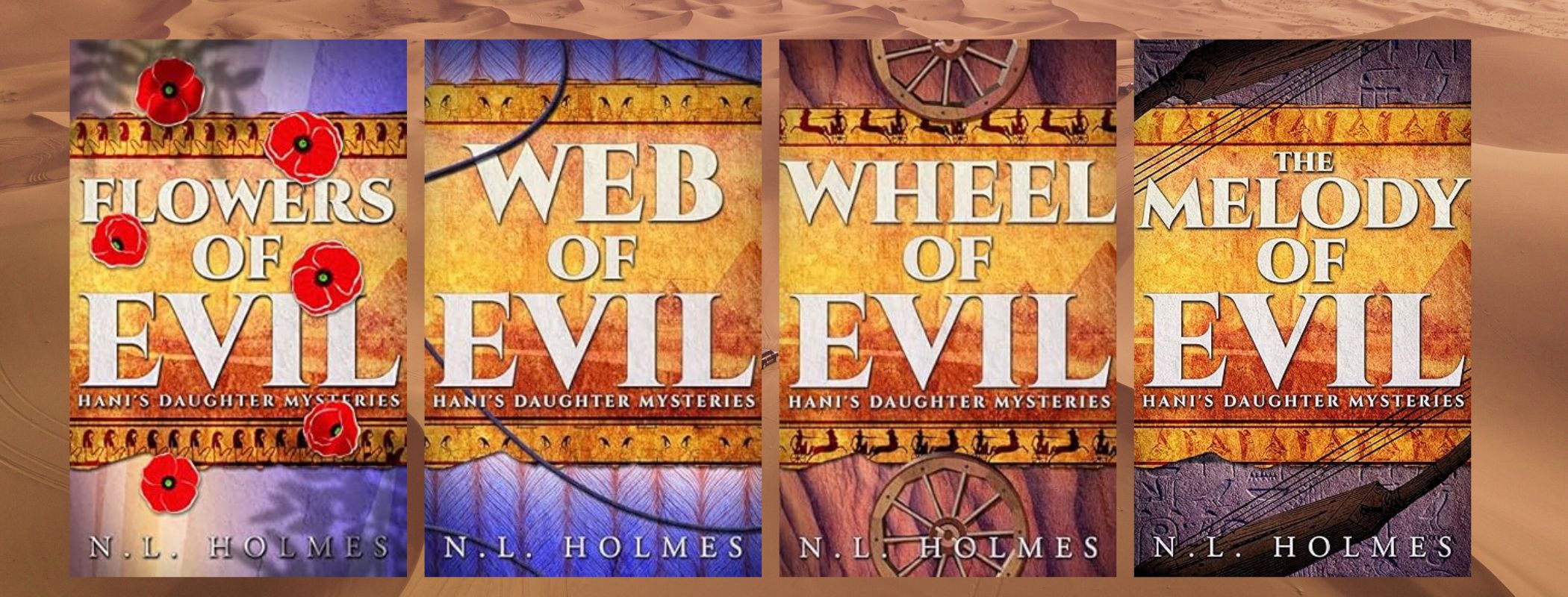
Hani's Daughters Mysteries
Hani’s Daughter Mysteries

You can get the Hani’s Daugther Mysteries at Amazon.

If you were stuck on a deserted island, which 3 books would you want with you? 

Wind in the Willows and The Perelandra trilogy of C.S. Lewis  to take my mind away to a beautiful place, and Germinal by Zola to make me realize things could be worse.

Which authors inspired you to write? 

I couldn’t put names to them now, but all the wonderful books I read as a child made me think that writing was the coolest thing a person could do. What tipped me over the edge was the fact that my cousin published a young adult book. That seemed to make it sound doable.

How long have you been writing? 

I’ve been writing fiction for eleven or twelve years. Before that, it was just poetry and, of course, academic articles. Poetry really adds to one’s fiction chops, but I’m afraid academic writing has to be unlearned – it’s all about not having a distinctive voice. It does help in terms of using the language skillfully and knowing grammar.

What genre do you write and why? 

I write historical novels set in the Bronze Age, mostly Egypt or the Hittite Empire. As an archaeologist, that’s a no-brainer for me! For a long time, I’ve been concentrating on mysteries of one sort or another because I like to read them, and so do a lot of people who might not care about antiquity otherwise. I think a well-researched historical novel can teach readers a lot about the past while entertaining them.

How did you do research for your book? 

I had a lot of general background from teaching a class on Ancient Egypt, but I hit my library again for specific knowledge about various professions, etc. I find names from ancient manuscripts about village life or lists of tomb owners.

In your book you make a reference to ancient Egyptian medicine. How did you come up with this idea? What made you write a book about medicine? 

The Egyptians’ medical skills were world-renowned in their day. They had observed by trial and error over millennia and written down the results of their experiments, so that a young doctor like Neferet could look in a casebook and see what her elders had done to treat those symptoms. A lot of it was herbal, much like traditional medicine today. This was always one of the most popular lectures when I taught my Ancient Egypt class, and it gave me a certain forensic capability for my sleuths.

Where do you get inspiration for your stories? 

I began the Lord Hani Mysteries, from which this series is spun off, when I met the real Hani in a set of ancient documents called the Amarna Letters. There were references to a lot of diplomatic missions carried out by this man, so I took him as my protagonist and gave him a personality and a family. When Hani’s arc was completed, I zeroed in on his youngest daughter, a headstrong, unconventional girl who seemed likely to follow in her father’s footsteps.

There are many books out there about ancient Egypt. What makes yours different? 

There are even a lot of mysteries set in Egypt, but this series has a female protagonist who is a physician, so she’s automatically privy to a lot of mayhem. Her father is a diplomat, and that draws into her orbit various foreigners as well. Plus, for those who like cozy mysteries, this is one, with the addition of Egyptian “tea time” vibes and heroic pet animals.

What is your next project? 

I’m working on another Neferet mystery that features the world of cooks (each of these books deals with a different profession). I also have in mind a prequel to the Lord Hani Mysteries, because there’s one more real historical adventure of Hani to make use of.


You can get the Hani’s Daugther Mysteries at Amazon.
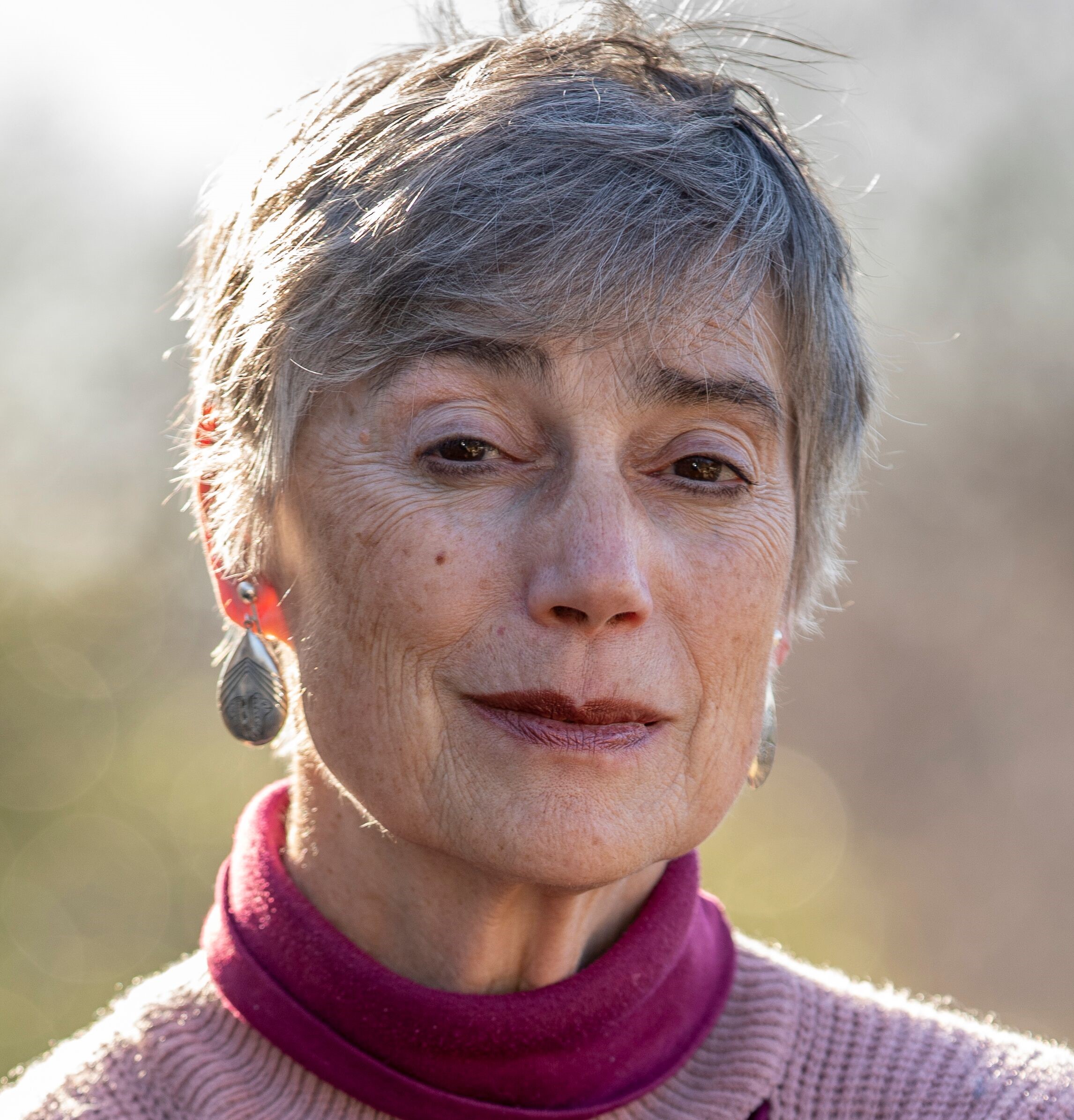
N.L. Holmes
N.L. Holmes

Author Bio:

N.L. Holmes is an award-winning novelist and former archaeologist with a Ph.D. in Classical and Near Eastern Archaeology. She spent years excavating in Greece and Israel, teaching ancient history, and bringing the past to life. Her firsthand experience with ancient cultures adds a rare level of authenticity to her work — transporting readers deep into the heart of ancient Egypt with rich historical detail and compelling storytelling.
 

Hani's Daughter Tour
Hani’s Daughter Tour

© 2025-  Ronovan Hester Copyright reserved. The author asserts his moral and legal rights over this work.
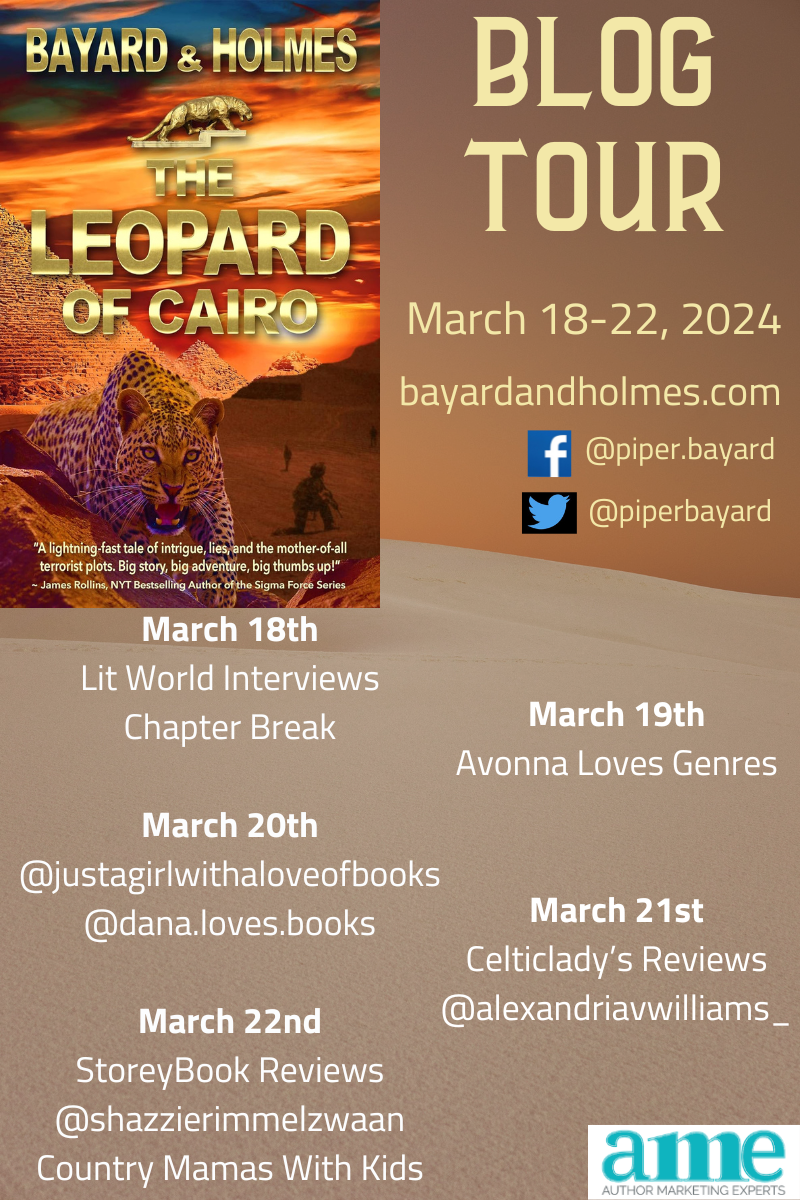
Questions with Bayard & Holmes, author of The Leopard of Cairo.

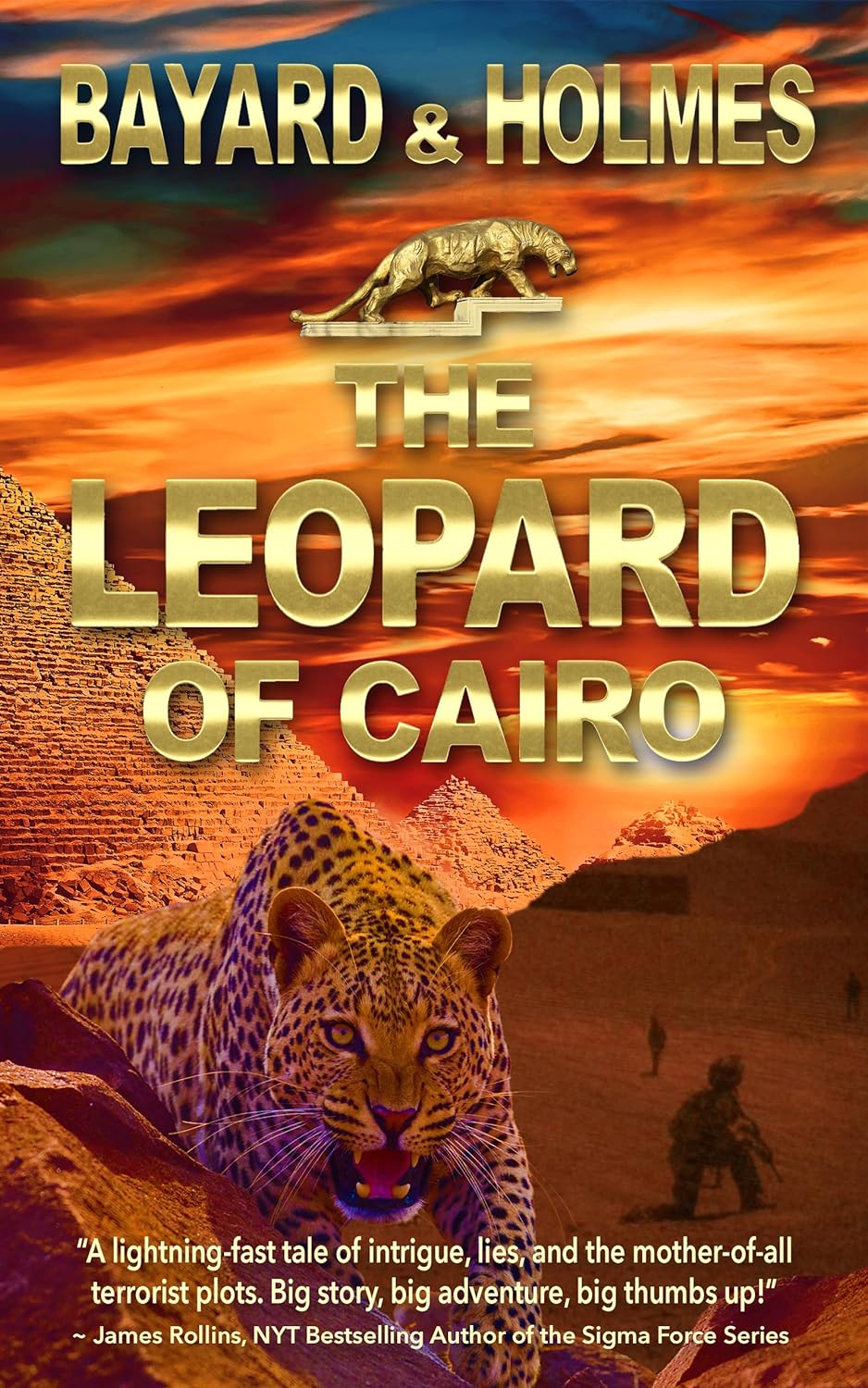
John Viera left his CIA fieldwork hoping for a “normal” occupation and a long-awaited family, but when a Pakistani engineer is kidnapped from a top-secret US project and diplomatic entanglements tie the government’s hands, the Intelligence Community turns to John and his team of ex-operatives to investigate — strictly off the books. They uncover a plot of unprecedented magnitude that will precipitate the slaughter of millions.

From the corporate skyscrapers of Montreal to the treacherous alleys of Baluchistan, these formidable enemies strike, determined to create a regional apocalypse and permanently alter the balance of world power. Isolated in their knowledge of the impending devastation, John and his network stand alone between total destruction and the Leopard of Cairo.

This is the first book in the Apex Predator series.

The Leopard of Cairo front cover.
The Leopard of Cairo

Get The Leopard of Cairo at Amazon.

How did you do research for your book?

The majority of our research for The Leopard of Cairo and our other fiction comes from Jay Holmes’s fifty years of experience in military and intelligence operations. Piper will call him up and say something like, “We need to blow something up,”  or “What will John Viera do if he’s being followed?” Jay either tells her off the top of his head or he gets back to her in a day or so, and she fills in the rest from her own knowledge and with Google.

Which was the easiest character to write?

Jay finds it easiest to write the male operatives on the team. For Piper, the female characters are easiest to write, particularly the middle-aged female assassin, Mrs. Beasley. Piper isn’t sure what that says about her own personal character.

Where do you get inspiration for your stories?

Usually, our inspiration starts with some tawdry joke we make while eating a fresh chocolate cake in Holmes’s kitchen sometime after midnight. If we’ve had a sip of guinda, a Spanish cherry liqueur, the work goes faster.

Your book is set in Quetta, Pakistan, Cairo, Egypt, Montreal, Canada, Northern Vermont, and Flagstaff, Arizona. Have you ever been there?

Piper has only been to Flagstaff, but Jay has been to all of these places. Piper would love to visit Montreal and Vermont, but Jay has warned her away from Quetta and Cairo.

If you could put yourself as a character in your book, who would you be?

Piper would love to be as tough as Angelina. Jay is already one or two of the male characters, including our protagonist John Viera.

How long have you been writing?

Piper has been writing off and on since she flunked Calculus in college and switched her major from Biophysics to technical writing. She began writing novels in 2004.

Jay has been writing professional papers for over four decades, and he has occasionally been forced to turn in government paperwork that resembles writing during that same time span. Piper roped him into writing fiction, spycraft, and history books in 2010.

What is the last great book you’ve read?

Piper just finished Seven Pillars of Wisdom by T.E. Lawrence, a.k.a. Lawrence of Arabia. It’s an absolute masterpiece detailing his work with the Arab tribes to overthrow the Ottoman Empire and build the nations of the Arabian Peninsula.

Jay just re-read Admiral Arleigh Burke, a biography by E.B. Potter, and he highly recommends it.

Which authors inspired you to write?

Piper is inspired by authors of great characters and stories from all eras, such as Alexandre Dumas and J.K. Rowling. Jay was inspired by Piper asking him to write.

What is something you had to cut from your book that you wish you could have kept?

Piper:  Not with The Leopard of Cairo.

Jay: Piper constantly edits out my X-rated content.

Who was your childhood celebrity crush?

Piper: Roger Moore. At fifteen I was in London and was thrilled to get a picture of the trash in front of the building where he lived.

Jay: Raquel Welch. I wanted things to happen with me and her. By the time I was ten, I figured out that was a nonstarter, and I started focusing more on local girls.

Get The Leopard of Cairo at Amazon.


Bayard and Holmes author photo.
Bayard & Holmes

Author Bio:

Piper Bayard is an author and a recovering attorney with a college degree or two. She is also a belly dancer and a former hospice volunteer. She has been working daily with her good friend Jay Holmes for the past decade, learning about foreign affairs, espionage history, and field techniques for the purpose of writing fiction and nonfiction. She currently pens espionage nonfiction and international spy thrillers with Jay Holmes, as well as post-apocalyptic fiction of her own.

Jay Holmes is a forty-five-year veteran of field espionage operations with experience spanning from the Cold War fight against the Soviets, the East Germans, and the various terrorist organizations they sponsored to the present Global War on Terror. He is unwilling to admit to much more than that. Piper is the public face of their partnership.Together, Bayard & Holmes author non-fiction articles and books on espionage and foreign affairs, as well as fictional international spy thrillers. They are also the bestselling authors of The Spy Bride from the Risky Brides Bestsellers Collection and were featured contributors for Social In Worldwide, Inc.

When they aren’t writing or, in Jay’s case, busy with “other work,” Piper and Jay are enjoying time with their families, hiking, exploring back roads of America, talking foreign affairs, laughing at their own rude jokes until the wee hours, and questing for the perfect chocolate cake recipe.

Website: https://bayardandholmes.com/

Facebook: https://www.facebook.com/piper.bayard

Twitter: https://twitter.com/PiperBayard

Amazon:
Leopard: https://amzn.to/3UVvUkr

Caiman: https://amzn.to/3TivPG4

Goodreads: 
Leopard: https://www.goodreads.com/book/show/71953522-the-leopard-of-cairo

Caiman: https://www.goodreads.com/book/show/206323749-the-caiman-of-iquitos

Bayard and Holmes blog tour

© 2014-2024- Ronovan Hester Copyright reserved. The author asserts his moral and legal rights over this work.


10 Questions with John Amos, author of The Cleopatra Caper.

“I want to present Cleopatra to the World,” Lady Stanhope sighed and reached for her purse. Two very young and inexperienced detectives, Flinders Petrie and Thomas Pettigrew, were unexpectedly presented with the case of a lifetime. Flinders and Pettigrew, recent graduates of Oxford and rivals of Sherlock Holmes and John Watson, suddenly find themselves confronted with the task of finding Cleopatra’s tomb. The tomb’s location, as they quickly discovered, was protected by the adherents of an ancient cult. Their quest leads them to Cairo and Alexandria. They meet a mysterious woman, who is possibly the descendant of Cleopatra. Their story weaves between the ‘City of the Dead’ in Cairo and the ‘Mound of Shards’ in Alexandria. They discover that becoming a detective is more difficult than they imagined as students. Set against the background of the River War in the Sudan and written by an expert in archeology and Middle East history, readers will find this story a worthy successor to the Conan Doyle legacy. “Find me Cleopatra, and I will pay for all this….”


The Cleopatra Caper
The Cleopatra Caper

Find The Cleopatra Caper at  Amazon.

What would be your one sentence elevator pitch of what your book is about to get someone to want to read it?

Two quirky young detectives are hired to find Cleopatra’s tomb, they grow up quick, but almost get killed during the chase.

Why choose the detective fiction genre for your book?

I read the Adventure of the Speckled Band as a kid. It scared the wits out of me. Ever since, I’ve wanted to write a detective story.

What research did you do to ensure you were historically accurate in setting, language and the like?

For the Middle East, no problem, I taught Middle Eastern politics for 25 years, and lived in Cairo for a year studying at the American University. (I also wrote a couple of books on Middle East politics). For everything else: Wikipedia, online publications, academic theses, and Bing AI (AI is really neat, if you know what to ask).

I know for my own book it was a real process to get things just right.
Coming up with character names is more difficult than people might think, how did you go about picking yours?

They are from historical characters: Flinders Petrie is the nephew of Sir Flinders Petrie, the great archeologist. Thomas Pettigrew is the grandson of Thomas Pettigrew, the British anatomist and mummy exhibitor. E A Walis Budge is himself. Lady Hestor is herself. Lord Cromer is himself. Inji was second in command of ‘Social Affairs’ in Cairo, and a very scary lady, indeed. (The first description of Inji is exactly the person I met in Cairo). Other names are from lists of Greek and Egyptian baby names.

How has your world traveling impressed itself on your writing?

Traveling supplied the background ambience. Owen Lattimore, the China expert, once wrote something to this effect: “If you haven’t been there and don’t know that there are tapeworm segments in the bottom of outhouses, you’re not an expert.” He was right. I lived on the economy in Cairo for a year and had to learn Arabic. I saw a lot of stuff a tourist would not see. My daughter is an amateur archeologist who worked on the digs at Pompeii, so I had an bona fide archeological source.

What will connect the reader to the story and make them keep reading to the end?

There are multiple levels, I think.  Obviously, there is the Sherlock Holmes nostalgia. But beyond that, the story of a couple of self-entitled kids being forced to grow up in a hostile world is the same theme that you have in the US today: A lot of readers are experiencing the same trauma. And, of course, there is the lost love theme which is a pretty universal experience.
Probably everybody can relate to Flinders and Petrie, they are a very likeable and funny pair: reviewers seem to like them.


Did you have difficulty deciding your book was ready to publish?

I hadn’t a clue. I ran the manuscript by several literary agents who weren’t interested and then shipped it off to the same hybrid I used for the Student. A mistake. I have revised it to take out the clinkers and add material since I now have the advantage of hindsight.

What age(s) of reader do you think would enjoy The Cleopatra Caper?

I wrote another book and the developmental editor said that I write for eleven year olds. Maybe so. I like to think that I write for anyone who has the imagination to be scared by the Speckled Band.

What’s your next project idea?

The Stolen Goddess will be out in April. Flinders and Petrie meet TE Lawrence and Gertrude Bell. It’s set in Istanbul at the end of the Ottoman Empire. I have tried to portray the old empire in all its complexity. It has some truly villainous villains: the Veiled One is the Phantom of the Opera on steroids, and the Bulbul (the bulbul, “nightingale,” was the official executioner in the Ottoman Empire) is modeled after Charles Mansion (I represented one of the Manson family in a parole hearing). The theme is that of the arc of life, unlike Holmes and other fictional detectives, Flinders and Petrie age.
 
The Bones of the Apostle will probably be out later this year. This is a darker work set in 1915, the time of the Armenian genocide. (My late wife’s grandmother survived the death march). I’m still revising; I’m not sure I can do it justice. I have invented a new character, Gazelda Jones,  who is as quirky as the detectives and adds a love theme. She will be around to the end of the series.


There are other detective fiction novels set in times past, why should a reader choose The Cleopatra Caper?

It’s a detective story with all the fast action of the genre, but it’s also a story about growing up, about lost innocence, and about lost love. In a way it’s a ghost story, because the heroes are haunted by their experiences. Their character development is central: These guys are driven by wanderlust, by guilt, and by the loneliness of their newly chosen profession. I suppose you could say that it’s part Conan Doyle, part Lawrence Durrell, part Henry James, and a smidgen of the “Thin Man.”

Find The Cleopatra Caper at  Amazon.

John Amos
John Amos

Author Bio:

John Amos holds a PhD and a JD. He has taught at university level for 25 years. His academic publications include several books and multiple articles. His fiction works include The Student (2022), The Cleopatra Caper (2023), and The Case of the Stolen Goddess (2024). He has lived in the Middle East, most notably in Egypt, Lebanon, Libya, and Turkey. He currently practices Law.


© 2014-2024- Ronovan Hester Copyright reserved. The author asserts his moral and legal rights over this work.