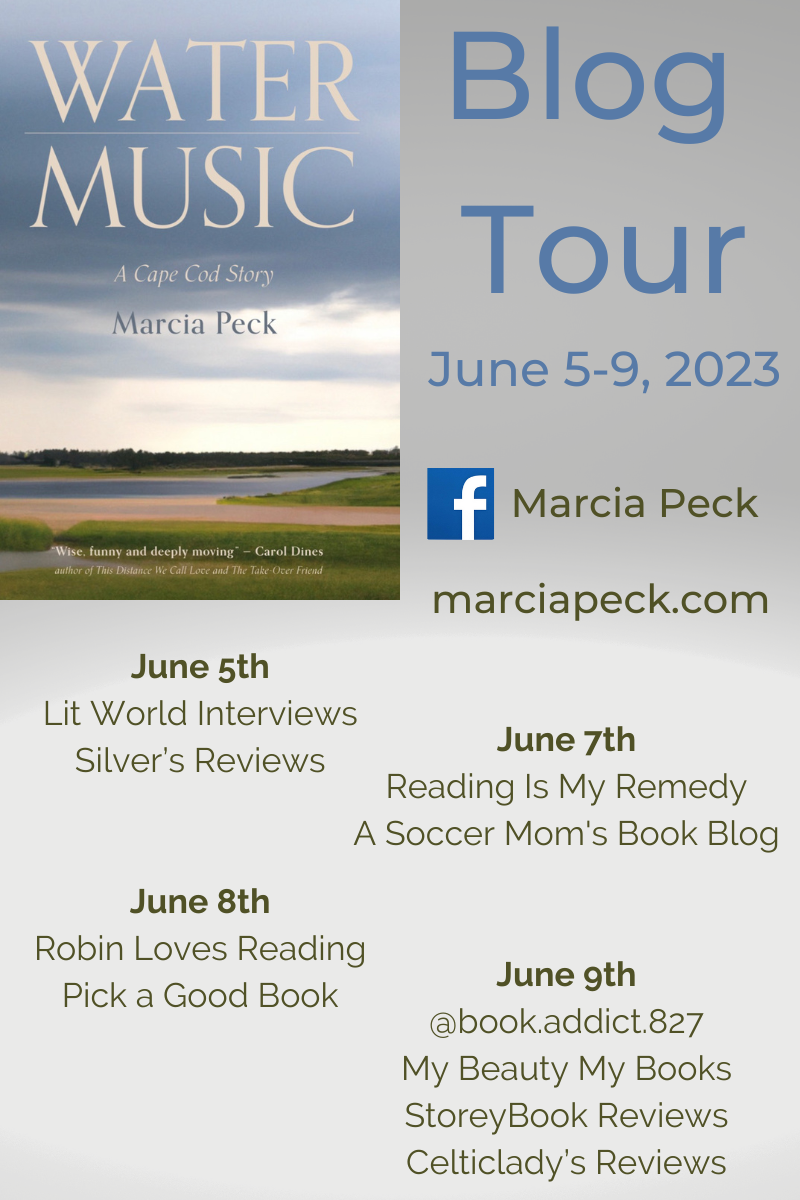
10 Questions with Barbara Southard, author of Unruly Human Hearts.

Synopsis

Elizabeth Tilton, a devout housewife, shares liberal ideals with her journalist husband, Theodore, and her pastor, Reverend Henry Ward Beecher, both influential reformers of the Reconstruction era. She is torn between admiration for her husband’s stand on women’s rights and resentment of his dominating ways. When Theodore justifies his extramarital affairs in terms of the “free love” doctrine that marriage should not restrict other genuine loves, she finds the courage to express her feelings for Reverend Beecher. The three partners in this triangle struggle with love, desire, jealousy, fear of public exposure, and legal battles. Once passion for her pastor undermines the moral certainties of her generation, Elizabeth enters uncharted territory. Telling the truth may cost her everything. Can a woman accustomed to following the lead of men find her own path and define her own truth?

unruly human hearts cover
Unruly Human Hearts

You can pre-order Unruly Human Hearts at Amazon. (January 28, 2025)

What drew you to become a professor of history?

My parents moved from New York to Hawaii when I was a teenager and I was fascinated with the multicultural society of the 50th state, including people of Hawaiian ancestry, descendants of white missionaries as well as people whose ancestors came from China or Japan to name only a few. When I entered the University of Hawaii, I was already very interested in Asian cultures, and the study of history seemed to be an ideal avenue to gaining an understanding of cultures so different from my own. I applied for an East-West Center scholarship for graduate work, which covered a year of research in India.

How did you end up teaching at the University of Puerto Rico?

My husband, who is an economist, was offered a job at the University of Puerto Rico. I had finished my course work at the University of Hawaii, but I was just starting to write my dissertation on the nationalist movement in India. After finishing my PhD, the Social Sciences Department at the University of Puerto Rico invited me to teach courses on Asia. Eventually I was offered a position as an Assistant Professor in the History Department.

Tell us more about your career as a historian and your work to highlight women’s struggles in both the United States and India.

At the University of Puerto Rico where I taught courses on both Asia and the United States with an emphasis on social history, it was a challenge to become fluent in Spanish and to interpret not only Asian culture but also American culture to my students. Although my dissertation was on the nationalist movement, my later research centered on the women’s movement in India. After receiving a Smithsonian Institute grant for research in India, I was able to complete my book on the struggle for women’s social and political rights in northeastern India titled The Women’s Movement and Colonial Politics in Bengal, 1921-1936. In addition to many academic articles on social themes in Indian history, I published a study of the impact of the gospel of love on the position of women in the United States as seen in the case of Elizabeth Tilton. I also wrote short stories exploring social conflicts set in India, the United States and Puerto Rico, mostly written from the perspectives of women and girls.

How did the views expressed by students in a graduate seminar you taught on the social history of the United States influence your decision to explore the Beecher-Tilton scandal more deeply?

At first my students didn’t seem interested in the famous 1875 trial, but once I mentioned the scandal had similarities to Bill Clinton’s impeachment for the alleged cover-up of sexual intimacies with Monica Lewinsky, they began to participate actively in the discussion. A young man pointed out that both the president and the reverend survived the scandal. Yeah, said a young woman but what about Monica and Elizabeth? My student’s suggestion that Elizabeth may have fared worse than her male lover inspired me to delve deeper into the social context of the scandal. As I immersed myself in the sources to understand the challenges Elizabeth faced because of gender inequality, I found that my own multicultural experiences, during the many years spent in Hawaii and Puerto Rico as well as the year doing research in India, were very helpful, enabling me to imagine how Elizabeth felt in an epoch with values very different from the present day.

What was the research process like to bring Elizabeth Tilton’s side of the story to life? I know that during the civil trial that she wasn’t allowed to speak, being that she was viewed as the damaged property of her husband in the case.

Many of the historical studies of the Beecher-Tilton scandal picture Elizabeth as a weak personality, a woman who gave in to both her husband and her lover and couldn’t keep her story straight. As I read more about the Victorian code of conduct for women, I felt that this version of her character was simplistic if not misogynistic. I attempted to come to grips with the challenges Elizabeth faced because of gender inequality in an article I wrote for a history journal, but I finally decided that the best way to do her justice would be to write a novel telling the story of the scandal from her perspective. Although Elizabeth was not called to the stand during the 1875 trial, there are three important primary sources that reveal her point of view: her personal letters, which her husband published in the press without her permission, her testimony at the church investigation, and the testimony of those who spoke of her at the trial. Once I decided to write a novel, I had to immerse myself once again in the historical sources. This second time, I was concentrating not only on understanding the social issues, but also submerging myself in the feelings and thoughts of Elizabeth and her two lovers, imagining scenes in which the main characters interacted.

Unruly Human Hearts is a work of fiction but based on a true story. How much of what we find in the book can be considered fact, or as fact as can be, considering the era and limited sources of coverage of events?

The novel covers the period from 1866, when Elizabeth, then in her early thirties, first developed romantic feelings for Henry until her death in 1897. There are many primary sources for the period from 1866 through the trial of 1875, including personal letters, trial records, and the press. The events and the people whose actions and personalities are revealed in these records function as the framework for my novel. However, the sources do not consistently tell the same story. The public testimony of the protagonists often provides conflicting narrations of what happened in what order, as well as conflicting interpretation of the motivations of those involved. Historians who have written books involving the Beecher-Tilton scandal also have different interpretations. As a writer of historical fiction, I had to make judgment calls. Elizabeth’s life after the 1875 trial, covered briefly in the final pages of the novel, was more difficult to envision. Although several historical sources are available, including obituaries and her letter of confession published in 1878, writing about her final years required greater creative effort.

Free love is somewhat of a key factor of the Beecher-Tilton scandal, a scandal perhaps in part because of Victoria Woodhull’s being the one to put it to print making it of greater public knowledge. Can you perhaps give our readers a little idea of what “free love” means in the context of the book and the movement at the time?

The basic idea of free love in the Reconstruction era was the freedom to choose whom to love and to express true love in a sexual relationship outside of marriage. Those who espoused free love believed that government should not interfere in matters of the heart, because the question of who loves whom cannot be legislated. Some feminist leaders supported free love because they believed that marriage and divorce laws unfavorable to women often imprisoned them in injurious abusive relationships. The radical feminist, Victoria Woodhull, denounced the hypocrisy of male leaders (including Reverend Beecher) who indulge in sexual affairs while publicly advocating conventional morality. Most supporters of free love in the nineteenth century did not advocate promiscuity; they couched their beliefs in terms of individual freedom to express true love. The concept of free love was similar in some respects to the concept of open marriage in the latter half of the twentieth century in which one’s spouse was viewed as the primary partner, but married couples were free to express love for others. Elizabeth viewed her husband, Theodore, as her primary partner, and Reverend Beecher as another love that enriched her life and deepened her love for her husband.

Each of the characters in the triangle’s relationship to free love comes from a different angle. We have the first prominent preacher in America, a newspaper editor and abolitionist, and an American suffragist. How did each reconcile the doctrine of free love with their religious beliefs and perhaps positions in society?

Reverend Beecher’s experiences as a young child, when his father instilled in him the fear of being a sinner predestined to go to hell, encouraged him to advocate replacing the Calvinist doctrine of retribution with the gospel of love. The gospel of love inspired him to preach against slavery and in favor of guiding children through love not corporal punishment. Henry’s sermons comparing God’s love with the tender care of a mother inspired Elizabeth and helped her see the feminine role as crucial not only within the family but also in building a better society. Her motivation to join the suffrage movement was the belief that women would vote to help those in need. Although the gospel of love and the concept of free love had separate origins, Henry and Elizabeth saw a connection between the two. True love of one human being for another could not be sinful. Whereas Elizabeth and Henry emphasized Love as the guiding spiritual and ethical principle, for Theodore, it was Truth. Conventional moral teachings restricting love outside of marriage led to lies and concealment that poisoned personal relations. Theodore believed that non-interference of the government in personal love lives was a necessary social reform, and thus advocated free love as well as suffrage for women and former slaves.

Elizabeth was involved in the suffrage movement, as was her husband, what did the scandal do for/to the movement?

The women’s suffrage movement was going through a difficult period in the eighteen seventies. Many suffragists had hoped that that the fifteenth amendment would include voting rights for women and former slaves, but the amendment only awarded suffrage to freedmen. The movement had to regroup and form new alliances. Initially Susan B. Anthony and Elizabeth Cady Stanton, both of whom were friends of Theodore and Elizabeth, were enthused when Victoria Woodhull, a charming and charismatic young woman of working-class origins, brought new energy into the suffrage movement. However, they later realized that her advocacy of radical social issues, including free love, was alienating supporters. Victoria had a key role in the exposure of the Beecher-Tilton scandal. She denounced Beecher as an ardent supporter of free love who concealed his true beliefs so as not to endanger his career and social position. Public fascination with the role played by prominent men with progressive views on women’s rights in the Beecher-Tilton scandal, was fodder for conservatives who painted the campaign for women’s suffrage as a movement associated with dangerous radicals whose aim was to destroy the social order.

Any good book based on historical facts can and should teach you something that has some relevance to current times. How is Unruly Human Hearts relevant today?

The story of Elizabeth is relevant to concerns about individual freedom and social ethics in modern times. The emergence of creeds of sexual liberation and open marriage in the second half of the twentieth century raised questions about whether free love is liberating for women. Many women were economically dependent on men, which made it difficult for them to insist that men grant their partners the same sexual freedom that they claimed for themselves. The MeToo movement that emerged in the early twenty-first century points to the problems implicit in a sexual relationship in which one partner enjoys the advantage of power and position. Elizabeth insisted that her tie with Reverend Beecher was based on true love, but her husband saw it as a pastor taking advantage of a deeply loyal member of his flock. On the other hand, Theodore was oblivious of the power dynamic in his marriage to Elizabeth. He justified his own extramarital affairs as a legitimate expression of free love but applied the double standard to his wife. If our society continues to make progress toward gender equality, we can hope that women involved in open marriages or polyamorous relationships do not undergo the same heartbreak that Elizabeth experienced.

What is your next project about?

I am reworking a historical novel set in New York in the roaring twenties, a period in which women enjoyed new freedom to pursue romance as well as a career of their own. The heroine, a young aspiring poet, suffers violent mood swings, which make it difficult for her to comprehend the new limits of acceptable behavior for women. Aggressive psychiatric treatments compound her problems. The transition from adolescence to adulthood appears to be a maze to the young protagonist who must make her way through a looking glass world in her struggle to achieve autonomy and commitment.

You can pre-order Unruly Human Hearts at Amazon. (January 28, 2025)

Barbara Southard
Barbara Southard

Author Bio:

Barbara Southard grew up in New York, earned a PhD from the University of Hawaii, and served as professor in the History Department of the University of Puerto Rico. In addition to academic publications on women’s history, she is the author of The Pinch of the Crab, a short story collection set in Puerto Rico, exploring social conflicts of island life, mostly from the perspective of women and girls. In her debut novel Unruly Human Hearts, Barbara once again explores social conflict from the point of view of the woman involved in a different place and epoch. She has also been active in raising funds for the Shonali Choudhury Fund of the Community Foundation of Puerto Rico, helping local community organizations working to protect women from domestic violence.

Find out more: https://www.barbarasouthard.com/

Facebook: https://www.facebook.com/BarbaraSouthardAuthor

Instagram: @barbara.southard45

© 2025-    Ronovan Hester Copyright reserved. The author asserts his moral and legal rights over this work.

8 Questions with Raemi A. Ray, author of Widow’s Walk.

Synopsis

Attorney Kyra Gibson has a lot on her mind this Thanksgiving. She’s been working long hours on a multi-billion dollar corporate merger, her family is visiting from London, and her relationship with former police detective Tarek Collins is heating up. When she and her companions are invited by her aristocrat client to attend a formal gala at a historic mansion on Chappaquiddick, Kyra reluctantly agrees.

But Chappy is more than just a playground for the wealthy. It’s a wild, remote place cut off from civilization. When the first body is found, the occupants are worried. Was it an accident or murder? When a second guest is brutally killed and then a third, there’s no doubt and the guests fearfully turn on each other. They are locked in a house with a murderer picking them off one-by-one. Kyra, her best friend Chase Hawthorn, and Tarek must survive the night and find the killer, or one of them could be next.

Widow's Walk book cover
Widow’s Walk

You can get Widow’s Walk at Amazon.

Where do you get inspiration for your stories?

Most of my plots are pulled from headlines, and then I add in the murder.

Your book is set in Martha’s Vineyard. Have you ever been there?

Yes, I’ve been visiting the island for years and this series is a sort of love letter to it. It’s one of my favorite places.

Do you have another profession besides writing?

I do. In my other much more boring life, I’m an IP lawyer, not unlike my protagonist.

What genre do you write and why?

I write mystery/thrillers. I simply prefer writing plot over emotional journeys and mystery and thriller lend themselves to plot focused stories.

Which was the hardest character to write? The easiest?

The hardest character is actually my FMC, Kyra. The book is told from her perspective and sometimes I have to remember to be in her head, to remember she’s not privy to everything I know, especially what the other characters are thinking. The easiest is a tie: between Cronkite and Ali, Kyra’s aunt. Cronkite is the epitome of “cat,” and Ali is the sister I’d want if I had one.

If you could put yourself as a character in your book, who would you be?

If I were to write myself in, I’d write myself as a victim who gets her revenge from the grave. I think I’d be a beloved, local writer who, after an ugly exchange with an unruly summer visitor at a popular Vineyard Haven diner, met a very bloody, untimely death at the hands of the unpleasant woman. As the murder investigation progresses the murderess’s world is destroyed. Obviously, I’ve never been bowled over by an aggressive tourist at The Black Dog Tavern. Nor am I petty. It’s complete fiction.

What’s the scariest thing that ever happened to you?

A few years ago, I trespassed (broke into) a deserted asylum for children. It looked like it’d been abandoned overnight. Toys were on the floors. Artwork hung on the walls. The library’s books were strewn about, beds pushed up against the walls haphazardly. The cherry on top, though, was someone had staged a huge clown doll on the roof of one of the buildings. I’ll have nightmares of that clown’s manic grin for life.

What is your favorite thing to do in the autumn?

My favorite thing to do in the autumn is tea, coffee, or a glass of wine by the fire with a book. I love a wood burning fire when it’s chilly out. It’s so comforting.

You can get Widow’s Walk at Amazon.

A Chain of Pearls
A Chain of Pearls

When the body of a celebrated journalist is fished from the Edgartown Harbor, the official report rules his death accidental. But why was he alone on a senator’s yacht during a nor’easter? That’s only the first question London-based lawyer Kyra Gibson has when she arrives on the idyllic island of Martha’s Vineyard to settle her estranged father’s affairs. AMAZON


The Wraith's Return
The Wraith’s Return

London based lawyer Kyra Gibson returns to Martha’s Vineyard and the beach house she inherited for an extended summer holiday. Still reeling from her father’s brutal murder and the role she and the handsome detective, Tarek Collins played in uncovering it, Kyra is hopeful for some peace and quiet. But when a summer squall reveals the wreckage of the pirate ship, Keres, rich with rumored treasure, all hopes of peace are dashed. Conservationists and treasure hunters descend on the exclusive island to lay claim to the ship. When two of the salvagers are killed, Kyra and Tarek’s friend, pub owner and amateur historian, Gully Gould is arrested for murder. AMAZON

Raemi A. Ray
Raemi A. Ray

Author Bio:

Raemi A. Ray travels to Martha’s Vineyard and around the world inspire her stories. She lives outside Boston. When not writing or traveling she earns her keep as the personal assistant to the resident house demons, Otto and DolphLundgren.

Find out more: https://raemiray.com/

Facebook: @raemiray

Instagram: @miss_raemi

Raemi A. Ray Blog Tour-October

© 2014-2024- Ronovan Hester Copyright reserved. The author asserts his moral and legal rights over this work.

11 Questions with Joanne Howard, author of Sleeping in the Sun.

Synopsis from Amazon

When two visitors arrive to the boarding house in India where an American boy is coming of age during the British Raj, truths unravel, disrupting his life and challenging the family’s sense of home. A unique historical angle ideal for fans of The Poisonwood Bible and The Inheritance of Loss.

In the last years of the British Raj, an American missionary family stays on in Midnapore, India. Though the Hintons enjoy white privileges, they have never been accepted by British society and instead run a boarding house on the outskirts of town where wayward native Indians come to find relief.

Young Gene Hinton can’t get out from under the thumb of his three older brothers, and the only person he can really relate to is Arthur, his family’s Indian servant. But when Uncle Ellis, a high-ranking British judge, suddenly arrives and announces he’ll be staying indefinitely in their humble house, far from his prestigious post in Himalayan foothills, life as Gene knows it is interrupted. While his brothers are excited at the judge’s arrival, he is skeptical as to why this important man is hiding out with them in the backwaters of Bengal.

Also skeptical is Arthur. Then an Indian woman appears on their doorstep—and, after growing close to her, he learns the sinister truth about the judge. Torn between a family that has provided him shelter, work, and purpose his whole life and the escalating outrage of his countrymen, Arthur must decide where his loyalties lie—and the Hintons must decide if they can still call India home.

.

Sleeping in the Sun
Sleeping in the Sun

Sleeping in the Sun is a novel impossible to put down. A cinematic study of imperialism and the scars it has left. An outstanding debut.”—Willy Vlautin, author of The Night Always Comes and The Motel Life

“This is at once a gripping page-turner and book to savor and admire. It will light up your imagination and endure in your mind alongside all the memories from your real life. I was sad to see it end but delighted to welcome this impressive new voice into American literature. Joanne Howard is a writer to watch.”—Valerie Laken, author of Dream House and Separate Kingdoms

You can get Sleeping in the Sun at Amazon.

Imagine you have only a brief minute to tell someone what your book is about. Can you tell us, in two sentences, what your book is about and make us want to read it?

An American boy comes of age in the last years of the British Raj⁠. Little does he know in this turbulent time that his family’s long-standing Indian servant may have ambitions to serve himself for once⁠—for better or worse.

Why did you need to write this story?

I would like to see more historical novels set in non-western countries. I have never seen a novel about Americans in India, so I wanted to explore what a story about that would mean. And of course, I like to think of it as a nice tribute to my grandfather.

Where is the setting for Sleeping in the Sun?

1930s Midnapore, India. Midnapore is a small city outside of Calcutta.

How did the Hinton’s purpose as Christian missionaries determine their place in the white society of British India?

As American missionaries, the Hintons occupy an unusual space in society. They are not well off, as can be seen by their humble living standards, and they aren’t particularly interested in climbing the ranks of British society. The boys are rowdy and rough around the edges, and the house is a bit out of town so they aren’t really included in social circles. The boys also go away to boarding school, which is yet another way they are considered outsiders in Midnapore. The book doesn’t show them interact with many British characters except of course for Judge Ellis, who takes an unusual liking to them.

How do the actual people of India see Christian missionaries in their society and culture during the time of Sleeping in the Sun?

It varied. In my family’s experience, they actually didn’t have much luck converting many people. Often times, if an Indian person converted on their own, they were ostracized by their community. So missionaries had more success if they converted an entire tribe or village. For this reason, my family mainly worked with indigenous tribes. In large urban areas like Calcutta, the attitude toward missionaries and white foreigners in general was less favorable. The Indian people had already pressured the Raj to move their capital out of Calcutta to New Delhi, and that anti-Raj sentiment carried over to missionaries too. However, my family was generally well liked and respected by Indian people in Midnapore, whether they were part of their church or not. Unlike the Hintons who stick to themselves through much of the novel, my family was very involved and did a lot of business with Indian people in the community.

If you were to be one character in your book, who would you choose and why?

I have a soft spot in my heart for Lee, the third Hinton brother. He acts as the voice of reason in the book. He has an easygoing, gentle demeanor and guides Gene as they try to make sense of the events that happen in the novel.

As a former history teacher and historian, I’m always interested in how an author researches to ensure the accuracy of culture and period. What was your process like?

My family is incredible at preserving everything, so I had a lot of firsthand accounts to inform me. My grandfather’s childhood diary, my great grandfather’s autobiography, and stacks of vintage photographs were of huge help, but of course it was up to me to imagine the characters in the way I wanted to and that would best serve the story. But for Arthur’s character, who is an Indian man and therefore outside my own lived experience or personal connection, I just tried to absorb as many works of Indian literature that matched his background and the time period, and two books especially inspired his character: The Autobiography of an Unknown Indian by Nirad C. Chaudhuri and Pather Panchali by Bibhutibhushan Bandyopadhyay. For setting, I traveled to India in 2018 for three weeks. I got to visit the street where my family lived, their mission’s church that is still standing, and other places that appear in the novel like Howrah Station and the Maidan in Calcutta. Lastly, I had a sensitivity reader who checked for blind spots.

What will connect the reader to the story and make them want to keep reading the story?

The multicultural and international aspect of the characters I hope will appeal to a variety of readers. My favorite historical novels are very immersive and escapist, so I hope that I have also brought the time and place to life well enough. I think I have because in fact, one of my early readers really asked me if this novel was based on my own life. I said, “Do you mean did I live in India in the 1930s?” And then lastly, I think that the novel explores the different definitions of identity, belonging, and spirituality. There is no one right way to be, and the novel offers many answers that can appeal to different readers.

What did you learn about yourself by the end of the book?

Early in my MFA program, a professor said that the story will take you where it wants to go. At first I sort of laughed at that idea, because surely as the author I’m in control of everything, right? But I really did experience the story going in different directions than I intended. I would just get this spark of an idea that was totally different than the outline I had so carefully plotted. So I learned that I’m not as in control as I thought.

Many first-time authors of a book have a problem letting their work enter the world for others to read. I know I did. Did you have difficulty deciding your book was ready to publish?

Not really. Although I did work on it for at least 6 years, I think I was always aware of some kind of finish line that I would come to eventually if I just checked off all these things. Every round of editing was correcting for a different fault, whether it was eliminating passive voice or clarifying character movements, so it did always feel like I had a plan. I guess I was very objective in that sense.

What’s your next project idea?

A contemporary novel that’s a bit closer to home.

You can get Sleeping in the Sun at Amazon.

Joanne Howard
Joanne Howard

Author Bio:

Joanne Howard is an Asian American writer from California. She holds an MFA in writing from Pacific University. Her poetry received an honorable mention from Stanford University’s 2019 Paul Kalanithi Writing Award. Her fiction has been published in The Catalyst by UC Santa Barbara, The Metaworker Literary Magazine and the Marin Independent Journal and her nonfiction has been published in Another New Calligraphy and The Santa Barbara Independent. She lives in Santa Rosa, CA. Find out more at her website.

Find out more: https://www.joannehowardwrites.com/

Facebook: @joanne-howard

Instagram: @joannesbooks

© 2014-2024- Ronovan Hester Copyright reserved. The author asserts his moral and legal rights over this work.

10 Questions with Keith McWalter, author of Lifers.

Electric with compelling action and trenchant social commentary and perfect for fans of Nikki Erlick’s The Measure, this genre-straddling work of speculative fiction examines ageism from a new and challenging perspective.

In the year 2050, the man known as Zinn is on the run from the consequences of his greatest creation: an artificial genome that wildly increases the human lifespan. His “Methuselah gene” has gone viral, and he’s being hunted by Adele, a semi-retired CIA biowarfare specialist who hopes to find a way to reverse the genome’s effects before it’s too late.

As the longevity plague spreads, populations explode, economies are upended, and intergenerational resentments boil over. Adele searches for a cure while her former lover, Dan Altman, and his wife, Marion, wealthy political operatives both, become leaders of a movement of hundred-plus-year-old “lifers” and fight to create a sanctuary for the ultra-aged in the wilds of Colorado. Meanwhile, the Altmans’ son, Nolan, thinks he has the answer to the longevity crisis: a suicide pill that kills after one year, a death wish algorithm that will influence the super-aged to take it, and his beautiful daughter, Claire, who is a spokesperson for the growing anti-lifer backlash and the head of the federal government’s new Department for Longevity Management.

Combining a hugely topical premise with a vein of social-political satire, Lifers evokes a world where society’s ingrained ageism turns lethal and the fear of death is replaced by the challenge of living on . . . and on.

Lifers Cover
Lifers

If Ann Patchett wrote sci-fi, this is what it might look like. What does it mean to live forever? To you? To your loved ones? To your country? To the world? A great read with a thought-provoking premise, and a sure-fire conversation starter for that dinner party you’re dreading.

-Arlene Dillon, journalist and former President of the White House Correspondents’ Association

You can get Lifers at Amazon.

You have only a brief moment to tell someone about your book. Can you tell us, in two sentences or less, what Lifers is about and and make us want to read it?

When a rogue scientist’s longevity gene goes viral, the boomer generation suddenly stops dying, and a multigenerational family must confront the personal, social, and political consequences of potential immortality.

Lifers blends grounded science with near-future imaginings to examine ageism and the quest for longevity in a startling new light.

Why did you need to write this story?

Like so many of us, I’m attracted to the idea of living a long and healthy life, so I’ve read fairly widely in nonfiction accounts of longevity science and its practical applications.

Two things struck me about most discussions of longevity enhancement: increased longevity tends to be viewed as a luxury product for the rich and the few; and no one discusses the economic and social stresses that a radically longer (even if healthy) lifespan would impose on individuals, on families, and on society at large.

I wrote Lifers to dramatize those unspoken implications, and to examine ageism from a different perspective in which extreme longevity becomes commonplace and there are so many super-aged individuals that they become a problem — and a force — that must be reckoned with.

Why did you choose strong females as the protagonists who move the plot of the story?

For whatever reason, perhaps having to do with the influence of my super-competent mother and my independently-minded spouse, I find that writing from a female point of view comes easily. The challenge, of course, is not to presume too much understanding of women’s unique experience, and to maintain a stance of humble empathy as a writer.

The women protagonists in Lifers are of different generations, and I wanted to use female relationships to illustrate both how conflicts happen across generational lines, and how those conflicts can be resolved through uniquely female skills.

There are multiple settings/locations in Lifers, what research did you do to create that world for the reader to immerse into?

I’m fortunate to have traveled broadly and lived in multiple urban settings, so the locations in Lifers are all drawn from real places that I know well and love, and I had to do very little research about them.

With limited resources on the planet, what would be the solutions to the problems extended life would bring and just how far do we go?

Lifers is an attempt to imagine answers to this very question, but in the novel longevity accelerates very suddenly, and I can only hope that in real life we’d have more time to adapt to the challenges of having billions more humans on the planet, and millions more people in their second century of living. Overpopulation and strains on the medical system would be the most pressing problems, with the effects cascading into personal and national finances. Economies would have to find ways of putting able-bodied super-centenarians back to productive work, and housing would have to become much more communal and less age-stratified. At some point options for living off-earth (some of which are depicted in the book) would hopefully become available. This all assumes that government remains democratic and rational, and doesn’t descend into even worse divisiveness than we’re witnessing today.

What will connect the reader to the story and make them want to keep reading the story?

The characters. No matter how interesting the premise — and I think the premise in Lifers is very compelling — it’s the connection to the characters that keeps a reader engaged. I’m proud of the cast of characters in the book, and think they’re varied and sympathetic — and realistic — enough to pull the reader along to find out what happens to each of them.

How long did it take to complete Lifers?

About a year and a half.

You’ve said you would be a ‘Lifer’, a long-lived person if you had the choice. What would you do with that time?

I would write and travel, and perhaps work on a second career in politics, to try to bring some rationality back into our civil discourse.

Did you have difficulty deciding your book was ready to publish?

Not really, though “ready” is a relative term, and there were many, many revisions. Probably 90% of my editing occurs while writing. The most significant form of revision for me is, once all or most of the book is finished, to review the scene sequence to try to improve it to make sure the reader is drawn forward in the narrative at the right pace, and that characters have been fleshed out enough. On Lifers I ended up adding quite a few chapters and scenes. But in a sense no book is ever really finished. There are still things I would change or add to it.

What is your next project idea?

I’m beginning to think about a sequel to Lifers that would take off from the book’s conclusion, where a very specific form of time travel — actually, collective memory travel — becomes possible. I want to depart from the current fabulistic trend where time travel just “is” — it’s an unexamined premise, not a plausible process (I’m thinking of The Ministry of Time and Sea of Tranquility). The whole trope of time travel has become a rather tedious cliché and needs some new life injected into it. So that’s my next mission: make time travel believable again.

You can get Lifers at Amazon.


Keith McWalter
Keith McWalter

Author Bio:

Keith McWalter’s first novel, When We Were All Still Alive, was published in 2021. His essays have appeared in The New York Times, The New York Times Magazine, and the San Francisco Chronicle. He’s the author of two blogs, Mortal Coil and Spoiled Guest, which present his essays and travel pieces to a loyal online following. A collection of his essays, No One Else Will Tell You: Letters from a Bi-Coastal Father, won a Writer’s Digest Award for nonfiction.

Keith is a graduate of Columbia Law School and earned a BA in English Literature from Denison University. He lives with his wife, Courtney, in Granville, Ohio, and Sanibel, Florida.

Find out more: https://keithmcwalterwrites.com/

Facebook: @keith.mcwalter

Twitter: @kgmcwalter

Instagram: @kmcwalter

© 2014-2024- Ronovan Hester Copyright reserved. The author asserts his moral and legal rights over this work.

Questions with K. A. Kenny, author of The Starflower.

Step into a vast universe teeming with life, romance, heroism, and treachery as experienced and seen through the eyes of Gayle Zimmon. ‘Zim’, a young woman successful in war but naive to the machinations of the greater universe, returns from combat to confront genetically engineered humans and discover that she was sent to war not to win but to die.

While fighting the Aldrakin, Zim learns of a prophecy foretelling that the “Starflower,” her military call sign, will bloom “in the dark of the darkest night” but never know peace. Not one to accept ancient prophecy, after securing victory, she hopes to rekindle her romance with Mac and return to the peaceful life they left on the frontier.

But she is a major player in a galaxy-spanning intrigue she barely understands. Forces alien and cybernetic hold the stakes and align on both sides. Between dodging assassins, hostile planets, deadly robots, mystical aliens, and ancient relics, she must decide whether to continue running from her prophesied destiny-or try to live up to it.

Starflower
The Starflower

Get The Starflower at Amazon.

What genre do you write and why?

Science Fiction has unlimited possibilities for imagination and metaphor. It taps imagination well beyond other genres. It also challenges the writer to create realistic, unknown worlds.

There are many sci fi books out there. What makes yours different?

To my mind, SF is about dreaming the impossible dream. If we do that, nothing is beyond us. Much SF today is simplistic, pessimistic, and dystopian, i.e., unworthy of creative minds seeking to fly.

Which authors inspired you to write?

The old SF masters from H.G. Well to Arthur C. Clarke to Larry Niven, Phillip K. Dick, and Frank Herbert

How did you do research for your book?

I feel I’ve been researching my book all my life: wide experiences, meeting characters, reading everything, making contacts to touch base with, e.g., scientists and engineers, SF&F writers, medical techs, officers and enlisted from all the military services.

Which was the hardest character to write? The easiest?

My main character Zim was the hardest. I know and love her very much, so testing and hurting her brought me to tears a few times.

The easiest was probably Abramyan, the character I love to hate.

How are you similar to or different from your lead character?

My lead character manifests many of my daughter’s confrontational traits, my wife too, which may be why I instantly loved her. We are all in sync.

If you could put yourself as a character in your book, who would you be?

Probably Roland ‘Mac’ Mackenzie—loyal, intelligent, fearless, humble, Zim’s love from childhood.

In your book you make a reference to The Prophecy. How did you come up with this idea? 

The Prophecy is central to the plot, as it was in DUNE, but here it is a much more personal and threatening experience. I have a feeling we all live prophetic lives and, like Zim, may wish to escape them.

If your book were made into a movie, what songs would be on the soundtrack?

A lot of Irish instrumentals match the mood. I listen to them when I write. Think the movie Last of the Mohicans with Daniel Day-Lewis.

In one sentence, what was the road to publishing like?

Agents want something completely original just like what they last read and with a well-established market, i.e., no risks. Originality may be a hard sell.

Where do you write?

I have a writing loft and a wide-screen station beside a picture window overlooking the Rockfish Valley. Away from my station, I may take notes but do no serious writing.

In today’s tech savvy world, most writers use a computer or laptop. Have you ever written parts of your book on paper?

I understand that pen-and-paper writing draws differently on the mind than typing on a computer. That seems to be the case with me. If I’m having a problem with a scene or character, switching to my paper tablet takes care of the problem. Usually in seconds.

What is your next project?

I promised my readers a trilogy and am almost finished with the second book, Agent of Blue Star. Beyond that, I have two first-draft novels on hold: The Looalee and Facing Nabua.

What is the last great book you’ve read?

I read a lot of nonfiction to help understand human and inhuman societies as well as technology. In SF, Edward Lerner’s book InterstellarNet Enigma had a fascinating premise about human development. A very creative, SF thriller.

Get The Starflower at Amazon.

K. A. Kenny
K. A. Kenny

Author Bio: (in his own words)

I am a husband, father, storyteller, and a Christian. I’m also a writer, an intelligence analyst, and a contrarian. My wife and I live with two large dogs in a mountain chalet in Virginia’s Blue Ridge Mountains.

I hold a BA and an MA in History from George Mason and George Washington University, respectively. In 40+ years with the CIA, I worked at every level from watch office and tactical operations to sensor development and informing national policy. Re-missioned from intelligence, I’m inclined to write science fiction.

I began storytelling at scout and church camp in my youth, recounting ghost stories or local lore around the campfire. These days, my restive characters want to tell their own stories. We often quarrel. When my wife sides with them, you know who wins.

Website: https://thestarflower.com/

Amazon:https://amzn.to/3M9LYcL

Goodreads:https://www.goodreads.com/book/show/194978667-the-starflower

K.A. Kenny Blog Tour

© 2014-2024- Ronovan Hester Copyright reserved. The author asserts his moral and legal rights over this work.

10 Questions with Francine Falk-Allen, author of A Wolff in the Family.

Frank and Naomi Wolff were happily married in 1908. She was a Kansas farmgirl; he was a railroad engineer. She was excited to embark upon her role as wife and mother with a hardworking man, and in their early years together they made a life in thriving Ogden, Utah. Despite Frank’s almost-constant absence for his job riding the rails, which left pretty Naomi to raise their children virtually alone, their romantic relationship begat fourteen offspring in eighteen years. Like other lower-middle-class women, Naomi’s life was consumed with caring for her brood, who became helpers as soon as they could fold a diaper—and who, by and by, were required to attend the school of hard knocks as much as public schools. Affection and struggle endured within the family, crowded into a humble house. Despite the respite of occasional family train trips across the plains, the marriage ultimately faced exceptional challenges, just before the Depression era began.

Based on a true story, A Wolff in the Family is a riveting saga of prejudice, passion, and revenge, perfect for fans of Kristin Hannah’s The Four Winds. What mysterious scandals led a father to abandon the youngest of his children—and for the elder siblings to keep their shame secret for eighty years?

“A Wolff in the Family is immediately immersive, and readers will be drawn into the hardships and small joys of the Wolff family. Falk-Allen’s vivid prose and realistic characters tell an intriguing story about social norms, gender roles, and ultimately, love. Fast and absorbing, it will keep you up long into the night.”—Michelle Cox, author of The Fallen Woman’s Daughter and the Inspector Howard series

A WOLFF IN THE FAMILY
A Wolff in the Family

Get A Wolff in the Family at Amazon.

You have only a few moments to tell someone what your book is about, in two sentences tell them what your book is about and make them want to read it?

This is a historical novel of passion, prejudice, revenge and forgiveness, based on actual scandals in my mother’s family of origin, taking place in western states in the early 1900’s.

Why did you need to write this story?

When I heard the few basic facts of the story from an aunt, my jaw dropped. I thought later in that week, this is a story that has to be told, and over several years I researched the story and the time in which it happened, and eventually began fleshing it out with conjectured scenes and conversations.

With A Wolff in the Family being so personal, were there ever moments of hesitation in what to and what not to share?

To some extent, yes, I had to pause and think how I wanted to portray some of my aunts and uncles, and how my cousins might view my interpretation of their parents. I left out some things that are controversial, partly because one aunt told me they happened to my grandmother and a cousin told me they actually happened to one of my aunts! I knew that this was a hot button issue, with some relatives insisting it couldn’t even be true, and it wasn’t germane to the essence of the story I wanted to tell. I also decided not to use the family’s real surname, but I did use many actual first names and some that were similar, so that I wouldn’t confuse myself. This was a huge family so there are a lot of names to keep straight (never fear; there’s a list of characters and what family position they have in the front of the book). There is also another family that was involved, and I changed their last name so that if any of that family reads the book, they will not feel threatened by what they might consider slander. It’s not, of course, partly because I know some of what I’ve said is factual, but also because I made up so much of it—nearly all the scenarios and conversations—so that it truly is fiction.

What will connect the reader to the story and make them want to keep reading the story?

I hope that they will sympathize with the difficulties women faced in their domestic and married lives in the early twentieth century; that they will be fond of some of the characters and want to know what transpires with them, and that they will not be expecting some of what happens and even be shocked at some people’s actions, and read on to find out how it all resolves! Additionally, I think knowing the novel is based on a true story will have readers want to follow the characters throughout the saga of about thirty years of experiences and challenges.

I’ve done and still do research into my own family ancestry and I know such research brings with it some surprises. What good surprises have you come across? (One example from my own research is that my 7th great-grandfather donated the land that Princeton and its first buildings were built on.)

Related to A Wolff in the Family, I learned that one of my aunts was somewhat of a hero to her siblings; I spoke with her about circumstances in her family of origin when she was in her 90’s and near the end of her life, and she didn’t mention the very defiant and heroic thing she did. On my dad’s side, one of my great-great-great grandfathers started a military academy in Kentucky. Although this wasn’t something I necessarily felt “puffed up” about, the fact that he had done something so prominent made it easy to find information about his/my family and what happened in their lives before and after this event. I also learned that although he was in the Confederacy in the Civil War, his sister’s husband financed the Union side! And the family still kept in touch although were on two sides of the Mason-Dixon line, both geographically and philosophically. Then, the southerners moved back to the north after the War, and they aided the slaves they formerly had held by assisting them in procuring and owning their own homes. That salved the wound of knowing my dad’s ancestors held slaves a little bit, that my ancestors did get the deeds to property set up for the former slaves, so that there could not be disputed titles. So that was good news amidst regrettable and shameful knowledge.

How long did it take to complete A Wolff in the Family? (I ask because I know when writing and researching for historical fiction and you want it to be as period accurate as possible you can fall into rabbit holes for hours learning about things that will never end up in the book.)

Ha ha! Oh yes, that is so true about researching. Gosh, I started doing the family research in the early 2000’s, but I had two other books I wanted to write, so I put off the historical research and things like census records and the details of what life was like in Utah, Wyoming, Missouri, Kansas and Oklahoma from 1918 through the 1940’s until about 2022. Then I delved into it full force and finished the very last final, copy edited, proofread (both of those processes several times over!) in July of 2024. So I suppose you could say it took me two and a half years to actually write it, including the detailed research. I do not write every single day, however. I have a life, and I’m a polio survivor, so I have to take care of myself and avoid fatigue as much as I can.

Did you have difficulty deciding your book was ready to publish?

Interesting question. I think most authors would work on each book until they die and have never published it if they could be supported while doing so. I’m kind of kidding, but there are always things you wish you’d added or taken out.

I found an old letter yesterday that an aunt wrote to me in 2007 which had some details in it I could have used, and I had an “oh darn” moment. But those things would have led the story in a different direction… and I’m not sure her memory was accurate any longer when she was ninety. I was also motivated by my age: I’m seventy-six, and I wanted this book to be out in the world well before I was eighty. Deadlines, promotion and marketing are not the easy part of writing a book, and can sometimes be stressful (even though much of that can also be fun), and I didn’t want to be worrying about deadlines at eighty!

By the time I got through perhaps the tenth or twelfth read-through and proofread, I accepted that it was as good as it was gonna get, and I am 99% satisfied with it! I’m sure when I am reading through it again, I’ll have those “shoulda” thoughts. It’s like a child, it will never be perfect, but it’s your best effort at guiding, and you love her for what she is. Art is allowed to have a flaw here and there; it’s created by humans. All that said, I think it’s a very good story and that it reads well. Some people have been blown away by it and I find that people who’ve read it sometimes come back to me with questions about the characters in real life. That’s one of the signs of a good book!

What has the family reaction been to your book? (Whenever I write something and I use elements of the family in it, which we all kind of do if we want to make our characters authentic, I do wonder what will happen when/if they read it.)

I can’t answer that yet! None of them have read it! And you can bet I’m a little nervous about that.

My husband has read it and he thinks it’s terrific, but it’s not about his family, of course. One of my cousins’ wives has ordered it and I know she’s anticipating getting the skinny on his father’s family, except that she does know it is just based on a true story and full of my conjecture.

My cousin had told me that he didn’t know much at all about this story when I told him the basics. He said he’d only been told that his dad didn’t like to talk about it and felt critical of his mother.

Some of the siblings sided with their father, and some with their mother. They both made controversial choices which affected the whole family! My mother kept all of it a secret and hadn’t told either myself or my sister about any of the scandals before she died. I always say she should have worked for the CIA.

So we’ll see. I may get some praise, and I may get some blowback.

What advice would you give to someone wanting to convert family history to fiction?

I found it to be easier to have a structure and set up a chronological outline based on what I knew were facts, and then fill in what I thought could have happened to substantiate the outcomes. Some people like to just start writing and see where their imagination takes them. It depends upon whether you have a lot of facts, as I did (and whether you choose to use them, since you’re writing fiction, after all) or whether you just have a snippet of a story that inspires you to create something bigger out of it.

When I was working on this book, I would ask myself, “Why would she have done this? What would she have been likely to say when he did that? What would it look like to others when this character made this choice?” As a woman, I know how I’d feel if my husband behaved the way I know my grandfather did. So I drew on my own emotional experience to some degree. I may have idealized “Naomi,” but I felt that if she had lived fifty years later, her choices would have been more acceptable to society, and conversely, my grandfather’s choices would have been considered terrible if not even illegal two generations later.

There is one vignette where my mother tied a flannel around her head to try to flatten a bump on her nose. That really happened. She had told me that a friend came by to walk to school with her, which was serendipitous, because she couldn’t get the flannel off her head! I imagined all that would have happened, including her siblings making fun of her; it was a clear image in my mind, like a movie. So if a writer can imagine how something could possibly have happened and see it as if it were happening on a screen in front of them, I think they can write up a family history piece in a creative way which turns it into fiction.

I feel that in my case, the facts were so stunning that I didn’t have to over-dramatize to make it a riveting story.

Oh, I think it’s also very important that you set things up in a way that the reader will be as surprised, inspired or motivated as you were when you heard the story. That can mean starting slow and developing the characters as I did, or using a teaser early on to make people wonder what’s going to happen. I started in the middle of the story with the first chapter, when my grandfather had just taken his youngest children to an orphanage. Then in the next chapter I tell the reader we’re going back eleven years to explain why this happened, with subsequent chapters following a straight chronology. There are lots of ways to set up a story so that you’re leading the reader toward the surprise, the humor, the inspiring point you want to make or whatever is the bundle of juiciness at the center of your story.

What is your next project idea?

After the dust settles with launching this book and I get through the whirlwind of the holidays, I want to write a series of short stories about my father’s ancestors, starting with when the four Allen brothers left Ireland in 1793 to sail to the US and start a new life here, up in Maryland. I’ve been to the home they owned, in southeastern Ireland, for two hundred years (some of the family stayed there until the early 1900’s) so I have some visual background for this story, plus I know they grew flax and that people came from around the countryside to use their mill. So that’s enough to get started. I know that this sounds suspiciously like a book, but I’m telling myself that writing a series of short stories will be less ambitious than a book! It will also be challenging to make a complete story in a shorter length, so I look forward to learning to do that.

Get A Wolff in the Family at Amazon.

Francine Falk Allen
Francine Falk-Allen

Author Bio:

FRANCINE FALK-ALLEN: was born in Los Angeles and has lived nearly all of her life in northern California. She had polio in 1951, and has lived her life as a disabled person making an effort to be a “normie.”

Falk-Allen was originally an art major and later completed her BA in Managerial Accounting, running her own business for over thirty years. She has always sought creative outlets, such as painting, singing, and writing. She began doing extensive family genealogy research in 1999, and has traced both her maternal and paternal ancestors back to the 1600s.

Her first book, “Not a Poster Child: Living Well with a Disability,” won gold and silver awards and was on several best books lists in 2018 and 2019, including Kirkus Reviews’ Best Books of 2018, PopSugar and BuzzFeed, and was nominated to 25 Women Making a Difference in 2019 by Conversations Magazine.

Her second book, “No Spring Chicken: Stories and Advice from a Wild Handicapper,” received a Kirkus star, given to “books of exceptional merit” by Kirkus Reviews, and was named to Kirkus Reviews’ Best Books of August 2021. “No Spring Chicken” was also a finalist in Foreword Reviews’ Indie Awards in 2021.

Her third book, “A Wolff in the Family” is a riveting early twentieth century saga set in the western United States and based on scandalous family history.

Francine spends a significant amount of time managing the effects of post-polio. She facilitates a polio survivors’ group as well as a writing group, and volunteers on her town’s Americans with Disabilities Act Accessibility Committee. She loves the outdoors, swimming, gardening, movies, well-written literature, being with friends and sharing British tea and a little champagne now and then. She resides in San Rafael, California, with her husband. Learn more at: https://francinefalk-allen.com

Facebook: https://www.facebook.com/FrancineFalkAllenAuthor


© 2014-2024- Ronovan Hester Copyright reserved. The author asserts his moral and legal rights over this work.

10 Questions with Ann Lowry, author of The Blue Trunk.

Rachel Jackson’s idyllic life takes a dramatic turn when she discovers a woman’s scarf in her politician husband’s computer bag. But in an election year, seeking answers to questions of infidelity is not an option. When her mother gives her a family heirloom, a travel trunk owned by an ancestor, she finds a distraction. As she immerses herself in its contents, she discovers a woman whose life is vastly different from her own. Or is it? Determined to dispel the notion that her ancestor Marit was insane, Rachel sets out to unveil her unknown story. In the interwoven narratives of these two women, who are bound by blood and a shared struggle, The Blue Trunk is a poignant exploration of identity, love, and unwavering strength.

The Blue Trunk
The Blue Trunk

Get The Blue Trunk at Amazon.

Imagine you have only a brief minute to tell someone what your book is about. Can you tell us, in two sentences, what your book is about and make us want to read it?

“The Blue Trunk” follows the lives of two resilient women, separated by a century but connected by blood, as they each navigate abandonment and betrayal. This novel takes readers on a poignant exploration of identity, family drama, and love as a privileged politician’s wife uncovers what happened to her supposedly insane great-great aunt.

Why did you need to write this story?

My mother was in possession of a blue travel trunk that had been used by my great-great aunt when she immigrated from Norway to Eau Claire, Wisconsin. Marit’s name was written in perfect calligraphy on the trunk. I always loved the name so when my daughter was born, I mentioned to my mother that I planned to name her “Marit.” My mother responded with horror: “No, you can’t do that. She was insane.” While I should have been dissuaded, the insanity label only increased my interest in this woman. Years later, I joined a genealogy website to research her, but couldn’t find any information (but for her birth in Norway). It was odd because I found quite a bit of information on my great-great grandmother who had immigrated with her. I also had an autograph book Marit signed in 1889 in Blair, WI, so I knew she did indeed arrive in Wisconsin.

I then decided to research insane asylums to see if I could find any records of her. Again, I hit a dead end. I discovered while asylum populations were counted in the census, individual patients weren’t necessarily identified. In fact, I couldn’t find any archival records of the asylum I expect she would have been in residence. I also was unable to find a death certificate for her.

Then I discovered the asylum cemetery in my hometown. I spent my first 18 years living in that town and never knew of the existence of the Old Orchard Cemetery, aka the Cemetery of the unknown. The cemetery is now nestled in the middle of a subdivision, a plaque greets anyone who visits: “This cemetery is the final place for residents of the former Eau Claire County Asylum, County Home and County Poor Farm. . . As you walk among these unassuming gravestones, you will see that some only have names, no birth or death dates, and some are unknown. Many of the older gravestones memorialize persons who spent their entire adult lives in the county asylum.”

Unable to find my great-great aunt’s name, I sadly concluded that she likely spent her entire life in the asylum and is probably buried in an unknown grave.

It was then that I knew I had to write a book to reclaim Marit’s life.

With “The Blue Trunk” being so personal, were there ever moments of hesitation in what to and what not to share?

Interestingly, I didn’t hesitate when I was writing it. I guess that was because only a few trusted people in my writing group were reading my work. But as I finished and realized I was going to actually put this out into the world, I did face moments of fear (translate–terror).

I’m not certain, since this is only my first novel, but it seems to me that all writing, fiction and otherwise, is personal. Writers have a personal slant on what they are writing just as readers have a personal spin on what they read. A lot of Rachel’s story is personal to me and writing that was both healing and hard.

In some ways, I threw my ancestors under the bus for what they did to their sister, but that is what was done in those times (unfortunately). I was too young, obviously, to know Marit’s siblings, but I knew her nieces and nephews and they were a pretentious lot, filled with a desire to impress others. I expect the existence of a troubled family member (whatever her trouble might have been) was simply not acceptable. I’ve read a bit about generational trauma and I hope that writing a book about some of the things that might have been done to Marit will help stop that cycle.

What will connect the reader to the story and make them want to keep reading it?

My goal was to have some kind of tension/suspense in each chapter. I hope that the reader becomes engaged in the story as it unfolds dramatically.

I also hope they connect with the characters. Marit and Rachel are, I think, interesting in their own right and face challenges many women (and perhaps men) can relate to. Marit’s struggles keep us hanging in there cheering for her to finally find some peace. Rachel’s dilemma is one many current day women can understand–being torn between personal identity and commitments to partner and family.

There are other characters in the book I grew to love: Blake, James, Rose, and a minor character Aiden. All of them are human and each one has some quirks that make them even more human and relatable.

I’ve read that Blake became a different character than you intended. How was it letting the character dictate where he wanted to go and what he wanted to be?

I just loved what happened to Blake. I’m not entirely sure how it happened, but at some point I knew I didn’t want him to be a stereotypic toxic male. His life situation was complicated as well and he was, to a certain extent, a victim of that. I was joyful (can’t think of a better word) when I realized how I could approach him and write about his coming to terms with his identity. I loved writing the sometimes sweet interactions between him and Rachel and how she later begins to open up to a different Blake than she had previously known.

With gender identity being at the forefront of many societal issues, what steps did you take to represent the characters in the book in authentic ways?

I play a bit with gender identity throughout the book, but I identify as she/her which has been consistent my entire life. However, I am a member of the LGBTQ+ community, and I have known some of the struggles.

I thought long and hard about whether or not writing a trans character was wise. I didn’t want to appropriate someone else’s story. I ultimately decided to err on the side of taking the risk because I believe strongly that misunderstandings are prevalent when it comes to gender identity. Without spoiling anything, I’ll say that I wanted people to like, perhaps love, my character before they find that they are trans. I wanted to create some cognitive dissonance in readers so that they might be more open to revisiting preconceived notions.

In terms of research, I did some interviews to ensure that my details were accurate. I also spoke with an expert on the marginalization of less represented groups. I interviewed a trans couple who remained married after one partner transitioned. I am hopeful that I handled the issue sensitively and accurately.

Did you have difficulty deciding your book was ready to publish?

Yes, is it done yet? I’m actually a bit terrified to pick it up again because I know I’ll start re-writing it as I read.

Ultimately, the editor told me it was done. It’s good to have an outsider impose boundaries on a project.

What was your go-to escape when you needed to be reenergized during the writing process for “The Blue Trunk”?

Walk my dog. Swim laps. Bake cookies. Be in nature. All clear the clutter so I can tap into my creative self again.

What has writing “The Blue Trunk” done for you on a personal level?

I still have a bit of imposter syndrome hanging in the background. When people are impressed that I wrote a novel, I’m like “ya, well,” even though I do know it is an accomplishment.

As I mentioned before, writing Rachel’s story was healing for me. I lost my sister when I was six and never had a chance to completely resolve the issue with my mother as Rachel is able to do with Rose. The scene on the hike in Sedona was very healing for me as I wished I could have had that conversation with my mother.

I now know I can write a novel and that is exciting. I was not a good creative writer when I started, but I’ve improved (thanks to a lot of help from my writing colleagues and my teacher at the Loft Literary Center in Minneapolis).

I also discovered I love, love, love writing fiction. Crafting the story, creating characters, putting words on paper. I love all of it. I’m even starting to love editing!

Most of all, I am happy to have reclaimed Marit’s life. It is mostly fiction, of course, but those who read my book will now know that a century ago there was a woman named Marit Sletmo.

What is your next project idea?

I have two ideas.

I plan to write about my aunt who was in the Women’s Air Corp during WWII. The WACs were amazing women and their story needs to be told.

I also want to write about Molly Brown, socialite, philanthropist, feminist, politician. She spent her adult life in Colorado, where I live, and so I am close to the many adventures she had here. She frequented the Stanley Hotel in Estes Park (The Shining), so I may have to read more Steven King and experiment with some psychological suspense.

I’ll write both. I’m just not sure which one will be first.

Get The Blue Trunk at Amazon.

Ann Lowry
Ann Lowry

Author Bio:

Ann E. Lowry’s journey into the realm of storytelling was foretold by a Sedona psychic in 2001. That prophecy became a reality two decades later when Ann discovered a family heirloom, a travel trunk from Norway, which sparked the genesis of her debut novel, “The Blue Trunk.

A writer her entire life, Ann holds a Ph.D. in Communication from the University of Minnesota.  Her career has been dedicated to teaching and helping others navigate communication and resolve conflicts. Ann is fascinated by the dynamics of relationships, discord, and the intricacies of the human condition.  Ann successfully completed the Loft Literary Center’s Novel Writing Intensive course in 2022.

Alongside her passion for fiction, she has contributed to academic journals, penned thought-provoking opinion pieces, crafted engaging content for online platforms, and provided insights on the federal management of disasters.

When Ann isn’t immersed in the world of writing, she finds solace in the pool or the lake. She cherishes playful moments with her rescue-turned-therapy dog, Loki, and also enjoys reading, golfing, and indulging in the art of cookie and bread baking. Fly fishing is her newest hobby. Most of all, she savors precious time with her family.

Ann and her spouse, Karen, and fur child, Loki, live in Timnath, Colorado, where they enjoy the beauty of nature daily. Learn more about Ann at: www.annlowry.com

Goodreads: https://www.goodreads.com/book/show/215804380-the-blue-trunk?ac=1&from_search=true&qid=yUJM1W1Zlz&rank=2

© 2014-2024- Ronovan Hester Copyright reserved. The author asserts his moral and legal rights over this work.

8 Questions with Florence A. Bliss, author of Taken by His Sword.

He took her innocence…She took his honor. But when danger unhinges their world, someone will have to fall on their sword.

The lust. The betrayal. The love. Sometimes the hardest battle…is seducing your enemy.

Alexandra wants one thing: to train with her sword, never mind the outraged public. But when the achingly handsome Monsieur Philippe kisses her, she finds herself willing to give up her heart and even her blade to be with him. That is, until she learns Philippe took another woman to bed after giving Alexandra her first kiss. Shattered and humiliated, Alexandra is done with etiquette. She’s done with skirts and ruffles. And men. Now, five years later, she’s a mercenary, known for her quick wits, expert blade, and dedication to protecting the people she guides through the uncharted forests of Provence. And if, by chance, she ever sees Philippe again, she’ll have no problem knocking that seductive smile right off his goddamned face.

Philippe never forgot the tender kiss he and Alexandra shared, and he never forgave himself for acting so badly. Years later, when he finds himself tracking a mysterious band of foes, the mercenary hired to lead him is none other than the enticing girl he unwittingly destroyed. But Alexandra is a woman now, a breathtaking and dangerous woman. Though he must balance his mounting desire for her with his duty to tame the venomous nest of criminals, Philippe soon realizes that winning Alexandra’s affection will mean he must strip his pride, lay his title on the line, and fight harder than ever before. And if dodging a few of her punches means he can maybe get another taste of her, then this adventure might be more explosive than he ever expected.

Taken by His Sword
Taken by His Sword

Get Taken by His Sword (Swords of Chevalerie Book 1) at Amazon.

Read my review here.

What genre do you write and why?

I have a soft spot for historical romance because those were my first romance books.  I like the added social constraints of historicals, but I have some ideas for contemporary and sci-fi romances as well.

Where do you get inspiration for your stories?

I’ll be walking along and suddenly BOOM–story idea.  Sometimes it will come from an interaction I see between two people. An exchange I hear, a portrait, a dream. For Taken by His Sword, I had a very vivid dream of a girl holding a sword while everyone around her was wearing fancy, historical clothes. I’m an introverted people watcher so I’m constantly imagining stories involving the strangers I see. Be careful about catching my eye–I might write about you one day…

How did you do research for your book?

Since my book is historical I spent a lot of time reading about French culture, history, and sword fighting in the 1600s. The nice thing about doing a historical is that there isn’t anyone alive that can confirm or deny what I say. If I have some obscure question (did they eat at parties? What type of feather did they use for quills?) and I don’t find the answer in one or two searches, then I just invoke creative license and make it up!

How long have you been writing?

I have been writing for over 20 years! I had a few little literary stories published years ago, but other than that I was struggling to find something to write about that really resonated for me.  That’s when I started with romance because I loved romance novels so much growing up.

Do you have another profession besides writing?

Yes!  I am a middle school English teacher!  But don’t tell my students I wrote a romance novel because they will use it against me.

In today’s tech savvy world, most writers use a computer or laptop. Have you ever written parts of your book on paper?

The first step for me is handwriting the plot in a stream of consciousness style flood in a spiral, college-ruled notebook.  This gives me the basic story structure to go off of.  When I get stuck on a scene, I go back to the notebook and free write until I spark an idea.

What is something you had to cut from your book that you wish you could have kept?

Oh my goodness I cut about 40 thousand words from that sucker. In the director’s cut, I explored much more of how young Alex came to live with the Duchess and then fall in love with swordfighting and Philippe.  I actually think the version that got published is much tighter, but those were really hard cuts at the time!

Do you snack while writing? Favorite snack?

Just coffee.  So much coffee.

Get Taken by His Sword (Swords of Chevalerie Book 1) at Amazon.

Florence A. Bliss
Florence A. Bliss

Author Bio:

Florence A. Bliss is an author from Las Vegas, NV who has a keen eye for writing love stories full of drama, heartache, humor, and enough seduction to light the pages on fire. With an MFA in creative writing from UNLV, Florence loves to write across genres but has found her home in romance. She lives with her fancy Italian husband and two children. Together they love to travel, explore the ghost towns around Las Vegas, road trip up and down the Pacific coast, and of course drink coffee out of tiny cups (milk for the kids).  Florence is an avid people watcher and strives to understand why people do what they do, and she never tires of imagining the stories of what couples have had to overcome in order to come together.

Website: https://www.florenceabliss.com/

Instagram: @florence.a.bliss

Amazon: https://amzn.to/4aoWc2l

Goodreads: https://www.goodreads.com/book/show/213784980-taken-by-his-sword


Florence A. Bliss Blog Tour

© 2014-2024- Ronovan Hester Copyright reserved. The author asserts his moral and legal rights over this work.
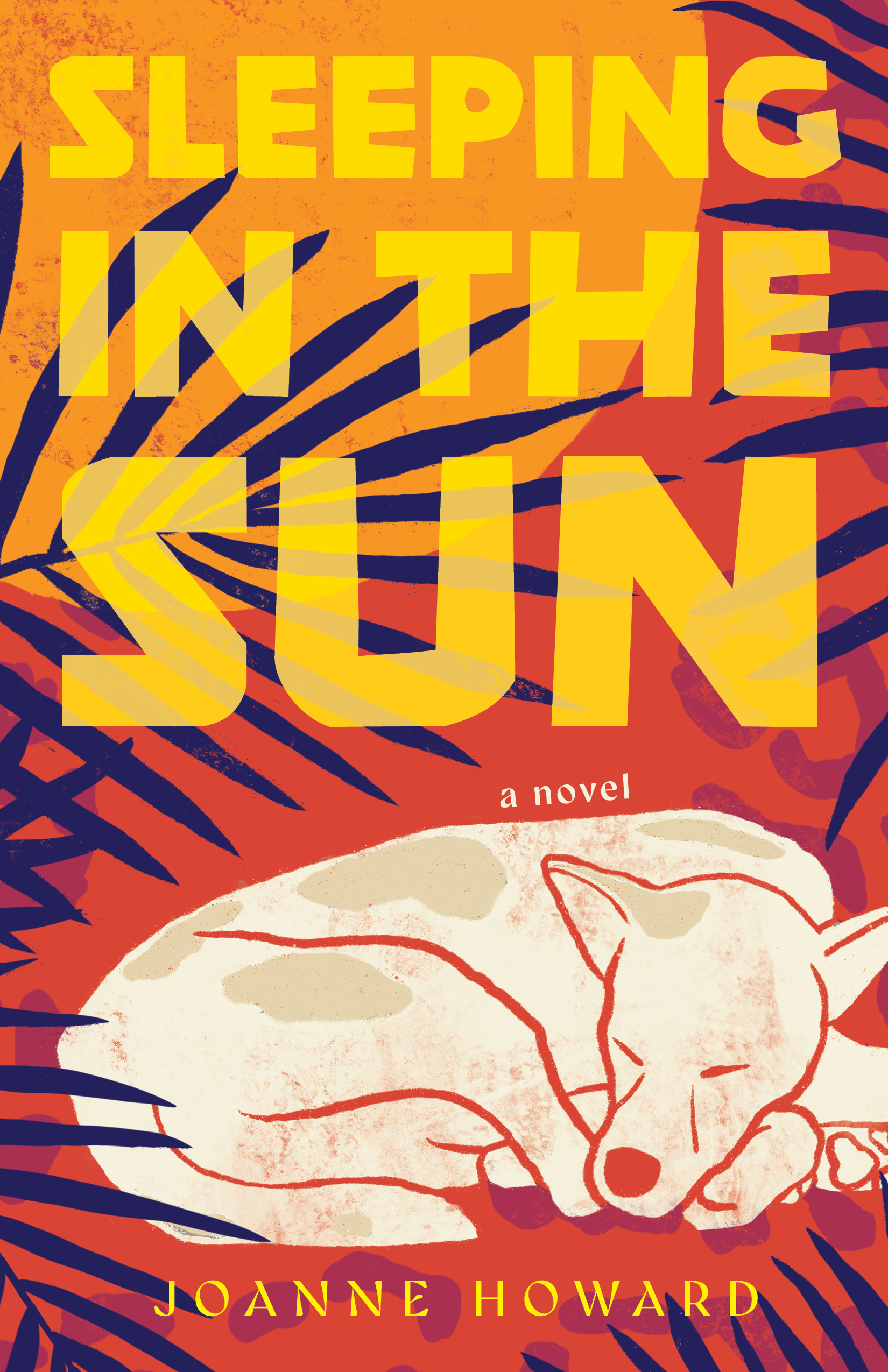
10 Questions with Linda Chadwick, author of On The Road: A Texas Groupie’s Memoir

In an era defined by neon lights, cassette tapes, and the birth of grunge, the music scene of the 80’s was more than just a trend-it was a revolution. This book whisks readers away to a time when music pulsed through the streets, clubs echoed with electric rhythms, and every song told a story. Journey across the State of Texas under the spell of groundbreaking artists and their iconic hits.

Meet passionate fans, ambitious musicians, and unforgettable groupies, all brought together by a shared love for rock ‘n’ roll. Experience the highs of sold-out concerts, the lows of band breakups, and the exhilaration of that first chord. As you delve deeper, discover how music was not only a form of entertainment but a way of life, a rebellion, a movement that shaped a generation.

Blending vivid storytelling with nostalgic anecdotes, this book is more than a mere recollection-it’s a tribute to a time when melodies held memories, lyrics voiced dreams, and every beat was a heartbeat of an era. Whether you’re a seasoned rocker or a new-age music enthusiast, embark on a journey that will reignite your passion for music and remind you of its timeless power to connect and inspire.

On The Road cover
On The Road

Get On The Road: A Texas Groupie’s Memoir at Amazon.

What was your inspiration for writing On the Road?

The book is basically a memoir about my adventurous life as a young woman. I knew eventually I would write a book about being a groupie because I knew so many people would be interested in reading about people they looked up too and admired.

There are many books out there about rock music. What makes yours different?

Yes, there is. I feel my book is different simply because of the time frame it was in. The 80’s were a very exciting and vibrant time for Rock and Roll and Metal.

Do you have another profession besides writing? 

I’ve been many things in my life. Antique dealer, Paranormal Investigator, Booking/Management for musicians. But by far the thing I am most proud of is being a wife to my wonderful husband and a mother to my two beautiful kids.

Do you ever get writer’s block? What helps you overcome it? 

Writer’s block for me would be the cobwebs in my brain. I am 60 years old, and sometimes recalling all those memories from so long ago can be perplexing at times. But thank goodness I was good at keeping so many notes.

What is the last great book you’ve read?

I had it in my library for awhile, but Patti Smith’s memoir about her life with Robert M. She has always been an interesting person to me, and the book is very moving.

What is something you had to cut from your book that you wish you could have kept? 

I actually am the one that made the cut. I think I might have sold a lot more copies if I had kept in the smut, the sex. I made the decision to leave the story dangling and let the readers’ minds fill in what they think probably happened simply to be respectful not only to my husband but the musicians in which I had relations with. We are all older, married and have different lives.

If you could go back in time, where would you go? 

Oh man, I am perfectly happy right where I am. I got it all right the first time around.

Favorite travel spot?

I’m living there baby!!! Costa Rica!!! Pura Vida!!!

What is something that made you laugh recently?

My husband always makes me laugh, but recently he waters the yard (jungle) with a water hose and we live in the rainforest. DUH!

What is the strangest way you’ve become friends with someone? 

Our first taxi driver in Costa Rica, named Carlos. Nicest person you could ever meet. We’ve become fast friends.

Get On The Road: A Texas Groupie’s Memoir at Amazon.

Linda Chadwick
Linda Chadwick

Author Bio:

Linda Chadwick is a lifelong resident of Texas, married thirty plus years, has two grown children, and is a mom to her dog and cat fur babies.  She has always had an intense love of writing and has dreamed of being a published author since she was six years old.  She has always loved every facet of music.  She is an avid collector of antiques and once owned her own antique shop.  Her husband Doug is recently retired and they are embarking on their next adventure, moving to Costa Rica.  Don’t worry, she states she has many ideas lined up for more books.

Website: https://lindaschadwick.com/

Amazon:
On The Road: A Texas Groupie’s Memoir https://amzn.to/3UVvUkr

Goodreads: https://www.goodreads.com/book/show/204179732-on-the-road


Linda Chadwick blog tour

© 2014-2024- Ronovan Hester Copyright reserved. The author asserts his moral and legal rights over this work.
Questions with Bayard & Holmes, author of The Leopard of Cairo.

John Viera left his CIA fieldwork hoping for a “normal” occupation and a long-awaited family, but when a Pakistani engineer is kidnapped from a top-secret US project and diplomatic entanglements tie the government’s hands, the Intelligence Community turns to John and his team of ex-operatives to investigate — strictly off the books. They uncover a plot of unprecedented magnitude that will precipitate the slaughter of millions.

From the corporate skyscrapers of Montreal to the treacherous alleys of Baluchistan, these formidable enemies strike, determined to create a regional apocalypse and permanently alter the balance of world power. Isolated in their knowledge of the impending devastation, John and his network stand alone between total destruction and the Leopard of Cairo.

This is the first book in the Apex Predator series.

The Leopard of Cairo front cover.
The Leopard of Cairo

Get The Leopard of Cairo at Amazon.

How did you do research for your book?

The majority of our research for The Leopard of Cairo and our other fiction comes from Jay Holmes’s fifty years of experience in military and intelligence operations. Piper will call him up and say something like, “We need to blow something up,”  or “What will John Viera do if he’s being followed?” Jay either tells her off the top of his head or he gets back to her in a day or so, and she fills in the rest from her own knowledge and with Google.

Which was the easiest character to write?

Jay finds it easiest to write the male operatives on the team. For Piper, the female characters are easiest to write, particularly the middle-aged female assassin, Mrs. Beasley. Piper isn’t sure what that says about her own personal character.

Where do you get inspiration for your stories?

Usually, our inspiration starts with some tawdry joke we make while eating a fresh chocolate cake in Holmes’s kitchen sometime after midnight. If we’ve had a sip of guinda, a Spanish cherry liqueur, the work goes faster.

Your book is set in Quetta, Pakistan, Cairo, Egypt, Montreal, Canada, Northern Vermont, and Flagstaff, Arizona. Have you ever been there?

Piper has only been to Flagstaff, but Jay has been to all of these places. Piper would love to visit Montreal and Vermont, but Jay has warned her away from Quetta and Cairo.

If you could put yourself as a character in your book, who would you be?

Piper would love to be as tough as Angelina. Jay is already one or two of the male characters, including our protagonist John Viera.

How long have you been writing?

Piper has been writing off and on since she flunked Calculus in college and switched her major from Biophysics to technical writing. She began writing novels in 2004.

Jay has been writing professional papers for over four decades, and he has occasionally been forced to turn in government paperwork that resembles writing during that same time span. Piper roped him into writing fiction, spycraft, and history books in 2010.

What is the last great book you’ve read?

Piper just finished Seven Pillars of Wisdom by T.E. Lawrence, a.k.a. Lawrence of Arabia. It’s an absolute masterpiece detailing his work with the Arab tribes to overthrow the Ottoman Empire and build the nations of the Arabian Peninsula.

Jay just re-read Admiral Arleigh Burke, a biography by E.B. Potter, and he highly recommends it.

Which authors inspired you to write?

Piper is inspired by authors of great characters and stories from all eras, such as Alexandre Dumas and J.K. Rowling. Jay was inspired by Piper asking him to write.

What is something you had to cut from your book that you wish you could have kept?

Piper:  Not with The Leopard of Cairo.

Jay: Piper constantly edits out my X-rated content.

Who was your childhood celebrity crush?

Piper: Roger Moore. At fifteen I was in London and was thrilled to get a picture of the trash in front of the building where he lived.

Jay: Raquel Welch. I wanted things to happen with me and her. By the time I was ten, I figured out that was a nonstarter, and I started focusing more on local girls.

Get The Leopard of Cairo at Amazon.


Bayard and Holmes author photo.
Bayard & Holmes

Author Bio:

Piper Bayard is an author and a recovering attorney with a college degree or two. She is also a belly dancer and a former hospice volunteer. She has been working daily with her good friend Jay Holmes for the past decade, learning about foreign affairs, espionage history, and field techniques for the purpose of writing fiction and nonfiction. She currently pens espionage nonfiction and international spy thrillers with Jay Holmes, as well as post-apocalyptic fiction of her own.

Jay Holmes is a forty-five-year veteran of field espionage operations with experience spanning from the Cold War fight against the Soviets, the East Germans, and the various terrorist organizations they sponsored to the present Global War on Terror. He is unwilling to admit to much more than that. Piper is the public face of their partnership.Together, Bayard & Holmes author non-fiction articles and books on espionage and foreign affairs, as well as fictional international spy thrillers. They are also the bestselling authors of The Spy Bride from the Risky Brides Bestsellers Collection and were featured contributors for Social In Worldwide, Inc.

When they aren’t writing or, in Jay’s case, busy with “other work,” Piper and Jay are enjoying time with their families, hiking, exploring back roads of America, talking foreign affairs, laughing at their own rude jokes until the wee hours, and questing for the perfect chocolate cake recipe.

Website: https://bayardandholmes.com/

Facebook: https://www.facebook.com/piper.bayard

Twitter: https://twitter.com/PiperBayard

Amazon:
Leopard: https://amzn.to/3UVvUkr

Caiman: https://amzn.to/3TivPG4

Goodreads: 
Leopard: https://www.goodreads.com/book/show/71953522-the-leopard-of-cairo

Caiman: https://www.goodreads.com/book/show/206323749-the-caiman-of-iquitos

Bayard and Holmes blog tour

© 2014-2024- Ronovan Hester Copyright reserved. The author asserts his moral and legal rights over this work.
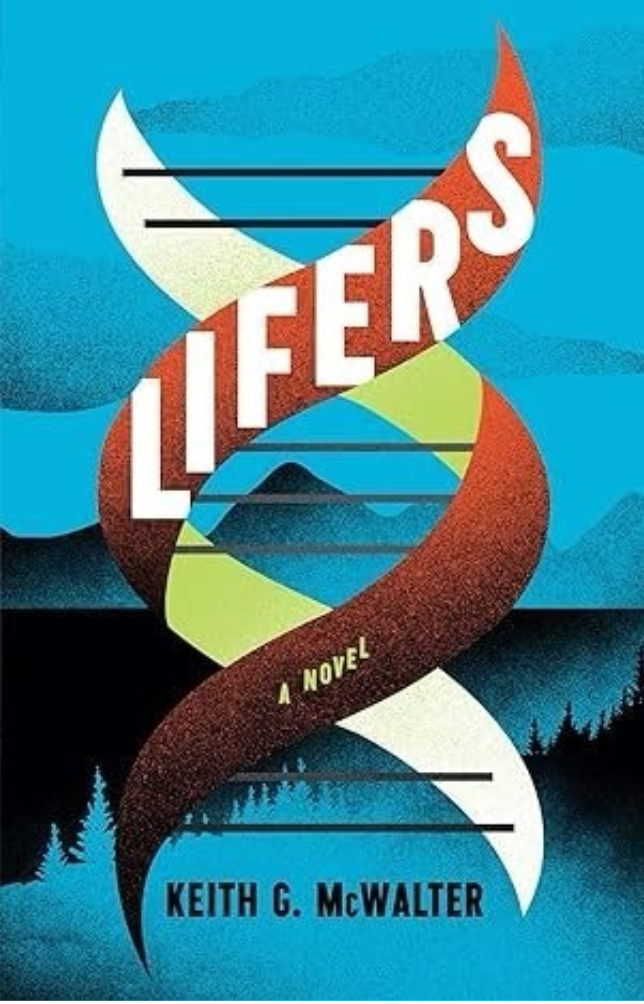
10 Questions with John Amos, author of The Cleopatra Caper.

“I want to present Cleopatra to the World,” Lady Stanhope sighed and reached for her purse. Two very young and inexperienced detectives, Flinders Petrie and Thomas Pettigrew, were unexpectedly presented with the case of a lifetime. Flinders and Pettigrew, recent graduates of Oxford and rivals of Sherlock Holmes and John Watson, suddenly find themselves confronted with the task of finding Cleopatra’s tomb. The tomb’s location, as they quickly discovered, was protected by the adherents of an ancient cult. Their quest leads them to Cairo and Alexandria. They meet a mysterious woman, who is possibly the descendant of Cleopatra. Their story weaves between the ‘City of the Dead’ in Cairo and the ‘Mound of Shards’ in Alexandria. They discover that becoming a detective is more difficult than they imagined as students. Set against the background of the River War in the Sudan and written by an expert in archeology and Middle East history, readers will find this story a worthy successor to the Conan Doyle legacy. “Find me Cleopatra, and I will pay for all this….”


The Cleopatra Caper
The Cleopatra Caper

Find The Cleopatra Caper at  Amazon.

What would be your one sentence elevator pitch of what your book is about to get someone to want to read it?

Two quirky young detectives are hired to find Cleopatra’s tomb, they grow up quick, but almost get killed during the chase.

Why choose the detective fiction genre for your book?

I read the Adventure of the Speckled Band as a kid. It scared the wits out of me. Ever since, I’ve wanted to write a detective story.

What research did you do to ensure you were historically accurate in setting, language and the like?

For the Middle East, no problem, I taught Middle Eastern politics for 25 years, and lived in Cairo for a year studying at the American University. (I also wrote a couple of books on Middle East politics). For everything else: Wikipedia, online publications, academic theses, and Bing AI (AI is really neat, if you know what to ask).

I know for my own book it was a real process to get things just right.
Coming up with character names is more difficult than people might think, how did you go about picking yours?

They are from historical characters: Flinders Petrie is the nephew of Sir Flinders Petrie, the great archeologist. Thomas Pettigrew is the grandson of Thomas Pettigrew, the British anatomist and mummy exhibitor. E A Walis Budge is himself. Lady Hestor is herself. Lord Cromer is himself. Inji was second in command of ‘Social Affairs’ in Cairo, and a very scary lady, indeed. (The first description of Inji is exactly the person I met in Cairo). Other names are from lists of Greek and Egyptian baby names.

How has your world traveling impressed itself on your writing?

Traveling supplied the background ambience. Owen Lattimore, the China expert, once wrote something to this effect: “If you haven’t been there and don’t know that there are tapeworm segments in the bottom of outhouses, you’re not an expert.” He was right. I lived on the economy in Cairo for a year and had to learn Arabic. I saw a lot of stuff a tourist would not see. My daughter is an amateur archeologist who worked on the digs at Pompeii, so I had an bona fide archeological source.

What will connect the reader to the story and make them keep reading to the end?

There are multiple levels, I think.  Obviously, there is the Sherlock Holmes nostalgia. But beyond that, the story of a couple of self-entitled kids being forced to grow up in a hostile world is the same theme that you have in the US today: A lot of readers are experiencing the same trauma. And, of course, there is the lost love theme which is a pretty universal experience.
Probably everybody can relate to Flinders and Petrie, they are a very likeable and funny pair: reviewers seem to like them.


Did you have difficulty deciding your book was ready to publish?

I hadn’t a clue. I ran the manuscript by several literary agents who weren’t interested and then shipped it off to the same hybrid I used for the Student. A mistake. I have revised it to take out the clinkers and add material since I now have the advantage of hindsight.

What age(s) of reader do you think would enjoy The Cleopatra Caper?

I wrote another book and the developmental editor said that I write for eleven year olds. Maybe so. I like to think that I write for anyone who has the imagination to be scared by the Speckled Band.

What’s your next project idea?

The Stolen Goddess will be out in April. Flinders and Petrie meet TE Lawrence and Gertrude Bell. It’s set in Istanbul at the end of the Ottoman Empire. I have tried to portray the old empire in all its complexity. It has some truly villainous villains: the Veiled One is the Phantom of the Opera on steroids, and the Bulbul (the bulbul, “nightingale,” was the official executioner in the Ottoman Empire) is modeled after Charles Mansion (I represented one of the Manson family in a parole hearing). The theme is that of the arc of life, unlike Holmes and other fictional detectives, Flinders and Petrie age.
 
The Bones of the Apostle will probably be out later this year. This is a darker work set in 1915, the time of the Armenian genocide. (My late wife’s grandmother survived the death march). I’m still revising; I’m not sure I can do it justice. I have invented a new character, Gazelda Jones,  who is as quirky as the detectives and adds a love theme. She will be around to the end of the series.


There are other detective fiction novels set in times past, why should a reader choose The Cleopatra Caper?

It’s a detective story with all the fast action of the genre, but it’s also a story about growing up, about lost innocence, and about lost love. In a way it’s a ghost story, because the heroes are haunted by their experiences. Their character development is central: These guys are driven by wanderlust, by guilt, and by the loneliness of their newly chosen profession. I suppose you could say that it’s part Conan Doyle, part Lawrence Durrell, part Henry James, and a smidgen of the “Thin Man.”

Find The Cleopatra Caper at  Amazon.

John Amos
John Amos

Author Bio:

John Amos holds a PhD and a JD. He has taught at university level for 25 years. His academic publications include several books and multiple articles. His fiction works include The Student (2022), The Cleopatra Caper (2023), and The Case of the Stolen Goddess (2024). He has lived in the Middle East, most notably in Egypt, Lebanon, Libya, and Turkey. He currently practices Law.


© 2014-2024- Ronovan Hester Copyright reserved. The author asserts his moral and legal rights over this work.
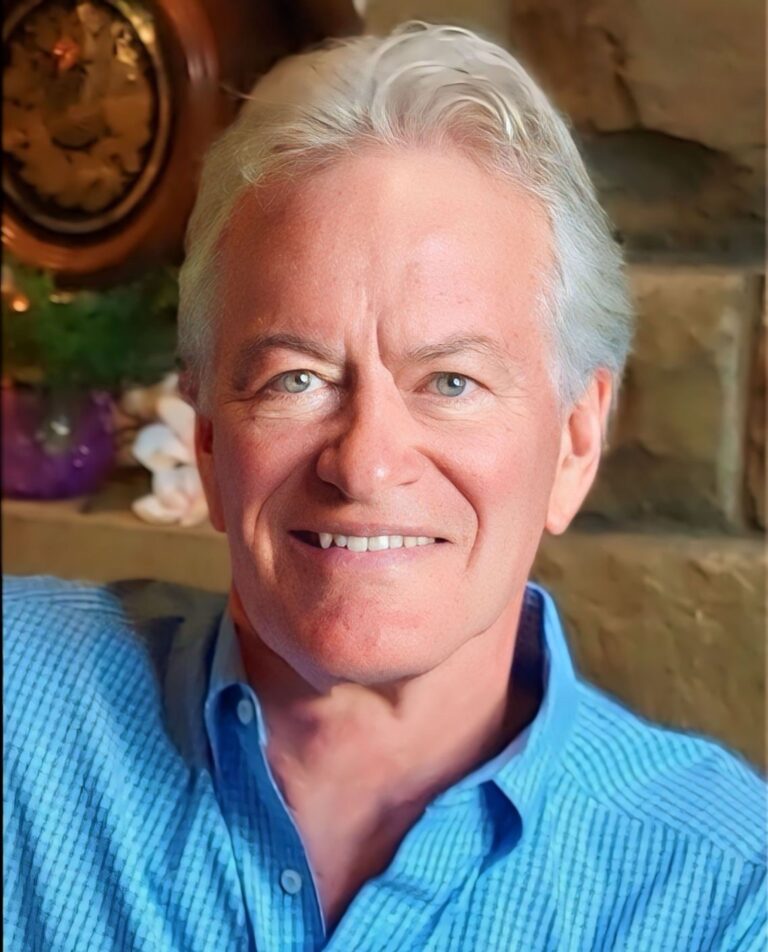
10 Questions with Jo Sparkes, author of The Honey Tree.

Maggie has always accepted life’s constraints: that is, until she witnesses a breathtaking moment of liberation as a butterfly breaks free from a spider’s web. And this small, defiant act sparks a fire within her soul.

That’s a dangerous thing for a field slave in 1850 Missouri.

As her daughter ascends to the coveted position of personal maid to the Mistress, Maggie’s family is thrust into the intricate dynamics of power and privilege within the House.

But in the shadows, a chance encounter between Maggie’s sons and Preacher, a burly, escaped slave, sets the stage for a risky alliance.

Meanwhile, Lucy, the Master’s lonely daughter, hungers for the warmth and kindness that Maggie effortlessly exudes. The boundaries that separate them are as rigid as the times they live in, but the desire for connection and understanding defies the odds.

Maggie, recognizing an opportunity for freedom, finds herself entwined in a perilous dance between liberation and the relentless pull of her current station.

Will she follow in the path of the butterfly?


The Honey Tree by Jo Sparkes
The Honey Tree

What would be your one sentence elevator pitch of what your book is about to get someone to want to read it?

This is the story of Maggie, a slave who excels at picking cotton, and Lucy, a nine year old whose mother believes she can’t excel at anything.

Why do you think Maggie was so persistent in wanting you to tell her story?

Honestly, I still don’t know.

She haunted me for years – years. I’d jot a few things down, toss them away. I kept telling myself it wasn’t a story for me to tell. The ideas would fade – only to come back stronger.

One full moon I dreamt – vividly – of that wild night on the Mississippi River. The next morning I wrote in earnest.

The Honey Tree is different from your ventures into fiction. What is your background to be able to write Maggie’s story? What research did you need to do?

There was a bit of a familiar echo from a few characters to some elders I remember as a child. And if you read Wake of the Sadico, you might see a connection. But I had a ton of research to do.

I disliked research before the internet. Spending hours in libraries trying to learn what 15th century seafaring was truly like is incredibly time consuming – and when you get home you always realize you missed some key details.

Now at least you can Google online, or use it to seek knowledgeable folk. Even then, as I’m doing my early morning writing, I’ll suddenly realize I have no idea if they drank tea or coffee in Missouri.

What will connect the reader to the story and make them keep reading to the end?

I see stories as carnival rides. The events are the track laid down and the characters are the vehicles you ride in. You have to believe in the characters – like them. You need to feel their drive, their desires, their goals.

You must want to take that journey beside them.

Did you have difficulty deciding your book was ready to publish?

I always have trouble letting go. There’s another tweak here, a bit more polishing there.

These stories grow into friends, and it’s hard releasing them. Once they venture out into the world, they take on their own life. You can only watch from the side-line.

What age(s) of reader do you think would enjoy The Honey Tree?

I’ve had friends give it to twelve year olds, who loved it. I suppose it depends on the parent’s perspective.

What’s your next project idea?

I seem to have stumbled across a dead girl in the Arizona desert who wants to talk to her mother.

What led you to leave the sunshine of Arizona to the not-so-much sunshine of Plymouth, England?

My darling spouse is British, and had lived with me in the U.S. for thirty-six years. It was simply my turn to live abroad.

It’s a wonderful adventure.

What do you miss about the U.S.?

Mexican food, large parking lots, and central air. When we bought our place in the UK, I discovered that “A.C.” on this side of the Atlantic stands for an “Airing Cupboard.”

Finally, there are other historical fiction novels with similar subject matter, why should a reader choose The Honey Tree?

To me, this is not another story about slavery. It’s about people who wanted something better for themselves, their families. A man who fought and lost and gave up, then fell in love and fought all the more. About a woman struck by the idea that freedom might be possible after a lifetime of believing otherwise. A woman risking more and more for her children, and then someone else’s child.

In a nutshell, it is about that spiritual leap of faith – and Lucy’s literal leap of faith.

Find The Honey Tree at several outlets including Amazon.

Visit Jo’s books2read.com/HoneyTree site for all of the vendors (12 in all) you can purchase The Honey Tree from.

Author Jo Sparkes
Jo Sparkes

Jo Sparkes

From television shows to football articles, Jo Sparkes can’t put the pen down. She’s interviewed Emmit Smith and Anquan Boldin (as Arizona Cardinals), taught screenwriting at the Film School at SCC, and went on camera to make “Stepping Above Criticism”.

An award winning writer, she’s recently moved to Plymouth, England – and learning to speak the language.

Website:  https://josparkes.com/

Wishing Shelf Book Awards Finalist

© 2014-2024- Ronovan Hester Copyright reserved. The author asserts his moral and legal rights over this work.
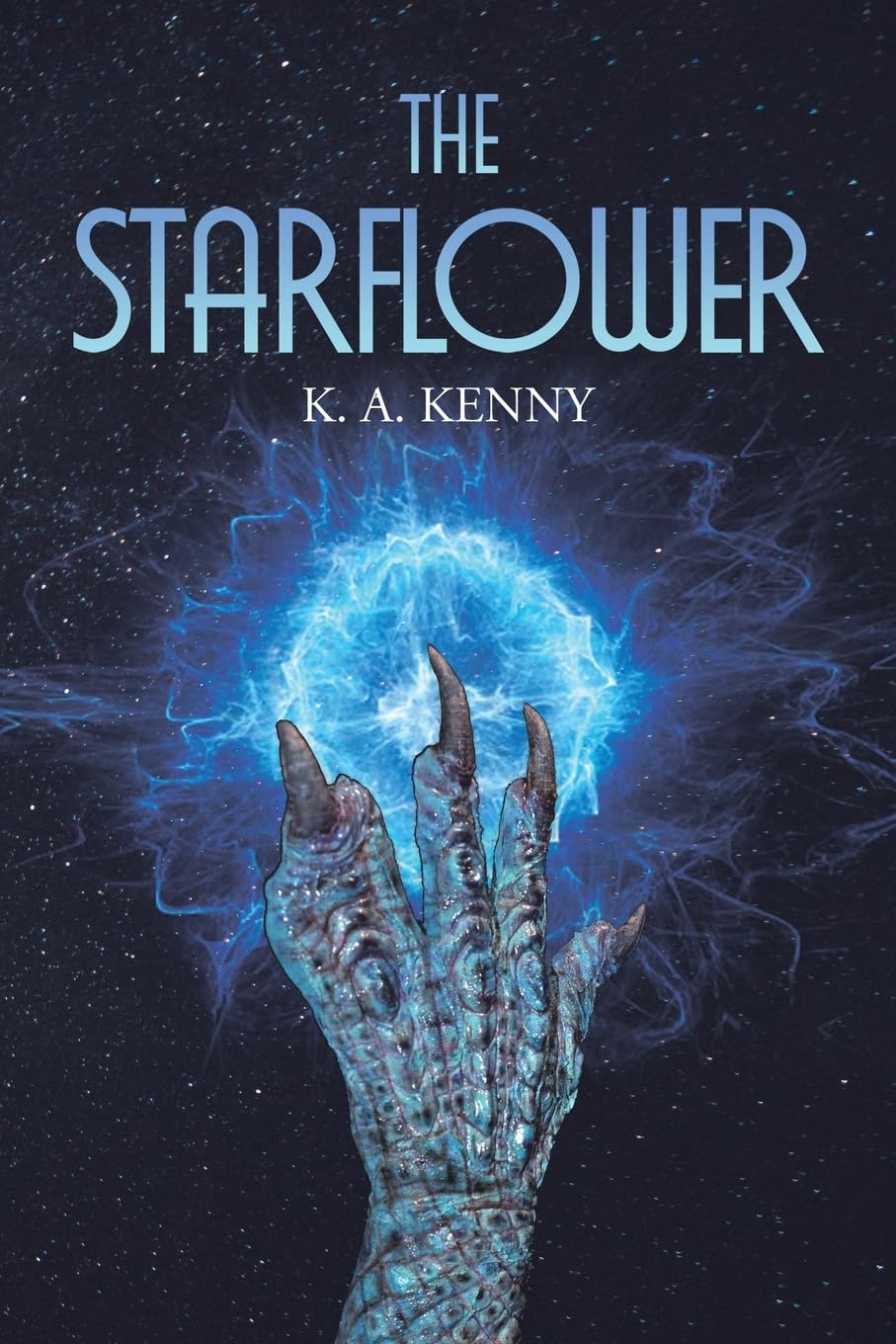
10 Questions with Madison C. Brightwell, author of The World Beyond the Redbud Tree.

The world as we know it is built upon choices. If different choices had been made in the past, we might be living in an entirely different world. What if the so-called Lost Colony of settlers in North Carolina were in fact not lost at all but instead merged happily with the Native American tribes to create a new people and unique society?

Sixteen-year-old Charli is living in a pandemic-ravaged 2020 America when she stumbles upon the parallel world of the Q’ehazi. Drawn to these peaceful people, whose constant joy and optimism provides a stark contrast to the suffering and violence in her own life, Charli wants nothing more than to stay with them forever-but first, she must learn to attain a state of grace.

Can she forgive her mother’s abusive boyfriend? Can she learn empathy for her mother? In The World Beyond the Redbud Tree, Charli’s inward and outward struggles will lead her to a discovery she wasn’t even looking for: the beauty of her own world.

The World Beyond the Redbud Tree

You have only a few seconds to tell someone what your book is about, in two sentences tell them what your book is about? In other words, what would you say to interest them about The World Beyond the Redbud Tree?

OK, my elevator pitch: The novel is a utopian fantasy about a parallel universe in which different and more positive choices have been made.

“The World Beyond the Redbud Tree” is a gripping, coming-of-age narrative set in a pandemic-ravaged America, in which Charli, the sixteen-year-old protagonist, stumbles upon a parallel world where people co-exist peacefully, providing a stark contrast to her own troubled existence. The Q’ehazi society, with its emphasis on joy and optimism, serves as an uplifting contrast to the struggles faced by Charli in her own reality. Charli’s journey is not only an external exploration of this parallel world but also an internal quest for forgiveness and empathy. The narrative skillfully weaves together Charli’s personal struggles with larger societal issues, making the story both intimate and universal. The themes of forgiveness, empathy, and the pursuit of grace are handled with nuance and depth.

There are sensitive, but widely occurring, subjects you approach in the story. What led you to doing a book about those subjects?

I am a therapist and I help clients all the time who are dealing with these issues. These sensitive topics are based on the truth of my experiences and those of my clients, and they help to point up the contrast between our world and the mythical Q’ehazi world.

Forgiveness is a big part of The World Beyond the Redbud Tree. That’s a difficult thing to do in many situations, especially for a teen. For Charli, facing the prospect of forgiving Sean is something that would seem impossible. Failure is so easy to achieve in such a situation. Why choose this aspect of one’s character as a key theme of the story?

It’s not something that’s very often written about. In our culture, “revenge” is much more often the norm, and yet we discover that violence just leads to more violence. I wanted to show that a different choice was possible. Charli is young but she has an emotional maturity way beyond her years, and she is open to learning a different way of being. She doesn’t necessarily attain it in this book, but her journey towards wisdom and grace takes place over the course of the three books that make up the trilogy.

Where is the setting or settings for The World Beyond the Redbud Tree and is there a specific reason for its selection?

The setting is where I live, which is Weaverville, NC. I chose that area because it inspired me. We have a redbud tree on our property and I love the way it changes colors four times during the season (pink, red, green, yellow). I discovered later that it is one of the seven “sacred woods” of the Cherokee people. (See also below)

Early American history and the Cherokee people influenced your book, what research did you do to help with your book?

Ironically, I didn’t do much research before writing the book, as it’s a fantasy, other than reading books about the Lost Colony and finding out about the real history from that era. However, I visited the Cherokee Oconoluftee village in Cherokee NC a few months after writing my book, and was amazed and delighted to discover that many of the themes and ideas I had written about as being part of the Q’ehazi culture were in fact mirrored in the Cherokee culture.

The name you chose for the parallel world of Q’ehazi, I’ve found a similar word and the definition fits the world you’ve created, but how did you come up with it?

I literally made it up. I didn’t want it to be a real word in another language. So I flung together a few letters and my friend suggested the apostrophe.

If you had to be one character in The World Beyond the Redbud Tree, who would you choose and why?

I actually wrote the character of Maudina (Sovereign Aurora’s sister) for me to play, should there ever be a movie made! I resonate with her youthful spirit and her creativity.

What will connect the reader to the story and make them want to keep reading?

A variety of things. I would hope they would be intrigued by the unique and imaginative parallel world; some people have called the book a “page turner” because they want to find out what happens to Charli, as she’s a very sympathetic and multi-faceted protagonist; many people have described the book as “thought-provoking” because it’s not just a story but also a message about our world and how to make it better.

What’s the biggest difference between living in California and now in North Carolina?

Interesting question. I’m originally from England and I loved all the trees in NC, it’s like being in England before all the trees were cut down, many hundreds of years ago now. I enjoy both states, and they are very different. It’s also important to mention that I moved from Los Angeles to the tiny little rural town of Weaverville, and that experience contributes to the difference also. The people here are gentler and the pace is a lot slower. There isn’t so much diversity here, either in people or activities. I feel more connected to nature here, because we live on an acre of land. However, in LA I lived near the beach and I enjoyed that too. So there’s good things about both places.

What’s your next project idea?

Book Two in the series, called “The World of the Q’ehazi” (working title). I have just finished the first draft, will be refining it and hope to publish it later this year.


Find The World Beyond the Redbud Tree at several outlets including Amazon.


C Madison Brightwell
Madison C. Brightwell

Author Bio:

Madison C. Brightwell is an author and a licensed MFT with a doctorate in psychology. She has been working as a therapist for fifteen years, before which she worked as a professional actress and in film and TV development. She has written four other novels and three self-help books in the field of psychology. Since moving to Asheville, North Carolina, from her native Britain, Madison has become inspired by the history of this land, originally inhabited by the Cherokee. She draws on many of her experiences helping clients with trauma, addiction, and chronic pain.

Website: http://www.madisoncbrightwell.com/

Facebook

Instagram: MadisonBrightwell


© 2014-2024- Ronovan Hester Copyright reserved. The author asserts his moral and legal rights over this work.

10 questions with the authors of How Does She Know. Andrea Rubinowitz & Diane M. Sylvester

Having the ability to foretell events and connect with people in the afterlife is a unique gift. But can it also be a horrible curse!

Anna Mavrides has been burdened her whole life by the violent visions she had as a young girl. When she decides decades later to write a book about those visions and her family’s connection to the spirit world, it becomes an instant bestseller, but it ultimately triggers a chain of events that would have her charged with the brutal murder of her childhood friend.

As Anna wrestles with the fractured memories and tangled relationships of her youth from her prison cell, her determined supporters dig to expose the motives of the leader of a Spiritualist community featured in the book and the District Attorney who charged her with murder.

Their efforts could exonerate her and provide some answers about Anna’s distant past, but her reward will be a penultimate showdown at a seaside Maine amusement park, where the past and present fuse in a fiery conclusion.

All her life, people have asked Anna Mavrides, “How do you know?” Can she finally answer that question?

How Does She Know
How Does She Know

If you only had two sentences to tell someone what your book is about, what would you say to excite them about the story? 

Anna Mavries decides to tell the world her story about the extraordinary supernatural gifts and Greek legacy she possesses, but little did she know the ripple effect on the present day and the past it would conjure up. As she sits in jail, both friends, foes, and paranormal play tug of war with Anna’s life and as the rope unravels, Anna sees the truth.

How did you and DIane meet and decide to collaborate on a book?

We met at work and developed a deep friendship. Diane began to tell me about her gifts and the manuscript in which she detailed these events.  And of course with my insatiable hunger to know more about paranormal, I could not resist the opportunity to bring it to life.

Why a murder mystery?

The pivotal vision is Christine so it felt right to develop a more profound story around it

Where is the setting for How Does She Know and is there a specific reason for its selection?

Portland Maine is Diane’s home and she is considered a Mainer.  Since the majority is based on true events, it seemed fitting to keep it in her birth place plus it adds so much color to the story.

How have your own experiences influenced your characters in their personalities, characteristics, and little details? For example; do one of you have someone in your life that you put a little bit into Marjorie?

The story revolves around true events that Diane has and continues to experience as a medium- thus all those details built the main character Anna.

If you had to be one character in How Does She Know, who would you choose and why?

I really bond with Lori as I like her moxy and she has the traits of a Gemini which I am part of that club.

What will connect the reader to the story and make them want to keep reading the story?

I find that the layers of the past and present swirling around Anna’s paranormal experiences, the readers want to know how it all intersects at the end.

What was it like collaborating in creating How Does She Know?

Moving from Diane’s detail manuscript to a compelling story had its journey with stops, starts, tears and joy but in the end it is a passion project that came into reality at the right time!

Many first time authors have a problem with letting their work enter into the world for others to read. Did you have difficulty deciding your book was ready to publish?

I truly believe the universe decided when this passion project was ready and it came through with implacable timing.  I am a believer of signs and throughout 2023 I was seeing multiple numerals in a row repeating – my sign was the number 1 and it was loud and clear!

What are the daytime secret identities of the authors of How Does She Know that help pay for the electricity to power your computers?

Diane and I both work I work in hospital reimbursement again being a Gemini I have 2 sides for sure!

What is your next project?

A sequel is currently in the works for Anna to continue to bring forth the intrigue of her gifts as they expand and grow – again based on true events!

Find How Does She Know at Amazon.

Andrea Rubinowitz
Andrea Rubinowitz

Author Bio:

Andrea Rubinowitz was born and raised in a suburb of Milwaukee, Wisconsin and from the age of 6 years old fascinated with the paranormal world.  From chasing ghosts before impending thunderstorms, racing home after school to watch Dark Shadows, seeing every horror movie with Vincent Price, and finally as an adult, the urge of knowing more never ceased in fact it grew.  Upon meeting Diane M. Sylvester, born into a generation of fortune tellers not by choice certainly cannot guarantee a life time of happiness.

Diane M Sylvester
Diane M Sylvester

Diane M. Sylvester was raised in Portland, Maine and continues to reside in this beautiful state known as Vacationland.  Born into a generation of fortune tellers not by choice; this pedigree cannot guarantee a life time of happiness. She longed to tell her story of her lineage, physic abilities and paranormal experiences that she cannot ignore. How Does She Know is Diane’s first book regarding her amazing gifts.


Amazon:  https://amzn.to/3O0tBZc

Goodreads: https://www.goodreads.com/author/show/45729606.Andrea_Rubinowitz

© 2014-2024- Ronovan Hester Copyright reserved. The author asserts his moral and legal rights over this work.
8 Questions with SK Bennett, author of Marco the Great and the History of Numberville.

Marco did okay in math. He could follow the complex blueprints provided to him, navigate the steps, and arrive at the answers that earned him a shiny grade near the front of the alphabet. That is, until middle school. As new and confusing letters started creeping into every question, Marco developed a problem. When a new figure ‘pops’ into his life, he is introduced to a fantastical world where numbers rule, where they live together in villages, engage in duels, build stadiums and cheer for their favorite team as players are flung through the air. Marco’s imagination runs wild as he develops new powers and hungers for more.

But everything is not as it seems. Join Marco, his annoying little sister Maggie, and his best friends Oliver and Liam (a math whiz and a conspiracy nut), as they discover this magical world is more real than they ever could have dreamt. And find out… Will Marco master the Numberfolk before the Numberfolk, very literally, master him?

Marco the Great and the History of Numberville is the first installment in a fantastical adventure series that will have readers learning math and enjoying every minute of it. In addition, the text includes over 300 practice problems and solutions as well as access to an entire digital world allowing students to dive directly into Marco’s world with 40+ games to level-up their learning.

Marco the Great
Marco the Great

See the tour–wide giveaway at the end.

How did you come up with the idea for Marco the Great? 

I have always been an avid reader and a lover of stories. When my daughters were young, we  would read The Magic Treehouse series and I was so impressed with how well my kids could  pick up on facts from fiction much better than they could with standard textbooks. The idea to  create a similar mathematical fantasy world rattled around in my brain for years. It wasn’t until  my daughter hit 6th grade and was really struggling that gave me the push I needed to help  her. I was substituting a class and the way I happened to explain solving equations had a fun  and creepy vibe to it. At that moment I finally knew what the story would be. I started writing  and honestly haven’t stopped since! As a bonus, my daughter no longer ‘hates’ math, she has  this wonderful excitement when she talks about it, she is so proud and confident, and she went  from being behind to being a leader in her honors course. This alone was well worth it, and I so  hope that Marco the Great can have a similar impact on students across the world.  

How did you do research for Marco the Great

The math was the easy part. I feel like I have been researching not only the content but the  best way to present it to students for my entire personal life and professional career. Every one  of the 100+ math textbooks I own, every experience as an educator, and every ‘aha’ moment  contributed to the scope, sequence, and presentation of the topics.  

I, in some way, researched everything else that went into Marco the Great. Sometimes this was  a deep dive into Google or the books I have at home, but often it was just throwing myself into  the experience. In one scene, Marco and Mr. Pikake do math in the snow. My kids and I  physically did this. I wanted everything to be just right and believable. For instance, I needed  to know how it sounds when you are shivering and trying to speak the character’s words. So we  played it out! We even wrote out all the equations with a stick and took pictures of them to aid  me as I wrote the scene. 

Marco the Great has unique page numbers, how did you come up with this idea? 

One goal of the book was to help students see that numbers are everywhere. There are  numbers we see and don’t ever really think about, and there are others we don’t see that are  governing the natural world like friction or gravity. The page numbers were a great place to  highlight this. By making them different mathematical equations and expressions, my goal was  to show that no matter how difficult the math might look, it’s just a number. 

Every book has page numbers that serve as a way to reference and communicate information. They are something we often ignore. In Marco the Great you can’t miss the strange mix of  letters and numbers taking over the bottom of each page and they differ depending on the  chapter and the concept we are talking about. This provided both a fun and novel way for  students to check their understanding and an opportunity to normalize complicated notation  and make it more approachable. It had the added benefit of highlighting the unseen numbers  we take for granted.  

What makes your book different from what’s out there? 

One of the reasons I finally took the terrifying leap to publish was because there wasn’t  anything on the market. I am certainly a bibliophile and I searched and searched and came up  empty. There are books that are math adjacent, but I found these never dug deep enough into  the actual concepts. Books that did dig deep were textbooks or technical writing that were  hard to read and felt like I had to first translate them into English and then try to understand  what they were attempting to explain. Marco the Great presents rigorous mathematics in a way  that is fun to read and much easier to comprehend. It uses the power of storytelling to provide  a fresh perspective that I believe is so needed in today’s classrooms. 

Do you have another profession besides writing? 

My technical profession is educator and instructional designer. I have spent years designing  and developing courses and curricular material which made the transition to writing a bit  easier. A huge part of my educational philosophy is that learning should be fun. Most of my  days are spent coding math games. I think that learning through play is the absolute best way  to master new concepts.  

The norm is for instructional designers to stay out of the classroom. I always felt this was a huge  mistake. How can I design a strong and engaging curriculum if I am so removed from the  students using it? So, throughout the years I have always kept one foot in the classroom. Not  only does this bring me so much joy, energy, and purpose, it helps me to continue to  understand the demographics I am designing for and what is important to them.  

What is your next project? 

I am very excited for the next book in the Marco the Great series: Marco the Great and the  Mystery of Phaseville. It focuses on Algebra concepts such as functions and graphing. I am in  love with the story and can’t wait to get everything just right.  

What are the biggest rewards and challenges with writing Marco the Great

The biggest reward is helping students to not fear numbers; to see their importance, and to  feel more confident in learning and doing mathematics. There is so much talk about how math  is useless, we don’t use what we learn in our daily lives. But I see it differently, I see math  everywhere I look. Learning math is the process of making sense of the world around us,  optimization, logic, engineering, it’s everything. If I can help a student to see, understand, and  appreciate math, it is all worth it.  

As a mom, how do you balance your time? 

My kids inspire me. I watch how my teenagers respond to situations, funny things they say, and  all of that goes into the story in some way. They help me a lot. I’ll read a passage and watch  their reaction. When they smile or can’t help but let out a chuckle it tells me ‘that’s a good  line’.  

My husband is also a huge help. We both work from home and homeschool. We split things  up. The kids rotate coming out into my office (my son is here with me now working on his own  math homework) and then back inside. Everything is a balancing act, and I am sure I fail at it.  But that’s okay. I try to do better every day and am so thankful for all the time I get with my  kids.


Marco the Great and the History of Numberville is a MathBait publication. The first installment in the series covers standards from 6th & 7th grade Prealgebra. The exact topics can be found at www.mathbait.com/marco-the-great.

Marco the Great has a 4th-6th grade reading level and was written for a middle school audience. However, it is a great option for younger students as well, either independently or read aloud. Throughout his journey, Marco encounters bullying which may be uncomfortable for younger readers. Parents may skip the related passages (pages 22, 60, and 112), if desired, for the given audience

Find Marco the Great an the History of Numberville at Amazon.

We are doing a tour–wide giveaway of a signed copy of the book and a MathBait T-shirt. SK has THREE sets available for US and/or Canada winners.

Just click below.

http://www.rafflecopter.com/rafl/display/463009dc9/

SK Bennett
SK Bennett

Author Bio:

SK Bennett is an award-winning educator, instructional designer, mathematician, and homeschool mom of five. She spent years designing courses for top companies and institutions before deciding it was time to embrace her belief that learning should be fun and math should never be all about memorization and rote procedures. Inspired by her favorite stories, she set out to create Marco’s world – where learning is an adventure and math is never ever boring.


Website: https://www.mathbait.com/

Facebook: https://www.facebook.com/mathbait

Amazon: https://bit.ly/3RhtSZz 

Goodreads: https://www.goodreads.com/book/show/135699300-marco-the-great-and-the-history-of-numberville


SK Bennett blog tour


© 2014-2023- Ronovan Hester Copyright reserved. The author asserts his moral and legal rights over this work.

8 Questions with P. A. DePaul, author of Shadow of Doubt.

Michelle Alger flees when her secretly recorded tryst winds up on the internet. She has no option but to hide. Her one-night stand—the son of a powerful US senator—was murdered. Learning she’s the prime suspect is traumatizing. Already a member of witness protection thanks to a Colombian drug lord kidnapping her in college, she now has to run from the senator and law enforcement. To make matters worse, the drug lord finally knows her location and is hot on her trail. There’s only one man she trusts. He saved her once, can he do it again six years later?

Captain Jeremy Malone no longer wears a Green Beret. He’s traded in his fatigues for a new life leading Delta Squad, a covert unit within SweetBriar Group. His latest orders from the senator: find the unknown woman and bring her to me. But Jeremy knows her identity. He once rescued her from a Colombian cartel, and has never forgotten her. He assigns his squad a new mission: find Michelle first and learn the real story.

Michelle and Jeremy can’t deny their explosive chemistry. But, with every new piece of evidence, Jeremy’s faith in Michelle’s innocence is questioned. Is her plea for help a ruse…or a trap set by a beautiful woman determined to expose Jeremy’s own secrets…

This is the second book in the SweetBriar Group (SBG) series and can be read as a standalone.


Shadow of Doubt Cover
Shadow of Doubt

See the tour–wide giveaway at the end.

Where do you get inspiration for your stories?

Inspirations for stories sometimes come from real-life situations in the world. I think in high concept when I see a news story or read an article (war, bioweapon, terrorist) and play the “what if” game. Example: What if a small terrorist cell gets their hands on a bioweapon, how would my black ops team stop them?

Other story ideas just hit me from nowhere. Characters start to introduce themselves and I try to “talk” to them to understand who they are.

How did you do research for your book?

For this book and series, I used a combination of hands-on, internet, and interviews. A few years ago, I attended The Writer’s Police Academy. It’s a hands-on, comprehensive conference given by police officers, first responders, and federal law enforcement. It was amazing and taught me so much. Especially when they let me shoot lasers from a real (but modified) gun. I also interviewed anybody and everybody that would talk to me about so many topics.

Which was the hardest character to write? The easiest?

Wraith was the hardest character to write. She’s complex. She’s a badass sniper who made a horrible mistake during a mission. I had to show her losing the ability to compartmentalize emotions to feeling everything. And make it so the readers still rooted for her.

Talon seems to be the easiest character to write because he hogs every scene and wants to be the center of attention. I’m constantly reining him in.

There are many books out there with black ops teams in romantic suspense. Why should you read mine? 

The SBG series not only deals with life-and-death situations, but also with emotional complexities and dynamics within a team of people who’re closer than family. You’ll read both heavy-action and intricate emotional entanglements. These operators are badass, trained to save the day/world at all costs, but they’re also human with human emotions and responses.

Your book is set in a couple of US locations. Have you ever been there?

Most of my books have international settings. I like to hop around the world to keep the suspense engaging. That said, Shadow of Doubt has two main locations in the US: A fictional town in the North Carolina mountains, and Indianapolis. I’ll admit I chose these locations because I’ve been to both and could picture the places as I set the scenes.

How long have you been writing?

I started late in life. I’ve been an avid reader from the moment I sounded out “See Jane Run,” but it never occurred to me to write a book myself. That happened in 2009. Oy. Some days I wonder if the elevator got stuck on the bottom floor of my brain when I decided to “give it a shot.”

What advice would you give budding writers?

I have two pieces of advice. One is for those who’ve never attempted to write an entire book: Don’t angst and worry about story structure and trying to make it perfect. No matter if it becomes published or not, you will always have a story you want to read.

The second advice is for those who reached the end of their draft and are saying “now what?” Celebrate the victory. It’s tremendously hard to achieve this milestone. Revel in your success.

What is your next project?

I’m in the process of brainstorming an anti-hero. I’ve always written alpha characters and strong villains. Now, I want to see if I can write a villain worth rooting for.

Find Shadow of Doubt at Amazon.

We are doing a tour–wide giveaway of a signed print copy and some swag. P.A. has FIVE sets available for US winners. She also has FIVE ebooks to send to readers worldwide.

Just click below.

http://www.rafflecopter.com/rafl/display/463009dc7/

PA DePaul
P. A. DePaul

Author Bio:

  1. A. DePaul is a Publishers Weekly Bestselling and award-winning author.Her books are full of action, suspense, and romance.

As a hybrid author, she has books traditionally and independently published. Her traditional publishers include Berkley, a Penguin Random House imprint, and Harlequin Books.


Website: https://padepaul.com/

Facebook: https://www.facebook.com/padepaul/

Instagram: https://www.instagram.com/padepaul/

TikTok: https://www.tiktok.com/@padepaulauthor

Amazon: https://amzn.to/46xJJZ9

Goodreads: https://www.goodreads.com/book/show/195639188-shadow-of-doubt

P.A. DePaul Blog Tour


© 2014-2023- Ronovan Hester Copyright reserved. The author asserts his moral and legal rights over this work.

8 Questions with D MacNeill Parker, author of Death in Dutch Harbor.

When two murders strain the police force of a remote Alaskan fishing port, veterinarian Maureen McMurtry is tapped by Dutch Harbor’s police chief for forensic assistance. The doctor’s got a past she’d rather not discuss, a gun in her closet, and a retired police dog that hasn’t lost her chops. All come in handy as she deciphers the cause and time of death of a local drug addict washed ashore with dead sea lions and an environmentalist found in a crab pot hauled from the sea in the net of a fishing vessel.

When her romantic relationship with a boat captain is swamped by mounting evidence that he’s the prime suspect in one of the murders, McMurtry struggles with her own doubts to prove his innocence. But can she? McMurtry’s pals, a manager of the Bering Sea crab fishery and another who tends Alaska’s most dangerous bar assist in unraveling the sinister truth.

Death in Dutch Harbor by D. McNeill ParkerSee the tour–wide giveaway at the end.

How did you research your book?

Research was not required. Write what you know, right? As a longtime participant in the Alaska fishing industry, I couldn’t pass up the opportunity to use my experience as the backdrop to this book. What could be more intriguing than creating a world where commercial fishing and murder meet? However, I knew nothing about police dogs and so made an inquiry with the Seattle Police K9 Unit. They invited me to their training site. I was so appreciative, I named the dog in the book after the K9 Unit shepherd, CoCo.

Which was the hardest character to write?

The arch villain. It was difficult for me to navigate how to leave clues without giving away the identity of the culprit. The protagonist was a bit of a struggle, a learning experience really. Because the book is written in third person, I wrote many revisions trying out ways to best express what was inside her head.

Which was the easiest?

The police chief was the easiest character to write. I have no idea why.

There are many crime mystery books out there. What makes yours different?

As a former fisherman married to a fishing boat captain, and with a career as a journalist, fisheries specialist for the State of Alaska and a seafood company executive, I’ve got the credentials to pull off authenticity. And along the way, the reader will learn a lot about Alaska and commercial fishing.

What’s your next project?

I’m currently writing the second book of the series. So if you like the characters that inhabit DEATH IN DUTCH HARBOR, you can revisit them.

What is the last great book you read?

I could not put down the book, HORSE, by Geraldine Brooks. Its historical fiction, based on a real racehorse that was trained by a slave. The mystery unravels through the point of view of different characters, some in the present and some in the past. It tackles racism in a unique and poignant manner.

What authors inspired you to write?

There were many authors that inspired me to write like Kurt Vonnegut, John Irving, Craig Johnson, Michael Connelly, John Grisham, Martin Cruz Smith, Raymond Chandler, Agatha Christie and Dashell Hammett but the book that lit a writing fire under me as a teenager was John Barth’s book, The Sot-Weed Factor. It’s a wild ride of historical fiction that showed me there was no limit to using your imagination when crafting a yarn.

What is something you had to cut from your book that you wish you could have kept?

There was a scene between Dr. Mo and her pal, Patsy, in a restaurant that was painful to cut. Patsy, one of my favorite characters, used salt and pepper shakers, hot sauce and catsup bottles and a fork to make a point about the doc’s messed-up personal life. It was near the end of the book where the pace had escalated. The scene slowed things down and, gulp, had to go. I hope to find a place for it in the second book!

Find Death in Dutch Harbor at Amazon.

We are doing a tour–wide giveaway of an ebook of DEATH IN DUTCH HARBOR. D. MacNeill has THREE to give away, open worldwide.

Just click below.

http://www.rafflecopter.com/rafl/display/463009dc6/

D. MacNeill Parker
D. MacNeill Parker

Author Bio:

D. MacNeill Parker and her family are long time participants in the Alaska fishing industry. In addition to fishing for halibut, salmon, crab, and cod, she’s been a journalist, a fisheries specialist for the State of Alaska, and a seafood company executive. She’s traveled to most ports in Alaska, trekked mountains in the Chugach range, rafted the Chulitna River, worked in hunting camps, andsurvived a boat that went down off the coast of Kodiak. Parker’s been to Dutch Harbor many times experiencing her share of white knuckler airplane landings and beer at the Elbow Room, famed as Alaska’s most dangerous bar. While the characters in this book leapt from her imagination, they thrive in this authentic setting. She loves Alaska, the sea, a good yarn and her amazing family.

Website: https://www.dmparkerauthor.com/

Amazon: http://amzn.to/46fPtGv

Goodreads: https://www.goodreads.com/book/show/198615907-death-in-dutch-harbor

D. MacNeill Parker Blog Tour


© 2014-2023- Ronovan Hester Copyright reserved. The author asserts his moral and legal rights over this work.

8 Questions with Hope Gibbs, author of Where the Grass Grows Blue.

Penny Crenshaw’s divorce and her husband’s swift remarriage to a much younger woman have been hot topics around Atlanta’s social circles. After a year of enduring the cruel gossip, Penny leaps from the frying pan into the fire by heading back to Kentucky to settle her grandmother’s estate.Reluctantly, Penny travels to her hometown of Camden, knowing she will be stirring up all the ghosts from her turbulent childhood. But not all her problems stem from a dysfunctional family. One of Penny’s greatest sources of pain lives just down the street: Bradley Hitchens, her childhood best friend, the keeper of her darkest secrets, and the boy who shattered her heart.As Penny struggles with sorting through her grandmother’s house and her own memories, a colorful group of friends drifts back into her life, reminding her of the unique warmth, fellowship, and romance that only the Bluegrass state can provide. Now that fate has forced Penny back, she must either let go of the scars of her past or risk losing a second chance at love..

Where the Grass Grows Blue front cover
Where the Grass Grows Blue by Hope Gibbs

Enter to win  a signed book, hydrangea notebook, hydrangea bag tags, packets of Kettle Corn, and bookmarks! (U.S. only)

Where do you get inspiration for your stories?

I want to bring the charm of the South to a wider community of readers. It’s my goal to immerse them in the culture, food, and characters, so I look around my surroundings or dig back to my upbringing to find inspiration

Your book is set in Kentucky. Have you ever been there?

I was born and raised in the Bluegrass State. I still consider it home, though I’ve been gone for decades.

How did you do research for your book?

Where the Grass Grows Blue is set in Kentucky, where I was born and raised, so I was comfortable with most topics—food, dialogue, and setting. But I did write in flashbacks and had to study pop culture during those decades so as tonot get the year wrong. I also had to do some serious research into genetic diseases, as they are a plot point for my protagonist.

What is your next project?

I’m almost finished with my second book, Ashes to Ashes. It’s an upmarket fiction book, set in the South, of course, that focuses on a tight-knit group of women whose world is rocked after the unexpected death of their dear friend, Ellen, under mysterious circumstances. But before they can even process their grief, they stumble across a web of secrets and lies, unraveling Ellen’s perfect life—the one she tried so hard to project to the outside world. Now they must rely on each other to find out who the real Ellen Foster was while grappling with the idea that they never really knew her at all.

What genre do you write in?

Women’s fiction and contemporary romance. But my third book will be historical fiction because it’s set in the early 1970s. I don’t want to be boxed into one genre.

What is the last great book you’ve read?

On Gin Lane by Brooke Lea Foster. I can’t tell you how much I loved that book.

Which authors inspired you to write?

Elin Hilderbrand. She’s the reason I started writing in the first place. I adore her. I even traveled to Nantucket last fall with a group of girlfriends to have the Elin “experience.” It was an absolute blast, plus I met her! On my website, you can find a blog post I wrote about that trip.

Do you have another profession besides writing?

I was a stay-at-home mother of five for twenty-five years. A few years ago, I started re-evaluating my life. At that point, it hit me. My children would soon be leaving for college. So I started “journaling” on a laptop. That lasted about a week before I noticed I wasn’t writing aboutmyfeelings or goals—I was creating a character.Now that my children are grown, I’m writing full-time. But that’s only one part of my “writing life.” I’m also a tour guide for Bookish Road Trip, an upbeat community of book lovers, authors, and bibliophiles. You can find them on Facebook, Instagram, andon their website. I’m in charge of the Author Take the Wheel program.


Find Where the Grass Grows Blue at Amazon.

Enter to win  a signed book, hydrangea notebook, hydrangea bag tags, packets of Kettle Corn, and bookmarks! (U.S. only)


Hope Gibbs author Photo.
Hope Gibbs author of Where the Grass Grows Blue

Author Bio:

Hope Gibbs grew up in rural Scottsville, Kentucky. As the daughter of an English teacher, she was raised to value the importance of good storytelling from an early age. Today, she’s an avid reader of women’s fiction. Drawn to multi-generational family sagas, relationship issues, and the complexities of being a woman, she translates those themes into her own writing. Hope lives in Tennessee with her husband and her persnickety Shih Tzu, Harley. She is also the mother of five. In her downtime, she loves playing tennis, poring over old church cookbooks, singing karaoke, curling up on her favorite chair with a book, and playing board games. Hope has a B.A. from Western Kentucky University and is a member of the Women’s Fiction Writers Association.

Website: https://www.authorhopegibbs.com

Facebook: https://www.facebook.com/hopegibbsauthor/

Twitter: https://twitter.com/HopeGibbstuib

Instagram: https://www.instagram.com/authorhopegibbs/

Amazon: http://amzn.to/3MJraZi

Goodreads: https://www.goodreads.com/book/show/63259909-where-the-grass-grows-blue

Hope Gibbs Blog Tour image with sites and dates.
Hope Gibbs Blog Tour sites and dates.


© 2014-2023- Ronovan Hester Copyright reserved. The author asserts his moral and legal rights over this work.
12 Questions with Marcia Peck, author of Water Music.

The bridge at Sagamore was closed when we got there that summer of 1956. We had to cross the canal at Buzzards Bay over the only other roadway that tethered Cape Cod to the mainland.

Thus twelve-year-old Lily Grainger, while safe from ‘communists and the Pope,’ finds her family suddenly adrift. That was the summer the Andrea Doria sank, pilot whales stranded, and Lily’s father built a house he couldn’t afford. Target practice on a nearby decommissioned Liberty Ship echoed not only the rancor in her parents’ marriage, a rancor stoked by Lily’s competitive uncle, but also Lily’s troubles with her sister, her cousins, and especially with her mother. In her increasingly desperate efforts to salvage her parents’ marriage, Lily discovers betrayals beyond her understanding as well as the small ways in which people try to rescue each other. She draws on her music lessons and her love of Cape Cod—from Sagamore and Monomoy to Nauset Spit and the Wellfleet Dunes, seeking safe passage from the limited world of her salt marsh to the larger, open ocean.

Water Music Cover
Water Music by Marcia Peck 12 QUESTIONS WITH Marcia peck

Enter to win a signed copy of Water Music! (U.S. only)

There are many books out there about complicated family dynamics…What makes yours different?  

The difficulties Lily’s family grapple with are not only grounded in their own history, but are very much echoed in the landscape they inhabit. They are nourished by the bounty of the sea and salt air, but also threatened by storms and a changeable, often indifferent landscape.

Your book is set in Cape Cod. Have you ever been there?

My family spent our summers on Cape Cod all through my childhood and adolescence, and I’ve felt spiritually bonded to that remarkable bit of land and sea all my life.

In your book you make a reference to the sinking of the Andrea Doria….how did you come up with this idea? What made you write a book about…? 

The sinking of that brand new, sleek ocean liner has always fascinated me. And when I learned that the Ile de France turned around, 40 miles out to sea to come to the princess ship’s aid and saved countless lives, I saw a parallel between the young ocean liner (Lily) and the older, reliable Ile de France (the steady mother Lily longed to have.)

Which was the hardest character to write? The easiest?  

Hardest character to write was Lily’s mother. To understand her, I had to place myself in the shoes of a talented, smart, isolated mother of two daughters in the 1950’s who longed to find meaning in her role.

Easiest was Uncle George, the blow-hard.

How long have you been writing?  

Forty-ish years.  I loved reading to my daughter when she was little. In fact I began reading to her almost from the day she was born. (And kept it up until she cut me off!) I began to journal when she was born, and before I knew it, I was trying to write short stories.

In one sentence, what was the road to publishing like? 

Fraught with signs of hope, rejection, learning new skills, a huge time drain, and

finally…euphoria.

Do you have another profession besides writing?  

I’m a cellist with a symphony orchestra. For me, that has been a perfect combination. In WATER MUSIC I kept thinking about the little motifs that recur in Wagner or Rachmaninoff, those little echoes that invisibly tie a work together.

Is there a specific ritualistic thing you do during your writing time?

I try to empty my head. I meditate (with an app) for ten or twenty minutes before I begin to write.

If you were stuck on a deserted island, which 3 books would you want with you? 

Hmmm… The God of Small Things by Arundhati Roy, A Gentleman in Moscow by Amor Towles, and Archie and Mehitabel by Don Marquis

What TV series are you currently binge watching? 

Paris Murders, Modern Love

Any hobbies? or Name a quirky thing you like to do.

I consider myself a mycophile (mushroom hunter). But have gotten awfully rusty, so these days I confine myself to a couple of the choicest (and easiest to identify).

What’s the most courageous thing you’ve ever done?

Two things: Climb the Grand Teton and perform an unaccompanied Bach Suite

Find Water Music at Amazon.

Enter to win a signed copy of Water Music! (U.S. only)


Marcia Peck author of Water Music
Marcia Peck

Author Bio:

Marcia Peck’s writing has received a variety of awards, including New Millenium Writings (First prize for “Memento Mori”) and Lake Superior Writers’ Conference (First Prize for “Pride and Humility”). Her articles have appeared in Musical America, Strad Magazine, Strings Magazine, Senza Sordino, and the op-ed pages of the Minneapolis StarTribune.  Marcia’s fiction has appeared in Chautauqua Journal, New Millenium Writings, Gemini Magazine, and Glimmer Train, among others.

Growing up in New Jersey with parents who were both musicians, Marcia set out to be the best cellist she could be. She spent two years studying in Germany in the Master Class of the renowned Italian cellist, Antonio Janigro. Since then she has spent her musical career with the Minnesota Orchestra, where she met and married the handsome fourth horn player.

Marcia has always been a cat person. But she has learned to love dogs—even the naughty ones, maybe especially the naughty ones.

Website: https://www.marciapeck.com/

Facebook: https://tinyurl.com/marciapeckFB

Marcia Peck blog tour Listing
Marcia Peck Blog Tour Listing

© 2014-2023- Ronovan Hester Copyright reserved. The author asserts his moral and legal rights over this work.

8 Questions with Evy Journey, author of The Golden Manuscripts: A Novel.

Clarissa Martinez, a biracial young woman, has lived in seven different countries by the time she turns twenty. She thinks it’s time to settle in a place she could call home. But where?

She joins a quest for the provenance of stolen illuminated manuscripts, a medieval art form that languished with the fifteenth century invention of the printing press. For her, these ancient manuscripts elicit cherished memories of children’s picture books her mother read to her, nourishing a passion for art.

Though immersed in art, she’s naïve about life. She’s disheartened and disillusioned by the machinations the quest reveals of an esoteric, sometimes unscrupulous art world. What compels individuals to steal artworks, and conquerors to plunder them from the vanquished? Why do collectors buy artworks for hundreds of millions of dollars? Who decides the value of an art piece and how?

And she wonders—will this quest reward her with a sense of belonging, a sense of home?

The Golden Manuscripts: A Novel by Evy Journel8 QUESTIONS WITH Evy Journey

What makes your book different from other fiction on art, artists, and art heists?

Few novels focus on illuminated manuscripts, especially stolen ones. This story is inspired by real events and goes deeper into motives other than financial gain for art thievery. It gives a glimpse into an esoteric art world, and of medieval manuscripts as  precursors to today’s picture books.

Your book is set mainly in the Bay Area, but also includes scenes in Paris. Have you ever been to these places?

I’ve lived in different cities in California including the SF Bay Area and stayed for two to six months in Paris across several years. I presume to know these places fairly well.

How did you do research for your book?

I wrote a paper on illuminated manuscripts decades ago. But recent research usually uncovers previously unknown facts, and the scope of this book goes beyond manuscripts, so I read more books and articles and watched relevant documentaries. I also surveyed my email list to learn what and how many readers know or have read about illuminated manuscripts.

What is your next project?

How about a novel on Edouard Manet (“father” of modern art, Le Dejeuner Sur L’herbe) and Berthe Morisot, one of very few female Impressionist painters? Were they more than friends, or was he just a mentor/painter to her student/muse? She eventually married his brother. If I find enough intrigue in what’s been written about them, I’ll be sorely tempted.

What genre do you write and why?

The freedom self-publishing gives me is that I can mix genres—a little mystery, a little romance, women’s issues, family life—all in one novel. So I say I write literary because it can accommodate all those, and it lets you probe into the inner lives of characters. Lately, I’ve woven well-researched real events into my fiction that I hope would raise a question or two in readers’ minds.

What is the last great book you’ve read?

It’s still Anthony Doerr’s All the Light We Cannot See, which I read in 2015. I’ve read a number of good books since, including Doerr’s latest, but this to me is still tops.

Which authors inspired you to write?

Austen and Dostoevsky—writers from my youth whose books I’ve read several times.  Ms. Austen might be an obvious inspiration. Dostoevsky nurtures my characters’ existential angst, as well as mine.

Any encounters with celebrities?

I talked (kind of) to Francis Ford Coppola, dapper in a light brown linen suit, sitting by himself outside a café next to the short-stay apartment we were renting in Paris. I wrote about the encounter on my author website.

Teensy excerpts: “Polite in that guarded celebrity way, he doesn’t encourage much interaction, but doesn’t shrink from it, either.

Hero-worship shining in my eyes, I say, “I think you’re the best director America has seen in a while. I love your movies, especially Apocalypse Now.”

He smiles patiently, mumbles something nice and inconsequential. After a few more inane remarks, we realize we must leave him in peace so he can enjoy pretending he’s like everyone else who visits Paris.”

Find The Golden Manuscripts: A NOVEL at Amazon.

Evy Journey
Evy Journey

Author Bio:

Evy Journey writes. Stories and blog posts. Novels that tend to cross genres. She’s also a wannabe artist, and a flâneuse.

Evy studied psychology (M.A., University of Hawaii; Ph.D. University of Illinois). So her fiction spins tales about nuanced characters dealing with contemporary life issues and problems. She believes in love and its many faces.

Her one ungranted wish: To live in Paris where art is everywhere and people have honed aimless roaming to an art form. She has visited and stayed a few months at a time.

Website: https://evyjourney.net

Facebook: https://www.facebook.com/ejourneywriter/

Instagram: https://www.instagram.com/eveonalimb2/

Evy Journey blog tour


© 2014-2023- Ronovan Hester Copyright reserved. The author asserts his moral and legal rights over this work.